Gemstone Inclusions Bibliography

Gemstone Inclusions Bibliography

Explore books, articles and historical sources on inclusions in gemstones in Four Treasures, the Lotus Gemology reference database. This bibliography brings together matching records from the collection, with publication details, abstracts and cover images where available.

Gemstone Inclusion References

The list below matches the terms inclusion or inclusions in the database's searchable fields. Some references discuss inclusions as part of a broader subject.
801–820 of 1,165 matching references

Lamellar inclusions in spinels from Morogoro area, Tanzania
Journal Article
Schmetzer, K. and Berger, A. (1992) Lamellar inclusions in spinels from Morogoro area, Tanzania. Journal of Gemmology, Vol. 23, No. 2, April, pp. 93–94.
Record No. 5875  |  ISBN/ISSN: 221252  |  Sinkankas/Born No.: NIS/NIB  |  RWHL

Gemstones of East Africa

Book
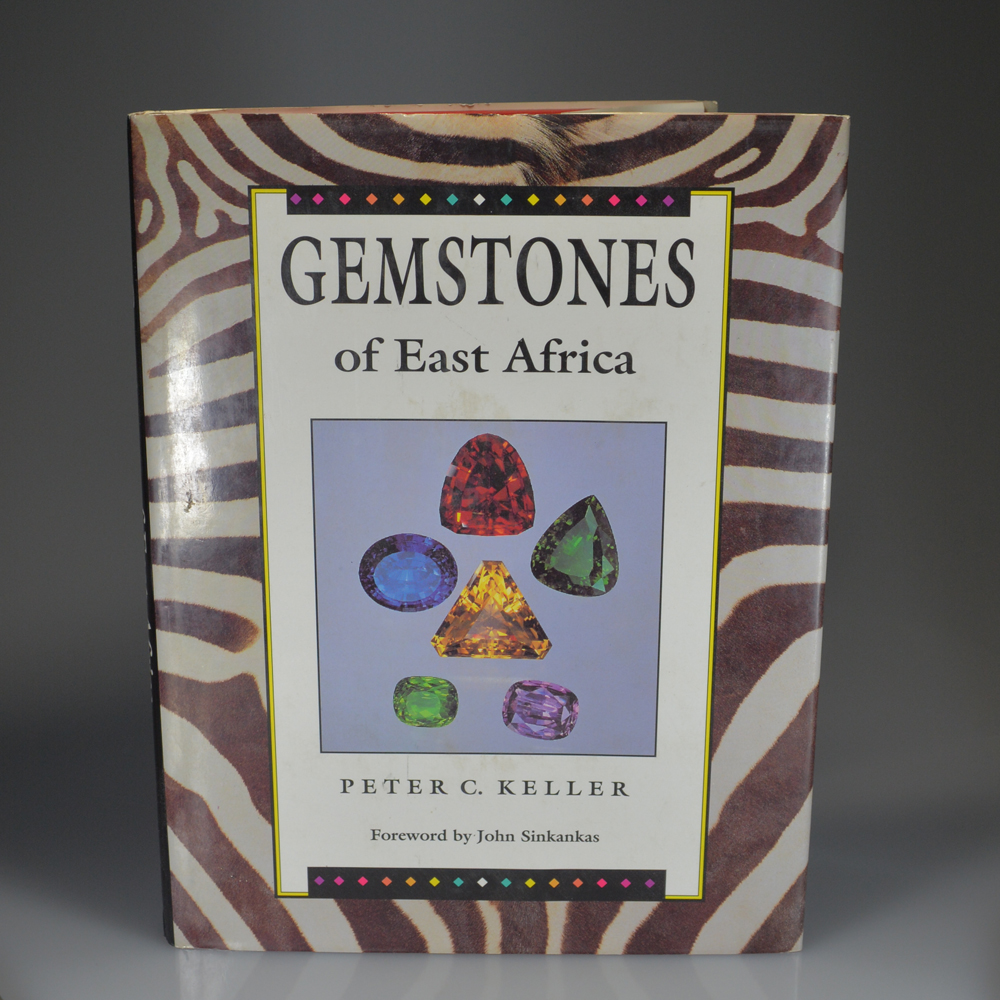
Keller, P.C. (1992) Gemstones of East Africa. Phoenix, Geoscience Press, [with photos by E.J. Gübelin], 160 pp.
Record No. 2204  |  Sinkankas/Born No.: NIS/NIB  |  RWHL
An illustrated survey of East African gemstones, emphasizing the deposits of Kenya and Tanzania and combining regional geology with accounts of discovery, exploration, mining, and gemological properties. Following an introduction to the geological setting, Keller discusses diamonds, ruby and sapphire, emerald and alexandrite, tanzanite, garnets, tourmaline, and green opal, with a concluding chapter on less prominent gem materials. Individual accounts place the deposits within their geological environments while recording their development and the people involved. Particular subjects include tanzanite from Merelani and prase opal from Haneti Hill, Tanzania. Photographs of rough and cut stones, inclusions, mining operations, and historical scenes complement locality maps, including some previously unpublished examples. Contributors include E.J. Gübelin, Harold and Erica Van Pelt, and J.I. Koivula. Appendices list 177 noteworthy gem localities with geographical coordinates and document East African gemstones in the collections of the Los Angeles County Natural History Museum and the Smithsonian Institution. References accompanying each chapter provide access to the region’s geological and gemological literature. The volume offers a substantial record of East African gem deposits and industry as understood at the beginning of the 1990s.

The inclusions in diamond (some microprobe analyses carried out on mineral inclusions in diamond)
Conference Paper
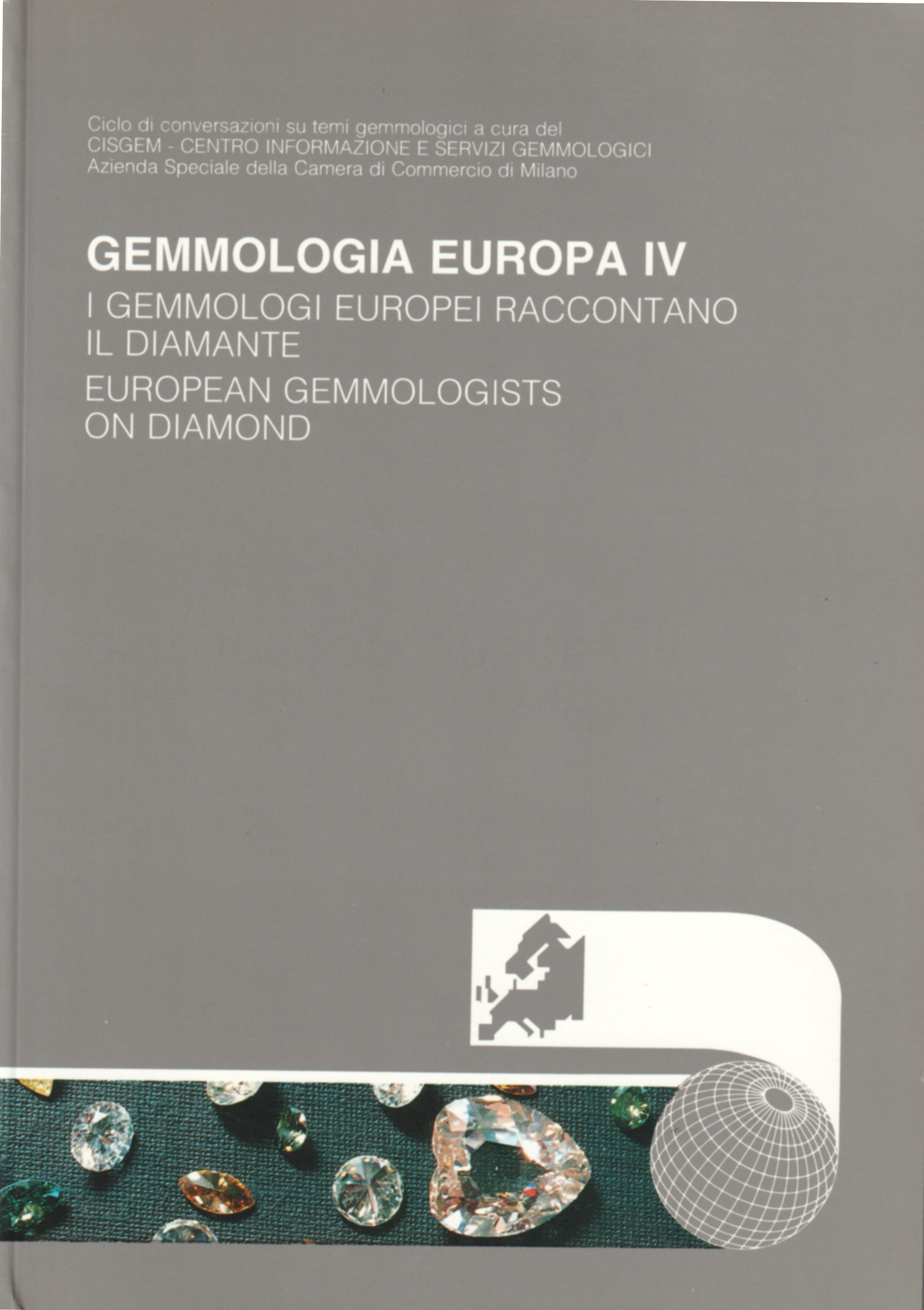
Gübelin, E.J. (1992) The inclusions in diamond (some microprobe analyses carried out on mineral inclusions in diamond). Gemmologia Europa: European Gemmologists on Diamond, Milan: CISGEM, pp. 160–193.
Record No. 2195  |  Sinkankas/Born No.: NIS/NIB  |  RWHL

Surface features on natural rubies and sapphires derived from volcanic provinces
Journal Article
Coenraads, R.R. (1992) Surface features on natural rubies and sapphires derived from volcanic provinces. Journal of Gemmology, Vol. 23, No. 3, July, pp. 151–160.
Record No. 592  |  ISBN/ISSN: 221252  |  Sinkankas/Born No.: NIS/NIB  |  RWHL

Vietnamese ruby: A discriminatory problem for gemmologists
Journal Article
Brown, G. (1992) Vietnamese ruby: A discriminatory problem for gemmologists. Australian Gemmologist, Vol. 18, No. 2, pp. 43–46.
Record No. 534  |  Sinkankas/Born No.: NIS/NIB  |  RWHL

Gem News: More experimentation with blue diffusion-treated sapphires
Journal Article
Koivula, J.I. and Kammerling, R.C. (1991) Gem News: More experimentation with blue diffusion-treated sapphires. Gems & Gemology, Vol. 27, No. 3, Fall, pp. 187—188.
Record No. 5395  |  ISBN/ISSN: 0016626X  |  Sinkankas/Born No.: NIS/NIB  |  RWHL
The Summer 1990 issue of Gems & Gemology carried a comprehensive article on diffusion-treated sapphires. Among the materials examined were stones marketed by the firm Gem Source of Las Vegas, Nevada, and Bangkok, Thailand. At that time, Jeffery Bergman of Gem Source stated that he used Sri Lankan sapphires as starting material. Recently, Mr. Bergman shared information relating to experimental diffusion treatment of sapphires from another locality: Montana. He also donated eight of these stones, ranging from 0.53 to 1.18 ct, to GIA for study. According to Mr. Bergman, approximately 50% of the Montana sapphires they have diffusion treated to produce a blue color have also developed unwanted yellowish orange zones. Examination of the eight sample stones with magnification readily revealed the yellowish orange zones described by Mr. Bergman; also noted in some of the stones were disk-like areas of dark blue surrounding dark crystalline inclusions (figure 12). We believe that the yellowish orange areas are related to zoned growth and reflect a higher iron impurity content, while the disk-like dark blue areas are caused by internal diffusion—a cannibalization of both iron and titanium from possibly iron-rich rutile and/or ilmenite inclusions. Both of these unanticipated color areas no doubt result from the high temperatures used in the diffusion-treatment process.

Sunstone labradorite from the Ponderosa Mine, Oregon
Journal Article
Johnston, C.L., Gunter, M.E. and Knowles, C.R. (1991) Sunstone labradorite from the Ponderosa Mine, Oregon. Gems & Gemology, Vol. 27, No. 4, Winter, pp. 220–233.
Record No. 5323  |  ISBN/ISSN: 0016626X  |  Sinkankas/Born No.: NIS/NIB  |  RWHL
The Ponderosa mine is now producing commercial quantities of the gem-quality labradorite feldspar known as sunstone. This gem material exhibits unique optical and physical properties that include a wide range of saturated body colors, aventurescence, and strong pleochroism. The feldspar is An₇₀ labradorite, a high-calcic plagioclase; the aventurescence-causing inclusions have been identified as pure native copper. Microprobe analyses conducted on colorless, red, and green samples did not reveal any obvious causative mechanism for the exhibited colors, although ongoing research is investigating intervalence charge transfer, possibly involving colloidal copper. Gemological identification involves the use of R.I., S.G., and microscopy. Locality determination (Oregon) is based on the copper inclusions and a distinct pleochroism.

Almandine garnet in Montana sapphire

Journal Article
Koivula, J.I., Fryer, C.W. and Kammerling, R.C. (1991) Almandine garnet in Montana sapphire. Zeitschrift der Deutschen Gemmologischen Gesellschaft, Vol. 40, No. 2/3, pp. 89–92.
Record No. 4870  |  Sinkankas/Born No.: NIS/NIB  |  RWHL

Rubine aus Vietnam

Rubies from Vietnam
Journal Article
Henn, U. and Bank, H. (1991) Rubine aus Vietnam. [Rubies from Vietnam] Zeitschrift der Deutschen Gemmologischen Gesellschaft, Vol. 40, No. 1, pp. 25–28.
Record No. 4808  |  Sinkankas/Born No.: NIS/NIB  |  Language: In German  |  RWHL
Reports on rubies from northern Vietnam, believed at the time to originate in Hoang Lien Son Province, about 250 km northwest of Hanoi. Rough crystals range from pale to strong red, sometimes with a distinct violet component, and show weak red to yellowish-red pleochroism. The authors describe their standard gemological properties, absorption characteristics and internal features, comparing the material with rubies from other deposits. The study was among the earliest gemological reports on the newly important Vietnamese ruby occurrences, whose material could closely resemble ruby from Myanmar.

Die chemischen Eigenschaften der Smaragde II, Australien und Norwegen
The chemical properties of the emerald II, Australia and Norway
Journal Article
Schwarz, D. (1991) Die chemischen Eigenschaften der Smaragde II, Australien und Norwegen. [The chemical properties of the emerald II, Australia and Norway] Zeitschrift der Deutschen Gemmologischen Gesellschaft, Vol. 40, No. 1, pp. 39–66.
Record No. 4199  |  Sinkankas/Born No.: NIS/NIB  |  Language: in German  |  RWHL
The second installment of Schwarz’s systematic study of the chemical properties of emeralds from different geographic sources, dealing with material from Australia and Norway. Norwegian specimens are from Eidsvoll near Lake Mjøsa, while the Australian material represents several occurrences, including Pilangoora, Wodgina, Calvert White Quartz Hill, Warda Warra, Melville, Torrington, Emmaville and Menzies. Chemical analyses are used to compare major and trace-element compositions and to evaluate variations among deposits and against previously studied Brazilian emeralds. Schwarz notes, among other distinctions, generally lower magnesium contents than in Brazilian material. The paper demonstrates the usefulness of chemical composition, considered together with gemological properties, for characterizing emeralds and assessing their geographic origin.

Die chemischen Eigenschaften der Smaragde III. Habachtal/Österreich und Uralgebirge/UdSSR
The chemical properties of the emerald III. Habachtal/Austria and Ural Mountains/USSR
Journal Article
Schwarz, D. (1991) Die chemischen Eigenschaften der Smaragde III. Habachtal/Österreich und Uralgebirge/UdSSR. [The chemical properties of the emerald III. Habachtal/Austria and Ural Mountains/USSR] Zeitschrift der Deutschen Gemmologischen Gesellschaft, Vol. 40, No. 2/3, pp. 103–143.
Record No. 4198  |  Sinkankas/Born No.: NIS/NIB  |  Language: in German  |  RWHL
The third installment of Schwarz’s comparative study of the chemical properties of emeralds from different deposits, here treating Habachtal, Austria, and the Ural Mountains of the USSR. After reviewing the regional geology, occurrence and genesis of emerald at the two localities, Schwarz presents chemical data and compares the ranges and average concentrations of the principal minor and trace constituents. Particular attention is given to variations in chromium, iron, magnesium and sodium, demonstrating compositional differences both within and between the two deposits. The study evaluates chemical composition as an aid to characterizing emerald populations and determining geographic origin, while placing the analytical results within their geological and genetic settings.

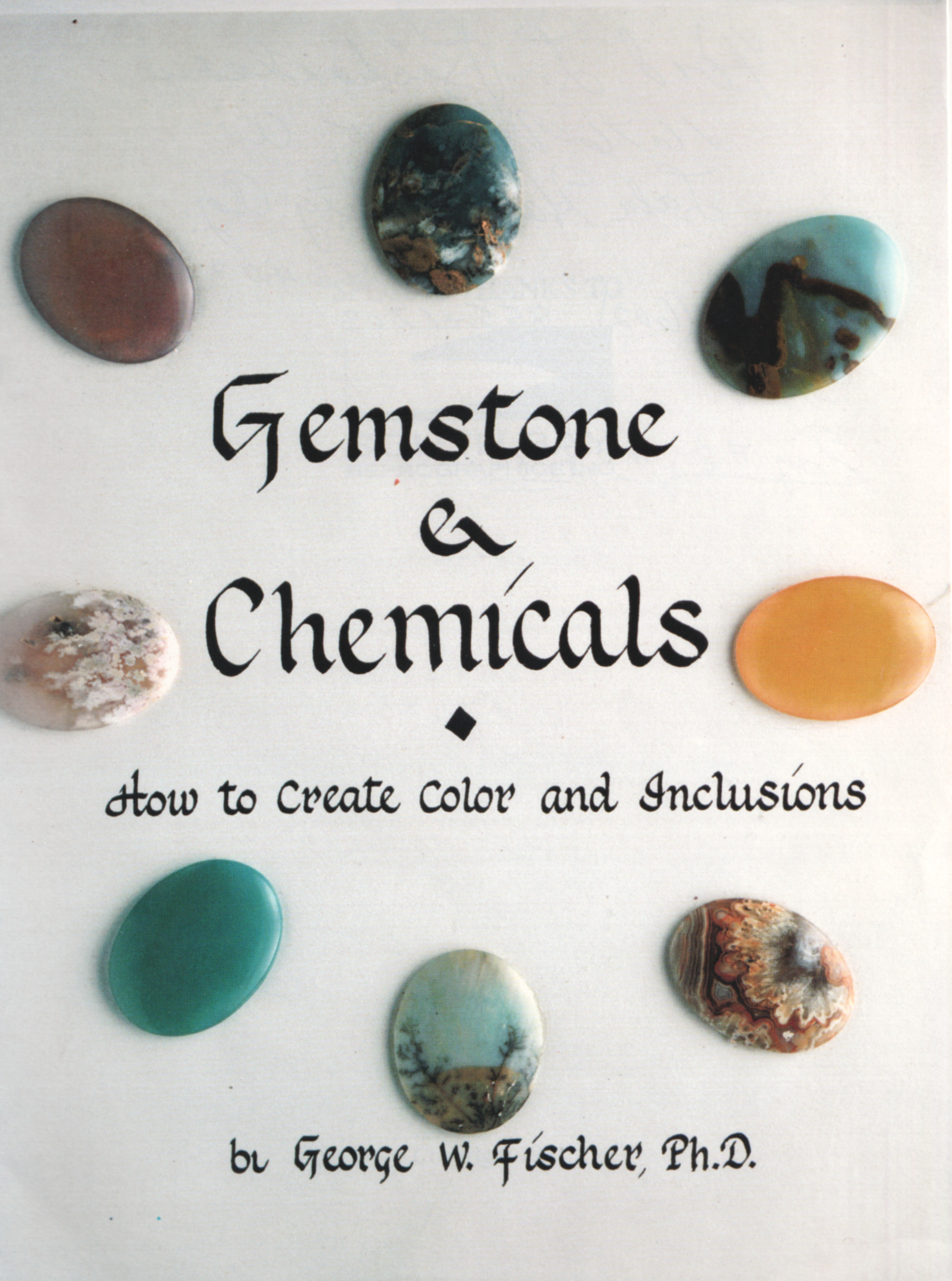
Gemstone & Chemicals: How to Create Color and Inclusions
Book
Fischer, G.W. (1991) Gemstone & Chemicals: How to Create Color and Inclusions. No city, self published, 74 pp.
Record No. 3231  |  Sinkankas/Born No.: NIS/NIB  |  RWHL

Into the abyss: inclusion photos

Journal Article
Goutiere, A., de (1991) Into the abyss: inclusion photos. Gemological Digest, Vol. 3, No. 2, p. 43.
Record No. 1972  |  Sinkankas/Born No.: NIS/NIB  |  RWHL

Some comparisons between Kenyan, Australian and Sri Lankan sapphires
Journal Article
Tombs, G.A. (1991) Some comparisons between Kenyan, Australian and Sri Lankan sapphires. Australian Gemmologist, Vol. 17, No. 11, pp. 446–449.
Record No. 1732  |  Sinkankas/Born No.: NIS/NIB  |  RWHL

Burma-type rubies from Vietnam

Journal Article
Henn, U. (1991) Burma-type rubies from Vietnam. Australian Gemmologist, Vol. 17, No. 12, November, pp. 505–509.
Record No. 963  |  Sinkankas/Born No.: NIS/NIB  |  RWHL

Gem Trade Lab Notes: Synthetic sapphire with triangular inclusions
Journal Article
DelRe, N. (1991) Gem Trade Lab Notes: Synthetic sapphire with triangular inclusions. Gems & Gemology, Vol. 27, No. 1, Spring, p. 45.
Record No. 659  |  ISBN/ISSN: 0016626X  |  Sinkankas/Born No.: NIS/NIB  |  RWHL

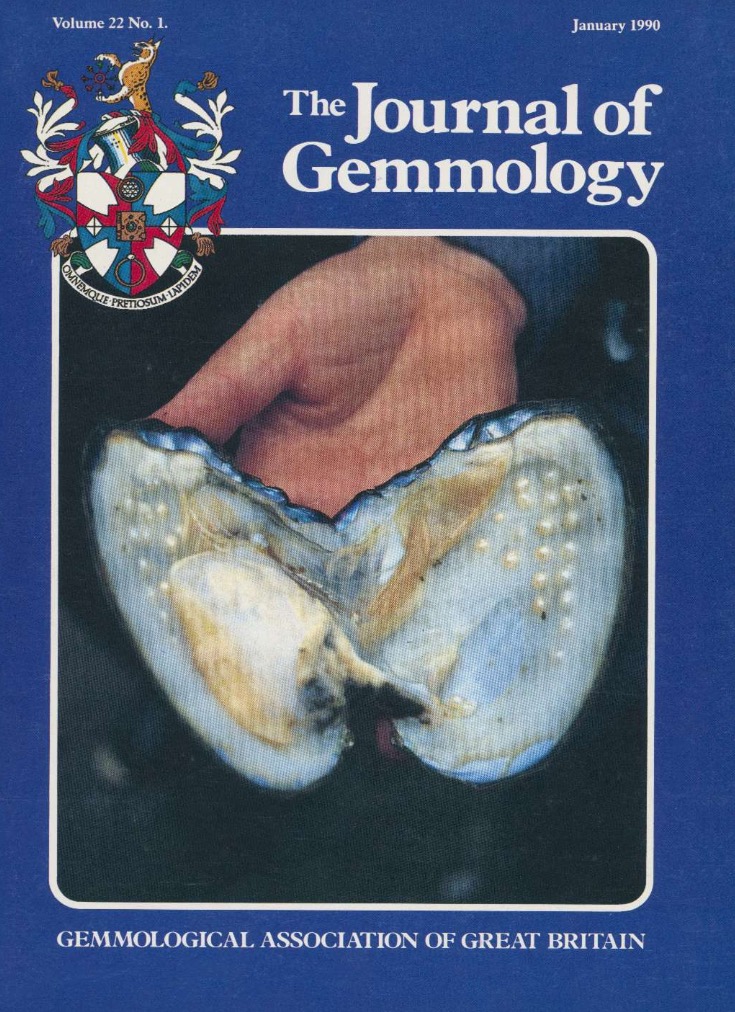
4th millenium BC lapis lazuli working at Mehrgarh, Pakistan
Journal Article
Tosi, M. and Vidale, M. (1990) 4th millenium BC lapis lazuli working at Mehrgarh, Pakistan. Paléorient, Vol. 16, No. 2, pp. 89–99.
Record No. 26927  |  Sinkankas/Born No.: NIS/NIB  |  RWHL
Lapis lazuli working at Mehrgarh, Pakistan, dates back to the 4th millennium BC, as documented by Massimo Vidale and Maurizio Tosi in their 1990 study published in Paléorient (Vol. 16, No. 2, pp. 89–99). Their research highlights evidence of early lapis working techniques in one of the earliest Neolithic settlements of South Asia. The Chagai Hills are considered a possible source of the material, with lapis lazuli from this region characterized by a greenish hue due to diopside inclusions—an observation consistent with later gemological accounts, including those in ExtraLapis. Earlier use of lapis at Mehrgarh has also been noted by Jarrige (1985: 285), who reports finds from Period I, dating to the 7th millennium BC, making it one of the earliest known occurrences of lapis lazuli use, as later referenced by Moorey.

Star rhodolite garnet from Tanzania

Journal Article
Kammerling, R.C. and Koivula, J.I. (1990) Star rhodolite garnet from Tanzania. Journal of Gemmology, Vol. 22, No. 1, pp. 16–18.
Record No. 26707  |  ISBN/ISSN: 221252  |  Sinkankas/Born No.: NIS/NIB  |  RWHL
This article describes the first reported occurrence of asteriated rhodolite garnet from Tanzania and details the specimen’s gemmological properties. Acicular rutile crystals are well-known inclusions in almandine garnets (Webster, 1983; Gübelin and Koivula, 1986; Liddicoat, 1987), and when fashioned en cabochon, stones with a relatively dense and even distribution of these needle-like inclusions may exhibit asterism, typically as a four- or six-rayed star. Sources of star almandine garnet include India (Webster, 1983; Rohrbach, 1986) and the Emerald Creek area of Idaho, USA (Zeitner, 1986; Rohrbach, 1986). Rhodolite, a reddish-purple to purple garnet composed of a mixture of almandine and pyrope, was first described from North Carolina, USA (Hidden and Pratt, 1898), and is also found in Sri Lanka (Webster, 1983), a major commercial source (Federman, 1984). In recent decades, African localities such as Zimbabwe (Campbell, 1972), Madagascar (Campbell, 1973), and Tanzania (Phillips, 1962; Sinkankas, 1968; Sarofim, 1970; Pough, 1973) have also produced rhodolite, with Tanzania now serving as an important commercial source (Federman, 1984). Like almandine, rhodolite from several sources may contain acicular rutile inclusions (Campbell, 1972; Webster, 1983), though few references have noted these inclusions producing asterism in rhodolite (Rohrbach, 1986). The authors recently examined a rhodolite garnet cabochon that displayed a four- or six-rayed star, depending on the viewing angle. The stone was cut from rough purchased and fashioned by Mr. Barton Curren of Glyptic Illusions, Topanga, California, USA, from a Tanzanian parcel reportedly originating from the Kangala mine. According to Curren, the rough was relatively inexpensive due to its higher inclusion content compared to other Tanzanian rhodolite he had previously acquired.

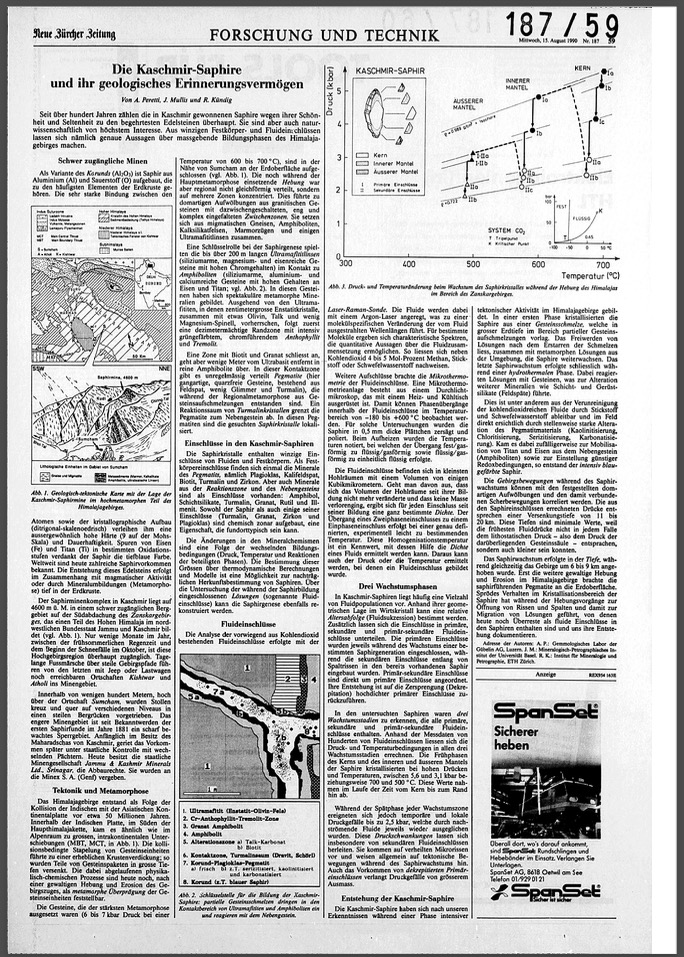
The Pharoahs’ forgotten emerald mines
Journal Article
Grubessi, O., Aurisicchio, C. and Castiglioni, A. (1990) The Pharoahs’ forgotten emerald mines. Journal of Gemmology, Vol. 22, No. 3, July, pp. 164–177.
Record No. 6068  |  ISBN/ISSN: 221252  |  Sinkankas/Born No.: NIS/NIB  |  RWHL
The aim of latest expedition to Djebel Sikeit and Djebel Zabarah by the brothers Angelo and Alfredo Castiglioni was the re-discovery of the Pharaoh's emerald mines. The Castiglioni expedition was successful in the re-discovery of these forgotten ancient mines and has collected samples and documents on these famous deposits of precious stones, providing emer- ald specimens of great interest to gemmologists and archaeologists, as will be revealed in this paper.

Die Kaschmir-Saphire und ihr Erinnerungsvermoegen

The Kashmir sapphires and their memory of the formation history of the Himalayas
Newspaper Article
Peretti, A., Mullis, J. and Kundig, R. (1990) Die Kaschmir-Saphire und ihr Erinnerungsvermoegen. [The Kashmir sapphires and their memory of the formation history of the Himalayas] Neue Zürcher Zeitung, Vol. 187, Zürich, pp. 59–65.
Record No. 5406  |  Sinkankas/Born No.: NIS/NIB  |  Language: in German  |  RWHL
Examines the geological history preserved in mineral and fluid inclusions in Kashmir sapphires from the Sumcham area of the Zanskar Himalaya. The sapphires occur in quartz-free pegmatites near contacts between ultramafic rocks and amphibolites. Mineral chemistry, Raman spectroscopy and microthermometry reveal three successive growth zones formed under declining pressures and temperatures, spanning approximately 5.6–3.1 kbar and 700–500°C. Predominantly carbon dioxide fluid inclusions record repeated pressure fluctuations, fracturing and fluid movement during crystal growth. The authors propose initial crystallization from partial melts, followed by growth involving residual magmatic and metamorphic fluids, and a final hydrothermal stage. Mobilization of iron and titanium from surrounding amphibolites under suitable redox conditions produced the intense blue colour. The inclusions document sapphire formation at substantial crustal depths during active deformation and uplift of the Himalaya.

Exploring the Literature of Gemstone Inclusions

The literature of gemstone inclusions covers identification, origin determination, treatments, synthesis, mineral inclusions, fluid inclusions and other internal features of natural and synthetic gems.

For a curated selection of important sources, read Inclusions in Gemstones — Hyperion Literature Sources.

About Four Treasures

Four Treasures is Lotus Gemology's freely accessible gemological reference database. Use the full database to search by author, title or keyword and explore literature on gemology, mineralogy, jewelry and related fields. Where available, hyperlinks on titles may lead directly to the full publication.

Search the Complete Four Treasures Database