Gemstone Inclusions Bibliography

Gemstone Inclusions Bibliography

Explore books, articles and historical sources on inclusions in gemstones in Four Treasures, the Lotus Gemology reference database. This bibliography brings together matching records from the collection, with publication details, abstracts and cover images where available.

Gemstone Inclusion References

The list below matches the terms inclusion or inclusions in the database's searchable fields. Some references discuss inclusions as part of a broader subject.
781–800 of 1,165 matching references

Gem Trade Lab Notes: Synthetic ruby, with diffusion-induced “fingerprint” inclusions and asterism
Journal Article
Crowningshield, G.R. (1995) Gem Trade Lab Notes: Synthetic ruby, with diffusion-induced “fingerprint” inclusions and asterism. Gems & Gemology, Vol. 31, No. 2, Summer, p. 126.
Record No. 640  |  ISBN/ISSN: 0016626X  |  Sinkankas/Born No.: NIS/NIB  |  RWHL

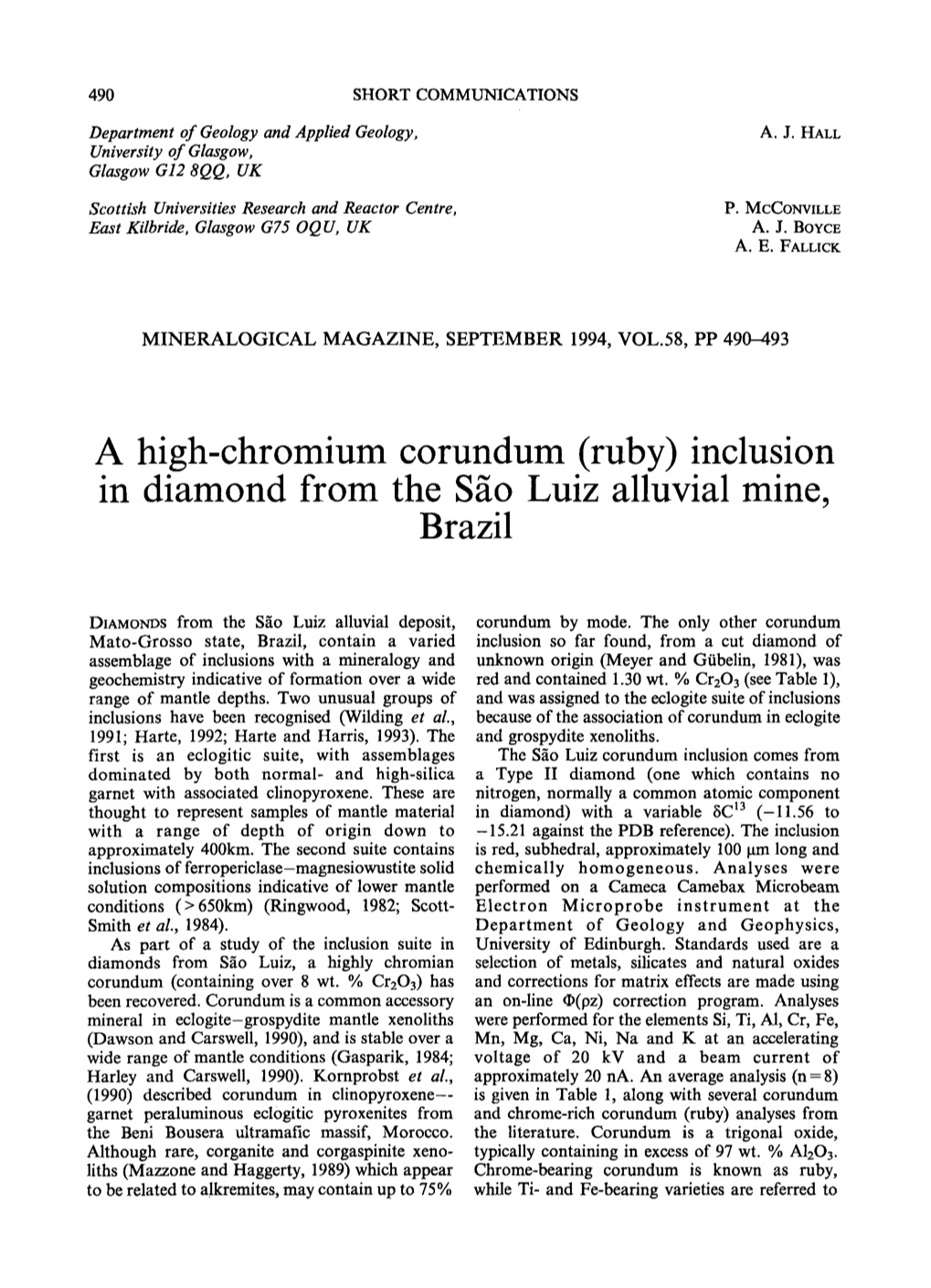
A high-chromium corundum (ruby) inclusion in diamond from the São Luiz alluvial mine, Brazil
Journal Article
Watt, G.R., Harris, J.W., Harte, B. and Boyd, S.R. (1994) A high-chromium corundum (ruby) inclusion in diamond from the São Luiz alluvial mine, Brazil. Mineralogical Magazine, Vol. 58, No. 392, pp. 490–493.
Record No. 27263  |  ISBN/ISSN: 0026461X  |  DOI: https://doi.org/10.1180/minmag.1994.058.392.16  |  Sinkankas/Born No.: NIS/NIB  |  RWHL

Gem News: More on peridot from Pakistan
Journal Article
Koivula, J.I., Kammerling, R.C. and Fritsch, E. (1994) Gem News: More on peridot from Pakistan. Gems & Gemology, Vol. 30, No. 4, Winter, p. 275.
Record No. 26782  |  Sinkankas/Born No.: NIS/NIB  |  RWHL
Following the Fall 1994 Gem News report on a new peridot source in Pakistan’s far western Himalayas, further study of both rough and cut stones from the deposit has been conducted. The orthorhombic peridot crystals may initially appear hexagonal due to the symmetry of “columnar” and “pyramidal” faces, with face types identified using Goldschmidt’s Atlas der Krystallformen. Prominent faces included basal pinacoid (001), columnar (010) and (110), and pyramidal (021) and (111), with striations visible along the c-axis on the (010) and (110) faces, though many crystals, as confirmed by Laura Thompson of Shades of the Earth, also exhibit well-formed, lustrous faces. Two faceted stones—a 5.23 ct rectangular mixed cut and an 18.37 ct cushion modified brilliant—showed gemological properties consistent with known peridot: medium yellowish green color, transparent diaphaneity, R.I. values of α = 1.651, β = 1.669, γ = 1.687 (birefringence 0.036), specific gravity of 3.35, weak pleochroism, inert fluorescence, and distinct absorption bands at ~453, 477, 497 nm, and a weaker one at ~529 nm. These values suggest a composition of ~90% forsterite and 10% fayalite. No inclusions were visible under magnification in the faceted stones, though black rod-like inclusions, identified as ludwigite via X-ray diffraction, were noted in some cabochon-grade rough.

Four hessonite occurrences in Orissa, India
Journal Article
Kanis, J. and Redmann, M. (1994) Four hessonite occurrences in Orissa, India. Journal of Gemmology, Vol.  24, No. 2, April, pp. 75–83.
Record No. 26742  |  ISBN/ISSN: 221252  |  Sinkankas/Born No.: NIS/NIB  |  RWHL
Hessonite garnets from the villages of Ghatpara, Dahikbala, Budhido, and Burubura in Orissa, India, are located in the high-grade metamorphic khondalite suite and occur either in calc-silicate lenses or in quartzite-amphibolite contact zones. The paragenesis of Orissa’s hessonite is linked to regional metamorphic processes, probably during Middle Proterozoic times. The colours of the stones range from pale yellowish and orange to brown, with refractive indices and densities for each locality as follows: Ghatpara: n = 1.738–1.752, D = 3.56–3.64 g/cm³; Dahikbala: n = 1.750–1.756, D = 3.58–3.64 g/cm³; Budhido: n = 1.751–1.758, D = 3.60–3.63 g/cm³; Burubura: n = 1.759–1.763, D = 3.60–3.66 g/cm³. In addition to calcium, aluminium, and silicon, chemical analyses reveal a distinct content of iron and traces of manganese and titanium. Microscopical study shows that the hessonite from Ghatpara is characterized by mineral inclusions, healing cracks with two- or three-phase inclusions, and growth marks which sometimes display strong interference colours under crossed polarizers. The inclusions in stones from Burubura are mainly healing cracks with two- or three-phase inclusions and growth marks. Budhido hessonite exhibits a strong oily appearance and mineral inclusions, while Dahikbala stones are marked by needle-like inclusions, growth marks, and some mineral inclusions.

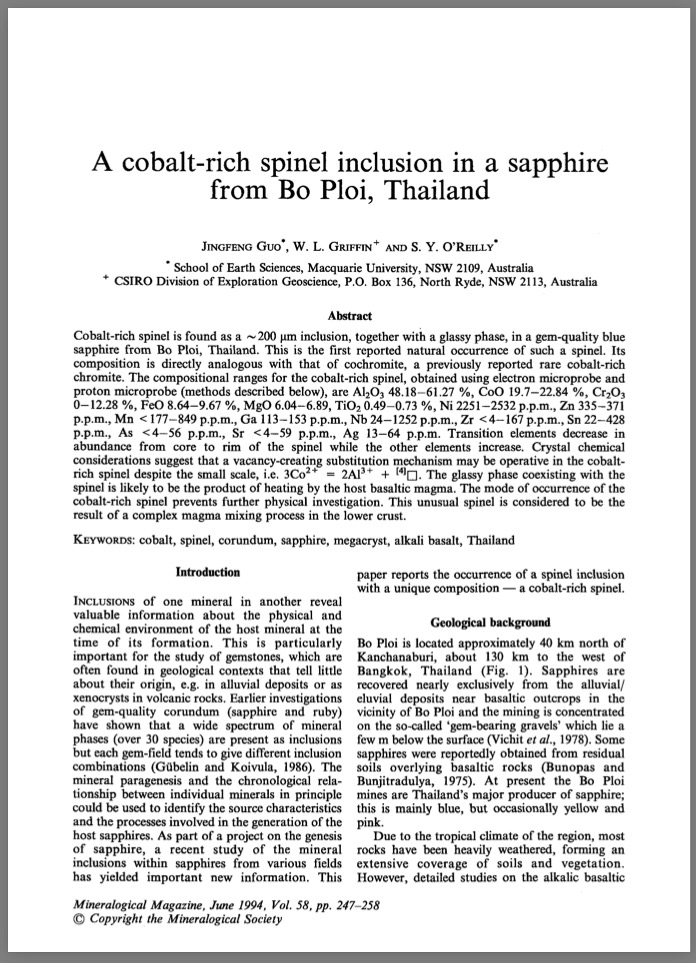
A cobalt-rich spinel inclusion in a sapphire from Bo Ploi, Thailand
Journal Article
Guo, J., Griffen, W.L. and O’Reilly, S.Y. (1994) A cobalt-rich spinel inclusion in a sapphire from Bo Ploi, Thailand. Mineralogical Magazine, Vol. 58, No. 391, June, pp. 247–258.
Record No. 7658  |  Sinkankas/Born No.: NIS/NIB  |  RWHL
A cobalt-rich spinel has been discovered as a ~200 µm inclusion, alongside a glassy phase, within a gem-quality blue sapphire from Bo Ploi, Thailand, marking the first reported natural occurrence of such a spinel. Its composition closely resembles that of cochromite, a rare cobalt-rich chromite, with electron and proton microprobe analyses revealing A1₂O₃ (48.18–61.27%), CoO (19.7–22.84%), Cr₂O₃ (0–12.28%), FeO (8.64–9.67%), MgO (6.04–6.89%), TiO₂ (0.49–0.73%), and trace elements such as Ni (2251–2532 ppm), Zn (335–371 ppm), and Mn (<177–849 ppm), among others. Notably, transition elements decrease from core to rim, while other elements increase, suggesting a vacancy-creating substitution mechanism (3Co²⁺ = 2Al³⁺ + [□]). The coexisting glassy phase likely formed due to heating by the host basaltic magma. Although further physical investigation is limited by the spinel’s mode of occurrence, this unusual mineral is believed to result from a complex magma mixing process in the lower crust.

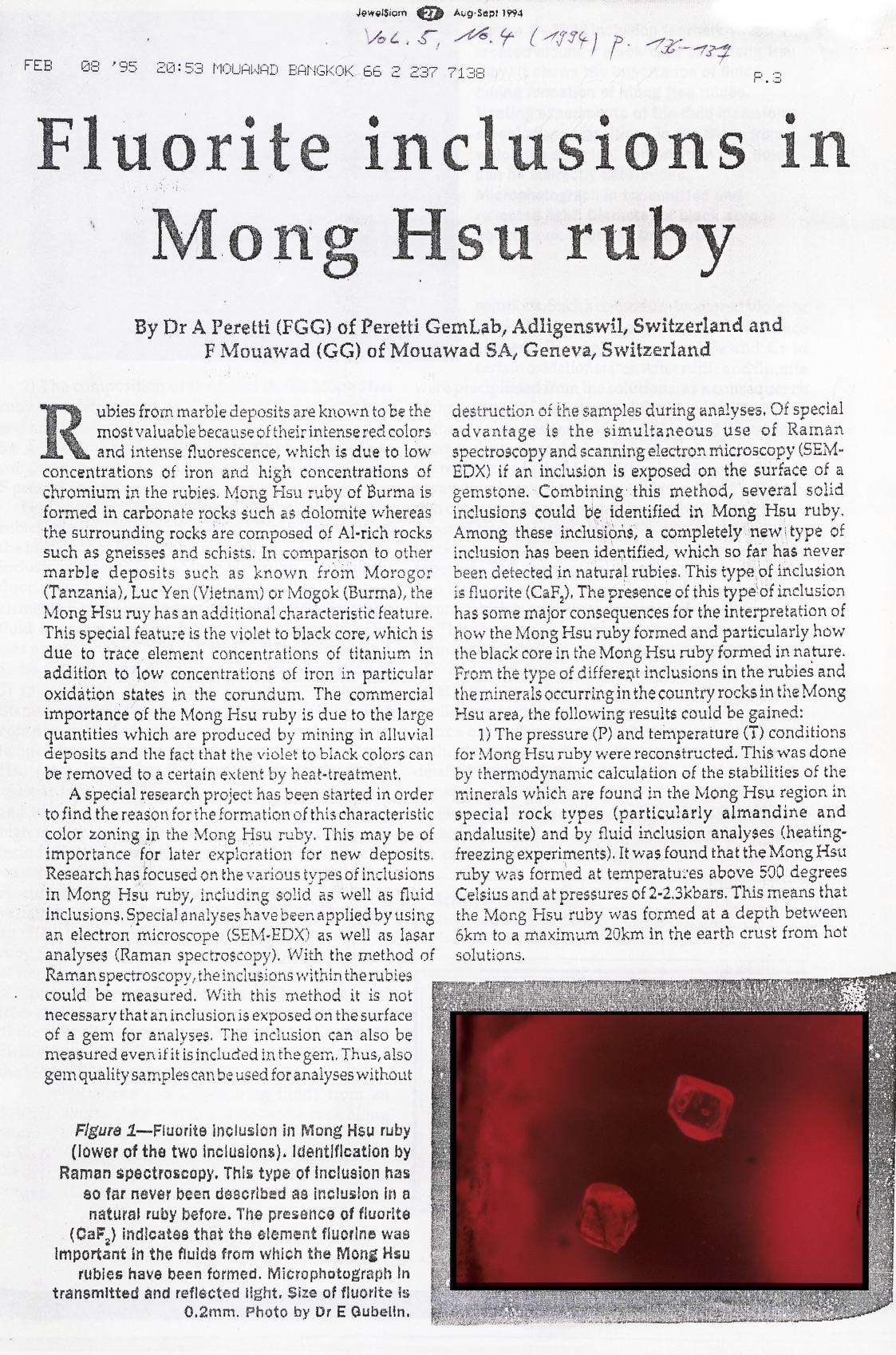
Fluorite inclusions in Mong Hsu ruby

Journal Article
Peretti, A. and Mouawad, F. (1994) Fluorite inclusions in Mong Hsu ruby. JewelSiam, Vol. 5, No.  4, Aug/Sept, pp. 136–137.
Record No. 4939  |  ISBN/ISSN: 8581843  |  Sinkankas/Born No.: NIS/NIB  |  RWHL

Gem News: Feldspar with ruby inclusions
Journal Article
Koivula, J.I., Kammerling, R.C. and Fritsch, E. (1994) Gem News: Feldspar with ruby inclusions. Gems & Gemology, Vol. 30, No. 4, Fall, p. 274.
Record No. 4891  |  ISBN/ISSN: 0016626X  |  Sinkankas/Born No.: NIS/NIB  |  RWHL

Synthetische Rubine aus Griechenland

Synthetic rubies from Greece
Journal Article
Henn, U. and Milisenda, C.C. (1994) Synthetische Rubine aus Griechenland. [Synthetic rubies from Greece] Zeitschrift der Deutschen Gemmologischen Gesellschaft, Vol. 43, No. 1/2, pp. 15–17.
Record No. 4811  |  Sinkankas/Born No.: NIS/NIB  |  Language: In German  |  RWHL
Describes a newly marketed synthetic ruby produced by the Douros firm in Piraeus, Greece. The material has the physical properties of corundum, while microscopic examination reveals residual flux inclusions characteristic of growth by the flux method. These internal features provide evidence of its synthetic origin.

Jadeitites, albitites and related rocks from the Motagua Fault Zone, Guatemala
Journal Article
Harlow, G.E. (1994) Jadeitites, albitites and related rocks from the Motagua Fault Zone, Guatemala. Journal of Metamorphic Geology, Vol. 12, pp. 49–68.
Record No. 4406  |  Sinkankas/Born No.: NIS/NIB  |  RWHL
Jadeitites from Guatemala occur as weathered blocks within tectonized serpentinite in a 15-km zone north of the Motagua Fault Zone. Rock types associated with jadeitite include albitites, albite-mica rocks, omphacite/taramitic amphibole-bearing metabasites, chlorite-actinolite schists, talc-carbonate rocks and antigorite schists. In addition to the predominant jadeitic (Jd₉₃–₁₀₀) pyroxene, common phases in jadeitite include micas (paragonite and/or phengite ± rarer phlogopite), omphacite, albite, titanite, zircon, apatite and graphite. Conditions of jadeitite formation are 100–400°C, 5–11 kbar with 0.0 > log₁₀ aSiO₂ ≥ −0.7. Fluid inclusions, coarse textures, vein structures and rhythmic zoning of pyroxene indicate that an aqueous fluid was involved. Jadeitites are either (1) metasomatic modifications of former felsic-to-pelitic inclusions that have undergone silica depletion plus efficient soda exchange and enrichment, or (2) solution precipitates derived from such a source. The close spatial relationship of faults and shear zones, serpentinites and jadeitites suggests that jadeitites formed in a relatively high-P/T setting with substantial flow of sodic fluid in a tectonized zone. Most Guatemalan jadeitites are extensively altered to analcime, albite, taramitic amphibole, (clino)zoisite ± nepheline and preiswerkite. This alteration reflects depressurization/heating to below the jadeite + fluid = analcime reaction at high aNa. With progressive alteration, analcime and nepheline are replaced by albite; the increase in silica content may result from fluid flowing up a tectonized zone reaching saturation with an albite assemblage. Albitite phases, albite, actinolite, zoisite, chlorite, phengite, K-feldspar and quartz record conditions of c. 3–8 kbar at T < 400°C, indicating a clockwise P–T trajectory of the blocks. Barium aluminosilicates—banalsite, celsian, cymrite and hyalophane—are common minor late-stage phases in jadeitites and albite-rich rocks. Barian phengite is common in albite-mica rocks.

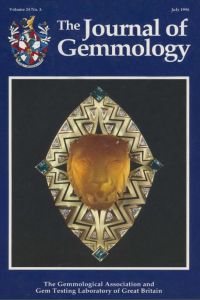
A high-chromium corundum (ruby) inclusion in diamond from the Sao Luis alluvial mine, Brazil
Journal Article
Watt, G. (1994) A high-chromium corundum (ruby) inclusion in diamond from the Sao Luis alluvial mine, Brazil. Mineralogical Magazine, Vol. 58, pp. 490–493.
Record No. 2967  |  Sinkankas/Born No.: NIS/NIB  |  RWHL

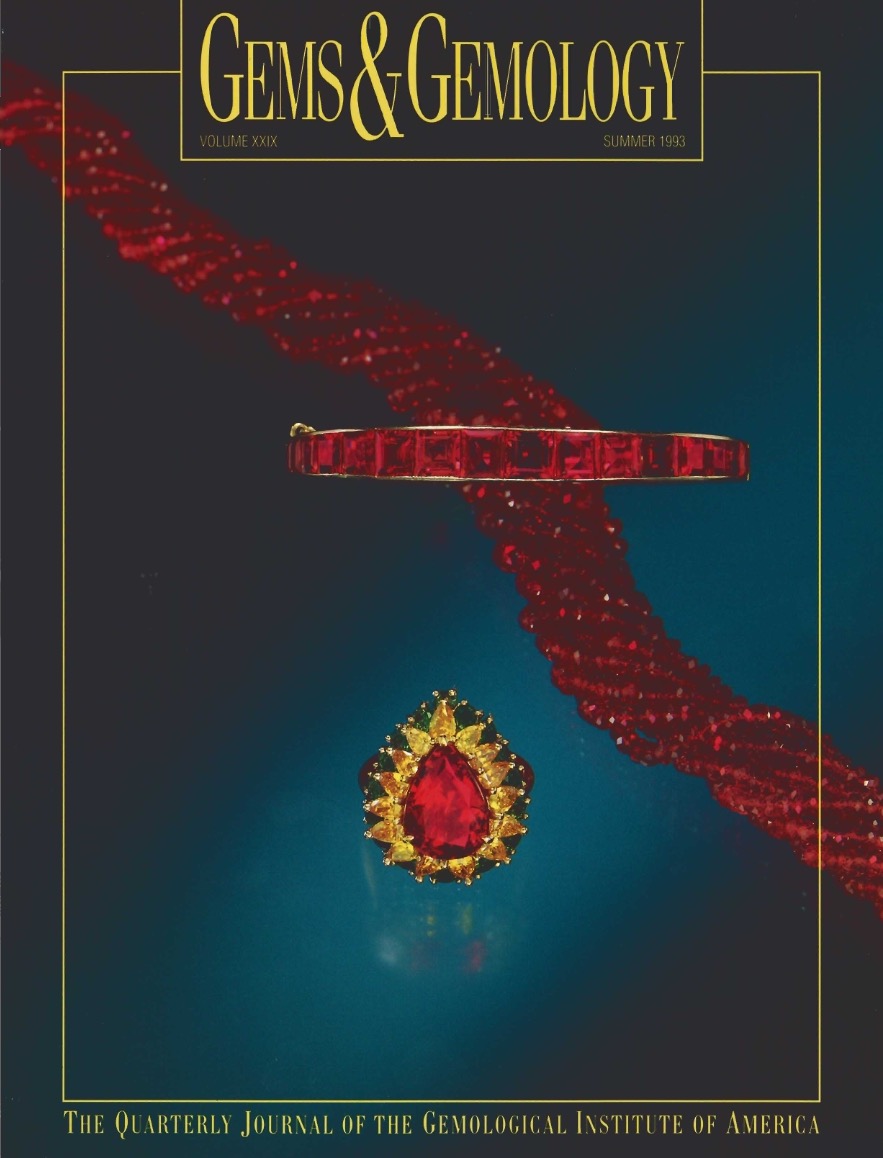
Origin determination for gemstones: Possibilities, restrictions and reliability
Journal Article
Hänni, H.A. (1994) Origin determination for gemstones: Possibilities, restrictions and reliability. Journal of Gemmology, Vol. 24, No. 3, July, pp. 138–148.
Record No. 954  |  ISBN/ISSN: 221252  |  Sinkankas/Born No.: NIS/NIB  |  RWHL

Gem News: Gems from Orissa, India

Journal Article
Koivula, J.I., Kammerling, R.C. and Fritsch, E. (1993) Gem News: Gems from Orissa, India. Gems & Gemology, Vol. 29, No. 2, Summer, pp. 133–134.
Record No. 26756  |  Sinkankas/Born No.: NIS/NIB  |  RWHL
The state of Orissa in eastern India has emerged as an increasingly important source of gemstones. Since 1989, rising quantities of rhodolite garnets from the region have been seen, followed by notable finds of aquamarine and ruby. At the 1993 Tucson Show, Amar J. Jain presented a 2.99 ct faceted alexandrite and dark grayish blue tourmalines from Orissa, one of which—a 1.74 ct emerald-cut specimen—showed gemological properties consistent with tourmaline from other locations, including refractive indices of 1.620 and 1.640, birefringence of 0.020, and specific gravity of 3.11. Hessonite (grossular) garnet is also being mined near Kanta Bhaji in the Kalahandi area, with faceted stones ranging from reddish orange to orangish brown; many exhibit a pronounced “roiled” appearance typical of Sri Lankan hessonites, sometimes resembling translucent sard. A 2.19 ct orange stone tested with an R.I. of 1.748 and S.G. of 3.65, confirming it as hessonite. Following the show, the editors received a report from Shyamala Fernandes of the Gem Testing Laboratory in Jaipur describing a December 1992 find of chatoyant sillimanite, initially misidentified and marketed as “moonstone cat’s-eye.” Identified as sillimanite, the material exhibited an R.I. of 1.659–1.678 (1.66 spot), S.G. of 3.25, biaxial optic character, and Mohs hardness of 7–8. Microscopy revealed parallel acicular inclusions responsible for the chatoyancy, along with “fingerprint” two- and three-phase inclusions and black platelets. The sillimanite occurs in colors ranging from colorless to gray, pinkish brown, yellow, green, and blue-green, typically in lighter tones, and most cabochons—some up to 20 ct—display sharp cat’s-eyes and a vitreous luster. Though precise production data is lacking, the material has been readily available in Indian markets since its discovery.

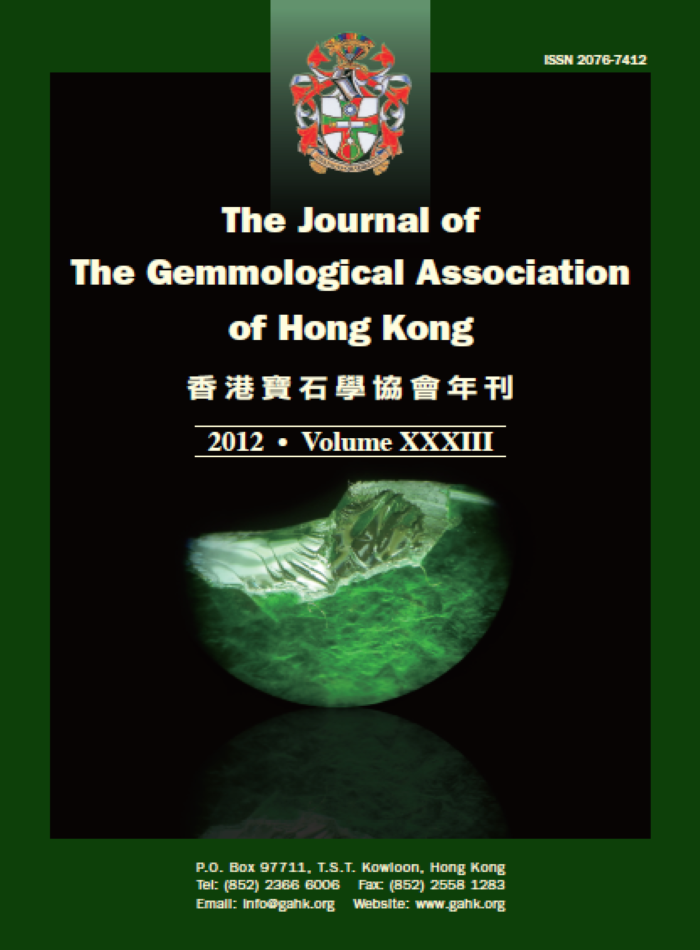
Gem Trade Lab Notes: Emerald, an ancient miniature carving
Journal Article
Moses, T. (1993) Gem Trade Lab Notes: Emerald, an ancient miniature carving. Gems & Gemology, Vol. 29, No. 2, Summer, p. 125.
Record No. 26751  |  Sinkankas/Born No.: NIS/NIB  |  RWHL
Common gem materials can present challenges in identification when fashioned into intricate carvings or altered by surface conditions. A miniature bust submitted to the East Coast lab—purported to depict the Roman Emperor at age 11–13 (circa 49–51 A.D.)—was examined for authenticity and composition. Due to the detailed carving, refractive index measurements were not possible, but hydrostatic testing gave a specific gravity of 2.70. Spectroscopy revealed weak chromium absorption typical of emerald, and a faint pink reaction under the Chelsea filter further supported this identification. The piece, semitransparent to translucent, displayed numerous fluid inclusions and small, unidentified crystals, one likely being biotite mica. Surface-reaching fissures exhibited yellowish brown iron staining, but no signs of oiling. Based on its properties, the bust was identified as natural emerald. If its reported provenance is genuine, it is probably Egyptian in origin. According to John Sinkankas, emeralds were mined in Egypt during the Graeco-Roman period through the 13th century A.D. Supporting this, Robert C. Kammerling of GIA collected samples from Egyptian mines in 1991 that matched the carving in color, transparency, inclusion patterns, and biotite presence.

Indications of crystal morphology in microgemmology as an aid to identification
Journal Article
Kammerling, R.C., Koivula, J.I. and Scarratt, K.V. (1993) Indications of crystal morphology in microgemmology as an aid to identification. Journal of the Gemmological Association of Hong Kong, Vol. XVI, pp. 7–15.
Record No. 7651  |  Sinkankas/Born No.: NIS/NIB  |  RWHL

Two interesting double star" sapphires"
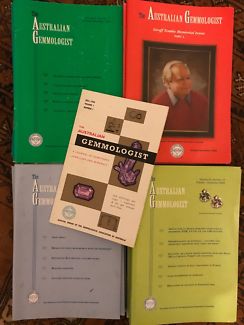
Journal Article
Koivula, J.I., Kammerling, R.C. and Fritsch, E. (1993) Two interesting double star" sapphires". Australian Gemmologist, Vol. 18, No. 7, pp. 235–236.
Record No. 5378  |  Sinkankas/Born No.: NIS/NIB  |  RWHL

A new type of synthetic ruby on the market: Offered as hydrothermal rubies from Novosibirsk
Journal Article
Peretti, A. and Smith, C.P. (1993) A new type of synthetic ruby on the market: Offered as hydrothermal rubies from Novosibirsk. Australian Gemmologist, Vol. 18, No. 5, pp. 149–156.
Record No. 4938  |  Sinkankas/Born No.: NIS/NIB  |  RWHL
Until now the commercial production oi synthetic mby has consisted of two may or types of synthesis, the flame-fusion and flux-growth processes, even though the techniques for a third type involving the hydrothermal growth of synthetic rubies have been known since the late 1950's. The early hydrothermal ruby production was reported as consisting of thin overgrowths on natural ruby seeds (C ubelin, 1961 'l. The authors first became aware of the recent production of hydrothermal synthetic rubies in Novosibirsk during the Fall of 1991. In lanuary 1993, synthetic rubies described as hydrothermal” synthetic rubies produced at Novosibirsk first began appearing on the market in Bangkok (including the samples in this study, weighing 1.69, 0.69 and 0.62 Cl). The hydrothermal growth process is often responsible for the formation of ruby in natural deposits worldwide, excluding those resulting from magmatic melts. Therefore, it can be expected that the internal characteristics for hydrothermally grown synthetic rubies will include the presence of fluid inclusions comparable to those oi their natural counterparts as opposed to the flux remnants present in the healed fracture systems of other synthetic rubies. This could create potential problems in the separation between natural and synthetic rubies. The aim of this study is to provide the identification characlenstics and results of standard gerrimological as well as more sophisticated testing."

The North-African diamondiferous province
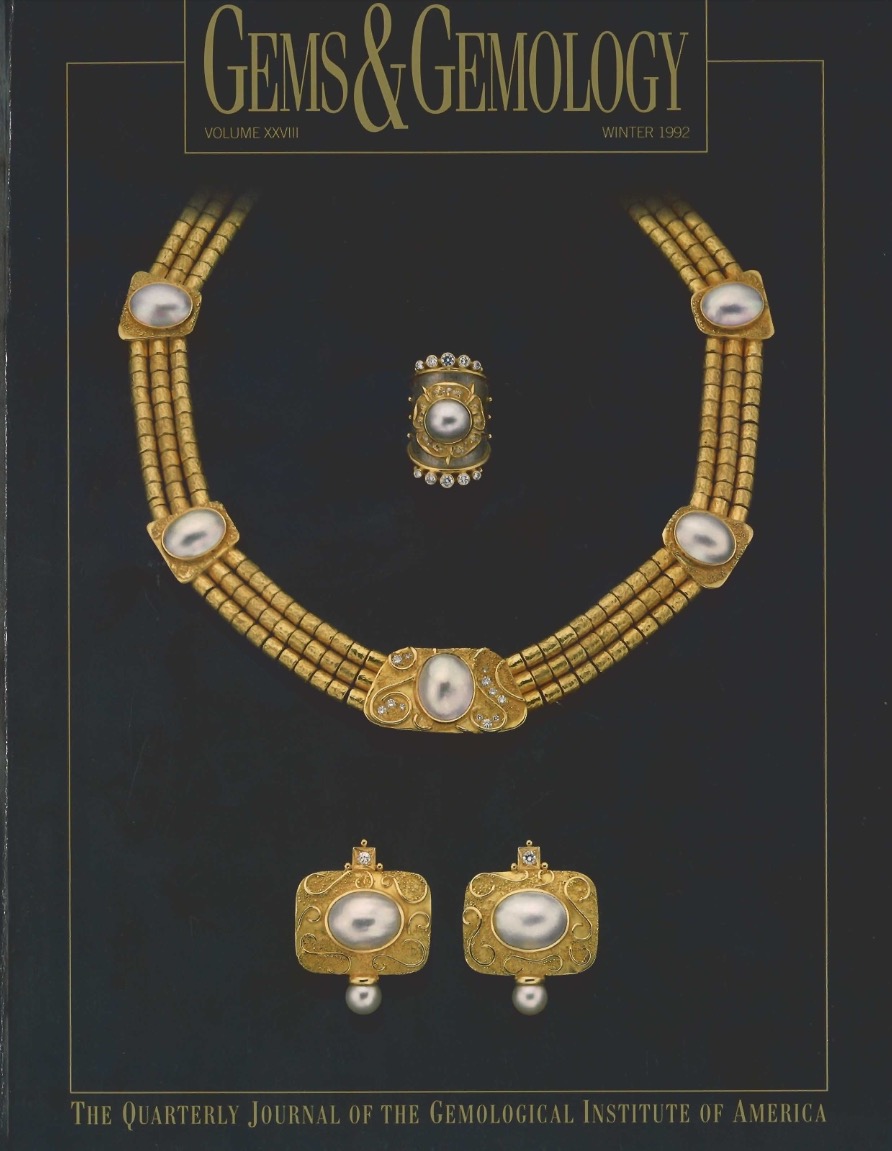
Journal Article
Kaminsky, F.V., Verzhak, V.V., Dauev, Y.M., Buima, T., Boukhalfa, L., Kaui, M., Salhi, A. and Slugi, M. (1992) The North-African diamondiferous province. Russian Geology and Geophysics, Vol. 33, No. 7, pp. 91–95.
Record No. 27473  |  Sinkankas/Born No.: NIS/NIB  |  RWHL
Diamonds and the indicative minerals (pyrope, picroilmenite, and chromite) are found on a vast area of submeridional elongation of 300 km of the Reggan district in the Algerian Sahara. The Bled-el-Mas ancient valley is in its centre, and here Late Pleistocene alluvials and proluvials are diamondiferous. Diamonds are represented by octahedral, dodecahedral and transitional colorless and yellowish crystals with chromite, graphite and other mineral inclusions. Among the pyropes the knorringite-containing varieties of diamond association is found. As an intermediate diamond source the Early Cretaceous conglomerates are regarded, while their primary source has not yet been established.

Gem News: Feldspar and amphibole gem from Egypt
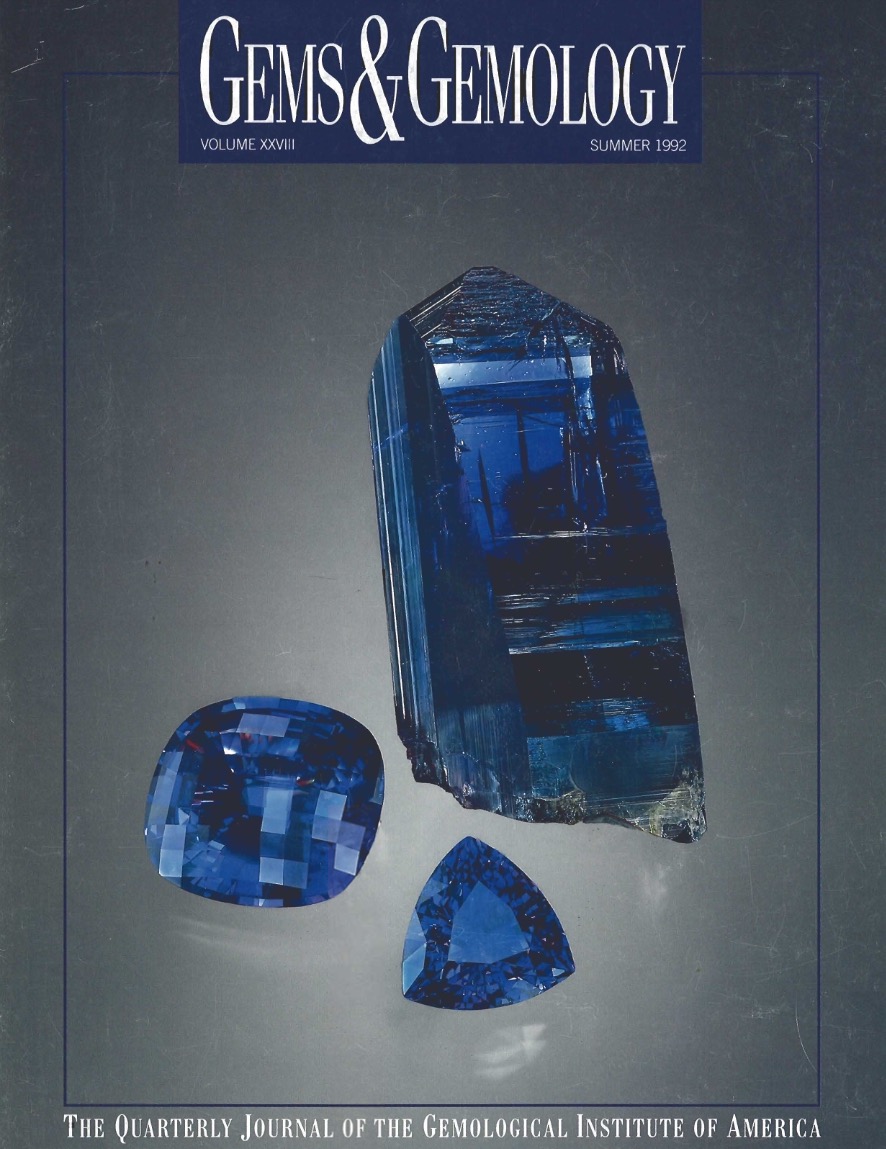
Journal Article
Koivula, J.I., Kammerling, R.C. and Fritsch, E. (1992) Gem News: Feldspar and amphibole gem from Egypt. Gems & Gemology, Vol. 28, No. 4, Winter, pp. 271–272.
Record No. 26787  |  Sinkankas/Born No.: NIS/NIB  |  RWHL
A mottled blue-to-green gem material from Egypt, observed in Cairo and said to be sporadically collected by Bedouin tribespeople, was found to resemble the well-known copper-colored “Eilat stone” of Israel. Two cabochons—a 7.05-ct pear shape and a 3.29-ct oval—were semitranslucent with greenish blue and nearly black dark green areas, the former highly fractured and veined, and the latter containing metallic-luster inclusions. Additional inclusions of saturated greenish blue with lower diaphaneity and some brownish red (likely limonitic) staining were noted. Spot refractive index measured 1.54, and the gems appeared green through the Chelsea filter. The translucent zones fluoresced faint yellowish green under long-wave UV, while the material was inert to short-wave UV. Specific gravity values were 2.67 and 2.74. As standard tests were inconclusive, X-ray powder diffraction revealed the greenish blue areas to be feldspar and the dark green areas amphibole, though species were not identified. EDXRF analysis detected Al, Si, K, Ca, Ba, Mn, Fe, and Cu, with copper likely responsible for the blue coloration. The stones were thus identified as rocks composed of feldspar and amphibole, with other minor mineral components.

Garnets from Egypt

Journal Article
Koivula, J.I., Kammerling, R.C. and Fritsch, E. (1992) Garnets from Egypt. Gems & Gemology, Vol. 28, No. 2, Summer, p. 132.
Record No. 26755  |  Sinkankas/Born No.: NIS/NIB  |  RWHL
During a 1991 visit to Egypt, a Gem News editor observed gem-set antiquities in the Egyptian Museum in Cairo, including dark brownish red stones in Greco-Roman jewelry that resembled almandine garnet. A museum chart listed garnet among the materials used by ancient Egyptians, though without specifying species. Later, in Luxor, the editor encountered a necklace of similarly colored beads from a gem dealer, who claimed they were garnets sourced from the south-central Sinai Peninsula, near Gebel Musa (Mt. Sinai), though the exact mine location was lost. John D. Rouse, in Garnet, referenced Pliny’s mention of Egypt as a source of “carbuncles,” likely garnets, possibly originating from a Theban trading station rather than a mine. The necklace, acquired for gemological study, comprised 36 off-round beads, 12.3–13.0 mm in diameter, appearing brown and opaque in reflected light but brownish red and transparent in transmitted light. Magnification revealed dark inclusions and stained fractures. Spot refractive index readings exceeded 1.80, and spectroscopic analysis showed absorption features typical of almandine and spessartine. EDXRF analysis confirmed the presence of iron and manganese, leading to the identification of the beads as almandine–spessartine garnets.

Emeralds from Madagascar

Journal Article
Schwarz, D. and Henn, U. (1992) Emeralds from Madagascar. Journal of Gemmology, Vol. 23, No. 3, pp. 140–149.
Record No. 6049  |  ISBN/ISSN: 221252  |  Sinkankas/Born No.: NIS/NIB  |  RWHL

Exploring the Literature of Gemstone Inclusions

The literature of gemstone inclusions covers identification, origin determination, treatments, synthesis, mineral inclusions, fluid inclusions and other internal features of natural and synthetic gems.

For a curated selection of important sources, read Inclusions in Gemstones — Hyperion Literature Sources.

About Four Treasures

Four Treasures is Lotus Gemology's freely accessible gemological reference database. Use the full database to search by author, title or keyword and explore literature on gemology, mineralogy, jewelry and related fields. Where available, hyperlinks on titles may lead directly to the full publication.

Search the Complete Four Treasures Database