Gemstone Inclusions Bibliography

Gemstone Inclusions Bibliography

Explore books, articles and historical sources on inclusions in gemstones in Four Treasures, the Lotus Gemology reference database. This bibliography brings together matching records from the collection, with publication details, abstracts and cover images where available.

Gemstone Inclusion References

The list below matches the terms inclusion or inclusions in the database's searchable fields. Some references discuss inclusions as part of a broader subject.
121–140 of 1,165 matching references

U-Pb ages of zircon inclusions in sapphires from Ratnapura and Balangoda (Sri Lanka) and implications for geographic origin
Journal Article
Elmaleh, E., Schmidt, S.T., Karampelas, S., Link, K., Kiefert, L., Süssenberger, A. and Paul, A. (2019) U-Pb ages of zircon inclusions in sapphires from Ratnapura and Balangoda (Sri Lanka) and implications for geographic origin. Gems & Gemology, Vol. 55, No. 1, Spring, pp. 18–28.
Record No. 5996  |  ISBN/ISSN: 0016626X  |  Sinkankas/Born No.: NIS/NIB  |  RWHL*
Five sapphires from the secondary placer deposits of Ratnapura and Balangoda in Sri Lanka were classified as being of metamorphic/metasomatic/non-basalt-related origin based on trace-element analysis (LA-ICP-MS) and inclusion characterization. Two sapphires—one from each deposit—contained suitable zircon inclusions that were dated using the LA-ICP-MS method. They yielded U-Pb ages of approximately 549 Ma. The results suggest that the zircon enclosed in the sapphires probably formed in a high-temperature event at the end of the Pre-cambrian granulite facies metamorphism of the ancient Gondwana continent and that this event coincides with the crystallization of the sapphires. The metamorphic character of these sapphires is confirmed from the trace-element composition as well as the solidand liquid-phase inclusions.

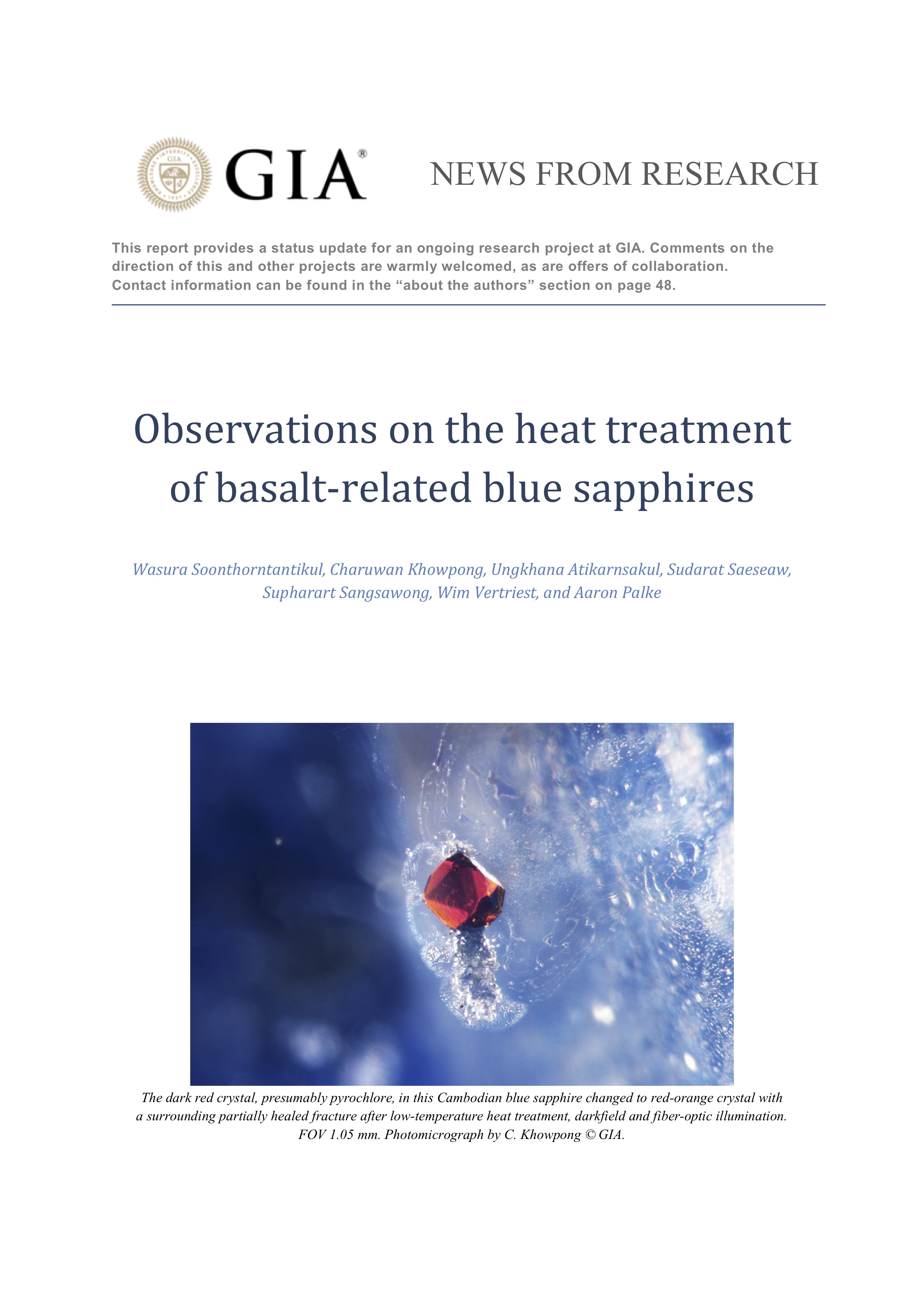
Observations on the heat treatment of basalt-related blue sapphires
Report
Soonthorntanikul, W., Khowpong, C., Atikarnsakul, U., Saeseaw, S., Sangsawong, S., Vertriest, W. and Palke, A. (2019) Observations on the heat treatment of basalt-related blue sapphires. GIA News From Research, no city: Gemological Institute of America, 60 pp.
Record No. 5979  |  Sinkankas/Born No.: NIS/NIB  |  RWHL*
Basalt-related blue sapphires typically have an oversaturated blue color causing the stones to be too dark when faceted. Low-temperature heat treatment can lighten dark material. However, it is difficult to identify this treatment using standard gemological testing and microscopic examination. For instance, unheated sapphires are transported to the earth’s surface by hot, basaltic magma which may have thermally altered their inclusions, causing them to look similar to those seen in artificially heated material. In this study, 50 basalt-related blue sapphires were heat treated in air (oxidizing atmosphere). Changes in color appearance, UV fluorescence, internal features, and spectroscopic properties post treatment were compared with the results before treatment to find suitable approaches for detecting heat treatment on blue sapphires from basalt-related deposits. The main factors affecting the sapphires’ response to heat treatment include the temperatures employed and the duration of the treatment process. Initial experiments at temperatures of 500–1500 °C for 7 hours showed that the blue color appears to lighten at 700 °C and higher. Temperatures ranging from 700 to 1050 °C were then selected for a more in-depth study on the effect of heating time with durations of 1.75, 7, and 28 hours. The results showed negligible change to a slight lightening of the blue color after treatment at 700 °C, while an obvious lightening of the blue color occurred at 900 and 1050 °C. Some mineral inclusions, iron stains, and partially healed fractures showed signs of alteration during these heating experiments, while needles and minute particles did not show any signs of change. All unheated samples studied were inert to short-wave ultraviolet radiation. After heating, most remained inert under short-wave UV, but a few samples exhibited a very weak chalky green fluorescence. FTIR spectra obtained from the samples varied considerably, with differences in peak intensities before and after heating. Differences were also seen as the duration of heating was changed. In most cases, unheated blue sapphires from basalt-related deposits revealed the characteristic 3309 cm⁻¹ series (sharp peaks at 3309, 3232 and 3186 cm⁻¹) in the FTIR spectrum with the intensity of 3232 cm⁻¹ being much lower than that of 3309 cm⁻¹. After heating at 700 °C and 900 °C, the intensity of the 3309 cm⁻¹ peak decreased and the 3232 cm⁻¹ peak increased, respectively. However, in most cases, some samples that initially showed a relatively intense 3232 cm⁻¹ peak before treatment exhibited a more intense 3309 cm⁻¹ peak and a less intense 3232 cm⁻¹ peak post treatment. After heating at 1050 °C for 1.75 hours, we recorded a decrease in the intensity of the 3309 cm⁻¹ peak and an increase in the 3232 cm⁻¹ peak, to the point where they were of almost comparable intensity. When subsequently heated for 7 and 28 hours, the intensity of the 3309 cm⁻¹ peak increased and that of the 3232 cm⁻¹ peak decreased. UV-Vis-NIR spectra obtained from the samples heated at 900 °C and 1050 °C for 1.75, 7, and 28 hours showed a reduction in the height/intensity of the broad band centered at 580 nm related to an Fe²⁺–Ti⁴⁺ intervalence charge transfer. This reduction is the root cause of the lighter color after heat treatment. The results of this study showed that even with advanced testing, it is very challenging to separate basalt-related sapphires that have been artificially heated from natural unheated stones, owing to the variable results associated with the experimental temperatures and durations used. Inclusion studies may provide sufficient evidence in some cases, but even when comparing the inclusions seen before and after treatment, separation often remains challenging.

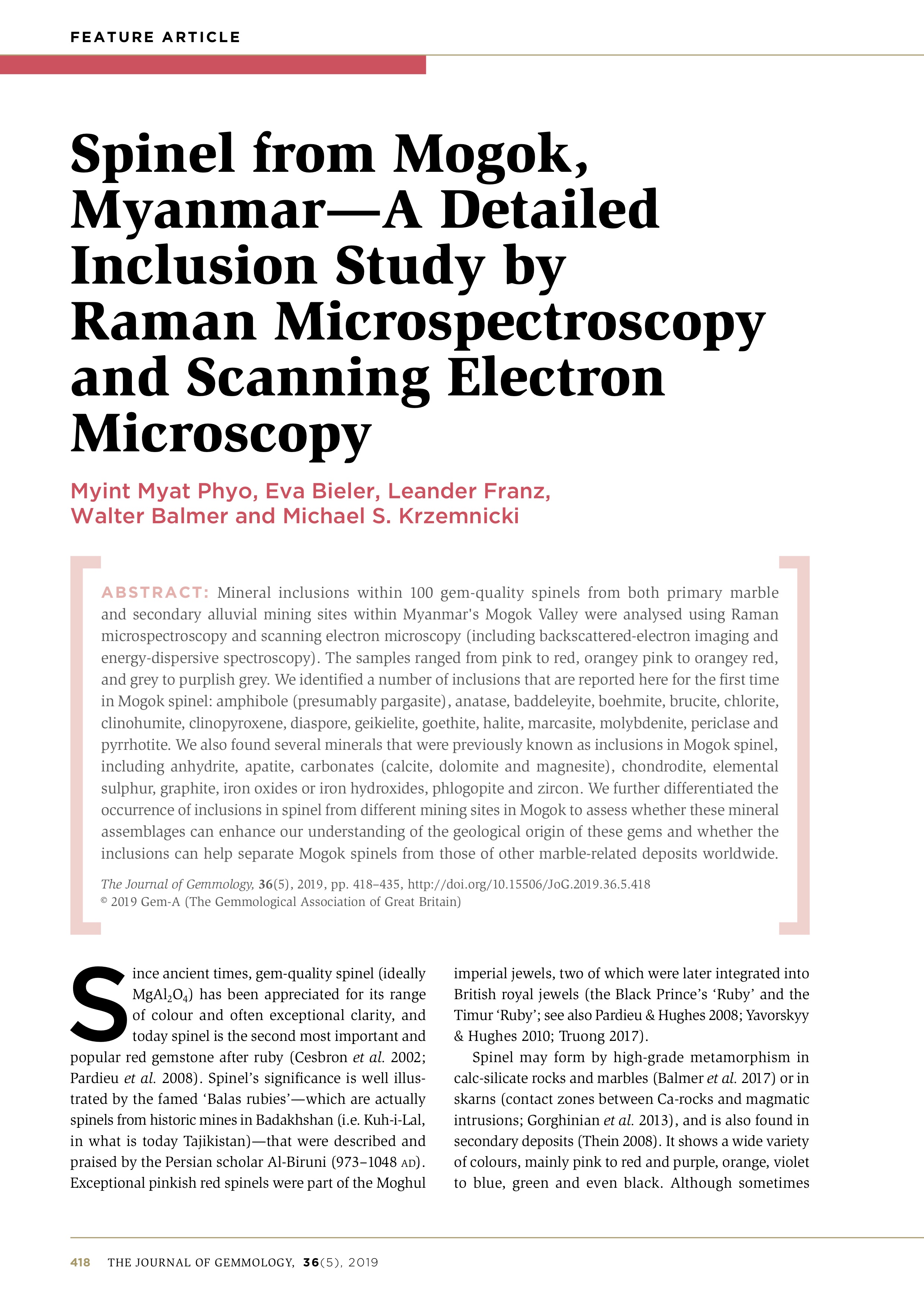
Spinel from Mogok, Myanmar—A detailed inclusion study by Raman microspectroscopy and scanning electron microscopy

Journal Article
Myint Myat Phyo, Bieler, E., Franz, L., Balmer, W. and Krzemnicki, M.S. (2019) Spinel from Mogok, Myanmar—A detailed inclusion study by Raman microspectroscopy and scanning electron microscopy. Journal of Gemmology, Vol. 36, No. 5, pp. 418–435.
Record No. 5977  |  ISBN/ISSN: 221252  |  Sinkankas/Born No.: NIS/NIB  |  RWHL*
Mineral inclusions within 100 gem-quality spinels from both primary marble and secondary alluvial mining sites within Myanmar's Mogok Valley were analysed using Raman microspectroscopy and scanning electron microscopy (including backscattered-electron imaging and energy-dispersive spectroscopy). The samples ranged from pink to red, orangey pink to orangey red, and grey to purplish grey. We identified a number of inclusions that are reported here for the first time in Mogok spinel: amphibole (presumably pargasite), anatase, baddeleyite, boehmite, brucite, chlorite, clinohumite, clinopyroxene, diaspore, geikielite, goethite, halite, marcasite, molybdenite, periclase and pyrrhotite. We also found several minerals that were previously known as inclusions in Mogok spinel, including anhydrite, apatite, carbonates (calcite, dolomite and magnesite), chondrodite, elemental sulphur, graphite, iron oxides or iron hydroxides, phlogopite and zircon. We further differentiated the occurrence of inclusions in spinel from different mining sites in Mogok to assess whether these mineral assemblages can enhance our understanding of the geological origin of these gems and whether the inclusions can help separate Mogok spinels from those of other marble-related deposits worldwide.

Colourblind: The use of Greek colour terminology in cultural linguistics in the late nineteenth and early twentieth centuries
Book Section
Funke, M. (2018) Colourblind: The use of Greek colour terminology in cultural linguistics in the late nineteenth and early twentieth centuries. In: Brill's Companion to Classics and Early Anthropology, Brill's Companions to Classical Reception 16, Leiden: Brill, pp. 255–276.
Record No. 27650  |  ISBN/ISSN: 9789000000000  |  Sinkankas/Born No.: NIS/NIB  |  RWHL*
Deciphering colour terms from early Greek poetry (that is, from poetry prior to the fifth century) is one of Classical philology’s longest-standing conundrums. What should a modern reader make of Homer’s “wine-dark” (οἶνοψ) cattle or his “violet” (ἰοειδής) sea? How is it that only a select few of the hues from Newton’s seven-colour ROYGBIV spectrum are represented in early Greek poetry? Through its ongoing assessment and comparison of languages from all over the world representing a wide variety of cultures, cultural linguistics offers a means of addressing these difficult questions. In its earlier stages, however, scholars in this sub-field of anthropology turned to the work of Classical philologists on Greek colour terms, using Homeric Greek in particular as one of their comparanda. This chapter does not attempt to answer the thorny questions posed above, which are likely to inspire a great deal of scholarship for years to come, but rather will trace the beginnings of colour term study by both philologists and anthropologists. If it is true that, as Turner claims, “anthropology presents perhaps the most tangled case of philological influence on a humanistic discipline,” then the history of the study of colour terms provides a clear narrative of how the roots of these disciplines grew entangled with each other. I relate this story beginning with nineteenth-century work on Homer which linked colour terminology to the ancient Greeks’ visual capabilities and situating it in the context of the scientific work of Sir Isaac Newton on colour, John Dalton on colour-blindness, and Charles Darwin on evolution. I then take up the origins of cultural linguistics, tracing how this process parallels the development of anthropology itself, before moving on to the work of early twentieth-century philologists on colour. In the final section of this chapter, I return to mid-century cultural linguistics, specifically Brent Berlin and Paul Kay’s inclusion of Homeric Greek in their seminal Basic Color Terms in 1969. I address why this dialect of ancient Greek has had such influence in the history of the study of colour terms and how varying trends in cultural linguistics have affected its use by both anthropologists and classicists. Much like classical studies, the study of colour terms is fundamentally interdisciplinary, currently requiring the participation of, according to Dedrick and Paramei, “psychophysicists and physiologists, cognitive psychologists and linguists, ethnographers and ethnoscientists, computer scientists and philosophers and neuropsychologists and ophthalmologists and literary scholars (who must) take each other seriously, on pain of mistake or irrelevance.” This chapter maps out where the work of classicists and anthropologists on colour terms has intersected and diverged to examine the enduring influence of Homeric Greek on this field of study.

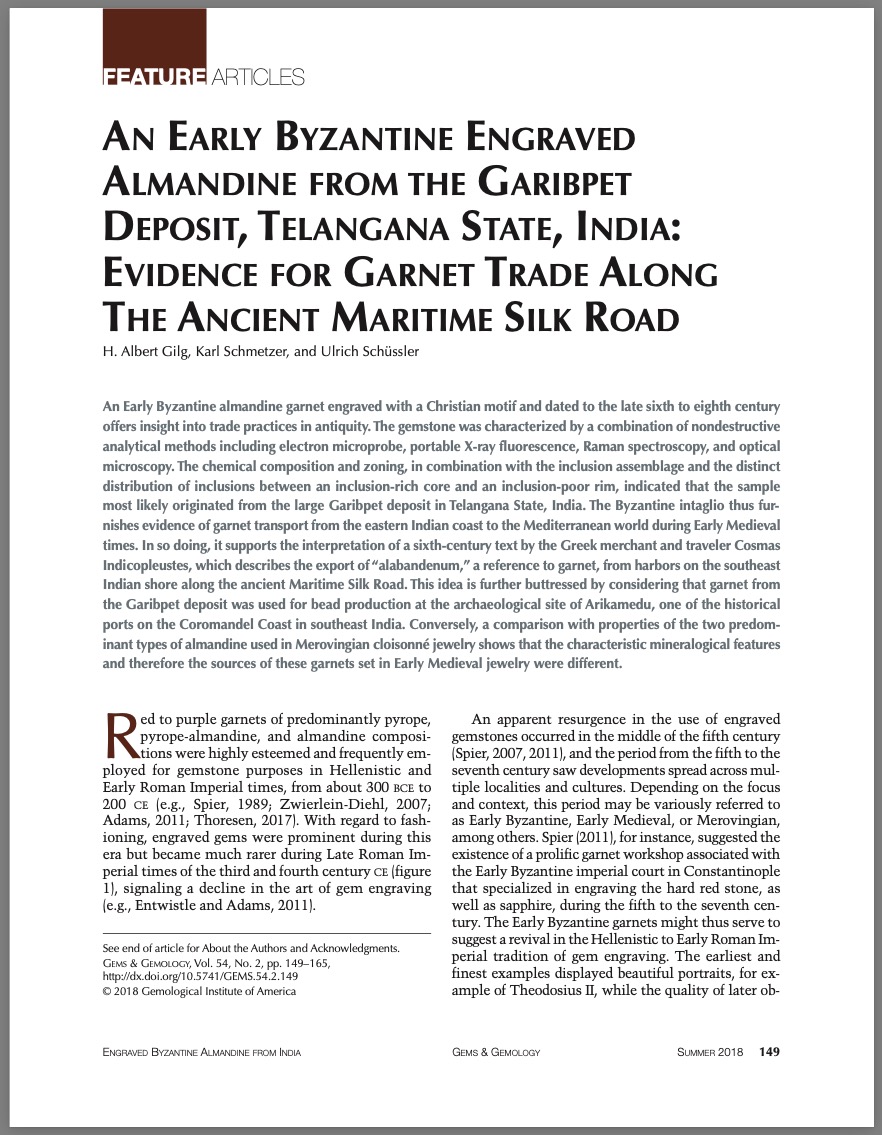
An early Byzantine engraved almandine from the Garibpet deposit, Telanga State, India: Evidence for garnet trade along the ancient Maritime Silk Road

Journal Article
Gilg, H.A., Schmetzer, K. and Schüssler, U. (2018) An early Byzantine engraved almandine from the Garibpet deposit, Telanga State, India: Evidence for garnet trade along the ancient Maritime Silk Road. Gems & Gemology, Vol. 54, No. 2, Summer, pp. 149–165.
Record No. 26703  |  DOI: http://dx.doi.org/10.5741/GEMS.54.2.149  |  Sinkankas/Born No.: NIS/NIB  |  RWHL*
An Early Byzantine almandine garnet engraved with a Christian motif and dated to the late sixth to eighth century provides valuable insight into ancient trade practices. The gemstone was analyzed using nondestructive techniques such as electron microprobe, portable X-ray fluorescence, Raman spectroscopy, and optical microscopy. Its chemical composition, inclusion assemblage, and the distribution of inclusions—dense in the core and sparse in the rim—suggest the stone likely originated from the Garibpet deposit in Telangana State, India. This supports the account of sixth-century Greek traveler Cosmas Indicopleustes, who described the export of “alabandenum” (garnet) from southeast Indian ports along the Maritime Silk Road. Additional support comes from evidence that garnets from Garibpet were used for bead production at Arikamedu, a known port on India’s Coromandel Coast. However, when compared to the characteristics of almandine garnets used in Merovingian cloisonné jewelry, the mineralogical features suggest those garnets came from different sources.

Boehmite needles in corundum are Rose channels
Journal Article
Notari, F., Fritsch, E., Caplan, C. and Hainschwang, T. (2018) Boehmite needles in corundum are Rose channels. Gems & Gemology, Vol. 54, No. 3, Fall, p. 257.
Record No. 6268  |  ISBN/ISSN: 0016626X  |  Sinkankas/Born No.: NIS/NIB  |  RWHL*
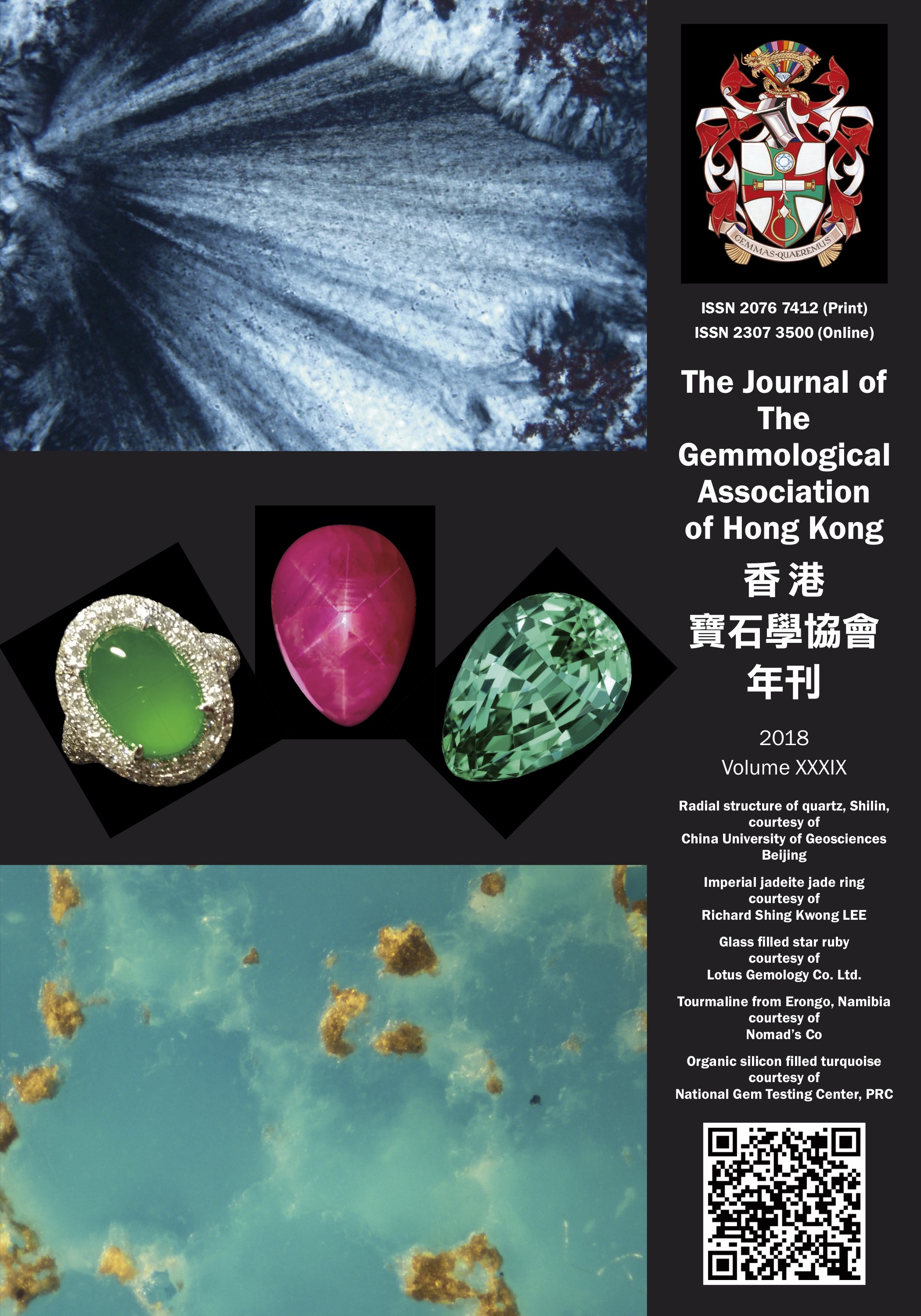
Crystallographically oriented, linear inclusions in corundum are often referred to as “boehmite needles” or “polycrystalline boehmite” (boehmite is the orthorhombic aluminum hydroxide γ-AlOOH). These inclusions are oriented along the edges of the rhombohedral faces and form angles of about 90°. They are always found at the intersection of twin lamellae, formed by twinning along the rhombohedral faces. They contain apparently polycrystalline material tentatively identified (at least in some cases) as boehmite. These are common in natural corundum and sometimes used as a criterion to separate natural from synthetic corundum. Boehmite can be recognized through its infrared absorption. The great majority of the “needle”-containing gem corundum showed no boehmite infrared absorption, thus leading us to believe that these inclusions have a different origin. Microscopic observation reveals three aspects: some are lath- or ribbon-shaped, others are clearly negative crystals, and sometimes they appear as dotted lines. At the outcrop of the feature on the gem’s surface there is most commonly a void that can be followed into the gem, so the “needle” is essentially empty. This feature was also documented in a flux-grown synthetic ruby with no boehmite infrared signal. These channels are favored during titanium diffusion and take on color first, as diffusion is much faster in the empty space. It is known that in a small number of materials—some metals, calcite, and diamond—hollow channels may form at the intersection of twin lamellae, caused by deformation twinning. This was discovered by Gustav Rose (1868) in calcite, and thus the features are called “Rose channels” (figure 1). We believe that “boehmite needles” are in fact Rose channels. Even when very small, these channels would explain the optical relief observed, without a change in chemistry or infrared absorption. They fit the crystallographic nature of the structures observed.

Sri Lankan sapphire enhanced by heat with pressure
Journal Article
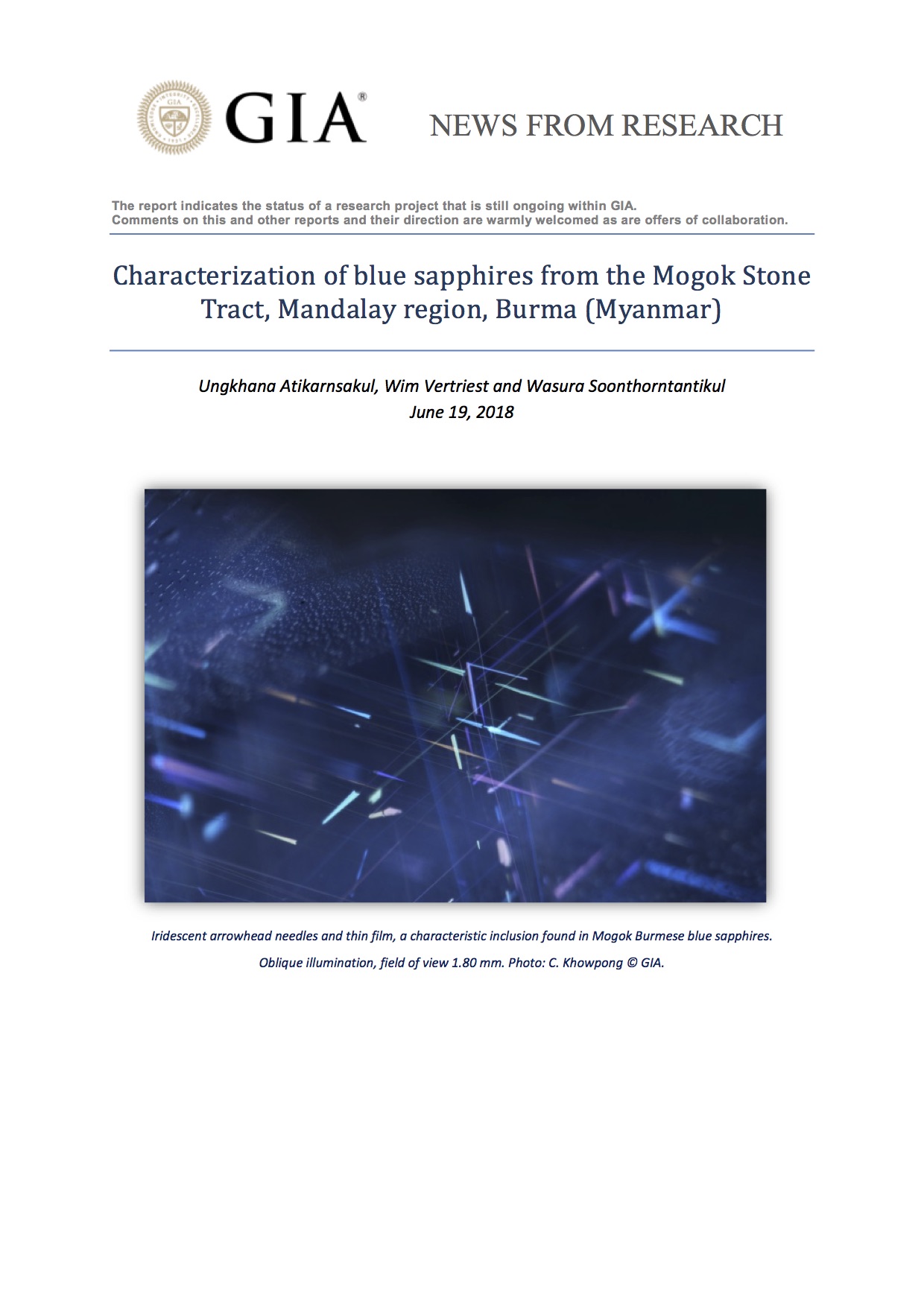
Choi, H., Kim, S., Kim, Y., Leelawatanasuk, T., Lhuaamporn, T., Atsawatanapirom, N. and Ounorn, P. (2018) Sri Lankan sapphire enhanced by heat with pressure. Journal of the Gemmological Association of Hong Kong, Vol. 39, pp. 16–25.
Record No. 5937  |  Sinkankas/Born No.: NIS/NIB  |  RWHL*
For decades now heat treatment has been used successfully as an enhancement process for sapphires, particularly blue sapphires, and is both accepted and widely practiced in the jewellery industry. Considered one of the classic coloured gemstones, fine quality blue sapphire is always in great demand. The techniques used for heat treatment are constantly being developed, not only in Thailand, and seem to involve increasingly sophisticated instruments. For instance, the famous Sri Lankan heat treatment technique known as the “Punsiri method” that has been seen to improve the colour of blue sapphire from various deposits successfully (G. DuToit et al., 2009). In 2013, a Korean company successfully developed a new technique for enhancing blue sapphire and began to trade their product in the gem market. This process involves the intentional application of pressure while heating the stone. This new technique significantly reduces the time needed to change the stone’s colour and/or clarity compared with the traditional heat treatment where stones are simply heated in a furnace. So far, Sri Lankan sapphire, (the so called Geuda sapphires) is the only commercial product that this company claims to be treating successfully. The blue sapphire resulting from this treatment commonly shows a typical strong OH-related absorption in the Mid-IR spectrum. This and some characteristic inclusion features are important keys for identification of sapphire that has undergone heat and pressure treatment. Further study is required to increase our understanding of the change mechanism and also the exact role of pressure in this process.

Characterization of blue sapphires from the Mogok Stone Tract, Mandalay region, Burma (Myanmar)
Report
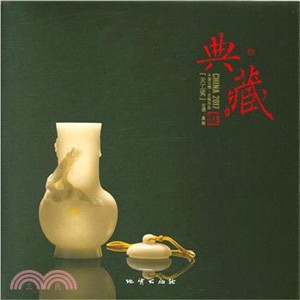
Atikarnsakul, U., Vertriest, W. and Soonthorntanikul, W. (2018) Characterization of blue sapphires from the Mogok Stone Tract, Mandalay region, Burma (Myanmar). GIA News from Research, Bangkok: Gemological Institute of America, June, 56 pp.
Record No. 5913  |  Sinkankas/Born No.: NIS/NIB  |  RWHL*
This study characterizes blue sapphires from Myanmar’s Mogok Stone Tract using standard gemological observations together with spectroscopic and chemical analyses. The authors document the appearance, internal features, trace-element chemistry, and spectral characteristics of Mogok sapphires, emphasizing features useful for geographic origin determination. The material commonly shows blue color related to iron and titanium, with variations in zoning and inclusion assemblages reflecting the complex geological environment of the deposit. Microscopic features, absorption spectra, and trace-element patterns are compared with those of sapphires from other major sources to identify characteristics that may assist in separating Mogok material from stones of similar appearance. The study provides a detailed reference dataset for laboratory identification and contributes to a better understanding of the gemological characteristics and origin determination of blue sapphires from this historically important Burmese deposit.

Classic Collections of 2017 China Jade Carving & Stone Carving Works Awarded with Tian Gong Prize
Edited Book
Ao, Y., editor (2018) Classic Collections of 2017 China Jade Carving & Stone Carving Works Awarded with Tian Gong Prize.. Beijing, 中国地质大学出版社 [China University of Geosciences Press], 400 pp..
Record No. 4441  |  ISBN/ISSN: 9787120000000  |  Sinkankas/Born No.: NIS/NIB  |  Language: in Chinese  |  RWHL*
This catalogue documents the works selected for the 2017 China Jade Carving and Stone Carving “Tian Gong Award,” providing an extensive visual survey of contemporary Chinese lapidary art. Richly illustrated in color, it presents prize-winning and selected carvings in nephrite, Fei Cui, crystal, agate, turquoise, and numerous other gem and ornamental materials. The works encompass traditional subjects drawn from Chinese mythology, religion, landscape, flora and fauna alongside increasingly contemporary and experimental designs, demonstrating both continuity with established carving traditions and innovation in composition and technique. Individual pieces illustrate the carvers’ use of natural color, texture, skin, inclusions, and irregularities in the rough as integral elements of their designs. As an annual record of the Tian Gong competition, the volume documents important artists, materials, workmanship, and stylistic developments in Chinese jade and stone carving during 2017.

Close-up photographs of gemstone inclusions: Are they works of art?
Web Page
Minieri, P. (2018) Close-up photographs of gemstone inclusions: Are they works of art? <https://www.rivistaitalianadigemmologia.com/en_GB/2018/02/14/close-up-photographs-of-gemstone-inclusions-are-they-works-of-art/>
Record No. 4103  |  Sinkankas/Born No.: NIS/NIB  |  RWHL*
This is not the first time that gemologists rummage through the mysterious spaces of crystals and end up being so surprised by the images they produce that they ask themselves whether they have stepped into another area: the field of real art. When, after printing them, these photos become tangible objects like paintings, their question becomes clearer: is there a spontaneous form of art that doesn’t need human beings any more, revealed by the simple reproduction of innate phenomena? After all Pliny himself, a precursor of all “modern” gemological reasoning, warned scholars to consider gemstones precious just because they have the priceless value of making us contemplate the spectacular and intriguing lessons to learn from Nature. According to the great Latin naturalist, their beauty contained an explicit invitation to contemplation. An invitation for us, miserable and frail humans, to immerse and lose ourselves in them and read the wonderful design of the perfect system of the Magister Vitae, which gave order to the world.

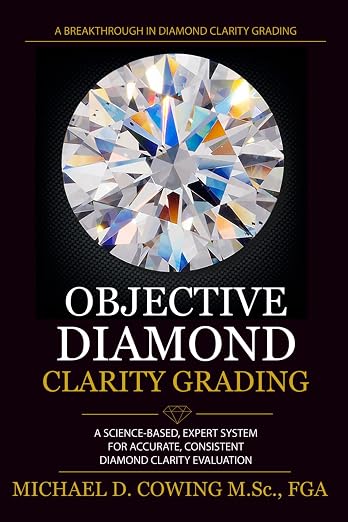
Objective Diamond Clarity Grading

Book
Cowing, M.D. (2017) Objective Diamond Clarity Grading. Las Vegas, self-published, 140 pp.
Record No. 29403  |  ISBN/ISSN: 9781000000000  |  Sinkankas/Born No.: NIS/NIB  |  RWHL*
Developed by gemologist Michael D. Cowing, M.Sc., FGA, this book presents a structured framework that mirrors the decision-making processes of expert diamond graders while enabling greater grading consistency and accuracy. Through extensive examples, clear methodology, and more than 250 detailed images, readers learn to assess clarity characteristics, evaluate inclusions, and develop confidence in assigning clarity grades. Drawing upon years of research and practical diamond grading experience, Objective Diamond Clarity Grading bridges the gap between traditional expertise and objective measurement, making advanced clarity grading concepts accessible to aspiring gemologists, professional appraisers, diamond dealers, and serious diamond enthusiasts. This work represents a significant advancement toward accurate, consistent, and reproducible diamond clarity grading by applying objective measures that accurately replicate the grading decisions of experienced professional graders.

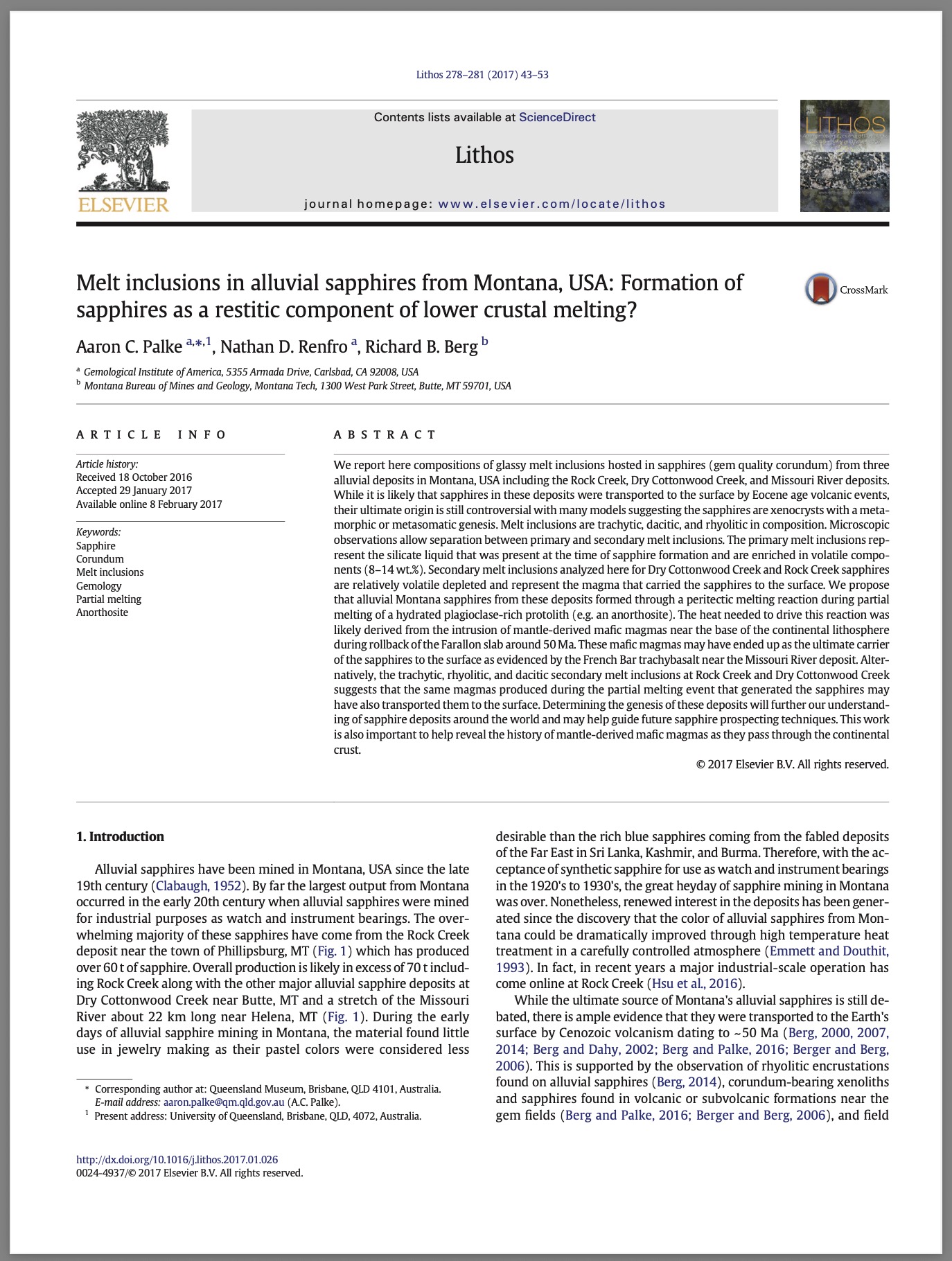
Melt inclusions in alluvial sapphires from Montana, USA: Formation of sapphires as a restitic component of lower crustal melting?
Journal Article
Palke, A.C., Renfro, N.D. and Berg, R.B. (2017) Melt inclusions in alluvial sapphires from Montana, USA: Formation of sapphires as a restitic component of lower crustal melting? Lithos, Vol. 278–281, pp. 43–53.
Record No. 28145  |  ISBN/ISSN: 0024-4937  |  DOI: https://doi.org/10.1016/j.lithos.2017.01.026  |  Sinkankas/Born No.: NIS/NIB  |  RWHL*
We report here compositions of glassy melt inclusions hosted in sapphires (gem quality corundum) from three alluvial deposits in Montana, USA including the Rock Creek, Dry Cottonwood Creek, and Missouri River deposits. While it is likely that sapphires in these deposits were transported to the surface by Eocene age volcanic events, their ultimate origin is still controversial with many models suggesting the sapphires are xenocrysts with a metamorphic or metasomatic genesis. Melt inclusions are trachytic, dacitic, and rhyolitic in composition. Microscopic observations allow separation between primary and secondary melt inclusions. The primary melt inclusions represent the silicate liquid that was present at the time of sapphire formation and are enriched in volatile components (8–14wt.%). Secondary melt inclusions analyzed here for Dry Cottonwood Creek and Rock Creek sapphires are relatively volatile depleted and represent the magma that carried the sapphires to the surface. We propose that alluvial Montana sapphires from these deposits formed through a peritectic melting reaction during partial melting of a hydrated plagioclase-rich protolith (e.g. an anorthosite). The heat needed to drive this reaction was likely derived from the intrusion of mantle-derived mafic magmas near the base of the continental lithosphere during rollback of the Farallon slab around 50Ma. These mafic magmas may have ended up as the ultimate carrier of the sapphires to the surface as evidenced by the French Bar trachybasalt near the Missouri River deposit. Alternatively, the trachytic, rhyolitic, and dacitic secondary melt inclusions at Rock Creek and Dry Cottonwood Creek suggests that the same magmas produced during the partial melting event that generated the sapphires may have also transported them to the surface. Determining the genesis of these deposits will further our understanding of sapphire deposits around the world and may help guide future sapphire prospecting techniques. This work is also important to help reveal the history of mantle-derived mafic magmas as they pass through the continental crust.

Vesuvianite in Burmese ruby

Journal Article
Renfro, N. and Koivula, J.I. (2017) Vesuvianite in Burmese ruby. Gems & Gemology, Vol. 53, No. 4, Winter, p. 469.
Record No. 7409  |  ISBN/ISSN: 0016626X  |  Sinkankas/Born No.: NIS/NIB  |  RWHL*

Tourmaline crystals on Burmese ruby

Journal Article
Vertriest, W. and Khowpong, C. (2017) Tourmaline crystals on Burmese ruby. Gems & Gemology, Vol. 53, No. 4, Winter, pp. 468–469.
Record No. 7396  |  ISBN/ISSN: 0016626X  |  Sinkankas/Born No.: NIS/NIB  |  RWHL*

Complex yellow fluid inclusions in red Burmese spinel
Journal Article
Vertriest, W. and Raynaud, V. (2017) Complex yellow fluid inclusions in red Burmese spinel. Gems & Gemology, Vol. 53, No. 4, Winter, p. 468.
Record No. 7395  |  ISBN/ISSN: 0016626X  |  Sinkankas/Born No.: NIS/NIB  |  RWHL*

Jadeitite from Itoigawa, Niigata Prefecture, central Japan
Journal Article
Hirajima, T. (2017) Jadeitite from Itoigawa, Niigata Prefecture, central Japan. Journal of Mineralogical and Petrological Sciences, Vol. 112, No. 5, pp. 227–236.
Record No. 6687  |  Sinkankas/Born No.: NIS/NIB  |  RWHL*
This paper presents a review of Itoigawa’s jadeitite in history, culture, process of rediscovery, and geological characteristics. The people of the Jomon age used jadeitite as tools as far as 7000 years ago, making it one of the oldest jadeitite cultures in the world. The jadeitites from Itoigawa were the source of ornaments such as pendants or comma–shaped beads that can be dated to the Jomon age through to the Nara period. These ornaments are widely found in Japanese Islands from Hokkaido to Okinawa Prefecture, and also in the southern part of the Korean Peninsula. The jadeitite, however, was not used after the Nara period. The disappearance of jadeitite culture is not well understood, but it may have been caused by the introduction of Buddhism into Japan. Therefore, the existence of jadeitite in Japan was forgotten for a period of 1200 years after the Nara period. Mr. Eizo Ito rediscovered jadeitite from Itoigawa when he identified the durable green rock in the Kotakigawa River in 1938. His success was inspired by the idea of Mr. Gyofu Soma. The rediscovered jadeitite was studied by Dr. Yoshinori Kawano of the Tohoku Imperial University in 1939. There are large jadeitite boulders weighing more than 100 tons found in several areas of the Kotakigawa and Ohmigawa Rivers. These areas are designated national natural monuments. The jadeitite from Itoigawa can be found in various colors such as white, gray, black, lavender, and blue. These color variations are caused by the presence of trace elements such as iron and titanium in jadeite and omphacite, and tiny graphite inclusions in jadeitite. The absence of quartz and euhederal jadeite crystals with natrolite and veinlets of jadeitite indicates that the Itoigawa jadeitite does not form through decomposition of albite, but by hydrothermal activity. Some strontium dominant minerals such as itoigawaite were first found in jadeitite from Itoigawa. These strontium dominant minerals form in the calcium depleted hydrothermal solution in the late stages of jadeitite formation. The Jomon is the oldest jadeitite culture worldwide, and the first documented use of precious stones in the history of mankind. In addition, the jadeitite found in Itoigawa is the oldest known unit of its kind.

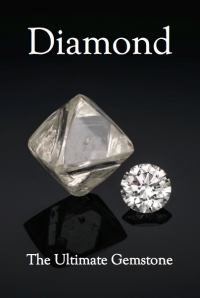
Diamond: Intimate portraits

Book Section
Koivula, J.I. and Skalwold, E.A. (2017) Diamond: Intimate portraits. In: Diamond • The Ultimate Gemstone, Arvada, CO: Lithographie, pp. 54–61.
Record No. 6214  |  Sinkankas/Born No.: NIS/NIB  |  RWHL*

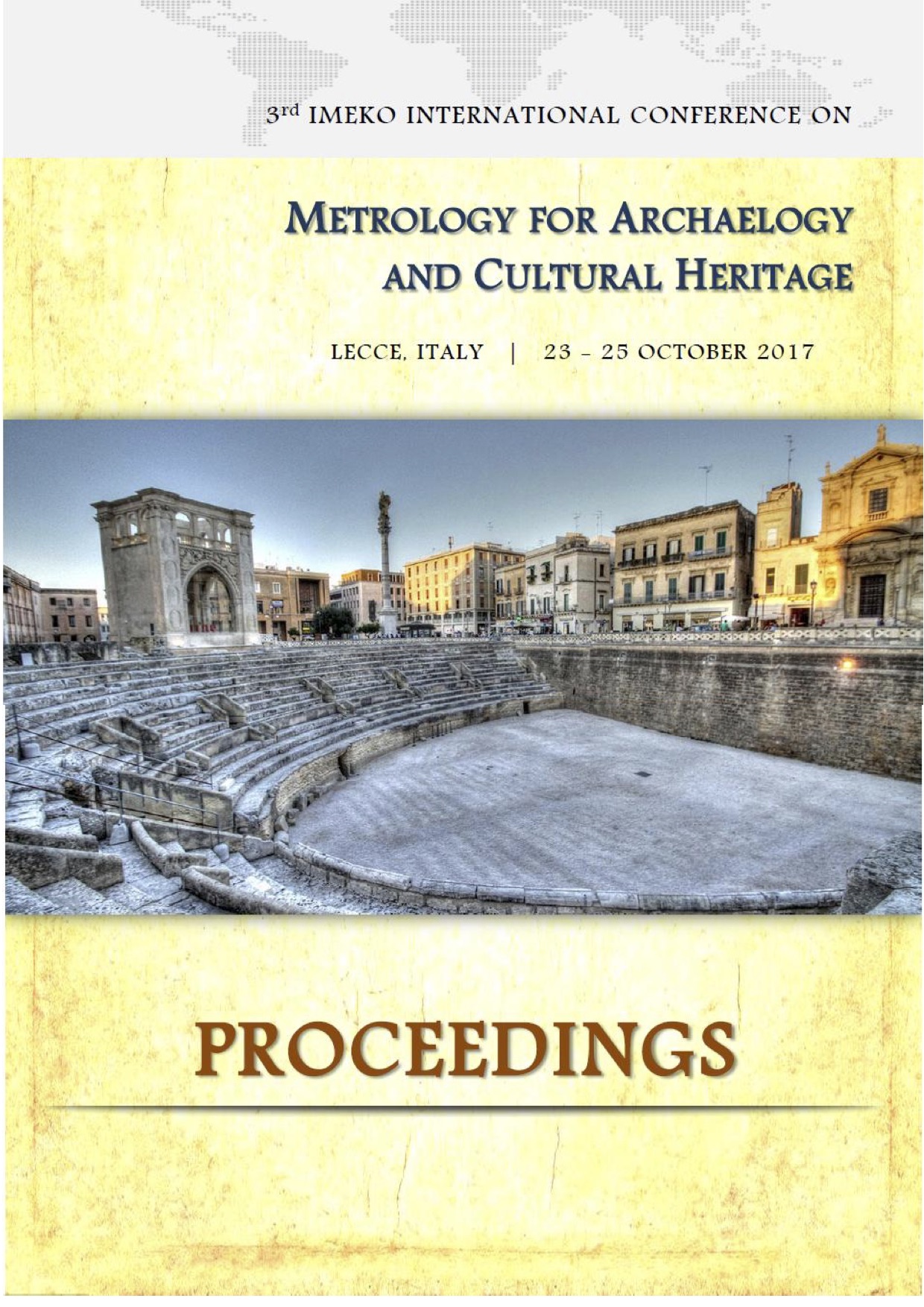
Characterization and provenance of ancient gemstones: Case study of a gold-and-sapphire jewel dating from the Roman imperial period and found in a tomb in Colonna, Italy
Conference Paper
Butini, E., Butini, F., Angle, M., Cerino, P., Angelis, A., de, Tomei, N. and Altamura, F. (2017) Characterization and provenance of ancient gemstones: Case study of a gold-and-sapphire jewel dating from the Roman imperial period and found in a tomb in Colonna, Italy. 3rd IMEKO International Conference on Metrology for Archaelogy and Cultural Heritage, 23–25 October, Lecce, Italy pp. 312–317.
Record No. 6121  |  Sinkankas/Born No.: NIS/NIB  |  RWHL*
In 2011, an extraordinary piece of gold jewelry set with precious stones was found in a woman’s tomb discovered not far from Rome and dating from the third century AD. Our examination and archaeometric analyses enabled us to identify the technique used to make the jewel and to characterize the nature and provenance of the gemstones. The analyses showed that all the stones were natural sapphires. Their inclusions and gemmological features indicate that they came from southern and south- eastern Asia, thus gaining insights about trade routes and the luxury-goods market during the Roman imperial period.

Inclusions in natural, synthetic and treated sapphire
Journal Article
Renfro, N., Koivula, J.I., Muyal, J., McClure, S.F., Schumacher, K. and Shigley, J.E. (2017) Inclusions in natural, synthetic and treated sapphire. Gems & Gemology, Vol. 53, No. 2, Summer, pp. 213–214.
Record No. 5884  |  ISBN/ISSN: 0016626X  |  Sinkankas/Born No.: NIS/NIB  |  RWHL*
This is the second chart in G&G’s series focused on micro-features often observed in natural, treated, and synthetic gems. Sapphire (figure 1) was chosen because of its enduring importance within the gem trade. Demand for this gem species has been the driving force behind the development of treat ment techniques to improve natural stones and the continued production of inexpensive synthetics. Natural sapphires, which originate in certain ig-neous or metamorphic geologic environments are commonly treated to improve their color or clarity. The most common processes involve heat treatment to improve color. Synthetic sapphires have been pro-duced for more than a century, mostly by melt, flux, or hydrothermal solution methods (Hughes, 2017). All of these materials are widely encountered in the jewelry trade.

Inclusions in natural, synthetic and treated ruby

Journal Article
Renfro, N., Koivula, J.I., Muyal, J., McClure, S.F., Schumacher, K. and Shigley, J.E. (2017) Inclusions in natural, synthetic and treated ruby. Gems & Gemology, Vol. 53, No. 4, Winter, pp. 457–458.
Record No. 5736  |  ISBN/ISSN: 0016626X  |  Sinkankas/Born No.: NIS/NIB  |  RWHL*

Exploring the Literature of Gemstone Inclusions

The literature of gemstone inclusions covers identification, origin determination, treatments, synthesis, mineral inclusions, fluid inclusions and other internal features of natural and synthetic gems.

For a curated selection of important sources, read Inclusions in Gemstones — Hyperion Literature Sources.

About Four Treasures

Four Treasures is Lotus Gemology's freely accessible gemological reference database. Use the full database to search by author, title or keyword and explore literature on gemology, mineralogy, jewelry and related fields. Where available, hyperlinks on titles may lead directly to the full publication.

Search the Complete Four Treasures Database