Jade Bibliography

Jade Bibliography

Explore books, articles and historical sources on jade in Four Treasures, the Lotus Gemology reference database. This bibliography brings together matching records from the collection, with publication details, abstracts and cover images where available.

Jade References

The list below matches the terms jade, jadeite, nephrite or Fei Cui in the database's searchable fields. Some references discuss these materials as part of a broader subject.

3,681–3,700 of 3,747 matching references
The Wong Collection of Ancient Chinese Jades

The Wong Collection of Ancient Chinese Jades

Wong, K.C. (1936)

Catalog · Publisher: Bluett & Sons

Abstract
The work comprises a catalogue of 527 specimens in the author's col­lection of ancient Chinese jades ranging from the Sung to the Ch'ing Dynasties. The nucleus of the collection, inherited from his ancestors, was used as material for Investigations into Ancient Jades With Illustra­tions, published in 1889 by Wu Ta-Ch'eng. A portion of the collection came from the estate of a brother, Wong Jui Hsum, and the remainder was assembled by K.C. Wong over a 30-year period. He points out that since the articles in nearly every instance exhibit some form of sym­bolism with significance in religion, myth or folk-lore, appreciation of the object demands acquaintance with the ceremonial and social customs of the people. The author explains the relationship of jade to the cosmic deities, and elucidates the role of the dragon used in jade carv­ing. The catalogue gives dates assigned by Wong only when he is certain. In some instances he has chosen not to date a piece, especially if that type of object was carved during so long a period, that it is difficult to be precise. The illustrations are chosen to show the scope of the collection. Given for each article of jade is the designation, Chinese equivalent in Roman type, color, size (in inches) and period. A glossary of Chinese terms relating to jades is appended.
Keywords
gems, jade, nephrite, Chinese jade carving

Illustrations of Ancient Jades collected or seen in the Hengzhai studio (Heng-chai ts’ang chien ku yü t’u)

衡齋藏見古玉圖

Huang, C. (1935)

Book · Language: in Chinese

Abstract
Sinkankas: Huang Chun [黃濬]. Heng-chai ts’ang chien ku yü t’u [衡齋藏見古玉圖 / Hengzhai cangjian guyu tu]. “Illustrations of ancient jades collected or seen in the Hengzhai studio.” Peking [Beijing], 1935. Not seen; cited from Max Loehr and U. P. Huber, Ancient Chinese Jades, 1975, p. 435. Huang Chun [黃濬; also cited as Huang Tsun]. Hengchai ts’ang chien ku yü fu [衡齋藏見古玉譜 / Hengzhai cangjian guyu pu]. “Illustrated ancient jades collected and seen at the Heng Chai Pavilion.” Peiping [Beiping], 1935. 2 vols. Not seen; mentioned by both Goette and Hansford. Compare no. 2856 above. Said to be a collection of excellent illustrations without any textual descriptions; the work was published by a dealer in jades in Peiping.
Keywords
gems, jade, amphibole jade, actinolite, tremolite, amphibole group, China, archaic jade, nephrite, carved jade, Chinese jade carving, history of jade in China
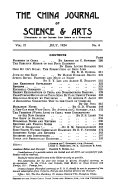
What price jade?

What price jade?

Lamb, G. (1934)

Journal Article · Source: China Journal of Science and Arts · Volume: Vol. 21 · Issue: September · Pages: pp. 100–105

Keywords
gems, jade, nephrite, Chinese jade carving
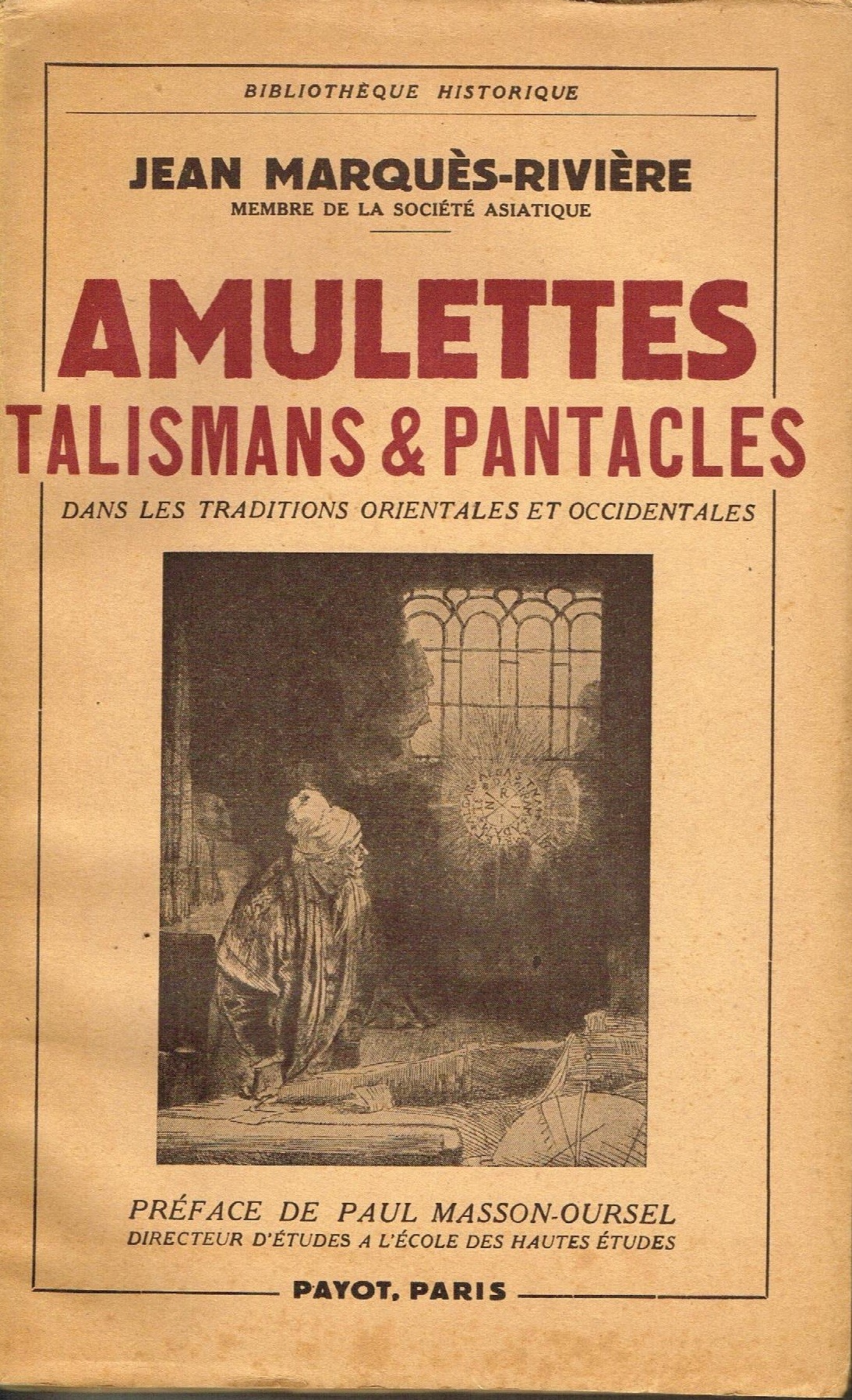
Amulettes, Talismans et Pantacles dans les Traditions Orientales et Occidentales

Amulettes, Talismans et Pantacles dans les Traditions Orientales et Occidentales

Amulets, Talismans and Pentacles in the Eastern and Western Traditions

Marquès-Rivière, J. (1933)

Book · Publisher: Payot · Pages: 370 pp. · Language: in French

Abstract
Sinkankas: Richly detailed, scholarly study of employment of talismans and similar protective devices. The introduction defines amulets, talismans, and pantacles and notes their extremely long use as an integral part of the culture in many civilizations. Gemstones appear in a brief discussion of the High Priest’s breastplate and the Urim and Thummim, p. 24–7, while remarks on use of gemstones in talismans and amulets by the Gnostics are found throughout Ch. 4, 100–20. Jades and other gemstones used by Pre-Columbian Indians of North America are noted in Ch. 7, 176–87, talismanic virtues of jade among the Chinese, Ch. 9, 217–9, and in the second part, Ch. 11, 253–78, “Les Lapidaires Magiques,” is entirely devoted to stones used as talismans throughout history, it also mentioning the use of bezoars and other organic materials and providing a summary list of occult or curative properties of gemstones, 270–5. A useful, valued work.
Keywords
gems, lore, history, medicinal use of gems, magical gems, healing gems, Medieval gems, jade
Trade Winds

Trade Winds

Kornitzer, L. (1933)

Book · Publisher: Geoffrey Bles · Pages: 279 pp.

Abstract
Sinkankas: Kornitzer’s first book. Fascinating and eminently readable accounts of adventures as a pearl buyer in the Philippines (an especially valuable part), in Broome, Australia, and at many other places and cities in the Far East. One chapter is devoted to jade. This work established the style that was adopted for all his other books, each written in a humorous, sometimes wry manner, and emphasizing the human side of the gem trade but by no means neglecting the practical and scientific aspects of the business. Rev. G & G, 2, 5, 1937, 89. This work, much edited, appeared serially in The Gemmologist, London, in vol. 12, issues: p. 36–39, to vol. 20, no. 234, p. 19–21, 1951, ca. 2–3 pp.
Keywords
gems, pearls, Australia, Philippines, Japan, Hong Kong, jade
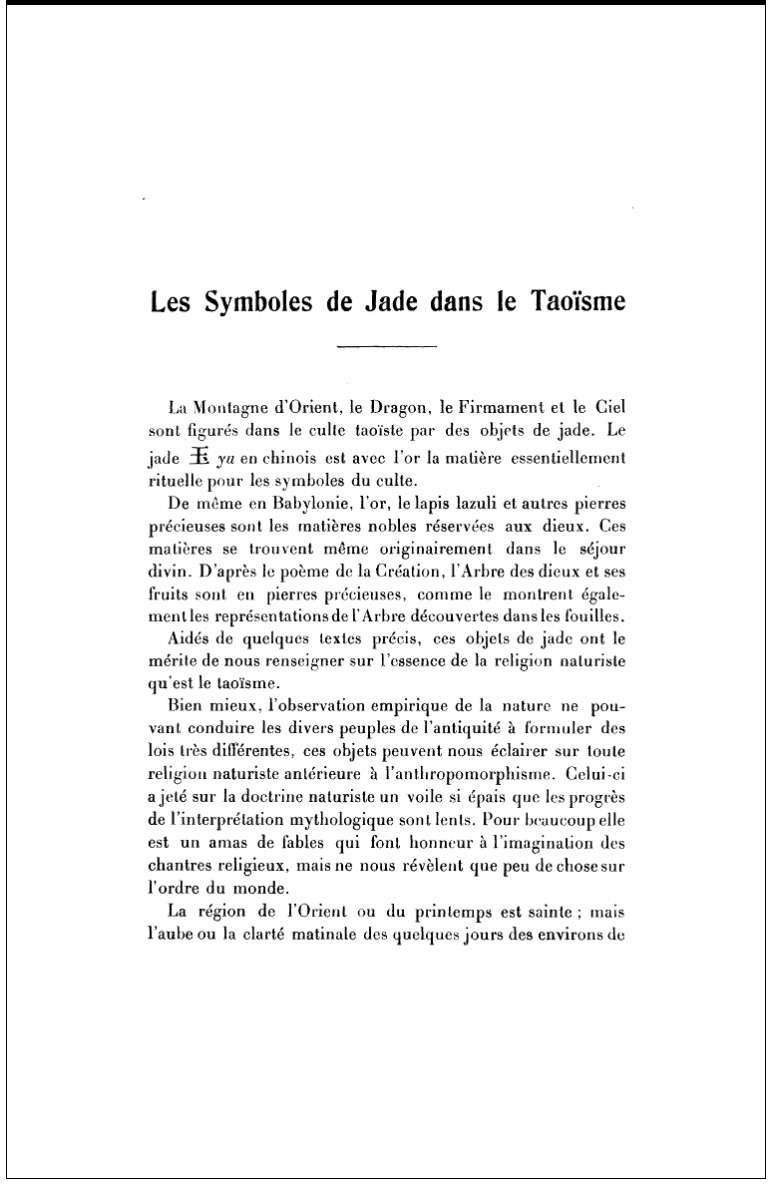
Les Symboles de Jade dans le Taoïsme

Les Symboles de Jade dans le Taoïsme

The symbols of jade in Taoism

Gieseler, G. (1932)

Journal Article · Source: Revue de l'Hstoire des Religions · Publisher: Armand Colin · Volume: Vol. 105 · Pages: pp. 158–181 · Language: in French

Abstract
Gieseler examines the religious and symbolic significance of jade in Taoism, concentrating on its associations with immortality, preservation, purity, and the supernatural properties attributed to the material in Chinese tradition. Drawing on Taoist texts and related Chinese literary sources, he discusses jade as a substance believed capable of protecting the body from corruption and consequently associated with funerary practices and aspirations toward physical immortality. Jade objects and substances appear in rites, talismans, magical preparations, and accounts of immortals, while the ingestion of jade or jade-derived preparations forms part of traditions concerned with prolonging life and achieving transcendence. Gieseler also considers particular jade symbols and ritual objects within Taoist cosmology, showing how their forms and uses acquired meanings extending beyond jade’s value as a precious material. The article emphasizes the close relationship between the physical qualities traditionally attributed to jade—hardness, durability, purity, and incorruptibility—and its religious significance, in which those qualities became metaphors and instruments for attaining longevity, bodily preservation, spiritual transformation, and immortality.
Keywords
gems, jade, amphibole jade, nephrite, China, Chinese jade, archaic jade
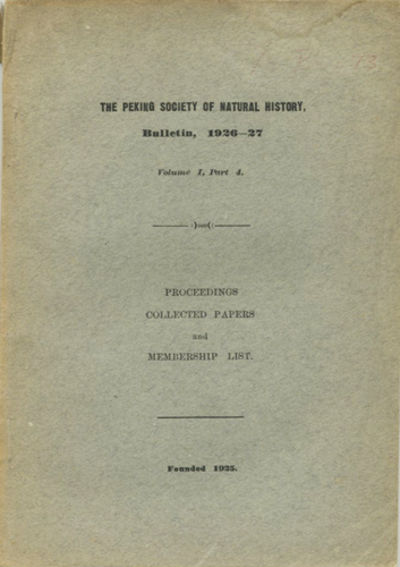
Minerals and Stones

Minerals and Stones

Read, B.E. and Pak, C. (1928)

Journal Article · Source: Bulletin of the Peking Society of Natural History · Volume: Vol. 3 · Issue: Part 2 · Pages: 107 pp.

Keywords
gems, jade, amphibole jade, nephrite, China, medicinal stones in China
A Parable of Jade

A Parable of Jade

Cable, A.M. and French, F.L. (1927)

Book · Publisher: Paternoster Press · Pages: 35 pp.

Abstract
An appreciation of Chinese jade stressing its spiritual significance and qualities; includes some information on sources, varieties, and lapidary treatment. Not free of errors.
Keywords
gems, jade, China

Elegance of Stones [Shí Yǎ]

石雅

Zhang, H. (1927)

Book · Language: in Chinese

Abstract
Zhang Hongzhao’s Shí Yǎ (石雅, “Elegance of Stones”) is a pioneering attempt to reinterpret the mineral substances recorded in Chinese literature through modern mineralogy. Drawing extensively on classical texts, including the Shan Hai Jing and later historical, literary, pharmacological, and antiquarian sources, Zhang examines traditional names and descriptions and attempts to identify the materials to which they refer. The work is divided into three broad sections: the first concerns yù (玉) and related precious and ornamental stones, including 璆琳, 瓊瑰, and 水精; the second treats stones and mineral substances, including worked jade, decorative stones, and coal; and the third deals with metals. An appendix examines the historical development of China’s Bronze and Iron Ages. Particularly important for gemology is Zhang’s application of contemporary mineralogical knowledge to traditional Chinese gemstones and jade terminology, demonstrating that historical names cannot automatically be equated with single modern mineral species. The work consequently provides an important bridge between traditional Chinese lapidary literature and modern geology, mineralogy, and gemology and remains a major source for the historical study of Chinese stone terminology. The 1927 edition is a reprint, issued by the Central Geological Survey as Memoirs of the Geological Survey of China, Series B [乙種], No. 2; catalogues confirm the December 1927 reissue.
Keywords
gems, jade, China, Adam, Chinese jade books, jade lore

The Catalogue of Ch’ien Lung Jades

Nott, S.C. (1927)

Book

Abstract
Sinkankas: Nott gives this title in several later works but sans pagination or other details; not in C Denman; Yang 1730 but only title & date. Possibly Nott's earliest formal treatise on jade.
Keywords
jade, nephrite, China, Xinjiang, Khotan, gems

Mayan jades

Gann, T.W.F. (1925)

Journal Article · Source: Proceedings of the 21st International Congress of Americanists, Goteborg, 1924 · Pages: 276–282

Keywords
gems, jade, jadeite, fei cui, Mesoamerica, Mexico, Guatemala, Costa Rica, Mayans, Olmecs, Aztecs, archaeology, history, archaeogemology
Old Chinese Spectacles

Old Chinese Spectacles

Rasmussen, O.D. (1915)

Book · Publisher: North China Press · Pages: 33 pp.

Abstract
Sinkankas: Fascinating account of an optometrist’s study of the development of spectacles in China that were manufactured from transparent quartz varieties and by the same lapidary methods as were used to carve jade. Four of the illustrations show various stages of work while another is a line drawing of a typical lapidary’s lathe-bench employing foot-treadle propulsion. Another valuable feature of this work is an account of the curious lore associated with wear of quartz spectacles and explaining why the Chinese were of the firm conviction that spectacles made from smoky quartz were soothing to the eyes and helped heal diseases of those organs. Very scarce.
Keywords
gems, lapidary arts, ancient lapidary, Afghanistan, Kabul, bow drill, beads, archaeology, archaeogemology, spectacles, quartz, China, jade
Nephrit und Jadeit

Nephrit und Jadeit

Bauer, M. (1914)

Book Section · Source: Handbuch der Mineralchemie · Volume: Vol. 2, Part 1 · Pages: pp. 649–704

Abstract
Sinkankas: A substantial technical article covering the chemistry and analysis of jade, including the investigations of Heber Reginald Bishop published in Investigations and Studies in Jade (1906). Topics discussed include physical properties, cohesive properties, melting points, reactions to acids and other reagents, the mineralogical characteristics of nephrite and jadeite, and their occurrence and origin. The article was also issued separately as an offprint.
Keywords
gems, mineralogy, gemology, jade, jadeite, fei cui, nephrite, amphibole jade, yu, pyroxene jade
The Morgan Whitney Collection of Chinese Jades and Other Hard Stones Donated to the Isaac Delgado Museum of Art

The Morgan Whitney Collection of Chinese Jades and Other Hard Stones Donated to the Isaac Delgado Museum of Art

Getz, J. (1914)

Book · Publisher: privately printed · Pages: 51 pp.

Abstract
Sinkankas: The catalog is preceded by remarks on the nature of jade, nomenclature, jeweled Indian jades, lapidary treatment, ancient or tomb jades, Chinese dynasties and a list of Ming emperors. Brief descriptions, with dates and dimensions. Photographs of fair to good quality. Commentary by Born, p131-2.
Keywords
gems, jade, amphibole jade, nephrite

Exploring the Literature of Jade

Jade literature spans gemology, mineralogy, archaeology, art history, mining, carving and connoisseurship, and includes works on both jadeite and nephrite from around the world.

For an introduction to collecting books on this subject, read Hidden Treasure — Collecting the Literature of Jade.

About Four Treasures

Four Treasures is Lotus Gemology's freely accessible gemological reference database. Use the full database to search by author, title or keyword and explore literature on gemology, mineralogy, jewelry and related fields. Where available, hyperlinks on titles may lead directly to the full publication.

Search the Complete Four Treasures Database