Jade Bibliography

Jade Bibliography

Explore books, articles and historical sources on jade in Four Treasures, the Lotus Gemology reference database. This bibliography brings together matching records from the collection, with publication details, abstracts and cover images where available.

Jade References

The list below matches the terms jade, jadeite, nephrite or Fei Cui in the database's searchable fields. Some references discuss these materials as part of a broader subject.
3,321–3,340 of 3,783 matching references

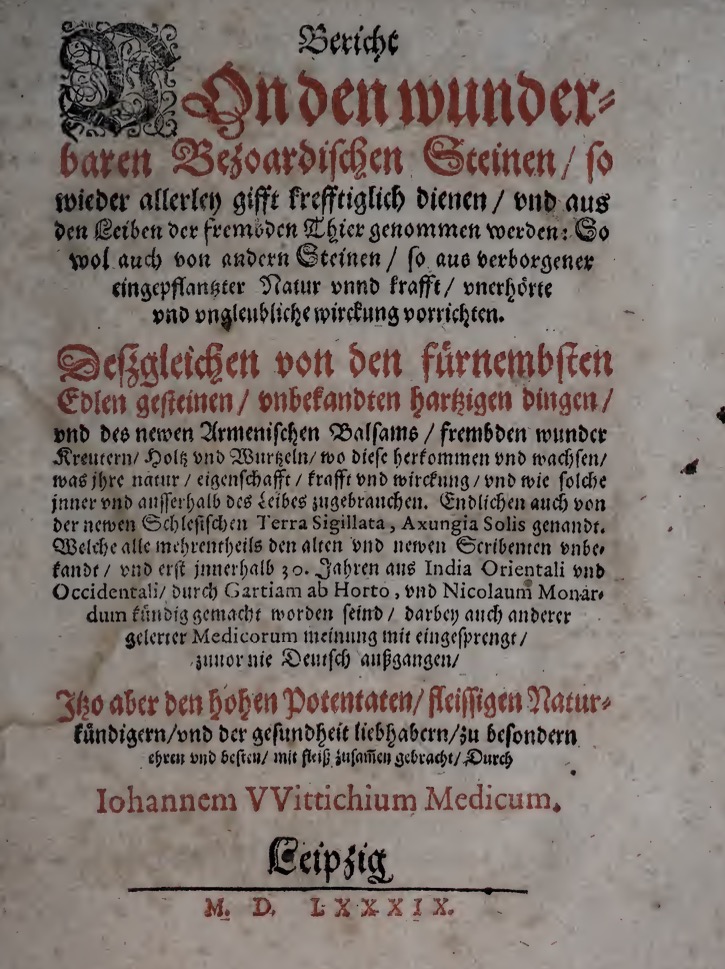
Bericht von den wunderbaren bezoardischen Steinen…
Report on the Wonderful Bezoar Stones…
Book
Wittich, J. (1589) Bericht von den wunderbaren bezoardischen Steinen…. [Report on the Wonderful Bezoar Stones…] Leipzig, Hans Steinmanns Erben, 181 pp.
Record No. 6860  |  Sinkankas/Born No.: 7291 (not seen); NIB  |  Language: in German  |  RWHL
A specialized Renaissance treatise on bezoar stones, examining their origins, varieties, physical characteristics, medicinal preparation, and reputed powers against poisons and disease. Wittich discusses both genuine and counterfeit bezoars and the means by which they might be distinguished, reflecting their great value and medical reputation in sixteenth-century Europe. The work is particularly relevant to gemological history because bezoars were collected, traded, tested, and mounted as precious objects alongside gemstones and were frequently incorporated into elaborate jewelry, vessels, and princely treasuries.

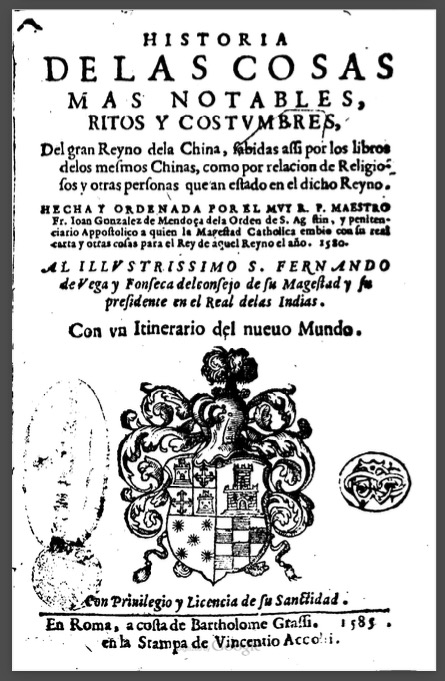
L'historia del gran regno della China
The History of the Great Kingdom of China
Book
Mendoza, J.G., de (1587) L'historia del gran regno della China. [The History of the Great Kingdom of China] Rome, Andrea Muschio, 508 pp.
Record No. 7533  |  Sinkankas/Born No.: NIS/NIB  |  Language: in Italian  |  RWHL
A widely read account of China compiled by the Spanish Augustinian Juan González de Mendoza from missionary reports, travel narratives, and other contemporary sources rather than from personal travel in China. The work describes the geography, government, cities, religion, customs, commerce, manufactures, natural products, and wealth of the Ming empire and played a major role in shaping late sixteenth-century European ideas about China. Of particular gemological interest are references to precious materials, luxury goods, jewelry, and mineral resources within Chinese trade and material culture.

De Gemmis Scriptum Evacis Regis Arabum
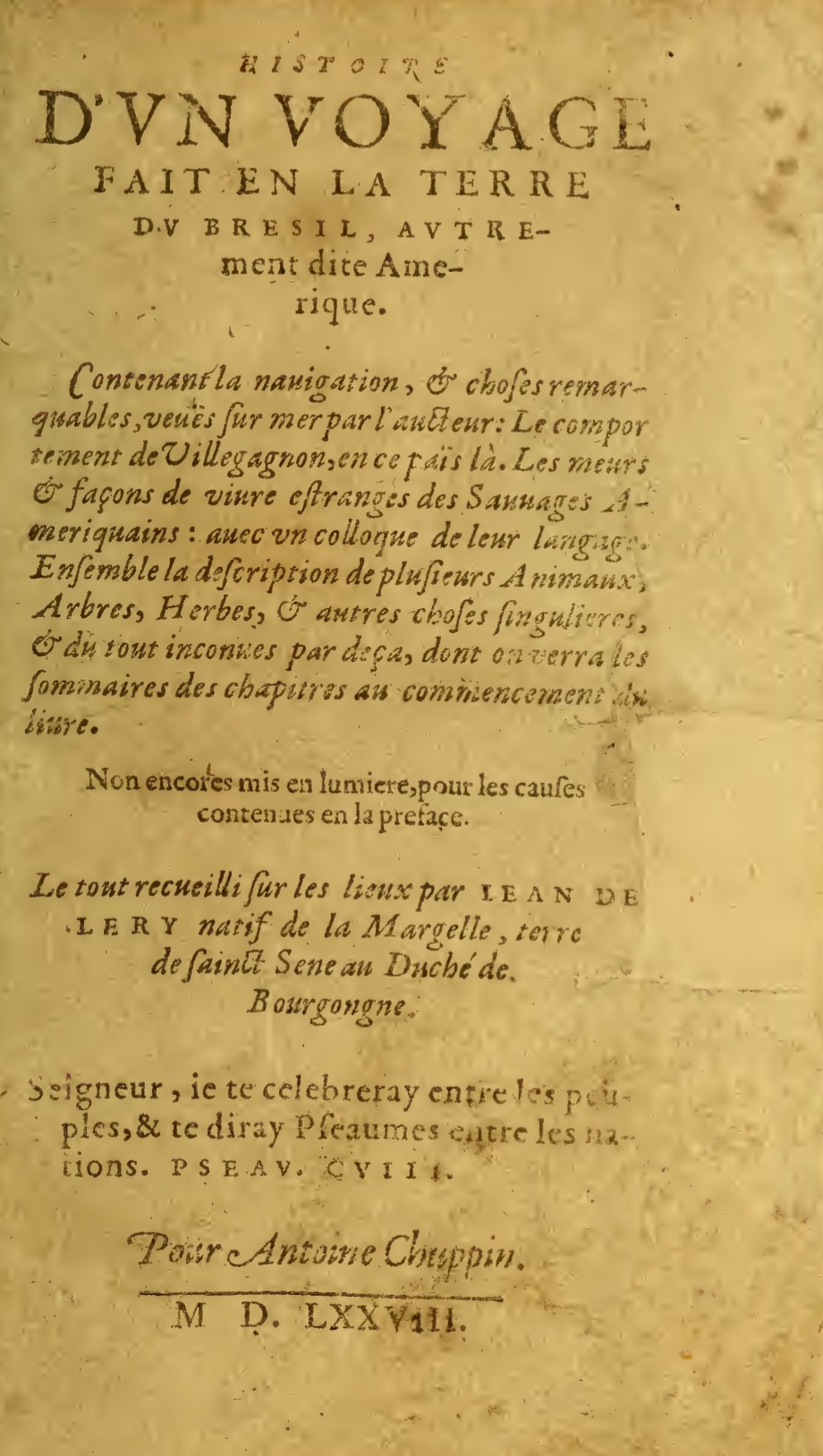
The Writing on Gems by Evax, King of the Arabs
Book
Evax and Rantzau, H. (1585) De Gemmis Scriptum Evacis Regis Arabum. [The Writing on Gems by Evax, King of the Arabs] Leipzig, Georgius Defnerus imprimebat, unpaginated
Record No. 7514  |  Sinkankas/Born No.: NIS/NIB  |  Language: in Latin  |  RWHL
A Renaissance edition of the ancient and medieval lapidary traditionally attributed to Evax, the legendary “King of the Arabs,” presented here with material associated with Heinrich Rantzau. The work describes precious stones individually, giving their names, physical appearance, supposed origins, medicinal applications, and magical or talismanic virtues. Drawing on the long Greco-Roman and medieval lapidary tradition, it is important for the history of gem lore because it helped transmit classical beliefs about gemstones into early modern Europe.

Histoire d'un voyage fait en la terre de Brésil, Autrement dite Amérique est un récit de voyage de Jean de Léry publié en 1578
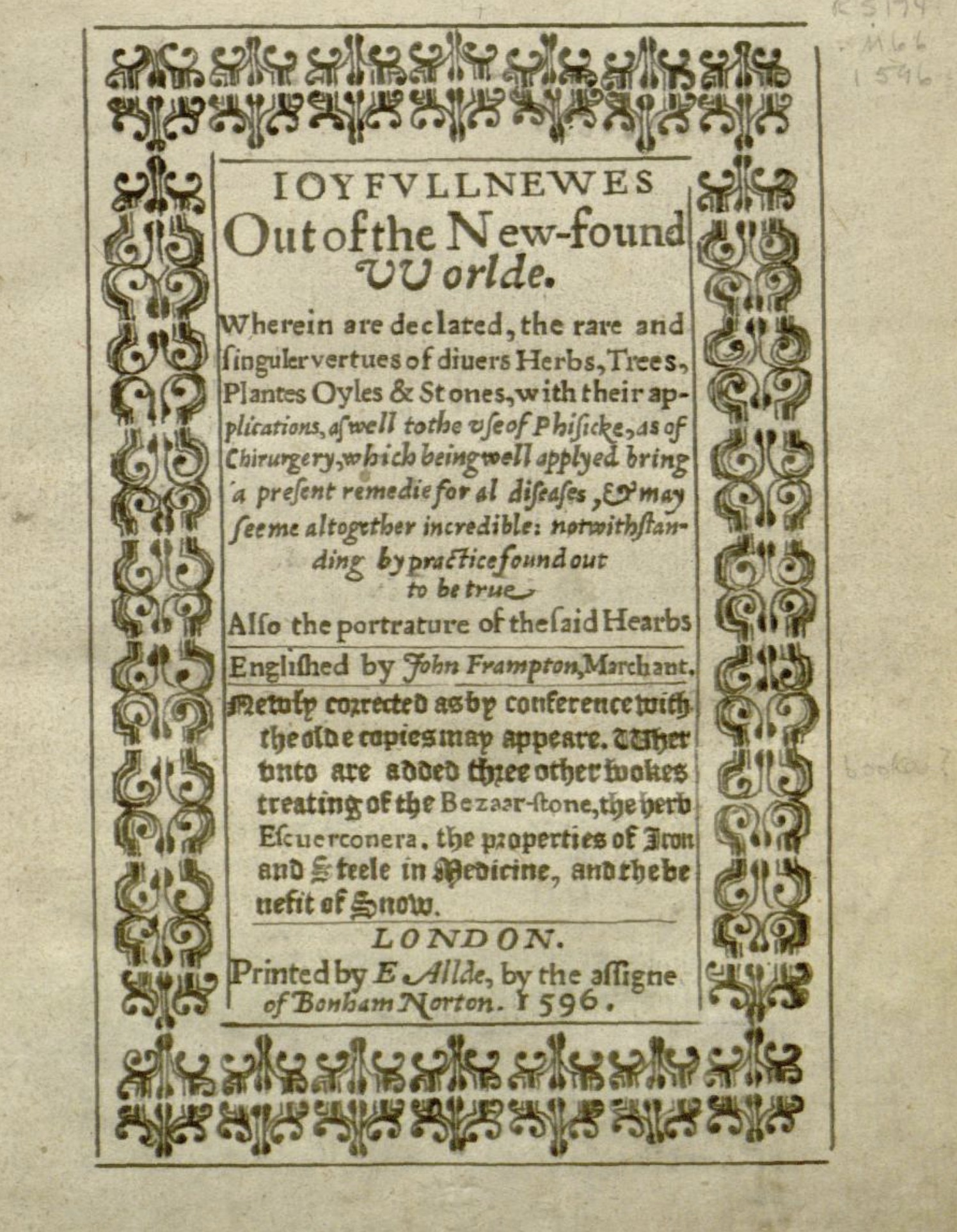
History of a Voyage to the Land of Brazil, Also Called America
Book
Léry, J., de (1578) Histoire d'un voyage fait en la terre de Brésil, Autrement dite Amérique est un récit de voyage de Jean de Léry publié en 1578. [History of a Voyage to the Land of Brazil, Also Called America] Geneva, Antoine Chuppin, 424 pp.
Record No. 7981  |  Sinkankas/Born No.: NIS/NIB  |  Language: in French  |  RWHL
A firsthand account of Jean de Léry’s voyage to Brazil and residence among the Tupinambá in the 1550s, describing the geography and natural environment of coastal Brazil and providing detailed observations on Indigenous society, warfare, religion, food, dress, ornament, trade, and customs. Léry also records Brazilian plants, animals, and natural products and compares Tupinambá life with contemporary European society. The work is one of the most important sixteenth-century ethnographic accounts of Indigenous Brazil and an influential early source for European knowledge of the country and its peoples.

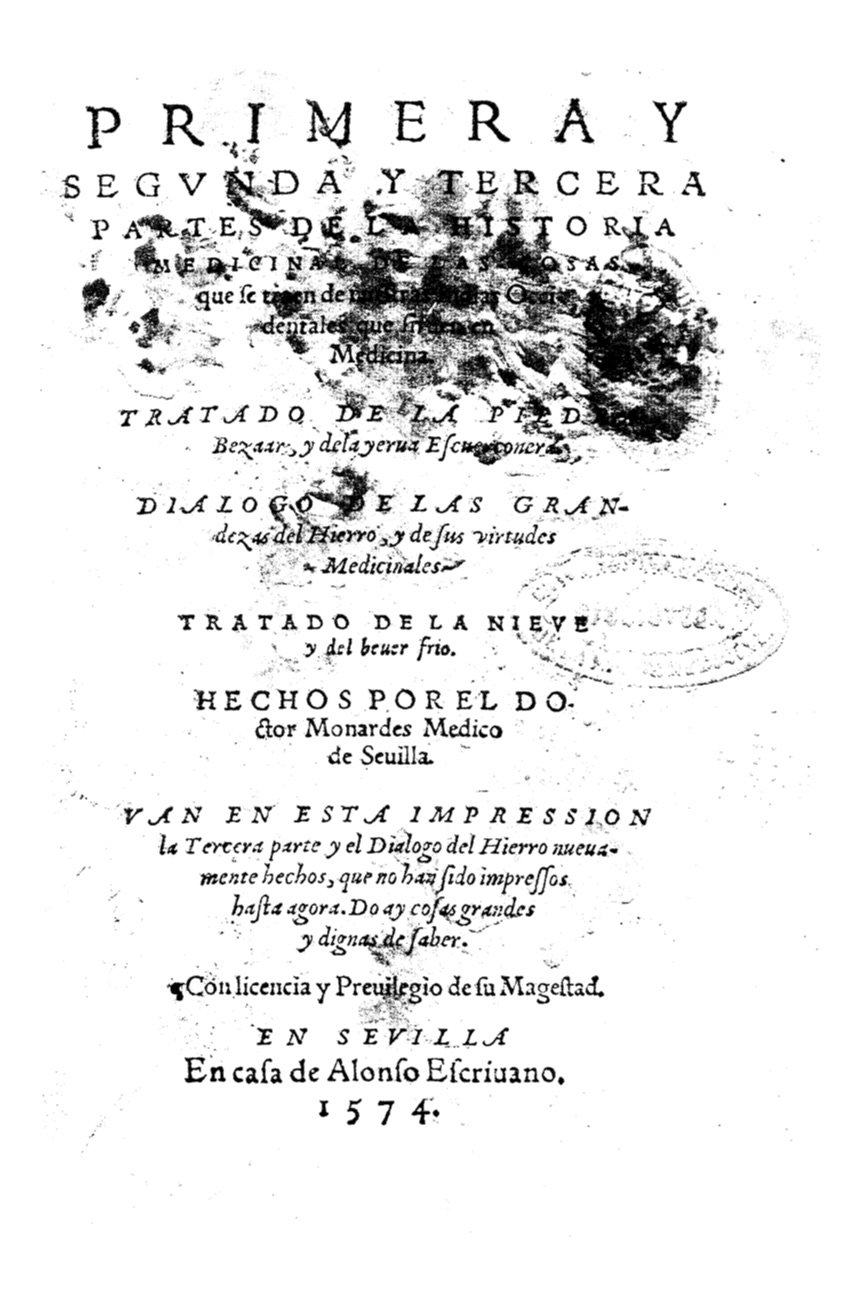
Joyfull Newes out of the New-found Worlde
Book
Frampton, J. (1577) Joyfull Newes out of the New-found Worlde. London, Bonham Norton, 197 pp. (see folios 19–20).
Record No. 16735  |  Sinkankas/Born No.: NIS/NIB  |  RWHL
An English translation by John Frampton of Nicolás Monardes’s writings on medicinal and other natural products newly introduced from the Spanish Americas. The work describes plants, drugs, resins, woods, oils, tobacco, and other substances, together with their origins, preparation, medicinal uses, and reputed virtues. It played an important role in transmitting Spanish and Indigenous American knowledge of New World natural products to English readers and is an important early source for the European reception of American materia medica.

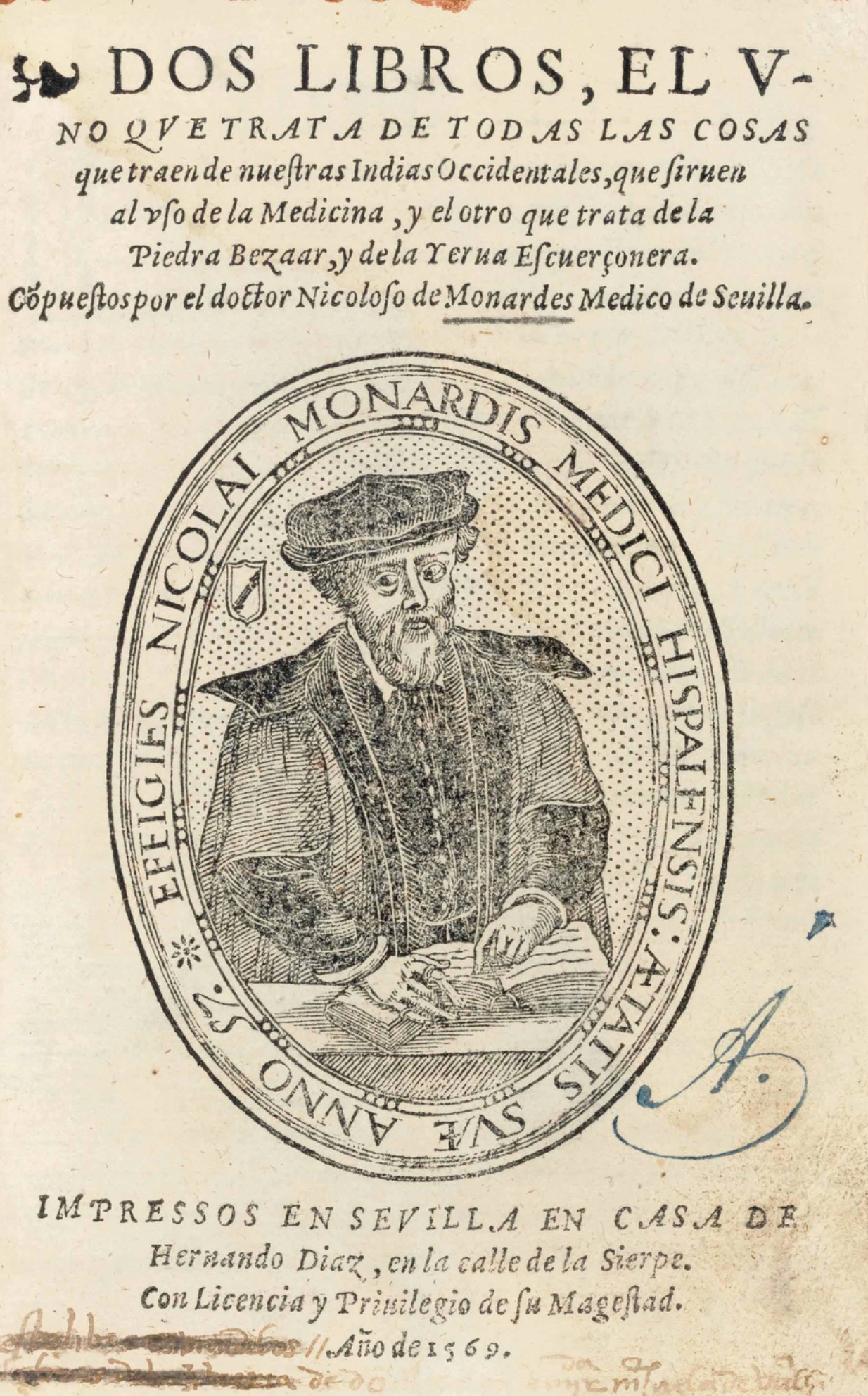
Historia medicinal de las cosas que se traen de nuestras Indias Occidentales
Medicinal History of the Things Brought from Our West Indies
Book
Monardes, N. (1574) Historia medicinal de las cosas que se traen de nuestras Indias Occidentales. [Medicinal History of the Things Brought from Our West Indies] Seville, Alonso Eferiuano, 206 pp.
Record No. 5851  |  Sinkankas/Born No.: NIS/NIB  |  Language: in Spanish  |  RWHL
A greatly expanded edition of Monardes’s influential account of medicinal substances brought to Spain from the Americas, incorporating his earlier writings into a more comprehensive work. It describes numerous New World plants, drugs, resins, oils, woods, and other natural substances, discussing their sources, preparation, medicinal uses, and reputed virtues. The work is an important early source for the transmission of Indigenous American knowledge into European medicine and pharmacy and for the sixteenth-century European understanding of the natural products of the Americas.

Vocabulario en lengua castellana y mexicana
Vocabulary in Spanish and Mexican languages
Book
Molina, A., de (1571) Vocabulario en lengua castellana y mexicana. [Vocabulary in Spanish and Mexican languages] Mexico, Antonio de Spinosa, 589 pp. (see p. 58).
Record No. 16491  |  Sinkankas/Born No.: NIS/NIB  |  Language: in Spanish  |  RWHL
An important bilingual dictionary by the Franciscan Alonso de Molina, providing equivalents between sixteenth-century Spanish and Nahuatl (the “Mexican” language). Based on extensive knowledge of spoken Nahuatl, the work documents vocabulary relating to everyday life, religion, trades, natural materials, plants, animals, metals, stones, ornaments, and Indigenous material culture. It is particularly valuable for historical gemology because it preserves early Nahuatl terminology for precious and ornamental stones and the Spanish terms by which these materials were understood in colonial Mexico.

Segunda parte del libro de las cosas que se traen de nuestras Indias Occidentales, que siruen al vso de medicina: do se trata del tabaco, y de la sassafras, y del Carlo Sancto, y de otras muchas yeruas y plantas, simientes, y licores, q[ue] agora nueuamente han venido de a quellas partes, de grandes virtudes, y marauillosos effectos
Second part of the book of the things brought from our West Indies, which are used for medicine: which deals with tobacco, and sassafras, and Carlo Sancto, and many other herbs and plants, seeds, and liquors, which have now come again from those parts, with great virtues, and marvelous effects
Book
Monardes, N. (1571) Segunda parte del libro de las cosas que se traen de nuestras Indias Occidentales, que siruen al vso de medicina: do se trata del tabaco, y de la sassafras, y del Carlo Sancto, y de otras muchas yeruas y plantas, simientes, y licores, q[ue] agora nueuamente han venido de a quellas partes, de grandes virtudes, y marauillosos effectos. [Second part of the book of the things brought from our West Indies, which are used for medicine: which deals with tobacco, and sassafras, and Carlo Sancto, and many other herbs and plants, seeds, and liquors, which have now come again from those parts, with great virtues, and marvelous effects], Alonso Escriuano, impressor, 96 pp. (see p. 67).
Record No. 7889  |  Sinkankas/Born No.: NIS/NIB  |  Language: in Spanish  |  RWHL
A continuation of Monardes’s influential work on medicinal substances newly brought to Spain from the Americas. This second part describes tobacco, sassafras, Carlo Santo, and numerous other American herbs, plants, seeds, liquors, and natural products, discussing their origins, preparation, medicinal virtues, and reported effects. The work is an important early source on the incorporation of New World materia medica into European medicine and pharmacy and on the transmission of Indigenous knowledge of natural substances to sixteenth-century Europe.

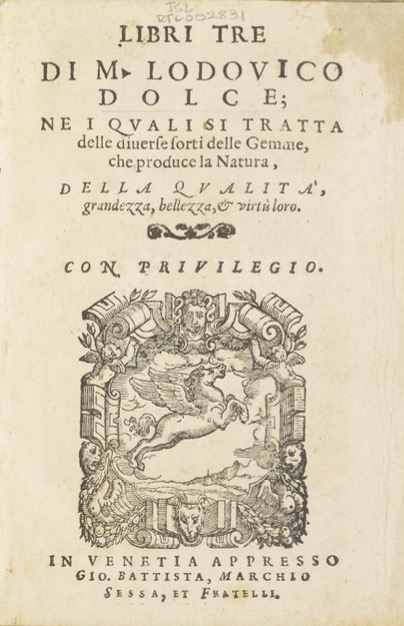
Libri tre di M. Lodovico Dolce : ne i qvali si tratta delle diuerse sorti delle gemme, che produce la natura, della qvalita, grandezza, bellezza, & virtu loro
The three books by Mr. Lodovico Dolce: in which are discussed the various kinds of gems produced by nature, their qualities, size, beauty, and virtues
Book
Dolce, L. (1565) Libri tre di M. Lodovico Dolce : ne i qvali si tratta delle diuerse sorti delle gemme, che produce la natura, della qvalita, grandezza, bellezza, & virtu loro. [The three books by Mr. Lodovico Dolce: in which are discussed the various kinds of gems produced by nature, their qualities, size, beauty, and virtues], Appresso G. Battista, M. Sessa et fratelli, 100 pp.
Record No. 7512  |  Sinkankas/Born No.: 1747  |  Language: in Latin  |  RWHL
Sinkankas: In general, the text...emphasizes the curious rather than the scientific. It treats the natural history of gemstones, their properties which make them desirable for wear, distinctions between true and false gems, the colors displayed by gems, an alphabetical listing of over 200 gemstones...with brief statements as to their nature and attributes. There is a 'book' on engraved gems with strong emphasis placed on the mystical signs and symbols engraved thereon...Also mentioned here are the famous engravers of antiquity and much curious lore...

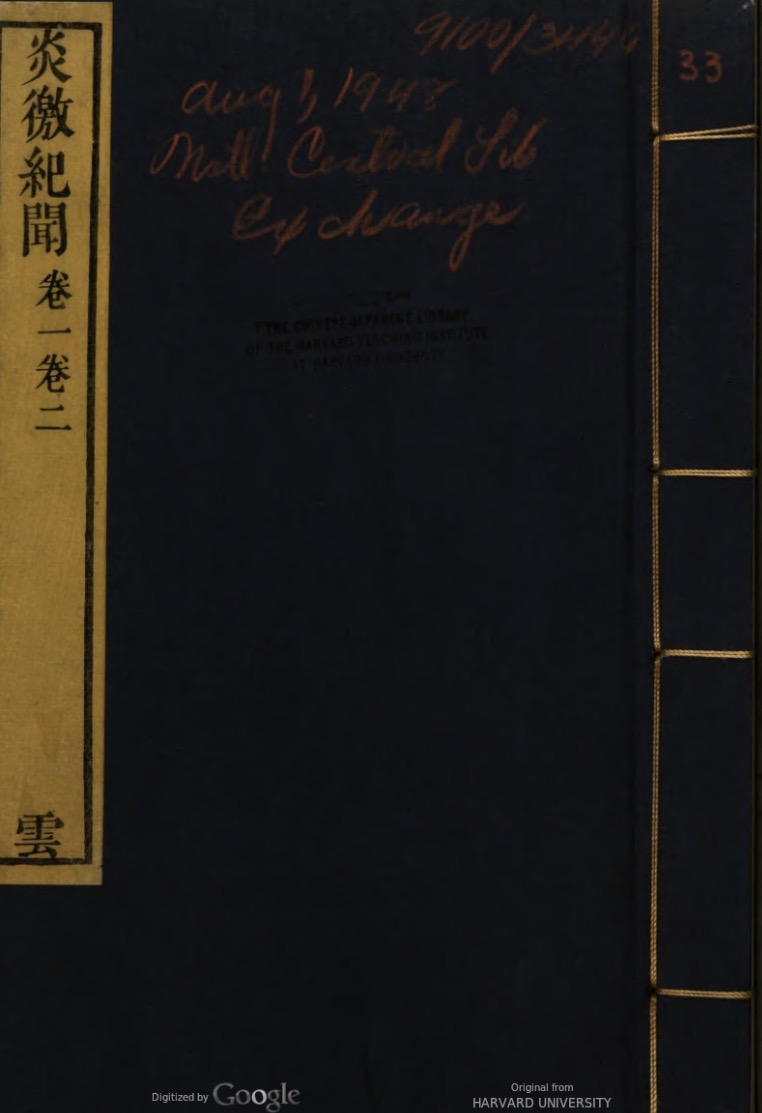
Record of Things Heard in the Remote Hot South
炎徼紀聞
Book
Tian, R. (1560) Record of Things Heard in the Remote Hot South. [炎徼紀聞] (1014 pp.).
Record No. 16777  |  Sinkankas/Born No.: NIS/NIB  |  Language: in Chinese  |  RWHL
A geographical and ethnographic work by Tian Rucheng (田汝成) concerning the southern and southwestern borderlands of Ming China. Yanjiao Jiwen (炎徼紀聞) records information on the geography, peoples, customs, administration, warfare, and natural products of regions adjoining China, particularly areas corresponding to Guangxi, Yunnan, and neighboring Southeast Asia. Drawing on official information and contemporary reports, the work is an important Ming-period source for Chinese knowledge of the southern frontier and its peoples, trade, and resources. Sun Laichen: Volume 4 contains an account of Mengmi (Mong Mit) and Mengyang that describes the conflicts among the tusis (especially the rebellion of Luchuan and the Ming efforts to suppress it) and the effect the Ming eunuchs' demand for precious stones had on border region affairs. Prefaced in 1560. Also called the Xingbian Jiwen. Based on the Nanyuan Manlu.

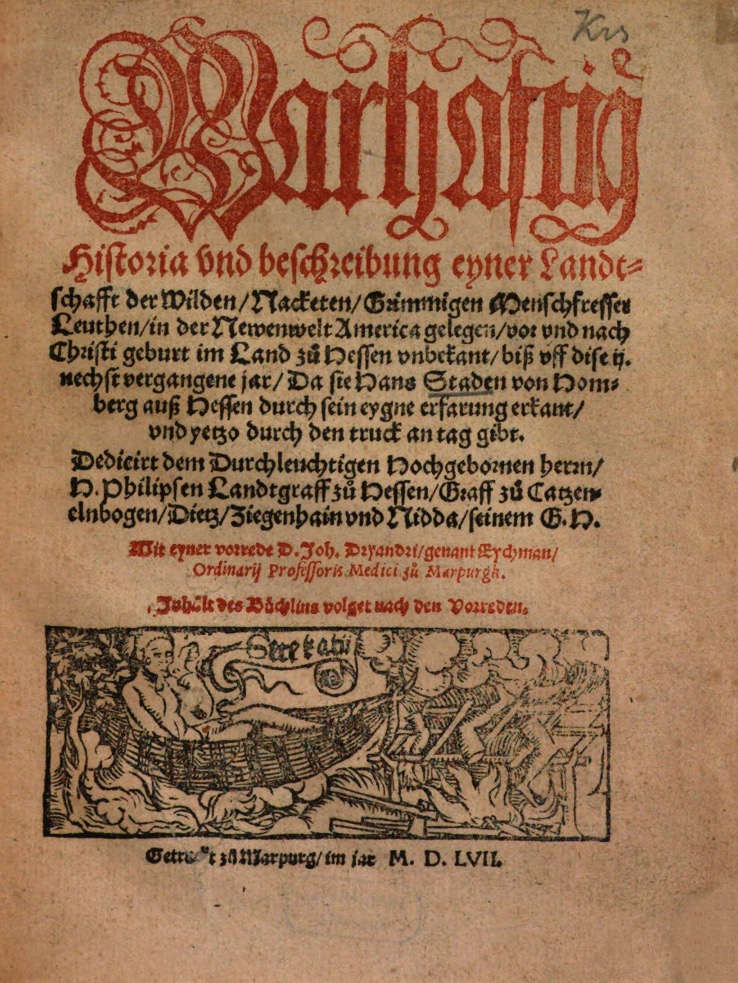
Warhaftig Historia und beschreibung eyner Landtschafft der Wilden, Nacketen, Grimmigen Menschfresser Leuthen, in der Newenwelt America gelegen vor vnd nach Christi geburt im Land zu Hessen vnbekant, biß uff dise ij. nechst vergangene jar, Da sie Hans Staden von Homberg auß Hessen durch sein eygne erfassung erkant, vnd yetzo durch den truck an tag gibt
True history and description of a country of wild, naked, fierce cannibals, located in the New World, America, unknown in the land of Hesse before and after the birth of Christ until these past two years, where Hans Staden of Homberg in Hesse personally experienced and now reveals through this publication
Book
Staden, H. (1557) Warhaftig Historia und beschreibung eyner Landtschafft der Wilden, Nacketen, Grimmigen Menschfresser Leuthen, in der Newenwelt America gelegen vor vnd nach Christi geburt im Land zu Hessen vnbekant, biß uff dise ij. nechst vergangene jar, Da sie Hans Staden von Homberg auß Hessen durch sein eygne erfassung erkant, vnd yetzo durch den truck an tag gibt. [True history and description of a country of wild, naked, fierce cannibals, located in the New World, America, unknown in the land of Hesse before and after the birth of Christ until these past two years, where Hans Staden of Homberg in Hesse personally experienced and now reveals through this publication] Marburg, Andres Kolben, unpaginated; 81 leaves
Record No. 7947  |  Sinkankas/Born No.: NIS/NIB  |  Language: in German  |  RWHL
A firsthand account of Hans Staden’s voyages to Brazil and his captivity among the Tupinambá, providing one of the earliest detailed European descriptions of Indigenous life in coastal Brazil. The work describes geography, warfare, subsistence, religion, ceremonies, trade, material culture, and Staden’s controversial accounts of ritual cannibalism, accompanied by numerous woodcut illustrations. Widely circulated in sixteenth-century Europe, it became an influential early source on the peoples and natural environment of Brazil.

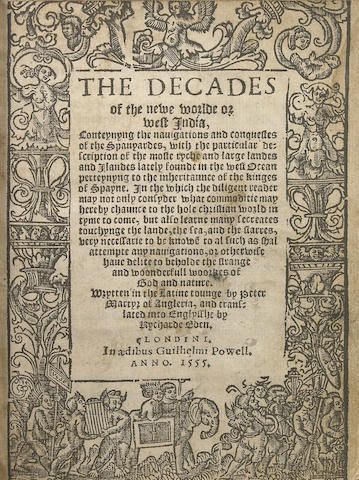
The Decades of the Newe Worlde or West India
Book
Eden, R. and Anghiera, P.M., d' (1555) The Decades of the Newe Worlde or West India., In aedibus Guilhelmi Powell, 722 pp.
Record No. 5227  |  Sinkankas/Born No.: NIS/NIB  |  RWHL
An English collection of early accounts of the Americas, translated and compiled by Richard Eden, centered on Pietro Martire d’Anghiera’s Decades of the New World. The work describes Spanish exploration and conquest, the geography and peoples of the Caribbean and American mainland, and the natural products and resources encountered there. Of particular gemological interest are numerous early accounts of gold, pearls, emeralds, and other precious materials, including their Indigenous use, sources, trade, and acquisition by the Spanish, making it an important English-language source for sixteenth-century European knowledge of American gems and precious metals.

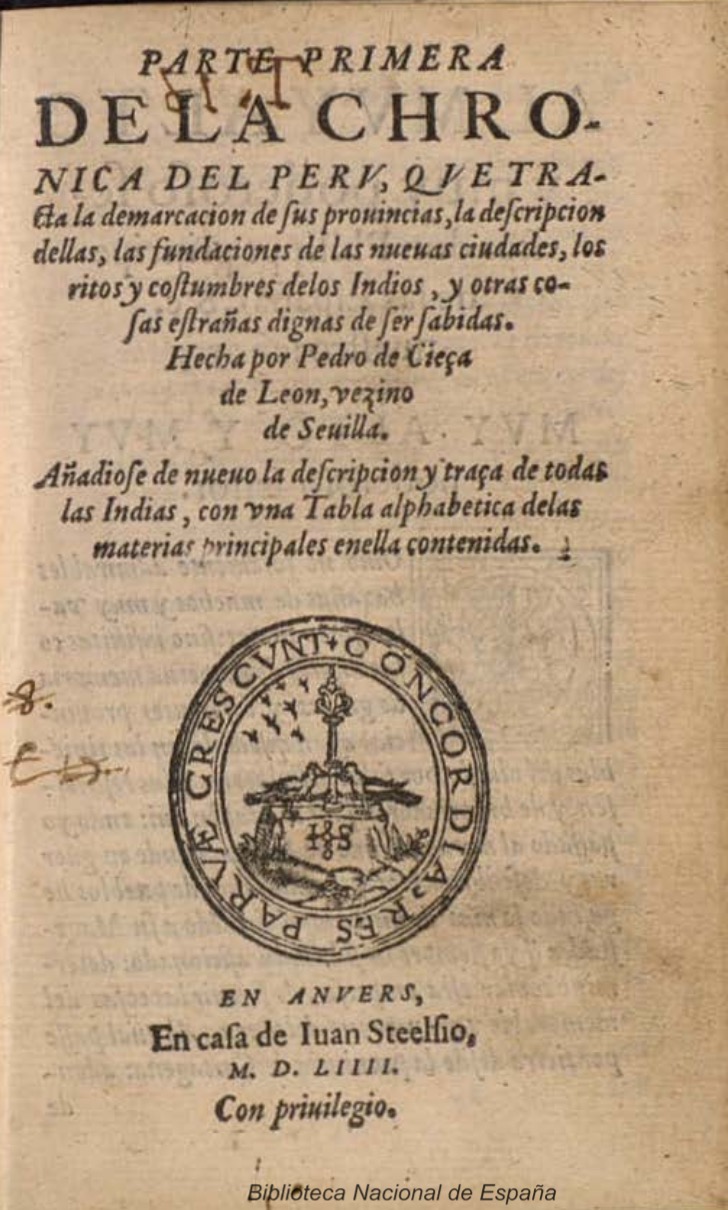
Parte primera de la Chronica del Peru
First part of the Chronica del Peru
Book
León, P.d.C., de (1554) Parte primera de la Chronica del Peru. [First part of the Chronica del Peru] Antwerp, Juan Steelso, 285 pp.
Record No. 7946  |  Sinkankas/Born No.: NIS/NIB  |  Language: in Spanish  |  RWHL
An early firsthand chronicle of Peru by Pedro de Cieza de León, based on his travels through the Andes during the Spanish conquest period. The work describes the geography, peoples, customs, political organization, roads, settlements, natural resources, and antiquities of the Andean world, including detailed observations on the Inca realm and earlier cultures. Of particular gemological interest are references to gold, silver, emeralds, pearls, and other valuable materials, together with accounts of Indigenous mining, ornament, tribute, and the movement of precious substances within pre-Hispanic and early colonial Peru.

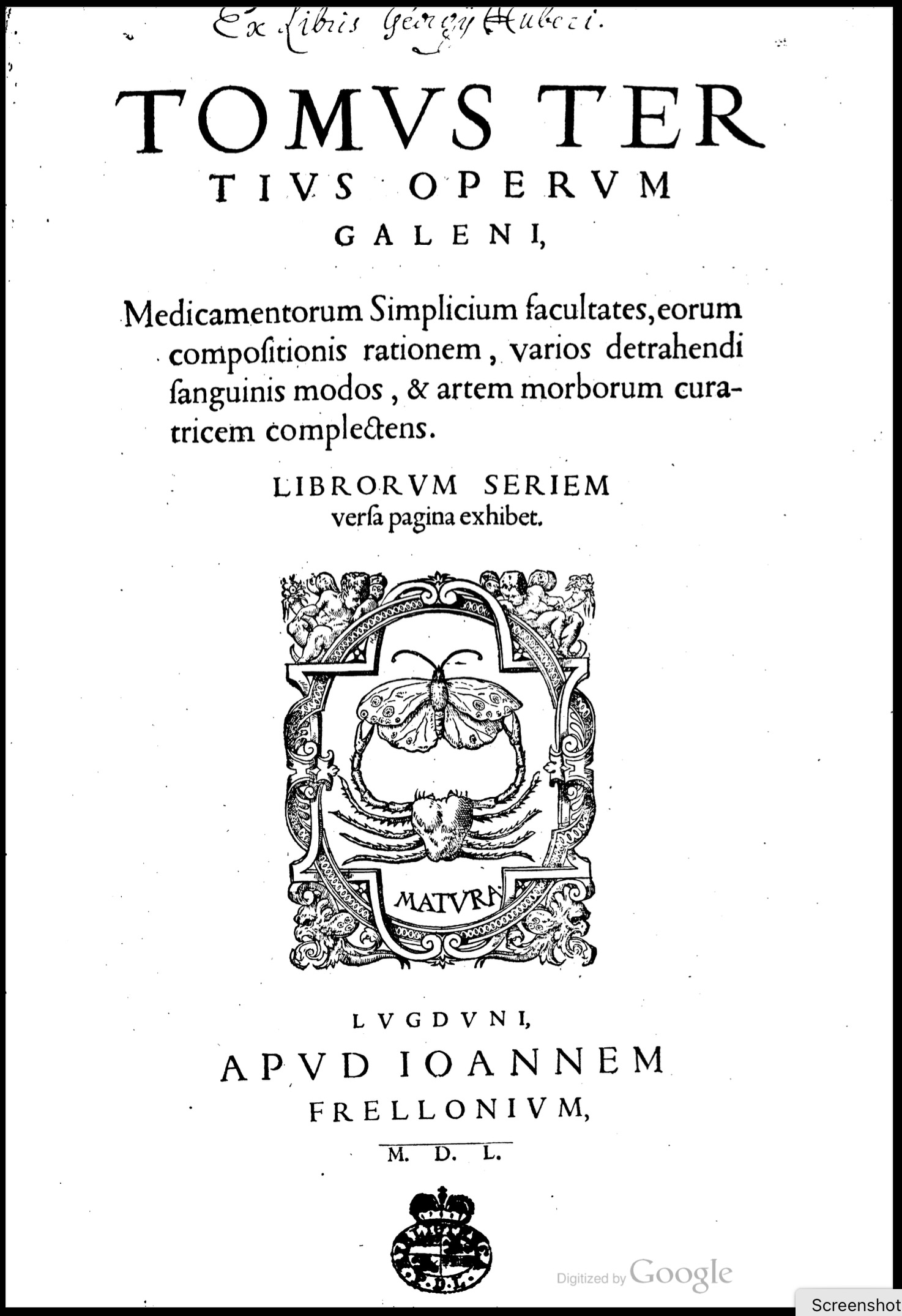
De simplicium medicamentorum facultatibus libri undecim
Eleven Books on the Properties of Simple Medicines
Book
Galénos (1550) De simplicium medicamentorum facultatibus libri undecim. [Eleven Books on the Properties of Simple Medicines] Lugduni, Apvd Ioannem Frellonivm, 1554 pp.
Record No. 7521  |  Sinkankas/Born No.: NIS/NIB  |  Language: in Latin  |  RWHL
A Renaissance Latin edition of Galen’s De simplicium medicamentorum facultatibus, his major treatise on the properties and medicinal uses of simple substances. The eleven books discuss drugs derived from plants, animals, and minerals, describing their qualities, physiological effects, preparation, and therapeutic applications within the Galenic system of hot, cold, moist, and dry properties. Of particular gemological interest are the sections dealing with stones, earths, metals, and mineral substances used medicinally, preserving important classical traditions concerning the supposed healing properties of gems and other inorganic materials.

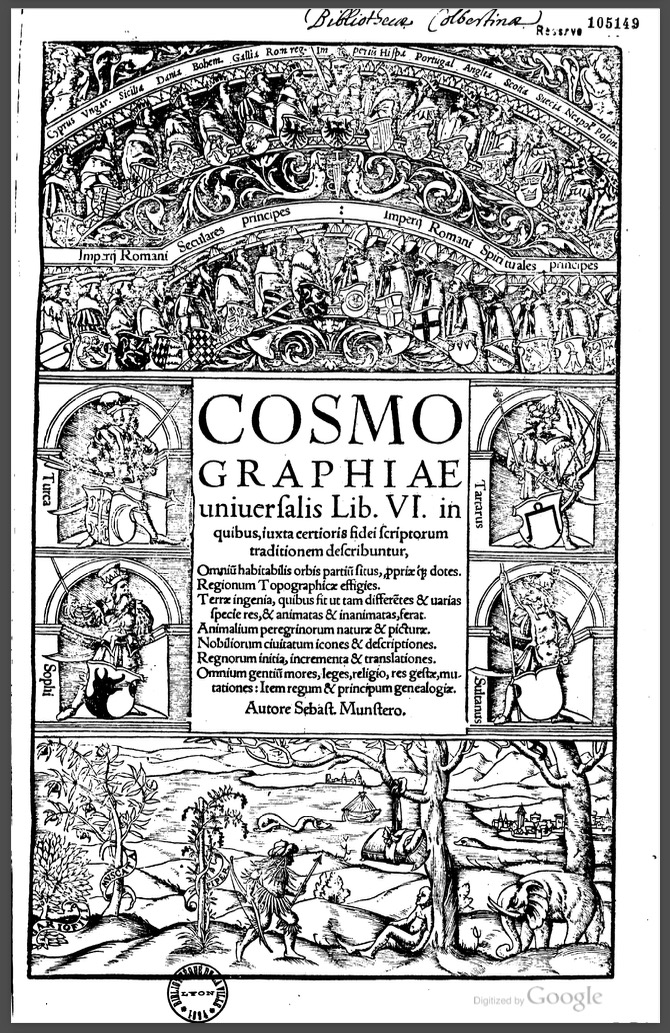
Cosmographia Universalis

Universal Cosmography
Book
Munster, S. (1544–) Cosmographia Universalis. [Universal Cosmography], Henri Petri, 1163 pp.
Record No. 7535  |  Sinkankas/Born No.: NIS/NIB  |  Language: in German  |  RWHL
A monumental sixteenth-century cosmography by Sebastian Münster, combining geography, history, ethnography, natural history, and descriptions of cities, regions, peoples, animals, plants, and mineral resources throughout the known world. Richly illustrated with maps and woodcuts, the work went through numerous expanded editions after its first appearance in 1544. Of particular gemological interest are references to mines, gold, silver, precious stones, pearls, and other natural resources, together with descriptions of the regions from which such materials were believed to originate.

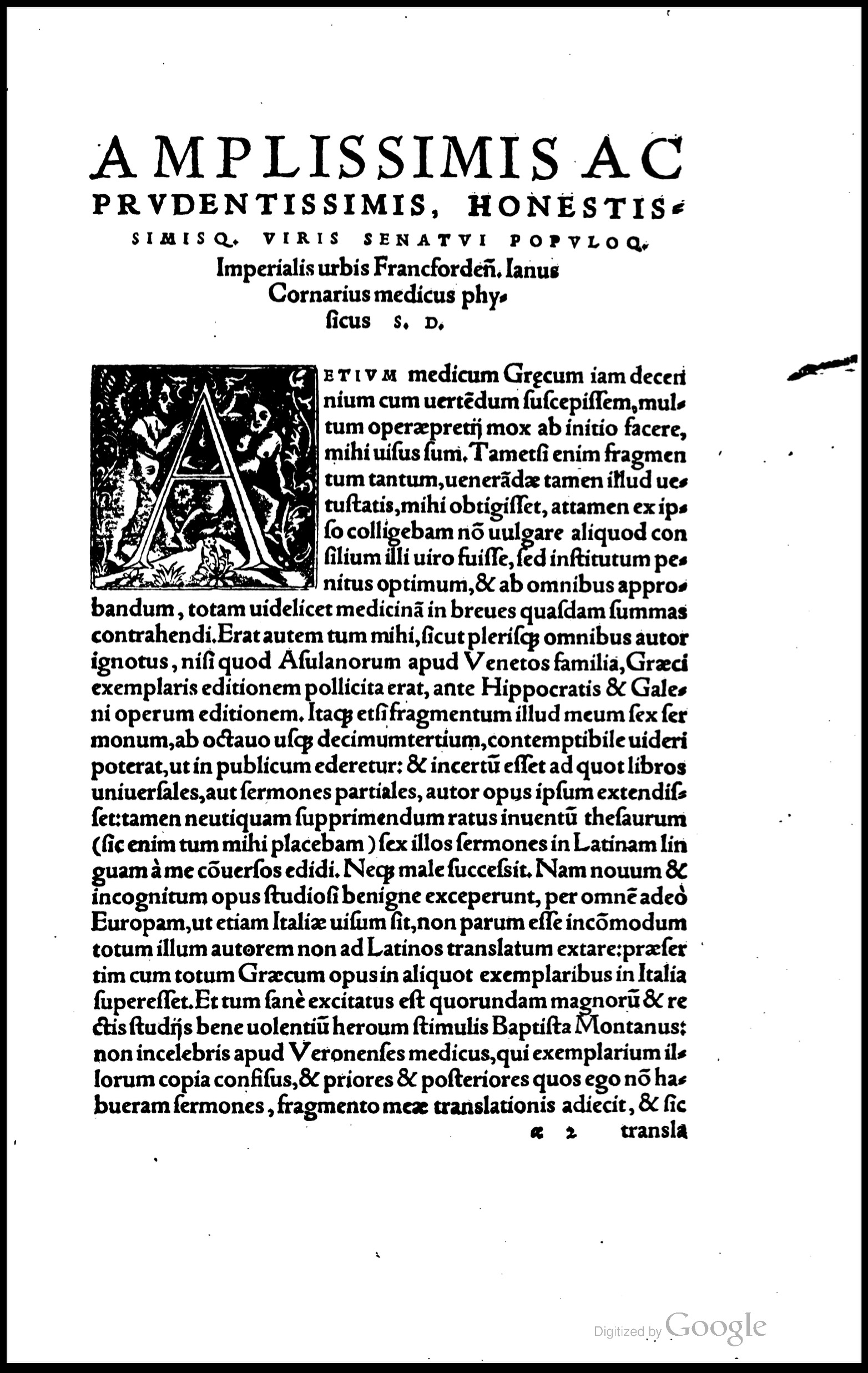
Aetii medici graeci Contractae ex veteribus medicinae tetrabiblos: hoc est quaternio, id est libri uniuersales quator sermones complectentes, ut sint in summa quatuor sermonum quaterniones, id est sermones XVI
The Compendium of the Greek physician Aetius, Compiled from the Ancient Medicine in Four Books: That is, a Quaternio, which is a collection of four universal books, so that in total there are four collections of four books, that is, sixteen books
Book
Aecio de Amida (1542) Aetii medici graeci Contractae ex veteribus medicinae tetrabiblos: hoc est quaternio, id est libri uniuersales quator sermones complectentes, ut sint in summa quatuor sermonum quaterniones, id est sermones XVI. [The Compendium of the Greek physician Aetius, Compiled from the Ancient Medicine in Four Books: That is, a Quaternio, which is a collection of four universal books, so that in total there are four collections of four books, that is, sixteen books], Froben, 932 pp.
Record No. 7501  |  Sinkankas/Born No.: NIS/NIB  |  Language: in Latin  |  RWHL
A Renaissance Latin edition of the medical writings of Aetius of Amida, the sixth-century Byzantine physician, whose Tetrabiblos compiles Greek medical knowledge from numerous earlier authorities into sixteen books arranged in four groups. The work covers diseases, diagnosis, pharmacology, surgery, ophthalmology, toxicology, and therapeutic substances of vegetable, animal, and mineral origin. Of particular gemological interest are passages concerning precious stones and minerals used medicinally, preserving elements of the classical lapidary and pharmacological traditions and their supposed therapeutic properties.

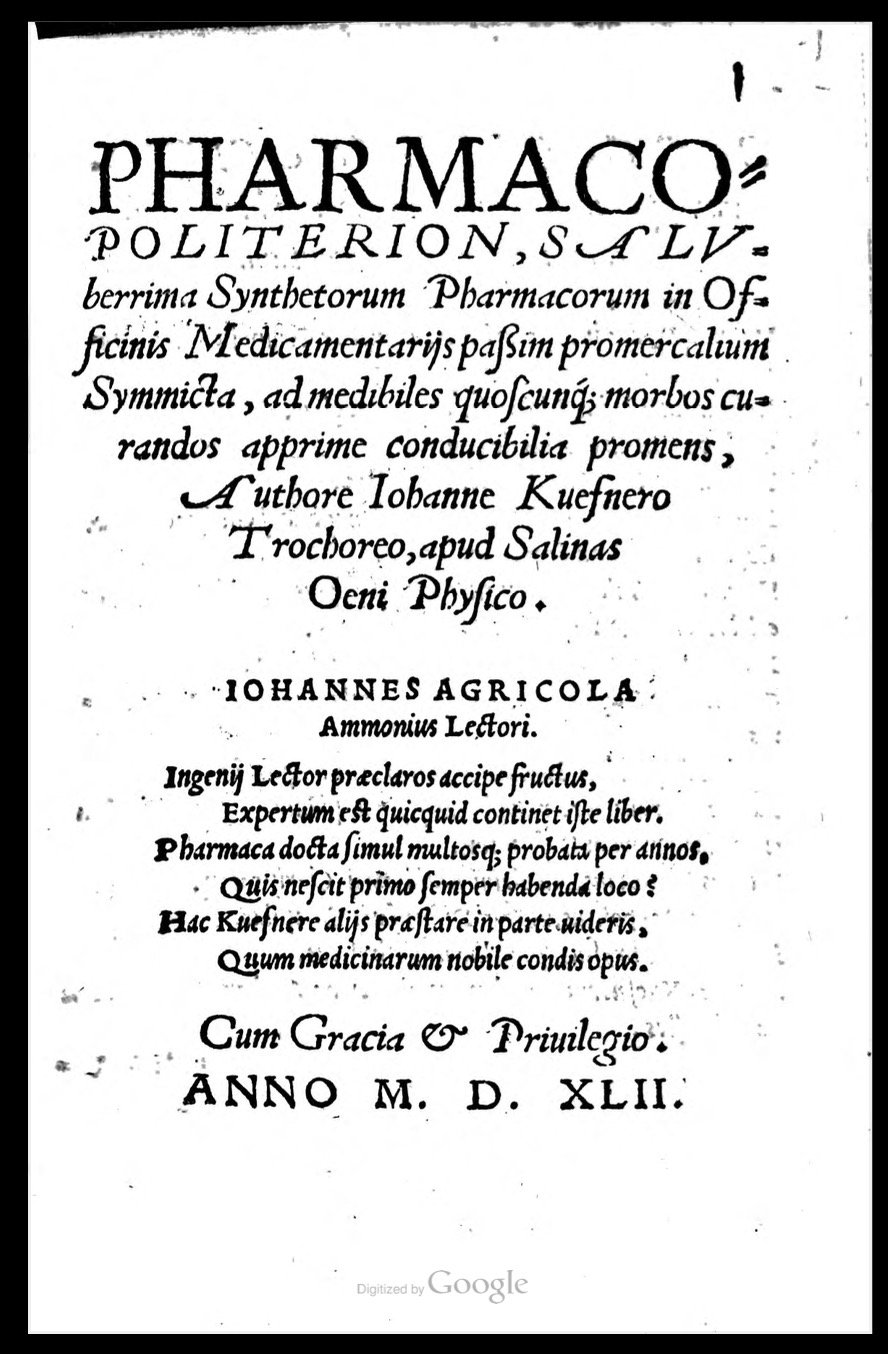
Pharmacopoliterion

Pharmaceutical Repository
Book
Küfner, J. and Agricola, J. (1541) Pharmacopoliterion. [Pharmaceutical Repository] Ingolstadt, Alexander Weissenhorn, 182 pp.
Record No. 8164  |  Sinkankas/Born No.: NIS/NIB  |  Language: in Latin  |  RWHL
Küfner and Agricola’s Pharmacopoliterion is an early pharmaceutical and medical handbook concerned with the preparation and use of medicinal substances. It describes materia medica and compound remedies employed by apothecaries, including substances of mineral as well as vegetable and animal origin, and provides directions for their preparation and therapeutic application. The work reflects sixteenth-century European pharmacy, in which minerals and other natural materials formed part of the pharmacological repertoire.

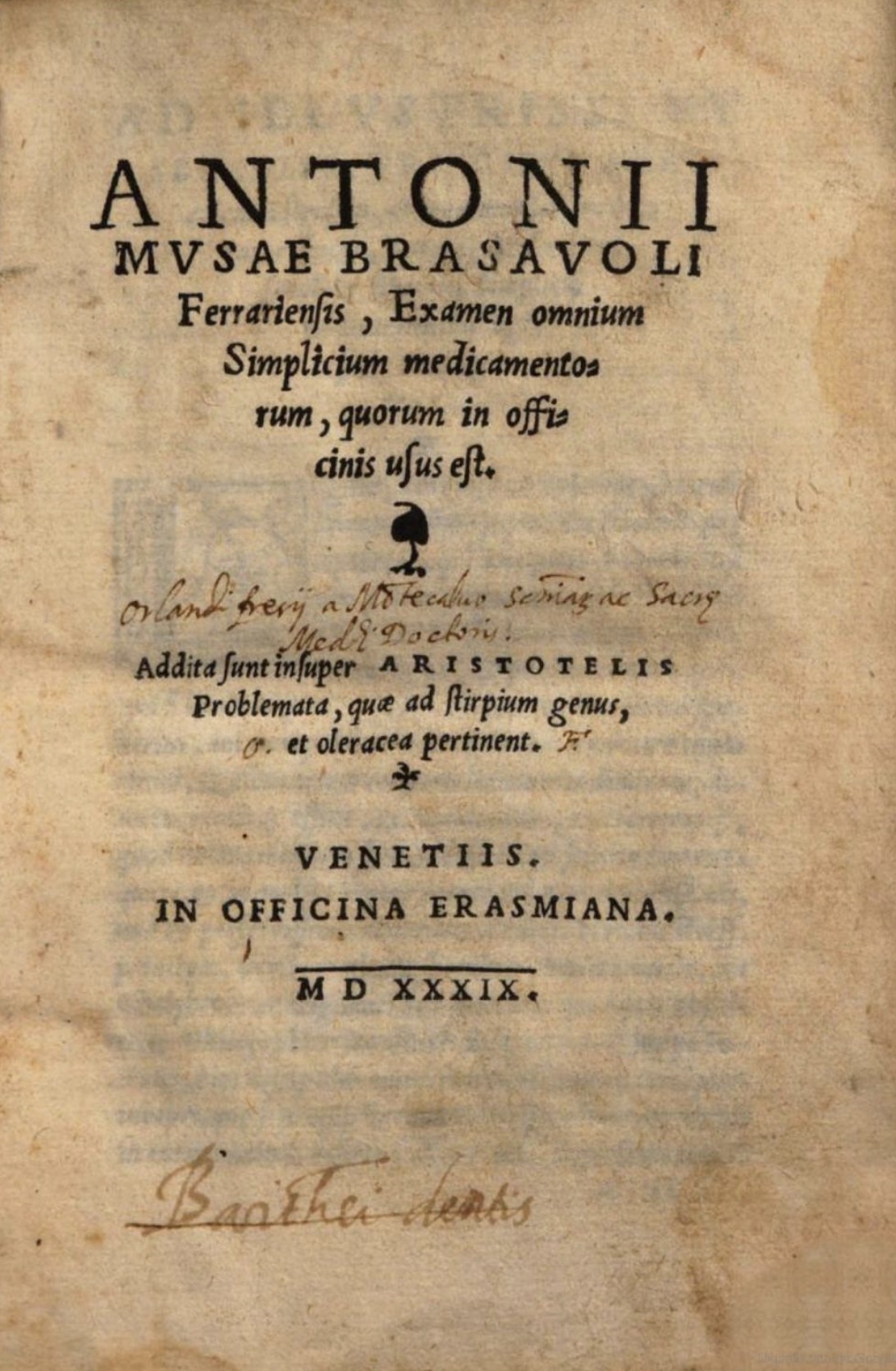
Antonii Musae Brasavoli Ferrariensis, Examen omnium simplicium medicamentorum, quorum in officinis usus est
Antonius Musa Brasavolus Ferrariensis, Examination of all simple medicines, which are used in pharmacies
Book
Brasavola, A.M. (1537) Antonii Musae Brasavoli Ferrariensis, Examen omnium simplicium medicamentorum, quorum in officinis usus est. [Antonius Musa Brasavolus Ferrariensis, Examination of all simple medicines, which are used in pharmacies] Lugduni, Apud Joannem et Franciscum Frellaeos, 544 pp.
Record No. 7505  |  Sinkankas/Born No.: NIS/NIB  |  Language: in Latin  |  RWHL
A pharmacological work by the Italian physician and botanist Antonio Musa Brasavola examining the “simples”—individual substances used medicinally in contemporary pharmacies. Drawing on classical authorities while also critically assessing actual apothecary practice, Brasavola discusses substances of vegetable, animal, and mineral origin, their identification, properties, preparations, and medicinal uses. Of particular gemological interest are precious stones and other mineral substances employed as medicines, reflecting Renaissance beliefs concerning the therapeutic properties of gems and the continuing influence of classical and medieval lapidary traditions on sixteenth-century pharmacy.

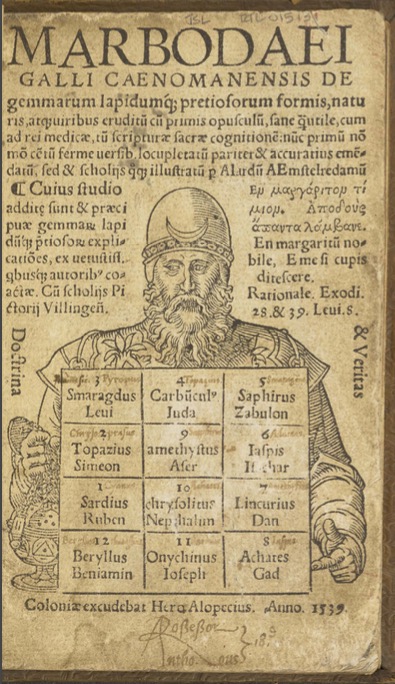
Marbo Dei Galli Poetae Ve tustissimi de lapidibus pretiosis Encheri dion, cum scholijs Pictorij Vil lingensis
Marbo, the Poet of the Galli, Most Ancient, on Precious Stones, Encheridion, with the Commentaries of Pictorius Vill ingensis
Book
Marbode, B.o.R. (1531) Marbo Dei Galli Poetae Ve tustissimi de lapidibus pretiosis Encheri dion, cum scholijs Pictorij Vil lingensis. [Marbo, the Poet of the Galli, Most Ancient, on Precious Stones, Encheridion, with the Commentaries of Pictorius Vill ingensis] Freiburg in Breisgau, unpaginated (~56 leaves)
Record No. 7070  |  Sinkankas/Born No.: 4170  |  Language: in Latin  |  RWHL
Marbode’s De lapidibus pretiosis is a medieval lapidary describing precious and unusual stones, their physical characteristics, origins, virtues, and supposed medicinal and magical properties. Written in Latin verse, it reflects both classical traditions and medieval beliefs concerning gemstones and became one of the most influential European lapidaries of the Middle Ages. Individual entries treat numerous stones, including diamond, emerald, sapphire, ruby, amethyst, beryl, topaz, crystal, jasper, and others, often combining observations of appearance with accounts of therapeutic or supernatural powers. This 1531 Freiburg edition presents Marbode’s text with the commentaries of Georg Pictorius of Villingen, providing Renaissance-era interpretation of the mineralogical and medical traditions embodied in the work.

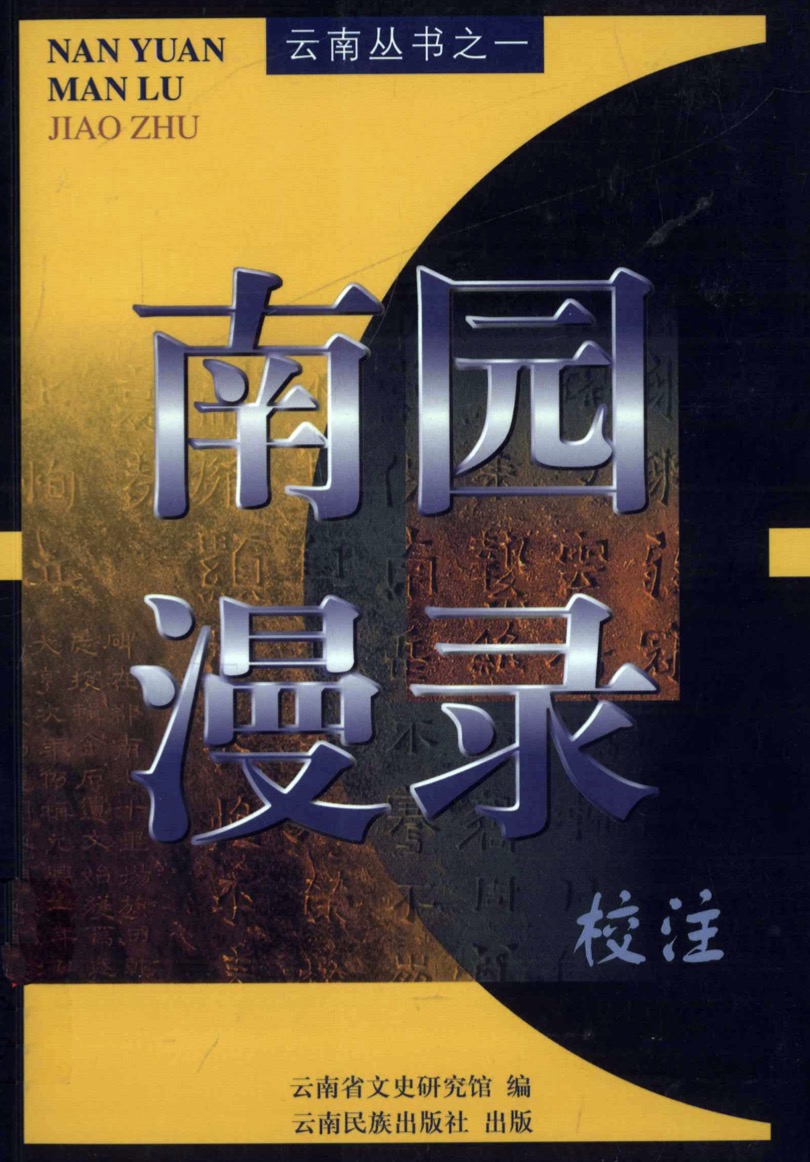
Notes by Zhang Zhichun–Nanyuan manlu

南园漫录
Book
Zhichuan, Z. (1526) Notes by Zhang Zhichun–Nanyuan manlu. [南园漫录]
Record No. 16776  |  Sinkankas/Born No.: NIS/NIB  |  Language: in Chinese  |  RWHL
Volumes 2 and 7 describe the Ming army attack on Luchuan, conflicts among the tusis, and the role of the Ming eunuchs (who prized the precious stones from the Ming-Burma border region) in Ming-Burmese border politics in the 15th century. These volumes also record briefly the manner in which the Ming envoys were greeted by the Ava king and how the Ava king and the Dai/Tai chieftains addressed themselves and the Ming emperor.

Exploring the Literature of Jade

Jade literature spans gemology, mineralogy, archaeology, art history, mining, carving and connoisseurship, and includes works on both jadeite and nephrite from around the world.

For an introduction to collecting books on this subject, read Hidden Treasure — Collecting the Literature of Jade.

About Four Treasures

Four Treasures is Lotus Gemology's freely accessible gemological reference database. Use the full database to search by author, title or keyword and explore literature on gemology, mineralogy, jewelry and related fields. Where available, hyperlinks on titles may lead directly to the full publication.

Search the Complete Four Treasures Database