Explore books, articles and historical sources on jade in Four Treasures, the Lotus Gemology reference database. This bibliography brings together matching records from the collection, with publication details, abstracts and cover images where available.
Jade References
The list below matches the terms jade, jadeite, nephrite or Fei Cui in the database's searchable fields. Some references discuss these materials as part of a broader subject.
3,341–3,360 of 3,783 matching references
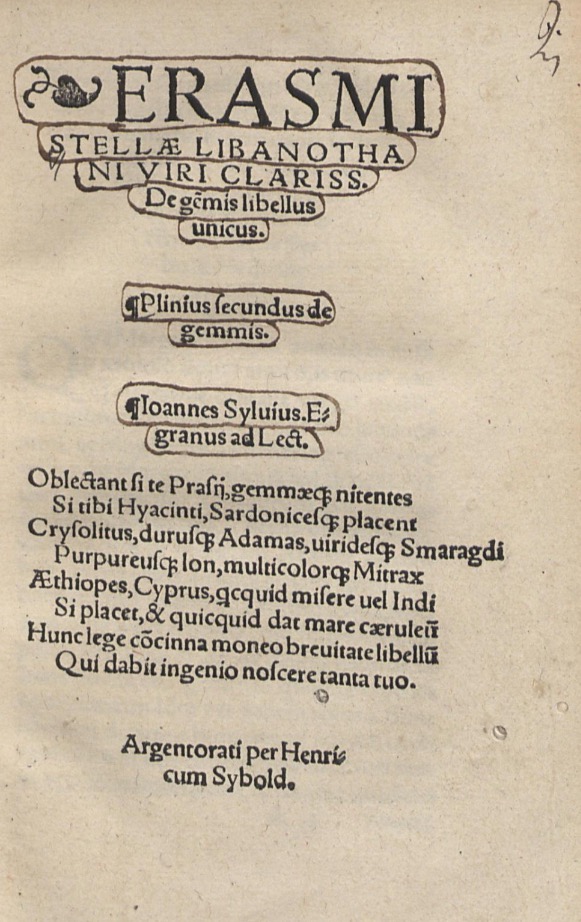
Erasmi Stellae Libanotha Ni Viri Clariss. De Gemis Libellus Unicus
Erasmus’ Star of Libanotha: A Unique Treatise on Gems by the Most Illustrious Man
Book
Stella, E. (1517–1530)Erasmi Stellae Libanotha Ni Viri Clariss. De Gemis Libellus Unicus. [Erasmus’ Star of Libanotha: A Unique Treatise on Gems by the Most Illustrious Man] Nümberg, Friedrich Peypus, unpaginated (~130 pp.)
Record No. 7550 | Sinkankas/Born No.: NIS/NIB | Language: in Latin | RWHL
Reference copied to clipboard!
gems, jade, Fischer-Book, early gemology, early mineralogy
Schuh: Very rare. One of the earliest 16th century treatises on mineralogy and precious stones. It is a different type of lapidary, with its arrangement of gems and minerals according to color rather than the typical alphabetical sequence. The four classes are white, green, red and blue or black. Thus are classified: I. De gemmis candidis, including diamond, rock crystal, iris, ceraunia & astroite, pederote, asteria, achate, draconite, allectorio, and margaritis. II. De gemmis viridibus, including smaragdo (emerald), beryllis, chrysoprasio, topatio, callaide, prasio, heliotropio, jaspide. III. De gemmis rubeis, including carbunculorum generibus, amthysto, hyacintho, sarda, sardonyce, anyce, hematite, corallio, hephesite, chrysolito, electro, and opalo. IV. Gemmis coeruleis & nigris, including cyaneo, saphiro, calaide & ceraunia, de moris gemmis, de gemmis ad ectypam, etc. Adams (1938) notes that the descriptions are better than earlier works, although Thorndike (1923-58) declares the work little more than a compilation from Greek and Latin writers, above all, Pliny ...""
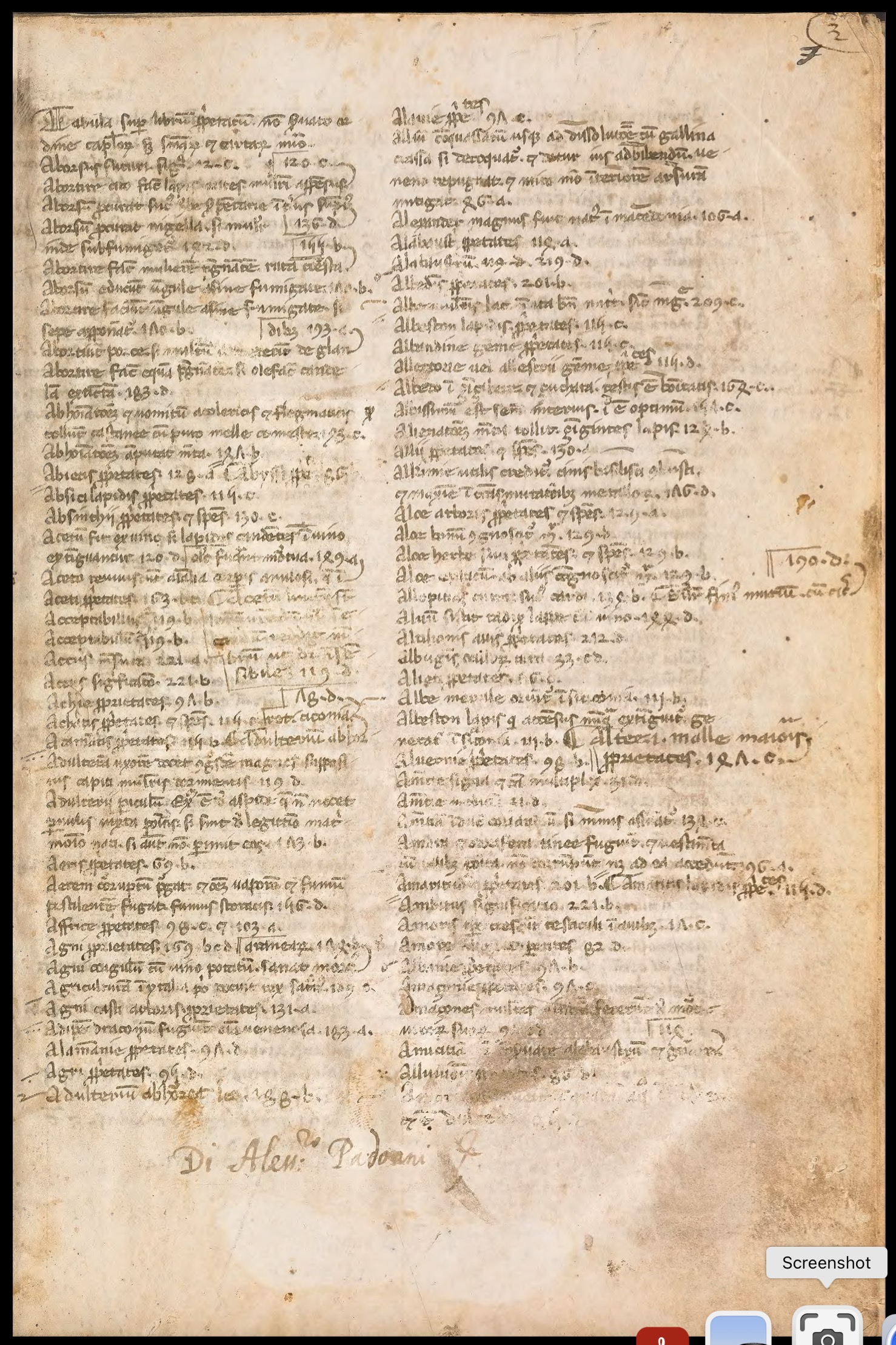
Anglicus, B. (1494)De proprietatibus rerum. [On the Properties of Things]
Record No. 6905 | Sinkankas/Born No.: 423 (not seen); NiB | Language: in Latin | RWHL
Reference copied to clipboard!
gems, jade, Fischer-Book
A medieval encyclopedia by Bartholomaeus Anglicus (Bartholomew the Englishman), originally composed in the thirteenth century and covering theology, medicine, natural history, geography, astronomy, animals, plants, minerals, and other aspects of the natural world. Of particular gemological interest is Book XVI, De lapidibus (On Stones), which describes numerous precious stones and minerals, including their appearance, supposed origins, physical characteristics, medicinal properties, and magical or talismanic virtues. Drawing heavily on earlier authorities such as Pliny, Isidore of Seville, and medieval lapidary traditions, the work became one of the most influential encyclopedic sources on gemstones in medieval Europe.
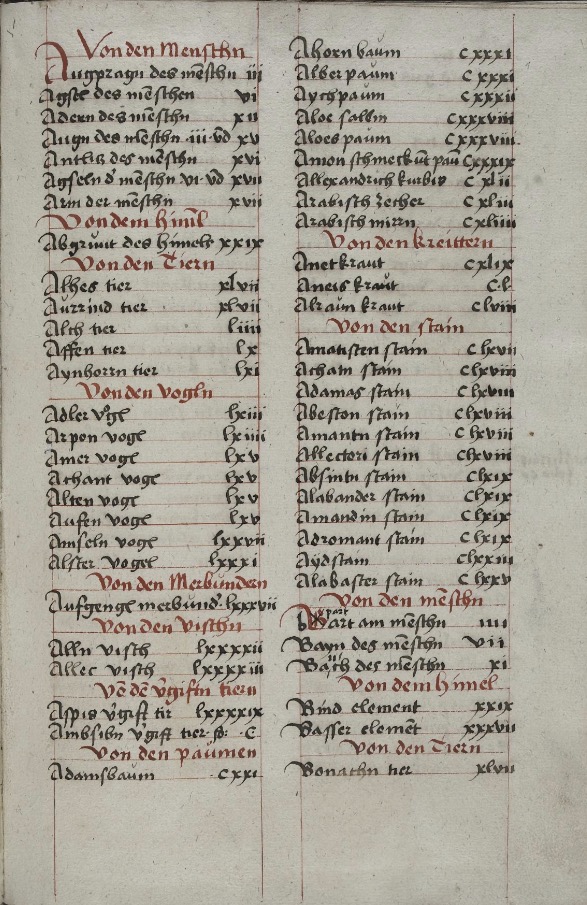
Megenberg, K., von (1481)Buch der Natur. [Book of Nature] Augsburg, Johann Bämler, 194 pp.
Record No. 7075 | Sinkankas/Born No.: 4346 | Language: in German | RWHL
Reference copied to clipboard!
gems, jade, Fischer-Book
Das Buch der Natur (Book of nature) is a Medieval Latin compendium of science that was edited and translated into German in the 14th century by Konrad von Megenberg, a German scholar and writer who was probably born at Mainberg (Megenberg), near Schweinfurt, Bavaria, in 1309, and died at Ratisbon (Regensburg) in 1374. He studied at Erfurt and then at the University of Paris, where he taught philosophy and theology from 1334 to 1342. In 1342 he moved to Ratisbon, where he was a parish priest and a preacher. Later he became a cathedral canon, and member of the town council. He wrote at least 30 books, of which Das Buch der Natur is the best known. The book is based on a Latin compendium, Liber de natura rerum, by the 13th-century Dominican priest Thomas of Cantimpré, but Konrad made many revisions to the original work, omitting much material and introducing his own observations and corrections. The result is a survey of all that was known of natural history at that time. The book is in eight parts: (1) On mankind, anatomy, and physiology (50 chapters); (2) Heaven and the seven planets, astronomy, and meteorology (33 chapters); (3) Zoology (69 quadrupeds, 72 birds, 20 sea monsters, 29 fish, 37 snakes, lizards, and reptiles, and 31 worms); (4) Ordinary trees (55 chapters), aromatic trees (29 chapters); (5) Herbs and vegetables (89 chapters); (6) Precious and semiprecious stones (86 chapters); (7) Ten kinds of metals; and (8) Streams and waters. Also included is a section on the monstrous human races found in the east. The choice and arrangement of subjects is typical of many medieval encyclopedias. The book was widely read until the 16th century and exists in numerous manuscript copies. It was first printed in Augsburg in 1475. Presented here is a slightly later edition from Augsburg, printed in 1481.
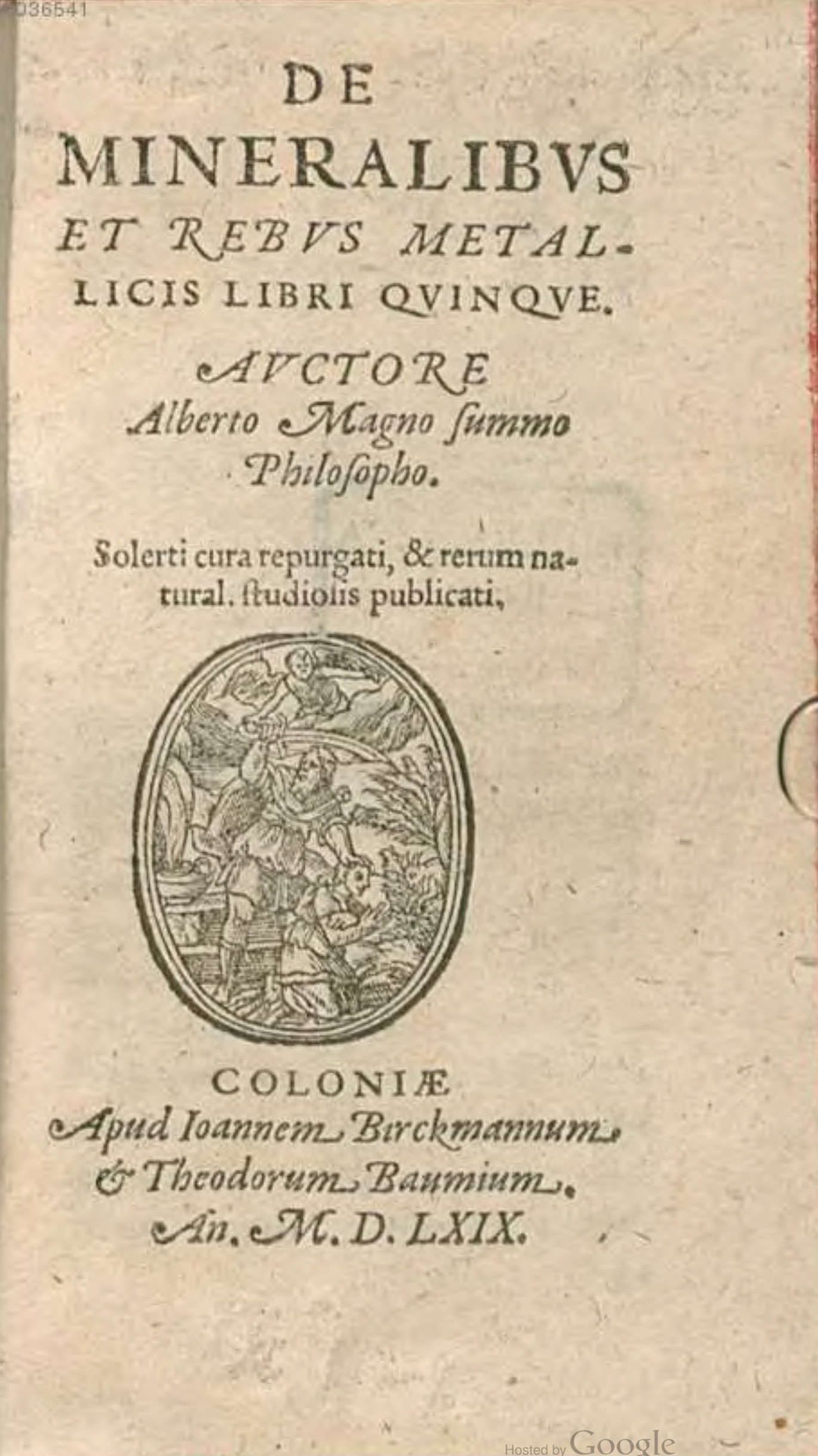
De Mineralibus Libri
Book of Minerals
Book
Magnus, A. (1476)De Mineralibus Libri. [Book of Minerals] Patavii, Petrus Maufer for Antonius de Albricis, unpaginated
Record No. 6907 | Sinkankas/Born No.: NIS/NIB | Language: in Latin | RWHL
Reference copied to clipboard!
gems, jade, Fischer-Book, mineralogy, early mineralogy
From Schuh: Extremely rare. Albertus Magnus set as his life's work to place all of Aristotle's extant writings into a coherent system and to reconcile the Greek philosophies with those of the Christian world. To attain this outcome, he scoured the libraries of every monastery he visited for any writings of the Ancients. In this quest he was rewarded with the discovery of several ancient works thought lost. These he had copied under his own eyes, thus preserving them for the future when they might not otherwise have survived. However, Albert's diligence did not locate any copy of what he thought was Aristotle's Lapidary, and what is now known to be a pseudo-Aristotelian work. He was therefore forced to write his own work dealing with minerals. The result is of remarkable interest as it shows not only what the state of mineralogy was in the 13th century, but what Albert thought the science should be. The De Mineralibus [=Book of Minerals] is an reflection of the knowledge of minerals in the 13th century structured in the framework of ancient Greek doctrine. Following basic Aristotelian philosophy and guided only by the few lines devoted to mineral substances in Aristotle's Meteorologica, Albertus draws heavily upon his own observations and less so on other medieval and classical sources to describe minerals. Various duties of his religious Order caused him to take frequent trips throughout the territories of France, Germany and Italy. Along the literally thousands of miles traveled on foot by Albertus, he had many encounters with mines, miners and minerals. These impressions he retained in his memory until they were later recorded in this work. Consequently, when reading Albertus' words, there is no doubt as to the authority of his citations. One can only regret that the scope of the project was so great as to preclude observations of many phenomena. The De Mineralibus is divided into five books, dealing with stones (Books I-II), metals (Books III-IV), intermediates" (Book V), which are neither stones nor metals, but have characteristics of both. In books, I, III and V the author follows classical philosophy by discussing minerals based upon their causes. This refers to the four causes distinguished by Aristotle as material (the matter from which minerals are made), efficient (the process by which minerals are made), formal (the form which minerals take, assumed by Albertus to be based on biological propagation), and final (the reason the mineral exists). In books, II, IV and V Albertus completes his plan by individually naming stones, metals, and "intermediates," and describing each in considerable detail. This type of catalog, alphabetically arranged on the name of the stone was popular in medieval herbals and lapidaries and is a tradition that dates back at least to Pliny. Yet Albertus' De Mineralibus is not a simple lapidary. Even though its background is based in medieval thought, with many errors, the structure of the text is recognizable in modern textbooks (i.e., the introduction of general principles giving the origin, and physical properties of minerals, followed by descriptions of individual minerals including appearance, place of occurrence, uses, etc.). With Albertus Magnus' mineralogy, the study of minerals begins to emerge from its embryonic period into a full fledged science. The tradition of magical and curative powers in gems still permeates the text, but one feels the author fighting the superstitions of the ancient beliefs, and seeing the world in a new, more skeptical and practical view."
Manual para la identification del Jade
Manual for the Identification of Jade
Book
Tendero, J.M.R. (n.d.)Manual para la identification del Jade. [Manual for the Identification of Jade], www.gemologiamllopis.com, 46 pp.
Record No. 28727 | Sinkankas/Born No.: NIS/NIB | Language: in Spanish | RWHL
The purpose of this manual is to provide an introductory knowledge of jade to all those who, for one reason or another, are interested in this material, which has been used to create luxury and jewellery objects from prehistory to the present day. This text is intended to be read by gemologists, but it is also designed to be useful to anyone seeking information about the diverse group of minerals of similar appearance that are confused with jade and used in the manufacture of carvings and gemstones intended for jewellery. Throughout this work, jadeite and nephrite—the two minerals that are properly considered jade—are continuously compared with the materials that most closely resemble them and are most frequently encountered in the marketplace, such as serpentine, chalcedony, and prehnite, while also considering artificial materials such as plastics and glass. This manual for the identification of jade is, as a whole, a synthesis of other works cited in the bibliography at the end and the result of my own laboratory experience in the identification and study of jade. Since it cannot exactly be said that bookshops are overflowing with gemological works published in Spanish, I hope that this modest contribution will help, in some measure, to fill that gap.
Classification of the jade pendants known as “axe-gods” from Costa Rica
Unpublished Work
Kuboyama, W. (n.d.)Clasificasión de los colgantes de jade llamados “dioses-hacha” de Costa Rica. [Classification of the jade pendants known as “axe-gods” from Costa Rica] 13 pp.; unpublished report.
Record No. 28519 | Sinkankas/Born No.: NIS/NIB | Language: in Spanish | RWHL
In this study, we focus on the classification of celt-form jade pendants, which constitute the majority of jade artefacts in Costa Rica. These pendants are called “dioses-hacha,” meaning “axe-gods” in Spanish. It is understood that this designation does not refer to their function as actual axes, but rather to their celt-like shape. However, the author suggests that some of them may originally have been used as real axes or tools before being reworked into pendants. The characteristic manufacturing technology, which left the lower part undecorated, continued to be seen into the later period, during the age of gold artefacts. In addition, it can be observed in pendants made from other materials, such as bone or shell. Therefore, the celt form retained on the lower part of the pendant appears to have held important symbolic meaning. Regarding the factors used for stylistic classification (size, surface shape, and motifs), it is clear that there are several types of axe-god pendants, and there appears to have been a variety of manufacturing procedures.
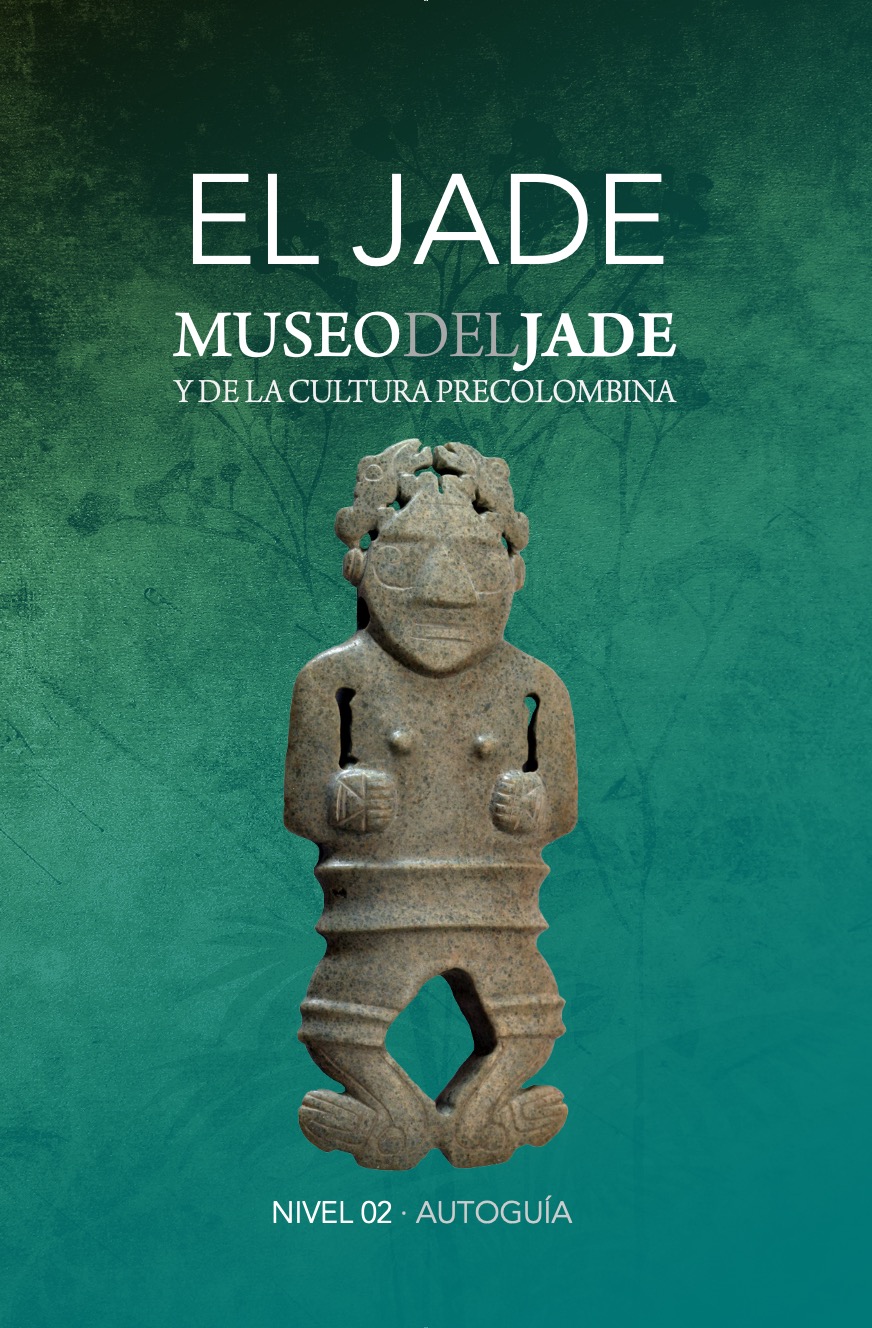
El Jade: Museo del Jade y de la Cultura Precolombina
Jade: Museum of Jade and Pre-Columbian Culture
Book
Museo del Jade y de la Cultura Precolombina (n.d.)El Jade: Museo del Jade y de la Cultura Precolombina. [Jade: Museum of Jade and Pre-Columbian Culture] San José, Museo del Jade y de la Cultura Precolombina, Instituto Nacional de Seguros (48 pp.).
Record No. 28479 | Sinkankas/Born No.: NIS/NIB | Language: in Spanish | RWHL
This gallery explains the process of jade working in the Pre-Columbian period, its provenance and the routes followed by various groups for its trade. It also discusses the symbolism, social use and spiritual function that objects made from this material had in the ceremonies performed by the shaman. The gallery offers electronic devices, tactile and sound resources for blind visitors and other users, maps of jade trade routes, videos on the technology used to work this material, a diorama of a Pre-Columbian family and a cylinder depicting a shamanic ritual scene. Among the collection exhibited in this gallery are objects originating from the Olmec and Maya regions, ceramic objects with motifs influenced by Mesoamerica, as well as a great variety of objects made from different materials using the same techniques employed for jade pieces.
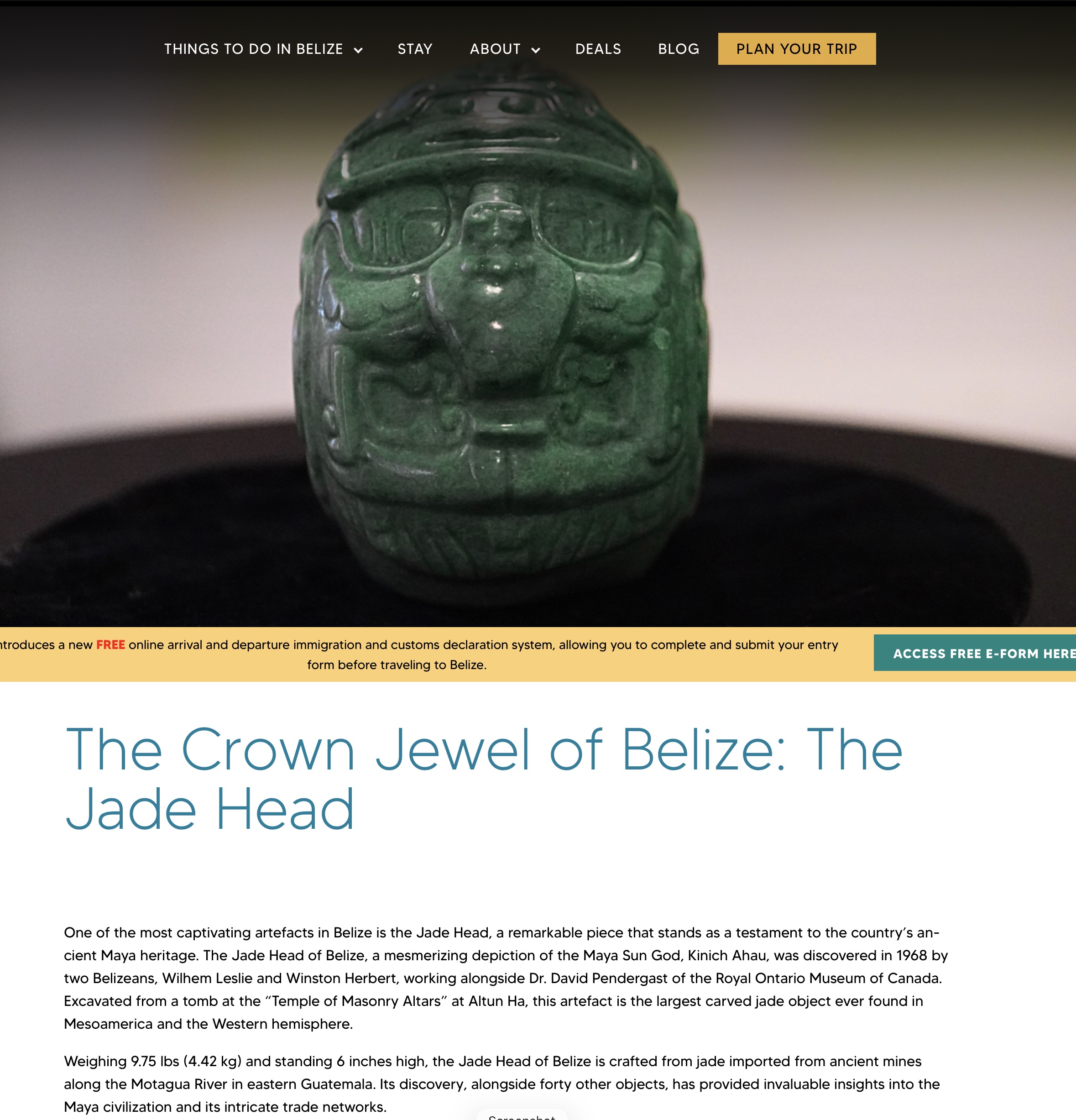
One of the most captivating artifacts in Belize is the Jade Head of Belize, a remarkable object that stands as a testament to the country’s ancient Maya heritage. This striking depiction of the Maya Sun God, Kinich Ahau, was discovered in 1968 by Wilhem Leslie and Winston Herbert, working alongside David Pendergast of the Royal Ontario Museum. Excavated from a tomb within the “Temple of Masonry Altars” at Altun Ha, the artifact is the largest carved jade object ever discovered in Mesoamerica and the Western Hemisphere. Weighing 9.75 pounds (4.42 kg) and standing six inches high, the Jade Head was carved from jade imported from the ancient jade sources along the Motagua River in eastern Guatemala. Its discovery, together with forty other objects, has provided valuable insight into Maya civilization and its extensive trade networks. Altun Ha, meaning “Rockstone Water” in Yucatec Maya, was an important ceremonial center that flourished during the Classic Period. Located near Rockstone Pond along the old northern highway, the site functioned as a major trading link between the Caribbean coast and settlements in the interior. At its peak, around A.D. 500–600, Altun Ha is estimated to have supported a population of between 8,000 and 10,000 inhabitants. The tomb in which the Jade Head was found also contained the remains of an elderly male believed to have held high social status, underscoring the wealth and influence of the city’s elite. Today, the Jade Head of Belize is celebrated as the national treasure of Belize. Beyond its immense archaeological importance, it has become a symbol of national identity and appears on all Belizean paper currency. More recently, the artifact was featured at the launch of Access501, a learning platform created by the Ministry of Education, Culture, Science, and Technology, through which visitors can explore digital 3D models of the Jade Head and other Maya artifacts created in collaboration with the Institute of Archaeology.
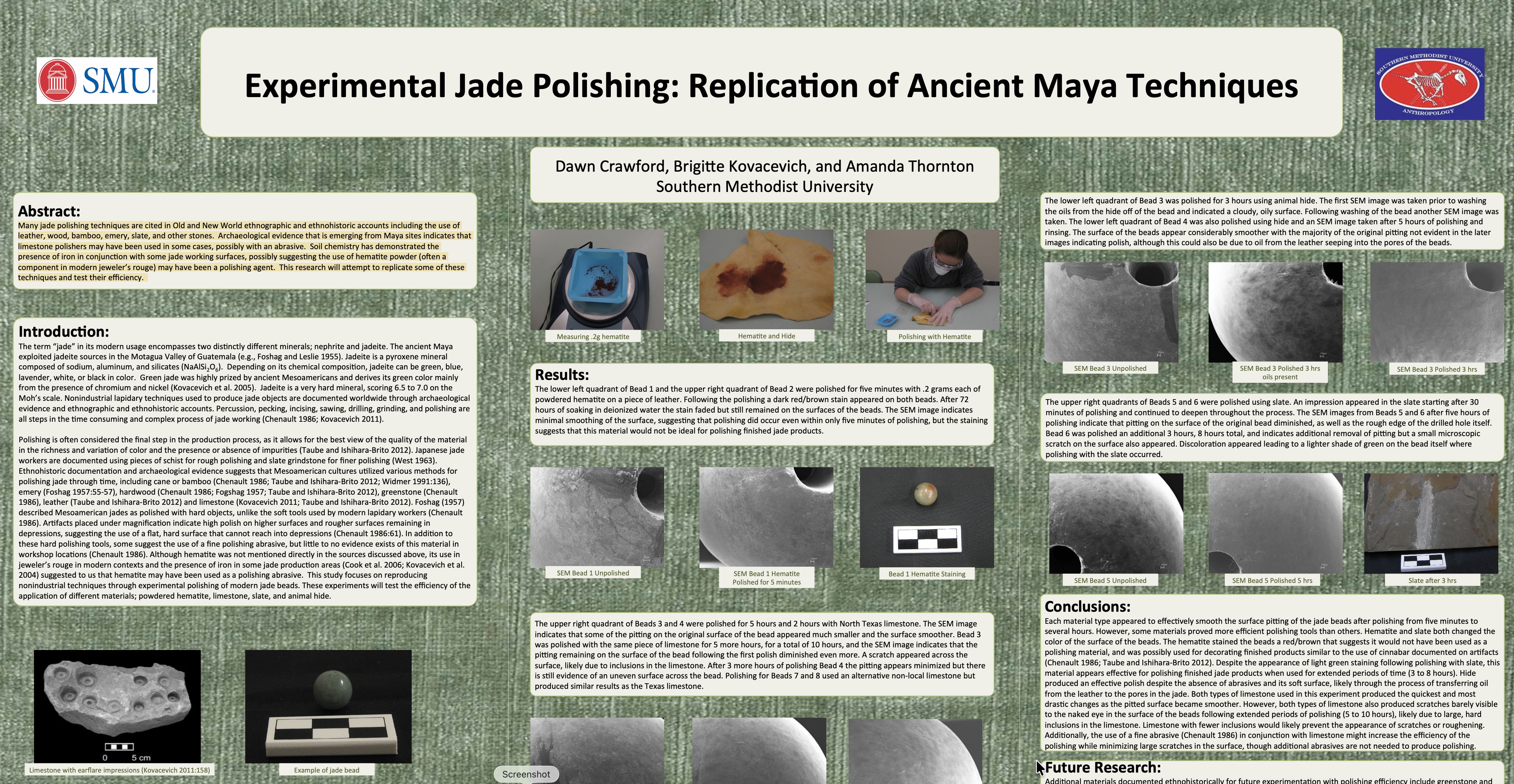
Experimental Jade Polishing: Replication of Ancient Maya Techniques
Report
Crawford, D., Kovacevich, B. and Thornton, A. (n.d.)Experimental Jade Polishing: Replication of Ancient Maya Techniques. Southern Methodist University, 1 page poster
Record No. 28402 | Sinkankas/Born No.: NIS/NIB | RWHL
Many jade polishing techniques are cited in Old and New World ethnographic and ethnohistoric accounts, including the use of leather, wood, bamboo, emery, slate and other stones. Archaeological evidence emerging from Maya sites indicates that limestone polishers may in some cases have been used, possibly in conjunction with an abrasive. Soil chemistry has demonstrated the presence of iron associated with some jade-working surfaces, possibly suggesting the use of hematite powder — often a component of modern jeweller’s rouge — as a polishing agent. This research will attempt to replicate some of these techniques and test their efficiency.Many jade polishing techniques are cited in Old and New World ethnographic and ethnohistoric accounts, including the use of leather, wood, bamboo, emery, slate and other stones. Archaeological evidence emerging from Maya sites indicates that limestone polishers may in some cases have been used, possibly in conjunction with an abrasive. Soil chemistry has demonstrated the presence of iron associated with some jade-working surfaces, possibly suggesting the use of hematite powder — often a component of modern jeweller’s rouge — as a polishing agent. This research will attempt to replicate some of these techniques and test their efficiency.
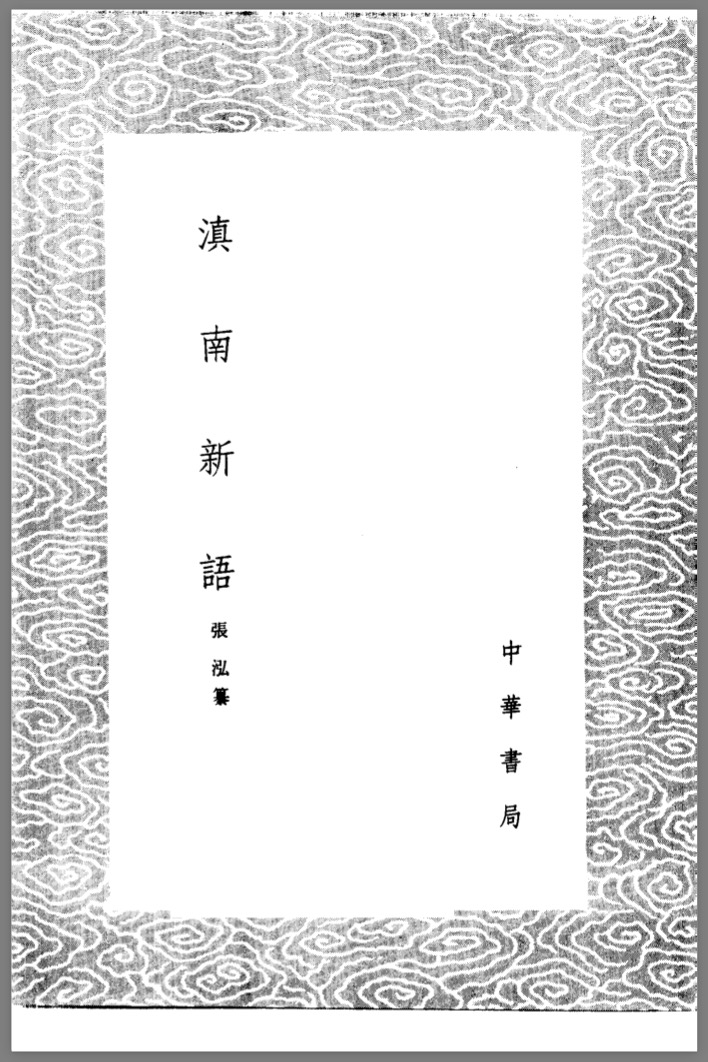
New Discourses from Southern Yunnan
滇南新语
Book
Zhang, H. (ca. 1741–1753)New Discourses from Southern Yunnan. [滇南新语], 30 pp.
Record No. 16781 | Sinkankas/Born No.: NIS/NIB | Language: in Chinese | RWHL
Reference copied to clipboard!
gems, jade, ruby, sapphire, spinel, Burma, Myanmar, Chinese trade with Burma
Sun Laichen: Contains two brief items, one an account of how Chinese traders traveled to Burma to buy precious stones, including a description of the mining and marketing of the stones by the indigenous people, and the other about the export of tea from Mubang to Yunnan and the interior of China. Since Zhang Hong served in various official capacities in Yunnan between 1741 and 1753, this work must have been written during or after this time.
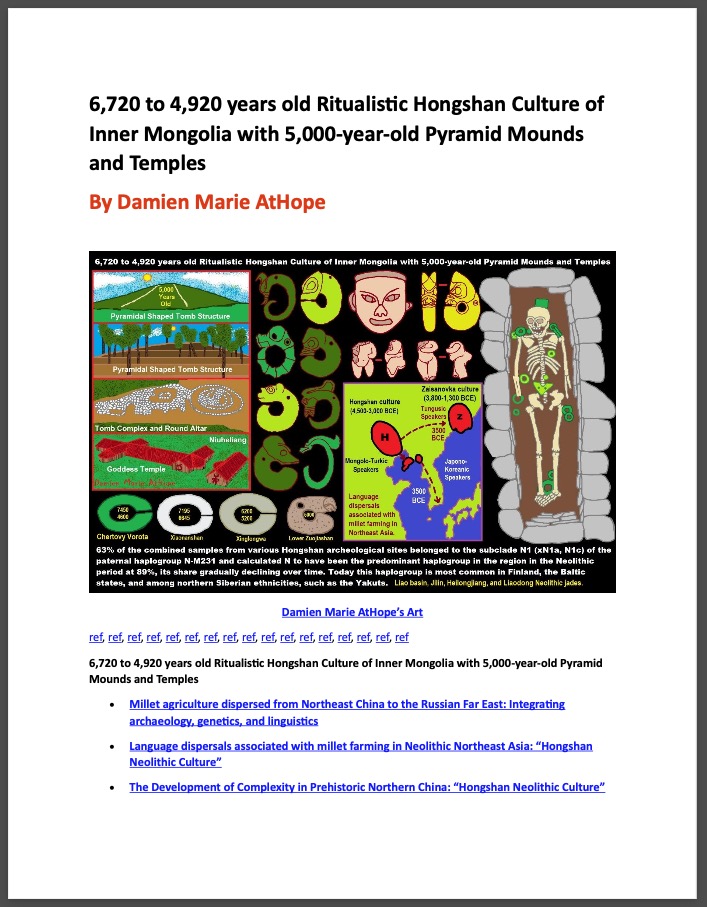
AtHope, D.M. (n.d.) 6,720 to 4,920 years old Ritualistic Hongshan Culture of Inner Mongolia with 5,000-year-old Pyramid Mounds and Temples., 122 pp.
Record No. 16761 | Sinkankas/Born No.: NIS/NIB | RWHL
Reference copied to clipboard!
gems, jade, history of jade
Discusses the archaeology of Hongshan Culture jade in China, along with jade cultures in Siberia and Central Asia. The Hongshan Culture “As an important part of the Neolithic Age in Northern China, the Hongshan Culture covers an area from the Wuerjimulun River valley of Chifeng, Inner Mongolia in the north to Chaoyang, Lingyuan and the northern part of Hebei Province in the south, and extends eastward to cover Tongliao and Jinzhou. Hongshan Culture is characterized primarily by the ancient painted potteries, the “Z”-stripped potteries, and the unique digging tools-stone spades and laurel leave-shaped two-holed stone knives. The potteries of Hongshan Culture fall into two types-clay potteries and sand-mixed potteries, both manually made. The clay potteries are mostly red, usually in the forms of bowl, basin, jar, and pots, etc., most of which are containers with small flat bottoms. Most of the clay potteries are decorated with black or purple stripes arranged mainly in parallel lines, triangles, scale-shaped patterns, and occasionally in “Z”-shaped pressed stripes. The stoneware of Hongshan Culture is made by grinding with the blades of stone knives finely ground and the edges and backs in curved symmetry, indicating a fairly developed agricultural economy of the culture. Within the area of Hongshan Culture, bones of oxen, lambs, pigs, deer, and river deer have been unearthed, though in small numbers. The oxen, lambs, and pigs, which are presumably domestic animals, vaguely indicate that the early inhabitants of Hongshan Culture lived a settled life supplemented by animal husbandry, fishery, and hunting.” “More than 20 cirrus-shaped jade articles have been unearthed at the site of Hongshan Culture, and each of them represents two fundamental themes-cirrus-shaped angles and minor convexities. A combination of cirrus-shaped angles and minor convexities in different ways constitute the various patterns and designs of the cirrus-shaped jade articles of Hongshan Culture, which is best demonstrated by the enormous blackish-green jade dragon unearthed at Sanxingtala Township of Wengniute Banner. The dragon is 26 cm in height with the head of a swine and the body of a serpent, coiling like cirrus. Similar dragons were found later in Balin Right Banner and the Antiques Store of Liaoning Province. These cirrus-shaped jade articles can be classified into four types by analyzing their patterns and designs: decorative articles, tools, animals, and special ones, of which the hoop-shaped articles are among the typical pieces of the jade ware of Hongshan Culture. The association of the shapes of these jade articles with their cultural context indicates that the special articles and the tools were made to meet the needs of religious ceremonies. The discovery of cirrus-shaped jade dragon at Hongshan Culture strongly suggests Inner Mongolia as one of the essential sites to trace the worship for dragons by the Chinese people.” “From religious relics of Hongshan Culture like the “Goddess Temple” and stone-pile tombs have been found at Dongshanzui of Kazuo County and Niuheliang at the juncture of Lingyuan County and Jianping County of Liaoning Province. The central part of Dongshanzui relics is the foundation of a large-scaled square structure built of stone. The overall layout of the bilateral symmetry of the foundation to a south-north axis, which is characteristic of the traditional Chinese architectural style, is the first of its kind ever discovered at the site of Neolithic Age. The pottery figures unearthed at the relics indicate that the sites used to be places for sacrificial ceremonies or similar activities. In the first place, archeological studies show that Hongshan Culture was developed on the basis of Xinglongwa Culture and Zhaobaogou Culture, and the inheritance and development in religious traditions between the three cultures are evident. No sites devoted exclusively to sacrificial rites have been found so far in Xinglongwa Culture and Zhaobaogou Culture. The discovery of Niulianghe Relics indicates that large-scaled centers for sacrificial rites had shown up by the end of Hongshan Culture. This is not only a breakthrough in the study of Hongshan Culture but a discovery of great significance to the exploration of the origin of the Chinese civilization.” “Secondly, Hongshan Culture is credited with remarkable achievements in architecture, pottery-making, jade-carving, and pottery sculptures which are at higher levels than those of Xinglongwa Culture and Zhaobaogou Culture. The duet of square pottery molds unearthed at the relics of a house of Hongshan Culture at Xitai, Aohan Banner, which is the earliest mold for metal casting, shows that the early people of Hongshan Culture had mastered the technology of bronze casting. Next, hunting was in the dominant position in Xinglongwa Culture and Zhaobaogou Culture, while by contrast, agriculture played an essential role in the economy of Hongshan Culture. Judging from the position of Hongshan Culture in the archeological culture of ancient Northern China and China in the Neolithic Age, we can well assume that Hongshan Culture is one of the most advanced cultures among the ranks of its peers in both southern and northern China at that time when the smelting of bronze had made appearance, the earliest cities surrounded by ditches had shown up, and the division between urban and rural areas had taken shape. Religious activities characterized by worshiping dragon and jade and respecting the ancestors were in vogue. The conflicts among social groups and the subsequent fights for the unification of religious beliefs had become the fundamental social issue. This is another proof to the assumption that the people of Hongshan Culture had marched from the clan society into the historical phase of ancient kingdoms. Therefore, we can say that by laying a foundation for the development of the Chinese civilization of five thousand years and formulating and influencing the layout of the origin and the progress of the protocol-dominating culture of China, Hongshan Culture plays an extremely essential role in the evolution of the Chinese civilization.”
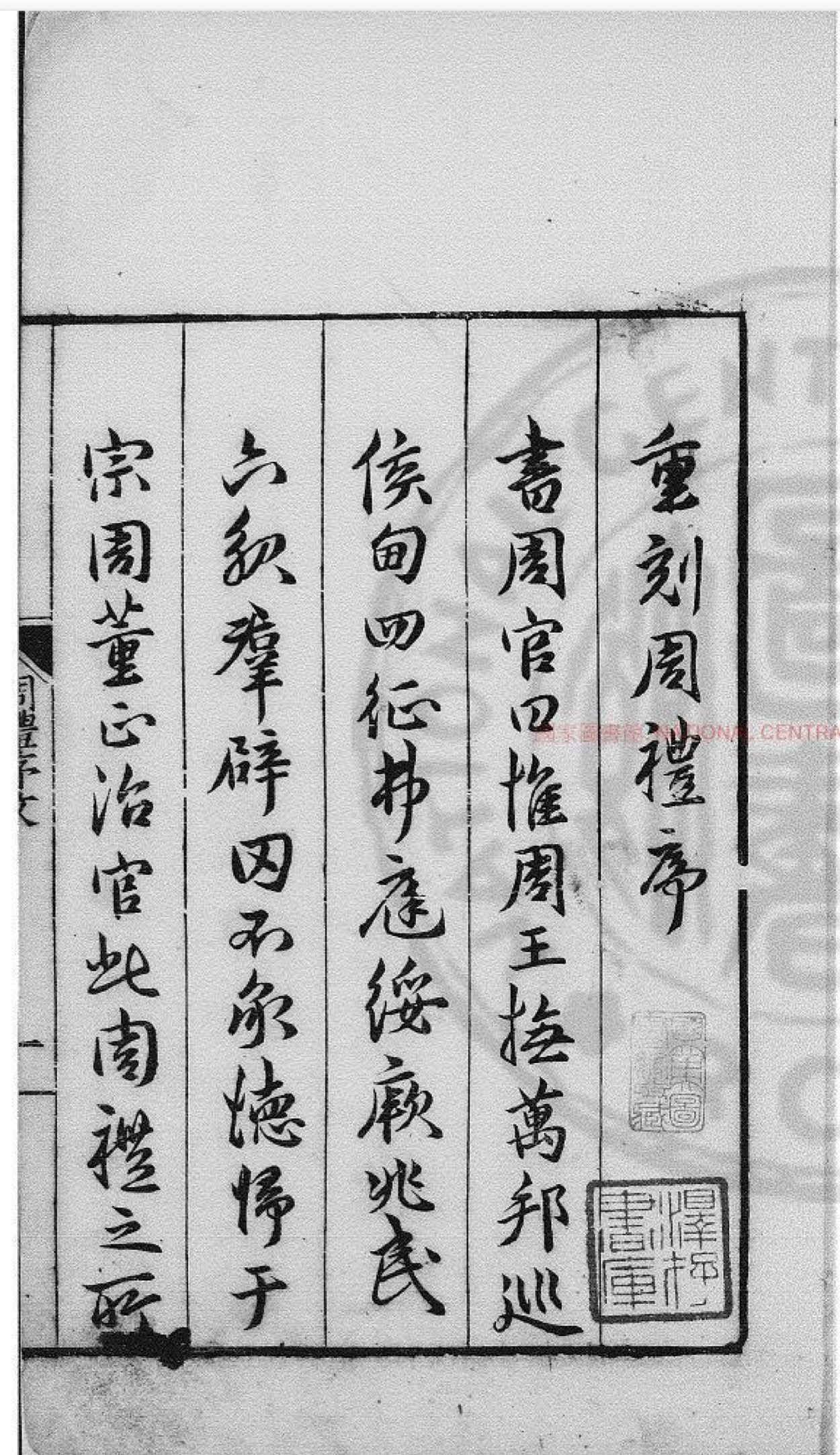
[author unknown] (~3rd century BCE)Record of Craftsmen’s Work. [Kao Gong Ji 考工记]
Record No. 16543 | Sinkankas/Born No.: NIS/NIB | Language: in Chinese | RWHL
Reference copied to clipboard!
gems, jade, China, Adam, Chinese jade books, jade lore
The Kao Gong Ji [考工記; Record of Craftsmen’s Work] is an ancient Chinese technical text concerned with the organization, materials, methods, and standards of state-controlled craft production. Probably compiled during the late Warring States period and subsequently incorporated into the Zhou Li [周禮; Rites of Zhou], it describes specialists engaged in metalworking, woodworking, leatherwork, pottery, vehicle construction, weapon manufacture, architectural planning, and other crafts. Of particular interest to historians of materials and gemology are its discussions of the selection and working of natural materials such as jade, systems of measurement, standards of workmanship, and the relationship between material properties and successful manufacture. Although it is not principally a lapidary text, the Kao Gong Ji provides exceptionally early evidence for systematic Chinese technological thought and for the sophisticated classification and manipulation of materials in ancient craft production.
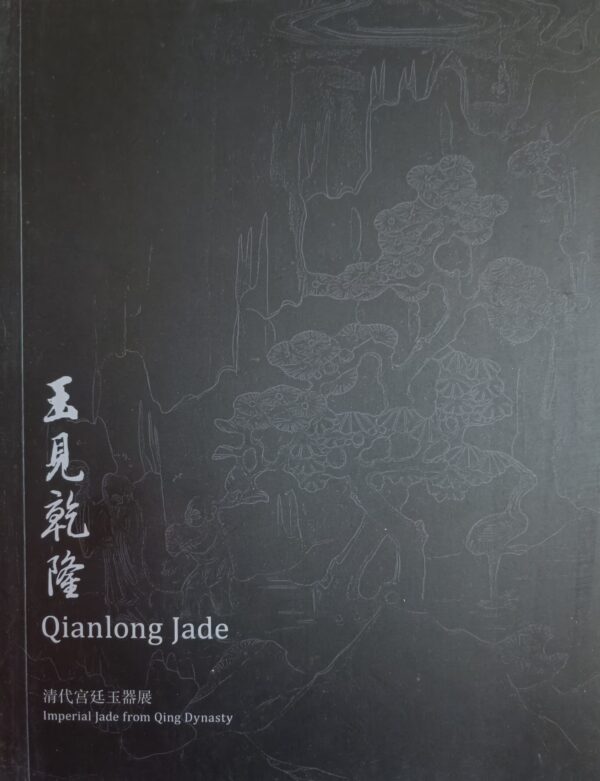
Qianlong Jade | Imperial Jade from Qing Dynasty
玉見乾隆 清代宮廷玉器展
Catalog
Poly Art Museum (n.d.)Qianlong Jade | Imperial Jade from Qing Dynasty. [玉見乾隆 清代宮廷玉器展] no city: Poly Art Museum, 125 pp..
Record No. 8048 | Sinkankas/Born No.: NIS/NIB | Language: in Chinese | RWHL
Reference copied to clipboard!
gems, jade, nephrite, China, Chinese jade carving
This illustrated exhibition catalogue examines jade culture at the Qing imperial court, focusing on the flourishing of jade carving during the Qianlong reign. More than one hundred Qing objects—including imperial seals, palace furnishings, vessels, sculptures, personal ornaments, and scholars’ objects—are presented according to their functions and courtly settings. The catalogue considers Qianlong’s personal patronage, the increased supply of jade from Xinjiang, and the technical achievements of craftsmen working in the imperial workshops and major production centres such as Suzhou and Yangzhou. Its four thematic sections address imperial authority, palace display, personal adornment, and the continuation of jade-working traditions in contemporary art. Together, the entries document the materials, workmanship, imagery, symbolism, and ceremonial or practical uses of jade, while showing how imperial taste helped bring Qing jade carving to an exceptional level of refinement.
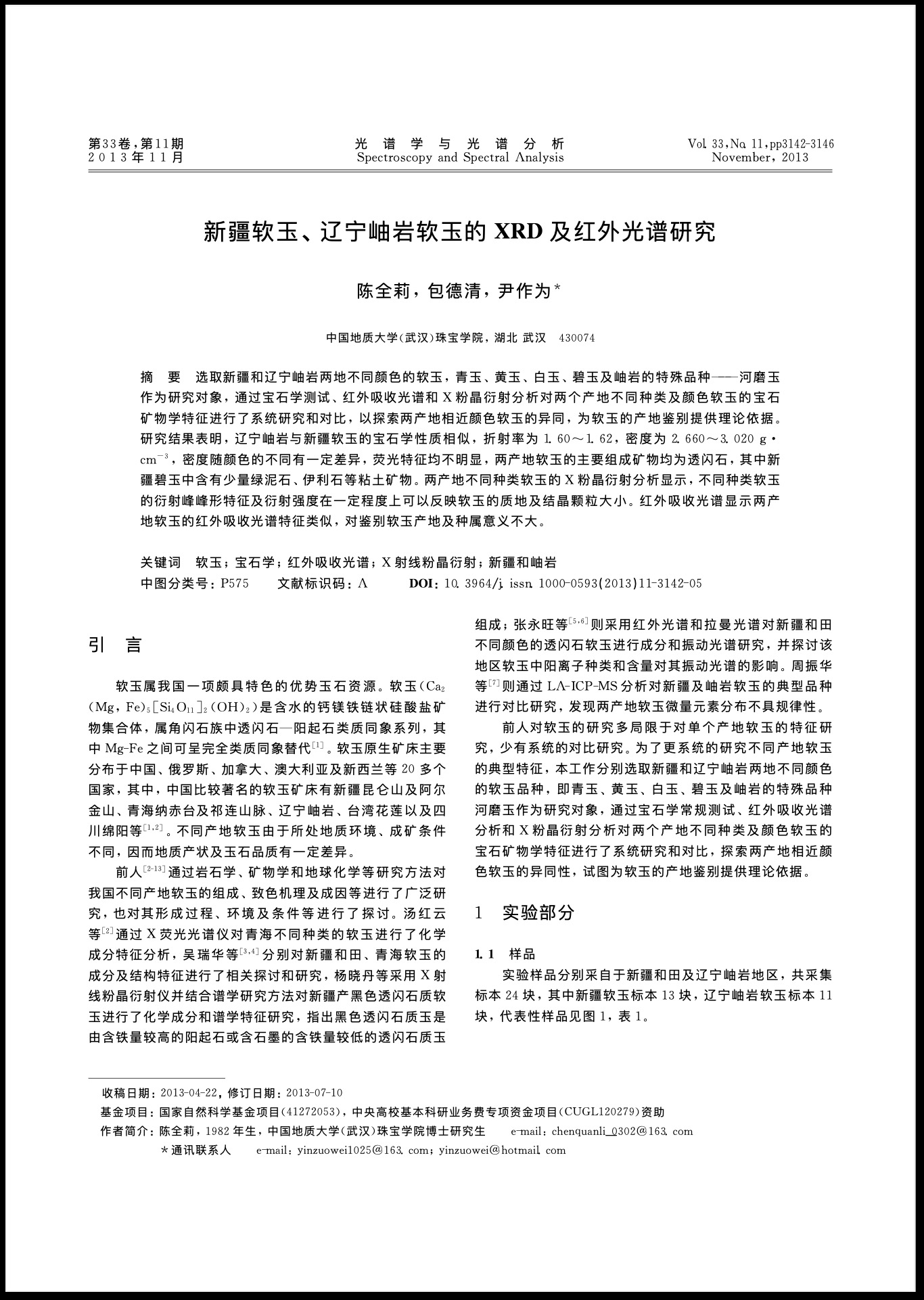
Ink jade (nephrite) from Dushan jade mine in Nanyang
南阳独山玉矿中的墨玉(软玉)
Journal Article
Cheng, G. (n.d.) Ink jade (nephrite) from Dushan jade mine in Nanyang. [南阳独山玉矿中的墨玉(软玉)]China Gems & Jades, pp. 164–165.
Record No. 7194 | Sinkankas/Born No.: NIS/NIB | Language: Chinese | RWHL
Reference copied to clipboard!
gems, jade, amphibole jade, nephrite, China
Dushan, located about 10 kilometers north of Nanyang City, is named for its prominent single peak. It is renowned for producing Dushan Jade. In recent years, 'Dushan Ink Jade (Nephrite),' with yangqi stone as the main mineral component, has been discovered in the Dushan Jade mining area.
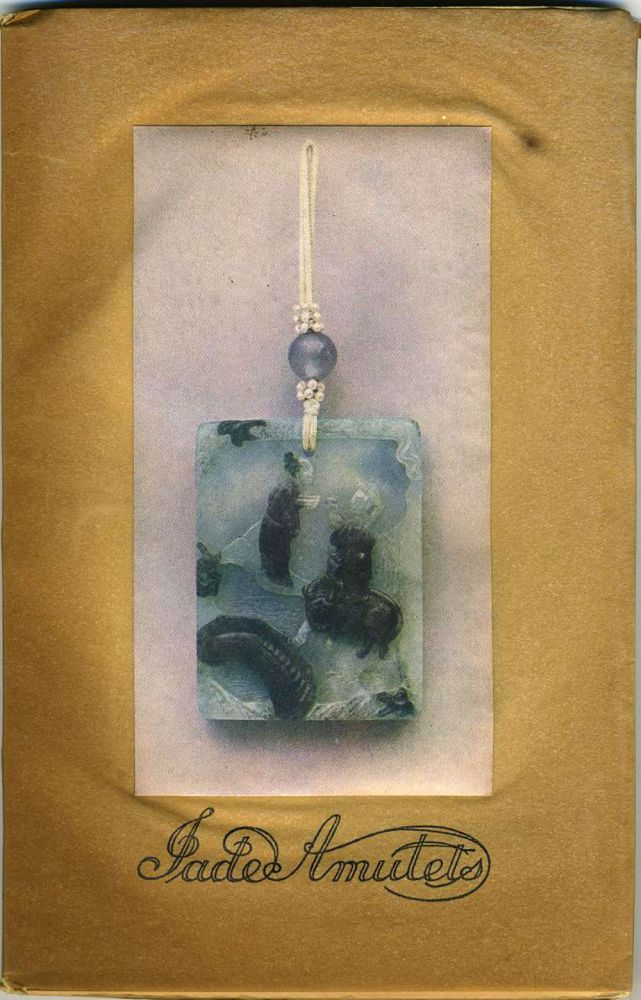
Jade Amulets: Historical Notes with Coloured Illustrations and Interpretations of the Most Characteristic Forms
Book
Liberty & Co. (n.d., ca. 1925)Jade Amulets: Historical Notes with Coloured Illustrations and Interpretations of the Most Characteristic Forms. London, Liberty & Co., 33 parchment pp.
Record No. 6931 | Sinkankas/Born No.: NIS/NIB | RWHL
Reference copied to clipboard!
gems, jade, Chinese jade, nephrite, Chinese jade carving, jadeite, fei cui
Sinkankas: This delightful and colorful promotional pamphlet was issued by the famous London department store and provides a brief yet engaging history of jade, emphasizing the high esteem in which it is held by the Chinese. It includes several informative paragraphs on the mineralogy of jade, the most prized colors, common motifs used in carvings, and their symbolism. The pamphlet concludes with a final paragraph describing a Mandarin rosary and its origins. While the plates are not crisply printed, the colors are true to the objects depicted, which include bracelets, pins, and pendants made from both jadeite and nephrite. The summary by G.M. Born (pages 214–215) suggests a publication date of 1919, which has been adopted.
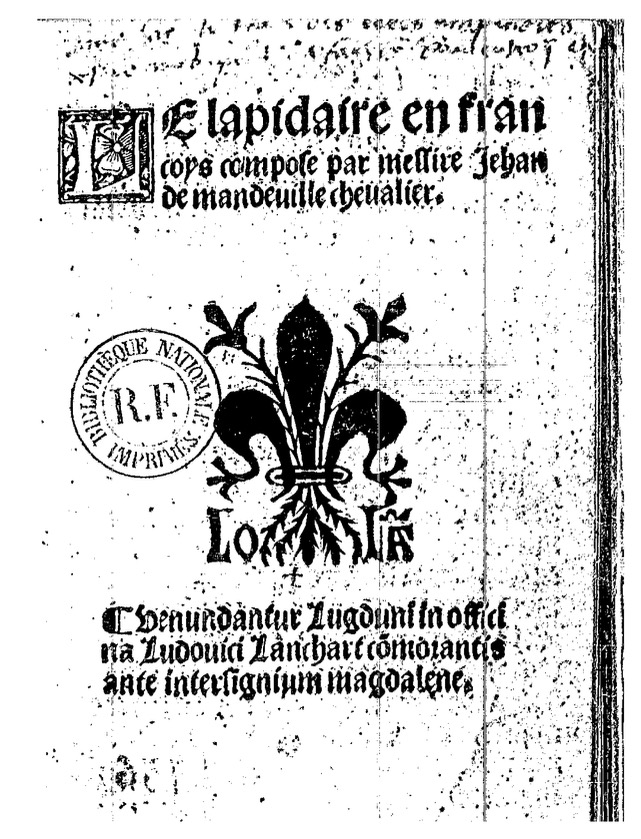
The Lapidary in French, composed by Sir Jehan de Mandeville, Knight
Book
Mandeville, J. (n.d., ca. 1495)Le lapidaire en francoys coittpose par messire Jehan de mandeville chevalier. [The Lapidary in French, composed by Sir Jehan de Mandeville, Knight] Lyon, Bernardus de Gordonio, 18 leaves
Record No. 6809 | Sinkankas/Born No.: NIS/NIB | Language: in French | RWHL
Reference copied to clipboard!
gems, jade, Fischer-Book, early gemology
Schuh: Extremely rare. Editio Princeps. Attributed to Mandeville this lapidary written in the French language first appeared in manuscripts that date from the middle 14th century. Pannier (1882) describes and compares several such manuscripts that had come under his inspection, and concludes that the text was probably not an authentic work of Mandeville. Instead, Pannier believes it to be the work of an unnamed jeweler. The text describes the most important precious stones and many others of a fantastic nature. It begins by coping from Marbode, the leading lapidary of the period, descriptions of about two dozen stones. Then are given descriptions of other stones and minerals both imaginary and real including pumice, mica, alabaster, and lapis lazuli. Stones formed in the human body or the bodies of animals are very prominent, as these bezoar and eaglestones were believed to bestow on their owner marvelous or supernatural power. Due to the extreme rarity of all of the early editions the printing history of this work is a difficult bibliographical problem. The widely unknown incunabula edition described above was first noticed and examined in detail by David J. Shaw, whose information is copied (person communication). This is most probably the first printing of Mandeville's Lapidaire, although Klebs (1938) who copies Claudin (1900) briefly describes a tantalizing Lapidaire written in French and published at Lyon in 1477 that is perhaps a still earlier printing. The difficult to read manuscript description of this 1477 book published in Pellechet (1970) does not mention Mandeville's name, but the work deserves closer examination.
Blythe, E.M. and Douglas, J.G. (n.d.)Methods Used for Jade Studies in the Department of Scientific Research. Jades for Life and Death, Freer|Sackler, <https://archive.asia.si.edu/publications/jades/essay-douglas-mccarthy.php>
Record No. 5707 | Sinkankas/Born No.: NIS/NIB | RWHL
Over the years, a variety of methods have been used to study stone materials belonging to a class loosely termed “jade.” Jade is a complex material, and much of its study at the Freer and Sackler has been aimed at an understanding of its visual appearance and physical characteristics such as mineral composition, color, translucency, and surface alteration. More extensive studies have focused on learning about early Chinese cultures through the study of their jade objects, such as the study of minor elemental composition which can inform us about the geological sources of their raw materials, and microscopic study of tool marks which provide clues to the working methods used to create them. The following digest contains many of the basic methods that have been used at the Freer and Sackler and also associates them with the principle investigator when known. Some of these methods are more precise and reliable than others, and some require sampling while others do not.
Jade Hunt
Book
Gump, A.L. and Taylor, F.J. (n.d., ca. 1938)Jade Hunt. San Francisco, H.S. Crocker Co., no pagination, 12 leaves
Record No. 4658 | Sinkankas/Born No.: NIS/NIB | RWHL
Reference copied to clipboard!
jade, gems
Reprint of Saturday Evening Post article of 12 June, 1937
Symbols of the Maori World • Handcrafted Bone and Jade Carvings
Book
Wepa, M.E. (n.d., ca. 1999)Symbols of the Maori World • Handcrafted Bone and Jade Carvings. Rotarua, self-published, 36 pp.
Tarchini, G. (n.d.)Cong-tubes and hoof-shaped jades: A shared origin? 17 pp.
Record No. 4519 | Sinkankas/Born No.: NIS/NIB | RWHL
Reference copied to clipboard!
gems, jade, archaic jade, China, nephrite
This paper investigates the origins and cultural connections between two distinct types of jade artifacts, Cong tubes and hoof-shaped jades, from Neolithic to Han dynasty China. Through archaeological analysis and comparative studies, it questions previous interpretations and highlights influences and shared beliefs among prehistoric societies. The findings suggest a complex interplay of aesthetics and regional variations that challenges the notion of isolated cultural development in ancient China.
Exploring the Literature of Jade
Jade literature spans gemology, mineralogy, archaeology, art history, mining, carving and connoisseurship, and includes works on both jadeite and nephrite from around the world.
Four Treasures is Lotus Gemology's freely accessible gemological reference database. Use the full database to search by author, title or keyword and explore literature on gemology, mineralogy, jewelry and related fields. Where available, hyperlinks on titles may lead directly to the full publication.