Jade Bibliography

Jade Bibliography

Explore books, articles and historical sources on jade in Four Treasures, the Lotus Gemology reference database. This bibliography brings together matching records from the collection, with publication details, abstracts and cover images where available.

Jade References

The list below matches the terms jade, jadeite, nephrite or Fei Cui in the database's searchable fields. Some references discuss these materials as part of a broader subject.
321–340 of 3,783 matching references

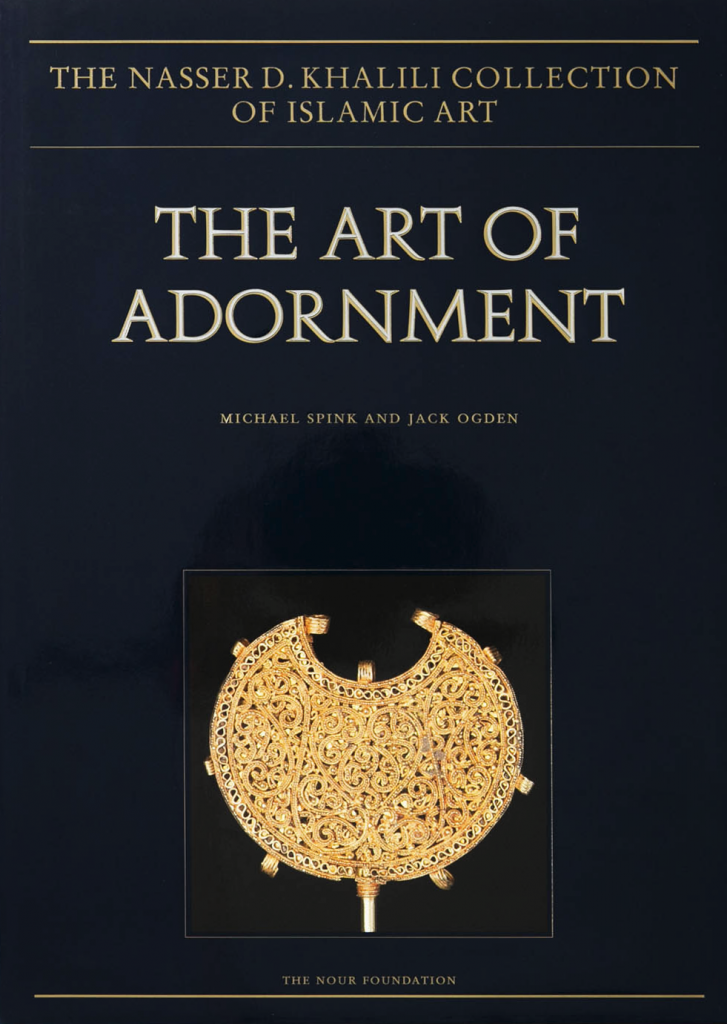
The Art of Adornment: Jewellery of the Islamic Lands, Parts 1–2
Book
Spink, M. and Ogden, J.M. (2013) The Art of Adornment: Jewellery of the Islamic Lands, Parts 1–2. London, The Nour Foundation, Vols. 17–18 , 702 pp.
Record No. 26622  |  ISBN/ISSN: 9781874780861; 1874780862  |  Sinkankas/Born No.: NIS/NIB  |  RWHL*
The magnificent holdings of Islamic jewellery in the Khalili Collection are more comprehensive than any other published collection. This two-part volume includes virtually every form of personal adornment – head, hair and headdress ornaments; earrings; nose rings; pendants; beads; necklaces; bracelets, armlets and anklets; armband elements; amulets and amulet cases; pins and brooches; buttons; belts and belt fittings – as well as harness fittings – in a wide range of materials and techniques – gold, silver and copper alloys with niello, enamel and inset gems. There are nearly 600 catalogued pieces dating from the 7th to the 20th centuries, and from across the Islamic world, from Spain to Malaysia, North Africa to the Eurasian steppes. Outstanding within the Collection are the Fatimid objects, which incorporate the ‘rope-and-grain’ filigree characteristic of Egypt or Syria; Iranian bracelets of the 10th–13th centuries, of gold sheet decorated with set gems, niello and granulation; and a two-headed eagle from 18th-century Morocco, in gold filigree and set gems. The catalogue examines the role of jewellery in Muslim societies and attempts to place certain forms in the context of other cultures, from Byzantium to Liao China. Other essays introduce the materials and technology of jewellery-making, discuss the origins of ‘spiral filigree’ and present a significant group of copper-alloy harness fittings from Nasrid Spain. Separate catalogue volumes have been devoted to the Collection’s holdings of rings (vol. XVI) and to jewels from Mughal India (vol. XVIII). [RWH: These two volumes are superb, with great articles on gems in the Islamic world and excellent bibliographies. Highly recommended.]

The gem electuary

Book Section
Duffin, C.J. (2013) The gem electuary. In: A History of Geology and Medicine, London: Geological Society, London, Special Publications, Vol. 375 , pp. 81–111.
Record No. 16454  |  Sinkankas/Born No.: NIS/NIB  |  RWHL*
The gem electuary was reputedly the brainchild of Maswijah al-Marindi or Mesuë the Younger, who died in AD 1015, but the recipe was first published in the 1470s. Combining finely comminuted sapphires, chalcedony emeralds, garnets and amber together with pearls, red coral, ivory and musk along with a range of herbal ingredients, an exotic and highly expensive paste, usually bound together with sugar or honey, was produced. The list of ingredients evolved slightly, especially in light of the availability of some of the herbal materials. The electuary was used, both as an individual medicine and in combination with additional preparations, right through to the mid-eighteenth century. Most popular during the sixteenth and seventeenth centuries, it was prescribed for the treatment of melancholia, nightmares, plague, syphilis, palsy, cramp, breast cancer, headache, erysipelas, fevers, tuberculous adenitis (scrofula) and a range of gynaecological conditions, as well as being employed as an alexipharmic and cardiac tonic. Usually taken internally, it was also applied topically with the apparent added benefit of being a rubefacient and fragrant cosmetic.

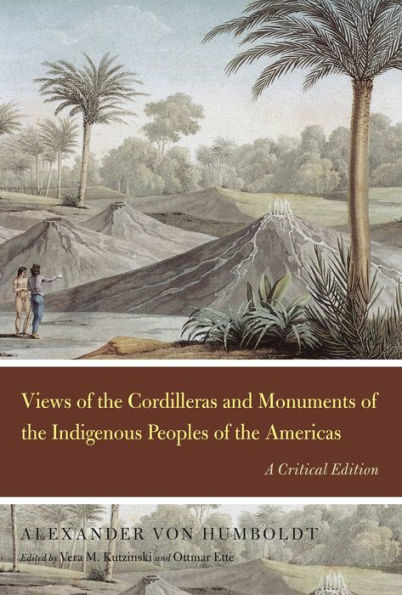
Views of the Cordilleras and Monuments of the Indigenous Peoples of the Americas: A Critical Edition
Book
Humboldt, A., von (2013) Views of the Cordilleras and Monuments of the Indigenous Peoples of the Americas: A Critical Edition. Chicago, University of Chicago Press, 664 pp.
Record No. 8100  |  ISBN/ISSN: 9780230000000  |  Sinkankas/Born No.: NIS/NIB  |  RWHL*
In 1799, Alexander von Humboldt and Aimé Bonpland set out to determine whether the Orinoco River connected with the Amazon. But what started as a trip to investigate a relatively minor geographical controversy became the basis of a five-year exploration throughout South America, Mexico, and Cuba. The discoveries amassed by Humboldt and Bonpland were staggering, and much of today’s knowledge of tropical zoology, botany, geography, and geology can be traced back to Humboldt’s numerous records of these expeditions. One of these accounts, Views of the Cordilleras and Monuments of the Indigenous Peoples of the Americas, firmly established Alexander von Humboldt as the founder of Mesoamerican studies. In Views of the Cordilleras—first published in French between 1810 and 1813—Humboldt weaves together magnificently engraved drawings and detailed texts to achieve multifaceted views of cultures and landscapes across the Americas. In doing so, he offers an alternative perspective on the New World, combating presumptions of its belatedness and inferiority by arguing that the “old” and the “new” world are of the same geological age. This critical edition of Views of the Cordilleras—the second volume in the Alexander von Humboldt in English series—contains a new, unabridged English translation of Humboldt’s French text, as well as annotations, a bibliography, and all sixty-nine plates from the original edition, many of them in color.

Craft production and distribution in the Maya lowlands: A Jade case study
Book Section
Kovacevich, B. (2013) Craft production and distribution in the Maya lowlands: A Jade case study. In: Merchants, Markets, and Exchange in the Pre-Columbian World, Washington, DC: Dumbarton Oaks Research Library and Collection, pp. 255–282.
Record No. 8021  |  Sinkankas/Born No.: NIS/NIB  |  RWHL*
An understanding of the organization of production and exchange of goods such as jade, shell, obsidian, chert, and textiles has proven to be quite challenging for Maya scholars. The answers to questions of who produced these items (i.e., elites or commoners, men or women), how they were transported and exchanged across the landscape, what routes were taken, and who consumed these objects still elude us to a great degree. Part of the problem may be due to the highly variable nature of classic Maya polities, as well as changes in economic systems through time, but another contributing factor to these debates has been the traditional focus on elite contexts to the exclusion of commoner households (i.e., Robin 2003). This situation is beginning to be remedied, and new research is revealing an even more complicated picture than what was expected in many cases. The production and exchange of jade artifacts highlight intertwined relationships between the status of the crafters, the location of the centers near valuable resources and trade routes, political ties and alliances, and also the power of elites and nonelites over their political and economic destinies. once argued to be the sole province of the classic Maya elite, jade has been shown to have been crafted by commoners as well. its exchange patterns are equally as confounding, possibly not restricted to spheres of elite exchange and maybe even traded in markets. commoners not only created jade artifacts, but also they may have consumed them in some forms. The entangled nature of the production and exchange of jade reflects the intricacies of the classic Maya economic system as a whole and can provide a window into these economic patterns. For this reason, I will focus here on how jade was produced and consumed during the classic period, with an emphasis on evidence from the site of Cancuen, Guatemala (Figure 10.1).

Schmuck der Maharajas

Jewelry of the Maharajas
Book
Weihreter, H. (2013) Schmuck der Maharajas. [Jewelry of the Maharajas] Munich, Deutscher Kunstverlag, 168 pp.
Record No. 7579  |  ISBN/ISSN: 9783420000000  |  Sinkankas/Born No.: NIS/NIB  |  Language: in German  |  RWHL*
Throughout its history, India has produced countless types of jewelry as a huge country with an almost unmanageable number of peoples and tribes. The precious ones were not only intended to decorate or provide information about the social rank of the wearer, they also served as magical protection and were indispensable in some religious ceremonies. Many pieces of jewelry also had a symbolic meaning and can be associated with ancient Indian myths due to their materiality. The publication ranges from magnificent pieces from princely treasuries to precious jade objects to the highly elaborately decorated jewelry of the Rabari people with gold granules.

Nephrite-yielding prehistoric cultures and nephrite occurrences in Europe: Archaeomineralogical review
Journal Article
Kostov, R.I. (2013) Nephrite-yielding prehistoric cultures and nephrite occurrences in Europe: Archaeomineralogical review. Haemus Journal, Vol. 2, pp. 11–30.
Record No. 7186  |  Sinkankas/Born No.: NIS/NIB  |  RWHL*
Nephrite-yielding prehistoric cultures in Europe used nephrite primarily for axes and ritual objects, including amulets. Artifacts made of nephrite have been identified across a broad span of Neolithic and Chalcolithic cultures—from the Balkans (end of 7th to 5th millennium BC), forming the so-called “Balkan nephrite culture,” to Sardinia (end of 5th to 4th millennium BC), and into Central and Western Europe, particularly Southern Poland and the Alpine lake regions of Switzerland and Germany (5th to 3rd millennium BC). The greatest concentrations of nephrite artifacts are found in Bulgaria (in the Balkans) and around Maurach in the Alpine region. For several archaeological sites, the source of the nephrite remains unknown, prompting calls for archaeomineralogical studies to identify prehistoric trade routes and local nephrite sources. Known nephrite occurrences in Europe include Austria, Bulgaria, Finland, France, Germany, Italy, Poland, Russia (European part), Spain, Switzerland, Turkey (Thrace), and Ukraine. Most of these deposits are metasomatic nephrite associated with serpentinite; only a few, such as Val Malenco (Italy) and Scortaseo (Switzerland), are associated with dolomitic marble. Rare glacially transported secondary nephrite occurrences are also reported in northern Europe.

Jade at the Mughal court in the 17th century
Journal Article
Stronge, S. (2013) Jade at the Mughal court in the 17th century. Transactions of the Oriental Ceramic Society, Vol. 76 • 2011–2012, pp. 71–84.
Record No. 6601  |  Sinkankas/Born No.: NIS/NIB  |  RWHL*
One of the most important sources for the history of early Mughal jade is the account ofWilliam Hawkins, who arrived at the court in 1609.1 The English merchant appeared before the emperor Jahangir (r. 1605–1627) resplendent in scarlet with a silver-embroidered cloak, claiming to be the ambassador of King James I, which he was not. Hawkins seems not to have known Persian, the cultural language of the Mughal elite and the administrative language of the whole empire, but the two managed to hold conversations which Jahangir apparently enjoyed. He gave the foreign visitor ful1 ambassadorial honours including a title, a house and a considerable sum of money. Hawkins'two-year residence inAgra at the heart of the court gives credence to his detailed account of the royal treasury which is therefore often mentioned in studies of 17th century Mughal art.

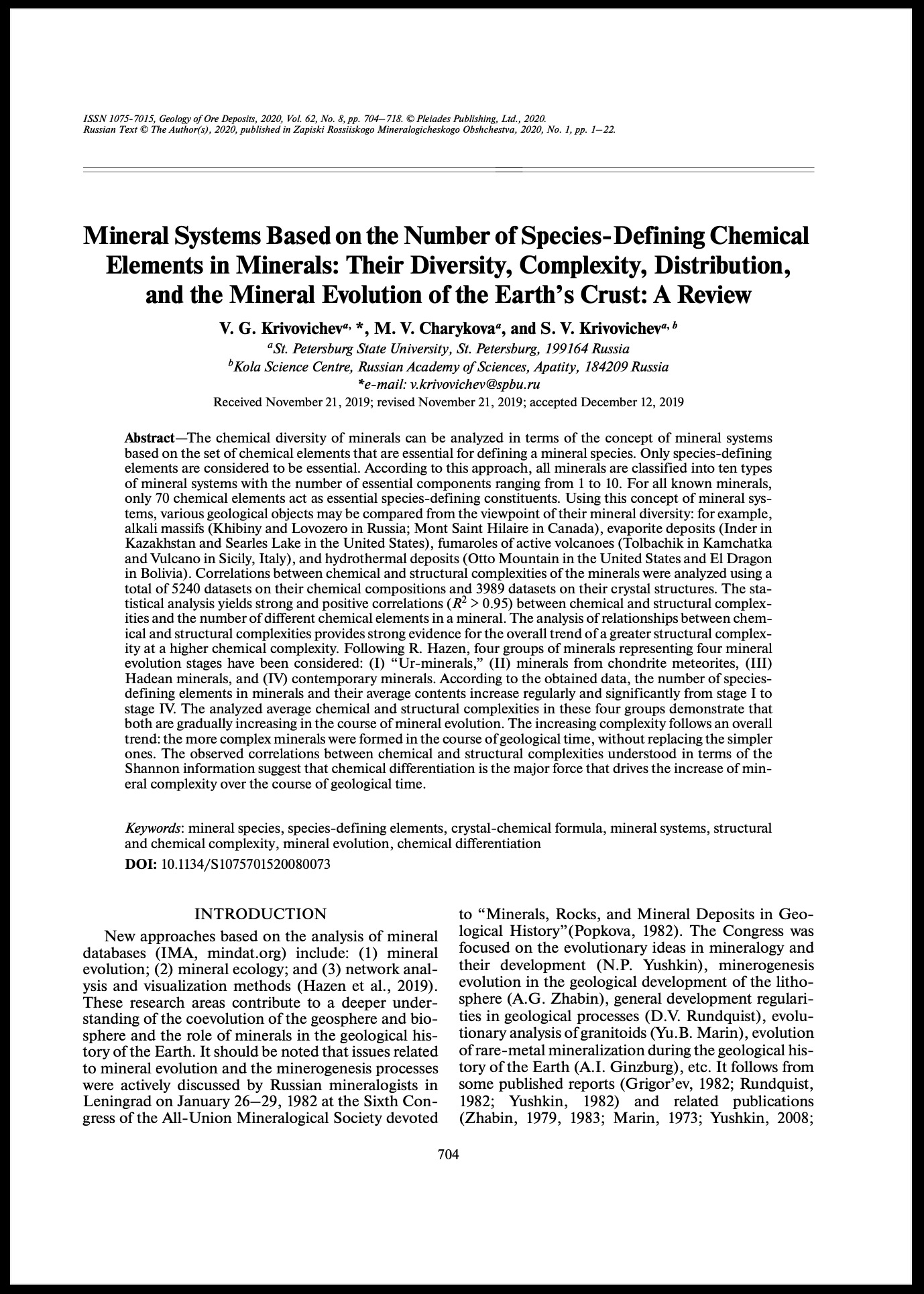
Mysterious, Holy, Imperial: Splendours of Jade in the Yuzu Museum of Art in China
Book
Yang, G. and Tan, S. (2013) Mysterious, Holy, Imperial: Splendours of Jade in the Yuzu Museum of Art in China. Beijing, China Social Sciences Publishing House, 478 pp.
Record No. 6546  |  ISBN/ISSN: 1064070619  |  Sinkankas/Born No.: NIS/NIB  |  Language: in Chinese and English  |  RWHL*
illustrated comprehensive and detailed overview of the Hua Yuzu Museum collections hundreds jade, which has a lot of text and graphics were used to complete the form of photography and rubbings. The book consists of Jade Magic Tree, Sun Wheel, Zodiac, sexual culture jade, class book symbol, jade, jade head, human and animal, animal, Jade mask, Ding cong drumk, Zhang Yue Bi knife, other and altar a total of 14 parts. The typical picture of hundreds of pieces . Through the publication of this book in order to give his readers a new experience . let enjoy a taste of Chinese jade culture is profound.

Studies on nephrite and jadeite jades by Fourier Transform Infrared (FTIR) and Raman spectroscopic techniques
Journal Article
Tan, T.L., Ng, L.L. and Lim, L.C. (2013) Studies on nephrite and jadeite jades by Fourier Transform Infrared (FTIR) and Raman spectroscopic techniques. Cosmos, Vol. 9, No. 1, pp. 47–56.
Record No. 6475  |  DOI: https://dx.doi.org/10.1142/S0219607713500031  |  Sinkankas/Born No.: NIS/NIB  |  RWHL*
The mineralogical properties of black nephrite jade from Western Australia are studied by Fourier transform infrared (FTIR) spectroscopy using both transmission and specular reflectance techniques in the 4000–400 cm⁻¹ wavenumber region. The infrared absorption peaks in the 3700–3600 cm⁻¹ region, which are due to the O–H stretching mode, provide a quantitative analysis of the Fe/(Fe+Mg) ratio in the mineral composition of jade samples. The Fe/(Fe+Mg) percentage in black nephrite is found to be higher than that in green nephrite, but comparable to that of actinolite (iron-rich nephrite). This implies that the mineralogy of black nephrite is closer to actinolite than tremolite. The jade is also characterized using Raman spectroscopy in the 1200–200 cm⁻¹ region. Results from FTIR and Raman spectroscopic data of black nephrite jade are compared with those of green nephrite jade from New Zealand and jadeite jade from Myanmar. Black nephrite appears to have a slightly different chemical composition from green nephrite. Spectra from FTIR and Raman spectroscopic techniques were found to be useful in differentiating black nephrite, green nephrite, and green jadeite jades. Furthermore, data on refractive index, specific gravity, and hardness of black nephrite jade are measured and compared with those of green nephrite and of jadeite jade.

The study on composition and heat treatment of the fei-color jade
Journal Article
An, M., Ye, D., Xing, Q.Y. and Zu, E.D. (2013) The study on composition and heat treatment of the fei-color jade. Key Engineering Materials, Vol. 544, pp. 178–182.
Record No. 6434  |  ISBN/ISSN: 16629795  |  DOI: https://dx.doi.org/10.4028/www.scientific.net/KEM.544.178  |  Sinkankas/Born No.: NIS/NIB  |  RWHL*
In this paper, the color-causing elements and mineral composition of the Fei-color (red color) jadeite jade were analyzed using X-ray fluorescence spectroscopy and X-ray diffraction techniques to systematically study Fei-color jade; during epigenetic oxidation, iron oxide minerals fill and disseminate in gravel fissures and mineral gaps, resulting in Fei-color—which includes yellow and red—and the results show that the concentration of Fei-color is proportional to the iron content, with manganese being the main cause of the sepia tone in Fei-color jade, yellow coloration resulting from limonite, and red hue appearing when limonite partially transforms into hematite due to dehydration, while the upper limit temperature for heat-treated Fei-color jade is about 580 °C.

Appraisal and Estimate of Nephrite Jade
和田玉鉴定与评估
Book
Bai, Z. and Zhao, B. (2013) Appraisal and Estimate of Nephrite Jade. [和田玉鉴定与评估], 东华大学出版社 [Donghua University Press], 204 pp.
Record No. 6141  |  ISBN/ISSN: 9787570000000  |  Sinkankas/Born No.: NIS/NIB  |  Language: in simplified Chinese  |  RWHL*
The years of experience in jewelry business and the research results of jewelry teaching have been summarized into a set of evaluation methods suitable for commercial trade. After a large number of students' market operations and market practices, they have gradually proven its accuracy and operability. Unique evaluation concepts and methods are also constantly being improved in the exchange with the market. This book mainly describes the varieties, identification methods and evaluation of Hetian jade. Bai Zigui is a teacher at Shanghai Biteng Vocational and Technical Training School, an international jewelry appraiser, and a national registered jewelry and jade quality inspector. Zhao Bo, Quality Inspector of Shanghai Jewelry and Jade Quality Supervision and Inspection Center, International Jewelry Appraiser, National Registered Jewelry and Jade Quality Inspector.

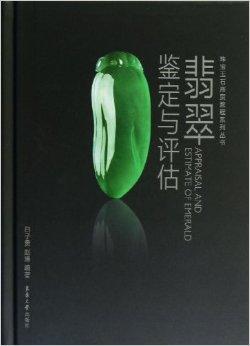
Appraisal and Estimate of Jadeite Jade
翡翠鉴定与评估
Book
Bai, Z. and Zhao, B. (2013) Appraisal and Estimate of Jadeite Jade. [翡翠鉴定与评估], 东华大学出版社 [Donghua University Press], 159 pp.
Record No. 6140  |  ISBN/ISSN: 9787660000000  |  Sinkankas/Born No.: NIS/NIB  |  Language: in simplified Chinese  |  RWHL*
“Jadeite Appraisal and Evaluation is one of the series of jewellery and jade business tutorials. The book has seven chapters, including the basic concepts of jade, the species and quality of jade, the color of jade, and the appraisal of jade. The evaluation of jadeite is to evaluate its relative value based on the ultimate beauty of jadeite and its artistry, that is, combined with the cultural connotation contained in human civilization."

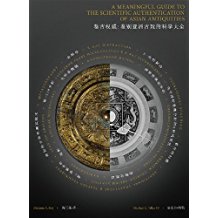
A Meaningful Guide to the Scientific Authentication of Asian Antiquities
Book
Roy, M.A. and Teller, M. (2013) A Meaningful Guide to the Scientific Authentication of Asian Antiquities., TK Asian Antiquities, 225 pp.
Record No. 5867  |  ISBN/ISSN: 9780990000000  |  Sinkankas/Born No.: NIS/NIB  |  Language: in English and Chinese  |  RWHL*
Just a few decades ago ancient Chinese artifacts were of interest only to academics and a few far-sighted collectors. Today the demand for such objects far exceeds the available supply and fake-makers have enthusiastically jumped in to supply the shortfall. The vast majority of fake ancient" artifacts are crude enough to dismiss out of hand. But a small yet dangerously high percentage are made with sufficient skill and knowledge to fool even museum curators and top auction houses. The traditional defenses against fakes rely on art-historical methods and provenance. However, the art-historical approach can be highly subjective, and, like the objects themselves, provenance can be faked. A suite of truly objective, scientific tests for establishing an object's culture and date of creation is needed to complement these two approaches. Co-author Michael Teller is president of TK Asian Antiquities, one of the top dealers in the world and a leader in scientific examination of ancient artifacts, including gold jewelry. Handling thousands of Asian antiquities over more than 30 years has given him a healthy sense of skepticism. As he said in a recent interview, "The majority of [Asian] antiques, particularly ancient material on offer today, are forgeries, pastiches, and restructured artifacts. It is imperative to learn the appropriate scientific analytical techniques required to unveil these problems." He and co-author Melanie Roy (TK's Director of Research) have now provided a comprehensive survey of such methods, and its usefulness is by no means limited to Asian objects. You may already be familiar with carbon-14 testing for dating organics and thermoluminesence (TL) testing for dating ceramics. This book goes well beyond these two widely known methods. The book devotes a chapter to each of the following methods: Radiocarbon Dating; TL Testing, Radiography; Optical Microscopy; Metallography; Electron Probe Microanalysis and X-ray Fluorescence; Uranium, Thorium-Helium Analysis; Lead-210 Analysis; X-ray Diffraction; and Ultraviolet Scanning. There is also a chapter on an assortment of secondary testing techniques. Many of these techniques are relevant to authenticating ancient jewelry and metal ornaments. Each test method is explained, and its advantages, limitations, and proper application are discussed. These are illustrated with relevant case studies, including countermeasures attempted by the fakers. For example, if a modern fake is subjected to artificial irradiation (called "dose tampering"), is it possible for the fake to "pass" a TL test? The authors explain why that is "difficult to impossible.".. Clearly this is a technical book. And yet the writing is lucid and easily understandable by a general reader with little more than high-school science. Or perhaps you may want to jump to Mr. Teller's lively final chapter, entitled "Logic, Opinion, Divination and Myth in the Authentication Procedure." One by one he takes on various examples of fuzzy thinking that can delude collectors and appraisers when confronting an allegedly ancient object. Many readers may find this one chapter alone worth the price of the book. The book is beautifully produced, with text in English and Chinese and numerous color illustrations, many of them high-magnification photomicrographs. There are classy touches, including pictorial endpapers, all page edges gilt, and a bookmark ribbon. There is a glossary, but no index. This book is fascinating reading for anyone interested in archaeometry. It is destined to become a standard reference for collectors and curators who must confront ever more skillful makers of fake antiquities."

The Woolf Collection of Chinese Jade

Book
McAteer, A., Sheaf, C., Michaelson, C., Krahl, R. and Teng, S.-p. (2013) The Woolf Collection of Chinese Jade. London, Sotheby’s, 272 pp.
Record No. 5825  |  ISBN/ISSN: 9780960000000  |  Sinkankas/Born No.: NIS/NIB  |  RWHL*
The Woolf Collection of Chinese Jade comprises over 130 nephrite and jadeite carvings of the Ming and Qing dynasties (1368-1911) collected by Sir John Woolf (1913-1999). For the first time, the collection is published in its entirety and features contributions by leading international scholars. Foreword by Jonathan Woolf. An Introduction to the Woolf Collection of Chinese Jades by Angela McAteer. Sir John Woolf and Woolf Collection of Chinese Jades by Colin Sheaf. An Outline History of Collecting Chinese Jades in the UK by Carol Michaelson. Chinese Jades Before Qianlong by Regina Krahl. Devilishly Clever and Supernaturally Crafted. Mughal Jades in the Heart of a Chinese Emperor by Teng Shu-p'ing.

Pre-Columbian jadeitite artifacts from the Golden Rock Site, St. Eustatius, Lesser Antilles, with special reference to jadeitite artifacts from Elliot's, Antigua: implications for potential source regions and long-distance exchange networks in the Greater Caribbean
Journal Article
Garcia-Casco, A., Knippenberg, S., Rodríguez Ramos, R., Harlow, G.E., Hofman, C., Pomo, J.C. and Blanco-Quintero, I.F. (2013) Pre-Columbian jadeitite artifacts from the Golden Rock Site, St. Eustatius, Lesser Antilles, with special reference to jadeitite artifacts from Elliot's, Antigua: implications for potential source regions and long-distance exchange networks in the Greater Caribbean. Journal of Archaeological Science, Vol. 40, No. 8,, 2013/08/01/ pp. 3153–3169.
Record No. 5773  |  ISBN/ISSN: 3054403  |  DOI: https://doi.org/10.1016/j.jas.2013.03.025  |  Sinkankas/Born No.: NIS/NIB  |  RWHL*
A detailed electron microscopy analysis of jadeitite celts from the Early Ceramic Age Golden Rock settlement on the small volcanic island of St Eustatius, Lesser Antilles, is presented in an effort to identify the source region(s) of these jadeitite axes and evaluate the extent of trade networks in the Caribbean during pre-Columbian times through which those tools (or source rocks) circulated. Habitation at the site occurred between ca. AD 230–890, and the jadeitite tools most likely date between cal. AD 600 and 825/890. We argue that in provenancing jadeitite emphasis should be placed on the identification of the entire mineral assemblage (including the accessory minerals) and textures, given the complex geological histories and processes that form this quasi-monomineralic rock. Indeed, the mineral assemblages and the characteristics of the individual minerals within the studied jadeitite samples are far from homogenous, suggesting either the source has a high degree of internal variation or there are multiple sources. We have identified three jadeitite groups among the analyzed samples on the basis of mineralogical assemblages: Group 1 consists of samples bearing phlogopite (plus phengite and epidote but without lawsonite or quartz); Group 2 contains lawsonite (plus phengite and quartz but without phlogopite and epidote); and Group 3 is defined by containing hematite. Importantly, we have not identified glaucophane in the analyzed materials. The comparison of these artifact data with those of jadeitites from the four potential known source regions of Caribbean jade, i.e., Guatemala (North and South Motagua Fault mélanges), Cuba (Sierra del Convento mélange) and Dominican Republic (Río San Juan complex) allows us to conclude that both the North and South Motagua Valley mélanges are the most likely sources for artifact groups 2 and 3, and perhaps also for group 1. This identification supports earlier hypotheses on the existence of pan-regional exchange networks, tying the northern Antilles with the Isthmo-Colombian region (Colombia, Panama and Costa Rica) during the Ceramic Age of the Caribbean.

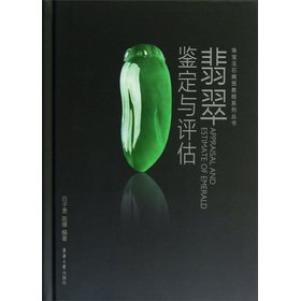
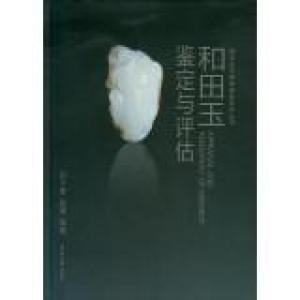
Identification and Assessment of Fei Cui
翡翠鉴定与评估
Book
Zigui, B. and Zhao, B. (2013) Identification and Assessment of Fei Cui. [翡翠鉴定与评估] Shanghai, Donghua University Press, 159 pp.
Record No. 5710  |  ISBN/ISSN: 9787570000000  |  Sinkankas/Born No.: NIS/NIB  |  Language: in Chinese  |  RWHL*
A practical introduction to the identification, appraisal, and trade of fei cui. Seven chapters cover basic concepts, texture and quality classifications, colour, identification, principal varieties, value assessment, and commercial trading. Appraisal considers visual beauty, artistry, and cultural significance in determining relative value.

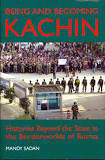
Identification and Assessment of Nephrite (Chinese Edition)
Book
Gui, B. and Bo, Z. (2013) Identification and Assessment of Nephrite (Chinese Edition). Shanghai, Donghua University Press, 204 pp.
Record No. 5709  |  ISBN/ISSN: 9787570000000  |  Sinkankas/Born No.: NIS/NIB  |  Language: in Chinese  |  RWHL*

Being and Becoming Kachin: Histories Beyond the State in the Borderworlds of Burma
Book
Sadan, M. (2013) Being and Becoming Kachin: Histories Beyond the State in the Borderworlds of Burma., British Academy, 470 pp.
Record No. 4495  |  ISBN/ISSN: 9780200000000  |  DOI: https://dx.doi.org/10.5871/bacad/9780197265550.001.0001  |  Sinkankas/Born No.: NIS/NIB  |  RWHL*
Since independence in 1948, Burma has suffered from many internal conflicts. One of the most long-standing of these has been in the Kachin State, in the far north of the country where Burma has borders with India to the west and China to the east. In Being and Becoming Kachin Mandy Sadan explores the origins of the conflict that started in 1961 and why it has continued for so long. Being and Becoming Kachin takes a much longer view of the problems that have led to such severe divisions between the political heartland of Burma and one of its most important 'peripheries' than is usually the case. It illuminates how the experience of globalisation since the late eighteenth century has been implicated in this division, and how the geopolitics of competing imperial systems through the nineteenth and early twentieth centuries reinforced and entrenched it. The analysis draws upon a study of many local archival materials in Jinghpaw, including the first detailed study of ritual and ritual language since the time of Edmund Leach. It offers new insights into how regions such as the Kachin State have been created by modern world systems, as well as how and why the post-independence Burmese state has failed to incorporate the Kachin region without the production of long-term violence.

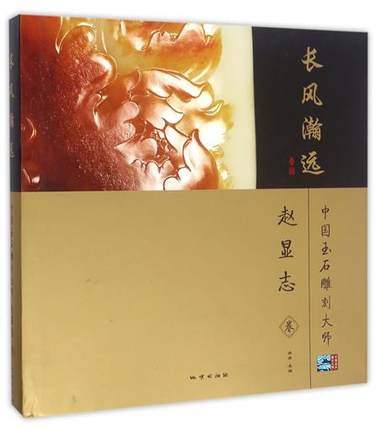
Classic Collections of 2012 China Yu Carving & Stone Carving Works Awarded with Tian Gong Prize
2012中国玉雕·石雕作品天工奖"典藏集"
Edited Book
Ao, Y., editor (2013) Classic Collections of 2012 China Yu Carving & Stone Carving Works Awarded with Tian Gong Prize. [2012中国玉雕·石雕作品天工奖"典藏集"]. Beijing, 中国地质大学出版社 [China University of Geosciences Press], 378 pp..
Record No. 3923  |  ISBN/ISSN: 9787120000000  |  Sinkankas/Born No.: NIS/NIB  |  Language: in Chinese  |  RWHL*
An illustrated catalogue of jade and stone carvings honoured in the 2012 Tian Gong Awards. Works are grouped by award category: gold, silver, bronze, best craftsmanship, best creativity, and outstanding works. The volume also introduces regional competition venues and documents aspects of submission, judging, and exhibition, providing a record of contemporary Chinese carving and its award selection process.

Chinese Master of Yu Carving: Zhao Xianzhi

中国玉石雕刻大师(赵显志卷长风瀚远)(精)
Edited Book
Ao, Y., editor (2013) Chinese Master of Yu Carving: Zhao Xianzhi. [中国玉石雕刻大师(赵显志卷长风瀚远)(精)], China University of Geosciences Press, 260 pp..
Record No. 3810  |  ISBN/ISSN: 9787120000000  |  Sinkankas/Born No.: NIS/NIB  |  Language: in Chinese  |  RWHL*
This volume in the Chinese Master of Yu Carving series is devoted to Zhao Xianzhi, a contemporary jade carver associated with Suzhou. His work encompasses figures, animals, birds and flowers, and landscapes, combining the expansive character of northern Chinese carving with the refinement of southern traditions. Distinctive features include qiaose, the creative use of natural colour variations in jade, and ingenious carving that integrates the material’s inherent qualities into the design. The volume provides a reference point for the study and appreciation of Zhao’s contribution to contemporary Chinese jade carving.

Exploring the Literature of Jade

Jade literature spans gemology, mineralogy, archaeology, art history, mining, carving and connoisseurship, and includes works on both jadeite and nephrite from around the world.

For an introduction to collecting books on this subject, read Hidden Treasure — Collecting the Literature of Jade.

About Four Treasures

Four Treasures is Lotus Gemology's freely accessible gemological reference database. Use the full database to search by author, title or keyword and explore literature on gemology, mineralogy, jewelry and related fields. Where available, hyperlinks on titles may lead directly to the full publication.

Search the Complete Four Treasures Database