Sapphire Inclusions
Explore sapphire inclusions in Hyperion, the Lotus Gemology inclusion database. Hyperion contains photomicrographs of inclusions and internal features in natural sapphire, documented with information on geographic origin, treatment, lighting conditions, field of view, photographer and published references.
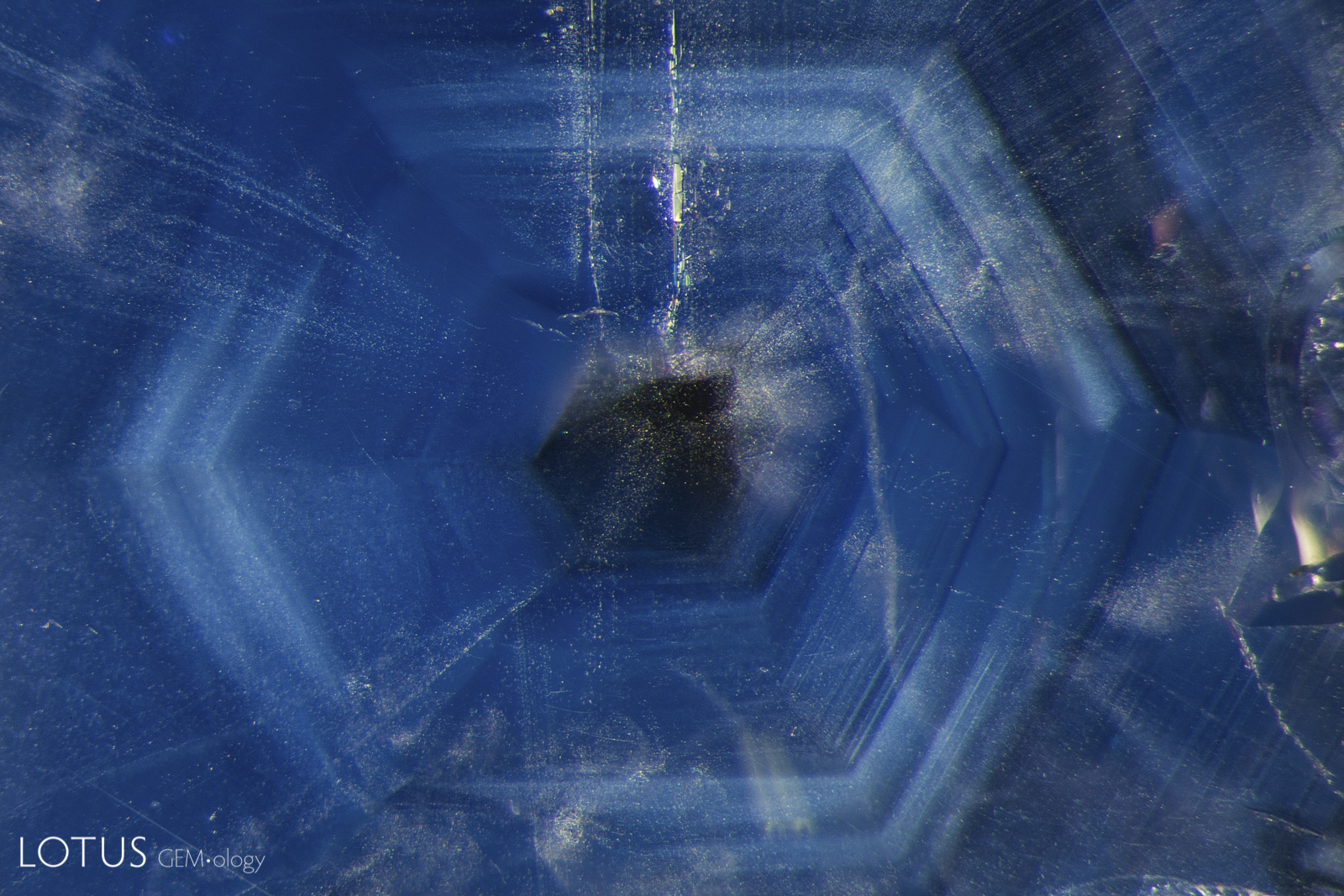
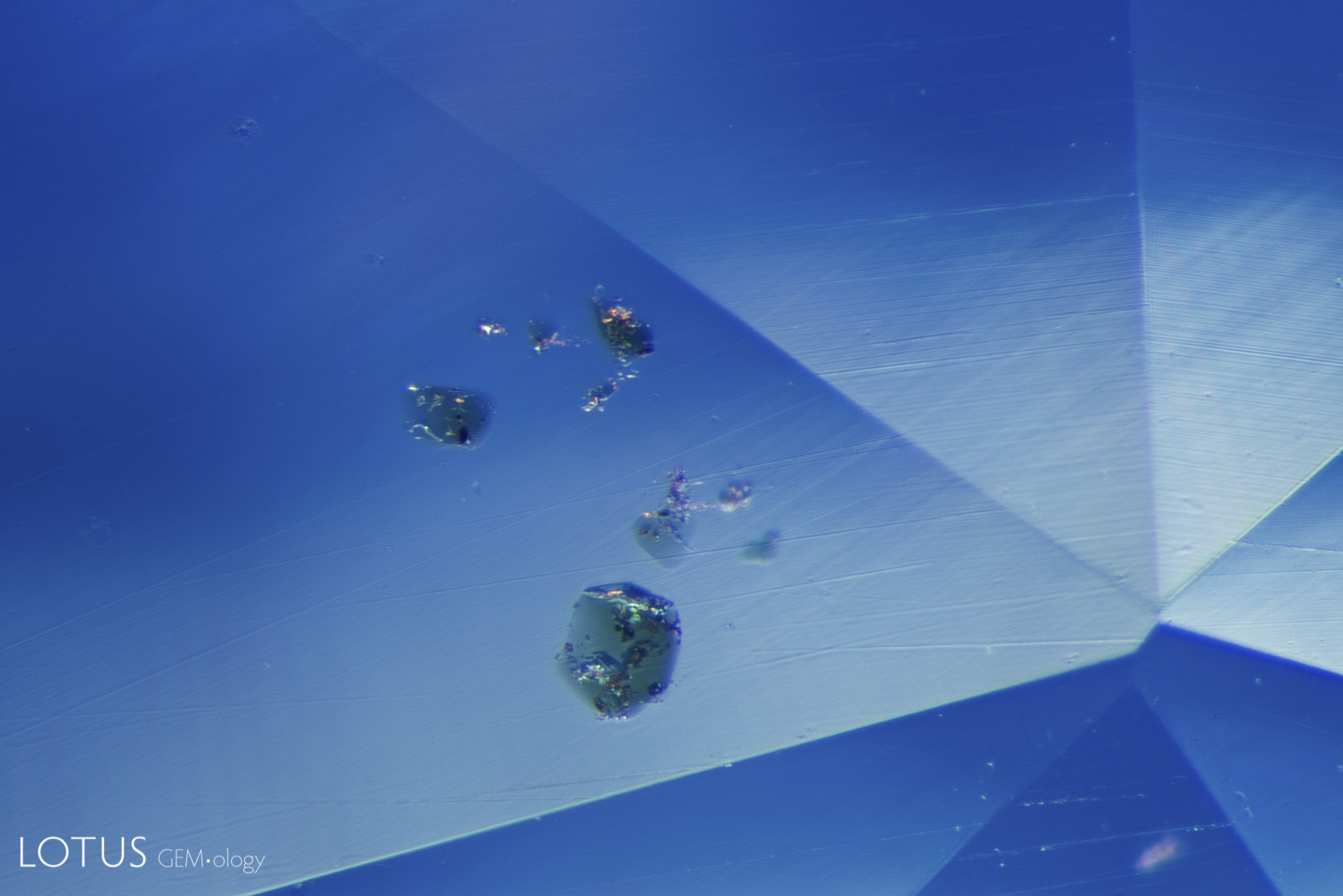
Large terraced crystals of what may be ilmenite, surrounded by fingerprints are visible in this Lava Plains sapphire.
Natural Sapphire •
Australia •
Enhancements:
None Detected (None) •
Lighting Conditions:
Fiber Optic: Diffuse Oblique
Photographer:
E. Billie Hughes •
Image Number:
R-001-8782-2
Fine exsolved particles and milky zones outline the shape of the crystal as it grew in this unheated sapphire from Lava Plains.
Natural Sapphire •
Australia •
Enhancements:
None Detected (None) •
Lighting Conditions:
Fiber Optic: Diffuse Oblique
Photographer:
E. Billie Hughes •
Image Number:
R-001-8782-1
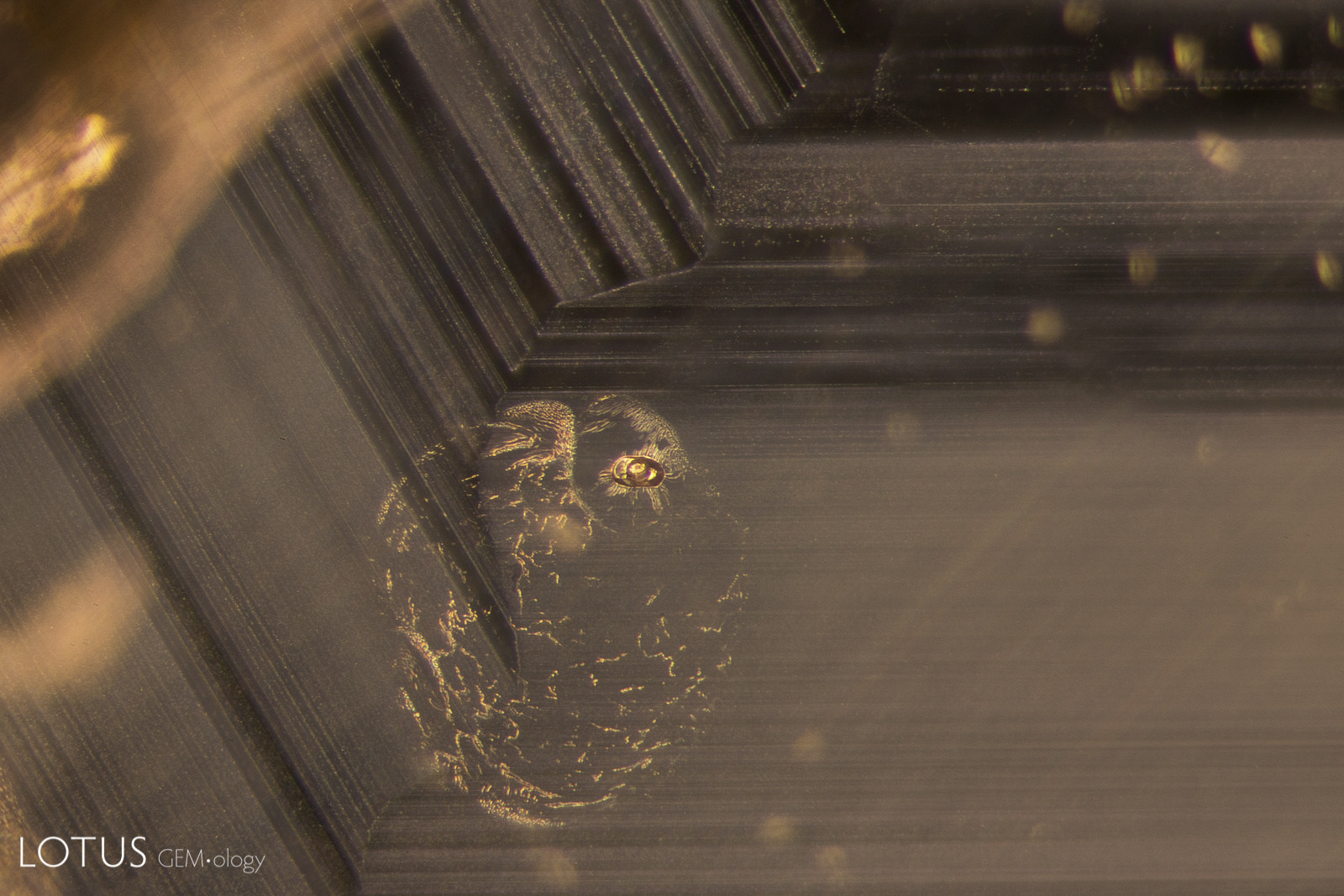
A large flattened negative crystal is surrounded by an iridescent fingerprint in the basal plane of this unheated Lava Plains sapphire.
Natural Sapphire •
Australia •
Enhancements:
None Detected (None) •
Lighting Conditions:
Fiber Optic: Diffuse Oblique
Photographer:
E. Billie Hughes •
Image Number:
R-001-8780-3
A small crystal with a frozen bubble is surrounded by a healed decrepitation halo, betraying the magmatic origin of this sapphire. The bubble results not from artificial heat treatment, but from the heat of the lava that lifted this sapphire crystal to the surface. Exsolved rutile dust can also be seen in the background.
Natural Sapphire •
Colombia •
Enhancements:
None Detected (None) •
Lighting Conditions:
Dark Field
Photographer:
E. Billie Hughes •
Image Number:
R-001-8776-2
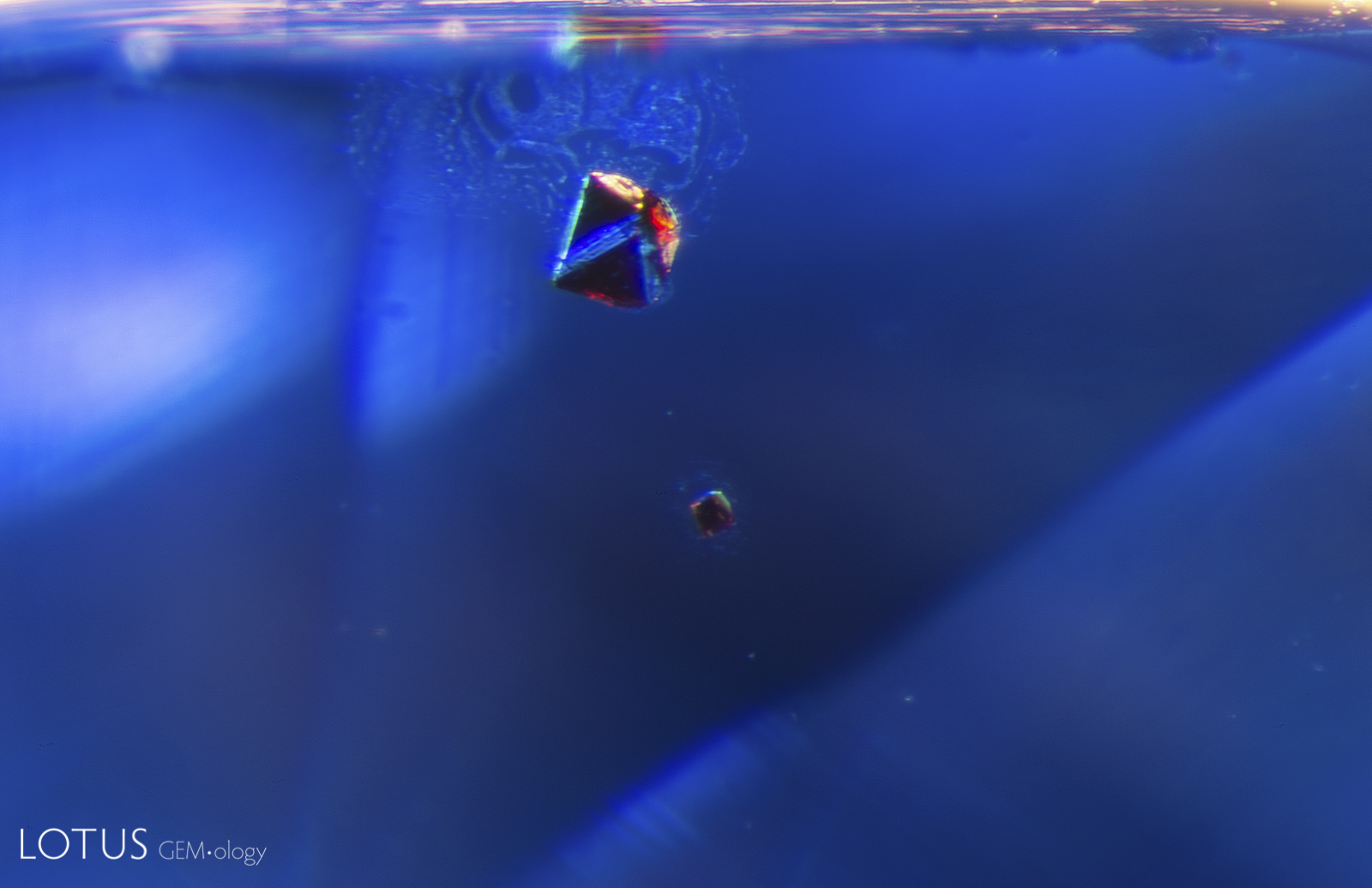
Primary rutile crystals in a sapphire from Colombia’s Mercaderes mines.
Natural Sapphire •
Colombia •
Enhancements:
None Detected (None) •
Lighting Conditions:
Dark Field + Oblique Fiber Optic
Photographer:
E. Billie Hughes •
Image Number:
R-001-8774-2
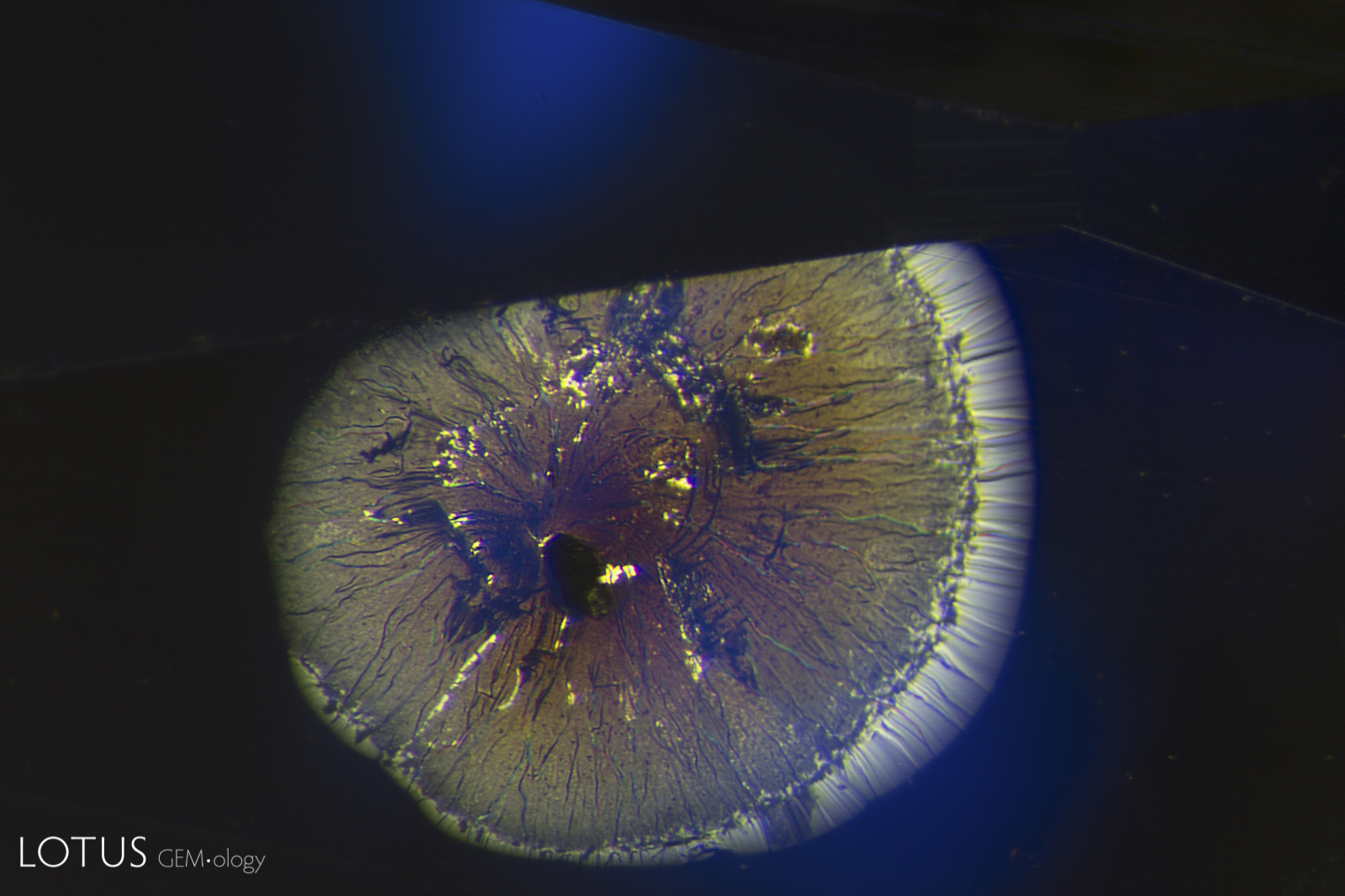
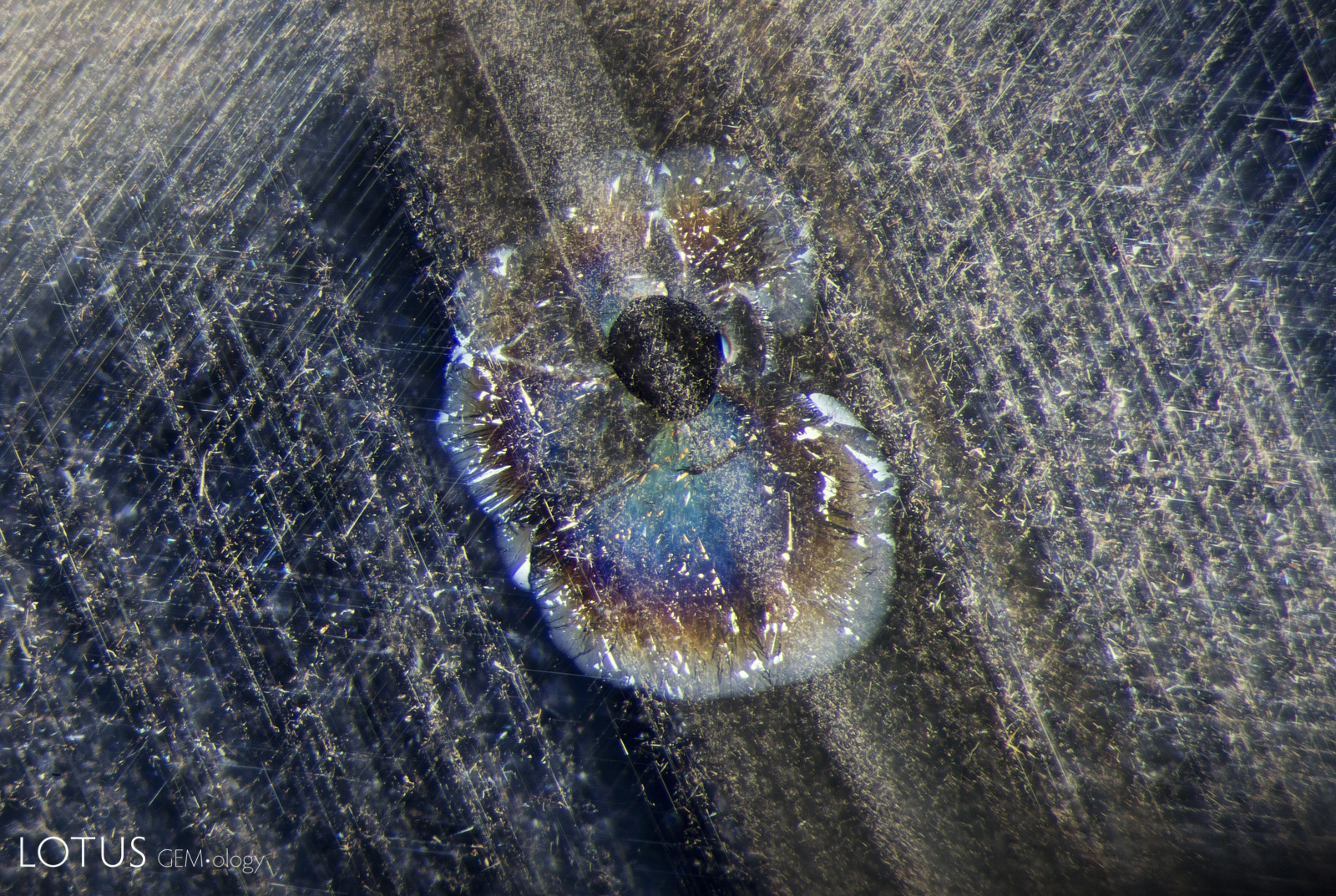
Discoid fissure surrounding a black crystal in a basaltic sapphire.
Natural Sapphire •
Nigeria •
Enhancements:
None Detected (None) •
Lighting Conditions:
Fiber Optic: Oblique
Photographer:
Patharaphum Sudprasert •
Image Number:
A-001-8661-1
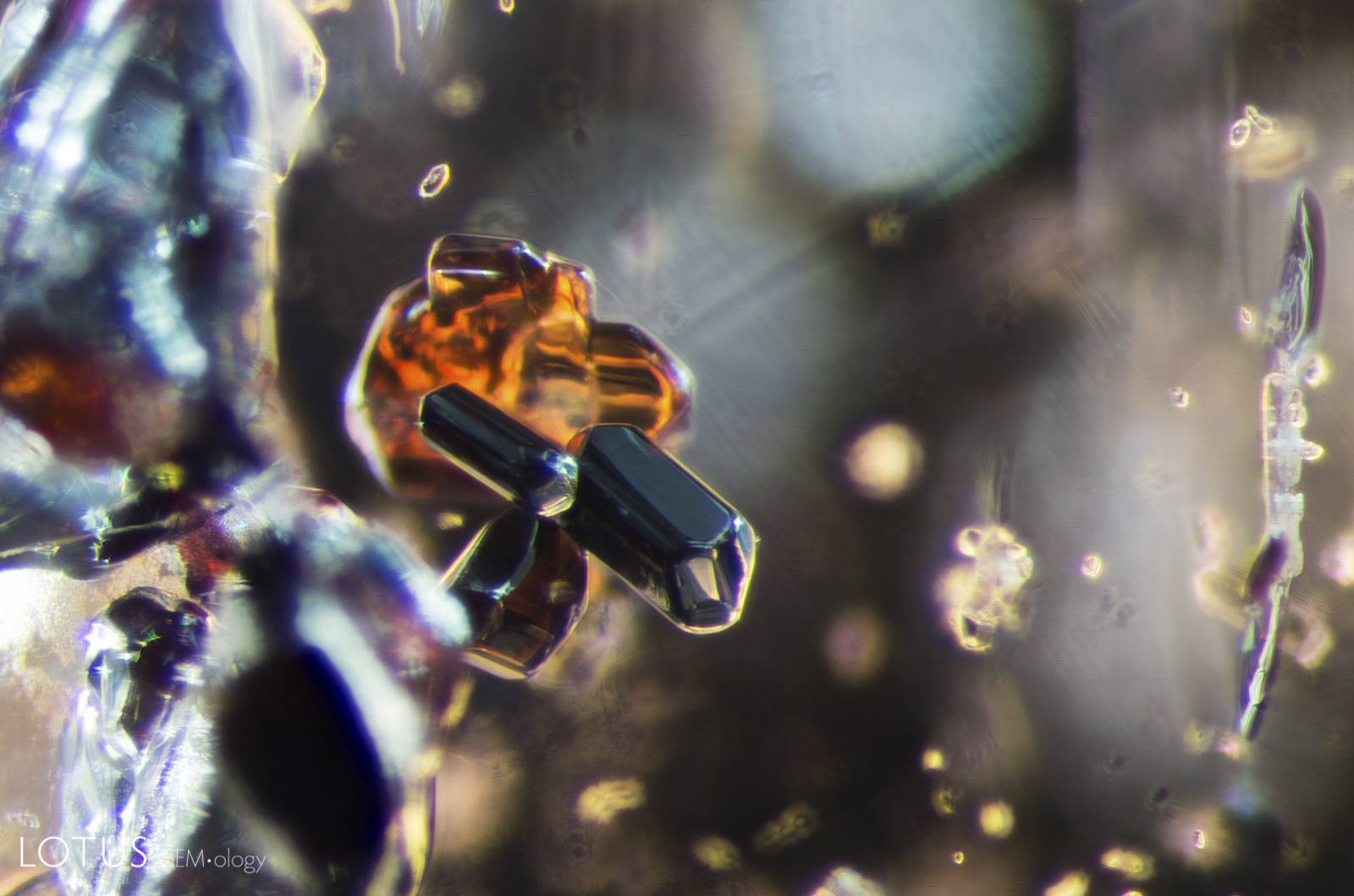
Red-orange crystals shoot through this Pailin (Cambodia) sapphire. Once considered unique to Pailin sapphire, we now know that such uranopyrochlore inclusions are found in sapphires from many sources.
Natural Sapphire •
Cambodia; Pailin •
Enhancements:
Heat (H) •
Lighting Conditions:
Dark Field + Oblique Fiber Optic
Photographer:
E. Billie Hughes •
Image Number:
A-001-8453-2
These green crystals were cut through on the surface of this untreated sapphire from Madagascar.
Natural Sapphire •
Madagascar •
Enhancements:
None Detected (None) •
Lighting Conditions:
Dark Field + Oblique Fiber Optic
Photographer:
E. Billie Hughes •
Image Number:
A-001-8388-2
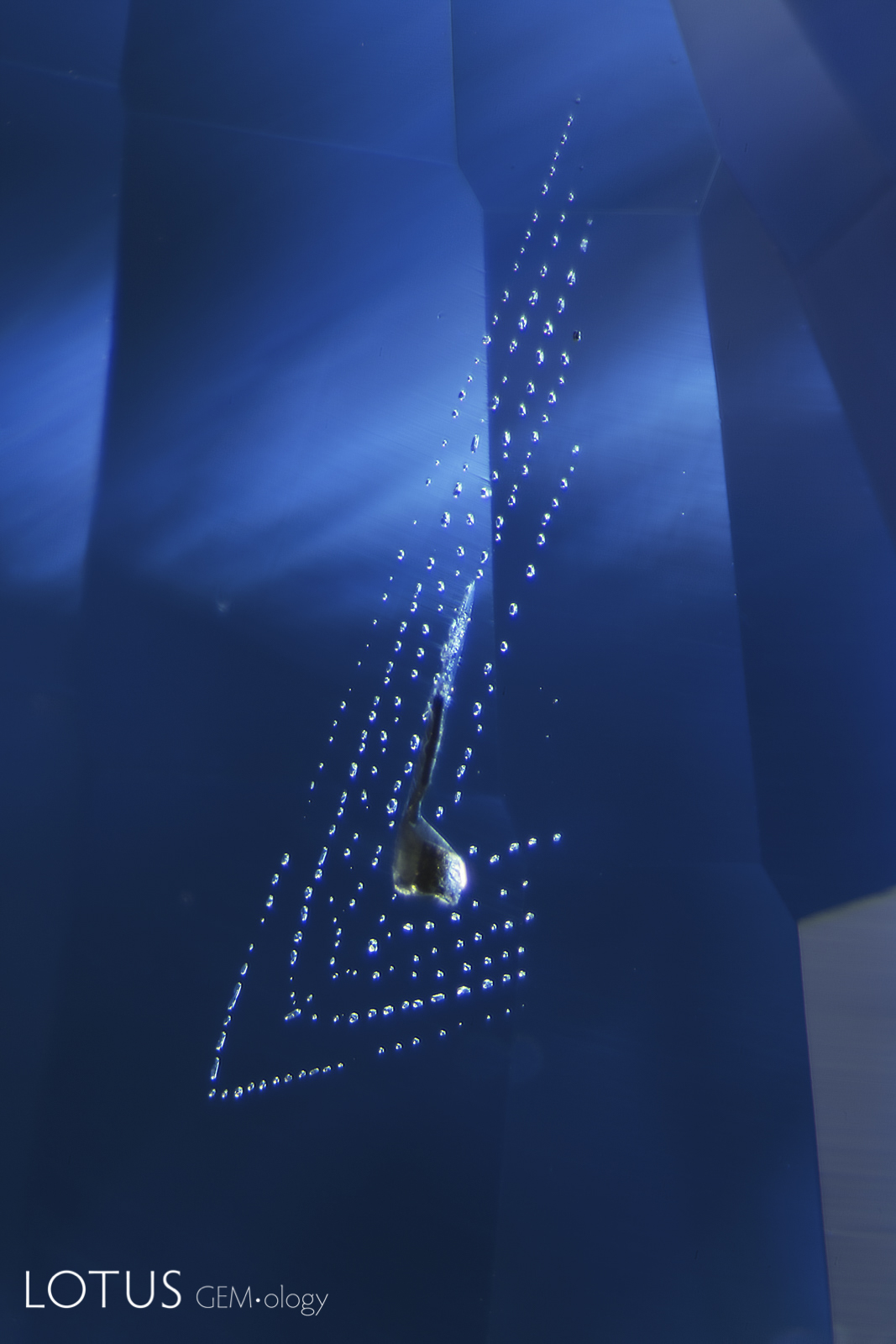
An arrow points the way. This fingerprint creates an arrow pattern decorating an unheated Madagascar sapphire.
Natural Sapphire •
Madagascar •
Enhancements:
None Detected (None) •
Lighting Conditions:
Fiber Optic: Diffuse Oblique
Photographer:
E. Billie Hughes •
Image Number:
A-001-8448-1
A crystal with a fracture around it is surrounded by undissolved silk in an unheated basalt-related sapphire.
Natural Sapphire •
Basaltic •
Enhancements:
None Detected (None) •
Lighting Conditions:
Fiber Optic: Diffuse Oblique
Photographer:
E. Billie Hughes •
Image Number:
A-001-8351-1
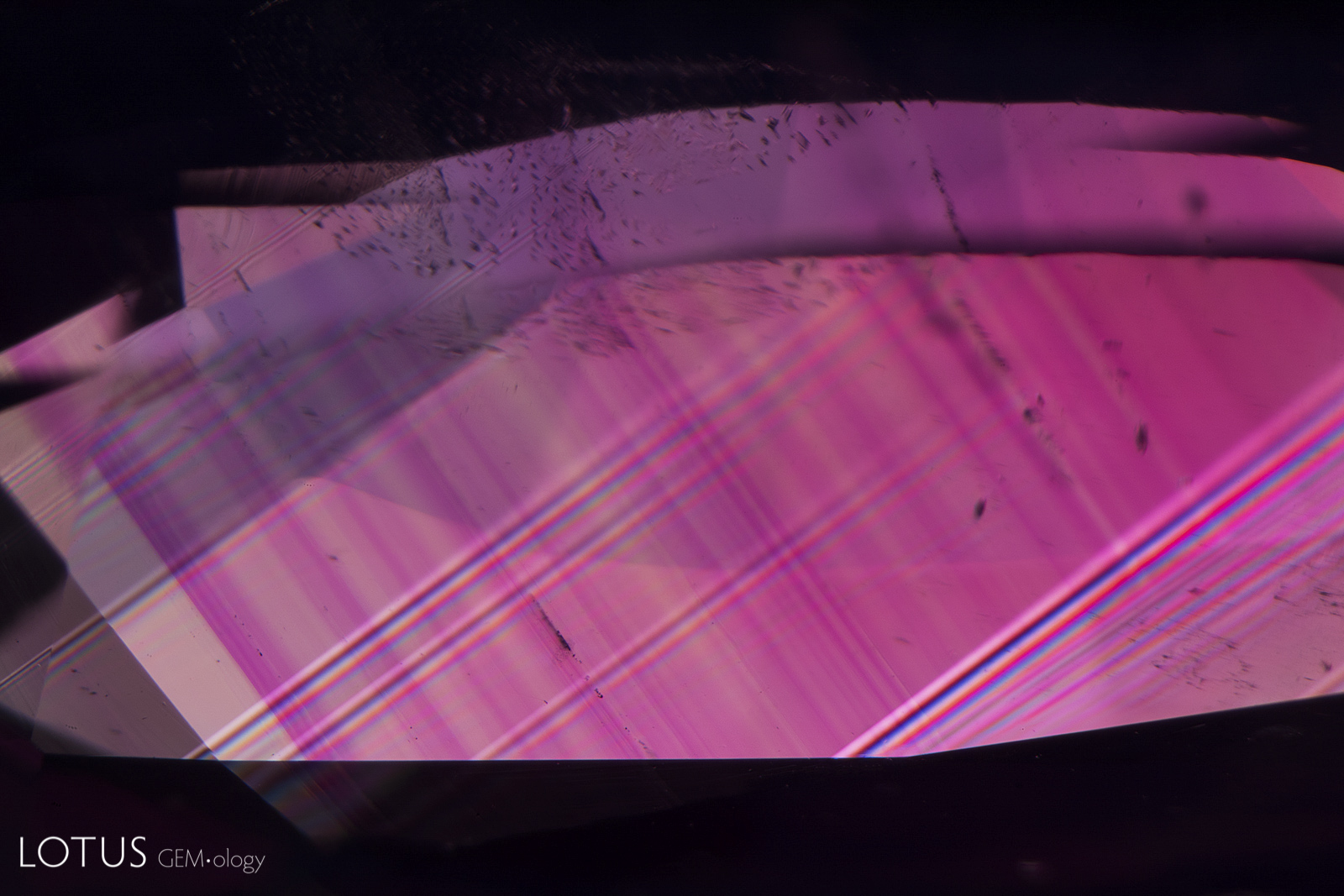
Polysynthetic twinning and angular growth zoning form a “plaid” pattern when viewed under crossed polars in this sapphire from Batakundi, Pakistan.
Natural Sapphire •
Pakistan (Kashmir); Batakundi •
Enhancements:
None Detected (None) •
Lighting Conditions:
Dark Field + Crossed Polars
Photographer:
E. Billie Hughes •
Image Number:
A-001-7950-3
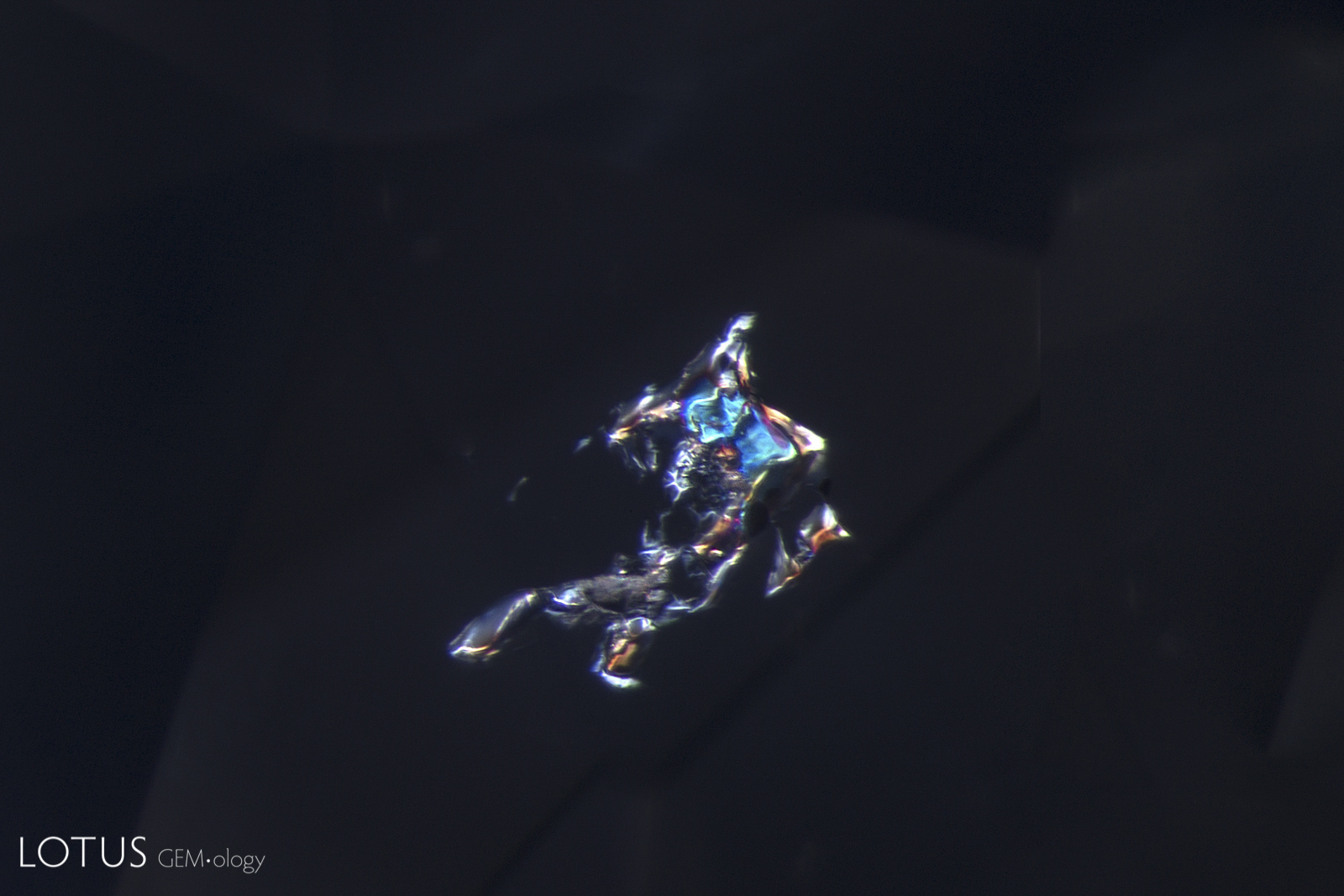
Irregular crystals of what may be feldspar in a sapphire from Madagascar, seen between crossed polars.
Natural Sapphire •
Madagascar •
Enhancements:
None Detected (None) •
Lighting Conditions:
Dark Field + Crossed Polars
Photographer:
Patharaphum Sudprasert •
Image Number:
A-001-7868-3
Search the Complete Hyperion Database
Sapphire inclusions may include mineral crystals, rutile silk, healed fissures, fluid inclusions, negative crystals, color zoning and other features formed during or after crystal growth. Such features are important to gemologists because they can provide evidence useful in identifying sapphire, understanding its geological history, recognizing treatment and, in some cases, determining geographic origin.
Sapphire Inclusion Photomicrographs
The Hyperion sapphire gallery includes microscopic features found in sapphires from major deposits around the world. Each entry is accompanied by descriptive information and, where available, references to the gemological literature.
What Inclusions Can Reveal About Sapphire
Inclusions are an important part of sapphire identification. Their form, composition, orientation and alteration can help gemologists distinguish natural sapphire from synthetic material, recognize evidence of heat treatment, and study the geological environment in which the sapphire formed.
Hyperion combines inclusion photomicrography with supporting gemological information so that individual features can be compared with documented examples from known sapphire deposits.
About Hyperion
Hyperion is the Lotus Gemology searchable inclusion database. It allows users to browse gemstone inclusions by gem type, geographic origin, treatment and keyword.