Sapphire Inclusions
Explore sapphire inclusions in Hyperion, the Lotus Gemology inclusion database. Hyperion contains photomicrographs of inclusions and internal features in natural sapphire, documented with information on geographic origin, treatment, lighting conditions, field of view, photographer and published references.
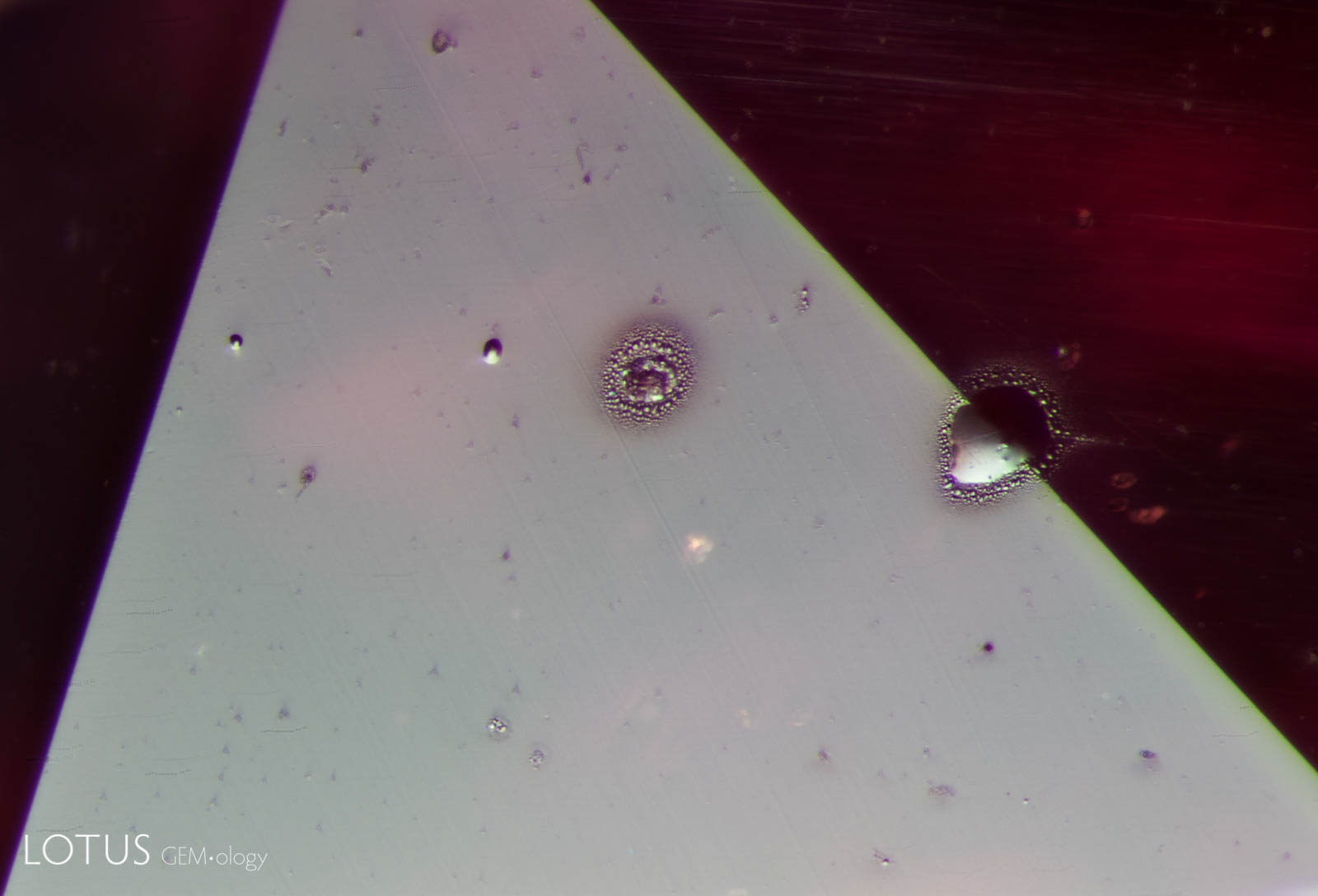
A melted “snowball” crystal is surrounded by a fingerprint showing many small bubbles, a sign of heat alteration. This inclusion is typically found in heated Sri Lankan sapphire.
Natural Sapphire •
Sri Lanka (Ceylon) •
Enhancements:
Heat (H) •
Lighting Conditions:
Dark Field + Oblique Fiber Optic
Photographer:
E. Billie Hughes •
Image Number:
A-001-3406-1
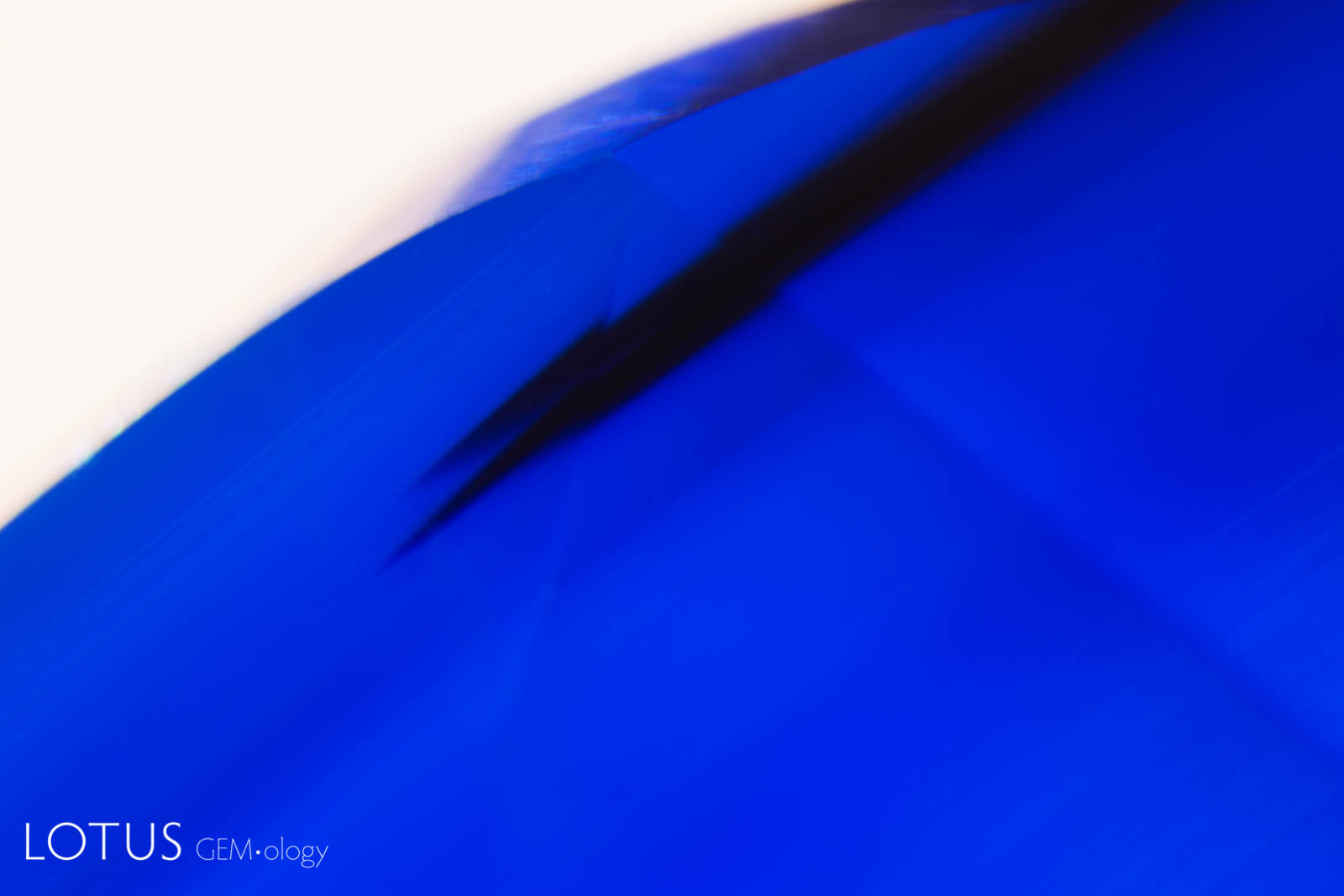
A deep blue color zone is visible in this Madagascar sapphire. Note that the deep blue zone is devoid of turbidity, while the surrounding area is extremely cloudy. This shows a lack of internal diffusion and thus offers evidence that the stone has not been subjected to high-temperature heat treatment.
Natural Sapphire •
Madagascar •
Enhancements:
None Detected (None) •
Lighting Conditions:
Diffuse Light Field (Transmitted Light)
Photographer:
E. Billie Hughes •
Image Number:
A-001-3382-1
Koivula, J.I. (1987) Internal diffusion. Journal of Gemmology, Vol. 20, No. 7/8, pp. 474–477; RWHL*.
An unheated fingerprint with many small channels showing no signs of heat-induced damage are a welcome sight in this sapphire from Madagascar.
Natural Sapphire •
Madagascar •
Enhancements:
None Detected (None) •
Lighting Conditions:
Darkfield + Blue Filter
Photographer:
E. Billie Hughes •
Image Number:
A-001-3393-2
Roedder, E. (1962) Ancient fluids in crystals. Scientific American, Vol. 207, pp. 38–47; RWHL*.
Hughes, R.W. (1997) Ruby & Sapphire. Boulder, CO, RWH Publishing, 512 pp.; RWHL*.
An unheated fingerprint with many small channels showing no signs of heat-induced damage are a welcome sight in this sapphire from Madagascar.
Natural Sapphire •
Madagascar •
Enhancements:
None Detected (None) •
Lighting Conditions:
Shadowing
Photographer:
E. Billie Hughes •
Image Number:
A-001-3393-1
Roedder, E. (1962) Ancient fluids in crystals. Scientific American, Vol. 207, pp. 38–47; RWHL*.
Hughes, R.W. (1997) Ruby & Sapphire. Boulder, CO, RWH Publishing, 512 pp.; RWHL*.
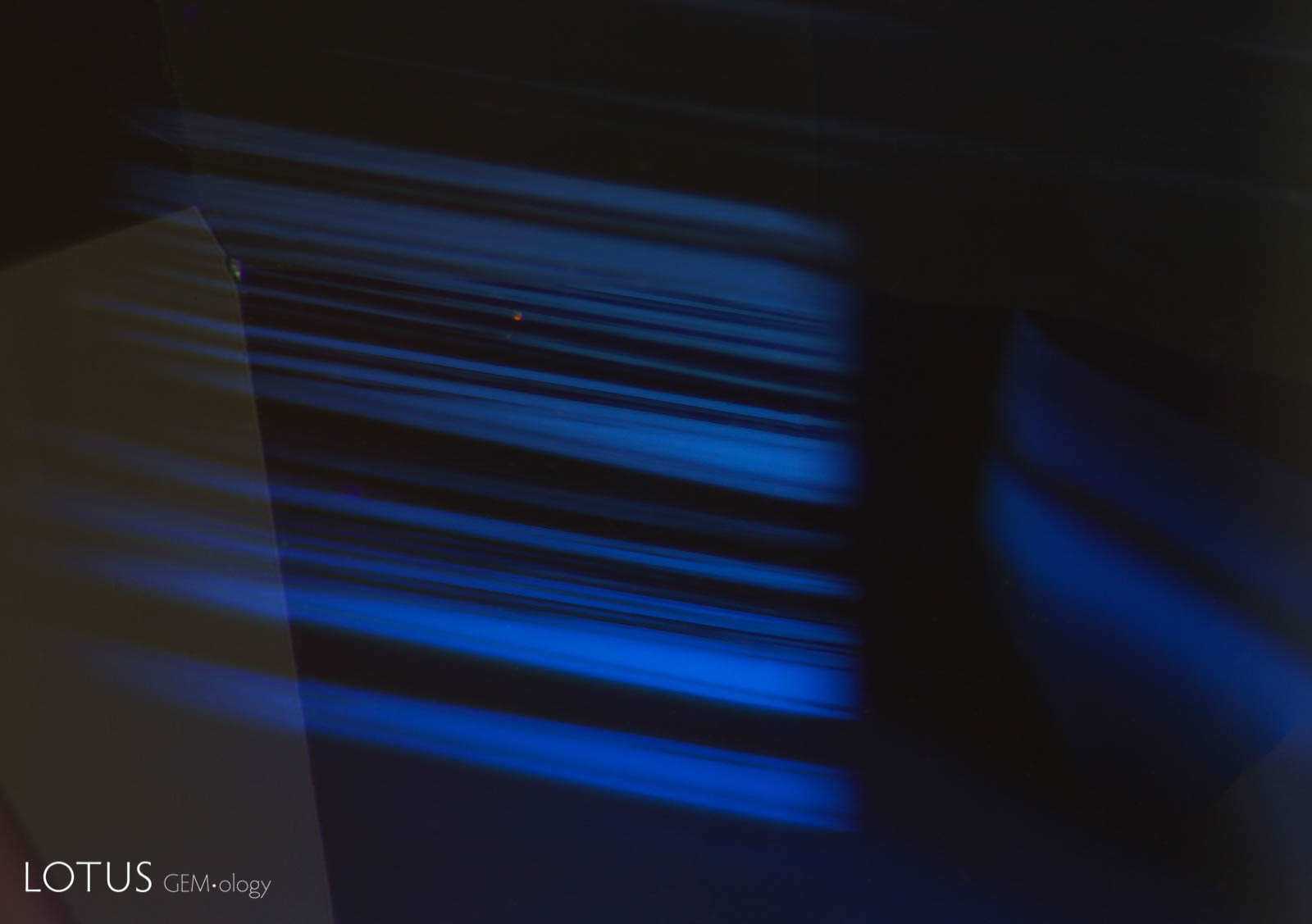
Texture clouds form sharp, angular zones in this Cambodian sapphire.
Natural Sapphire •
Cambodia; Pailin •
Enhancements:
None Detected (None) •
Lighting Conditions:
Dark Field + Oblique Fiber Optic
Photographer:
E. Billie Hughes •
Image Number:
A-001-3390-4
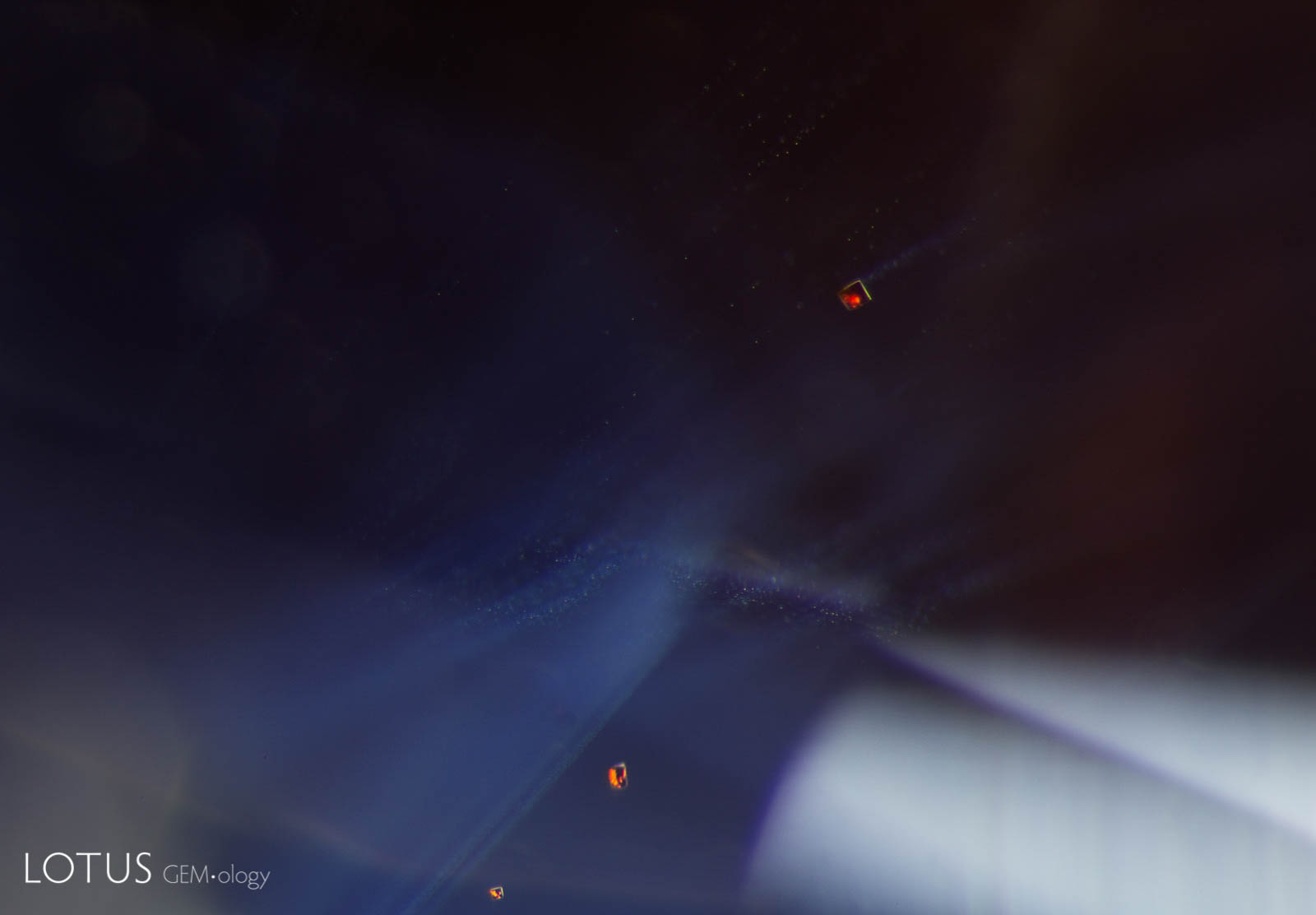
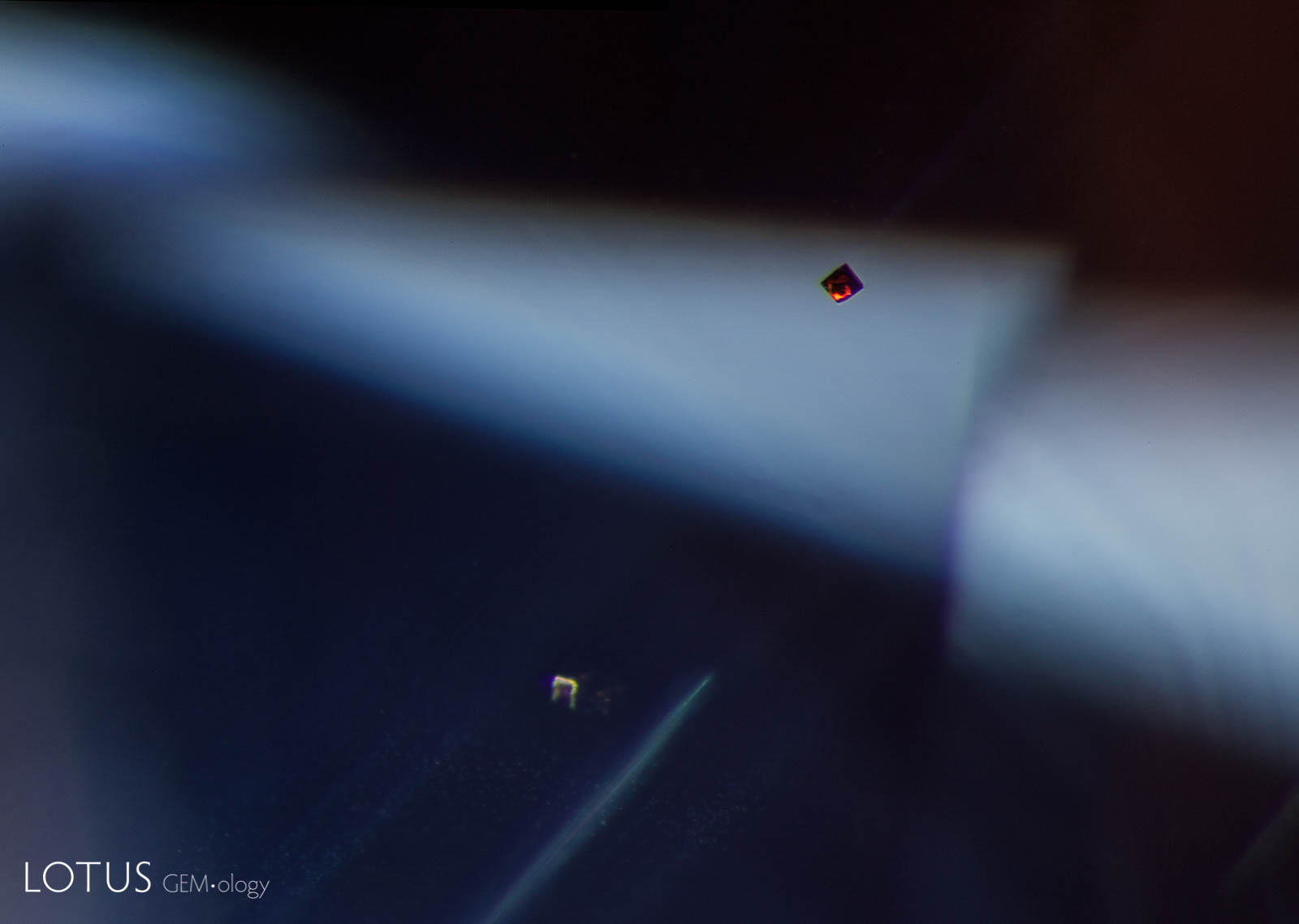
Tiny red uranium pyrochlore crystals glow in this sapphire from Pailin, Cambodia. These crystals are a diagnostic inclusion for magmatic sapphires.
Natural Sapphire •
Cambodia; Pailin •
Enhancements:
None Detected (None) •
Lighting Conditions:
Dark Field + Oblique Fiber Optic
Photographer:
E. Billie Hughes •
Image Number:
A-001-3390-3
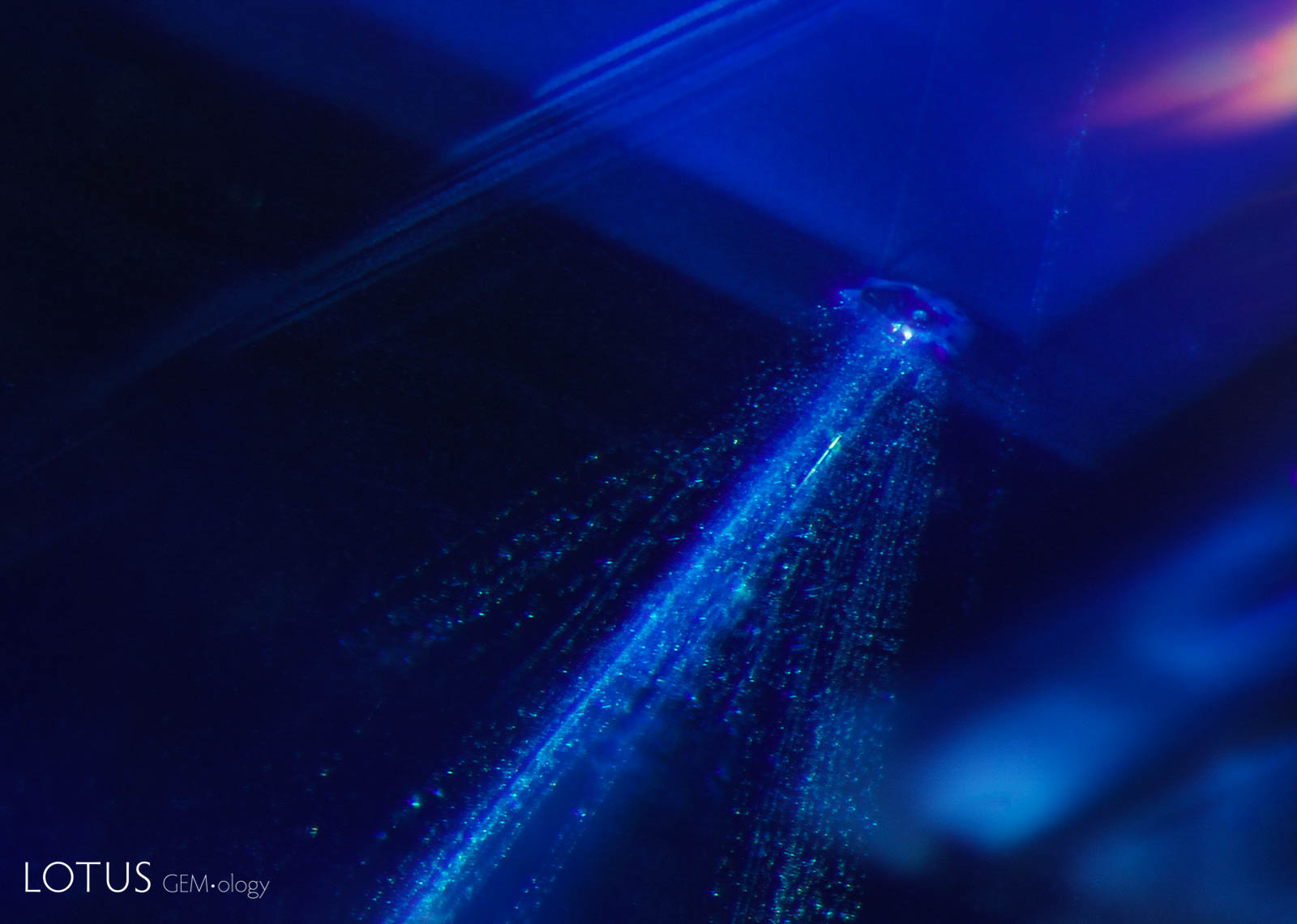
This transparent crystal was an obstacle to this sapphire’s growth, creating a “comet trail” stream of fine particles behind it. This example is in a Pailin sapphire.
Natural Sapphire •
Cambodia; Pailin •
Enhancements:
None Detected (None) •
Lighting Conditions:
Dark Field + Oblique Fiber Optic
Photographer:
E. Billie Hughes •
Image Number:
A-001-3390-2
A tiny red uranium pyrochlore octahedron glows in this sapphire from Pailin, Cambodia. These pyrochlore crystals are a diagnostic inclusion for magmatic sapphires.
Natural Sapphire •
Cambodia; Pailin •
Enhancements:
None Detected (None) •
Lighting Conditions:
Dark Field + Oblique Fiber Optic
Photographer:
E. Billie Hughes •
Image Number:
A-001-3390-1
A melted “snowball” crystal is ensconced in heat-altered fingerprints in this heated sapphire from Sri Lanka. Such “snowballs” and bubbly fingerprints are typical of stones heated at high temperatures.
Natural Sapphire •
Sri Lanka (Ceylon) •
Enhancements:
Heat (H) •
Lighting Conditions:
Dark Field
Photographer:
E. Billie Hughes •
Image Number:
A-001-3338-1
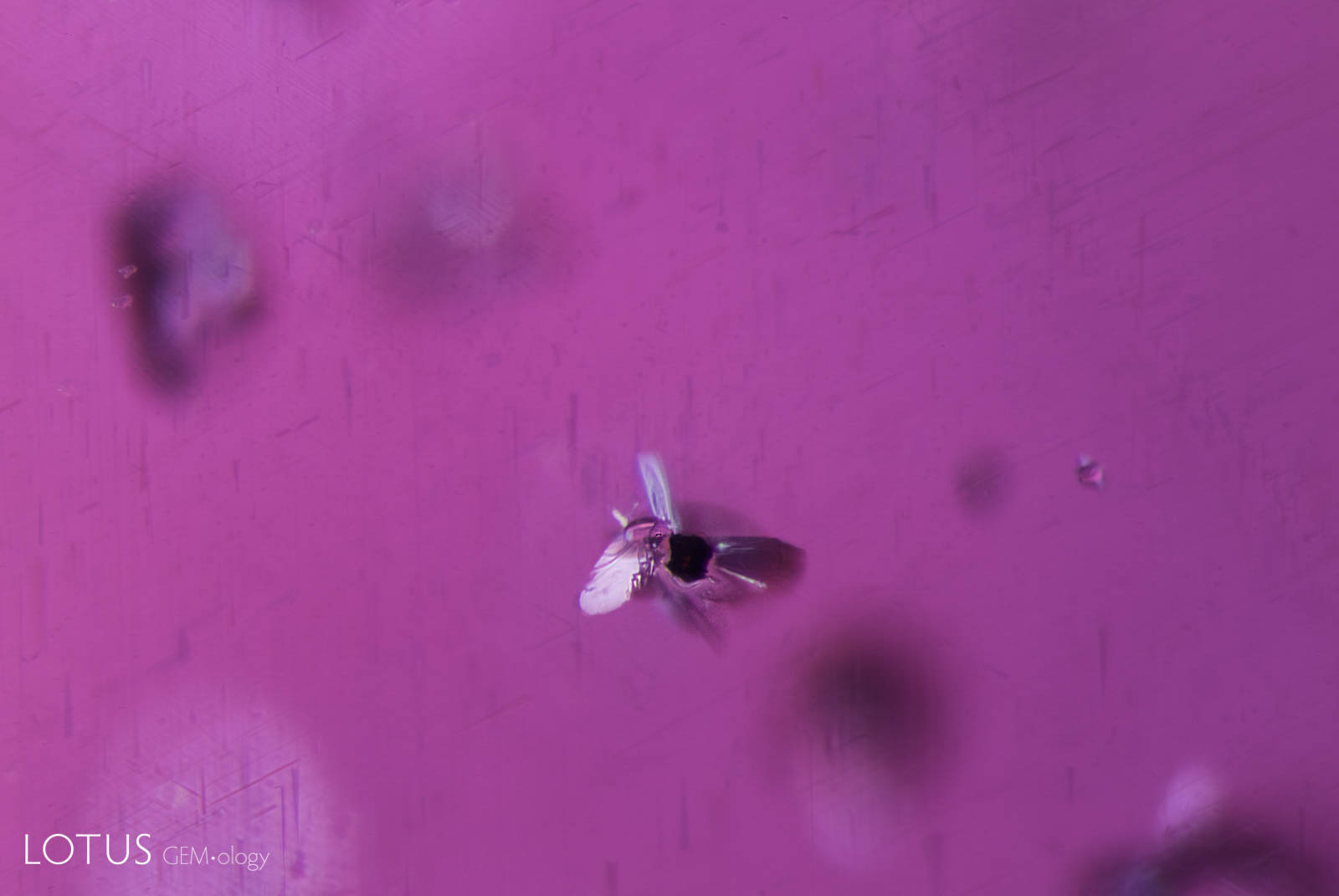
The shiny, droplet-like marks on the surface may look like water or oil, but they are actually spall marks. They do not rub or scrape off, but are fused onto the surface as a result of heat treatment. This example is on a heated Madagascar pink sapphire.
Natural Sapphire •
Madagascar •
Enhancements:
Heat (H) •
Lighting Conditions:
Dark Field + Oblique Fiber Optic
Photographer:
E. Billie Hughes •
Image Number:
A-001-3337-1
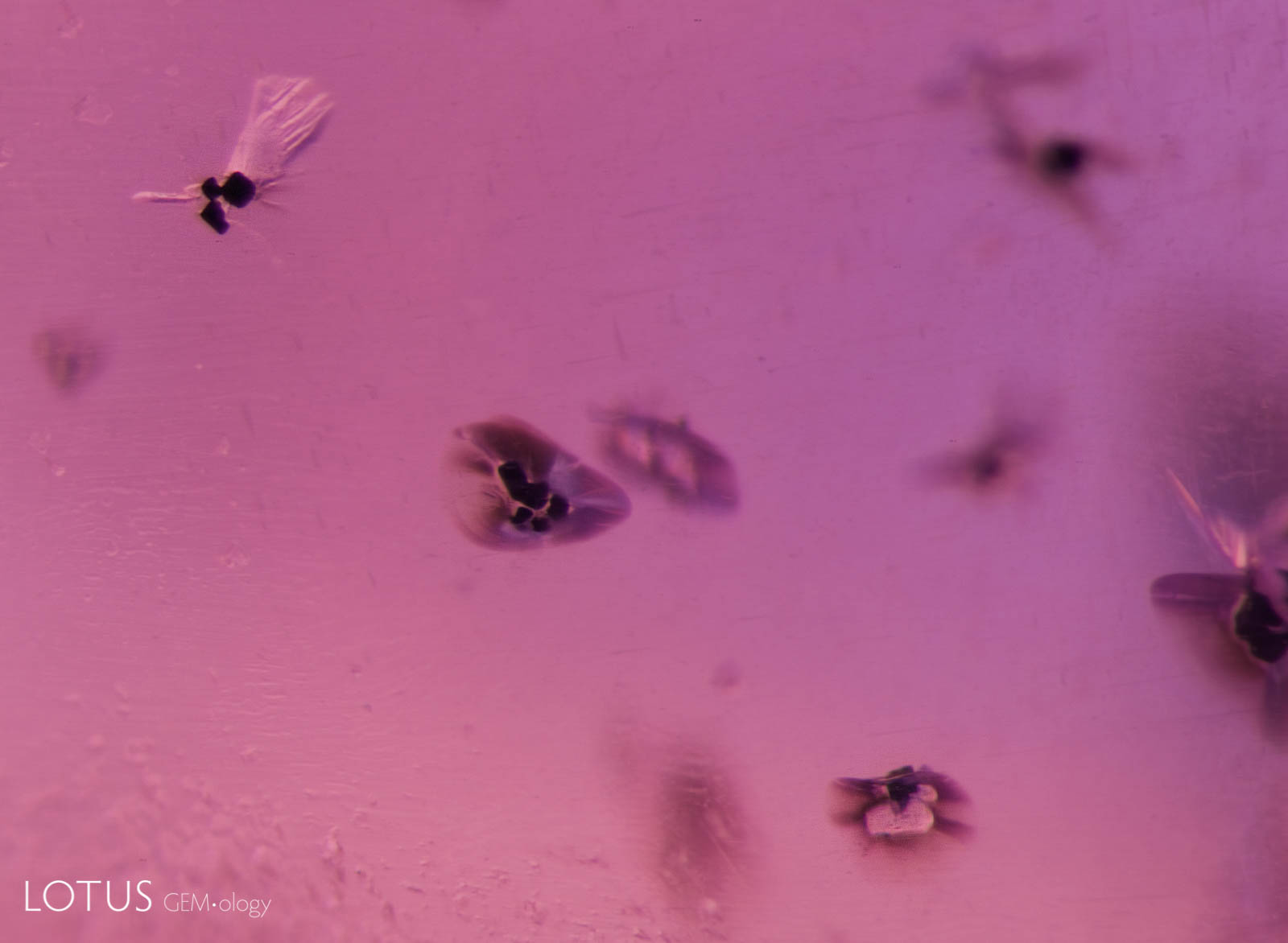
Small, blocky black uraninite crystals and rounded, transparent zircon crystals such as these are commonly found in Sri Lankan sapphire. While at first their shiny halos may seem like evidence of heat treatment, they can actually occur naturally, as in this stone. The undissolved rutile silk needles in this stone demonstrate that it has not been heated at a high temperature.
Natural Star Sapphire •
Sri Lanka (Ceylon) •
Enhancements:
None Detected (None) •
Lighting Conditions:
Dark Field
Photographer:
E. Billie Hughes •
Image Number:
A-001-3320-3
A small black uraninite crystal with shiny fissures around it. While at first this may seem like evidence of heat treatment, these halos can actually occur naturally, as in this stone. The undissolved rutile silk needles in this stone demonstrate that it has not been heated at a high temperature.
Natural Star Sapphire •
Sri Lanka (Ceylon) •
Enhancements:
None Detected (None) •
Lighting Conditions:
Dark Field
Photographer:
E. Billie Hughes •
Image Number:
A-001-3320-2
Search the Complete Hyperion Database
Sapphire inclusions may include mineral crystals, rutile silk, healed fissures, fluid inclusions, negative crystals, color zoning and other features formed during or after crystal growth. Such features are important to gemologists because they can provide evidence useful in identifying sapphire, understanding its geological history, recognizing treatment and, in some cases, determining geographic origin.
Sapphire Inclusion Photomicrographs
The Hyperion sapphire gallery includes microscopic features found in sapphires from major deposits around the world. Each entry is accompanied by descriptive information and, where available, references to the gemological literature.
What Inclusions Can Reveal About Sapphire
Inclusions are an important part of sapphire identification. Their form, composition, orientation and alteration can help gemologists distinguish natural sapphire from synthetic material, recognize evidence of heat treatment, and study the geological environment in which the sapphire formed.
Hyperion combines inclusion photomicrography with supporting gemological information so that individual features can be compared with documented examples from known sapphire deposits.
About Hyperion
Hyperion is the Lotus Gemology searchable inclusion database. It allows users to browse gemstone inclusions by gem type, geographic origin, treatment and keyword.