Sapphire Inclusions
Explore sapphire inclusions in Hyperion, the Lotus Gemology inclusion database. Hyperion contains photomicrographs of inclusions and internal features in natural sapphire, documented with information on geographic origin, treatment, lighting conditions, field of view, photographer and published references.
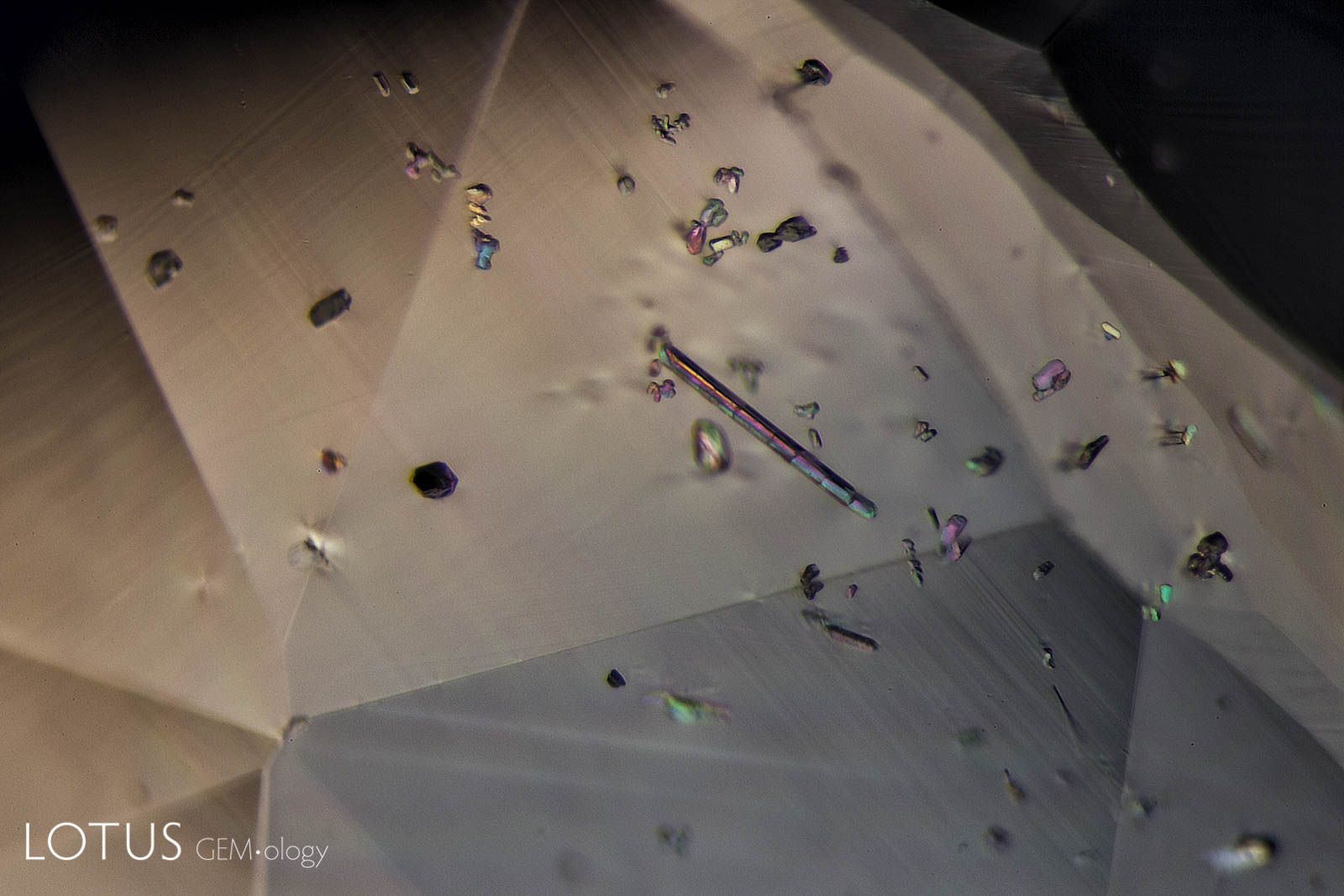
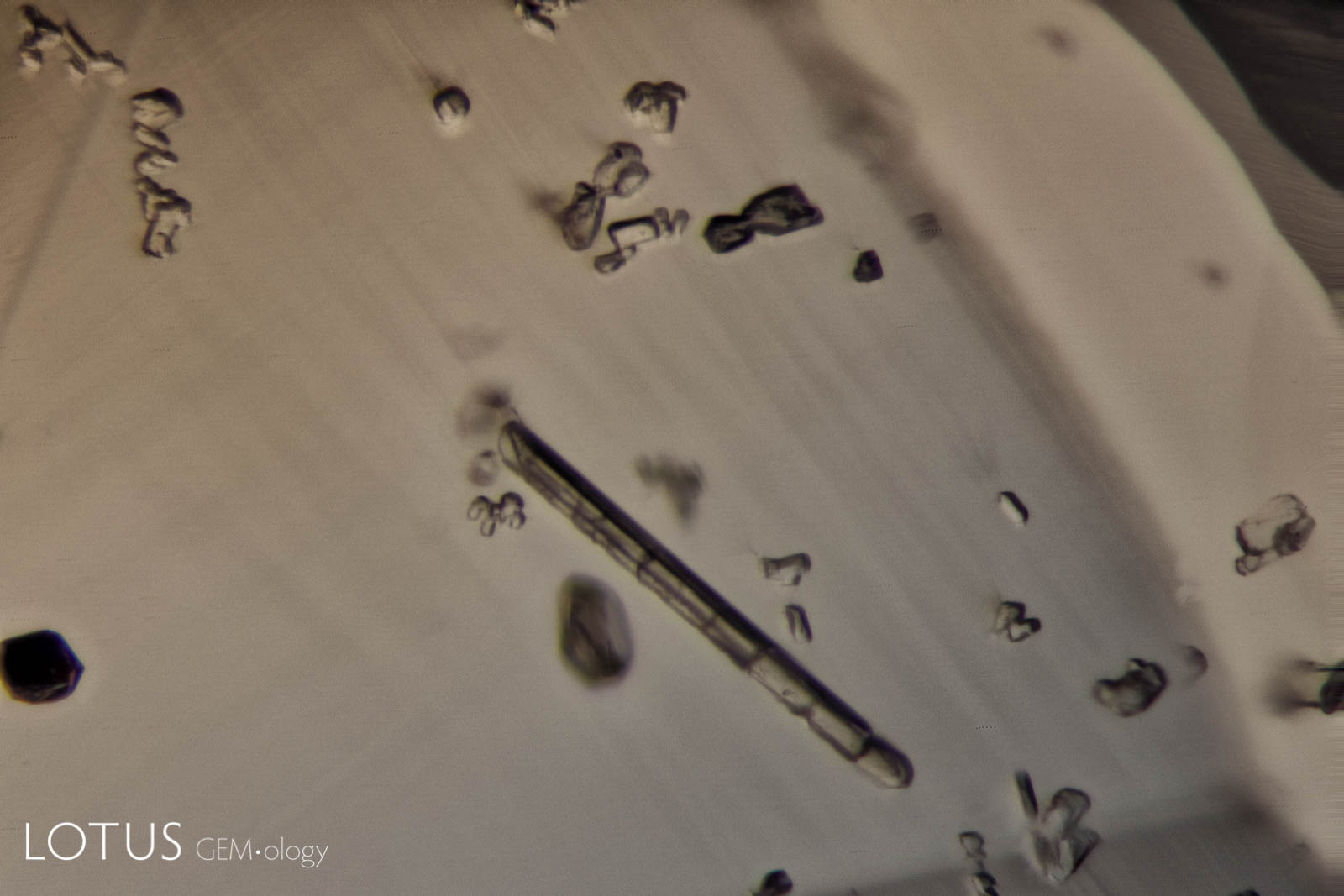
Tiny birefringent crystals in a Madagascar sapphire. When viewed between crossed polars, their doubly refractive nature becomes obvious.
Natural Sapphire •
Madagascar •
Enhancements:
None Detected (None) •
Lighting Conditions:
Diffuse Light Field + Crossed Polars
Photographer:
Richard W. Hughes •
Image Number:
A-001-3204-3
Tiny birefringent crystals in a Madagascar sapphire.
Natural Sapphire •
Madagascar •
Enhancements:
None Detected (None) •
Lighting Conditions:
Diffuse Light Field + Parallel Polars
Photographer:
Richard W. Hughes •
Image Number:
A-001-3204-2
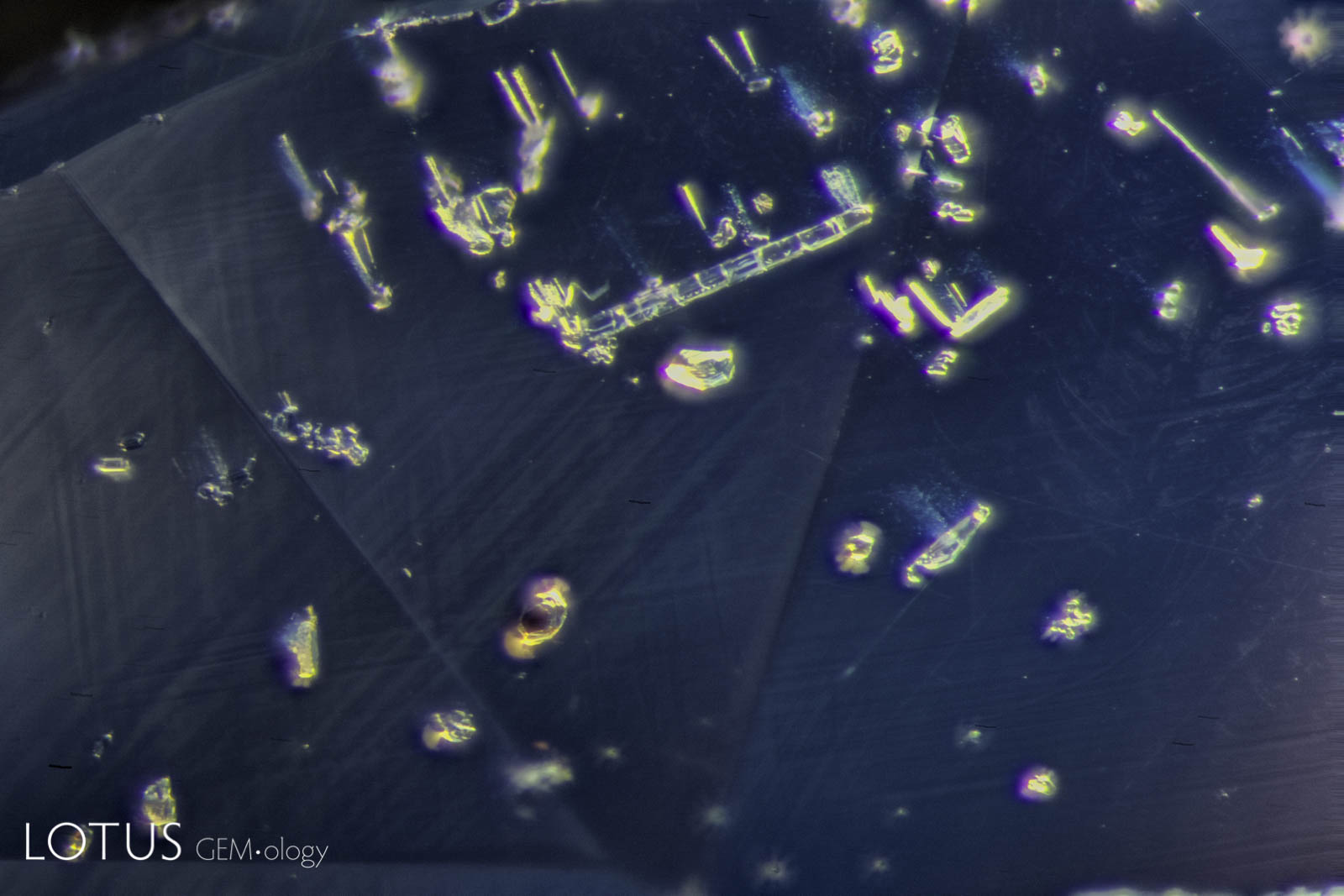
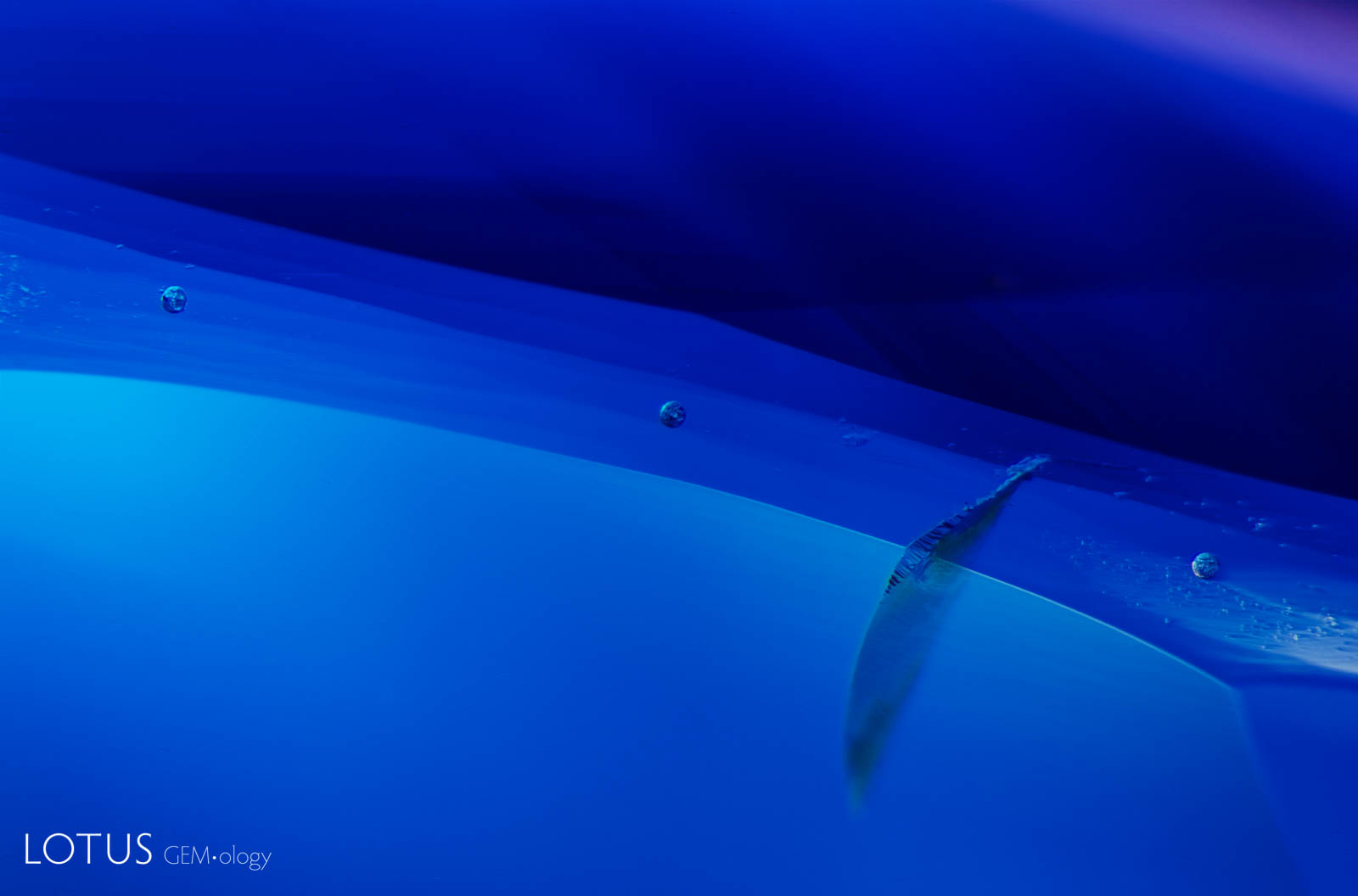
Tiny birefringent crystals in a Madagascar sapphire. Many of this have growth tubes connected to them, giving the appearance of balloons on a string.
Natural Sapphire •
Madagascar •
Enhancements:
None Detected (None) •
Lighting Conditions:
Fiber Optic: Oblique
Photographer:
Richard W. Hughes •
Image Number:
A-001-3204-1
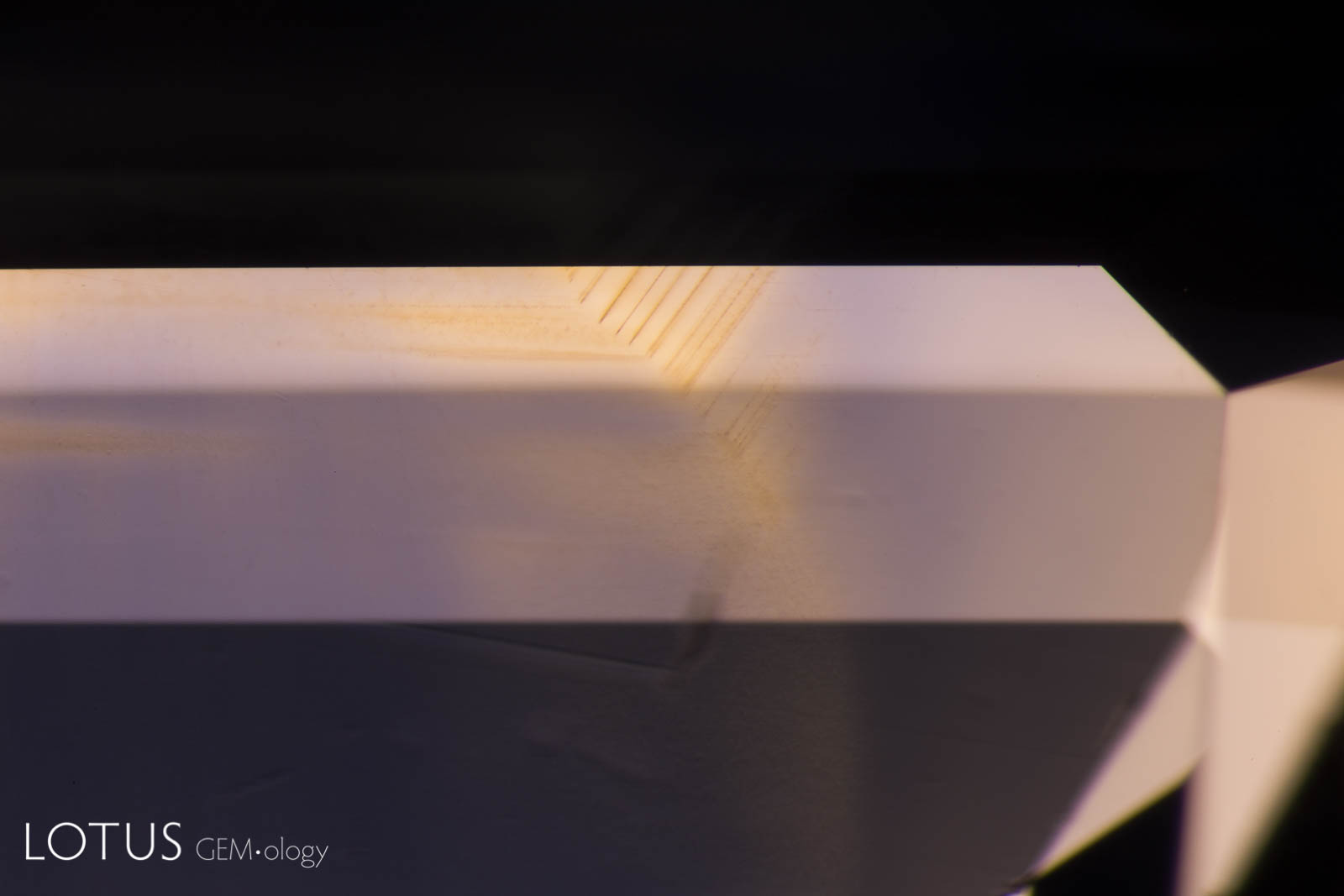
This image clearly illustrates what master photomicrographer John Koivula has termed “chromophore cannibalization.” As titanium is drawn out of solid solution to form exsolved rutile silk, the area in the vicinity is decolorized, losing its blue color. This is a natural process and is the reverse of “internal diffusion,” where heat treatment sends the titanium back into solution, creating blue clouds or “inkspots” around the rutile remnants.
Natural Sapphire •
Sri Lanka (Ceylon) •
Enhancements:
None Detected (None) •
Lighting Conditions:
Dark Field
Photographer:
Richard W. Hughes •
Image Number:
A-001-3194-2
Koivula, J.I. (1987) Internal diffusion. Journal of Gemmology, Vol. 20, No. 7/8, pp. 474–477; RWHL*.
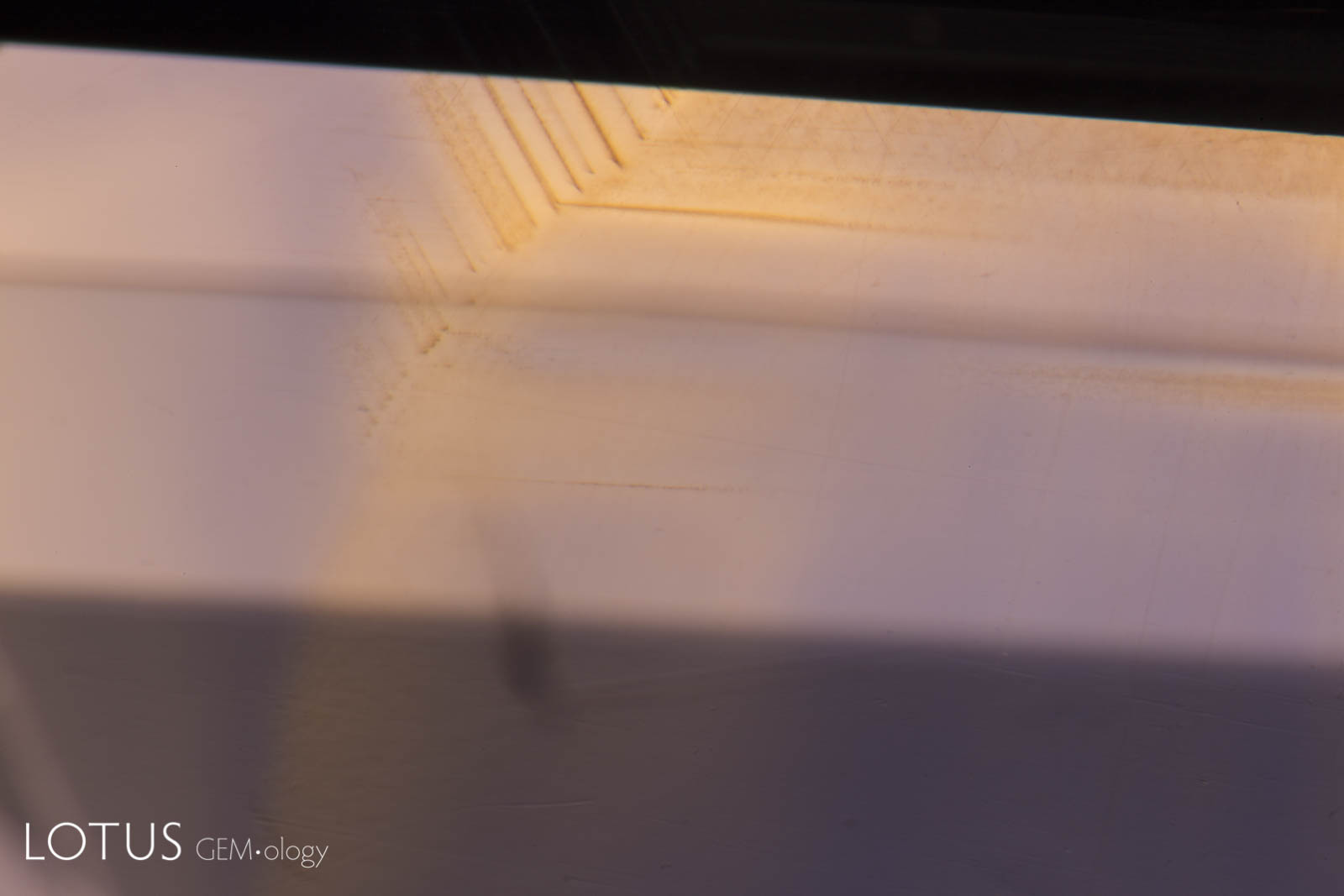
This image clearly illustrates what master photomicrographer John Koivula has termed “chromophore cannibalization.” As titanium is drawn out of solid solution to form exsolved rutile silk, the area in the vicinity is decolorized, losing its blue color. This is a natural process and is the reverse of “internal diffusion,” where heat treatment sends the titanium back into solution, creating blue clouds or “inkspots” around the rutile remnants.
Natural Sapphire •
Sri Lanka (Ceylon) •
Enhancements:
None Detected (None) •
Lighting Conditions:
Dark Field
Photographer:
Richard W. Hughes •
Image Number:
A-001-3194-1
Koivula, J.I. (1987) Internal diffusion. Journal of Gemmology, Vol. 20, No. 7/8, pp. 474–477; RWHL*.
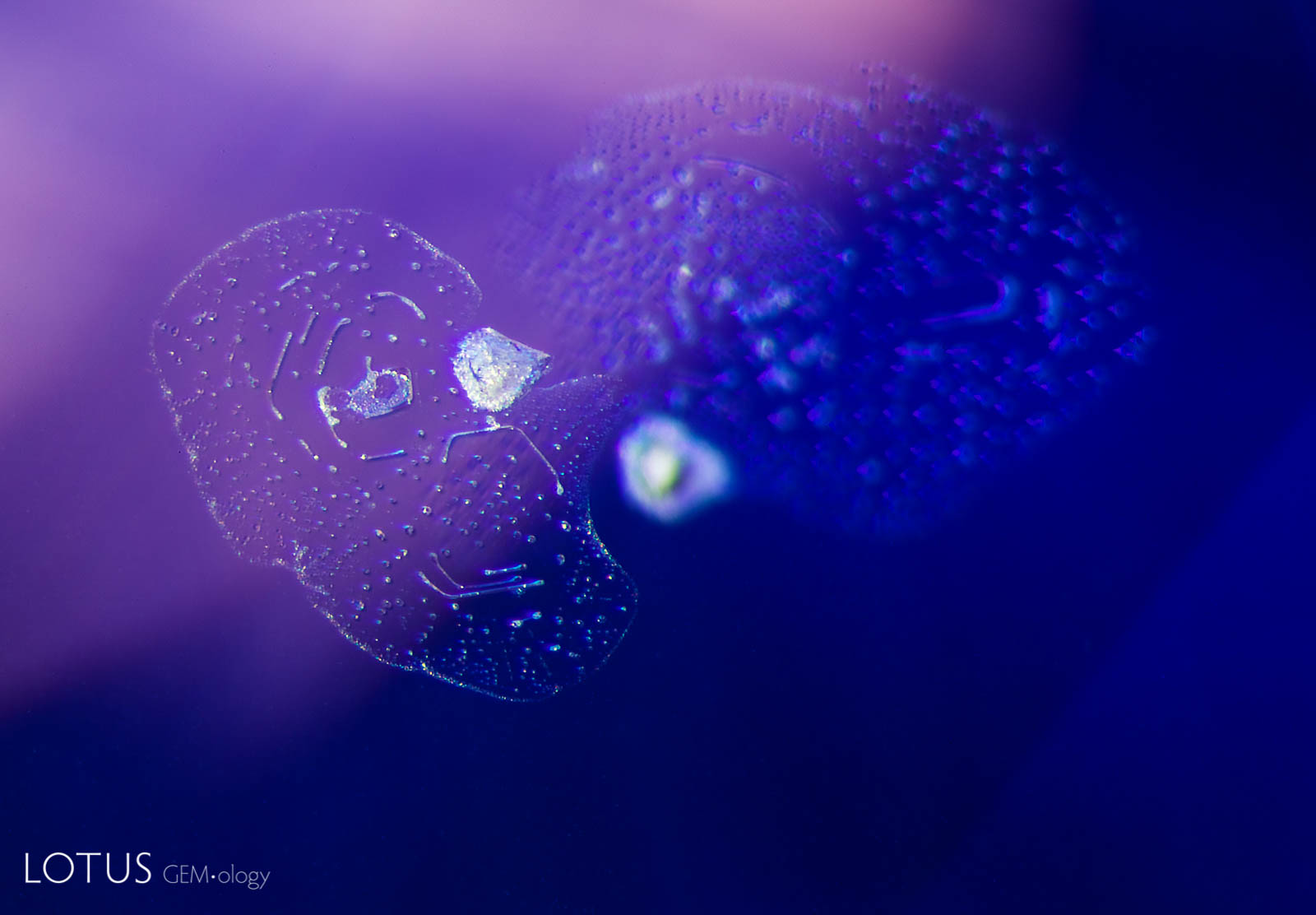
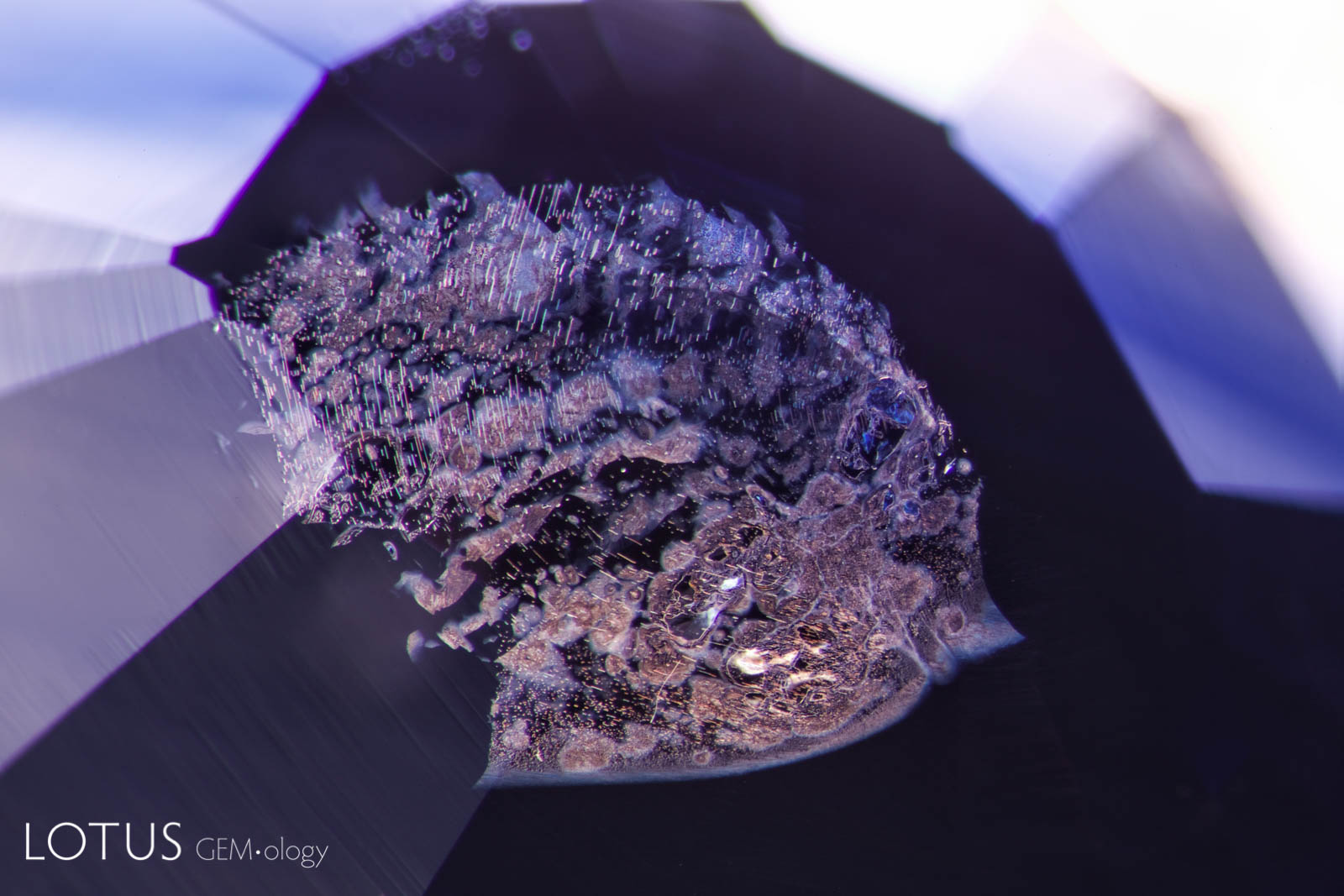
Melted crystals with a frosted surface, surrounded by heat-altered fingerprints in a heat-treated sapphire from Sri Lanka. Note the hexagonal symmetry of the fingerprint, which shows that it lies in the basal plane.
Natural Sapphire •
Sri Lanka (Ceylon) •
Enhancements:
Heat (H) •
Lighting Conditions:
Dark Field + Oblique Fiber Optic
Photographer:
E. Billie Hughes •
Image Number:
A-001-3197-2
Hughes, R.W. (1997) Ruby & Sapphire. Boulder, CO, RWH Publishing, 512 pp.; RWHL*.
A heat-altered fingerprint at the culet of a heat-treated sapphire from Sri Lanka. Note the small microfractures and discoids that result from explosion of the individual negative crystal channels that make up the fingerprint.
Natural Sapphire •
Sri Lanka (Ceylon) •
Enhancements:
Heat (H) •
Lighting Conditions:
Dark Field
Photographer:
Richard W. Hughes •
Image Number:
A-001-3197-1
Hughes, R.W. (1997) Ruby & Sapphire. Boulder, CO, RWH Publishing, 512 pp.; RWHL*.
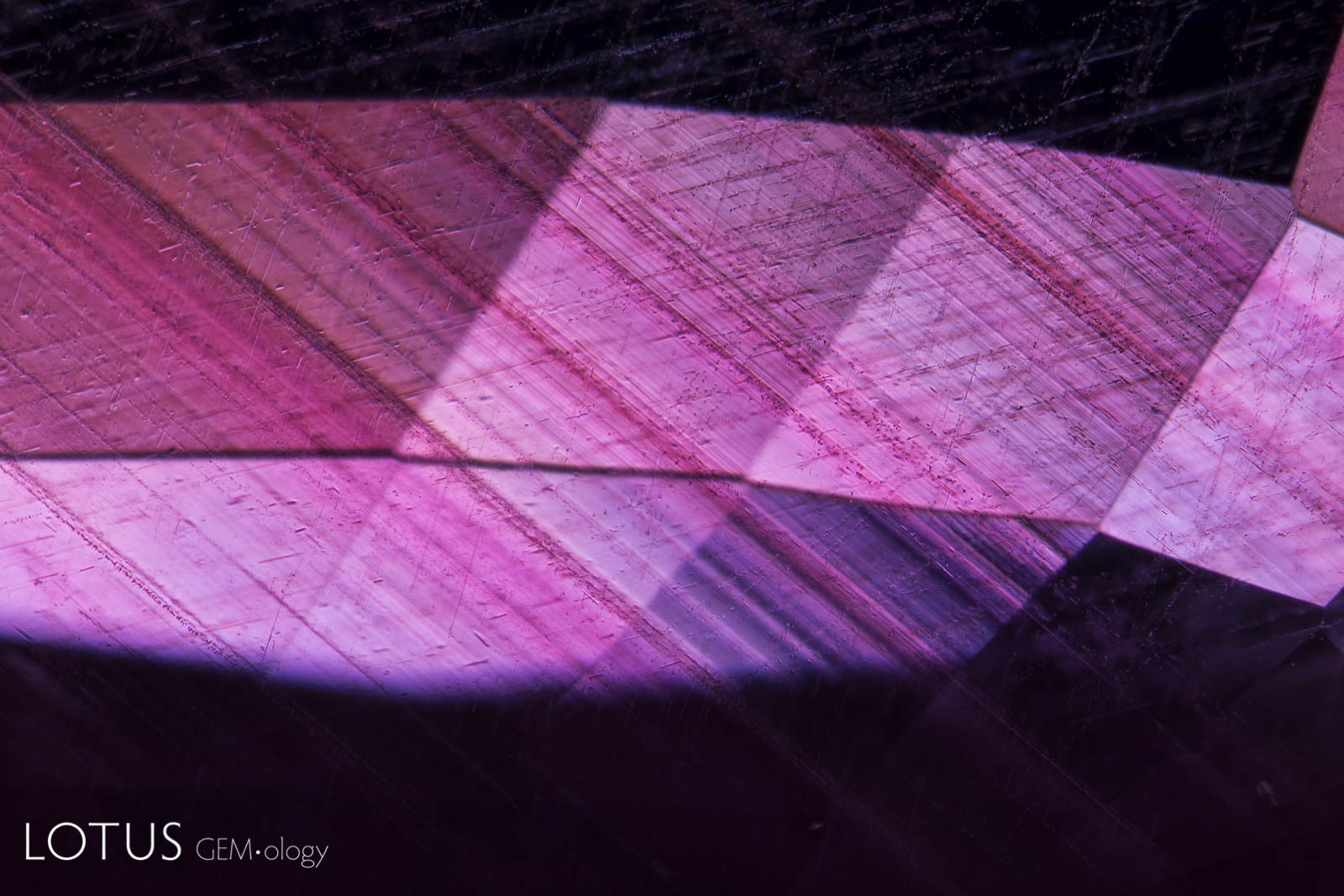
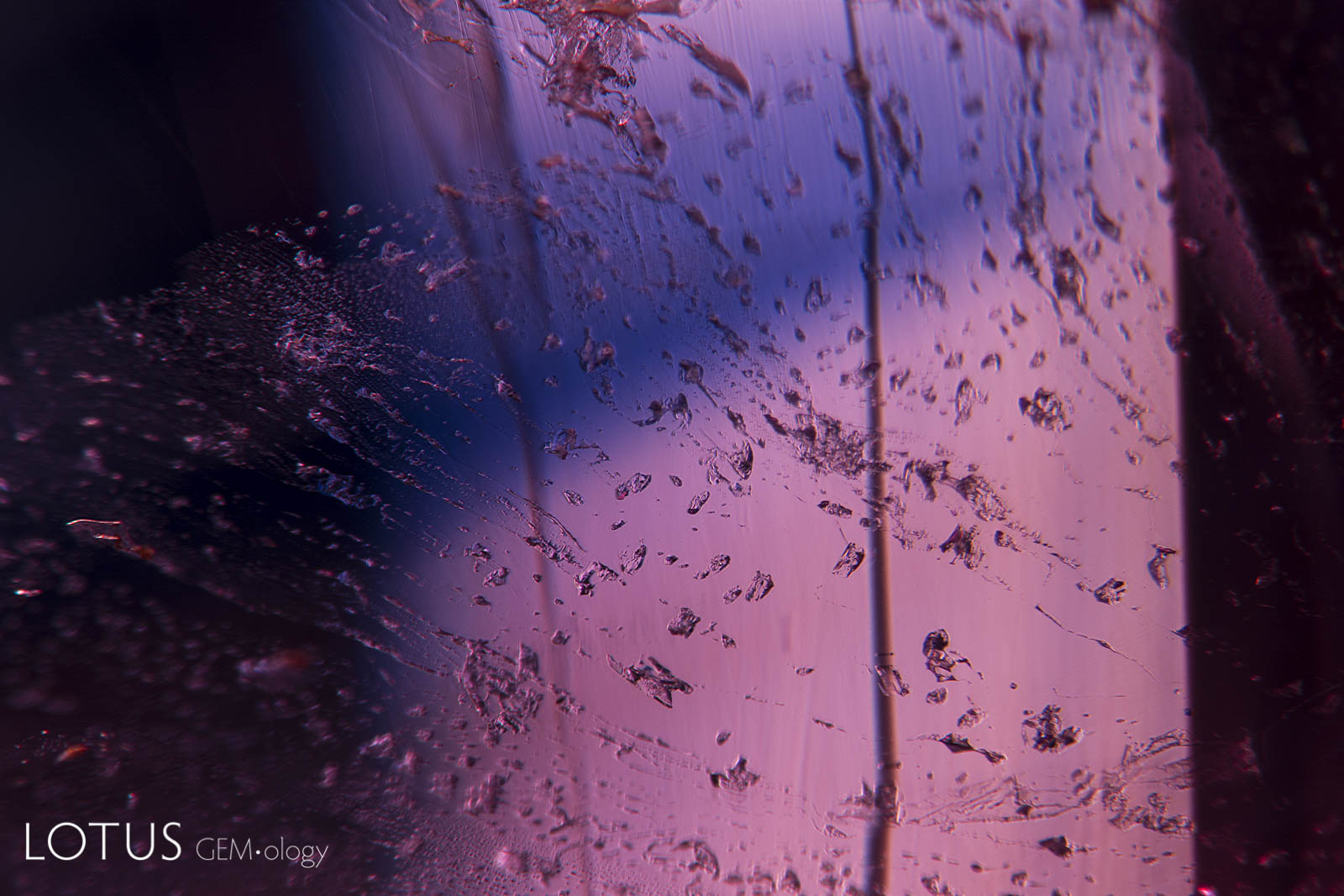
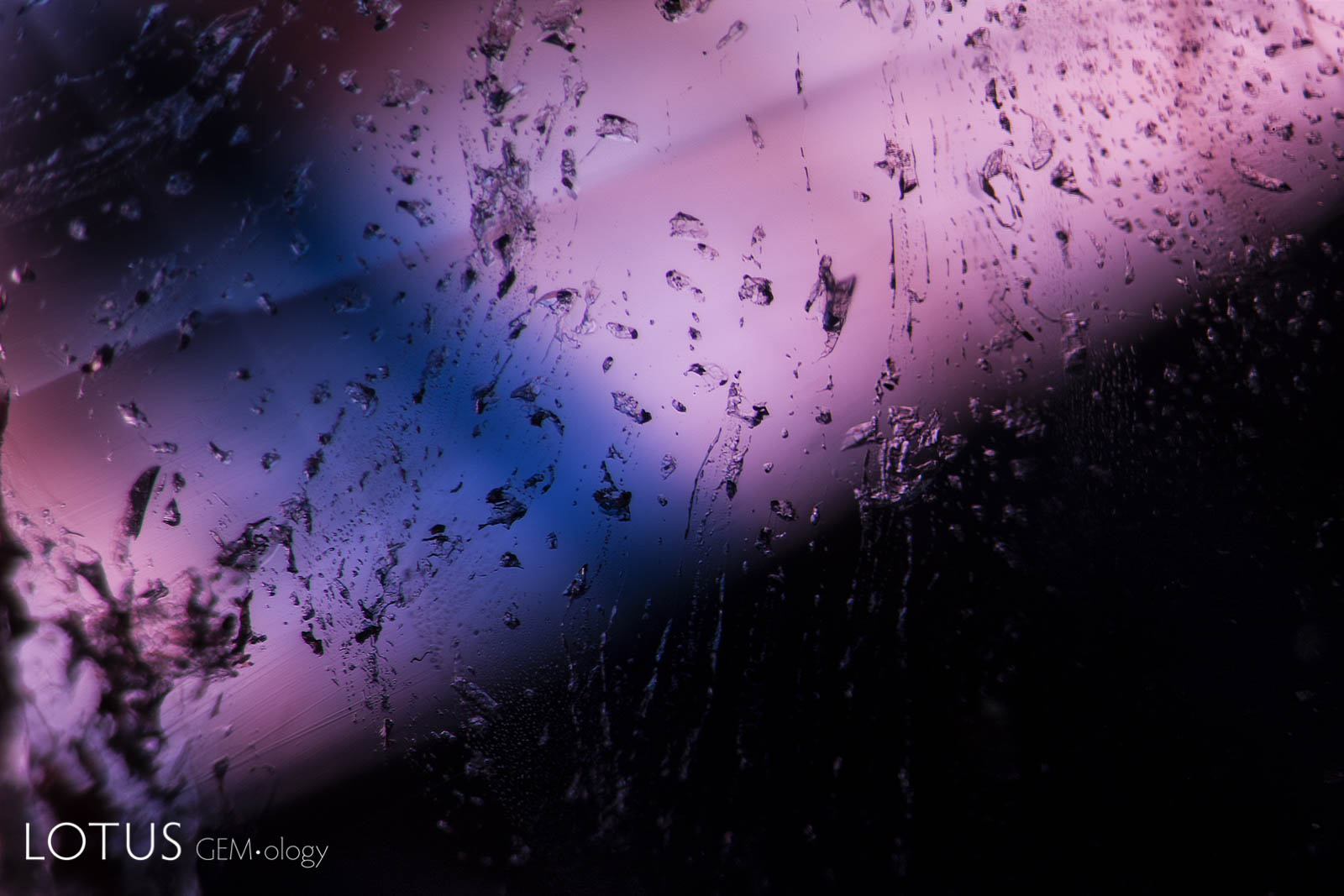
Sharp angular growth zoning in red bands lies against a backdrop of undissolved rutile silk in this purple sapphire from Sri Lanka.
Natural Sapphire •
Sri Lanka (Ceylon) •
Enhancements:
None Detected (None) •
Lighting Conditions:
Shadowing
Photographer:
Richard W. Hughes •
Image Number:
A-001-3176-1
Koivua, J.I. (2007) Photographing gems. In Focus, No. 7, September, pp. 24–59; RWHL**.
A small cluster of transparent zircon crystals with no signs of heat alteration are a welcome sight in this unheated Madagascar sapphire. Should the gem have been heat treated at temperatures typical for blue sapphire, these zircon crystals would have become cloudy and whitish and the small tension fractures around them would have begun to heal.
Natural Sapphire •
Madagascar •
Enhancements:
None Detected (None) •
Lighting Conditions:
Dark Field + Oblique Fiber Optic
Photographer:
E. Billie Hughes •
Image Number:
A-001-3163-1
Three indented dots are visible on the girdle of a sapphire. These microscopic dots indicate that the stone has undergone testing with LA-ICP-MS (Laser Ablation Inductively Coupled Plasma Mass Spectrometry), a type of spectrometry that allows for chemical analysis of the stone.
Natural Sapphire •
Madagascar •
Enhancements:
None Detected (None) •
Lighting Conditions:
Fiber Optic: Oblique
Photographer:
E. Billie Hughes •
Image Number:
A-001-3153-1
A coarse fingerprint lies above a blue zone in this sapphire from Pakistan’s Batakundi mines.
Natural Sapphire •
Pakistan (Kashmir); Batakundi •
Enhancements:
None Detected (None) •
Lighting Conditions:
Dark Field
Photographer:
Richard W. Hughes •
Image Number:
A-001-3152-2
A coarse fingerprint lies above a blue zone in this sapphire from Pakistan’s Batakundi mines.
Natural Sapphire •
Pakistan (Kashmir); Batakundi •
Enhancements:
None Detected (None) •
Lighting Conditions:
Fiber Optic: Diffuse Oblique
Photographer:
Richard W. Hughes •
Image Number:
A-001-3152-1
Search the Complete Hyperion Database
Sapphire inclusions may include mineral crystals, rutile silk, healed fissures, fluid inclusions, negative crystals, color zoning and other features formed during or after crystal growth. Such features are important to gemologists because they can provide evidence useful in identifying sapphire, understanding its geological history, recognizing treatment and, in some cases, determining geographic origin.
Sapphire Inclusion Photomicrographs
The Hyperion sapphire gallery includes microscopic features found in sapphires from major deposits around the world. Each entry is accompanied by descriptive information and, where available, references to the gemological literature.
What Inclusions Can Reveal About Sapphire
Inclusions are an important part of sapphire identification. Their form, composition, orientation and alteration can help gemologists distinguish natural sapphire from synthetic material, recognize evidence of heat treatment, and study the geological environment in which the sapphire formed.
Hyperion combines inclusion photomicrography with supporting gemological information so that individual features can be compared with documented examples from known sapphire deposits.
About Hyperion
Hyperion is the Lotus Gemology searchable inclusion database. It allows users to browse gemstone inclusions by gem type, geographic origin, treatment and keyword.