Ceylon Sapphire Inclusions
Explore Ceylon sapphire inclusions in Hyperion, the Lotus Gemology inclusion database. Hyperion contains photomicrographs of inclusions and internal features in natural sapphires from Sri Lanka (Ceylon), documented with information on treatment, lighting conditions, field of view, photographer and published references.
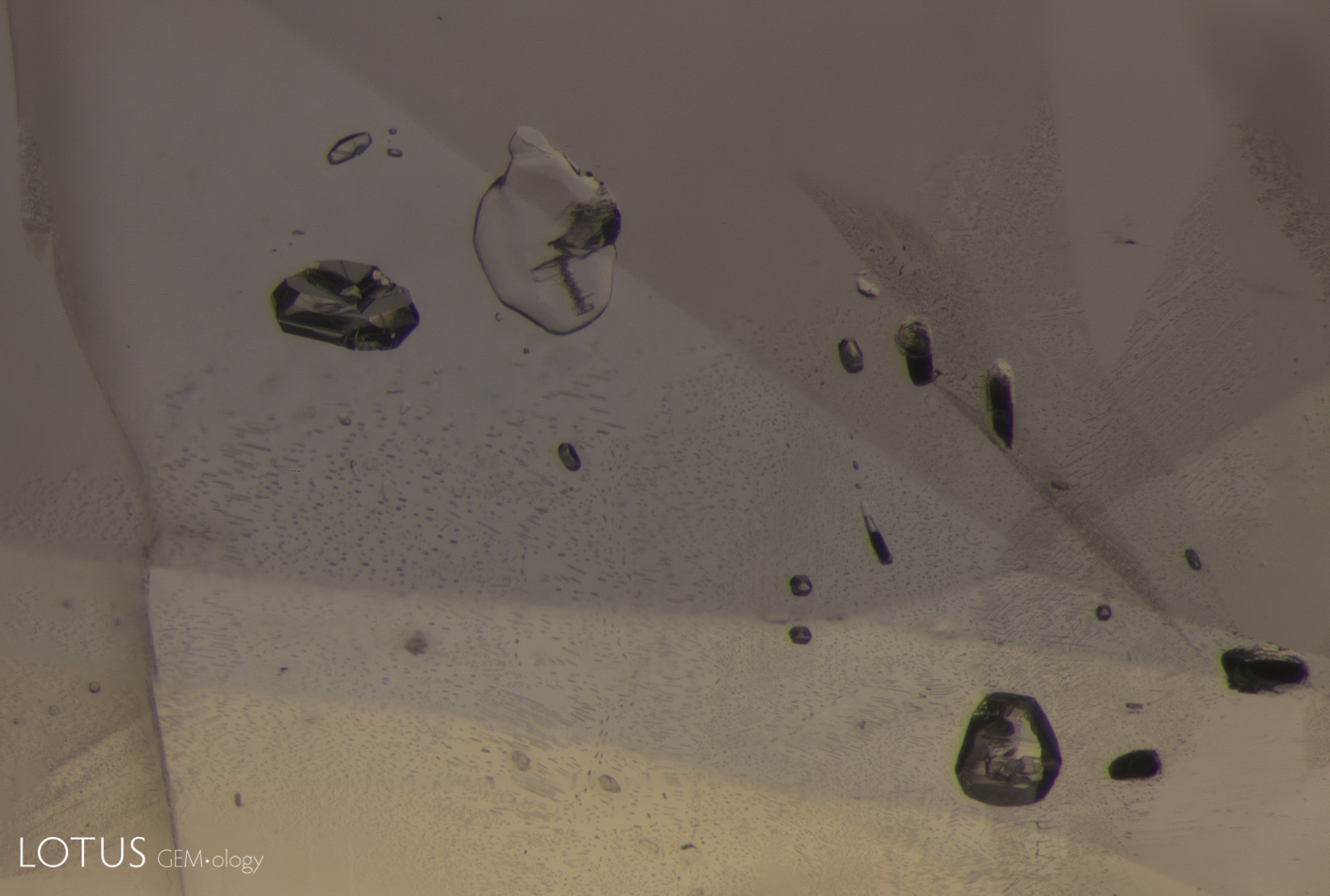
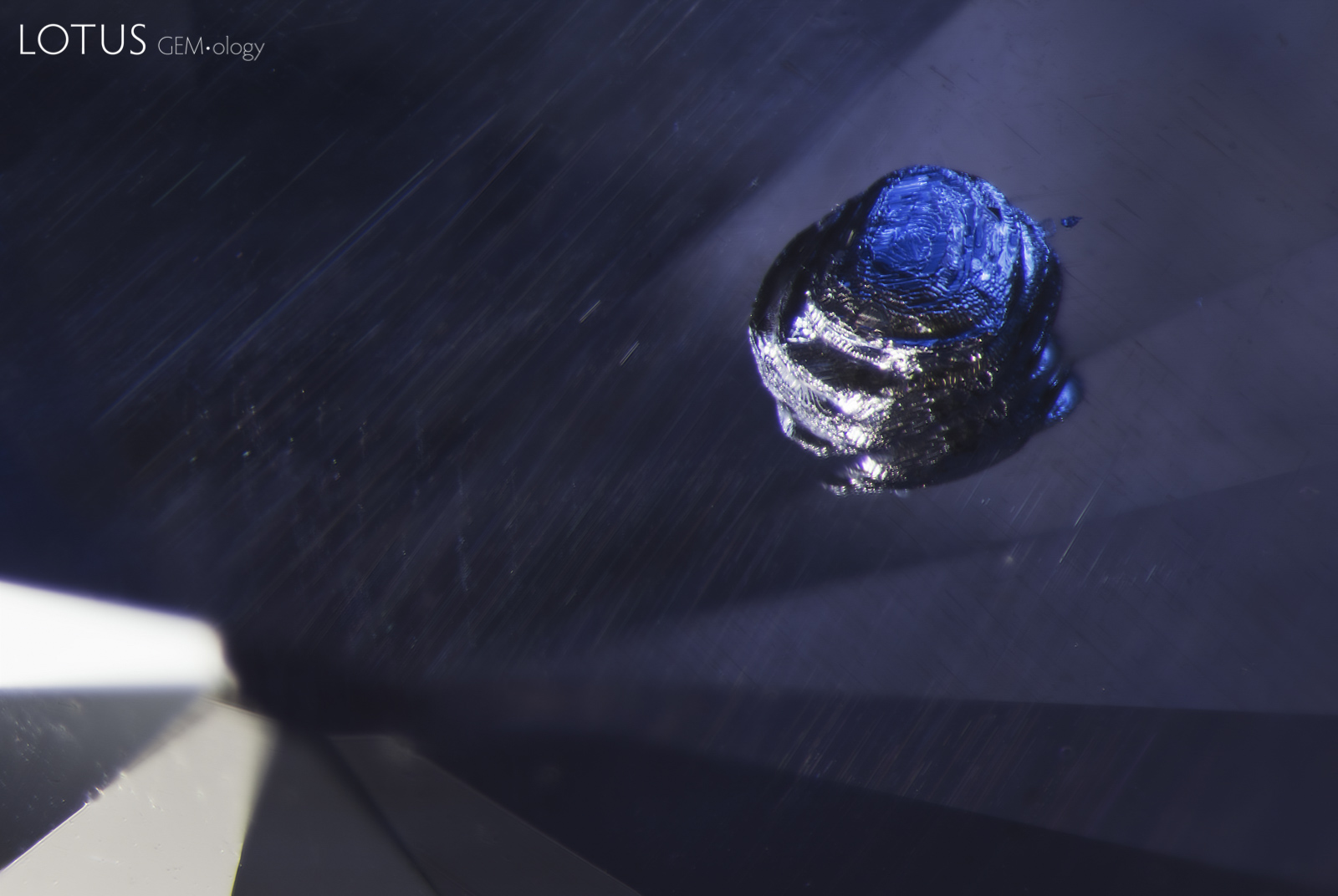
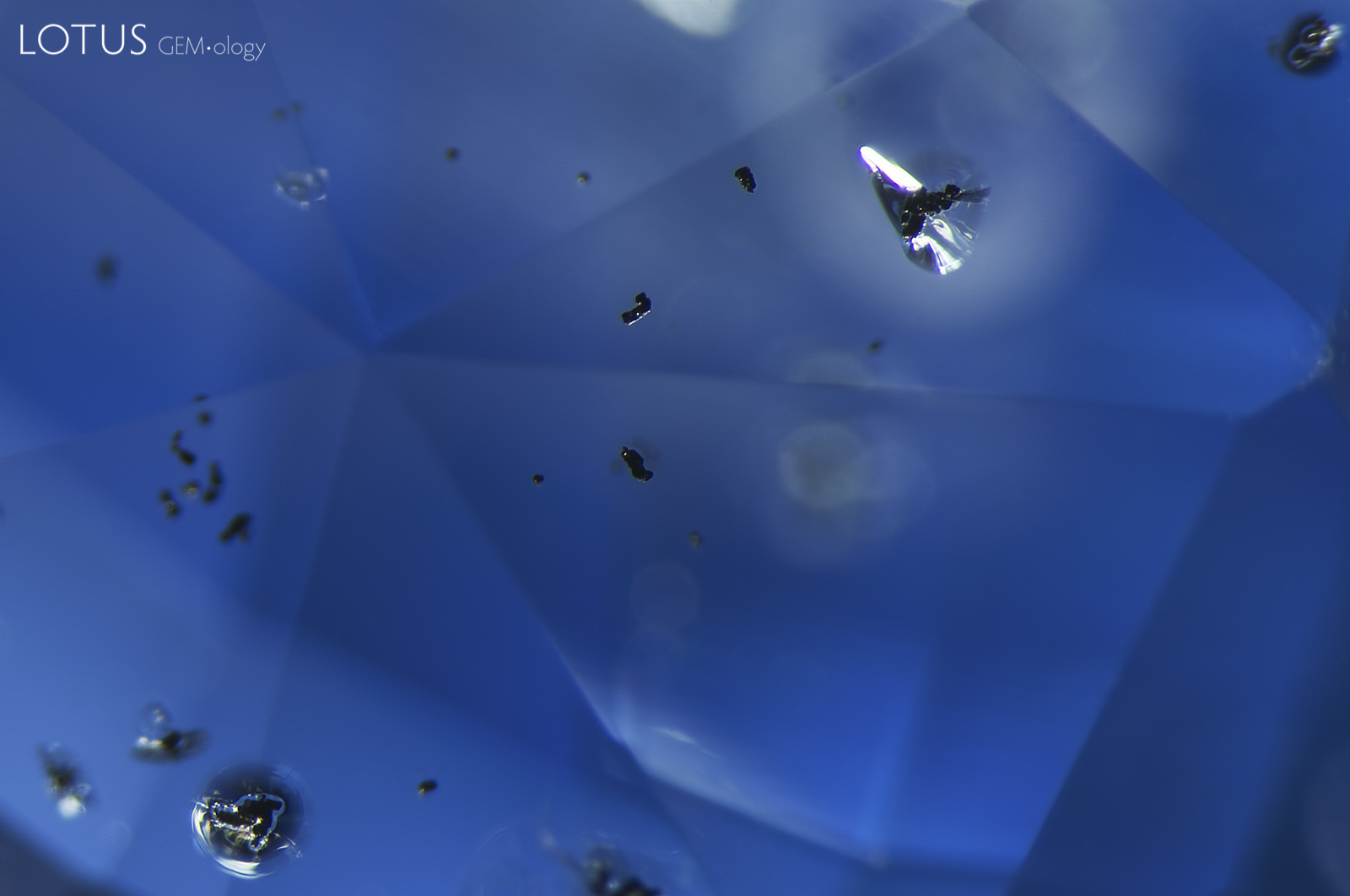
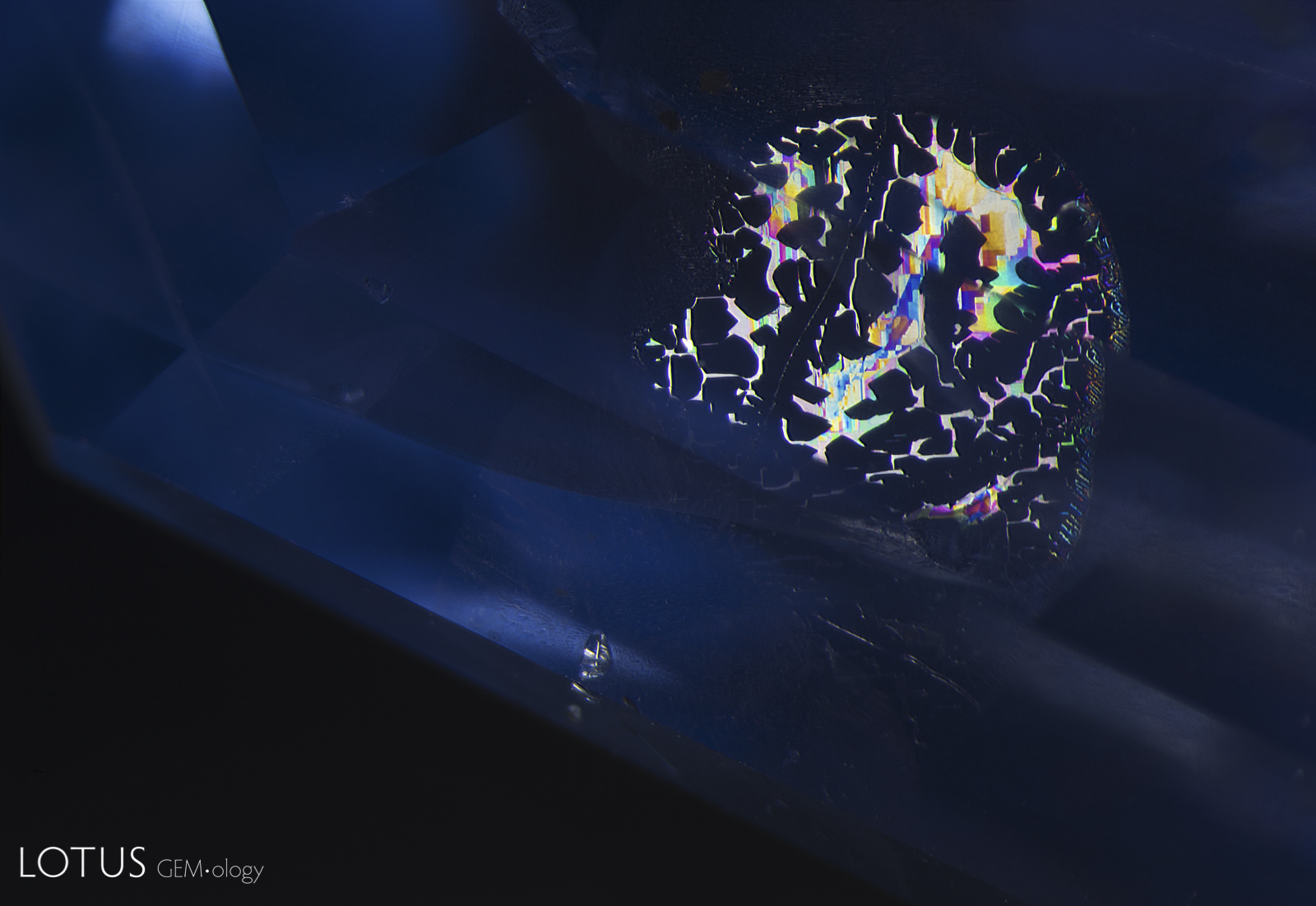
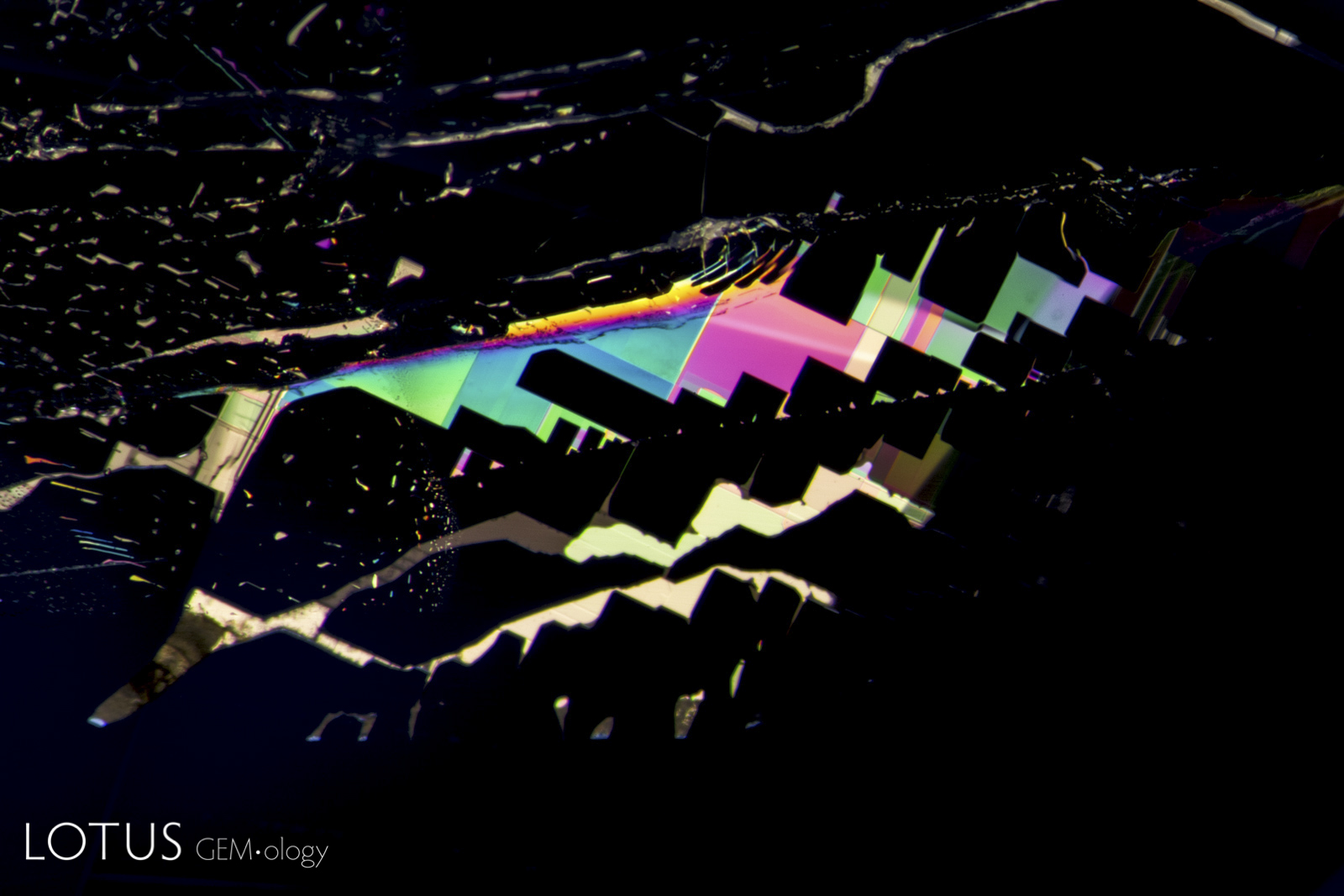
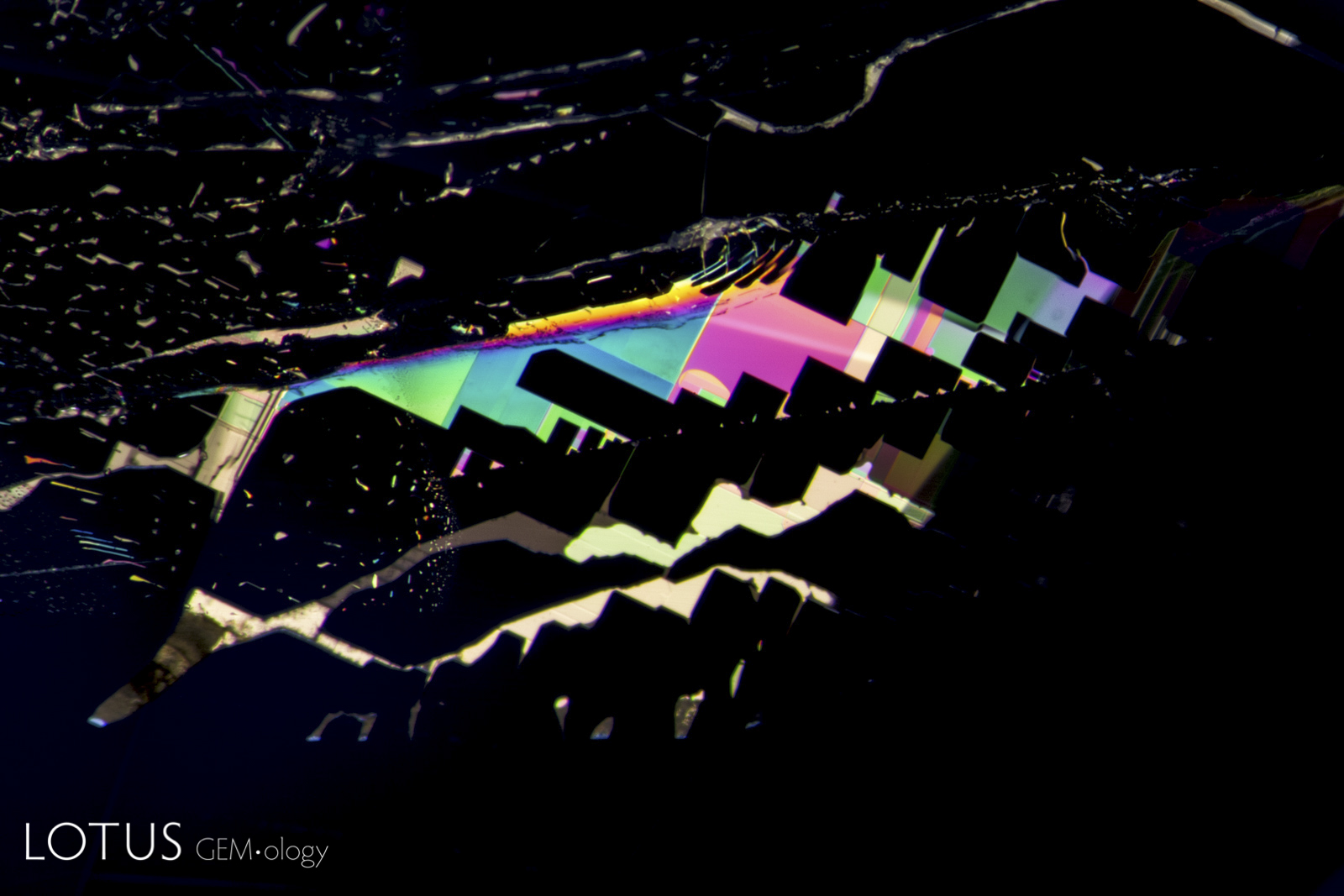
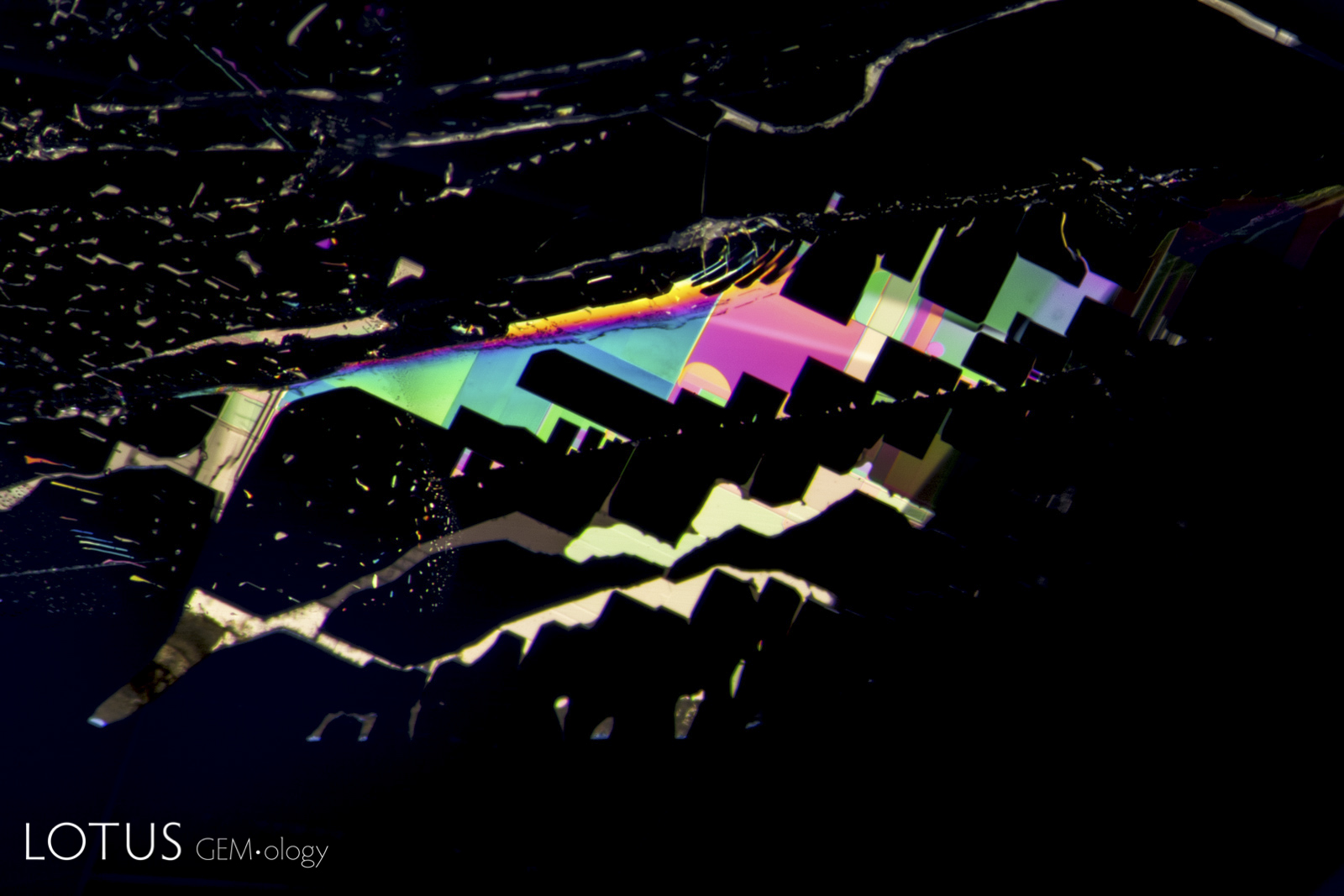
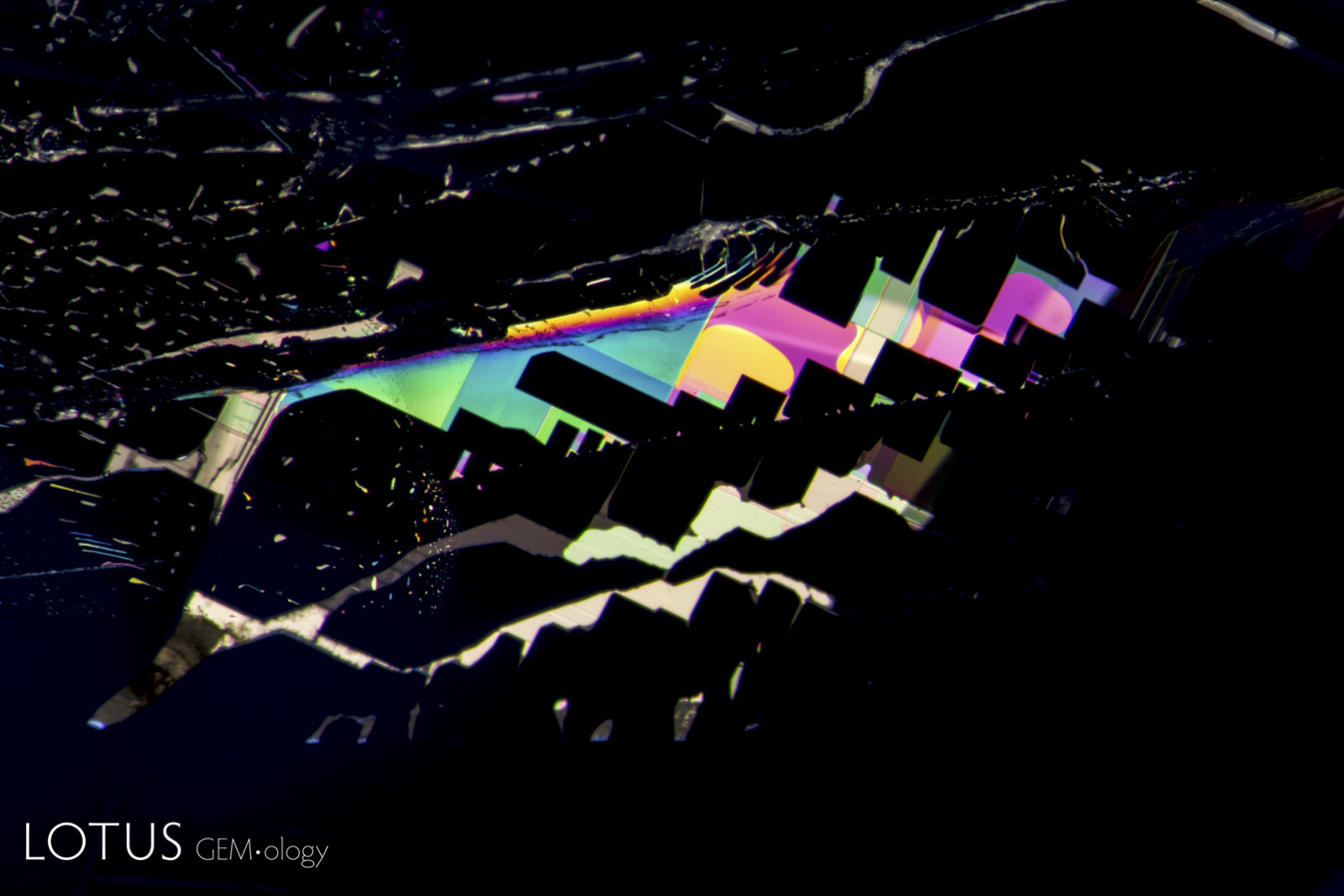
Secondary healed fissures in corundum are often filled with carbon dioxide, but usually in liquid form. On occasion we see it in both liquid and gaseous form. This series of four images shows liquid carbon dioxide with a gas bubble (the yellow area). As the heat of the microscope warms the specimen, the gas bubble shrinks and eventually disappears. The critical temperature at which the phase changes is 31.2°C. Solid carbon dioxide is what we know as “dry ice.” The existence of carbon dioxide inclusions in sapphire was first noted by David Brewster in 1826. He also noted the explosive nature of such inclusions, which burst at temperatures generally between 250–400°C.
Natural Sapphire •
Sri Lanka (Ceylon) •
Enhancements:
None Detected (None) •
Lighting Conditions:
Fiber Optic: Diffuse Overhead
Photographer:
Richard W. Hughes •
Image Number:
A-002-5394-7
Koivula, J.I. (1980) Carbon dioxide as a fluid inclusion. Gems & Gemology, Vol. 16, No. 12, pp. 386–390; RWHL*.
Brewster, D. (1826) On the existence of two new fluids in the cavities of minerals, which are immiscible, and possess remarkable physical properties. Transactions of the Royal Society of Edinburgh, Vol. 10, Part 1, pp. 1–41, 2 plates; RWHL.
Brewster, D. (1827) Notice respecting the existence of the new fluid in a large cavity in a specimen of sapphire. Edinburgh Journal of Science, Vol. 6, pp. 155–156; RWHL.
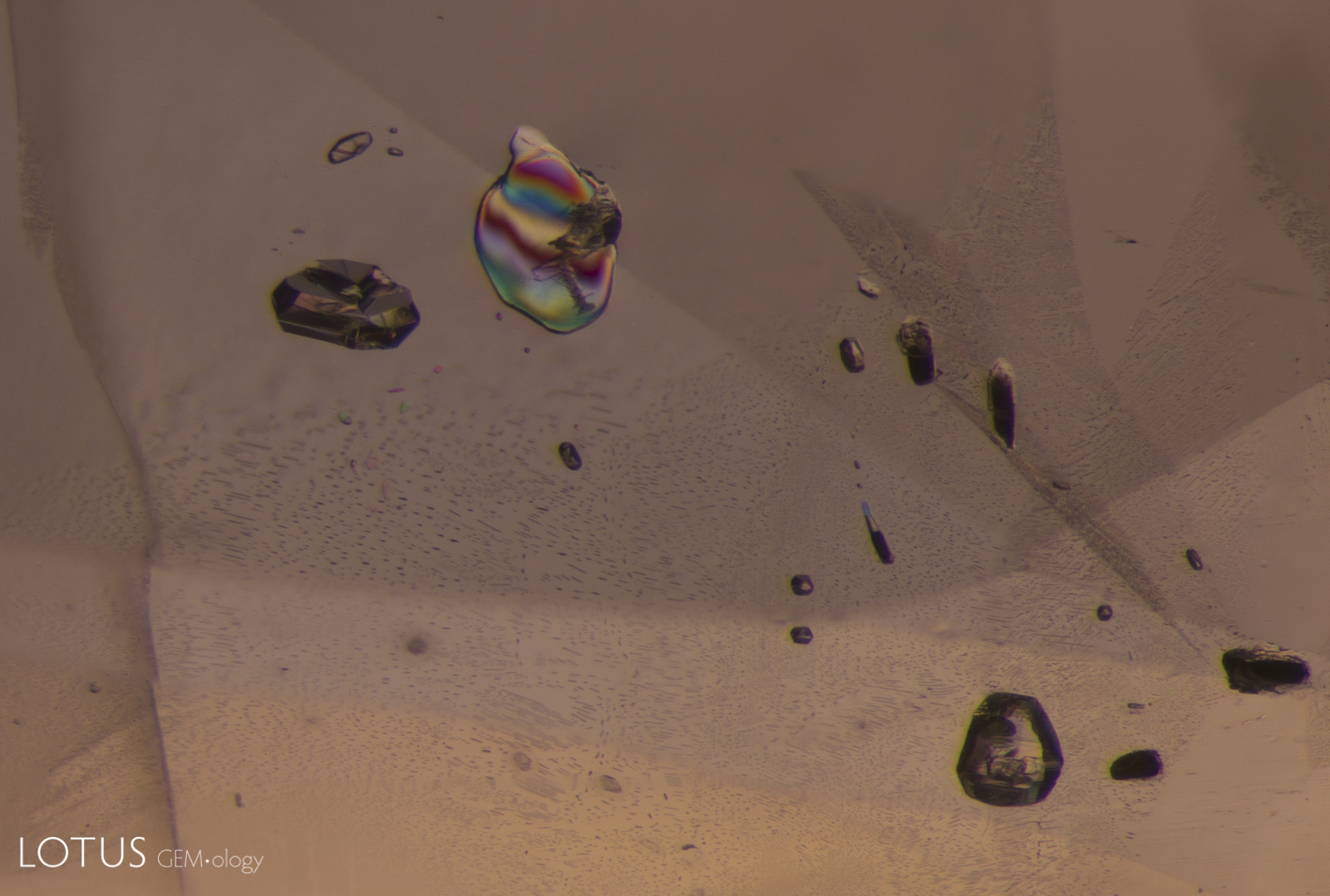
Secondary healed fissures in corundum are often filled with carbon dioxide, but usually in liquid form. On occasion we see it in both liquid and gaseous form. This series of four images shows liquid carbon dioxide with a gas bubble (the yellow area). As the heat of the microscope warms the specimen, the gas bubble shrinks and eventually disappears. The critical temperature at which the phase changes is 31.2°C. Solid carbon dioxide is what we know as “dry ice.” The existence of carbon dioxide inclusions in sapphire was first noted by David Brewster in 1826. He also noted the explosive nature of such inclusions, which burst at temperatures generally between 250–400°C.
Natural Sapphire •
Sri Lanka (Ceylon) •
Enhancements:
None Detected (None) •
Lighting Conditions:
Fiber Optic: Diffuse Overhead
Photographer:
Richard W. Hughes •
Image Number:
A-002-5394-3
Koivula, J.I. (1980) Carbon dioxide as a fluid inclusion. Gems & Gemology, Vol. 16, No. 12, pp. 386–390; RWHL*.
Brewster, D. (1826) On the existence of two new fluids in the cavities of minerals, which are immiscible, and possess remarkable physical properties. Transactions of the Royal Society of Edinburgh, Vol. 10, Part 1, pp. 1–41, 2 plates; RWHL.
Brewster, D. (1827) Notice respecting the existence of the new fluid in a large cavity in a specimen of sapphire. Edinburgh Journal of Science, Vol. 6, pp. 155–156; RWHL.
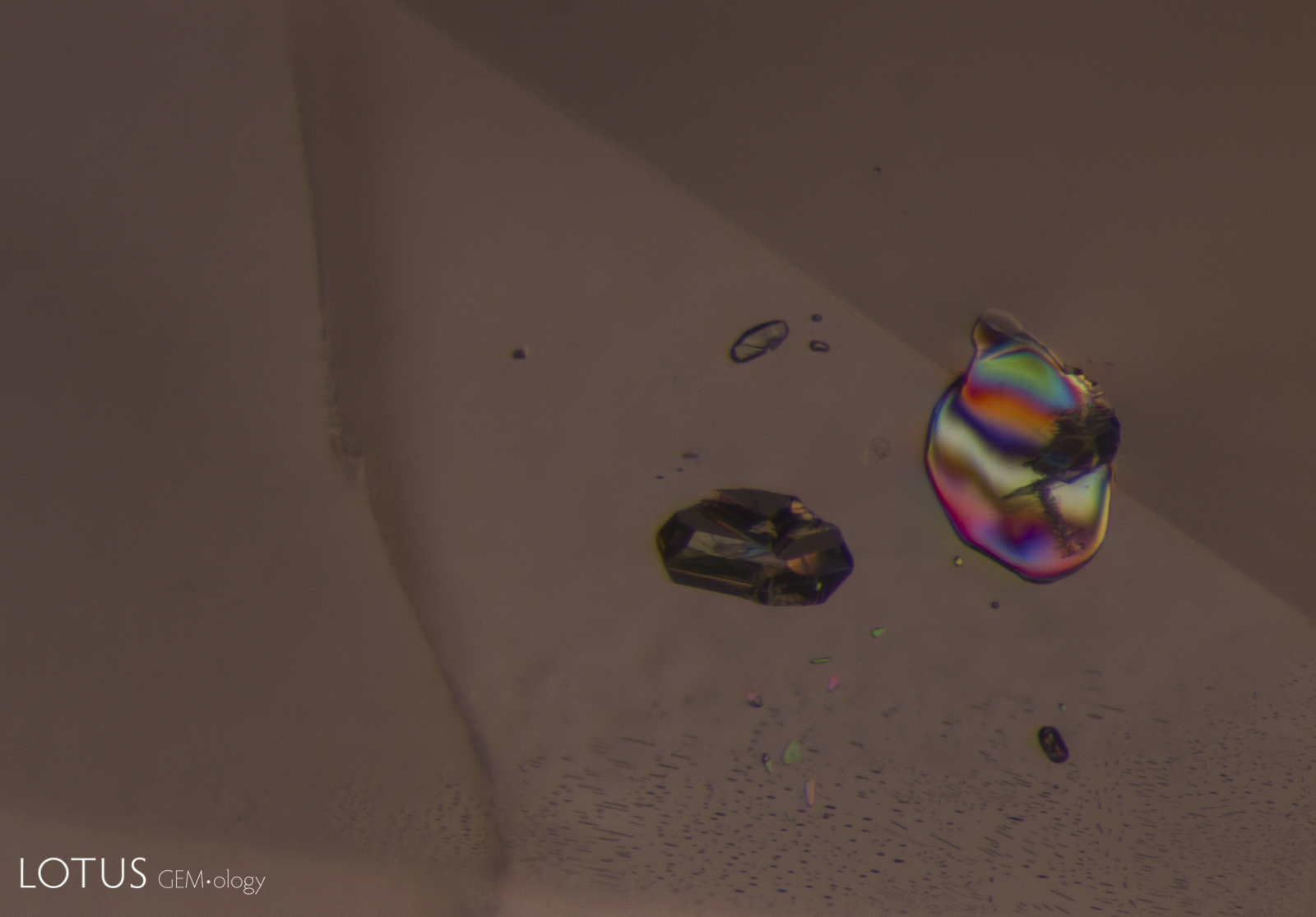
Secondary healed fissures in corundum are often filled with carbon dioxide, but usually in liquid form. On occasion we see it in both liquid and gaseous form. This series of four images shows liquid carbon dioxide with a gas bubble (the yellow area). As the heat of the microscope warms the specimen, the gas bubble shrinks and eventually disappears. The critical temperature at which the phase changes is 31.2°C. Solid carbon dioxide is what we know as “dry ice.” The existence of carbon dioxide inclusions in sapphire was first noted by David Brewster in 1826. He also noted the explosive nature of such inclusions, which burst at temperatures generally between 250–400°C.
Natural Sapphire •
Sri Lanka (Ceylon) •
Enhancements:
None Detected (None) •
Lighting Conditions:
Fiber Optic: Diffuse Overhead
Photographer:
Richard W. Hughes •
Image Number:
A-002-5394-2
Koivula, J.I. (1980) Carbon dioxide as a fluid inclusion. Gems & Gemology, Vol. 16, No. 12, pp. 386–390; RWHL*.
Brewster, D. (1826) On the existence of two new fluids in the cavities of minerals, which are immiscible, and possess remarkable physical properties. Transactions of the Royal Society of Edinburgh, Vol. 10, Part 1, pp. 1–41, 2 plates; RWHL.
Brewster, D. (1827) Notice respecting the existence of the new fluid in a large cavity in a specimen of sapphire. Edinburgh Journal of Science, Vol. 6, pp. 155–156; RWHL.
Secondary healed fissures in corundum are often filled with carbon dioxide, but usually in liquid form. On occasion we see it in both liquid and gaseous form. This series of four images shows liquid carbon dioxide with a gas bubble (the yellow area). As the heat of the microscope warms the specimen, the gas bubble shrinks and eventually disappears. The critical temperature at which the phase changes is 31.2°C. Solid carbon dioxide is what we know as “dry ice.” The existence of carbon dioxide inclusions in sapphire was first noted by David Brewster in 1826. He also noted the explosive nature of such inclusions, which burst at temperatures generally between 250–400°C.
Natural Sapphire •
Sri Lanka (Ceylon) •
Enhancements:
None Detected (None) •
Lighting Conditions:
Fiber Optic: Diffuse Overhead
Photographer:
Richard W. Hughes •
Image Number:
A-002-5394-1
Koivula, J.I. (1980) Carbon dioxide as a fluid inclusion. Gems & Gemology, Vol. 16, No. 12, pp. 386–390; RWHL*.
Brewster, D. (1826) On the existence of two new fluids in the cavities of minerals, which are immiscible, and possess remarkable physical properties. Transactions of the Royal Society of Edinburgh, Vol. 10, Part 1, pp. 1–41, 2 plates; RWHL.
Brewster, D. (1827) Notice respecting the existence of the new fluid in a large cavity in a specimen of sapphire. Edinburgh Journal of Science, Vol. 6, pp. 155–156; RWHL.
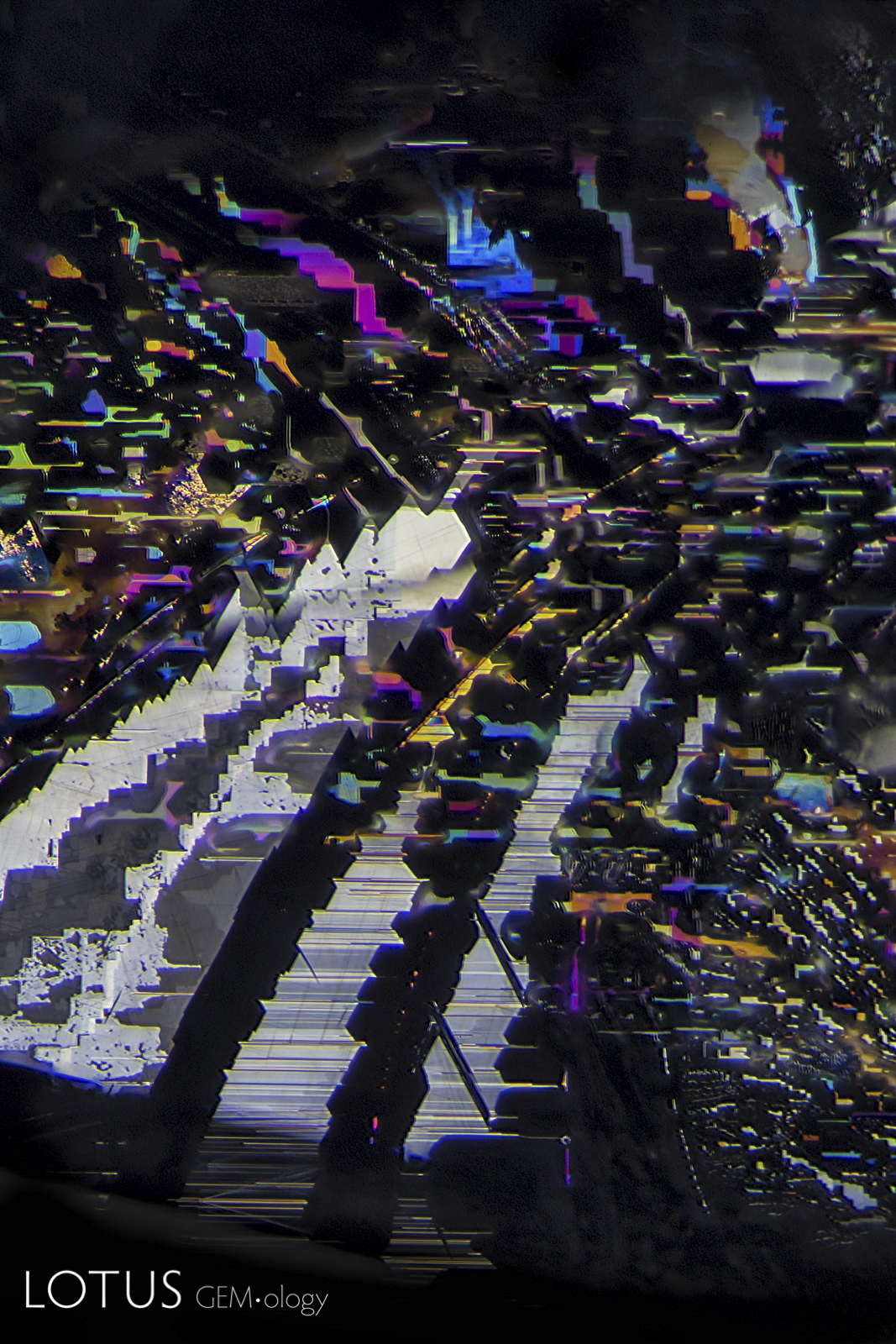
Long, unbroken needles of undissolved rutile silk is a common feature in untreated Sri Lanka sapphire like this one.
Natural Sapphire •
Sri Lanka (Ceylon) •
Enhancements:
None Detected (None) •
Lighting Conditions:
Fiber Optic: Diffuse Oblique
Photographer:
E. Billie Hughes •
Image Number:
A-002-5334-1
Hughes, R.W., Manorotkul, W. et al. (2017) Ruby & Sapphire: A Gemologist's Guide. Bangkok, Lotus Publishing, 816 pp.; RWHL*.
Koivula, J.I. and Hughes, R.W. (2005) Following the Silk Road: Rutile in corundum. Bangkok, Lotusgemology.com, RWHL*.
299 Total Images
Results: 109 – 120 | Page 10 of 25 Pages
Search the Complete Hyperion Database
Ceylon sapphire inclusions may include mineral crystals, rutile silk, healed fissures, fluid inclusions, negative crystals, growth features and other internal features formed during or after crystal growth. Such features are important to gemologists because they can provide evidence useful in identifying sapphire and evaluating a possible Sri Lankan origin.
Ceylon Sapphire Inclusion Photomicrographs
The Hyperion Ceylon sapphire gallery includes microscopic features documented in sapphires from Sri Lanka (Ceylon). Each entry is accompanied by descriptive information and, where available, references to the gemological literature.
What Inclusions Can Reveal About Ceylon Sapphire
Inclusions are an important part of geographic origin determination in sapphire. Their form, composition, orientation and associations can provide evidence that, when considered together with other gemological properties, may support or contradict a Sri Lankan origin.
Hyperion combines inclusion photomicrography with supporting gemological information so that individual features can be compared with documented examples from Ceylon sapphires.
About Hyperion
Hyperion is the Lotus Gemology searchable inclusion database. It allows users to browse gemstone inclusions by gem type, geographic origin, treatment and keyword.