Ceylon Sapphire Inclusions
Explore Ceylon sapphire inclusions in Hyperion, the Lotus Gemology inclusion database. Hyperion contains photomicrographs of inclusions and internal features in natural sapphires from Sri Lanka (Ceylon), documented with information on treatment, lighting conditions, field of view, photographer and published references.
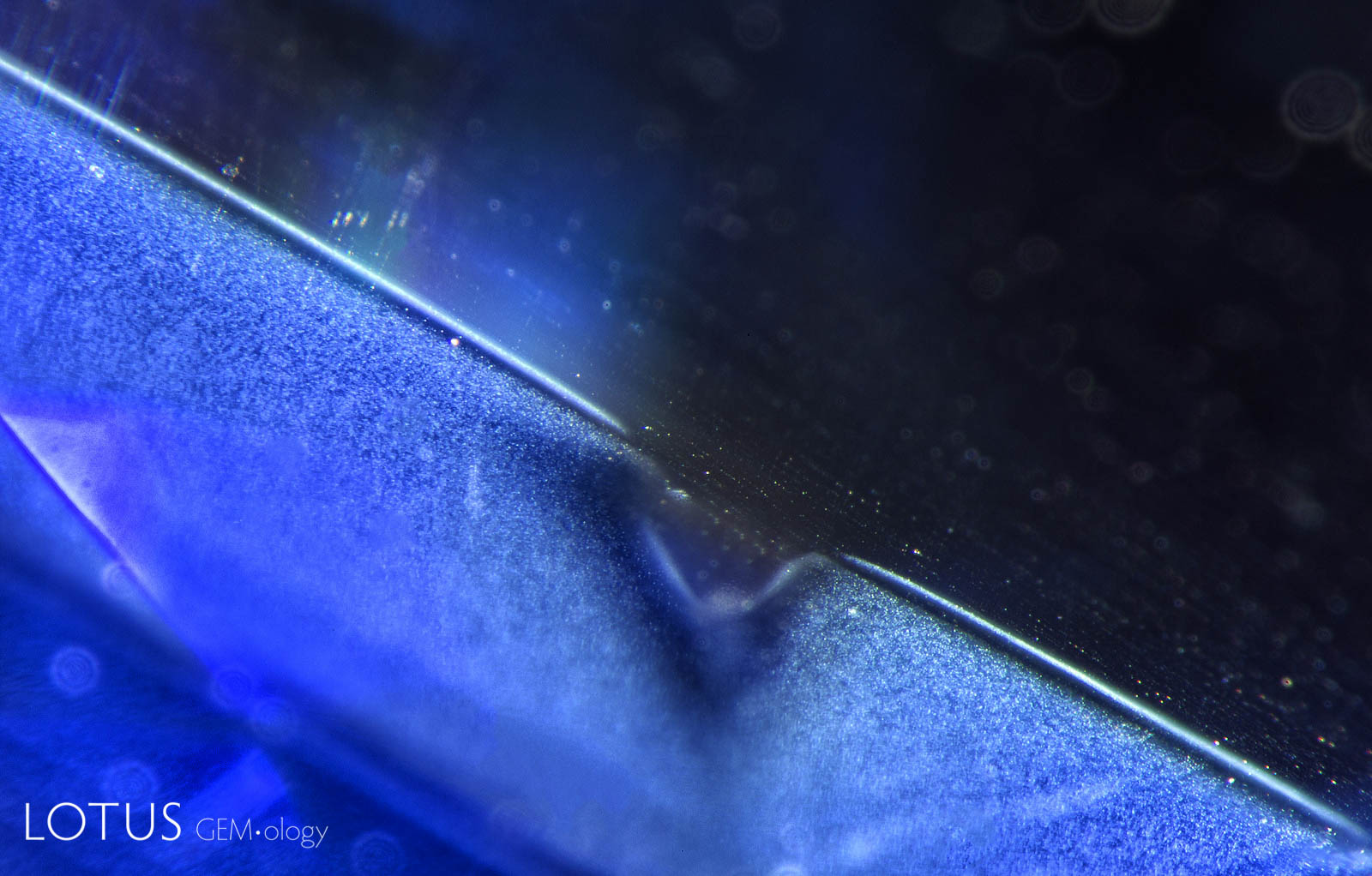
Internal diffusion in heat-treated Ceylon sapphire. This is caused by the bleeding of titanium into the surrounding sapphire from titanium-bearing inclusions such as rutile during high-temperature heat treatment.
Natural Sapphire •
Sri Lanka (Ceylon) •
Enhancements:
Heat (H) •
Lighting Conditions:
Fiber Optic: Oblique
Photographer:
Wimon Manorotkul •
Image Number:
A-001-0301-1
Koivula, J.I. (1987) Internal diffusion. Journal of Gemmology, Vol. 20, No. 7/8, pp. 474–477; RWHL*.
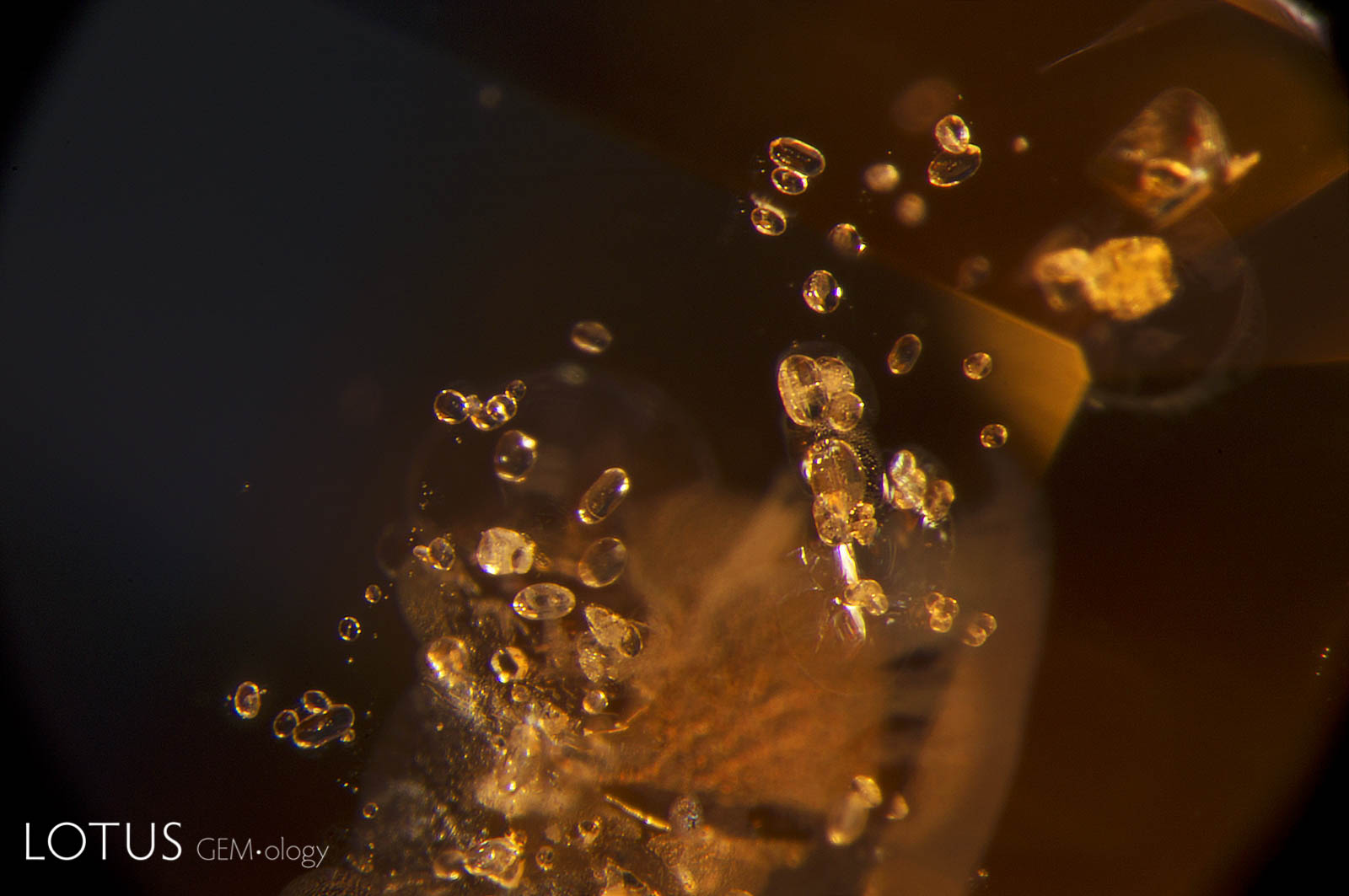
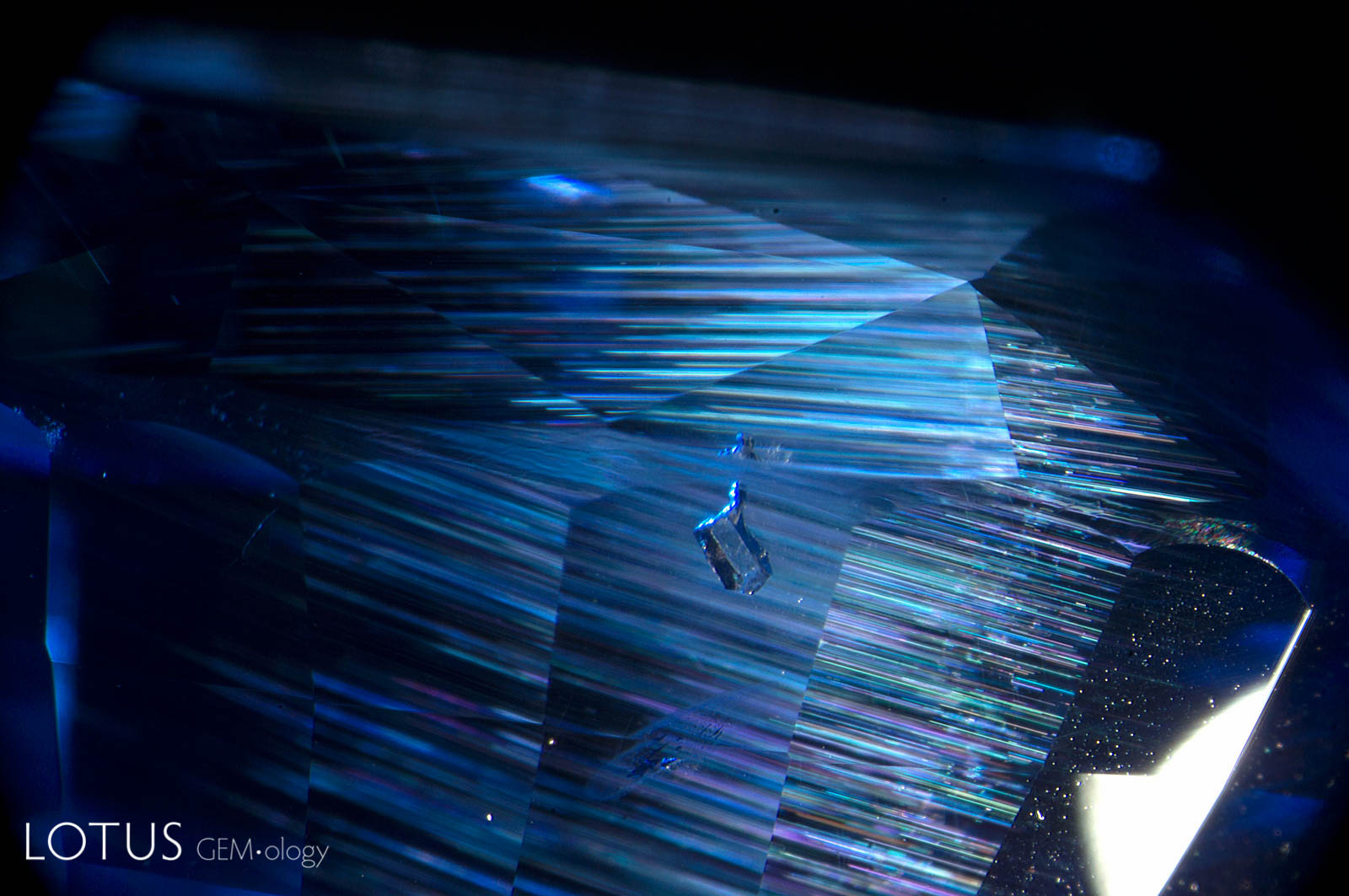
Crystals of what are probably apatite in a heated bi-color sapphire from Sri Lanka.
Natural Sapphire •
Sri Lanka (Ceylon) •
Enhancements:
Heat (H) •
Lighting Conditions:
Fiber Optic: Oblique
Photographer:
Wimon Manorotkul •
Image Number:
A-010-0150-1
Hughes, R.W. (1997) Ruby & Sapphire. Boulder, CO, RWH Publishing, 512 pp.; RWHL*.
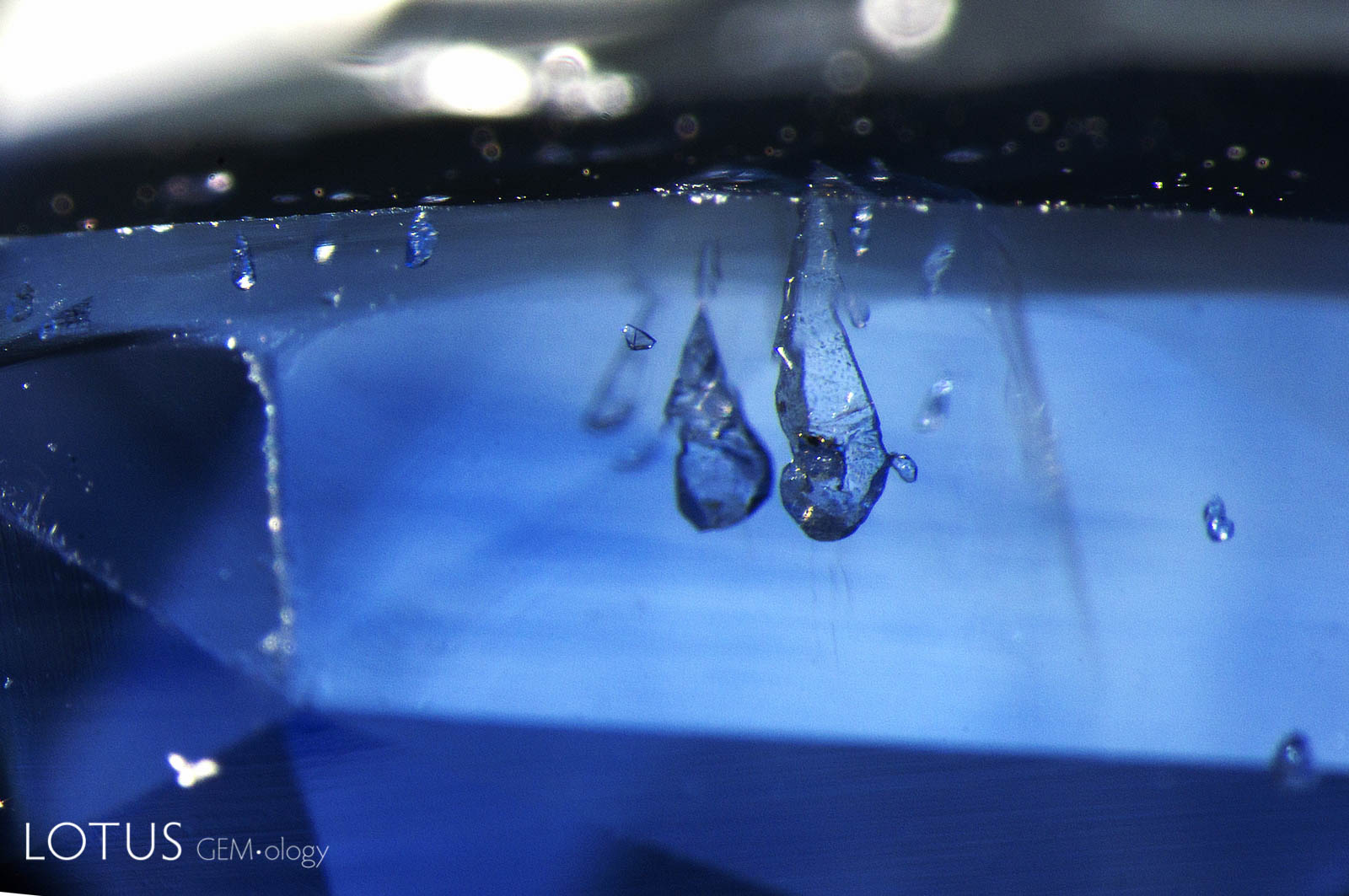
Negative crystals seeking the surface in this natural Sri Lanka sapphire. In many cases, negative crystals cannot withstand high-temperature heating and so when they are found in an undamaged state, represent strong indications that the gem has not undergone heat treatment.
Natural Sapphire •
Sri Lanka (Ceylon) •
Enhancements:
None Detected (None) •
Lighting Conditions:
Fiber Optic: Transmitted
Photographer:
Wimon Manorotkul •
Image Number:
P-10135-1
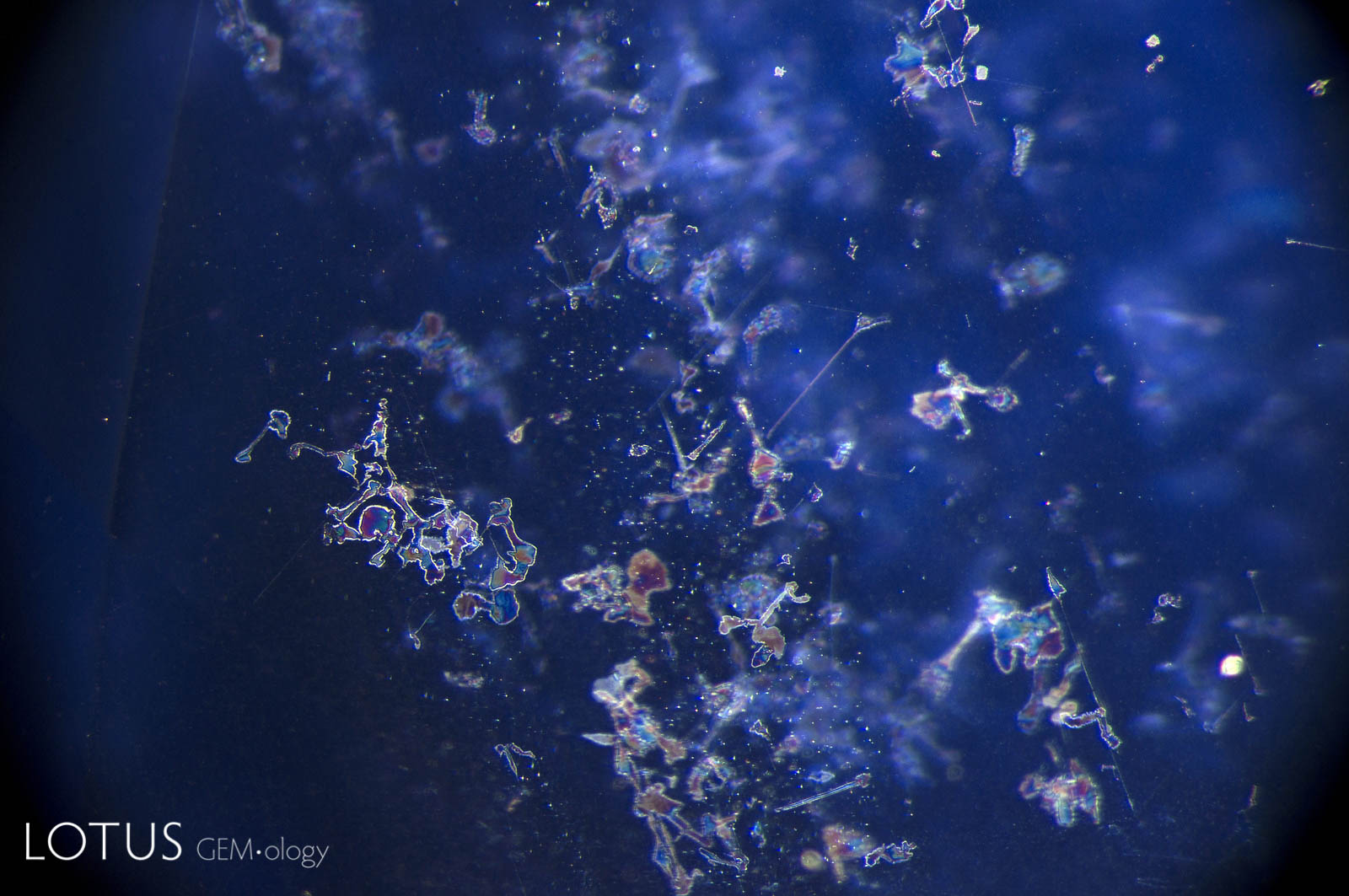
Irregular inclusions of unknown nature lying in the basal plane are seen in reflected light within this heat-treated Sri Lanka sapphire. These have sometimes been associated with beryllium diffusion, but are not diagnostic for it.
Natural Sapphire •
Sri Lanka (Ceylon) •
Enhancements:
Heat (H) •
Lighting Conditions:
Fiber Optic: Diffuse Overhead
Photographer:
Richard W. Hughes •
Image Number:
P-10129-1
http://www.ruby-sapphire.com/beryllium-treated-blue-sapphire.htm
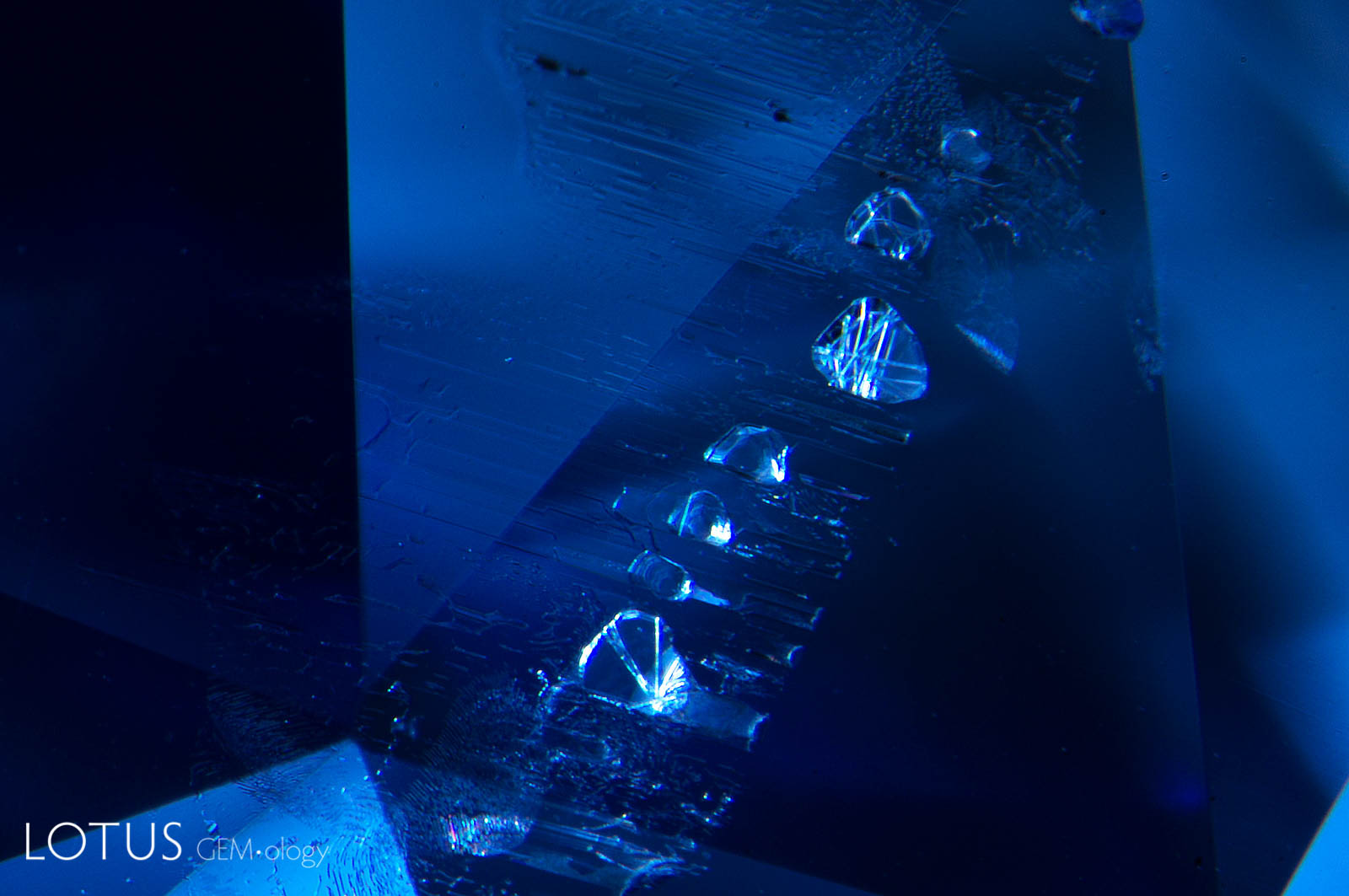
Tiny diaspore needles are seen within negative crystals in this natural Ceylon sapphire.
Natural Sapphire •
Sri Lanka (Ceylon) •
Enhancements:
None Detected (None) •
Lighting Conditions:
Fiber Optic: Oblique
Photographer:
Wimon Manorotkul •
Image Number:
P-10091-1
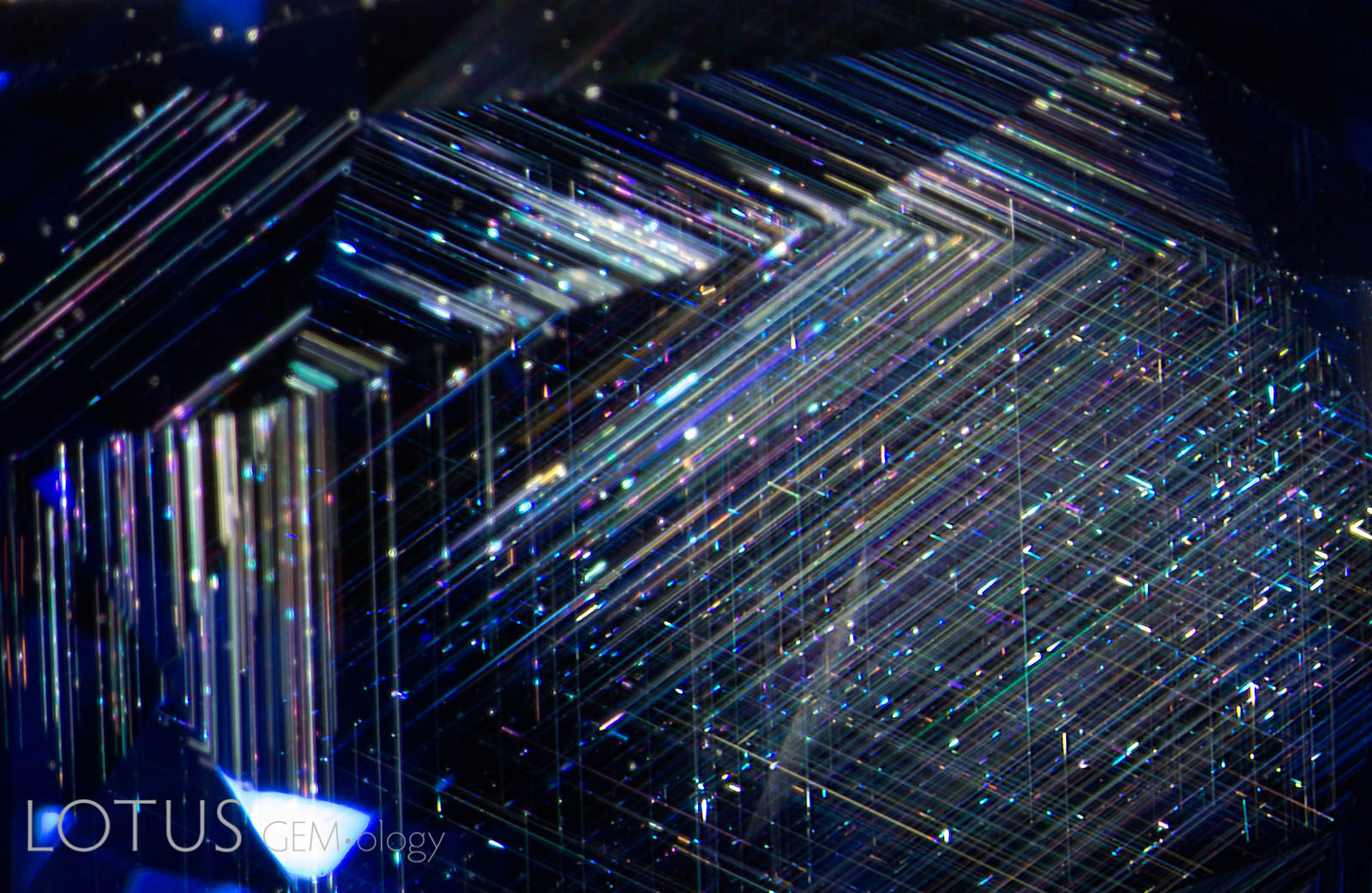
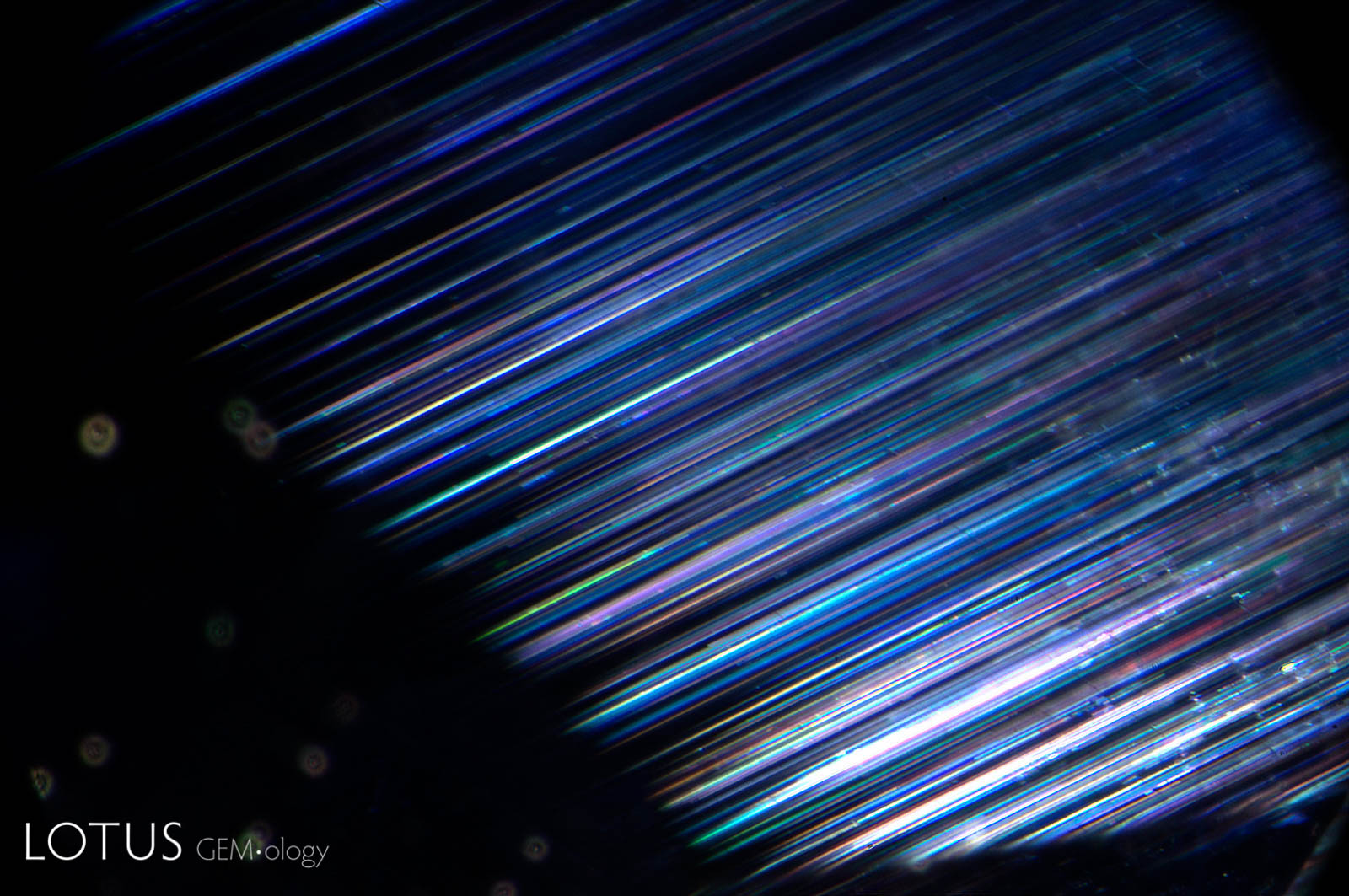
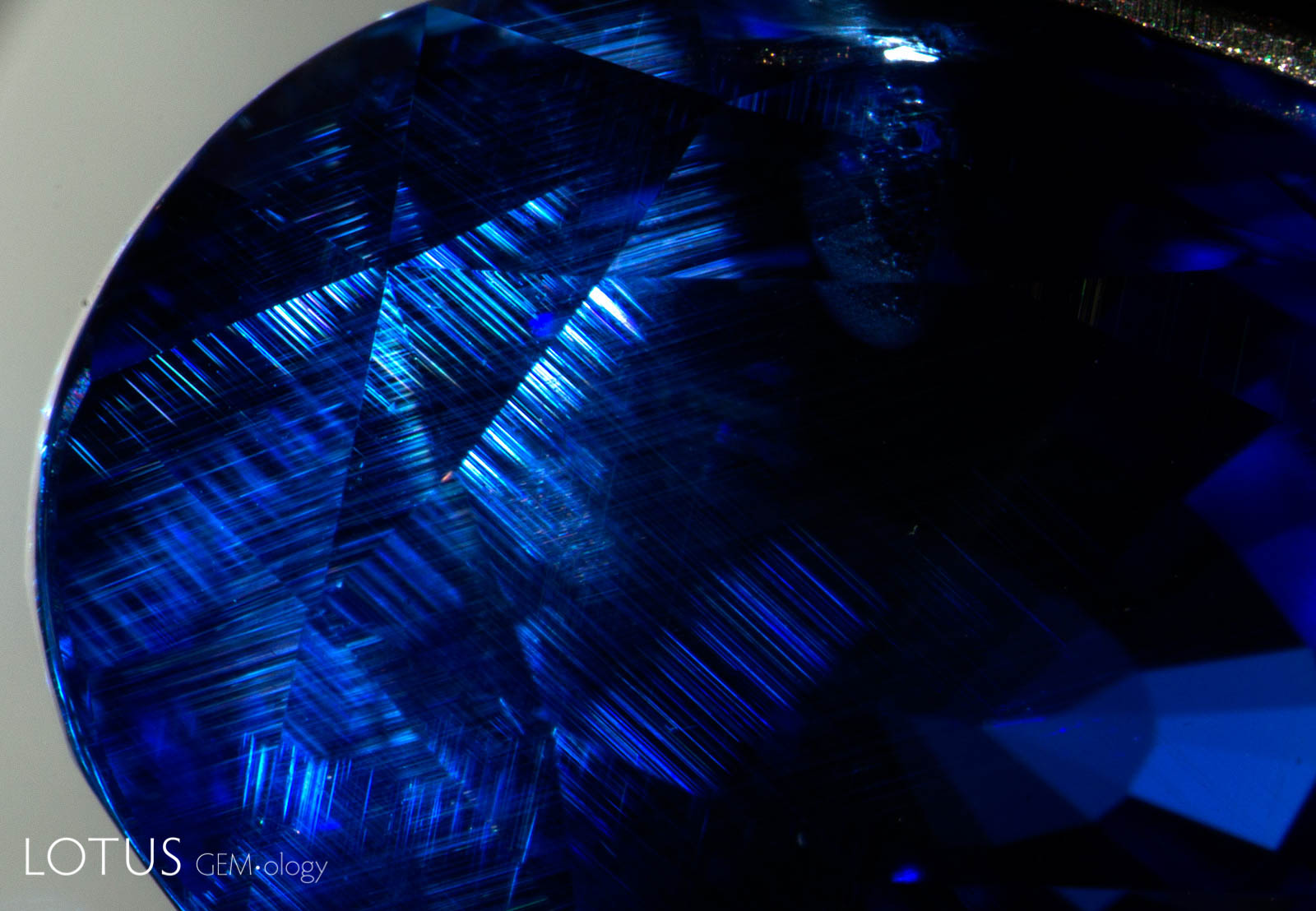
Exsolved rutile silk in Ceylon blue sapphire. The rutile unmixes in three directions at 60/120° in the plane of the basal pinacoid.
Natural Sapphire •
Sri Lanka (Ceylon) •
Enhancements:
None Detected (None) •
Lighting Conditions:
Photographer:
Wimon Manorotkul •
Image Number:
P-10018-1
Exsolved rutile silk in Ceylon blue sapphire. The rutile unmixes in three directions at 60/120° in the plane of the basal pinacoid.
Natural Sapphire •
Sri Lanka (Ceylon) •
Enhancements:
None Detected (None) •
Lighting Conditions:
Photographer:
Wimon Manorotkul •
Image Number:
P-10018-2
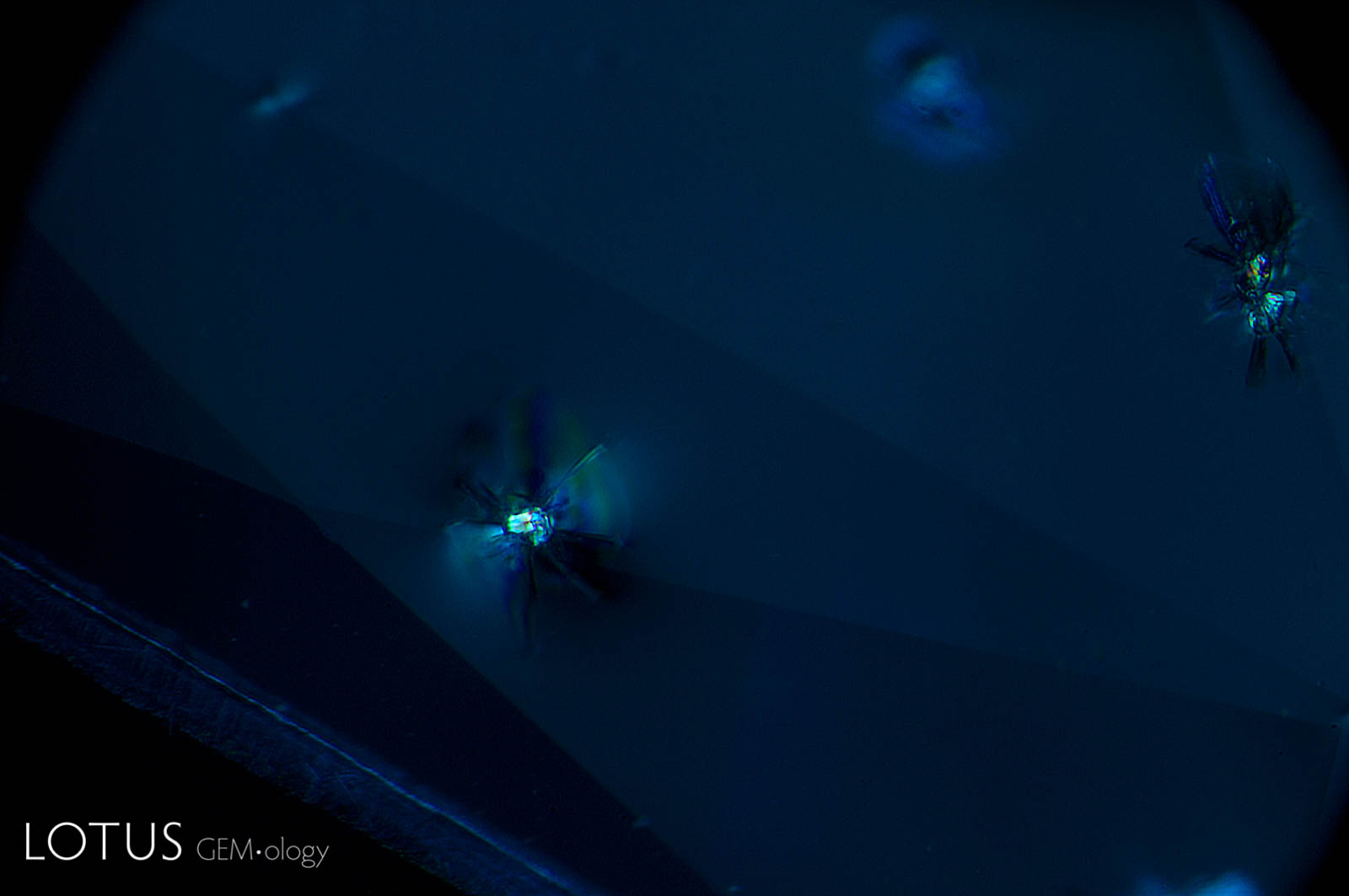
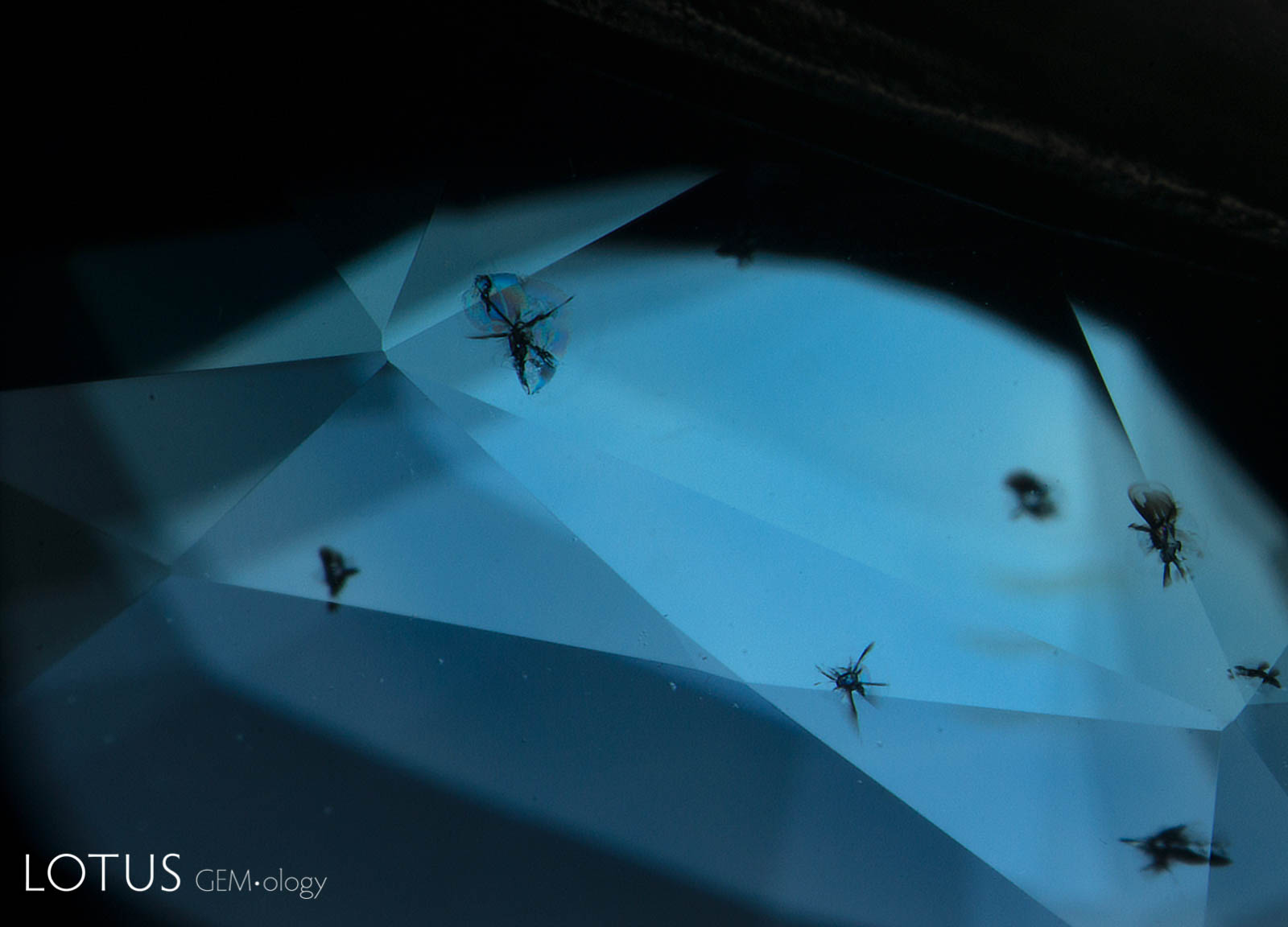
Resembling small flying insects, zircon crystals with radiation-induced stress halos are a common feature in Ceylon sapphires.
Natural Sapphire •
Sri Lanka (Ceylon) •
Enhancements:
None Detected (None) •
Lighting Conditions:
Fiber Optic: Oblique
Photographer:
Wimon Manorotkul •
Image Number:
P-10029-2
Resembling small flying insects, zircon crystals with radiation-induced stress halos are a common feature in Ceylon sapphires.
Natural Sapphire •
Sri Lanka (Ceylon) •
Enhancements:
None Detected (None) •
Lighting Conditions:
Fiber Optic: Transmitted
Photographer:
Wimon Manorotkul •
Image Number:
P-10029-1
Exsolved rutile silk in Ceylon blue sapphire. The rutile unmixes in three directions at 60/120° in the plane of the basal pinacoid.
Natural Sapphire •
Sri Lanka (Ceylon) •
Enhancements:
None Detected (None) •
Lighting Conditions:
Fiber Optic: Oblique
Photographer:
Wimon Manorotkul •
Image Number:
P-10018-4
Exsolved rutile silk in Ceylon blue sapphire. The rutile unmixes in three directions at 60/120° in the plane of the basal pinacoid.
Natural Sapphire •
Sri Lanka (Ceylon) •
Enhancements:
None Detected (None) •
Lighting Conditions:
Fiber Optic: Oblique
Photographer:
Wimon Manorotkul •
Image Number:
P-10018-3
Search the Complete Hyperion Database
Ceylon sapphire inclusions may include mineral crystals, rutile silk, healed fissures, fluid inclusions, negative crystals, growth features and other internal features formed during or after crystal growth. Such features are important to gemologists because they can provide evidence useful in identifying sapphire and evaluating a possible Sri Lankan origin.
Ceylon Sapphire Inclusion Photomicrographs
The Hyperion Ceylon sapphire gallery includes microscopic features documented in sapphires from Sri Lanka (Ceylon). Each entry is accompanied by descriptive information and, where available, references to the gemological literature.
What Inclusions Can Reveal About Ceylon Sapphire
Inclusions are an important part of geographic origin determination in sapphire. Their form, composition, orientation and associations can provide evidence that, when considered together with other gemological properties, may support or contradict a Sri Lankan origin.
Hyperion combines inclusion photomicrography with supporting gemological information so that individual features can be compared with documented examples from Ceylon sapphires.
About Hyperion
Hyperion is the Lotus Gemology searchable inclusion database. It allows users to browse gemstone inclusions by gem type, geographic origin, treatment and keyword.