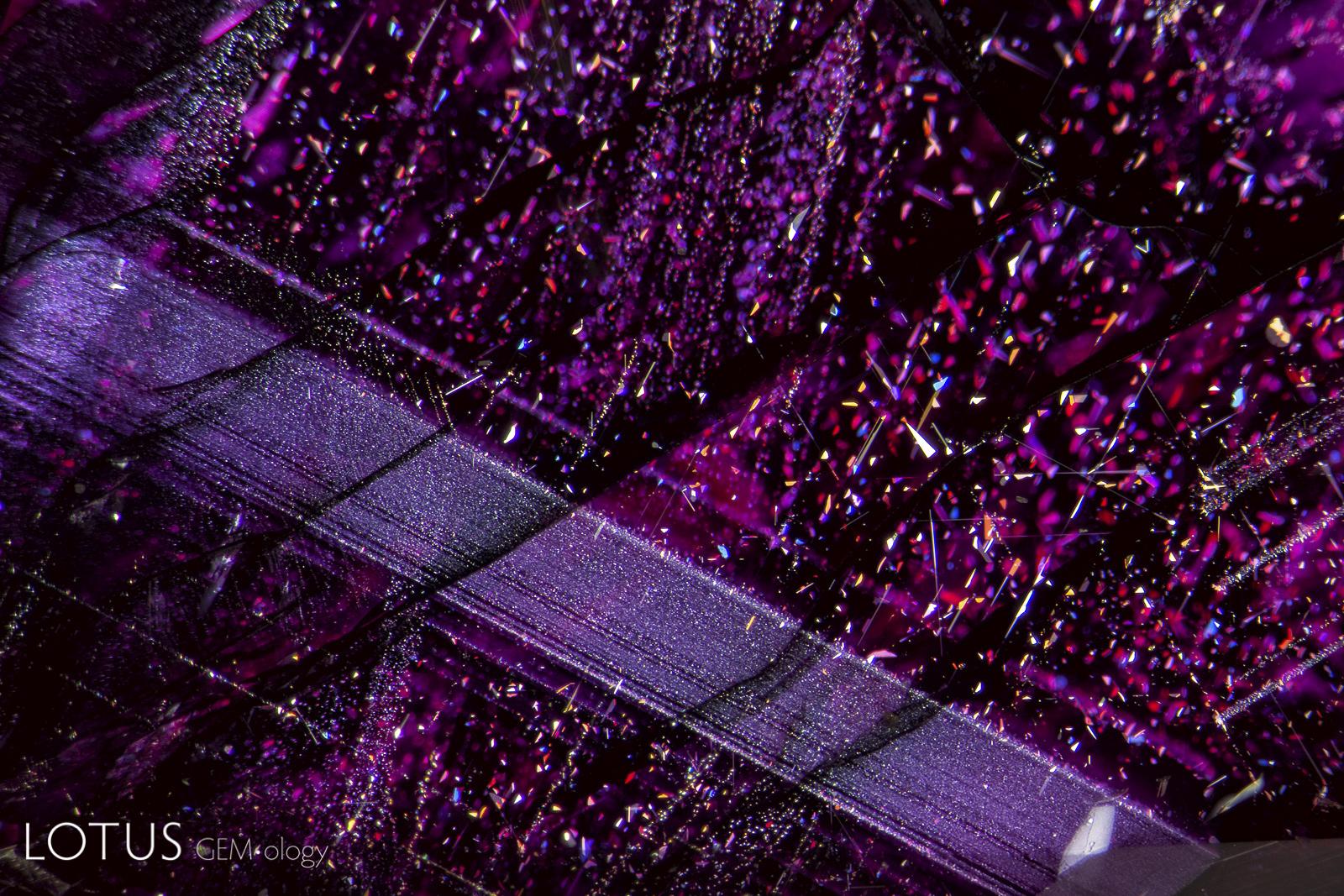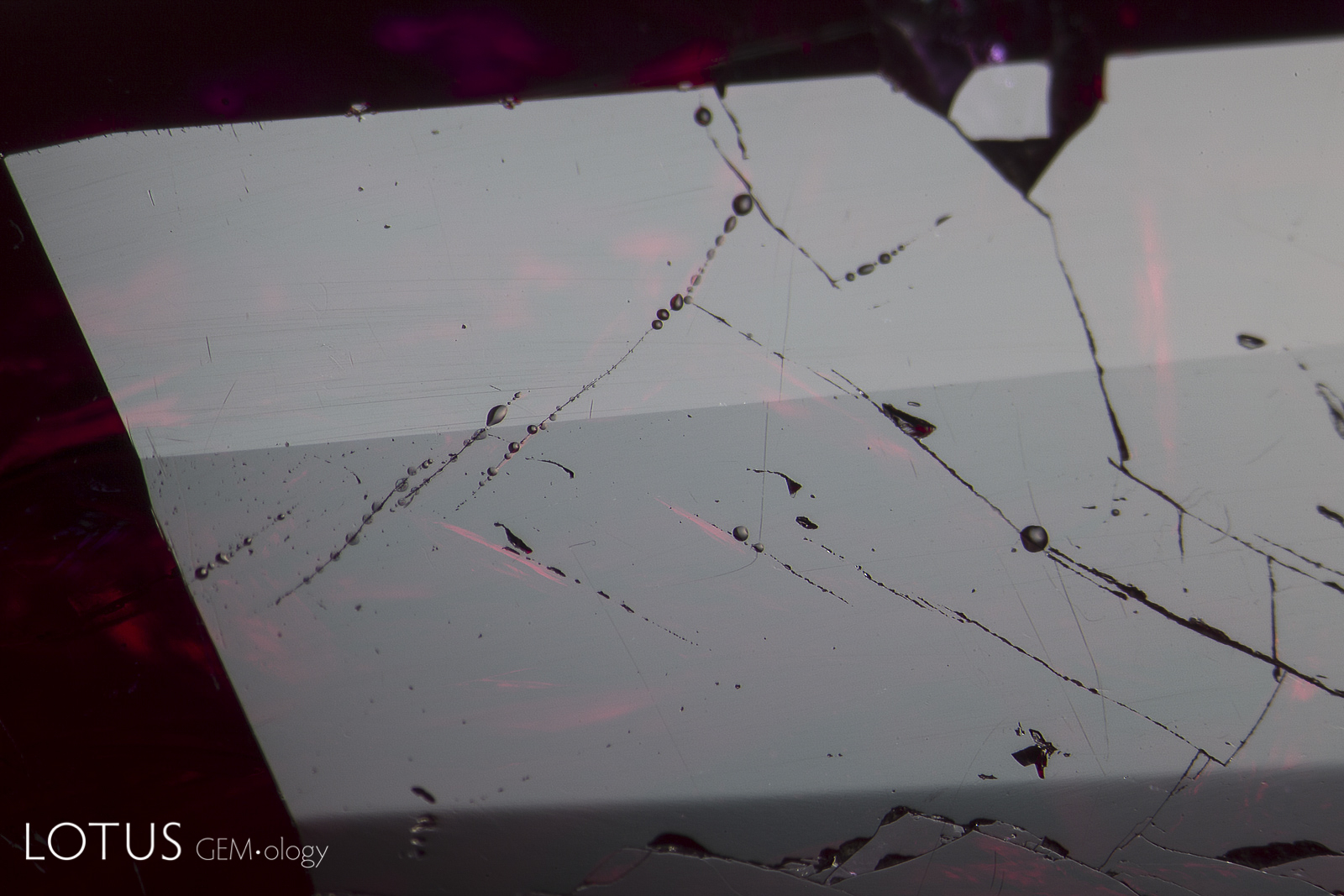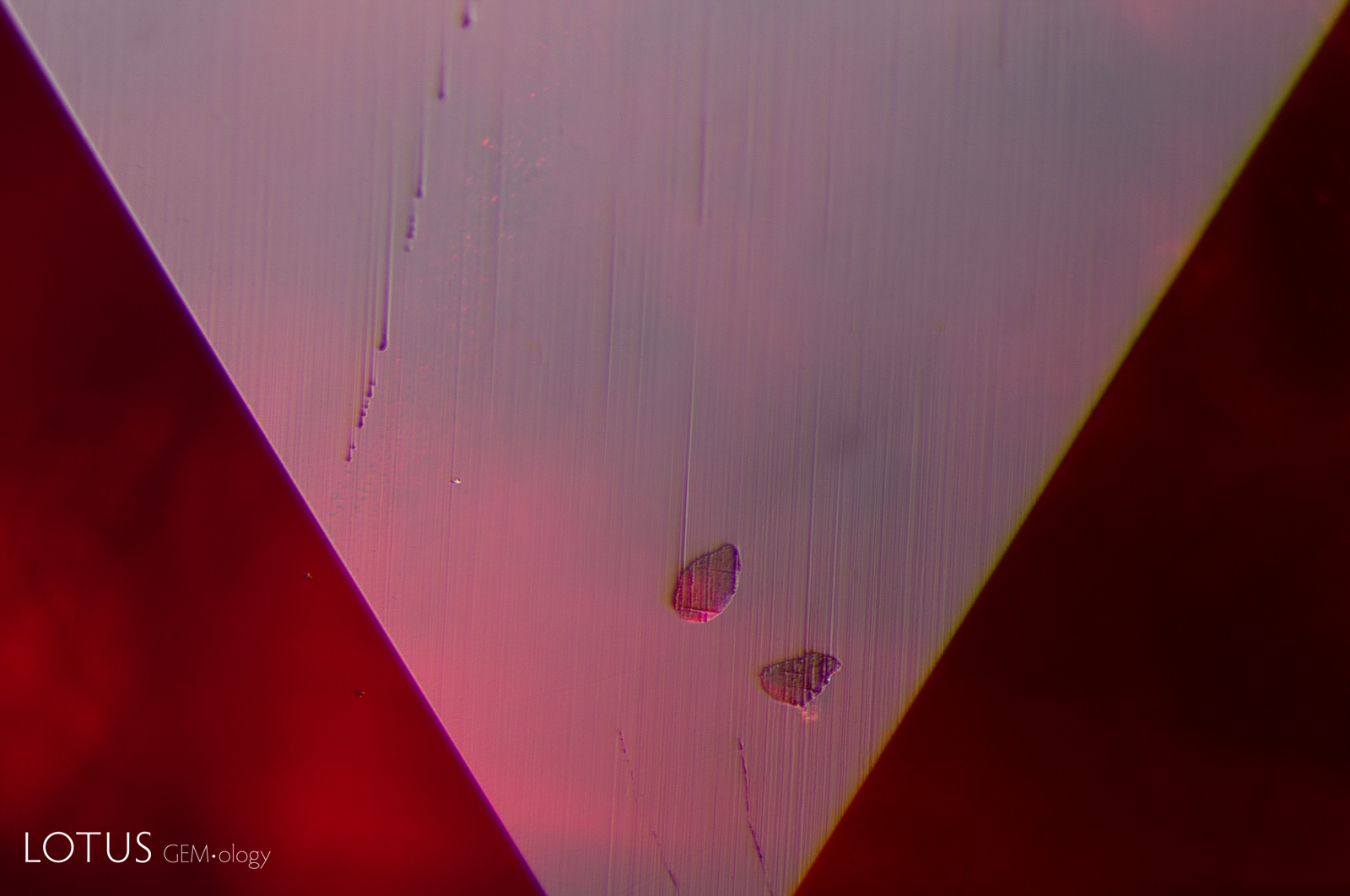
Natural Ruby Inclusions
Explore ruby inclusions in Hyperion, the Lotus Gemology inclusion database. Hyperion contains photomicrographs of inclusions and internal features in natural ruby, documented with information on geographic origin, treatment, lighting conditions, field of view, photographer and published references.
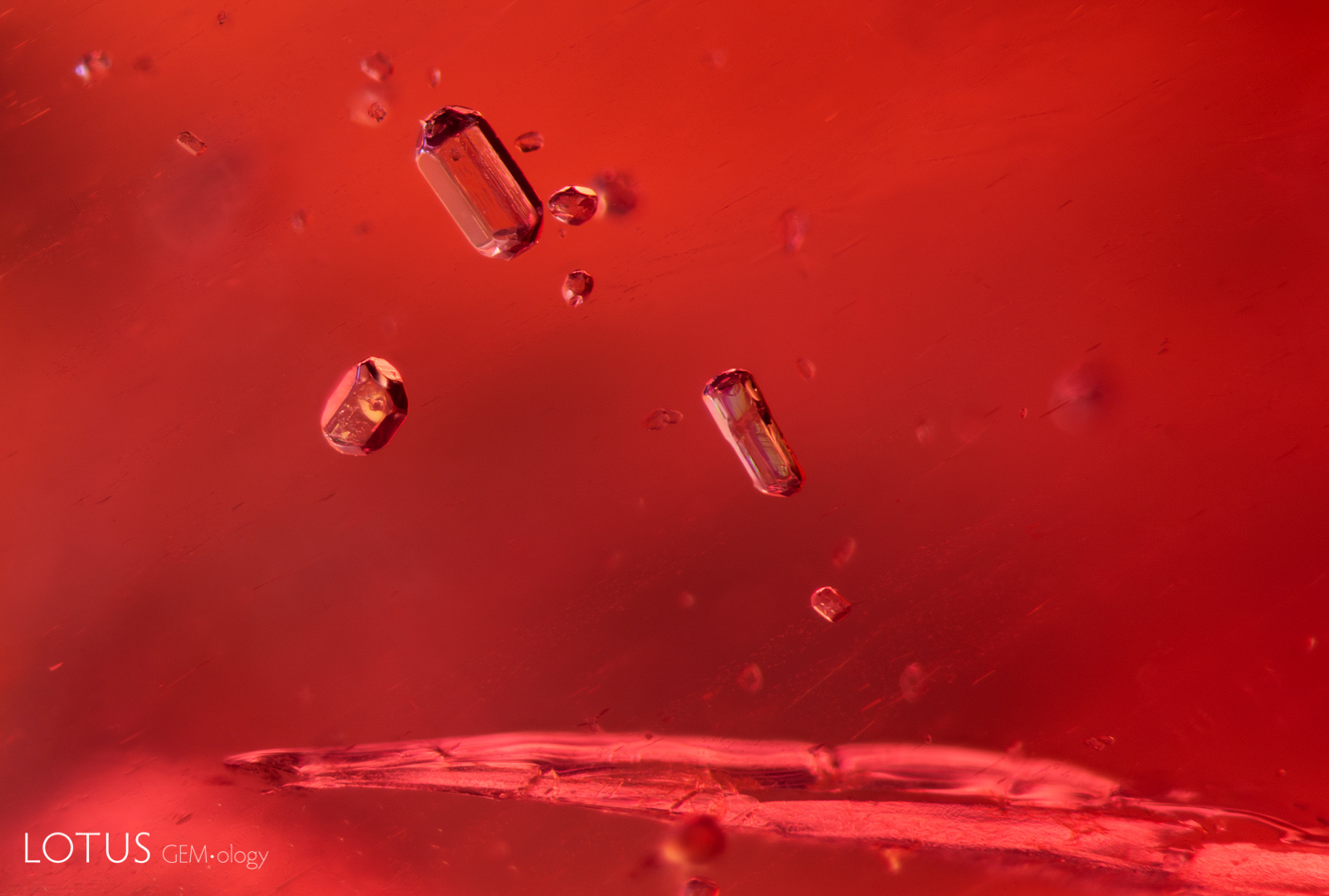
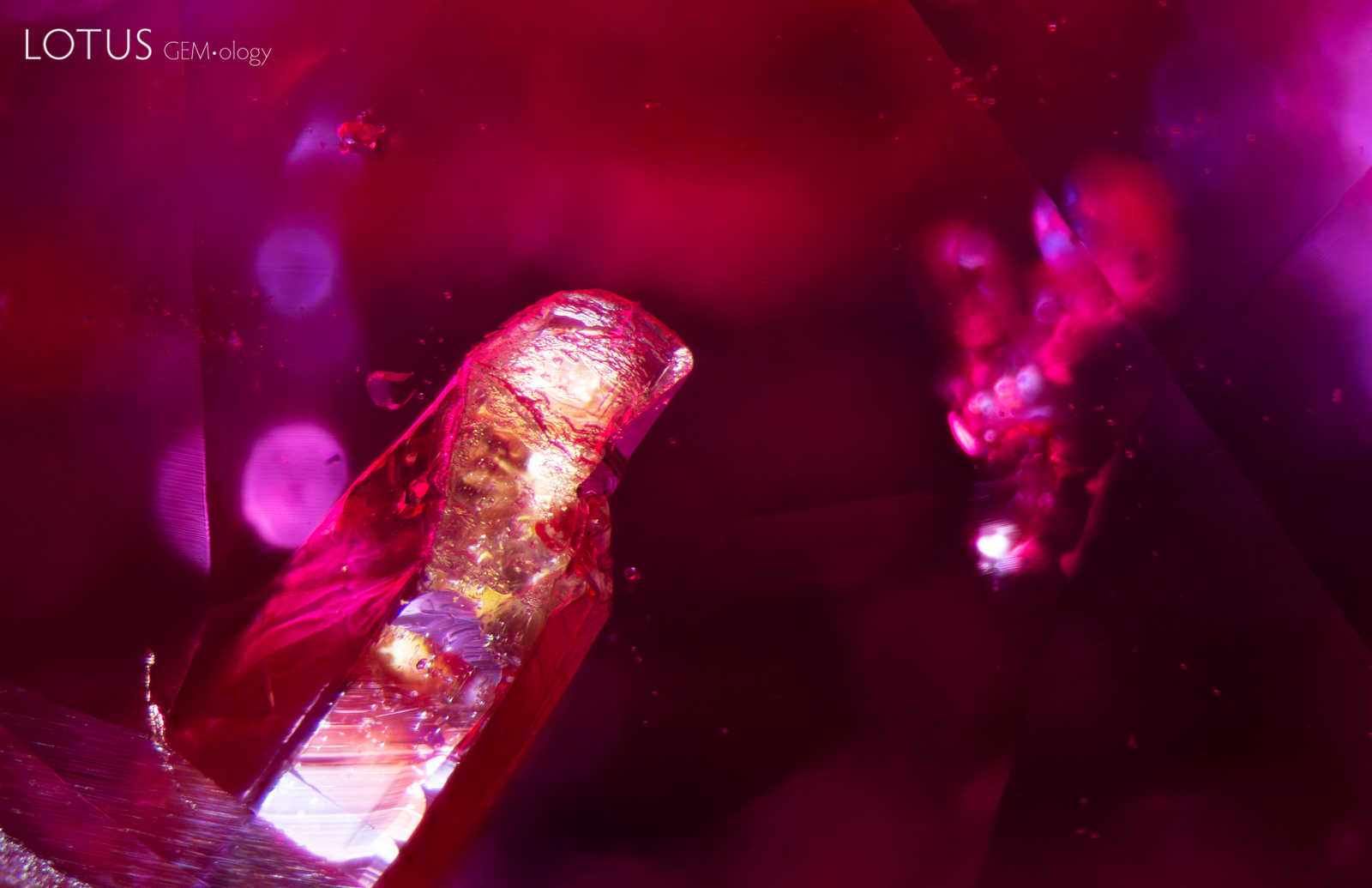
This East African ruby contains several prismatic apatite crystals.
Natural Ruby •
East Africa •
Enhancements:
None Detected (None) •
Lighting Conditions:
Dark Field + Diffuse Fiber Optic
Photographer:
E. Billie Hughes •
Image Number:
A-004-1161-1
• Field of View = 3mm
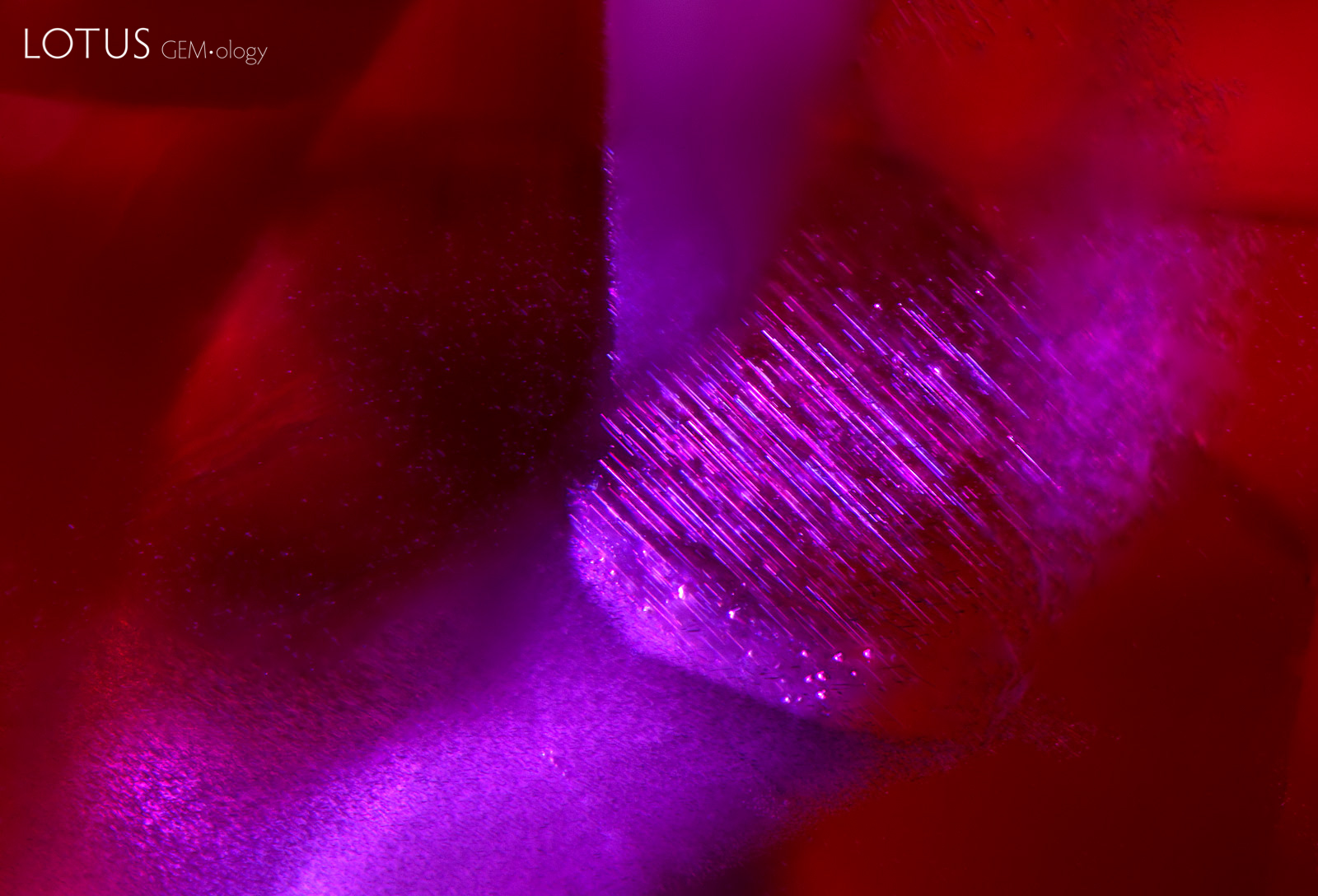
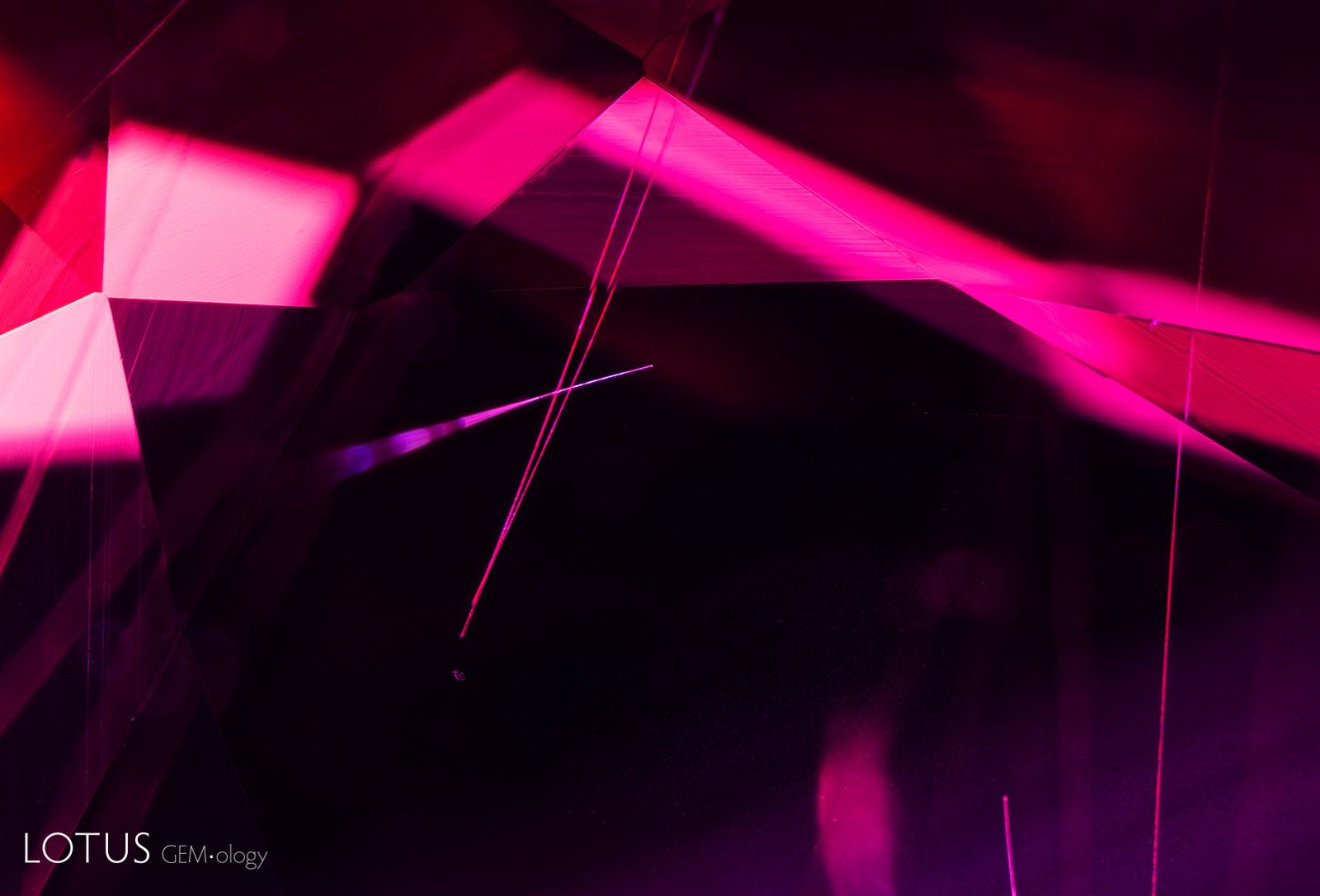
A dusting of rutile silk needles appears to glide inside this ruby from Mogok, Myanmar (Burma).
Natural Ruby •
Myanmar (Burma); Mogok/Namya •
Enhancements:
None Detected (None) •
Lighting Conditions:
Fiber Optic: Oblique
Photographer:
Wimon Manorotkul •
Image Number:
A-004-1095-2
• Field of View = 3mm
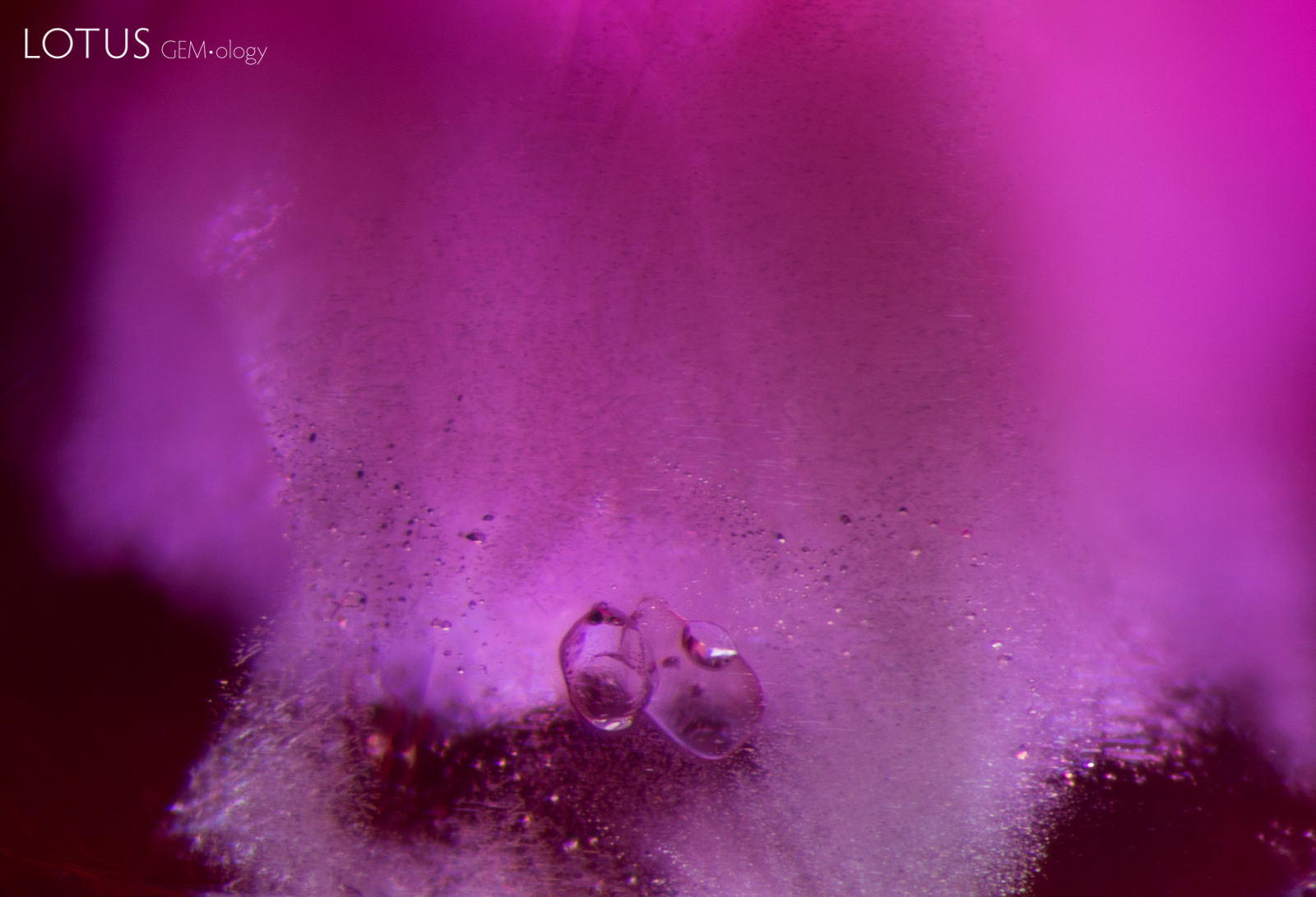
Two small transparent crystals are nestled in a dense cloud of rutile silk. Micro Raman identified the crystal on the left as apatite and the one on the right as titanite (sphene).
Natural Ruby •
Myanmar (Burma); Mogok/Namya •
Enhancements:
None Detected (None) •
Lighting Conditions:
Dark Field + Diffuse Fiber Optic
Photographer:
E. Billie Hughes •
Image Number:
A-004-1095-1
• Field of View = 1.5mm
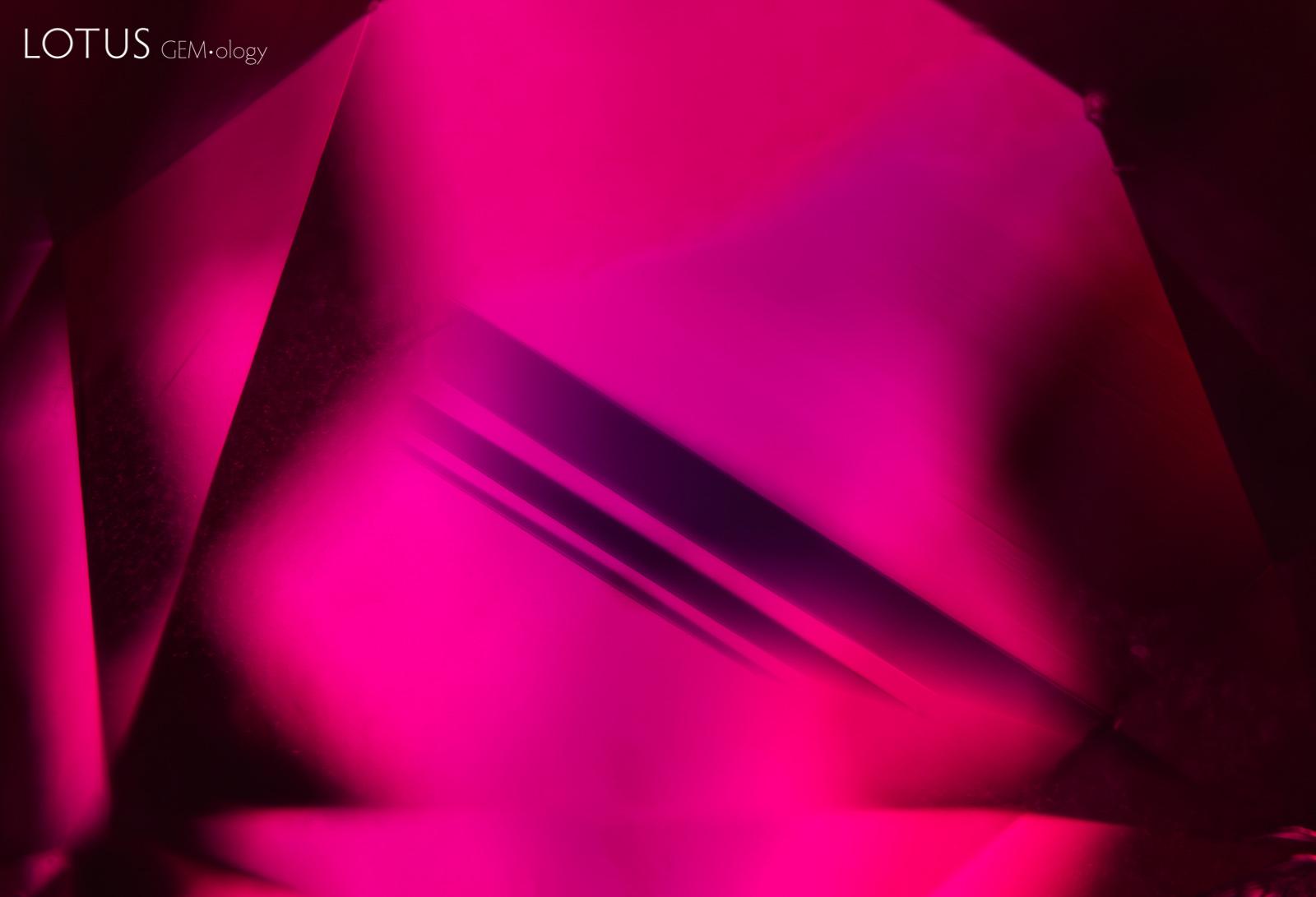
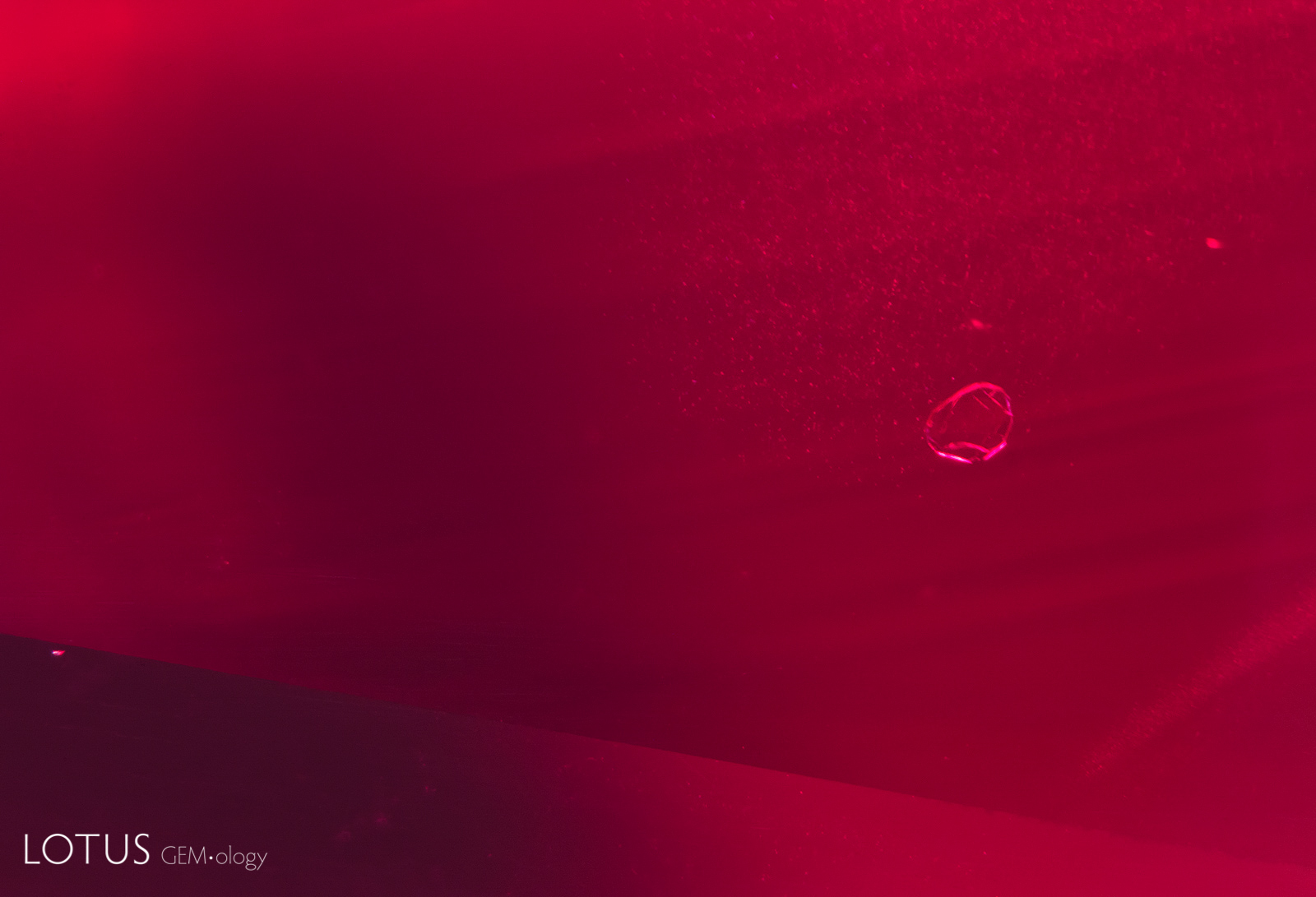
Like Mother Nature’s brush strokes, blue color zones are visible in this ruby from Mong Hsu, Myanmar (Burma).
Natural Ruby •
Myanmar (Burma); Mong Hsu •
Enhancements:
None Detected (None) •
Lighting Conditions:
Light Field (Transmitted Light)
Photographer:
E. Billie Hughes •
Image Number:
A-004-1096-1
• Field of View = 3.5mm
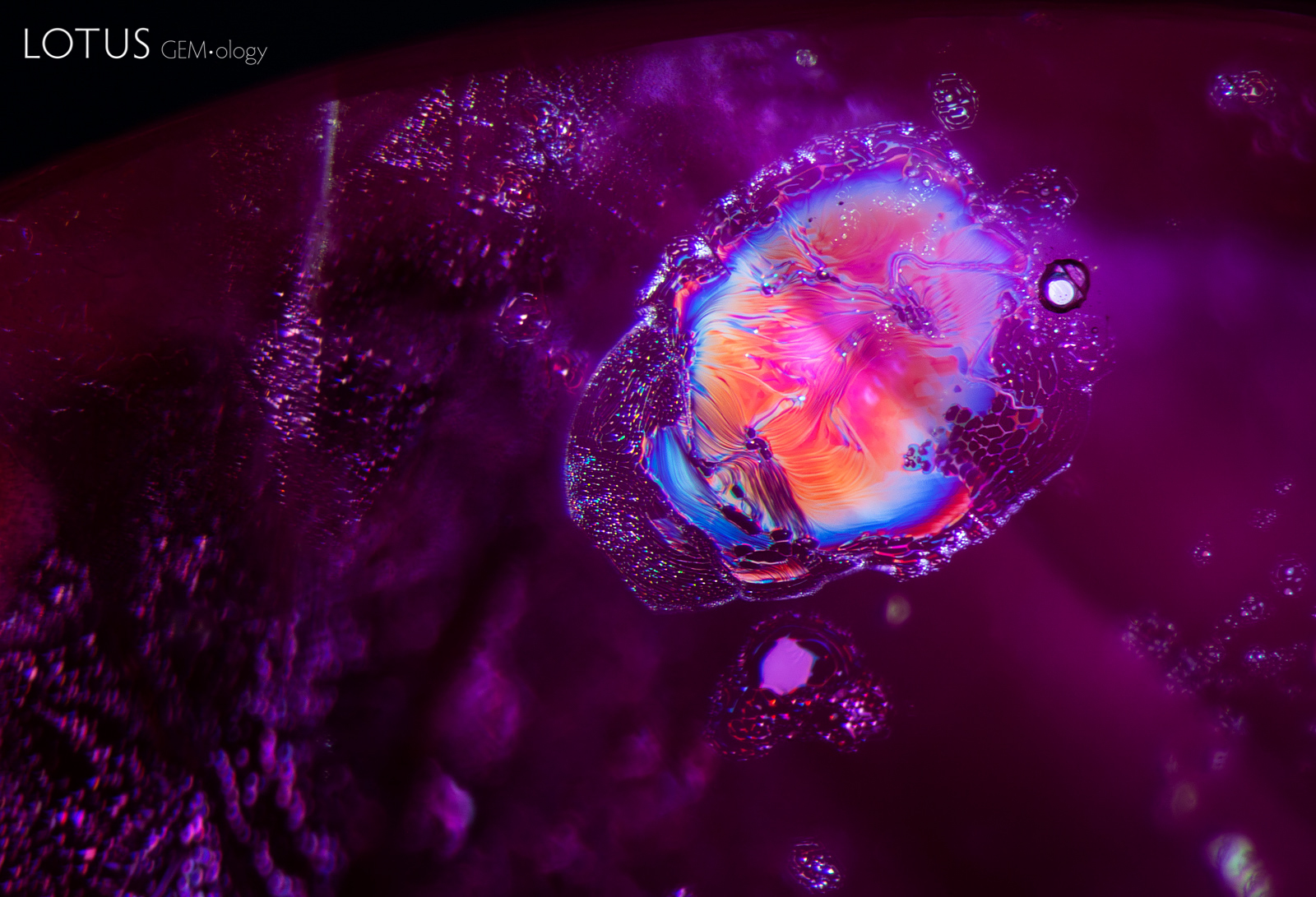
A small melted crystal and associated thin film inclusion dazzle with color when lit with fiber optic illumination. Inclusions like these are typical in Thai/Cambodian ruby.
Natural Ruby •
Thailand/Cambodia •
Enhancements:
Heat + Fissure Healing (H-FH) •
Lighting Conditions:
Fiber Optic: Diffuse Oblique
Photographer:
E. Billie Hughes •
Image Number:
A-004-1087-1
• Field of View = 2.5mm
The pictured Madagascar ruby contains a prismatic yellow crystal. Micro Raman analysis identified this as apatite. Apatite is found in corundum from many localities.
Natural Ruby •
Madagascar •
Enhancements:
None Detected (None) •
Lighting Conditions:
Dark Field + Diffuse Fiber Optic
Photographer:
E. Billie Hughes •
Image Number:
A-004-0167-1
• Field of View = 2.5mm
Growth tubes like these can often be spotted in rubies from Tanzania’s Winza region. Note also the fine, zoned particle clouds in the corner.
Natural Ruby •
Tanzania; Winza •
Enhancements:
None Detected (None) •
Lighting Conditions:
Dark Field + Diffuse Fiber Optic
Photographer:
E. Billie Hughes •
Image Number:
A-004-0124-3
• Field of View = 4.5mm
A small, transparent crystal stands out next to a light dusting of silk in this Mozambique ruby.
Natural Ruby •
Mozambique •
Enhancements:
None Detected (None) •
Lighting Conditions:
Dark Field + Oblique Fiber Optic
Photographer:
E. Billie Hughes •
Image Number:
A-003-9765-1
• Field of View = 4.5mm
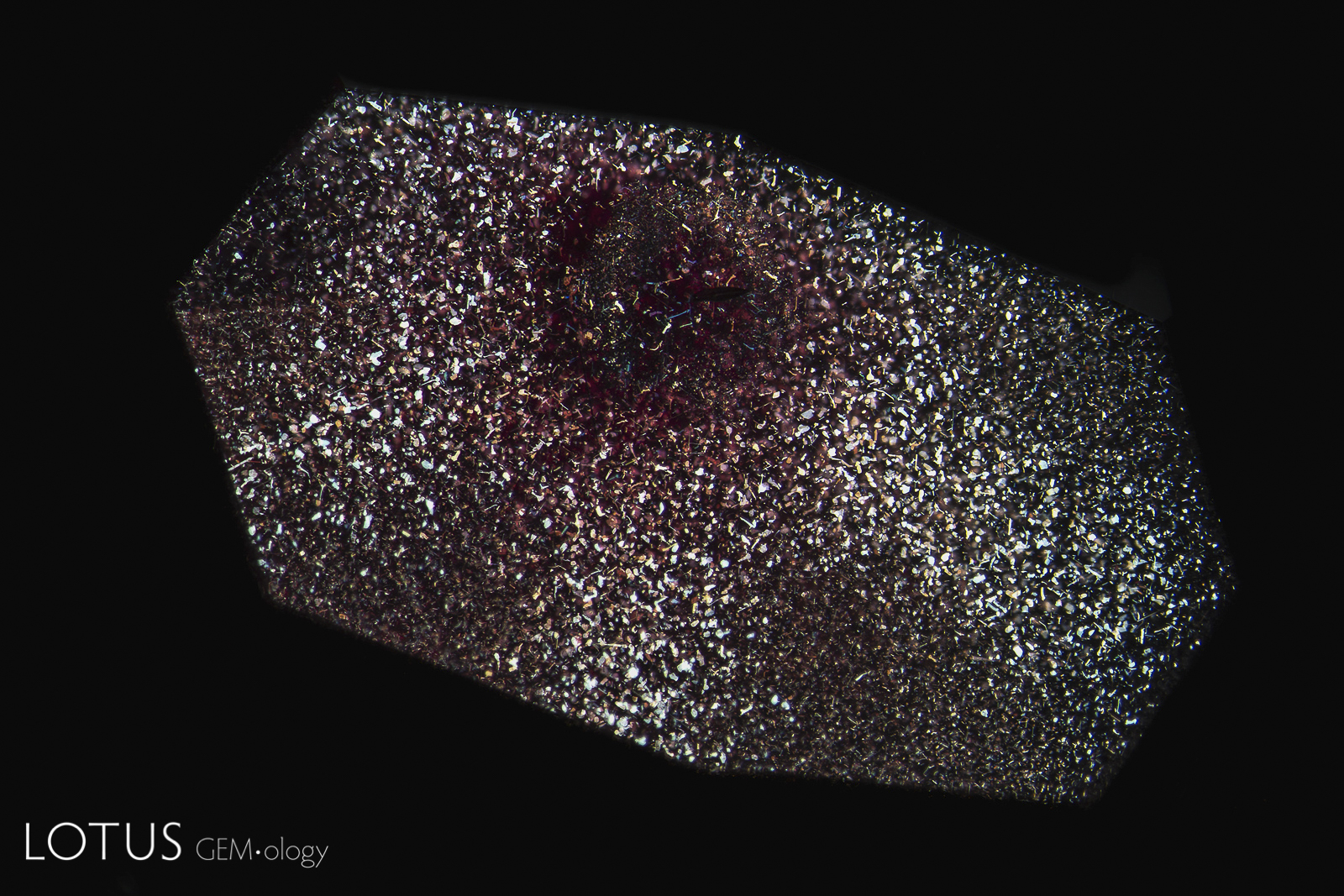
This sapphire from East Africa displayed an unusual trapiche-like pattern in reflected light. This was created by exsolution of Fe-rich silk.
Natural Ruby •
East Africa •
Enhancements:
None Detected (None) •
Lighting Conditions:
Fiber Optic: Diffuse Overhead
Photographer:
Richard W. Hughes •
Image Number:
A-003-9606-1
• Field of View = 7mm
Rutile silk takes on a beguiling number of forms in this ruby from Mozambique, everything from fine particles to arrow-shaped darts.
Natural Ruby •
Mozambique •
Enhancements:
None Detected (None) •
Lighting Conditions:
Fiber Optic: Diffuse Overhead
Photographer:
Richard W. Hughes •
Image Number:
A-003-9536-1
• Field of View = 4mm
The oiling of gems to improve their appearance is a treatment we see with increasing frequency, particularly with gems originating in Myanmar. Here is a Mogok ruby that shows oil leaking from the fissures following a few minutes contact with the hot point.
Natural Ruby •
Myanmar (Burma); Mogok/Namya •
Enhancements:
Fissure Filling with colorless Oil/resin (FF-O2); No indications of heating (No indications of heating) •
Lighting Conditions:
Fiber Optic: Diffuse Overhead + Dark Field
Photographer:
Richard W. Hughes •
Image Number:
A-003-8626-1
• Field of View = 10mm
Lotus Gemology (2015) Lotus Gemology Lab Alert for Oiled Gems. Bangkok, LotusGemology.com, RWHL*.
Two calcite crystals (whose identity was confirmed with micro Raman) are cut through on the surface of this ruby from Afghanistan.
Natural Ruby •
Afghanistan; Jegdalek •
Enhancements:
None Detected (None) •
Lighting Conditions:
Dark Field + Diffuse Fiber Optic
Photographer:
E. Billie Hughes •
Image Number:
A-003-8455-2
• Field of View = 2mm
Search the Complete Hyperion Database
Natural ruby inclusions may include mineral crystals, rutile silk, healed fissures, fluid inclusions, negative crystals, color zoning and other features formed during or after crystal growth. Such features are important to gemologists because they can provide evidence useful in identifying ruby, understanding its geological history, recognizing treatment and, in some cases, determining geographic origin.
Natural Ruby Inclusion Photomicrographs
The Hyperion natural ruby gallery includes microscopic features found in rubies from major deposits around the world. Each entry is accompanied by descriptive information and, where available, references to the gemological literature.
What Inclusions Can Reveal About Natural Ruby
Inclusions are an important part of ruby identification. Their form, composition, orientation and alteration can help gemologists distinguish natural ruby from synthetic material, recognize evidence of heat treatment, and study the geological environment in which the ruby formed.
Hyperion combines inclusion photomicrography with supporting gemological information so that individual features can be compared with documented examples from known ruby deposits.
About Hyperion
Hyperion is the Lotus Gemology searchable inclusion database. It allows users to browse gemstone inclusions by gem type, geographic origin, treatment and keyword.