Natural Ruby Inclusions
Explore ruby inclusions in Hyperion, the Lotus Gemology inclusion database. Hyperion contains photomicrographs of inclusions and internal features in natural ruby, documented with information on geographic origin, treatment, lighting conditions, field of view, photographer and published references.
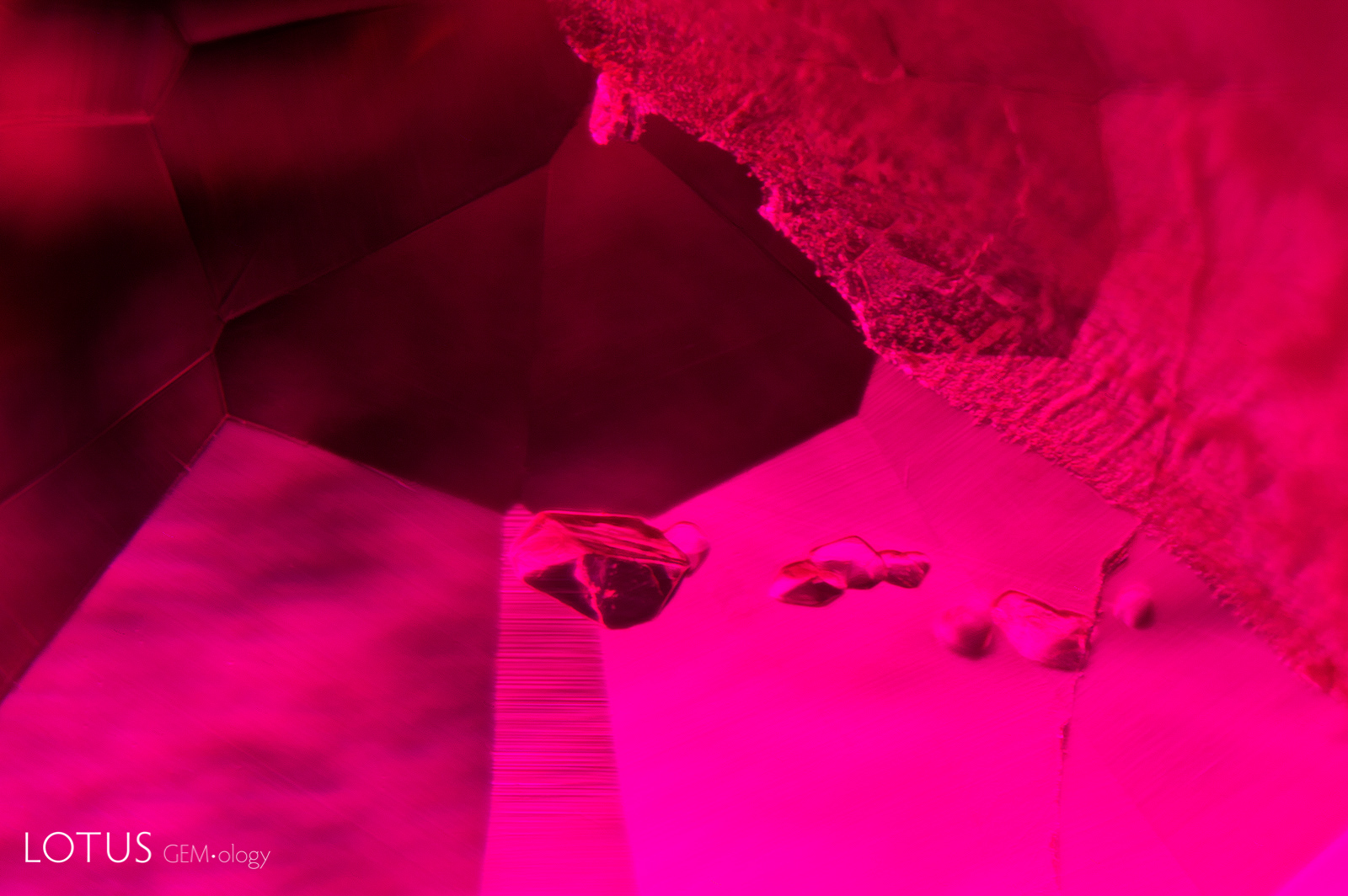
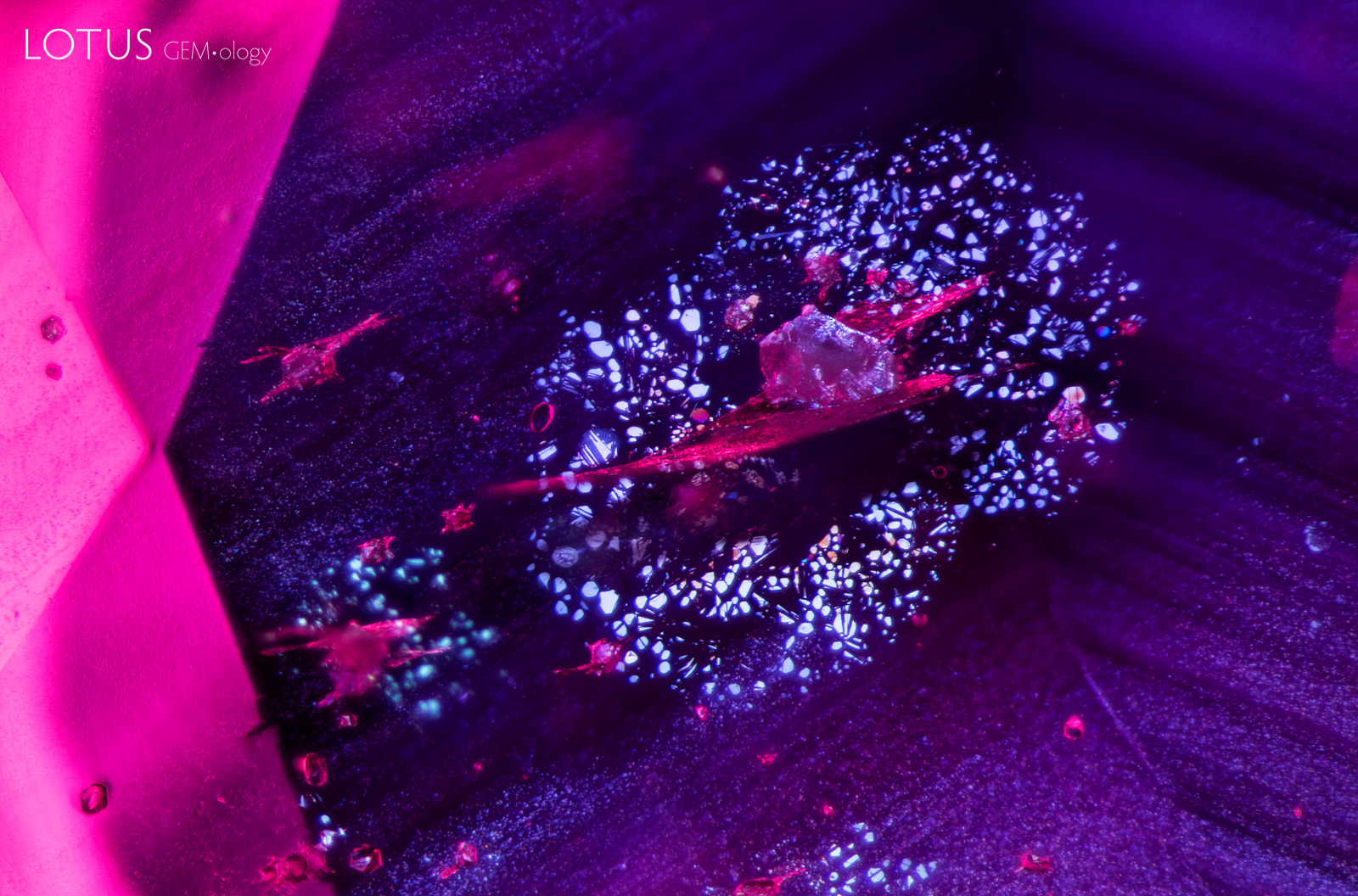
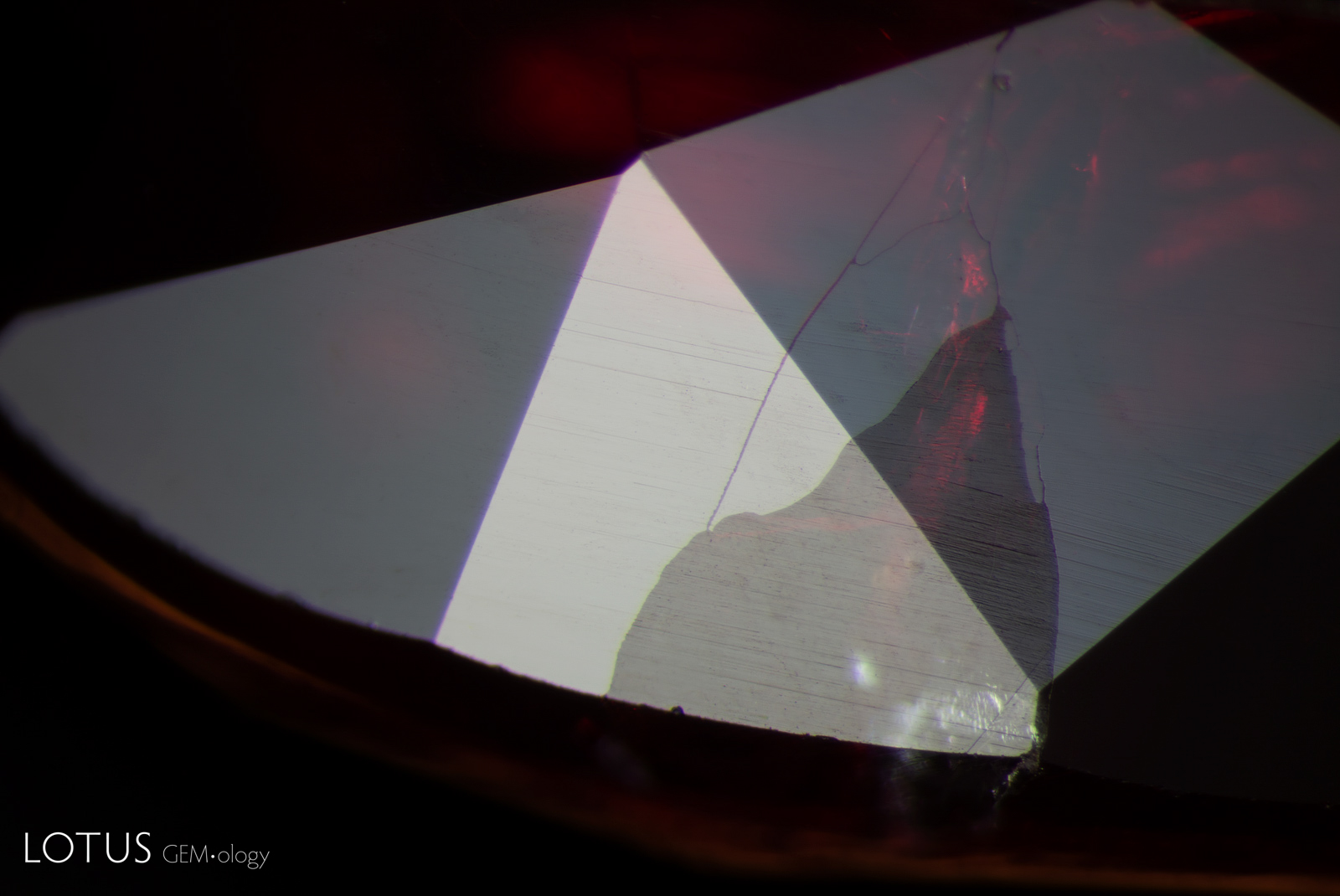
A cluster of mica crystals (identified with micro Raman) was cut through on the surface of this Mong Hsu ruby. Note the cottony diaspore silk that can be seen in the background, which is typical of material from this origin.
Natural Ruby •
Myanmar (Burma); Mong Hsu •
Enhancements:
None Detected (None) •
Lighting Conditions:
Dark Field + Diffuse Fiber Optic
Photographer:
E. Billie Hughes •
Image Number:
A-003-7973-1
• Field of View = 3mm
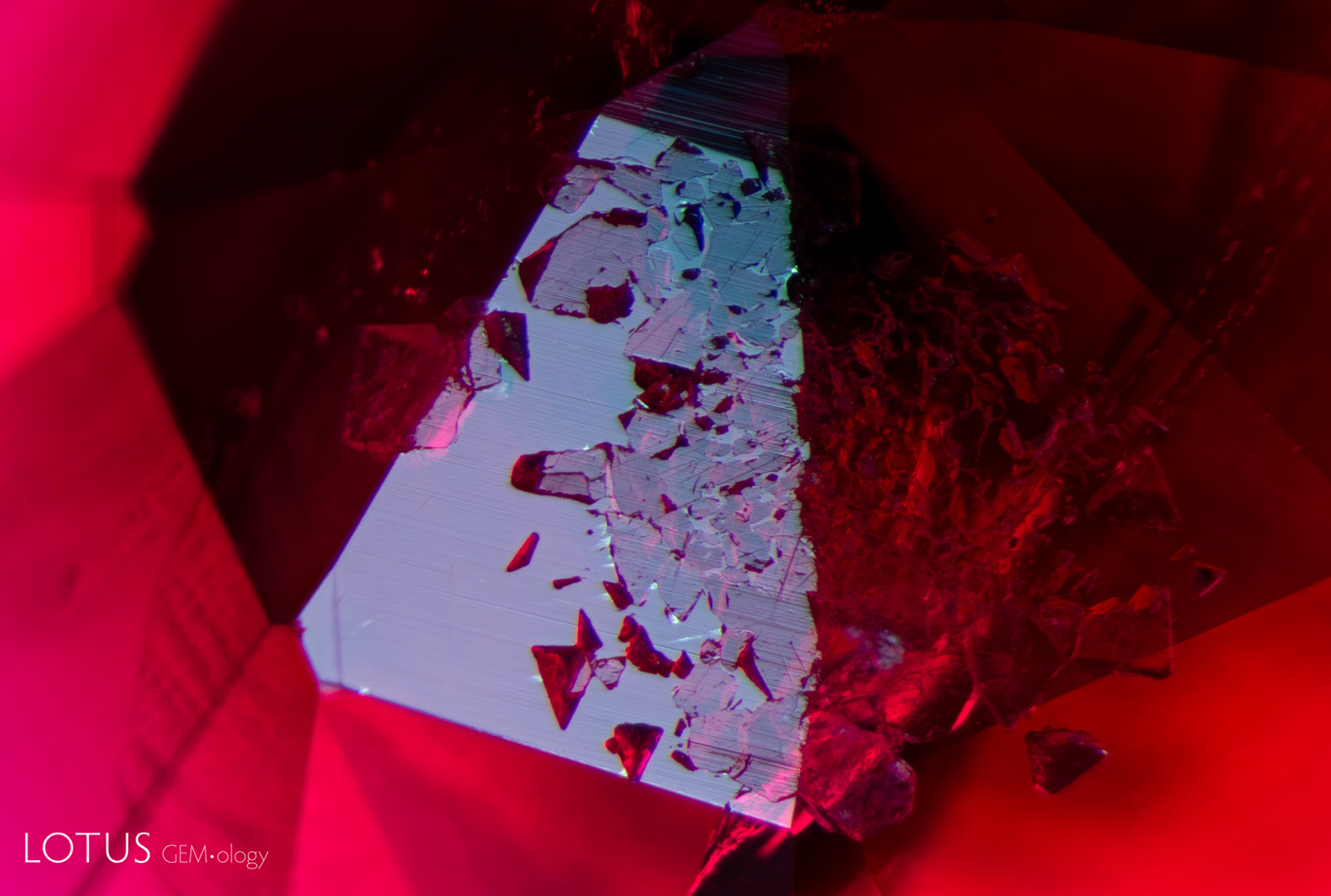
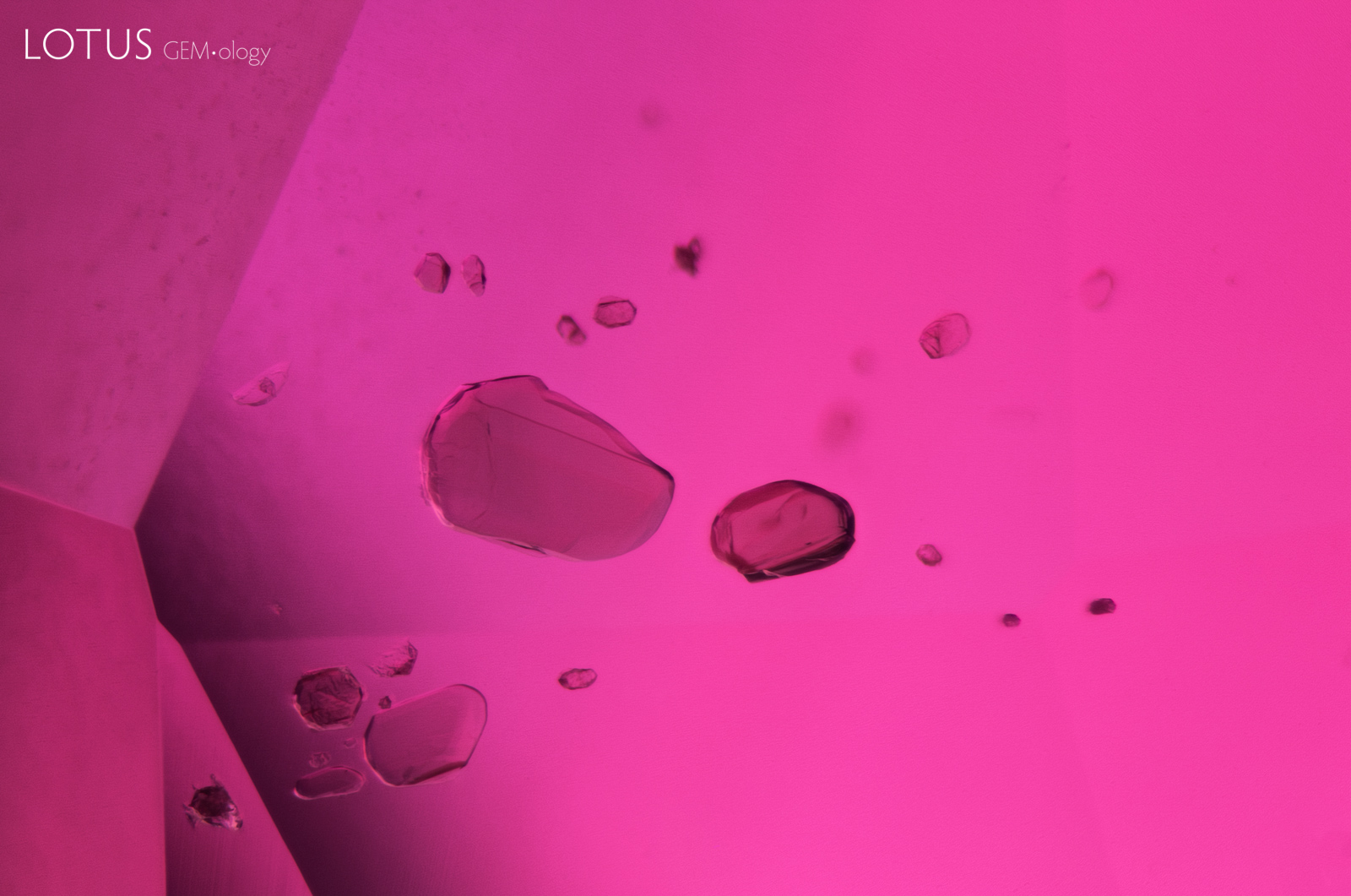
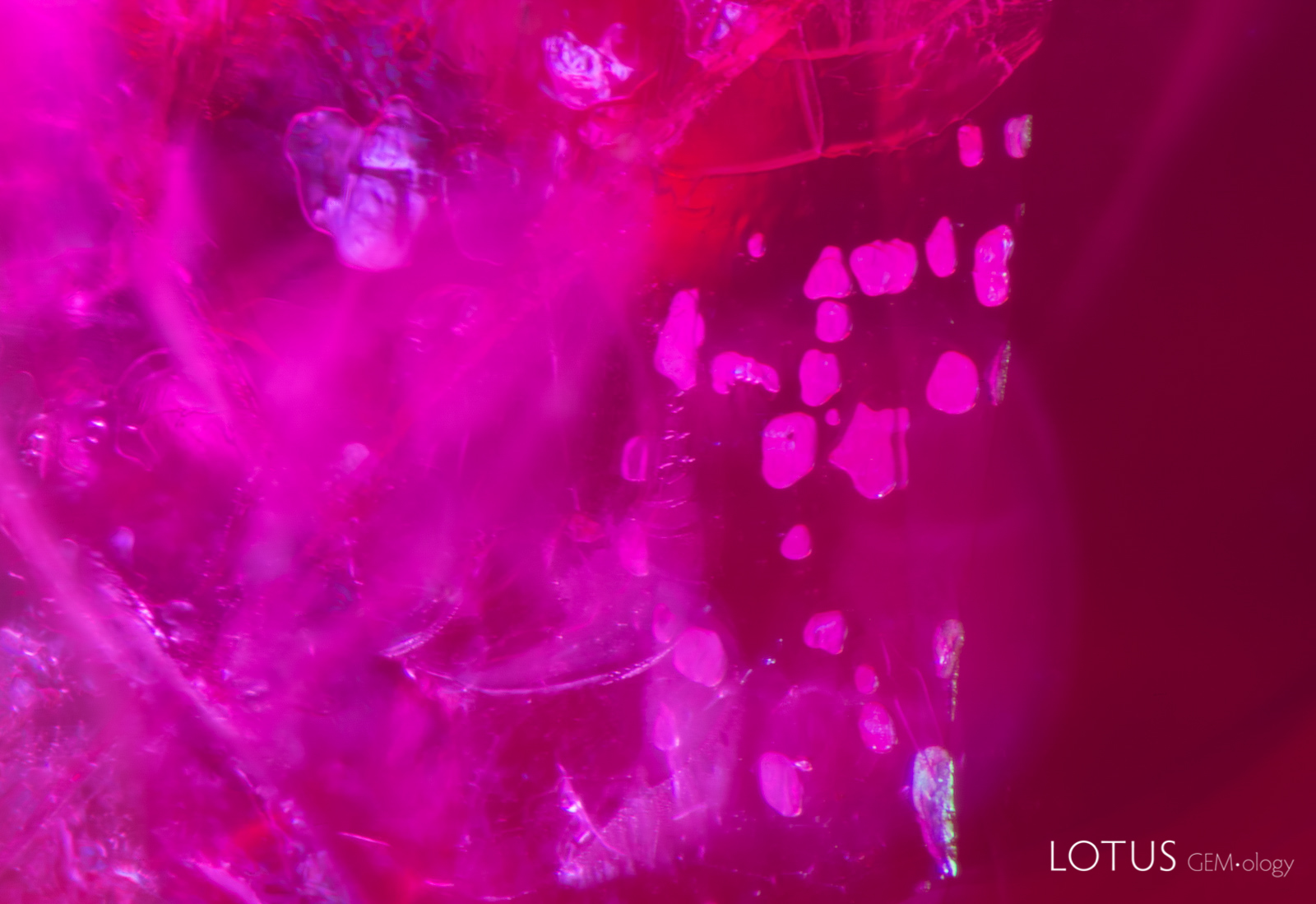
It is relatively uncommon to see solid inclusions in Mong Hsu ruby, but this stone had a small cluster of transparent crystals. Micro Raman identified them as dolomite.
Natural Ruby •
Myanmar (Burma); Mong Hsu •
Enhancements:
None Detected (None) •
Lighting Conditions:
Dark Field
Photographer:
E. Billie Hughes •
Image Number:
A-003-7956-1
• Field of View = 1.5mm
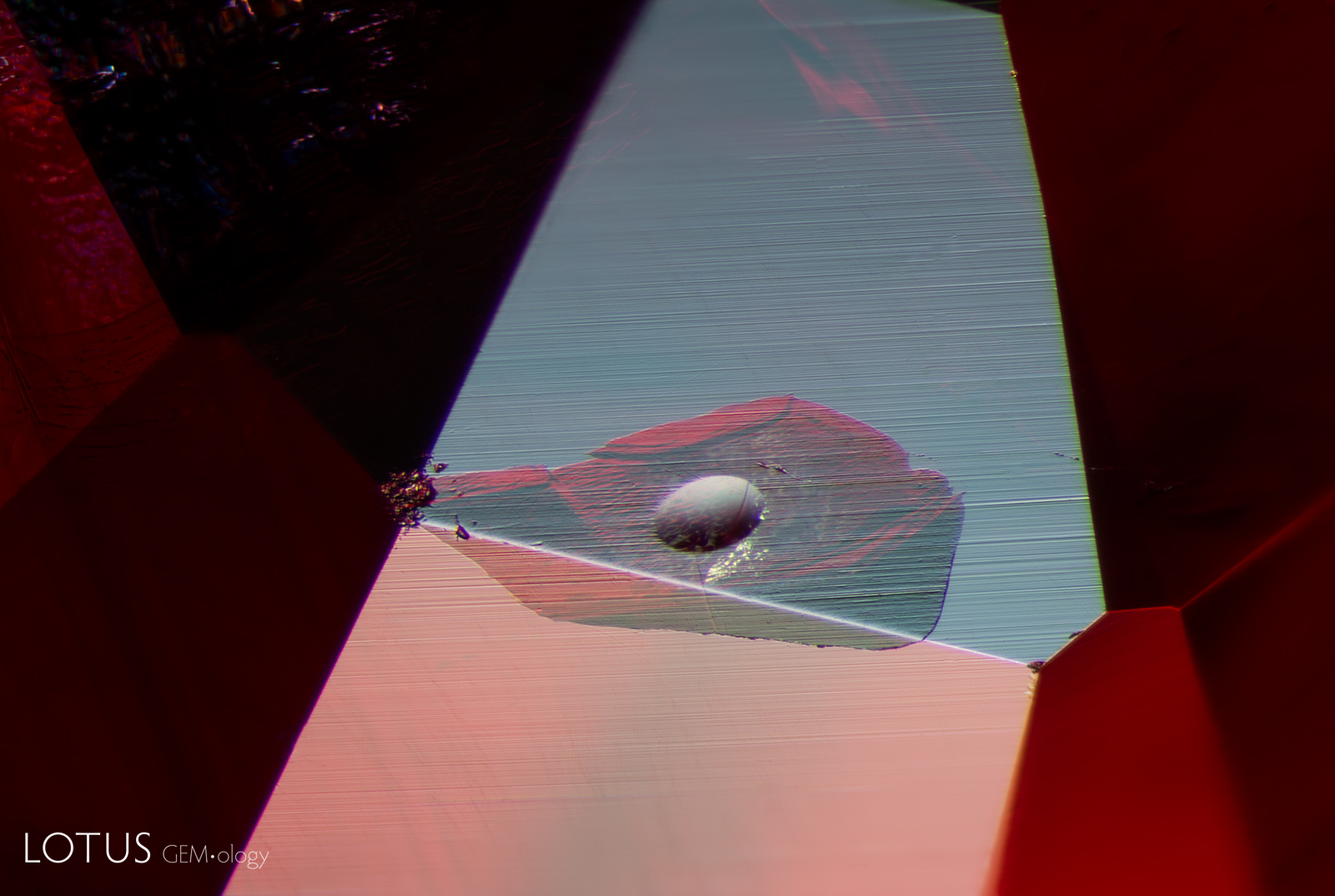
This cluster of crystals, cut through on the surface of this ruby from Mong Hsu, Myanmar, was identified as dolomite with Raman microscopy.
Natural Ruby •
Myanmar (Burma); Mong Hsu •
Enhancements:
None Detected (None) •
Lighting Conditions:
Dark Field + Diffuse Fiber Optic
Photographer:
E. Billie Hughes •
Image Number:
A-003-7978-1
• Field of View = 3mm
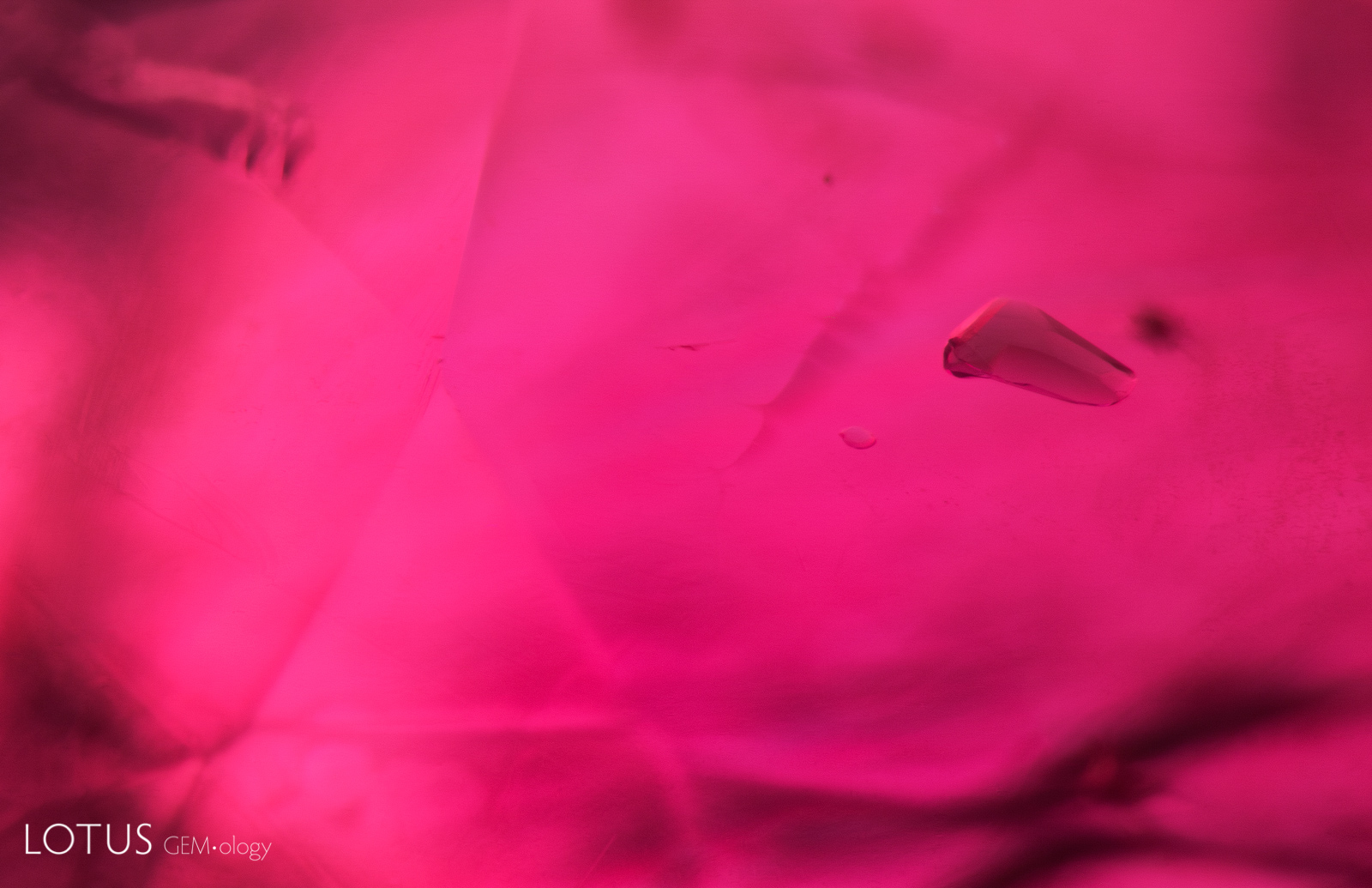
When viewed in transmitted light, this crystal in a Mozambique ruby displays a slightly greenish color. This hints that it might be an amphibole crystal. We confirmed this hypothesis with micro Raman.
Natural Ruby •
Mozambique •
Enhancements:
None Detected (None) •
Lighting Conditions:
Light Field (Transmitted Light)
Photographer:
E. Billie Hughes •
Image Number:
A-003-7933-1
• Field of View = 3mm
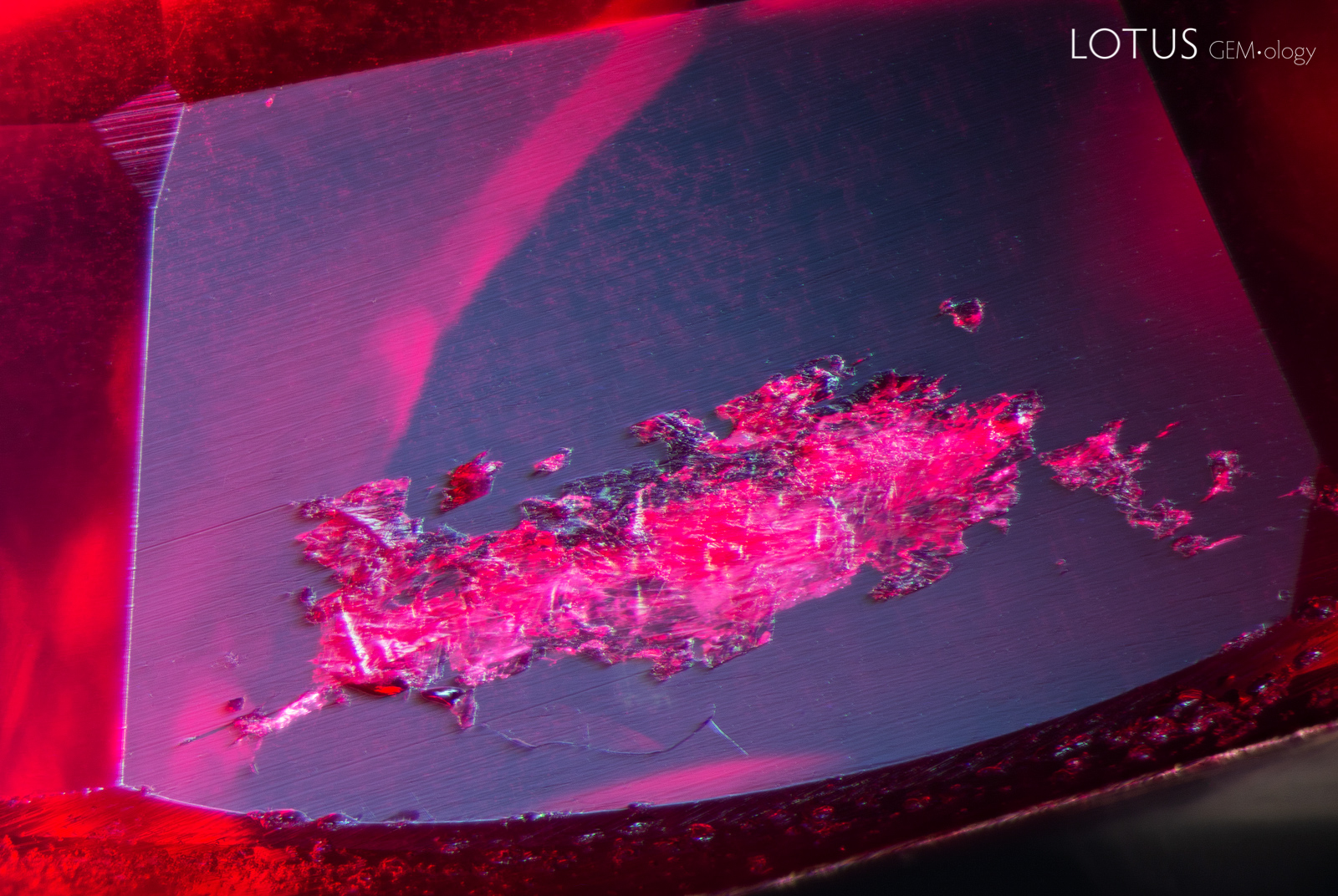
A large negative crystal was cut through on the pavilion of this ruby and filled with debris. Its appearance makes for an imposing figure in this ruby from Madagascar.
Natural Ruby •
Madagascar •
Enhancements:
None Detected (None) •
Lighting Conditions:
Dark Field + Diffuse Fiber Optic
Photographer:
E. Billie Hughes •
Image Number:
A-003-7817-1
• Field of View = 3mm
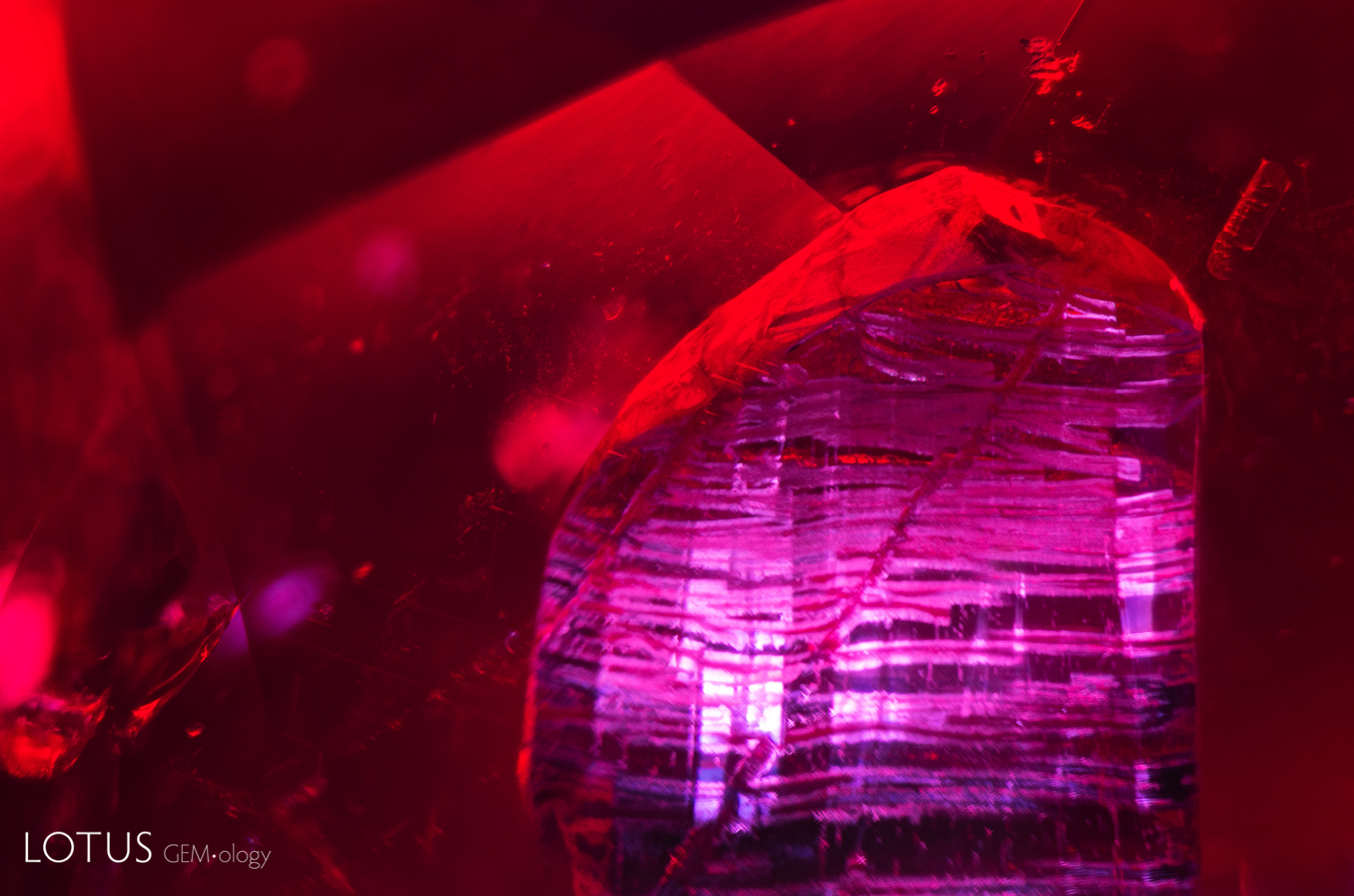
Amphibole crystals like these (which were identified with micro Raman) are a common inclusion found in Mozambique ruby. This is unsurprising because these rubies grow in amphibolite. When observed with transmitted light, we can see that the amphibole crystals have a dark greenish body color. It can be helpful to use a white filter to see the color of the crystals.
Natural Ruby •
Mozambique •
Enhancements:
None Detected (None) •
Lighting Conditions:
Light Field (Transmitted Light)
Photographer:
E. Billie Hughes •
Image Number:
A-003-7789-1
• Field of View = 3mm
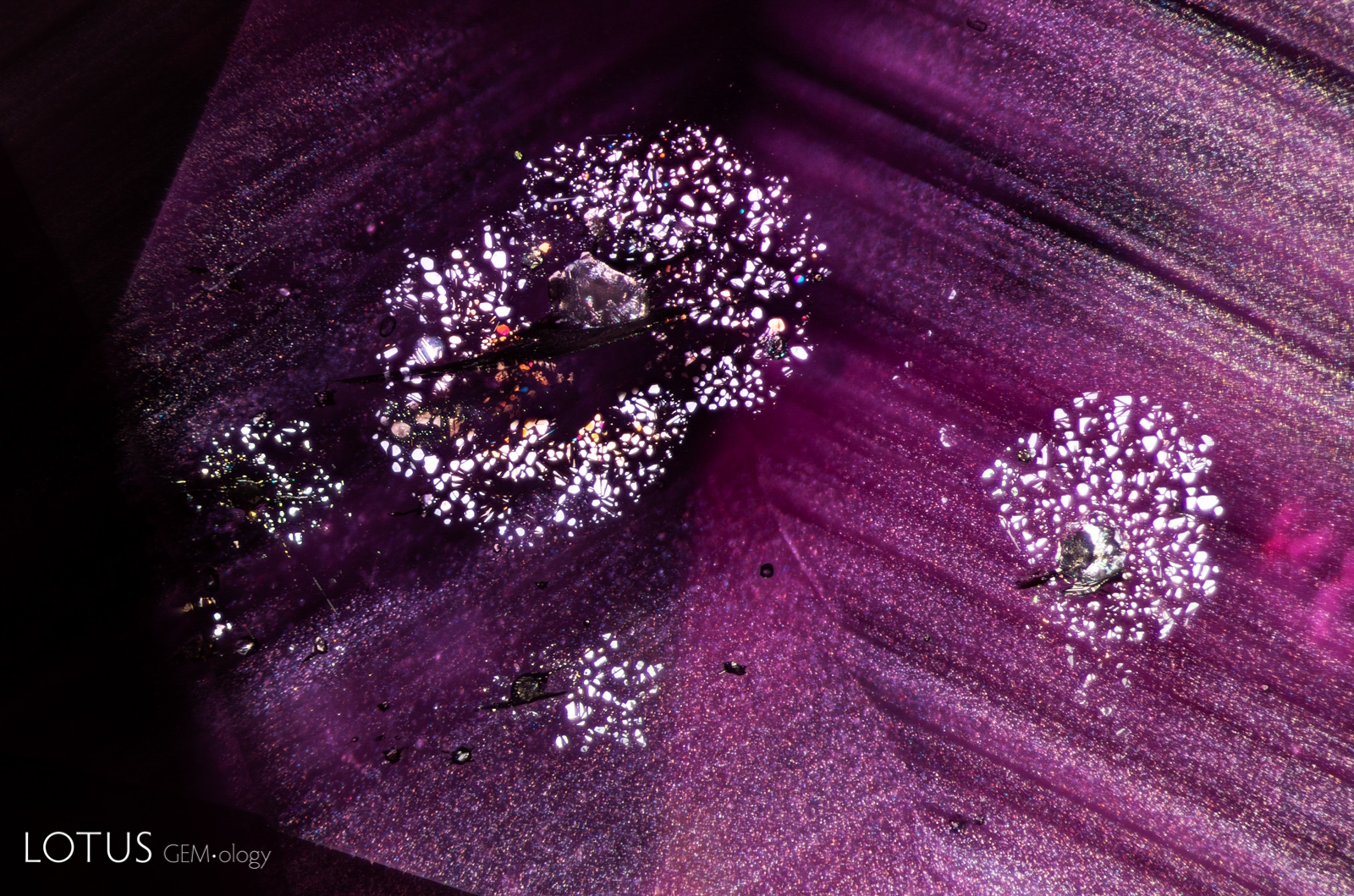
Mica crystals, identified here with micro Raman, are common feature in Mozambique ruby. They often have “rosettes” of thin films surrounding them as depicted in this photomicrograph.
Natural Ruby •
Mozambique •
Enhancements:
None Detected (None) •
Lighting Conditions:
Dark Field + Diffuse Fiber Optic
Photographer:
E. Billie Hughes •
Image Number:
A-003-7806-2
• Field of View = 3mm
Mica crystals, identified here with micro Raman, are common feature in Mozambique ruby. They often have “rosettes” of thin films surrounding them as depicted in this photomicrograph.
Natural Ruby •
Mozambique •
Enhancements:
None Detected (None) •
Lighting Conditions:
Fiber Optic: Diffuse Oblique
Photographer:
E. Billie Hughes •
Image Number:
A-003-7806-1
• Field of View = 4mm
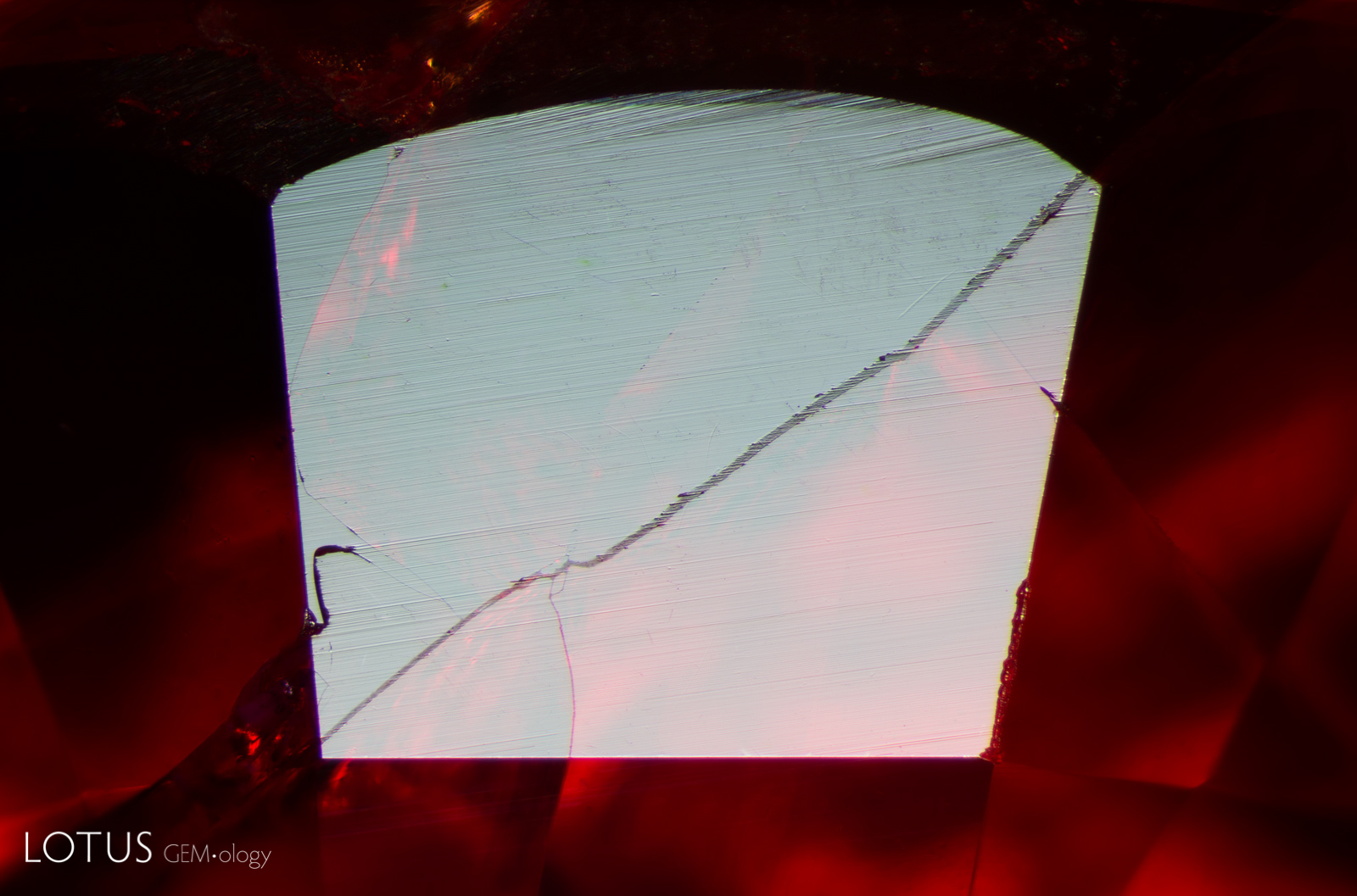
Careful observation of the surface of the fissure in this ruby reveals a lower luster, providing evidence of glass filling.
Natural Ruby •
Mozambique •
Enhancements:
Heat + Glass Cavity/Fissure Filling (H-GF2); Heat + Fissure Healing (H-FH) •
Lighting Conditions:
Dark Field + Diffuse Overhead Fiber Optic
Photographer:
E. Billie Hughes •
Image Number:
A-003-7522-2
• Field of View = 3mm
Both the cavity and its associated fissures on the edge of this ruby display a lower luster than the surrounding corundum, providing evidence that the stone has been glass filled.
Natural Ruby •
Mozambique •
Enhancements:
Heat + Glass Cavity/Fissure Filling (H-GF2); Heat + Fissure Healing (H-FH) •
Lighting Conditions:
Dark Field + Diffuse Overhead Fiber Optic
Photographer:
E. Billie Hughes •
Image Number:
A-003-7522-1
• Field of View = 3mm
The flattened gas bubbles in this fissure provide evidence that this ruby has been filled with glass.
Natural Ruby •
Mozambique •
Enhancements:
Heat + Glass Cavity/Fissure Filling (H-GF1); Heat + Fissure Healing (H-FH) •
Lighting Conditions:
Dark Field + Diffuse Fiber Optic
Photographer:
E. Billie Hughes •
Image Number:
A-003-7520-1
• Field of View = 2mm
A glass filled cavity is visible on the surface of this ruby. The rounded indentation is an area where a gas bubble was cut through.
Natural Ruby •
Mozambique •
Enhancements:
Heat + Glass Cavity/Fissure Filling (H-GF1); Heat + Fissure Healing (H-FH) •
Lighting Conditions:
Dark Field + Diffuse Overhead Fiber Optic
Photographer:
E. Billie Hughes •
Image Number:
A-003-7519-1
• Field of View = 2mm
Search the Complete Hyperion Database
Natural ruby inclusions may include mineral crystals, rutile silk, healed fissures, fluid inclusions, negative crystals, color zoning and other features formed during or after crystal growth. Such features are important to gemologists because they can provide evidence useful in identifying ruby, understanding its geological history, recognizing treatment and, in some cases, determining geographic origin.
Natural Ruby Inclusion Photomicrographs
The Hyperion natural ruby gallery includes microscopic features found in rubies from major deposits around the world. Each entry is accompanied by descriptive information and, where available, references to the gemological literature.
What Inclusions Can Reveal About Natural Ruby
Inclusions are an important part of ruby identification. Their form, composition, orientation and alteration can help gemologists distinguish natural ruby from synthetic material, recognize evidence of heat treatment, and study the geological environment in which the ruby formed.
Hyperion combines inclusion photomicrography with supporting gemological information so that individual features can be compared with documented examples from known ruby deposits.
About Hyperion
Hyperion is the Lotus Gemology searchable inclusion database. It allows users to browse gemstone inclusions by gem type, geographic origin, treatment and keyword.