Ruby & Sapphire Bibliography

Ruby & Sapphire Bibliography

Explore books, articles and historical sources on ruby, sapphire and corundum in Four Treasures, the Lotus Gemology reference database. This bibliography brings together matching records from the collection, with publication details, abstracts and cover images where available.

Ruby & Sapphire References

The list below matches the terms ruby, rubies, sapphire or corundum in the database's searchable fields. Some references discuss these gems as part of a broader subject. Linked titles take you to external links where you may find the full reference.

4,581–4,600 of 4,669 matching references
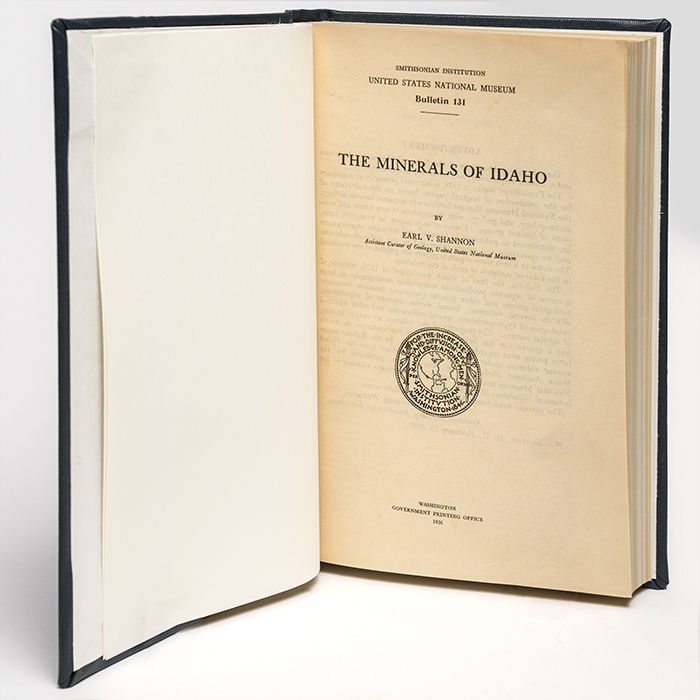
Los Minerales de Colombia

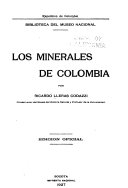
Los Minerales de Colombia

The Minerals of Colombia

Lleras Codazzi, R. (1927)

Book · Publisher: Imprenta Nacional, Biblioteca del Museo Nacional · Pages: 150 pp. · Language: in Spanish

Abstract
Lleras Codazzi provides an early systematic account of the minerals known from Colombia, combining mineralogical descriptions with information on their Colombian occurrences and localities. Produced as part of the Biblioteca del Museo Nacional, a series intended to document the museum’s collections scientifically while making them accessible to a wider readership, the work forms one of the foundational publications of modern Colombian mineralogy. It covers both common and economically significant mineral species and records occurrences of particular interest to mining and economic geology; later geological literature, for example, cites its discussion of pitchblende and other uranium minerals from Norte de Santander. For gemological research the book is particularly relevant because Lleras Codazzi had already studied the mineralogy of Muzo and its emerald deposits in his 1925 Catálogo descriptivo de los minerales de Muzo, and Los minerales de Colombia places such Colombian mineral occurrences within a broader national mineralogical survey.
Keywords
corundum, Colombia.12, gems, beryl, emerald
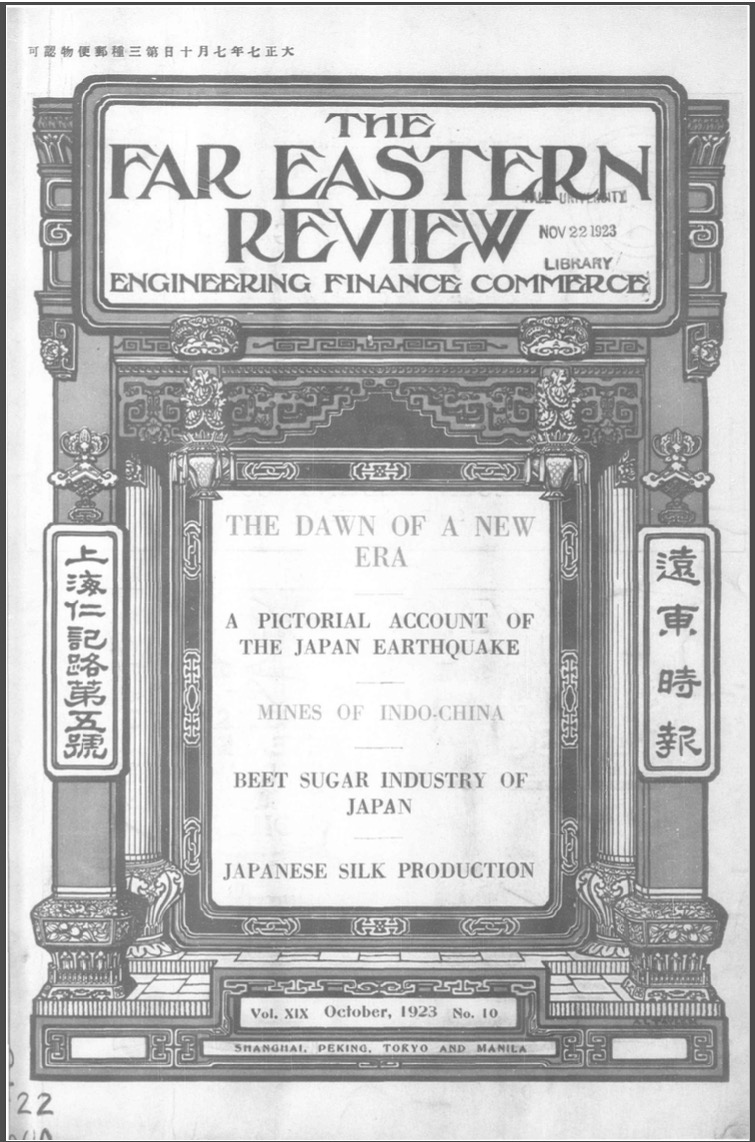
The Mines of Indo-China

The Mines of Indo-China

Far Eastern Review (1923)

Journal Article · Source: Far Eastern Review · Issue: October · Pages: pp. 

Abstract
Brief description of the ruby and sapphire mines at Pailin, Cambodia.
Keywords
corundum, Thailand.12, Cambodia.12, gems
Man-made precious stones

Man-made precious stones

Lewis, C.M. (1921)

Journal Article · Source: Scientific American · Volume: Vol. 125 · Issue: No. 3, July 16 · Pages: pp. 48–49, 56

Keywords
gems, corundum, synthetic corundum.7
The pearl fisheries of Ceylon

The pearl fisheries of Ceylon

Smith, H.M. (1912)

Journal Article · Source: National Geographic · Volume: Vol. 23 · Issue: February · Pages: pp. 173–194

Abstract
AS SOON as a traveler sets foot on the shores of Ceylon he comes under the subtle charm of the land, and is quickly imbued with the feeling that it would be most incongruous if such a climate did not produce the most luxuriant foliage, the most beautiful flowers, the most luscious fruits; if such a soil did not give forth the most wonderful profusion and variety of precious stones; if such surrounding waters did not yield the most resplendent pearls. Ceylon has long been celebrated for its sapphires, rubies, cat’s-eyes, moonstones, opals, amethysts, carbuncles, and emeralds; but none of these, nor all of them combined, have given to the island the fame and the romantic setting that have been conferred on it by the product of the limpid waters that bathe its coral strands and sandy beaches. The poetic name of Ceylon today is “The Pearl on India’s Brow.” Colombo, the principal city of modern Ceylon, is a stopping place for all the steamers plying between Europe and Asia and Australia, and is therefore visited by thousands of tourists and travelers each year. But the pearl fishery is so remote from Colombo that not one visitor in ten thousand ever goes there. In Colombo a person sees only a fraction of the great pearl crop, of which more than 90 per cent—99 per cent in some years—goes to India; but this fraction is sufficiently seductive to the transient visitor to render uncertain the time and manner of his arrival home, for the pearl shops in Colombo are veritable magnets that irresistibly attract the contents of purse and wallet. The pearl fishery of Ceylon and of India and the Persian Gulf is of very great antiquity, and is thought to be the oldest established fishery now in existence. The Sinhalese records, going back to about 550 B.C., indicate that the fisheries were then well developed, and there is reason to believe that they flourished at least 500 years before. At a very early period the pearls brought the island into prominence abroad, and were in great repute in Rome at the time of Pliny, who, referring to Ceylon under the name of Taprobane, wrote that it was “the most productive of pearls of all parts of the world.” From the most remote period of which there is any record, it would appear that the pearl fishery played a very important part in the history of Ceylon, having had more or less direct and intimate relations with every important aspect of the civilization of the island. The information available clearly suggests that from the earliest times the fishery was conducted in much the same way as in our own day—the same methods of obtaining the pearl oysters, of handling the catch on shore, and of extracting the pearls. In the words of a local writer, “Ceylon is a place with a glorious past. Its once magnificent cities are now but a mass of crumbled and half-buried ruins; its native dynasty has passed away forever;”
Keywords
corundum, Sri Lanka.12, gems

Report of the engineer-in-chief for the Burma Ruby Mines Limited—1889

Lockhart, W.S. (1912)

Book Section · Source: Gemstones · Publisher: Methuen & Co. · Pages: 312 pp.; see pp. 171–176

Abstract
Lockhart’s 1889 report, reproduced by G. F. Herbert Smith, describes the early operations of the Burma Ruby Mines Limited at Mogok following the British annexation of Upper Burma. It gives a contemporary engineering account of the ruby-bearing ground and the practical problems of exploiting the deposits, including the removal of overburden, treatment of gem-bearing gravels, water supply, drainage, and the introduction of machinery for working deposits previously mined by indigenous methods. The report is particularly valuable as a primary source for the transition from traditional Burmese ruby mining to large-scale European-operated mining at Mogo
Keywords
Burma.12, corundum, ruby, gems

Un voyage au pays des béryls (Madagascar)

A journey to the land of beryls (Madagascar)

Lacroix, A. (1912)

Journal Article · Source: Bulletin de la Société de Géographie | La Géographie · Volume: Vol. 26 · Issue: No. 5 · Pages: pp. 285–296 · Language: in French

Abstract
Based on Lacroix’s account of his four-month mineralogical exploration of Madagascar, this paper describes the island’s remarkable gem-bearing pegmatites and the rapid development of gemstone prospecting following the French occupation. Lacroix reviews earlier reports of precious stones dating from the sixteenth and seventeenth centuries and notes the failure of seventeenth- and eighteenth-century attempts at exploitation. He then discusses Madagascar’s abundant beryls and other gem minerals, emphasizing the exceptional quality of its pink beryls and yellow tourmalines, which he considered unrivaled elsewhere. The article is an important early firsthand account of Madagascar’s emergence as a major source of gem minerals and was translated into English the following year as “A Trip to Madagascar, the Country of Beryls” in the Annual Report of the Smithsonian Institution.
Keywords
corundum, Madagascar.12, gems
Adam’s second Eden

Adam’s second Eden

Scidmore, E.R. (1912)

Journal Article · Source: National Geographic · Volume: Vol. 23 · Issue: February · Pages: pp. 105–173

Abstract
CEYLON, the second Paradise, to which Adam fled after the expulsion, is literally one of the “summer isles of Eden lying in dark purple spheres of sea.” Its softly blue mountains rise up out of the sea and belt themselves round with a broad band of level, green lowlands, where crooked cocoa palms, with trunks aslant at every angle, reel on swollen feet to the very beaches of yellow sand and bend their tufted heads to the voice of the sea, without which, it is said, they cannot live. One always comes into Colombo harbor at daybreak, from whichever quarter the ship sails, and the dawn’s freshness adds to the beauty of the setting and the clearness of every impression. Native catamarans, rude dugout canoes, each with an outrigger log which keeps it level or afloat in any sea or surf, pursue each mail steamer into the protected harbor, and brown boys with their innumerable black and yellow brothers are ready to dive for coins until their cheeks bulge with the accumulated small change of all nations.
Keywords
corundum, Sri Lanka.12, gems
The crystalline rocks of Ceylon

The crystalline rocks of Ceylon

Coomaraswamy, A.K. (1904)

Journal Article · Source: Spolia Zeylanica (Ceylon Journal of Science) · Volume: Vol. 1 · Issue: Part 4 · Pages: pp. 105–111

Abstract
A concise account of the crystalline rocks of Ceylon, intended to summarize their character and classification as then understood. Coomaraswamy discusses the terminology of “gneiss” and “granulite,” preferring the latter for many Ceylonese rocks, and regards them as belonging to the Charnockite Series described from southern India, the two regions forming a closely related petrographical province. He describes the principal rock types and their mineral banding, together with the crystalline limestones and rocks intermediate between limestone and granulite. The latter may contain diopside, phlogopite, amphibole, scapolite, spinel, sphene, calcite and, more rarely, serendibite, and may occur at limestone–granulite contacts, as inclusions, dykes or bands; some also yield mica of commercial value. Coomaraswamy argues that, whatever their ultimate origin, the crystalline limestones were essentially contemporaneous with the granulites and crystallized under broadly comparable high-temperature conditions. He also distinguishes the wollastonite-bearing Galle group and discusses the structural geology of the crystalline series, particularly foliation, folding and the influence of rock structure on the development of parallel strike valleys such as those around Hatton. The paper is an important early synthesis of Ceylon’s Precambrian crystalline geology and provides geological context for the mineral and gem deposits associated with these rocks.
Keywords
corundum, ruby, sapphire, Sri Lanka.12, gems
[Madagascar corundum]

[Madagascar corundum]

Minerals Yearbook (1901–1975)

Journal Article · Source: Minerals Yearbook · Issue: 1901: pp. 766–769; 1907: p. 839; 1939: p. 1395; 1940: p. 1463; 1946: p. 555; 1960: p. 500; 1961: p. 594; 1975: p. 665

Keywords
corundum, Madagascar.12, gems

Exploring the Literature of Corundum

Ruby and sapphire research spans mineralogy, gem deposits, identification, treatments, synthesis and the history of the gem trade. Older publications can also be useful for tracing terminology, early observations and accounts of mining localities. Publication dates and the original source should be considered when using historical descriptions.

For an introduction to collecting books on this subject, read Ruby & Sapphire Books: Collecting the Literature of Corundum.

About Four Treasures

Four Treasures is Lotus Gemology's freely accessible gemological reference database. Use the full database to search by author, title or keyword and explore literature on gemology, mineralogy, jewelry and related fields. Where available, hyperlinks on titles may lead directly to the full publication.

Search the Complete Four Treasures Database