Ruby & Sapphire Bibliography

Ruby & Sapphire Bibliography

Explore books, articles and historical sources on ruby, sapphire and corundum in Four Treasures, the Lotus Gemology reference database. This bibliography brings together matching records from the collection, with publication details, abstracts and cover images where available.

Ruby & Sapphire References

The list below matches the terms ruby, rubies, sapphire or corundum in the database's searchable fields. Some references discuss these gems as part of a broader subject. Linked titles take you to external links where you may find the full reference.
4,561–4,580 of 4,669 matching references

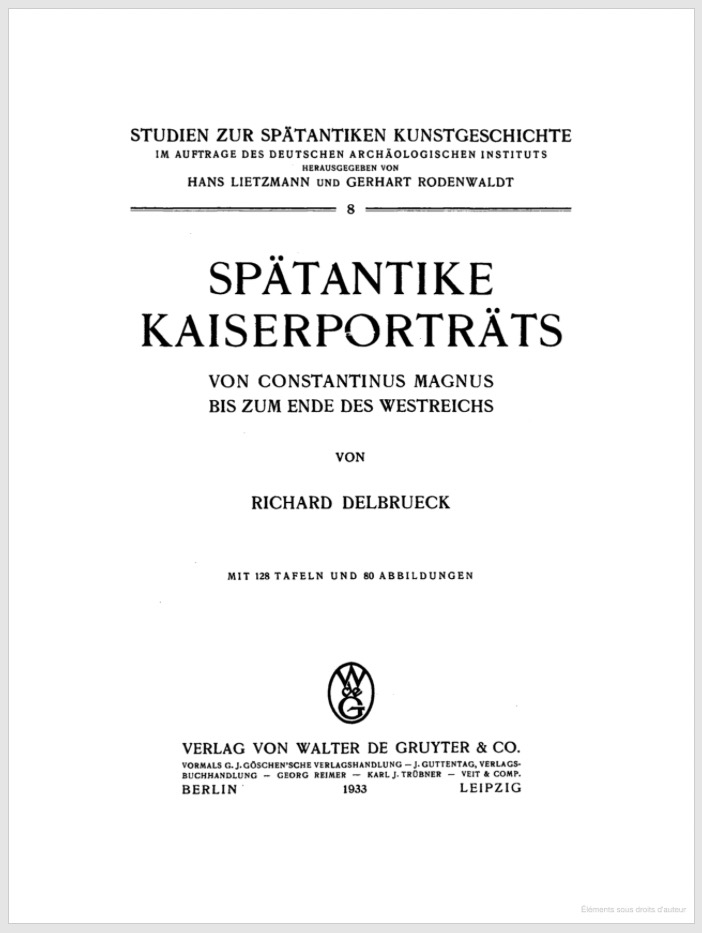
Spätantike Kaiserporträts: Von Constantius Magnus Bis Zum Ende Des Westreichs

Spätantike Kaiserporträts: Von Constantius Magnus Bis Zum Ende Des Westreichs

Late Antique Imperial Portraits: From Constantius Magnus to the End of the Western Empire

Delbrück, R. (1933)

Edited Book · Source: Studien zur Spätantiken Kunstgeschichte 8 · Publisher: Walter de Gruyter · Pages: 272 pp. · Language: in German

Abstract
After studying the dawn of Roman art in a foundational work on the history of architecture (Hellenistische Bauten in Latium, 1907–1912), and exploring iconography through Antike Porträts (1912) and Bildnisse römischer Kaiser (1914), Richard Delbrueck turned his attention to its twilight. Under the auspices of the German Archaeological Institute’s collection on late or lingering antiquity, he published within a decade three lavish volumes: Die Consulardiptychen und verwandte Denkmäler (from 1926), Antike Porphyrwerke (1932), and the present volume, which gathers portraits of Augusti, Caesars, and empresses from Constantine’s reign to the fall of the Western Empire. The coin effigies on the first twenty-five plates serve as a narrative thread and also illustrate the difficulty of accurate identification. As Delbrueck notes (p. 9), imperial portraits are always tendentious; each emperor constructs a vision of majesty not by merely idealizing his features, but by emulating a recent or ancient illustrious model. “Generally, a son adopts his father’s portrait when the latter ruled, and only slowly—if at all—develops his own individuality. This already contributes, despite differences, to the familial resemblance among the princes of Constantine’s house. An unrelated predecessor may exert the same influence: the portraits of Constantius II, Theodosius II, and Valentinian III clearly inspired those of their successors. Usurpers readily borrow the features of the legitimate emperor… When there are multiple sons, the younger imitate both their father and eldest brother… Some princes also drew inspiration from great figures of the past: Constantine, for example, from his supposed ancestor Claudius Gothicus, even more from Augustus, and perhaps from Alexander… When several of these factors act simultaneously—as often happens—the same emperor may be represented by several equally official portrait types.”
Keywords
gems, glyptic, engraved gems, agate, cameo, intaglio
Über Nachahmung von Edelsteinen

Über Nachahmung von Edelsteinen

About the imitation of precious stones

Ruska, J. (1933)

Journal Article · Source: Quellen und Studien zur Geschichte der Naturwissenschaften und der Medizin · Volume: Vol. 3 · Pages: pp. 108–119 · Language: in German

Abstract
Ruska examines the history of artificial gemstones and gemstone imitation in Arabic and medieval technical literature, presenting and interpreting recipes for producing materials intended to resemble precious stones. He discusses methods involving colored glass and other artificial compounds designed to imitate ruby, emerald, sapphire, and related gems, with attention to the ingredients, coloring agents, heating procedures, and terminology found in the surviving texts. Particular emphasis is placed on the transmission of this technical knowledge from Greek and Hellenistic traditions into Arabic literature and subsequently into medieval European works. Ruska compares different textual versions and investigates their relationships, using the recipes as evidence for both the practical knowledge of early craftsmen and the literary transmission of alchemical and mineralogical traditions. The study demonstrates that the imitation of gemstones formed an established branch of early chemical technology and that recipes appearing in later European lapidaries and technical manuscripts frequently had much older antecedents in Greek and Arabic sources.
Keywords
gems, imitation gems, Arabic mineralogy, early lapidaries

Sapphires

Montana Mining Review (1932)

Journal Article · Source: Montana Mining Review · Volume: Vol. 34 · Issue: No. 36 · Pages: p. 5

Keywords
corundum, USA.12, Montana.12, gems
[Caesaris Rubinus]

[Caesaris Rubinus]

Fersman, A.E. (1932)

Journal Article · Source: Mineralogical Magazine · Volume: Vol. 22 · Issue: No. 137, June · Pages: p. 53

Keywords
corundum, quality.10, gems
Rubies and Sapphires

Rubies and Sapphires

Aitkens, I. (1931)

Book · Publisher: US Bureau of Mines · Volume: Information Circular I.C. 6471 · Pages: 11 pp.

Keywords
corundum, ruby, sapphire, Burma.12, gems
Book of Precious Stones

Book of Precious Stones

Jawāhir-nāmah [جواهرنامه

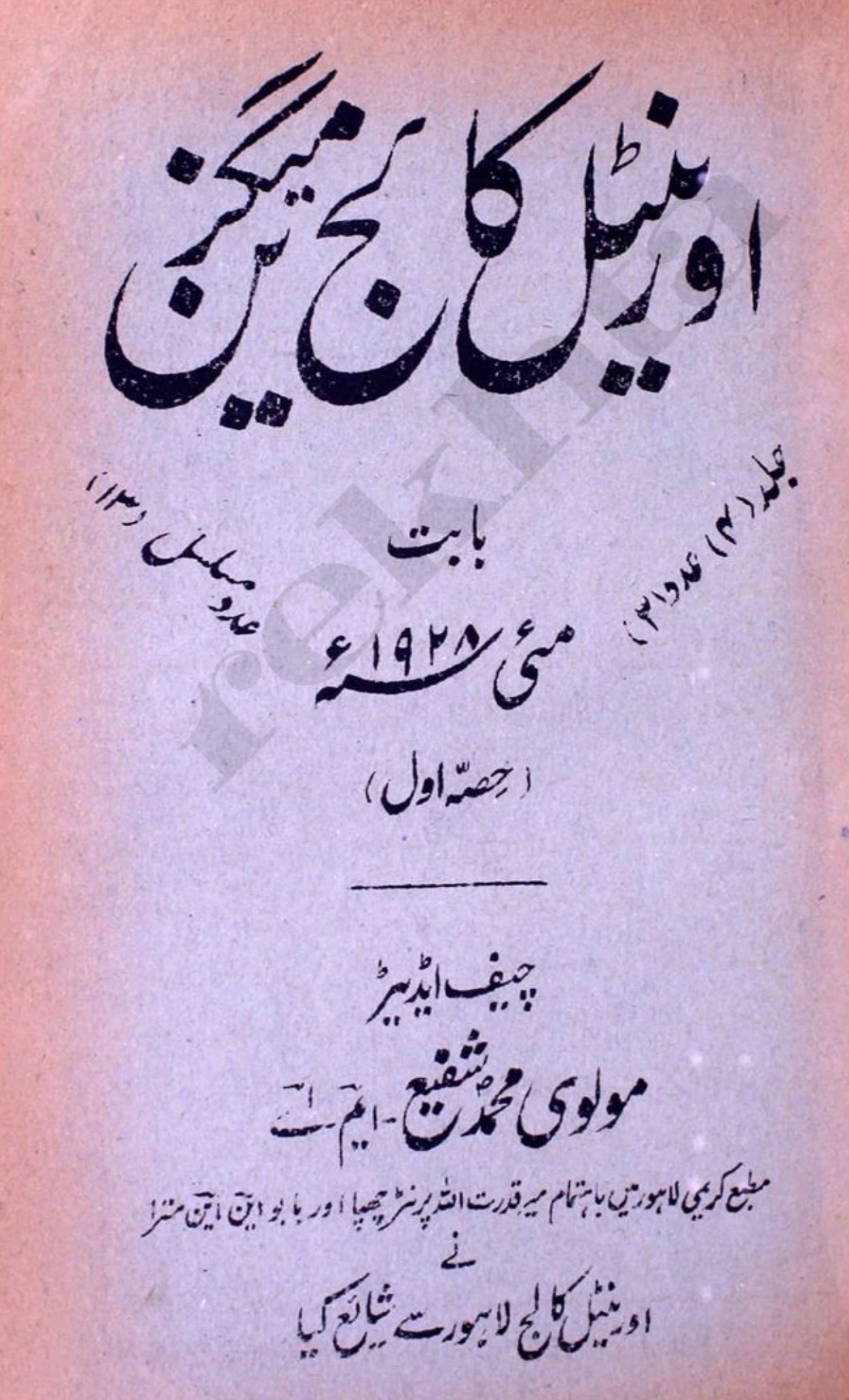
Shafīʿ, M. (1928)

Journal Article · Source: Oriental College Magazine · Volume: Vol. 4 · Issue: No. 4, August · Pages: pp. 112–132 · Language: in Persian

Abstract
Edition of the Kapurthala Jawāhir-nāmah, based on a manuscript dated 1160 AH/1747. It treats diamond, yāqūt, ruby, emerald, pearl, turquoise, bezoar, amber, lapis lazuli, coral, carnelian, and jasper in that order and adds musk and rock crystal at the end. The entries describe such matters as the mines, properties, and values of the stones.
Keywords
gems, Arabic lore, history, Arabic mineralogy,
Afghanistan

Afghanistan

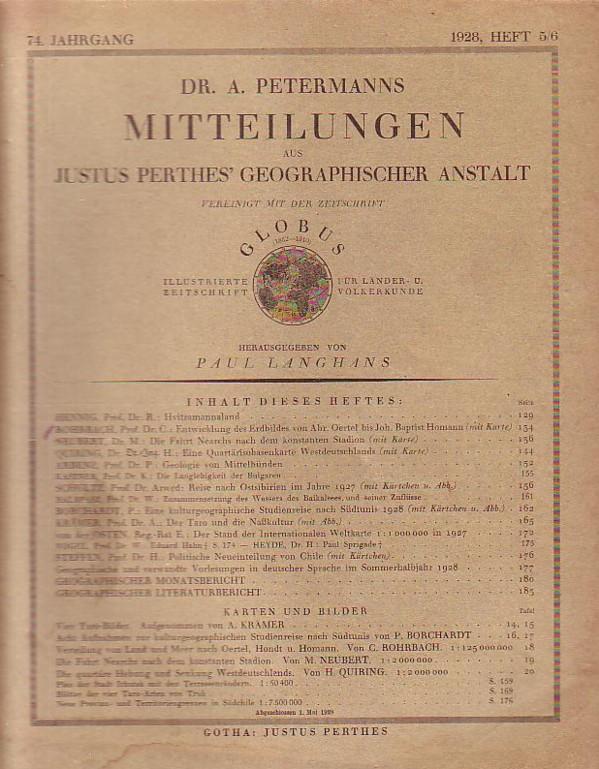
Trinkler, E. (1928)

Book Section · Source: Petermann’s Mitteilungen · Publisher: Justus Perthes · Volume: No. 196

Keywords
corundum, Afghanistan.12, gems

Exploring the Literature of Corundum

Ruby and sapphire research spans mineralogy, gem deposits, identification, treatments, synthesis and the history of the gem trade. Older publications can also be useful for tracing terminology, early observations and accounts of mining localities. Publication dates and the original source should be considered when using historical descriptions.

For an introduction to collecting books on this subject, read Ruby & Sapphire Books: Collecting the Literature of Corundum.

About Four Treasures

Four Treasures is Lotus Gemology's freely accessible gemological reference database. Use the full database to search by author, title or keyword and explore literature on gemology, mineralogy, jewelry and related fields. Where available, hyperlinks on titles may lead directly to the full publication.

Search the Complete Four Treasures Database