Emerald Bibliography

Emerald Bibliography

Explore books, articles and historical sources on emerald in Four Treasures, the Lotus Gemology reference database. This bibliography brings together matching records from the collection, with publication details, abstracts and cover images where available.

Emerald References

The list below matches the terms emerald or emeralds in the database's searchable fields. Some references discuss emeralds as part of a broader subject.

181–200 of 848 matching references
Stone

Stone

Aston, B.G., Harrell, J.A. and Shaw, I. (2000)

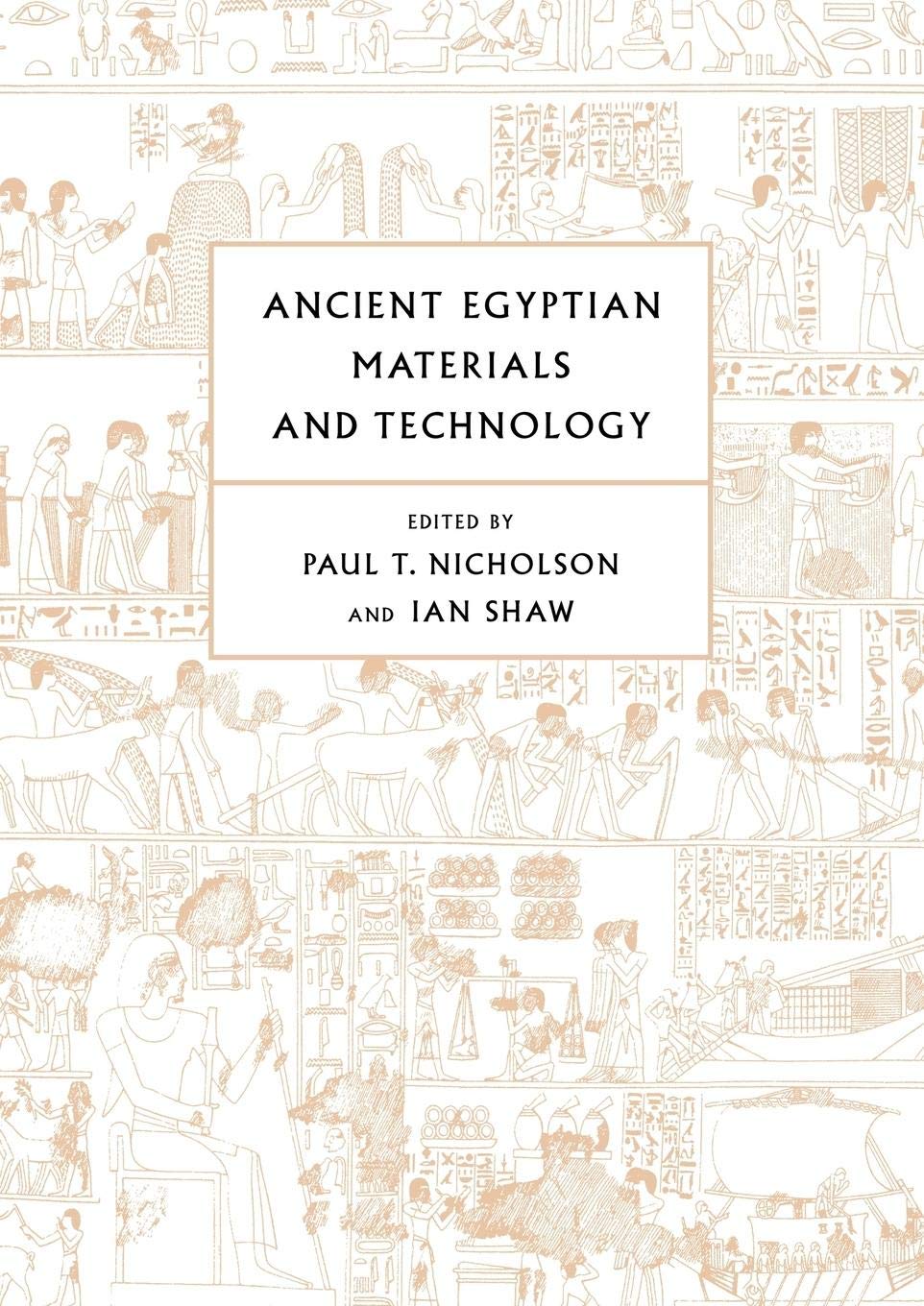
Book Section · Source: Ancient Egyptian Materials and Technology · Publisher: Cambridge · Pages: pp. 5–77

Abstract
This is a study of the procurement and processing of raw materials employed by the ancient Egyptians over the five millennia of the Predynastic and Pharaonic periods (c. 5500–332 BC). During this time, not only were there variations in the preferred materials for particular types of artefacts, but also gradual processes of technological change, and the industries of the Chalcolithic period were complemented and sometimes superseded by the innovations of the Bronze and Iron Ages. Among the topics covered are stone quarrying, the building of temples and pyramids, techniques for preserving meat, fish, and poultry, glass and faience, the baking of bread, brewing of beers, preparation of oils and perfumes, and the mummification of humans and animals. Each chapter has been written by one or more specialists, drawing not only on conventional Egyptological skills but also on expertise in the natural sciences as applied to archaeological data.
Keywords
gems, ancient gemology, ancient jewelry, Egypt, Egyptian jewelry, beryl, emerald, turquoise, malachite
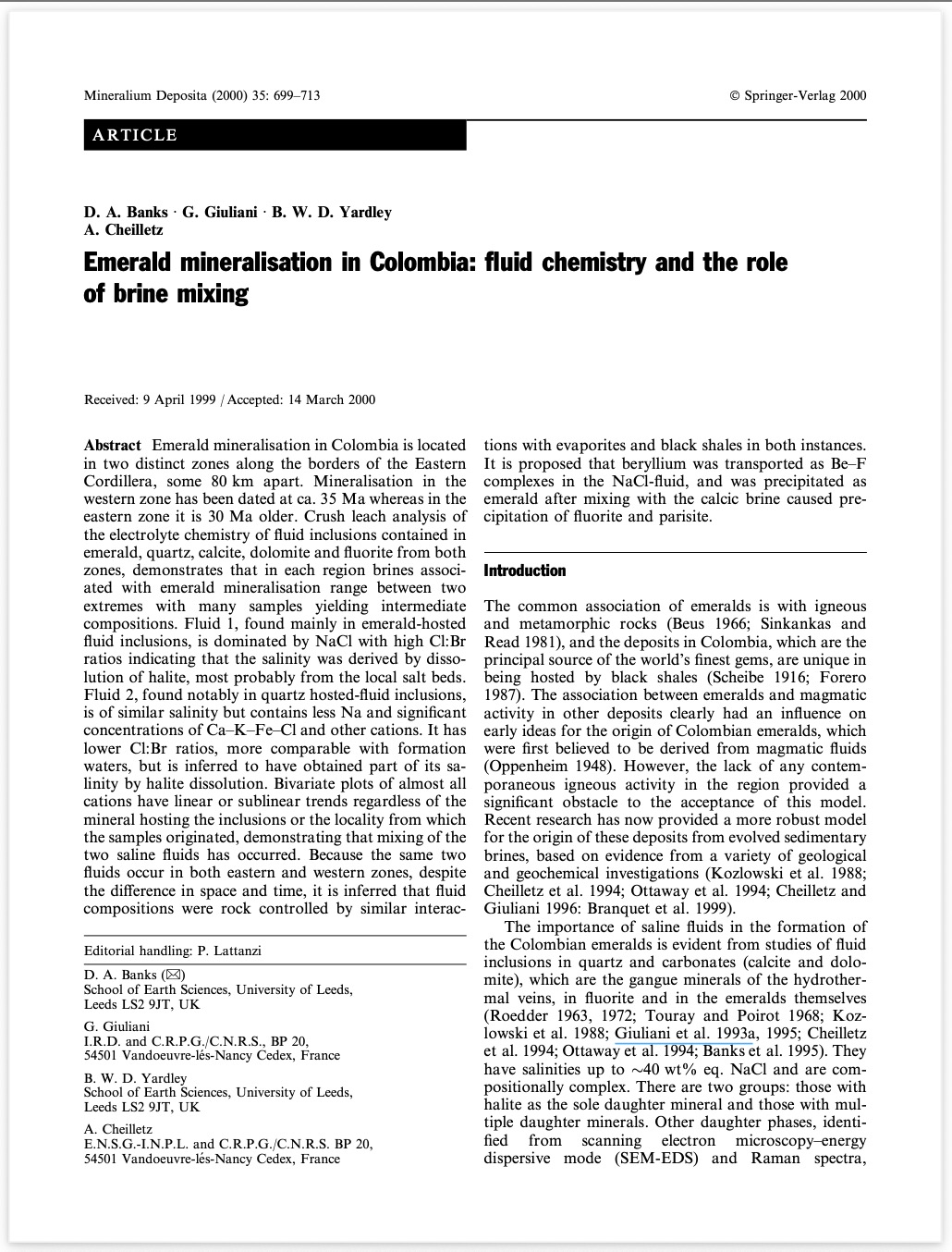
Emerald mineralisation in Colombia: Fluid chemistry and the role of brine mixing

Emerald mineralisation in Colombia: Fluid chemistry and the role of brine mixing

Banks, D.A., Giuliani, G., Yardley, B.W.D. and Cheilletz, A. (2000)

Journal Article · Source: Mineralium Deposita · Volume: Vol. 35 · Issue: No. 8 · Pages: pp. 699–713

Abstract
Emerald mineralisation in Colombia occurs in two separate zones along the margins of the Eastern Cordillera, approximately 80 km apart, with the western zone dated to around 35 million years ago and the eastern zone about 30 million years older. Crush-leach analysis of fluid inclusions in minerals such as emerald, quartz, calcite, dolomite, and fluorite from both zones reveals two distinct brine types associated with emerald formation, with many samples showing intermediate compositions. Fluid 1, primarily found in emerald-hosted inclusions, is dominated by NaCl and displays high Cl:Br ratios, indicating salinity from halite dissolution, likely sourced from local salt beds. Fluid 2, notably present in quartz-hosted inclusions, has similar salinity but contains lower Na and higher levels of Ca, K, Fe, and other cations, with lower Cl:Br ratios more typical of formation waters, though it also likely derives salinity in part from halite. Linear trends in bivariate plots of cation concentrations, regardless of host mineral or locality, confirm that mixing between the two fluids occurred. The presence of these same fluid types in both zones, despite differences in age and geography, suggests that fluid chemistry was controlled by similar interactions with evaporites and black shales in both cases. It is proposed that beryllium was transported as Be–F complexes in the NaCl-rich fluid and that emerald precipitated upon mixing with the calcic brine, which also triggered the precipitation of fluorite and parisite.
Keywords
gems, beryl, emerald, Colombia, geology, emerald formation
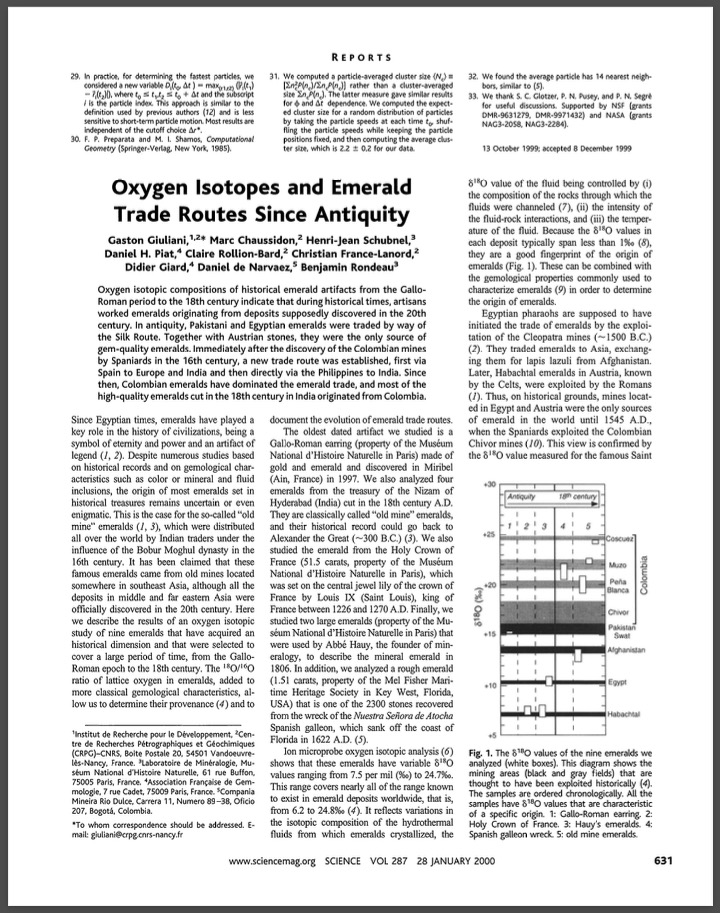
Oxygen isotopes and emerald trade routes since antiquity

Oxygen isotopes and emerald trade routes since antiquity

Giuliani, G., Chaussidon, M., Schubnel, H.-J., Piat, D.H., Rollion-Bard, C., France-Lanord, C., Giard, D., Narvaez, D.d. and Rondeau, B. (2000)

Journal Article · Source: Science · Publisher: American Association for the Advancement of Science · Volume: Vol. 287 · Issue: No. 5453 · Pages: pp. 631–633

Abstract
Oxygen isotopic compositions of historical emerald artifacts from the Gallo-Roman period to the 18th century indicate that during historical times, artisans worked emeralds originating from deposits supposedly discovered in the 20th century. In antiquity, Pakistani and Egyptian emeralds were traded by way of the Silk Route. Together with Austrian stones, they were the only source of gem-quality emeralds. Immediately after the discovery of the Colombian mines by Spaniards in the 16th century, a new trade route was established, first via Spain to Europe and India and then directly via the Philippines to India. Since then, Colombian emeralds have dominated the emerald trade, and most of the high-quality emeralds cut in the 18th century in India originated from Colombia.
Keywords
gems, beryl, emerald, Afghanistan, Brazil, Colombia, China, Zimbabwe, Pakistan, Zambia, Madagascar, Mozambique, emerald trade, history of gemology, gem trade
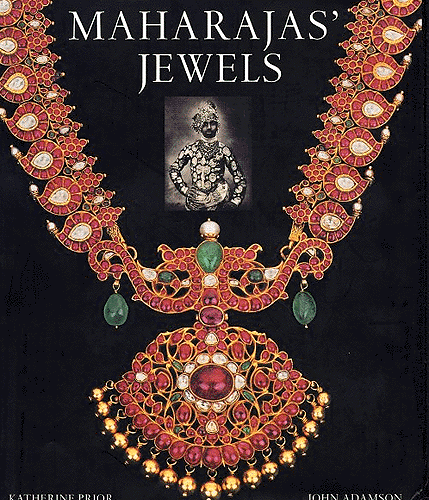
Maharajas' Jewels

Maharajas' Jewels

Prior, K. and Adamson, J. (2000)

Book · Publisher: Vendome Press · Pages: 205 pp.

Abstract
The stories of Indian princes and their jewelry and precious stones are brought together in this illustrated narrative tracing the rise and fall of India's leading royal houses through the dramatic fortunes of their crown jewels. Traditionally, precious metals and jewels have been, for Indians rich and poor, a repository of wealth and a status symbol. For the reigning families, jewels also had symbolic and religious significance. Also here are the original drawings by great European jewelers of the pieces they designed for their exotic and demanding clients. The text is both lively and scholarly, drawing from descriptions of such travelers as Marco Polo and Tavernier as well as Sanskrit dramatists extolling the riches of India.
Keywords
corundum, history.1, quality.10, India.12, Tajikistan.12, spinel, beryl, emerald, ruby, diamond, Jewelry India., gems, Indian lapidary
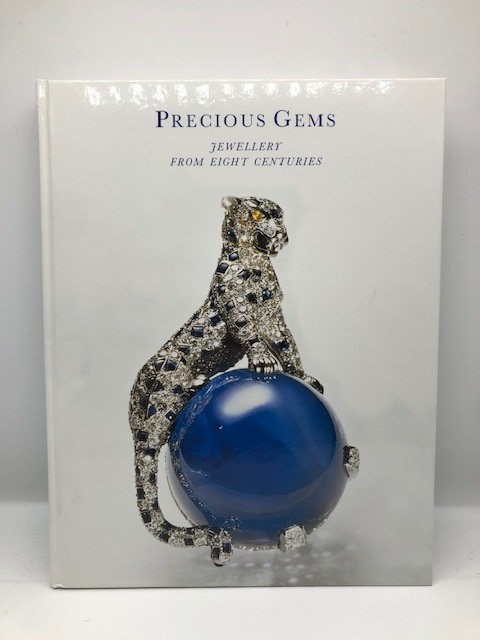
Precious Gems • Jewellery from Eight Centuries

Precious Gems • Jewellery from Eight Centuries

NationalMuseum (2000)

Book · Publisher: NationalMuseum · Pages: 229 pp.

Abstract
Hardback catalogue of the exhibition at the Nationalmuseum, Stockholm, in 2000. 239 pages. Full colour photographs throughout including full page plates. Pictorial boards.
Keywords
gems, ruby, sapphire, quality.11, beryl, emerald,
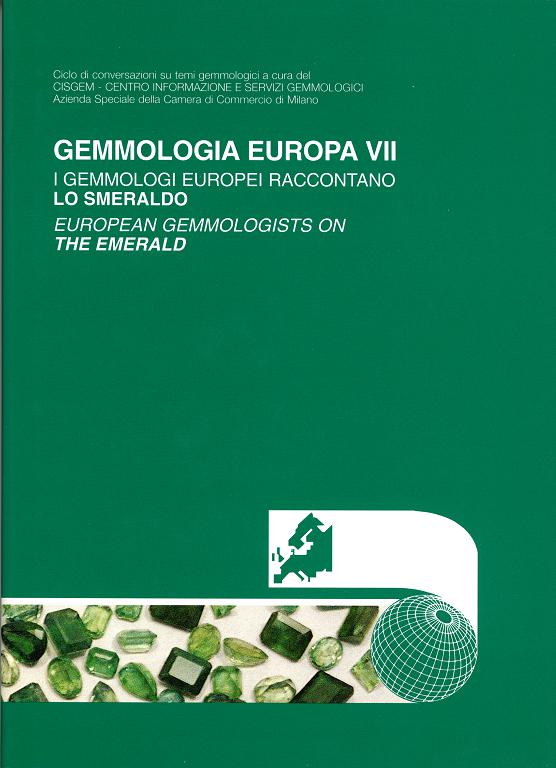
European Gemmologists on Emerald

European Gemmologists on Emerald

CISGEM (2000)

Conference Proceedings · Source: Gemmologia Europa · Publisher: CISGEM · Volume: Vol. 7 · Pages: 221 pp. · Language: in English & Italian

Abstract
Collection of papers on emerald from the Gemmologia Europa VII Conference.
Keywords
gems, beryl, emerald, Brazil, Colombia, synthetic beryl, synthetic beryl, emerald
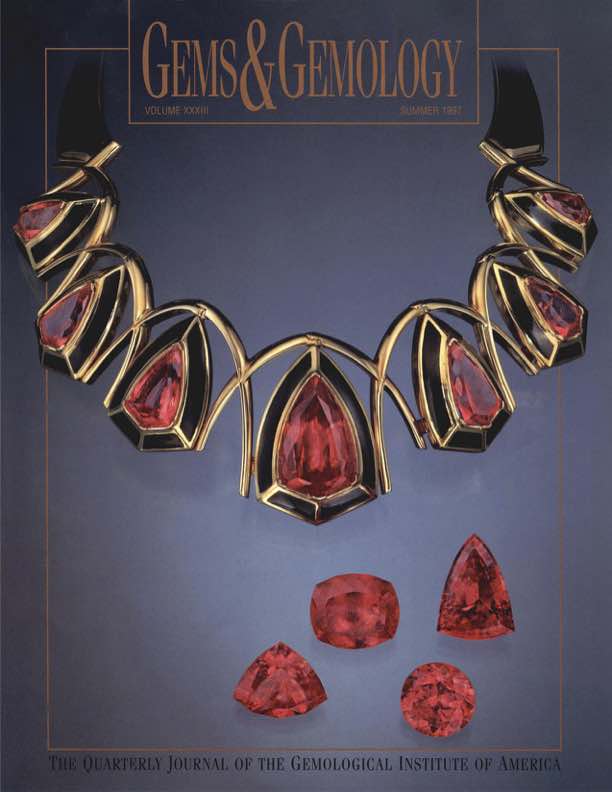
Update on emeralds from the Sandawana mines, Zimbabwe

Update on emeralds from the Sandawana mines, Zimbabwe

Zwaan, J.C., Kanis, J. and Petch, E.J. (1997)

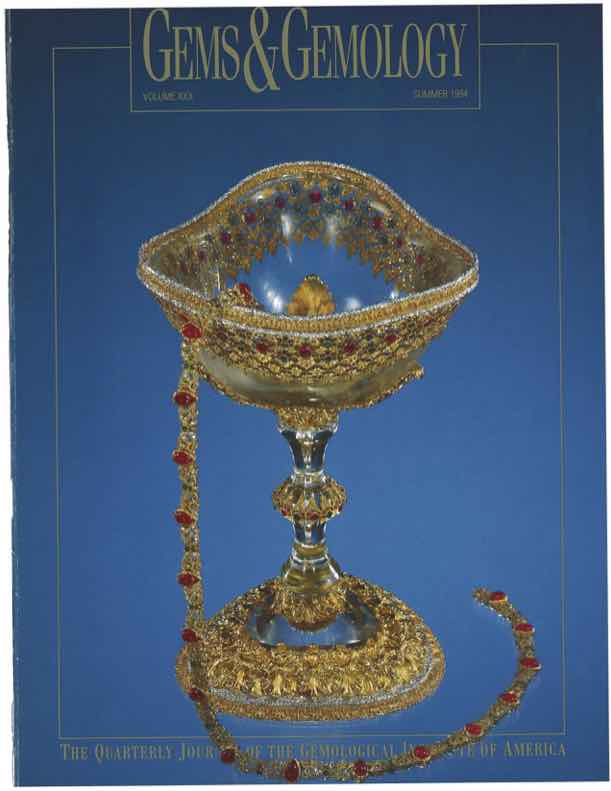
Journal Article · Source: Gems & Gemology · Volume: Vol. 33 · Issue: No. 2, Summer · Pages: pp. 80–100

Abstract
Zimbabwe’s Sandawana mines have been an important producer of emeralds for 40 years. Since the mines came under new ownership in 1993, consistent production has been established and, in addition to the small sizes for which Sandawana is known, greater numbers of polished stones as large as 1.50 ct have been produced. Currently, mining at the most active area, the Zeus mine, is done underground, with the ore processed in a standard washing/ screening trommel plant. Sandawana emeralds can be readily separated from emeralds from other localities. They have high refractive indices and specific gravities. Two amphiboles, actinolite and cummingtonite, are abundant inclusions; albite and apatite are common. Also found are remnants of fluid inclusions. Chemically, Sandawana emeralds typically have a very high chromium content.
Keywords
gems, beryl, emerald, Zimbabwe, Rhodesia, Sandawana
Jewels and Journeys: The case of the medieval gemstone called al-Yatima

Jewels and Journeys: The case of the medieval gemstone called al-Yatima

Shalem, A. (1997)

Journal Article · Source: Muqarnas · Publisher: Brill · Volume: Vol. 14 · Pages: pp. 42–56

Abstract
Exquisite pieces of jewelry with huge precious stones were, and still are, objects of irresistible attraction to everyone. Their beauty and rarity captivate, and above all their adventurous, if occasionally legendary, histories and royal genealogies are fascinating. Among the world-famous gemstones whose history is said to go back to the medieval period is the Timur ruby in the collection of Her Majesty Queen Elizabeth II, which bears the names of several other royal owners in addition to the great Timurid ruler Tamerlane (1336–1404). Another is the so-called Hope diamond, now in the Smithsonian Institution, Washington, D.C., which was probably bought in India by the French merchant Tavernier, who later sold it to King Louis XIV. It was kept until the French Revolution in the royal collection, reappeared in 1830 in London, and was bought by the banker Henry Hope after whom it is named. It was presented to the Smithsonian by the New York jeweler Harry Winston. Of no less fame is the so-called Smaragd Karls des Grossen (Charlemagne’s emerald) in the treasury of Mittelzell-Reichenau which, though made out of a large piece of emerald glass (length: 56 cm, height: 37 cm, and width: 3 cm), was regarded until the eighteenth century as the biggest emerald in the world and was traditionally said to have been given to Charlemagne by Harun al-Rashid. It should be pointed out, however, that a certain huge emerald (smaragdum magnum) was mentioned in the Chronicon Mundi (completed in 1236) of D. Lucas, the bishop of Tuy. He says that the splendid stone was given by King Alfonso VII to King Louis VII on a visit that the latter paid to the church of Santiago de Compostela, probably in 1154. He adds that the stone was presented to Alfonso VII by King “Zafadola”—that is, King Sayf al-Dawla, ruler of Rueda de Jalón in Aragon—and that it was carried by King Louis back to France; Louis later presented it to the monastery of the Blessed Dionysius.
Keywords
gems, pearls, Arabic mineralogy, al-Biruni, famous pearls, al-Yatima pearl, Arabic Mineralogy, Islamic jewelry, Islamic gems
Emerald and green beryl from Central Nigeria

Emerald and green beryl from Central Nigeria

Schwarz, D., Kanis, J. and Kinnaird, J. (1996)

Journal Article · Source: Journal of Gemmology · Volume: Vol. 25 · Issue: No. 2, April · Pages: pp. 117–141

Abstract
Mineralogical and gemmological characteristics of emeralds and green beryls from the central Nigerian Kaduna and Plateau States are presented. A genetic model has been established for the occurrence of these gemstones within greisen associations of Mesozoic alkali granite ring complexes. Gemmologists should be able to distinguish Nigerian emeralds from those of other origins based on their unique inclusions and chemical characteristics. In Nigerian specimens containing solid inclusions, the specific mineral assemblage of albite + fluorides (fluorite, boldyrevite, ralstonite) + F-silicate + Fe-rich mica + ilmenite + monazite is diagnostic of the locality. Growth structures and fluid inclusions are extremely common; the latter display a wide range of features, including Colombian-type three-phase inclusions. For Nigerian emeralds exhibiting an inclusion pattern similar to Colombian material, the most reliable distinction is via absorption spectroscopy. Nigerian emeralds display ‘mixed spectra’ with absorption peaks due to Cr³⁺, Fe²⁺, Fe³⁺, and Fe²⁺/Fe³⁺, whereas Colombian emeralds typically show spectra largely devoid of iron-related features.
Keywords
gems, beryl, emerald, Nigeria
Lab report: Jadeite boulder—treated

Lab report: Jadeite boulder—treated

Du Toit, G., Charoensrithanakul, S., Dunaigre, C., Gawenuntavong, S., Looney, J., Niphatthanaphan, M., Pingkarawat, P. and Virunhaphol, V. (1996)

Journal Article · Source: JewelSiam · Volume: Vol. 7 · Issue: No. 4, Aug–Sept · Pages: pp. 109–110

Keywords
gems, jade, jadeite, fei cui, jade treatments, jade boulder, Myanmar, emerald, Vietnam ruby,
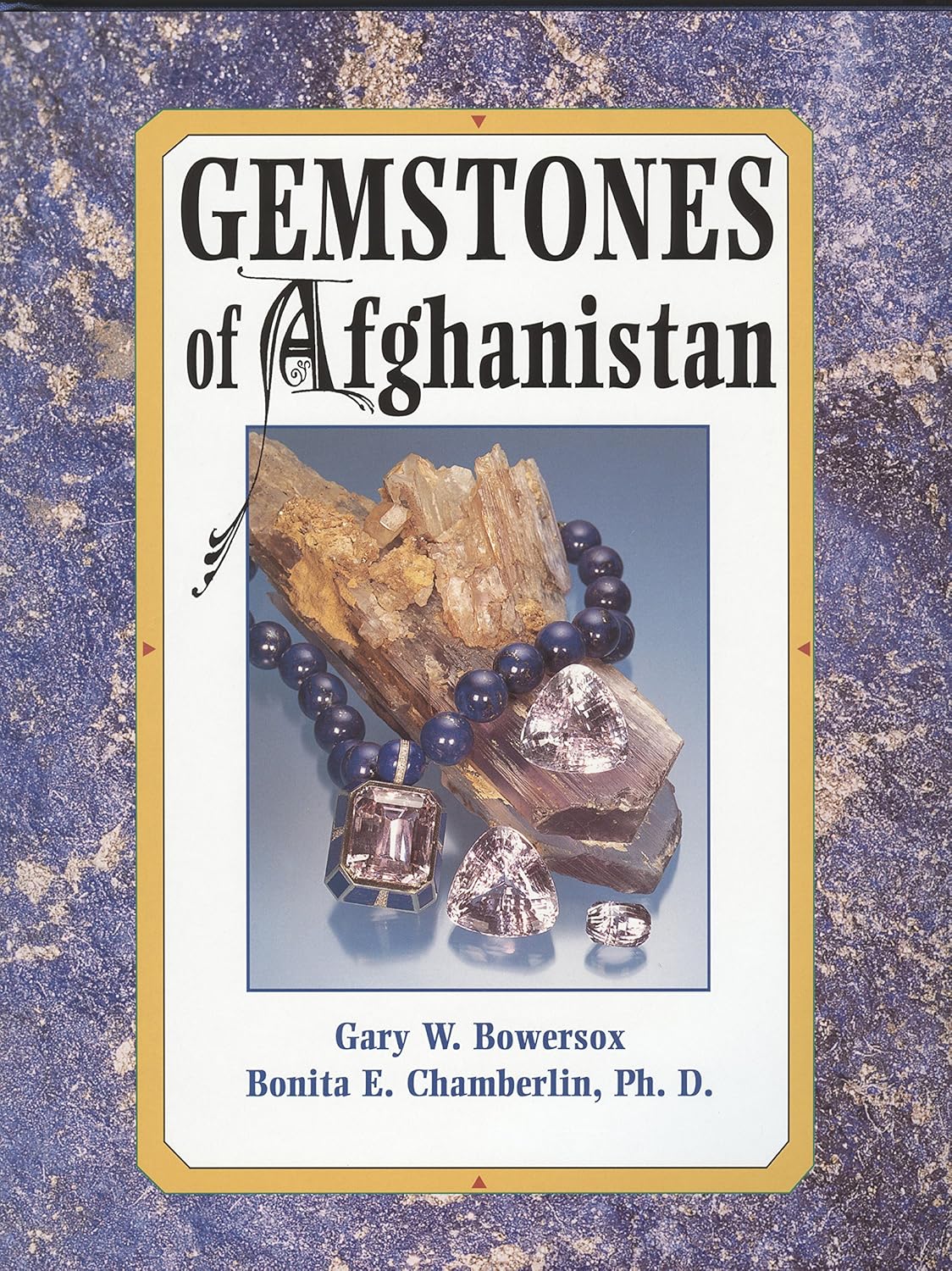
Gemstones of Afghanistan

Gemstones of Afghanistan

Bowersox, G.W. and Chamberlin, B. (1995)

Book · Publisher: Geoscience Press · Pages: 220 pp.

Abstract
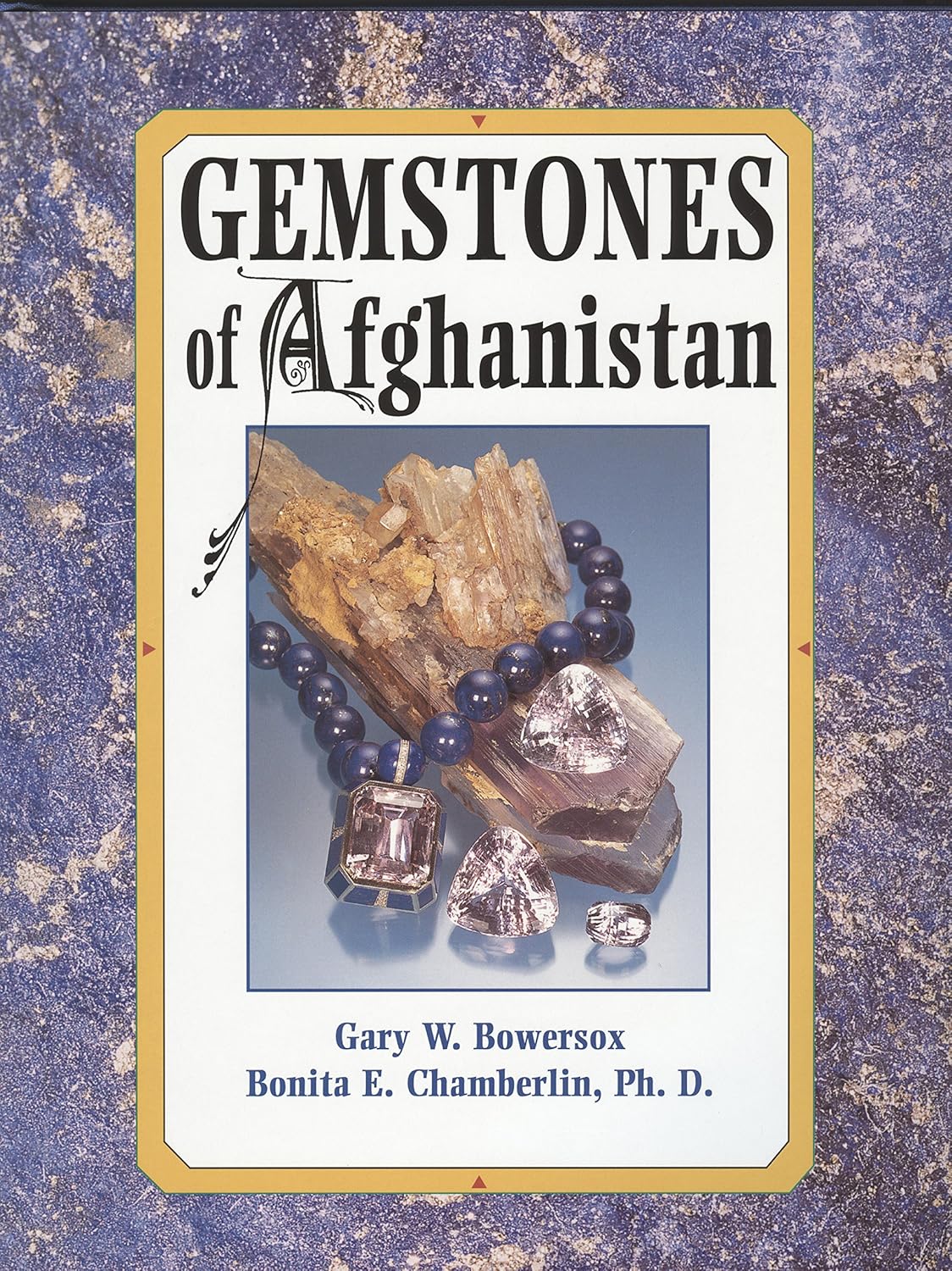
Mineral News, March, 1996: This is the first comprehensive book on the geology, history, and lore of the gemstones and gem deposits of Afghanistan. This book is well documented and the reference list of each chapter is extensive. Although, most of these references are on the history and geography of Afghanistan, there are many references on the geology and gemstones. The authors have been associated with Afghanistan gemstones and mining for many years. They have worked with three Afghan governments, the Soviets, and the Afghan miners developing the gem deposits. This book takes the reader through the history of Afghanistan, to the recent war with the Soviets into the present times. The Geology is explained with information on the region and descriptions of each deposit. The discovery of each deposit is discussed as well as the present situation and mining. ....Naturally this book's emphasis is on gem materials, but there is much here for the mineral collector too. Obviously, most gem deposits also produce specimens suitable for any mineral collection and many of the deposits described have produced specimens that make it to the mineral market and not the gem cutting tables around the world. Although the geology descriptions are sometimes brief, Gemstones of Afghanistan is a good source of information on the mines, mining methods, geology, and minerals/gem materials Afghanistan produces.
Keywords
corundum, Afghanistan.12, Tajikistan.12, spinel, beryl, emerald, tourmaline, spodumene, aquamarine, lapis lazuli, gems
An update on the Ural emerald mines

An update on the Ural emerald mines

Laskovenkov, A.F. and Zhernakov, V.I. (1995)

Journal Article · Source: Gems & Gemology · Volume: Vol. 31 · Issue: No. 2, Summer · Pages: pp. 106–113

Abstract
The emeralds of the Ural Mountains, in what is now called the Russian Federation, have been known for more than 160 years. They were famous worldwide duringthe early part of the 20th century. However, because little information was made available about these deposits in recent years, many in the gem industry concluded that they had been exhausted. This article reveals that mining and processing are ongoing in the region, with significant reserves of gem-qualityemerald still to be exploited. In addition, the reopening of four mines promises to increase commercial production.
Keywords
beryl, chrysoberyl, beryl, emerald, alexandrite, Russia, Urals, Malysheva, gems
Lapis Lazuli (lazward) deposits of Badakhshan (Bactria)

Lapis Lazuli (lazward) deposits of Badakhshan (Bactria)

Bowersox, G.W. and Chamberlin, B. (1995)

Book Section · Source: Gemstones of Afghanistan · Publisher: Geoscience Press · Pages: pp. 37–63

Abstract
Mineral News, March, 1996: This is the first comprehensive book on the geology, history, and lore of the gemstones and gem deposits of Afghanistan. This book is well documented and the reference list of each chapter is extensive. Although, most of these references are on the history and geography of Afghanistan, there are many references on the geology and gemstones. The authors have been associated with Afghanistan gemstones and mining for many years. They have worked with three Afghan governments, the Soviets, and the Afghan miners developing the gem deposits. This book takes the reader through the history of Afghanistan, to the recent war with the Soviets into the present times. The Geology is explained with information on the region and descriptions of each deposit. The discovery of each deposit is discussed as well as the present situation and mining. ....Naturally this book's emphasis is on gem materials, but there is much here for the mineral collector too. Obviously, most gem deposits also produce specimens suitable for any mineral collection and many of the deposits described have produced specimens that make it to the mineral market and not the gem cutting tables around the world. Although the geology descriptions are sometimes brief, Gemstones of Afghanistan is a good source of information on the mines, mining methods, geology, and minerals/gem materials Afghanistan produces.
Keywords
corundum, Afghanistan.12, Tajikistan.12, spinel, beryl, emerald, tourmaline, spodumene, aquamarine, lapis lazuli, gems
Humboldt's Travels in Siberia (1837–1842): The Gemstones by Gustav Rose

Humboldt's Travels in Siberia (1837–1842): The Gemstones by Gustav Rose

Humboldt, A., von (1994)

Book · Publisher: Geoscience Press · Pages: 80 pp.

Abstract
At the invitation of Nicholas I of Russia, three German scientists undertook a scientific expedition into the remote Siberian reaches of the Russian Empire in 1837. Alexander von Humboldt, accompanied by Gustav Rose and Christian Gottfried Ehrenberg, covered nearly 16,000 kilometers in their travels, reaching as far east as the Altai Mountains, just north of the Mongolian border. Rose, the mineralogical expert of the group, recorded the account of their investigations, published in 1837 as Reise nach dem Ural, dem Altai und dem Kaspischen Meere. John Sinkankas has made this enjoyable work accessible to the English-speaking community by providing a translation of the good parts, i.e. those dealing with the gem deposits. Sinkankas has provided the reader with ample footnotes, helpful definitions, conversion factors for Rose’s weights and measures, and corrections and criticisms that allow a full comprehension of the extracts. At the end we also find a short biography of Rose himself. This is a fine, scholarly contribution that also makes very interesting reading. I recommend it to anyone with an interest in the history of mineralogy or gemology. — The Mineralogical Record, Vol. 26, May/June 1995.
Keywords
gems, Humboldt, beryl, topaz, emerald, aquamarine, Russia, Ural Mountains, tourmaline, alexandrite, Yekaterinberg,
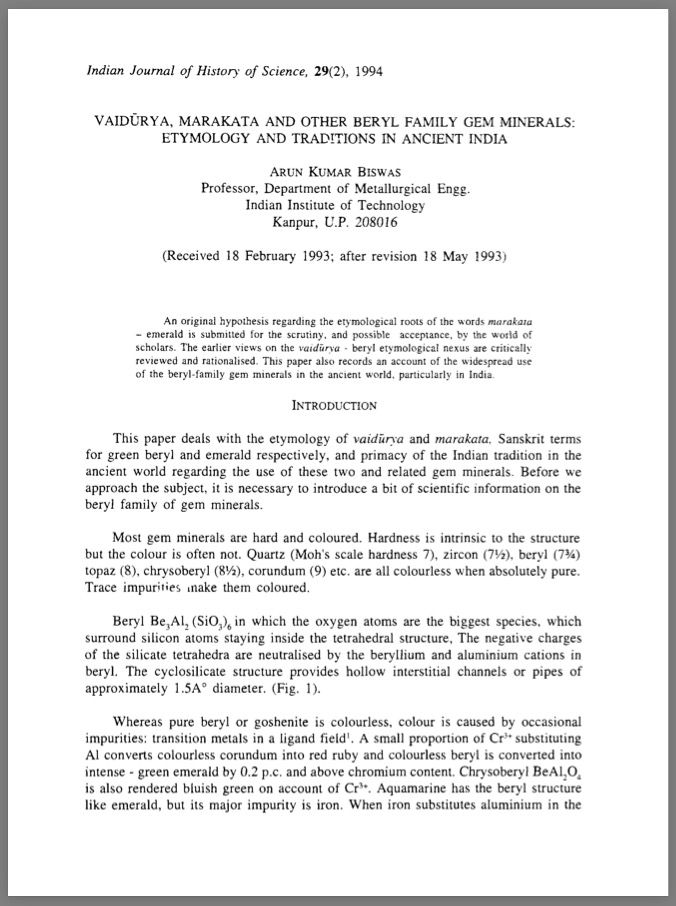
Vaidurya, marakata and other beryl family gem minerals: Etymology and traditions in ancient India

Vaidurya, marakata and other beryl family gem minerals: Etymology and traditions in ancient India

Biswas, A.K. (1994)

Journal Article · Source: Indian Journal of History of Science · Volume: Vol. 29 · Issue: No. 2 · Pages: pp. 139–154

Abstract
An original hypothesis regarding the etymological roots of the words marakara – emerald – is submitted for scholarly scrutiny and possible acceptance, while earlier views on the vaidurya – beryl – etymological nexus are critically reviewed and rationalized; the paper also presents an account of the widespread use of beryl-family gem minerals in the ancient world, particularly in India.
Keywords
gems, beryl, aquamarine, morganite, goshenite, heliodor, emerald, etymology, India, Indian lapidary
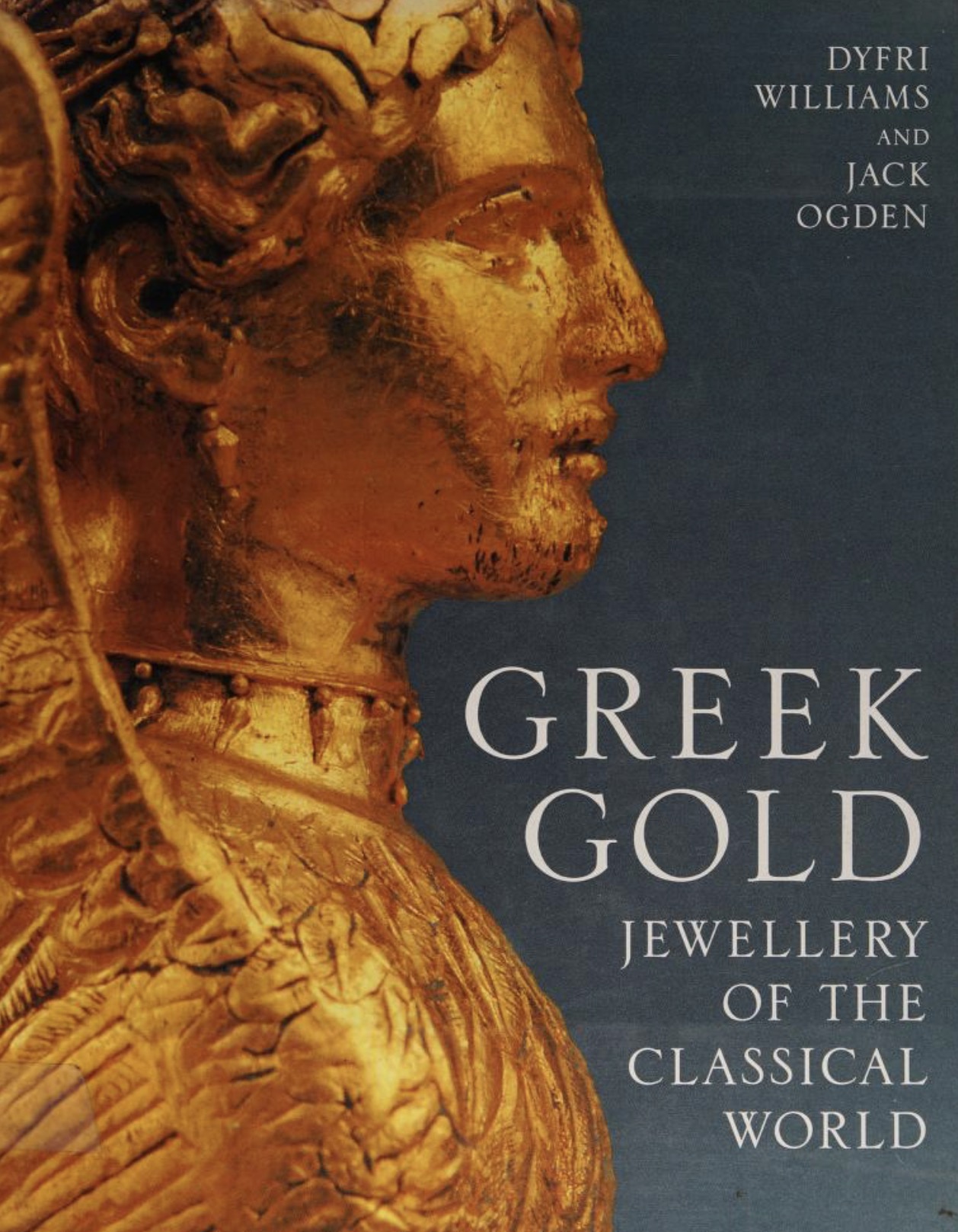
Greek Gold | Jewellery of the Classical World

Greek Gold | Jewellery of the Classical World

Williams, D. and Ogden, J.M. (1994)

Book · Publisher: Harry N. Abrams · Pages: 264 pp.

Abstract
The consummate mastery of Greek goldsmiths and the beauty of their designs elevated jewelry in the Classical period to glorious artistic heights. This volume presents nearly 200 of the finest surviving pieces made between the fifth and the early third century B.C., the era that also saw the creation of the Parthenon at Athens and the temple of Artemis at Ephesus, the sculptures of Polykleitos, Praxiteles, and Lysippus, and the paintings of Polygnotos, Apollodoros, Zeuxis, and Nikias.--BOOK JACKET. "Drawn from the unrivaled collections of the Hermitage, St. Petersburg, The Metropolitan Museum of Art, New York, and the British Museum, London, the works in this book represent jewelry produced throughout the Greek world. Regional variations and preferences are seen in jewelry from Greece itself, as well as from the wealthy Greek cities in Asia Minor, the Crimea, and South Italy and from partially Hellenized areas such as Cyprus, Egypt, and the Eastern Mediterranean. The authors describe the goldsmiths' techniques in detail, with the aid of specially taken scanning electron microphotographs, and they discuss how the jewelry was worn, its iconography, and how it relates to other arts, such as drawing and sculpture. Each piece is illustrated in full color, with numerous color details showing the intricacy and subtlety of these masterpieces of ancient Greek craftsmanship."
Keywords
gems, history of gemology, early lapidaries, history of mineralogy, jewelry, ancient jewelry, Greek jewelry, beryl, emerald
Emeralds from the Mananjary region, Madagascar: Internal features

Emeralds from the Mananjary region, Madagascar: Internal features

Schwarz, D. (1994)

Journal Article · Source: Gems & Gemology · Volume: Vol. 30 · Issue: No. 2, Summer · Pages: pp. 88–101

Abstract
Inclusions in emeralds from the Mananjary region in the eastern part of the island nation of Madagascar are reported and compared with inclusions in emeraldsf rom other, especially African, localities. Although most of these internal features are similar to those found in emeralds from other schist-type deposits, Mananjary emeralds usually can be separated from emeralds from other localities by means of associations of certain mineral inclusions (especially talc, carbonates, amphiboles, and quartz) with specific types of fluid inclusions.
Keywords
gems, inclusions, beryl, emerald, Madagascar
La description de la “pierre précieuse” au Moyen Âge: Encyclopédies, lapidaires et textes littéraires

La description de la “pierre précieuse” au Moyen Âge: Encyclopédies, lapidaires et textes littéraires

The description of the precious stone in the Middle Ages: encyclopedias, lapidaries, and literary texts

Fery-Hue, F. (1993)

Journal Article · Source: Bien dire et bien aprendre · Issue: No. 11 · Pages: pp. 147–176 · Language: in French

Abstract
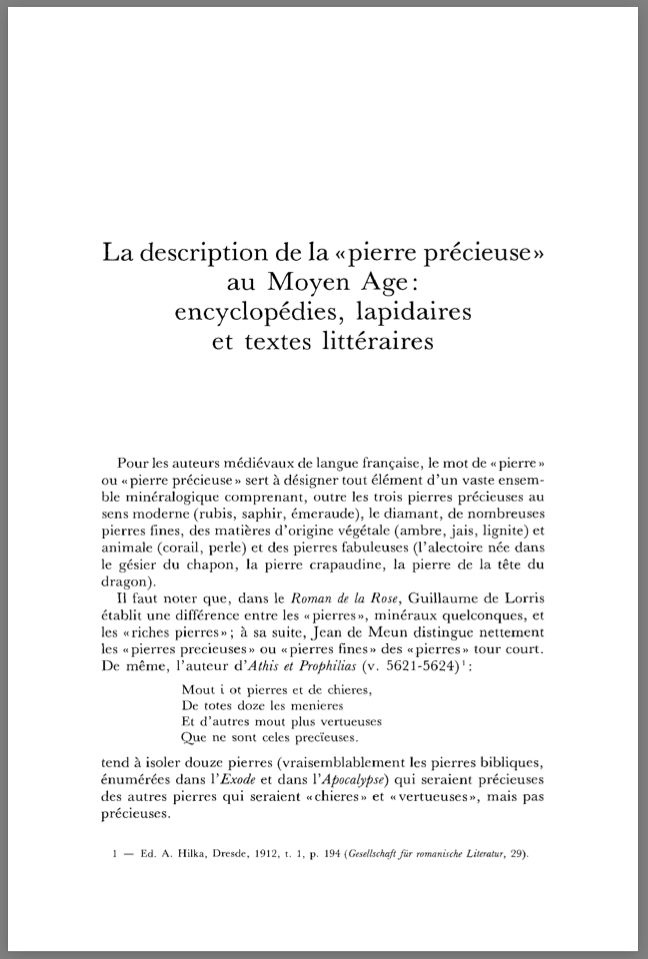
For medieval French-speaking authors, the term “stone” or “precious stone” is used to designate any element within a vast mineralogical ensemble that includes, in addition to the three precious stones in the modern sense (ruby, sapphire, emerald), the diamond, numerous semi-precious stones, materials of plant origin (amber, jet, lignite) and animal origin (coral, pearl), as well as fabulous stones (the alectoria born in the gizzard of a capon, the toadstone, the stone from the dragon’s head). It is worth noting that, in the Roman de la Rose, Guillaume de Lorris establishes a distinction between “stones,” meaning ordinary minerals, and “rich stones”; following him, Jean de Meun clearly distinguishes “precious stones” or “fine stones” from plain “stones.” Likewise, the author of Yliadus et Prophilias (vv. 5621–5624): “He had many stones and costly ones, of all twelve kinds, and others far more virtuous than those that are precious,” tends to set apart twelve stones (likely the biblical stones listed in Exodus and Revelation) as being truly precious, distinct from other stones that are “costly” and “virtuous,” but not precious. The lapidaries of the Middle Ages, whether in Latin or French (some were later translated into Italian, English, German…), in verse or in prose, are all more or less heirs to the tradition of Marbode’s De Gemmis, and are mineralogical works par excellence. The description of the “precious stone” typically consists of notes on color—sometimes very precise—indications of hardness, physical properties (electromagnetic phenomena), more rarely its weight, and finally its supposed geographical origins. This is followed by a listing of its “virtues” as an amulet or in the form of collyria, potions, ointments: this body of superstitions and magical remedies perpetuates the medical doctrine of “signatures.” Philippe de Thaon, in his alphabetical Lapidary (vv. 1693–1698), recalls four principal ways in which stones were used: “Moreover, medicine of the elders shows four ways: to touch, to carry, to drink, to gaze upon. These four ways, God placed them with great meaning.”
Keywords
gems, ancient lapidaries, Albertus Magnus, alchemy, early gemology, early mineralogy

Exploring the Literature of Emerald

Emerald literature spans gemology, mineralogy, deposits, identification, treatments, synthesis, history and the gem trade, with important sources covering deposits around the world.

For a curated guide to this subject, read Green Fire — Lotus Gemology's Guide to the Literature of Emerald.

About Four Treasures

Four Treasures is Lotus Gemology's freely accessible gemological reference database. Use the full database to search by author, title or keyword and explore literature on gemology, mineralogy, jewelry and related fields. Where available, hyperlinks on titles may lead directly to the full publication.

Search the Complete Four Treasures Database