Emerald Bibliography

Emerald Bibliography

Explore books, articles and historical sources on emerald in Four Treasures, the Lotus Gemology reference database. This bibliography brings together matching records from the collection, with publication details, abstracts and cover images where available.

Emerald References

The list below matches the terms emerald or emeralds in the database's searchable fields. Some references discuss emeralds as part of a broader subject.

61–80 of 844 matching references
Histoire des anciennes mines d’émeraude d’Égypte

Histoire des anciennes mines d’émeraude d’Égypte

History of the ancient emerald mines of Egypt

Gilg, H.A. and Grundmann, G. (2022)

Book Section · Source: Émeraudes, tout un monde! · Publisher: Les Editions du Piat · Pages: pp. 161–168 · Language: in French

Abstract
Superb book on emeralds around the world, covering the history, geology and gemology of emerald in all the major localities. Beautifully illustrated and printed.
Keywords
gems, beryl, emerald, Egypt, Cleopatra, history of gemology, archaeology, archaeologemology
Émeraudes de la vallée du Panjshir, Afghanistan

Émeraudes de la vallée du Panjshir, Afghanistan

Emeralds from the Panjshir Valley, Afghanistan

Bowersox, G.W. (2022)

Book Section · Source: Émeraudes, tout un monde! · Publisher: Les Editions du Piat · Pages: pp. 259–264 · Language: in French

Abstract
Superb book on emeralds around the world, covering the history, geology and gemology of emerald in all the major localities. Beautifully illustrated and printed.
Keywords
gems, beryl, emerald, Afghanistan, Central Asia, Pakistan, China
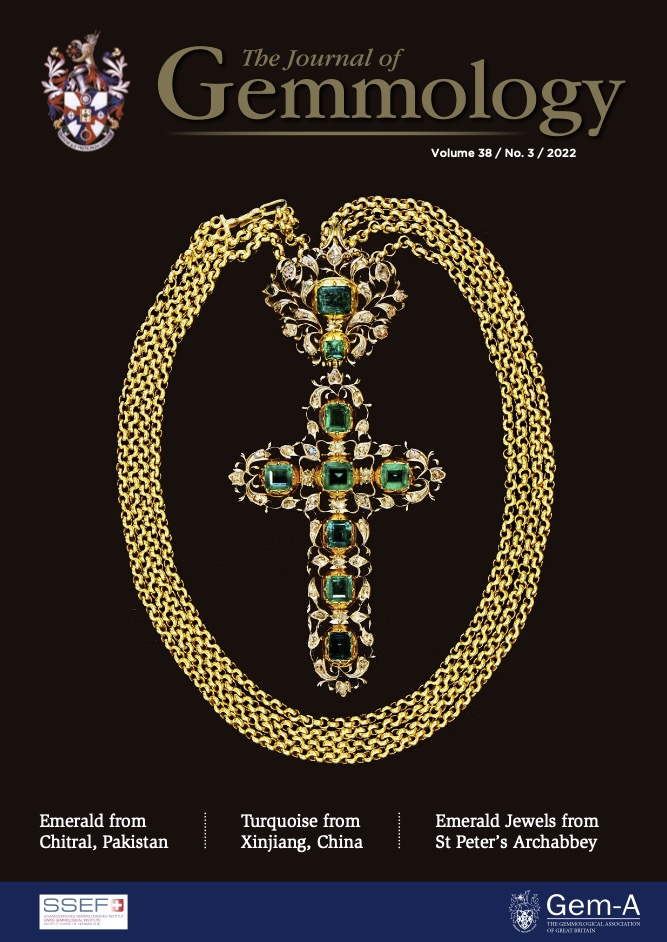
Emerald from the Chitral region, Pakistan: A new deposit

Emerald from the Chitral region, Pakistan: A new deposit

Hanser, C.S., Häger, T., Botcharnikov, R.E. and Gul, B. (2022)

Journal Article · Source: Journal of Gemmology · Volume: Vol. 38 · Issue: No. 3 · Pages: pp. 234–252

Abstract
Emeralds from a new deposit in the Chitral District of Pakistan were investigated with polarised UV-Vis-NIR, FTIR and Raman spectroscopy, and their chemical compositions were studied using EPMA and LA-ICP-MS analyses. The results are compared to data from the literature for classical emerald deposits such as those in Colombia and Zambia, as well as the nearby Panjshir region of Afghanistan and others. It was found that the macroscopic appearance and habit of the Chitral specimens are similar to those from Khaltaro (Pakistan), and their spectroscopic characteristics resemble those of schist-hosted deposits (e.g. Zambia). The chemical analyses show high Cs and Li contents (consistent with a pegmatite-related origin), which are greater than the ranges of these elements reported in the literature for emeralds from most other important localities. In 2021, the Chitral deposit produced approximately 130 kg of loose emerald, and greater amounts are expected to be mined in the 2022 season.
Keywords
gems, beryl, emerald, Pakistan, Chitral
History of emerald mining in the Habachtal deposit of Austria, Part 2

History of emerald mining in the Habachtal deposit of Austria, Part 2

Schmetzer, K. (2022)

Journal Article · Source: Gems & Gemology · Volume: Vol. 58 · Issue: No. 1, Spring · Pages: pp. 18–46

Abstract
The Habachtal emerald deposit in Austria, one of Europe’s oldest known sources of emeralds, has a rich history dating back to at least 1797, when it was first described in scientific literature. While there are speculative links to Roman or Celtic exploitation, no definitive archaeological evidence confirms such early mining activities. Regular mining began in the early 1860s under Samuel Goldschmidt, a Viennese jeweler, who initiated operations that were later taken over by the English company Emerald Mines Limited in 1895. However, the venture faced legal and financial challenges, leading to its decline by 1903. By 1914, the property returned to Austrian ownership, acquired by local farmers and municipal leaders from Bramberg. This historical account, detailed in the Winter 2021 issue of Gems & Gemology, provides insights into the complex legal, geological, and economic factors that influenced the development of this unique alpine emerald source.
Keywords
gems, beryl, emerald, Austria, Habachtal
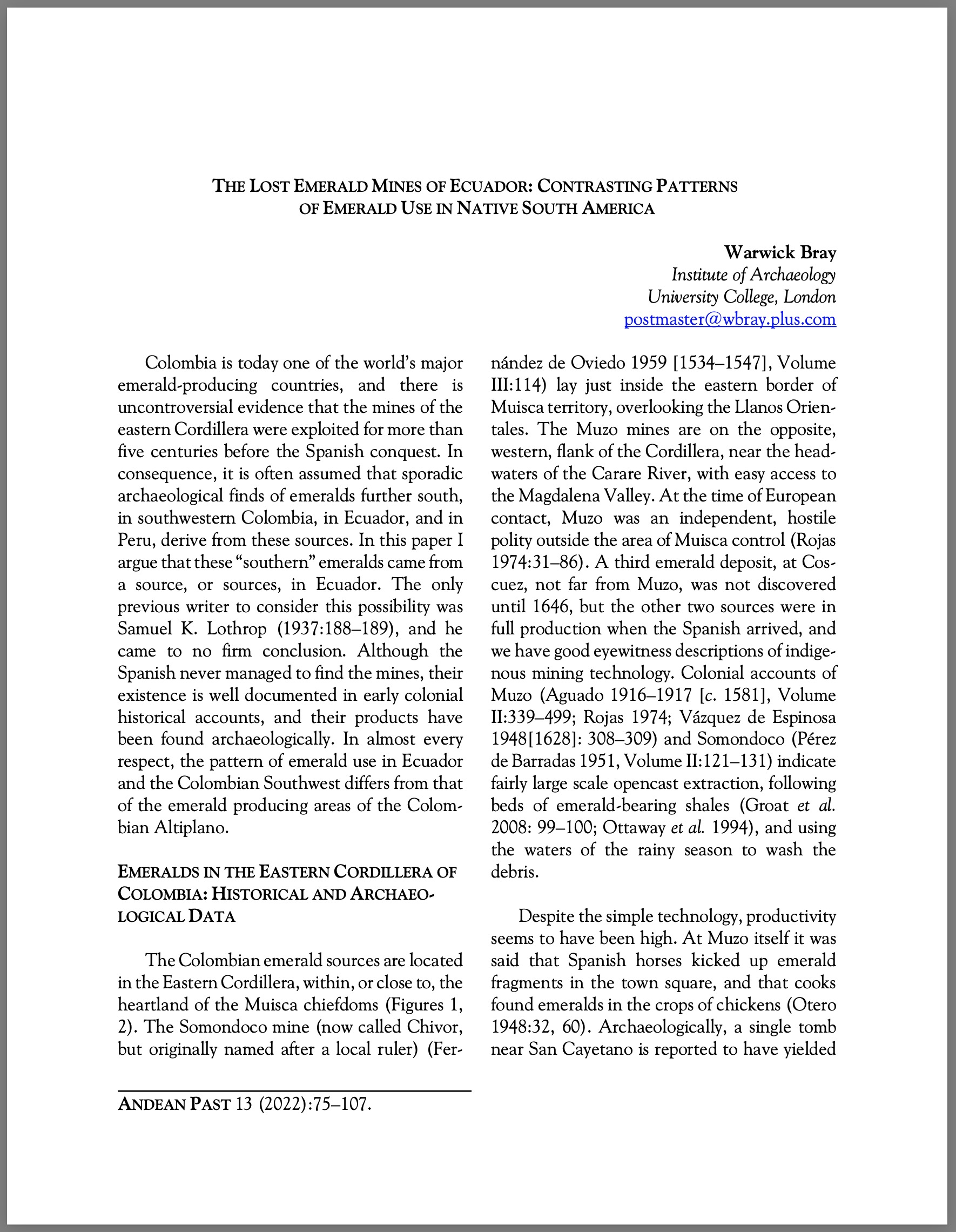
The lost emerald mines of Ecuador: Contrasting patterns of emerald use in native South America

The lost emerald mines of Ecuador: Contrasting patterns of emerald use in native South America

Bray, W. (2022)

Journal Article · Source: Andean Past · Volume: Vol. 13 · Pages: pp. 75–107

Abstract
Colombia is currently one of the world’s leading emerald producers, with clear evidence that the mines of the eastern Cordillera were exploited for over five centuries before the Spanish conquest, leading to the common assumption that archaeological finds of emeralds further south—in southwestern Colombia, Ecuador, and Peru—originated from these well-known sources. However, this paper argues that these southern" emeralds likely came from distinct sources in Ecuador, a possibility previously considered but left unresolved by Samuel K. Lothrop in 1937. Although the Spanish never located these Ecuadorian mines, early colonial historical records document their existence, and archaeological evidence supports their production. Moreover, the pattern of emerald use in Ecuador and southwestern Colombia significantly differs from that of the Colombian Altiplano, further suggesting independent sources in Ecuador."
Keywords
gems, bery, beryl, emerald, Colombia, Muzo, Chivor, Bogata
Through the lens of Islam: The pre-history of eye-glasses according to Arabic sources

Through the lens of Islam: The pre-history of eye-glasses according to Arabic sources

Benfeghoul, F. (2022)

Journal Article · Source: Zeitschrift für Geschichte der Arabisch-Islamischen Wissenschaften · Volume: Vol. 23 · Pages: pp. 259–315

Abstract
The history of vision aids was hitherto written almost entirely with material gathered only from the West, where there is an unmatched wealth of information. Dealing with the Islamic world, one is struck by how little is known about the origins and early uses of vision aids in the cultures of Islamic lands. This article is an attempt to close this gap by presenting and analysing a few texts produced between the 11th and 14th centuries, in the Eastern and Western parts of the Islamic world, with regard to the knowledge about the use of vision aids. The aim of this paper is (1) to show that, according to reliable Arabic sources that are gradually emerging, vision aids are indeed inscribed in a larger Arabic-Islamic tradition of knowledge and know-how; (2) to provide clear evidence for the use of such tools and present texts that help understand their cultural background; (3) to move the chronology of vision aids a little backward in time; (4) to help write the first chapters in a general history of visions aids in the cultures of Islamic lands; (5) to create an awareness for this subject and spark a critical debate in what looks like a new field of investigation.
Keywords
gems, Arabic mineralogy, al-Biruni, ruby, corundum, history.1
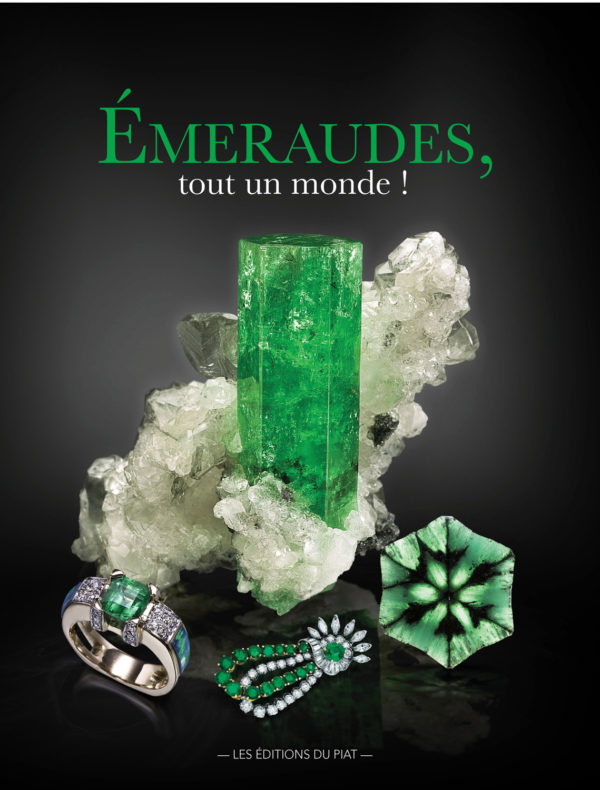
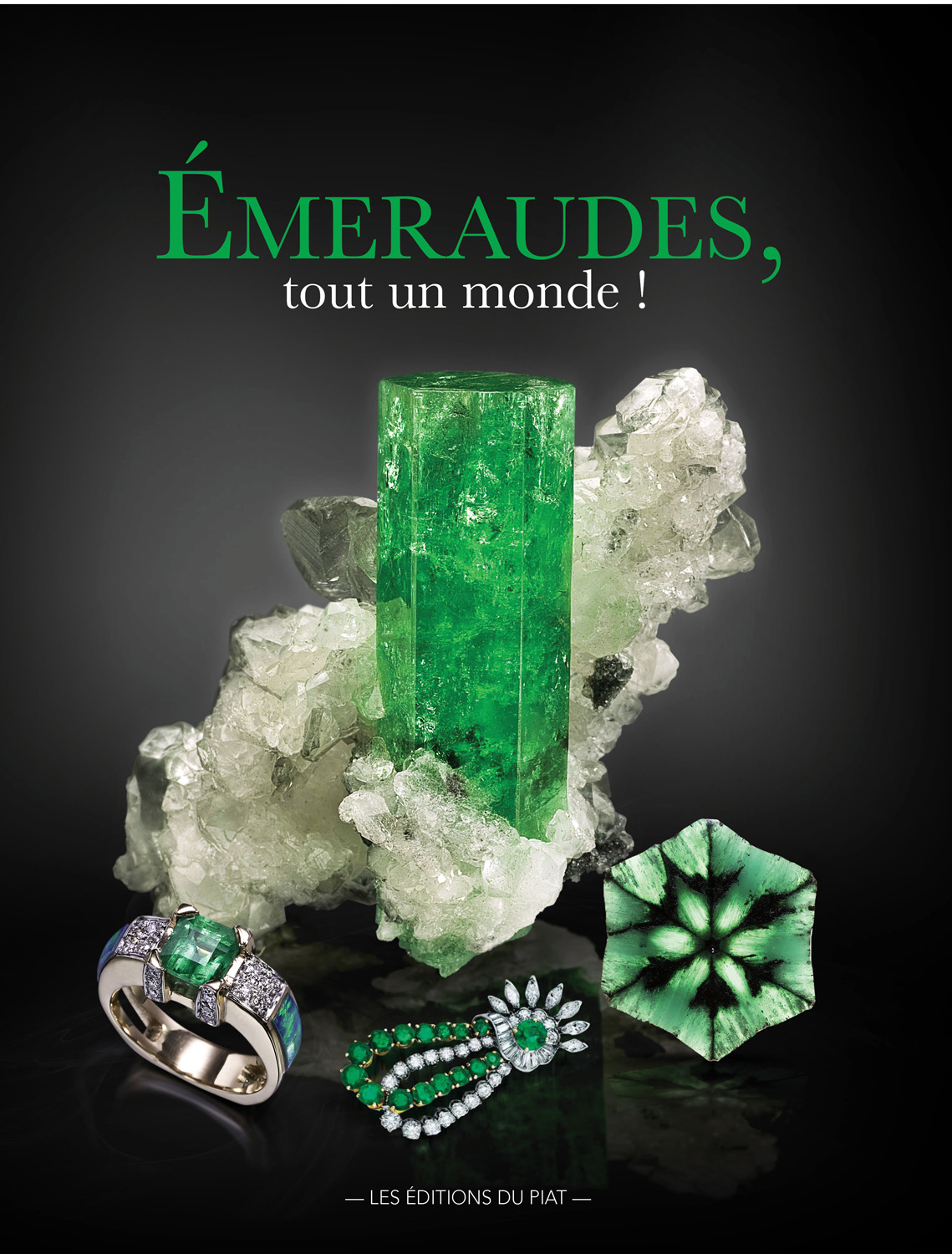
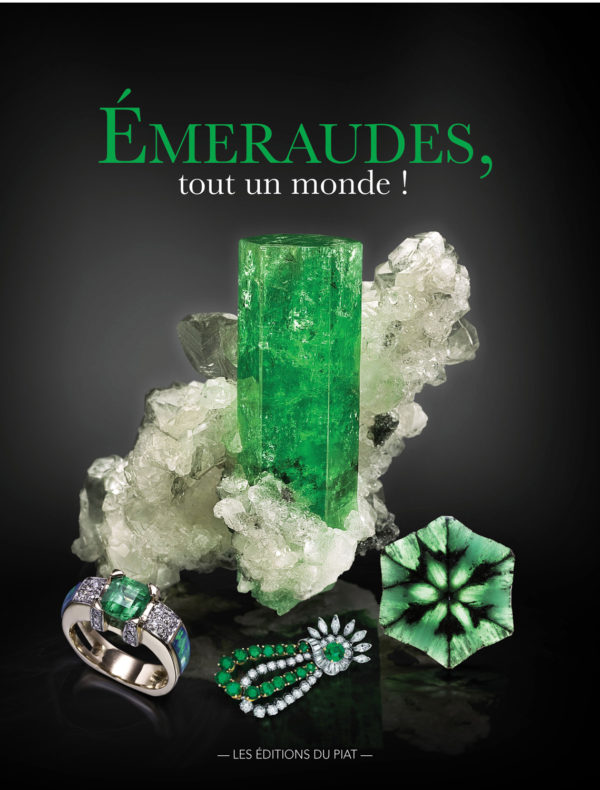
Émeraudes, tout un monde!

Émeraudes, tout un monde!

Emeralds, A Whole World

Giuliani, G. (2022)

Edited Book · Publisher: Les Editions du Piat · Pages: 448 pp. · Language: in French

Abstract
Superb book on emeralds around the world, covering the history, geology and gemology of emerald in all the major localities. Beautifully illustrated and printed.
Keywords
gems, beryl, emerald, Afghanistan, Brazil, Colombia, China, Zimbabwe, Pakistan, Zambia, Madagascar, Mozambique, inclusions, history
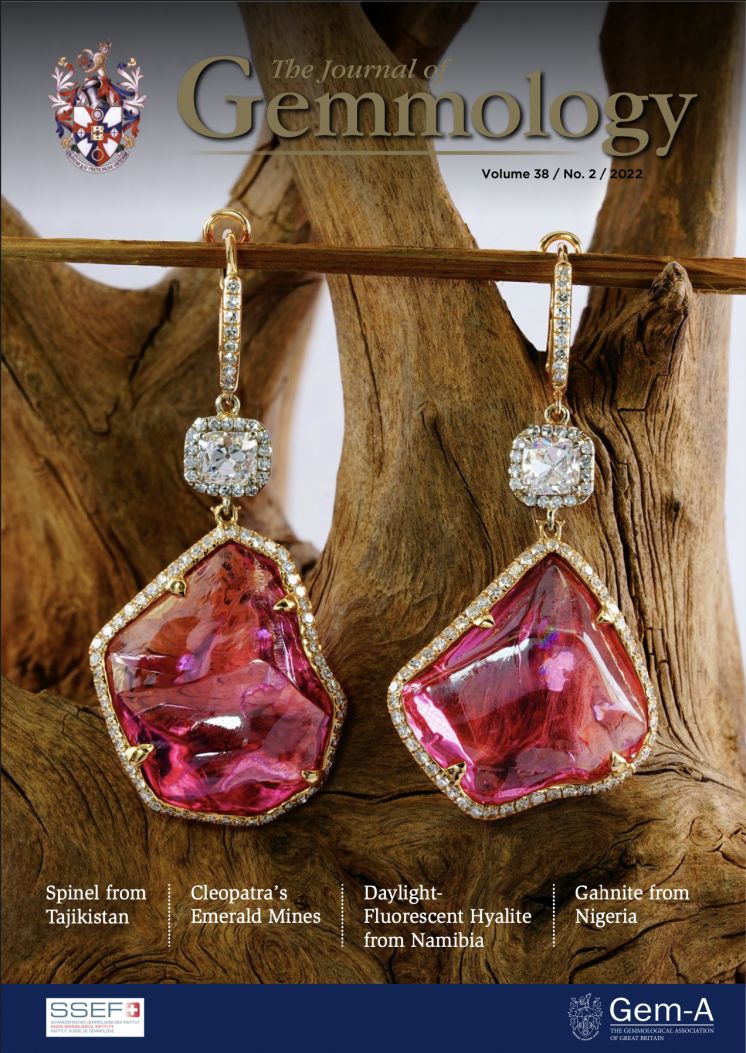
Cleopatra’s emerald mines: The marketing of a myth

Cleopatra’s emerald mines: The marketing of a myth

Ogden, J.M. (2022)

Journal Article · Source: Journal of Gemmology · Volume: Vol. 38 · Issue: No. 2 · Pages: pp. 156–170

Abstract
References to emeralds and their history frequently mention “Cleopatra’s emerald mines,” a phrase that appears widely across the internet, in gemological literature, educational materials, and even promotional dossiers issued by gem laboratories. The romantic association of emeralds with the iconic Egyptian queen—lover of Julius Caesar, wife of Mark Antony, and immortalized by Shakespeare and Elizabeth Taylor—is undoubtedly compelling. However, investigation reveals little evidence to substantiate this link; Cleopatra appears to have had no particular connection to emeralds or the mines from which they came. Her supposed association with the gem likely stems from the clever marketing of Edwin Streeter, a resourceful nineteenth-century London jeweller.
Keywords
gems, beryl, emerald, Egypt
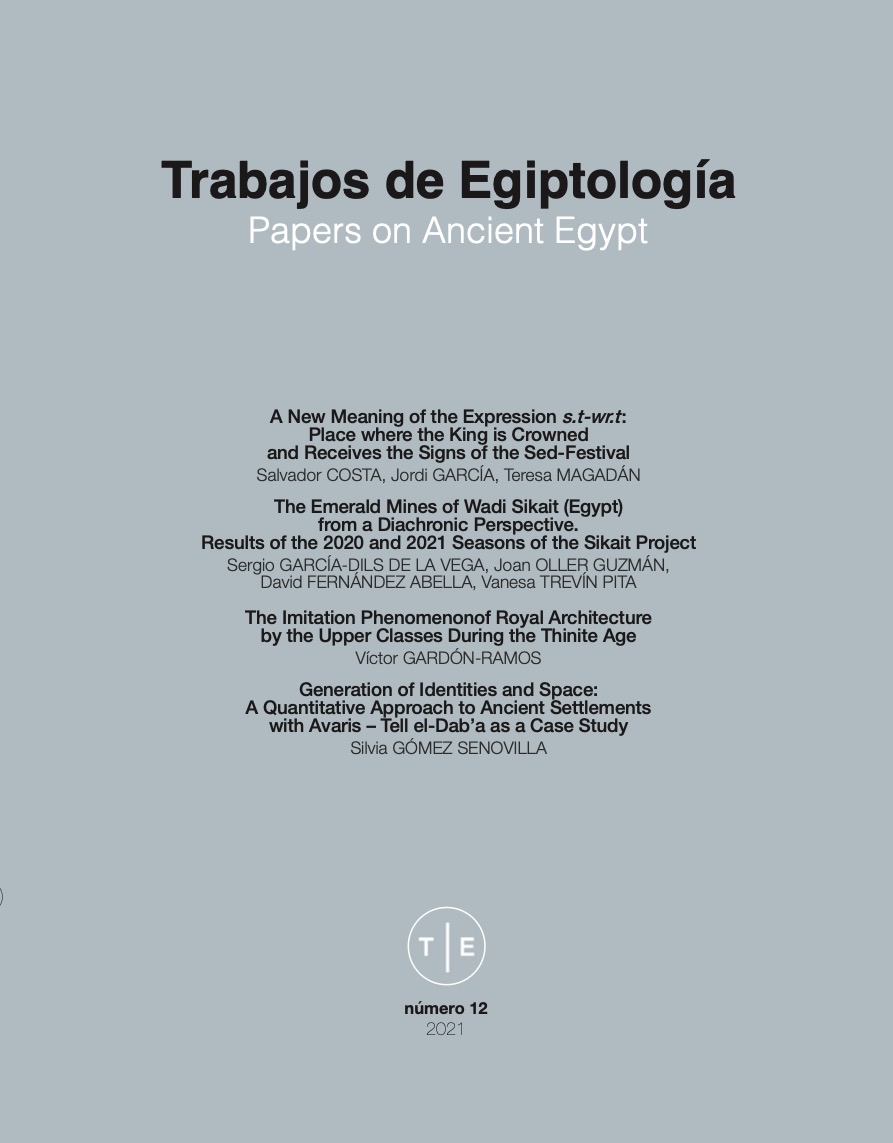
The emerald mines of Wadi Sikait (Egypt) from a diachronic perspective. Results of the 2020 and 2021 seasons of the Sikait Project

The emerald mines of Wadi Sikait (Egypt) from a diachronic perspective. Results of the 2020 and 2021 seasons of the Sikait Project

García-Dils De la Vega, S., Guzmán, J.O., Fernández Abella, D. and Trevín Pita, V. (2021)

Journal Article · Source: Trabajos de Egiptología: Papers on Ancient Egypt · Issue: No. 12

Abstract
This article outlines the preliminary results of the fieldwork carried out by the Sikait Project in the 2020 and 2021 seasons in the Smaragdos area (Egyptian Eastern Desert). Our work is focused on the study of beryl/emerald mining in the Roman and Late Antique periods from a diachronic perspective. By the end of the 2021 season, some 150 mines had been identified, with the total area of the delimited mining zones so far measuring about 100,000 m².
Keywords
gems, archaeology, archaeogemology, beryl, emerald, Egypt, Sikait Project
Emerald mining during the Roman period in the Egyptian eastern desert: Recent evidence from Wadi Sikait (Taf. XXXI-XLVI)

Emerald mining during the Roman period in the Egyptian eastern desert: Recent evidence from Wadi Sikait (Taf. XXXI-XLVI)

Guzmán, J.O., Abella, D.F., Pita, V.T., Casas, O.A. and García-Dils De la Vega, S. (2021)

Journal Article · Source: Mannheimer Beiträge zur Archäologie und Geschichte der antiken Mittelmeerkulturen · Volume: Vol. 26 · Pages: pp. 25–36

Abstract
The archaeological seasons conducted in Wadi Sikait in 2020 and 2021 have significantly expanded our understanding of emerald mining in Roman Egypt, as well as the mining communities that inhabited large settlements like Sikait. This paper explores these developments by presenting the archaeological work carried out in construction complexes and religious buildings at the site, along with an intensive survey of the surrounding emerald mining areas. This research has led to a major breakthrough in our knowledge of emerald extraction and trade during the Graeco-Roman and Byzantine periods.
Keywords
gems, beryl, emerald, Egypt, Cleopatra, history of gemology, archaeology, archaeologemology
History of emerald mining in the Habachtal deposit of Austria, Part 1

History of emerald mining in the Habachtal deposit of Austria, Part 1

Schmetzer, K. (2021)

Journal Article · Source: Gems & Gemology · Volume: Vol. 57 · Issue: No. 4, Winter · Pages: pp. 338–371

Abstract
The Habachtal emerald deposit in Austria, one of Europe’s oldest known sources of emeralds, has a rich history dating back to at least 1797, when it was first described in scientific literature. While there are speculative links to Roman or Celtic exploitation, no definitive archaeological evidence confirms such early mining activities. Regular mining began in the early 1860s under Samuel Goldschmidt, a Viennese jeweler, who initiated operations that were later taken over by the English company Emerald Mines Limited in 1895. However, the venture faced legal and financial challenges, leading to its decline by 1903. By 1914, the property returned to Austrian ownership, acquired by local farmers and municipal leaders from Bramberg. This historical account, detailed in the Winter 2021 issue of Gems & Gemology, provides insights into the complex legal, geological, and economic factors that influenced the development of this unique alpine emerald source.
Keywords
gems, beryl, emerald, Austria, Habachtal
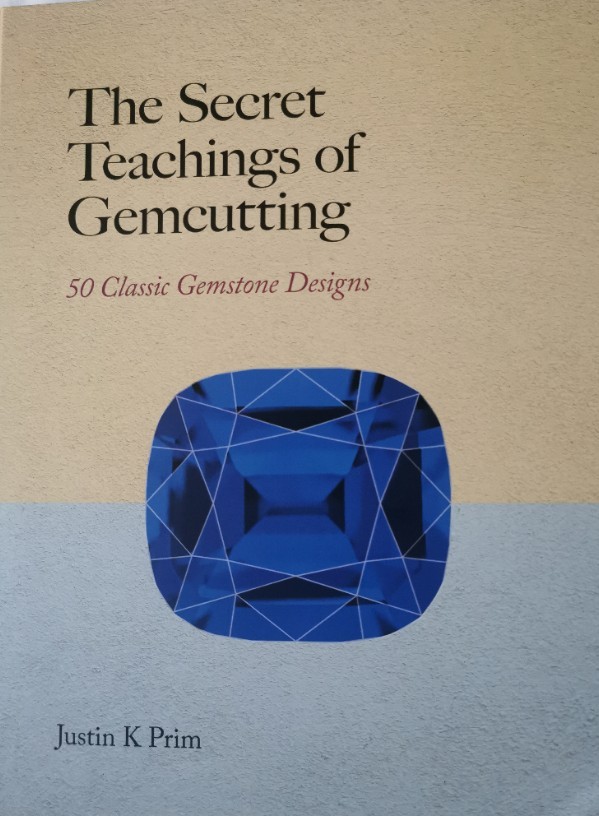
The Secret Teachings of Gemcutting — 50 Classic Gemstone Designs

The Secret Teachings of Gemcutting — 50 Classic Gemstone Designs

Prim, J.K. (2021)

Book · Publisher: Magus Publishing · Pages: 238 pp.

Abstract
The Secret Teachings of Gemcutting is a collection of classic gemstone cutting designs spanning 500 years. 50 gemstone designs are presented here with full color photos, design information, cutting advice, and historical background. This collection consists of the time tested, industry-standard gemstone designs that can been found in the jewelry from high-end brands as well as independent bespoke jewelry designers. Each design is presented in two different height options so that they are compatible with both lower RI stones (such as amethyst and emerald) and higher RI stones (such as ruby, sapphire, and spinel). Aside from the designs, the book includes 30 pages of essential gemology for cutters which contains invaluable information about gemstone design, optics, crystal systems, hand preforming, gemstone physics, modifying diagrams, pairing rough gems with appropriate designs, and more. This information is critical for cutters who want to understand how these elements influence the appearance of the final stone.
Keywords
gems, lapidary, gem cutting, France, Jura mountains
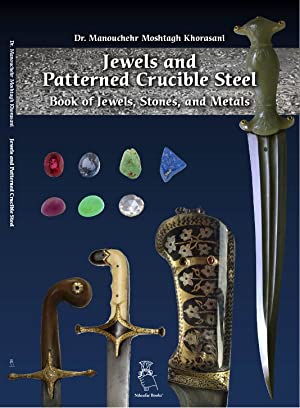
Jewels and Patterned Crucible Steel: Books of Jewels, Stones, and Metals

Jewels and Patterned Crucible Steel: Books of Jewels, Stones, and Metals

Khorasani, M.M. (2021)

Book · Publisher: Niloufar Books · Pages: 178 pp.

Abstract
The present book is a translation and annotation of a copy of the Persian book Goharnāmeh [Book of Jewels] written by Mohammad ben Mansur. The manuscript has 110 sheets and each page consists of 19 lines. The manuscript is written in Persian in naste’aliq script. Mohammad ben Mansur wrote the manuscript Goharnāmeh for the ruler Uzun Hasan Āq Qoyonlu in the 9th-century hijra (15th century CE), mentioning the name of the son of Sultan Ozun Hasan Āq Qoyonlu, namely Sultan Xalil as well. In the first section of his book, Ben Mansur talks about different types of stones. This part consists of twenty-one parts. In the second section of his book, Ben Mansur explains different types of metals. The present book clearly shows that patterned crucible steel was considered a gohar (jewel) in Persian. The book consists of the following parts; 1. Introduction: This part provides the historical background of the manuscript, its author, and the topics of the manuscript. 2. Goharnāmeh [Book of Jewels] by Mohammad ben Mansur: This part provides a detailed analysis and comparison of similar books of jewels and gems in Persian and places it in its historical context. 3. Mines and farms/fisheries: This part talks about the geographical locations of mines and pearl fisheries as described in the Goharnāmeh, and interestingly, it measures all these locations from the Persian Gulf, Sri Lanka, Egypt, and other locations in comparison to the geographical location of Canary Islands. 4. Classification of stones and animal products: This section describes all precious stones, semi-precious stones, and other stones, animal products, and metals as described in the book Goharnāmeh, and compares its descriptions to the modern geological and scientific descriptions of these items. The precious, semi-precious stones, and other stones include: yāqut (ruby, oriental topaz, white sapphire, pleonaste, oriental emerald, sapphire); emerald; peridot; diamond; chrysoberyl cat’s eye; spinel (shades of red, garnet red, yellow, blue, green, brown, orange and black); turquoise (green and blue); chalcedony (agate and carnelian, blue chalcedony and other colors); precious stones resembling yāqut (zircon, garnet, and bādehenj); onyx; magnet; corundite (emery); malachite; lapis lazuli; jade; rock crystal; amethyst; jetstone; rain stone; jaundice stone; limestone; olive stone; eaglestone; blood stone; milk stone; mouse stone; moonstone; color stone; sleep stone; miskal stone; marcasite;
Keywords
gems, metals, Arabic mineralogy, ruby, sapphire, spinel, pearl, corundum, history.1, jade, Fischer-Other
Emerald mining in Sikait: Organization and distribution of emerald production in Roman Egypt

Emerald mining in Sikait: Organization and distribution of emerald production in Roman Egypt

Guzmán, J.O. (2020)

Journal Article · Source: Polish Archaeology in the Mediterranean · Volume: Vol. 29 · Issue: No. 1 · Pages: pp. 173–199

Abstract
The Smaragdos region, currently in the Wadi Gemal National Park (Eastern Desert, Egypt) was well known in antiquity for the emeralds that could be found there. The exploitation of emerald mines, especially in the Roman period, led to the creation of an important network of settlements linked to the procurement and commercial distribution of this semiprecious stone, which was considered highly valuable in ancient times. The overview of the emerald trade in Roman antiquity presented in this paper will focus on Sikait, the most important and best known of the mining settlements in the Eastern Desert.
Keywords
gems, beryl, emerald, Egypt, Cleopatra, history of gemology, archaeology, archaeologemology
Inclusion and trace element characteristics of emeralds from Swat Valley, Pakistan

Inclusion and trace element characteristics of emeralds from Swat Valley, Pakistan

Guo, H., Yu, X., Zheng, Y., Sun, Z. and Ng, M.F.-Y. (2020)

Journal Article · Source: Gems & Gemology · Volume: Vol. 56 · Issue: No. 3, Fall · Pages: pp. 336–355

Abstract
Swat Valley has become an important source of emeralds, including recently discovered trapiche-type crystals. In this study, emerald samples from Swat were examined by standard gemological testing, UV-Vis-NIR, FTIR, Raman analysis, EDXRF, and LA-ICP-MS. The study found three-phase hexagonal inclusions consisting of water, gaseous carbon dioxide and nitrogen, and a magnesite crystal. The gaseous mixture in two-phase inclusions is characteristic in both trapiche-type (CO₂ + N₂) and non-trapiche samples (CO₂ + N₂ + CH₄). Mineral inclusions of hematite, magnetite, rutile, graphite, and siderite are reported for the first time. Regular non-trapiche-type Swat emeralds contain high chromium (avg. 7471 ppmw), alkali metal (avg. 21,040 ppmw), magnesium (avg. 34,263 ppmw), and iron (avg. 9265 ppmw), as well as scandium (avg. 633 ppmw). Infrared spectra show that the absorption of type II H₂O is stronger than that of type I H₂O. Logarithm plots of trace elements appear to be diagnostic. Based on Raman spectroscopy, the trapiche-type emeralds’ colorless core, light green hexagonal growth zone area, and green rim are emerald, while the six black arms are a mixture of hematite and graphite.
Keywords
gems, beryl, emerald, Pakistan, Swat
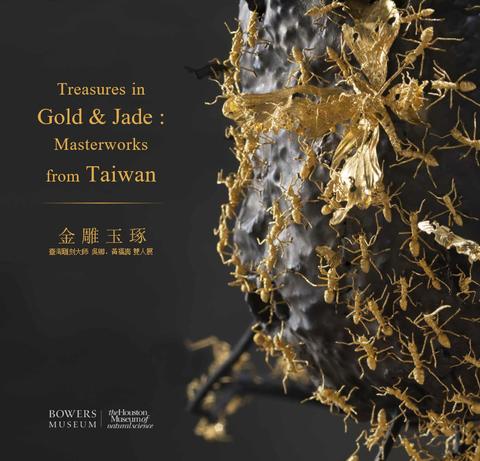
Treasures in Gold & Jade • Masterworks from Taiwan

Treasures in Gold & Jade • Masterworks from Taiwan

Keller, P.C. (2020)

Edited Book · Publisher: Bowers Museum · Pages: 84 pp.

Abstract
Exhibit catalog of an exhibition of gold (Wu Ching) and jade (Huang Fu Shou) art at the Bowers Museum and Houston Museum of Natural Science in 2020–2021. Treasures in Gold & Jade: Masterworks from Taiwan features works of incredible beauty and complexity by two of Taiwan’s premier living artists. Twenty-seven carvings by Huang Fu Shou show a surprising range of jade's colors: from emerald green to an almost pearlescent white. Fish springing from water, insects weightlessly clinging to blades of grass, and stone bending with litheness of fabric each push the boundaries of what is possible with the rigid medium.
Keywords
gems, gold, jade, jadeite, fei cui, nephrite, China, Taiwan, jade carving, Wu Ching, Huang Fu Shou
History of the Chivor emerald mine, Part II (1924–1970): Between insolvency and viability

History of the Chivor emerald mine, Part II (1924–1970): Between insolvency and viability

Schmetzer, K., Martayan, G. and Blake, A.R. (2020)

Journal Article · Source: Gems & Gemology · Volume: Vol. 56 · Issue: No. 2, Summer · Pages: pp. 230–257

Abstract
The history of the Chivor emerald mine in Colombia is a saga with countless twists and turns, involving parties from across the globe. Indigenous people initially exploited the property, followed by the Spanish in the sixteenth and seventeenth centuries, before abandonment set in for 200 years. The mine was rediscovered by Francisco Restrepo in the 1880s, and ownership over the ensuing decades passed through several Colombian owners and eventually to an American company, the Colombian Emerald Syndicate, Ltd., with an intervening but unsuccessful attempt by a German group organized by Fritz Klein to take control. With the Colombian Emerald Syndicate succumbing to bankruptcy in 1923, the property was sold and then transferred in 1924 to another American firm, the Colombia Emerald Development Corporation. Under the new ownership, stock market speculation played a far more prominent role in the story than actual mining. Nonetheless, periods of more productive mining operations did take place under managers Peter W. Rainier and Russell W. Anderton. Yet these were not enough to prevent the company, renamed Chivor Emerald Mines, Inc. in 1933, from entering insolvency in 1952 and being placed into receivership. Leadership by Willis Frederick Bronkie enabled the firm to regain independence in 1970 and shortly thereafter to be sold in a series of transactions, with Chivor gradually being returned to Colombian interests.
Keywords
gems, beryl, emerald, Colombia, Chivor
History of the Chivor emerald mine, Part 1 (1880–1925): From rediscovery to early production

History of the Chivor emerald mine, Part 1 (1880–1925): From rediscovery to early production

Schmetzer, K., Martayan, G. and Ortiz, J.G. (2020)

Journal Article · Source: Gems & Gemology · Volume: Vol. 56 · Issue: No. 1, Spring · Pages: pp. 66–109

Abstract
The history of the Chivor emerald mine in Colombia is rife with legend and adventure. The tale traces from early exploitation by indigenous people, to work by the Spanish in the sixteenth and seventeenth centuries, to 200 years of abandonment and jungle overgrowth. The story then picks up with rediscovery near the turn of the twentieth century by the Colombian mining engineer Francisco Restrepo using clues from a historical manuscript. Still the saga continued, with repeated shortages of investment funds driving multiple ownership changes and little progress toward mining the largely inaccessible deposit. The German gem merchant Fritz Klein, in cooperation with Restrepo, pursued limited mining activities with a small number of workers for a few months prior to the outbreak of World War I. After the war, the American company Colombian Emerald Syndicate, Ltd., took ownership, and mining operations resumed under the new leadership. Ownership changed yet again in the 1920s, followed by multiple cycles of expanding and shrinking mining activity, interrupted by completely unproductive periods.
Keywords
gems, beryl, emerald, Colombia, Chivor
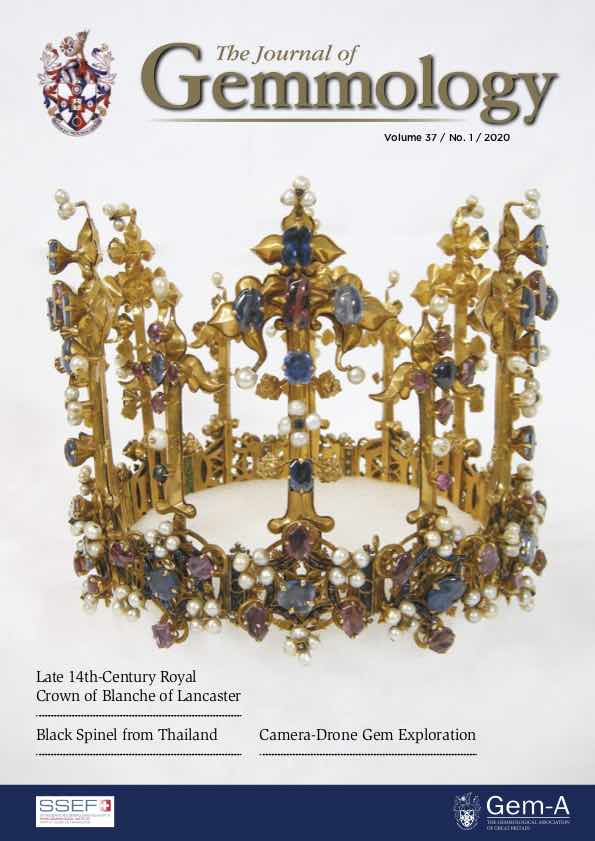
The late 14th-century royal crown of Blanch of Lancaster—History and gem materials

The late 14th-century royal crown of Blanch of Lancaster—History and gem materials

Schmetzer, K. and Gilg, H.A. (2020)

Journal Article · Source: Journal of Gemmology · Volume: Vol. 37 · Issue: No. 1 · Pages: pp. 26–64

Abstract
The richly bejewelled crown preserved in the Treasury of the Munich Residence offers a window into both European dynastic history and contemporaneous decorative practices and gem use. The crown’s history can be traced from the late 14th-century court of Richard II and his wife Anne of Bohemia in London; through its role as part of the dowry in 1402 of Blanche of Lancaster, bride of future Elector Palatine Louis III in Germany; to its later decades in Heidelberg, Mannheim and finally Munich by the late 18th century. In this study, all gem materials currently decorating the piece—one of few extant examples of Late Middle Ages royal regalia—were identified by a combination of microscopy, EDXRF analysis and Raman spectroscopy, using mobile instru- ments on site at the museum. The gems included blue and pink sapphires, pink spinels, garnets, emeralds, diamond octahedra and pearls. Various imitations were also present, including black- coated gold pyramids (substituting for diamonds) and green and pink lead glass. The forms of the gems reflect a progression from use of merely irregularly shaped polished pebbles, to rudimentary shaping or preforming without sharp edges, to sharply faceted regular shapes, thereby demon- strating the transition in gemstone fashioning as the Late Middle Ages gave way to the Renaissance.
Keywords
gems, corundum, history.1, sapphire, spinel, ruby

Exploring the Literature of Emerald

Emerald literature spans gemology, mineralogy, deposits, identification, treatments, synthesis, history and the gem trade, with important sources covering deposits around the world.

For a curated guide to this subject, read Green Fire — Lotus Gemology's Guide to the Literature of Emerald.

About Four Treasures

Four Treasures is Lotus Gemology's freely accessible gemological reference database. Use the full database to search by author, title or keyword and explore literature on gemology, mineralogy, jewelry and related fields. Where available, hyperlinks on titles may lead directly to the full publication.

Search the Complete Four Treasures Database