Emerald Bibliography

Emerald Bibliography

Explore books, articles and historical sources on emerald in Four Treasures, the Lotus Gemology reference database. This bibliography brings together matching records from the collection, with publication details, abstracts and cover images where available.

Emerald References

The list below matches the terms emerald or emeralds in the database's searchable fields. Some references discuss emeralds as part of a broader subject.

41–60 of 844 matching references
Geschichte des Smaragdbergbaus im Habachtal, Pinzgau, Salzburg / Herkunft der Smaragde im Brustkreuz und Ring des Abts Dominikus Hagenauer der Erzabtei St. Peter in Salzburg aus dem späten 18. Jahrhundert

Geschichte des Smaragdbergbaus im Habachtal, Pinzgau, Salzburg / Herkunft der Smaragde im Brustkreuz und Ring des Abts Dominikus Hagenauer der Erzabtei St. Peter in Salzburg aus dem späten 18. Jahrhundert

History of Emerald Mining in the Habachtal, Pinzgau, Salzburg / Origin of the Emeralds in the Pectoral Cross and Ring of Abbot Dominikus Hagenauer of St. Peter’s Archabbey in Salzburg from the Late 18th Century

Schmetzer, K. and Gilg, H.A. (2023)

Journal Article · Source: Mitteilungen der Gesellschaft für Salzburger Landes Kunde · Volume: No. 162/163 · Pages: pp. 473–609 · Language: in German

Abstract
A detailed historical and gemological study of emerald mining in the Habachtal, Pinzgau, Salzburg, tracing documentary evidence for the deposit and its exploitation from early references through organized mining in the 19th and early 20th centuries. Schmetzer critically examines claims for much earlier mining and the evidence used to support them, distinguishing documented history from later tradition. The second part, with H.A. Gilg, investigates the emeralds set in the late-18th-century pectoral cross and ring of Dominikus Hagenauer (1746–1811), Abbot of St. Peter’s Archabbey in Salzburg. According to tradition, the emeralds in the pectoral cross, presented to Hagenauer by his father after his election as abbot in 1786, came from the Habachtal. Microscopic examination and EDXRF analysis, however, show characteristics consistent with Colombian emeralds and exclude a Habachtal origin. The study thus provides both a substantial documentary history of Austria’s best-known emerald deposit and an important demonstration of how gemological analysis can test traditional provenance claims associated with historic jewelry.
Keywords
gems, beryl, emerald, Austria, Habachtal, crown, relics
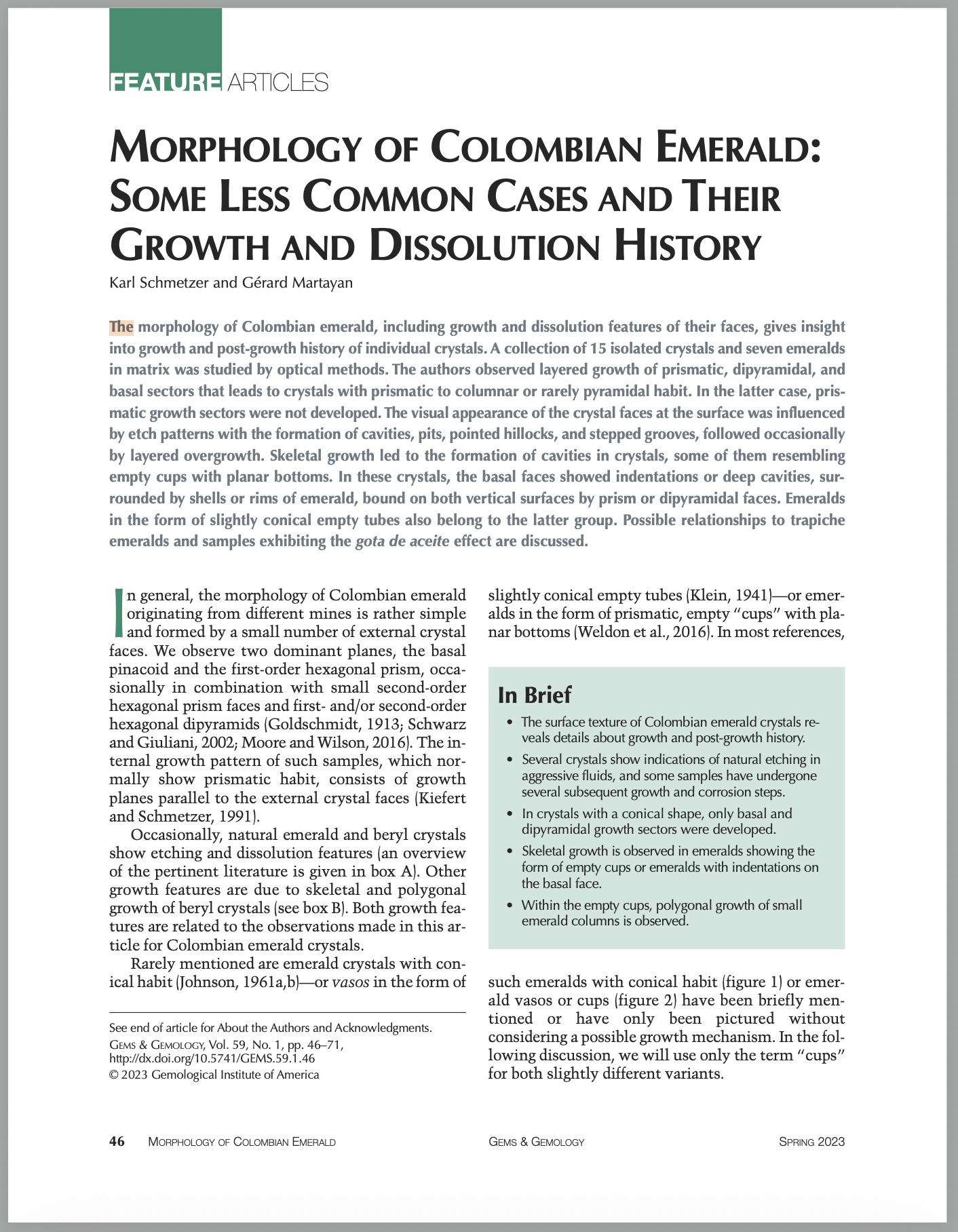
Morphology of Colombian emerald: Some less common cases and their growth and dissolution history

Morphology of Colombian emerald: Some less common cases and their growth and dissolution history

Schmetzer, K. and Martayan, G. (2023)

Journal Article · Source: Gems & Gemology · Volume: Vol. 59 · Issue: No. 1, Spring · Pages: pp. 46–71

Abstract
The morphology of Colombian emerald, including growth and dissolution features of their faces, gives insight into growth and post-growth history of individual crystals. A collection of 15 isolated crystals and seven emeralds in matrix was studied by optical methods. The authors observed layered growth of prismatic, dipyramidal, and basal sectors that leads to crystals with prismatic to columnar or rarely pyramidal habit. In the latter case, prismatic growth sectors were not developed. The visual appearance of the crystal faces at the surface was influenced by etch patterns with the formation of cavities, pits, pointed hillocks, and stepped grooves, followed occasionally by layered overgrowth. Skeletal growth led to the formation of cavities in crystals, some of them resembling empty cups with planar bottoms. In these crystals, the basal faces showed indentations or deep cavities, surrounded by shells or rims of emerald, bound on both vertical surfaces by prism or dipyramidal faces. Emeralds in the form of slightly conical empty tubes also belong to the latter group. Possible relationships to trapiche emeralds and samples exhibiting the gota de aceite effect are discussed.
Keywords
gems, beryl, emerald, Colombia, crystallography, morphology
The colours of gemstones in Pliny the Elder's Natural History, Book 37

The colours of gemstones in Pliny the Elder's Natural History, Book 37

Ballestrazzi, C. (2023)

Journal Article · Source: Technai · Volume: Vol. 14 · Pages: pp. 99–121

Abstract
Pliny the Elder’s Natural History, Book 37 offers unique insights into the attitude towards precious stones in early Imperial Rome. From a thorough analysis of Pliny’s discussion emerges a complex ‘semantic system’ according to which some gemstones were preferentially meant for specific customers (women vs men) and uses (jewellery or signets), mainly on the basis of their colours and their suitability for engraving. According to ancient science, as living and gendered beings themselves, the sexual dimorphism of gems mirrored that of human beings: pale and watery nuances were suitable for women, while fiery colours reflected the intimate nature of men. The semantics of gemstones are also rooted in the chromatic symbolism of ancient Rome. The green of the emerald pointed to exoticism, otherness, and womanhood, while the red, white, and black striped sardonyx featured the principal colours of Roman tradition. Other gems, like the sarda-carnelian, were still linked in Pliny’s time with the illustrious Greek past. Further research into material and literary sources, from Pliny to other Roman authors, will provide fresh insights into a class of materials usually very poor in contextual data, and will significantly enrich our understanding of Roman material and chromatic culture.
Keywords
gems, color science, color theory, art, anthropology, Rome, ancient color terms, Pliny the Elder, Gemstones, Colours, Gender, Roman Tradition
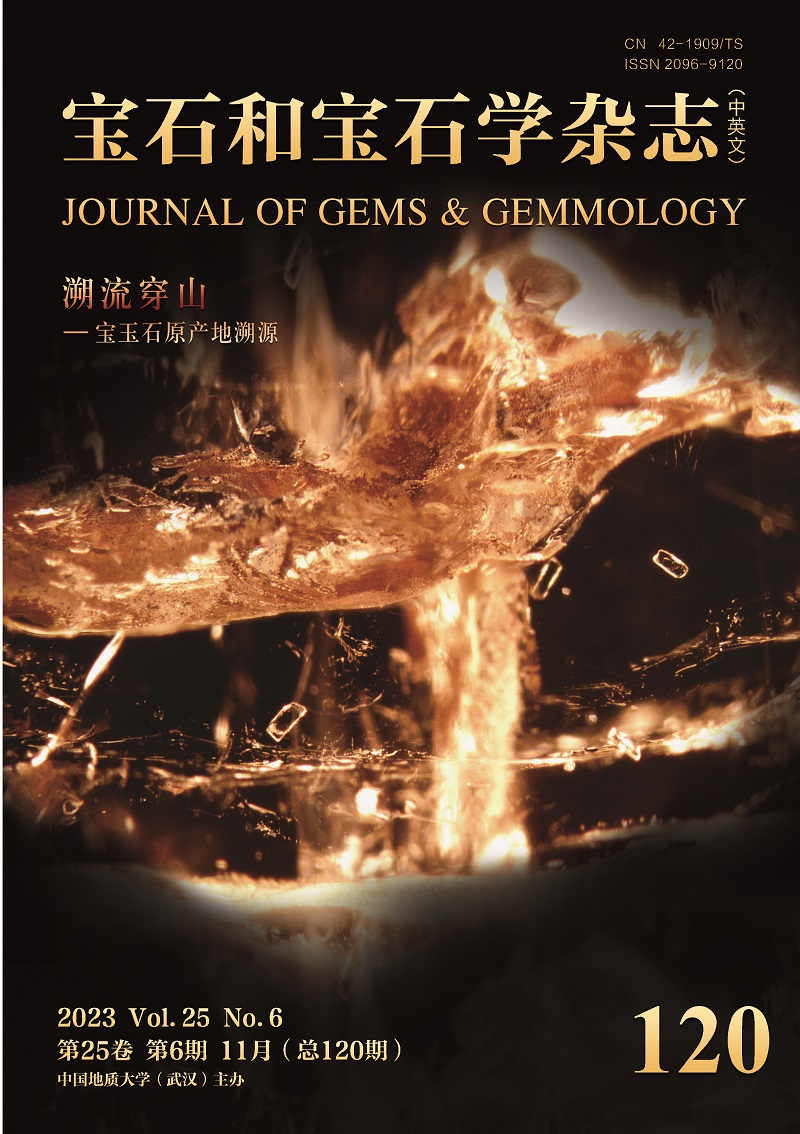
Gemmological and spectral characteristics of emerald from Panjsher Valley, Afghanistan

Gemmological and spectral characteristics of emerald from Panjsher Valley, Afghanistan

Dong, X., Chen, T. and Zhou, Z. (2023)

Journal Article · Source: Journal of Gems & Gemmology · Volume: Vol. 25 · Issue: No. 6 · Pages: pp. 17–29 · Language: in Chinese with English abstract

Abstract
Quality and origin are important factors influencing the price of emeralds. Emeralds from different localities exhibit distinct gemmological characteristics that serve as key indicators for origin determination. This study investigates emerald samples from the Panjshir mining area in Afghanistan, using advanced analytical methods including optical microscopy, infrared spectroscopy, micro UV-visible–near-infrared spectroscopy, and Raman spectroscopy to examine their gemmological features, internal inclusions, chemical composition, and color origin. The color of the Afghan emeralds ranges from light green to dark green, with crystals commonly forming short hexagonal prisms or tabular shapes. Black and brown associated minerals are visible externally. Under the Chelsea filter, most samples exhibit localized red reactions. The primary inclusions are multiphase fluid inclusions—needle-like, shuttle-shaped, or tubular—containing rock salt, potassium salt, and solid minerals. Raman spectroscopy indicates that the liquid phase is predominantly H₂O, while solid inclusions are mainly calcite and hematite. Other mineral inclusions include hematite, calcite, amorphous carbon, quartz, carbonaceous matter, and apatite. LA-ICP-MS analysis shows that the main chemical components are BeO, Al₂O₃, and SiO₂, with trace elements including Ca, Mg, Ti, Li, Na, K, Rb, Cs, Cr, and V. Infrared spectroscopy reveals the presence of both Type I and Type II water, with Type II water showing stronger absorption, indicating a predominance of Type II water in these emeralds. This correlates with the high alkali metal content measured by LA-ICP-MS, as Type II water content is positively associated with alkali levels in beryl. UV-visible spectra confirm that Cr³⁺ and V³⁺ are the chromophores responsible for color. The gemmological, spectroscopic, and chemical characteristics of these Afghan emeralds provide a scientific basis for origin determination.
Keywords
gems, beryl, emerald, Afghanistan, Panjshir
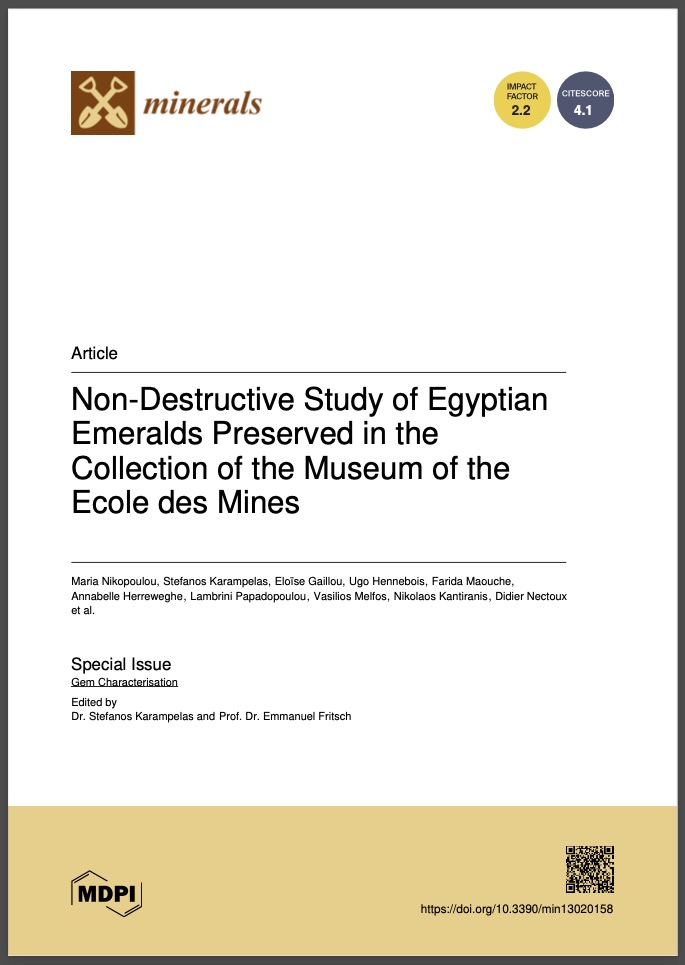
Non-destructive study of Egyptian emeralds preserved in the collection of the museum of the Ecole des Mines

Non-destructive study of Egyptian emeralds preserved in the collection of the museum of the Ecole des Mines

Nikopoulou, M., Karampelas, S., Gaillou, E., Hennebois, U., Maouche, F., Herreweghe, A., Papadopoulou, L., Melfos, V., Kantiranis, N., Nectoux, D. and Delaunay, A. (2023)

Journal Article · Source: Minerals · Volume: Vol. 13 · Issue: No. 2 · Pages: pp. 158–172

Abstract
In the present study, rough emerald single crystals and rough emeralds in the host rock from the ruins of Alexandria and from Mount Zabargad in Egypt, preserved in the collection of the museum of the Ecole des Mines (Mines Paris—PSL) since the late 19th or early 20th century, are investigated. All samples were characterized by non-destructive spectroscopic and chemical methods during a week-long loan to the LFG. Raman, FTIR and UV-Vis-NIR spectroscopy revealed that Egyptian emeralds contain H₂O molecules accompanied by relatively high concentrations of alkali ions and are colored by chromium and iron. Additionally, EDXRF showed that the emeralds from Egypt contain up to 84 ppm Rb and low amounts (below 200 ppm) of Cs. Inclusions and parts of the host rock were also observed under optical microscope and analyzed with Raman spectroscopy. Tube-like structures, quartz, calcite, dolomite, albite and phlogopite are associated minerals, and inclusions are identified in these historic emeralds from Egypt. This work will hopefully further contribute to the characterization of emeralds of archaeological significance.
Keywords
gems, beryl, emerald, Egypt
Comparison of emeralds from the Chitral District, Pakistan, with other Pakistani and Afghan emeralds

Comparison of emeralds from the Chitral District, Pakistan, with other Pakistani and Afghan emeralds

Hanser, C.S., Stephan, T., Gul, B., Häger, T. and Botcharnikov, R.E. (2023)

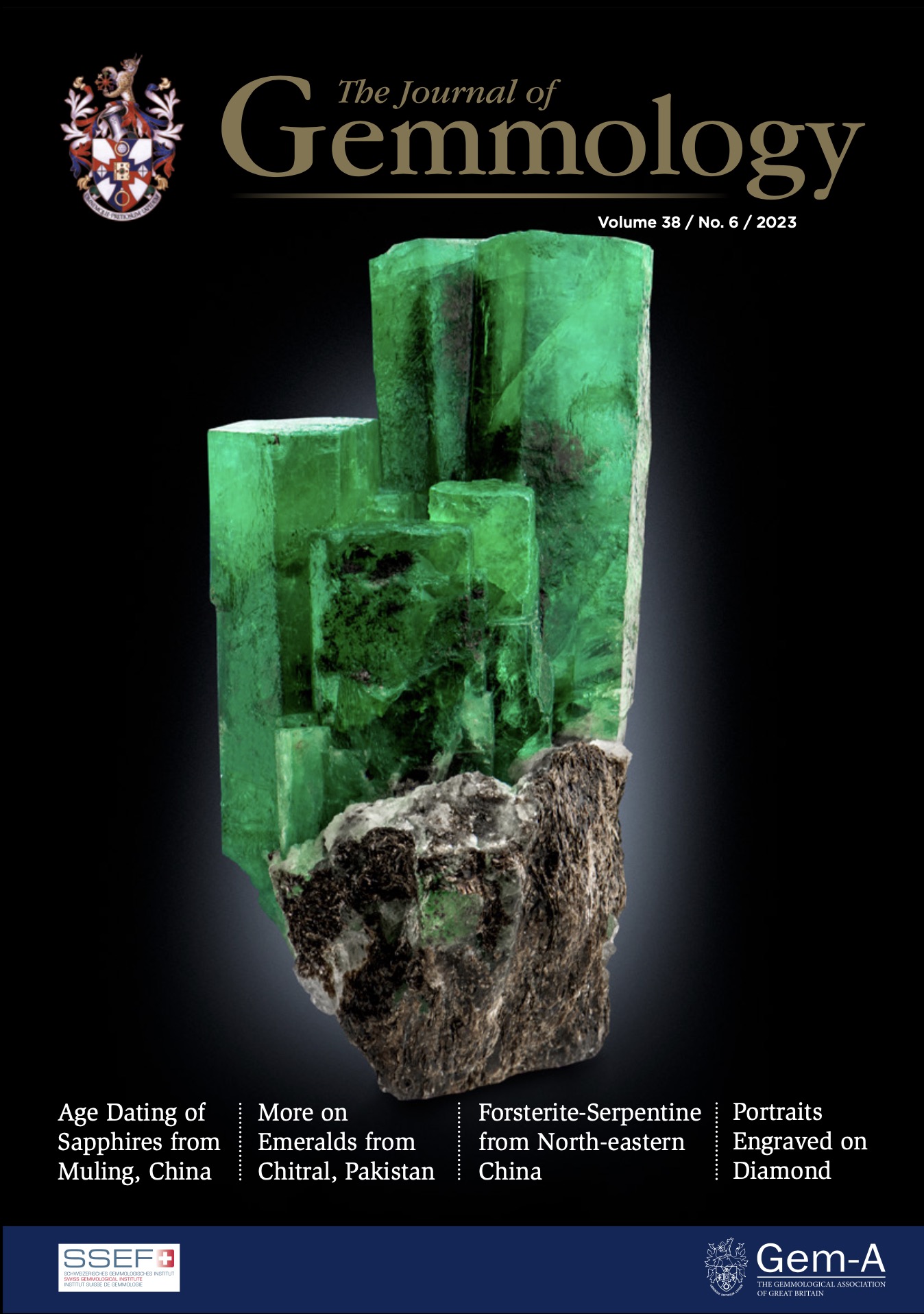
Journal Article · Source: Journal of Gemmology · Volume: Vol. 38 · Issue: No. 6 · Pages: pp. 582–599

Abstract
Emeralds from various deposits in Pakistan (Chitral, Swat, and Khaltaro) and Afghanistan (Panjshir and Laghman) were examined and compared. In addition, we compared the lighter-coloured Chitral emeralds from our previous study to newly acquired, more deeply coloured samples from Chitral. The specimens were characterised by Raman, FTIR, and UV–Vis–NIR spectroscopy. Chemical analyses by EPMA and LA-ICP-MS also were performed on the samples from Chitral and Khaltaro. Distinguishing features of our Chitral emeralds include a lack of three-phase inclusions, a strong Fe²⁺-related absorption at about 830 nm in the UV–Vis–NIR spectra, and elevated Cs and Li contents. These characteristics may provide clues for geographic origin determination.
Keywords
gems, beryl, emerald, Afghanistan, Pakistan, emerald origin, Chitral, Swat, Khaltaro, inclusions
The Chatham Legacy | An American Story

The Chatham Legacy | An American Story

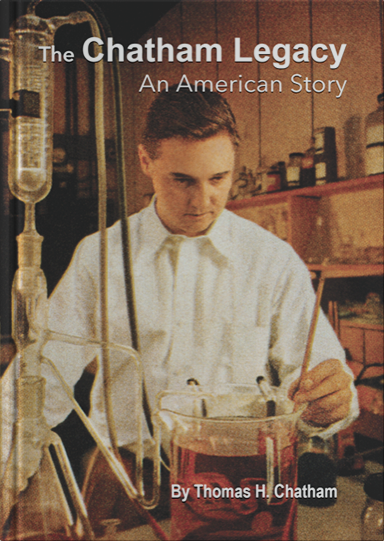
Chatham, T.H. (2023)

Book · Publisher: Thomas H. Chatham · Pages: 233 pp.

Abstract
The Chatham Legacy’ book chronicles the work that was needed to first grow emerald in the Lab. No one had successfully done so on a commercial basis before Carroll Chatham. The jewelry trade was not overly receptive to this concept and Carroll Chatham had to legally fight for his right to market his gems as emerald. The book represents one of the rare firsthand accounts of the manufacturing and marketing of laboratory grown gemstones.
Keywords
gems, corundum, Synthetic corundum.7, flux ruby, flux sapphire, flux beryl, emerald, synthetic diamond
Speculum Lapidum: A Renaissance Treatise on the Healing Properties of Gemstones

Speculum Lapidum: A Renaissance Treatise on the Healing Properties of Gemstones

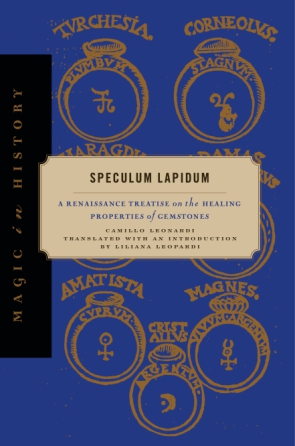
Leopardi, L. (2023)

Book · Publisher: Pennsylvania State University Press · Pages: 240 pp.

Abstract
In early modern Europe precious and semiprecious stones were valued not only for their beauty and rarity but also for their medical and magical properties. Lorenzo de’ Medici, Philip II of Spain, and Popes Leo X and Clement VII were all treated with expensive potions incorporating ground gems such as rubies, diamonds, and emeralds. Medical and magical/astrological lapidaries, texts describing the stones’ occult and medical qualities as well as their abilities to ward off demons and incantations, were essential resources for their use. First published in Venice in 1502, Camillo Leonardi’s Speculum Lapidum is an encyclopedic summary of all classical and medieval sources of lithotherapy. In describing the natural, manifest, and occult properties of precious and semiprecious stones as well as their graven images and applications, the Speculum Lapidum provides tremendous insight into the role that medical astrology and astral magic played in the life of an Italian court in the early modern period. Liliana Leopardi’s English translation, complete with critical apparatuses, gives unprecedented access to this key text within the magical lapidary genre. A vital addition to the existing canon of lapidaria in translation, Leopardi’s work will be of special importance for students and scholars of the history of magic, medicine, religion, and Renaissance humanism, and it will fascinate anyone interested in the occult properties of precious and semiprecious stones.
Keywords
gems, corundum, history.1, ancient lapidaries
The Imperial Crown of the Holy Roman Empire, Part I: Photoluminescence and raman spectroscopic study of the gemstones

The Imperial Crown of the Holy Roman Empire, Part I: Photoluminescence and raman spectroscopic study of the gemstones

Nasdala, L., Lamers, T., Gilg, H.A., Chanmuang, C., Griesser, M., Kirchwegner, F., Erlacher, A. and Böhmler, M. (2023)

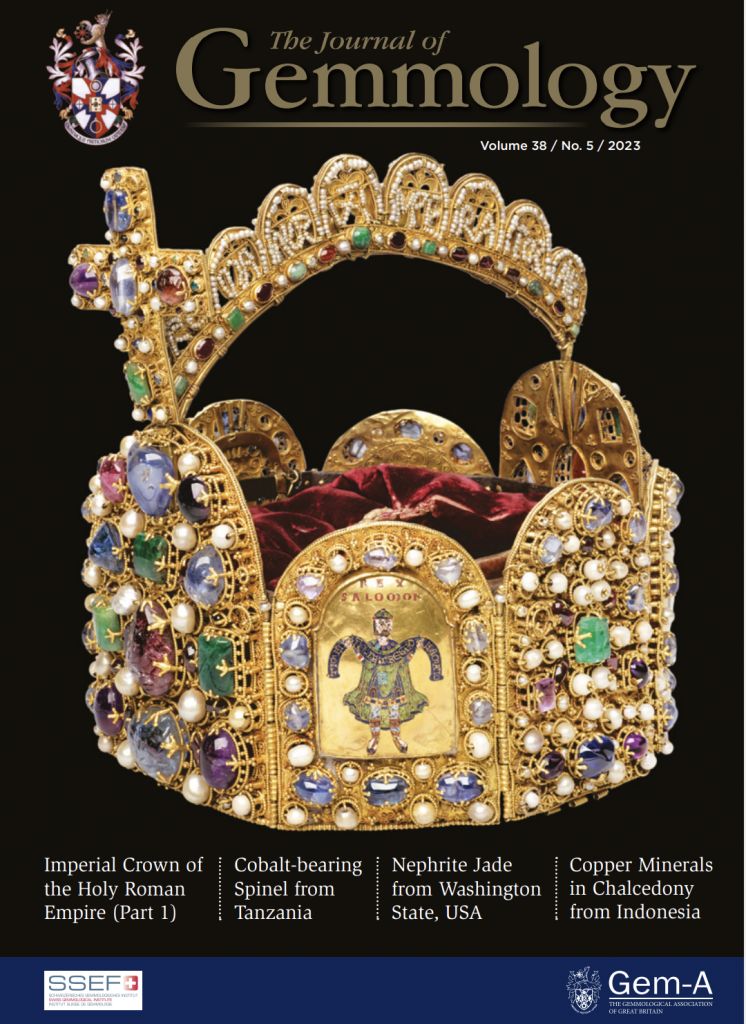
Journal Article · Source: Journal of Gemmology · Volume: Vol. 38 · Issue: No. 5 · Pages: pp. 448–473

Abstract
The Imperial Crown of the Holy Roman Empire is not only a unique and outstanding symbol of European history, it is also one of the most significant works of Western goldsmiths’ art from the High Middle Ages. However, little is known about the gem materials it contains. As part of an interdisciplinary research project led by the Kunsthistorisches Museum Vienna in Austria, the 172 gemstones in the crown were all conclusively identified for the first time using (non-destructive) photoluminescence and Raman spectroscopy. They include 71 blue sapphires, 50 garnets (22 almandines, 22 pyrope-almandines, five pyropes and one grossular), 20 emeralds, 13 amethysts, four chalcedonies and three spinels. In addition, 11 glass imitations of various colours were identified. Raman spectral details and inclusions in the garnets support their assignment to garnet types previously found to be used in antique and early medieval jewellery. The large red spinel in the centre of the crown’s front plate is presumably part of the original crown and, thus, is one of the earliest-known spinels in a historic object, yet it yielded spectroscopic evidence of having been heated.
Keywords
gems, corundum, history.1, sapphire, spinel, garnet, beryl, emerald, amethyst, chalcedony
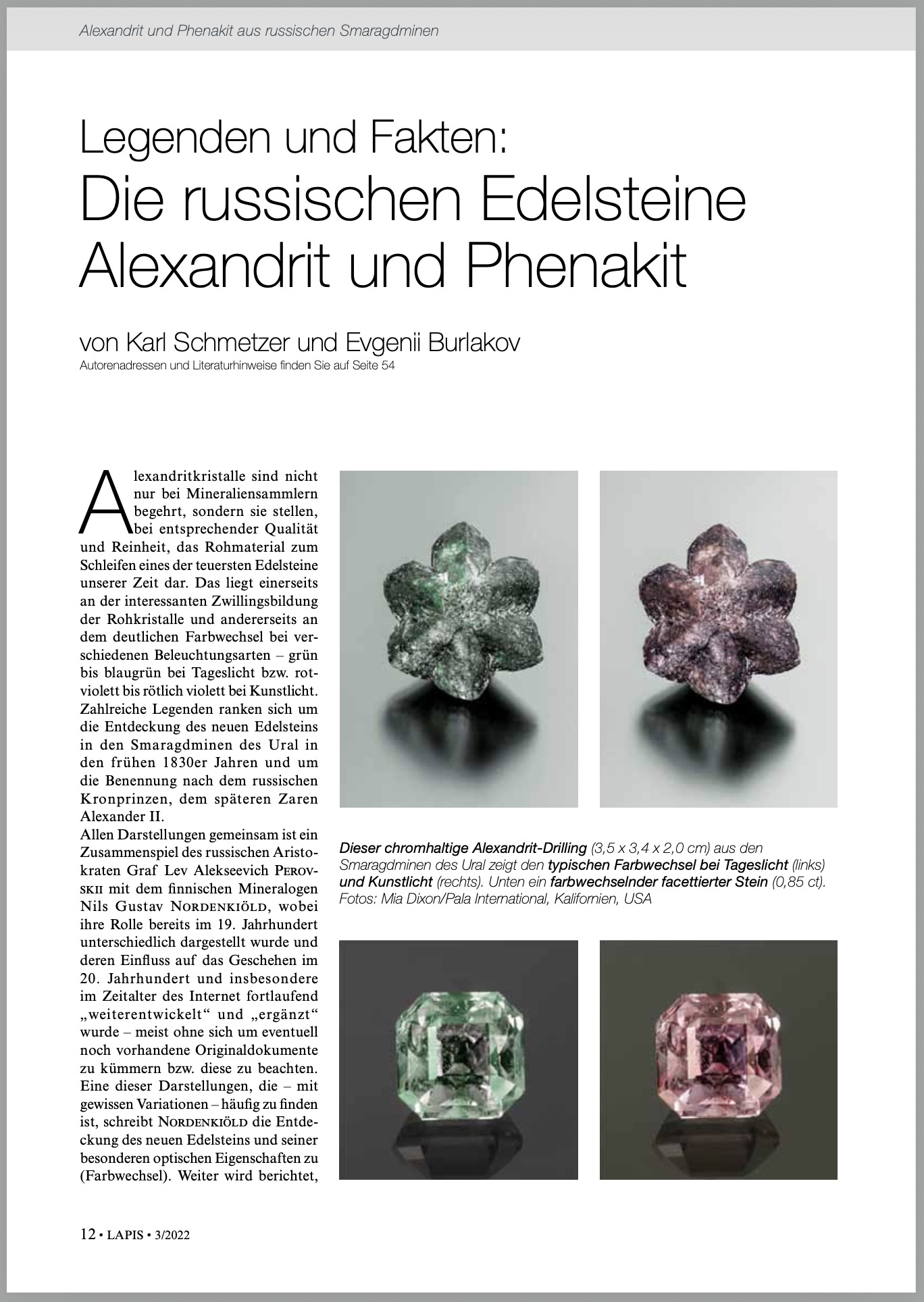
Legenden und Fakten: Die russischen Edelsteine Alexandrit und Phenakit

Legenden und Fakten: Die russischen Edelsteine Alexandrit und Phenakit

Legends and facts: The Russian gemstones alexandrite and phenakite

Schmetzer, K. and Burlakov, E.V. (2022)

Journal Article · Source: Lapis · Issue: No. 3 · Pages: pp. 12–23 · Language: in German

Abstract
Schmetzer and Burlakov examine the history of the discovery, description, and naming of alexandrite and phenakite from the emerald mines of the Urals, using surviving correspondence and contemporary publications to distinguish documented events from later legends. Phenakite was obtained by Yakov Vasilievich Kokovin and passed through Lev Alekseevich Perovskii to Nils Gustaf Nordenskiöld in 1832; because of its resemblance to quartz, Nordenskiöld named the new beryllium silicate phenakite, from the Greek for “deceiver,” although it had already been known locally as Kokovinite in honor of Kokovin. The first color-changing chrysoberylls were found in 1833 and likewise passed from Kokovin through Perovskii to scientists including Franz von Wörth and Nordenskiöld. Correspondence from 1834 records both their characteristic cyclic twinning and their change of color between daylight and candlelight. The material continued to be called chrysoberyl or cymophane in scientific correspondence and publications through the 1830s; the name alexandrite first appeared in the 1842 jubilee volume of the Russian Imperial Mineralogical Society, where the naming in honor of Crown Prince Alexander, later Tsar Alexander II, was attributed to a proposal by Nordenskiöld. The authors show that the often-repeated claim that alexandrite was discovered on the Crown Prince’s coming-of-age day in April 1834 cannot be correct, since the crystals had already been found in 1833. They likewise reject as legend the story that Nordenskiöld discovered the color change after dropping what he thought was an emerald and finding it by candlelight. Surviving documents do not establish who first observed the color change, nor do they establish precisely what role Perovskii played in the eventual naming of alexandrite. The article also reviews the Ural emerald deposits and the occurrence of alexandrite and phenakite within them, noting that both minerals were reported from all six mining districts examined by Grewingk in 1854, with the best phenakites from the Starsky area and fine alexandrites from the Sarewtinsky mines.
Keywords
gems, chrysoberyl, alexandrite, beryl, emerald, phenakite, Russia, Ural Mountains, Malysheva
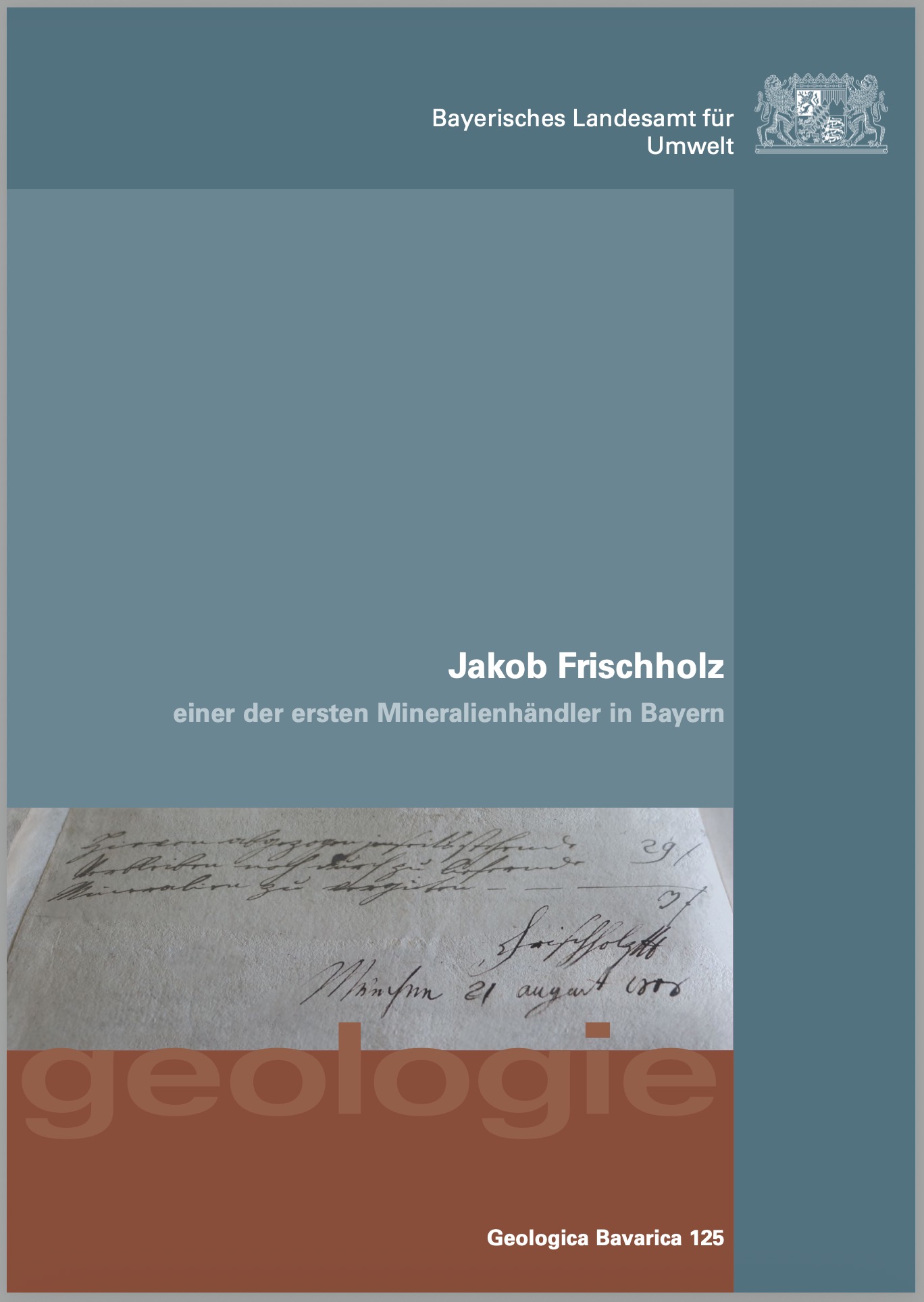
Jakob Frischholz: einer der ersten Mineralienhändler in Bayern

Jakob Frischholz: einer der ersten Mineralienhändler in Bayern

Jakob Frischholz: One of the First Mineral Dealers in Bavaria

Schmetzer, K. (2022)

Journal Article · Source: Geologica Bavarica · Volume: Special Issue · Issue: No. 125 · Pages: 75 pp. · Language: in German

Abstract
Schmetzer traces the life and career of Jakob (Jacob) Frischholz (1778–1820), one of Bavaria’s earliest professional mineral dealers, who was also active as a mineral collector, stone cutter, engraver, inventor, and author. Originally from the Upper Palatinate, Frischholz studied at the Gymnasium and Electoral Lyceum in Amberg from 1799 to 1802 and by 1808 was established as a mineral dealer in Munich. In 1807 he developed a grinding machine for the Nymphenburg Porcelain Manufactory, and he subsequently became involved in the discovery and description of several minerals and new mineral occurrences, frequently visiting localities and collecting specimens himself. He published on the minerals of the Seiser Alm and, in 1820, a book on the art of stone cutting. Frischholz also investigated the emerald occurrence in the Habachtal, Salzburg, visiting the locality several times and collecting emerald crystals; his detailed account of the deposit was published posthumously in 1821. From 1816 he was a member of the Herzogliche Societät für die gesamte Mineralogie zu Jena, founded in 1796 and regarded as the world’s oldest mineralogical society. After his early death in 1820, his widow Anna Frischholz (1778–1837) continued the Munich mineral business for several years.
Keywords
gems, minerals, mineral collecting
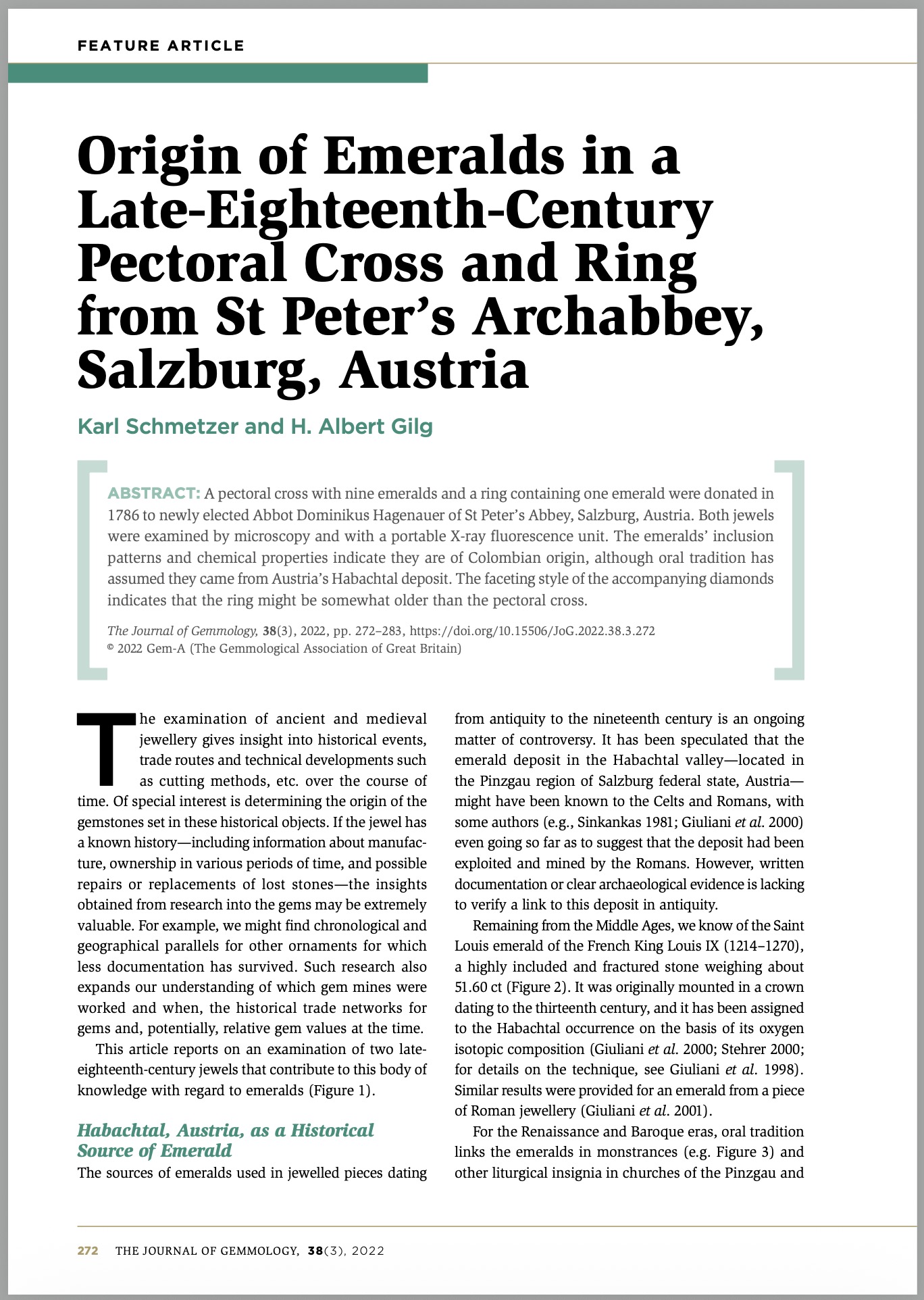
Origin of Emeralds in a Late-Eighteenth-Century Pectoral Cross and Ring from St Peter’s Archabbey, Salzburg, Austria

Origin of Emeralds in a Late-Eighteenth-Century Pectoral Cross and Ring from St Peter’s Archabbey, Salzburg, Austria

Schmetzer, K. and Gilg, H.A. (2022)

Journal Article · Source: Journal of Gemmology · Volume: Vol. 38 · Issue: No. 3 · Pages: pp. 272–283

Abstract
A pectoral cross with nine emeralds and a ring containing one emerald were donated in 1786 to newly elected Abbot Dominikus Hagenauer of St Peter’s Abbey, Salzburg, Austria. Both jewels were examined by microscopy and with a portable X-ray fluorescence unit. The emeralds’ inclusion patterns and chemical properties indicate they are of Colombian origin, although oral tradition has assumed they came from Austria’s Habachtal deposit. The faceting style of the accompanying diamonds indicates that the ring might be somewhat older than the pectoral cross.
Keywords
gems, beryl, emerald, Austria, Habachtal
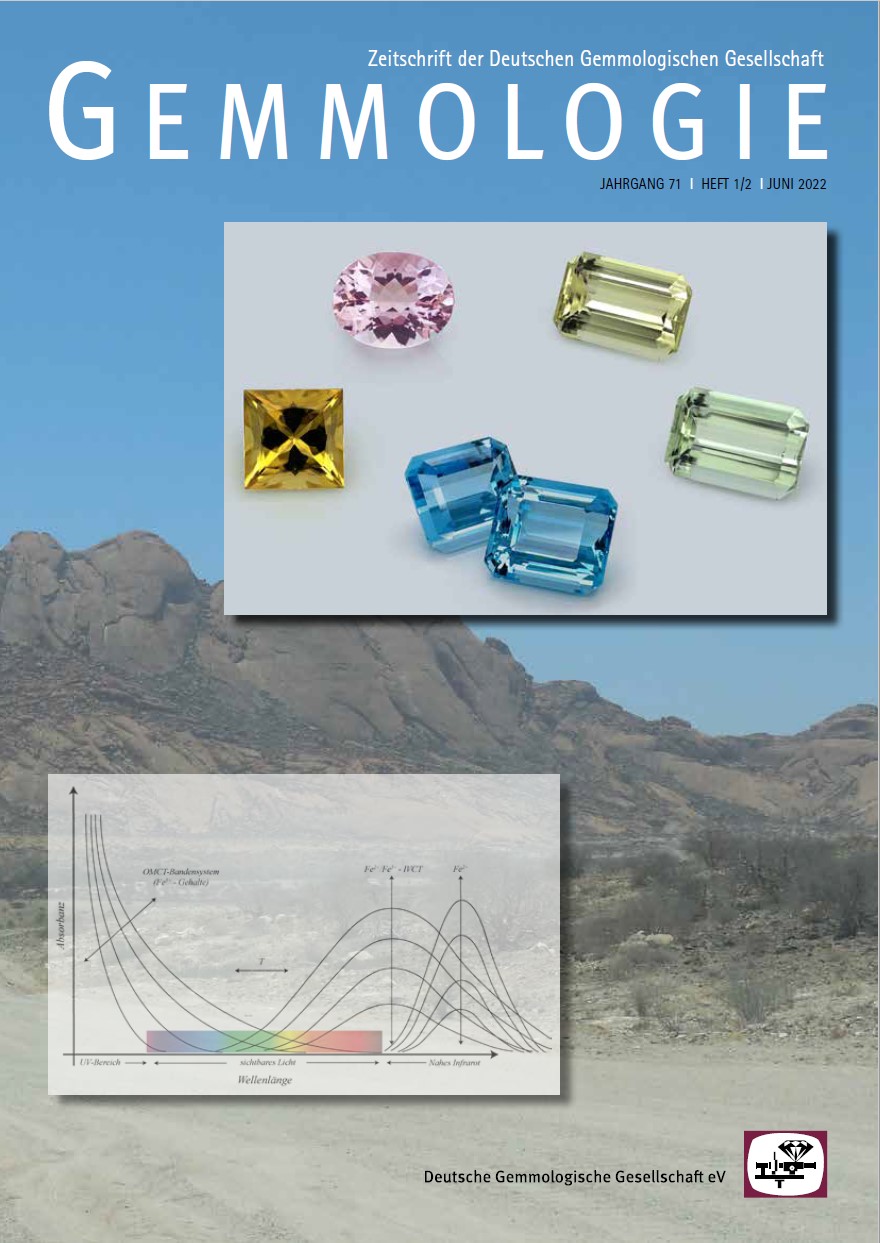
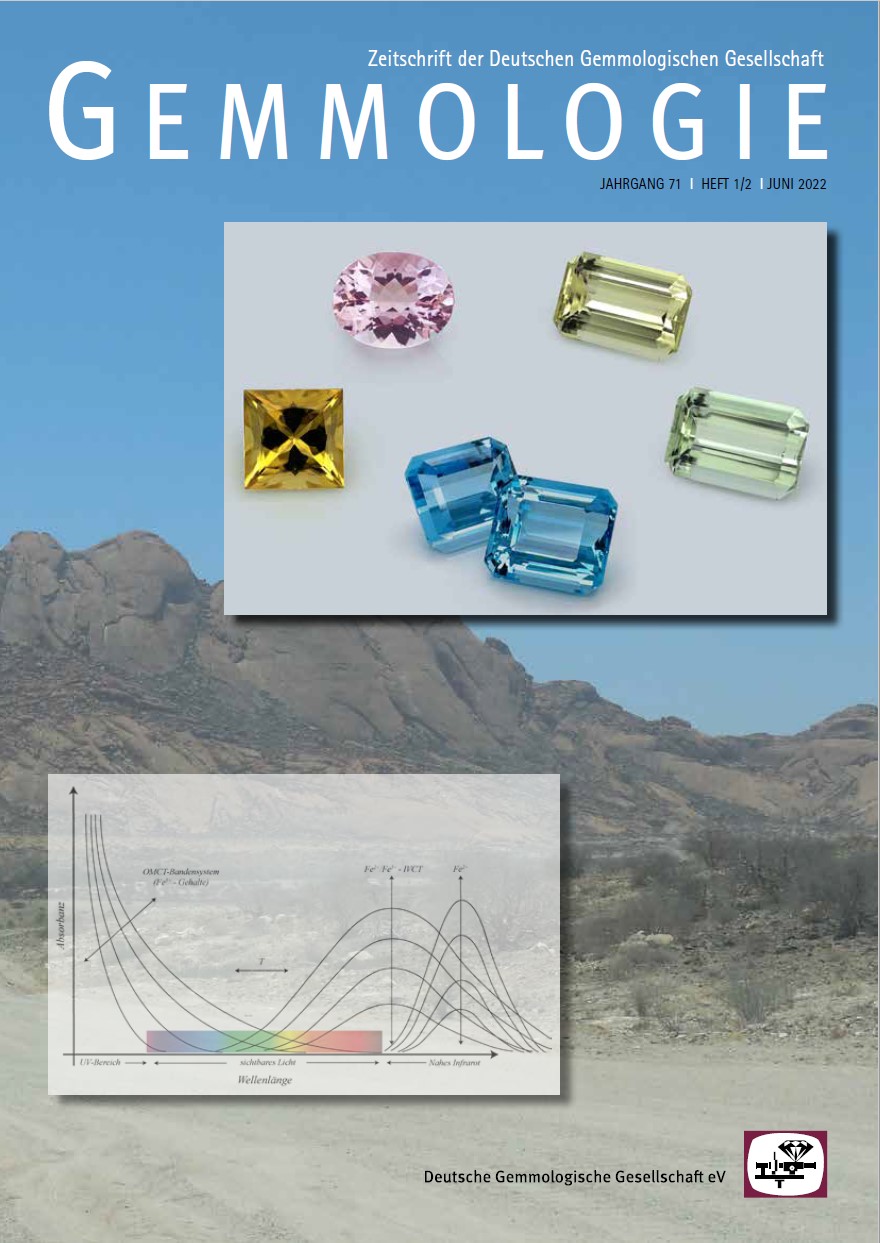
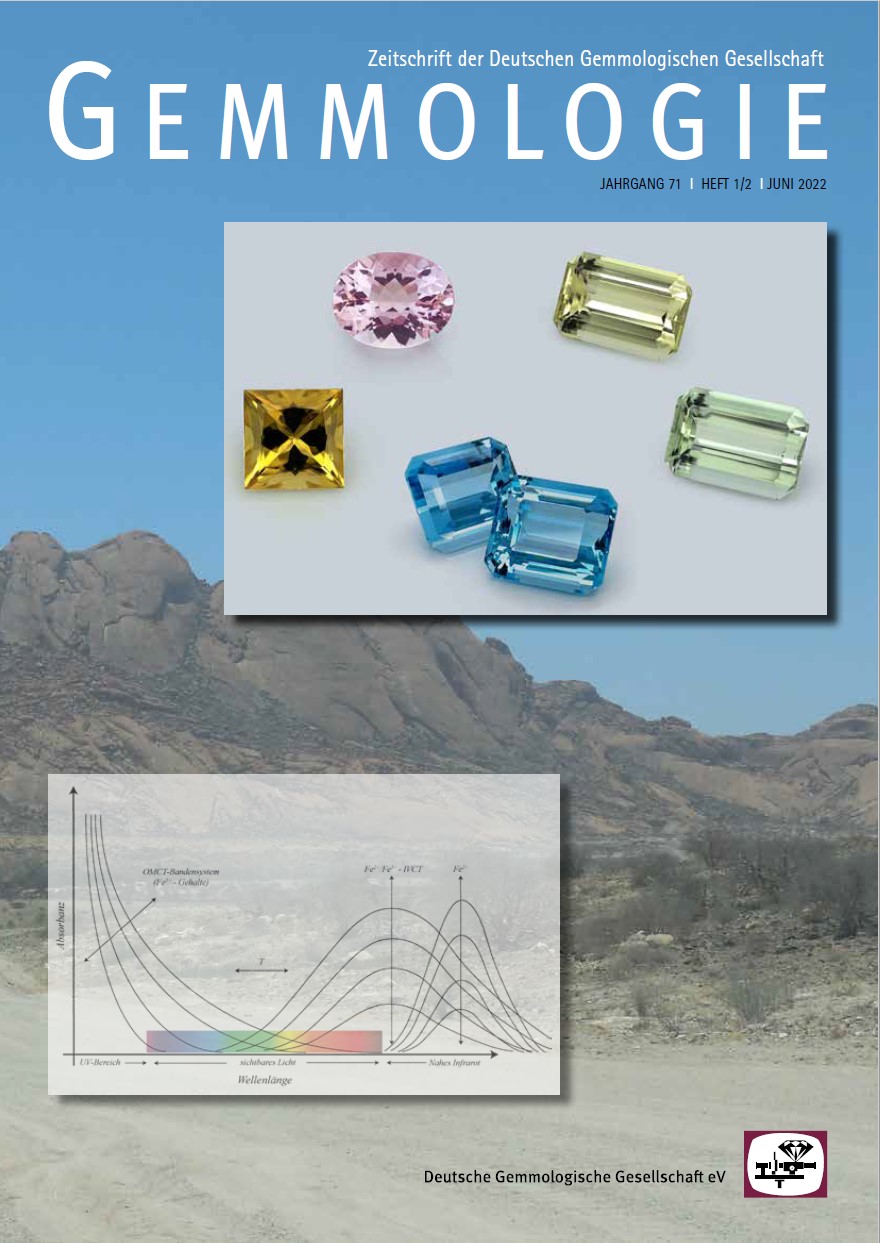
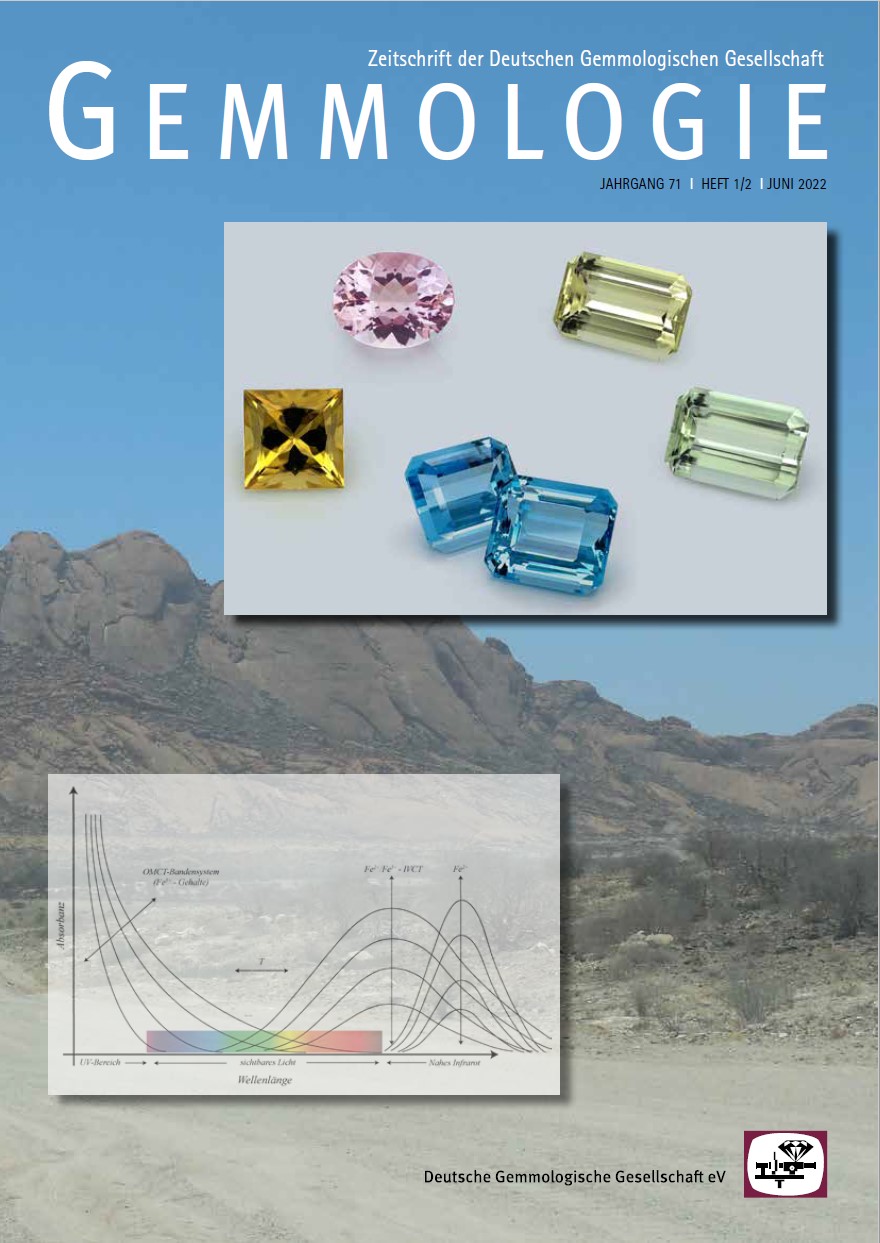
Synthetische Berylle

Synthetische Berylle

Synthetic beryl

Stephan, T., Müller, S. and Wang, Q. (2022)

Journal Article · Source: Gemmologie: Zeitschrift der Deutschen Gemmologischen Gesellschaft · Volume: Vol. 71 · Issue: No. 1/2 · Pages: pp. 51–60 · Language: in German

Abstract
From experiments since the middle of the 19th century, the flux method to produce synthetic beryls was developed in the first half of the 20th century, in particular to create synthetic emerald. The hydrothermal method developed in the 1960s also focused on synthetic emerald, but synthetic beryls in other colours were now also created. Today, a wide range of colours of synthetic beryl is produced by the hydrothermal method. These synthetic beryls are mainly identified with the gemstone microscope based on specific characteristics such as swirl-like growth inhomogeneities, metallic residues and liquid feathers – mostly veil-like and cut. Partly, UV/VIS/NIR spectra can be used for differentiation as well, since synthetic beryls are sometimes coloured by doping with certain elements that do not appear as chromophores in natural beryls, especially Co²⁺ (red to violet to orange-brown colours) and Cu²⁺ (pale to intense blue colours). These elements can also be detected by chemical analysis. In infrared spectra, differences can also be worked out by determining the dominant water types.
Keywords
gems, beryl, aquamarine, emerald, morganite, heliodore, goshenite
Künstliche Eigenschaftsveränderungen in der Beryllgruppe

Künstliche Eigenschaftsveränderungen in der Beryllgruppe

Artificial property modifications in the beryl group

Stephan, T., Lind, T. and Müller, S. (2022)

Journal Article · Source: Gemmologie: Zeitschrift der Deutschen Gemmologischen Gesellschaft · Volume: Vol. 71 · Issue: No. 1/2 · Pages: pp. 41–50 · Language: in German

Abstract
Treatments of beryl became commercially important at the beginning of the 20th century. By thermal enhancement, iron bearing beryls change from yellow, yellowish-green and green to blue colours. Furthermore, disturbing yellow or orange hues in morganites can be removed. Besides this, artificial irradiation is of relevance, to intensify yellow and pink colours, as well for special beryls with colour centres (Maxixe beryl resp. beryls of the Maxixe-type). In many cases, the limited detectability of these enhancements is problematic.
Keywords
gems, beryl, aquamarine, emerald, morganite, heliodore, goshenite
Spektrentypen und Farben von eisen- und manganhaltigen Beryllen

Spektrentypen und Farben von eisen- und manganhaltigen Beryllen

Spectral types and colors of iron- and manganese-bearing beryls

Lind, T. and Stephan, T. (2022)

Journal Article · Source: Gemmologie: Zeitschrift der Deutschen Gemmologischen Gesellschaft · Volume: Vol. 71 · Issue: No. 1/2 · Pages: pp. 27–40 · Language: in German

Abstract
The colours of the beryl varieties aquamarine, heliodor, golden beryl, goshenite and morganite are caused by the interaction of different absorption processes, which in turn are caused by traces of iron and manganese on different positions in the crystal lattice. The exact region of transmission between the absorption bands is formed by the overlapping of spin-allowed crystal field bands of Fe²⁺, the Fe²⁺/Fe³⁺-IVCT, as well as the absorption in the blue-violet spectral region. The exact shape of this OMCT-band system depends on the contents of Fe²⁺ and Fe³⁺. Spin-allowed absorption bands of Mn³⁺ produce an absorption of the blue and green and a transmission window in the red spectral region. Additional traces of chromium and vanadium can influence the colour as well.
Keywords
gems, beryl, aquamarine, emerald, morganite, heliodore, goshenite
Die Beryll-Gruppe — eine Übersicht zu den Varietäten Aquamarin, Morganit, Heliodore und Goldberyl

Die Beryll-Gruppe — eine Übersicht zu den Varietäten Aquamarin, Morganit, Heliodore und Goldberyl

The beryl group: An overview of the varieties aquamarine, morganite, heliodor, and golden beryl

Henn, U. (2022)

Journal Article · Source: Gemmologie: Zeitschrift der Deutschen Gemmologischen Gesellschaft · Volume: Vol. 71 · Issue: No. 1/2 · Pages: pp. 3–26 · Language: in German

Abstract
The first part of this special issue deals with the origin of the term beryl as well as the denomination of the as gemstones significant varieties, except emerald. Following is a survey of the relevant physical properties that determine crystal structure, crystal chemistry and crystal morphology, as well as gemmological characterization. After a short description of the most important inclusion features the formation conditions and the occurrences are presented, specified for beryl in gem quality. Subsequently the application of the mineral beryl as well as exceptional and famous beryls are described.
Keywords
gems, beryl, aquamarine, morganite, heliodore, goshenite
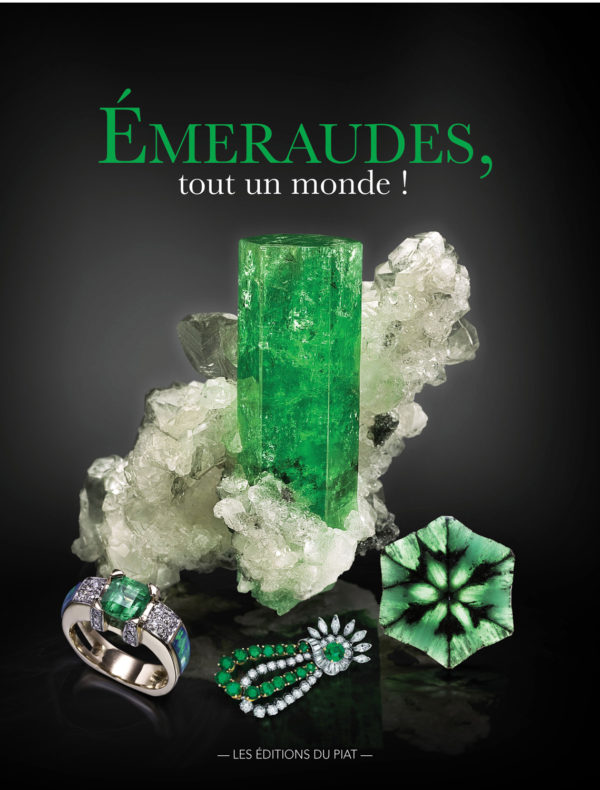
Les gisemente d’émeraude du Pakistan

Les gisemente d’émeraude du Pakistan

The emerald deposits of Pakistan

Michelou, J.C., Conruz, L., Michelou, Z., Pardieu, V. and Giuliani, G. (2022)

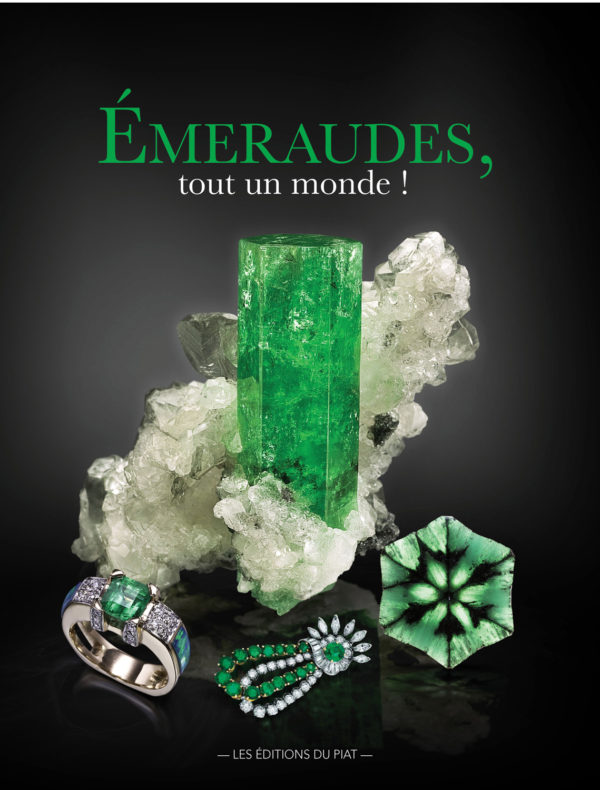
Book Section · Source: Émeraudes, tout un monde! · Publisher: Les Editions du Piat · Pages: pp. 247–258 · Language: in French

Abstract
Superb book on emeralds around the world, covering the history, geology and gemology of emerald in all the major localities. Beautifully illustrated and printed.
Keywords
gems, beryl, emerald, Pakistan, Swat, Chitral
La route des émeraudes de l’Asie centrale

La route des émeraudes de l’Asie centrale

The emerald route of Central Asia

Giuliani, G. and Pardieu, V. (2022)

Book Section · Source: Émeraudes, tout un monde! · Publisher: Les Editions du Piat · Pages: pp. 237–238 · Language: in French

Abstract
Superb book on emeralds around the world, covering the history, geology and gemology of emerald in all the major localities. Beautifully illustrated and printed.
Keywords
gems, beryl, emerald, Afghanistan, Central Asia, Pakistan, China
Typologie des gisements d’émeraude

Typologie des gisements d’émeraude

Typology of emerald deposits

Giuliani, G., Branquet, Y., Groat, L.A., Marshall, D.D. and Fallick, A. (2022)

Book Section · Source: Émeraudes, tout un monde! · Publisher: Les Editions du Piat · Pages: pp. 37–44 · Language: in French

Abstract
Superb book on emeralds around the world, covering the history, geology and gemology of emerald in all the major localities. Beautifully illustrated and printed.
Keywords
gems, beryl, emerald, geology
Géologie et genèse des émeraudes du Panjshir

Géologie et genèse des émeraudes du Panjshir

Geology and genesis of the emeralds of Panjshir

Giuliani, G. (2022)

Book Section · Source: Émeraudes, tout un monde! · Publisher: Les Editions du Piat · Pages: pp. 265–270 · Language: in French

Abstract
Superb book on emeralds around the world, covering the history, geology and gemology of emerald in all the major localities. Beautifully illustrated and printed.
Keywords
gems, beryl, emerald, Afghanistan, Panjshir

Exploring the Literature of Emerald

Emerald literature spans gemology, mineralogy, deposits, identification, treatments, synthesis, history and the gem trade, with important sources covering deposits around the world.

For a curated guide to this subject, read Green Fire — Lotus Gemology's Guide to the Literature of Emerald.

About Four Treasures

Four Treasures is Lotus Gemology's freely accessible gemological reference database. Use the full database to search by author, title or keyword and explore literature on gemology, mineralogy, jewelry and related fields. Where available, hyperlinks on titles may lead directly to the full publication.

Search the Complete Four Treasures Database