Emerald Bibliography

Emerald Bibliography

Explore books, articles and historical sources on emerald in Four Treasures, the Lotus Gemology reference database. This bibliography brings together matching records from the collection, with publication details, abstracts and cover images where available.

Emerald References

The list below matches the terms emerald or emeralds in the database's searchable fields. Some references discuss emeralds as part of a broader subject.

121–140 of 848 matching references
Three-phase inclusions in emerald and their impact on origin determination

Three-phase inclusions in emerald and their impact on origin determination

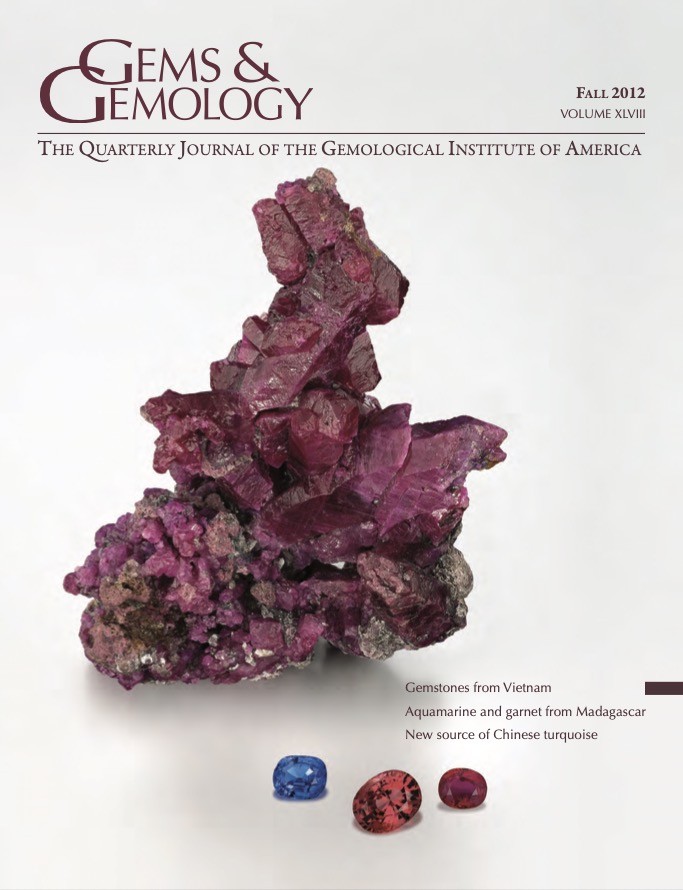
Saeseaw, S., Pardieu, V. and Sangsawong, S. (2014)

Journal Article · Source: Gems & Gemology · Volume: Vol. 50 · Issue: No. 2, Summer · Pages: pp. 114–132

Abstract
Until now, the observation of three-phase inclusions in emeralds has been considered a potential indicator of Colombian origin. Nevertheless, emeralds from Afghanistan (Panjshir Valley), China (Davdar), and Zambia (Kafubu and a new deposit at Musakashi) may contain three-phase inclusions resembling those often found in specimens from Colombian deposits (Muzo, Chivor, La Pita, Coscuez, and Peñas Blancas). This article presents detailed photomicrographs of samples from these localities, with a focus on their multiphase inclusions. Also investigated are spectroscopic features and trace-element data. For the gemologist studying the origin of emeralds hosting three-phase inclusions, a powerful set of tools to aid in this determination comes from the combination of detailed microscopic examination, UV-VisNIR and FTIR spectroscopy, and LA-ICP-MS trace-element analysis.
Keywords
gems, beryl, emerald, Colombia, Muzo, Chivor, Cosquez, Zambia, Afghanistan, Panjshir
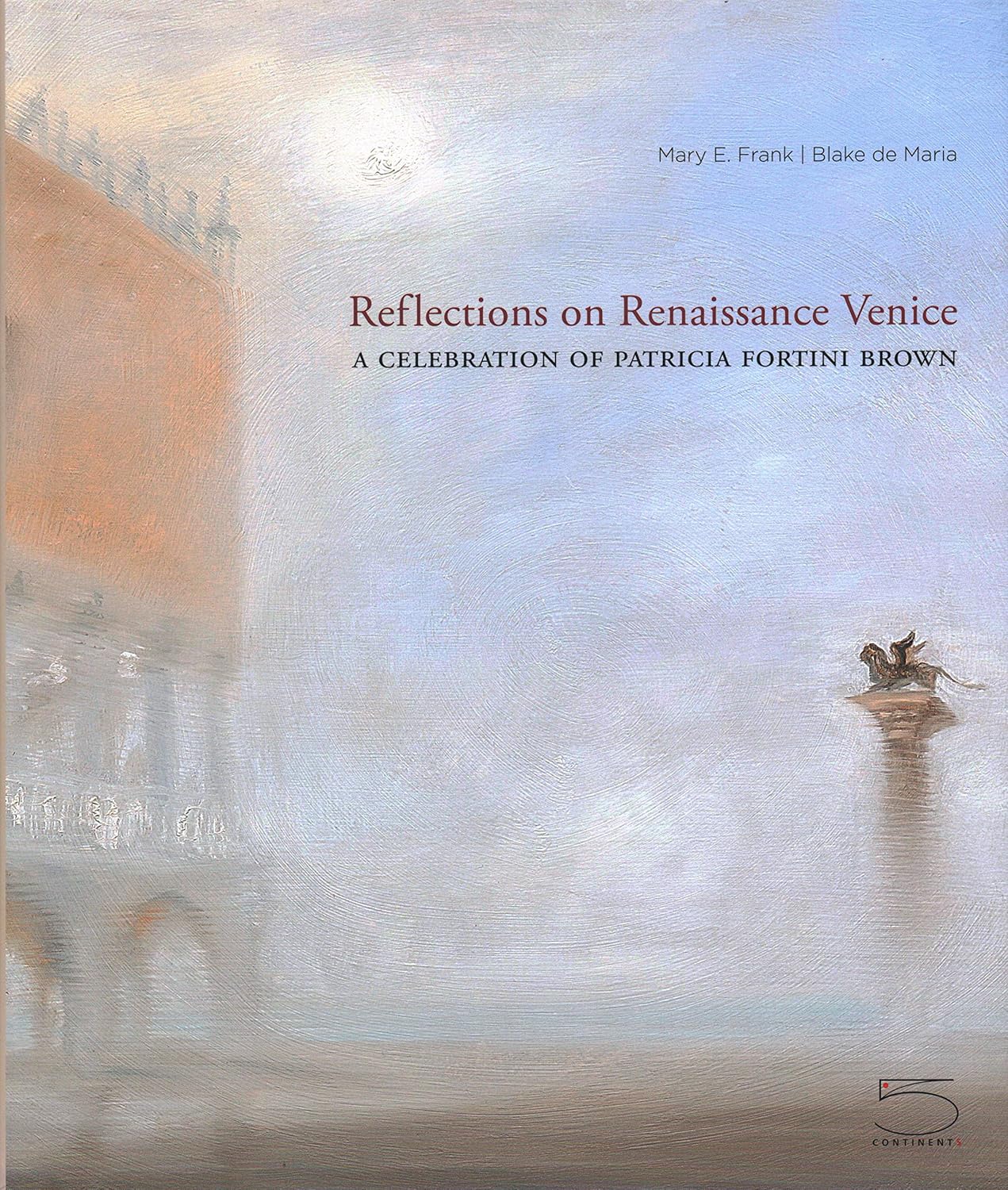
Multifaceted endeavors: Jewelry and gemstones in Renaissance Venice

Multifaceted endeavors: Jewelry and gemstones in Renaissance Venice

Maria, B., de (2013)

Book Section · Source: Reflections on Renassance Venice | A Celebration of Patricia Fortini Brown · Pages: pp. 118–131

Abstract
In Private Lives in Renaissance Venice, Patricia Fortini Brown argues that material culture served as a means by “which Venetians attempted to define and defend family identity and social rank.” Her seminal study examines a wide variety of objects, including furniture, tapestries, glassware, and, of course, portraits. According to Fortini Brown, items in the latter category served as “an important emblem of an aristocratic lifestyle.” This interpretation clearly applies to Lorenzo Lotto’s Portrait of a Lady as Lucretia (fig. 11a) and Paolo Veronese’s Portrait of Jacob König (fig. 11b). However, the two portraits share more than the early modern goal of defining an elite public identity. Rather, jewelry and gems figure prominently in both images. As is common in such portraits, the combination of gem and gesture mediates between viewer and object. In both portraits, the sitter draws the viewer’s attention to a precious object. Lucretia’s upturned palm and fingers point to a beautiful jeweled pendant that spills down over her corseted bodice, while König leans toward the viewer to display the massive emerald in his right hand. Yet a fundamental difference exists in the objects of display in these two images. The gems in Lucretia’s pendant play a supporting role as part of a larger gold setting. In Veronese’s portrait of König, the emphasis remains squarely on the emerald. While it might be tempting to attribute these representational decisions solely to the necessities of gender conventions, a larger issue informs this comparison. As will be demonstrated, in the sixteenth century jewelry featuring elaborate decorative settings such as Lucretia’s pendant would come to be matched by a newfound fascination with the natural stone itself.
Keywords
gems, history of gemology, Venice, Renaissance, culture, history of jewelry, history of gems, corundum, ruby, history.1, carbuncle, balas ruby
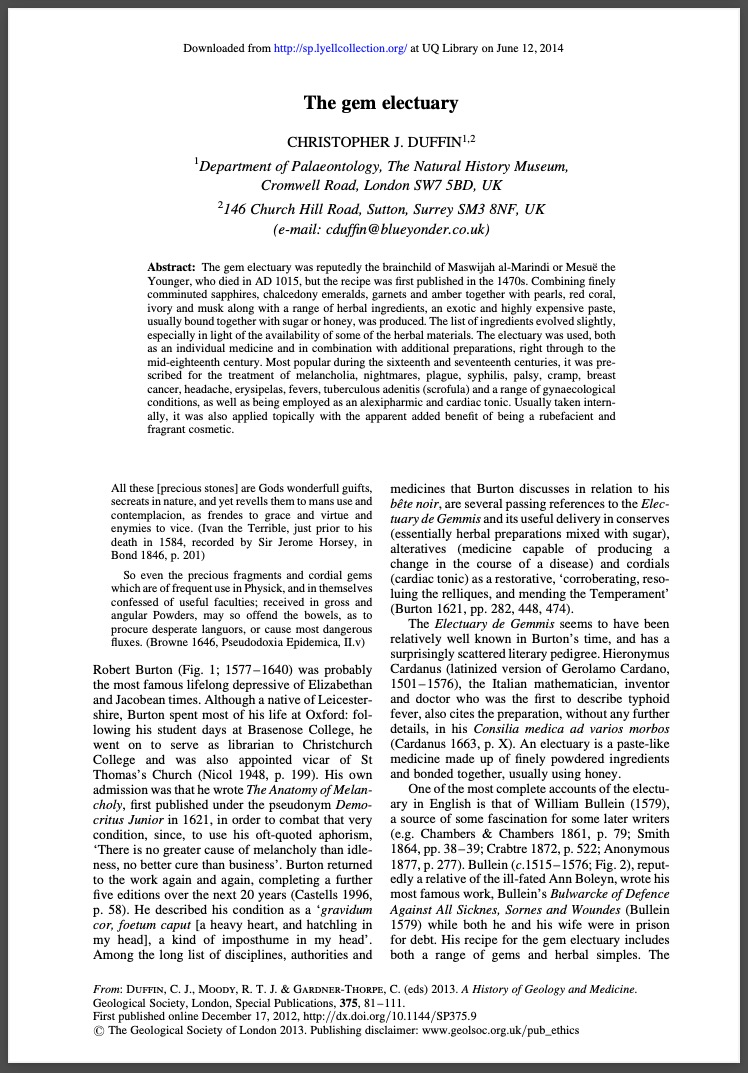
The gem electuary

The gem electuary

Duffin, C.J. (2013)

Book Section · Source: A History of Geology and Medicine · Publisher: Geological Society, London, Special Publications · Volume: Vol. 375 · Issue: No. 1 · Pages: pp. 81–111

Abstract
The gem electuary was reputedly the brainchild of Maswijah al-Marindi or Mesuë the Younger, who died in AD 1015, but the recipe was first published in the 1470s. Combining finely comminuted sapphires, chalcedony emeralds, garnets and amber together with pearls, red coral, ivory and musk along with a range of herbal ingredients, an exotic and highly expensive paste, usually bound together with sugar or honey, was produced. The list of ingredients evolved slightly, especially in light of the availability of some of the herbal materials. The electuary was used, both as an individual medicine and in combination with additional preparations, right through to the mid-eighteenth century. Most popular during the sixteenth and seventeenth centuries, it was prescribed for the treatment of melancholia, nightmares, plague, syphilis, palsy, cramp, breast cancer, headache, erysipelas, fevers, tuberculous adenitis (scrofula) and a range of gynaecological conditions, as well as being employed as an alexipharmic and cardiac tonic. Usually taken internally, it was also applied topically with the apparent added benefit of being a rubefacient and fragrant cosmetic.
Keywords
gems, jade, medicine, history of medicine
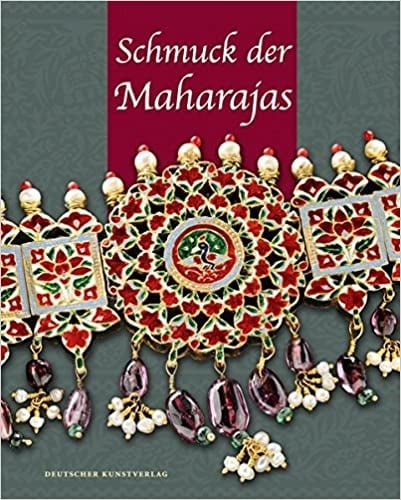
Schmuck der Maharajas

Schmuck der Maharajas

Jewelry of the Maharajas

Weihreter, H. (2013)

Book · Publisher: Deutscher Kunstverlag · Pages: 168 pp. · Language: in German

Abstract
Throughout its history, India has produced countless types of jewelry as a huge country with an almost unmanageable number of peoples and tribes. The precious ones were not only intended to decorate or provide information about the social rank of the wearer, they also served as magical protection and were indispensable in some religious ceremonies. Many pieces of jewelry also had a symbolic meaning and can be associated with ancient Indian myths due to their materiality. The publication ranges from magnificent pieces from princely treasuries to precious jade objects to the highly elaborately decorated jewelry of the Rabari people with gold granules.
Keywords
gems, jade, Mughal jade carving nephrite, China, beryl, emerald, spinel, ruby, gold jewelry, Indian lapidary
Enter the Milanese lapidary: Precious stones in Garcia de Orta's Coloquios dos simples, e drogas he cousas mediçinais da India (Goa, 1563)

Enter the Milanese lapidary: Precious stones in Garcia de Orta's Coloquios dos simples, e drogas he cousas mediçinais da India (Goa, 1563)

Loureiro, R.M. (2013)

Journal Article · Source: HOST: Journal of History of Science and Technology · Volume: Vol. 8 · Issue: Fall · Pages: pp. 29–47

Abstract
Somewhere in the city of Goa, on the west coast of India, on an unspecified day in the middle of the sixteenth century, two Europeans are involved in a learned conversation about elephants and ivory. One of them is Garcia de Orta, a renowned Portuguese physician trained at Alcala de Henares and Salamanca, and a longtime resident of the capital city of the Portuguese Estado da Índia, where he has been practicing medicine for many years; the other is Ruano, also a graduate from the same Spanish universities, and recently arrived in India on board of the Portuguese annual fleet from Lisbon for purposes of trade. The lively discussion is taking place at Orta’s residence, just before the evening meal, when both physicians are interrupted by a woman servant, who enters to announce the arrival of a visitor well-known to the master of the house: “Andrea from Milan, the lapidary, has just arrived”, and wishes to speak to Orta, concerning the sale of some precious stones. Apparently, the Portuguese physician is in the possession of two emeralds, a large one and a smaller but clearer one, and the Italian gem-trader has found a possible buyer for both gems. Garcia de Orta salutes the visitor and declares he is willing to sell both emeralds. This curious episode, one of the many that can be found in the pages of the Colóquios dos simples e drogas medicinais da Índia, published in Goa in 1563, raises several interesting questions, namely: the large network of informers that Orta brings into play throughout his learned colloquies; the methodology he uses to build a veritable encyclopedia of Asian natural history; the discreet but persistent involvement of the Portuguese naturalist in matters of merchandise; and also his attitude towards precious stones and the so-called lapidary medicine.
Keywords
gems, corundum, history.1, beryl, emerald, diamond, Garcia de Orta, Goa, Portuguese Goa, Precious Stones, Lapidary Medicine, Asia, Sixteenth Century, history of Gemology, Indian lapidary
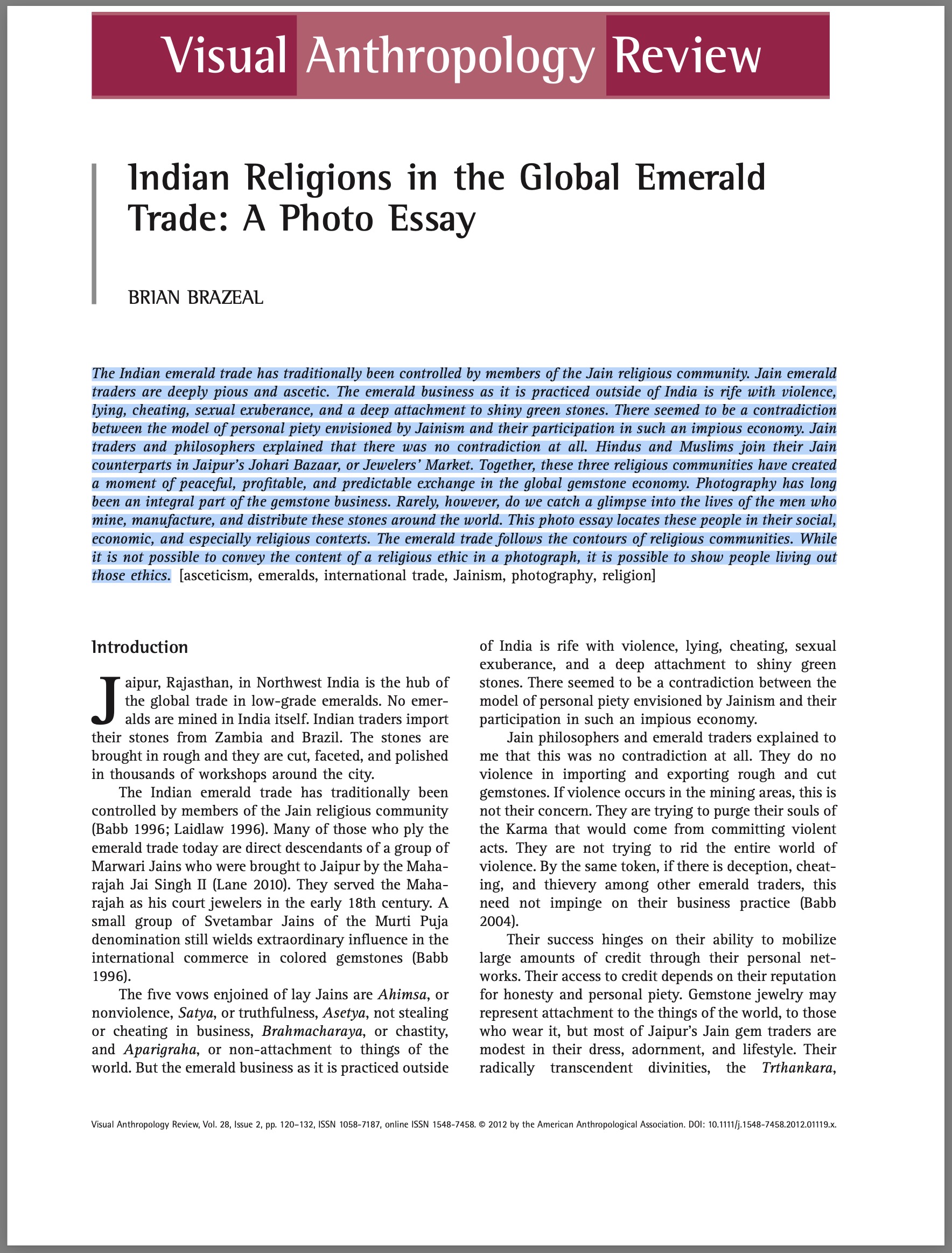
Indian religions in the global emerald trade

Indian religions in the global emerald trade

Brazeal, B. (2012)

Journal Article · Source: Visual Anthropology Review · Volume: Vol. 28 · Issue: No. 2, Fall · Pages: pp. 120–132

Abstract
The Indian emerald trade has traditionally been controlled by members of the Jain religious community, who are deeply pious and ascetic. By contrast, the emerald business outside India is rife with violence, deception, sexual exuberance, and a strong attachment to shiny green stones, suggesting a contradiction between the ideals of Jain piety and their participation in such an impious economy. Yet Jain traders and philosophers insist there is no contradiction. In Jaipur’s Johari Bazaar, Hindus and Muslims join their Jain counterparts, and together these three religious communities have created a space of peaceful, profitable, and predictable exchange in the global gemstone economy. Photography has long been integral to the gemstone trade, but rarely does it reveal the lives of the men who mine, manufacture, and distribute these stones worldwide. This photo essay situates them in their social, economic, and especially religious contexts, showing how the emerald trade follows the contours of religious communities. While photographs cannot convey the full substance of a religious ethic, they can portray people enacting those ethics in daily life.
Keywords
gems, beryl, emerald, Colombia, India, Jaipur, emerald trade, Jainism, politics, anthropology
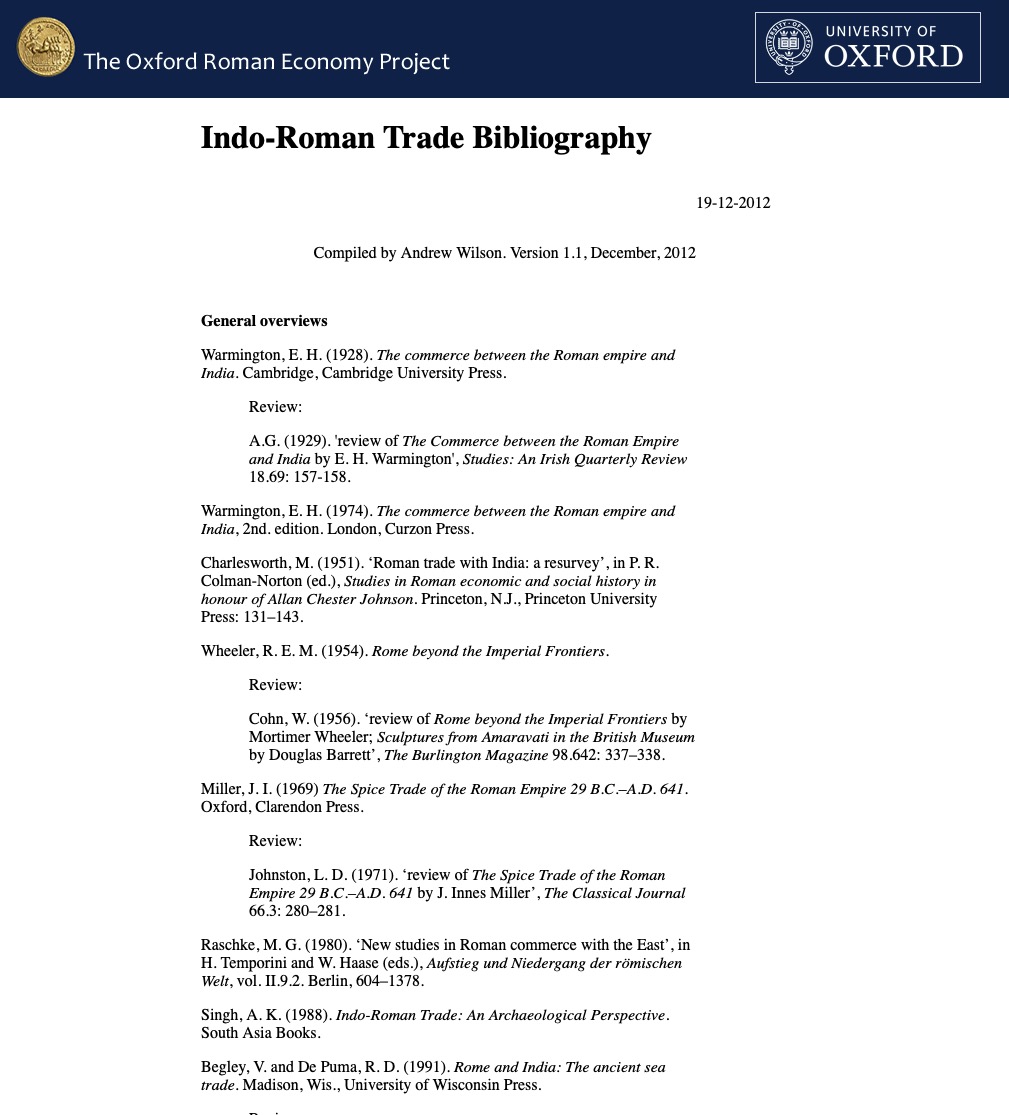
Indo-Roman Trade & Mining Bibliographies

Indo-Roman Trade & Mining Bibliographies

Wilson, A. (2012)

Web Page · Source: The Oxford Roman Economy Project · Volume: 2025

Abstract
Compiled by Andrew Wilson, with assistance from Dragana Mladenović, Kristina Glicksman, and Mariana Egri, this extensive bibliography brings together scholarship on ancient mining and metallurgy, complementing Wilson’s bibliography of Indo-Roman trade and providing a broad reference resource for the extractive industries that supplied ancient commerce. It covers general studies of mining, mining technology and administration, and individual commodities including gold, silver, lead, copper, iron, tin, and stone, with geographically organized sections on Italy, Gaul, Germany and Austria, the Iberian Peninsula, Britain, North Africa, the Balkans, Dacia, Greece, Asia Minor, the Near East, and Egypt. Particularly extensive coverage is devoted to Roman mining in Spain and Portugal, including gold mining, Rio Tinto, Las Médulas, drainage and hydraulic technology, metallurgy, administration, and the organization of mining districts. Of particular gemological interest are references to Roman and Byzantine emerald mining in Egypt and amethyst mining at Wadi el-Hudi, while the broader bibliography documents the mining, processing, administration, and distribution of mineral resources throughout the ancient Mediterranean world. Together with the Indo-Roman trade bibliography, it provides a substantial guide to literature concerning both the extraction of mineral resources and their movement through ancient regional and long-distance trading networks.
Keywords
gems, archaeology, archaeogemology, ancient trade, commerce, mining, Rome, Roman era
Gem News International: Emerald from Ethiopia

Gem News International: Emerald from Ethiopia

Cevallos, P., Simmons, W.B. and Falster, A.U. (2012)

Journal Article · Source: Gems & Gemology · Volume: Vol. 48 · Issue: No. 3, Fall · Pages: pp. 219–220

Abstract
At the 2011 Tucson gem shows, gem dealer Farooq Hashmi (Intimate Gems, Glen Cove, New York) loaned the GIA a 1.36 ct emerald reportedly sourced from near Dubuluk, a town in southern Ethiopia approximately 80 km north of the Kenyan border. Hashmi noted that the area had been producing emeralds for a few years, and during a buying trip to Ethiopia in 2011, he observed several hundred grams of rough material, including some large crystals, though gem-quality portions were typically small. Examination of the trilliant-cut emerald revealed green color with weak pleochroism (yellowish green and bluish green), refractive indices of no = 1.585 and ne = 1.578, a birefringence of 0.007, specific gravity of 2.72, and weak red fluorescence under long-wave UV. Strong absorption lines near 700 nm were visible in a desk-model spectroscope, consistent with known emerald properties. Microscopic inspection showed roiled and jagged growth structures, blocky two-phase fluid inclusions, pale brown plates, short needles, and a pale brown elongated inclusion. Electron microprobe analysis conducted at the University of New Orleans indicated 0.05 wt.% Cr₂O₃ and 0.10 wt.% FeO, with vanadium below detection limits. Polarized UV-Vis-NIR spectroscopy revealed absorption features due to both Fe²⁺ and Cr³⁺, while the infrared spectrum showed bands at 2358 cm⁻¹ (linked to CO₂ in structural channels) and 2290 cm⁻¹ (of unknown origin). These findings suggest that Ethiopia may soon add emerald to its expanding portfolio of commercially significant gemstones.
Keywords
gems, beryl, emerald, Ethiopia
Emeralds from the Fazenda Bonfim region, Rio Grande do Norte, Brazil

Emeralds from the Fazenda Bonfim region, Rio Grande do Norte, Brazil

Zwaan, J.C., Jacob, D.E., Häger, T., Neto, M.T.O.C. and Kanis, J. (2012)

Journal Article · Source: Gems & Gemology · Volume: Vol. 48 · Issue: No. 1, Spring · Pages: pp. 2–17

Abstract
In 2006, emeralds were discovered in the Fazenda Bonfim region of northeastern Brazil. Emerald mineralization occurs in association with small recrystallized pegmatitic bodies hosted by metamorphosed ultramafic rocks within the Santa Mônica Shear Zone. Prospecting and exploration have been conducted in a few small pits and tunnels, yielding emerald crystals with transparent areas typically ranging between 2 and 5 mm. Polished samples usually display a saturated bluish green color with a medium-light to medium tone. The most common internal features are partially healed fissures with two-phase (liquid–gas) fluid inclusions and a variety of fine, parallel-oriented growth tubes. The emeralds contain moderate amounts of the chromophore elements Cr and Fe, along with traces of V; they also show relatively high K and low Li contents. FTIR spectroscopic features are consistent with alkali-bearing emeralds that contain significant CO₂ and a small amount of deuterated water. Emeralds from Fazenda Bonfim can be distinguished from those of other schist- and pegmatite-related commercial deposits.
Keywords
gems, beryl, emerald, Brazil, inclusions
Spinel and its treatments: A current status report

Spinel and its treatments: A current status report

Smith, C.P. (2012)

Journal Article · Source: InColor · Issue: Spring · Pages: pp. 50–54

Abstract
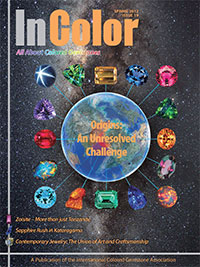
Spinel has historically been one of the most highly revered gemstones. However, over an extended period of time, its popularity had suffered as a result of many factors, including its classification as “semi-precious” and a general confusion with another dominant red gemstone: ruby. More recently though, spinel has been making a strong comeback and so its popularity is once again on the rise. Articles of important new sources and even a book devoted to this beautiful and colorfully diverse gemstone have helped to focus attention back onto spinel (see e.g. Smith et.al., 2007; Senoble, 2008; Pardieu et.al., 2009; Krzemnicki, 2010; Yavorskyy and Hughes, 2010). In addition to exhibiting a vibrant array of shades and nuances of color, spinel has also traditionally been spared the controversy of treatments that have encumbered many other gem varieties, such as ruby, sapphire, emerald, quartz, topaz and tanzanite. Fortunately, spinel remains a gemstone that is generally free of treatment considerations. However, today some treatments (oil, heat) are starting to be encountered (Robertson, 2012). This article is a review of those treatments and the gemological characteristics that help to distinguish them.
Keywords
spinel, spinel treatments, heat, oil, gems, Burma, Vietnam, Tanzania
Contributions to the cultural history of emerald in early India

Contributions to the cultural history of emerald in early India

Wojtilla, G. (2012)

Journal Article · Source: Acta Orientalia Academiae Scientiarum Hungaricae · Volume: Vol. 65 · Issue: No. 4, December · Pages: pp. 463–478

Abstract
The present paper offers a complete inventory of authoritative passages in Sanskrit and Prakrit texts on gemmology and Sanskrit lexicons where emerald is dealt with. Fresh light is thrown on the hotly debated issue whether the description of beryl in the Arthaśāstra II, 11, 30 contains an indirect reference to emerald. The Sanskrit names of emerald are analysed and commented on. Texts revealing the history of emerald and its origin are put to the test, and the evident mistakes prevalent in the special literature are corrected. Finally, a peculiar belief on the magic power of emerald is analysed within a wider context.
Keywords
gems, beryl, emerald, India, Indian lapidary, Arthasastra, asmagarbha, marakata, masaragalva, ratnasastra, tark?yaratna, gemology
The Crown Jewels

The Crown Jewels

Keay, A. (2011)

Book · Publisher: Thames & Hudson · Pages: 192 pp.

Abstract
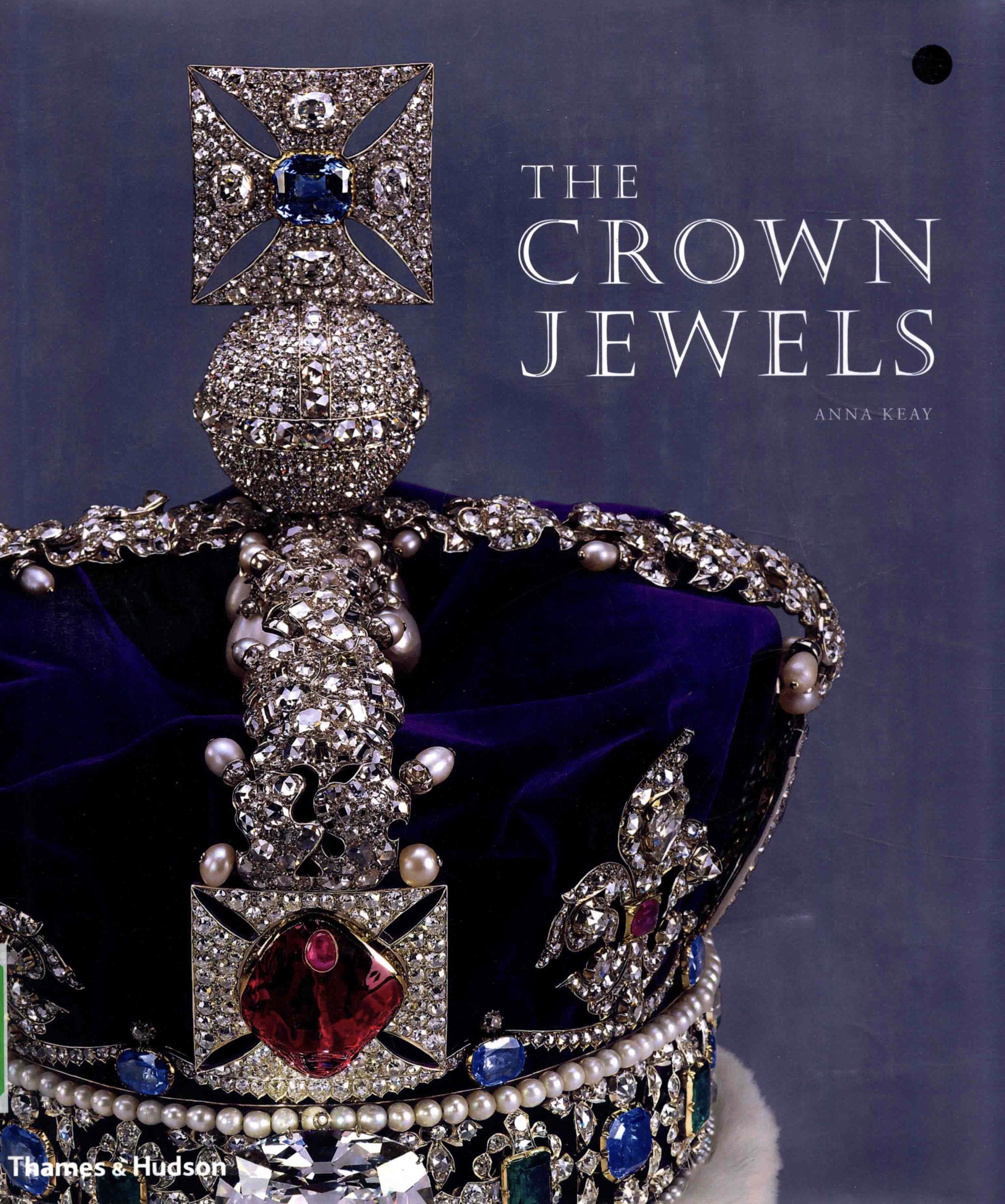
Kings and queens of England have stored crowns, robes and other items of their ceremonial regalia at the Tower of London for over 600 years and since the 17th century, at least, this collection has been commonly known as the ‘Crown Jewels’. At the heart of the collection is the coronation regalia itself, a group of precious and highly symbolic objects used since 1661 to crown sovereigns of England. The Tower of London is also home to a dazzling assortment of magnificent pieces of royal church and banqueting plate, some of which pre-date the great destruction of the English regalia in the mid-17th century. Among the jewels adorning objects in the collection are to be found some of the world’s most exceptional and historic precious stones—including Cullinan I and Cullinan II, the largest top-quality cut diamonds in the world, and the extraordinary Koh-i-Noor diamond. However, perhaps the most remarkable and unusual thing about this collection is that it is not a museum display. Unlike most of its European counterparts, the regalia of England is not a beautiful but long defunct assortment of objects, instead it is a working collection that remains in active use today, 1,200 years after the coronation of the first English kings.
Keywords
gems, corundum, quality.10, crown jewels, auction, diamond, pearl, beryl, emerald, spinel, Tajikistan, Kuh-i-Lal, Swat, Pakistan, France.12
Vert Désir: Émeraude, Malachite, Jade et autres Minéraux Verts dans l’Art et l’Archéologie

Vert Désir: Émeraude, Malachite, Jade et autres Minéraux Verts dans l’Art et l’Archéologie

Green desire: Emerald, Malachite, Jade, and Other Green Minerals in Art and Archaeology

Province de Namur (2011)

Edited Book · Publisher: Namur · Pages: 212 pp. · Language: in French

Abstract
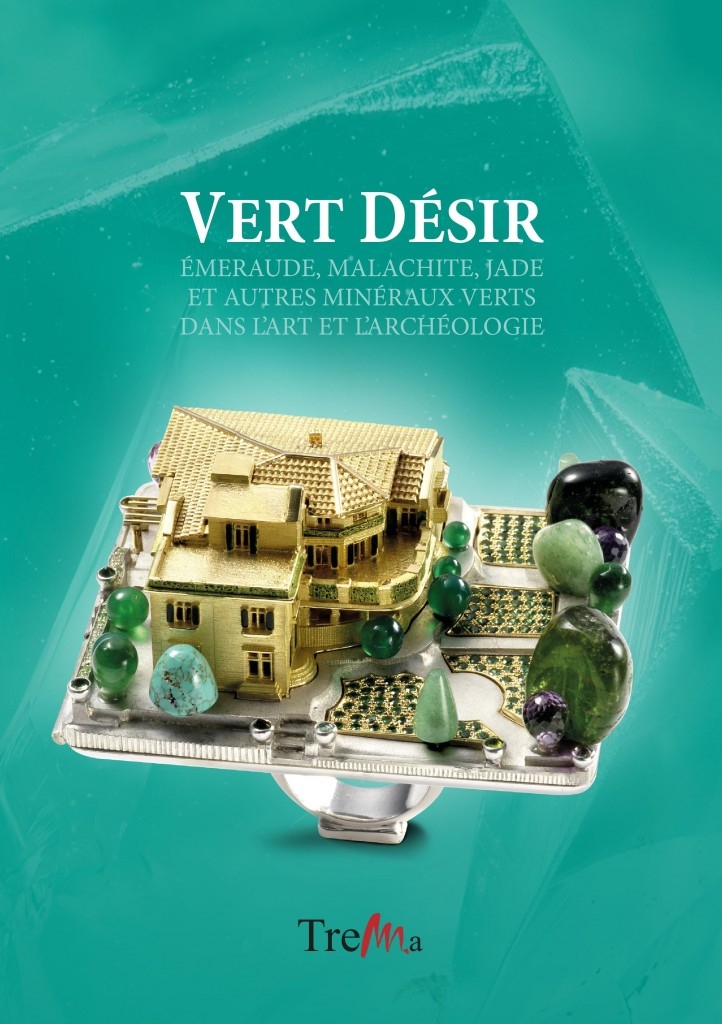
Today, green creeps into all parts of human activity. It has become obvious, the color of hope, the one that will save the world. But what about the first civilizations? History shows that the color green has unleashed passions as much as aroused rejection. But it is first of all a concept shared by a community of individuals within the same society, at a given time. This concept materializes in particular in the arts and it is this artistic production that the TreM.a-Musée des Arts anciens wanted to dissect through the prism of stones: emerald, the most feminine of them, but also others less prestigious such as malachite, jade, serpentine, peridot... Each of them challenged the know-how of artisan jewelers and jewelers, served power, helped to get in touch with the gods, enhanced the beauty of women. The exhibition invites you to discover these green stones and their uses from Prehistory to the present day. A walk through time and space with beauty and inventiveness as the only guides. These two qualities, universal and timeless, imply a careful choice of stones and a great mastery of techniques. They cannot be appreciated without knowing the geographical origin of the materials, their mineralogical presentation, the extraction methods... so many elements discussed in the rooms.
Keywords
gems, beryl, emerald, jade, malachite
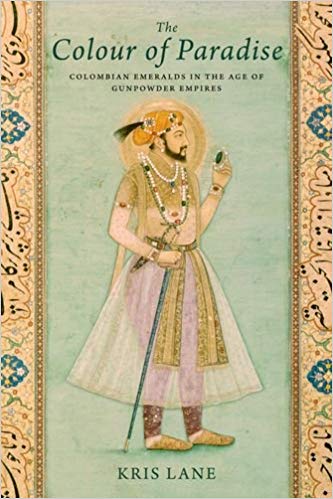
Colour of Paradise: The Emerald in the Age of Gunpowder

Colour of Paradise: The Emerald in the Age of Gunpowder

Lane, K. (2010)

Book · Publisher: Yale University Press · Pages: 280 pp.

Abstract
Among the magnificent gems and jewels left behind by the great Islamic empires, emeralds stand out for their size and prominence. For the Mughals, Ottomans, and Safavids green was—as it remains for all Muslims—the color of Paradise, reserved for the Prophet Muhammad and his descendants. Tapping a wide range of sources, Kris Lane traces the complex web of global trading networks that funneled emeralds from backland South America to populous Asian capitals between the sixteenth and the eighteenth centuries. Lane reveals the bloody conquest wars and forced labor regimes that accompanied their production. It is a story of trade, but also of transformations—how members of profoundly different societies at opposite ends of the globe assigned value to a few thousand pounds of imperfectly shiny green rocks.
Keywords
gems, beryl, emerald, Colombia, beryl, Mughals, Ottomans, South America
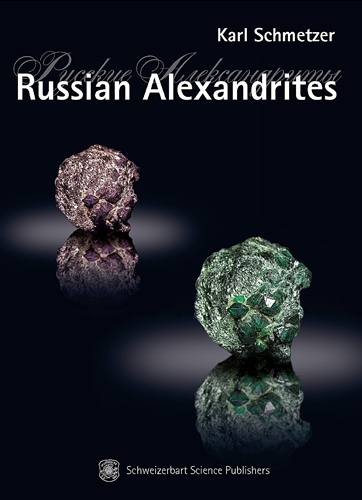
Russian Alexandrites

Russian Alexandrites

Schmetzer, K. (2010)

Book · Publisher: Schweizerbart Science Publishers · Pages: 141 pp.

Abstract
Alexandrite, a variety of chrysoberyl, and one of the finest colour-change natural gemstones, may almost be called “the national gemstone of Russia”. This great prestige is based on two facts: its noble name in honour of the Tsarevich Alexander Nikolaevich (the future Tsar Alexander II) and its dazzling colours, green in daylight and red in incandescent light, the military colours of Imperial Russia. Although quantities of facetable quality alexandrite are considerably less than those of emerald, alexandrite is counted among and compared to the “big four” of the gem business: diamond – ruby – sapphire – emerald. In this book the authors present an historical overview of emerald mining in the Urals, the discovery of Russian alexandrites in the Uralian emerald mines, the naming and historical use of alexandrites and their appearance and display in mineralogical museums and the gem trade. Morphology and twinning of rough alexandrite is described for single crystals, single contact twins and cyclic twins (trillings). Mineralogical and gemmological properties are thoroughly explained and numerous photo-micrographs of inclusions and growth patterns in faceted samples are presented.
Keywords
beryl, emerald, chrysoberyl, alexandrite, Russia, Ural Mountains, Malysheva, gems
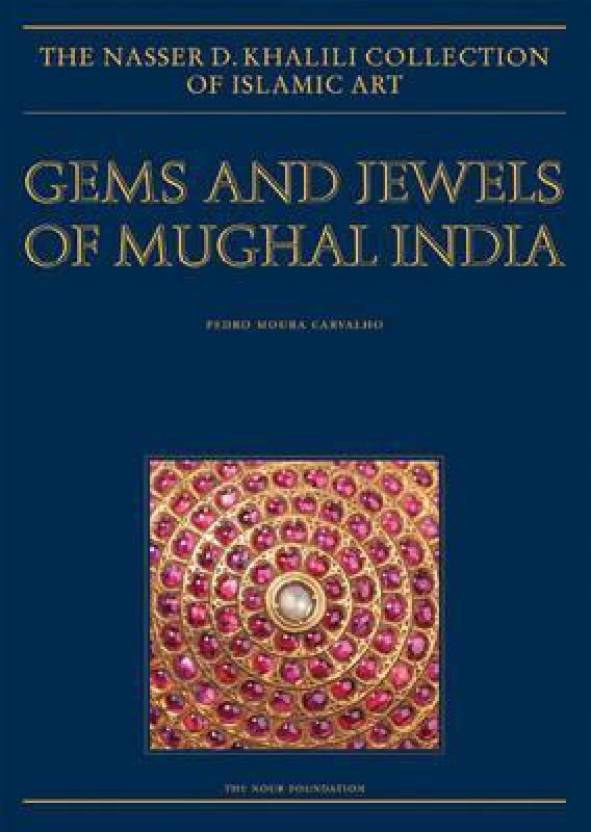
Gems and Jewels of Mughal India: Jewelled and Enamelled Objects from the 16th to 20th Centuries (Nasser D Khalili Collection of Islamic Art)

Gems and Jewels of Mughal India: Jewelled and Enamelled Objects from the 16th to 20th Centuries (Nasser D Khalili Collection of Islamic Art)

Carvalho, P.M. (2010)

Book · Source: The Nasser D. Khalili Collection of Islamic Art · Publisher: Khalili Collections · Issue: Vol. 18 · Pages: 316 pp.

Abstract
Unfortunately, despite literary and pictorial evidence that the Mughals possessed and wore large numbers of priceless jewels, very little has survived today. Despite a few recent exhibitions and publications, the subject is still very largely unexplored and the publication of the substantial holdings in the Nasser D. Khalili Collection is therefore an event of some significance. Prominent among these is a spinel ruby engraved with the names and titles of the Emperors Jahangir and Shah Jahan; as well as two carved emeralds of notable size and colour, also from the period of Shah Jahan or perhaps the early years of his son’s reign. These pieces are presented alongside a large number of 18th and 19thcentury enamelled and jewelled objects, and a wide range of items of personal jewellery that includes South Indian gold pieces of exotic form and excellent workmanship as well as turban ornaments and other pieces of Mughal design. The detailed catalogue entries are accompanied by several essays exploring various aspects of Mughal precious objects and the materials they used.
Keywords
corundum, history.1, quality.10, gems, Indian lapidary
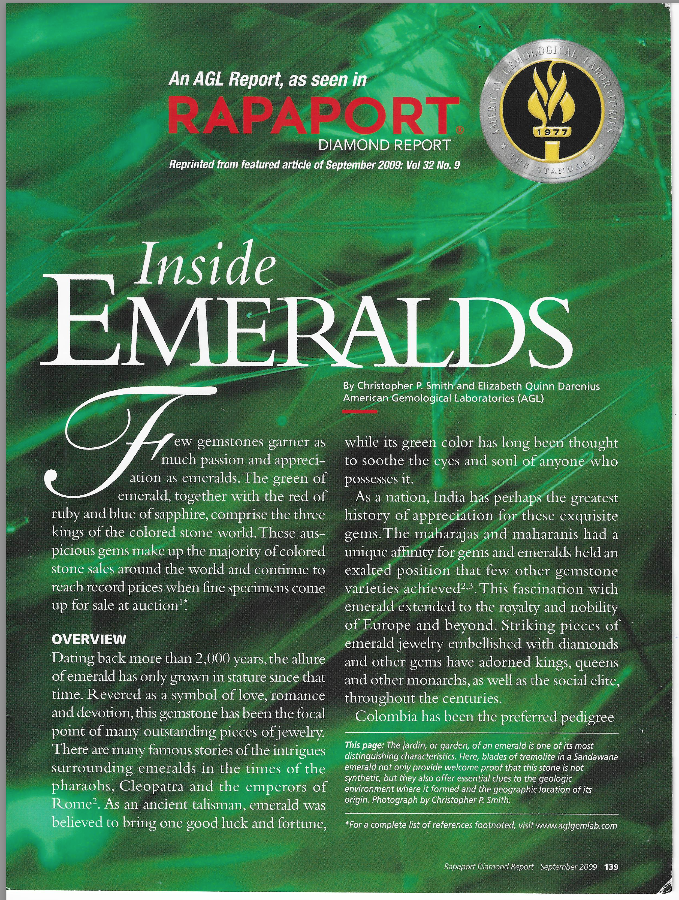
Inside emeralds

Inside emeralds

Smith, C.P. and Darenius, E.Q. (2009)

Journal Article · Source: Rapaport · Volume: Vol. 32 · Issue: No. 9 · Pages: pp. 139–149

Abstract
Excellent summary of emerald inclusions and UV-Vis-NIR spectra from different origins and description of different emerald enhancements
Keywords
gems, emerald, beryl, inclusions, UV-Vis-NIR spectroscopy, history, origin, clarity enhancement, Colombia, Zambia, Brazil, Afghanistan, China, Pakistan, Russia, Zimbabwe, Sandawana, Nigeria, Tanzania, USA, North Carolina
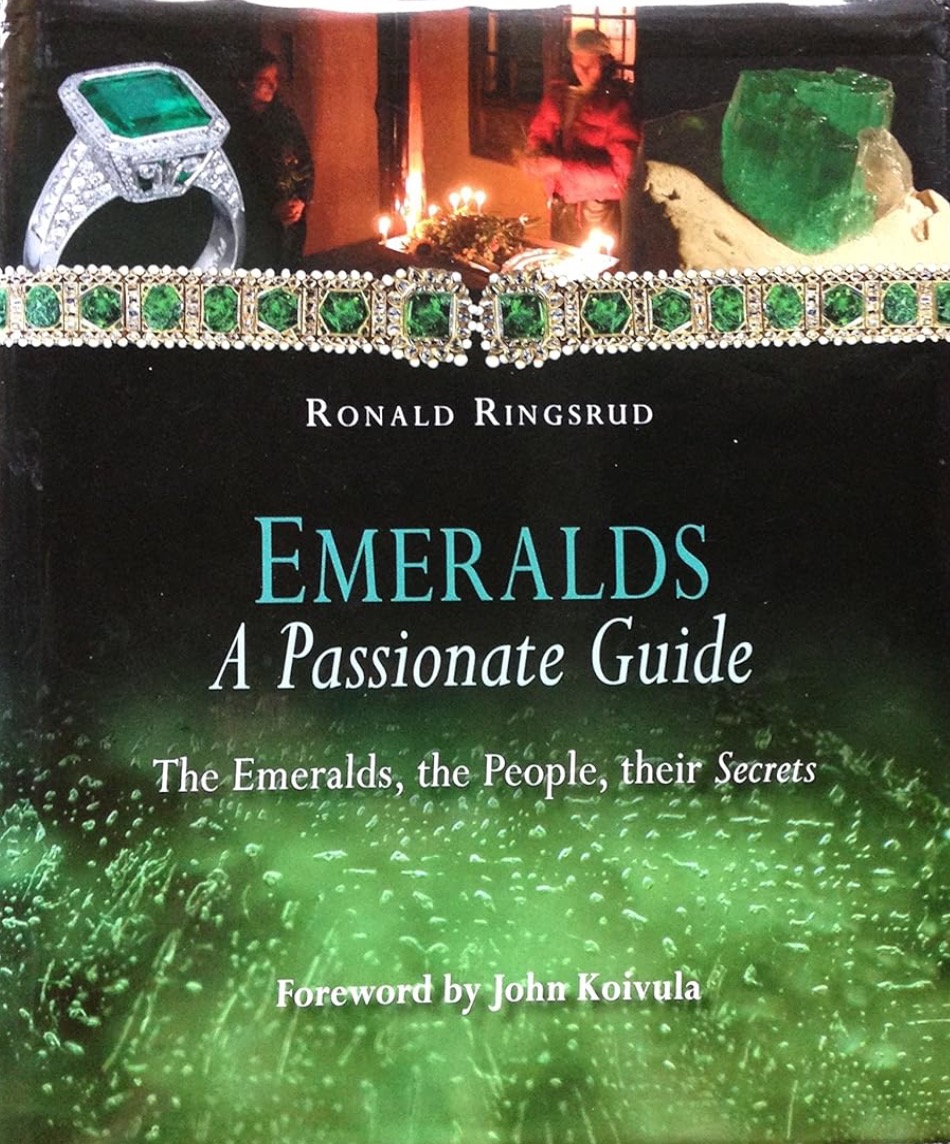
Emeralds: A Passionate Guide

Emeralds: A Passionate Guide

Ringsrud, R. (2009)

Book · Publisher: Green View Press · Pages: 382 pp.

Abstract
“Emeralds | A Passionate Guide,” is a grand introduction to the royal view that a connoisseur takes on the subjects of color, gem appreciation and rarity of emeralds. Read about the people, the miners, the personalities and adventurers--each caught in the allure of this exotic green stone. There is information here for a gemologist to rise to the level of connoisseurship in emeralds, but beginners will find this book an expansive and informative read--one that celebrates as well as explains.
Keywords
gems, bery, beryl, emerald, Colombia, Muzo, Chivor, Bogata

Exploring the Literature of Emerald

Emerald literature spans gemology, mineralogy, deposits, identification, treatments, synthesis, history and the gem trade, with important sources covering deposits around the world.

For a curated guide to this subject, read Green Fire — Lotus Gemology's Guide to the Literature of Emerald.

About Four Treasures

Four Treasures is Lotus Gemology's freely accessible gemological reference database. Use the full database to search by author, title or keyword and explore literature on gemology, mineralogy, jewelry and related fields. Where available, hyperlinks on titles may lead directly to the full publication.

Search the Complete Four Treasures Database