Gemology Books Bibliography

Gemology Books Bibliography

Explore books on gems, gemology, jewelry and mineralogy in Four Treasures, the Lotus Gemology reference database. This bibliography brings together matching book records from the collection, with publication details, abstracts and cover images where available.

Gemology Book References

The list below matches books concerning gemology and related subjects in the database's searchable fields. Some works cover several branches of gems, jewelry or mineralogy.

301–320 of 3,442 matching references
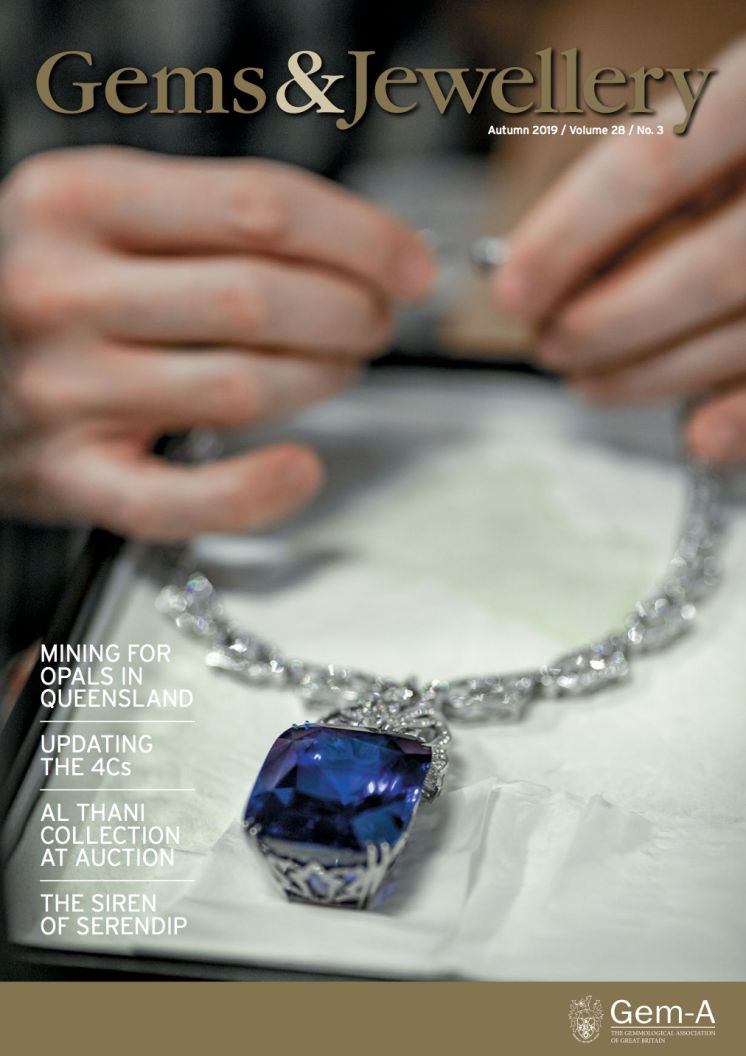
The importance of jade in the Mughal court

The importance of jade in the Mughal court

Schneider, T. (2019)

Journal Article · Source: Gems&Jewellery · Volume: Vol. 28 · Issue: No. 3, Autumn · Pages: pp. 32–35

Abstract
Gem-A graduate Taffeta Schneider (FGA DGA) shares an abridged version of her fascinating Gemmology Diploma project on the cultural and symbolic significance of jade to Mughal emperors.
Keywords
gems, jade, nephrite, Mughal jade carving, Khotan, Hotan, Hetian, Chinese jade
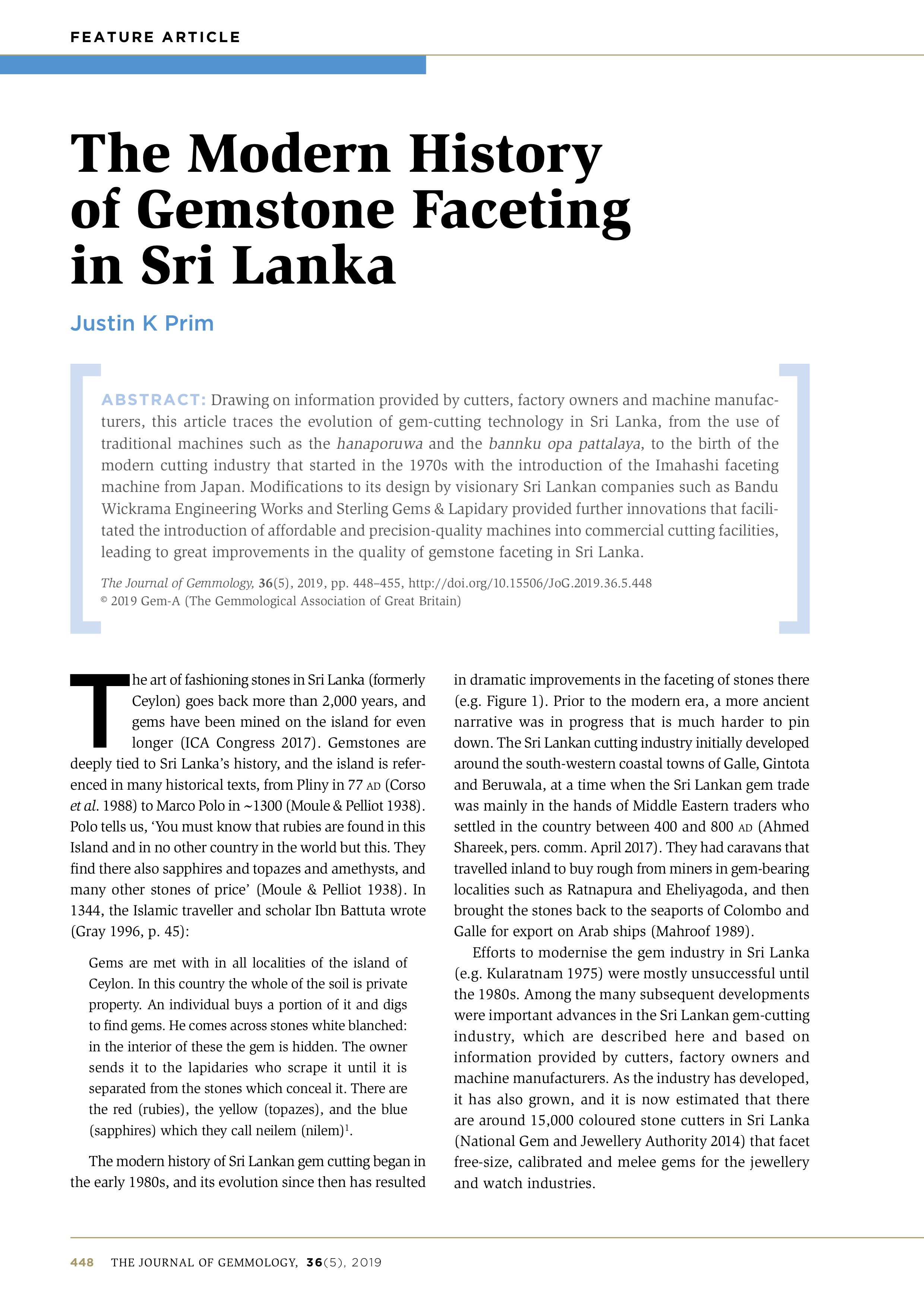
The modern history of gemstone faceting in Sri Lanka

The modern history of gemstone faceting in Sri Lanka

Prim, J.K. (2019)

Journal Article · Source: Journal of Gemmology · Volume: Vol. 36 · Issue: No. 5 · Pages: pp. 448–455

Abstract
Drawing on information provided by cutters, factory owners and machine manufacturers, this article traces the evolution of gem-cutting technology in Sri Lanka, from the use of traditional machines such as the hanaporuwa and the bannku opa pattalaya, to the birth of the modern cutting industry that started in the 1970s with the introduction of the Imahashi faceting machine from Japan. Modifications to its design by visionary Sri Lankan companies such as Bandu Wickrama Engineering Works and Sterling Gems & Lapidary provided further innovations that facilitated the introduction of affordable and precision-quality machines into commercial cutting facilities, leading to great improvements in the quality of gemstone faceting in Sri Lanka.
Keywords
gems, corundum, fashioning.9, Sri Lanka, Ceylon
Studies in Ancient Mesoamerican Art and Architecture

Studies in Ancient Mesoamerican Art and Architecture

Taube, K.A. (2018, 2022)

Edited Book · Source: Selected Works by Karl Andreas Taube · Publisher: Precolumbia Mesoweb Press · Volume: Volume 1 · Pages: 363, 444 pp.

Abstract
Anthology of the various writings of Karl Andreas Taube, the noted expert in Mayan culture and art. As his friend and colleague said: These are examples of Karl’s craft, even his cognitive wiring, a gift for detecting coherent stories. Then there is what can only be understood as an affinity for worldly beauty, the layered metaphors that enrich Mesoamerican imagery and still deliver that powerful punch that makes us whirl for the love of it. Karl is earthy, enjoys a good laugh, an exuberant dance, or a frolic. He admires and delights in stunning objects; he understands emotion and experience. These capacities equipped him to identify, for the first time, ancient Maya clowns, recognizing that certain scenes were intended to be riotously funny, and, more ethereally, that rushing clouds, ripe with rain, could be understood as feathered serpents showering us all with their westbound blessings. Karl discovered that objects pleasing to touch and rub, like jade, carried spirits within. He discerned a paradise filled with floral scents, buzzing bees, and fluttering birds—in the here and now, everywhere, in the impossibly distant past, and in the future as well. It is at this level that Karl’s work acquires a majestic sweep. Curiously, it is also where it becomes most human. His writing has gone beyond academic debate, beyond the dry armature of citations and the conventional introduction-middle-conclusion structure. It has taken us to a world where people laughed, loved, lived, died, and lived again. That is the place he visits, and to which he has invited us to travel in the wonder-filled essays that follow.""
Keywords
gems, jade, jadeite, fei cui, Mesoamerica, Mexico, Guatemala, Costa Rica, Mayans, Olmecs, Aztecs, archaeology, history, archaeogemology, Pre-Columbian jade; Costa Rica; Maya; exchange; iconography, lapidary, corn, maize
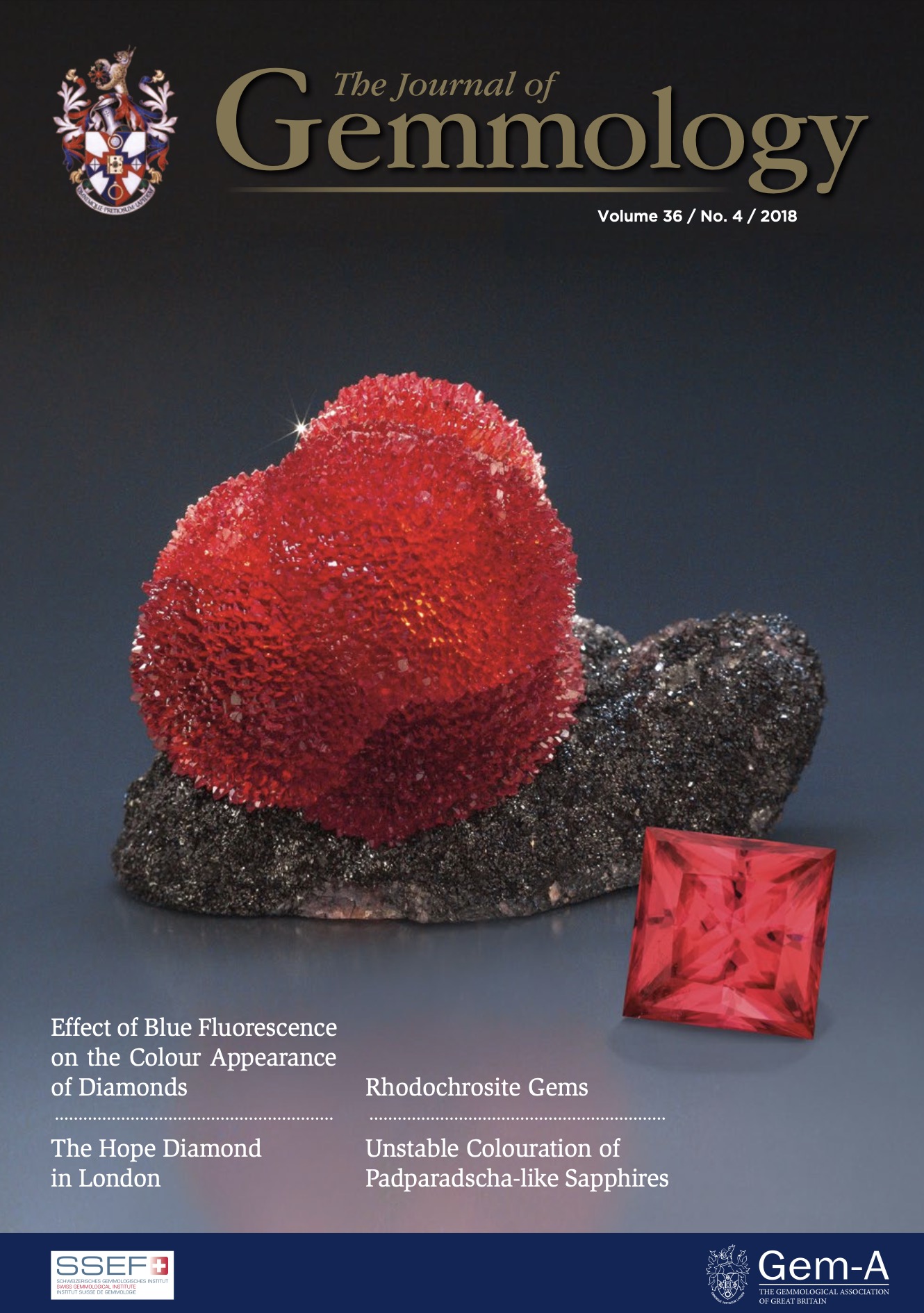
Out of the blue: The Hope diamond in London

Out of the blue: The Hope diamond in London

Ogden, J.M. (2018)

Journal Article · Source: Journal of Gemmology · Volume: Vol. 36 · Issue: No. 4 · Pages: pp. 316–331

Abstract
Our understanding of the history of the French Blue/Hope diamond between its 1792 theft from the French Crown Jewels and its appearance in Henry Philip Hope’s collection in 1839 remains fragmented, but recent research has filled in key details following its reemergence in London in 1812. A painting of the diamond by mineralogist James Sowerby has been identified, along with his accompanying notes, which served as the foundation for an advertising pamphlet issued by London jeweller Daniel Eliason. This pamphlet, published in both English and French, can now be confidently dated to 1813. Additional records reveal that Eliason and Sowerby either exhibited or planned to exhibit a blue glass model of the diamond at the Linnean Society in London. Multiple sources indicate that Henry Philip Hope likely acquired the diamond in 1821. Testimonies from 1840s court cases concerning the distribution of Hope’s gem collection after his 1839 death offer further insights, including the remarkable suggestion that in 1838 there was an attempt to sell the diamond back to the French Crown.
Keywords
gems, diamond, famous diamonds, India, Hope diamond, French blue diamond, Tavernier, Golconda, Chardin, Smithsonian, Sowerby
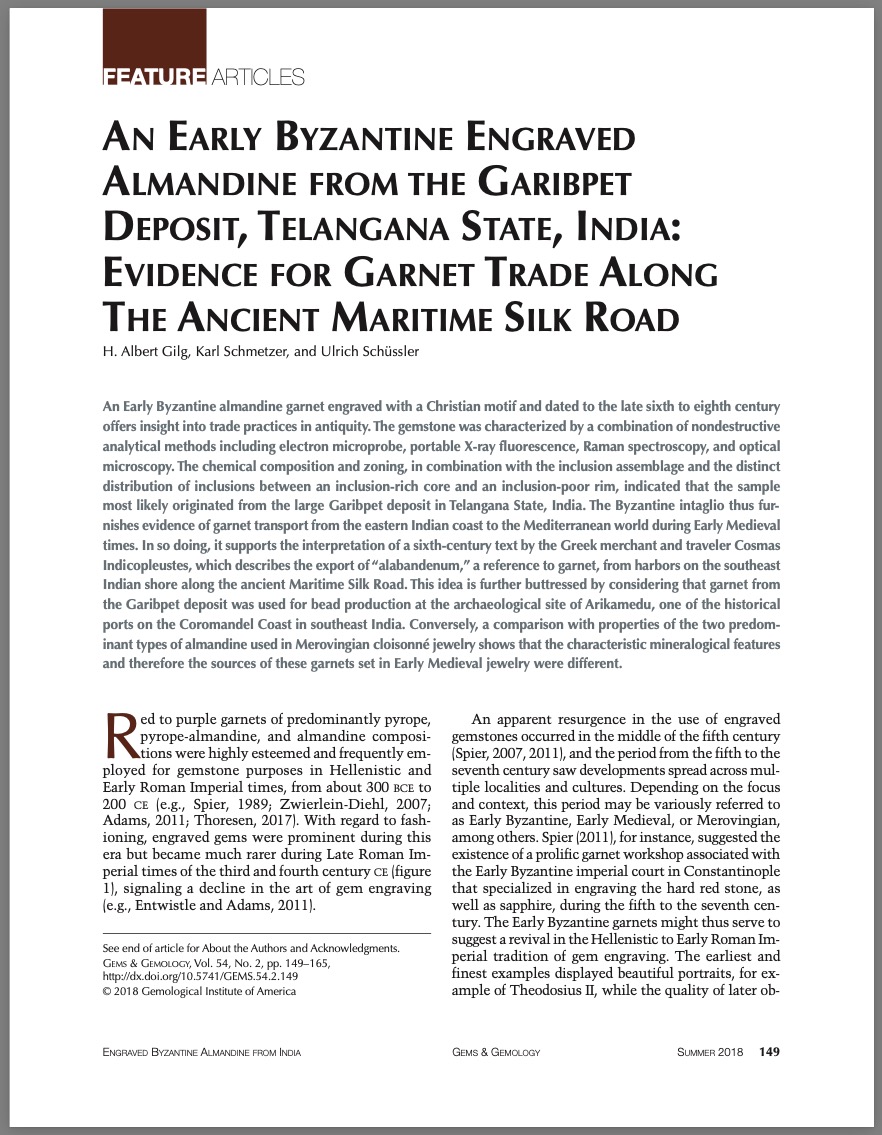
An early Byzantine engraved almandine from the Garibpet deposit, Telanga State, India: Evidence for garnet trade along the ancient Maritime Silk Road

An early Byzantine engraved almandine from the Garibpet deposit, Telanga State, India: Evidence for garnet trade along the ancient Maritime Silk Road

Gilg, H.A., Schmetzer, K. and Schüssler, U. (2018)

Journal Article · Source: Gems & Gemology · Volume: Vol. 54 · Issue: No. 2, Summer · Pages: pp. 149–165

Abstract
An Early Byzantine almandine garnet engraved with a Christian motif and dated to the late sixth to eighth century provides valuable insight into ancient trade practices. The gemstone was analyzed using nondestructive techniques such as electron microprobe, portable X-ray fluorescence, Raman spectroscopy, and optical microscopy. Its chemical composition, inclusion assemblage, and the distribution of inclusions—dense in the core and sparse in the rim—suggest the stone likely originated from the Garibpet deposit in Telangana State, India. This supports the account of sixth-century Greek traveler Cosmas Indicopleustes, who described the export of “alabandenum” (garnet) from southeast Indian ports along the Maritime Silk Road. Additional support comes from evidence that garnets from Garibpet were used for bead production at Arikamedu, a known port on India’s Coromandel Coast. However, when compared to the characteristics of almandine garnets used in Merovingian cloisonné jewelry, the mineralogical features suggest those garnets came from different sources.
Keywords
gems, ancient gemology, ancient jewelry, garnet, pyrope-almandine, India, locality, species, analytical, almandine
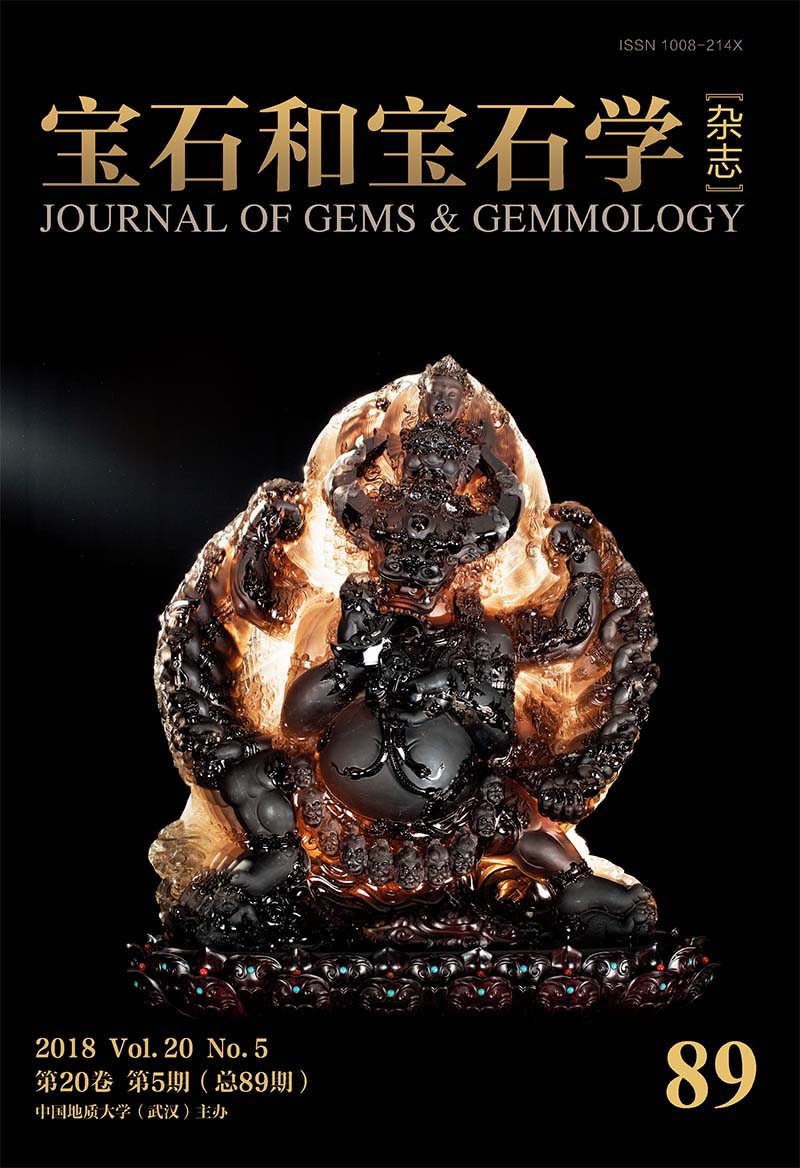
Characteristic and cause of formation of gobi nephrite from southern Xinjiang

Characteristic and cause of formation of gobi nephrite from southern Xinjiang

Fang, T. (2018)

Journal Article · Source: Journal of Gems & Gemmology · Volume: Vol. 20 · Issue: No. 5 · Pages: pp. 27–38 · Language: in Chinese with English abstract

Abstract
Gobi nephrite as a large variety of the nephrite was few valued. According to the market and trade of Gobi nephrite in recent years, the Gobi nephrite is more and more popular. Therefore,to explore origins and characteristics of the Gobi nephrite, the author researched the Gobi nephrite from Southern Xinjing. Through visit and field investigation, the distribution characteristics of Gobi nephrite origins were summarized in the papers. The origin characteristics of Gobi nephrite were distinguished according to the Gobi nephrite sample collection. Through the observation of natural Gobi nephrite and its imitation, the identification characteristics of natural and imitatied ones were identified. The papers mainly summarized the distribution of Gobi nephrite in the southern Xinjiang, providing guiding technology for future scientific research and prospecting. The origin characteristics of Gobi nephrite and the identification of natural and imitatied Gobi nephrite are proposed to provide practical help for the naked eye identification.
Keywords
gems, jade, amphibole jade, nephrite, China, Hetian, gobi
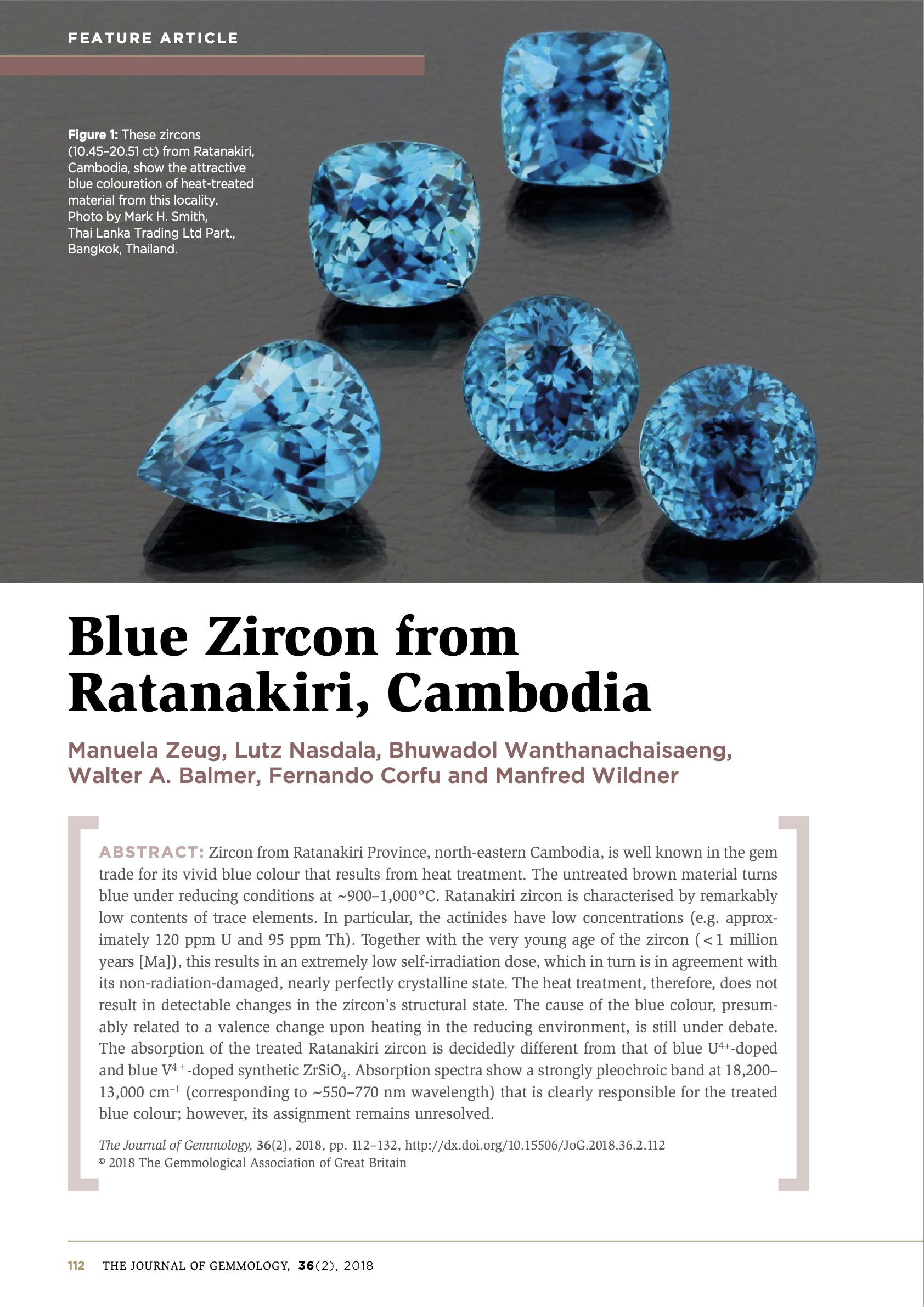
Blue zircon from Ratanakiri, Cambodia

Blue zircon from Ratanakiri, Cambodia

Zeug, M., Nasdala, L., Wanthanachaisaeng, B., Balmer, W., Corfu, F. and Wildner, M. (2018)

Journal Article · Source: Journal of Gemmology · Volume: Vo. 36 · Issue: No. 2 · Pages: pp. 112–132

Abstract
Zircon from Ratanakiri Province, northeastern Cambodia, is renowned in the gem trade for its vivid blue color, which results from heat treatment. The untreated brown zircon turns blue under reducing conditions at approximately 900–1,000°C. Ratanakiri zircon is distinguished by its remarkably low trace element content, particularly low concentrations of actinides (around 120 ppm uranium and 95 ppm thorium). Combined with its very young age of less than one million years, this results in an extremely low self-irradiation dose, maintaining its nearly perfect crystalline structure. Consequently, heat treatment does not cause detectable structural changes. The exact cause of the blue color, likely linked to a valence change during heating in a reducing environment, remains debated. The absorption spectra of treated Ratanakiri zircon differ significantly from those of blue U⁴⁺- or V⁴⁺-doped synthetic ZrSiO₄, showing a strongly pleochroic band at 18,200–13,000 cm⁻¹ (approximately 550–770 nm), which is responsible for the blue hue, though its precise origin is still unresolved.
Keywords
gems, zircon, Cambodia, heat treatment
Boehmite needles in corundum are Rose channels

Boehmite needles in corundum are Rose channels

Notari, F., Fritsch, E., Caplan, C. and Hainschwang, T. (2018)

Journal Article · Source: Gems & Gemology · Volume: Vol. 54 · Issue: No. 3, Fall · Pages: p. 257

Abstract
Crystallographically oriented, linear inclusions in corundum are often referred to as “boehmite needles” or “polycrystalline boehmite” (boehmite is the orthorhombic aluminum hydroxide γ-AlOOH). These inclusions are oriented along the edges of the rhombohedral faces and form angles of about 90°. They are always found at the intersection of twin lamellae, formed by twinning along the rhombohedral faces. They contain apparently polycrystalline material tentatively identified (at least in some cases) as boehmite. These are common in natural corundum and sometimes used as a criterion to separate natural from synthetic corundum. Boehmite can be recognized through its infrared absorption. The great majority of the “needle”-containing gem corundum showed no boehmite infrared absorption, thus leading us to believe that these inclusions have a different origin. Microscopic observation reveals three aspects: some are lath- or ribbon-shaped, others are clearly negative crystals, and sometimes they appear as dotted lines. At the outcrop of the feature on the gem’s surface there is most commonly a void that can be followed into the gem, so the “needle” is essentially empty. This feature was also documented in a flux-grown synthetic ruby with no boehmite infrared signal. These channels are favored during titanium diffusion and take on color first, as diffusion is much faster in the empty space. It is known that in a small number of materials—some metals, calcite, and diamond—hollow channels may form at the intersection of twin lamellae, caused by deformation twinning. This was discovered by Gustav Rose (1868) in calcite, and thus the features are called “Rose channels” (figure 1). We believe that “boehmite needles” are in fact Rose channels. Even when very small, these channels would explain the optical relief observed, without a change in chemistry or infrared absorption. They fit the crystallographic nature of the structures observed.
Keywords
gems, corundum, inclusions.5
Gemological characterization of sapphires from Yogo Gulch, Montana

Gemological characterization of sapphires from Yogo Gulch, Montana

Renfro, N., Palke, A. and Berg, R.B. (2018)

Journal Article · Source: Gems & Gemology · Volume: Vol. 54 · Issue: No. 2, Summer · Pages: pp. 184–201

Abstract
Yogo Gulch in central Montana is one of the most important gem deposits in the United States. Although very little material has been recovered there in recent years, it has produced several million carats of rough sapphire over the course of its history (Voynick, 2001). These stones, known for their vibrant untreated blue color and high clarity, have always commanded a price premium, especially in sizes larger than 0.75 ct. This paper offers a thorough gemological characterization of Yogo sapphire, which may be unfamiliar to many gemologists. Fortunately, Yogo sapphires are unique and experienced gemologists can easily separate them from gem corundum of different geographic origins throughout the world, making it possible to determine the provenance of impor- tant stones from this deposit.
Keywords
gems, corundum, USA.12, Montana.12, Yogo Gulch
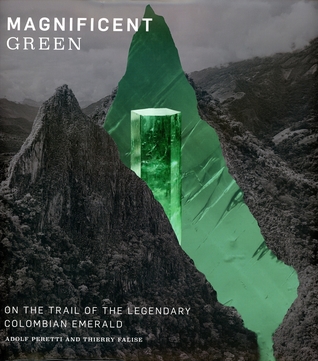
Magnificent Green: On the Trail of the Legendary Colombian Emerald

Magnificent Green: On the Trail of the Legendary Colombian Emerald

Peretti, A. and Falise, T. (2018)

Book · Publisher: GRS · Pages: 363 pp.

Abstract
A fascinating journey into the Colombian emerald world told by its own people — miners, patrons, cutters, brokers and jewellers. Illuminated through the double prism of photo–journalism and gemmological expertise, an exclusive exploration of an enthralling history illustrated with stories from royal collections, international auctions and top jewellery houses.
Keywords
gems, beryl, emerald, Colombia, Muzo, Chivor, Cosquez
Basic elements of photoluminescence spectroscopy in gemology

Basic elements of photoluminescence spectroscopy in gemology

Scarani, A. and Åström, M. (2018)

Journal Article · Source: Rivista Italiana di Gemmologia – Italian Gemological Review · Issue: No. 3 · Pages: pp. 44–47

Abstract
In 1999, General Electric (GE) announced the development of a high-pressure/high-temperature (HPHT) treatment to improve the color of type II diamonds from brownish to almost colorless. Although the process was restricted to a limited percentage of diamonds, the discovery threw the market into a panic; almost simultaneously the gemological community was activated to develop a method for the identification of the treatment and it was immediately clear that the task was not so easy to accomplish. The standard methods did not provide for any useful information: all the advanced techniques were put at work and the most promising was the photoluminescence spectroscopy. Since then this methodology of investigation turns out to be the architrave on which the most widespread protocols of investigation on diamonds are grounding in gemological laboratories all over the world.
Keywords
gems, spectroscopy, advanced instrumentation
Sri Lankan sapphire enhanced by heat with pressure

Sri Lankan sapphire enhanced by heat with pressure

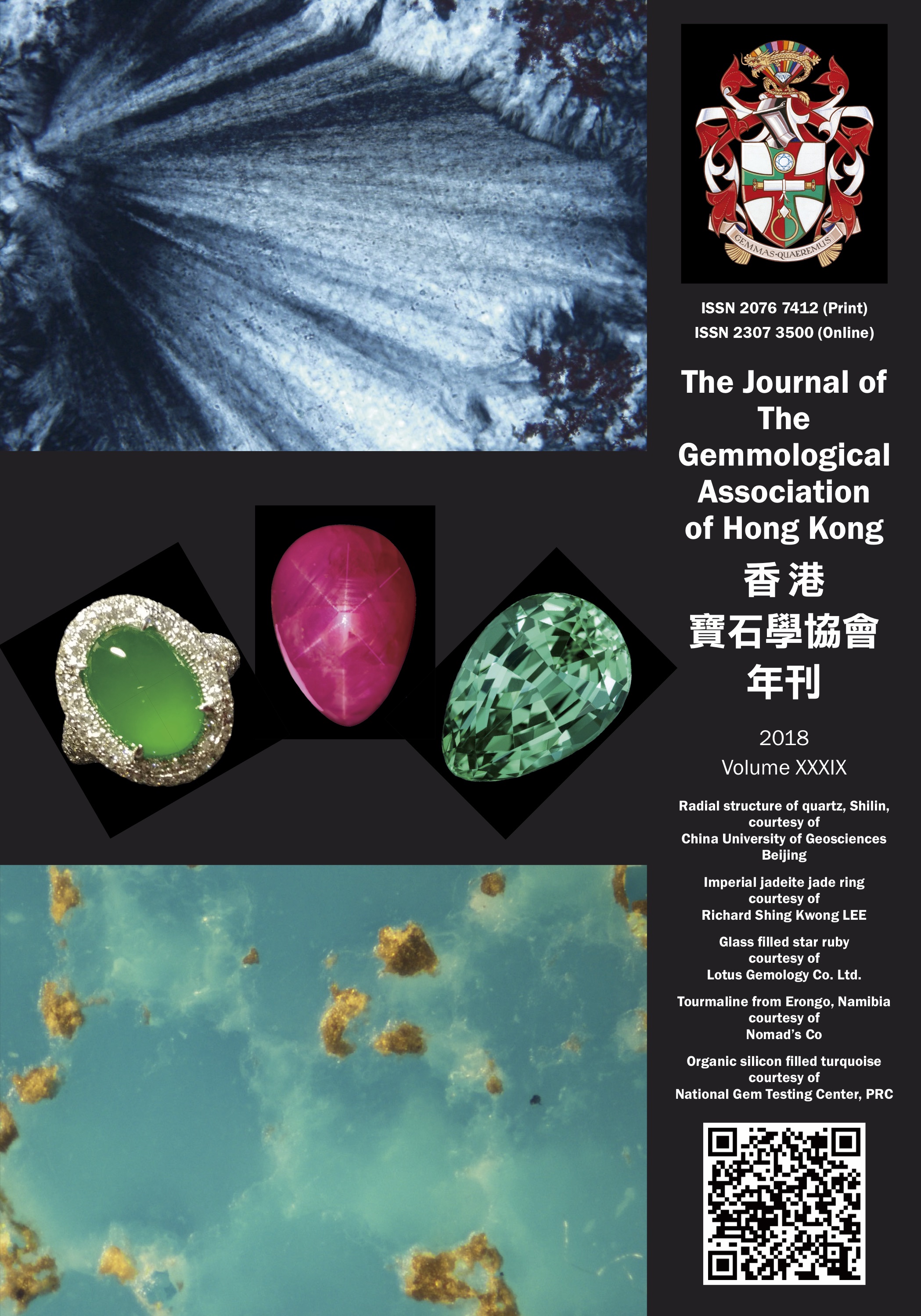
Choi, H., Kim, S., Kim, Y., Leelawatanasuk, T., Lhuaamporn, T., Atsawatanapirom, N. and Ounorn, P. (2018)

Journal Article · Source: Journal of the Gemmological Association of Hong Kong · Volume: Vol. 39 · Pages: pp. 16–25

Abstract
For decades now heat treatment has been used successfully as an enhancement process for sapphires, particularly blue sapphires, and is both accepted and widely practiced in the jewellery industry. Considered one of the classic coloured gemstones, fine quality blue sapphire is always in great demand. The techniques used for heat treatment are constantly being developed, not only in Thailand, and seem to involve increasingly sophisticated instruments. For instance, the famous Sri Lankan heat treatment technique known as the “Punsiri method” that has been seen to improve the colour of blue sapphire from various deposits successfully (G. DuToit et al., 2009). In 2013, a Korean company successfully developed a new technique for enhancing blue sapphire and began to trade their product in the gem market. This process involves the intentional application of pressure while heating the stone. This new technique significantly reduces the time needed to change the stone’s colour and/or clarity compared with the traditional heat treatment where stones are simply heated in a furnace. So far, Sri Lankan sapphire, (the so called Geuda sapphires) is the only commercial product that this company claims to be treating successfully. The blue sapphire resulting from this treatment commonly shows a typical strong OH-related absorption in the Mid-IR spectrum. This and some characteristic inclusion features are important keys for identification of sapphire that has undergone heat and pressure treatment. Further study is required to increase our understanding of the change mechanism and also the exact role of pressure in this process.
Keywords
gems, corundum, treatments.6, HPHT
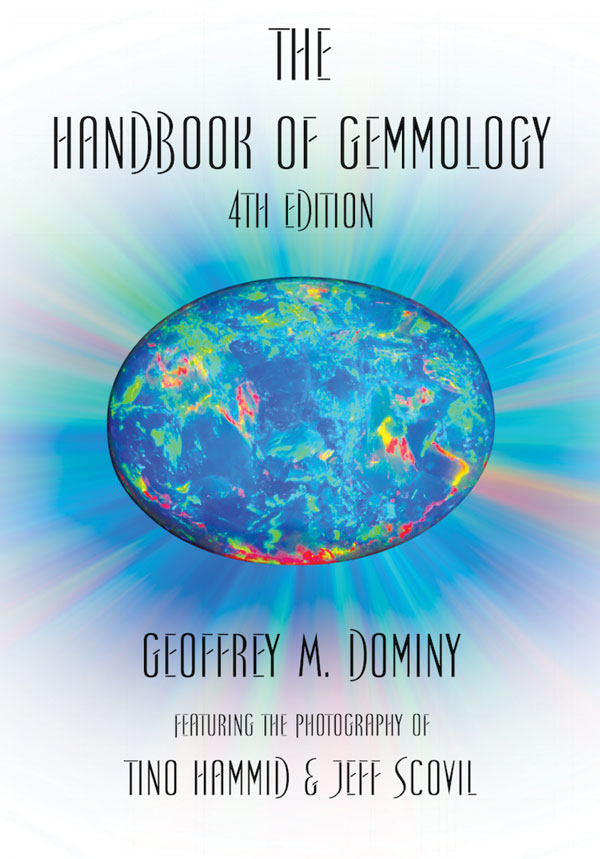
Handbook of Gemmology

Handbook of Gemmology

Dominy, G. (2018)

Book · Publisher: handbookofgemmology.com · Pages: 738, 618 pp.

Abstract
Lovely book on gemology, illustrated largely by the stunning photographs of the late Tino Hammid, along with others from the renowned Jeff Scovil. Volume 1 covers the science of gemmology, including the chemical nature of gemstones, their physical and optical properties, basic crystallography, the absorption of light, the spectroscope, polarized light, the polariscope, pleochroism, the dichroscope, colour filters, specific gravity, luminescence, magnification, thermal conductivity, imitation, assembled and lab-created gemstones, gemstone treatments and enhancements, mining, diamond and coloured gemstone cutting and coloured gemstone and diamond grading. Volume 2 covers the identification of gemstones based on their colour and transparency, ‘Reflections’ consisting of 134 pages of photographs that capture the true beauty and incredible talent of award winning gem cutter John Dyer, and GEMFACTS that focuses on the seventeen most common gem species and varieties.
Keywords
gems, corundum, gemology, gemmology,
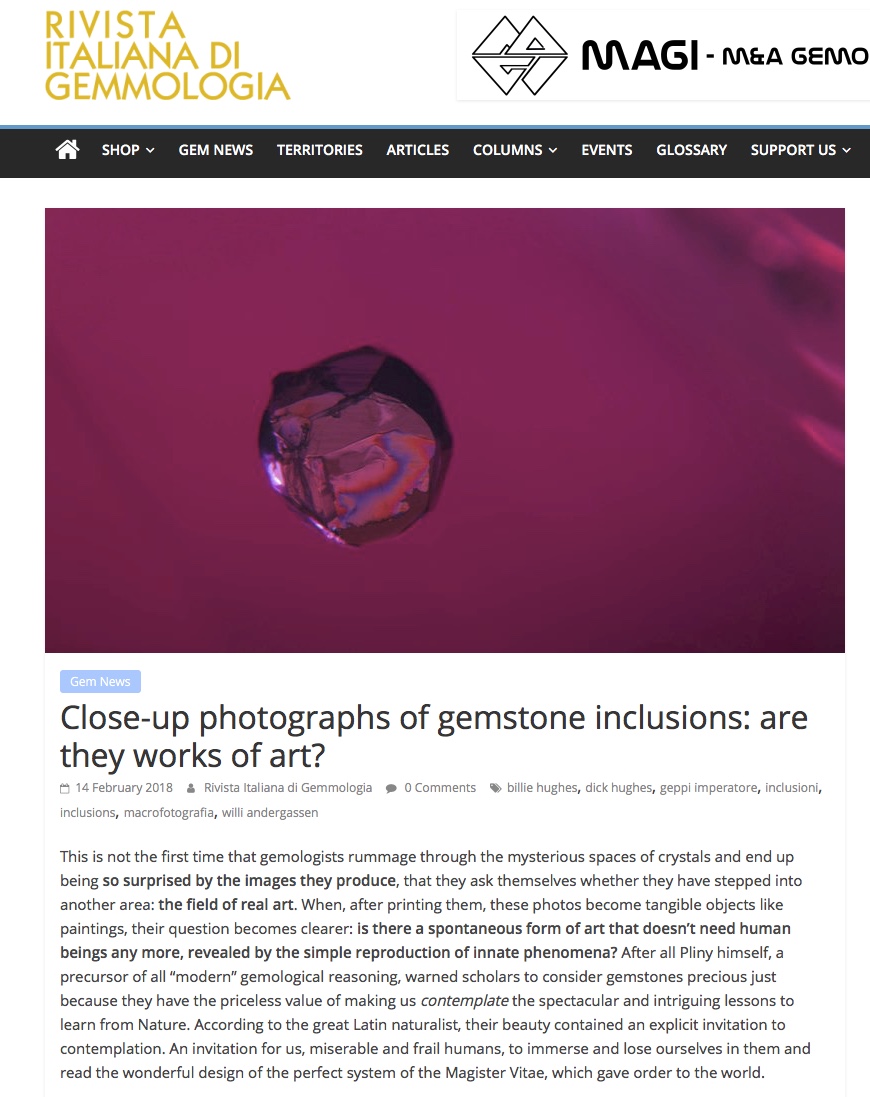
Close-up photographs of gemstone inclusions: Are they works of art?

Close-up photographs of gemstone inclusions: Are they works of art?

Minieri, P. (2018)

Web Page · Source: Rivista Italiana di Gemmologia – Italian Gemological Review · Issue: 18 February 2018

Abstract
This is not the first time that gemologists rummage through the mysterious spaces of crystals and end up being so surprised by the images they produce that they ask themselves whether they have stepped into another area: the field of real art. When, after printing them, these photos become tangible objects like paintings, their question becomes clearer: is there a spontaneous form of art that doesn’t need human beings any more, revealed by the simple reproduction of innate phenomena? After all Pliny himself, a precursor of all “modern” gemological reasoning, warned scholars to consider gemstones precious just because they have the priceless value of making us contemplate the spectacular and intriguing lessons to learn from Nature. According to the great Latin naturalist, their beauty contained an explicit invitation to contemplation. An invitation for us, miserable and frail humans, to immerse and lose ourselves in them and read the wonderful design of the perfect system of the Magister Vitae, which gave order to the world.
Keywords
gems, corundum, inclusions.5, photomicrography, E. Billie Hughes, Lotus Gemology
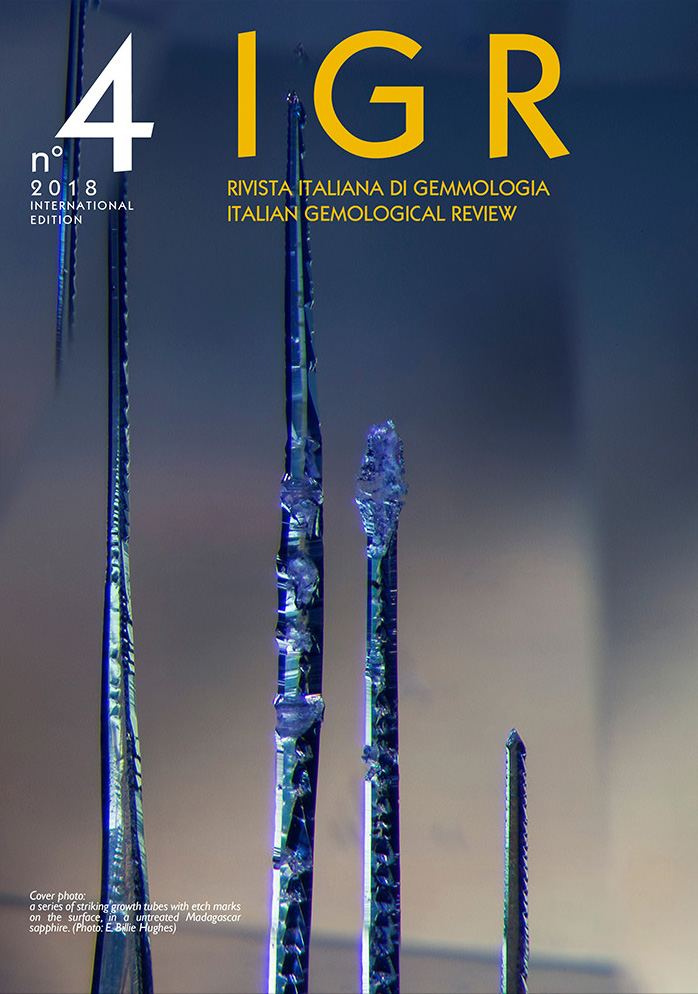
The untold story of Douros rubies

The untold story of Douros rubies

Malossi, A. (2018)

Journal Article · Source: Rivista Italiana di Gemmologia – Italian Gemological Review · Issue: No. 4 · Pages: pp. 57–68

Abstract
Extremely detailed discussion of the history and gemology of the Douros flux-grown synthetic ruby.
Keywords
gems, corundum, Synthetic corundum.7, flux ruby, Douros flux ruby
The art & science of reading rough jadeite jade: 2 parts science, 1 part art, and a lot of luck

The art & science of reading rough jadeite jade: 2 parts science, 1 part art, and a lot of luck

Lee, R.S.K. (2018)

Journal Article · Source: Journal of the Gemmological Association of Hong Kong · Volume: Vol. 39 · Pages: pp. 48–59

Abstract
Using a boulder owned by his family, the author describes and illustrates the process of assessing, cutting and evaluating jadeite jade rough to maximize its investment potential.
Keywords
gems, jade, jadeite, fei cui, Burma, jade business, jade trade
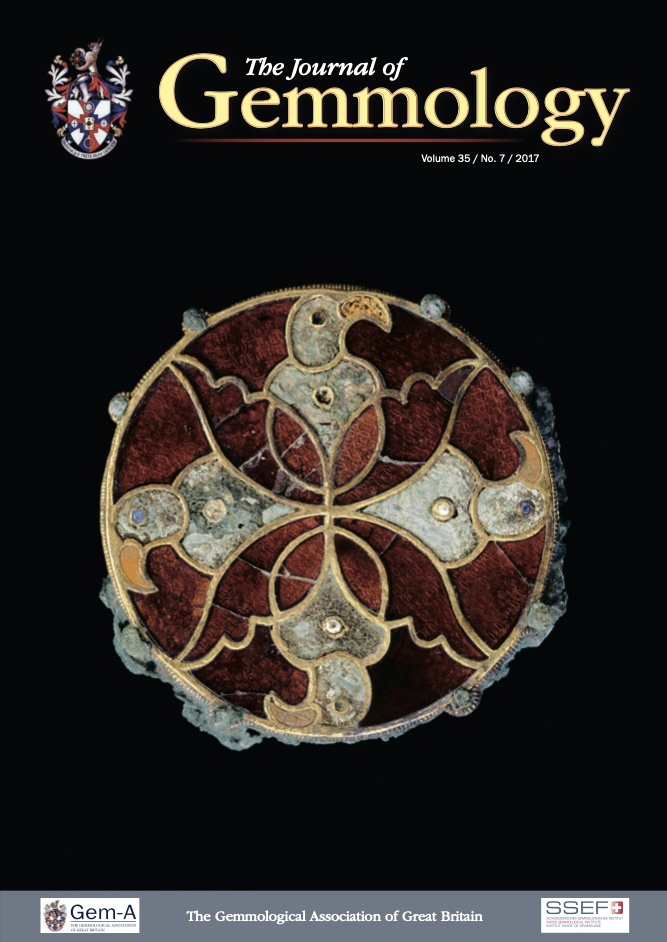
Counterfeiting gems in the 16th century: Giovan Battista Della Porta on glass ‘gem' making

Counterfeiting gems in the 16th century: Giovan Battista Della Porta on glass ‘gem' making

Mottana, A. (2017)

Journal Article · Source: Journal of Gemmology · Volume: Vol. 35 · Issue: No. 7 · Pages: pp. 652–666

Abstract
Glass simulants of gemstones were long produced without significant prejudice against their use. However, documentation of their manufacture is scarce due to the secrecy maintained by glassmaking guilds, despite the survival of some late medieval manuscripts that have recently come to light. These manuscripts reveal glass compositions and fabrication recipes that align with the trend initiated by 16th-century “writers of secrets,” who began to disclose technological knowledge to a broader public. Giovanni Battista Della Porta was the first to publish printed recipes for creating glass imitations of gemstones, alongside methods for enhancing natural gem materials. His Magiae Naturalis (1558), originally written in Latin to appeal to upper-class enthusiasts, was widely translated into the vernacular across Europe. The second and much-improved edition (1589), again in Latin, did not gain the same popularity—perhaps because the first edition had already saturated the market or, alternatively, due to the Catholic Church’s increasing restrictions on alchemical practices, which rendered even the title Magiae suspect. Despite these limitations, both editions helped popularize glass “gems” as decorative objects and stimulated their trade. Interest in glass gem-making peaked during the Baroque period, and Della Porta’s treatise was even translated into English in 1658.
Keywords
gems, early glass making, Porta, Natural Magick, gem counterfeiting, alchemy, early science, early mineralogy, early gemology, Della Porta, John Baptist

Building a Gemological Library

Gemological books range from general identification manuals and textbooks to specialized works on individual gems, mineralogy, jewelry, treatments, synthesis, history and gem-producing regions.

For a curated selection of particularly useful books, read The Gemologist's Core Library — Classic Books on Gemology, Jewelry and Mineralogy.

About Four Treasures

Four Treasures is Lotus Gemology's freely accessible gemological reference database. Use the full database to search by author, title or keyword and explore literature on gemology, mineralogy, jewelry and related fields. Where available, hyperlinks on titles may lead directly to the full publication.

Search the Complete Four Treasures Database