Gemology Books Bibliography

Gemology Books Bibliography

Explore books on gems, gemology, jewelry and mineralogy in Four Treasures, the Lotus Gemology reference database. This bibliography brings together matching book records from the collection, with publication details, abstracts and cover images where available.

Gemology Book References

The list below matches books concerning gemology and related subjects in the database's searchable fields. Some works cover several branches of gems, jewelry or mineralogy.

281–300 of 3,436 matching references
An ancient Greek philosopher was exiled for claiming the moon was a rock, not a god

An ancient Greek philosopher was exiled for claiming the moon was a rock, not a god

Warmflash, D. (2019)

Web Page · Publisher: Smithsonianmag.com · Issue: 20 June

Abstract
2,500 years ago, Anaxagoras correctly determined that the rocky moon reflects light from the sun, allowing him to explain lunar phases and eclipses. For his trouble, he was forced into exile for impiety (lack of respect for the sacred).
Keywords
gems, history of gemology, history of mineralogy, Arabic mineralogy, history of science, Greek science, astronomy
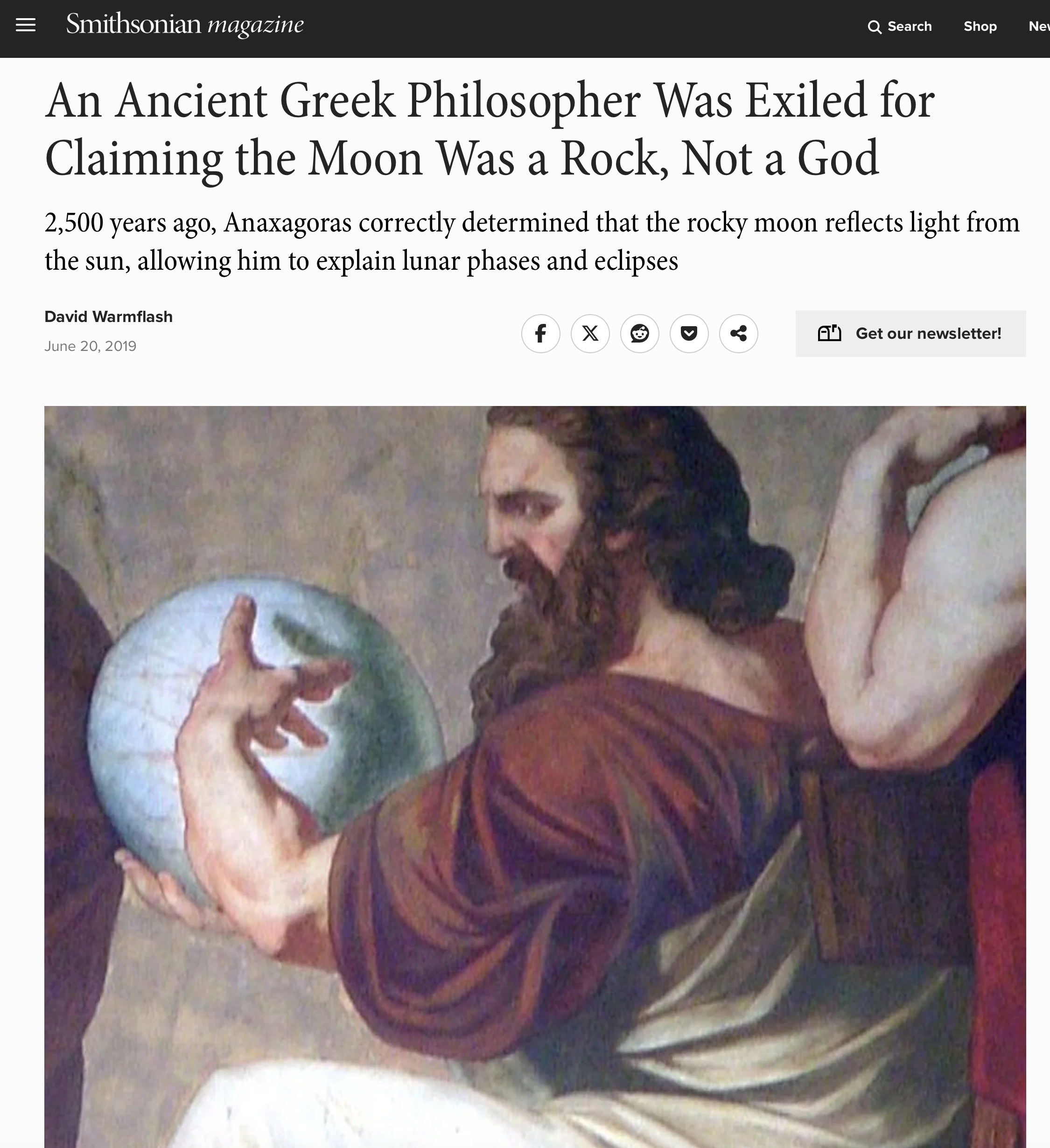
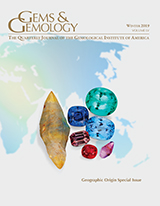
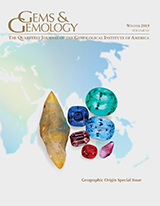
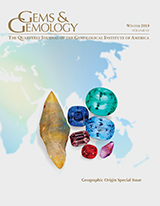
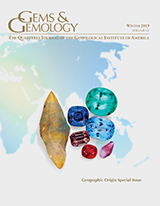
A review of analytical methods used in geographic origin determination of gemstones

A review of analytical methods used in geographic origin determination of gemstones

Groat, L.A., Giuliani, G., Stone-Sundberg, J., Sun, Z., Renfro, N. and Palke, A.C. (2019)

Journal Article · Source: Gems & Gemology · Volume: Vol. 55 · Issue: No. 4 · Pages: pp. 512–535

Abstract
Origin determination is of increasing importance in the gem trade. It is possible because there is a close relationship between the geological environment of formation and the physical and chemical properties of gemstones, such as trace element and isotopic compositions, that can be measured in the laboratory using combinations of increasingly sophisticated instrumentation. Origin conclusions for ruby, sapphire, and emerald make up the bulk of demand for these services, with growing demand for alexandrite, tourmaline, and spinel. However, establishing origin with a high degree of confidence using the capabilities available today is met with varying degrees of success. Geographic origin can be determined with a high level of confidence for materials such as emerald, Paraíba-type tourmaline, alexandrite, and many rubies. For some materials, especially blue sapphire and some rubies, the situation is more difficult. The main problem is that if the geology of two deposits is similar, then the properties of the gemstones they produce will also be similar, to the point where concluding an origin becomes seemingly impossible in some cases. Origin determination currently relies on a combination of traditional gemological observations and advanced analytical instrumentation.
Keywords
gems, corundum, beryl, emerald, origin
Geographic origin determination of blue sapphire

Geographic origin determination of blue sapphire

Palke, A.C., Saeseaw, S., Renfro, N., Sun, Z. and McClure, S.F. (2019)

Journal Article · Source: Gems & Gemology · Volume: Vol. 55 · Issue: No. 4 · Pages: pp. 536–579

Abstract
Geographic origin determination, one of the most pressing issues facing modern gemological laboratories, is especially challenging for blue sapphire. Reliable origin determination requires careful analysis of a stone’s inclusions and trace element chemistry as well as spectroscopic data. Some stones have characteristic inclusion scenes or trace element chemistry that make it easy to determine their origin, but in many cases there is significant overlap for blue sapphire from distinct geographic localities. The most commonly encountered inclusions are rutile silk and particle clouds. In some stones the silk or clouds may take on a distinct appearance and the origin may be accurately determined. But in many cases the evidence presented by inclusions within a stone is ambiguous. This contribution outlines the methods and criteria used at GIA for geographic origin determination of blue sapphire.
Keywords
gems, corundum, sapphire, origin determination, Burma.12, India.12, Kashmir.12, Madagascar.12, Thailand.12, Sri Lanka.12, Nigeria.12, Australia.12, Ethiopia.12, analytical, provenance
Geographic origin determination of ruby

Geographic origin determination of ruby

Palke, A.C., Saeseaw, S., Renfro, N., Sun, Z. and McClure, S.F. (2019)

Journal Article · Source: Gems & Gemology · Volume: Vol. 55 · Issue: No. 4 · Pages: pp. 580–612

Abstract
Over the last several decades, geographic origin determination for fine rubies has become increasingly important in the gem trade. In the gemological laboratory, rubies are generally broken down into two groups based on their trace element chemistry: marble-hosted (low-iron) rubies and high-iron rubies. High-iron rubies are usually a straightforward identification based on their inclusions and trace element profiles. Marble-hosted rubies can be more challenging, with some deposits showing overlap in some of their inclusion scenes. But many marblehosted rubies, especially Burmese stones from Mogok and Mong Hsu, can be accurately identified based on their internal features and trace element profiles. This contribution will outline the methods and criteria used at GIA for geographic origin determination for ruby.
Keywords
gems, corundum, ruby, origin determination, Burma.12, Mozambique.12, Madagascar.12, Kenya.12, Tajikistan.12, Vietnam.12, Afghanistan.12
Geographic origin determination of emerald

Geographic origin determination of emerald

Saeseaw, S., Renfro, N., Palke, A.C., Sun, Z. and McClure, S.F. (2019)

Journal Article · Source: Gems & Gemology · Volume: Vol. 55 · Issue: No. 4 · Pages: pp. 614–646

Abstract
The gem trade has grown to rely on gemological laboratories to provide origin determination services for emeralds and other fine colored stones. In the laboratory, this is mostly accomplished by careful observations of inclusion characteristics, spectroscopic analysis, and trace element profile measurements by laser ablation–inductively coupled plasma–mass spectrometry (LA-ICP-MS). Inclusions and spectroscopy can often separate Colombian emeralds from other sources (although there is some overlap between Colombian, Afghan, and Chinese [Davdar] emeralds). For non-Colombian emeralds, trace element analysis by LA-ICP-MS is needed in addition to information from the stone’s inclusions. The relative chemical diversity of emeralds from worldwide deposits allows confidence in origin determination in most cases. This contribution outlines the methods and criteria used at GIA for geographic origin determination for emerald.
Keywords
gems, beryl, emerald, Colombia, Muzo, Chivor, Cosquez, Zambia, Afghanistan, Panjshir, Zimbabwe, Brazil, China, Ethiopia
Geographic origin determination of alexandrite

Geographic origin determination of alexandrite

Sun, Z., Palke, A.C., Muyal, J., DeGhionno, D. and McClure, S.F. (2019)

Journal Article · Source: Gems & Gemology · Volume: Vol. 55 · Issue: No. 4 · Pages: pp. 660–681

Abstract
The gem and jewelry trade has come to place increasing importance on the geographic origin of alexandrite, as it can have a significant impact on value. Alexandrites from Russia and Brazil are usually more highly valued than those from other countries. In 2016, GIA began researching geographic origin of alexandrite with the intent of offering origin determination as a laboratory service. Unfortunately, collecting reliable samples with known provenance can be very difficult. Alexandrite is often recovered as a byproduct of mining for other gemstones (e.g., emerald and corundum), so it can be difficult to secure reliable parcels of samples because production is typically erratic and unpredictable. The reference materials studied here were examined thoroughly for their trace element chemistry profiles, characteristic color-change ranges under daylight-equivalent and incandescent illumination, and inclusion scenes. The data obtained so far allow us to accurately determine geographic origin for alexandrites from Russia, Brazil, Sri Lanka, Tanzania, and India. Future work may help to differentiate alexandrites from other localities.
Keywords
gems, chrysoberyl, alexandrite, Russia, Brazil, Sri Lanka, India, Tanzania
Field gemology: Building a research collection and understanding the development of gem deposits

Field gemology: Building a research collection and understanding the development of gem deposits

Vertriest, W., Palke, A.C. and Renfro, N. (2019)

Journal Article · Source: Gems & Gemology · Volume: Vol. 55 · Issue: No. 4 · Pages: pp. 490–511

Abstract
GIA’s field gemology program was established in late 2008 to support research on geographic origin determination of colored gemstones. By building and maintaining an extensive collection of gem materials with known origins, GIA’s research scientists have been able to study and analyze rubies, sapphires, emeralds, and other gemstones using the best available reference samples. This has led to improved origin determination services while supporting numerous research and education projects. To date the collection has accumulated during more than 95 field expeditions on six continents and currently includes more than 22,000 samples. GIA’s field gemology efforts require a thorough understanding of the gem trade, including the evolution of gemstone deposits and the development of treatments. It is important to recognize potential new deposits and gemstone enhancement procedures immediately because they can change rapidly and leave a lasting impact on the trade. Field expeditions also involve documenting the mines and local conditions. These factors provide context for the gemstones and are becoming increasingly important in the eyes of the public.
Keywords
gems, corundum, gemology, field gemology, ruby, sapphire
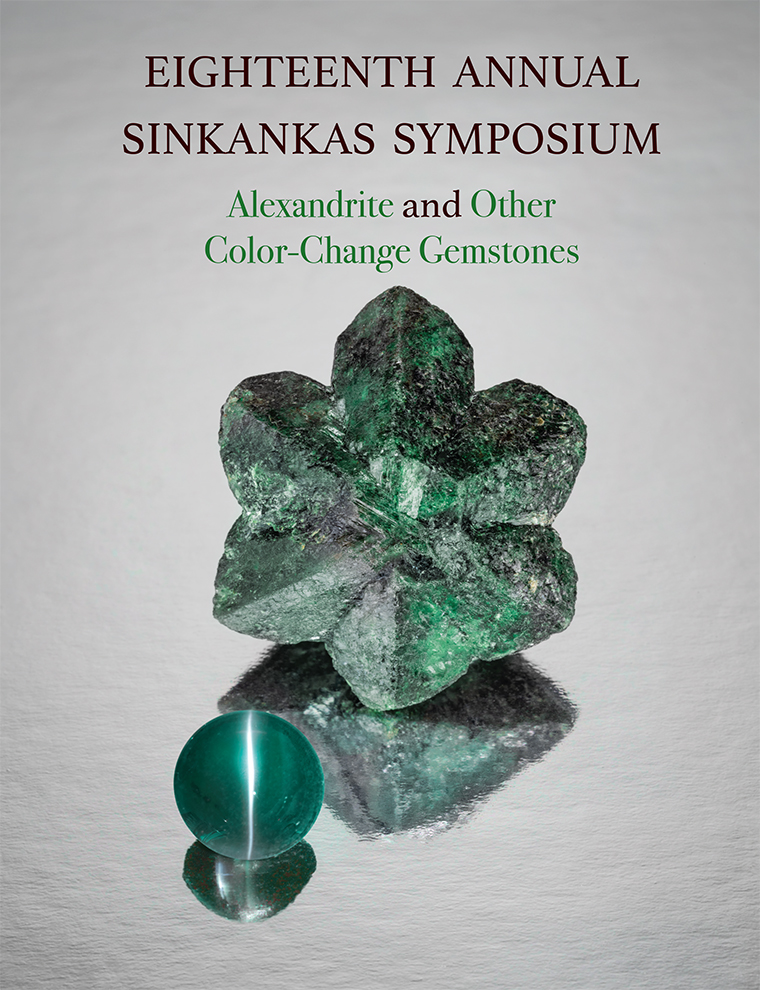
Eighteenth Annual Sinkankas Symposium • Alexandrite and Other Color-Change Gemstones

Eighteenth Annual Sinkankas Symposium • Alexandrite and Other Color-Change Gemstones

Various Authors (2019)

Conference Proceedings · Source: John Sinkankas Symposium · Publisher: Pala International · Pages: 108 pp.

Abstract
RWH: For those interested in exploring the less-visited corners of gemology, this is one of the best reads out there. It is a collection of articles on color-changing gemstones that is poplulated with wonderful photos and (for a somewhat scientific bent), magnificently circumspect in terms of techno-babble. Highly recommended.
Keywords
gems, chrysoberyl, alexandrite, phenomena, color-change, zircon, diaspore, tourmaline, usambara effect, Russia, Brazil, Sri Lanka, India, Tanzania, color science
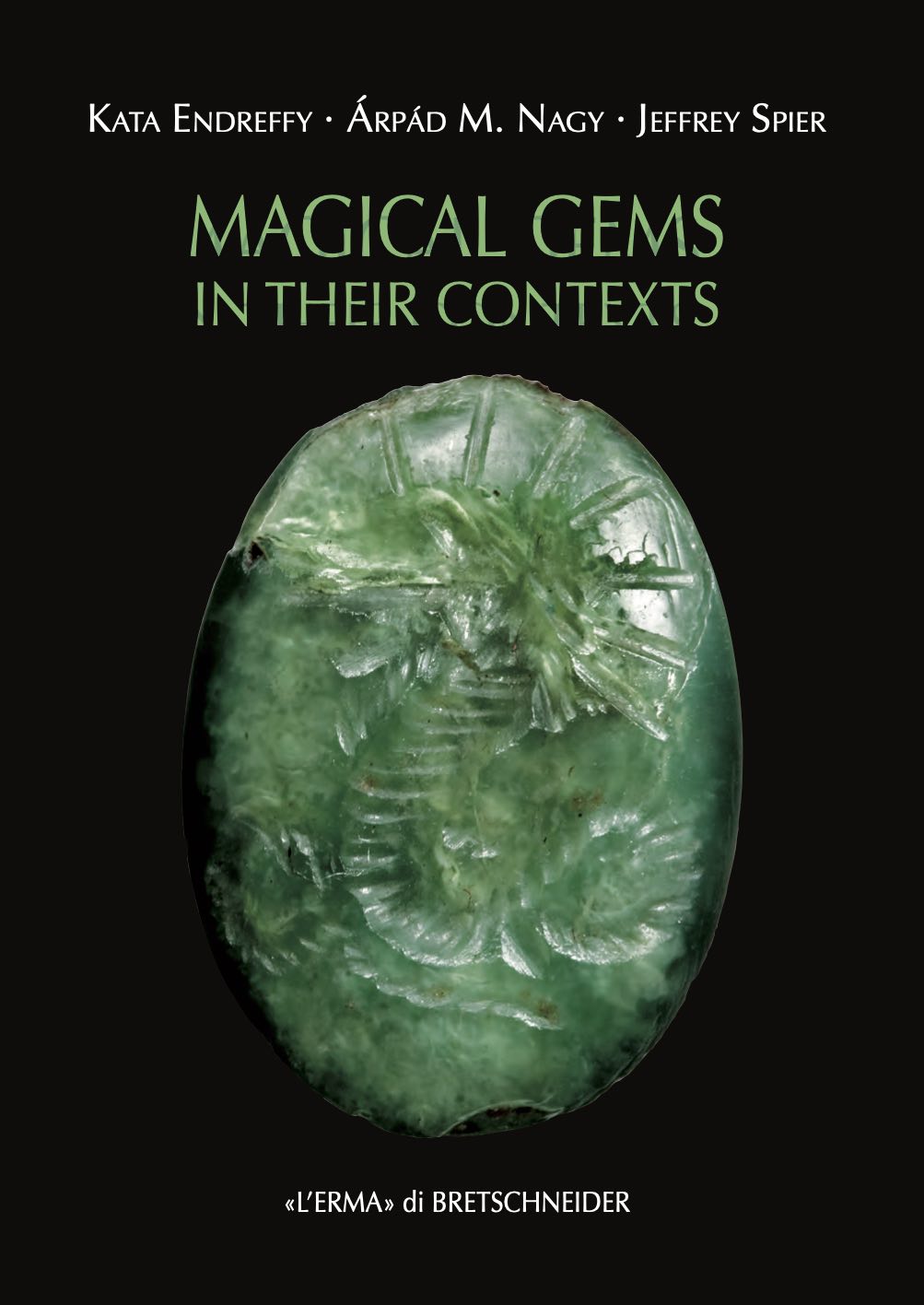
Magical Gems in Their Contexts

Magical Gems in Their Contexts

Endreffy, K., Nagy, Á.M. and Spier, J. (2019)

Edited Book · Source: Studia Archaeologica 229 | Proceedings of the International Workshop held at the Museum of Fine Arts, Budapest, 16–18 February 2012 · Publisher: «L'ERMA» di Bretschneider · Pages: 382 pp.

Abstract
The papers in this book derive from a workshop held at the Museum of Fine Arts, Budapest between 16–18 February 2012. It has taken unusually long to publish the proceedings of the conference – the various reasons are irrelevant and the responsibility of the editors. The delay, however, has given the authors the opportunity to update their findings before publication, which might perhaps make up for the loss caused by the lengthiness of the process. The Budapest workshop was the second conference solely dedicated to research on magical gems. It is worth putting this in context and giving an overview of the achievements that took place in the period between these two events. During these years, there has been a radical change in the scope of our knowledge on magical gems. It has been noted before that magical gems occupy a unique place among the material remains of classical antiquity. Through much of the history of classical studies magical gems have been relegated to the things not worthy of knowing – an approach encountered in all of the disciplines involved. Despite this, there has been some exceptional scholarship on magical gems, notably the work of three scholars: Armand Delatte, Alphonse A. Barb, and, most importantly, Campbell Bonner, the author of the still fundamental monograph. It is quite telling that in the two decades following the publication of the first catalogue of magical gems in the Cabinet des Médailles in Paris in 1964 only a few studies were written on the subject. The change came in the mid-1980s, heralded by the catalogue of the Berlin gems by Hanna Philipp (1986), which was the first monograph to describe a collection of magical gems using the tools of classical archaeology. The past decades have seen the publication of works that will define research on magical gems for a long time to come. Catalogues of the largest museum collections have been compiled, enlarging the known corpus of magical gems to an enormous extent. Studies written with never before seen thoroughness focused on individual pieces and iconographical types. Comprehensive works have also appeared, the most momentous being Simone Michel’s 2004 overview, the second monograph after Bonner’s to include all the gems known at the time, 2800 items (to compare: Bonner’s book was based on a catalogue of 389 pieces). Importantly, this period has also been characterised by a shift in the scope of research beyond ancient gems, thus creating the necessary conditions for studying the post-antique chapters in the long history of magical gems. Two new aims in the research on magical gems have also been formulated during this period: the organisation of an international exhibition of amulets, and the creation of an online database of magical gems. The first is yet to be accomplished, although it has come close to realization on four occasions since 2000, and Simone Michel has successfully organized two exhibitions on a smaller scale, relying on the collection of Wolfgang Skoluda and the material kept in German museums. Her achievements are a clear indication of the potentials of the concept. The second objective was met with success in Budapest, where the Campbell Bonner Magical Gems Database (CBd) is now maintained by the Collection of Classical Antiquities of the Museum of Fine Arts. Since its launch in 2010, the database has made more than 2700 amulets from over seventy collections worldwide openly accessible, and is continuously expanding.
Keywords
gems, ancient gemology, ancient jewelry, early metallurgy, glyptic, engraved gems, magical gems, amulets
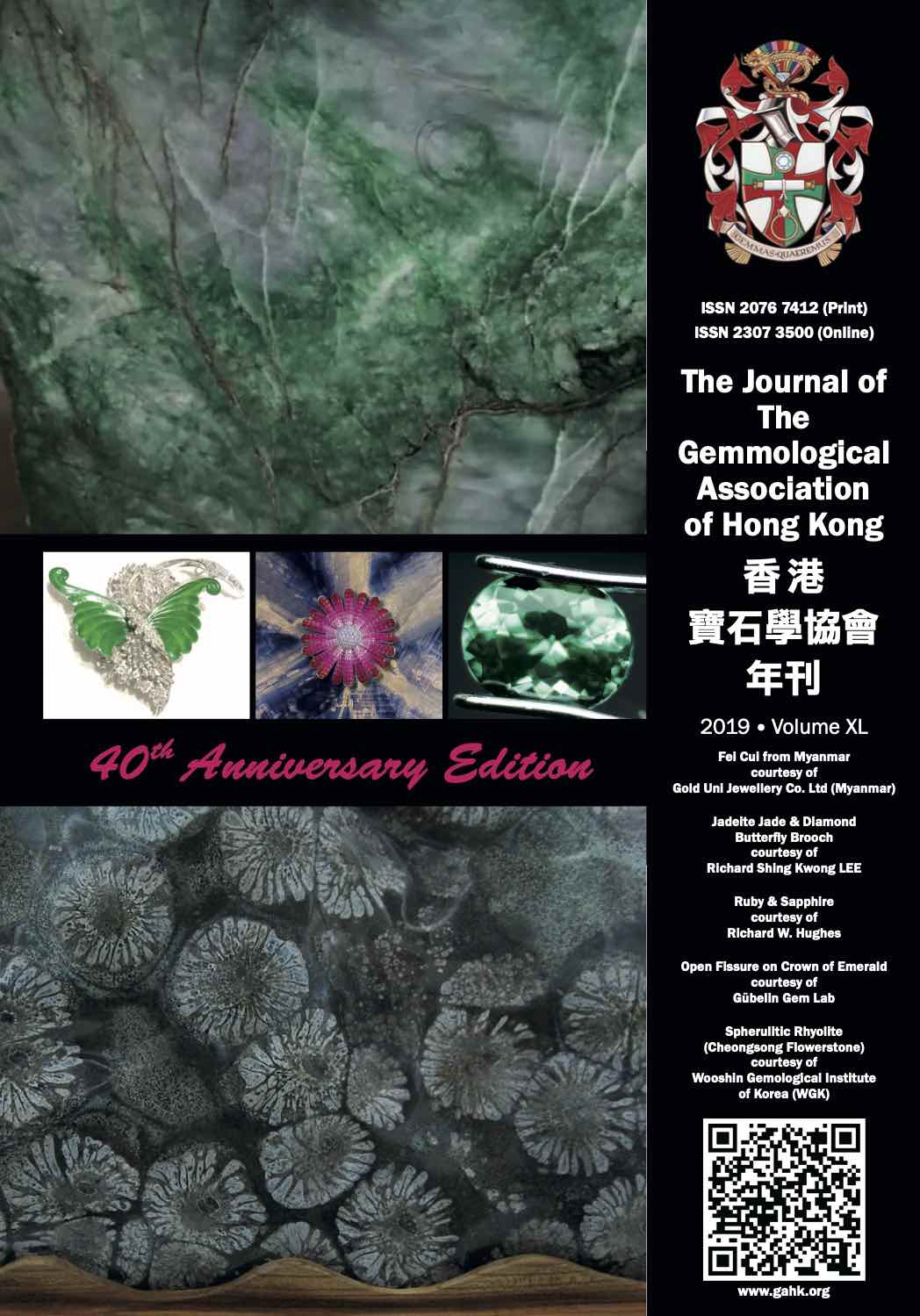
Blue diffusion-treated natural & synthetic sapphires recently available in the market

Blue diffusion-treated natural & synthetic sapphires recently available in the market

Pisutha-Arnond, V., Promwongnan, S., Narudeesombat, N., Ounorn, P., Leelawatanasuk, T., Sripoonjan, T., Nilhud, N. and Atichat, W. (2019)

Journal Article · Source: Journal of the Gemmological Association of Hong Kong · Volume: Vol. 40 · Pages: pp. 87–95

Abstract
Since 2015, a large quantity of a new blue diffused synthetic sapphire has appeared in the Chanthaburi market. It is interesting to compare its gemmological properties with those of a blue diffused natural sapphire that came onto the market in 2012. In immersion, both types of blue diffused sapphires showed the “spiders’ web effect” — a cut-related colouration pattern — and rather high titanium content on the surface of the samples, both effects being diagnostic evidence of Ti-diffusion treatment. The synthetic test stone, however, also displayed strong chalky blue fluorescence to SWUV radiation (also in the DiamondView™), the presence of curved bands, minute particles or gas bubbles under a microscope, very low Ga contents, and no Fe³⁺-related absorption peaks on the UV–Vis spectra. In contrast, the natural one showed the occurrence of tension discs, altered solid inclusions and altered fingerprints, often with colour concentration along healed fractures, cavities seen under the microscope, significant Ga content, and some Fe³⁺-related absorption peaks on the UV–Vis spectra. The thickness of the blue colour rim of the diffused natural stone was apparently much thicker than that of the diffused synthetic one. The reason is that it is the penetration depth of titanium that controls the colour rim thickness of the natural stone, while it is the penetration depth of iron that controls that of the synthetic one. Because of the difference in colour rim thickness and the repolishing process, the “spiders’ web effect” in the natural stone is less pronounced, while that in the synthetic one is more obvious. The formation of the blue colour rim and multi-element diffusion found in both synthetic and natural sapphires are also discussed here.
Keywords
gems, corundum, treatments.6, synthetic corundum.7, titanium diffusion
Geographic origin determination of Paraíba tourmaline

Geographic origin determination of Paraíba tourmaline

Katsurada, Y., Sun, Z., Breeding, C.M. and Dutrow, B.L. (2019)

Journal Article · Source: Gems & Gemology · Volume: Vol. 55 · Issue: No. 4 · Pages: pp. 648–659

Abstract
Vivid blue to green copper-bearing tourmalines, known as Paraíba tourmalines, are recovered from deposits in Brazil, Nigeria, and Mozambique. These tourmalines are sought after for their intense colors. Prices are based, in part, on the geographic origin of a stone, and determining provenance is thus an important aspect for Paraíba tourmaline. However, their geographic origin cannot be established by standard gemological testing and/or qualitative chemical analyses. GIA has established sophisticated criteria requiring quantitative chemical analyses to determine geographic origin for these tourmalines. These criteria were based on several hundred samples from known sources spanning the three countries. Highly accurate and precise quantitative elemental concentrations for Cu, Zn, Ga, Sr, Sn, and Pb are acquired with laser ablation–inductively coupled plasma–mass spectrometry (LA-ICP-MS). These data can then be plotted as a function of elemental concentration for accurate geographic origin determination.
Keywords
gems, tourmaline, Nigeria, Brazil, Mozambique, cuprian tourmaline
Geology of corundum and emerald gem deposits: A review

Geology of corundum and emerald gem deposits: A review

Giuliani, G. and Groat, L.A. (2019)

Journal Article · Source: Gems & Gemology · Volume: Vol. 55 · Issue: No. 4, Winter · Pages: pp. 464–489

Abstract
The great challenge of geographic origin determination is to connect the properties and features of individual gems to the geology of their deposits. Similar geologic environments can produce gems with similar gemological properties, making it difficult to find unique identifiers. Over the last two decades, our knowledge of corundum and emerald deposit formation has improved significantly. The mineral deposits are classically separated into primary and secondary deposits. Primary corundum deposits are subdivided into two types based on their geological environment of formation: (1) magmatic and (2) metamorphic. Magmatic deposits include gem corundum in alkali basalts as in eastern Australia, and sapphire in lamprophyre and syenite as in Montana (United States) and Garba Tula (Kenya), respectively. Metamorphic deposits are divided into two subtypes (1) metamorphic deposits sensu stricto (in marble; mafic and ultramafic rocks, or M-UMR), and (2) metamorphicmetasomatic deposits characterized by high fluid-rock interaction and metasomatism (i.e., plumasite or desilicated pegmatites in M-UMR and marble, skarn deposits, and shear zone–related deposits in different substrata, mainly corundum-bearing Mg-Cr-biotite schist). Examples of the first subtype include the ruby deposits in marble from the Mogok Stone Tract or those in M-UMR from Montepuez (Mozambique) and Aappaluttoq (Greenland). The second subtype concerns the sapphire from Kashmir hosted by plumasites in M-UMR. Secondary corundum deposits (i.e., present-day placers) result from the erosion of primary corundum deposits. Here, corundum is found in the following types of deposits: eluvial (derived by in situ weathering or weathering plus gravitational movement), diluvial (scree or talus), colluvial (deposited at the base of slopes by rainwash, sheetwash, slow continuous downslope creep, or a combination of these processes), and alluvial (deposited by rivers). Today, most sapphires are produced from gem placers related to alkali basalts, as in eastern Australia or southern Vietnam, while placers in metamorphic environments, such as in Sri Lanka (Ratnapura, Elahera) and Madagascar (Ilakaka), produce the highest-quality sapphires. The colluvial Montepuez deposit in Mozambique provides a huge and stable supply of clean and very highquality rubies. Primary emerald deposits are subdivided into two types based on their geological environment of formation: (1) tectonic-magmatic-related (Type I) and (2) tectonic-metamorphic-related (Type II). Several subtypes are defined and especially Type IA, hosted in MUMR, which accounts for about 70% of worldwide production (Brazil, Zambia, Russia, and others). It is characterized by the intrusion of pegmatites or quartz veins in M-UMR accompanied by huge hydrothermal fluid circulation and metasomatism with the formation of emerald-bearing desilicated pegmatite (plumasite) and biotite schist. Type IB in sedimentary rocks (China, Canada, Norway, Kazakhstan, and Australia) and Type IC in granitic rocks (Nigeria) are of minor importance. The subtype Type IIA of metamorphic deposits is related to hydrothermal fluid circulation at high temperature, in thrust fault and/or shear zones within M-UMR of volcano-sedimentary series, such as at the Santa Terezinha de Goiás deposit in Brazil. The subtype Type IIB is showcased by the Colombian emerald deposits located in the Lower Cretaceous black shales of the Eastern Cordillera Basin. These are related to the circulation of hydrothermal basinal fluids in black shales, at 300–330°C, that dissolved evaporites in (1) thrust and tear faults for the deposits of the western emerald zone (Yacopi, Coscuez, Muzo, Peñas Blancas, Cunas, and La Pita mines) and (2) a regional evaporite level intercalated in the black shales or the deposits of the eastern emerald zone (Gachalá, Chivor, and Macanal mining districts). Secondary emerald deposits are unknown because emerald is too fragile to survive erosion and transport in rivers.
Keywords
gems, corundum, geology.11, beryl, emerald
The geographic origin dilemma

The geographic origin dilemma

McClure, S.F., Moses, T.M. and Shigley, J.E. (2019)

Journal Article · Source: Gems & Gemology · Volume: Vol. 55 · Issue: No. 4 · Pages: pp. 457–462

Abstract
Geographic origin determination is one of the most pressing issues facing the industry—a subject with many facets and complexities that should be addressed if the discussion is to be thorough. As part of GIA’s consumer protection mission of ensuring the public trust in gems and jewelry, our purpose with this issue is to lay out what we know about determining geographic origin and how we arrive at those opinions. These articles will present every aspect of geographic origin as these authors understand it—including full transparency on the approaches and testing methods typically applied in GIA’s gemological laboratories. We intend for this issue to promote healthy and useful discussion and debate—fueled by our collective interest in bringing more understanding and consistency to the reporting of the geographic origin of colored stones.
Keywords
gems, corundum, beryl, tourmaline, alexandrite
Mineral inclusions in ruby and sapphire from the Bo Welu gem deposit in Chanthaburi, Thailand

Mineral inclusions in ruby and sapphire from the Bo Welu gem deposit in Chanthaburi, Thailand

Promwongnan, S. and Sutthirat, C. (2019)

Journal Article · Source: Gems & Gemology · Volume: Vol. 55 · Issue: No. 3, Fall · Pages: pp. 354–369

Abstract
The mineral inclusions of alluvial ruby and sapphire from the Bo Welu gem deposit in Thailand’s Chanthaburi Province were collected and investigated. This deposit is directly related to a basaltic terrain. Raman spectroscopy and electron probe micro-analyzer (EPMA) measurements allow the identification of mineral inclusions of pyrope-rich garnet, sillimanite, high-Al diopside, sapphirine, nepheline, quartz, feldspar (mostly plagioclase), spinel, sulfide, anhydrite, and silicate melts in ruby and purple sapphire. Zircon, alkali feldspar (mostly with high Na content), monazite, columbite, and sulfide were identified in blue sapphire. This study represents the first report of several inclusions in ruby and sapphire from this gem deposit.The mineral inclusions of alluvial ruby and sapphire from the Bo Welu gem deposit in Thailand’s Chanthaburi Province were collected and investigated. This deposit is directly related to a basaltic terrain. Raman spectroscopy and electron probe micro-analyzer (EPMA) measurements allow the identification of mineral inclusions of pyrope-rich garnet, sillimanite, high-Al diopside, sapphirine, nepheline, quartz, feldspar (mostly plagioclase), spinel, sulfide, anhydrite, and silicate melts in ruby and purple sapphire. Zircon, alkali feldspar (mostly with high Na content), monazite, columbite, and sulfide were identified in blue sapphire. This study represents the first report of several inclusions in ruby and sapphire from this gem deposit.
Keywords
gems, corundum, Thailand.12, Inclusions.5
Sensitive and rapid oxygen isotopic analysis of nephrite jade using large-geometry SIMS

Sensitive and rapid oxygen isotopic analysis of nephrite jade using large-geometry SIMS

Schmitt, A.K., Liu, M.-C. and Kohl, I.E. (2019)

Journal Article · Source: Journal of Analytical Atomic Spectrometry · Publisher: The Royal Society of Chemistry · Volume: Vol. 34 · Issue: No. 3 · Pages: pp. 561–569

Abstract
Nephrite jade is a rare and highly prized rock consisting mainly of finely intergrown amphibole of tremolite-actinolite composition which has been culturally used from the Paleolithic to modern times. Understanding and tracing its provenance is key for solving geological, archaeological, and gemmological problems. Previous approaches to identify nephrite sources utilized a wide range of visual, spectroscopic, and geochemical methods (based on analysis of major elements, trace elements, or isotopes), but these approaches are often limited by their discriminatory power, destructiveness, and/or analytical throughput. Here, we introduce O-isotopic analysis of nephrite using secondary ion mass spectrometry (SIMS) which affords superior spatial resolution and speed compared to other isotopic methods. By analysing a large number (n = 56) of geological samples from nephrite-bearing regions in the vicinity of Lake Baikal in southern Siberia, Russia, we assess intraand inter-specimen heterogeneity and test the sensitivity of O-isotopes to discriminate the provenance regions for nephrite. Intra-sample variability at the centimetre scale is ≤0.8‰, and typically less at the sub-millimetre scale when sampled by multiple ion beam spots ∼20 μm in diameter and with a depth resolution of few μm. Accurate SIMS analysis of nephrite requires correction for matrix-dependent instrumental mass fractionation, for which we developed an empirical calibration based on Mg + Ca cation allocation on the crystallographic B-site of amphibole. Ranges in SIMS δ18O for individual nephrite-bearing regions are +3.98 to +8.04‰ (East Sayan; n = 36), +5.21 to +11.76‰ (Dzhida; n = 13), and −17.16 to −22.95‰ (Vitim; n = 7). These results indicate that SIMS O-isotope analysis permits rapid discrimination not only for nephrite of different geologic origins (serpentinitic ultramafic or S-nephrite from East Sayan and Dzhida vs. dolomitic carbonate or D-nephrite from Vitim), but also for distinct geographic provenance of the same nephrite type (S-type nephrite from East Sayan vs. Dzhida regions).
Keywords
gems, jade, nephrite, origin determination
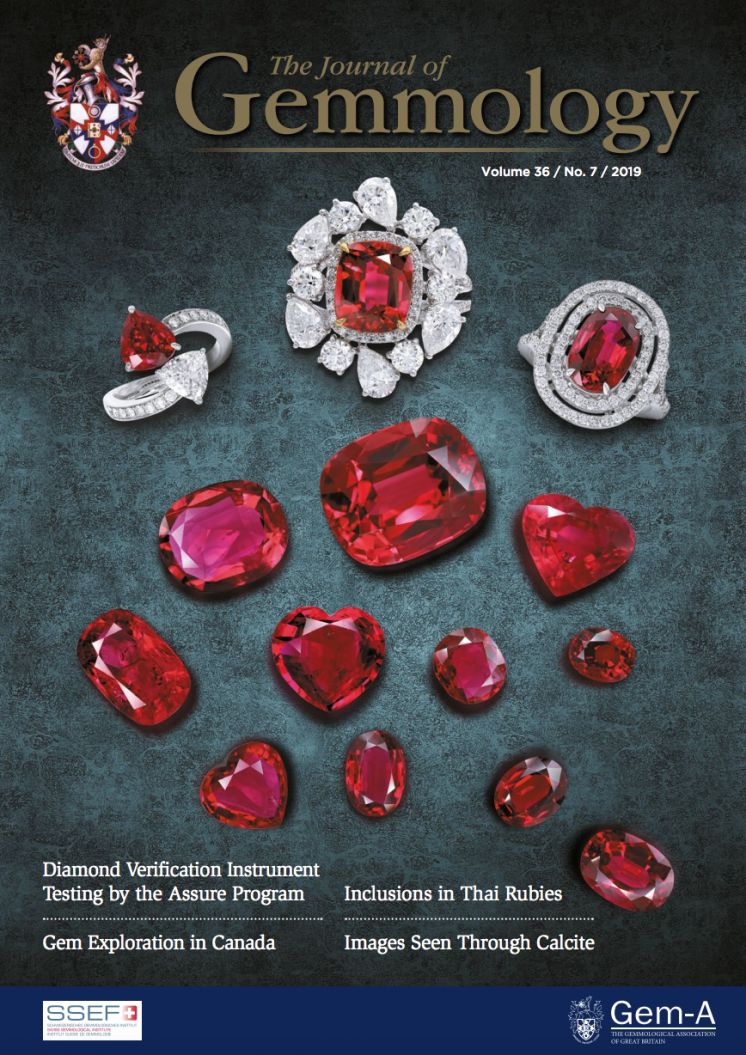
An update on mineral inclusions and their composition in ruby from the Bo Rai gem field in Trat Province, eastern Thailand

An update on mineral inclusions and their composition in ruby from the Bo Rai gem field in Trat Province, eastern Thailand

Promwongnan, S. and Sutthirat, C. (2019)

Journal Article · Source: Journal of Gemmology · Volume: Vol. 36 · Issue: No. 7 · Pages: pp. 634–645

Abstract
The Bo Rai alluvial gem field in Trat Province, eastern Thailand, was a major mining site for Thai ruby during the early 1980s, and this material continues to circulate in the gem market worldwide. For this study, approximately 1,000 Bo Rai ruby samples were examined and pre-screened for mineral inclusions. The rough stones usually formed platy, waterworn, tabular crystals with etched or resorbed surfaces. UV-Vis-NIR spectroscopy indicated a relatively high Fe content, which was confirmed by trace-element analysis. Solid inclusions typically consisted of Al-rich pyroxene, plagioclase and pyrope with subordinate sillimanite and spinel (both of which are reported here for the first time), as well as sulphides and silicate melt inclusions. The inclusion assemblage of pyroxene, plagioclase, pyrope and spinel closely resembles the mineralogy of mafic granulite xenoliths in alkali basalt associated with the Bo Rai gem field, which supports ruby formation in mafic granulite prior to being transported to the earth’s surface via basaltic eruptions.
Keywords
gems, corundum, ruby, Thailand.12, Bo Rai
Black nephrite jade from Guangxi, southern China

Black nephrite jade from Guangxi, southern China

Zhong, Q., Liao, Z., Qi, L. and Zhou, Z. (2019)

Journal Article · Source: Gems & Gemology · Volume: Vol. 55 · Issue: No. 2, Summer · Pages: pp. 198–215

Abstract
Twelve black nephrite samples collected from the Guangxi region of southern China were investigated by standard gemological testing, polarized microscopy, scanning electron microscopy, and electron microprobe analysis, as well as infrared, Raman, and ultraviolet/visible/near-infrared spectroscopy. Originating from Ca-skarn contact metasomatism between limestone bearing siliceous rock and diabase intrusions, black nephrite from Guangxi consists mainly of actinolite or ferro-actinolite and minor stilpnomelane, andradite, apatite, epidote, quartz, diopside, pyrrhotite, and pyrite. Its high refractive index (1.625–1.650) and specific gravity (3.015–3.405), as well as its black color in natural light for plate samples and greenish yellow/brownish yellow or pale green/yellowish green/green color in transmitted light for thin-section samples, are primarily attributable to a high iron content: 11.67–25.75 wt.% Fe oxides and a Mg / (Mg + Fe²⁺) ratio of 0.765–0.343. Mid- and near-infrared spectra and Raman spectra are characterized by four vibration bands corresponding to hydroxyl groups coordinated to three cations in M1 and M3 positions for (M M M)OH combinations: (Mg)OH, (MgFe²⁺)OH, (MgFe²⁺)OH, and (Fe²⁺)OH. Their relative intensities further indicate different iron contents and isomorphous substitution of Fe²⁺ for Mg²⁺ ions.
Keywords
gems, jade, nephrite, China, Chinese jade carving, Guangxi
A decade of ruby from Mozambique: A review

A decade of ruby from Mozambique: A review

Vertriest, W. and Saeseaw, S. (2019)

Journal Article · Source: Gems & Gemology · Volume: Vol. 55 · Issue: No. 2, Summer · Pages: pp. 162–183

Abstract
In less than a decade, Mozambique has become the world’s most productive source for gem-quality ruby. Since the discovery in 2009, GIA has followed these deposits from the front lines, collecting data in the field and in the laboratory. The development of the deposit in Montepuez has been extremely interesting, with different players involved and different types of material unearthed. This article provides a summary and overview of the current knowledge about Mozambican ruby, including the history of mining and the market impact, as well as a comprehensive gemological characterization and discussion of the most common treatments applied to the stones. Much of the information in this article is based on the authors’ observations in the field and market as well as several publications (Pardieu et al., 2009, 2013, 2015; Saeseaw et al., 2018).
Keywords
gems, corundum, Mozambique.12, ruby
Land of origins: A gemological expedition to Ethiopia

Land of origins: A gemological expedition to Ethiopia

Vertriest, W., Girma, D., Wongrawang, P., Atikarnsakul, U. and Schumacher, K. (2019)

Journal Article · Source: Gems & Gemology · Volume: Vol. 55 · Issue: No. 1, Spring · Pages: pp. 72–88

Abstract
Although Ethiopia is considered the cradle of mankind and the land of origins, gemstones never played a significant role in its long history and rich culture. Only in the last decade did Ethiopia emerge in the gem trade, with the discovery of large opal deposits near the town of Wegel Tena (Rondeau et al., 2010). When the first high-quality emeralds from Shakiso in southern Ethiopia reached the market in the fall of 2016, GIA’s Carlsbad and Bangkok labs conducted a joint preliminary study (Renfro et al., 2017). And in February 2017, GIA received news of a sapphire discovery near Aksum in northern Tigray Province (Vertriest et al., 2017). With all of this new material reaching the market, GIA collaborated with the Ethiopian Ministry of Mines, Petroleum and Natural Gas in Addis Ababa to set up an expedition to the sapphire, opal, and emerald sources. In March 2018, a team of four GIA gemologists and videographers traveled to Ethiopia to visit its gem sources. The first target was the sapphire deposit in the north, followed by the opal mines in the central highlands. The last area visited was near Shakiso to witness the developing emerald mines. During the expedition (figure 1), we documented mining techniques, social impact, material processing, natural challenges, and limitations. We also collected samples at the mines and nearby markets in accordance with GIA’s sampling protocols. These samples are now part of GIA’s reference collection and used for origin determination, research projects, and treatment experiments.
Keywords
gems, corundum, Ethiopia.12, sapphire, beryl, emerald, opal

Building a Gemological Library

Gemological books range from general identification manuals and textbooks to specialized works on individual gems, mineralogy, jewelry, treatments, synthesis, history and gem-producing regions.

For a curated selection of particularly useful books, read The Gemologist's Core Library — Classic Books on Gemology, Jewelry and Mineralogy.

About Four Treasures

Four Treasures is Lotus Gemology's freely accessible gemological reference database. Use the full database to search by author, title or keyword and explore literature on gemology, mineralogy, jewelry and related fields. Where available, hyperlinks on titles may lead directly to the full publication.

Search the Complete Four Treasures Database