Gemology Books Bibliography

Gemology Books Bibliography

Explore books on gems, gemology, jewelry and mineralogy in Four Treasures, the Lotus Gemology reference database. This bibliography brings together matching book records from the collection, with publication details, abstracts and cover images where available.

Gemology Book References

The list below matches books concerning gemology and related subjects in the database's searchable fields. Some works cover several branches of gems, jewelry or mineralogy.

3,321–3,340 of 3,436 matching references
Les pierres magiques et le merveilleux

Les pierres magiques et le merveilleux

Magical stones and the marvelous

Lecouteux, C. (1984)

Book Section · Source: Deutsch-Französische Mediävistik. Mélanges pour G.E. Zink · Pages: pp. 53–67 · Language: in French

Abstract
Lecouteux examines the role of stones possessing magical or marvelous properties in medieval literature and belief. Drawing on lapidaries and literary sources, he considers stones credited with powers extending beyond their physical qualities, including protection, healing, divination, invisibility, and other supernatural effects. The study places such stones within the medieval conception of the merveilleux, showing how traditions inherited from Classical and late-antique lapidary literature were incorporated into medieval narratives and systems of belief. Rather than treating these accounts simply as mineralogical lore, Lecouteux emphasizes the cultural function of magical stones and the ways their supposed virtues contribute to the supernatural world of medieval texts.
Keywords
gems, magical gems, history of gemology, ancient gems, gem lore, gems and healing, medicinal use
Ancient Trade and Society

Ancient Trade and Society

Casson, L. (1984)

Book · Publisher: Wayne State University Press · Pages: 232 pp.

Keywords
gems, ancient gems, glyptic, archaeology, archaeogemology, ancient history, Greek, Roman, Near East, India, China, Africa, trade, commerce, trade routes
Ein neuer Edelstein aus der Feldspat-Familie

Ein neuer Edelstein aus der Feldspat-Familie

A new gemstone from the feldspar family

Gübelin, E.J., Bridges, C.R. and Graziani, G. (1984)

Journal Article · Source: Zeitschrift der Deutschen Gemmologischen Gesellschaft · Volume: Vol. 33 · Issue: No. 3/4 · Pages: pp. 104–113 · Language: In German

Abstract
Bridges, Graziani and Gübelin describe a newly recognized gem-quality feldspar from Kioo Hill, Kenya, occurring in the central portions of larger feldspar crystals in a kyanite-bearing pegmatite associated with vermiculite and quartz. Mineralogical and chemical investigation identifies the material as a low-temperature albite with peristerite structure. The pale blue to greenish material has refractive indices of approximately 1.531–1.539, birefringence 0.008, and specific gravity 2.623 ± 0.002. The study discusses its occurrence, composition, crystallographic structure and gemological properties, establishing the material as an unusual gem variety of sodic plagioclase. The paper includes eight color figures, four diagrams and two tables.
Keywords
feldspar, gems
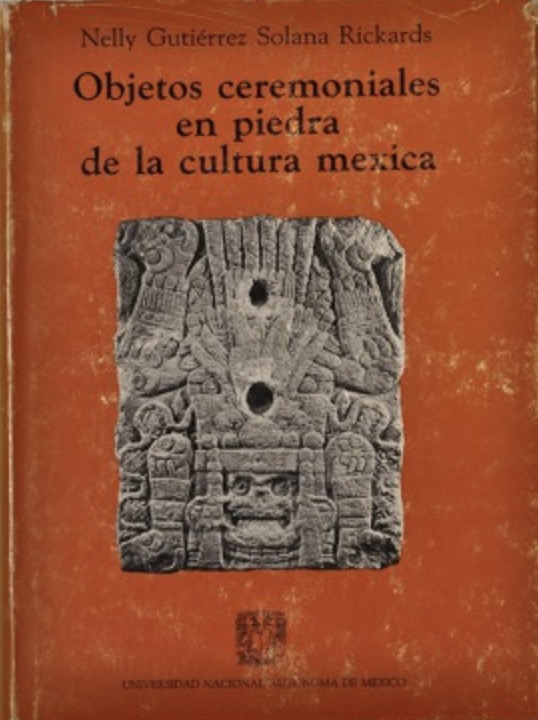
Objetos Ceremoniales en Piedra de la Cultura Mexica

Objetos Ceremoniales en Piedra de la Cultura Mexica

Ceremonial Stone Objects of the Mexica Culture

Gutiérrez Solana, N. (1983)

Book · Publisher: Universidad Nacional Autónoma de México · Pages: 226 pp. + 124 pages of plates, 206 illustrations · Language: in Spanish

Abstract
Gutiérrez Solana presents a systematic study of ceremonial stone objects associated with the Mexica (Aztec), examining their forms, iconography, religious functions, and relationship to ritual practices. The objects include stone representations and implements connected with sacrifice, autosacrifice, offerings, warfare, and the cult of particular deities. Individual pieces are analyzed through comparison with archaeological evidence and representations and descriptions in pre-Hispanic and early colonial sources. Among the objects discussed are zacatapayolli associated with bloodletting, as well as other carved stone implements and ritual forms. The study places these objects within Mexica religious symbolism rather than treating them simply as sculpture, providing an extensive illustrated corpus for understanding the material equipment of Aztec ceremonial life. Later scholarship continues to cite the book for individual ritual objects and their interpretation.
Keywords
gems, jade, jadeite, fei cui, Mesoamerica, Mexico, Guatemala, Costa Rica, Mayans, Olmecs, Aztecs, archaeology, history, archaeogemology, Pre-Columbian jade; Costa Rica; Maya; exchange; iconography, lapidary
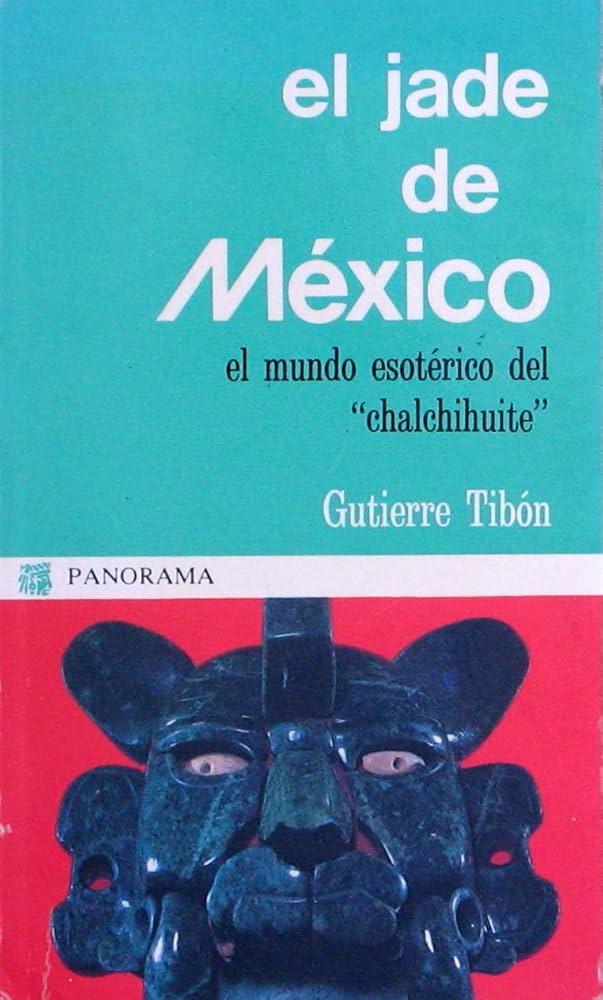
El jade de México: El mundo esotérico del chalchihuite""

El jade de México: El mundo esotérico del chalchihuite""

Tibón, G. (1983)

Book · Publisher: Panorama Editorial · Pages: 157 pp. · Language: in Spanish

Abstract
Tibón examines jade and other greenstones in ancient Mexico primarily through their religious, symbolic, linguistic, and cultural significance rather than as a mineralogical study. Central to the book is the Nahuatl concept of chalchihuitl, encompassing precious green stones whose value extended far beyond ornament. Drawing on early colonial chronicles, indigenous traditions, mythology, place names, and archaeological material, Tibón explores associations of greenstone with water, vegetation, fertility, life, wealth, divinity, and supernatural power. He discusses its use in ritual objects, offerings and personal ornaments, as well as traditions concerning the discovery and recognition of chalchihuites. The work is especially useful for understanding the cultural concept of “jade” in Mesoamerica, where indigenous terminology did not necessarily correspond to modern mineralogical definitions. Later Mesoamerican scholarship continues to cite the book in discussions of the symbolism and cultural valuation of jade and greenstone.
Keywords
gems, jade, pyroxene jade, fei cui, Guatemala, Mesoamerica, Nicaragua, Mexico, Honduras, Costa Rica, archaeogemology, Olmecs
Cuspinians Kommentar des liber lapidum Marbods. Kritischer Text und deutsche Übersetzung von Cod. 5195 (sowie der editio princeps von 1511)

Cuspinians Kommentar des liber lapidum Marbods. Kritischer Text und deutsche Übersetzung von Cod. 5195 (sowie der editio princeps von 1511)

Cuspianus’ commentary on the Liber lapidum of Marbodus: Critical text and German translation from Cod. 5195 (as well as from the editio princeps of 1511)

Cuspinianus, J. and Wiemann, W. (1983)

Thesis · Publisher: Ruprecht-Karls-Universität · Pages: xxvii + 467 pp. · Language: in Latin and German

Abstract
Wiemann presents a critical edition and German translation of Johannes Cuspinianus’s Latin commentary on Marbod of Rennes’ Liber lapidum, a medieval didactic poem describing sixty stones and their supposed natural, medicinal and magical properties. The study is based principally on Vienna manuscript Cod. 5195, with comparison to the editio princeps of 1511, which Cuspinianus prepared for publication. It makes the Renaissance commentary accessible through a critically established Latin text and facing or accompanying German translation and provides material for studying the transmission and early printed reception of Marbod’s lapidary. The work is particularly relevant to the history of gemological and mineralogical literature because it documents how a major medieval lapidary was interpreted and transmitted by an early-sixteenth-century humanist scholar.
Keywords
gems, early lapidaries, Marbode
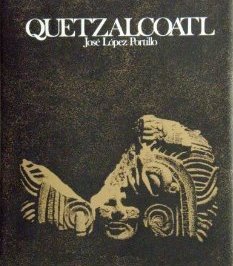
Quetzalcoatl: In Myth, Archaeology, and Art

Quetzalcoatl: In Myth, Archaeology, and Art

López Portillo, J. (1982)

Book · Publisher: Continuum Publishing Group · Pages: 252 pp.

Keywords
gems, jade, jadeite, fei cui, Mesoamerica, Mexico, Guatemala, Costa Rica, Mayans, Olmecs, Aztecs, archaeology, history, archaeogemology, Pre-Columbian jade; Costa Rica; Maya; exchange; iconography, lapidary
A jadeit and pyrite discoidal ornament from El Salvador

A jadeit and pyrite discoidal ornament from El Salvador

Boggs, S.H. (1982)

Journal Article · Source: Mexicon · Volume: Vol. 4, September · Issue: No. 4 · Pages: pp. 64–65

Keywords
gems, jade, jadeite, fei cui, Mesoamerica, Mexico, Guatemala, Costa Rica, Mayans, Olmecs, Aztecs, archaeology, history, archaeogemology, Pre-Columbian jade; Costa Rica; Maya; exchange; iconography, lapidary
Über ein neues Vorkommen von Smaragd bei Santa Terezinha, Goyaz, Brasilien

Über ein neues Vorkommen von Smaragd bei Santa Terezinha, Goyaz, Brasilien

On a new occurrence of emerald near Santa Terezinha, Goyaz, Brazil

Bank, H. and Petsch, E. (1982)

Journal Article · Source: Zeitschrift der Deutschen Gemmologischen Gesellschaft · Volume: Vol. 31 · Issue: No. 1/2 · Pages: pp. 89–90 · Language: In German

Abstract
Bank and Petsch report a newly recognized emerald occurrence near Santa Terezinha de Goiás, Brazil, describing the locality and the characteristics of the emerald material being produced there. The brief paper discusses the geological occurrence of the emeralds and their association with the host rocks, together with observations on the appearance and gemological characteristics of the crystals. It represents an early gemological report on Santa Terezinha, which subsequently became one of Brazil’s important emerald-producing districts.
Keywords
gems, beryl, emerald, Brazil, Santa Terezinha
Über die gemmologische bedeutung des gallium-nachweises in korunden

Über die gemmologische bedeutung des gallium-nachweises in korunden

On the gemological significance of the detection of gallium in corundum

Hänni, H.A. and Stern, W.B. (1982)

Journal Article · Source: Zeitschrift der Deutschen Gemmologischen Gesellschaft · Volume: Vol. 31 · Pages: pp. 255–260 · Language: In German

Abstract
Hänni and Stern investigate whether gallium can provide a useful chemical criterion for distinguishing natural from synthetic corundum. Using energy-dispersive X-ray fluorescence analysis, they examined 24 natural and eight synthetic corundums of various colors and origins. Gallium was detected in all of the natural specimens examined, whereas none was detected in the synthetic samples. The authors therefore propose gallium detection as a potentially valuable supplementary test for establishing natural origin, while recognizing the analytical detection limits involved.
Keywords
corundum, synthetic corundum.7, gems

A gemstone trip to Nepal [in Japanese]

Baba, T. (1982)

Journal Article · Source: Gemmological Review [月刊ジェモロジカル・レビュー] · Publisher: Chikayama Akira Gem Research Institute · Volume: Vol. 4 · Issue: No. 12 · Pages: pp. 2–5

Keywords
corundum, Nepal.12, gems
Taprobanit: Ein neuer Edelstein aus Sri Lanka

Taprobanit: Ein neuer Edelstein aus Sri Lanka

Taprobanite: A new gemstone from Sri Lanka

Gübelin, E.J. (1981)

Journal Article · Source: Zeitschrift der Deutschen Gemmologischen Gesellschaft · Volume: Vol. 30 · Issue: No. 3/4 · Pages: pp. 179–206 · Language: In German

Abstract
Gübelin describes “taprobanite,” a rare red gemstone from Sri Lanka initially thought to be taaffeite because of its similar appearance and gemological properties. Detailed examination showed it to represent a distinct member of the taaffeite mineral group, characterized by differences in chemical composition, crystallographic properties, and optical behavior. The study discusses its identification, physical and optical constants, absorption characteristics, inclusions, and relationship to taaffeite, emphasizing the difficulty of recognizing such rare stones by conventional gemological testing alone. The name derives from Taprobane, the ancient name for Sri Lanka.
Keywords
taaffeite, Sri Lanka, gems
Einschlüsse im Granat aus dem Umba-Tal

Einschlüsse im Granat aus dem Umba-Tal

Inclusions in garnet from the Umba Valley

Gübelin, E.J. (1981)

Journal Article · Source: Zeitschrift der Deutschen Gemmologischen Gesellschaft · Volume: Vol. 30 · Issue: No. 3/4 · Pages: pp. 182–194 · Language: In German

Abstract
Gübelin examines the internal features of garnets from Tanzania’s Umba Valley, a locality producing garnets across the pyrope–almandine–spessartine compositional range. The paper documents and illustrates their characteristic inclusions and considers their value for gemological identification and for interpreting the conditions under which the garnets formed. Later inclusion literature specifically records crystallographically oriented networks and star-like arrangements of rutile needles in Umba Valley garnets, citing Gübelin’s work on this material.
Keywords
garnet, Umba Valley, Tanzania, gems
Erdwissenschafter aus Berufung, Zum 75. Geburtstag von F.H. Pough

Erdwissenschafter aus Berufung, Zum 75. Geburtstag von F.H. Pough

Geoscientists by vocation, On the 75th birthday of F.H. Pough

Gübelin, E.J. (1981)

Journal Article · Source: Zeitschrift der Deutschen Gemmologischen Gesellschaft · Volume: Vol. 30 · Issue: No. 2 · Pages: pp. 120–124 · Language: In German

Abstract
Gübelin pays tribute to the American mineralogist and gemologist Frederick H. Pough (1906–2006) on his 75th birthday, presenting him as a geoscientist by vocation and reviewing his professional career and contributions to mineralogy and gemology. The article is biographical and commemorative rather than a gemological research paper, emphasizing Pough’s work as a mineralogist, author, educator, and communicator of mineralogical knowledge.
Keywords
gems
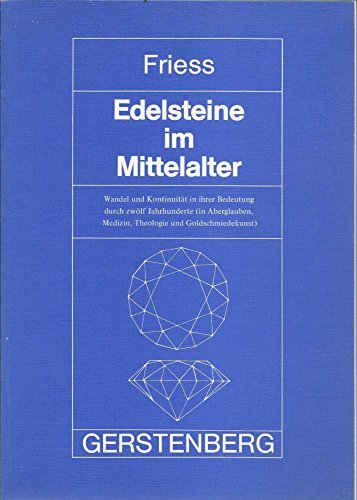
Edelsteine im Mittelalter. Wandel und Kontinuität in ihrer Bedeutung durch zwölf Jahrhunderte (in Aberglauben, Medizin, Theologie und Goldschmiedekunst)

Edelsteine im Mittelalter. Wandel und Kontinuität in ihrer Bedeutung durch zwölf Jahrhunderte (in Aberglauben, Medizin, Theologie und Goldschmiedekunst)

Precious Stones in the Middle Ages: Change and continuity in their significance across twelve centuries (in superstition, medicine, theology, and goldsmithing)

Friess, G. (1980)

Book · Publisher: Hildesheim · Pages: 206 pp. · Language: in German

Abstract
For modern people, for whom precious stones are almost exclusively valued as jewelry, it is somewhat difficult to grasp the different mindset of Late Antiquity and the early Middle Ages. The author of the present study has succeeded remarkably well in doing so. She demonstrates that in those times, precious stones were not only fashioned into ornaments by goldsmiths; they also consistently carried symbolic meaning, which varied depending on the “intellectual context.” In Antiquity, precious stones were attributed healing and magical powers, with special emphasis often placed on their apotropaic effect. With the spread of Christianity, the symbolic value of precious stones also changed; they became Christian symbols, capable of representing Christ himself, the apostles, and saints, or were understood as allegorical symbols of Christian virtues.
Keywords
gems, early lapidaries, early gemology, early mineralogy, lore, medicine

Building a Gemological Library

Gemological books range from general identification manuals and textbooks to specialized works on individual gems, mineralogy, jewelry, treatments, synthesis, history and gem-producing regions.

For a curated selection of particularly useful books, read The Gemologist's Core Library — Classic Books on Gemology, Jewelry and Mineralogy.

About Four Treasures

Four Treasures is Lotus Gemology's freely accessible gemological reference database. Use the full database to search by author, title or keyword and explore literature on gemology, mineralogy, jewelry and related fields. Where available, hyperlinks on titles may lead directly to the full publication.

Search the Complete Four Treasures Database