Gemology Books Bibliography

Gemology Books Bibliography

Explore books on gems, gemology, jewelry and mineralogy in Four Treasures, the Lotus Gemology reference database. This bibliography brings together matching book records from the collection, with publication details, abstracts and cover images where available.

Gemology Book References

The list below matches books concerning gemology and related subjects in the database's searchable fields. Some works cover several branches of gems, jewelry or mineralogy.

161–180 of 3,436 matching references
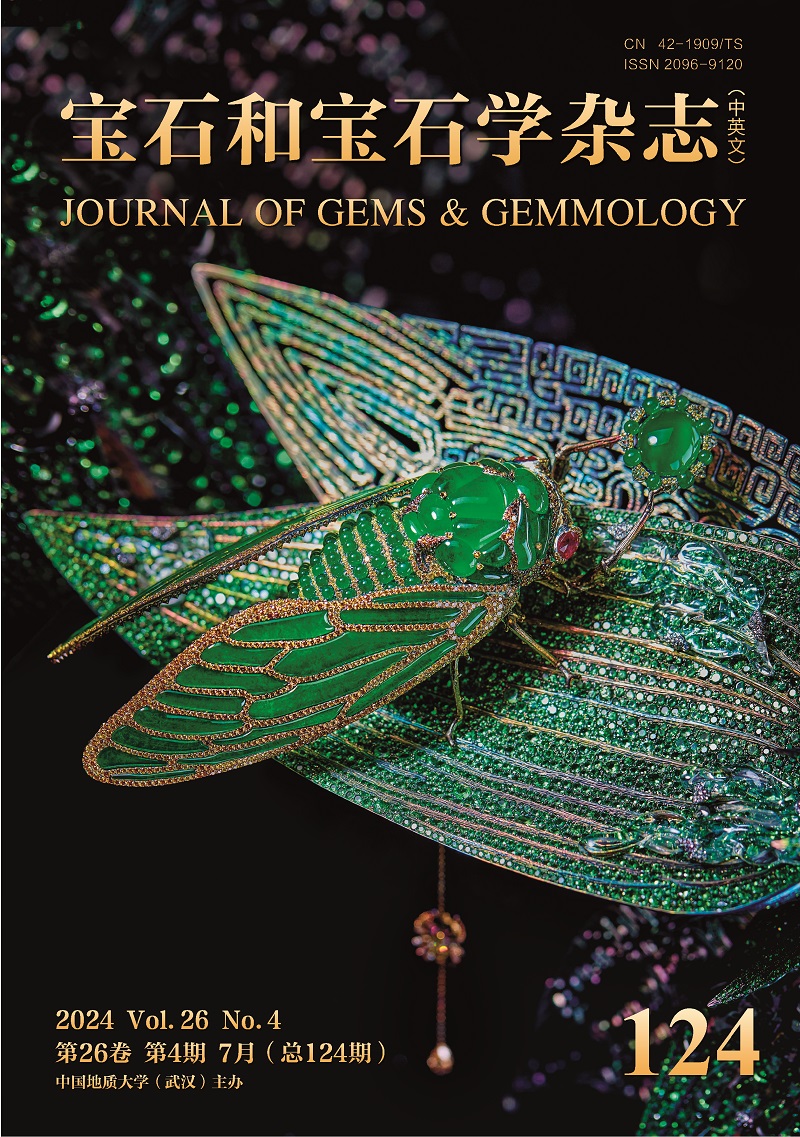
Late but precious: The dissemination and use of emerald in the Ming Dynasty in China

Late but precious: The dissemination and use of emerald in the Ming Dynasty in China

Cao, Y., Yang, M. and Luo, Z. (2024)

Journal Article · Source: Journal of Gems & Gemmology · Volume: Vol. 26 · Issue: No. 6 · Pages: pp. 140–147 · Language: in Chinese with English abstract

Abstract
Emerald is one of the five internationally recognized precious gemstones, highly favored by people for its unique color and charm, and holds an important historical position in China. This article is based on archaeological discoveries of Chinese emeralds and combined with clues from ancient literature to explore the time, evolution of name, usage pattern, and source of emerald in China during the Ming Dynasty. It is found that although there was exchange and interaction of coloured gemstones between China and Central and Western Asia during the Han and Wei dynasties, it was not until the Yuan and Ming dynasties that emerald were discovered in China.Emerald entered China through trade, tribute, and other means, and was accepted by China. Its name was transliterated from a foreign language and gradually evolved from Zhumula" and "Zumula" to "Emerald", which is still used today. Through gemmological and spectroscopic testing of the unenset emeralds unearthed from the tomb of Liangzhuang King, it was found that the inclusion characteristics and mass fraction characteristics of the emerald in the tomb of Liangzhuang King were similar to those in Egypt and Austria, such as FeO, MgO, Cr2O3, V2O3, etc. Based on the historical background and the premise that the emerald from the tomb of Liangzhuang King was brought back through the Maritime Silk Road, it is believed that the emerald may have originated from Egypt or Austria. Although emerald entered China relatively late, it held an important position in the social and cultural context of the Ming Dynasty. As a precious gemstone material, emerald was mainly used for leather belt decoration by nobles, reflecting to some extent the hierarchical system in the ritual system and becoming a symbol of social status."
Keywords
gems, beryl, emerald, use of emerald in China
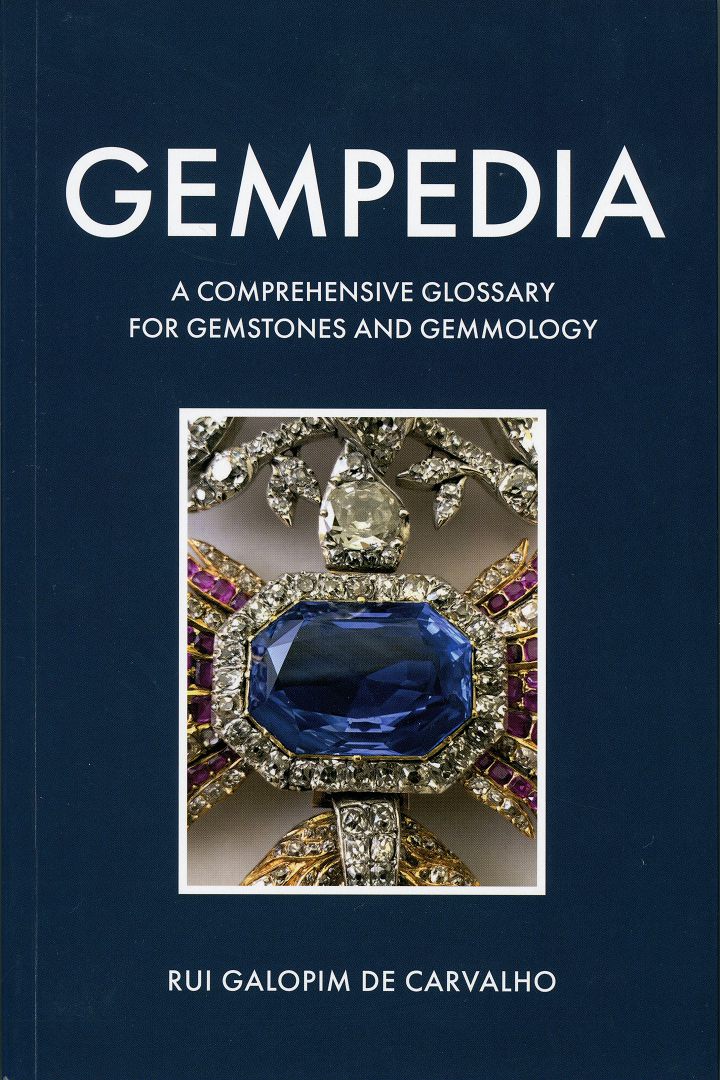
Gempedia | A Comprehensive Glossary for Gemstones and Gemology

Gempedia | A Comprehensive Glossary for Gemstones and Gemology

Galopim de Carvalho, R. (2024)

Book · Publisher: AIGS · Pages: 719 pp.

Abstract
GEMPEDIA - A Comprehensive Glossary for Gemstones and Gemmology is a glossary with more than 7300 entries related to gemstones and gemology aimed at students, professionals and all those who are interested in the subject. Authored by Rui Galopim de Carvalho, a renowned international gemologist with a career spanning more than 30 years, the book is a must-read for anyone who wants to understand the broad terminology used in the fascinating world of gemology and associated industries.
Keywords
gems, bibliography, dictionary, dictionaries, glossary
Analysis of gemstones at GIA laboratories

Analysis of gemstones at GIA laboratories

Ahline, N.J. and Rizzo, J. (2024)

Journal Article · Source: Gems & Gemology · Volume: Vol. 60 · Issue: No.  4, Winter · Pages: pp. 604–623

Abstract
With decades of expertise and laboratory locations worldwide, GIA uses more advanced instrumentation that extends far beyond the boundaries of standard gemological testing. The comprehensive analysis of gemstones submitted to the laboratory ensures accurate identification and grading reports. These gemstones fall under five different categories: natural diamonds, natural colored diamonds, laboratory-grown diamonds, colored stones, and pearls.
Keywords
gems, gemology, basic gemology, advanced gemology, gem testing, reproducibility in gem testing, instrument testing and calibration, pearl testing, pearl, pearls, diamond, emerald
Metrology at GIA

Metrology at GIA

Nelson, D.P. and Reinitz, I.M. (2024)

Journal Article · Source: Gems & Gemology · Volume: Vol. 60 · Issue: No. 4, Winter · Pages: pp. 596–603

Abstract
Metrology, the science of measurement and its application, plays a critical role in the accuracy of GIA’s research and laboratory services. The metrology team closely monitors the performance of instruments and devices in all global laboratory locations, assessing accuracy (within the established measurement uncertainty of each parameter), repeatability, and reproducibility. Calibration objects traceable to a national standards agency (such as the National Institute of Standards and Technology) and working references traceable to those calibration objects provide benchmarks for these performance criteria. Instruments that do not meet these criteria are removed from service until repair and recalibration have been performed to restore measurement validity.
Keywords
gems, gemology, basic gemology, advanced gemology, gem testing, reproducibility in gem testing, instrument testing and calibration
Applications of X-ray radiography and X-ray computed microtomography in gemology

Applications of X-ray radiography and X-ray computed microtomography in gemology

Zhou, C. and Towbin, W.H. (2024)

Journal Article · Source: Gems & Gemology · Volume: Vol. 60 · Issue: No. 4, Winter · Pages: pp. 582–595

Abstract
X-ray radiography and X-ray computed microtomography are two imaging techniques with far-reaching applications in many fields. In gemology, they play a crucial role in the identification of pearl, a unique biogenic gem material. This article offers a brief history of pearl testing by X-ray imaging, as well as basic instrumental theory, examples of different types of pearls that can be separated with X-ray imaging, and examples of its other uses in gemology and mineralogy. The aim of this paper is to provide readers with a basic understanding of these methods and the importance of these devices in a gemological setting, particularly for pearl testing.
Keywords
gems, gemology, basic gemology, advanced gemology, gem testing, spectroscopy, chemistry, chemical analysis, X-ray radiography, pearls, pearl testing
Glowing gems: Fluorescence and phosphorescence of diamonds, colored stones, and pearls

Glowing gems: Fluorescence and phosphorescence of diamonds, colored stones, and pearls

Haenens-Johansson, U.F.S., d’, Eaton-Magaña, S., Towbin, W.H. and Myagkawa, E. (2024)

Journal Article · Source: Gems & Gemology · Volume: Vol. 60 · Issue: No. 4, Winter · Pages: pp. 560–580

Abstract
The use of photoluminescence imaging for gemstone characterization is reviewed, considering both fluorescence and its time-delayed counterpart, phosphorescence. Luminescence results from the excitation of atomic impurities and defects by an external source. Fluorescence can be excited by ultraviolet, visible, or infrared light, or even X-rays. Fluorescence to long-wave UV light is a characteristic included in diamond grading reports issued by major gemological laboratories. This article provides a comprehensive overview of the principles, mechanisms, and characteristics of luminescence that create the impressive and memorable glow of gemstones. Although diamond is the focus, a variety of colored stones and pearls are reviewed as well. This article is intended to foster a deeper appreciation of the complexity necessary to understand these natural wonders.
Keywords
gems, gemology, basic gemology, advanced gemology, gem testing, spectroscopy, chemistry, chemical analysis, corundum, X-ray diffraction
Chemical analysis in the gemological laboratory: XRF and LA-ICP-MS

Chemical analysis in the gemological laboratory: XRF and LA-ICP-MS

Sun, Z., Jollands, M.C. and Palke, A.C. (2024)

Journal Article · Source: Gems & Gemology · Volume: Vol. 60 · Issue: No. 4, Winter · Pages: pp. 518–535

Abstract
One of the fundamental tasks in a modern gemological laboratory is identifying the species of a gemstone. Laboratories apply many different approaches, from routine methods used for almost every gemstone to more advanced techniques on a case-by-case basis. While standard gemological testing can accurately identify the most common gemstone species, additional testing is often required for unusual or rare stones. Two advanced analytical tools for phase identification are reviewed in this article: Raman spectroscopy and X-ray diffraction. Both methods harness photon scattering to characterize the atomic-scale structures of materials. Raman spectroscopy relies on inelastic light scattering from crystal lattice or molecular vibrations. X-ray diffraction relies on constructive interference of X-rays “reflected” from regularly spaced atomic layers of a crystal lattice. In addition to identifying mineral species, these techniques can capture information about composition, degree of crystallinity, strain, and other factors that affect a material’s structure. The applications of these techniques are summarized first, followed by technical details regarding the underlying physics and instrumentation.
Keywords
gems, gemology, basic gemology, advanced gemology, gem testing, spectroscopy, chemistry, chemical analysis, corundum, X-ray diffraction
Raman spectroscopy and X-ray diffraction: Phase identification of gem minerals and other species

Raman spectroscopy and X-ray diffraction: Phase identification of gem minerals and other species

Jin, S. and Smith, E.M. (2024)

Journal Article · Source: Gems & Gemology · Volume: Vol. 60 · Issue: No. 4, Winter · Pages: pp. 518–535

Abstract
One of the fundamental tasks in a modern gemological laboratory is identifying the species of a gemstone. Laboratories apply many different approaches, from routine methods used for almost every gemstone to more advanced techniques on a case-by-case basis. While standard gemological testing can accurately identify the most common gemstone species, additional testing is often required for unusual or rare stones. Two advanced analytical tools for phase identification are reviewed in this article: Raman spectroscopy and X-ray diffraction. Both methods harness photon scattering to characterize the atomic-scale structures of materials. Raman spectroscopy relies on inelastic light scattering from crystal lattice or molecular vibrations. X-ray diffraction relies on constructive interference of X-rays “reflected” from regularly spaced atomic layers of a crystal lattice. In addition to identifying mineral species, these techniques can capture information about composition, degree of crystallinity, strain, and other factors that affect a material’s structure. The applications of these techniques are summarized first, followed by technical details regarding the underlying physics and instrumentation.
Keywords
gems, gemology, basic gemology, advanced gemology, gem testing, spectroscopy, Raman spectroscopy, PL spectroscopy, X-ray diffraction
Shining a light on gemstone properties: An exploration of photoluminescence spectroscopy

Shining a light on gemstone properties: An exploration of photoluminescence spectroscopy

Eaton-Magaña, S., Jones, D.C., Turnier, R.B. and Breeding, C.M. (2024)

Journal Article · Source: Gems & Gemology · Volume: Vol. 60 · Issue: No. 4, Winter · Pages: pp. 494–517

Abstract
Photoluminescence (PL) spectroscopy is a powerful testing method for gemstones in which absorption of light leads to emission at longer wavelengths, revealing valuable insights into the material’s composition, structure, and optical properties. In gemology, PL is a crucial tool for identifying and characterizing gemstones, understanding their geological history, detecting treatments and synthetics, and providing clues about the presence of impurities, defects, and inclusions. The advantages and disadvantages of PL will be explored along with a survey of its applications among various gemstones including diamonds, pearls, and chromium-containing gems, with a focus on emerging techniques such as PL mapping, fluorescence lifetime, and large-scale statistical analysis. This article highlights the significance of PL spectroscopy applied to gemstones, revealing new insights into these natural wonders and helping distinguish them from their treated and laboratory-grown counterparts.
Keywords
gems, gemology, basic gemology, advanced gemology, gem testing, spectroscopy, photoluminescence spectroscopy, PL spectroscopy
Infrared spectroscopy and its use in gemology

Infrared spectroscopy and its use in gemology

Breeding, C.M. and Ahline, N.J. (2024)

Journal Article · Source: Gems & Gemology · Volume: Vol. 60 · Issue: No. 4, Winter · Pages: pp. 474–492

Abstract
Since its discovery at the beginning of the nineteenth century, infrared light has proven to be a versatile tool for scientists, industrialists, and consumers. The gem industry has benefited from the power of infrared spectroscopy in gemstone identification for more than 30 years. By measuring the frequencies of vibrations of bonds between atoms in the structure of a gemstone, scientists can determine the composition and atomic arrangement of many important defects that indicate whether a gem is natural, laboratory-grown, or treated. Clever adaptations of instrument hardware and sampling techniques have allowed for efficient and accurate analysis of diamonds and many of the most important colored gems such as ruby, sapphire, emerald, and jadeite. No gemologist’s toolbox is complete without an understanding of the power of infrared spectroscopy for gem identification.
Keywords
gems, gemology, basic gemology, advanced gemology, gem testing, spectroscopy, infrared, FTIR
Application of UV-Vis-NIR spectroscopy to gemology

Application of UV-Vis-NIR spectroscopy to gemology

Jin, S., Renfro, N.D., Palke, A.C., Ardon, T. and Homkrajae, A. (2024)

Journal Article · Source: Gems & Gemology · Volume: Vol. 60 · Issue: No. 4, Winter · Pages: pp. 456–473

Abstract
Optical spectroscopy, also known as ultraviolet/visible/near-infrared spectroscopy, measures how electromagnetic radiation around the visible range is preferentially absorbed by a gemstone. A transparent gemstone can absorb certain wavelengths of light that pass through it, creating color in the transmitted light, whereas an opaque gemstone absorbs light on its surface and creates color in the reflected light. The physics of how electromagnetic radiation of different wavelengths interacts with materials is summarized to provide a basic understanding of how electronic transitions in gemstones can cause different colors. The different instruments and configurations suitable for various gemstone types are also explained. Specific routine applications of ultraviolet/visible/near-infrared spectroscopy to colored gemstones, fancy-color diamonds, and saltwater pearls are summarized, showcasing how identifying the chromophores in gemstones can facilitate varietal calls, origin determination, and treatment detection in a gemological laboratory.
Keywords
gems, gemology, gem research, gem testing, advanced instruments, spectroscopy
Analytical techniques in gemology: A historical overview

Analytical techniques in gemology: A historical overview

Shigley, J.E. (2024)

Journal Article · Source: Gems & Gemology · Volume: Vol. 60 · Issue: No. 4, Winter · Pages: pp. 443–455

Abstract
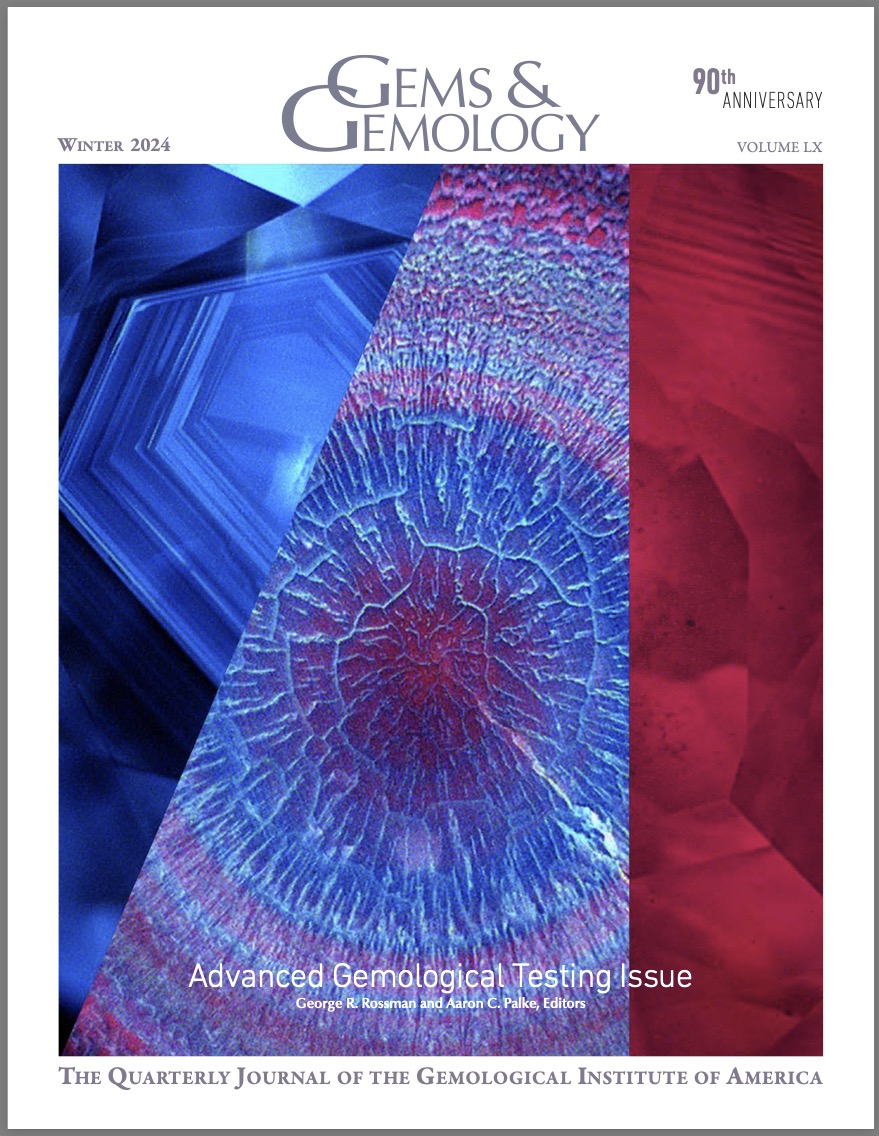
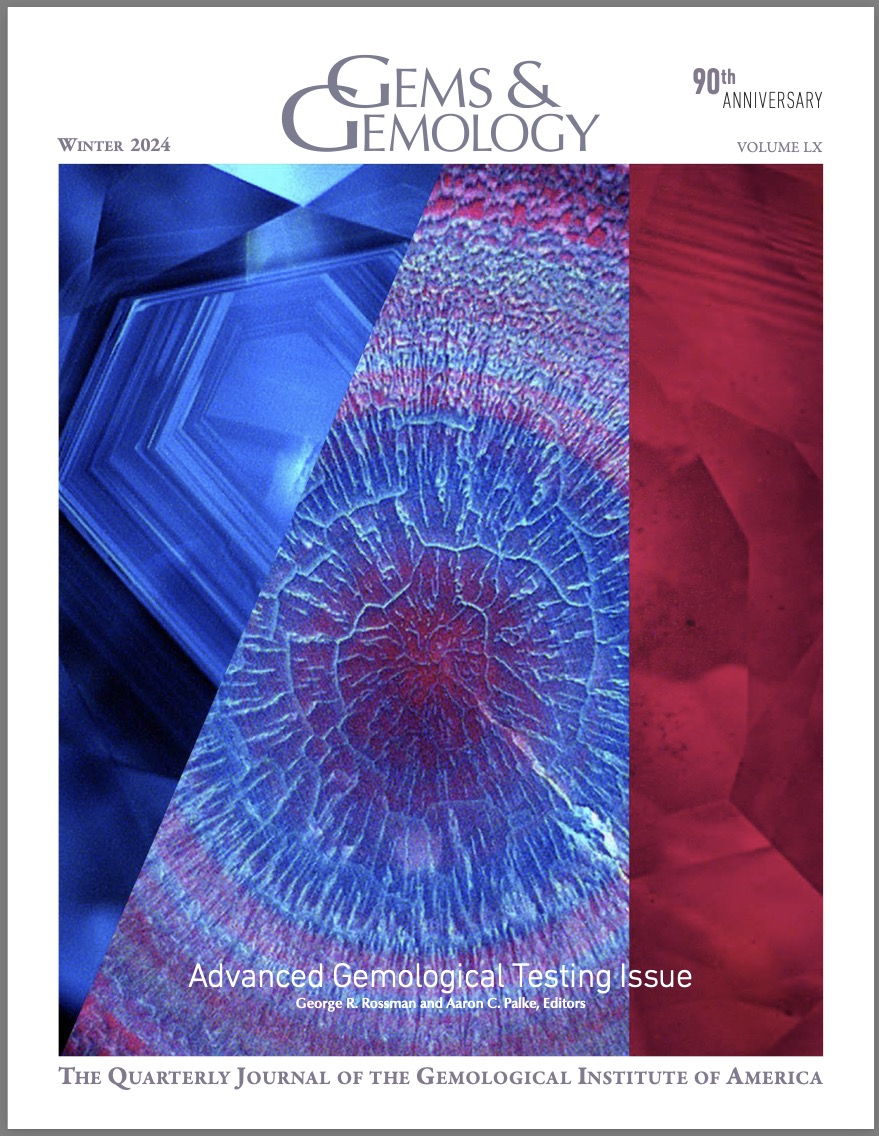
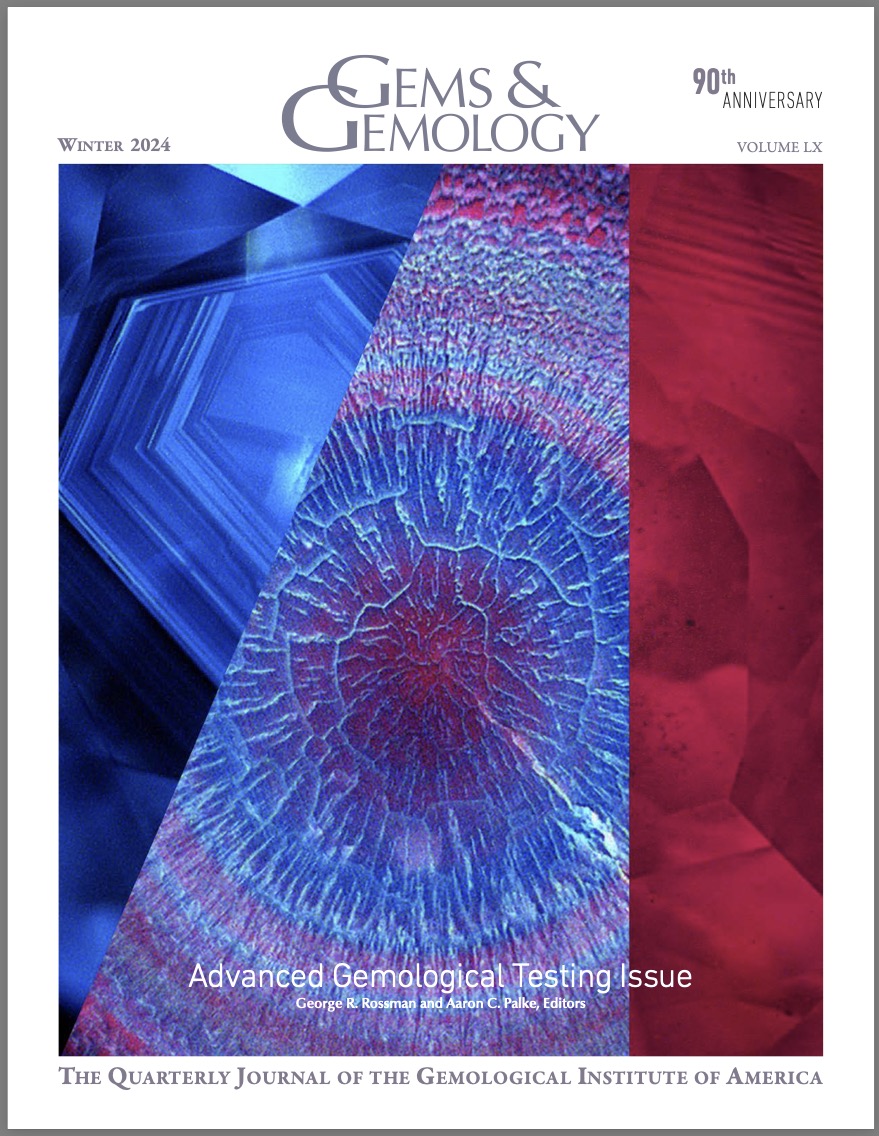
Gemology has become an increasingly technical field, driven by the need for more advanced analytical methods and instruments to test gem materials (figure 1). This shift reflects the evolving challenges of gem identification, a trend that has been well documented in major gemological journals. This special issue of Gems & Gemology will survey the testing instrumentation currently employed by GIA’s laboratories, reviewing their applications, limitations, and the vital information each technology provides. Important aspects of their use for gem testing will be discussed. Note that equipment developed specifically for the GIA diamond quality grading system or other laboratory activities will not be included. This article opens the Winter 2024 edition by briefly examining the introduction and role of scientific instrumentation in gemology to address identification challenges in the marketplace.
Keywords
gems, gemology, gem research, gem testing, advanced instruments
The spectral characterization of blue spinel and other blue gemstones with the alexandrite effect

The spectral characterization of blue spinel and other blue gemstones with the alexandrite effect

Zhou, J., Wang, C., Zhao, X., Yang, Y. and Shen, A. (2024)

Journal Article · Source: Journal of Gems & Gemmology · Volume: Vol. 26 · Issue: No. 4 · Pages: pp. 69–76

Abstract
In gemmology, the term Alexandrite effect" is used to describe colour change phenomenon when a gemstone is observed under different light sources, usually between daylight and incandescent light. The definition of the Alexandrite effect is constantly being broadened with new discovery of gem resource. The traditional definition of the Alexandrite effect attributing the colour change phenomenon to the presence of two maximum transmission regions and a maximum absorption region in the absorption spectra. In this study, 7 blue spinels and 5 blue gemstones (including tanzanite, kyanite, fluorite, and 2 sapphires) showing the Alexandrite effect were investigated. The goal is to explain the cause of blue-to-violet alexandrite effect and the spectral features causing such colour change. In the UV-Vis spectra, all samples showed a maximum absorption peak in the range of 534-610 nm, within the green region to orange region. The traditional explanation of green to red Alexandrite effect required a transmission window in the red region; however, some of our samples did not show this transmission window and the blue-to-violet alexandrite effect was still visible. Therefore, it is incomplete to explain the mechanism of the Alexandrite effect according to their characteristic absorption spectra, a systematic study based on modern colour science and colour perception in human vision is required to elucidate the blue-to-violet alexandrite effect."
Keywords
gems, spinel, color in spinel, cobalt spinel, color change, alexandrite effect, color science
Quantitative analysis of photoluminescence spectrum of red spinel from four localities and its application in provenance tracing

Quantitative analysis of photoluminescence spectrum of red spinel from four localities and its application in provenance tracing

Zhou, J., Wang, C., Ye, Y. and Shen, A. (2024)

Journal Article · Source: Journal of Gems & Gemmology · Volume: Vol. 26 · Issue: No. S1, October · Pages: pp. 46–49 · Language: in Chinese with English abstract

Abstract
Gem-quality spinel is an important category of gemstones. Currently, deposits such as Mansin, Namya, and Mahenge, known for yielding high-value single spinel crystals, have appeared. Over the past five years, there has been over 200% increase in the number of papers related to spinel compared to the previous five years. Current research mainly focuses on using geochemical analysis and inclusions characteristics for provenance tracing; however, there are shortcomings such as overlapping discriminant features and the absence of inclusions in gem-quality spinel. Therefore, delving into the crystallographic properties and its application in rapid non-destructive testing of spinel are conducive to the developing provenance tracing technologies suitable for the domestic quality inspection industry, which is of great significance for the domestic gemmological research and industry development. PL spectrum of spinel is constituted by a series of N-lines, each of which is associated with the arrangement of PL centers of Mg²⁺ and Al³⁺ in spinel. This laid a solid foundation for the application of PL spectrum of spinel. Based on the ordered-disordered phase transition characteristics of spinel, our research group has demonstrated in preliminary studies that the ratio of the R peak (ordered peak) to the N peak (disordered peak) in PL spectrum of spinel can finely reflect the degree of disorder, and established a thermodynamic model to quantitatively calculate its thermal history (closure temperature). In this study, 308 red spinel samples from Myanmar, Tanzania, Vietnam, and Tajikistan (Fig. 1) were studied. The main results are as follows: (1) Validation of method applicability. This study has demonstrated that even when chromium content of spinel is below the detection limit of LA-ICP-MS, it may also detect the PL spectrum of Cr³⁺ within the spinel (Fig. 2). This indicates extremely high PL efficiency of Cr in spinel, proving that our research method is not only applicable to red spinels but can also be broadly applied to the majority of gem-quality spinels. (2) Based on quantitative and qualitative analysis methods, the photoluminescence spectral characteristics of chromium ions in spinels from each locality were summarized, selecting spectral features significant for provenance identification. Under liquid nitrogen test conditions, spinels from all four localities exhibited four common N peaks of N1, N3, N2, and N5, within the zero-phonon line range (14 480–14 640 cm⁻¹) (Fig. 3). Meanwhile, Tanzanian spinels could be further subdivided into types I and II based on the feature of N2 peak. (3) Quantitative calculations of the ordered-disordered phase transition equilibrium constants (k values) and closure temperatures of spinel samples from four localities were applied to determine discriminant for provenance tracing. The k values of Tanzanian spinels range from 1.13×10⁻⁶–2.47×10⁻⁴; Tajikistan spinels range from 1.75×10⁻⁵–2.85×10⁻⁴; Vietnam spinels range from 1.29×10⁻⁵–3.13×10⁻³; Myanmar spinels range from 1.03×10⁻⁴–2.65×10⁻³. The results indicate that the degree of disorder of spinel crystals from four localities is Myanmar/Vietnam > Tajikistan > Tanzania. Moreover, combining with statistical methods, the closure temperature ranges of spinels from four localities were obtained: Tanzanian spinels range from 1 057 K to 1 072 K; Myanmar spinels are from 1 196 K to 1 218 K; Tajikistan spinels are from 1 128 K to 1 141 K; Vietnam spinels are from 1 057 K to 1 250 K. In summary, this study has summarized equilibrium constants for ordered-disordered phase transitions, closure temperatures, and spectral features with provenance tracing significance based on PL spectrum of ions in spinel. We have not only accumulated a large amount of reliable data but also further optimized data analysis methods in quantitative calculation and statistics. These achievements have validated the practical application feasibility of our preliminary theoretical research and advanced the development of spinel provenance tracing technology. Meanwhile, this also advanced the development of the researches in using spinel as a medium to constrain geological thermal history.
Keywords
gems, spinel, Burma, Myanmar, Tajikistan, Tanzania, Vietnam, color, spectra, PL spectra
Nephrite jade from the Sky Zone, Wyoming, USA: Characteristics and primary hydrothermal origin

Nephrite jade from the Sky Zone, Wyoming, USA: Characteristics and primary hydrothermal origin

Jutras, J.-P., Williams, C., Williams, B. and Ream, L. (2024)

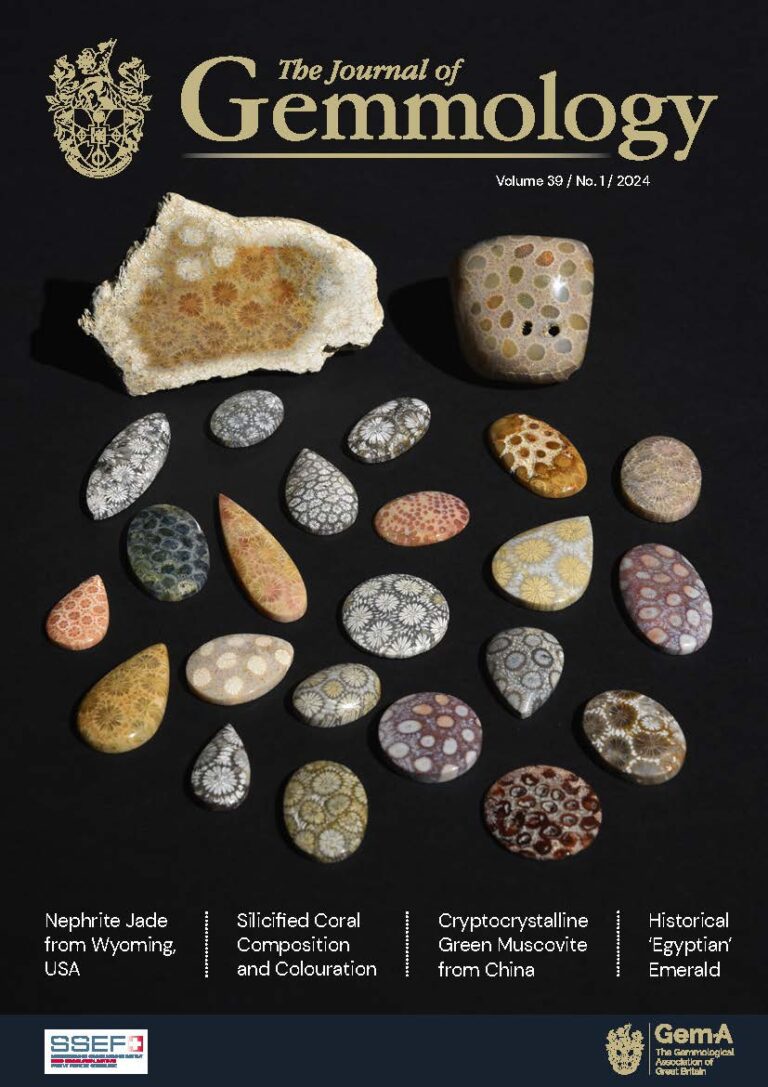
Journal Article · Source: Journal of Gemmology · Volume: Vol. 39 · Issue: No. 1 · Pages: pp. 36–53

Abstract
In 2019–2020, pods of extremely fine-grained, pure monomineralic nephrite jade were found in situ in central Wyoming, USA. Here referred to as type 1 nephrite, this jade occurs as ‘olive’ green open-space fillings of mineralogically pure tremolite that are hosted by shear zones and fractures within broad zones of massive quartz-clinozoisite/epidote alteration that overprint Archean-age gneisses. This unusual geological setting is characterised by the absence of associated serpentinite or dolomite that typically are seen in other known jade belts worldwide. The main occurrence described here, named the Sky Zone, is associated with a >400-m-long nephrite-bearing zone consisting mostly of coarse-grained, metasomatically altered and recrystallised mafic/ultramafic units hosted by mafic and quartzofeldspathic gneisses. Jade from these metasomatic units—here referred to as type 2 nephrite—consists of mottled dark green, mineralogically impure, medium-grained material. The physical and chemical properties of both nephrite types are consistent with those published in the literature for nephrite jade. Mineralogical, textural and chemical evidence indicates that the fine-grained type 1 nephrite formed through direct precipita- tion of tremolite from hydrothermal fluids within fractures extending outwards from a well-defined shear zone in close association with felsic intrusive bodies.
Keywords
gems, jade, amphibole jade, nephrite, Wyoming, USA
Bohemian garnets as decorative materials for glass vessels from the late sixteenth to early eighteenth centuries

Bohemian garnets as decorative materials for glass vessels from the late sixteenth to early eighteenth centuries

Schmetzer, K. and Gilg, H.A. (2023)

Journal Article · Source: Gems & Gemology · Volume: Vol. 59 · Issue: No. 4 · Pages: pp. 432–449

Abstract
The decorative craft of setting cut garnets on colorless or yellow glass vessels was invented by Claudius vom Creutz in the Imperial City of Nuremberg circa 1591. The legal context surrounding development of the technique can be traced through details set forth in imperial privileges (which were similar in effect to modern patents) from 1591, 1653, and 1714, and in relevant historical literature, particularly in books summarizing decisions of the Nuremberg administration and the imperial administration in Prague and Vienna. Two glass vessels in the collections of the Bavarian National Museum in Munich and the Passau Glass Museum (Passau, Germany) are adorned with red stones using a technique attributed to Creutz. These were examined at the museums using a portable X-ray fluorescence analyzer, and it was found that rose-cut Bohemian garnets were affixed by layers of reddish brown or yellow lead glass to the bodies of the engraved glass goblets. This process entailed using heat to melt the lead glass, which simultaneously heated the garnets and the glass objects to temperatures below melting point. A second glass goblet from the Passau collection was decorated with red glass stones imitating Bohemian garnets.
Keywords
gems, garnet, almandine, analytical, provenance, Bohemia, Czech Republic
Geschichte des Smaragdbergbaus im Habachtal, Pinzgau, Salzburg / Herkunft der Smaragde im Brustkreuz und Ring des Abts Dominikus Hagenauer der Erzabtei St. Peter in Salzburg aus dem späten 18. Jahrhundert

Geschichte des Smaragdbergbaus im Habachtal, Pinzgau, Salzburg / Herkunft der Smaragde im Brustkreuz und Ring des Abts Dominikus Hagenauer der Erzabtei St. Peter in Salzburg aus dem späten 18. Jahrhundert

History of Emerald Mining in the Habachtal, Pinzgau, Salzburg / Origin of the Emeralds in the Pectoral Cross and Ring of Abbot Dominikus Hagenauer of St. Peter’s Archabbey in Salzburg from the Late 18th Century

Schmetzer, K. and Gilg, H.A. (2023)

Journal Article · Source: Mitteilungen der Gesellschaft für Salzburger Landes Kunde · Volume: No. 162/163 · Pages: pp. 473–609 · Language: in German

Abstract
A detailed historical and gemological study of emerald mining in the Habachtal, Pinzgau, Salzburg, tracing documentary evidence for the deposit and its exploitation from early references through organized mining in the 19th and early 20th centuries. Schmetzer critically examines claims for much earlier mining and the evidence used to support them, distinguishing documented history from later tradition. The second part, with H.A. Gilg, investigates the emeralds set in the late-18th-century pectoral cross and ring of Dominikus Hagenauer (1746–1811), Abbot of St. Peter’s Archabbey in Salzburg. According to tradition, the emeralds in the pectoral cross, presented to Hagenauer by his father after his election as abbot in 1786, came from the Habachtal. Microscopic examination and EDXRF analysis, however, show characteristics consistent with Colombian emeralds and exclude a Habachtal origin. The study thus provides both a substantial documentary history of Austria’s best-known emerald deposit and an important demonstration of how gemological analysis can test traditional provenance claims associated with historic jewelry.
Keywords
gems, beryl, emerald, Austria, Habachtal, crown, relics
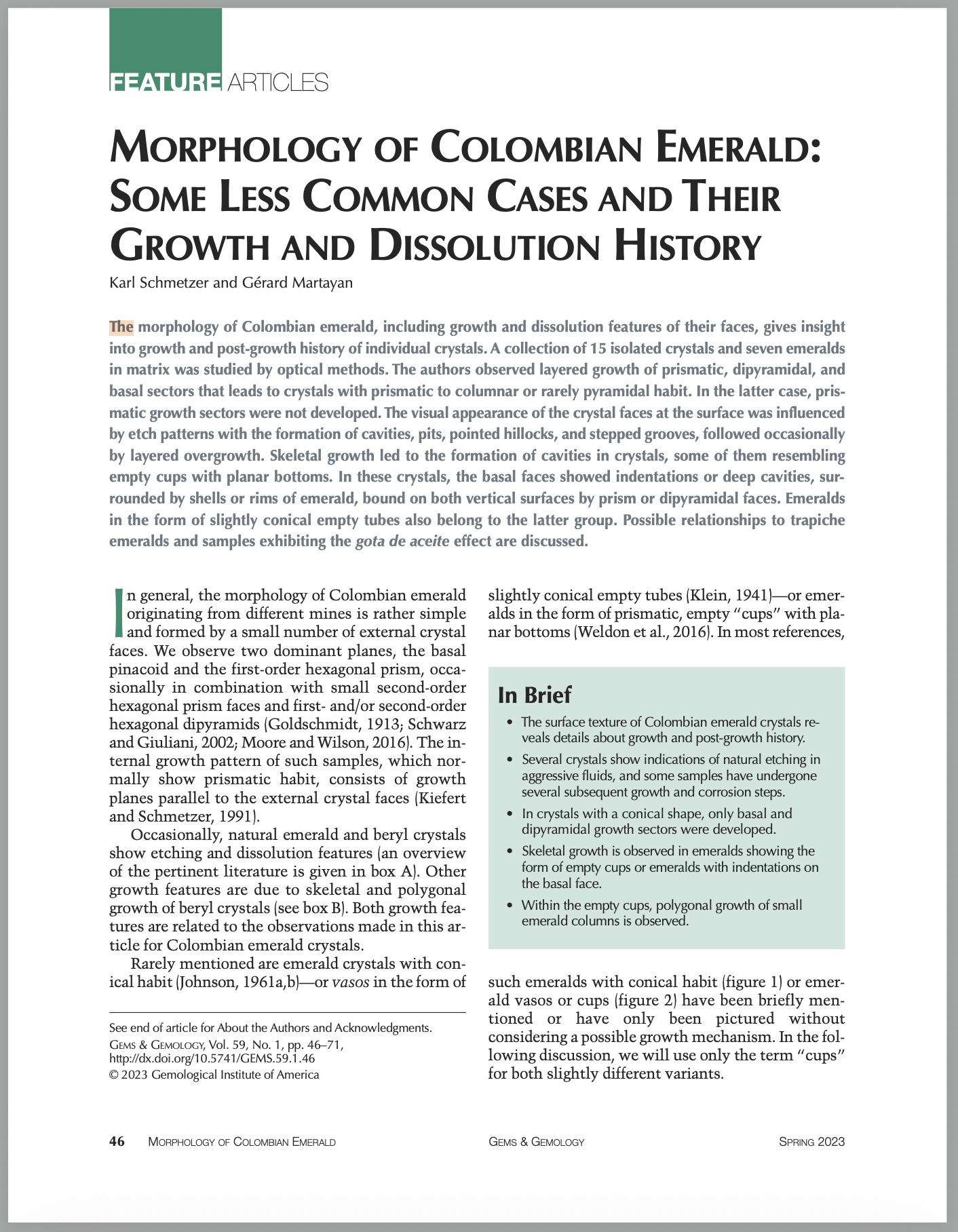
Morphology of Colombian emerald: Some less common cases and their growth and dissolution history

Morphology of Colombian emerald: Some less common cases and their growth and dissolution history

Schmetzer, K. and Martayan, G. (2023)

Journal Article · Source: Gems & Gemology · Volume: Vol. 59 · Issue: No. 1, Spring · Pages: pp. 46–71

Abstract
The morphology of Colombian emerald, including growth and dissolution features of their faces, gives insight into growth and post-growth history of individual crystals. A collection of 15 isolated crystals and seven emeralds in matrix was studied by optical methods. The authors observed layered growth of prismatic, dipyramidal, and basal sectors that leads to crystals with prismatic to columnar or rarely pyramidal habit. In the latter case, prismatic growth sectors were not developed. The visual appearance of the crystal faces at the surface was influenced by etch patterns with the formation of cavities, pits, pointed hillocks, and stepped grooves, followed occasionally by layered overgrowth. Skeletal growth led to the formation of cavities in crystals, some of them resembling empty cups with planar bottoms. In these crystals, the basal faces showed indentations or deep cavities, surrounded by shells or rims of emerald, bound on both vertical surfaces by prism or dipyramidal faces. Emeralds in the form of slightly conical empty tubes also belong to the latter group. Possible relationships to trapiche emeralds and samples exhibiting the gota de aceite effect are discussed.
Keywords
gems, beryl, emerald, Colombia, crystallography, morphology
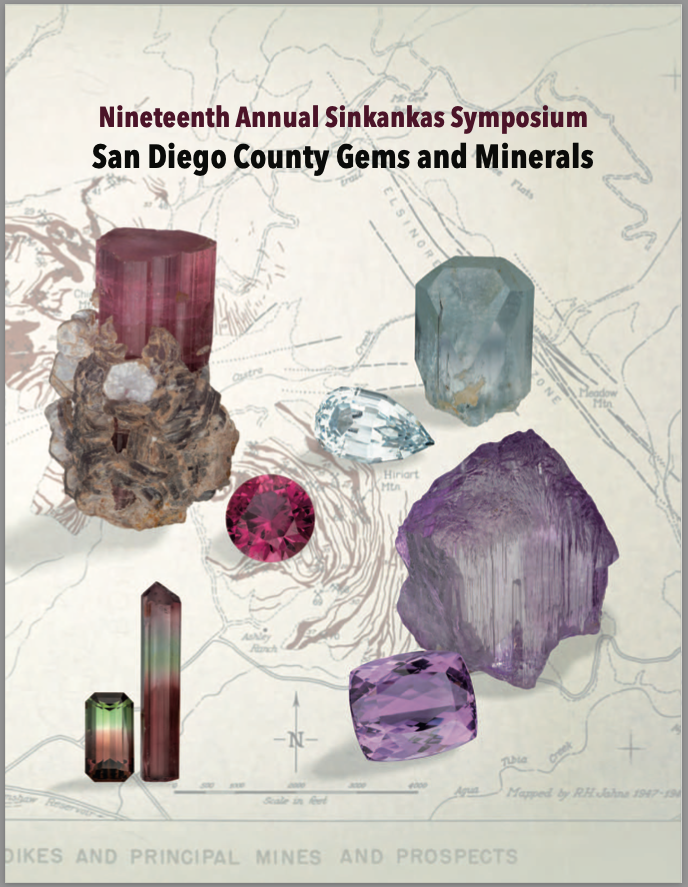
Nineteenth Annual Sinkankas Symposium • San Diego County Gems and Minerals

Nineteenth Annual Sinkankas Symposium • San Diego County Gems and Minerals

Various Authors (2023)

Conference Proceedings · Source: John Sinkankas Symposium · Publisher: Gemological Society of San Diego/Gemological Institute of America · Pages: 100 pp.

Abstract
The theme of the 19th Annual Sinkankas Symposium was San Diego County Gems and Minerals
Keywords
gems, San Diego, California, pegmatite. tourmaline, kunzite, topaz, garnet, spessartine, rubellite, apatite, topaz, morganite, beryl, spodumene
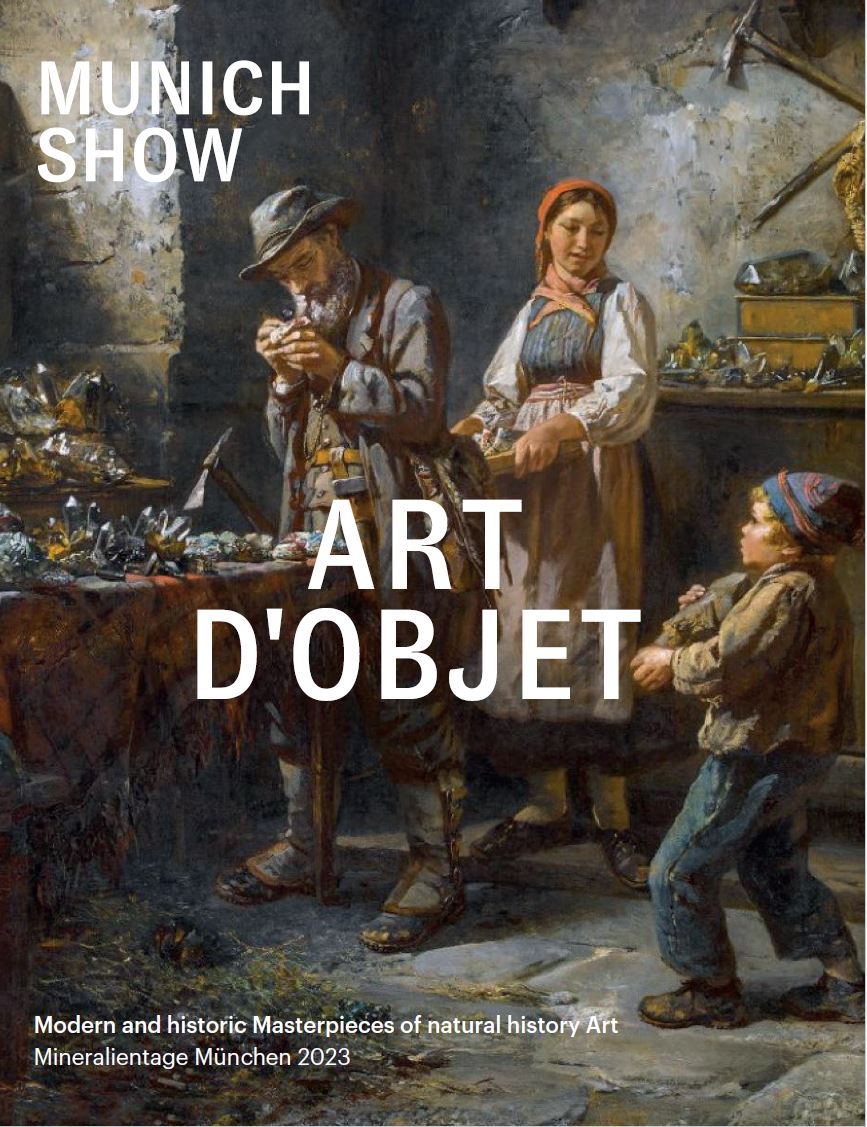
Theme Book: Art D'objet — Modern and Historic Masterpieces of Natural History Art

Theme Book: Art D'objet — Modern and Historic Masterpieces of Natural History Art

Munich Show (2023)

Edited Book · Publisher: Wachholtz Murmann · Pages: 216 pp.

Abstract
Nature is an endless source of inspiration. Minerals and stones reveal more than chemical processes - they showcase nature's creativity. The 2023 theme book explores how natural art merges with human interpretation, displaying nature's masterpieces alongside famous artworks.
Keywords
gems, history of gemology, agate, amber, quartz, rock crystal, art

Building a Gemological Library

Gemological books range from general identification manuals and textbooks to specialized works on individual gems, mineralogy, jewelry, treatments, synthesis, history and gem-producing regions.

For a curated selection of particularly useful books, read The Gemologist's Core Library — Classic Books on Gemology, Jewelry and Mineralogy.

About Four Treasures

Four Treasures is Lotus Gemology's freely accessible gemological reference database. Use the full database to search by author, title or keyword and explore literature on gemology, mineralogy, jewelry and related fields. Where available, hyperlinks on titles may lead directly to the full publication.

Search the Complete Four Treasures Database