Gemology Books Bibliography

Gemology Books Bibliography

Explore books on gems, gemology, jewelry and mineralogy in Four Treasures, the Lotus Gemology reference database. This bibliography brings together matching book records from the collection, with publication details, abstracts and cover images where available.

Gemology Book References

The list below matches books concerning gemology and related subjects in the database's searchable fields. Some works cover several branches of gems, jewelry or mineralogy.

181–200 of 3,436 matching references
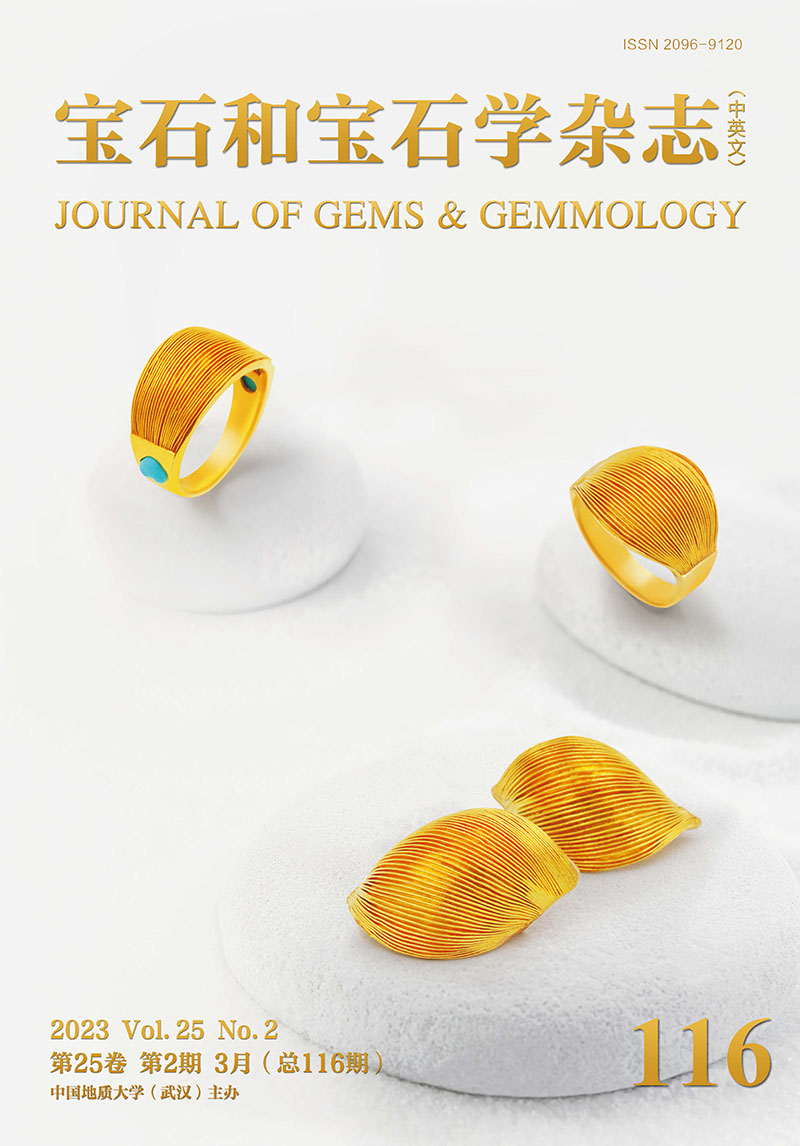
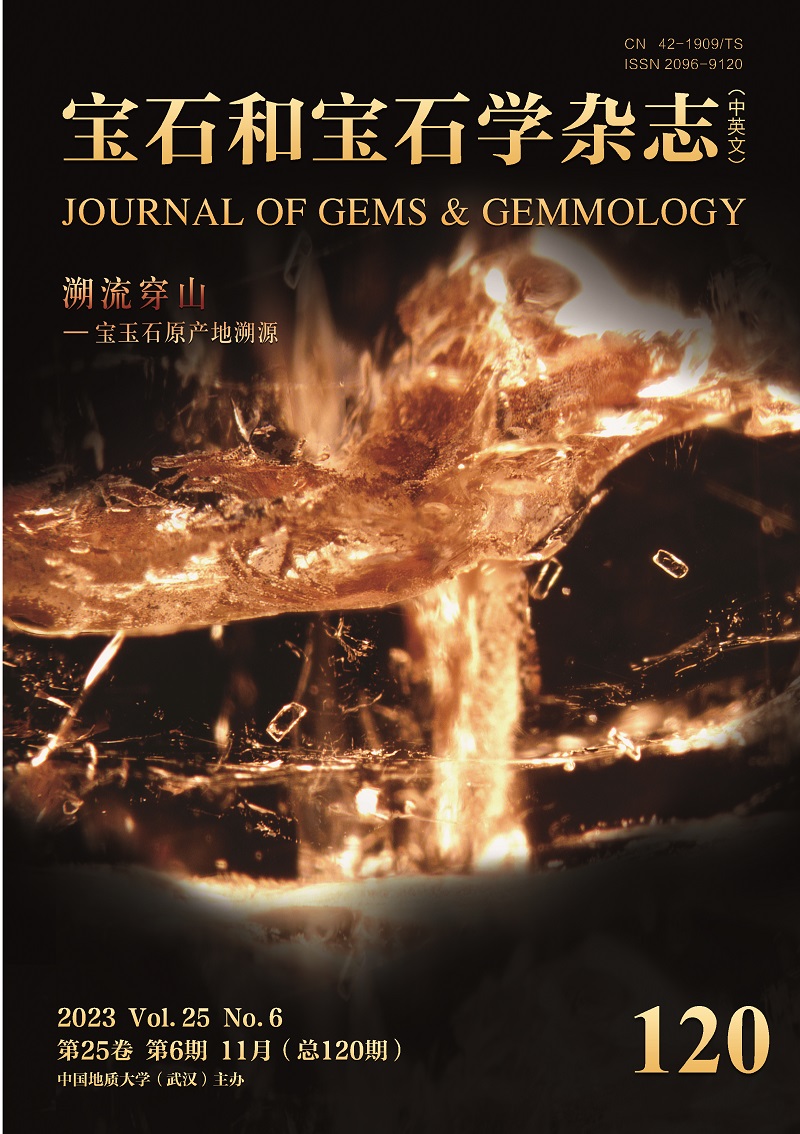
Gemmological and spectral characteristics of emerald from Panjsher Valley, Afghanistan

Gemmological and spectral characteristics of emerald from Panjsher Valley, Afghanistan

Dong, X., Chen, T. and Zhou, Z. (2023)

Journal Article · Source: Journal of Gems & Gemmology · Volume: Vol. 25 · Issue: No. 6 · Pages: pp. 17–29 · Language: in Chinese with English abstract

Abstract
Quality and origin are important factors influencing the price of emeralds. Emeralds from different localities exhibit distinct gemmological characteristics that serve as key indicators for origin determination. This study investigates emerald samples from the Panjshir mining area in Afghanistan, using advanced analytical methods including optical microscopy, infrared spectroscopy, micro UV-visible–near-infrared spectroscopy, and Raman spectroscopy to examine their gemmological features, internal inclusions, chemical composition, and color origin. The color of the Afghan emeralds ranges from light green to dark green, with crystals commonly forming short hexagonal prisms or tabular shapes. Black and brown associated minerals are visible externally. Under the Chelsea filter, most samples exhibit localized red reactions. The primary inclusions are multiphase fluid inclusions—needle-like, shuttle-shaped, or tubular—containing rock salt, potassium salt, and solid minerals. Raman spectroscopy indicates that the liquid phase is predominantly H₂O, while solid inclusions are mainly calcite and hematite. Other mineral inclusions include hematite, calcite, amorphous carbon, quartz, carbonaceous matter, and apatite. LA-ICP-MS analysis shows that the main chemical components are BeO, Al₂O₃, and SiO₂, with trace elements including Ca, Mg, Ti, Li, Na, K, Rb, Cs, Cr, and V. Infrared spectroscopy reveals the presence of both Type I and Type II water, with Type II water showing stronger absorption, indicating a predominance of Type II water in these emeralds. This correlates with the high alkali metal content measured by LA-ICP-MS, as Type II water content is positively associated with alkali levels in beryl. UV-visible spectra confirm that Cr³⁺ and V³⁺ are the chromophores responsible for color. The gemmological, spectroscopic, and chemical characteristics of these Afghan emeralds provide a scientific basis for origin determination.
Keywords
gems, beryl, emerald, Afghanistan, Panjshir
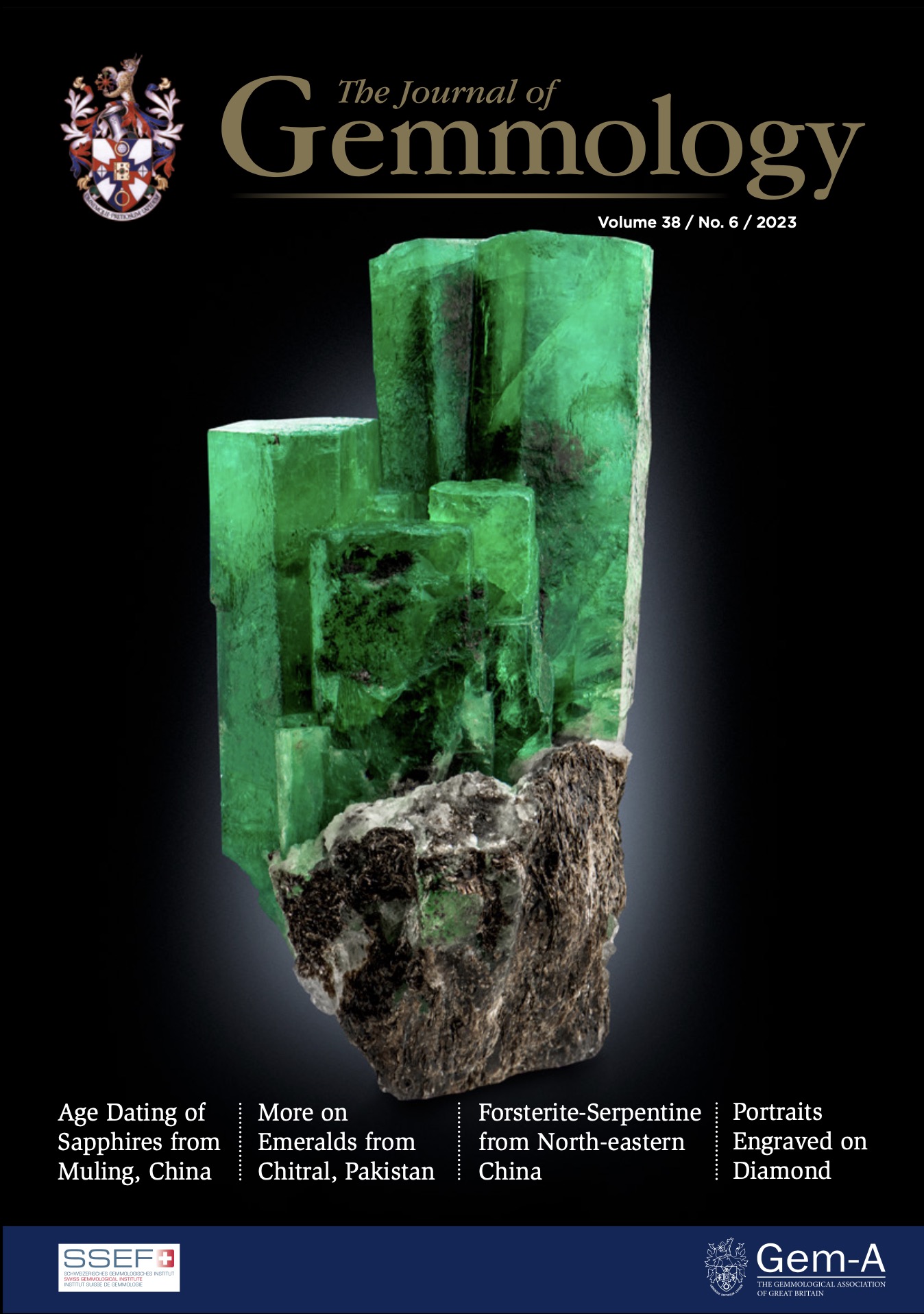
Comparison of emeralds from the Chitral District, Pakistan, with other Pakistani and Afghan emeralds

Comparison of emeralds from the Chitral District, Pakistan, with other Pakistani and Afghan emeralds

Hanser, C.S., Stephan, T., Gul, B., Häger, T. and Botcharnikov, R.E. (2023)

Journal Article · Source: Journal of Gemmology · Volume: Vol. 38 · Issue: No. 6 · Pages: pp. 582–599

Abstract
Emeralds from various deposits in Pakistan (Chitral, Swat, and Khaltaro) and Afghanistan (Panjshir and Laghman) were examined and compared. In addition, we compared the lighter-coloured Chitral emeralds from our previous study to newly acquired, more deeply coloured samples from Chitral. The specimens were characterised by Raman, FTIR, and UV–Vis–NIR spectroscopy. Chemical analyses by EPMA and LA-ICP-MS also were performed on the samples from Chitral and Khaltaro. Distinguishing features of our Chitral emeralds include a lack of three-phase inclusions, a strong Fe²⁺-related absorption at about 830 nm in the UV–Vis–NIR spectra, and elevated Cs and Li contents. These characteristics may provide clues for geographic origin determination.
Keywords
gems, beryl, emerald, Afghanistan, Pakistan, emerald origin, Chitral, Swat, Khaltaro, inclusions
Geographic origin determination of fei cui: A comparison of high-quality green fei cui from Myanmar, Guatemala, and Italy

Geographic origin determination of fei cui: A comparison of high-quality green fei cui from Myanmar, Guatemala, and Italy

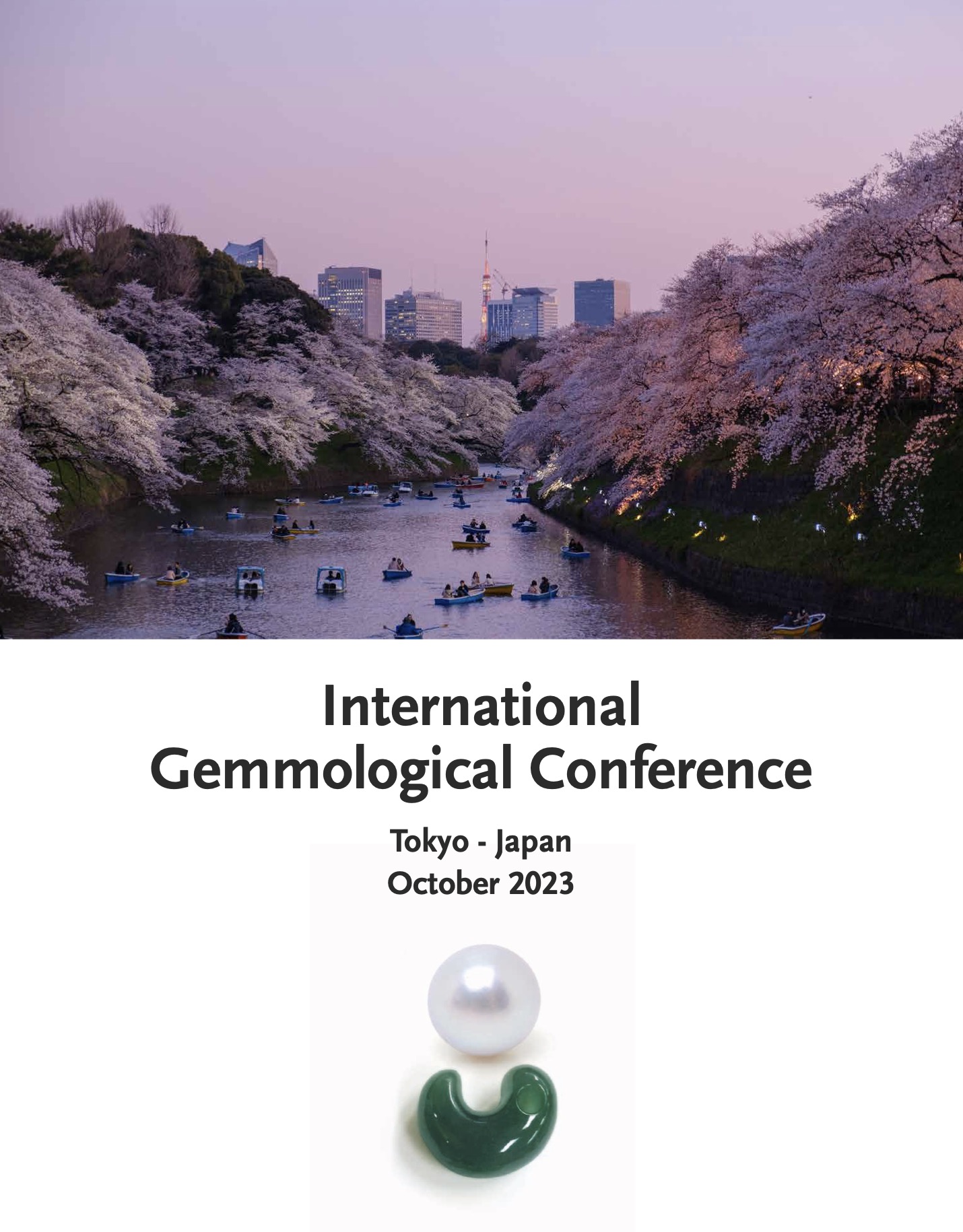
Liu, S., Man, K.Y., Seneewong-Na-Ayutthaya, M. and Jakkawanvibul, C. (2023)

Conference Paper · Source: Proceedings of the 37th International Gemmological Conference · Pages: pp. 171–173

Abstract
Fei Cui is a kind of jade that is defined as a granular to fibrous polycrystalline aggregate composed solely, or principally, of any of the following, or any combination of the following: jadeite, omphacite and kosmochlor (GAHK, 2014). For decades, Myanmar was the only source of “Imperial green” Fei Cui. Guatemala is another historical source of jade. Since 2023, “Imperial green” Fei Cui from Guatemala has been getting more popular in China, especially after a new mining area was discovered in Morales, Izabal Department, Guatemala. Besides, a small amount of high-quality Italian Fei Cui has also appeared in the market in the past four years. To examine the possibility of origin determination of Fei Cui, a set of high-quality green Fei Cui from Myanmar, Guatemala and Italy was collected and examined.
Keywords
gems, jade, fei cui, pyroxene jade, jadeite, Myanmar, Burma, Guatemala, Italy, Broken Bangle
Gemmological characteristic of pink spinel from Yên Bái, Vietnam

Gemmological characteristic of pink spinel from Yên Bái, Vietnam

Wu, Y. and Di, J. (2023)

Journal Article · Source: Journal of Gems & Gemmology · Volume: Vol. 25 · Issue: No. 2, March · Pages: pp. 11–20 · Language: in Chinese with English abstract

Abstract
Yên Bái in northern Vietnam is a new source of pink spinel, yet research on spinels from this locality remains limited. In this study, pink spinel samples from Yên Bái were systematically examined using conventional gemmological instruments, laser ablation inductively coupled plasma mass spectrometry (LA-ICP-MS), ultraviolet-visible absorption spectrophotometry, fluorescence spectrometry, and other analytical techniques. The results showed that the spinels from Yên Bái exhibit poor roundness, and some retain their original crystal habit. The samples range from transparent to translucent, with strong fluorescence and surface etching. Rich solid and liquid inclusions were observed under the microscope, including octahedral inclusions, tubular inclusions, and numerous fluid inclusions distributed along healing fissures. The UV-Vis absorption spectra were generally consistent across samples; however, magenta-colored stones could be distinguished from others by their low vanadium and high iron content. Most samples exhibited strong pink fluorescence, with slight variations in intensity. Two-dimensional fluorescence spectra were largely consistent and showed characteristic Cr³⁺ emission lines. Chemically, the main constituents were MgO and Al₂O₃, with SiO₂ ranging from 0.70% to 1.06% and CaO content below 0.1%—a typical signature of spinel from dolomitic-marble-type deposits. Compared to marble-hosted pink spinels from other regions, the Yên Bái material can be distinguished from spinels from Tajikistan and Tanzania based on trace elements such as Fe/Sn, Ni, and Zn, though partial overlap exists with spinels from Myanmar.
Keywords
gems, spinel, Vietnam, Luc Yen
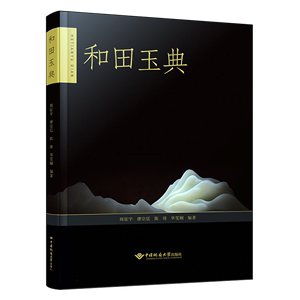
Compendium of Hetian Jade

Compendium of Hetian Jade

和田玉典 Hetian Yudian

Zhou, Z. (2023)

Book · Publisher: Zhongguo Dizhi Daxue Chubanshe · Pages: 256 pp. · Language: in Chinese

Abstract
The volume introduces the history and origins of Hetian jade, illustrating its formation and traditional and modern methods of extraction with photographs of representative specimens. Drawing on geology, gemology, and materials science, it examines the jade’s principal varieties, geographical distribution, modes of occurrence, physical characteristics, and classification, and explains methods of scientific identification and quality evaluation. A concluding section presents works by more than ten leading Chinese jade carvers, demonstrating how contemporary artists reinterpret the techniques and aesthetics of earlier dynasties while giving traditional Chinese jade culture a distinctly modern expression. The author is one of China's top experts on Hetian yu.
Keywords
gems, jade, nephrite, China, Fischer-Chinese
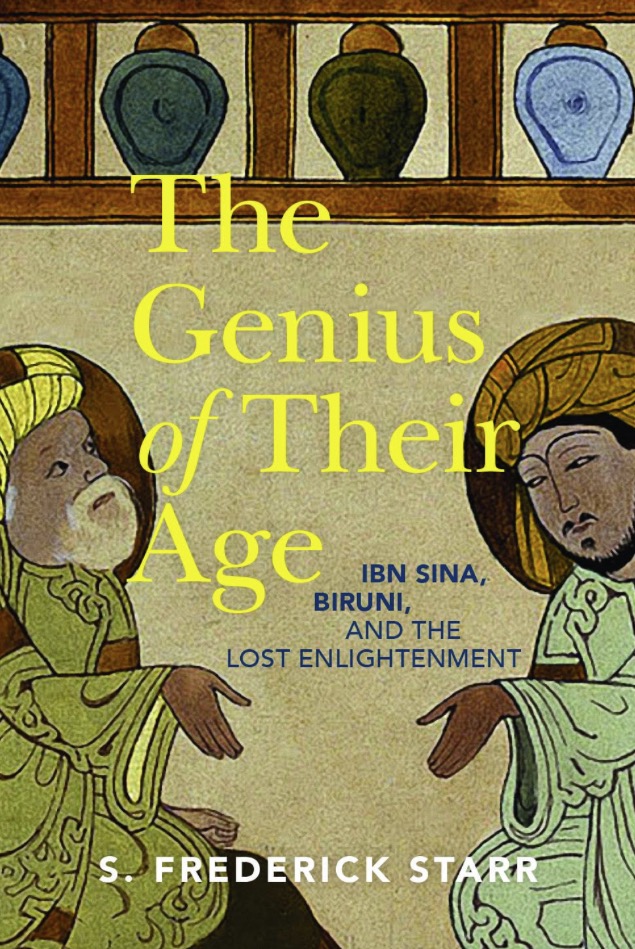
The Genius of Their Age | Ibn Sina, Biruni, and the Lost Enlightenment

The Genius of Their Age | Ibn Sina, Biruni, and the Lost Enlightenment

Starr, S.F. (2023)

Book · Publisher: Oxford University Press · Pages: 301 pp.

Abstract
In The Genius of their Age, S. Frederick Starr follows up his acclaimed Lost Enlightenment: Central Asia's Golden Age with a portrait of the Arab enlightenment and its key figures--Abu-Ali al-Husayn ibn-'Abdallah Ibn-Sina and Abu al-Rayhan Muhammad ibn Ahmad al-Biruni. A thousand years ago, these two intellectual giants--known as Ibn Sina and Biruni for short--achieved stunning breakthroughs in fields as diverse as medicine, astronomy, mathematics, philosophy, geography, and physics. Biruni measured the earth more precisely than anyone else down to the sixteenth century, pondered a heliocentric universe, and hypothesized the existence of North and South America as inhabited continents. Ibn Sina's writing on philosophy and metaphysics enriched the writings of countless European thinkers, including St. Thomas Aquinas, while Sina's grand synthesis of medical knowledge became the standard for the next six hundred years in Europe, the Middle East, and India. They both also commented extensively on the works of ancient Greeks and earlier Muslim thinkers, whose works they aspired to synthesize--and to transcend. Contemporaries, Ibn Sina and Biruni were born within the borders of what is now Uzbekistan and spent their lives in Central Asia. They also became rivals, launching a correspondence and commentary that galvanized them despite sometimes bitter disagreement. Centuries before the West caught up with them, Ibn Sina and Biruni reflected their age's feats and its intellectual high point, persisting with their inquiries and their independence amid turmoil and rapid change. Though scholars have long dissected the works of Ibn Sina and Biruni, S. Frederick Starr focuses also on their lives and the times in which they lived. By contextualizing their work and by making the age palpable to the reader, S. Frederick Starr gives the achievements of Ibn Sina and Biruni a holistic and unforgettably human dimension.
Keywords
gems, corundum, History.1, Arab gemology, Arabic mineralogy, pearl, spinel, Indian lapidary
Spatial-temporal distribution, metallogenic mechanisms and genetic types of nephrite jade deposits in China

Spatial-temporal distribution, metallogenic mechanisms and genetic types of nephrite jade deposits in China

Zhang, C., Yang, F., Yu, X., Liu, J., Carranza, E.J.M., Chi, J. and Zhang, P. (2023)

Journal Article · Source: Frontiers in Earth Science · Volume: Vol. 11 · Pages: 21 pp.

Abstract
The nephrite jade deposits of different tectonic units in China exert significant commercial quality, which have attracted wide attention. However, these deposits have not been systematically summarized to date. Here, we investigate the major nephrite jade deposits in China to decipher their gemological and mineralogical characteristics, spatial-temporal distribution, and mineralization processes as well as to identify their geological settings and gemological properties, via integrating published geochronology, major and trace elements as well as H-O isotopes. The compiled data suggest that the major nephrite jade deposits in China can also be generally divided into green jade-type (GJ-type) and white jade-type (WJ-type) which covers different species, but most of them belong to the latter. The GJ-type nephrite deposits predominantly occur in ophiolite/ophiolitic mélange suites or are embedded into ultramafic serpentine jade orebodies. This type of nephrite jade mainly formed through the late auto-metamorphic metasomatism of serpentine or the spontaneous crystallization/precipitation along suture/shear zones that acted as pathways to migrate Ca-rich fluids during orogeny. In contrast, the orebodies of WJ-type nephrite jade are usually hosted at the contact zones between the dolomitic marbles and intermediate-felsic or mafic intrusive rocks, which were produced through metamorphism-metasomatism during post continent-continent collision, such as the Kunlun orogenic belt with about ∼1,300 km Hetian nephrite belt, and the eastern nephrite jade deposits along the Pacific Ocean. Our study highlights that the nephrite jade deposits in China originally formed during multiple tectonic stages related to the interactions between hydrothermal fluids and metamorphism under subduction accretion- and collision orogenesis-related settings. In addition, this study also provides insights into the genetic discrimination, mineral exploration, and occurrence characteristics of nephrite jade deposits as well as the evaluation and identification of nephrite jade quality.
Keywords
gems, jade, amphibole jade, nephrite, China, geology, actinolite, tremolite
Gemological-mineralogical characteristic of spinels from Sri Lanka

Gemological-mineralogical characteristic of spinels from Sri Lanka

Lomthong, P., Schwarz, D., Zoysa, E.G., Chen, Y. and Liu, Y. (2023)

Journal Article · Source: Journal of Gems & Gemmology · Volume: Vol. 25 · Issue: No. 11, November · Pages: pp. 42–57

Abstract
A comprehensive mineralogical and gemological study was conducted on 340 unheated spinels from Sri Lanka, specifically from the mining areas of Horana, Eheliyagoda, Ratnapura, and Okkampatiya. Sri Lankan spinels exhibit a wide range of colors, including the commonly seen pink to purplish pink, as well as green and blue hues. Compared to spinels from other regions like Myanmar, Vietnam, and Tanzania, Sri Lankan spinels are notably richer in inclusions. Common inclusions across the studied areas include dolomite, apatite, zircon, and chondrodite. Additionally, spinels from Horana contain graphite and forsterite, while those from Okkampitiya include graphite and rutile. Partially healed fissures are prevalent in Okkampitiya spinels, but unlike Vietnamese spinels, dislocations and growth structures are generally absent. LA-ICP-MS analyses revealed no significant geochemical differences among the mining regions, though cobalt-blue spinels showed Co concentrations ranging from 11 to 120 ppm. UV-visible absorption spectra demonstrated variable contributions of Cr³⁺, V³⁺, and Fe²⁺, which account for the spinels’ color variations from pink, red, and orange to purple and blue-green. Infrared and Raman spectroscopy confirmed that none of the analyzed samples showed evidence of heat treatment.
Keywords
gems, spinel, inclusions, Sri Lanka
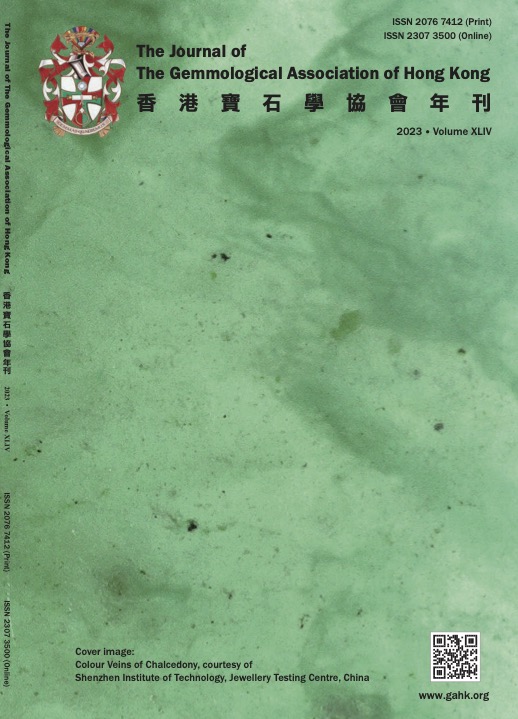
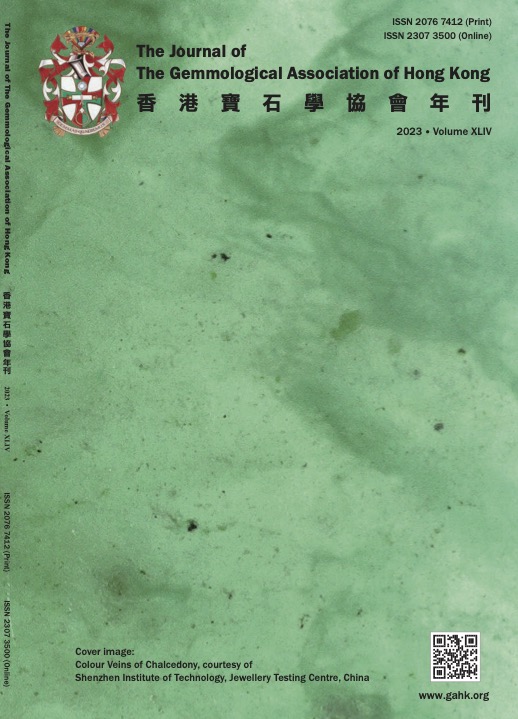
Alert: New artificially colour treated fei cui jewellery – Applying colour through electroplating

Alert: New artificially colour treated fei cui jewellery – Applying colour through electroplating

Ouyang, C.M., Fan, E. and Yen, H. (2023)

Journal Article · Source: Journal of the Gemmological Association of Hong Kong · Volume: Vol. 44 · Pages: pp. 80–81 · Language: in Chinese with English abstract

Abstract
A new type of artificially colour treated fei cui jewellery was submitted to the author’s laboratory during the past year. It is a new type of colour treatment where electroplating is used to apply colour both to the base of the stone and the mounting beneath it. This is applied to fei cui of good transparency and cut en cabochon providing a highly effective simulation of middle to gem quality fei cui and it comes in various colours. Whilst, the commodity is usually sold online. It is difficult to identify not only with standard testing equipment but also with an infrared spectrometer. In this article the authors warn our readers to be on the alert for this material and demonstrate how it can be identified.
Keywords
gems, jade, jadeite, fei cui, jadeite, fei cui testing in Hong Kong, treated fei cui, treated jadeite, fei cui jewelry
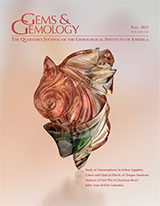
Yellow sapphire: Natural, heat-treated, beryllium-diffused, and synthetic

Yellow sapphire: Natural, heat-treated, beryllium-diffused, and synthetic

Emmett, J.L., Atikarnsakul, U., Stone-Sundberg, J. and Sangsawong, S. (2023)

Journal Article · Source: Gems & Gemology · Volume: Vol. 59 · Issue: No. 3, Fall · Pages: pp. 268–297

Abstract
Natural yellow sapphires derive their coloration from either Fe³⁺ or h•–Fe³⁺ chromophores, or a combination of both, with Sri Lankan sapphires typically colored by h•–Fe³⁺ alone, while high-iron sapphires from basaltic terrains like Australia and Thailand may show contributions from both chromophores; the color saturation from Fe³⁺ shows a non-linear relationship with areal density, in contrast to five other natural corundum chromophores, and weakly yellow or colorless sapphires can be intensified through heat treatment that generates h•–Fe³⁺ by altering one of two specific internal chemistries—distinct processes that are discussed—whereas beryllium diffusion can shift donor- to acceptor-type chemistry, facilitating the formation of h• and enhancing yellow color, though synthetic yellow sapphires typically rely on Ni³⁺ or Ni³⁺ plus Cr³⁺ for color, with Czochralski-grown Ni-doped specimens occasionally exhibiting enhanced saturation via heat treatment.
Keywords
gems, corundum, color.4
The characteristics of Hetian jade (nephrite jade) pebbles

The characteristics of Hetian jade (nephrite jade) pebbles

Liu, J., Li, J., Liu, S. and Wang, L. (2023)

Journal Article · Source: Journal of the Gemmological Association of Hong Kong · Volume: Vol. 44 · Pages: pp. 63–70 · Language: in Chinese with English abstract

Abstract
Hetian Jade Pebbles is the name given to Hetian jade, nephrite jade, from Hetian, Xinjian Region, PRC; material with a well rounded pebble- like form, often with a coloured skin. This material is formed after separation from the primary source, being transported by water for long distances - the geological process of “deposition- transport-deposition”. The distinguishing features of Hetian jade pebbles include: good roundness, a natural appearance without manual cutting, grinding and rounding; a smooth surface, “sweat pores”, “sand holes” and pits; “sand holes”, deep pits, “nail marks”, cracks and grooves filled with secondary minerals; natural skin colour and weathered skin of varying thickness; dry, white, variegated, coarse, cracked, or grooved jade sections. Secondary minerals include clinochlore or penninite, colloidal apatite, goethite/ lepidocrocite, hematite, barium psilomelane and calcite in various weaker sections of the epidermis with crustiform, filmy, colloidal banded, fine-grained, flaky and fibrous aggregates.
Keywords
gems, jade, nephrite, Hetian jade, Khotan, Hotan, surface characteristics of nephrite pebbles
The hardness of fei cui • A gemmological perspective

The hardness of fei cui • A gemmological perspective

Khourie, K. (2023)

Journal Article · Source: Journal of the Gemmological Association of Hong Kong · Volume: Vol. 44 · Pages: pp. 45–57

Abstract
Jade has a long and varied nomenclatural history, with its definition altered in the current age for practical and cultural reasons. Due to the discovery that many pyroxene jades are composed of various amounts of jadeite, omphacite and kosmochlor, the term “fei cui” has been proposed and widely accepted. It has been suggested that since the reported hardness of omphacite is lower than that of jadeite, a clear distinction should be made between omphacite- rich fei cui and other fei cui because of the potential long-term durability issues. Hardness also has a complicated history, as there are many factors to be considered when assessing the hardness of a material as well as its relation to scratch resistance. In this paper, the author examines these two topics and presents them in a simplified format based on empirical evidence and theoretical principles, while also considering the data available in literature.
Keywords
gems, jade, fei cui, pyroxene jade, jadeite, fei cui, omphacite, kosmochlor, fei cui hardness, Broken Bangle
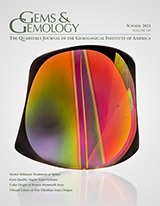
Color modification of spinel by nickel diffusion: A new treatment

Color modification of spinel by nickel diffusion: A new treatment

Jollands, M.C., Ludlam, A., Palke, A.C., Vertriest, W., Jin, S., Cevallow, P., Arden, S., Myagkawa, E., D’’Haenens-Johannson, U., Weeramonkhonlert, V. and Sun, Z. (2023)

Journal Article · Source: Gems & Gemology · Volume: Vol. 59 · Issue: No. 2, Summer · Pages: pp. 164–181

Abstract
A group of faceted spinels with blue to green hues, initially labeled as “cobalt diffused,” was examined by GIA researchers in Bangkok. Detailed analysis of their absorption, luminescence, and chemical composition revealed that these spinels were in fact diffused with nickel, not cobalt. Laser ablation–ICP–MS showed nickel concentrations in the tens of thousands of ppma near the surface, decreasing toward the core—confirming a diffusion profile. The trace element composition at the cores was consistent with untreated natural spinel, and refractive indices also matched those of natural specimens. A simultaneous drop in lithium content across the diffusion gradient suggested the use of a flux-assisted diffusion process. UV–VIS–NIR spectra showed characteristic absorption bands at 369, 381, 475, 597, and 639 nm. The 475 nm band was particularly responsive to annealing under different oxygen partial pressures, increasing under high-pO₂ and decreasing under low-pO₂ conditions. Photoluminescence spectra were typical of heat-treated natural spinel. This nickel-diffusion treatment is now present in the gem market and should be considered when evaluating blue or green spinel for potential enhancement.
Keywords
gems, spinel, synthetic spinel, spinel treatments, heat treatment, spinel diffusion, nickel diffusion
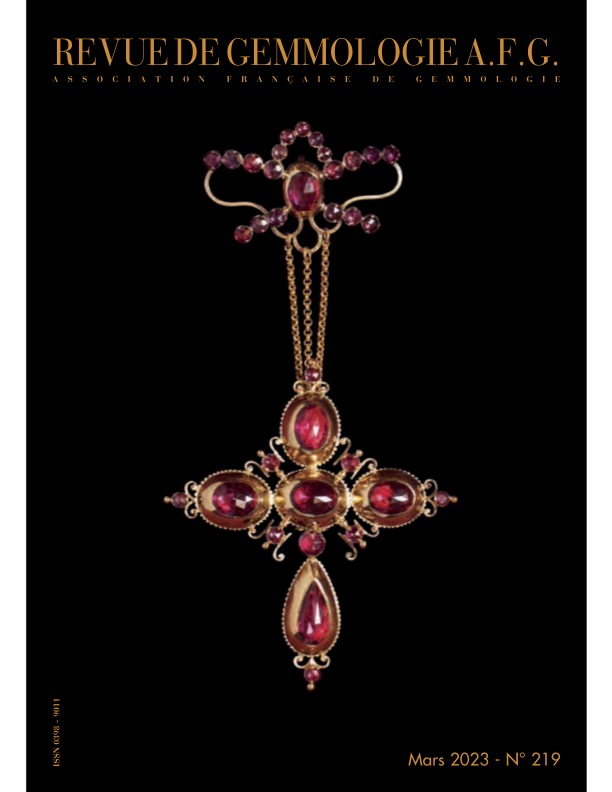
Escarboucles & dragons, lexicologie des gemmes rouges

Escarboucles & dragons, lexicologie des gemmes rouges

Garnets & dragons, lexicology of red gemstones

Zylberman, N. (2023)

Journal Article · Source: Revue de Gemmologie A.F.G. · Issue: No. 219, Mars · Pages: pp. 27–30 · Language: in French

Abstract
This study traces the linguistic, literary, and gemmological history of the escarboucle or carbuncle over approximately three millennia. Beginning with the red stones odem and nophek in the biblical breastplate, it follows their translation and reinterpretation through the Greek anthrax, Latin carbunculus, and French escarboucle. Ancient and medieval lapidaries associated the carbuncle with a fiery brilliance supposedly capable of illuminating darkness, while legends placed the luminous stone in the heads of dragons, griffins, eagles, and the serpent-like vouivre. Accounts by Theophrastus, Pliny, Marbode, Albertus Magnus, Jean de Mandeville, Cardan, Cellini, de Boodt, and others demonstrate how the term came to encompass sardonyx, carnelian, garnet, ruby, and spinel, whose reflected light could be intensified by polishing, rounded forms, metal foils, and controlled illumination. The development of crystallography and chemical mineralogy during the late eighteenth and early nineteenth centuries finally separated these materials into distinct species. The article also examines the origins and evolution of such names as ruby, pyrope, almandine, rhodolite, Bohemian garnet, spinel, and zircon, presenting the carbuncle as a historical category founded upon the appearance of fiery red light rather than a single mineral species.
Keywords
gems, corundum, spinel, history.1, carbuncle, garnet
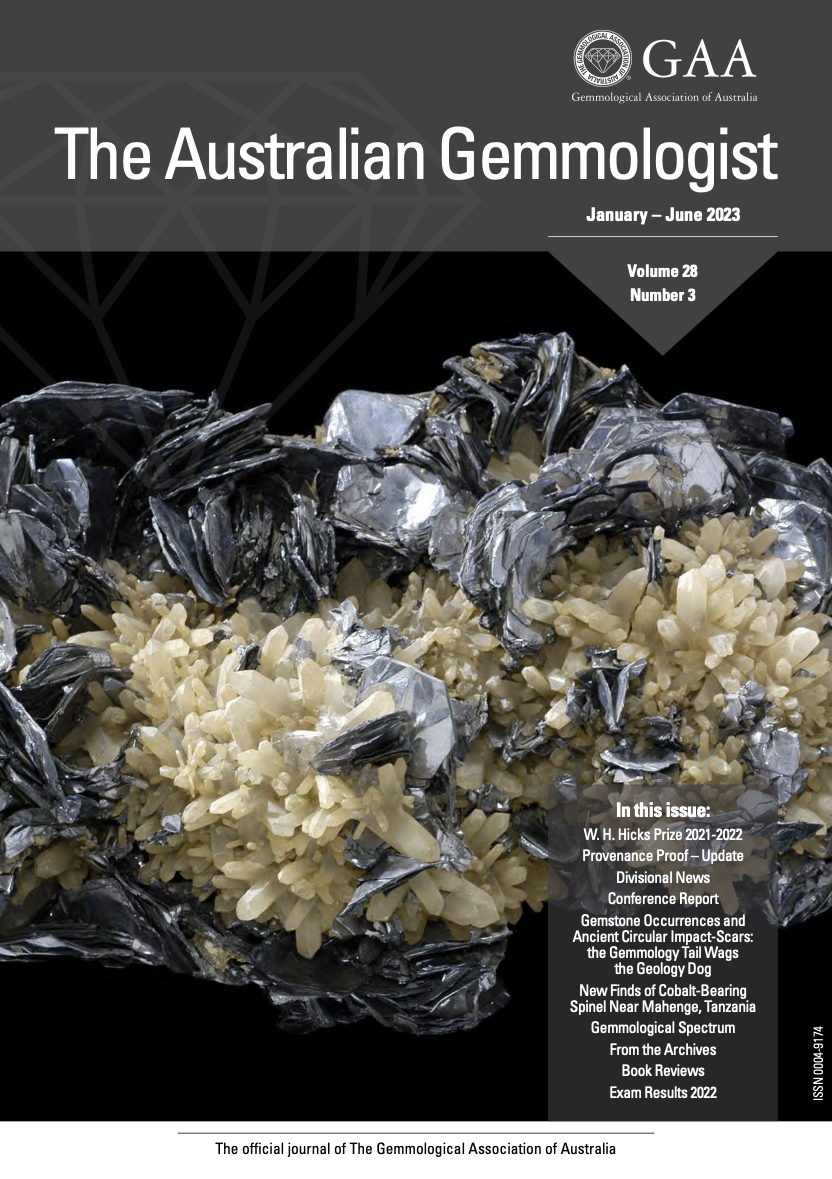
Gemstone occurrences and ancient circular impact-scars: The gemmology tail wags the geology dog

Gemstone occurrences and ancient circular impact-scars: The gemmology tail wags the geology dog

Saul, J.M. (2023)

Journal Article · Source: Australian Gemmologist · Volume: Vol. 28 · Issue: No. 3, January–June · Pages: pp. 130–135

Abstract
Numerous occurrences of transparent gemstones are in diverse ways associated with large circular scar-patterns on the Earth’s surface. These are interpreted as vestiges of the asteroid and meteorite bombardment that also scarred the Moon. Neither the existence of these circular scars nor their identification with 4 billion-year-old impacts can be accommodated by presently held versions of plate tectonic theory.
Keywords
gems, corundum, geology.11
Gemological Characterization of Montana Sapphire from the Secondary Deposits at Rock Creek, Missouri River, and Dry Cottonwood Creek

Gemological Characterization of Montana Sapphire from the Secondary Deposits at Rock Creek, Missouri River, and Dry Cottonwood Creek

Palke, A.C., Renfro, N., Hapeman, J.R. and Berg, R.B. (2023)

Journal Article · Source: Gems & Gemology · Volume: Vol. 59 · Issue: No. 1, Spring · Pages: pp. 2–45

Abstract
Montana has produced large volumes of sapphire from secondary deposits for more than 150 years. While early production was mostly for industrial use as watch and instrument bearings, modern heat treatment technology has enabled the deposits to be worked profitably as gemstone mines, bringing more of this material to the gem and jewelry trade than ever before. Although pale blue and pale green sapphires make up the bulk of the production, fine Montana sapphire comes in nearly every hue, including yellow, orange, purple, and pink, along with very rare finds of ruby. Secondary Montana sapphire shares some similarities with those from Umba and Songea in Tanzania, but it is generally straightforward to separate them on the basis of inclusion scenes and trace element chemistry fingerprints.
Keywords
gems, corundum, inclusions.5, USA.12, Montana.12, Rock Creek, Missouri River, Dry Cottonwood Creek
Nephrite jade from Washington State, USA, including a new variety showing optical phenomena

Nephrite jade from Washington State, USA, including a new variety showing optical phenomena

Jutras, J.-P., Williams, C., Williams, B. and Rossman, G.R. (2023)

Journal Article · Source: Journal of Gemmology · Volume: Vol. 38 · Issue: No. 5 · Pages: pp. 494–511

Abstract
In 2018, a new type of nephrite jade was recognised from the DJ project in Washington State (USA) that exhibits subtle-to-strong directional colour variations when viewed at different orientations. Its colouration ranges from green to blue in light-to-dark tones, and its mineralogical and gemmological properties are consistent with nephrite jade from other localities. The optical phenomenon is related to pleochroism resulting from the internal structure of the tremolite fibres constituting the nephrite. These fibres show high-angle to orthogonal cross-felting, often with variations in chemical composition, and appear to result from more than one generation of formation. The presence of sheen (caused by the scattering of light from fibrous tremolite domains) is sometimes seen in addition to the pleochroic optical effect. This phenomenal material has the toughness required to be cut into cabochons or carved without any stabilising treatment, thus possessing workability that qualifies it as a new and unique variety of nephrite jade. Three other nephrite types—classified here as Ornamental, Carving and Gem—additionally occur at the DJ project, and are also described in this article.
Keywords
gems, jade, nephrite, Washington, USA
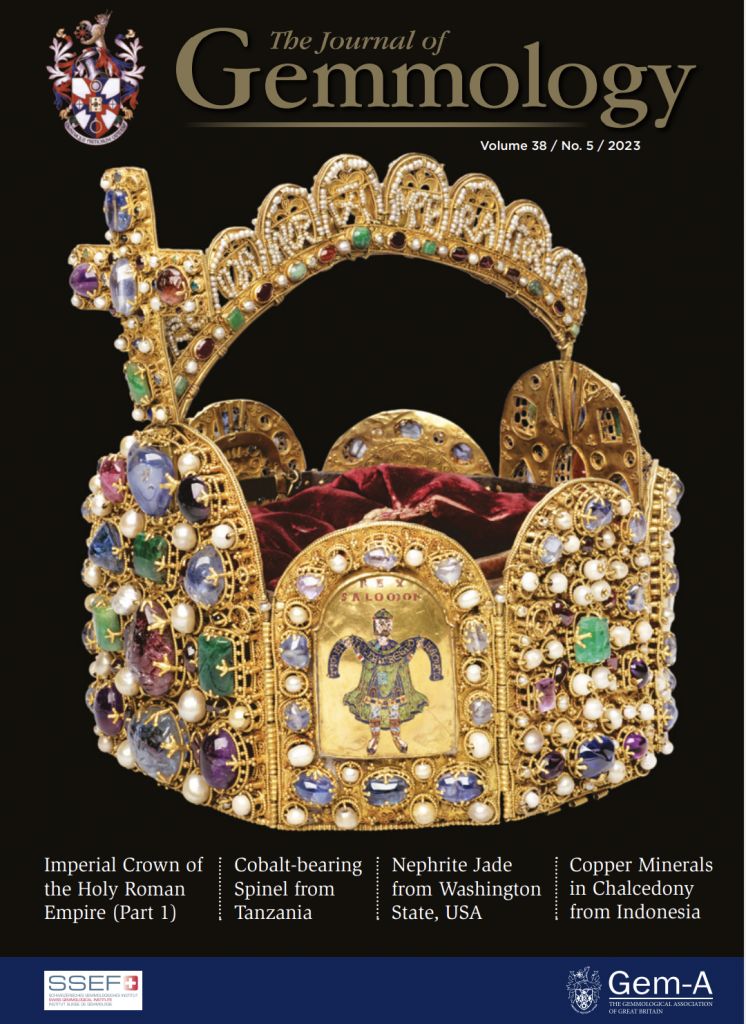
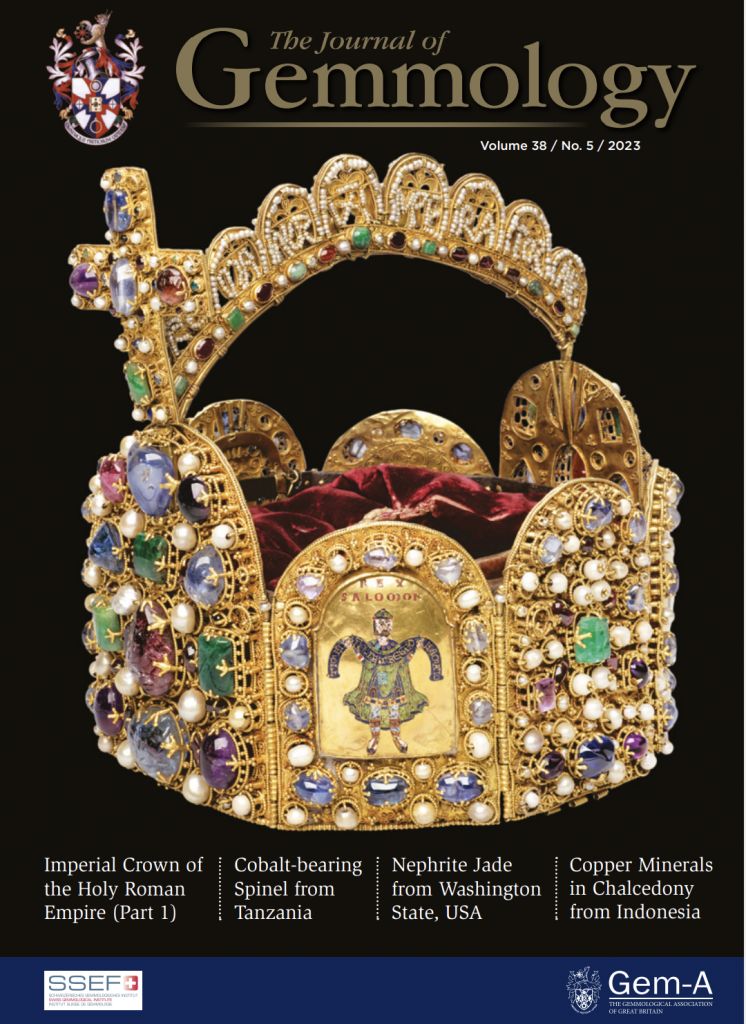
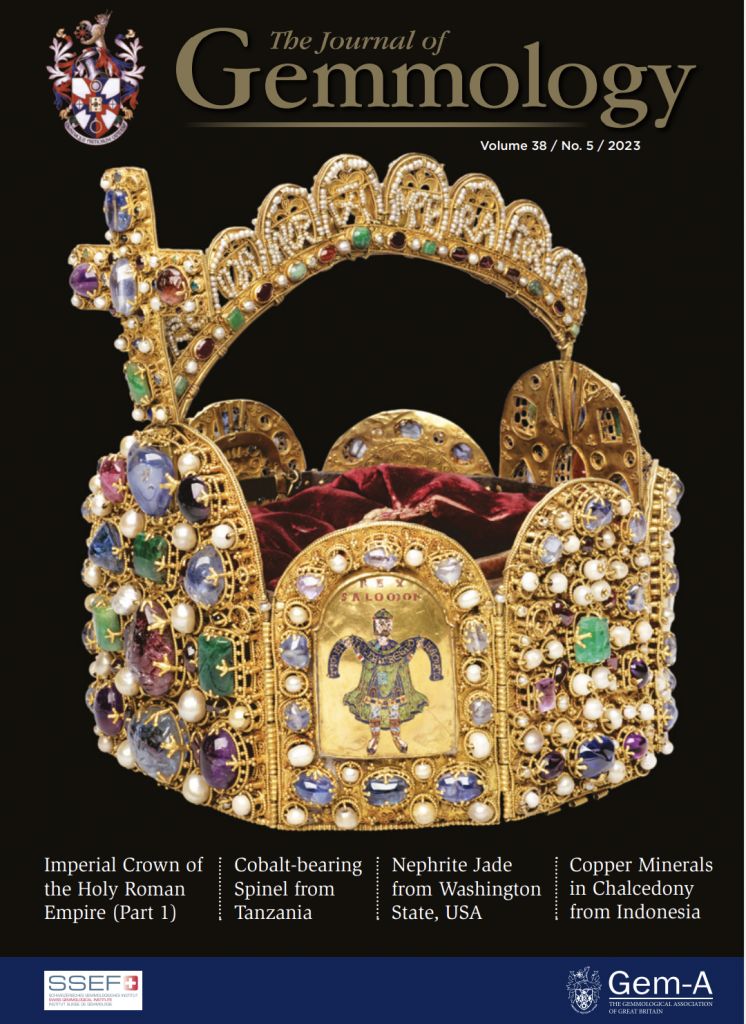
The Imperial Crown of the Holy Roman Empire, Part I: Photoluminescence and raman spectroscopic study of the gemstones

The Imperial Crown of the Holy Roman Empire, Part I: Photoluminescence and raman spectroscopic study of the gemstones

Nasdala, L., Lamers, T., Gilg, H.A., Chanmuang, C., Griesser, M., Kirchwegner, F., Erlacher, A. and Böhmler, M. (2023)

Journal Article · Source: Journal of Gemmology · Volume: Vol. 38 · Issue: No. 5 · Pages: pp. 448–473

Abstract
The Imperial Crown of the Holy Roman Empire is not only a unique and outstanding symbol of European history, it is also one of the most significant works of Western goldsmiths’ art from the High Middle Ages. However, little is known about the gem materials it contains. As part of an interdisciplinary research project led by the Kunsthistorisches Museum Vienna in Austria, the 172 gemstones in the crown were all conclusively identified for the first time using (non-destructive) photoluminescence and Raman spectroscopy. They include 71 blue sapphires, 50 garnets (22 almandines, 22 pyrope-almandines, five pyropes and one grossular), 20 emeralds, 13 amethysts, four chalcedonies and three spinels. In addition, 11 glass imitations of various colours were identified. Raman spectral details and inclusions in the garnets support their assignment to garnet types previously found to be used in antique and early medieval jewellery. The large red spinel in the centre of the crown’s front plate is presumably part of the original crown and, thus, is one of the earliest-known spinels in a historic object, yet it yielded spectroscopic evidence of having been heated.
Keywords
gems, corundum, history.1, sapphire, spinel, garnet, beryl, emerald, amethyst, chalcedony
Cobalt-bearing blue spinel from Lukande, near Mahenge, Tanzania

Cobalt-bearing blue spinel from Lukande, near Mahenge, Tanzania

Krzemnicki, M.S., Leuenberger, A. and Balmer, W.A. (2023)

Journal Article · Source: Journal of Gemmology · Volume: Vol. 38 · Issue: No. 5 · Pages: pp. 474–493

Abstract
In September 2021, a new deposit of Co-bearing blue spinel was discovered in the Lukande area, south of Mahenge in central Tanzania. We analysed 44 faceted spinels from this source, ranging from Co-dominated blue to Fe-dominated (greyish) blue. Interestingly, nearly all of these spinels showed characteristic inclusion features, consisting predominantly of oriented rhombic lamellae (inferred to be högbomite), as well as oriented short needles and particles. In addition, trace-element analyses revealed two types of spinel from this new deposit: attractive blue stones that showed an average Co concentration of 32 ppm (designated type I), and darker material with distinctly higher Co (averaging 200 ppm; designated type II). The latter showed a beautiful blue colour only when cut into melee-sized stones (i.e. about 2 mm diameter). Based on their trace-element composition, stones from this new deposit near Lukande can be separated from Co-bearing spinels from Vietnam, Sri Lanka and Pakistan. U-Pb dating of surface-reaching zircon inclusions indicates the Tanzanian spinels formed during a late stage of the East African Orogeny, possibly overprinted by the Kuunga-Malagasy orogeny (about 500–570 million years ago).
Keywords
gems, spinel, cobalt-blue spinel, Tanzania, spinel inclusions
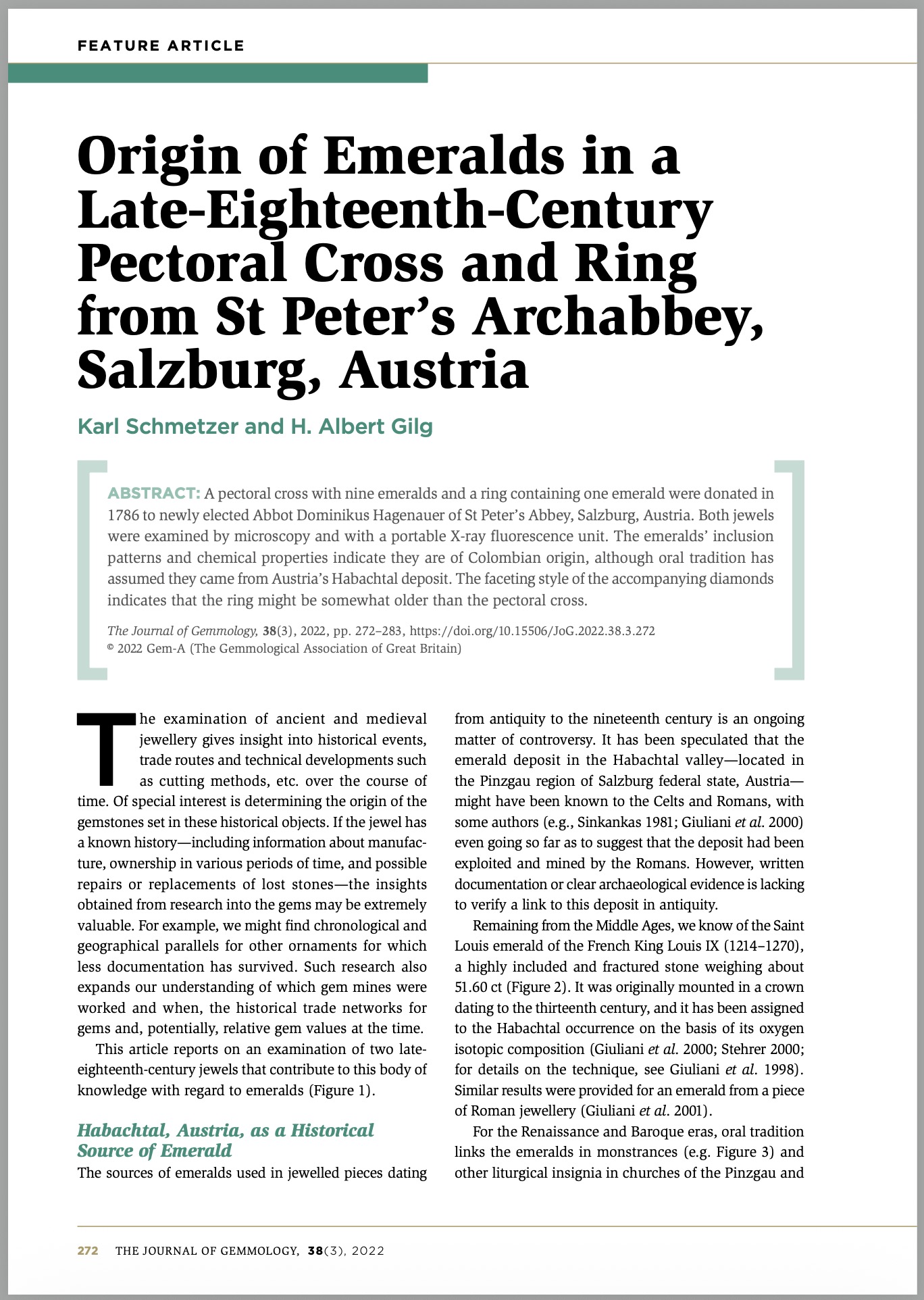
Origin of Emeralds in a Late-Eighteenth-Century Pectoral Cross and Ring from St Peter’s Archabbey, Salzburg, Austria

Origin of Emeralds in a Late-Eighteenth-Century Pectoral Cross and Ring from St Peter’s Archabbey, Salzburg, Austria

Schmetzer, K. and Gilg, H.A. (2022)

Journal Article · Source: Journal of Gemmology · Volume: Vol. 38 · Issue: No. 3 · Pages: pp. 272–283

Abstract
A pectoral cross with nine emeralds and a ring containing one emerald were donated in 1786 to newly elected Abbot Dominikus Hagenauer of St Peter’s Abbey, Salzburg, Austria. Both jewels were examined by microscopy and with a portable X-ray fluorescence unit. The emeralds’ inclusion patterns and chemical properties indicate they are of Colombian origin, although oral tradition has assumed they came from Austria’s Habachtal deposit. The faceting style of the accompanying diamonds indicates that the ring might be somewhat older than the pectoral cross.
Keywords
gems, beryl, emerald, Austria, Habachtal

Building a Gemological Library

Gemological books range from general identification manuals and textbooks to specialized works on individual gems, mineralogy, jewelry, treatments, synthesis, history and gem-producing regions.

For a curated selection of particularly useful books, read The Gemologist's Core Library — Classic Books on Gemology, Jewelry and Mineralogy.

About Four Treasures

Four Treasures is Lotus Gemology's freely accessible gemological reference database. Use the full database to search by author, title or keyword and explore literature on gemology, mineralogy, jewelry and related fields. Where available, hyperlinks on titles may lead directly to the full publication.

Search the Complete Four Treasures Database