Explore books on gems, gemology, jewelry and mineralogy in Four Treasures, the Lotus Gemology reference database. This bibliography brings together matching book records from the collection, with publication details, abstracts and cover images where available.
Gemology Book References
The list below matches books concerning gemology and related subjects in the database's searchable fields. Some works cover several branches of gems, jewelry or mineralogy.
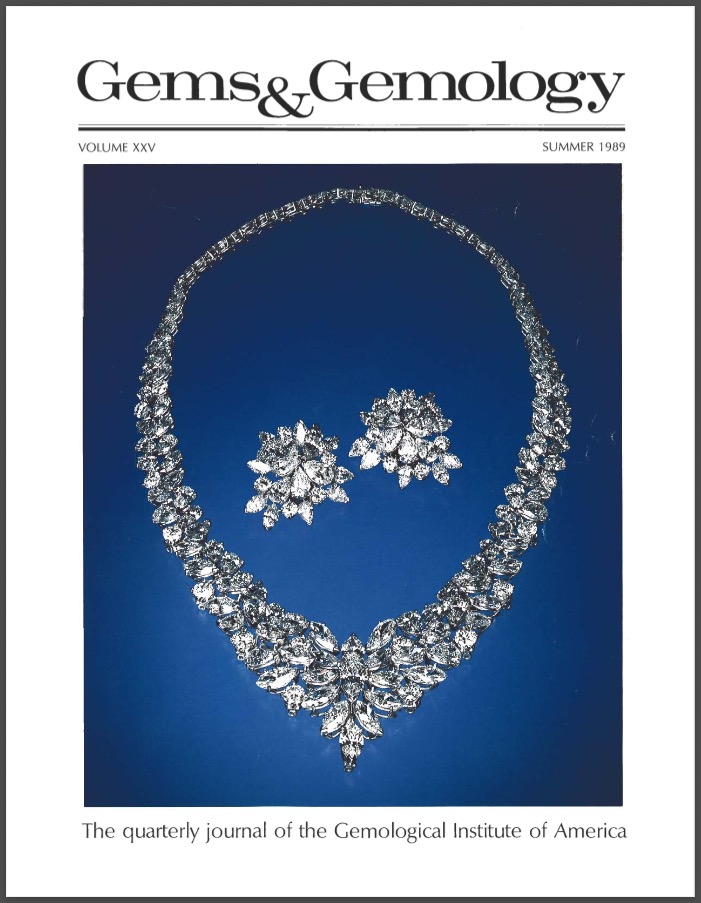
Gemstone enhancement and its detection in the 1980s
Journal Article
Kammerling, R.C., Koivula, J.I. and Kane, R.E. (1990) Gemstone enhancement and its detection in the 1980s.Gems & Gemology, Vol. 26, No. 1, Spring, pp. 32–49.
The impact of enhancements on the gem market in the 1980s may be unparalleled in the history of the industry. Heat treatment introduced hundreds of thousands of carats of blue and fancy-color sapphires and rubies into the trade, while irradiation transformed millions of carats of white topaz into appealing blue gemstones. The filling of surface-reaching fractures in diamonds added a completely new factor to the assessment of color and clarity. One of the key challenges for gemologists during this period was the identification of these and other treatments. This article reviews the enhancements introduced or significantly used during the decade, with a focus on their detection using standard gemological techniques.
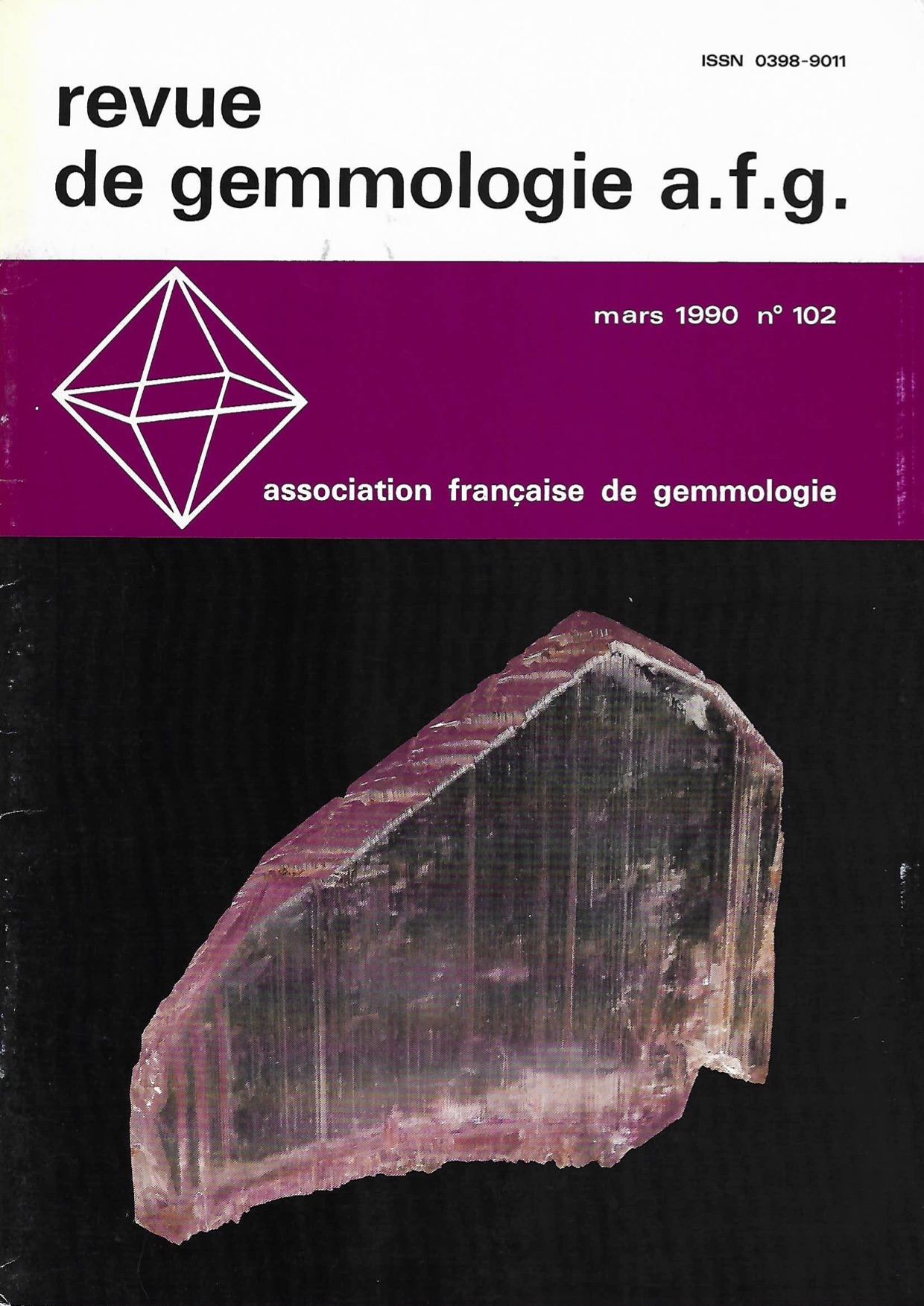
García Giménez, R. and Leguey, S. (1990) Saphirs et rubis de Tanzanie. [Sapphires and rubies of Tanzania]Revue de Gemmologie A.F.G., No. 102, March, pp. 6–8.
Record No. 4786 | Sinkankas/Born No.: NIS / NIB | Language: in French | RWHL
Describes rubies, blue sapphires and other colored corundums from Tanzania, with particular attention to their gemological characteristics. The authors characterize the colors quantitatively using a chromaticity-coordinate diagram and examine the stones’ absorption spectra and mineral inclusions. The study compares the different color varieties and relates their optical behavior to their composition, providing analytical data useful for characterizing Tanzanian gem corundum. A contemporary Journal of Gemmology abstract specifically notes the treatment of color, inclusions and absorption spectra.
New technologies of the 1980s: Their impact in gemology
Journal Article
Fritsch, E. and Rossman, G.R. (1990) New technologies of the 1980s: Their impact in gemology.Gems & Gemology, Vol. 26, No. 1, Spring, pp. 64–75.
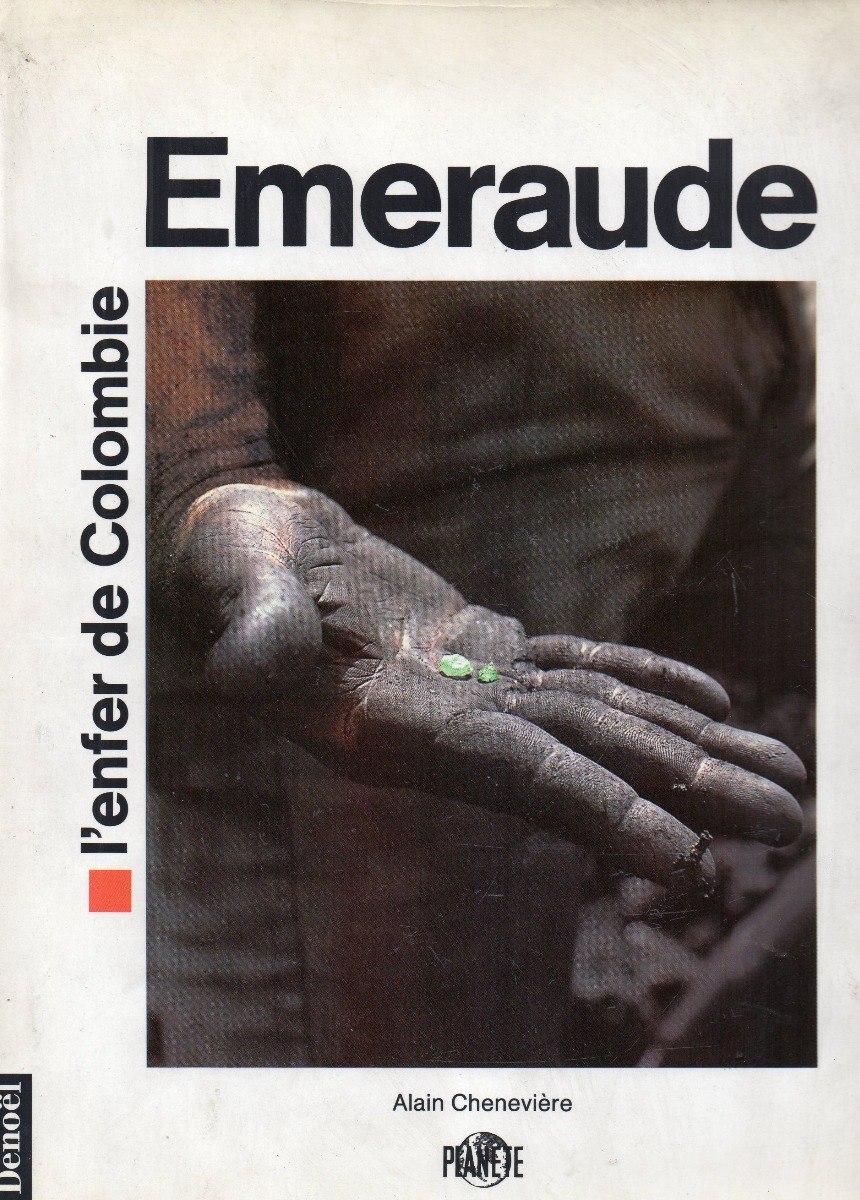
Coffee-table style photo essay on the emeralds from Colombia, with some lovely photography of the mines at Muzo, markets, trading and cutting in Bogota. The last few pages offer a bit of gemological information about emerald and where it is found around the world. This book is valuable mainly for the photos.
Die brasilianischen Smaragde und ihre Vorkommen: Santa Terezinha de Goiás/GO.
The brazilian emeralds and their deposits: Santa Terezinha de Goiás, GO
Journal Article
Schwarz, D. (1990) Die brasilianischen Smaragde und ihre Vorkommen: Santa Terezinha de Goiás/GO. [The brazilian emeralds and their deposits: Santa Terezinha de Goiás, GO]Zeitschrift der Deutschen Gemmologischen Gesellschaft, Vol. 39, No. 1, pp. 13–44.
Record No. 4200 | Sinkankas/Born No.: NIS / NIB | Language: In German | RWHL
gems, inclusions, beryl, emerald, Brazil, Santa Terezinha de Goiás
Describes the emerald deposits of Santa Terezinha de Goiás, Brazil, presenting evidence for their stratiform occurrence and documenting the stones’ gemological properties, chemistry and inclusions. Refractive indices reach 1.593–1.602, with birefringence of 0.008–0.010, reported as the highest values then observed in emerald. Chromium and iron show the highest mean concentrations among Brazilian emeralds. Fluid inclusions are generally very small. Mineral inclusions include spinel, carbonates, mica, talc, amphibole and pyrite, with rutile, hematite, chalcopyrite, pentlandite and ilmenite also recorded.
Lab Notes: Cobalt-colored color-change spinel
Journal Article
Maddison, P. (1990) Lab Notes: Cobalt-colored color-change spinel.Gems & Gemology, No. 3, Fall, pp. 225–226.
gems, spinel, color-change spinel, Sri Lanka, cobalt spinel
A laboratory examination documents an unusual colour change in a 2.24-carat natural cobalt-coloured spinel mounted in a man’s ring. The stone appeared dark, richly saturated, slightly violetish blue under fluorescent illumination and dark purple under incandescent light. Its contemporary setting, combining white and yellow metals, enhanced the visual effect. Testing at the West Coast laboratory established properties consistent with natural cobalt-blue spinels examined previously, including examples reportedly originating in Sri Lanka, although the note does not establish a geographic source for this particular specimen. A Duplex II refractometer yielded a single refractive-index reading of 1.720. Polariscope examination showed a singly refractive response accompanied by very slight anomalous double refraction. The stone displayed weak red transmission and appeared moderately red through a Chelsea colour filter. Examination with a handheld spectroscope revealed the diagnostic absorption band of natural cobalt spinel at approximately 460 nm, together with additional bands near 480, 552, 559, 575, and 622 nm. Broad general absorption extended from approximately 660 nm towards longer wavelengths. These optical observations supported comparison with the laboratory’s earlier experience of natural cobalt-blue spinel despite the specimen’s unusual change between blue and purple. Microscopic examination beneath one end of the crown revealed a cluster of moderately sized inclusions comprising a well-formed octahedral crystal and several whitish crystals of irregular shape. Rain-like strings of pinpoint inclusions radiated from this group and extended through the stone, accompanied by numerous small, fine needles. The included crystals and needles are described by their appearance and morphology without assignment to specific mineral species. The report combines observations under different light sources with refractometry, polariscope testing, colour-filter examination, absorption spectroscopy, and microscopy to characterize the mounted gemstone. Its significance lies in documenting a distinctive blue-to-purple colour change in a stone whose other measured properties and internal features were consistent with natural cobalt-blue spinel.
Gem Trade Lab Notes: Spinel from Tanzania
Journal Article
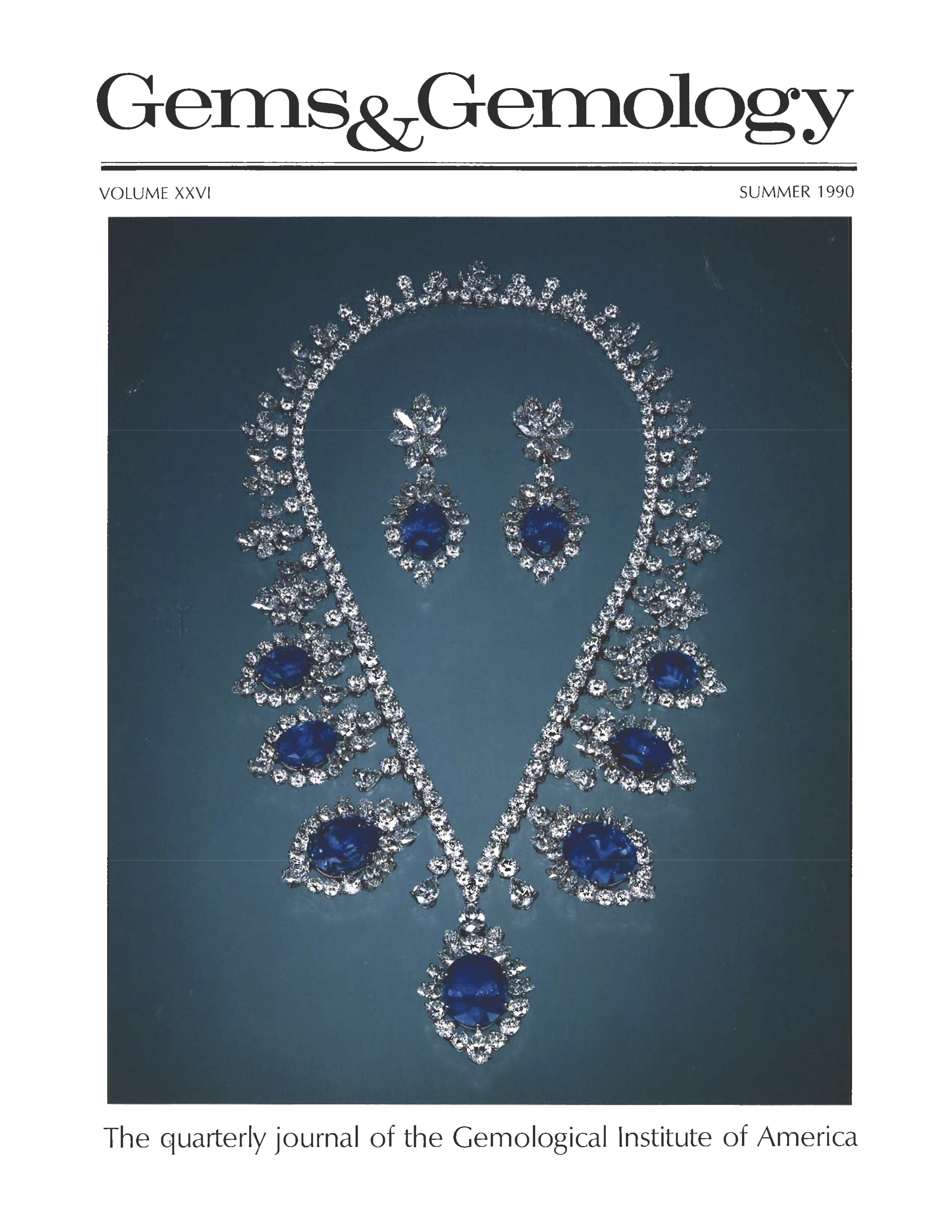
Kane, R.E. (1990) Gem Trade Lab Notes: Spinel from Tanzania.Gems & Gemology, Vol. 26, No. 2, Summer, pp. 156–157.
A 2.28 ct purplish pink faceted pear-shaped stone submitted to the West Coast laboratory was identified as natural spinel and reported by its owner to originate from Tanzania. Its refractive index was 1.714, and it was singly refractive with very weak anomalous double refraction. Hydrostatic specific gravity was approximately 3.60. The stone displayed strong red fluorescence under long-wave ultraviolet radiation, weak red fluorescence under short-wave radiation, and a characteristic absorption spectrum. Its most unusual optical feature was a moderate to strong whitish blue transmission effect observed when intense light was directed through a small opening onto the stone. The phenomenon was also visible without magnification when the spinel was held a few inches from an incandescent or fluorescent source, while a faint bluish haze could be seen at arm’s length in sunlight. The effect was interpreted as probably resulting from light scattering by minute inclusions or dislocations, comparable to similar reactions in other gem materials. Microscopic examination showed that the stone was only slightly included. Parallel rows of tiny octahedra, commonly encountered in spinels from classic Myanmar and Sri Lankan localities, were conspicuously absent. Instead, the dominant internal features were numerous sheets of polysynthetic twinning intersecting in two directions throughout the gem. Coarse needles or growth tubes were associated with these planes in several areas. Immersion in methylene iodide revealed faint color zoning apparently aligned with some of the twinning features. Densely packed clouds of minute particles occurred through much of the stone, appeared to represent exsolutions, and were oriented in three directions. A few small, thin, transparent, nearly colorless tabular euhedral crystals were also present. The combination of physical and optical properties, color, and visual appearance matched spinels attributed to a newly reported Tanzanian deposit that the author had examined during a visit to Idar-Oberstein. Tanzanian spinel was also available at the 1990 Tucson Show. The note documents distinctive optical and microscopic characteristics of this specimen while retaining its Tanzanian origin as a reported attribution.
Synthetic gem materials in the 1980s
Journal Article
Nassau, K. (1990) Synthetic gem materials in the 1980s.Gems & Gemology, Vol. 26, No. 1, Spring, pp. 50–63.
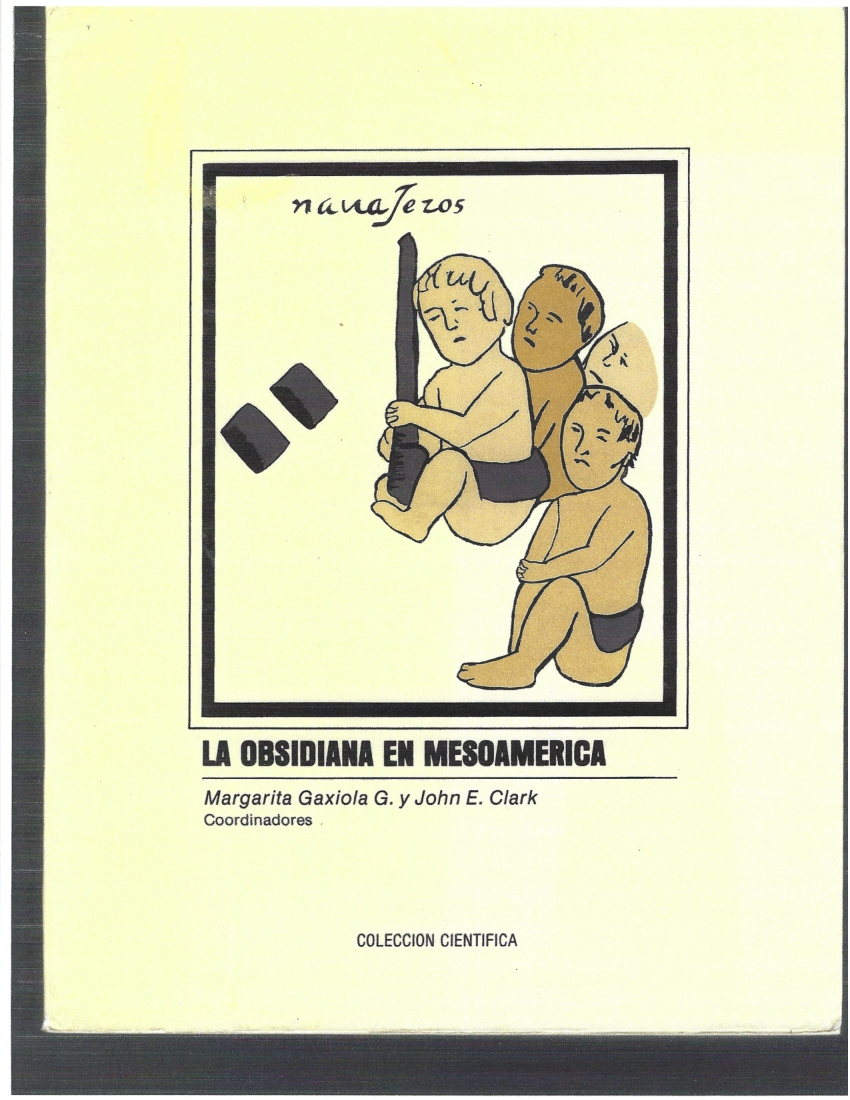
Walters, G.R. (1989) Un taller de jade en Guaytan, Guatemala. [A jade workshop at Guaytán, Guatemala] In: La Obsidiana en Mesoamérica: Instituto Nacional de Antropología e Historia (Mexico). Centro Regional de Hidalgo, Volumen176 de Instituto Nacional de Antropología e Historia (Mexico).: serie arqueología, pp. 252–262.
Record No. 28642 | Sinkankas/Born No.: NIS / NIB | Language: in Spanish | RWHL
Walters reports archaeological evidence for a pre-Columbian jade-working workshop at Guaytán, Guatemala, in the middle Motagua Valley, an area closely associated with Mesoamerican jadeite sources. He examines the workshop remains and the successive stages represented by raw material, production debris, partially worked pieces and finished or near-finished jade objects, using them to reconstruct aspects of lapidary production at the site. The evidence establishes Guaytán as an important locus of jade manufacture and contributes to understanding how jade was processed near its source before finished objects entered wider Mesoamerican exchange networks. Later studies of Maya jade production repeatedly cite Walters’s paper as an early archaeological identification of jade-working activity in the Middle Motagua Valley.
gems, archaeology, archaeogemology, India, Sri Lanka, Pakistan
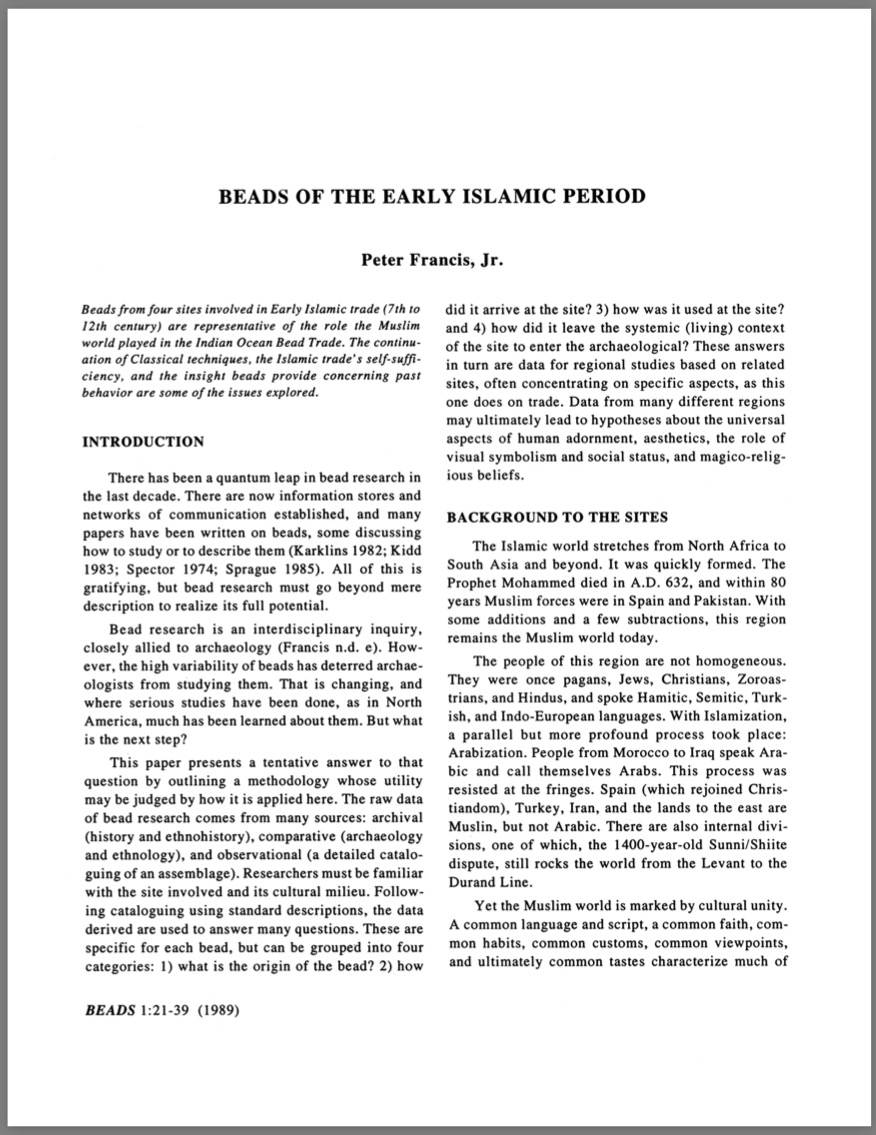
Beads from four sites involved in Early Islamic trade (7th to 12th century) are representative of the role the Muslim world played in the Indian Ocean bead trade. The continuation of Classical techniques, the Islamic trade’s self-sufficiency, and the insight beads provide concerning past behavior are some of the issues explored.
Gem News: “Bull’s-eye” optic figure in synthetic berlinite
Journal Article
Koivula, J.I. and Kammerling, R.C. (1989) Gem News: “Bull’s-eye” optic figure in synthetic berlinite.Gems & Gemology, Vol. 25, No. 2, Summer, p. 116.
gems, gem testing, gemology, field gemology, polariscope, interference figure
Emmanuel Fritsch recently received a synthetic berlinite crystal, donated by Dr. Robert Shannon of the E. I. Dupont Central Research Laboratory and grown by Bruce H.T. Chai at the University of Central Florida. Berlinite, a naturally occurring aluminum phosphate (AlPO₄), is structurally isomorphous with quartz; both crystallize in the hexagonal (trigonal) system and are optically active, occurring in left- and right-handed varieties. When viewed between crossed polarizers, untwinned berlinite displays the “bull’s-eye” optic figure (figure 9), previously described in gemological literature as a feature unique to quartz. This observation suggests that the “bull’s-eye” figure may, in fact, be characteristic of all optically active uniaxial crystals.
Thermal alteration of inclusions in ‘rutilated’ topaz,
Journal Article
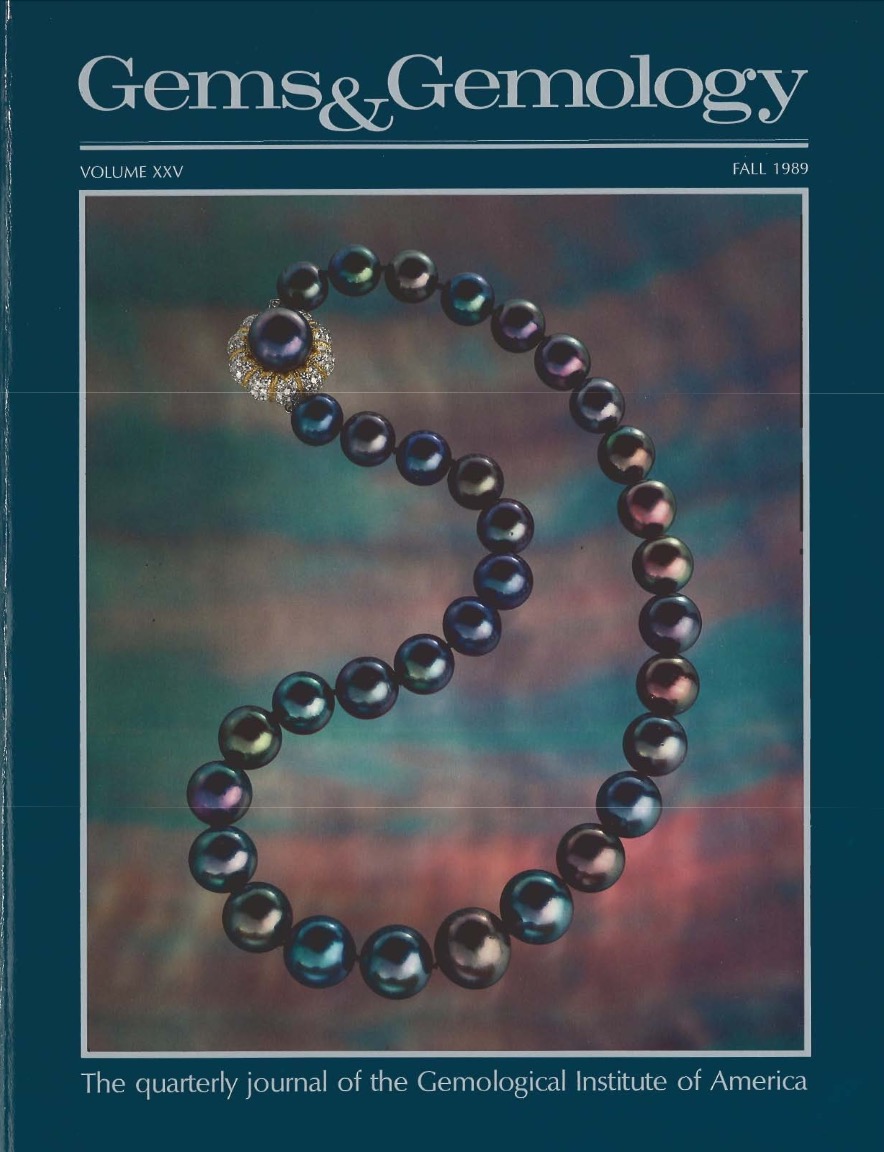
Kammerling, R.C. and Koivula, J.I. (1989) Thermal alteration of inclusions in ‘rutilated’ topaz,.Gems & Gemology, Vol. 25, No. 3, Fall, pp. 165–167.
Colorless faceted topaz containing acicular inclusions has been marketed as “rutilated” topaz, though earlier studies revealed that these inclusions are actually limonite-stained etched dislocation channels rather than rutile. This article discusses the application of heat treatment to convert the limonite staining into hematite, thereby enhancing the visibility and altering the color of the inclusions to make them appear more prominent.
Technological improvements in ancient seal manufacture
Book Section
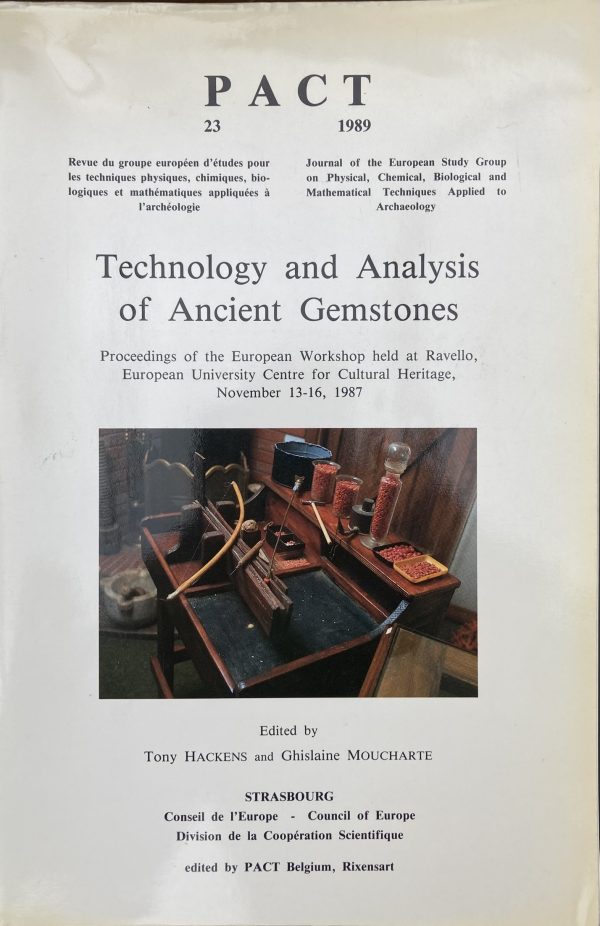
Gorelick, L. and Gwinnett, A.J. (1989) Technological improvements in ancient seal manufacture. In: PACT 23: Technology and Analysis of Ancient Gemstones, Strasbourg: Council of Europe, pp. 29–40.
gems, history of gemology, history of mineralogy, Arabic mineralogy, history of science, Egypt, Rome, Greek science, astronomy, ancient reference
Written some time before 100 BC the On the Erythraean Sea of Agatharchides of Cnidus is the most important source for an almost forgotten chapter of the history of geographical discovery, the exploration of the Red Sea and the region surrounding it by agents of the Ptolemaic government of Egypt in the century after the death of Alexander the Great in 323 BC. It also contains the earliest extensive account of the geography and ethnography of the coasts of northeast Africa and western Arabia. Although the original text of the On the Erythraean Sea is no longer extant, three abridgements of unequal extent and quality by the first century BC historian Diodorus, the first century AD geographer Strabo, and the ninth century AD Patriarch of Constantinople Photius survive. The present edition contains the first English translation of all three epitomes of this important work together with an introduction and extensive notes analysing the historical background and significance of Agatharchides' book.
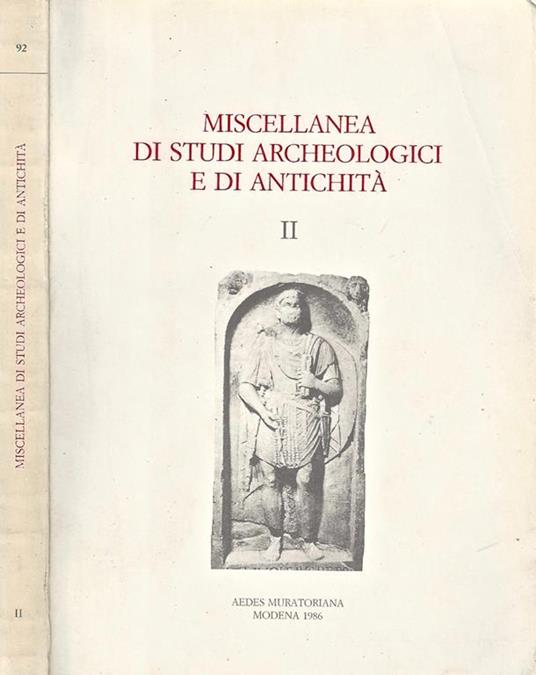
Feugère, M. (1989) Phalères romaines en calcédoine. [Roman chalcedony phalerae (medals)] In: Miscellanea di Studi Archeologici e di Antichità III [Modena], Vol. 3, pp. 31–55.
Record No. 17153 | Sinkankas/Born No.: NIS / NIB | Language: in Italian | RWHL
gems, history of gemology, glyptic, engraved gems, chalcedony, quartz, jasper
By publishing in the latest volume of these Miscellanee the decorative elements of the funerary monument of Rubiera (Reggio Emilia), Jacopo Ortalli allows us to answer a question that has remained unresolved since the 19th century: the identification of the chalcedony medallions, depicting a youthful, chubby face, with dona militaria. The hypothesis—often proposed but lacking definitive proof—is now confirmed thanks to the Rubiera relief; this also provides a valuable chronological reference for these generally poorly dated objects (fig. 1).
Spinelle aus dem Umba-Tal, Tanzania
Spinels from the Umba Valley, Tanzania
Journal Article
Bank, H., Henn, U. and Petch, E. (1989) Spinelle aus dem Umba-Tal, Tanzania. [Spinels from the Umba Valley, Tanzania]Zeitschrift der Deutschen Gemmologischen Gesellschaft, Vol. 38, pp. 166–168.
Record No. 5988 | Sinkankas/Born No.: NIS / NIB | Language: In German | RWHL
A brief gemological report on spinels from Tanzania’s Umba Valley, occurring in pink, red, orangish red and bluish violet colors. The specimens examined had refractive indices of 1.713–1.718 and specific gravities of 3.54–3.69. Spectroscopic examination was used to investigate the causes of the different colors. The note documents the range of gem spinel then reaching the market from the Umba Valley and provides basic properties useful for characterizing this East African material.
Building a Gemological Library
Gemological books range from general identification manuals and textbooks to specialized works on individual gems, mineralogy, jewelry, treatments, synthesis, history and gem-producing regions.
Four Treasures is Lotus Gemology's freely accessible gemological reference database. Use the full database to search by author, title or keyword and explore literature on gemology, mineralogy, jewelry and related fields. Where available, hyperlinks on titles may lead directly to the full publication.