Gemstone Inclusions Bibliography

Gemstone Inclusions Bibliography

Explore books, articles and historical sources on inclusions in gemstones in Four Treasures, the Lotus Gemology reference database. This bibliography brings together matching records from the collection, with publication details, abstracts and cover images where available.

Gemstone Inclusion References

The list below matches the terms inclusion or inclusions in the database's searchable fields. Some references discuss inclusions as part of a broader subject.

301–320 of 1,120 matching references
Saphire aus Nigeria und von Sta. Terezinha de Goias, Brazilien

Saphire aus Nigeria und von Sta. Terezinha de Goias, Brazilien

Sapphires from Nigeria and from Sta. Terezinha de Goiás, Brazil

Henn, U. (1986)

Journal Article · Source: Zeitschrift der Deutschen Gemmologischen Gesellschaft · Volume: Vol. 35 · Issue: No. 1/2 · Pages: pp. 15–19 · Language: In German

Abstract
Henn describes blue sapphires from two then relatively little-known localities, Nigeria and Santa Terezinha de Goiás, Brazil, comparing their appearance, physical properties and characteristic inclusions. The Nigerian material, reportedly from about 50 km north of Jos, is typically dark to inky blue with pronounced color zoning. Microscopic features include fluid and elongated two-phase inclusions, idiomorphic apatite crystals and rounded zircon crystals. The Brazilian sapphires are generally of poor transparency and bluish gray color, sometimes showing strong dark-blue zoning; characteristic inclusions include muscovite and margarite oriented along cleavage directions. The study provides preliminary diagnostic information for distinguishing sapphires from these two sources.
Keywords
corundum, sapphire, Nigeria.12, Brazil.12, inclusions.5, gems
Korunde aus dem Umba-Tal, Tansania

Korunde aus dem Umba-Tal, Tansania

Corundum from the Umba Valley, Tanzania

Hänni, H.A. (1986)

Journal Article · Source: Zeitschrift der Deutschen Gemmologischen Gesellschaft · Volume: Vol. 35 · Issue: No. 1/2, October · Pages: pp. 1–13 · Language: In German

Abstract
Hänni investigates the unusually wide range of corundum colors from the Umba Valley of Tanzania and relates them to variations in trace-element composition. EDS-XRF analyses show that the colors are principally controlled by Fe, Ti, Cr and V, while Ni and Co were not detected. The stones contain abundant inclusions, including zircon, rutile(?), apatite, hematite, mica, monazite, plagioclase, calcite, pyrrhotite and graphite, together with healed fractures, negative crystals, color zoning, twinning with intersecting lamellae, and possible boehmite laths. Hänni discusses methods for identifying these inclusions and reports densities of 3.98–4.01 g/cm³ and refractive indices of nₑ 1.761–1.768 and nₒ 1.769–1.778, together with spectral characteristics. The extraordinary colors—including bluish green, violet, pink, yellowish green, brownish yellow and orange—are contrasted with more conventional ruby and sapphire colors.
Keywords
corundum, sapphire, Umba, Tanzania.12, inclusions.5, gems
The Biron hydrothermal synthetic emerald

The Biron hydrothermal synthetic emerald

Kane, R.E. and Liddicoat, R.T. (1985)

Journal Article · Source: Gems & Gemology · Volume: Vol. 21 · Issue: No. 3, Fall · Pages: pp. 156–170

Abstract
A new synthetic emerald grown in Western Australia is now commercially available as faceted stones. Infrared spectra revealed the presence of water, thereby confirming that these synthetic emeralds are synthesized by a hydrothermal process. Chemical analysis showed that they contain vanadium as well as lesser amounts of chromium. This new synthetic exhibits some characteristics that are distinctly different from other synthetic emeralds and therefore must now be considered when identifying emeralds. In addition to distinctive inclusions such as gold, the Biron synthetic is inert to ultraviolet radiation, has a specific gravity of 2.68–2.71, and refractive indices of α = 1.569 and β (D) = 1.573. This article examines in detail the gemological properties of the Biron hydrothermal synthetic emerald and discusses means of identifying this new synthetic.
Keywords
beryl, synthetic beryl, emerald, gems
Sapphire from the Mercaderes-Rio Mayo Area, Cauca, Colombia

Sapphire from the Mercaderes-Rio Mayo Area, Cauca, Colombia

Keller, P.C., Koivula, J.I. and Jara, G. (1985)

Journal Article · Source: Gems & Gemology · Volume: Vol. 21 · Issue: No. 1, Spring · Pages: pp. 20–25

Abstract
Commercially important quantities of gem-quality sapphire are being recovered from stream beds and terrace gravels near the Colombian village of Mercaderes, about 143 km southwest of Popayán. The area is currently subject to a high degree of political unrest; nevertheless, about 100 people are said to be sporadically mining the deposit. Sapphire crystals average about one centimeter in length and occur in a variety of colors. Color-change stones are also common. Three inclusions were found to be characteristic: apatite, rutile, and boehmite. The parent rock for the sapphires has not been established, but it is probably one or more of the alkalic basalt members of the Cretaceous-age Diabase Group which outcrops in the area.
Keywords
corundum, sapphire, inclusions.5, Colombia.12, geology.11, gems
More on needles

More on needles

Koivula, J.I. (1985)

Journal Article · Source: Lapidary Journal · Volume: Vol. 39 · Issue: No. 9, December · Pages: p. 25

Keywords
inclusions.5, corundum, ruby, sapphire, gems
A preliminary report on the new Lechleitner synthetic ruby and synthetic blue sapphire

A preliminary report on the new Lechleitner synthetic ruby and synthetic blue sapphire

Kane, R.E. (1985)

Journal Article · Source: Gems & Gemology · Volume: Vol. 21 · Issue: No. 1, Spring · Pages: pp. 35–39

Abstract
A new synthetic ruby and synthetic blue sapphire have been synthesized by Johann Lechleitner of Innsbruck, Austria. This article reports on the examination of one sample of each of these new synthetics and discusses means of identification. Although most of the gemological properties of these two synthetics overlap with those of their natural counterparts, they can be easily identified from natural origin and from other synthetics by their distinctive internal characteristics: inclusions that are typical of both the flux-growth and the Verneuil processes.
Keywords
corundum, synthetic corundum.7, ruby, sapphire, synthetic ruby, synthetic sapphire, flux, Lechleitner, gems
Gemmological properties of synthetic corundums coated by Lechleitner

Gemmological properties of synthetic corundums coated by Lechleitner

Gunawardene, M. (1985)

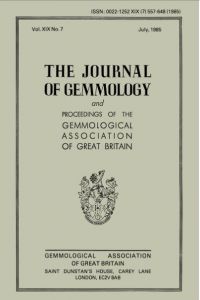
Journal Article · Source: Journal of Gemmology · Volume: Vol. 19 · Issue: No. 7, July · Pages: pp. 557–570

Abstract
Gunawardene examines an experimental product developed by Johann Lechleitner in which Verneuil synthetic corundum of various colours is used as a seed and overgrown with a thin layer of synthetic corundum. The study records the gemmological properties of these coated rubies and sapphires and concentrates on their identification. Magnification is particularly important: the Verneuil cores may show the curved growth structures and inclusions characteristic of flame-fusion corundum, while examination of the overgrowth reveals features associated with the coating process and the boundary between seed and overgrowth. The paper describes and illustrates these microscopic characteristics and discusses their usefulness in distinguishing the material from natural corundum and other synthetics. At the time of publication the process was still experimental rather than an established commercial production method.
Keywords
corundum, synthetic corundum.7, flux, Lechleitner, gems
Sapphires from Australia

Sapphires from Australia

Coldham, T.S. (1985)

Journal Article · Source: Gems & Gemology · Volume: Vol. 21 · Issue: No. 3, Fall · Pages: pp. 130–146

Abstract
During the last 20 years, Australia has assumedamajorroleintheproduction of blue sapphire. Most of the gem material comes from alluvial deposits in the Anal
Keywords
corundum, sapphire, Australia.12, inclusions.5, heat treatments.6, geology.11, gems
A status report on gemstones from Afghanistan

A status report on gemstones from Afghanistan

Bowersox, G.W. (1985)

Journal Article · Source: Gems & Gemology · Volume: Vol. 21 · Issue: No. 4, Winter · Pages: pp. 192–204

Abstract
Although Afghanistan has historically been well known for its lapis lazuli deposits, significant amounts of fine emerald, tourmaline, kunzite, and some rubies are n o w emerging from that embattled nation. Emeralds comeprimarily from the Panjshir Valley, northeast of Kabul. Lorge amounts of green, blue, and pink tourmaline, as well as considerable quantities of kunzite and some aquamarine, have been taken from the pegmatites of the Nuristan region, east of Panjshir. Smaller quantities of fine ruby have been found i n the Sorobi region, between Jalalabad and Kabul. The occurrence, mining, and distribution of thesegem materials are summarized, as are their gemological properties. Lesser amounts of garnet, amethyst, spinel, and morganite have also been located. The prospects for future production of emeralds and pegmatite gems, i n particular, are excellent.
Keywords
corundum, Afghanistan.12, ruby, Jagdalek, Nuristan, spodumene, kunzite, lapis, tourmaline, inclusions.5, geology.11, gems
The Santa Terezinha de Goiás emerald deposit

The Santa Terezinha de Goiás emerald deposit

Cassedanne, J.P. and Sauer, D.A. (1984)

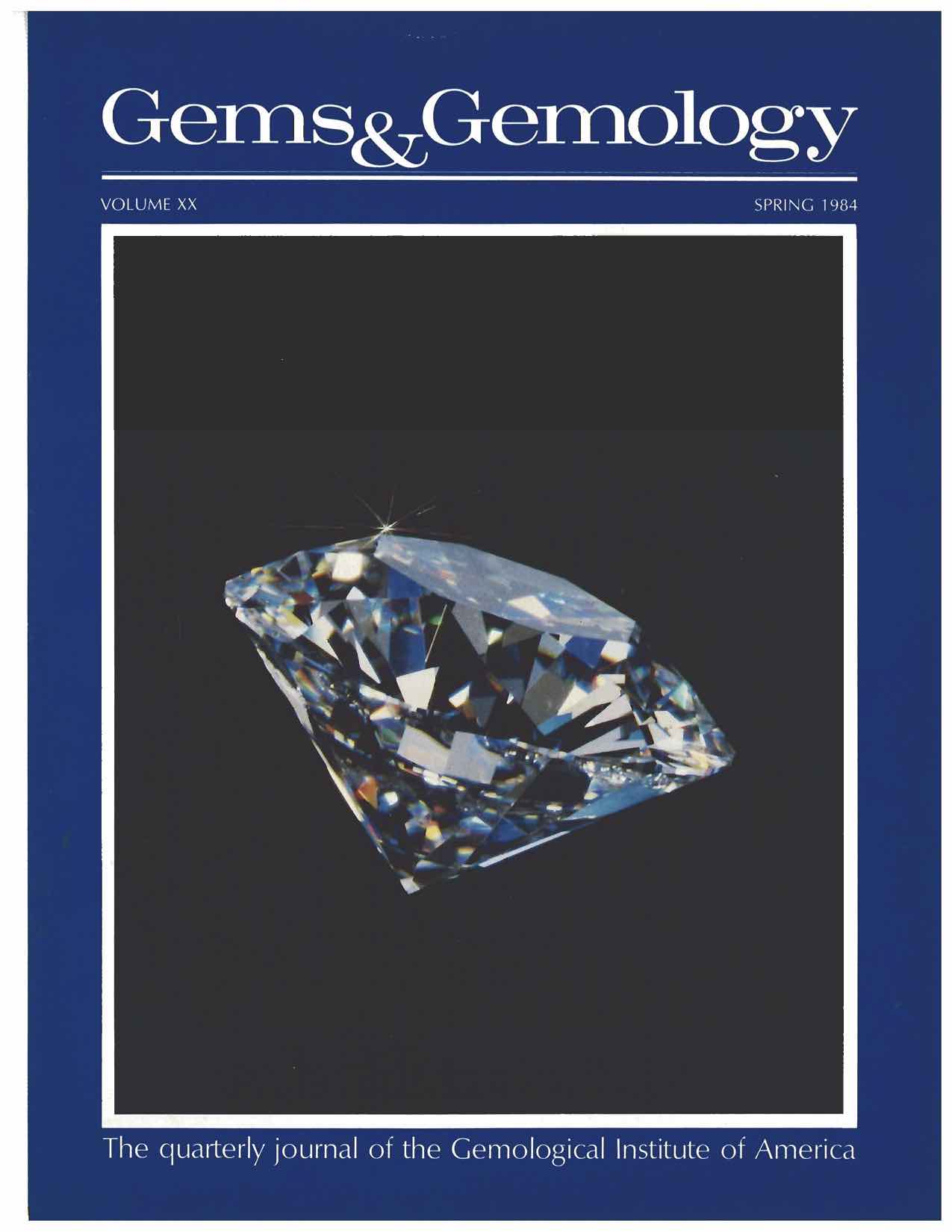
Journal Article · Source: Gems & Gemology · Volume: Vol. 20 · Issue: No. 1, Spring · Pages: pp. 4–13

Abstract
The Santa Terezinha de Goias emerald deposit, currently the most important source of emeralds in Brazil, lies northwest of Brasilia, in the State uf Goias. The emeralds, most of which are stones of a carat or Jess, occm in a talc schist layer intersected by pegmatite. The emeralds are recovered by independent miners via trenches, pits, and tunnels at two prospects: Trecho Novo and Trecho Velho. The grade of the ore is: l to 6 parts of emeralds to 10,000 parts of ore. The density of the gems is 2.70; the refrnctive indexes are 1.580 and 1.588, with greenish dark blue/yellowish pale green pleochroism. The spectrum is typical, with two strong lines and two partial absorption bands; there is no fluorescence; pyrite and chromite are the most typical inclusions, with calcite crystals present in minor amounts.
Keywords
gems, bery, beryl, emerald, inclusions, Brazil, Santa Teerezinha de Goiás
‘Cobalt-blue’ gem spinels

‘Cobalt-blue’ gem spinels

Shigley, J.E. and Stockton, C.M. (1984)

Journal Article · Source: Gems & Gemology · Volume: Vol. 20 · Issue: No. 1 · Pages: pp. 34–41

Abstract
The traditional gemological technique for distinguishing natural from synthetic blue spinel has involved the use of refractive index and absorption spectra. Recently, however, the standard interpretation of these tests has proved troublesome in the identification of several intensely colored blue stones that have R.I.’s in the range of natural blue spinels but that exhibit spectral features generally associated with synthetic cobalt-colored spinels. To establish the origin of these specimens, a detailed investigation of natural, flame-fusion, and flux-melt spinels was carried out. Our results indicate that, while spectral features in the longer wavelengths are unreliable for separating these spinels, an iron-related absorption band at about 460 nm was seen only in our natural specimens. Flame-fusion synthetics may still be distinguished by their lower R.I.’s.
Keywords
gems, spinel, Sri Lanka, cobalt blue spinel, synthetic spinel, spinel inclusions
Fluid Inclusions

Fluid Inclusions

Roedder, E. (1984)

Book · Source: Reviews in Mineralogy · Publisher: Mineralogical Society of America · Volume: Reviews in Mineralogy: Vol. 12 · Pages: 646 pp.

Keywords
corundum, ruby, sapphire, inclusions.5, USA.12, Montana.12, Thailand.12, gems
Identification characteristics of synthetic ruby made by Knischka

Identification characteristics of synthetic ruby made by Knischka

Gunawardene, M. (1984)

Journal Article · Source: Lapidary Journal · Volume: Vol. 37 · Issue: No. 12, March · Pages: pp. 1700–1706

Abstract
Gunawardene describes the identification characteristics of the Knischka synthetic ruby, concentrating on features observable by the practising gemologist. The article discusses the distinctive crystal-growth morphology of Knischka material and illustrates its characteristic internal features, including growth structures and inclusions associated with the synthetic growth process. Particular emphasis is placed on microscopic examination and on distinguishing Knischka ruby from natural ruby and other synthetic corundum. The article is extensively illustrated, with 30 figures, 29 in colour, providing practical examples of the diagnostic features. This appears to be a more practically oriented treatment of material Gunawardene had discussed in greater detail in his 1983 Journal of Gemmology paper.
Keywords
corundum, synthetic corundum.7, gems
Contribution towards the identification of treated corundums: heat and diffusion treated rubies

Contribution towards the identification of treated corundums: heat and diffusion treated rubies

Gunawardene, M. (1984)

Journal Article · Source: Journal of Gemmology · Volume: Vol. 19 · Issue: No. 4, October · Pages: pp. 298–310

Abstract
Gunawardene discusses the identification of heat-treated and diffusion-treated ruby, with particular attention to treatment practices observed in Thailand and Sri Lanka. High-temperature heating can modify ruby colour and clarity, while diffusion treatment introduces colouring agents into a shallow surface layer. The paper describes conventional gemmological and microscopic features useful for recognizing treatment, while emphasizing that heat treatment alone may in some cases leave insufficient evidence for unequivocal identification. Diffusion treatment is generally more readily detected from the distribution of colour, particularly concentrations associated with the stone’s surface and facet geometry. The author also describes practical aspects of the treatment processes and discusses the problems such treatments pose for identification and the gem trade.
Keywords
corundum, ruby, treatments.6, inclusions, gems
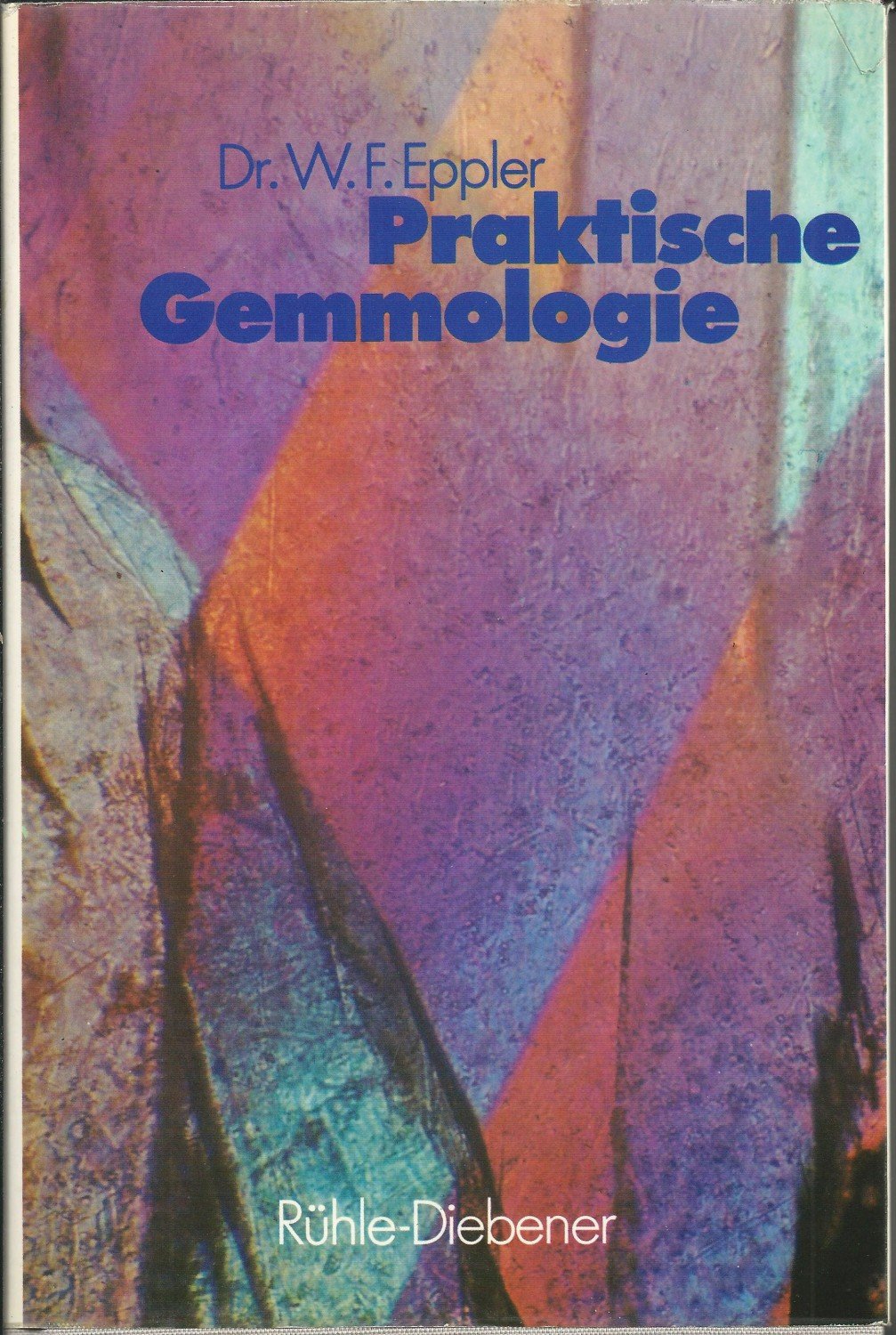
Praktische Gemmologie

Praktische Gemmologie

Practical Gemology

Eppler, W.F. (1984)

Book · Publisher: Rühle-Diebener-Verlag · Pages: 504 pp. · Language: in German

Abstract
Eppler’s Praktische Gemmologie is a comprehensive practical handbook of gemstone identification intended for gemologists, jewelers, and others concerned with recognizing and evaluating gem materials. Individual chapters treat the principal gem species—including diamond, corundum, chrysoberyl, spinel, beryl, garnet, zircon, tourmaline, quartz, opal, jade, nephrite, zoisite, turquoise and lapis lazuli—as well as less common gemstones, ornamental materials, and organic gem materials. Considerable attention is devoted to synthetic stones, methods of gem testing, diagnostic physical and optical properties, and especially inclusions, which are extensively illustrated with photomicrographs. The work combines practical identification procedures with mineralogical information and discussion of phenomena relevant to gemology. This second edition contains 532 illustrations and numerous tables.
Keywords
corundum, ruby, sapphire, inclusions.5, synthetic corundum.7, gems
Kashmir sapphire

Kashmir sapphire

Atkinson, D. and Kothavala, R.Z. (1983)

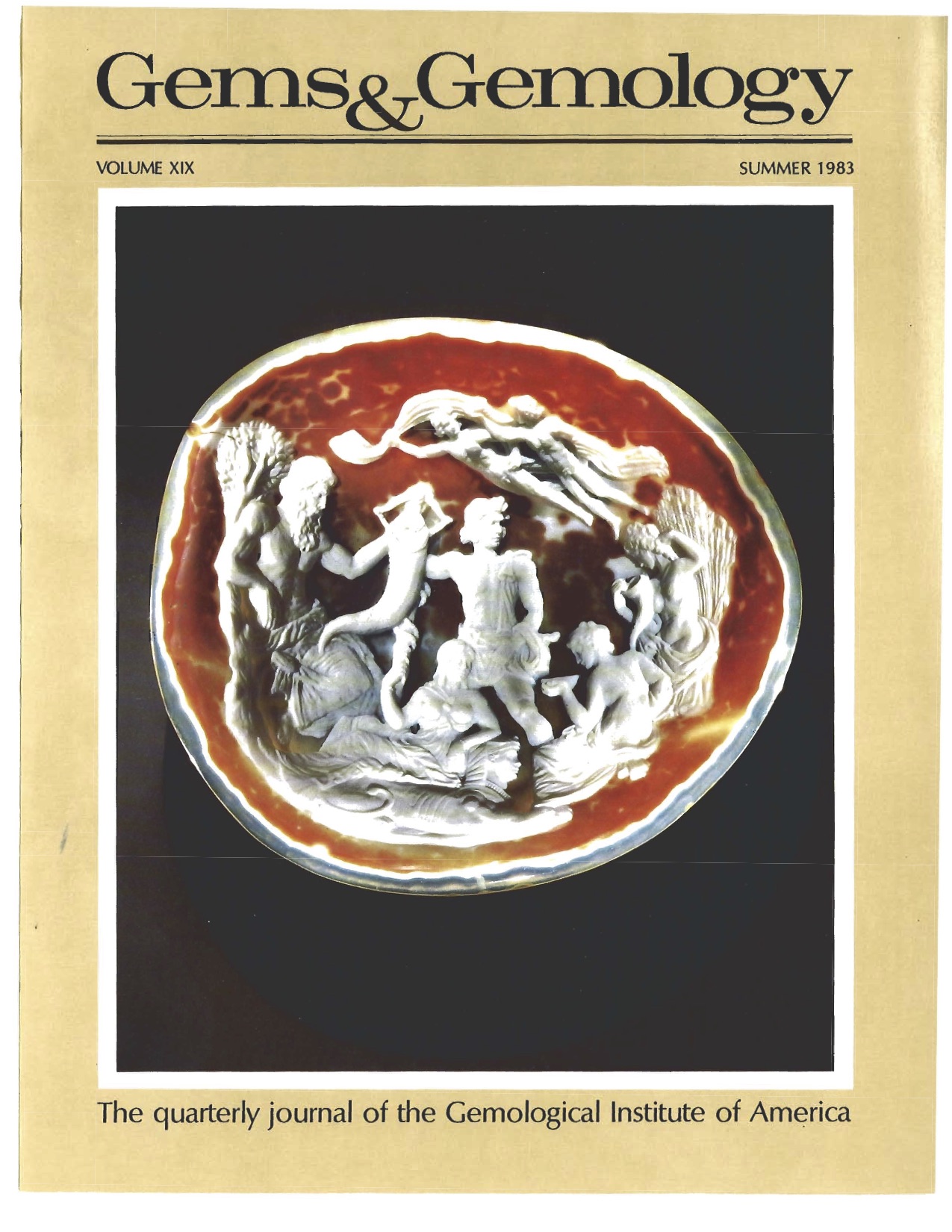
Journal Article · Source: Gems & Gemology · Volume: Vol. 19 · Issue: No. 2, Summer · Pages: pp. 64–76

Abstract
The unique beauty of gem sapphires from Kashmir has brought fame to a locality about which little has been reported in recent years. After an initial burst of activity 100 years ago, the production of these gemstones has slowed to a trickle and the majority of the corundum from these mines today is of industrial grade. Despite evidence of other gem mineral occurrences i n the area, difficult terrain and political factors have impeded their exploitation. This article, the result of an expedition to the deposits in 1981, chronicles the history of the Kashmir mines, describes the characteristics of the sapphires found there, and examines the outlook for the future of this area.
Keywords
corundum, sapphire, India.12, Kashmir, inclusions.5, geology.11, gems
The recognition of the new synthetic rubies

The recognition of the new synthetic rubies

Gübelin, E.J. (1983)

Journal Article · Source: Journal of Gemmology · Volume: Vol. 18 · Issue: No. 6, April · Pages: pp. 477–499

Abstract
Gübelin examines the recognition of the newer Chatham, Kashan, and Knischka synthetic rubies, whose inclusions can closely resemble those of natural stones and invalidate several previously accepted diagnostic rules. He notes that color, dichroism, ultraviolet luminescence, and the ordinary absorption spectrum are generally of limited value, although dark Kashan rubies may show a conspicuous orange extraordinary ray and spectrophotometry reveals useful differences in ultraviolet transmission. The principal emphasis is on microscopic inclusions: flux residues may occur as drops, grains, tubes, feathers, veils, nets, wisps, clouds, and lace-like structures, with some Kashan flux inclusions identified by X-ray analysis as cryolite (Na₃AlF₆). Particularly diagnostic Kashan features include “fog,” “hairpins,” and “comets,” while Chatham and Knischka stones may contain triangular or hexagonal platinum platelets with metallic lustre. Needles resembling natural rutile and straight or angular growth bands resembling those of natural ruby demonstrate that neither such needles nor angular zoning can any longer be regarded by themselves as proof of natural origin. Knischka rubies additionally show characteristic negative crystals, flux residues, and distinctive two- and occasionally three-phase inclusions. Numerous photomicrographs illustrate how closely these synthetic inclusion scenes can imitate healed fractures, rutile needles, and growth structures in natural Burmese, Sri Lankan, and Thai rubies. Gübelin concludes that well-equipped laboratories can reliably identify the new synthetics using microscopy together with spectrophotometric and X-ray methods, while jewelers and dealers without such equipment must depend particularly on careful examination of diagnostic inclusions and comparison with known synthetic specimens.
Keywords
corundum, ruby, synthetic ruby, synthetic corundum.7, inclusions.5, gems

Exploring the Literature of Gemstone Inclusions

The literature of gemstone inclusions covers identification, origin determination, treatments, synthesis, mineral inclusions, fluid inclusions and other internal features of natural and synthetic gems.

For a curated selection of important sources, read Inclusions in Gemstones — Hyperion Literature Sources.

About Four Treasures

Four Treasures is Lotus Gemology's freely accessible gemological reference database. Use the full database to search by author, title or keyword and explore literature on gemology, mineralogy, jewelry and related fields. Where available, hyperlinks on titles may lead directly to the full publication.

Search the Complete Four Treasures Database