Gemstone Inclusions Bibliography

Gemstone Inclusions Bibliography

Explore books, articles and historical sources on inclusions in gemstones in Four Treasures, the Lotus Gemology reference database. This bibliography brings together matching records from the collection, with publication details, abstracts and cover images where available.

Gemstone Inclusion References

The list below matches the terms inclusion or inclusions in the database's searchable fields. Some references discuss inclusions as part of a broader subject.

1,101–1,109 of 1,109 matching references
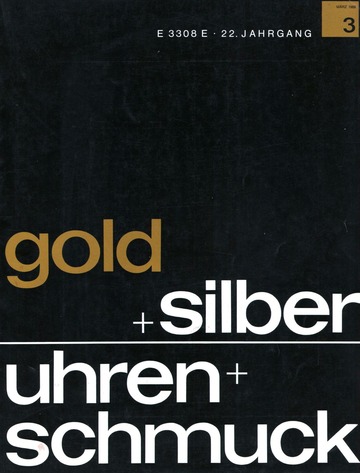
Inclusions in jade

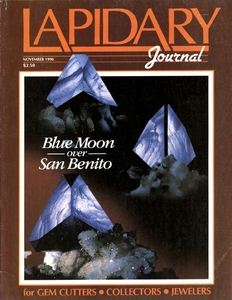
Inclusions in jade

Bergsten, L.J. (1964)

Journal Article · Source: Lapidary Journal · Volume: Vol. 17 · Pages: No. 11 (February), pp. 1076–1078; No. 12 (March), pp. 1080, 1196–1199

Keywords
jade, jadeite, fei cui, nephrite, Wyoming, Burma, inlusions, gems
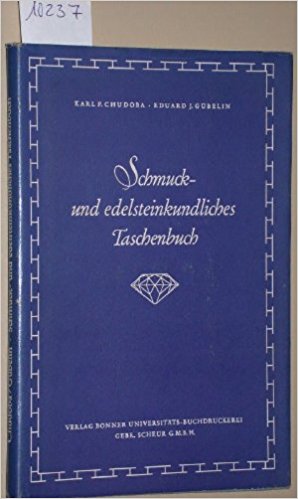
Schmuck- Und Edelsteinkundliches Taschenbuch

Schmuck- Und Edelsteinkundliches Taschenbuch

Jewelry and Gemstone Pocket Handbook

Chudoba, K.F. and Gübelin, E.J. (1953)

Book · Publisher: Verlag Bonner Universitäts-Buchdruckerei · Pages: xii + 158 pp. · Language: in German

Abstract
Chudoba and Gübelin provide a compact practical reference to gemology intended both for identifying gemstones and for standardizing the often confusing terminology used in the German gem trade. The principal gemstones and ornamental materials are arranged alphabetically and characterized by their chemical, crystallographic, and physical properties, important localities, trade names, and diagnostic features. Separate sections treat inclusions in natural gemstones, synthetic stones, doublets and triplets; tables of gemological constants; coated stones; synthetic gems and other imitations; the gemological microscope; and practical identification tables. Particular emphasis is placed on simple tests that can be performed with readily available gemological instruments and on microscopic inclusions as a means of distinguishing natural stones from synthetics and assembled or imitation materials. Conceived as a concise working handbook rather than a comprehensive mineralogical treatise, it became the basis for the substantially enlarged second edition of 1966, retitled Edelsteinkundliches Handbuch, and a further expanded third edition in 1974.
Keywords
gems, gemology,
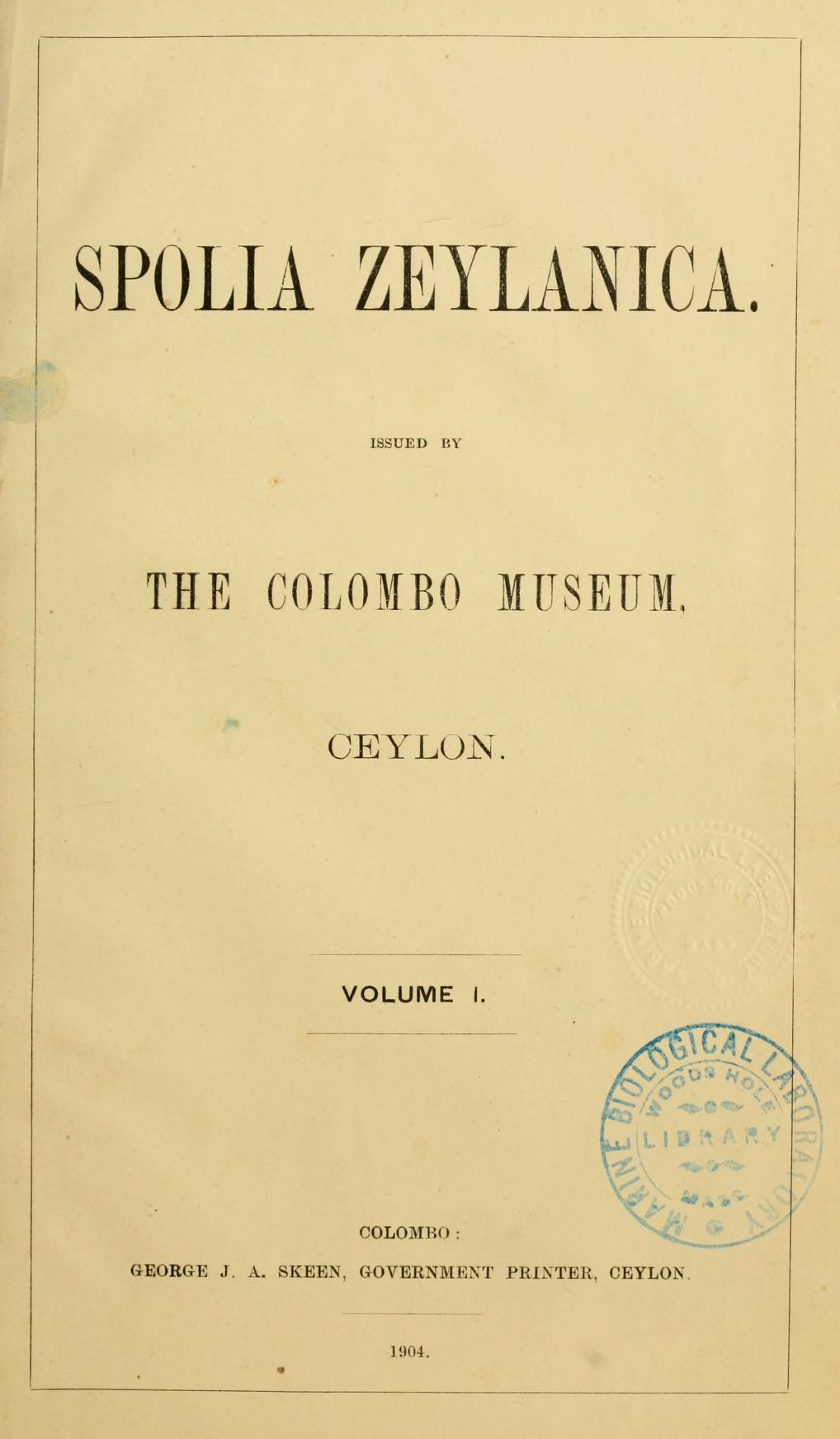
The crystalline rocks of Ceylon

The crystalline rocks of Ceylon

Coomaraswamy, A.K. (1904)

Journal Article · Source: Spolia Zeylanica (Ceylon Journal of Science) · Volume: Vol. 1 · Issue: Part 4 · Pages: pp. 105–111

Abstract
A concise account of the crystalline rocks of Ceylon, intended to summarize their character and classification as then understood. Coomaraswamy discusses the terminology of “gneiss” and “granulite,” preferring the latter for many Ceylonese rocks, and regards them as belonging to the Charnockite Series described from southern India, the two regions forming a closely related petrographical province. He describes the principal rock types and their mineral banding, together with the crystalline limestones and rocks intermediate between limestone and granulite. The latter may contain diopside, phlogopite, amphibole, scapolite, spinel, sphene, calcite and, more rarely, serendibite, and may occur at limestone–granulite contacts, as inclusions, dykes or bands; some also yield mica of commercial value. Coomaraswamy argues that, whatever their ultimate origin, the crystalline limestones were essentially contemporaneous with the granulites and crystallized under broadly comparable high-temperature conditions. He also distinguishes the wollastonite-bearing Galle group and discusses the structural geology of the crystalline series, particularly foliation, folding and the influence of rock structure on the development of parallel strike valleys such as those around Hatton. The paper is an important early synthesis of Ceylon’s Precambrian crystalline geology and provides geological context for the mineral and gem deposits associated with these rocks.
Keywords
corundum, ruby, sapphire, Sri Lanka.12, gems
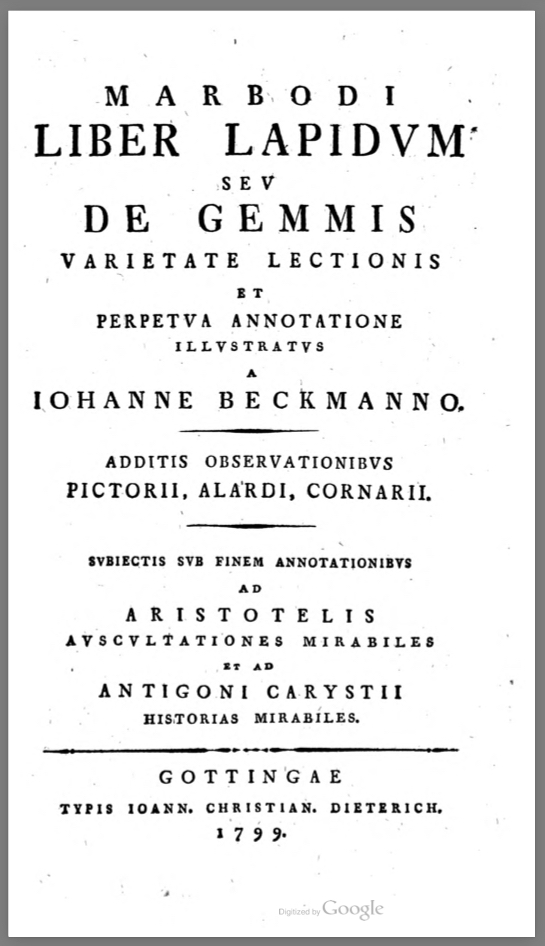
Marbodi Liber lapidum seu De gemmis varietate lectionis et perpetua annotatione illustratus a Iohanne Beckmanno

Marbodi Liber lapidum seu De gemmis varietate lectionis et perpetua annotatione illustratus a Iohanne Beckmanno

Marbode’s Book of Stones, or On the Variety of Gems, illustrated with variant readings and continuous annotation by Johann Beckmann

Marbode de Rennes (1799)

Book · Publisher: Ioann. Christian. Dieterich · Pages: 164 pp. · Language: in Latin

Abstract
Sinkankas: Generally regarded as the most authoritative and useful edition, due to the notes on previous editions and the citations of several versions of the poem. Schuh: Marbode, whose true name was de Marboeuf," received his early education at Angers. After teaching some time at the cathedral school of Angers, he was put at the head of the educational system of the city and Diocese of Anvers in 1067. Later he became archdeacon and in 1096 Urban II appointed him Bishop of Rennes. In his youth he indulged in many excesses, but from the time he became bishop his life was without reproach. In 1104 he was present at the Council of Tours, and in 1109 he was made administrator of the Diocese of Angers. At the age of eighty-eight he resigned his diocese and withdrew to the Benedictine monastery of St. Aubin at Angers where he died soon after. Of the 1799 edition, Schuh said: Scarce. Edited by Johann Beckmann. Regarded as the most authoritative and useful early edition because of the inclusion of notes and citations from previous editions, including those of Pictorius and Alaard."
Keywords
gems, early lapidaries, Marbode, Middle Ages, Medieval

Neuer Vollkommener Natur- und Kunst mäßiger Unterricht von Edelgesteinen

New Complete Natural and Practical Instruction on Precious Stones

Gemma, A., (Förster, Nicolaus) (1719)

Book · Publisher: Nicolaus Förster · Pages: 121 pp. · Language: in German

Abstract
Sinkankas: An extremely rare work on gemstones that emphasizes practical aspects of lapidary treatment and other matters that would be of value to the tradesman and jewelry maker. It is further remarkable for including a chapter on the methods by which Indian lacquerware is manufactured, which of course has nothing to do with gems. Gemma discusses the origin of gemstones in the first chapter, considering at length Robert Boyle’s statements on the same as given in his Exercitatio de Origine et Viribus Gemmarum, supporting some and disputing others. Other citations and quotations from authorities appear throughout the text. Other topics treated include the magical and curative powers of gemstones, physical properties, color and its enhancement by use of foils, the pricing of gems, the manufacture of doublets, artificially colored and imitation gems, and substitutes. One chapter is devoted to “figures” in stones, that is, clouds or swarms of inclusions, banding, and other markings which resemble human or other figures, shells in fossiliferous limestones, insects in amber, and stars in star stones. All of these are treated soberly as natural manifestations and are not thought to be magical or miraculous in nature as had been done not too long before Gemma’s time. Another chapter treats petrification due to mineralized waters. From the practical viewpoint, this work is especially rich in details on the cutting of gemstones and the equipment required to do so, including the art of gem engraving. Gem-cutting equipment then in use is described in minute detail, as well as a process for classifying raw tripoli to make it useful as a polishing agent. In all respects this admirable, reasoned work deserves greater recognition.
Keywords
gems, gemology, lapidary

Corundum Treatments

Koivula, J.I. (n.d., ca. 1984)

Film or Broadcast · Source: GIA Videotape Series · Publisher: Gemological Institute of America · Pages: ~45 minutes

Keywords
corundum, treatments.6, inclusions.5, gems

Exploring the Literature of Gemstone Inclusions

The literature of gemstone inclusions covers identification, origin determination, treatments, synthesis, mineral inclusions, fluid inclusions and other internal features of natural and synthetic gems.

For a curated selection of important sources, read Inclusions in Gemstones — Hyperion Literature Sources.

About Four Treasures

Four Treasures is Lotus Gemology's freely accessible gemological reference database. Use the full database to search by author, title or keyword and explore literature on gemology, mineralogy, jewelry and related fields. Where available, hyperlinks on titles may lead directly to the full publication.

Search the Complete Four Treasures Database