Gemstone Inclusions Bibliography

Gemstone Inclusions Bibliography

Explore books, articles and historical sources on inclusions in gemstones in Four Treasures, the Lotus Gemology reference database. This bibliography brings together matching records from the collection, with publication details, abstracts and cover images where available.

Gemstone Inclusion References

The list below matches the terms inclusion or inclusions in the database's searchable fields. Some references discuss inclusions as part of a broader subject.

281–300 of 1,120 matching references
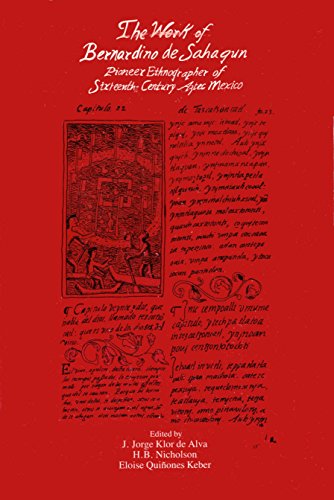
The Work of Bernardino de Sahagun, Pioneer Ethnographer of Sixteenth-Century Aztec Mexico

The Work of Bernardino de Sahagun, Pioneer Ethnographer of Sixteenth-Century Aztec Mexico

Klor de Alva, J.J., Nicholson, H.B. and Quinones Keber, E. (1988)

Edited Book · Publisher: Institute for Mesoamerican Studies · Pages: 372 pp.

Abstract
In 1990 the scholarly world commemorated the 400th anniversary of the death of Bernardino de Sahagún, widely regarded as the most systematic and innovative early ethnographer of the cultures of the Americas and among the first investigators to experiment with methods resembling modern anthropology. It was therefore fitting that the Institute for Mesoamerican Studies publish a volume devoted to the results of his nearly sixty years of “field work” among the Nahuatl-speaking peoples of Mexico. The institute took particular pride in issuing the book in time to encourage reflection during the years in which the name of this celebrated Franciscan would be frequently invoked by Mesoamericanists around the world. Special thanks were extended to H. B. Nicholson and Eloise Quiñones Keber, coeditors of the volume, for their timely and thoughtful assistance throughout the preparation of the manuscript. The author also gratefully acknowledged support from the John Simon Guggenheim Memorial Foundation, whose fellowship made it possible to complete the volume on schedule by relieving many competing obligations.
Keywords
gems, jade, jadeite, fei cui, Mesoamerica, Mexico, Guatemala, Costa Rica, Mayans, Olmecs, Aztecs, archaeology, history, archaeogemology, Pre-Columbian jade; Costa Rica; Maya; exchange; iconography, lapidary
Rubine aus Malawi

Rubine aus Malawi

Rubies from Malawi

Bank, H., Henn, U. and Lind, T. (1988)

Journal Article · Source: Zeitschrift der Deutschen Gemmologischen Gesellschaft · Volume: Vol. 37 · Issue: No. 3/4 · Pages: pp. 113–119 · Language: In German

Abstract
Describes gem-quality red and orange corundum from Malawi, material that became available in 1988 from deposits that had produced corundum since the late 1950s. The stones range from pale to dark red, with some material of fine facetable quality. Gemological examination shows variations in refractive index, birefringence and specific gravity related principally to differing chromium and iron contents. Microscopic features include growth structures with hexagonal symmetry, color zoning along growth planes, and mineral inclusions. The study characterizes the Malawi material and documents the relationship between trace-element composition, color and physical properties. A more extensive English-language study of the material subsequently appeared in The Journal of Gemmology in 1990.
Keywords
corundum, ruby, Malawi.12, inclusions.5, gems
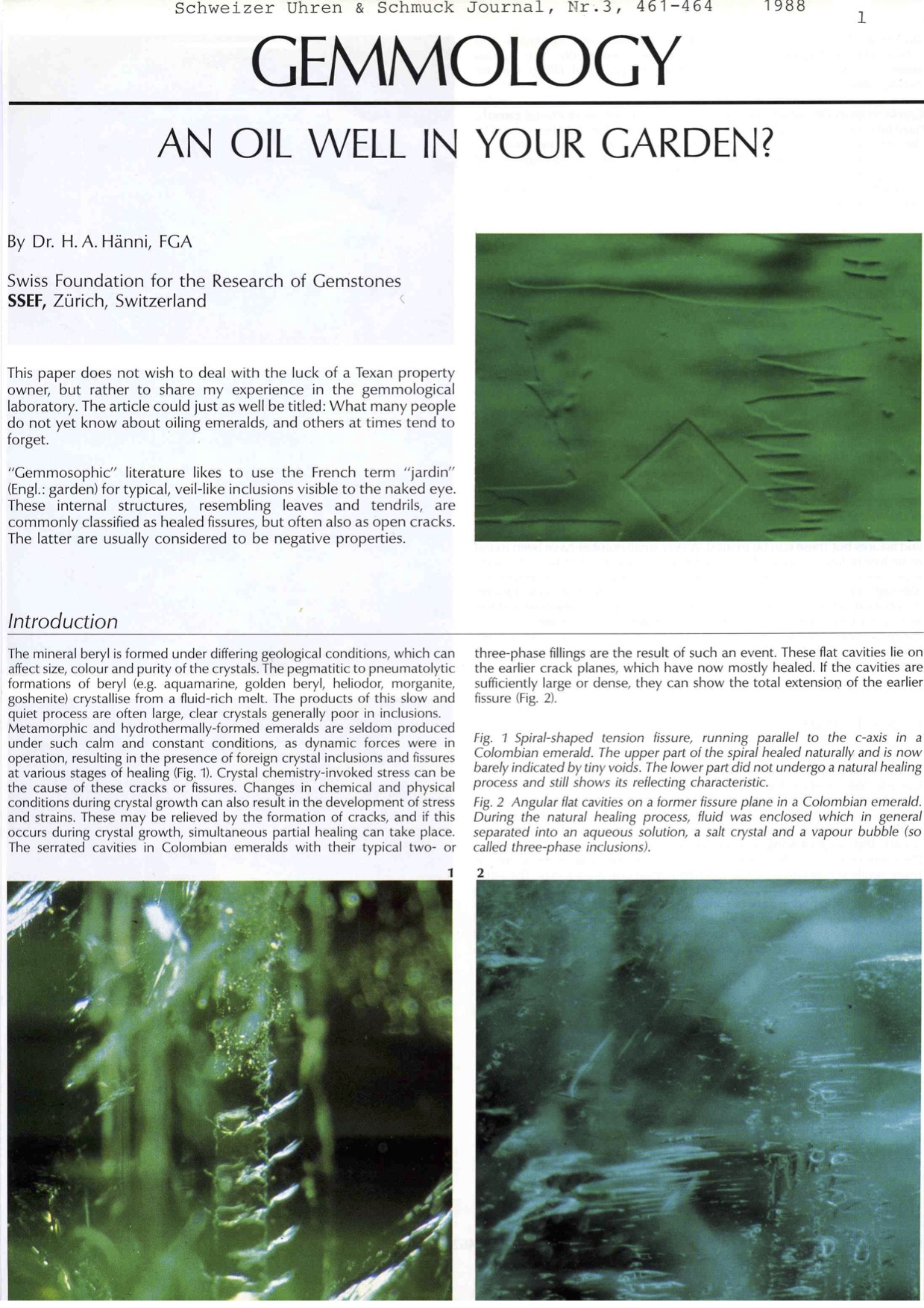
An oil well in your garden

An oil well in your garden

Hänni, H.A. (1988)

Journal Article · Source: Swiss Watch and Jewellery Journal · Issue: Mar-88 · Pages: pp. 461–464

Abstract
This paper does not wish to deal with the luck of a Texan property owner, but rather to share my experience in the gemmological laboratory. The article could just as well be titled: What many people do not yet know about oiling emeralds, and others at times tend to forget. ”Cemmosophic” literature likes to use the French term jardin” (Engl.: garden) for typical, vei|—like inclusions visible to the naked eye. These internal structures, resembling leaves and tendrils, are commonly classified as healed fissures, but often also as open cracks. The latter are usually considered to be negative properties."
Keywords
gems, emerald, oiling, treatments, enhancements, fillers
Goethite inclusion alteration during the heat conversion of amethyst to citrine

Goethite inclusion alteration during the heat conversion of amethyst to citrine

Koivula, J.I. (1987)

Journal Article · Source: Australian Gemmologist · Volume: Vol. 16 · Issue: No. 7 · Pages: pp. 271–272

Abstract
Important article that details how goethite inclusions, are altered to hematite by heat treatment of amethyst to citrine. This note describes the conversion of goethite to hematite when amethyst containing goethite inclusions is heated to produce brownish yellow coloured “fired” citrine quartz. The resulting hematite pseudomorphs after goethite are always accompanied by at least some fracturing in the amethyst-citrine because of water loss during dehydration of the inclusions.
Keywords
gems, treatments, heat treatment, inclusions, quartz, citrine, amethyst, goethite, hematite
New investigations of synthetic amethysts produced in Japan

New investigations of synthetic amethysts produced in Japan

Lind, T. and Schmetzer, K. (1987)

Journal Article · Source: Journal of Gemmology · Volume: Vol. 20 · Issue: No. 5 · Pages: pp. 274–277

Abstract
Synthetic amethysts of Japanese production, which are now available in the gem trade, are characterized with respect to their diagnostic properties such as inclusions, growth structures, twinning, and infrared spectra. The gemstones frequently have feathers consisting of liquid-filled and two-phase inclusions, sharp growth zoning parallel to one rhombohedral face, as well as twin structures. This twinning, however, can be distinguished from polysynthetic lamellar twinning in natural amethysts.
Keywords
gems, quartz, synthetic quartz, synthetic amethyst, Japan, hydrothermal, polysynthetic twinning
Esmeraldas – Inclusões em gemas

Esmeraldas – Inclusões em gemas

Emeralds — Inclusions in gems

Schwarz, D. (1987)

Book · Publisher: Imprensa Universitária UFOP · Pages: 450 + XI pp. · Language: in Portuguese

Abstract
A comprehensive study of inclusions in emerald, with particular emphasis on their use in gemological identification and determination of geographic origin. Schwarz examines solid mineral inclusions, fluid inclusions, growth features and other internal characteristics of emeralds from the principal producing localities, comparing their characteristic inclusion assemblages. Brazilian occurrences receive extensive treatment, including Carnaíba and Socotó in Bahia, Santa Terezinha in Goiás, and deposits in Minas Gerais, alongside material from Colombia and other world sources. The work illustrates how combinations of mineral inclusions, fluid inclusions and growth structures can distinguish emeralds from different geological environments and can assist in separating natural from synthetic material. It became an important reference for subsequent studies of emerald inclusions and geographic origin. Sadly this softcover book was poorly printed on low quality paper.
Keywords
gems, beryl, emerald, inclusions, Brazil, Colombia, etc.
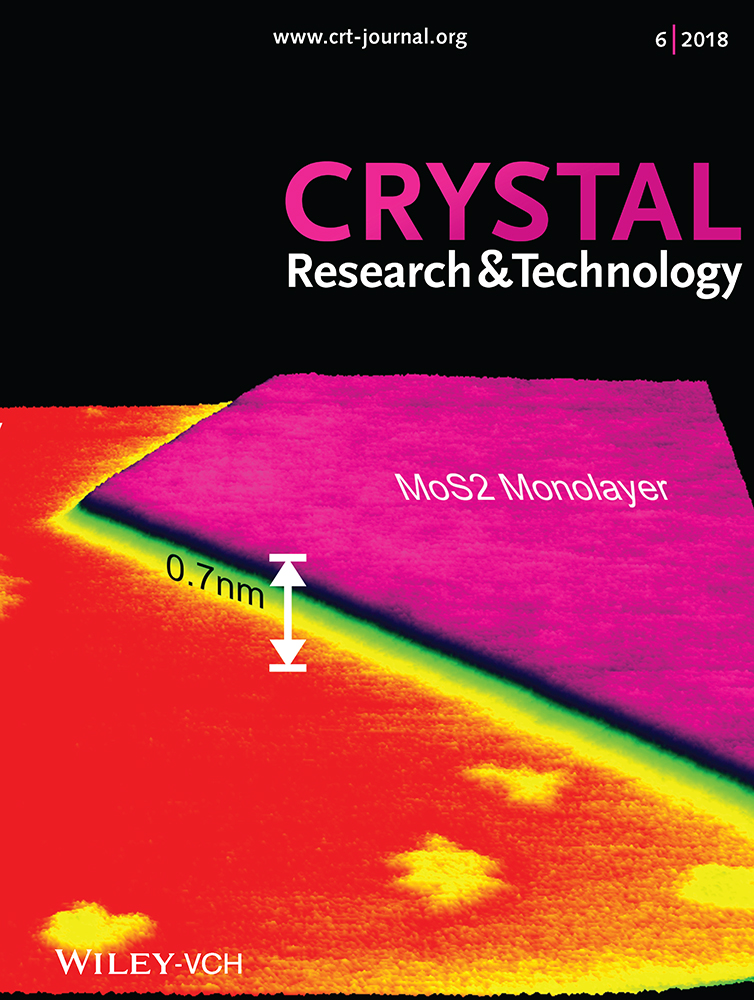
Inclusions in flux-grown crystals of corundum

Inclusions in flux-grown crystals of corundum

Watanabe, K. (1987)

Journal Article · Source: Crystal Research and Technology · Publisher: Wiley-Blackwell · Volume: Vol. 22 · Issue: No. 3 · Pages: pp. 345–355

Abstract
Single crystals of corundum were grown by seeded techniques, such as stationary, seed-rotation, and top-seeded, from molten Na- or Li-cryolite (Na₃AlF₆ or Li₃AlF₆) flux. Inclusions—such as flux inclusions, negative crystals, and cavities—present in the crystals were examined under an optical microscope, and the formation mechanisms and shapes of these inclusions, depending on differences in growth technique and conditions, are briefly described.
Keywords
gems, corundum, synthetic corundum.7, flux ruby
Internal diffusion

Internal diffusion

Koivula, J.I. (1987)

Journal Article · Source: Journal of Gemmology · Volume: Vol. 20 · Issue: No. 7/8 · Pages: pp. 474–477

Abstract
Some minerals, such as rutile, hematite and ilmenite, found as inclusions in sapphires are capable of imparting body—colour to their host during high temperature heat treatment. The inclusions are cannibalized by the host sapphire for the chromophoric elements they contain. If the inclusions are not completely consumed by their host this ‘internal diffusion’ results in a zone of intensely coloured sapphire surrounding the remaining inclusions.
Keywords
corundum, color.4, inclusions.5, treatments.6, synthetic corundum.7, gems
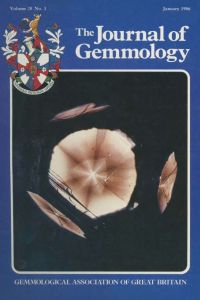
On corundums from Umba Valley, Tanzania

On corundums from Umba Valley, Tanzania

Hänni, H.A. (1987)

Journal Article · Source: Journal of Gemmology · Volume: Vol. 20 · Issue: No. 5, January · Pages: pp. 278–284

Abstract
The many colours exhibited by corundums from Umba Valley in Tanzania are related to their varying contents of Fe, Ti, Cr and V. Ni and Co could not be detected by the EDS-XRF technique used. The presence of abundant inclusions distinguishes these gemstones, and the following were found: zircon, rutile(?), apatite, hematite, mica, monazite, plagioclase, calcite, pyrrhotine and graphite. Healed fractures, negative crystals, colour zoning, twinning with traces of intersecting lamellae and boehmite(?) laths were noted. Techniques for the identification of inclusions are discussed. The densities (3.98–4.01 g/cm³) and refractive indices (nₑ 1.761–1.768, nₒ 1.769–1.778) were also determined. Spectral features are given.
Keywords
corundum, sapphire, Umba, Tanzania.12, inclusions.5, gems
Inklusen im Bernstein

Inklusen im Bernstein

Inclusions in amber

Gübelin, E.J. and Koivula, J.I. (1986)

Journal Article · Source: Zeitschrift der Deutschen Gemmologischen Gesellschaft · Volume: Vol. 35 · Issue: No. 3/4 · Pages: pp. 73–86 · Language: In German

Abstract
Gübelin and Koivula examine the diverse inclusions found in amber, extending attention beyond the familiar plant and animal remains to the less frequently discussed inorganic and fluid features. The article illustrates insects and other organic inclusions together with gas bubbles, liquid-bearing cavities and other structures preserved in fossil resin. Particular attention is given to the processes by which inclusions became trapped and subsequently preserved and to microscopic features that provide information about the history of the resin. Examples include cavities interpreted as gas or air bubbles and two-phase inclusions possibly representing droplets of water with contraction bubbles. The text corresponds closely to the amber section of the authors’ 1986 Photoatlas of Inclusions in Gemstones, although some of the photographs differ.
Keywords
amber, inclusions, gems
Einschlüsse im Quarz

Einschlüsse im Quarz

inclusions in Quartz

Gübelin, E.J. and Koivula, J.I. (1986)

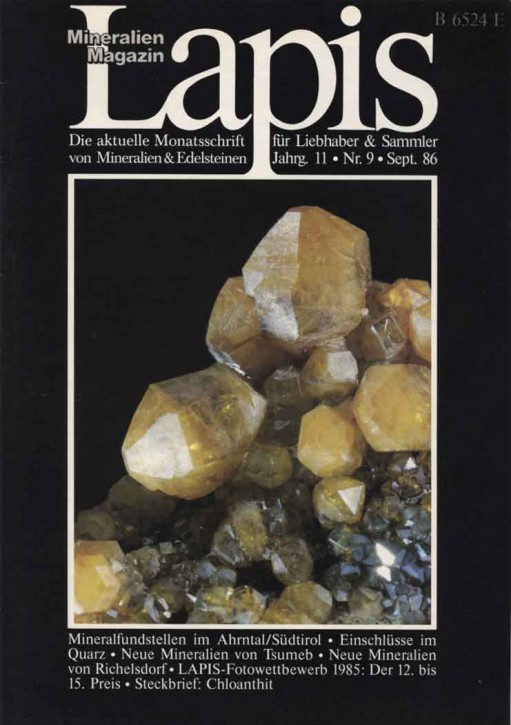
Journal Article · Source: Lapis · Volume: Vol. 11 · Issue: No. 9, Sept. · Pages: pp. 19–26 · Language: in German

Abstract
Gübelin and Koivula present a photographic survey of inclusions in quartz, illustrating the remarkable variety of solid, liquid and gaseous features that may occur within the mineral. The examples demonstrate mineral crystals, fluid inclusions, growth phenomena and other internal structures, emphasizing both their visual diversity and their value for interpreting the formation of their quartz hosts. The article consists principally of selected photomicrographs from the authors’ Photoatlas of Inclusions in Gemstones, accompanied by explanatory captions. A contemporary Journal of Gemmology abstract specifically describes it as a series of color photographs taken from the Photoatlas and records 42 color figures.
Keywords
quartz, inclusions, gems
Photoatlas of Inclusions in Gemstones

Photoatlas of Inclusions in Gemstones

Gübelin, E.J. and Koivula, J.I. (1986)

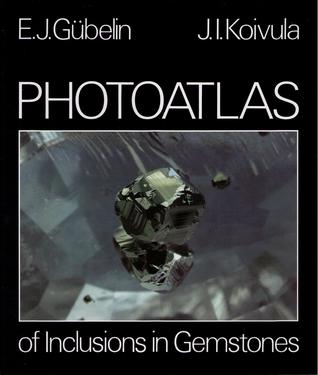
Book · Publisher: ABC Edition · Pages: 532 pp.

Abstract
Sinkankas: A truly remarkable work and one of the major achievements in gemological literature of this century, affording as it does both a vast treasury of outstanding colored photographs of inclusions and remarks on same which explain their origin and significance. Such explanatory remarks appear in part one, and are followed in part two by succinct descriptions of geneses with contributions by Roedder, Meyer, and Stalder. Part three now treats inclusions themselves, ranging from amphibole to zircon, and also inclusions of glass, fluids, multiple inclusions, aggregates, and others of remarkable form or nature. Part four, the major part, treats the individual gem materials that host inclusions from amber to zoisite, and including phenomenal gemstones and rare species. Part five describes inclusions in man-made materials, mineralic, plastic, glass, etc. The references cited and general literature are by no means exhaustive and some major contributions by such as David Brewster and Isaac Lea are unaccountably absent.
Keywords
corundum, inclusions.5, treatments.12, synthetic corundum.7, ruby, sapphire, Australia.12, Burma.12, Cambodia.12, China.12, Colombia.12, Greenland.12, India.12, Kashmir.12, Kenya.12, Malawi.12, Pakistan.12, Sri Lanka.12, Tanzania.12, Thailand.12, USA.12, Montana.12, spinel, gems
European Gemmologists on Gemstones of the World

European Gemmologists on Gemstones of the World

CISGEM (1986)

Conference Proceedings · Source: Gemmologia Europa · Publisher: CISGEM · Volume: Vol. 1 · Pages: 174 pp. · Language: in English & Italian

Abstract
The first volume in CISGEM’s Gemmologia Europa series, bringing together contributions by leading European gemologists on important gem materials and gemological problems. The papers include discussions of diamond, emerald, opal and other colored stones, combining descriptions of deposits and geographic sources with gemological properties, inclusions, identification and aspects of formation. Among the contributors are E. Alan Jobbins, Henri-Jean Schubnel, Jan Kanis, Eduard J. Gübelin and Pieter C. Zwaan. Gübelin’s contribution, for example, compares Australian and Mexican opals. The volume provides a snapshot of European gemological research and expertise in the mid-1980s, with parallel English and Italian text. This includes Pailin sapphire, Sri Lankan gems, gems from Brazil, Mozambique, Zambia, Zimbabwe, South Africa, Namibia, and opal from Mexico and Australia.
Keywords
corundum, sapphire, Cambodia.12, Thailand.12, ruby, Sri Lanka.12, Brazil, Mozambique, Zambia, Zimbabwe, South Africa, Namibia, opal, Mexico, Australia, emerald, gems
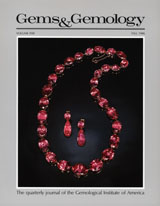
Carbon dioxide fluid inclusions as proof of natural-colored corundum

Carbon dioxide fluid inclusions as proof of natural-colored corundum

Koivula, J.I. (1986)

Journal Article · Source: Gems & Gemology · Volume: Vol. 22 · Issue: No. 3, Fall · Pages: pp. 152–155

Abstract
The question of how to identify natural-colored from heat-treated corundum has long puzzled the gemological community. One important clue is now provided b y carbon dioxide fluid inclusions. Because such inclusions cannot survive heat treatment, their existence intact and unruptured in rubies and sapphires i s conclusive proof that n o heat treatment has occurred.
Keywords
gems, corundum, treatments.6, inclusions.5, Sri Lanka.12
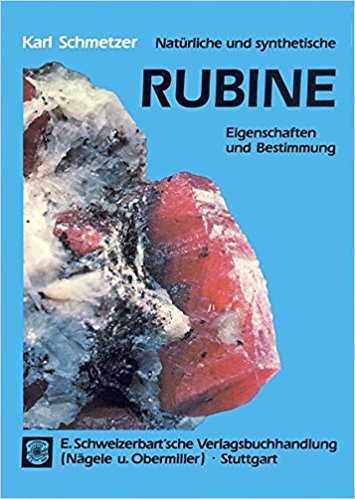
Natürliche und synthetische Rubine—Eigenschaften und Bestimmung

Natürliche und synthetische Rubine—Eigenschaften und Bestimmung

Natural and Synthetic Rubies—Properties and Identification

Schmetzer, K. (1986)

Book · Publisher: E. Schweizerbart’sche Verlagsbuchhandlung (Nägele u. Obermiller) · Pages: vi + 131 pp., with 31 color photographs, 144 black–and–white photographs and 21 figures · Language: in German

Abstract
Schmetzer presents a comprehensive study of the identification and separation of natural and synthetic rubies, based on examination of approximately 900 natural and 350 synthetic stones. After reviewing the mineralogy and crystallography of corundum, he describes five principal methods of synthetic ruby growth and the analytical techniques employed, including microscopy, UV-visible and infrared spectroscopy, ultraviolet fluorescence, goniometry and chemical analysis. The principal emphasis is on microscopic inclusions and internal growth structures: rutile, boehmite, twinning and characteristic growth features are discussed as evidence of natural origin, while diagnostic inclusions and structures in synthetic material are related to particular growth processes and manufacturers. Natural rubies from 15 localities are described and compared, followed by similarly organized accounts of 11 types of synthetic ruby. The work is extensively illustrated and intended as a practical reference for determining whether a ruby is natural or synthetic and, in many cases, establishing its geographic source or method of synthesis.
Keywords
natural ruby, synthetic corundum.7, gemology, inclusions.5, gems

Exploring the Literature of Gemstone Inclusions

The literature of gemstone inclusions covers identification, origin determination, treatments, synthesis, mineral inclusions, fluid inclusions and other internal features of natural and synthetic gems.

For a curated selection of important sources, read Inclusions in Gemstones — Hyperion Literature Sources.

About Four Treasures

Four Treasures is Lotus Gemology's freely accessible gemological reference database. Use the full database to search by author, title or keyword and explore literature on gemology, mineralogy, jewelry and related fields. Where available, hyperlinks on titles may lead directly to the full publication.

Search the Complete Four Treasures Database