Gemstone Inclusions Bibliography

Gemstone Inclusions Bibliography

Explore books, articles and historical sources on inclusions in gemstones in Four Treasures, the Lotus Gemology reference database. This bibliography brings together matching records from the collection, with publication details, abstracts and cover images where available.

Gemstone Inclusion References

The list below matches the terms inclusion or inclusions in the database's searchable fields. Some references discuss inclusions as part of a broader subject.

121–140 of 1,111 matching references
Sri Lankan sapphire enhanced by heat with pressure

Sri Lankan sapphire enhanced by heat with pressure

Choi, H., Kim, S., Kim, Y., Leelawatanasuk, T., Lhuaamporn, T., Atsawatanapirom, N. and Ounorn, P. (2018)

Journal Article · Source: Journal of the Gemmological Association of Hong Kong · Volume: Vol. 39 · Pages: pp. 16–25

Abstract
For decades now heat treatment has been used successfully as an enhancement process for sapphires, particularly blue sapphires, and is both accepted and widely practiced in the jewellery industry. Considered one of the classic coloured gemstones, fine quality blue sapphire is always in great demand. The techniques used for heat treatment are constantly being developed, not only in Thailand, and seem to involve increasingly sophisticated instruments. For instance, the famous Sri Lankan heat treatment technique known as the “Punsiri method” that has been seen to improve the colour of blue sapphire from various deposits successfully (G. DuToit et al., 2009). In 2013, a Korean company successfully developed a new technique for enhancing blue sapphire and began to trade their product in the gem market. This process involves the intentional application of pressure while heating the stone. This new technique significantly reduces the time needed to change the stone’s colour and/or clarity compared with the traditional heat treatment where stones are simply heated in a furnace. So far, Sri Lankan sapphire, (the so called Geuda sapphires) is the only commercial product that this company claims to be treating successfully. The blue sapphire resulting from this treatment commonly shows a typical strong OH-related absorption in the Mid-IR spectrum. This and some characteristic inclusion features are important keys for identification of sapphire that has undergone heat and pressure treatment. Further study is required to increase our understanding of the change mechanism and also the exact role of pressure in this process.
Keywords
gems, corundum, treatments.6, HPHT
Close-up photographs of gemstone inclusions: Are they works of art?

Close-up photographs of gemstone inclusions: Are they works of art?

Minieri, P. (2018)

Web Page · Source: Rivista Italiana di Gemmologia – Italian Gemological Review · Issue: 18 February 2018

Abstract
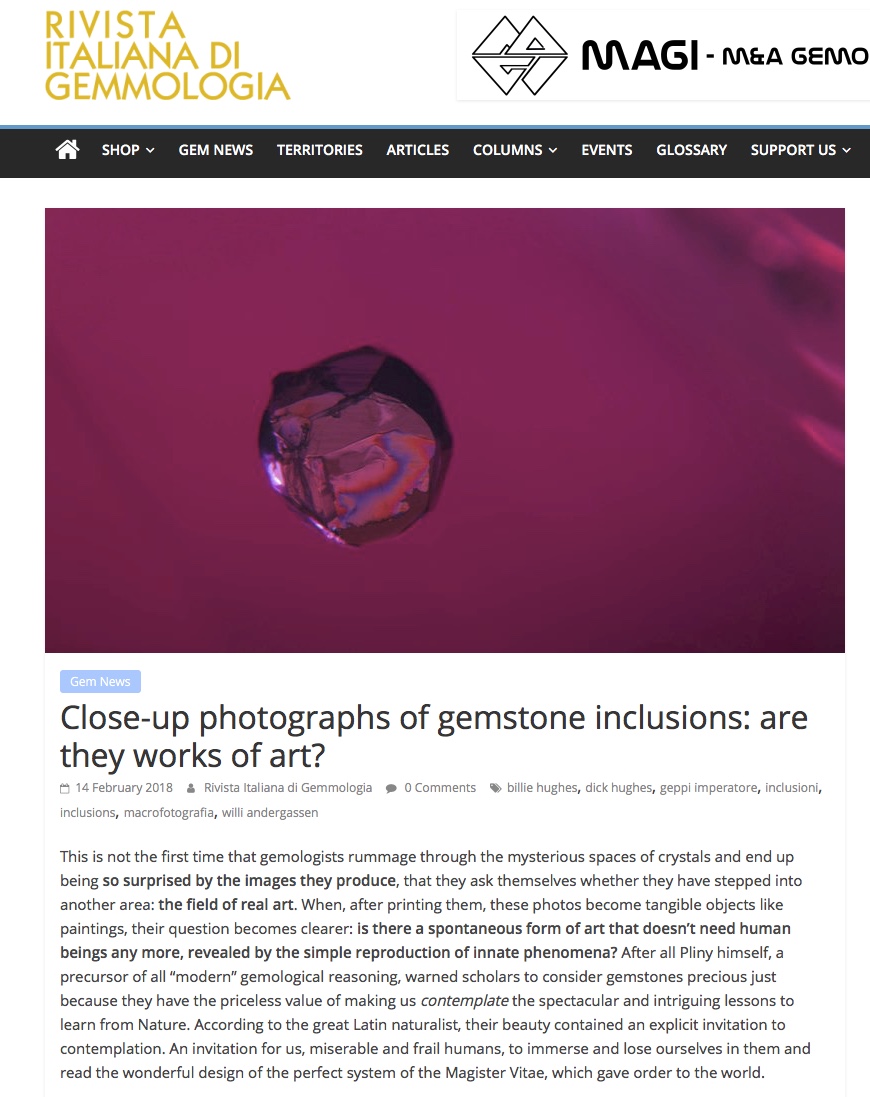
This is not the first time that gemologists rummage through the mysterious spaces of crystals and end up being so surprised by the images they produce that they ask themselves whether they have stepped into another area: the field of real art. When, after printing them, these photos become tangible objects like paintings, their question becomes clearer: is there a spontaneous form of art that doesn’t need human beings any more, revealed by the simple reproduction of innate phenomena? After all Pliny himself, a precursor of all “modern” gemological reasoning, warned scholars to consider gemstones precious just because they have the priceless value of making us contemplate the spectacular and intriguing lessons to learn from Nature. According to the great Latin naturalist, their beauty contained an explicit invitation to contemplation. An invitation for us, miserable and frail humans, to immerse and lose ourselves in them and read the wonderful design of the perfect system of the Magister Vitae, which gave order to the world.
Keywords
gems, corundum, inclusions.5, photomicrography, E. Billie Hughes, Lotus Gemology
Objective Diamond Clarity Grading

Objective Diamond Clarity Grading

Cowing, M.D. (2017)

Book · Publisher: self-published · Pages: 140 pp.

Abstract
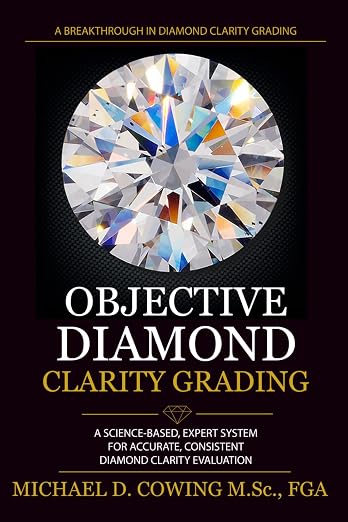
Developed by gemologist Michael D. Cowing, M.Sc., FGA, this book presents a structured framework that mirrors the decision-making processes of expert diamond graders while enabling greater grading consistency and accuracy. Through extensive examples, clear methodology, and more than 250 detailed images, readers learn to assess clarity characteristics, evaluate inclusions, and develop confidence in assigning clarity grades. Drawing upon years of research and practical diamond grading experience, Objective Diamond Clarity Grading bridges the gap between traditional expertise and objective measurement, making advanced clarity grading concepts accessible to aspiring gemologists, professional appraisers, diamond dealers, and serious diamond enthusiasts. This work represents a significant advancement toward accurate, consistent, and reproducible diamond clarity grading by applying objective measures that accurately replicate the grading decisions of experienced professional graders.
Keywords
gems, diamond, diamond grading, diamond clarity grading
Melt inclusions in alluvial sapphires from Montana, USA: Formation of sapphires as a restitic component of lower crustal melting?

Melt inclusions in alluvial sapphires from Montana, USA: Formation of sapphires as a restitic component of lower crustal melting?

Palke, A.C., Renfro, N.D. and Berg, R.B. (2017)

Journal Article · Source: Lithos · Volume: Vol. 278–281 · Pages: pp. 43–53

Abstract
We report here compositions of glassy melt inclusions hosted in sapphires (gem quality corundum) from three alluvial deposits in Montana, USA including the Rock Creek, Dry Cottonwood Creek, and Missouri River deposits. While it is likely that sapphires in these deposits were transported to the surface by Eocene age volcanic events, their ultimate origin is still controversial with many models suggesting the sapphires are xenocrysts with a metamorphic or metasomatic genesis. Melt inclusions are trachytic, dacitic, and rhyolitic in composition. Microscopic observations allow separation between primary and secondary melt inclusions. The primary melt inclusions represent the silicate liquid that was present at the time of sapphire formation and are enriched in volatile components (8–14wt.%). Secondary melt inclusions analyzed here for Dry Cottonwood Creek and Rock Creek sapphires are relatively volatile depleted and represent the magma that carried the sapphires to the surface. We propose that alluvial Montana sapphires from these deposits formed through a peritectic melting reaction during partial melting of a hydrated plagioclase-rich protolith (e.g. an anorthosite). The heat needed to drive this reaction was likely derived from the intrusion of mantle-derived mafic magmas near the base of the continental lithosphere during rollback of the Farallon slab around 50Ma. These mafic magmas may have ended up as the ultimate carrier of the sapphires to the surface as evidenced by the French Bar trachybasalt near the Missouri River deposit. Alternatively, the trachytic, rhyolitic, and dacitic secondary melt inclusions at Rock Creek and Dry Cottonwood Creek suggests that the same magmas produced during the partial melting event that generated the sapphires may have also transported them to the surface. Determining the genesis of these deposits will further our understanding of sapphire deposits around the world and may help guide future sapphire prospecting techniques. This work is also important to help reveal the history of mantle-derived mafic magmas as they pass through the continental crust.
Keywords
gems, corundum, USA.12, Montana.12, sapphire, melt inclusions
Vesuvianite in Burmese ruby

Vesuvianite in Burmese ruby

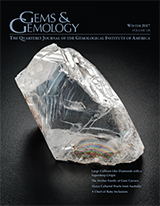
Renfro, N. and Koivula, J.I. (2017)

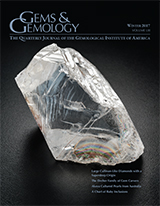
Journal Article · Source: Gems & Gemology · Volume: Vol. 53 · Issue: No. 4, Winter · Pages: p. 469

Keywords
corundum, inclusions.5, Burma.12, gems
Jadeitite from Itoigawa, Niigata Prefecture, central Japan

Jadeitite from Itoigawa, Niigata Prefecture, central Japan

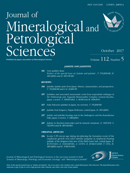
Hirajima, T. (2017)

Journal Article · Source: Journal of Mineralogical and Petrological Sciences · Volume: Vol. 112 · Issue: No. 5 · Pages: pp. 227–236

Abstract
This paper presents a review of Itoigawa’s jadeitite in history, culture, process of rediscovery, and geological characteristics. The people of the Jomon age used jadeitite as tools as far as 7000 years ago, making it one of the oldest jadeitite cultures in the world. The jadeitites from Itoigawa were the source of ornaments such as pendants or comma–shaped beads that can be dated to the Jomon age through to the Nara period. These ornaments are widely found in Japanese Islands from Hokkaido to Okinawa Prefecture, and also in the southern part of the Korean Peninsula. The jadeitite, however, was not used after the Nara period. The disappearance of jadeitite culture is not well understood, but it may have been caused by the introduction of Buddhism into Japan. Therefore, the existence of jadeitite in Japan was forgotten for a period of 1200 years after the Nara period. Mr. Eizo Ito rediscovered jadeitite from Itoigawa when he identified the durable green rock in the Kotakigawa River in 1938. His success was inspired by the idea of Mr. Gyofu Soma. The rediscovered jadeitite was studied by Dr. Yoshinori Kawano of the Tohoku Imperial University in 1939. There are large jadeitite boulders weighing more than 100 tons found in several areas of the Kotakigawa and Ohmigawa Rivers. These areas are designated national natural monuments. The jadeitite from Itoigawa can be found in various colors such as white, gray, black, lavender, and blue. These color variations are caused by the presence of trace elements such as iron and titanium in jadeite and omphacite, and tiny graphite inclusions in jadeitite. The absence of quartz and euhederal jadeite crystals with natrolite and veinlets of jadeitite indicates that the Itoigawa jadeitite does not form through decomposition of albite, but by hydrothermal activity. Some strontium dominant minerals such as itoigawaite were first found in jadeitite from Itoigawa. These strontium dominant minerals form in the calcium depleted hydrothermal solution in the late stages of jadeitite formation. The Jomon is the oldest jadeitite culture worldwide, and the first documented use of precious stones in the history of mankind. In addition, the jadeitite found in Itoigawa is the oldest known unit of its kind.
Keywords
gems, jade, jadeite, fei cui, jadeitite, Japan, fei cui, geology
Diamond: Intimate portraits

Diamond: Intimate portraits

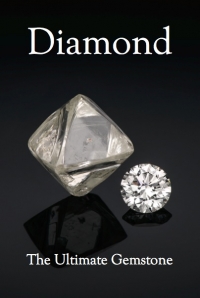
Koivula, J.I. and Skalwold, E.A. (2017)

Book Section · Source: Diamond • The Ultimate Gemstone · Publisher: Lithographie · Issue: Lithographie Monograph No. 19 · Pages: pp. 54–61

Keywords
gems, diamond, diamond inclusions
Characterization and provenance of ancient gemstones: Case study of a gold-and-sapphire jewel dating from the Roman imperial period and found in a tomb in Colonna, Italy

Characterization and provenance of ancient gemstones: Case study of a gold-and-sapphire jewel dating from the Roman imperial period and found in a tomb in Colonna, Italy

Butini, E., Butini, F., Angle, M., Cerino, P., Angelis, A., de, Tomei, N. and Altamura, F. (2017)

Conference Paper · Source: 3rd IMEKO International Conference on Metrology for Archaelogy and Cultural Heritage · Pages: pp. 312–317

Abstract
In 2011, an extraordinary piece of gold jewelry set with precious stones was found in a woman’s tomb discovered not far from Rome and dating from the third century AD. Our examination and archaeometric analyses enabled us to identify the technique used to make the jewel and to characterize the nature and provenance of the gemstones. The analyses showed that all the stones were natural sapphires. Their inclusions and gemmological features indicate that they came from southern and south- eastern Asia, thus gaining insights about trade routes and the luxury-goods market during the Roman imperial period.
Keywords
gems, corundum, History.1
Inclusions in natural, synthetic and treated sapphire

Inclusions in natural, synthetic and treated sapphire

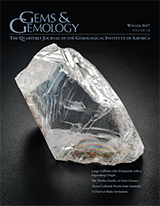
Renfro, N., Koivula, J.I., Muyal, J., McClure, S.F., Schumacher, K. and Shigley, J.E. (2017)

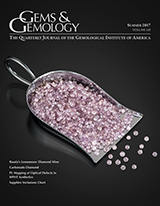
Journal Article · Source: Gems & Gemology · Volume: Vol. 53 · Issue: No. 2, Summer · Pages: pp. 213–214

Abstract
This is the second chart in G&G’s series focused on micro-features often observed in natural, treated, and synthetic gems. Sapphire (figure 1) was chosen because of its enduring importance within the gem trade. Demand for this gem species has been the driving force behind the development of treat ment techniques to improve natural stones and the continued production of inexpensive synthetics. Natural sapphires, which originate in certain ig-neous or metamorphic geologic environments are commonly treated to improve their color or clarity. The most common processes involve heat treatment to improve color. Synthetic sapphires have been pro-duced for more than a century, mostly by melt, flux, or hydrothermal solution methods (Hughes, 2017). All of these materials are widely encountered in the jewelry trade.
Keywords
corundum, sapphire, inclusions.5, synthetic corundum.7, gems
Why are some crystals gem quality? Crystal growth considerations on the “gem factor”

Why are some crystals gem quality? Crystal growth considerations on the “gem factor”

Fritsch, E., Rondeau, B., Devouard, B., Pinsault, L. and Latouche, C. (2017)

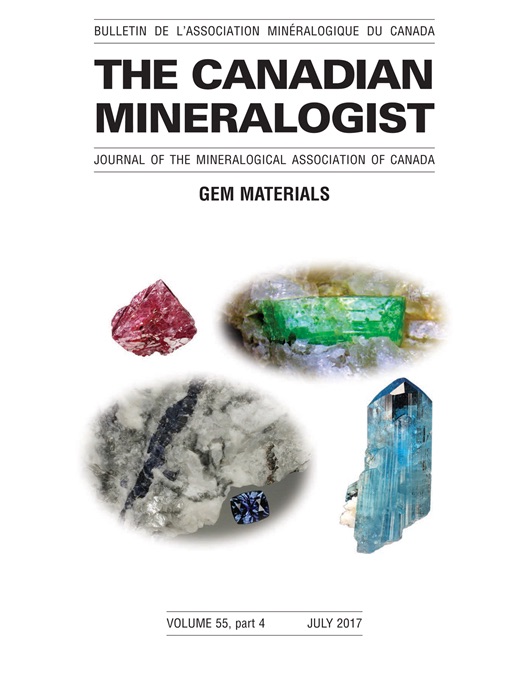
Journal Article · Source: Canadian Mineralogist · Volume: Vol. 55 · Pages: pp. 521–533

Abstract
The purpose of this work is to investigate the crystal growth parameters necessary or sufficient to obtain a crystal specifically of gem quality. We assume adequate chemistry is available. First, nucleation must occur with only a limited number of nuclei, otherwise too many crystals will be produced, and they will be too small to be faceted into a gem. Two growth mechanisms are readily documented for gems: Most commonly there is slow growth, driven by a spiral growth mechanism, leading to large single individuals. There are only a few examples of fast growth leading to gem-quality edifices: examples include ‘‘gota de aceite’’ Colombian emerald or the dendritic ‘‘pseudo cube’’ for gem diamonds. We have not documented the intermediate conditions between these two extremes in the Sunagawa diagram, which would correspond to 2D nucleation growth. The presence of inclusions is to be limited to desirable ones. Thus, in general, a good stability of the growth interface is the best guarantee of good clarity in the final gem. As for the interface, in general, growth conditions must be relatively stable over the period necessary to achieve growth. Perhaps surprisingly, it has become well documented that gem-quality near-colorless diamonds may have experienced quite a complex growth history. Therefore, the term stability has to be re-defined for each system producing a given gem. The length of time it takes to achieve crystallization of the gem has rarely been studied or estimated. Scientific evidence from experimental petrology and the growth of synthetic gems indicates that it does not take millions of years to grow a gem, but that this exercise may be achieved in a week to, arguably, a few years at the most. Available free space to grow does not appear always necessary, but it helps. Otherwise deformation, inclusions, and other negative effects may occur. Finally, no dramatic post-growth events, such as fracturing or etching, should affect the gem crystal.
Keywords
corundum, chemistry.2, gems
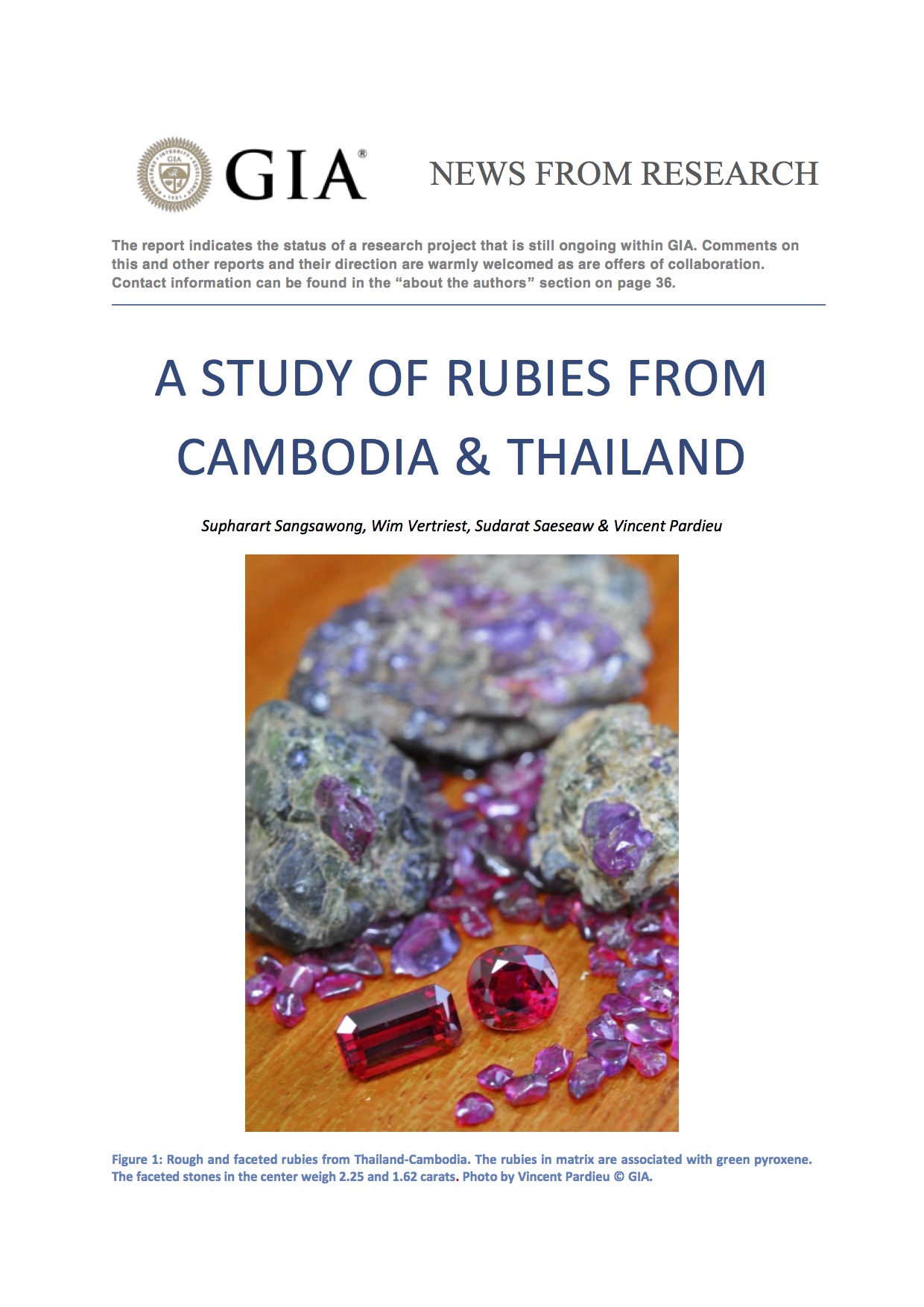
A Study of Rubies from Cambodia & Thailand

A Study of Rubies from Cambodia & Thailand

Sangsawong, S., Vertriest, W., Saeseaw, S. and Pardieu, V. (2017)

Report · Source: GIA News From Research · Publisher: Gemological Institute of America · Pages: 37 pp. · Language: in english

Abstract
Rubies in Thailand and Cambodia are found in the border area of both countries, in the areas of Pailin (Cambodia) and Chanthaburi-Bo Rai-Trat (Thailand). Although being recovered for over 100 years, Thai and Cambodian rubies have been mined intensively in the 1960’s-1990’s. Those were large-scale mechanized operations. Production today has dropped drastically, but small scale and artisanal miners are still finding rubies. These are mainly on the Cambodian side of the border. For this study, 41 samples were analyzed at the GIA laboratory in Bangkok. Internal features were documented with a focus on mineral inclusions, fingerprints and twinning planes. Advanced techniques such as UV-VIS-NIR spectroscopy were used to analyze the color of these rubies. Trace element chemistry was measured using LA-ICP-MS to support the spectroscopy and to compare this data with rubies from other deposits.
Keywords
corundum, Thailand.12, Cambodia.12, gems
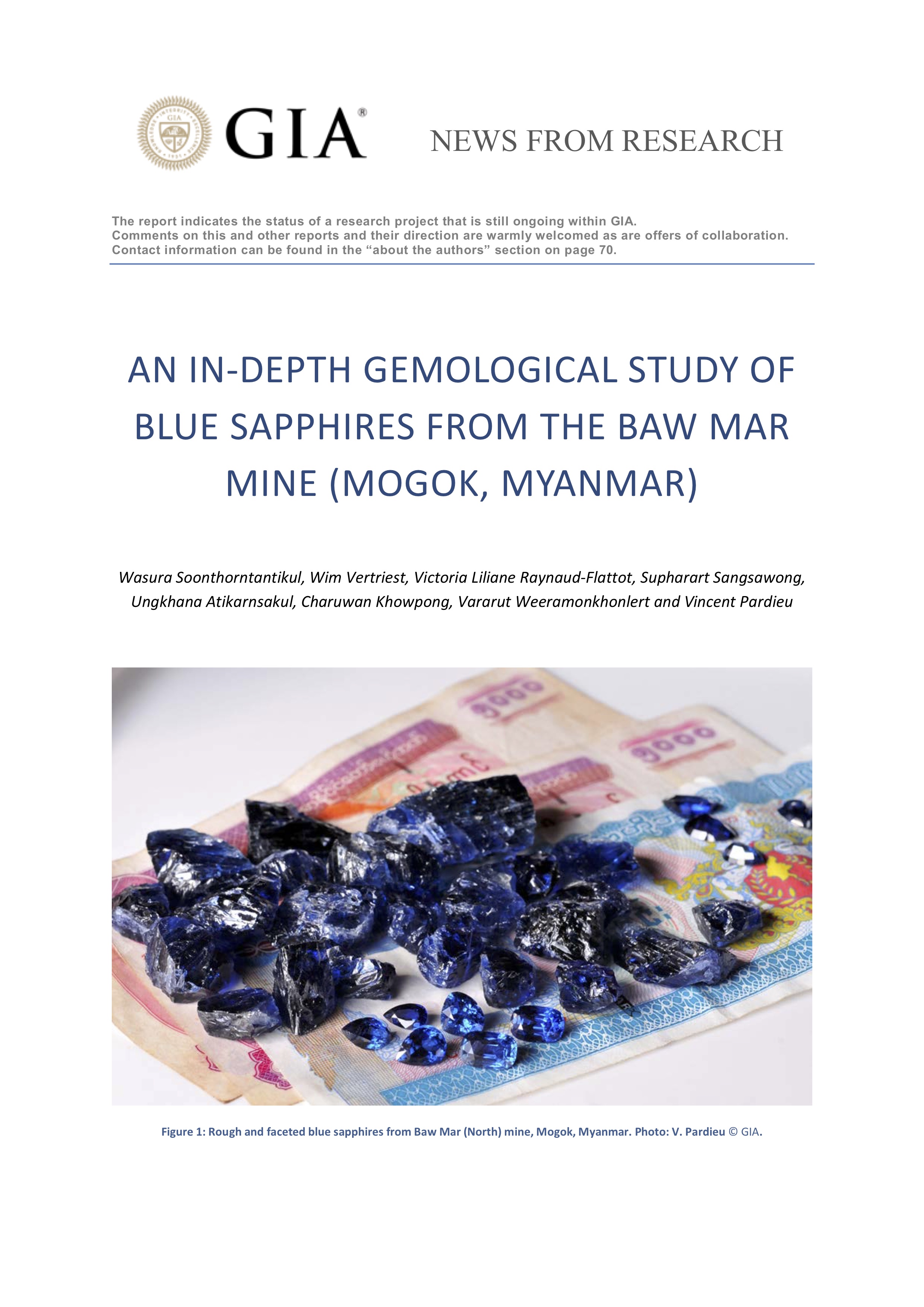
An in-depth gemological study of blue sapphires from the Baw Mar mine (Mogok, Myanmar)

An in-depth gemological study of blue sapphires from the Baw Mar mine (Mogok, Myanmar)

Soonthorntanikul, W., Vertriest, W., Raynaud-Flattot, V.L., Sangsawong, S., Atikarnsakul, U., Khowpong, C., Weeramonkhonlert, V. and Pardieu, V. (2017)

Report · Source: GIA News from Research · Publisher: Gemological Institute of America · Issue: February · Pages: 87 pp.

Abstract
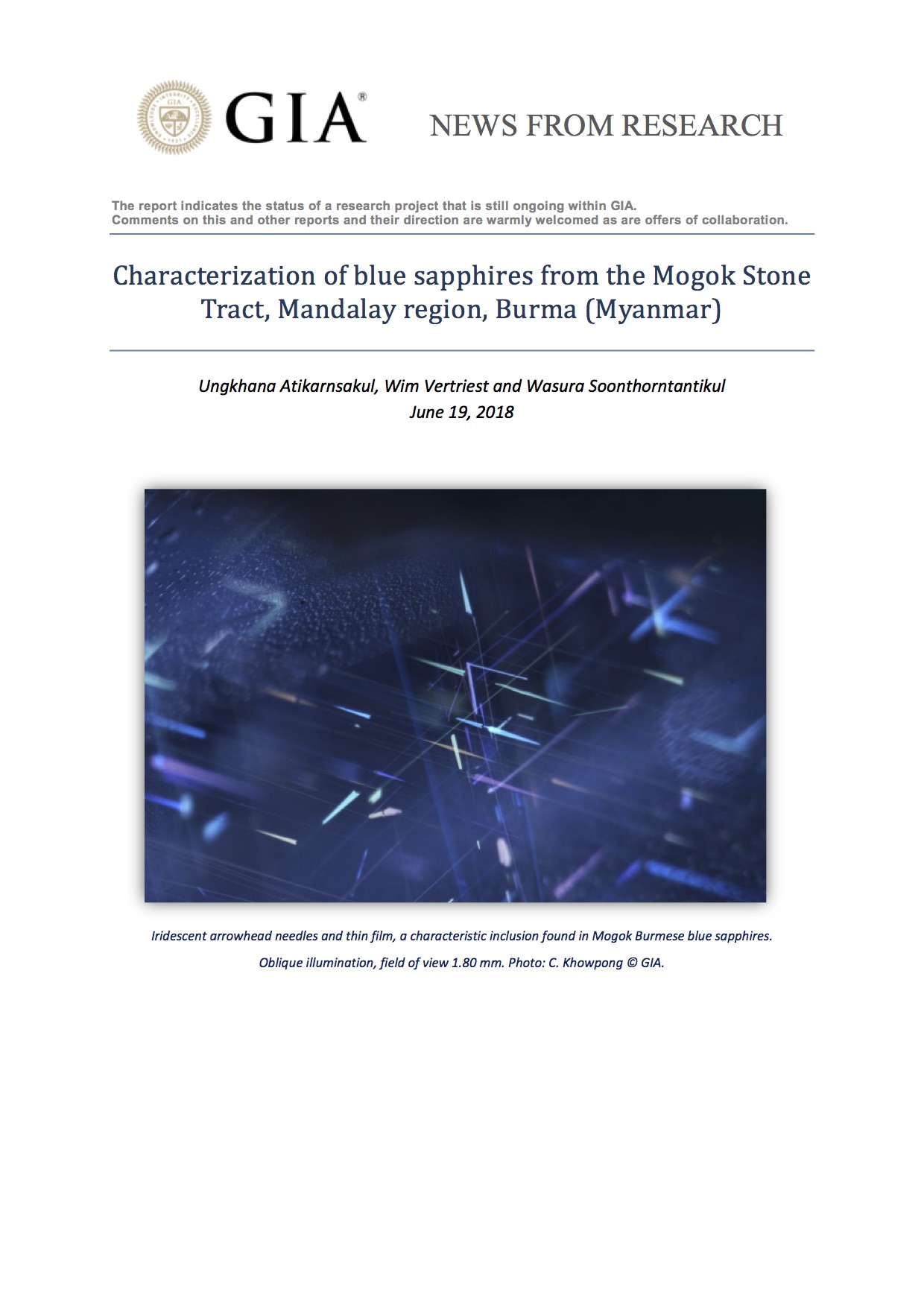
High quality blue sapphires have been mined in Myanmar for centuries (Kane & Kammerling 1992, Themelis 2001, Hughes 1997). Until the end of the 20th Century, sapphires were mined from the Mogok Stone Tract, mainly in the western area near Kyatpin and around Mogok town. Towards the end of the 20th Century blue sapphire mining extended to the west around Kyauk Pya That, Kabaing and Kin, to the north around Barnard Myo and in the Chaung Gyi valley, and in the east around Peint Pyit village (Themelis 2008, Hughes 2016). Between 2011 and 2016 new production from Baw Mar area started to reach the market and attracted the attention of gemologists visiting the region (Phyo Kan Nyunt et al., 2013). GIA field gemologists visited Baw Mar operations in 2013, 2014, and 2015. It was evident the mine was not only the highest altitude mine in the whole of the Mogok area but also one of Mogok’s largest mining operations. Its sapphire production is interesting and challenging for gemologists as, its sapphire characteristics (chemistry and internal features) are slightly different from the classic Burmese sapphires. The aim of this research project is to expand our knowledge of these gemstones which can be a challenge in terms of origin determination. During the field expeditions and subsequent laboratory work it became clear that even within the same mine, sapphires can look different to one another depending on the area where they are mined; samples from the southern area are generally lighter in color than the sapphires recovered from the northern part of the mine. In this study, we analyzed samples collected at the office (located near the mining site where the production was sorted) during two separate expeditions. The samples were mined from opposite parts of the mine, southern and northern, respectively. The general gemological characteristics; inclusions, UV-VIS and IR spectra and trace element chemistry are covered. A description of the mine, mining techniques employed and preliminary geological observations are also provided. Most of the data collected reveals sufficient information to differentiate between the two sampled areas within the same mine. It is clear that the Baw Mar sapphires formed in a complex geological environment with the potential to produce a range of qualities (high to low), various inclusion scenes and variable trace element concentrations.
Keywords
corundum, Madagascar.12, gems
Jadeitite from Itoigawa, Niigata Prefecture, central Japan

Jadeitite from Itoigawa, Niigata Prefecture, central Japan

Miyajima, H. (2017)

Journal Article · Source: Journal of Mineralogical and Petrological Sciences · Volume: Vol. 112 · Issue: No. 5 · Pages: pp. 227–236

Abstract
This paper presents a review of Itoigawa’s jadeitite in history, culture, process of rediscovery, and geological characteristics. The people of the Jomon age used jadeitite as tools as far as 7000 years ago, making it one of the oldest jadeitite cultures in the world. The jadeitites from Itoigawa were the source of ornaments such as pendants or comma–shaped beads that can be dated to the Jomon age through to the Nara period. These ornaments are widely found in Japanese Islands from Hokkaido to Okinawa Prefecture, and also in the southern part of the Korean Peninsula. The jadeitite, however, was not used after the Nara period. The disappearance of jadeitite culture is not well understood, but it may have been caused by the introduction of Buddhism into Japan. Therefore, the existence of jadeitite in Japan was forgotten for a period of 1200 years after the Nara period. Mr. Eizo Ito rediscovered jadeitite from Itoigawa when he identified the durable green rock in the Kotakigawa River in 1938. His success was inspired by the idea of Mr. Gyofu Soma. The rediscovered jadeitite was studied by Dr. Yoshinori Kawano of the Tohoku Imperial University in 1939. There are large jadeitite boulders weighing more than 100 tons found in several areas of the Kotakigawa and Ohmigawa Rivers. These areas are designated national natural monuments. The jadeitite from Itoigawa can be found in various colors such as white, gray, black, lavender, and blue. These color variations are caused by the presence of trace elements such as iron and titanium in jadeite and omphacite, and tiny graphite inclusions in jadeitite. The absence of quartz and euhederal jadeite crystals with natrolite and veinlets of jadeitite indicates that the Itoigawa jadeitite does not form through decomposition of albite, but by hydrothermal activity. Some strontium dominant minerals such as itoigawaite were first found in jadeitite from Itoigawa. These strontium dominant minerals form in the calcium depleted hydrothermal solution in the late stages of jadeitite formation. The Jomon is the oldest jadeitite culture worldwide, and the first documented use of precious stones in the history of mankind. In addition, the jadeitite found in Itoigawa is the oldest known unit of its kind.
Keywords
gems, jade, jadeite, fei cui, Japan
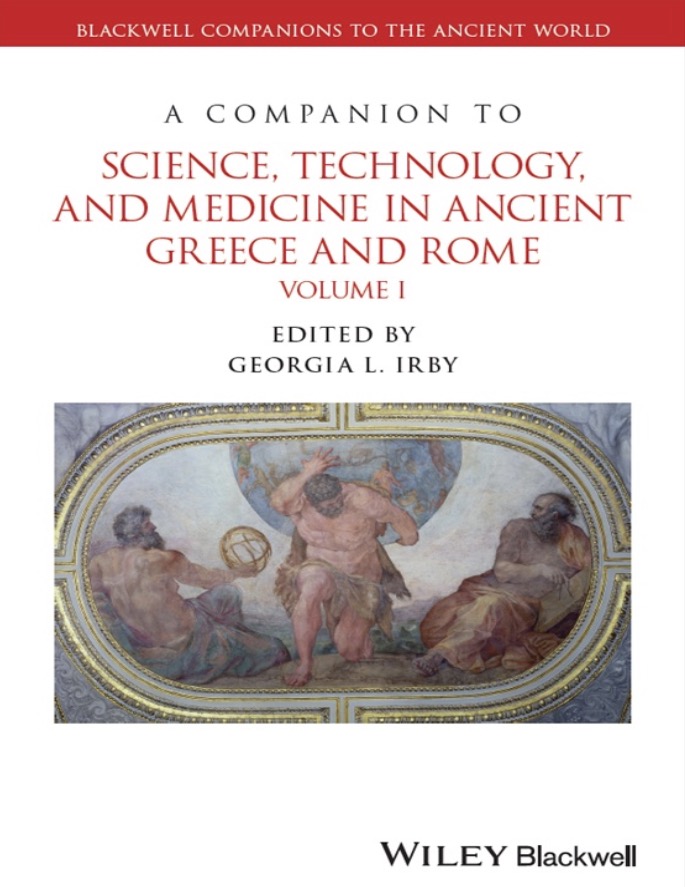
Greek and Roman cartography

Greek and Roman cartography

Irby, G.L. (2016)

Book Section · Source: A Companion to Science, Technology, and Medicine in Ancient Greece and Rome · Volume: Vol. 1 · Pages: pp. 819–835

Abstract
At The Art of Love 2.125–142, Ovid recounts a charming vignette of Odysseus and Calypso spending a lazy seaside afternoon together. Calypso asks, again and again, that her captive lover recount his adventures in the Trojan War. Again and again, Odysseus “finds fresh words for the same old tale.” As they stroll, Calypso asks about one battle or another, while Odysseus, in answer, sketches out the scenes for her in the wet sand. “This,” he says, “is Troy (he made walls on the shore). This is the Simois. Let’s consider this spot my camp.” The allure of maps is universal: the arrangement of places, how one’s home fits into the scheme of the larger world, the extent of the inhabited world (oikoumenē). Like earlier Babylonian and Egyptian endeavors, early Greek maps depicted city plans, mine tunnels, geographical regions, the entire oikoumenē. Although the actual maps rarely survive—and maps were almost never included in manuscripts (see Neugebauer 1975 for an incomplete world map included in a thirteenth/fourteenth-century manuscript of Ptolemy’s Handy Tables)—some descriptions do: the information was considered useful, worth copying, and even entertaining. Ptolemy defines the art of cartography, inextricably intertwined with geography, as “an imitation through drafting of the entire known world together with the things that are, broadly speaking, connected with it” (Geography 1.1.1). He further distinguishes between world and regional cartography. The smaller scale of the latter allows for the inclusion of topographical details, such as harbors, rivers, and towns. It is also contested whether maps as we conceive of them existed at all in antiquity: Janni 1984 argues that graphic maps never extended beyond the initial stages, primarily because the ancients lacked a concept of scale. But the concept of “map” is fluid, and they took many forms, both pictorial and (more widely) verbal.
Keywords
gems, ancient technology, ancient science, mapmaking, Roman mapmaking, cartography
Emerald deposits around the world, their similarities and differences

Emerald deposits around the world, their similarities and differences

Giuliani, G., Branquet, Y., Fallick, A.E., Groat, L. and Marshall, D. (2015)

Journal Article · Source: InColor · Issue: December · Pages: pp. 56–69

Abstract
The French chemist N.L. Vauquelin (1763–1829) discovered chromium (Cr) in crocoite (PbCrO₄) from Beresov, Russia, and beryllium (Be) in emerald from Colombia more than 200 years ago. He determined the correct chemical composition of emerald and demonstrated that the difference between beryl and emerald was due to the presence of the coloring agent chromium. Today, emerald is defined by Schwarz and Schmetzer (2002) as “yellowish green, green or bluish green beryl—natural or synthetic—which reveals distinct Cr and/or vanadium (V) absorption bands in the red and blue-violet ranges of its absorption spectra.” Emerald is one of the most valuable gemstones. It is much rarer than diamond and can command a value thousands of times greater than gold. In the colored gemstone market, color is more important than clarity or brilliance in determining the value of an emerald. The green color of emerald arises from the unique geological conditions of its formation in contrasting environments. This article reviews, using state-of-the-art data, the crystal chemistry and formation of emerald, highlighting its paradoxes, as well as the geology of economically significant emerald deposits worldwide, comparing their origins, similarities, and differences.
Keywords
gems, beryl, emerald, Afghanistan, Brazil, Colombia, Zambia, Madagascar, China, Pakistan, Zimbabwe, inclusions

Exploring the Literature of Gemstone Inclusions

The literature of gemstone inclusions covers identification, origin determination, treatments, synthesis, mineral inclusions, fluid inclusions and other internal features of natural and synthetic gems.

For a curated selection of important sources, read Inclusions in Gemstones — Hyperion Literature Sources.

About Four Treasures

Four Treasures is Lotus Gemology's freely accessible gemological reference database. Use the full database to search by author, title or keyword and explore literature on gemology, mineralogy, jewelry and related fields. Where available, hyperlinks on titles may lead directly to the full publication.

Search the Complete Four Treasures Database