Gemstone Inclusions Bibliography

Gemstone Inclusions Bibliography

Explore books, articles and historical sources on inclusions in gemstones in Four Treasures, the Lotus Gemology reference database. This bibliography brings together matching records from the collection, with publication details, abstracts and cover images where available.

Gemstone Inclusion References

The list below matches the terms inclusion or inclusions in the database's searchable fields. Some references discuss inclusions as part of a broader subject.
481–500 of 1,247 matching references

Lab Notes: A “cobalt blue” gahnospinel
Journal Article
Jaisanit, N. (2022) Lab Notes: A “cobalt blue” gahnospinel. Gems & Gemology, Vol. 58, No. 4, Winter, pp. 476–477.
Record No. 6446  |  ISBN/ISSN: 0016626X  |  Sinkankas/Born No.: NIS/NIB  |  RWHL

Interesting inclusions in a purple spinel from Tanzania
Journal Article
Sun, X., Gao, Y. and Zhao, H. (2022) Interesting inclusions in a purple spinel from Tanzania. Journal of Gemmology, Vol. 38, No. 4, pp. 315–317.
Record No. 6426  |  ISBN/ISSN: 221252  |  Sinkankas/Born No.: NIS/NIB  |  RWHL
Describes thin exsolved “ghost” planes in Tanzania spinel.

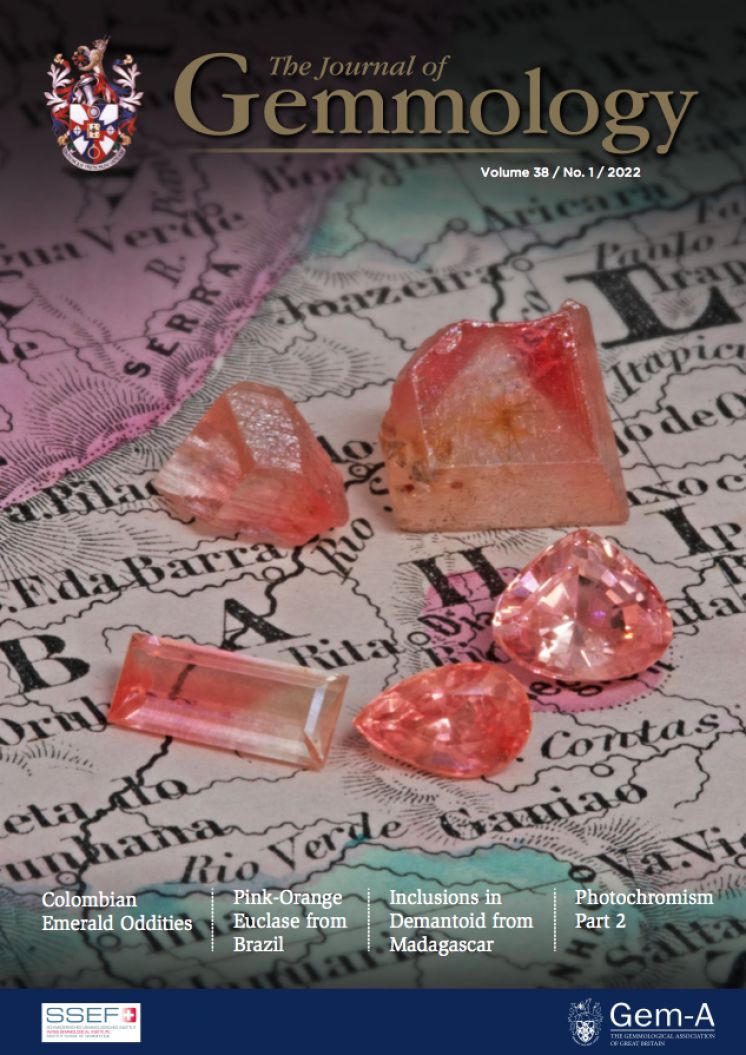
On the colour mechanism of blue gahnite from Nigeria
Journal Article
Stephan, T., Henn, U. and Müller, S. (2022) On the colour mechanism of blue gahnite from Nigeria. Journal of Gemmology, Vol. 38, No. 2, pp. 183–193.
Record No. 6379  |  ISBN/ISSN: 221252  |  Sinkankas/Born No.: NIS/NIB  |  RWHL
Gem-quality blue gahnite from Jemaa in central Nigeria has gemmological properties (RI and SG) and a chemical composition indicating relatively pure gahnite (90.7–91.3%). The blue colour is caused by a region of transmission between a system of dominant Fe²⁺- and Co²⁺-related absorption bands centred in the orange-to-green spectral range and an absorption edge in the UV region. The UV edge is strongly temperature dependent and, upon heating of the gahnite to 1000°C and 1400°C, shifts towards the visible range, resulting in blue-green and green colouration, respectively. The green colour component is related to Fe³⁺, whereas the blue hue of the unheated gahnite is due predominantly to Co²⁺.

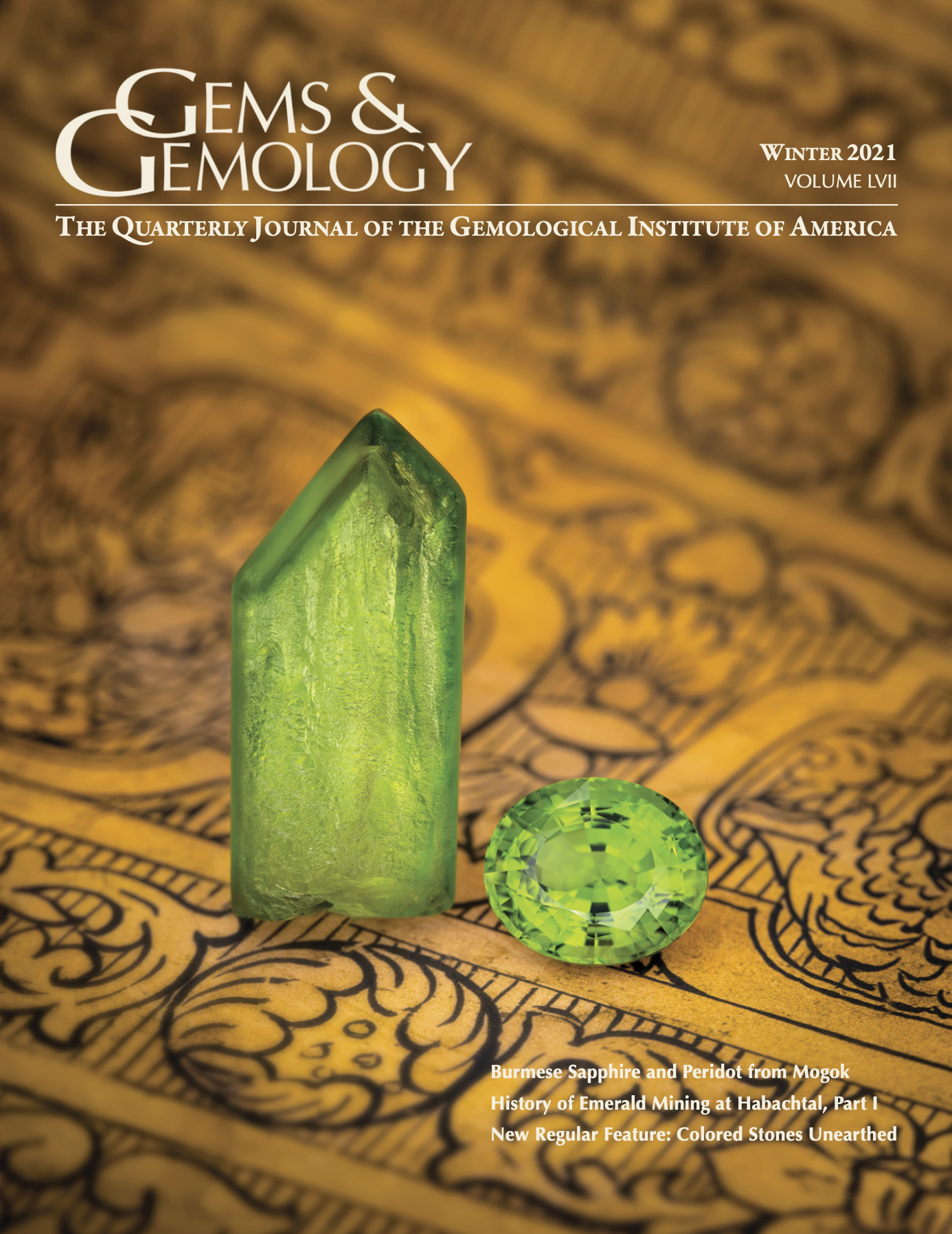
Raman spectroscopy of zircon inclusions in unheated pink sapphires from Ilakaka, Madagascar: Opening new perspectives
Journal Article
Karampelas, S., Pardieu, V., Mevellec, J.-Y. and Fritsch, E. (2022) Raman spectroscopy of zircon inclusions in unheated pink sapphires from Ilakaka, Madagascar: Opening new perspectives. Journal of Gemmology, Vol. 38, No. 1, pp. 16–17.
Record No. 6323  |  ISBN/ISSN: 221252  |  Sinkankas/Born No.: NIS/NIB  |  RWHL

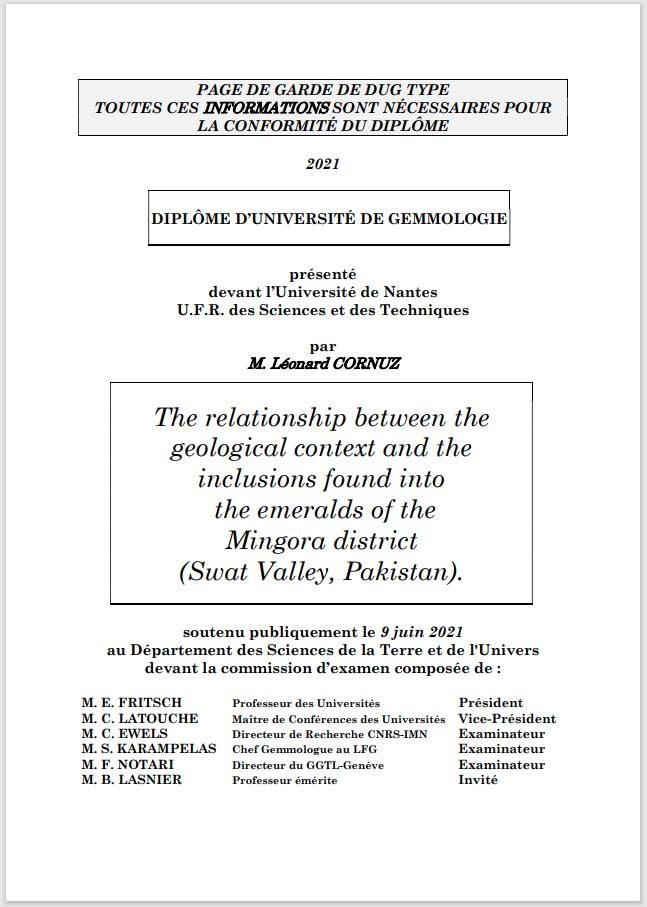
Gemological characterization of peridot from Pyaung-Gaung in Mogok, Myanmar
Journal Article
Seneewong-Na-Ayutthaya, M., Chongraktrakul, W. and Sripoonjan, T. (2021) Gemological characterization of peridot from Pyaung-Gaung in Mogok, Myanmar. Gems & Gemology, Vol. 57, No. 4, Winter, pp. 318–337.
Record No. 29693  |  ISBN/ISSN: 006-626X  |  Sinkankas/Born No.: NIS/NIB  |  RWHL
The Pyaung-Gaung area in the Mogok township of Myanmar is one of the essential sources of high-quality peridot for the international gem trade. Pyaung-Gaung peridot possesses an attractive deep olive green color and can be found in large sizes (>10 ct) in the market. It has long been mined from ultramafic rocks, largely dunite, at a primary deposit near Bernard-Myo. Internal features consist mainly of circular decrepitation halos (“lily pads”), fluid inclusions, and fiber tufts. Common mineral inclusions are dark biotite-phlogopite and chromite, sometimes coexisting with serpentine, magnesite, chlorite, and talc. Pyaung-Gaung peridot also contains olivine inclusions not previously found in peridot from other locations. 2D and 3D cross-plots of the trace element contents of Cr, V, Co, Sc, Ni, and Ti provide helpful separations among Burmese, Chinese, and Pakistani localities.

The relationship between the geological context and the inclusions found into the emeralds of the Mingora district (Swat Valley, Pakistan)
Thesis
Cornuz, L.M. (2021) The relationship between the geological context and the inclusions found into the emeralds of the Mingora district (Swat Valley, Pakistan)., Nantes, France: Université de Nantes, 97 pp.
Record No. 29554  |  Sinkankas/Born No.: NIS/NIB  |  RWHL
Thesis study on the emeralds of Swat, Pakistan and how their inclusions relate to their geological formation. Nice inclusion photos.

Western connections of Northeast Africa: The garnet evidence from Late Antique Nubia, Sudan
Journal Article
Then-Obłuska, J., Gilg, H.A., Schüssler, U. and Wagner, B. (2021) Western connections of Northeast Africa: The garnet evidence from Late Antique Nubia, Sudan. Archaeometry, Vol. 63, No. 2, pp. 227–246.
Record No. 27581  |  ISBN/ISSN: 0003813X  |  DOI: https://doi.org/10.1111/arcm.12607  |  Sinkankas/Born No.: NIS/NIB  |  RWHL
Outstanding garnet beads were found recently in an elite tumulus dated to the fourth century AD and located at the cemetery of Hagar el-Beida in the Upper Nubian Nile Valley region. Whereas contacts of Northeast Africa with South Asia have just been proven through analysis of glass beads found in Nubia and dating to the time of intensive Indian Ocean trade, scientific evidence for Nubia's link with the regions to the west was lacking. Laser ablation-inductively coupled plasma-mass spectrometry (LA-ICP-MS) was used to determine the elemental composition of three garnet beads to gain information about their type and origin. Additionally, we analyzed twelve garnets from two nearby alluvial placer deposits. While the garnet beads are inclusion-free Cr-poor and Ti-rich pyropes related to alkaline mafic volcanic rocks, the local garnet deposits are shown to be inclusion-rich almandines and thus unrelated to the investigated Nubian beads. Detailed comparison of data from Merovingian cloisonné jewellery and all known sources of the Cr-poor and Ti-rich pyropes shows identical ranges of elemental contents. The source of raw materials for the beads found in Nubia has been not identified with certainty yet, but sources in Portugal and Nigeria are suggested and a connection is shown to similar garnets from Merovingian contexts.

The corundum conundrum: Constraining the compositions of fluids involved in ruby formation in metamorphic melanges of ultramafic and aluminous rocks
Journal Article
Hinsberg, V., van , Yakymchuk, C., Jepsen, A.T.K., Kirkland, C.L. and Szilas, K. (2021) The corundum conundrum: Constraining the compositions of fluids involved in ruby formation in metamorphic melanges of ultramafic and aluminous rocks. Chemical Geology, No. 571,, 2021/06/20/ pp. 120180.
Record No. 6325  |  ISBN/ISSN: 92541  |  DOI: https://doi.org/10.1016/j.chemgeo.2021.120180  |  Sinkankas/Born No.: NIS/NIB  |  RWHL
Corundum, including ruby, occurs widely in the North Atlantic Craton of southern Greenland, particularly where high-grade metamorphic lithologies of contrasting chemistry interact. This study constrains the formation conditions and fluid compositions at the Storø and Maniitsoq localities through thermodynamic modeling of mineral and mineral–fluid equilibria and solubility. Metasomatism occurred at 650–725 °C and 7 kbar, matching peak metamorphic conditions, and involved an acidic, boron-rich fluid with low fO₂ and low X(CO₂). Low aqueous Al concentrations indicate that corundum saturation resulted from residual Al enrichment rather than mobilization. A magmatic intrusion, likely the Qôrqut granite, is the probable B source, supported by U–Pb dating of rutile inclusions that link corundum formation with granite emplacement. Interaction of this oxidized, granite-derived fluid with metadunite and metapelite-hosted Fe-sulfides modified its composition, introducing SO₄ and generating a reduced, low-pH, high-XMg, high-K/Na fluid, as inferred from the corundum-bearing assemblages. These findings underscore the complex lithological interplay in high-grade metamorphic–metasomatic environments but also show that corundum formation is a geologically predictable process triggered by fluid pulses from intrusive bodies through aluminous, Si-deficient host rocks.

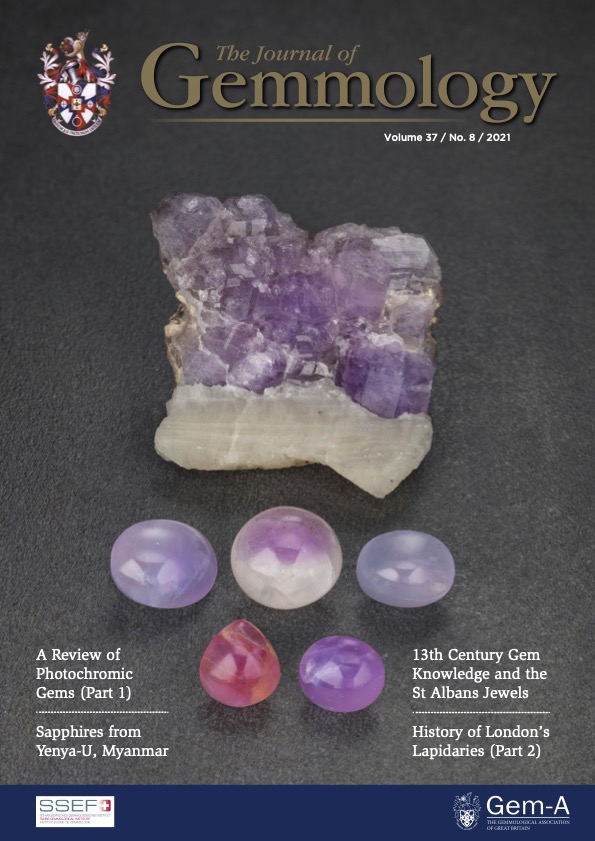
Characterisation and genesis of sapphires from the Yenya-U area, Thabeikkyin township, Mandalay region, Myanmar
Journal Article
Khin Mar Phuy, Khin Zaw, Mernagh, T.P. and Thu Zar Aung (2021) Characterisation and genesis of sapphires from the Yenya-U area, Thabeikkyin township, Mandalay region, Myanmar. Journal of Gemmology, Vol. 37, No. 8, pp. 802–815.
Record No. 6303  |  ISBN/ISSN: 221252  |  Sinkankas/Born No.: NIS/NIB  |  RWHL
The Yenya-U area in the Mandalay region of central Myanmar hosts two primary sapphire deposits, at Kyauk-tagar and Kyar-gaung. The sapphires form disseminated crystals within syenite pegmatite and nepheline syenite, respectively. Kyar-gaung is a source of relatively large crystals (up to 12 g) that are translucent to opaque, while Kyauk-tagar produces fine-quality vivid-blue sapphires in smaller sizes (up to 0.4 g). Alluvial deposits in the region yield high-quality sapphires of various colours (including colourless, yellow, purple, pink, greenish blue and blue), as well as quartz, topaz, spinel, garnet, zircon, tourmaline and fluorite. The studied Yenya-U sapphires contained solid inclusions of albite, biotite, graphite, melanophlogite and diaspore. In addition, pennantite is reported here for the first time as an inclusion in corundum. CO2-rich fluid inclusions were commonly observed in most of the sapphires. Trace-element analyses of the sapphires are consistent with a metamorphic- metasomatic origin, mostly accompanied by desilicification processes.

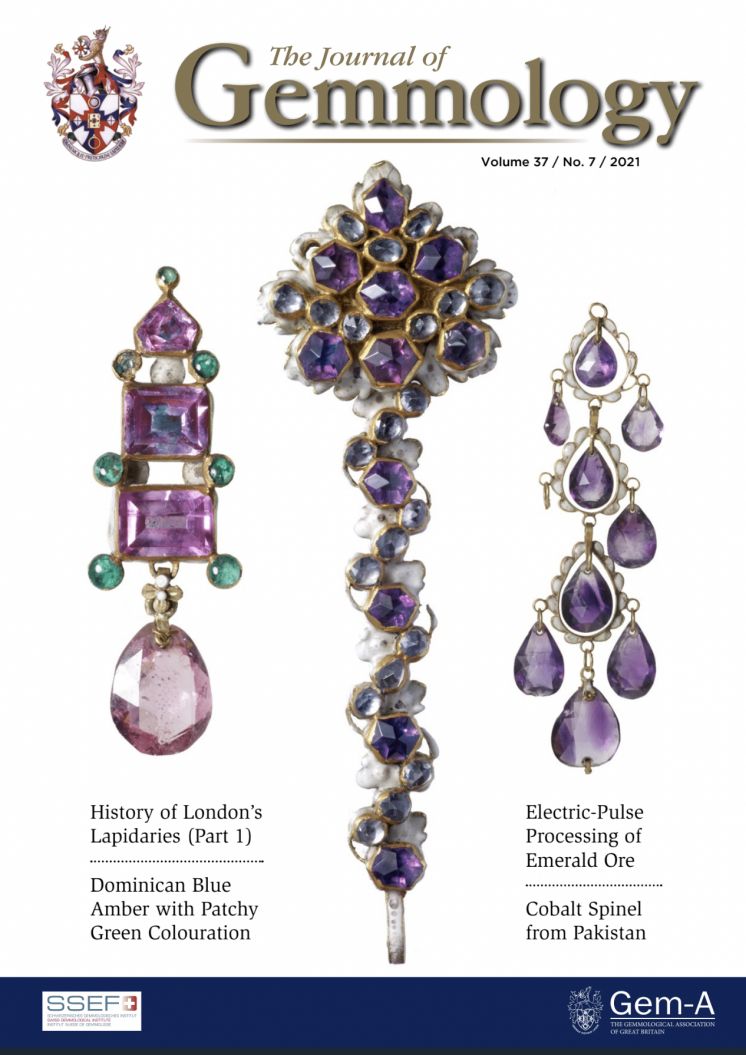
Cobalt-blue spinel from northern Pakistan
Journal Article
Schollenbruch, K., Blauwet, D., Malsy, A.-K. and Bosshard, V. (2021) Cobalt-blue spinel from northern Pakistan. Journal of Gemmology, Vol. 37, No. 7, pp. 726–737.
Record No. 6280  |  ISBN/ISSN: 221252  |  Sinkankas/Born No.: NIS/NIB  |  RWHL
Blue spinel coloured by cobalt was recently found near the Hunza Valley of northern Pakistan. Characterisation of 35 samples showed that hue variations ranging from bright blue to violet-blue to dark blue are due to variable relative concentrations of the colour-causing elements Co, Fe and Cr. Most of the spinels were semi-transparent and contained abundant internal features, including fractures, twin lamellae and growth structures, as well as distinctive iridescent geometric sectors. Solid inclusions consisted of rutile, zircon, apatite, phlogopite and calcite; fluid inclusions were rare. Samples displaying bright blue colouration typical of so-called Co-spinel had strong absorptions due to Co2+ along with subordinate Fe2+ features in their UV-Vis spectra, and contained relatively low ratios of Fe/Co (<110) and Cr/Co (<4).

Age dating of cobalt spinel

Journal Article
Krzemnicki, M.S. (2021) Age dating of cobalt spinel. SSEF Facette, No. 27, p. 29.
Record No. 4591  |  Sinkankas/Born No.: NIS/NIB  |  RWHL
Brief description of the age dating of a cobalt spinel from Vietnam.

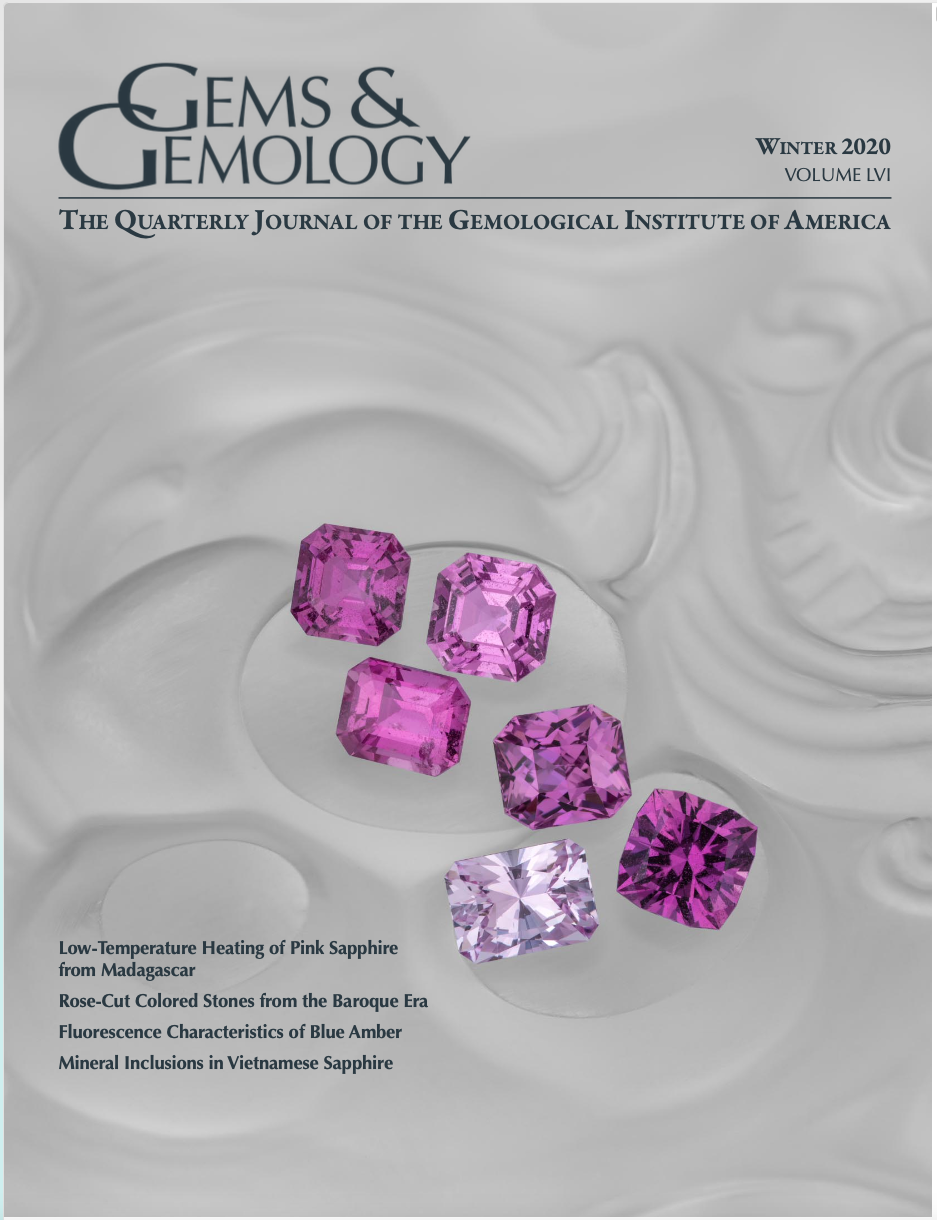
G&G Micro-world: Fascinating fluid inclusions in Chinese ruby
Journal Article
Huang, W. (2021) G&G Micro-world: Fascinating fluid inclusions in Chinese ruby. Gems & Gemology, Vol. 57, No. 3, Fall, pp. 272–273.
Record No. 4568  |  ISBN/ISSN: 0016626X  |  Sinkankas/Born No.: NIS/NIB  |  RWHL

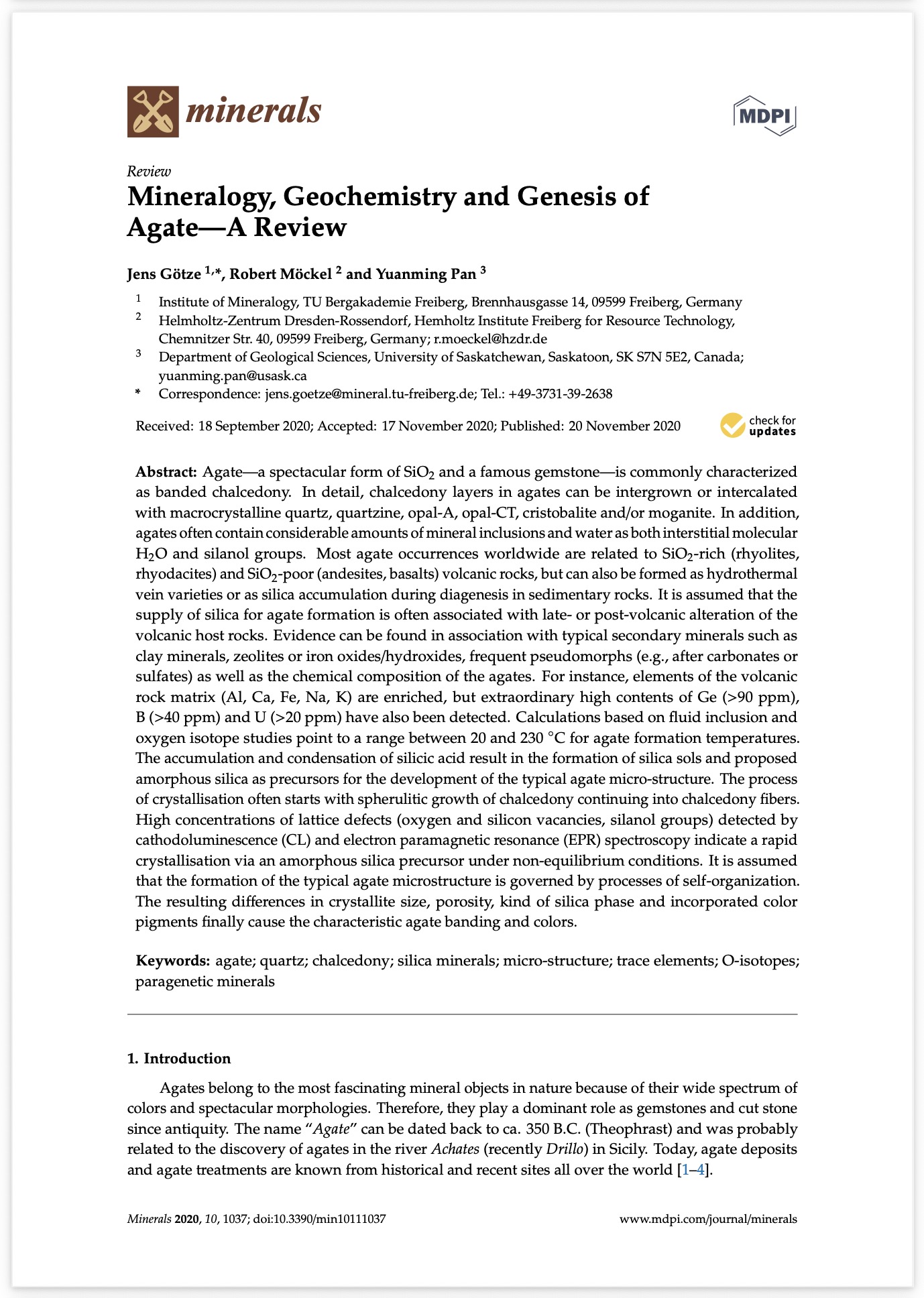
Gem News International: New emerald locality in Southern California
Journal Article
Celestian, A.J. and Edley, R. (2020) Gem News International: New emerald locality in Southern California. Gems & Gemology, Vol. 56, No. 4, Winter, pp. 534–535.
Record No. 29673  |  ISBN/ISSN: 0016-626X  |  Sinkankas/Born No.: NIS/NIB  |  RWHL
Located about 60 miles east of San Diego in the Julian Mining District, a new emerald deposit embedded in biotite schist has been discovered near the surface by author RE and Bruce Edley. While the area is known for pegmatites and hydrothermal deposits, emeralds had not been produced here previously; the recovered single crystals are mostly translucent dark green with inclusions and under 2 cm, alongside a few light-colored green beryl crystals from a nearby pegmatite.

Mineralogy, Geochemistry and Genesis of Agate—A Review
Electronic Article
Götze, J., Möckel, R. and Pan, Y. (2020) Mineralogy, Geochemistry and Genesis of Agate—A Review. Minerals, 10, 11
Record No. 27628  |  ISBN/ISSN: 2075-163X  |  Sinkankas/Born No.: NIS/NIB  |  RWHL
Agate—a striking variety of SiO₂ and a renowned gemstone—is typically identified as banded chalcedony. On closer inspection, chalcedony layers in agates can be intergrown or intercalated with macrocrystalline quartz, quartzine, opal-A, opal-CT, cristobalite, and/or moganite. Additionally, agates often contain significant mineral inclusions and water, present both as interstitial molecular H₂O and as silanol groups. Most agates worldwide are associated with SiO₂-rich (rhyolites, rhyodacites) and SiO₂-poor (andesites, basalts) volcanic rocks, though they may also form as hydrothermal vein types or from silica accumulation during diagenesis in sedimentary environments. The silica supply for agate formation is frequently linked to late- or post-volcanic alteration of host volcanic rocks, as indicated by associations with secondary minerals such as clays, zeolites, iron oxides/hydroxides, common pseudomorphs (e.g., after carbonates or sulfates), and the chemical composition of agates. Elements typical of the volcanic matrix (Al, Ca, Fe, Na, K) are often enriched, with unusually high levels of Ge (>90 ppm), B (>40 ppm), and U (>20 ppm) also reported. Fluid inclusion and oxygen isotope studies suggest agate forms at temperatures ranging from 20 to 230 °C. Silicic acid accumulation and condensation produce silica sols and presumably amorphous silica, serving as precursors for the characteristic agate microstructure. Crystallization generally begins with spherulitic growth of chalcedony, progressing into chalcedony fibers. High defect concentrations (oxygen and silicon vacancies, silanol groups), revealed by cathodoluminescence and electron paramagnetic resonance spectroscopy, point to rapid crystallization from an amorphous silica precursor under non-equilibrium conditions. The development of agate’s distinctive microstructure is thought to result from self-organization processes. Variations in crystallite size, porosity, silica phase, and embedded pigments ultimately lead to the iconic banding and color patterns of agate.

Age determination of zircon inclusion in Kashmir sapphire with U-Pb dating
Journal Article
Wu, W.X., Link, K., Liu, C.Z. and Kiefert, L. (2020) Age determination of zircon inclusion in Kashmir sapphire with U-Pb dating. Journal of Gems & Gemmology, Vol. 22, No. 1, pp. 1–12.
Record No. 16853  |  DOI: https://dx.doi.org/10.15964/j.cnki.027jgg.2020.01.001  |  Sinkankas/Born No.: NIS/NIB  |  RWHL
The two independent analytical methods result in the same conclusion that the zircon inclusions in Kashmir sapphires have crystallization ages of 26-25 million years ago.

Study on mineral composition and genesis of green nephrite in Ospinsk, Russia
俄罗斯奥斯泊矿碧玉的矿物组成和成因研究
Thesis
Li, X. (2020) Study on mineral composition and genesis of green nephrite in Ospinsk, Russia. [俄罗斯奥斯泊矿碧玉的矿物组成和成因研究]., Beijing: China University of Geosciences
Record No. 6989  |  Sinkankas/Born No.: NIS/NIB  |  Language: in Chinese with English abstract  |  RWHL
The green nephrite produced at the Ospinsk is the best quality green nephrite in the world. In this paper, through a variety of modern testing techniques, the gem mineralogical characteristics of the green nephrite in the Ospinsk are studied. The green nephrite in the Ospinsk’s color is mainly green and dark green, with uniform color distribution and black dot-like inclusions. The polished surface of the sample is from oily luster to weak glass luster and translucent. The relative density range is 2.98–3.00 g/cm³, the refractive index range is 1.60–1.62, and the Mohs hardness is 5.75–5.82. The main structure of green nephrite in the Ospinsk is cryptocrystalline–microscopic and unequal-grained crystal structure. The main mineral component of green nephrite in the Ospinsk is tremolite, which may contain a small amount of chromite, chlorite and so on. The main chemical components are SiO₂, MgO, CaO, and may contain a small amount of FeO, Al₂O₃, NiO, Cr₂O₃, MnO. The data obtained and calculated under the detection of electronic probes, although most of the Mg/(Mg + Fe) ratio is between 0.90–1.00, but generally concentrated between 0.90–0.92, the ratio is lower. The measured data of actinolite is around 0.89, it can be speculated that some tremolite in the sample is in the transition stage to actinolite. The ratio of Fe/(Fe + Mg) in the sample ranges from 0.08 to 0.11. The Fe/(Fe + Mg) ratio of serpentine Hetian jade is greater than 0.06. The content of Cr, Co and Ni in the samples of the LA-ICP-MS test data of the green nephrite of the Ospinsk conforms to the content range of the origin of serpentine nephrite, which corroborates the genetic types of the jasper of the Ospinsk. The total amount of rare earth elements does not change much, the content is low, and the average content is 1.498 μg/g. There is a slight negative Eu anomaly, = 0.053–0.422, Nb shows a slight loss, the value of Nb/Ta is 1.04–5.00, Laᴺ/Ybᴺ = 5.39–15.53, Laᴺ/Smᴺ < 1, Sr/Ba ratio is 1.06–2.11, the serpentinized peridot that formed green nephrite has a lower ΣREE content, LREE is weakly enriched relative to HREE, and exhibits Eu weak negative anomalie. It was found that the data detected in the infrared spectrum and Raman spectrum detected by the transmission method were consistent with the standard spectrum of amphibole minerals. The relative shift of the peak and peak position proves that the main component of the Ospinsk, the main component of the green nephrite in the Ospinsk, is in the transition to the sunburst. The green nephrite at the Ospinsk was originally produced in the ophiolite in the Eastern Sayan Mountains, and the green curtain-hornblende transition facies in the metamorphic rocks at the bottom of the ophiolite. Under the condition of low temperature hydrothermal fluid, the ultrabasic rock of forsterite and the low temperature hydrothermal fluid interact to form serpentine. Serpentine is then contacted with surrounding rocks rich in silicon and calcium to form tremolite, which is the main component of green nephrite in the Ospinsk.

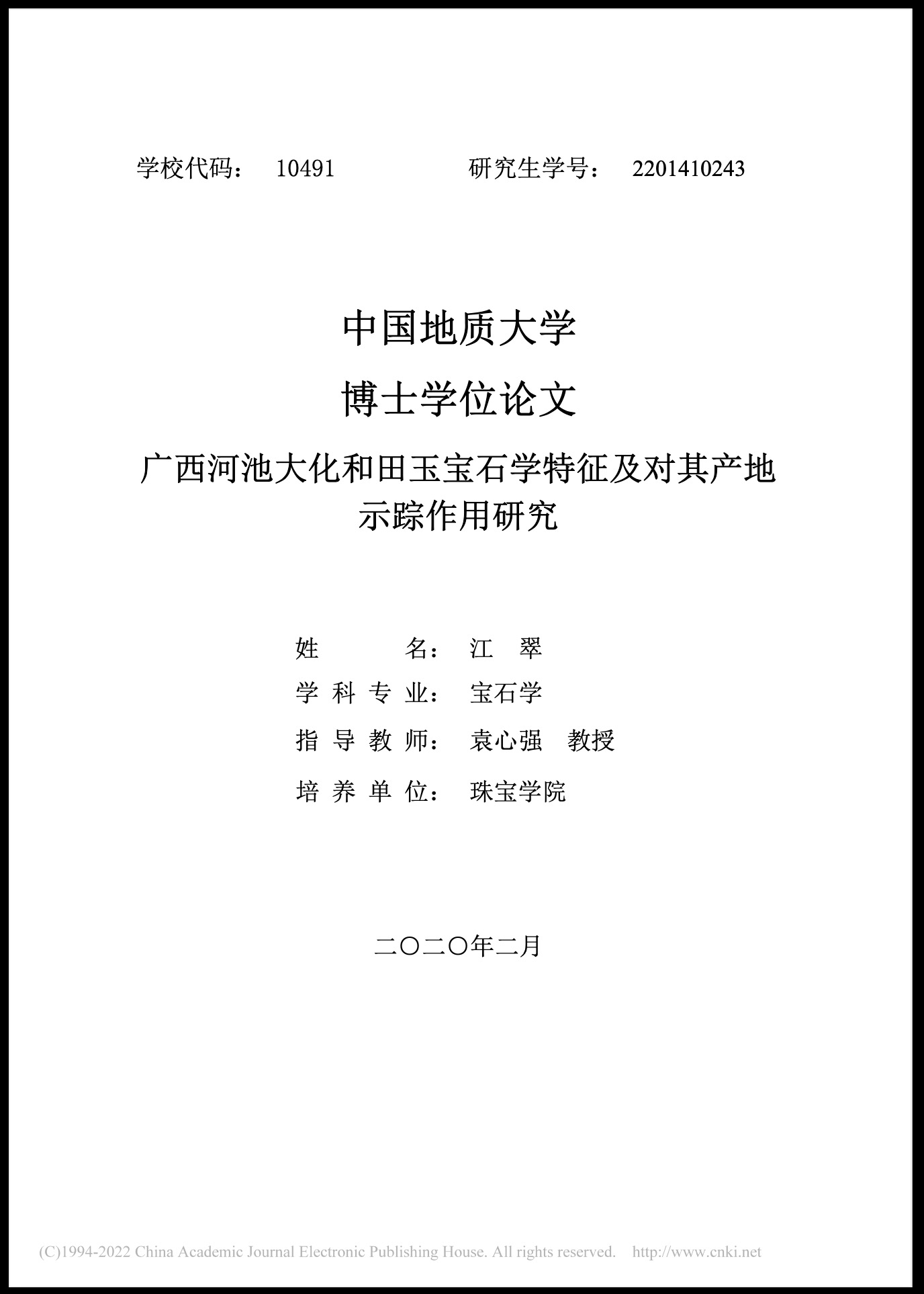
Gemmological characteristics of nephrite from Dahua, Hechi, Guangxi and implications on the origin identification
广西河池大化和田玉宝石学特征及对其产地示踪作用研究
Thesis
Jiang, C. (2020) Gemmological characteristics of nephrite from Dahua, Hechi, Guangxi and implications on the origin identification. [广西河池大化和田玉宝石学特征及对其产地示踪作用研究]., Wuhan, China: China University of Geosciences (Wuhan), 116 pp.
Record No. 6948  |  Sinkankas/Born No.: NIS/NIB  |  Language: in Chinese with English abstract  |  RWHL
The recent discovery of nephrite in Dahua County, Guangxi Province, has had a significant impact on the Chinese nephrite market. This study systematically examines samples of Dahua nephrite, covering macroscopic identification, gemological properties, microstructure, spectroscopy, mineral and chemical composition. The main mineral component is tremolite, and the inclusions include spotted" inclusions composed of chlorite and band-shaped inclusions of tremolite. The chemical composition indicates high Ca and low Mg, suggesting contact metasomatism. REE analysis shows a slightly enriched LREE, and negative Ce and Eu anomalies. Five identification methods for Dahua nephrite origin are proposed, including sensory characteristics, crystallinity, IBe/ISi ratio, REE distribution, and characteristic values of rare earth elements. These methods contribute to the comprehensive understanding and identification of Dahua nephrite."

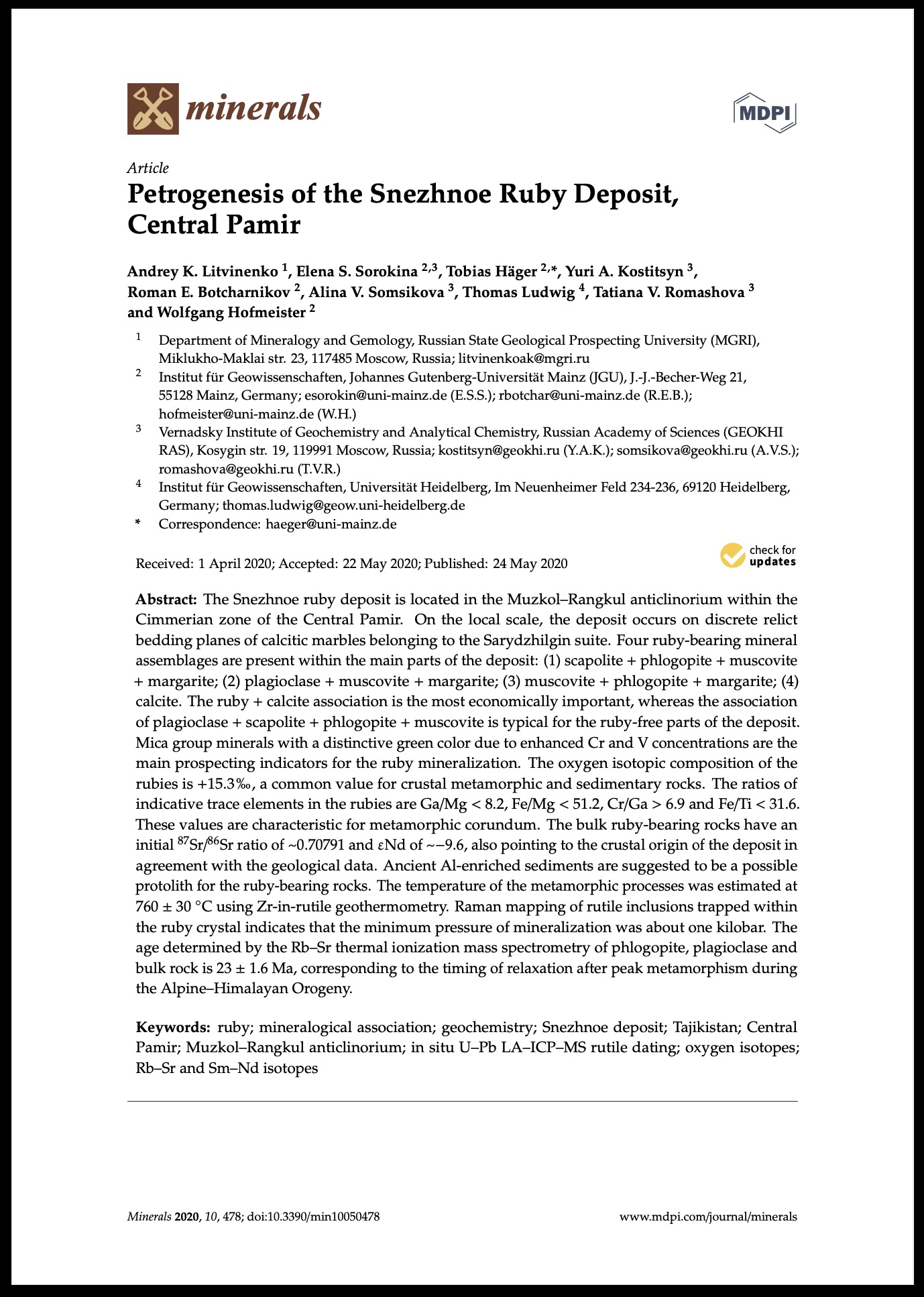
Petrogenesis of the Snezhnoe ruby deposit, Central Pamir
Electronic Article
Litvinenko, A.K., Sorokina, E.S., Häger, T., Kostitsyn, Y.A., Botcharnikov, R.E., Somsikova, A.V., Ludwig, T., Romashova, T.V. and Hofmeister, W. (2020) Petrogenesis of the Snezhnoe ruby deposit, Central Pamir. Minerals, Vol. 10, No. 5, accessed: 8 June 2021.
Record No. 6674  |  ISBN/ISSN: 2075163X  |  Sinkankas/Born No.: NIS/NIB  |  RWHL
The Snezhnoe ruby deposit is located in the Muzkol–Rangkul anticlinorium within the Cimmerian zone of the Central Pamir. On the local scale, the deposit occurs on discrete relict bedding planes of calcitic marbles belonging to the Sarydzhilgin suite. Four ruby-bearing mineral assemblages are present within the main parts of the deposit: (1) scapolite + phlogopite + muscovite + margarite; (2) plagioclase + muscovite + margarite; (3) muscovite + phlogopite + margarite; (4) calcite. The ruby + calcite association is the most economically important, whereas the association of plagioclase + scapolite + phlogopite + muscovite is typical for the ruby-free parts of the deposit. Mica group minerals with a distinctive green color due to enhanced Cr and V concentrations are the main prospecting indicators for the ruby mineralization. The oxygen isotopic composition of the rubies is +15.3‰, a common value for crustal metamorphic and sedimentary rocks. The ratios of indicative trace elements in the rubies are Ga/Mg < 8.2, Fe/Mg < 51.2, Cr/Ga > 6.9 and Fe/Ti < 31.6. These values are characteristic for metamorphic corundum. The bulk ruby-bearing rocks have an initial 87Sr/86Sr ratio of ~0.70791 and εNd of ~−9.6, also pointing to the crustal origin of the deposit in agreement with the geological data. Ancient Al-enriched sediments are suggested to be a possible protolith for the ruby-bearing rocks. The temperature of the metamorphic processes was estimated at 760 ± 30°C using Zr-in-rutile geothermometry. Raman mapping of rutile inclusions trapped within the ruby crystal indicates that the minimum pressure of mineralization was about one kilobar. The age determined by the Rb–Sr thermal ionization mass spectrometry of phlogopite, plagioclase and bulk rock is 23 ± 1.6 Ma, corresponding to the timing of relaxation after peak metamorphism during the Alpine–Himalayan Orogeny.

Gem News International: Dendritic inclusions in nephrite from Dahua, China
Journal Article
Yin, Z., Wang, W. and Chen, Q. (2020) Gem News International: Dendritic inclusions in nephrite from Dahua, China. Gems & Gemology, Vol. 56, No. 4, Winter, pp. 545–547.
Record No. 6253  |  ISBN/ISSN: 0016626X  |  Sinkankas/Born No.: NIS/NIB  |  RWHL
Describes dendritic chlorite inclusions in nephrite from Dahua, Guizhou, China

Gem News International: Update on inclusions in emeralds from Davdar, China

Journal Article
Cui, D., Liao, Z., Qi, L. and Zhou, Z. (2020) Gem News International: Update on inclusions in emeralds from Davdar, China. Gems & Gemology, Vol. 56, No. 4, Winter, pp. 543–545.
Record No. 6252  |  ISBN/ISSN: 0016626X  |  Sinkankas/Born No.: NIS/NIB  |  RWHL
Brief article on the inclusions in Davdar, China emeralds.

Exploring the Literature of Gemstone Inclusions

The literature of gemstone inclusions covers identification, origin determination, treatments, synthesis, mineral inclusions, fluid inclusions and other internal features of natural and synthetic gems.

For a curated selection of important sources, read Inclusions in Gemstones — Hyperion Literature Sources.

About Four Treasures

Four Treasures is Lotus Gemology's freely accessible gemological reference database. Use the full database to search by author, title or keyword and explore literature on gemology, mineralogy, jewelry and related fields. Where available, hyperlinks on titles may lead directly to the full publication.

Search the Complete Four Treasures Database