Gemstone Inclusions Bibliography

Gemstone Inclusions Bibliography

Explore books, articles and historical sources on inclusions in gemstones in Four Treasures, the Lotus Gemology reference database. This bibliography brings together matching records from the collection, with publication details, abstracts and cover images where available.

Gemstone Inclusion References

The list below matches the terms inclusion or inclusions in the database's searchable fields. Some references discuss inclusions as part of a broader subject.
621–640 of 1,197 matching references

Use of the Raman spectrometer in gemmological laboratories: Review
Journal Article
Kiefert, L. and Karampelas, S. (2011) Use of the Raman spectrometer in gemmological laboratories: Review. Spectrochimica Acta Part A: Molecular and Biomolecular Spectroscopy, Vol. 80, No. 1, pp. 119–124.
Record No. 6026  |  DOI: https://dx.doi.org/10.1016/j.saa.2011.03.004  |  Sinkankas/Born No.: NIS/NIB  |  RWHL
The current paper gives an overview of the development of Raman spectrometry in gemmological laboratories. While before 1990s, no commercial gemmological laboratory possessed such an instrument, all larger international labs have acquired these instruments by now. The Raman spectrometer is routinely used for the detection of emerald fillers, HPHT treatment of diamonds, analysis of the nature of a gemstone, analysis of gemstone inclusions and treatments, and the characterisation of natural or colour enhanced pearls and corals. Future developments in gemstone research lie in the closer analysis of the features of Raman and PL spectra and in the combination of several instruments.

Zircon U–Pb dating of jadeitite from the Syum-Keu ultramafic complex, Polar Urals, Russia: Constraints for subduction initiation
Journal Article
Meng, F., Makeev, A. and Yang, J. (2011) Zircon U–Pb dating of jadeitite from the Syum-Keu ultramafic complex, Polar Urals, Russia: Constraints for subduction initiation. Journal of Asian Earth Sciences, Vol. 42, No. 4, pp. 596–606.
Record No. 5830  |  DOI: https://dx.doi.org/10.1016/j.jseaes.2011.01.013  |  Sinkankas/Born No.: NIS/NIB  |  RWHL
High-pressure, low-temperature metamorphic rocks record subduction of oceanic crust and sediments into the mantle, but the timing of subduction initiation is commonly difficult to determine. However, the appearance of fluid activity in the mantle wedge above a subduction zone can be correlated with incipient subduction. Here we describe jadeitite veins up to 5 m wide, which are hosted in serpentinites of the Syum-Keu ultramafic complex, Polar Urals, Russia. The jadeitites consist of both jadeite (86–88 mol% jd) and omphacite (54–75 mol% jd). Multi-stage growth of the jadeite is indicated by variations in color and structure, such as growth zoning and the distribution of fluid inclusions. We consider that the jadeitite veins formed from Na–Al–Si-rich fluids under HP/LT conditions during active subduction, and that the source material was subducted ocean crust. SHRIMP U–Pb dating of zircons from the jadeitite yielded a concordant weighted mean ²⁰⁶Pb/²³⁸U age of 404 ± 7 Ma, which we interpret as the age of peridotite serpentinization and jadeitite formation in the suprasubduction zone mantle. This age indicates that subduction was initiated about 40 Ma earlier than peak metamorphism (360–355 Ma) of eclogite in the Polar Urals.

Geochemistry and petrogenesis of placer nephrite from Hetian, Xinjiang, Northwest China
Journal Article
Liu, Y., Deng, J., Shi, G., Sun, X. and Yang, L. (2011) Geochemistry and petrogenesis of placer nephrite from Hetian, Xinjiang, Northwest China. Ore Geology Reviews, Vol. 41, No. 1,, 2011/10/01/ pp. 122–132.
Record No. 5767  |  ISBN/ISSN: 1691368  |  DOI: https://doi.org/10.1016/j.oregeorev.2011.07.004  |  Sinkankas/Born No.: NIS/NIB  |  RWHL
The Yurungkash (White Jade) and Karakash (Black Jade) rivers in Hetian, Xinjiang Province, are China’s principal sources of white, green, and black placer nephrite, with a history of mining spanning ~5000 years. Twenty-nine nephrite samples collected from these rivers show fine-grained, compact microstructures. Mineral assemblages indicate formation via metamorphic/metasomatic reactions: dolomitic marble → tremolite, or dolomitic marble → diopside → tremolite. White nephrite (Yurungkash) and green nephrite (Karakash) are mainly tremolite. Two types of black nephrite were identified: actinolite aggregates, and tremolite with graphite crystals up to 2 mm. Compared to black nephrite, white and green varieties show fewer inclusions and lower FeO and MnO content. Amphiboles have very low Cr₂O₃ (0.00–0.07 wt.%) and NiO (0.00–0.05 wt.%), much lower than serpentinite-related nephrites. Total REE contents are generally low (12.22–49.40 ppm), with a few higher cases due to REE-bearing minerals. Chondrite-normalized REE patterns show strong negative Eu anomalies (0.16–0.48), moderate LREE enrichment (La/Ndₙ = 1.8–5.0), and flat HREE distributions (Gd/Ybₙ = 0.3–1.7). Stable isotope values (δ¹⁸O = 1.1‰–5.6‰; δD = −55.7‰ to −72.4‰) match those of dolomite-related nephrites and are consistent with magmatic water at 330–430 °C. These findings confirm that the placer nephrites are of dolomite-related metamorphic/metasomatic origin, derived from primary nephrite deposits in the nearby Kunlun Mountains.

Star ruby

Journal Article
Schmetzer, K. and Hainschwang, T. (2011/2012) Star ruby. Gems & Jewellery, Vol. 20, No. 4, Winter, pp. 14–17.
Record No. 5462  |  Sinkankas/Born No.: NIS/NIB  |  RWHL
A star ruby of 5.98 ct was submitted for examination. The stone had been offered in the gem trade in France as natural and could be traced back to a local gem merchant in Afghanistan, but the first inspection showed no natural inclusions, growth structures, concentrations of rutile needles, or any of the commonly observed curved striations of Verneuil synthetics.

Lab Notes: Beryllium- and tungsten-bearing sapphires from Afghanistan
Journal Article
Pardieu, V., Saeseaw, S., Thirangoon, K. and Lomthong, P. (2011) Lab Notes: Beryllium- and tungsten-bearing sapphires from Afghanistan. Gems & Gemology, Vol. 47, No. 1, Spring, pp. 53–54.
Record No. 5436  |  ISBN/ISSN: 0016626X  |  Sinkankas/Born No.: NIS/NIB  |  RWHL
In March 2010, the Bangkok laboratory received a rough parcel of 175 blue sapphires reportedly from a relatively new deposit near the lapis lazuli mines in the Kokcha Valley of Afghanistan’s Badakhshan Province. The pieces ranged from ~0.2 to 4 g, and about half the parcel was gem quality. During a trip to Afghanistan in July 2010, one of us (VP) obtained six additional samples said to be from this deposit, consisting of blue sapphires on a matrix of bluish green and yellowish brown crystals (identified as dravite and phlogopite by Raman and laser ablation–inductively coupled plasma–mass spectrometry [LA-ICP-MS] analysis, respectively). Of the 181 samples, most had strong hexagonal blue color zoning surrounding a yellow core that displayed a six-rayed star pattern when viewed with transmitted light. Common inclusions were negative crystals (sometimes associated with healed fissures), corroded zircon crystals, twin planes, and crystals of corundum. Most of the sapphires were sector zoned, with colorless areas associated with the basal pinacoid.

Ruby from Liberia

Journal Article
Kiefert, L. and Douman, M. (2011) Ruby from Liberia. Gems & Gemology, Vol. 47, No. 2, Summer, p. 138.
Record No. 5413  |  ISBN/ISSN: 0016626X  |  Sinkankas/Born No.: NIS/NIB  |  RWHL
One of these authors recently found rubies and smaller amounts of sapphires while prospecting for alluvial diamonds in two areas of Liberia (Douman, 2011). The sediments consisted of quartz grains and smaller black grains, some of which could be identified as tourmaline and staurolite. One prospecting area lies on the Mano River (along the border with Sierra Leone), while the other is located in Nimba Province close to the Guinean border. At the latter locality, yellow to green chrysoberyl and orange spessartine also were found. The Mano River rubies consisted of small waterworn pebbles weighing less than 0.2 g, while those from Nimba Province constituted well-formed crystals larger than 1 g with prism, basal, and rhombohedral faces. The rubies ranged from near-opaque and purplish red for the larger crystals to transparent and pinkish red to red for the smaller ones. The larger purplish red crystals were heavily twinned in three directions following the rhombohedral faces. The smaller crystals from the Mano River were not quite as heavily twinned, but showed iron oxide staining in the fissures more frequently than the larger crystals. In addition, networks of partially healed fissures were observed in some samples from the Mano River. Initial microscopic examination of samples from both deposits showed inclusions of black rounded and elongated crystals, as well as clusters of small rounded transparent crystals (most likely zircon). One well-formed zircon crystal was identified by Raman spectroscopy in one of the samples from Nimba Province. The twinning pattern and chemical data for the Liberian samples from both localities fit well with other African rubies such as those from Malawi, Tanzania, and Mozambique, while they were distinctly different from Burmese, Nepalese, Tajik, Afghan, Sri Lankan, and Vietnamese rubies. Cr contents from both localities varied between 0.3 and 0.7 wt.%, while Fe values ranged from approximately 0.6 to 1.2 wt.%. REFERENCE. Douman M. (2011) Gem News International: Artisanal diamond mining in Liberia. G&G, Vol. 47, No. 1, p. 63.

Lab Notes: Unusually high beryllium in three blue sapphires
Journal Article
Lu, R. and Shen, A.H. (2011) Lab Notes: Unusually high beryllium in three blue sapphires. Gems & Gemology, Vol. 47, No. 3, Fall, p. 232.
Record No. 5411  |  ISBN/ISSN: 0016626X  |  Sinkankas/Born No.: NIS/NIB  |  RWHL
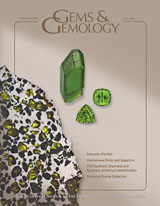
Trace amounts of natural beryllium are sometimes detected in untreated sapphires, such as those from Madagascar, typically ranging from <1 ppma to about 4–5 ppma Be, while higher concentrations (>15 ppma) are usually associated with beryllium diffusion treatment. Naturally occurring beryllium in corundum is often accompanied by traces (usually <1 ppma) of niobium, tantalum, light rare-earth elements, and thorium (see A. Shen et al., “From the GIA Laboratory: Beryllium in corundum: The consequences for blue sapphire,” GIA Insider, Vol. 9, No. 2, Jan. 26, 2007). During routine testing, three blue sapphires recently submitted for identification were found to contain relatively high levels of beryllium; the three consisted of one ring-mounted stone and two loose sapphires weighing 3.17 and 3.21 ct. Two samples showed microscopic evidence of heating, while the third (3.17 ct) had inclusion features proving it was unheated. The 3.21 ct sapphire showed a chalky blue reaction to short-wave UV (consistent with low iron content) and strong blue bands in immersion, whereas the other two were inert to long- and short-wave UV due to higher iron contents. All three contained milky clouds. LA-ICP-MS trace-element analysis revealed Be concentrations ranging from virtually absent to 33 ppma, generally positively correlated with transition metals and light rare-earth elements including niobium, tantalum, tungsten, lanthanum, cerium, hafnium, and thorium. These higher concentrations were often associated with clouds, as seen in Be-bearing untreated sapphires. Magnesium also showed a positive correlation with Be, albeit with wide variation, while titanium displayed both positive and negative correlation, possibly due to its zoning in blue areas. The Be concentrations in these sapphires were comparable to or exceeded those in some Be-diffused stones. Their properties suggest origins from at least two distinct deposits or deposit types, though specific sources could not be determined. This case reinforces the necessity of thorough gemological and chemical analysis to identify beryllium-diffusion treatment.

Lab Notes: Unusual Be-diffused pink sapphire… a cautionary note
Journal Article
Renfro, N. and Cooper, A. (2011) Lab Notes: Unusual Be-diffused pink sapphire… a cautionary note. Gems & Gemology, Vol. 47, No. 3, Fall, p. 232.
Record No. 5410  |  ISBN/ISSN: 0016626X  |  Sinkankas/Born No.: NIS/NIB  |  RWHL
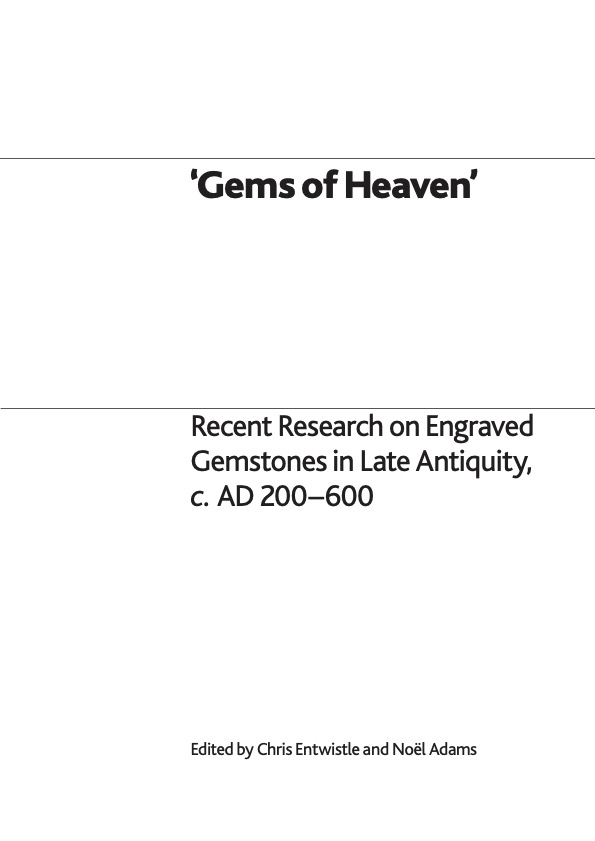
The Carlsbad laboratory recently examined a 1.40 ct pink sapphire with unusual orange color zones that was submitted for a sapphire report. Initial microscopic observation revealed numerous thermally altered light-colored crystals, some of which were surrounded by discoid “fingerprints,” an inclusion scene consistent with high-temperature heat treatment. Immersion revealed a planar orange zone near the culet and a shallow orange zone parallel to the table facet. Orange color zones in heat-treated pink sapphires may be indicative of beryllium-diffusion treatment. However, when the stone was tested by laser ablation–inductively coupled plasma–mass spectrometry (LA-ICP-MS) in the girdle area (as is GIA’s standard practice, to avoid placing an ablation spot in an area that could affect the stone’s appearance), no Be was detected. This was not surprising because there was no orange color near the girdle.

A case study on gemstone origins: Chrysothrix, a group of Roman magical gems
Book Section
Thoresen, L. (2011) A case study on gemstone origins: Chrysothrix, a group of Roman magical gems. In: ‘Gems of Heaven’: Recent Research on Engraved Gemstones in Late Antiquity, c. AD 200–600, London: British Musuem, Research Publication No. 77 , pp. 4–9.
Record No. 4621  |  ISBN/ISSN: 9780860000000  |  Sinkankas/Born No.: NIS/NIB  |  RWHL
The gemstone sources that supplied raw materials to ancient gem cutters are known to us today mostly from ancient inscriptions and texts. Many sources are described, and clearly more varieties of gems were known than have been identified positively or have survived to the present day. Together, texts and archaeological work sometimes have revealed associations between extant carved gems and gem-producing localities, despite the paucity of direct evidence of gem-mining activity. In addition, archaeology has rectified written accounts that sometimes confuse centres of gem industry with gems at their sources. It also has provided illuminating details about gem production and the circulation of gems throughout the ancient world – whether raw materials, partially worked blanks, or finished, fashioned gems discovered in workshops, trading centres, or settlement and burial contexts.

Lead glass-filled trapiche ruby

Journal Article
Segura, O. (2011) Lead glass-filled trapiche ruby. Gems & Gemology, Vol. 47, No. 1, Spring, p. 72.
Record No. 3023  |  ISBN/ISSN: 0016626X  |  Sinkankas/Born No.: NIS/NIB  |  RWHL
Since 2004, the treatment of corundum (particularly ruby) by filling fractures with a lead-based glass has become widespread. There have been several developments since the treatment first appeared, such as glass compositions that do not show the orange/blue “flash effect” and new geographic origins and varieties of filled material (e.g., faceted rubies from Mozambique and star rubies from Madagascar). These contributors recently encountered yet another permutation: lead glass–filled trapiche ruby. In August 2010, one of us (OS) purchased a 20.37 ct translucent cabochon represented as trapiche ruby at the Chanthaburi gem market in Thailand. The seller indicated the gem came from Mozambique and had been treated with lead glass. To our knowledge, trapiche rubies from Mozambique are rarer but larger than those from Mong Hsu, Myanmar. The sample displayed the classic trapiche pattern with six clearly delineated sectors and the hexagonal growth zones often seen in corundum also were obvious. The gemological properties were typical for ruby, with RIs of 1.755–1.770, a hydrostatic SG of ~3.95, and a standard ruby spectrum with the handheld spectroscope. The material fluoresced strong red to long-wave UV radiation and was inert to short-wave UV. Viewed with the microscope, the stone showed areas of slightly duller luster in reflected light, as is typical of lead glass–filled gems. An abundance of flattened and spherical bubbles of various sizes indicated widespread filling, possibly in preexisting cavities. This raised the question of whether the gem was a single piece of ruby or a composite. Close examination of the trapiche pattern and orientation of the “silk” in the cabochon demonstrated that it was indeed fashioned from a single crystal, despite the high glass content. Also visible were numerous crystal inclusions with a morphology and relief that suggested apatite. Other traders in Chanthaburi later showed us large (up to 181 ct) untreated trapiche rubies that reportedly came from the Nzérékoré area of southeastern Guinea, an undocumented source for this kind of ruby. Unfortunately, we could not acquire any samples for analysis.

Formation temperature of calcite from the Kuh-i-Lal noble spinel deposit
Conference Paper
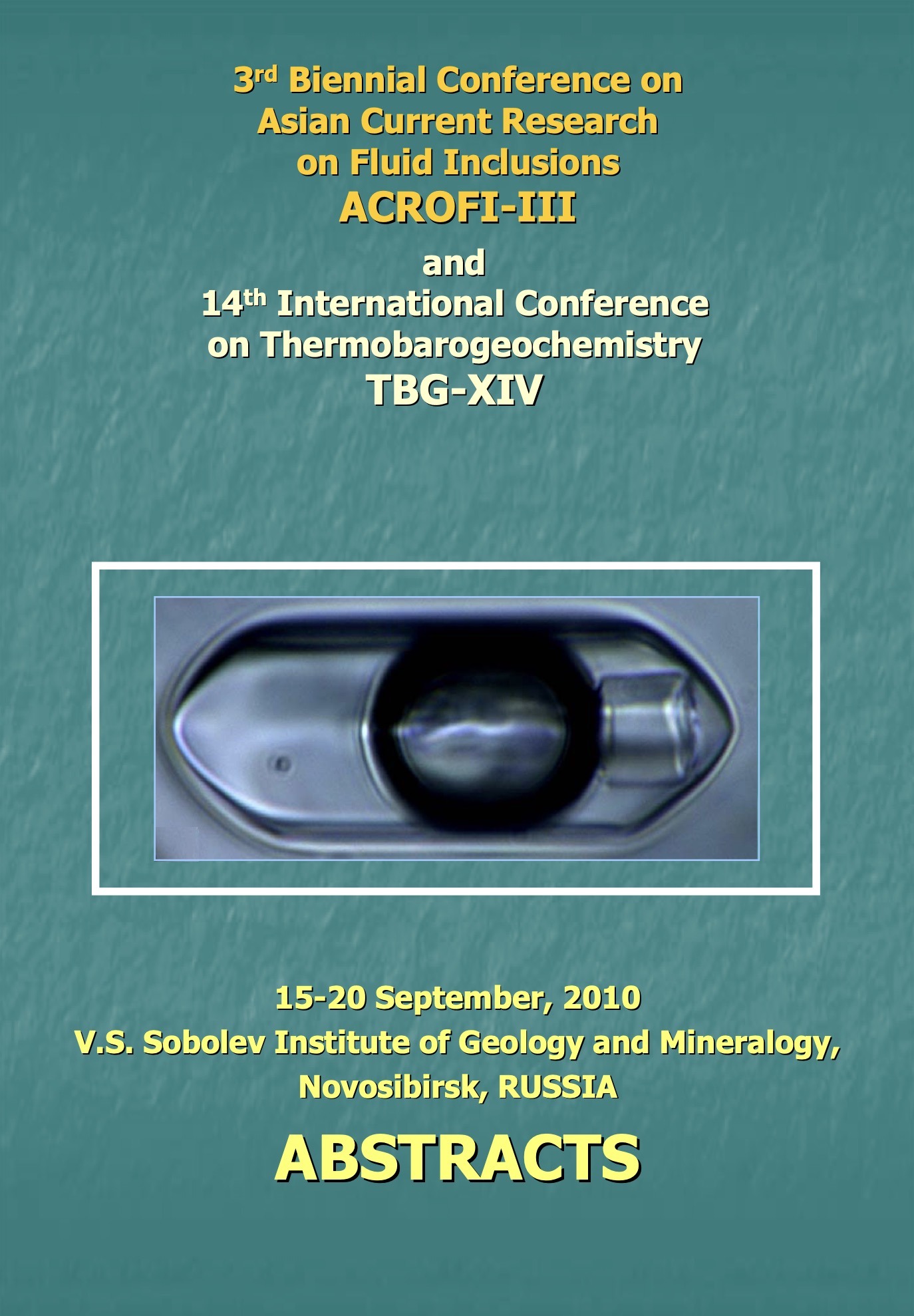
Fayziev, A.R., Safaraliyev, N.S. and Elnazarov, S.A. (2010) Formation temperature of calcite from the Kuh-i-Lal noble spinel deposit. 3rd Biennial Conference on Asian Current Research on Fluid Inclusions (ACROFI-III) and 14th International Conference on Thermobarogeochemistry, 15–20 September, pp. 58–59.
Record No. 29221  |  Sinkankas/Born No.: NIS/NIB  |  RWHL
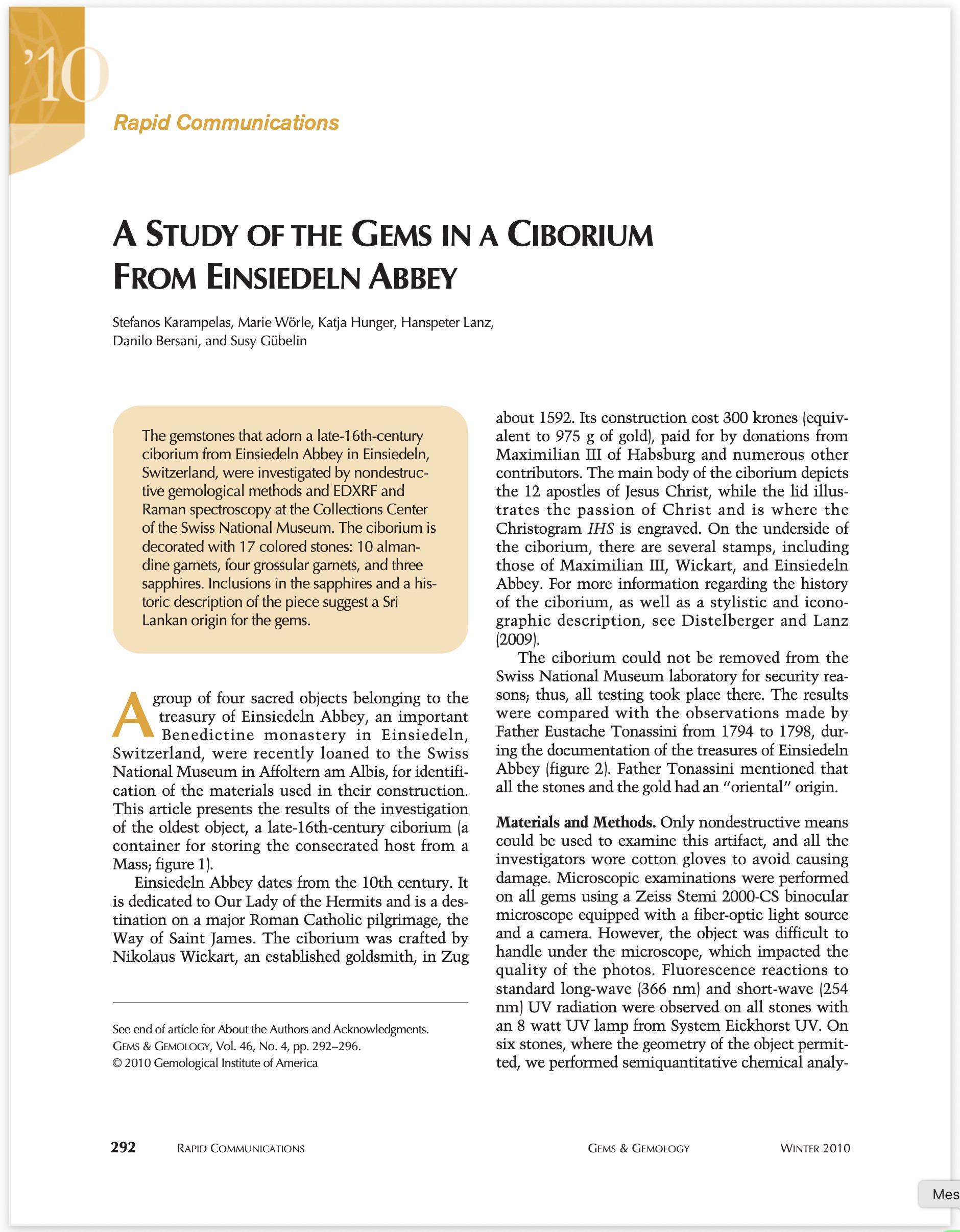
The Kuhilal deposit is located in the Ishkashim region of the Gorno-Badakhshan Autonomous Region (Southwestern Pamir). It has been known since ancient times (7th century) as the source of the famous Badakhshan Lal (noble spinel). It is localized in the lower structural-stratigraphic unit of the metamorphic sequence of the Southwestern Pamir—the Goransky series. In this series, the bulk of the sediments is represented by biotite and biotite-hornblende gneisses and migmatites that contain multiple bands, layers and lenses of magnesite marbles. Structurally, the deposit is located on the western limb of the Garmchashminsky anticline, complicated by folds of lower orders and by a series of small, compressed and often overturned isoclinal folds. The deposit is a unique occurrence that combines distinctive mineralogy, a wide range of minerals and unique features of genesis. Various types of non-metallic mineral raw materials of industrial significance are concentrated here.

A study of the gems in a ciborium from Einsiedeln Abbey
Journal Article
Karampelas, S., Wörle, M., Lanz, H., Bersani, D. and Gübelin, S. (2010) A study of the gems in a ciborium from Einsiedeln Abbey. Gems & Gemology, Vol. 46, No. 4, Winter, pp. 292–296.
Record No. 27510  |  Sinkankas/Born No.: NIS/NIB  |  RWHL
The gemstones that adorn a late-16th-century ciborium from Einsiedeln Abbey in Einsiedeln, Switzerland, were investigated by nondestructive gemological methods and EDXRF and Raman spectroscopy at the Collections Center of the Swiss National Museum. The ciborium is decorated with 17 colored stones: 10 almandine garnets, four grossular garnets, and three sapphires. Inclusions in the sapphires and a historic description of the piece suggest a Sri Lankan origin for the gems.

Multiple origins of zircons in jadeitite
Journal Article
Fu, B., Valley, J.W., Kita, N.T., Spicuzza, M.J., Paton, C., Tsujimori, T., Bröker, M. and Harlow, G.E. (2010) Multiple origins of zircons in jadeitite. Contributions to Mineralogy and Petrology, Vol. 159, pp. 769–780.
Record No. 6396  |  Sinkankas/Born No.: NIS/NIB  |  RWHL
Jadeitites form from hydrothermal fluids during high-pressure metamorphism in subduction environments; however, the origin of zircons in jadeitite is uncertain. We report ion microprobe analyses of δ¹⁸O and Ti in zircons, and bulk δ¹⁸O data for the jadeitite whole-rock from four terranes: Osayama serpentinite mélange, Japan; Syros mélange, Greece; the Motagua Fault zone, Guatemala; and the Franciscan Complex, California. In the Osayama jadeitite, two texturally contrasting groups of zircons are identified by cathodoluminescence and are distinct in δ¹⁸O: featureless or weakly zoned zircons with δ¹⁸O = 3.8 ± 0.6‰ (2 SD, VSMOW), and zircons with oscillatory or patchy zoning with higher δ¹⁸O = 5.0 ± 0.4‰. Zircons in phengite jadeitite from Guatemala and a jadeitite block from Syros have similar δ¹⁸O values to the latter from Osayama: Guatemala zircons are 4.8 ± 0.7‰, and the Syros zircons are 5.2 ± 0.5‰ in jadeitite and 5.2 ± 0.4‰ in associated omphacitite, glaucophanite, and chlorite-actinolite rinds. The δ¹⁸O values for most zircons above fall within the range measured by ion microprobe in igneous zircons from oxide gabbros and plagiogranites in modern ocean crust (5.3 ± 0.8‰) and measured in bulk by laser fluorination of zircons in equilibrium with primitive magma compositions or the mantle (5.3 ± 0.6‰). Titanium concentrations in these zircons vary between 1 and 19 ppm, within the range for igneous zircons worldwide. Values of δ¹⁸O (whole-rock) and δ¹⁸O (jadeite) vary from 6.3 to 10.1‰ in jadeitites in all four areas. These values of δ¹⁸O and Ti are higher than predicted for hydrothermal zircons, and the δ¹⁸O values of most zircons are not equilibrated with the coexisting jadeite at reasonable metamorphic temperatures. We conclude that while some zircons may be hydrothermal in origin, a majority of the zircons studied are best explained as relic igneous crystals inherited from precursor rocks; they were not precipitated directly from hot aqueous fluids as previously assumed. Therefore, U–Pb ages from these zircons may date magmatic crystallization and do not establish the timing of high-pressure metamorphism or hydrothermal activity.

Emeralds, sapphires, pearls and other gemmological materials from the Preslav gold treasure (X century) in Bulgaria
Journal Article
Strack, E. and Kostov, R.I. (2010) Emeralds, sapphires, pearls and other gemmological materials from the Preslav gold treasure (X century) in Bulgaria. Bulgarian Academy of Sciences, Bulgarian Mineralogical Society, Vol. 48, pp. 103–123.
Record No. 6395  |  Sinkankas/Born No.: NIS/NIB  |  RWHL
The Preslav gold treasure was found in 1978 near the town of Veliki Preslav, the second Bulgarian capital during the end of the First Bulgarian Kingdom. The 10th-century trea-sure belonged to a female member of the royal family and is believed to be of Byzantine origin. Among the gem materials identified are emerald, violet sapphire, pearl, reddish violet garnet, rock crystal, amethyst, and carnelian. The average dimensions of the emeralds in two medallions were 0.5 cm long and 0.6 cm wide; their origin is suspected to be Egyptian or Austrian based on the deposits known at the time and similarities in their morphology, internal fea-tures, and inclusions. Fine rutile silk inclusions were iden-tified in the sapphire. As the Indian subcontinent was the main source of gem corundum in antiquity and Early Medieval times, it can be assumed that the sapphires in the Preslav treasure are of an Indian or Sri Lankan origin. The barrel-and baroque-shaped saltwater pearls (average 0.4 cm long and 0.5 cm in diameter), some of them partly decomposed, are thought to originate from the Persian Gulf and the coastal areas of the Indian Ocean.

Genesis of Guatemala jadeitite and related fluid characteristics: Insight from zircon
Journal Article
Yui, T.-F., Maki, K., Usuki, T., Lan, C.-Y., Martens, U., Wu, C.-M., Wu, T.-W. and Liou, J.G. (2010) Genesis of Guatemala jadeitite and related fluid characteristics: Insight from zircon. Chemical Geology, Vol. 270, No. 1,, 2010/02/15/ pp. 45–55.
Record No. 6257  |  ISBN/ISSN: 92541  |  DOI: https://doi.org/10.1016/j.chemgeo.2009.11.004  |  Sinkankas/Born No.: NIS/NIB  |  RWHL
Zircons from one jadeitite sample, collected from serpentinite mélange north of the Motagua fault, Guatemala, were separated for SHRIMP-RG U–Pb dating and trace element analyses. The sub- to anhedral crystal form, lack of typical magmatic oscillatory zoning, the presence of fluid and albite/quartz/jadeite inclusions, and the low Th/U ratios (<0.005) indicate that these zircons would have precipitated from an aqueous solution. The U–Pb concordia intercept age of these zircons is 95.1 ± 3.6 Ma, much older than the reported ⁴⁰Ar/³⁹Ar phengite age (i.e., 77–65 Ma) of jadeitites and related rocks from the same area. The 95 Ma age is interpreted as the time of jadeitite formation, whereas the 77–65 Ma age reflects the time of cooling after isotopic resetting due to superimposed metamorphism at ∼70 Ma. The superimposed metamorphic temperature would therefore be higher than the phengite ⁴⁰Ar/³⁹Ar blocking temperature and probably at 400–450 °C. It is further concluded that “metasomatic replacement” and “vein precipitation” are two end-member mechanisms for jadeitite genesis. Both the whole-rock jadeitite and its zircons have very low REE contents, ∼1 ppm and 0.5–42 ppm, respectively. The whole-rock jadeitite shows a flat and slightly concave REE pattern and a positive Eu anomaly (Eu/Eu* = 1.24). Zircons are enriched in HREE and their REE patterns can be divided into two groups: one with negative Eu anomaly and one with positive Eu anomaly. The latter tends to have smaller positive Ce anomalies. The fluid from which jadeitite formed probably evolved over time, becoming more reducing and more dominated by plagioclase decomposition reactions. Alternatively, trace element compositions of zircons simply demonstrate complicated variations of fluid chemistry during jadeitite formation. A reducing fluid with high pH values capable of mobilizing Al, Na, Zr and Hf is inferred to be the media during jadeite/zircon formation. If jadeitite formation was related to serpentinization fluid, the ultramafics must contain olivine as the major primary phase subjected to serpentinization, yielding reducing fluids with high pH values. Two additional requirements are (1) the presence of feldspar/mica-bearing protolithic blocks survived from rodingitization in peridotites to provide Al and Na, and (2) the presence of fluid channels as well as pulses of in/out-flux fluid to trigger metasomatic reactions. These preconditions in subduction zones may contribute to the rare occurrences of jadeitite in global high-P metamorphic belts.

Fluid composition, δD of channel H₂O, and δ¹⁸O of lattice oxygen in beryls: Genetic implications for Brazilian, Colombian, and Afghanistani emerald deposits
Journal Article
Giuliani, G., France-Lanord, C., Zimmermann, J., Cheilletz, A., Arboleda, C., Charoy, B., Coget, P., Fontan, F. and Giard, D. (2010) Fluid composition, δD of channel H₂O, and δ¹⁸O of lattice oxygen in beryls: Genetic implications for Brazilian, Colombian, and Afghanistani emerald deposits. International Geology Review, May-97,, 6-Jul pp. 400–424.
Record No. 6072  |  DOI: https://dx.doi.org/10.1080/00206819709465280  |  Sinkankas/Born No.: NIS/NIB  |  RWHL
The fluid composition, δD of channel H₂O, and δ¹⁸O of lattice oxygen have been determined in beryl and emerald from a variety of geological environments to constrain the origin of the parental fluids from which beryl has formed. Step-heating analyses using quadrupole mass spectrometry were employed to quantify the fluid phases in beryl from granitic pegmatites and greisens, and emerald from Brazil, Colombia, and Afghanistan. A key finding is that beryl and emerald share similar fluid compositions, with H₂O making up over 90 % of total water content in the mineral, regardless of formation age (2.0 Ga to 32 Ma) or tectonic setting. However, emeralds from the Santa Terezinha shear-zone deposit in Brazil contain significant CO₂, up to 13 wt% of the fluid. Another major result is that some Brazilian emeralds show channel H₂O contents higher than the established literature range, especially in shear-zone-related deposits (2.99 < H₂O < 3.16 wt%) and pegmatite-related deposits like Pombos, Pela Ema, and Pirenópolis (2.78 < H₂O < 3.01 wt%). In contrast, Colombian emeralds contain very low H₂O (1.30 < H₂O < 1.96 wt%), among the lowest globally. Brazilian, Colombian, and Afghan emeralds display distinct and constrained δ¹⁸O ranges. Brazilian emeralds from pegmatites show systematic inter-deposit variability (+6.3 < δ¹⁸O < +12.4‰), interpreted as fluid-buffering by host ultrabasic rocks during fluid–rock interaction. Shear-zone emeralds in Brazil have a narrow δ¹⁸O range (+12.0 < δ¹⁸O < +12.4‰), reflecting the original hydrothermal fluid signature. Colombian and Afghan emeralds exhibit strong enrichment in ¹⁸O (+13.4 < δ¹⁸O < +23.6‰), indicating extensive interaction with ¹⁸O-rich sedimentary or metasedimentary rocks. δD values in Brazilian emeralds vary by deposit type: pegmatite-related emeralds like Socotó and Carnaíba suggest a magmatic origin (mean δD = −37.8 ± 8‰), while Santa Terezinha emeralds suggest a metamorphic origin (mean δD = −32.4 ± 3‰). Colombian emeralds are also of metamorphic origin, while Afghan emeralds (mean δD = −46.3 ± 1.3‰) are compatible with both magmatic and metamorphic sources.

Chemical composition of apatite inclusions in corundum and spinel determined by LA-ICP-MS and its potential for authentication and provenance determination
Conference Paper
Bieri, W., Grobety, B., Peretti, A., Hametner, K. and Günther, D. (2010) Chemical composition of apatite inclusions in corundum and spinel determined by LA-ICP-MS and its potential for authentication and provenance determination. Goldschmidt Conference, Knoxville, Tennessee, USA: Goldschmidt, p. A89.
Record No. 6037  |  Sinkankas/Born No.: NIS/NIB  |  RWHL
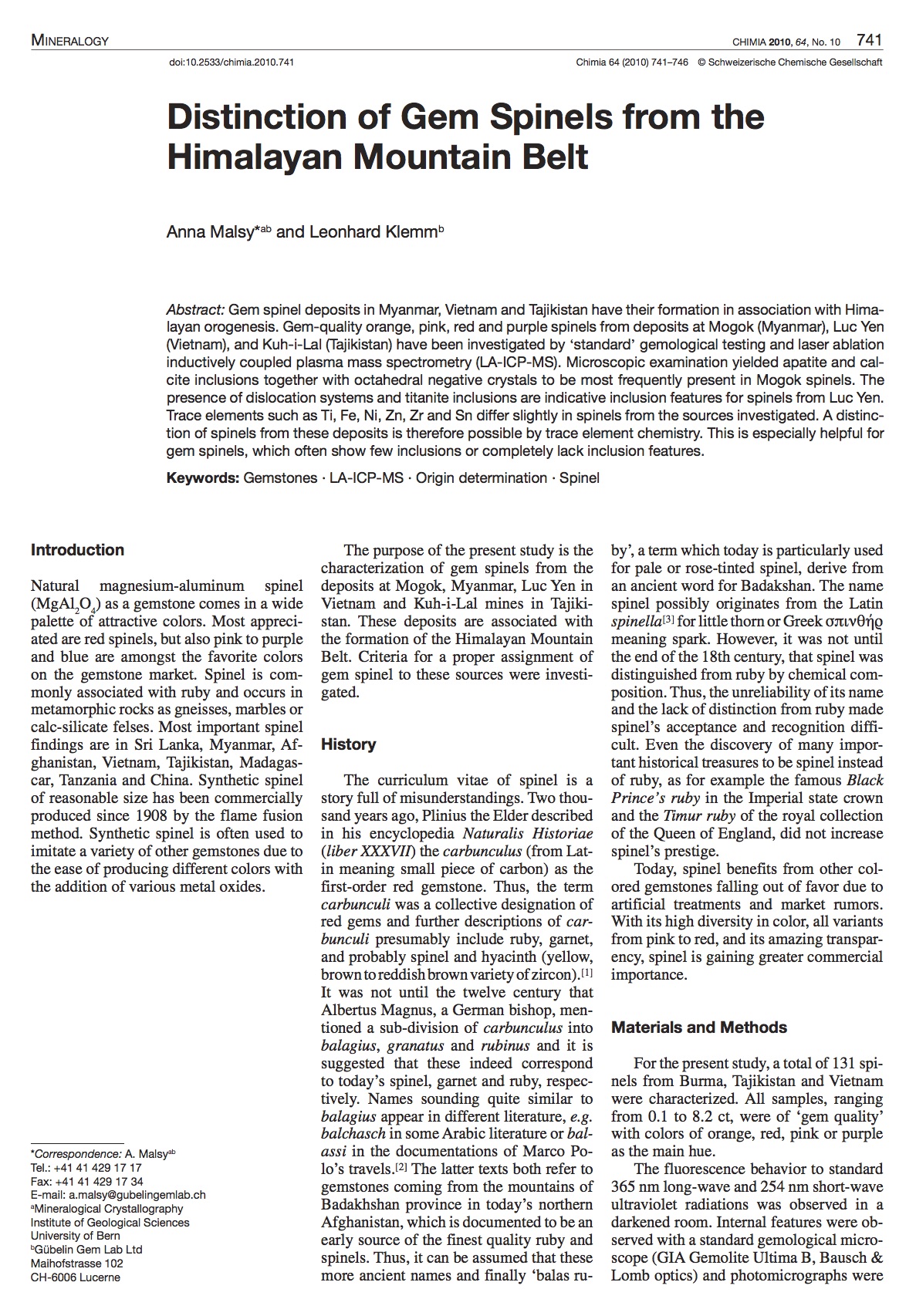
Apatites derived from different rock types have distinctive absolute and relative abundances of trace elements including rare-earth elements (REE). [1] In this study, apatite inclusions in natural gem-quality corundum and spinel were analysed. They originate from the world’s most important mining areas including Myanmar, Vietnam, Sri Lanka, Madagascar and Africa. Bulk compositions of the apatite inclusions and the host-mineral were determined using LA-ICP-MS. Differences in LREE/HREE fractionation and Eu-anomalies in apatite were found. They can be compared with the variations of trace and minor element concentrations in the host-corundum and spinel. There is no significant difference in total REE concentration between apatites in corundum and in spinel. The most interesting observation is that only samples from Winza (Tanzania) show a positive Eu-anomaly (Fig.1), which was already found in pargasite and garnet inclusions of the same provenance. [2] All the other samples showed a negative Eu- anomaly or no anomaly. No anomaly was found in two samples from a new ruby mine in Mozambique.

Distinction of gem spinels from the Himalayan mountain belt
Journal Article
Malsy, A.-K. and Klemm, L. (2010) Distinction of gem spinels from the Himalayan mountain belt. CHIMIA, Vol. 64, No. 10, pp. 741–746.
Record No. 5802  |  Sinkankas/Born No.: NIS/NIB  |  RWHL
Gem spinel deposits in Myanmar, Vietnam and Tajikistan have their formation in association with Himalayan orogenesis. Gem-quality orange, pink, red and purple spinels from deposits at Mogok (Myanmar), Luc Yen (Vietnam), and Kuh-i-Lal (Tajikistan) have been investigated by ‘standard’ gemological testing and laser ablation inductively coupled plasma mass spectrometry (LA-ICP-MS). Microscopic examination yielded apatite and calcite inclusions together with octahedral negative crystals to be most frequently present in Mogok spinels. The presence of dislocation systems and titanite inclusions are indicative inclusion features for spinels from Luc Yen. Trace elements such as Ti, Fe, Ni, Zn, Zr and Sn differ slightly in spinels from the sources investigated. A distinction of spinels from these deposits is therefore possible by trace element chemistry. This is especially helpful for gem spinels, which often show few inclusions or completely lack inclusion features.

The conditions of formation of sapphire and zircon in the areas of alkali-basaltoid volcanism in Central Vietnam
Journal Article
Izokh, A.E., Smirnov, S.Z., Egorova, V.V., Anh, T.T., Kovyazin, S.V., Phuong, N.T. and Kalinina, V.V. (2010) The conditions of formation of sapphire and zircon in the areas of alkali-basaltoid volcanism in Central Vietnam. Russian Geology and Geophysics, Vol. 51, No. 7, pp. 719–733.
Record No. 5437  |  ISBN/ISSN: 10687971  |  DOI: https://dx.doi.org/10.1016/j.rgg.2010.06.001  |  Sinkankas/Born No.: NIS/NIB  |  RWHL
Study of the chemical composition of clinopyroxene and garnet megacrysts from the Dak Nong sapphire deposit, along with model calculations, indicates that the megacrysts originated from the crystallization of alkali basaltoid magma in a deep-seated intermediate chamber at pressures of 14–15 kbar, corresponding to a depth near the Moho (~50 km) in southeastern Asia. This chamber served as a heat and CO₂ fluid source for generating crustal syenitic melts that produced sapphires and zircons. The formation conditions of these minerals differ significantly: jadeite inclusions in placer zircons indicate high-pressure crystallization, corroborated by decrepitation of CO₂-rich melt inclusions, whereas sapphires formed from iron-rich syenitic melt in shallower crustal levels, influenced by CO₂ and carbonate–H₂O–CO₂ fluids. Subsequent eruptions of alkali basalts transported garnet and pyroxene megacrysts, along with sapphire and zircon xenocrysts, to the surface. The study concludes that sapphire deposits can form only during multistage basaltic volcanism involving deep intermediate chambers in areas with thick continental crust. The presence of a widespread megacryst assemblage—clinopyroxene, garnet, sanidine, and ilmenite—and placer zircon megacrysts may serve as useful indicators in sapphire exploration.

The Heat Treatment of Ruby & Sapphire

Book
Themelis, T. (2010) The Heat Treatment of Ruby & Sapphire. Bangkok, Self published, 384 pp.
Record No. 2684  |  Sinkankas/Born No.: NIS/NIB  |  RWHL

Exploring the Literature of Gemstone Inclusions

The literature of gemstone inclusions covers identification, origin determination, treatments, synthesis, mineral inclusions, fluid inclusions and other internal features of natural and synthetic gems.

For a curated selection of important sources, read Inclusions in Gemstones — Hyperion Literature Sources.

About Four Treasures

Four Treasures is Lotus Gemology's freely accessible gemological reference database. Use the full database to search by author, title or keyword and explore literature on gemology, mineralogy, jewelry and related fields. Where available, hyperlinks on titles may lead directly to the full publication.

Search the Complete Four Treasures Database