Gemstone Inclusions Bibliography

Gemstone Inclusions Bibliography

Explore books, articles and historical sources on inclusions in gemstones in Four Treasures, the Lotus Gemology reference database. This bibliography brings together matching records from the collection, with publication details, abstracts and cover images where available.

Gemstone Inclusion References

The list below matches the terms inclusion or inclusions in the database's searchable fields. Some references discuss inclusions as part of a broader subject.
641–660 of 1,197 matching references

Les corindons gemmes dans les basaltes alcalins et à leurs enclaves à Madagascar: Signification pétrologique et métallogénique
Gem Corundums in Alkaline Basalts and Their Xenoliths in Madagascar: Petrological and Metallogenic Significance
Thesis
Rakotosamizanany, S. (2009) Les corindons gemmes dans les basaltes alcalins et à leurs enclaves à Madagascar: Signification pétrologique et métallogénique. [Gem Corundums in Alkaline Basalts and Their Xenoliths in Madagascar: Petrological and Metallogenic Significance]., Nancy: Université Henri Poincaré, 443 pp.
Record No. 29511  |  Sinkankas/Born No.: NIS/NIB  |  Language: in French with English abstract  |  RWHL
Madagascar is one of the principal producers of gem corundums recovered from continental basaltic fields. The main deposits are the secondary deposits of Ambondromifehy in the northern part of the country (sapphire-bearing palaeoplacer and placer), Soamiakatra–Mandrosohasina in the central part (primary ruby deposit, and ruby- and sapphire-bearing placer and palaeoplacer) and Vatomandry in the eastern part of the island (ruby- and sapphire-bearing palaeoplacer). Soamiakatra is the only known primary deposit where ruby is found in metagabbro and pyroxenite xenoliths, which were entrained and brought up to the upper crust by the Ankaratra volcanic event. Petrographic studies have demonstrated the existence of two different conditions of ruby formation at the boundary of the eclogite domain (HT ~ 1100°C, HP ~ 20 kbar) and granulite facies (HT ~ 1100°C, BP < 15 kbar). In contrast, the sapphires originated from alkaline mafic magmatic chambers at the lower continental crust–mantle boundary. They occur within or associated with syenite and anorthoclasite xenoliths in the basalts. These alkali basalts transported corundum to the surface; they are linked with asthenosphere upwelling and thinning of the lithosphere underneath the Ankaratra Plateau during the Oligocene–Quaternary, and to some E–W and N–S tectonic extension structures. Oxygen isotopic compositions of the rubies from placer deposits with δ¹⁸O = 3.1 ± 1.1‰ are typical of ruby in mafic and ultramafic rocks (1.25 < δ¹⁸O < 6.8‰). The sapphires from placer and palaeoplacer deposits have δ¹⁸O values of 4.5 ± 0.5‰, which coincides with the range in sapphire-bearing syenitic rocks (4.4 < δ¹⁸O < 8.3‰). Solid inclusions such as pyrochlore, samarskite, uraninite and anorthoclasite in the sapphires confirm their syenitic origin. Zircons associated with the sapphires gave U–Pb ages younger than 35 Ma, coeval with the volcanic event. The zircon inclusions in rubies of metamorphic origin associated with the mafic and ultramafic xenolith rocks gave a Pan-African U–Pb age around 750 Ma. Nevertheless, dating of zircon crystals in situ within the anorthoclasite xenoliths has revealed two different ages, 35 and 17 Ma, which are slightly older than or contemporaneous with the onset of the volcanic events. The characteristics of the corundum, their isotopic compositions as well as their ages demonstrate the existence of two distinct sources of corundum associated with basalts in Madagascar. On one hand, the rubies associated with metagabbros and garnet-bearing pyroxenites are linked to mafic and ultramafic complexes of eclogite facies in the lower crust, retrograded to granulite facies during the Pan-African event. On the other hand, the sapphires brought up to the upper crust during the Oligo-Plio-Quaternary are interpreted to be coeval with a volcanic event involving differentiated alkaline magma as revealed by their oxygen isotopic composition with syenitic signatures.

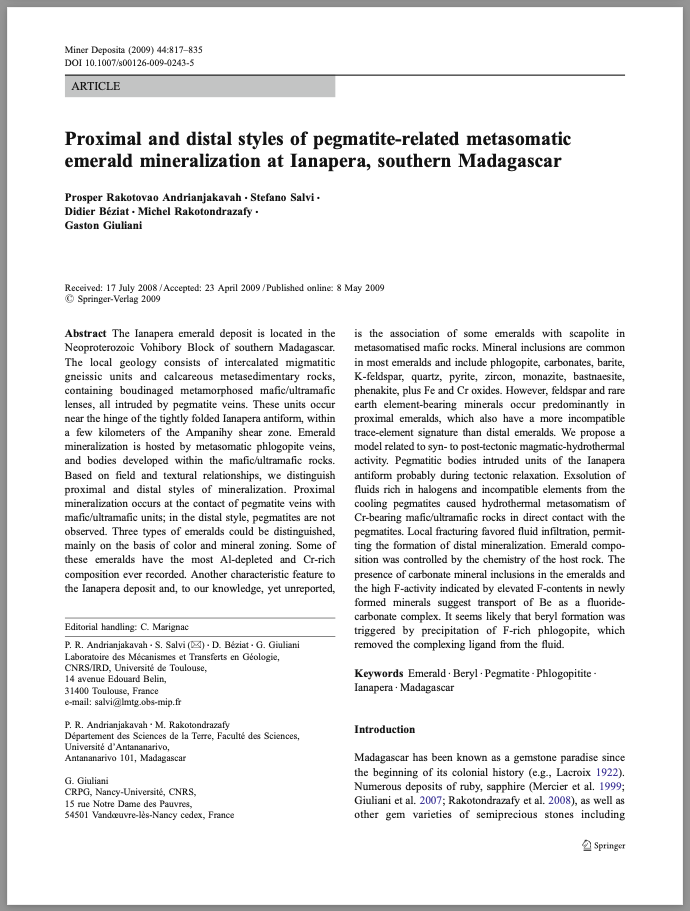
Proximal and distal styles of pegmatite-related metasomatic emerald mineralization at Ianapera, southern Madagascar
Journal Article
Andrianjakavah, P.R., Salvi, S., Béziat, D., Rakotondrazafy, M. and Giuliani, G. (2009) Proximal and distal styles of pegmatite-related metasomatic emerald mineralization at Ianapera, southern Madagascar. Mineralium Deposita, Vol. 44, pp. 817–835.
Record No. 28073  |  DOI: https://doi.org/10.1007/s00126-009-0243-5  |  Sinkankas/Born No.: NIS/NIB  |  RWHL
The Ianapera emerald deposit is located in the Neoproterozoic Vohibory Block of southern Madagascar. The local geology consists of intercalated migmatitic gneissic units and calcareous metasedimentary rocks, containing boudinaged metamorphosed mafic/ultramafic lenses, all intruded by pegmatite veins. These units occur near the hinge of the tightly folded Ianapera antiform, within a few kilometers of the Ampanihy shear zone. Emerald mineralization is hosted by metasomatic phlogopite veins, and bodies developed within the mafic/ultramafic rocks. Based on field and textural relationships, we distinguish proximal and distal styles of mineralization. Proximal mineralization occurs at the contact of pegmatite veins with mafic/ultramafic units; in the distal style, pegmatites are not observed. Three types of emeralds could be distinguished, mainly on the basis of color and mineral zoning. Some of these emeralds have the most Al-depleted and Cr-rich composition ever recorded. Another characteristic feature to the Ianapera deposit and, to our knowledge, yet unreported, is the association of some emeralds with scapolite in metasomatised mafic rocks. Mineral inclusions are common in most emeralds and include phlogopite, carbonates, barite, K-feldspar, quartz, pyrite, zircon, monazite, bastnaesite, phenakite, plus Fe and Cr oxides. However, feldspar and rare earth element-bearing minerals occur predominantly in proximal emeralds, which also have a more incompatible trace-element signature than distal emeralds. We propose a model related to syn- to post-tectonic magmatic-hydrothermal activity. Pegmatitic bodies intruded units of the Ianapera antiform probably during tectonic relaxation. Exsolution of fluids rich in halogens and incompatible elements from the cooling pegmatites caused hydrothermal metasomatism of Cr-bearing mafic/ultramafic rocks in direct contact with the pegmatites. Local fracturing favored fluid infiltration, permitting the formation of distal mineralization. Emerald composition was controlled by the chemistry of the host rock. The presence of carbonate mineral inclusions in the emeralds and the high F-activity indicated by elevated F-contents in newly formed minerals suggest transport of Be as a fluoride-carbonate complex. It seems likely that beryl formation was triggered by precipitation of F-rich phlogopite, which removed the complexing ligand from the fluid.

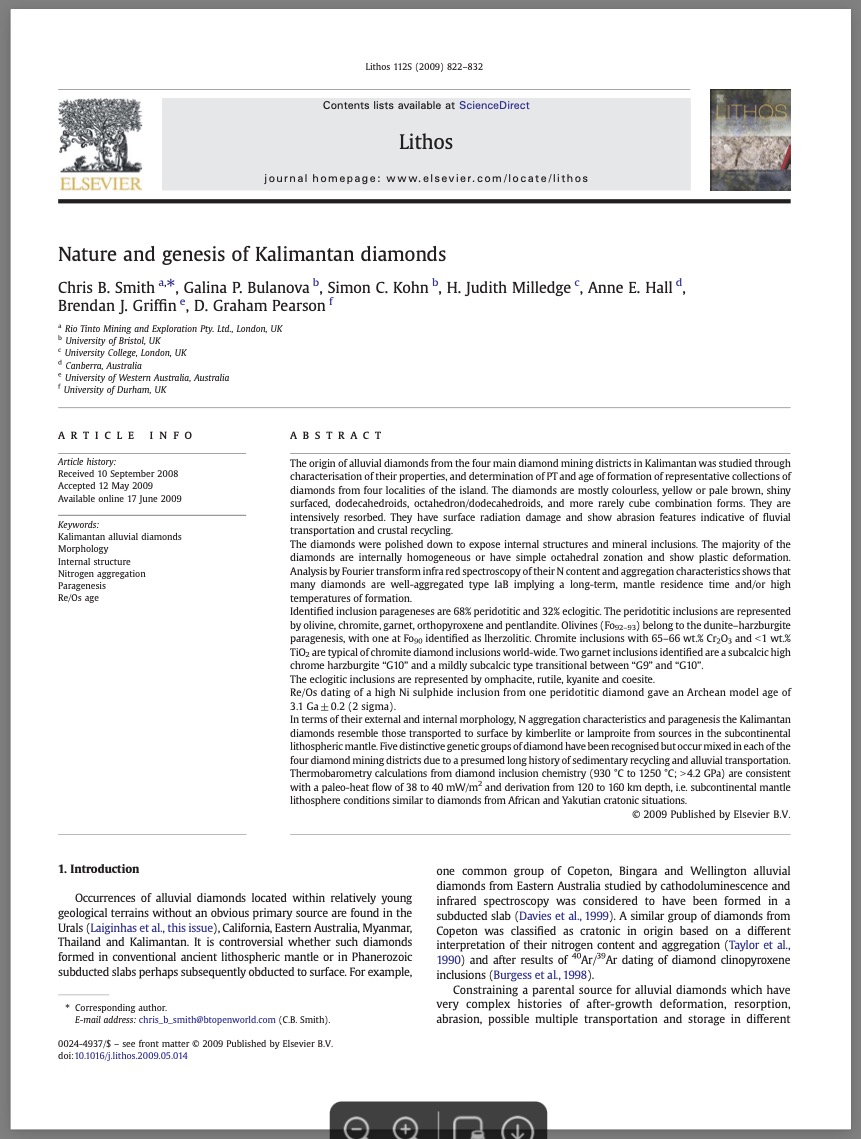
Nature and genesis of Kalimantan diamonds
Journal Article
Smith, C.B., Bulanova, G.P., Kohn, S.C., Milledge, H.J., Hall, A.E., Griffin, B.J. and Pearson, D.G. (2009) Nature and genesis of Kalimantan diamonds. Lithos, Vol. 112, pp. 822–832.
Record No. 27470  |  DOI: https://doi.org/10.1016/j.lithos.2009.05.014  |  Sinkankas/Born No.: NIS/NIB  |  RWHL
The origin of alluvial diamonds from the four main diamond mining districts in Kalimantan was studied through characterisation of their properties, and determination of PT and age of formation of representative collections of diamonds from four localities of the island. The diamonds are mostly colourless, yellow or pale brown, shiny surfaced, dodecahedroids, octahedron/dodecahedroids, and more rarely cube combination forms. They are intensively resorbed. They have surface radiation damage and show abrasion features indicative of fluvial transportation and crustal recycling. The diamonds were polished down to expose internal structures and mineral inclusions. The majority of the diamonds are internally homogeneous or have simple octahedral zonation and show plastic deformation. Analysis by Fourier transform infra red spectroscopy of their N content and aggregation characteristics shows that many diamonds are well-aggregated type IaB implying a long-term, mantle residence time and/or high temperatures of formation.

Moganite and quartz inclusions in the nano-structured Anatolian fire opals from Turkey
Journal Article
Hatipoğlu, M. (2009) Moganite and quartz inclusions in the nano-structured Anatolian fire opals from Turkey. Journal of African Earth Sciences, Vol. 54, No. 1/2, pp. 1–21.
Record No. 27164  |  DOI: https://doi.org/10.1016/j.jafrearsci.2009.01.004  |  Sinkankas/Born No.: NIS/NIB  |  RWHL
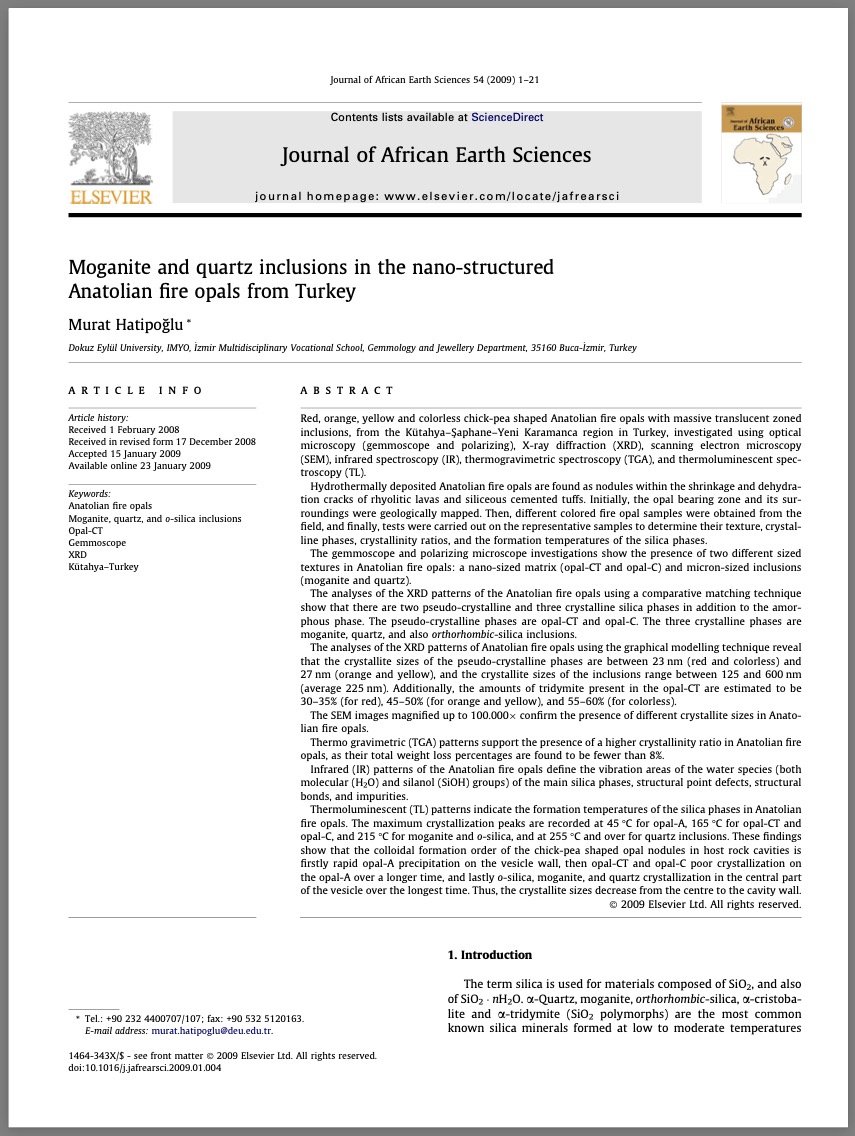
Red, orange, yellow, and colorless chick-pea–shaped Anatolian fire opals from the Kütahya–Şaphane–Yeni Karamanca region in Turkey, containing massive translucent zoned inclusions, were studied using optical microscopy (gemmoscope and polarizing), X-ray diffraction (XRD), scanning electron microscopy (SEM), infrared spectroscopy (IR), thermogravimetric analysis (TGA), and thermoluminescence (TL). These hydrothermally deposited fire opals occur as nodules within shrinkage and dehydration cracks in rhyolitic lavas and siliceous-cemented tuffs. The opal-bearing zone and surrounding geology were first mapped, followed by field collection of variably colored opals, and then laboratory testing of representative samples to characterize texture, crystalline phases, crystallinity levels, and silica phase formation temperatures. Optical investigations revealed two distinct textural scales: a nanoscale matrix (opal-CT and opal-C) and micron-scale inclusions composed of moganite and quartz.

‘Multiphenomenal' quartz from India

Journal Article
Choudhary, G. and Vyas, M.B. (2009) ‘Multiphenomenal' quartz from India. Gems & Jewellery, Vol. 18, No. 1, pp. 10–12.
Record No. 26792  |  Sinkankas/Born No.: NIS/NIB  |  RWHL
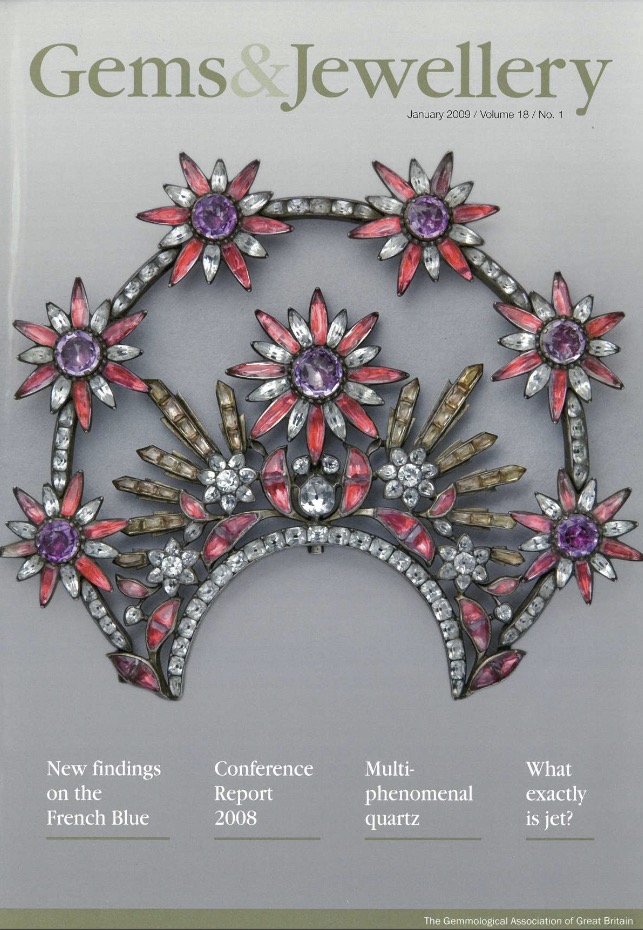
An unusual 12+ ct quartz cabochon is described that exhibits both strong chatoyancy and a distinct 10-rayed star, with the star set at approximately 45° to the chatoyant band. While asteriated quartz is typically sourced from Sri Lanka, this specimen is reportedly from Tamil Nadu, India. It has a bright medium yellow-green body color reminiscent of cat’s-eye chrysoberyl. The star effect results from oriented needle-like inclusions forming one set of rays at nearly 90° and another at roughly 60/120°, while the chatoyancy is caused by extremely fine, densely packed flaky inclusions aligned parallel to the c-axis. Gemological analysis confirmed that the chatoyancy and asterism are distinct optical phenomena. Although EDXRF chemical testing did not conclusively identify the inclusions, FTIR spectroscopy and other gemological tests confirmed the cabochon as natural quartz.

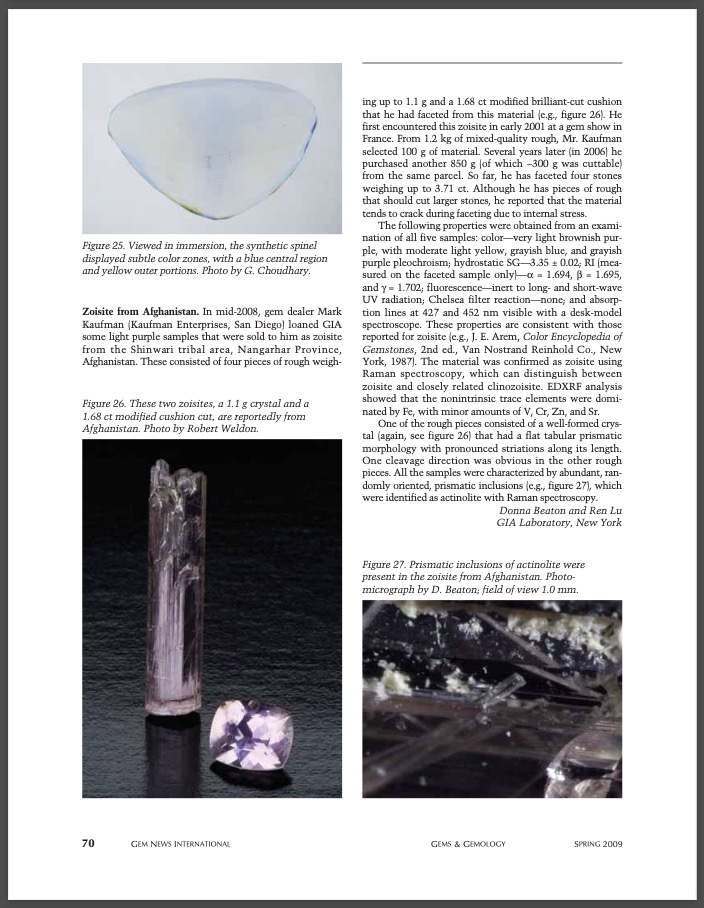
Gem News International: Zoisite from Afghanistan
Journal Article
Beaton, D. and Lu, R. (2009) Gem News International: Zoisite from Afghanistan. Gems & Gemology, Vol. 45, No. 1, Spring, p. 70.
Record No. 26680  |  Sinkankas/Born No.: NIS/NIB  |  RWHL
In mid-2008, gem dealer Mark Kaufman (Kaufman Enterprises, San Diego) provided GIA with several light purple samples sold to him as zoisite from the Shinwari tribal area in Nangarhar Province, Afghanistan. The material included four rough pieces (up to 1.1 g) and a 1.68 ct modified brilliant-cut cushion that he had faceted. Kaufman first encountered this zoisite in 2001 at a gem show in France, selecting 100 g from a 1.2 kg parcel of mixed-quality rough. In 2006, he acquired another 850 g from the same source, with about 300 g deemed cuttable. To date, he has faceted four stones up to 3.71 ct, though internal stress often causes the material to crack during cutting. Examination of the five samples revealed a very light brownish purple color with pleochroism in moderate light yellow, grayish blue, and grayish purple; SG of 3.35 ± 0.02; and refractive indices of α = 1.694, β = 1.695, and γ = 1.702 on the faceted stone. The material was inert under UV light, showed no Chelsea filter reaction, and exhibited absorption lines at 427 and 452 nm. These properties align with those of zoisite, confirmed by Raman spectroscopy, which also distinguished it from clinozoisite. EDXRF analysis showed Fe as the dominant trace element, with minor V, Cr, Zn, and Sr. One rough piece featured a well-formed, flat tabular prismatic crystal with striations, while the others displayed obvious cleavage. All samples contained abundant, randomly oriented prismatic inclusions identified as actinolite via Raman spectroscopy.

Nano inclusions in sapphire samples from Sri Lanka
Journal Article
Jaijong, K., Wathanakul, P., Kim, Y.-C., Choi, H.-M., Bang, S.Y., Choi, B.G. and Shim, K.B. (2009) Nano inclusions in sapphire samples from Sri Lanka. Journal of the Korean Crystal Growth and Crystal Technology, Vol. 19, No. 2,
Record No. 16818  |  Sinkankas/Born No.: NIS/NIB  |  RWHL
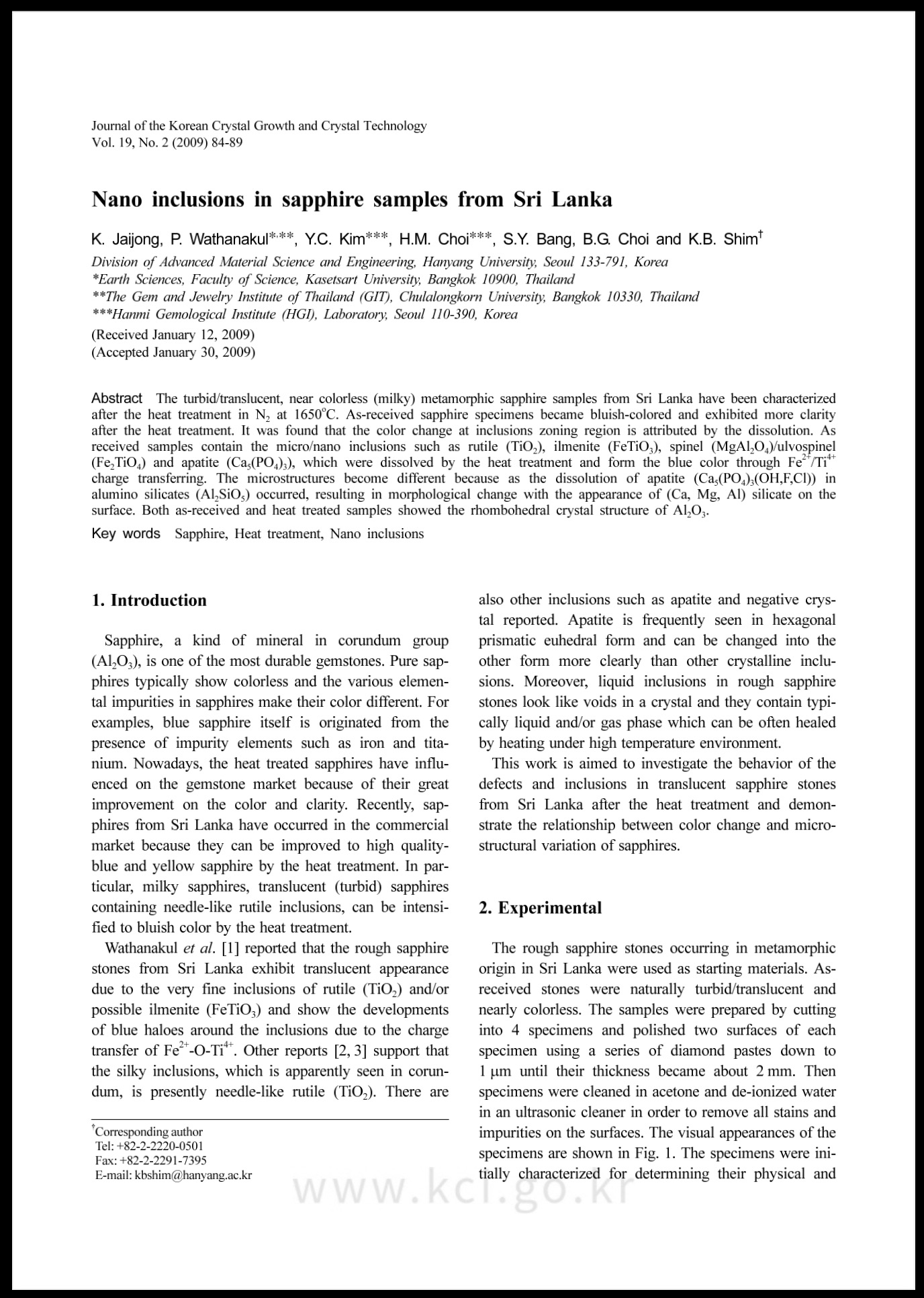
The turbid/translucent, near colorless (milky) metamorphic sapphire samples from Sri Lanka have been characterized after the heat treatment in N₂ at 1650 °C. As-received sapphire specimens became bluish-colored and exhibited more clarity after the heat treatment. It was found that the color change at inclusions zoning region is attributed by the dissolution. As-received samples contain the micro/nano inclusions such as rutile (TiO₂), ilmenite (FeTiO₃), spinel (MgAl₂O₄)/ulvospinel (Fe₂TiO₄) and apatite (Ca₅(PO₄)₃), which were dissolved by the heat treatment and form the blue color through Fe²⁺/Ti⁴⁺ charge transferring. The microstructures become different because as the dissolution of apatite (Ca₅(PO₄)₃(OH,F,Cl)) in alumino silicates (Al₂SiO₅) occurred, resulting in morphological change with the appearance of (Ca, Mg, Al) silicate on the surface. Both as-received and heat-treated samples showed the rhombohedral crystal structure of Al₂O₃.

A preliminary study of typomorphic characteristics of different kinds of black jadeite jades in the world
世界几个主要翡翠产地墨翠标型特征初探
Journal Article
Yan, R., Qiu, Z., Dong, C. and Li, L. (2009) A preliminary study of typomorphic characteristics of different kinds of black jadeite jades in the world. [世界几个主要翡翠产地墨翠标型特征初探] Acta Petrologica et Mineralogica [岩石矿物学杂志], Vol. 28, No. 3, pp. 292–298.
Record No. 7884  |  Sinkankas/Born No.: NIS/NIB  |  Language: in Chinese with English abstract  |  RWHL
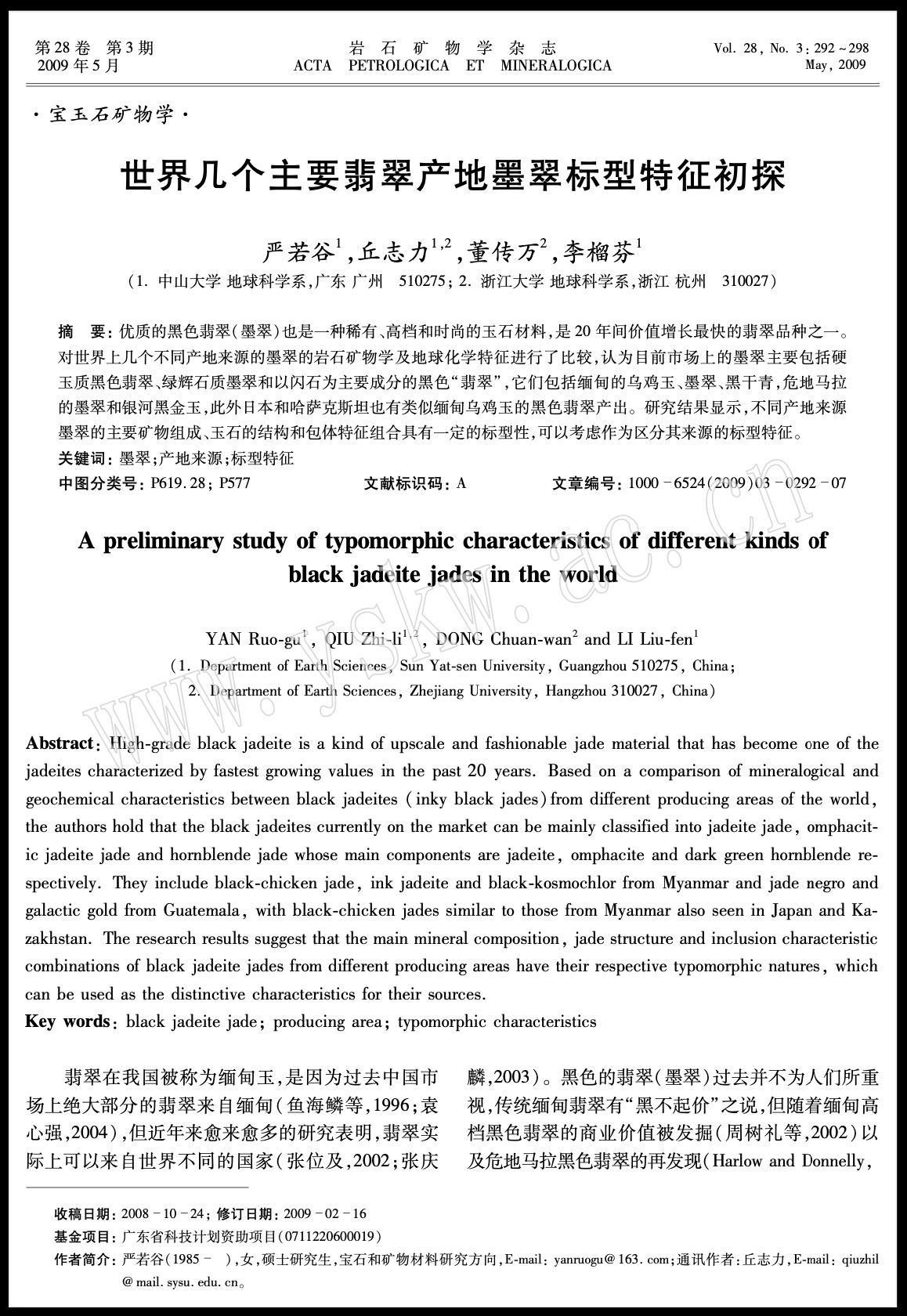
High-grade black jadeite is a kind of upscale and fashionable jade material that has become one of the jadeites characterized by fastest growing values in the past 20 years. Based on a comparison of mineralogical and geochemical characteristics between black jadeites (inky black jades from different producing areas of the world, the authors hold that the black jadeites currently on the market can be mainly classified into jadeite jade, omphacitic jadeite jade and hornblende jade whose main components are jadeite, omphacite and dark green hornblende respectively. They include black chicken jade, ink jadeite and black kosmochlor from Myanmar and jade negro and galactic gold from Guatemala, with black chicken jades similar to those from Myanmar also seen in Japan and Kazakhstan. The research results suggest that the main mineral composition, jade structure and inclusion characteristic combinations of black jadeite jades from different producing areas have their respective typomorphic natures, which can be used as the distinctive characteristics for their sources.

Emeralds from the Silk Road countries – A comparison with Colombia
Journal Article
Schwarz, D. and Pardieu, V. (2009) Emeralds from the Silk Road countries – A comparison with Colombia. InColor, No. 12, Fall/Winter, pp. 38–43.
Record No. 6065  |  Sinkankas/Born No.: NIS/NIB  |  RWHL

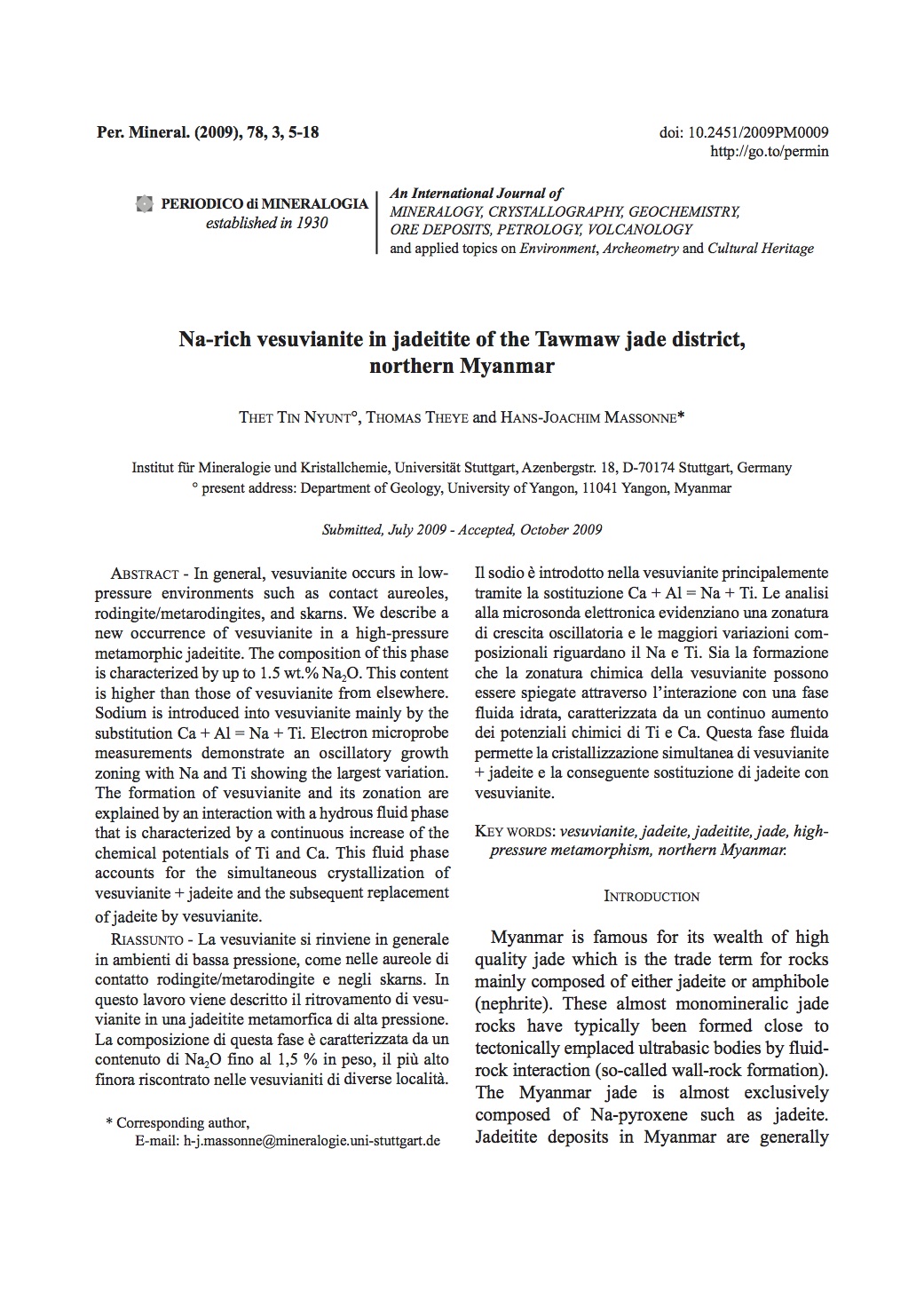
Na-rich vesuvianite in jadeitite of the Tawmaw jade district, northern Myanmar
Journal Article
Thet Tin Nyunt, Theye, T. and Massone, H.-J. (2009) Na-rich vesuvianite in jadeitite of the Tawmaw jade district, northern Myanmar. Periodico di Mineralogia, Vol. 78, No. 3, pp. 5–18.
Record No. 5807  |  Sinkankas/Born No.: NIS/NIB  |  RWHL
In general, vesuvianite occurs in low-pressure environments such as contact aureoles, rodingite/metarodingites, and skarns. We describe a new occurrence of vesuvianite in a high-pressure metamorphic jadeitite. The composition of this phase is characterized by up to 1.5 wt.% Na₂O. This content is higher than those of vesuvianite from elsewhere. Sodium is introduced into vesuvianite mainly by the substitution Ca + Al = Na + Ti. Electron microprobe measurements demonstrate an oscillatory growth zoning with Na and Ti showing the largest variation. The formation of vesuvianite and its zonation are explained by an interaction with a hydrous fluid phase that is characterized by a continuous increase of the chemical potentials of Ti and Ca. This fluid phase accounts for the simultaneous crystallization of vesuvianite + jadeite and the subsequent replacement of jadeite by vesuvianite.

Das neue Rubinvorkommen von Montepuez, Mosambik
The new ruby deposit of Montepuez, Mozambique
Journal Article
Hänni, H.A. and Krzemnicki, M.S. (2009) Das neue Rubinvorkommen von Montepuez, Mosambik. [The new ruby deposit of Montepuez, Mozambique] Gemmologie: Zeitschrift der Deutschen Gemmologischen Gesellschaft, Vol. 58, No. 3/4, pp. 127–130.
Record No. 5348  |  Sinkankas/Born No.: NIS/NIB  |  Language: In German  |  RWHL
Preliminary resultsof rubies from the new deposit in NE Mozambique are presented. The rubies derive from an amphibolite, a metamorphic rock that is also hosting the Wnza deposit in Tanzania.Their crystal habit is usually tabular to prismatic. The iron containing rubies often show twin lamellae, contain minor rutile silk, corroded amphibole grains, some zircons, fluids and secondary minerals on fissures.

Oxygen isotopes composition of sapphires from the French Massif Central: Implications for the origin of gem corundum in basaltic fields
Journal Article
Giuliani, G., Fallick, A.E., Ohnenstetter, D. and Pegere, G. (2009) Oxygen isotopes composition of sapphires from the French Massif Central: Implications for the origin of gem corundum in basaltic fields. Mineralium Deposita, Vol. 44, pp. 221–231.
Record No. 5265  |  ISBN/ISSN: ISSN 00264598  |  Sinkankas/Born No.: NIS/NIB  |  RWHL
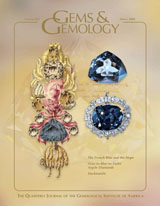
Alluvial and colluvial gem sapphires are common in the basaltic fields of the French Massif Central (FMC) but sapphire-bearing xenoliths are very rare, found only in the Menet trachytic cone in Cantal. The O-isotope composition of the sapphires ranges between 4.4 and 13.9‰. Two distinct groups have been defined: the first with a restricted isotopic range between 4.4 and 6.8‰ (n=22; mean δ18O = 5.6 ± 0.7‰), falls within the worldwide range defined for blue-green-yellow sapphires related to basaltic gem fields (3.0 < δ18O < 8.2‰, n=150), and overlaps the ranges defined for magmatic sapphires in syenite (4.4<δ18O < 8.3‰, n=?29). A second group, with an isotopic range between 7.6 and 13.9‰ (n=9), suggests a metamorphic sapphire source such as biotite schist in gneisses or skarns. The δ18O values of 4.4–4.5‰ for the blue sapphire-bearing anorthoclasite xenolith from Menet is lower than the δ18O values obtained for anorthoclase (7.7–7.9‰), but suggest that these sapphires were derived from an igneous reservoir in the subcontinental spinel lherzolitic mantle of the FMC. The presence of inclusions of columbite-group minerals, pyrochlore, Nb-bearing rutile, and thorite in these sapphires provides an additional argument for a magmatic origin. In the FMC lithospheric mantle, felsic melts crystallized to form anorthoclasites, the most evolved peraluminous variant of the alkaline basaltic melt. The O-isotopic compositions of the first group suggests that these sapphires crystallized from felsic magmas under upper mantle conditions. The second group of isotopic values, typified for example by the Le Bras sapphire with a δ18O of 13.9‰, indicates that metamorphic sapphires from granulites were transported to the surface by basaltic magma.

Lab Notes: Purplish pink spinel from Tajikistan—Before and after cutting
Journal Article
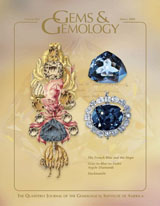
Sturman, N. (2009) Lab Notes: Purplish pink spinel from Tajikistan—Before and after cutting. Gems & Gemology, Vol. 45, No. 1, Spring, pp. 57–59.
Record No. 4139  |  ISBN/ISSN: 0016626X  |  Sinkankas/Born No.: NIS/NIB  |  RWHL

Gem News International: Interesting natural and synthetic spinels
Journal Article
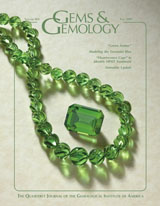
Choudhary, G. (2009) Gem News International: Interesting natural and synthetic spinels. Gems & Gemology, Vol. 45, No. 1, Spring, pp. 68–70.
Record No. 4138  |  ISBN/ISSN: 0016626X  |  Sinkankas/Born No.: NIS/NIB  |  RWHL

Lab Notes: A useful technique to identify negative crystals in ruby
Journal Article
Renfro, N. (2009) Lab Notes: A useful technique to identify negative crystals in ruby. Gems & Gemology, Vol. 45, No. 3, Fall, p. 212.
Record No. 3290  |  ISBN/ISSN: 0016626X  |  Sinkankas/Born No.: NIS/NIB  |  RWHL

Ruby and Pink Sapphire from Aappaluttoq, Greenland: Status of on‐going research
Report
Thirangoon, K. (2009) Ruby and Pink Sapphire from Aappaluttoq, Greenland: Status of on‐going research. Bangkok: Gemological Institute of America, March, 18 pp.
Record No. 3173  |  Sinkankas/Born No.: NIS/NIB  |  RWHL
Twenty‐six ruby and pink sapphire samples from Aappaluttoq, Greenland were analyzed. Spectroscopy showed a typical Cr spectrum with absorption in the UV region indicating high Fe content. Chemical analysis revealed a high Fe content and low V content. Raman spectroscopy on crystals exposed at the surfaces of many of the samples was consistent with materials related to metamorphic origin of this corundum. The results of this examination show that the samples are unheated Non‐ classic Locality (NCL) Type I stones according to the GIA corundum classification system.

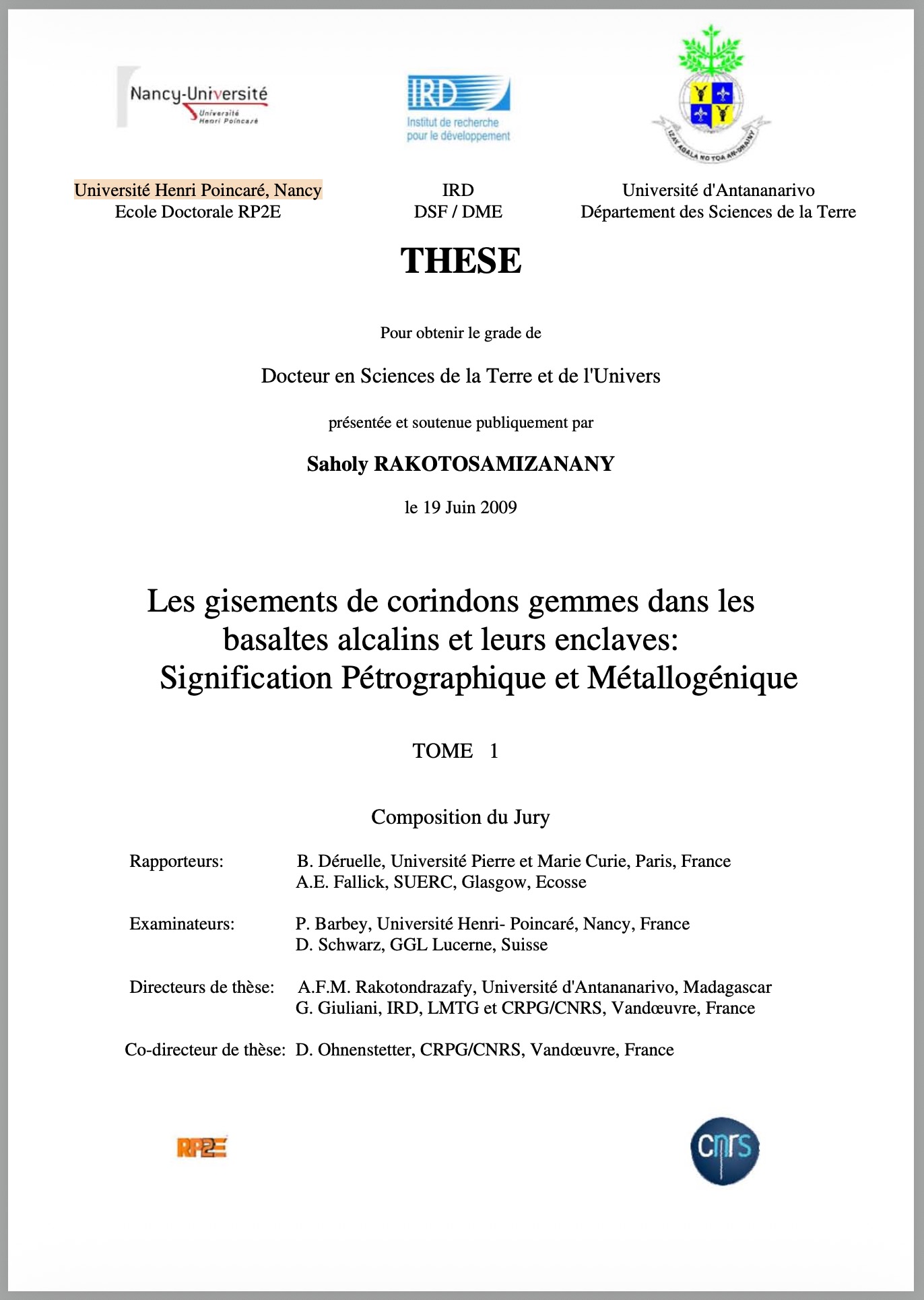
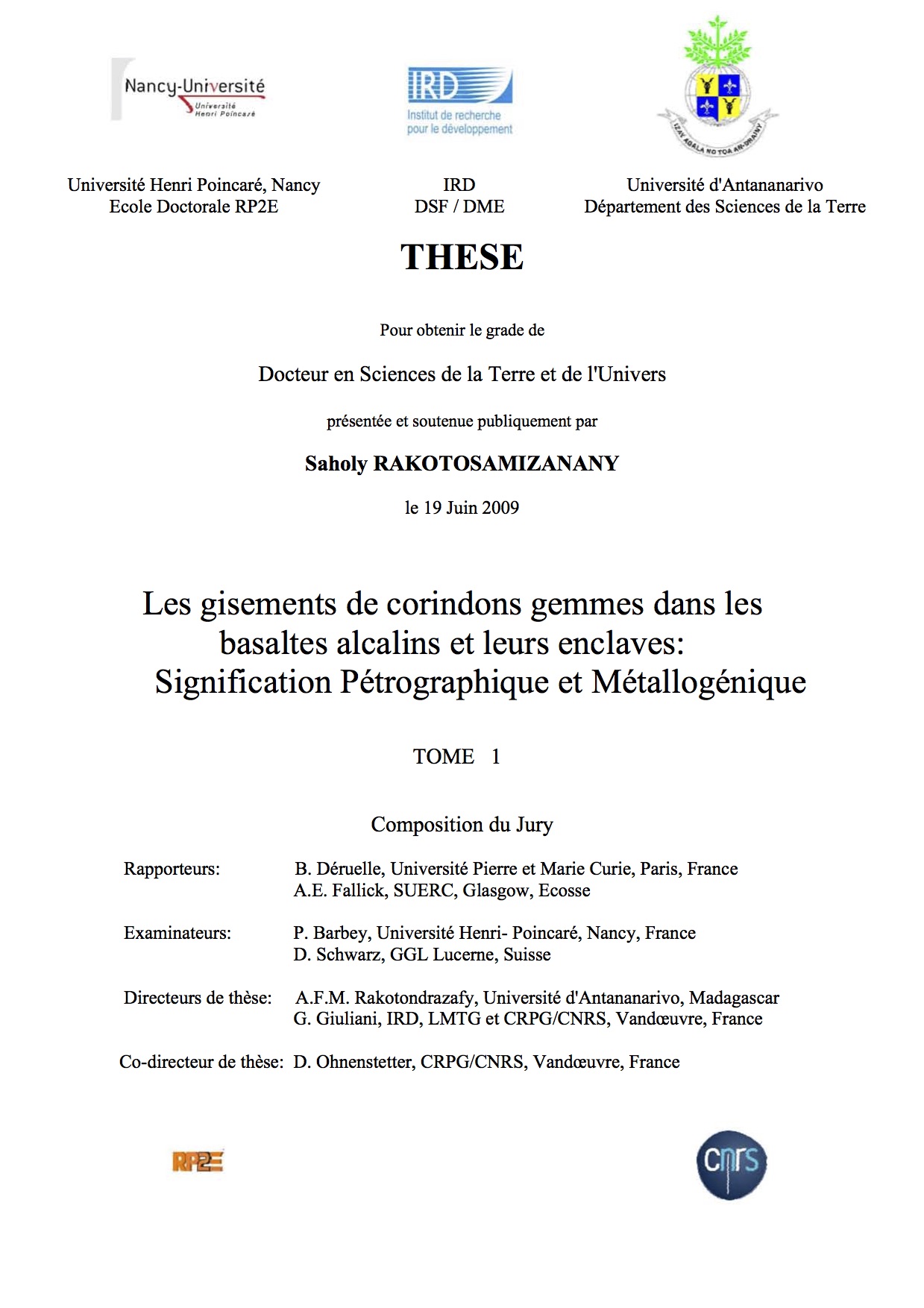
Les gisements de corindons gemmes dans les basaltes alcalins et leurs enclaves: Signification Pétrographique et Métallogénique
The gemstone corundum deposits in alkaline basalts and their inclusions: Petrographic and metallogenic significance
Thesis
Rakotosamizanany, S. (2009) Les gisements de corindons gemmes dans les basaltes alcalins et leurs enclaves: Signification Pétrographique et Métallogénique. [The gemstone corundum deposits in alkaline basalts and their inclusions: Petrographic and metallogenic significance]., Nancy, France: Nancy-Université, 414 pp.
Record No. 2912  |  Sinkankas/Born No.: NIS/NIB  |  Language: in French  |  RWHL
Madagascar is one of the principal producers of gem corundums recovered from continental basaltic fields. The main deposits are the secondary deposits of Ambondromifehy in the northern part of the country (sapphire-bearing palaeoplacer and placer), Soamiakatra–Mandrosohasina in the central part (primary ruby deposit, and ruby- and sapphire-bearing placer and palaeoplacer), and Vatomandry in the eastern part of the island (ruby- and sapphire-bearing paleoplacer). Soamiakatra is the only known primary deposit where ruby is found in metagabbro and pyroxenite xenoliths, which were entrained and brought up to the upper crust by the Ankaratra volcanic event. Petrographic studies have demonstrated the existence of two different conditions of ruby formation at the boundary of the eclogite domain (HT ~1100 °C, HP ~20 kbar) and granulite facies (HT ~1100 °C, BP <15 kbar). In contrast, the sapphires originated from alkaline mafic magmatic chambers at the lower continental crust–mantle boundary. They occur within or associated with syenite and anorthoclasite xenoliths in the basalts. These alkali basalts transported corundum to the surface; they are linked with asthenosphere upwelling and thinning of the lithosphere underneath the Ankaratra Plateau during the Oligocene–Quaternary, and to some E–W and N–S tectonic extension structures. Oxygen isotopic compositions of the rubies from placer deposits with δ¹⁸O = 3.1 ± 1.1‰ are typical of ruby in mafic and ultramafic rocks (1.25 < δ¹⁸O < 6.8‰). The sapphires from placer and palaeoplacer deposits have δ¹⁸O values of 4.5 ± 0.5‰, which coincides with the range in sapphire-bearing syenitic rocks (4.4 < δ¹⁸O < 8.3‰). Solid inclusions such as pyrochlore, samarskite, uraninite, and anorthoclasite in the sapphires confirm their syenitic origin. Zircons associated with the sapphires gave U–Pb ages younger than 35 Ma, coeval with the volcanic event. The zircon inclusions in rubies of metamorphic origin associated with the mafic and ultramafic xenolith rocks gave a Pan-African U–Pb age around 750 Ma. Nevertheless, dating of zircon crystals in situ within the anorthoclasite xenoliths has revealed two different ages, 35 and 17 Ma, which are slightly older than or contemporaneous with the onset of the volcanic events. The characteristics of the corundum, their isotopic compositions, as well as their ages demonstrate the existence of two distinct sources of corundum associated with basalts in Madagascar. On one hand, the rubies associated with metagabbros and garnet-bearing pyroxenites are linked to mafic and ultramafic complexes of eclogite facies in the lower crust, retrograded to granulite facies during the Pan-African event. On the other hand, the sapphires brought up to the upper crust during the Oligo–Plio–Quaternary are interpreted to be coeval with a volcanic event involving differentiated alkaline magma as revealed by their oxygen isotopic composition with syenitic signatures.

Synthetic sapphires with “natural-like” sheen
Journal Article
Choudhary, G. (2009) Synthetic sapphires with “natural-like” sheen. Gems & Jewellery, Vol. 18, No. 3, July, pp. 6–9.
Record No. 2873  |  Sinkankas/Born No.: NIS/NIB  |  RWHL
A new type of synthetic sapphire displays sheen effects similar to those seen in some natural sapphires. Sheen is a kind of surface luster caused by the scattering of light from evenly distributed minute inclusions. Traditionally, the presence of such inclusions has provided a reliable indication of a natural stone. However, synthetic corundum is now being produced with inclusions that can create sheen. The samples tested were yellow, green, and greenish blue, but other colors such as red and blue are available. A number of gemological properties distinguished these samples as synthetic. Microscopic examination revealed curved zones or clouds consisting of fine whitish pinpoints (possibly gas bubbles or unmelted feed powder); this indicated flame-fusion or Verneuil synthesis. Scattered spherical gas bubbles were present in all samples. In addition to these features, which are typical of synthetic corundum, a number of uncommon inclusions were present, and one of the gems appeared transparent to short-wave UV radiation (indicating a synthetic). Although routine gem testing was sufficient to identify these samples as synthetics, the lighter-colored gems could pose identification problems if they are not carefully examined.

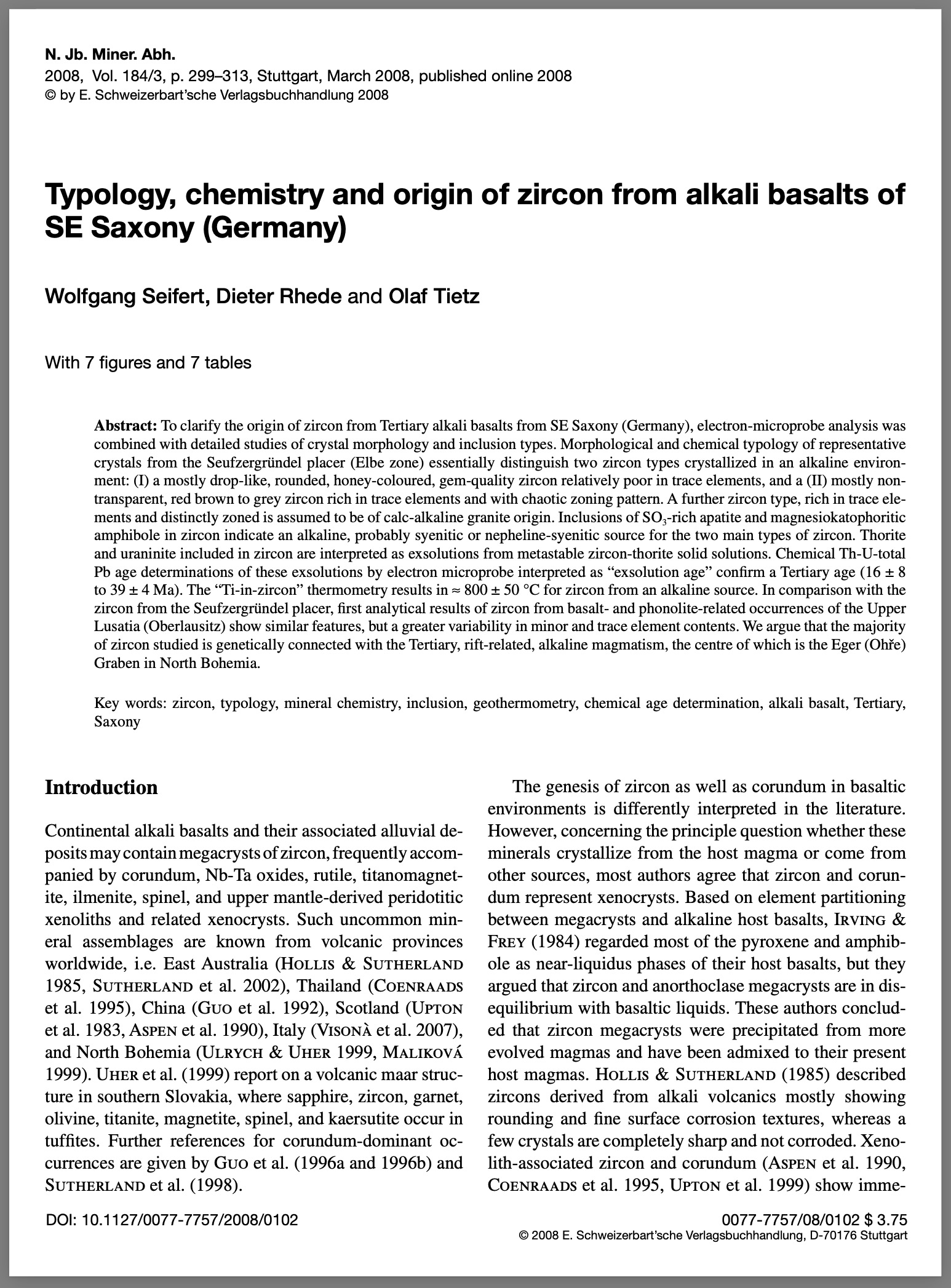
Typology, chemistry, and origin of zircon in alkali basalts of SE Saxony (Germany)
Journal Article
Seifert, A.V., Rhede, D. and Tietz, O. (2008) Typology, chemistry, and origin of zircon in alkali basalts of SE Saxony (Germany). Neues Jahrbuch für Mineralogie Abhandlungen, Vol. 184, No. 3, March, pp. 299–313.
Record No. 27176  |  DOI: https://doi.org/10.1127/0077-7757/2008/0102  |  Sinkankas/Born No.: NIS/NIB  |  RWHL
Zircons from Tertiary alkali basalts in SE Saxony, Germany, were studied using electron microprobe, morphology, and inclusion analysis to determine their origin, revealing two primary alkaline-related types from the Seufzergründel placer: (I) gem-quality, honey-coloured, drop-like zircons with low trace element content, and (II) red-brown to grey, non-transparent zircons with chaotic zoning and high trace element content. A third zircon type, rich in trace elements and with clear zoning, likely derives from calc-alkaline granite. Inclusions of SO₃-rich apatite and magnesiokatophoritic amphibole support a syenitic or nepheline-syenitic source for the alkaline types. Thorite and uraninite inclusions are interpreted as exsolutions from metastable zircon–thorite solid solutions, with Th–U–Pb chemical ages yielding an “exsolution age” of 16 ± 8 to 39 ± 4 Ma. Ti-in-zircon thermometry indicates formation temperatures around 800 ± 50 °C. Zircons from related Upper Lusatian basaltic and phonolitic rocks display similar characteristics but more compositional variability. The majority of these zircons are attributed to Tertiary rift-related alkaline magmatism centered in the Eger (Ohře) Graben of North Bohemia.

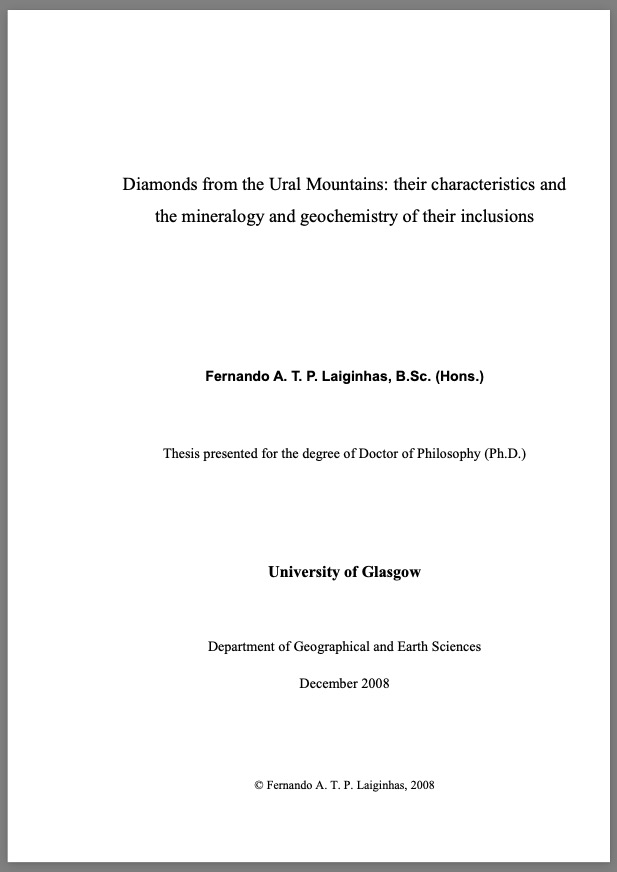
Diamonds from the Ural Mountains: Their characteristics and the mineralogy and geochemistry of their inclusions

Thesis
Laiginhas, F.A.T.P. (2008) Diamonds from the Ural Mountains: Their characteristics and the mineralogy and geochemistry of their inclusions., Glasgow: University of Glasgow, 225 pp.
Record No. 27170  |  Sinkankas/Born No.: NIS/NIB  |  RWHL
This thesis has investigated the geological origin of diamonds from the Ural Mountains. A set of inclusion-bearing diamonds from alluvial deposits in the western part of the Urals was characterised on the basis of their morphological features, nitrogen contents and nitrogen aggregation states, carbon and nitrogen stable isotopes, mineral inclusion geochemistry and radiometric isotopic ages of the inclusions. The vast majority of the studied diamonds are rounded dodecahedra, which indicates that the diamond population has experienced major resorption after crystallisation. The majority of the diamonds are affected by radiation damage and display evidence of transportation. Non-abraded diamonds exhibit similar surface features to those abraded, so they are probably of similar origin. The studied inclusion-bearing set of diamonds shares some characteristics with the overall, mostly inclusion-free, diamond population from the Ural Mountains. This similarity in physical characteristics strongly suggests that the Ural diamonds are all part of a single population.

Exploring the Literature of Gemstone Inclusions

The literature of gemstone inclusions covers identification, origin determination, treatments, synthesis, mineral inclusions, fluid inclusions and other internal features of natural and synthetic gems.

For a curated selection of important sources, read Inclusions in Gemstones — Hyperion Literature Sources.

About Four Treasures

Four Treasures is Lotus Gemology's freely accessible gemological reference database. Use the full database to search by author, title or keyword and explore literature on gemology, mineralogy, jewelry and related fields. Where available, hyperlinks on titles may lead directly to the full publication.

Search the Complete Four Treasures Database