Gemstone Inclusions Bibliography

Gemstone Inclusions Bibliography

Explore books, articles and historical sources on inclusions in gemstones in Four Treasures, the Lotus Gemology reference database. This bibliography brings together matching records from the collection, with publication details, abstracts and cover images where available.

Gemstone Inclusion References

The list below matches the terms inclusion or inclusions in the database's searchable fields. Some references discuss inclusions as part of a broader subject.
681–700 of 1,175 matching references

The adverse impact of scatter on the tone of Shandong sapphire
Journal Article
Jianjun, L. (2006) The adverse impact of scatter on the tone of Shandong sapphire. Australian Gemmologist, Vol. 22, No. 10, pp. 408–412.
Record No. 2881  |  Sinkankas/Born No.: NIS/NIB  |  RWHL
Previous research has revealed that dark coloured Shandong sapphire is included by large numbers of micro-inclusions. Theoretical analysis of the results from the photometry and colourimetry of Shandong sapphires has shown that these inclusions have a scattering effect on the light incident on these sapphires. This scattering greatly reduces both the transmission and internal reflection of light from Shandong sapphire thus causing this sapphire to have a dark tone. During heat treatment, inclusions in Shandong sapphire create fractures that expand due thermal stress. This creates additional structural defects in this sapphire. In addition, some structural micro-inclusions in this sapphire increase in size during heat treatment so that they have a scattering effect on light. As a result of this research, it has been concluded that heat treatment can not improve the tone of Shandong sapphire. This research also has shown that scatter has a significant deleterious effect on the colours of gemstones

Heat treatment for some green sapphire from Attapeu of Laos
Report
Kitbutrawat, P. (2006) Heat treatment for some green sapphire from Attapeu of Laos. Bangkok: Chulalongkorn University, 60 pp.
Record No. 2657  |  Sinkankas/Born No.: NIS/NIB  |  RWHL
A new source of sapphire was reportedly found in Attapeu area from southern Lao P.D.R. It is therefore interesting to investigate the gemological characteristics of this sapphire including the possibility of thermal enhancement. In this research, 70 rough sapphire samples were classified into 4 groups based on the color shade as blue (15), green (15), bluish green (20) and greenish blue (20) varieties. Some rough samples show well-formed pyramid habits with occasionally having magmatic corroded surface. The basic gemological properties of all sapphires fall into a normal range of corundum. Typical internal characteristics are growth pattern, color zone, fingerprints which are often filled with reddish brown iron stains. The mineral inclusions are feldspar (as identified by Raman microscope) and other unidentified minerals. All of the samples contain rather high Fe₂O₃ (0.2–1.1%), moderate TiO₂ (0.01–0.6%) and extremely low Cr₂O₃ and V₂O₅ contents. The UV–VIS–NIR spectrograms show typical basaltic-type pattern of high iron sapphires. Corundum from Attapeu area is therefore likely related to alkali basalt nearby as suggested by well preserved crystal habits with some magmatic corroded surface. The FTIR spectrograms show absorption peak of O–H stretching (3309 cm⁻¹) before heating. The heating experiment was carried out at 1,650°C for 5 hours in N₂ atmosphere. After the treatment blue hue was intensified in most types of samples. Therefore the green, greenish blue and bluish green varieties can be easily enhanced into blue sapphire with slight greenish tint. Other changes that could be detected after heat treatment are; color zone become apparently clear, healed fractures expanded and altered, tension cracks clearly developed. The UV–VIS–NIR spectrograms measured after heating show the increase in absorption peak due to Fe²⁺/Ti⁴⁺ pair peaked at 565 nm and Fe²⁺/Fe³⁺ pairs peaked between 840 and 900 nm. These bands are responsible for the intense blue after heating.

Towards an understanding of the value of jade in two lowland Classic Maya City centers, Cancuen and Piedras Negras
Conference Paper
Kovacevich, B. and Hruby, Z. (2005) Towards an understanding of the value of jade in two lowland Classic Maya City centers, Cancuen and Piedras Negras. 70th Annual Meetings of the Society for American Archaeology, Salt Lake City
Record No. 28433  |  Sinkankas/Born No.: NIS/NIB  |  RWHL
Since jade was one of the most durable and evidently highly valued materials among the Classic Maya, as demonstrated by its depiction in art and its inclusion in royal tombs and caches, it possesses considerable analytical value for exploring systems of preference and restricted exchange within Maya society. This study uses jade datasets from Cancuén and Piedras Negras to examine the distribution, manufacture, and consumption of jade objects in two distinct geographic regions. The comparison between a city relatively rich in jade and another notably poor in jade has important implications for understanding the relative value of jade and the processes involved in its craftsmanship.

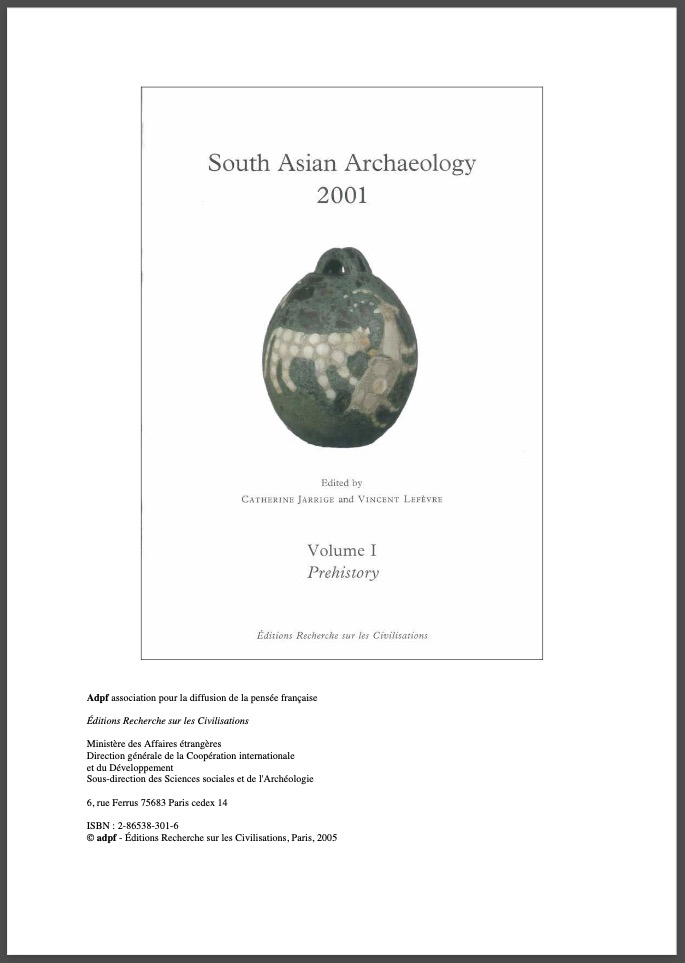
Bead technologies at Harappa, 3300–1900 BC: A comparison of tools, techniques and finished beads from the Ravi to the Late Harappan Period
Book Section
Kenoyer, J.M. (2005) Bead technologies at Harappa, 3300–1900 BC: A comparison of tools, techniques and finished beads from the Ravi to the Late Harappan Period. In: South Asian Archaeology 2001, Paris: Éditions Recherche sur les Civilisations, pp. 157–170.
Record No. 27600  |  ISBN/ISSN: 2865383016  |  Sinkankas/Born No.: NIS/NIB  |  RWHL
The study of bead manufacture and changing styles of beaded ornaments is an important method for investigating the social and economic development of a society. Numerous studies, including our ongoing work at Harappa (Meadow & Kenoyer 2001), have demonstrated that the careful documentation of bead manufacturing techniques, raw material sourcing, and stylistic analysis can reveal valuable information about prehistoric cultures. The analysis of beads from different periods and areas of Harappa has made it possible to define specific trade networks and the organization of production, as well as changing patterns of interaction over the history of the site (Kenoyer 2000, 2001).

Bohemian garnet

Journal Article
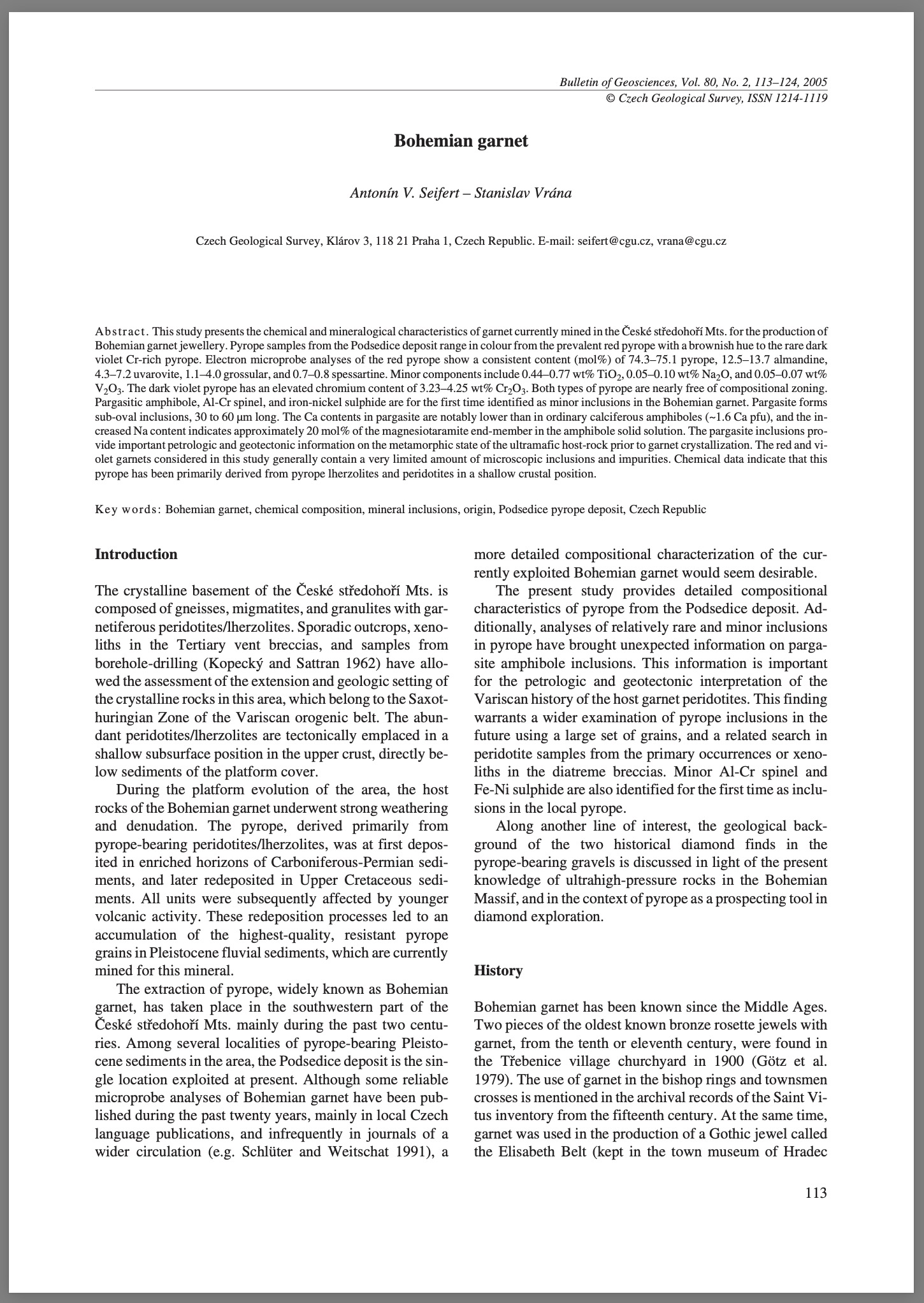
Seifert, A.V. and Vrána, S. (2005) Bohemian garnet. Bulletin of Geosciences of the Czech Geological Society, Vol. 80, No. 2, pp. 113–124.
Record No. 27175  |  Sinkankas/Born No.: NIS/NIB  |  RWHL
This study examines garnets from the Podsedice deposit in the České středohoří Mountains, mined for Bohemian garnet jewelry, revealing red pyrope with a brownish tint and rare dark violet Cr-rich pyrope. Electron microprobe analyses show the red pyrope consists of 74.3–75.1 mol% pyrope, 12.5–13.7 almandine, 4.3–7.2 uvarovite, 1.1–4.0 grossular, and 0.7–0.8 spessartine, with minor TiO₂ (0.44–0.77 wt%), Na₂O (0.05–0.10 wt%), and V₂O₃ (0.05–0.07 wt%). The violet variant contains 3.23–4.25 wt% Cr₂O₃. Both types show minimal zoning. Newly identified mineral inclusions include pargasitic amphibole, Al-Cr spinel, and Fe-Ni sulphide. Pargasite inclusions, 30–60 µm in size, show reduced Ca (~1.6 pfu) and elevated Na, suggesting ~20 mol% magnesiotaramite in the amphibole solid solution. These inclusions provide insights into the metamorphic conditions of the ultramafic host rocks prior to garnet formation. The garnets are notably inclusion-poor, and compositional data indicate derivation from pyrope lherzolites and peridotites in shallow crustal settings.

Regional interaction in the prehistoric Indus Valley: Initial results of rock and mineral sourcing studies at Harappa
Book Section
Law, R.W. (2005) Regional interaction in the prehistoric Indus Valley: Initial results of rock and mineral sourcing studies at Harappa. In: South Asian Archaeology 2001, Paris: Éditions Recherche sur les Civilisations, pp. 179–190.
Record No. 17266  |  ISBN/ISSN: 2865383016  |  Sinkankas/Born No.: NIS/NIB  |  RWHL
The exchange and communication systems that connected distant parts of the Indus Civilization (c. 2600–1900 BC) and beyond had roots beginning in the early Neolithic period, if not earlier (Jarrige 1991; Kenoyer 1998). To better understand the role of these interaction networks and the groups that participated in them in the development of the earliest urban, state-level society in South Asia, it is necessary to first determine which regions were in contact with one another and how these contacts evolved over time. Archaeologically, the most precise method for doing this is by identifying the original sources of the material items exchanged between groups from the many diverse ecosystems that make up the greater Indus Valley region. This paper presents preliminary results of source provenance studies of rock and mineral commodities recovered from Harappa, aiming to delineate the areas involved in regional interaction and long-distance exchange with that important urban center. Once source areas have been identified, it becomes possible to examine how some ancient interaction networks may have intensified and expanded during the rise and flourishing of the Indus Civilization, while others diminished or disappeared. The discussion briefly explains the theoretical framework and outlines the methods used in this examination, summarizing two preliminary studies: the identification of a broad but pertinent range of rock and mineral types from Harappa, and an initial assessment of source areas for an important utilitarian item—stones used for grinding. Initial results suggest that a nested series of lithic exchange networks existed from the earliest occupation of Harappa, connecting the site to multiple source areas ranging from 120 km to over 700 km away, with perceptible shifts in source utilization for grinding stones and chert across Harappa’s first three occupational phases, reflecting a move toward more distant sources over time.

Archaeomineralogy of Taiwan nephrite: Sourcing study of nephritic artifacts from the Philippines
Journal Article
Iizuka, Y. and Hung, H.-C. (2005) Archaeomineralogy of Taiwan nephrite: Sourcing study of nephritic artifacts from the Philippines. Journal of Austronesian Studies, Vol. 1, No. 1, June, pp. 33–79.
Record No. 7810  |  Sinkankas/Born No.: NIS/NIB  |  RWHL
Green-colored nephritic jade artifacts are commonly found in Neolithic archaeological sites in Taiwan and some regions of the Philippines. Nephrite deposits only occur rarely in nature, and it is widely accepted that chemical analysis is required if nephritic artifacts are to be sourced to specific quarries. In order to define the mineralogical character of the Fengtian nephrite in Taiwan, an electron probe micro analysis (EPMA) was carried out on nephrites from this source and others in East Asia and the Pacific region. Seventeen nephrite specimens were analysed, and found to be composed of tremolite- actinolite amphiboles (Mg/[Mg+Fe] less than 0.93) with fibrous texture, and bearing chromian-spinel inclusions with significant amounts of manganese (Mn: up to 9 wt. %) and zinc (Zn: up to 7 wt. %). These chemical characters can be applied to differentiate the Fengtian nephrite from others.

Gem News International: New emerald deposit in Xinjiang, China
Journal Article
Blauwet, D., Quinn, E.P. and Muhlmeister, S. (2005) Gem News International: New emerald deposit in Xinjiang, China. Gems & Gemology, Vol. 41, No. 1, Spring, pp. 56–57.
Record No. 6066  |  ISBN/ISSN: 0016626X  |  Sinkankas/Born No.: NIS/NIB  |  RWHL

Methane (CH₄)-bearing fluid inclusions in the Myanmar jadeitite
Journal Article
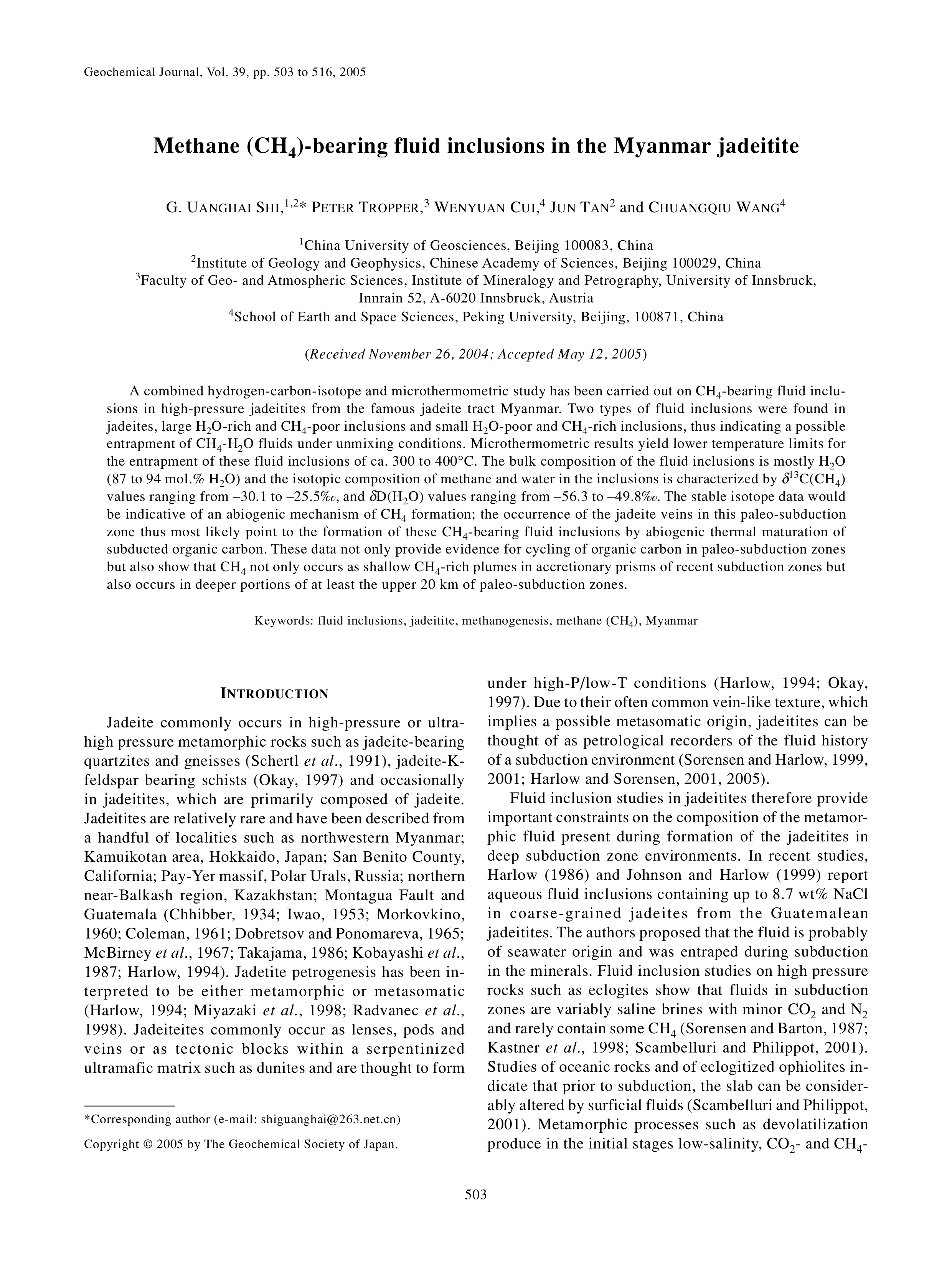
Shi, G., Tropper, P., Cui, W., Tan, J. and Wang, C. (2005) Methane (CH₄)-bearing fluid inclusions in the Myanmar jadeitite. Geochemical Journal, Vol. 39, No. 6, pp. 503–516.
Record No. 5893  |  Sinkankas/Born No.: NIS/NIB  |  RWHL
A combined hydrogen-carbon-isotope and microthermometric study has been carried out on CH₄-bearing fluid inclusions in high-pressure jadeitites from the famous jadeite tract Myanmar. Two types of fluid inclusions were found in jadeites, large H₂O-rich and CH₄-poor inclusions and small H₂O-poor and CH₄-rich inclusions, thus indicating a possible entrapment of CH₄–H₂O fluids under unmixing conditions. Microthermometric results yield lower temperature limits for the entrapment of these fluid inclusions of ca. 300 to 400 °C. The bulk composition of the fluid inclusions is mostly H₂O (87 to 94 mol.% H₂O) and the isotopic composition of methane and water in the inclusions is characterized by δ¹³C(CH₄) values ranging from –30.1 to –25.5‰, and δD(H₂O) values ranging from –56.3 to –49.8‰. The stable isotope data would be indicative of an abiogenic mechanism of CH₄ formation; the occurrence of the jadeite veins in this paleo-subduction zone thus most likely point to the formation of these CH₄-bearing fluid inclusions by abiogenic thermal maturation of subducted organic carbon. These data not only provide evidence for cycling of organic carbon in paleo-subduction zones but also show that CH₄ not only occurs as shallow CH₄-rich plumes in accretionary prisms of recent subduction zones but also occurs in deeper portions of at least the upper 20 km of paleo-subduction zones.

Characteristics of large-sized ruby crystal grown by temperature gradient technique
Journal Article
Song, C., Hang, Y., Xia, C., Xu, J. and Zhou, G. (2005) Characteristics of large-sized ruby crystal grown by temperature gradient technique. Optical Materials, Vol. 27, pp. 699–703.
Record No. 5578  |  Sinkankas/Born No.: NIS/NIB  |  RWHL
Large ruby with the size of ∅75 × 45 mm was grown by temperature gradient technique for the first time. Absorption spectrum was carried out in the range of 190–800 nm by spectrophotometer, and the concentration spatial distribution of Cr³⁺ in ruby was calculated from the absorption coefficient based on the Beer–Lambert Law. Cr³⁺ ions gradually increase along both the growth axis and the radial direction. The shape and composition of the inclusions were measured by means of Leitz wide-field microscopy and scanning electron microscopy. Laue photos and X-ray omega scan show the good quality of the as-grown ruby. The optimized growth conditions were pointed out based on the observation.

Characteristics and Origin of the Weldborough Sapphire, NE Tasmania
Thesis
McGee, B.M. (2005) Characteristics and Origin of the Weldborough Sapphire, NE Tasmania. University of Tasmania, 118 pp.
Record No. 5186  |  Sinkankas/Born No.: NIS/NIB  |  RWHL
Alluvium and colluvium in the Weldborough area, NE Tasmania, yield sapphire, zircon and spinel, corroded by magma and abraded by alluvial transport. Drainage patterns and inferred palaeodrainage indicate the Weldborough basalts are the primary source. The Weldborough intraplate alkali basalts are fine-grained, olivine- and/or clinopyroxene-phyric with varying content of mantle and crustal xenoliths and xenocrysts. Despite extensive study, no sapphire or zircon megacrysts are found in the basalt or related clastic rocks. The Weldborough sapphires are blue (80%), yellow and green (20%) with rare pink sapphires. They contain olivine, feldspar, spinel, zircon, molybdenite and Nb–Ta-rich phases as mineral inclusions. The composition of zircon inclusions indicates the parental melt was highly evolved. Secondary olivine mineral inclusions are present. Primary fluid inclusions indicate a minimum trapping pressure of 4.5 kbar at 1000 to 1200 °C. LA-ICP-MS analysis indicates the sapphires have iron (2,590 ppm), titanium (383 ppm), gallium (258 ppm) and tantalum (186 ppm) as the most abundant trace elements. Niobium, beryllium, magnesium, vanadium, chromium and tin are low-level trace elements in the Weldborough sapphires. Beryllium, titanium, niobium and tantalum are enriched in the cores of the sapphires. Two element associations were recognised in the sapphires: an Fe–V–Ga association and an Nb–Ta–Be association. The Nb–Ta–Be association is typical of input by an incompatible-element-rich melt such as a granite pegmatite or a carbonatite. The sapphires have O-isotope values of +4.4‰ to +6.3‰, indicating they are in O-isotope equilibrium with rocks of mantle O-isotopic compositions, and little or no crustal interaction is inferred in the source. The zircon inclusions in the sapphires have a U–Pb age of 47 ± 4 Ma, which is identical to the age of the Weldborough basalts (46.8 ± 0.6 Ma). The zircon inclusions have been reset during entrainment in basaltic magma. The Weldborough sapphires were entrained and brought to the surface by the Weldborough basalts 47 million years ago. The Weldborough basalts are the source of sapphire, spinel and zircon found in the Ringarooma, George and possibly the Boobyalla River catchments. The broad range of trace element and inclusion data reported here support an origin for the sapphire in shallow parts of the underlying mantle. Corundum consists of Al₂O₃, has a high hardness (9) and high specific gravity (~4). Corundum’s hardness and chromophoric lattice substitutions make it a valuable gemstone in the form of sapphire and ruby, and important as an abrasive in the form of emery. Corundum occurs in a wide variety of igneous and metamorphic rocks and is commonly found in detrital deposits due to its hardness. In metamorphic rocks, corundum is found in metamorphosed laterites, partially melted pelitic rocks, high-Mg and high-Al schists, Si-poor hornfels within the aureole of igneous intrusions, and metamorphosed marbles. In metamorphic rocks the presence of corundum reflects a silica-undersaturated, alumina-rich paragenesis. Corundum, as an accessory mineral in igneous rocks, is found in monzonite, syenite and nepheline syenite, ultramafic dikes, and other pegmatitic dikes. The presence of corundum as an accessory mineral in igneous rocks is an indication of silica undersaturation in parent magma or a post-intrusive desilicification process. A major source of gem-quality corundum is detrital deposits sourced from alkali basalt terrains. The formation of alkali basalt-hosted corundum involves two stages: the formation of corundum and the subsequent incorporation and expulsion via intraplate basaltic volcanism related to rifting. The genesis of the corundum xenocrysts has been debated and no single model is able to satisfactorily explain the genesis of poly-modal gem fields. For alkali basalt-hosted corundum, the favourable model for sapphire formation is the plutonic crystallisation at lower crustal/upper mantle depths from a highly aluminous, volatile- and trace element-rich alkaline parental magma. Alkali basalt-hosted rubies are likely to form from the metamorphic recrystallisation of mafic rocks in the upper mantle.

Tracing the emerald origin by oxygen isotope data: The case of Sandawana, Zimbabwe
Journal Article
Zwaan, J.C., Cheilletz, A. and Taylor, B.E. (2004) Tracing the emerald origin by oxygen isotope data: The case of Sandawana, Zimbabwe. Comptes Rendus Geoscience, Vol. 336, No. 1, pp. 41–48.
Record No. 27194  |  Sinkankas/Born No.: NIS/NIB  |  RWHL
Emeralds from the Sandawana mines in Zimbabwe display relatively low and consistent δ¹⁸O values (δ¹⁸O₍V‑SMOW₎ = +6.6‰ to +8.0‰), among the lowest recorded worldwide, despite the global range for emeralds spanning from +6.2‰ to +24.7‰. These low values are attributed to host-rock buffering within a narrow reaction zone between albitised pegmatites and ultrabasic greenstones, specifically metamorphosed komatiites. The δ¹⁸O values of Sandawana emeralds overlap with those of emeralds from Brazil, Austria, Australia, and Madagascar, indicating that oxygen isotope composition alone is insufficient for geographic origin determination. However, emeralds with similar δ¹⁸O values can potentially be distinguished through a combination of physical characteristics, inclusions, and chemical composition.

Conditions of pocket formation in the Oktyabrskaya tourmaline-rich gem pegmatite (the Malkhan Field, central Transbaikalia, Russia)
Journal Article
Peretyazhko, I.S., Zagorsky, V.Y., Smirnov, S.Z. and Mikhailov, M.Y. (2004) Conditions of pocket formation in the Oktyabrskaya tourmaline-rich gem pegmatite (the Malkhan Field, central Transbaikalia, Russia). Chemical Geology, Vol. 210, No. 1/4, pp. 91–111.
Record No. 27172  |  DOI: https://doi.org/10.1016/j.chemgeo.2004.06.005  |  Sinkankas/Born No.: NIS/NIB  |  RWHL
In the Oktaybrskaya pegmatite of central Transbaikalia, coexisting melt (MI), fluid-melt (FMI), and fluid (FI) inclusions in quartz were studied to reconstruct pocket formation conditions using thermodynamic modeling of PVTX-properties of orthoboric-acid aqueous fluids. Early-stage quartz from both pocket zones and host pegmatite contains FMI with crystalline aggregates and orthoboric-acid-rich fluids, though FMI become rarer and fluid volumes increase in later quartz growth zones, disappearing entirely at the latest stage. These FMI exhibit variable solid/fluid ratios from heterogeneous trapping of coexisting melts and fluids. Raman, SEM-EDS, and EMPA analyses show aggregates mainly consist of boron-rich micas (muscovite–nanpingite series), lepidolite, and minor topaz, quartz, K-feldspar, and unidentified phases. FI and FMI fluids share similar salinity (4–8 wt.% NaCl eq.) and H₃BO₃ content (12–16 wt.%). MI homogenize at 570–600 °C, while large FMI with silicate crystals melt at 615 °C but remain non-homogeneous even after 24 h at 650 ± 10 °C and 2.5 kbar, retaining glass+crystals or fluid+glass textures. FMI glasses are enriched in F (1.94–2.73 wt.%), B₂O₃ (2.51 wt.%), Cs₂O (3.64–5.20 wt.%), Li₂O (0.54 wt.%), Ta₂O₅ (0.57 wt.%), Nb₂O₅ (0.10 wt.%), BeO (0.12 wt.%), and >12 wt.% H₂O, indicating highly evolved residual melts from late magmatic stages. Microthermometry suggests crystallization temperatures of 615–550 °C. Quartz–feldspar matrix crystallization generated residual melts and fluids enriched in H₂O, B, and F, forming chemically distinct pockets with varying internal pressures. Progressive crystallization led to further fluid exsolution and pocket overpressure, which, in turn, caused fracturing and “fluid explosions,” linking pockets, mixing fluids, and inducing autometasomatic alteration and formation of complex “primary–secondary” pockets.

L’aspidolite fluorée: Rôle des évaporites dans la genèse du rubis des marbres de Nangimali (Azad-Kashmir, Pakistan)
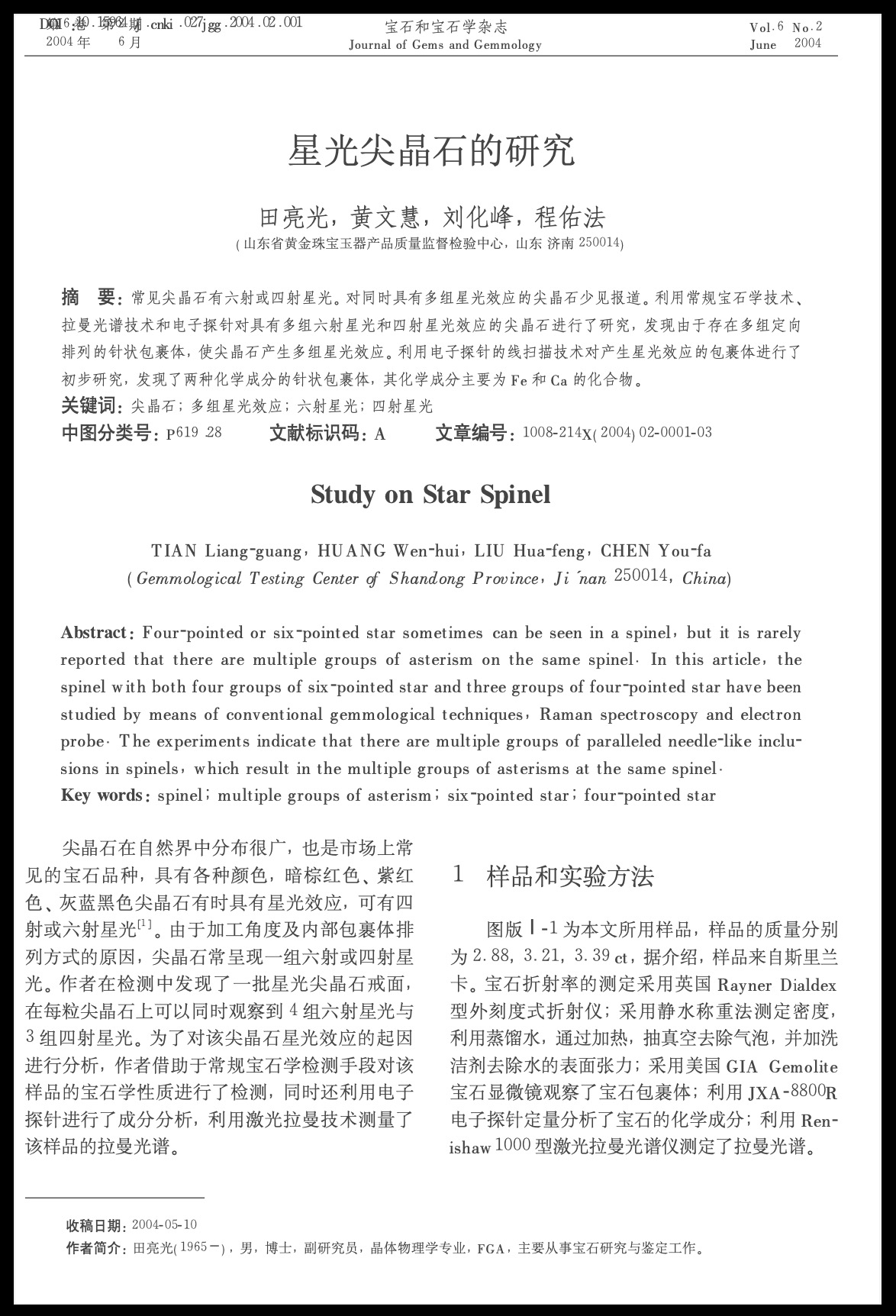
Fluorine-rich aspidolite: role of evaporites in the genesis of ruby in the marbles of Nangimali (Azad-Kashmir, Pakistan)
Journal Article
Garnier, V., Ohnenstetter, D. and Giuliani, G. (2004) L’aspidolite fluorée: Rôle des évaporites dans la genèse du rubis des marbres de Nangimali (Azad-Kashmir, Pakistan). [Fluorine-rich aspidolite: role of evaporites in the genesis of ruby in the marbles of Nangimali (Azad-Kashmir, Pakistan)] Comptes Rendus Geoscience, Vol. 336, pp. 1245–1253.
Record No. 27162  |  Sinkankas/Born No.: NIS/NIB  |  Language: in French with abridged English  |  RWHL
Fluorine-rich aspidolite, observed for the first time in ruby-bearing marbles from Nangimali (Azad-Kashmir, Pakistan), coexists with phengite, paragonite, and phlogopite in complex mica intergrowths. Unlike phengite and paragonite, both aspidolite and phlogopite are enriched in fluorine and are found intimately associated with paragonite. The occurrence of aspidolite, along with salt solid inclusions and the presence of anhydrite, provides compelling evidence for the involvement of evaporitic material in the genesis of these gem-quality rubies.

Study on star spinel

Journal Article
Tian, L.-g., Huang, W.-h., Liu, H.-f. and Cheng, Y.-f. (2004) Study on star spinel. Journal of Gems & Gemmology, Vol. 6, No. 2, June, pp. 1–3.
Record No. 16621  |  Sinkankas/Born No.: NIS/NIB  |  Language: in Chinese with English abstract  |  RWHL
Four-pointed or six-pointed star sometimes can be seen in a spinel, but it is rarely reported that there are multiple groups of asterism on the same spinel. In this article, the spinel with both four groups of six-pointed star and three groups of four-pointed star have been studied by means of conventional gemmological techniques, Raman spectroscopy and electron probe. The experiments indicate that there are multiple groups of parallel needle-like inclusions in spinels, which result in the multiple groups of asterisms at the same spinel.

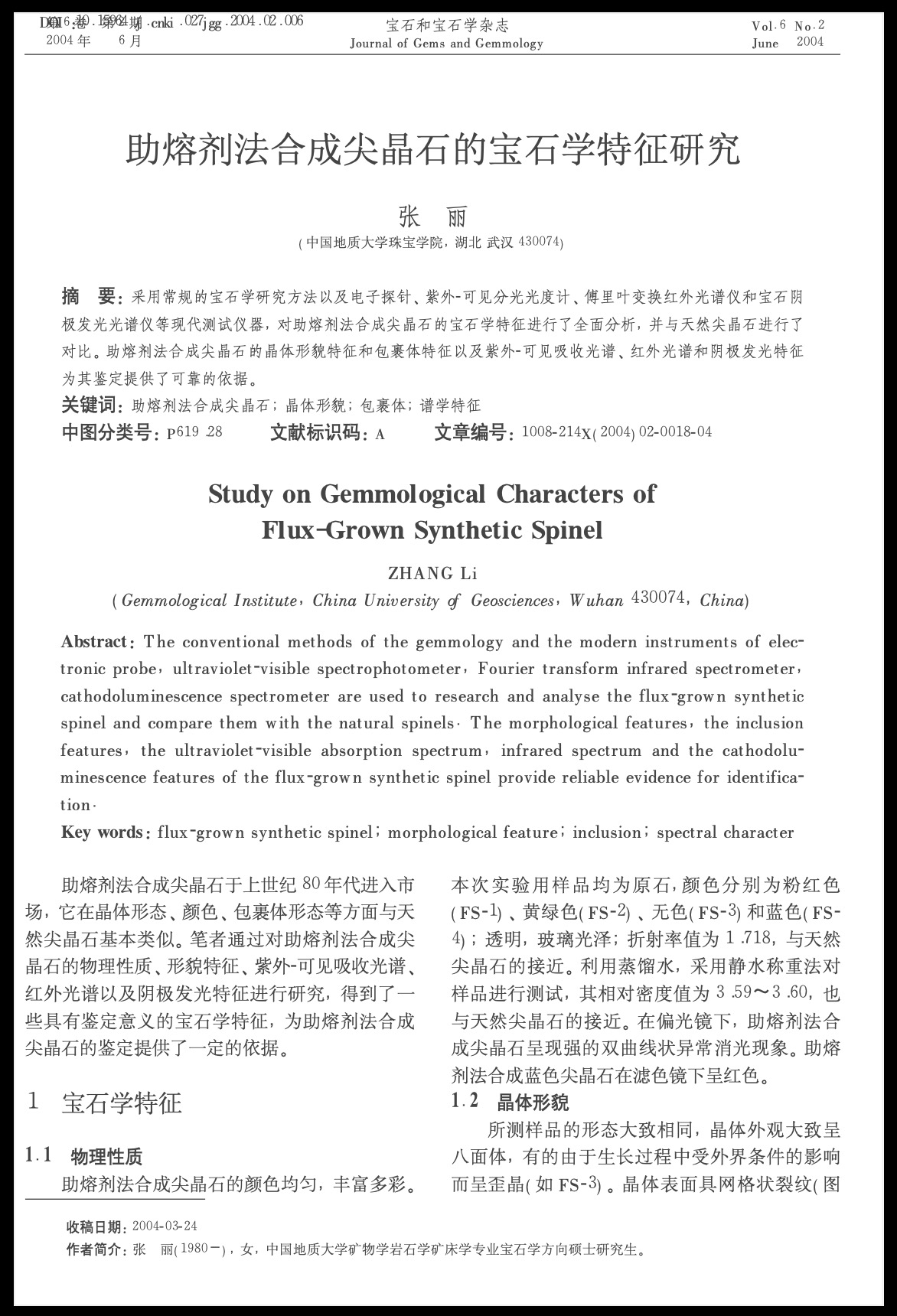
Study on gemmological characters of flux-grown synthetic spinel
Journal Article
Zhang, L. (2004) Study on gemmological characters of flux-grown synthetic spinel. Journal of Gems & Gemmology, Vol. 6, No. 2, June, pp. 18–21.
Record No. 16620  |  Sinkankas/Born No.: NIS/NIB  |  Language: in Chinese with English abstract  |  RWHL
The conventional methods of the gemmology and the modern instruments of electronic probe, ultraviolet-visible spectrophotometer, Fourier transform infrared spectrometer, cathodoluminescence spectrometer are used to research and analyse the flux-grown synthetic spinel and compare them with the natural spinels. The morphological features, the inclusion features, the ultraviolet-visible absorption spectrum, infrared spectrum and the cathodoluminescence features of the flux-grown synthetic spinel provide reliable evidence for identification.

Marble-hosted ruby from Vietnam

Journal Article
Long, P.V., Q. Vinh, H.Q., Garnier, V., Giuliani, G. and Ohnenstetter, D. (2004) Marble-hosted ruby from Vietnam. Canadian Gemmologist, Vol. 25, No. 3, pp. 83–95.
Record No. 7738  |  Sinkankas/Born No.: NIS/NIB  |  RWHL
This article compares the gemological characteristics and geologic setting of rubies from Luc Yen and Quy Chau in northern Vietnam. At Luc Yen, rubies occur as dissemi-nated crystals in small veinlets or fissures within marbles of Upper Proterozoic to Lower Cambrian ages. Secondary ruby deposits occur in associated alluvial gravels. At Quy Chau, the economic ruby and sapphire deposits are found only in placers.. The ruby crystals from Luc Yen examined were typically hexagonal bipyramids, whereas those from Quy Chau commonly formed short hexagonal prisms. Compared to the Luc Yen material, the color of the Quy Chau rubies was usually more saturated and showed a stronger red fluorescence to long-and short-wave UV radiation. R.I. values of rubies from both areas were 1.762–1.770 (birefringence ~0.008). S.G. values for samples from Luc Yen were 3.92–4.01, whereas those from Quy Chau were 3.94–4.05. Rubies from both areas exhibited twinning, straight and angular growth zoning, and (in some instances) various forms of color zoning. The most common mineral inclusions in material from both localities were apatite, calcite, dolomite, rutile, diaspore, phlogopite, and zircon. Three kinds of fluid inclusions (both primary and secondary) also were found. The inclusion characteristics and geologic settings indicate that rubies from these deposits are the result of high-grade (amphibolite facies) regional metamorphism.JES

Lab Notes: Spinel with interesting etch tubes
Journal Article
Quinn, E.P. and Koivula, J.I. (2004) Lab Notes: Spinel with interesting etch tubes. Gems & Gemology, Vol. 40, No. 2, Summer, p. 168.
Record No. 5990  |  ISBN/ISSN: 0016626X  |  Sinkankas/Born No.: NIS/NIB  |  RWHL

The origin of ancient gemstones unveiled by PIXE, PIGE and µ-Raman spectrometry
Book Section
Calligaro, T. (2004) The origin of ancient gemstones unveiled by PIXE, PIGE and µ-Raman spectrometry. In: X-Rays for Archaeology, New York: Springer, pp. 101–112.
Record No. 5593  |  Sinkankas/Born No.: NIS/NIB  |  RWHL
Gemstones set on ancient jewels are invaluable witnesses from the past, and to obtain these prized items, humans established long-distance trade routes whose extension and historical evolution pose major archaeological questions; chemical characterisation has proven especially useful in this context, as the elemental composition reveals the gem’s identity—such as SiO₂ for quartz, Al₂O₃ for ruby and sapphire, or Be₃Al₂Si₃O₁₈ for emerald—while trace element patterns, when compared to reference samples, may indicate geographic origin; however, such analyses must be non-invasive (requiring neither sampling nor dismounting) and non-destructive (leaving no damage), and ion beam techniques like PIXE (particle-induced X-ray emission) and PIGE (particle-induced γ-ray emission) satisfy these demands by operating directly on the surface in air with 20 μm resolution—PIXE detecting elements heavier than sodium with sensitivity to the μg/g level, and PIGE extending coverage to light elements (Li, Be, B, F); additionally, Raman micro-spectrometry is employed to identify inclusions beyond the reach of the ion beam, as these features often inform provenance in gemmology; the combined use of external beam PIXE/PIGE and Raman spectroscopy is demonstrated in this study through analyses of ancient rubies from a Mesopotamian statuette and of emeralds and garnets set in Barbarian jewels from the Dark Ages.

Gemstone characteristics, North-East Barrington Plateau, NSW

Journal Article
Roberts, D.L., Sutherland, F.L., Hollis, J.D., Kennewell, P. and Graham, I.T. (2004) Gemstone characteristics, North-East Barrington Plateau, NSW. Journal & Proceedings of the Royal Society of New South Wales, Vol. 137, Parts 3–4, Nos. 413–414, pp. 99–122.
Record No. 5349  |  Sinkankas/Born No.: NIS/NIB  |  RWHL
Corundum and zircon concentrates from gravel deposits in two northern Barrington plateau prospects were studied for their features, to investigate potential gemstone sources within the catchment zone. The studies utilized field research, colour sorting, gemmological microscopy, EDAX and PIXE trace element analysis and zircon fission-track dating. The results showed statistical differences in corundum suites from different gravel horizons, which suggested different source areas. Anorthoclase and ilmenorutile were identified as inclusions in Barrington corundums for the first time. Zircon fission-track results showed that several episodes of volcanic eruptions were involved (66–4 Ma), reinforcing and adding to previous eruption ages. This suggests multiple corundum delivery both in space and time into drainage systems.

Exploring the Literature of Gemstone Inclusions

The literature of gemstone inclusions covers identification, origin determination, treatments, synthesis, mineral inclusions, fluid inclusions and other internal features of natural and synthetic gems.

For a curated selection of important sources, read Inclusions in Gemstones — Hyperion Literature Sources.

About Four Treasures

Four Treasures is Lotus Gemology's freely accessible gemological reference database. Use the full database to search by author, title or keyword and explore literature on gemology, mineralogy, jewelry and related fields. Where available, hyperlinks on titles may lead directly to the full publication.

Search the Complete Four Treasures Database