Gemstone Inclusions Bibliography

Gemstone Inclusions Bibliography

Explore books, articles and historical sources on inclusions in gemstones in Four Treasures, the Lotus Gemology reference database. This bibliography brings together matching records from the collection, with publication details, abstracts and cover images where available.

Gemstone Inclusion References

The list below matches the terms inclusion or inclusions in the database's searchable fields. Some references discuss inclusions as part of a broader subject.
701–720 of 1,175 matching references

Inclusions in Vietnamese Quy Chau ruby and their origin
Journal Article
Long, P.V., Vinh, H.Q. and Nghia, N.X. (2004) Inclusions in Vietnamese Quy Chau ruby and their origin. Australian Gemmologist, Vol. 22, No. 2, pp. 67–71.
Record No. 5299  |  Sinkankas/Born No.: NIS/NIB  |  RWHL
The inclusions found in ruby from Quy Chau, Vietnam, were studied by optical and scanning electron microscopy, as well as Raman spectroscopy. The following were identified: anatase, andalusite, anorthite, apatite, biotite, boehmite, brookite, calcite, corundum, diaspore, dolomite, graphite, margarite, muscovite, phlogopite, pyrite, rutile, zircon, and zoisite. The compositions of both primary and secondary gas-liquid phases, and negative crystals, are also described. The authors suggest that the mixed composition of the inclusions in Quy Chau rubies is suggestive of both metamorphic and metasomatic origins.. RAH

Corundum inclusions in diamonds—discriminatory criteria and a corundum compositional dataset
Journal Article
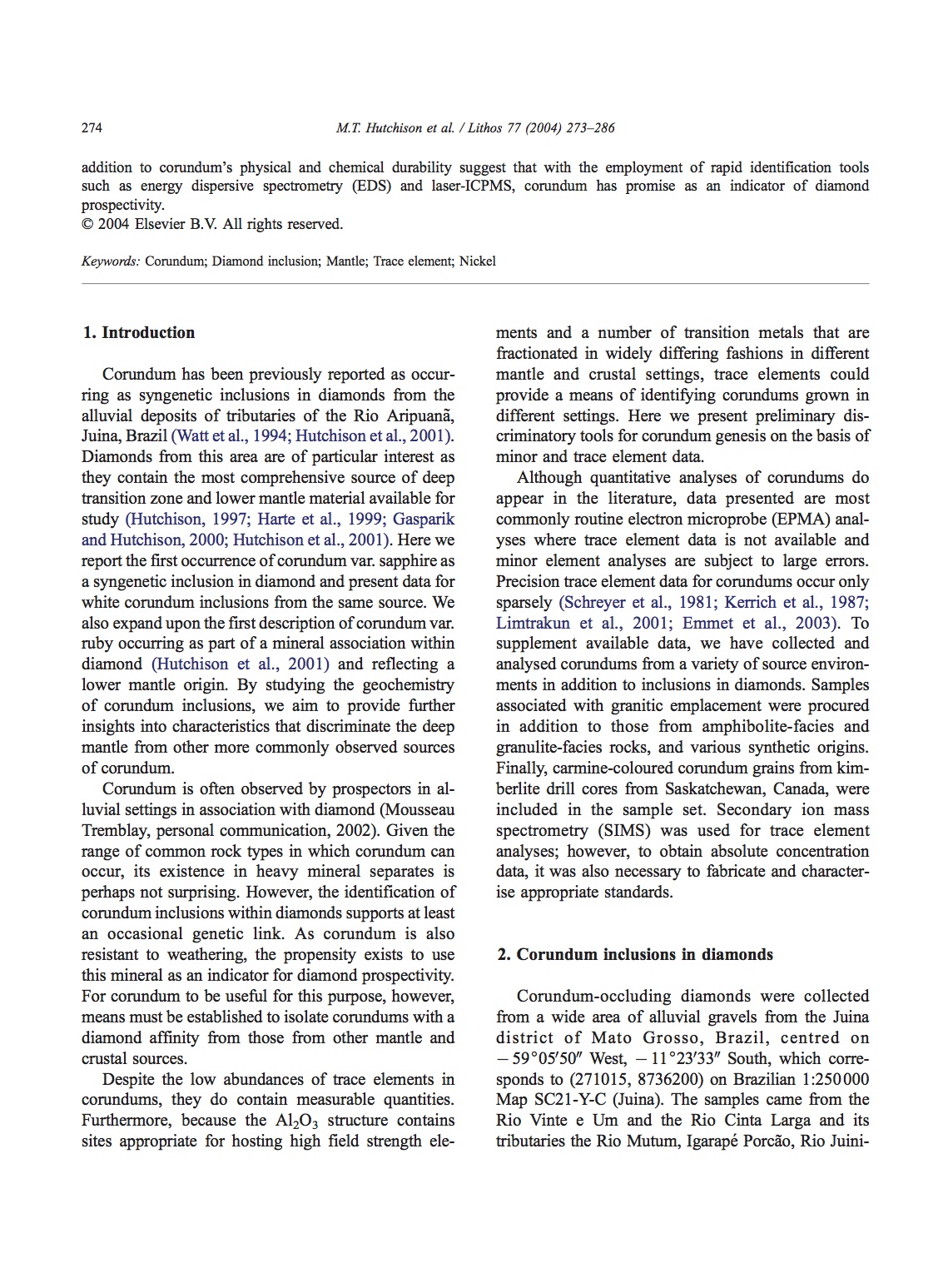
Hutchison, M.T., Nixon, P.H. and Harley, S.L. (2004) Corundum inclusions in diamonds—discriminatory criteria and a corundum compositional dataset. Lithos, Vol. 77, No. 1–4, pp. 273–286.
Record No. 5273  |  ISBN/ISSN: 244937  |  DOI: https://dx.doi.org/10.1016/j.lithos.2004.04.006  |  Sinkankas/Born No.: NIS/NIB  |  RWHL
Mineral inclusions of corundum are reported from diamonds from alluvial deposits of tributaries of the Rio Aripuanã, Juina, Brazil. We present the first recorded occurrence of sapphire as an inclusion in diamond and expand on the database of ruby and white corundum inclusions. Ruby inclusions are found to occur both as isolated and touching grains with aluminous pyroxene and associated with ferropericlase. Mineral chemistry and phase relations place the origin of such ruby-bearing diamonds within the lower mantle at ~770 km. Mineral associations involving other corundum inclusions were not observed; hence, their depth of origin is less certain. Compositions of corundum samples were characterised by electron and ion microprobe. Given the scarcity of literature data, corundum samples from a variety of other geological settings were also analysed. Samples comprised corundums associated with granitic emplacement, metasomatism, amphibolite-facies and granulite-facies rocks, gem and industrial synthetic origins and carmine-coloured corundums recovered from kimberlite drill cores. In addition to variable amounts of Cr, Fe, Ti, Mg and Si, measurable quantities of other transition elements and high field strength elements were also detected. Corundums from similar geological settings show very similar compositions and are easily distinguishable from other settings. Irrespective of locality, rubies from Norwegian, Tanzanian and Kenyan amphibolite-facies rocks are compositionally indistinguishable. Additionally, corundums from metasomatised zones associated with contact metamorphism from Arizona and Japan were very similar, particularly characterised by unusually high abundance of mobile Zr and Nb (tens of ppm). All Juina inclusions are particularly distinguishable from other corundums by high concentrations of Ni (18–171 ppm weight), typically at least an order of magnitude enriched over the same corundum varietal types from elsewhere. Furthermore, the sapphire inclusion exhibited much larger ratios of Ga and Ge to HFSE elements compared to otherwise similar samples, and ruby inclusions are distinguished by high Mg/Fe ratios (0.27–1.56 by weight). Compositional differences between inclusions in diamonds and corundums from other settings in addition to corundum’s physical and chemical durability suggest that with the employment of rapid identification tools such as energy dispersive spectrometry (EDS) and laser-ICPMS, corundum has promise as an indicator of diamond prospectivity.

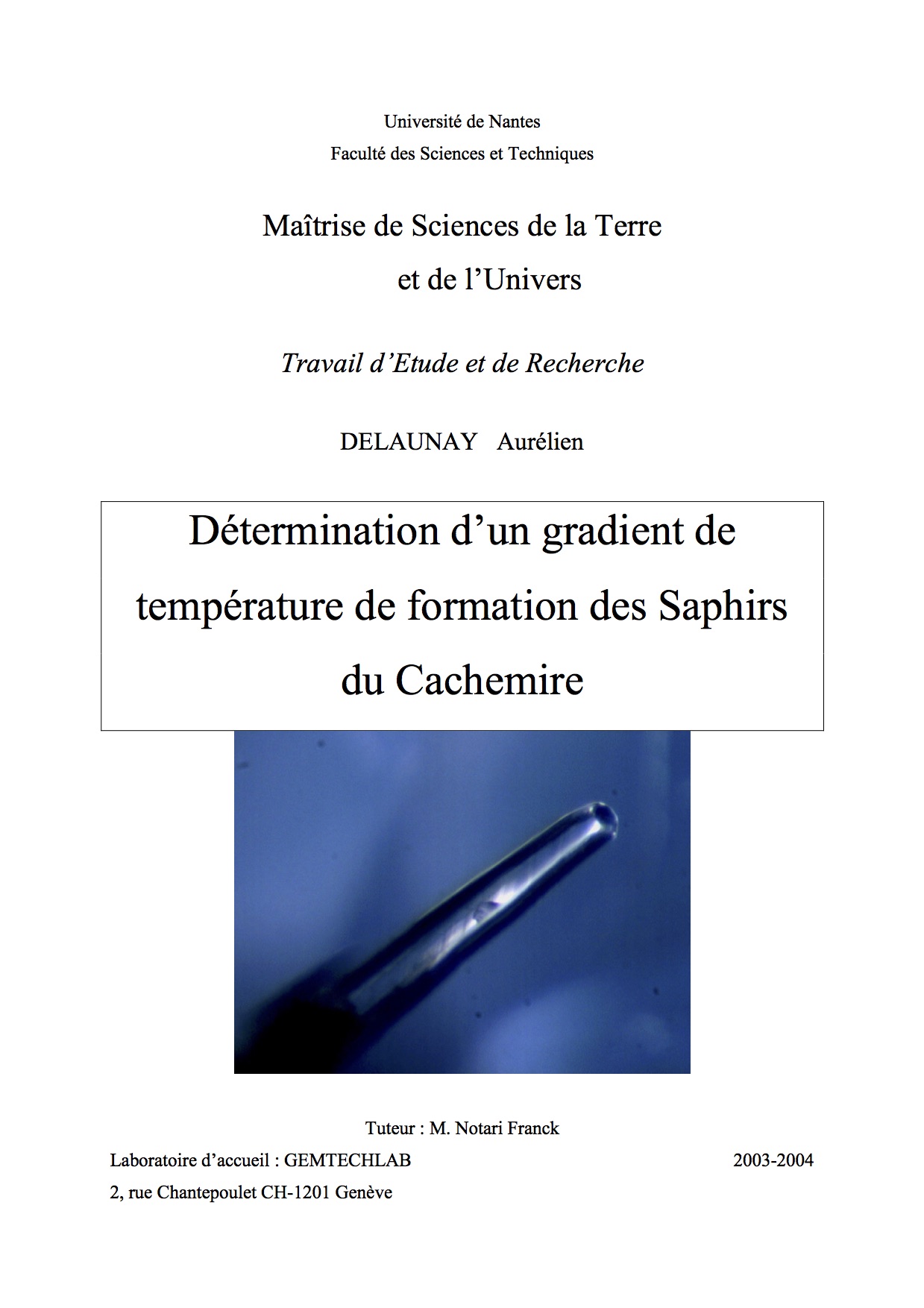
Détermination d’un gradient de température de formation des Saphirs du Cachemire
Determination of a temperature gradient for the formation of Kashmir sapphires
Thesis
Delaunay, A. (2004) Détermination d’un gradient de température de formation des Saphirs du Cachemire. [Determination of a temperature gradient for the formation of Kashmir sapphires]., Nantes: Université de Nantes, 31 pp.
Record No. 2924  |  Sinkankas/Born No.: NIS/NIB  |  Language: in French  |  RWHL

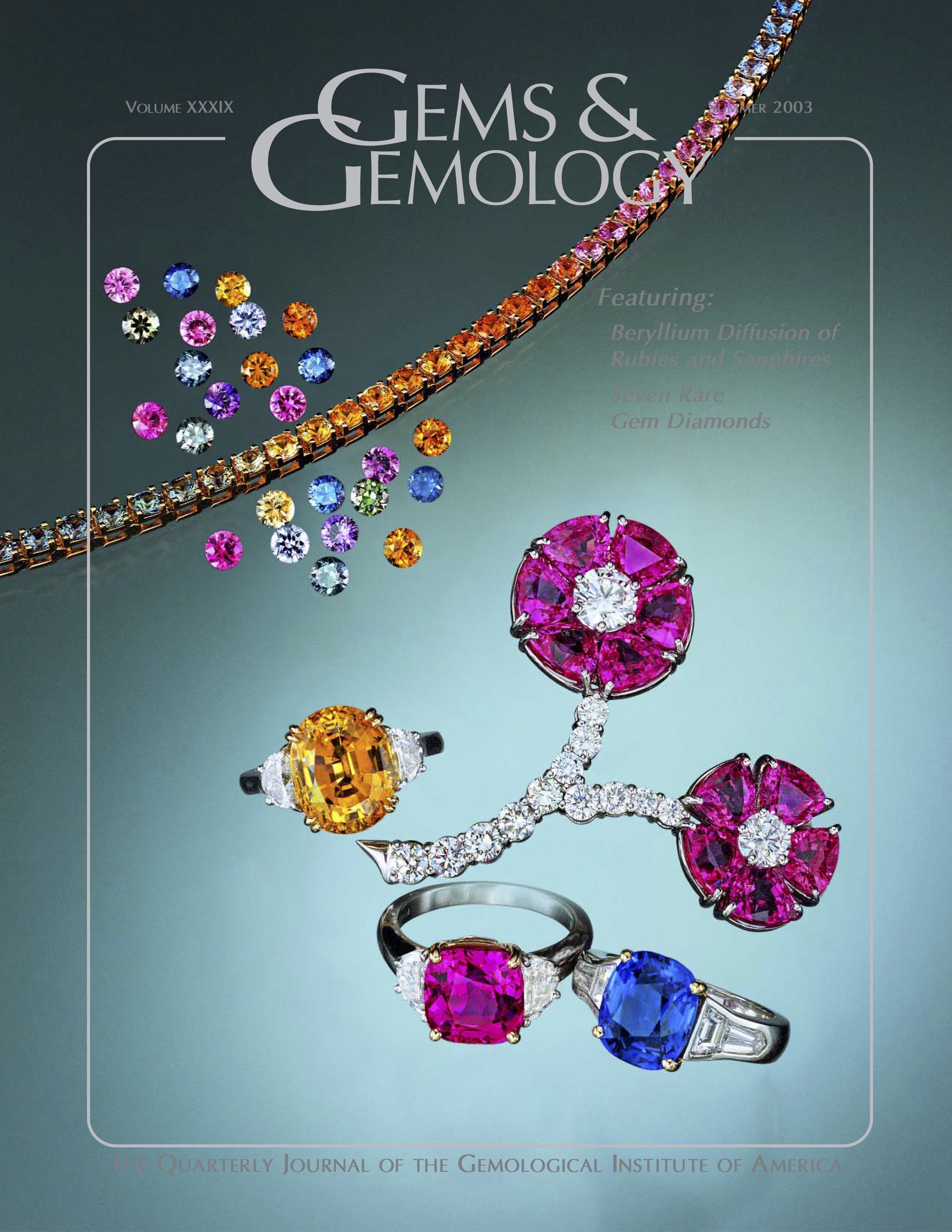
The significance of mineral inclusions in large diamonds from Yakutia, Russia
Journal Article
Taylor, L.A., Anand, M., Promprated, P., Floss, C. and Sobolev, N.V. (2003) The significance of mineral inclusions in large diamonds from Yakutia, Russia. American Mineralogist, Vol. 88, No. 5–6, pp. 912–920.
Record No. 26672  |  DOI: https://doi.org/10.2138/am-2003-5-621  |  Sinkankas/Born No.: NIS/NIB  |  RWHL
Large diamonds (10–200 carats) from the Udachnaya, Mir, and Aikhal kimberlite pipes of Yakutia contain mineral inclusions similar to those found in smaller diamonds. Most of these inclusions, particularly from the outer portions of the diamonds, are garnets of harzburgitic paragenesis, with fewer belonging to lherzolitic and eclogitic groups, along with some chromite diamond inclusions (DIs). A distinctive feature of the harzburgitic and some lherzolitic garnets is their sinusoidal rare-earth element (REE) patterns, in contrast to the normal light REE-depleted patterns seen in eclogitic garnets. These sinusoidal REE patterns suggest a complex petrogenetic history for the garnets, involving initial partial melting followed by metasomatic enrichment—especially of light and middle REEs—by fluids likely rich in C-O-H-N-S rather than carbonatitic compositions, as evidenced by negative Ba and Sr anomalies. These findings challenge the widely held assumption that most DIs are syngenetic with their host diamonds. Instead, the preserved geochemical signatures in harzburgitic garnet DIs reveal a history that predates diamond encapsulation, providing strong evidence that these inclusions are protogenetic rather than syngenetic.

Lab Notes: Unusual “red” spinel

Journal Article
Koivula, J.I. and Tannous, M. (2003) Lab Notes: Unusual “red” spinel. Gems & Gemology, Vol. 39, No. 2, Summer, p. 150.
Record No. 5989  |  ISBN/ISSN: 0016626X  |  Sinkankas/Born No.: NIS/NIB  |  RWHL

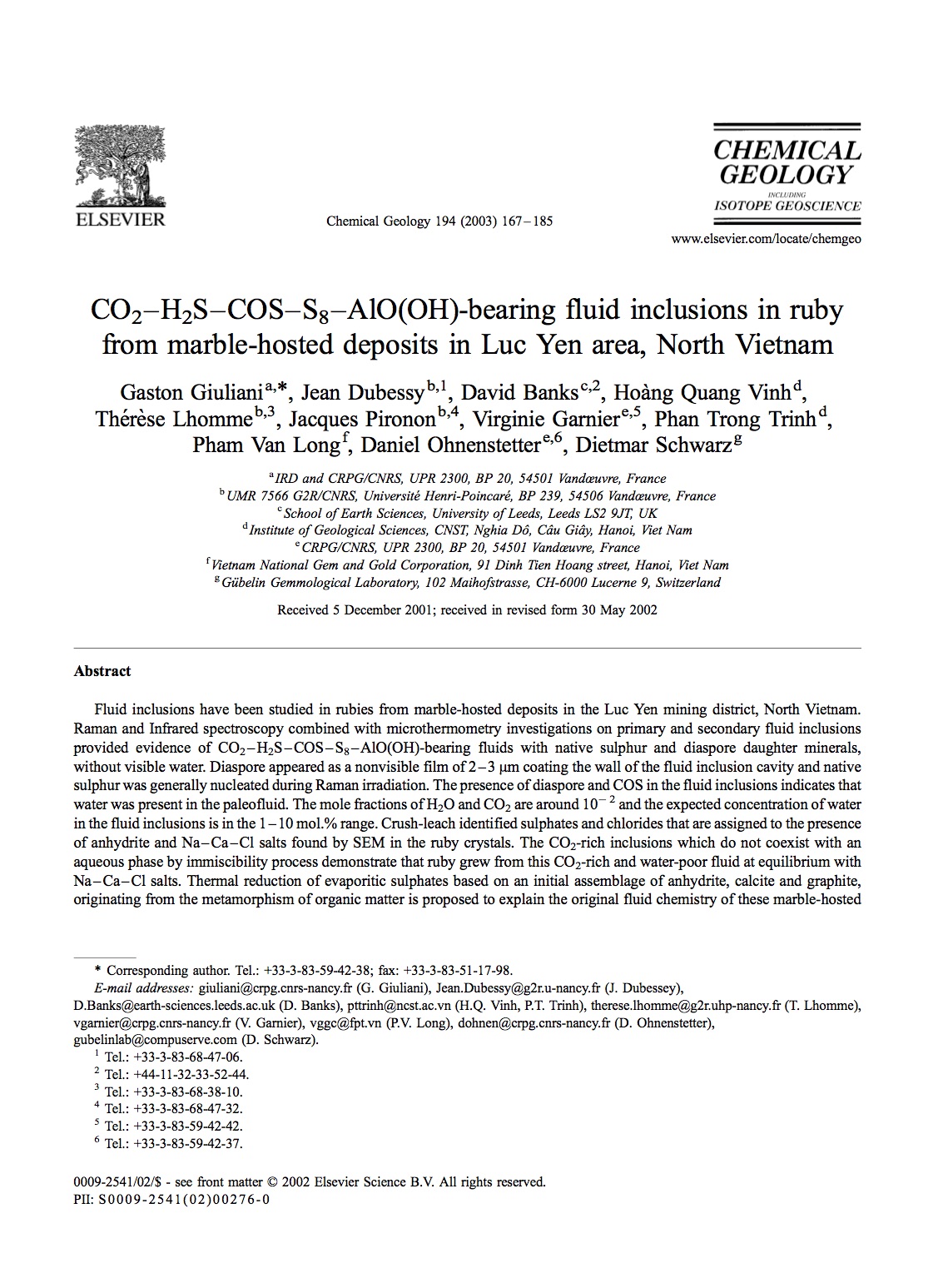
CO₂–H₂S–COS–S₈–AlO(OH)-bearing fluid inclusions in ruby from marble-hosted deposits in Luc Yen area, North Vietnam
Journal Article
Giuliani, G., Dubessy, J., Banks, D., Vinh, H.Q., Lhomme, T., Pironon, J., Garniere, V., Trinh, P.T., Long, P.V., Ohnenstettere, D. and Schwarz, D. (2003) CO₂–H₂S–COS–S₈–AlO(OH)-bearing fluid inclusions in ruby from marble-hosted deposits in Luc Yen area, North Vietnam. Chemical Geology, Vol. 194, pp. 167–185.
Record No. 5855  |  Sinkankas/Born No.: NIS/NIB  |  RWHL
Fluid inclusions have been studied in rubies from marble-hosted deposits in the Luc Yen mining district, North Vietnam. Raman and Infrared spectroscopy combined with microthermometry investigations on primary and secondary fluid inclusions provided evidence of CO₂–H₂S–COS–S₈–AlO(OH)-bearing fluids with native sulphur and diaspore daughter minerals, without visible water. Diaspore appeared as a nonvisible film of 2–3 µm coating the wall of the fluid inclusion cavity and native sulphur was generally nucleated during Raman irradiation. The presence of diaspore and COS in the fluid inclusions indicates that water was present in the paleofluid. The mole fractions of H₂O and CO₂ are around 10⁻² and the expected concentration of water in the fluid inclusions is in the 1–10 mol.% range. Crush-leach identified sulphates and chlorides that are assigned to the presence of anhydrite and Na–Ca–Cl salts found by SEM in the ruby crystals. The CO₂-rich inclusions which do not coexist with an aqueous phase by immiscibility process demonstrate that ruby grew from this CO₂-rich and water-poor fluid at equilibrium with Na–Ca–Cl salts. Thermal reduction of evaporitic sulphates based on an initial assemblage of anhydrite, calcite and graphite, originating from the metamorphism of organic matter is proposed to explain the original fluid chemistry of these marble-hosted rubies. The marbles acted as a closed system and the carbonic composition of the parent fluids in ruby indicates that aluminium can be transported in CO₂-rich fluids at high P–T.

Fluid Inclusions: Analysis and Interpretation
Book
Samson, L., Anderson, A. and Marshall, D. (2003) Fluid Inclusions: Analysis and Interpretation. Ottawa, Canada, Mineralogical Association of Canada, Short Course Series Volume 32 , 374 pp.
Record No. 5518  |  Sinkankas/Born No.: NIS/NIB  |  RWHL

Poudrettite: A rare gem species from the Mogok Valley
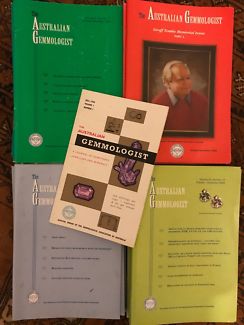
Journal Article
Smith, C.P., Bosshart, G., Graeser, S., Hänni, H., Günther, D., Hametner, K. and Gübelin, E.J. (2003) Poudrettite: A rare gem species from the Mogok Valley. Gems & Gemology, Vol. 39, No. 1, Spring, pp. 24–31.
Record No. 5482  |  ISBN/ISSN: 0016626X  |  Sinkankas/Born No.: NIS/NIB  |  RWHL
In 2000, an unfamiliar gemstone was purchased in Mogok. It subsequently proved to be the rare borosilicate poudretteite, a mineral that previously had been identified only as tiny crystals from Mont Saint-Hilaire, Quebec, Canada. This article presents a complete gemological description of this unique gemstone and furthers the characterization of this mineral by advanced spectroscopic and chemical analytical techniques.

Genesis and gemmology of sapphires from the Nezametnoye deposit, Primorye region, Russia
Journal Article
Khanchuk, A., Zalishchak, B., Pakhomova, V., Odarichenko, E. and Sapin, V. (2003) Genesis and gemmology of sapphires from the Nezametnoye deposit, Primorye region, Russia. Australian Gemmologist, Vol. 21, No. 9, pp. 369–375.
Record No. 5332  |  Sinkankas/Born No.: NIS/NIB  |  RWHL
Research into inclusions in sapphires from a placer deposit at Nezametnoye in the Russian Far East is reported, together with a study on the heavy accessory minerals in the underlying gold-bearing granite porphyries. Other minerals found with the sapphires include zircon and spinel. This is the only deposit of gem-quality corundum, spinel, and zircon presently known in Russia.. The sapphire inclusions were identified as columbite, albite, zircon, Zn-bearing hercynite, rutile, and glass. Based on the compositions of these inclusions and on the unusual occurrence of corundum as an accessory in the granite porphyries, it is concluded that the placer sapphires originated from rare-metal pegmatites, greisens, and metasomatic rocks associated with the widespread Mesozoic granitic bodies in the area.RAH

Al-rich diopside in alluvial ruby and corundum-bearing xenoliths, Australian and SE Asian basalt fields.
Journal Article
Sutherland, F.L., Coenraads, R.R., Schwarz, D., Raynor, L.R., Barron, B.J. and Webb, G.B. (2003) Al-rich diopside in alluvial ruby and corundum-bearing xenoliths, Australian and SE Asian basalt fields. Mineralogical Magazine, Vol. 67, No. 4, pp. 717–732.
Record No. 5304  |  Sinkankas/Born No.: NIS/NIB  |  RWHL
JES: This study was undertaken to get a better understanding of the conditions under which rubies found in palaeodrainage deposits along the Cudgegong–Macquarie river system in central eastern New South Wales, Australia, originally formed. Sixty gem samples collected along the two drainages were investigated to document their mineralogical and chemical properties, as well as their inclusions. The rubies had up to 0.6 wt.% Cr₂O₃ and up to 0.5 wt.% Fe₂O₃, and contained syngenetic inclusions such as Al-rich diopside (with up to 21 wt.% Al₂O₃), scapolite (meionite), and anatase. Associated sapphires had up to 0.8 wt.% Fe₂O₃, with one sample containing an unusual nepheline–anorthoclase inclusion. The chemical composition of the rubies contrasts with that of other Mesozoic–Cenozoic basalt-associated corundum deposits in Australia, suggesting they originated from a different eruptive source. However, their composition is similar to that of rubies from the eastern Thailand basalt fields (but not from other occurrences in Southeast Asia), which are thought to have a metamorphic origin deep within the earth. It is suggested that the rubies formed at temperatures between 1,000 and 1,300 °C, which are high equilibration temperatures for proposed lithospheric granulite sources. Further work will be required to definitively establish the geologic source for the Cudgegong–Macquarie ruby suite.

Les saphirs du Massif Central: Etude minéralogique des saphirs du Dioulot, du Mont Coupet et du Menoyre
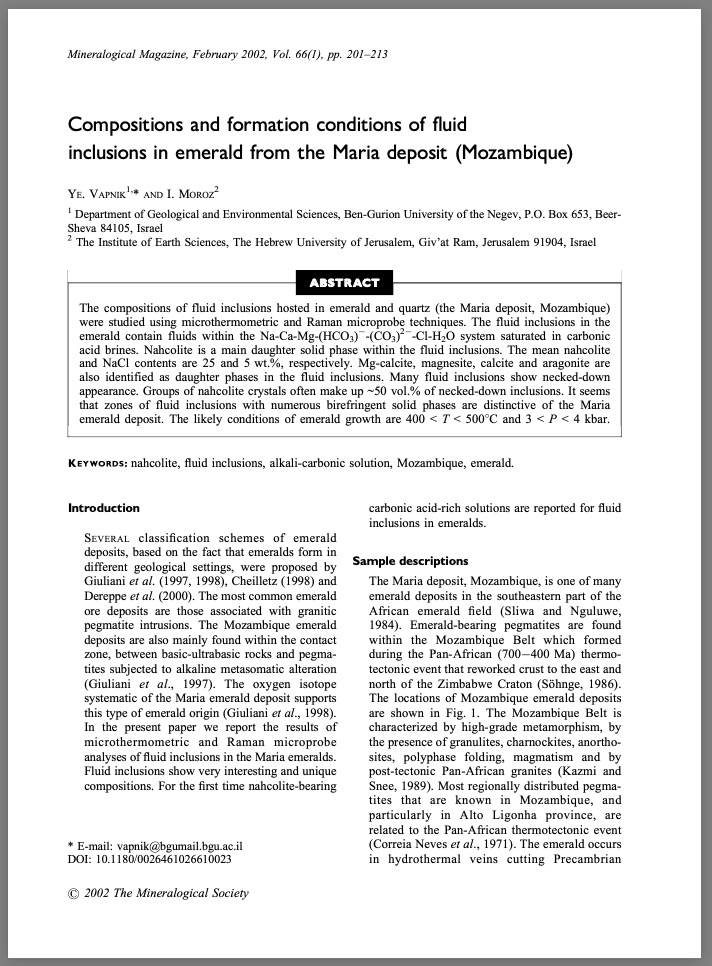
The sapphires of the Massif Central: Mineralogical study of the sapphires from Dioulot, Mont Coupet, and Menoyre
Thesis
Gaillou, E. (2003) Les saphirs du Massif Central: Etude minéralogique des saphirs du Dioulot, du Mont Coupet et du Menoyre. [The sapphires of the Massif Central: Mineralogical study of the sapphires from Dioulot, Mont Coupet, and Menoyre]. Université Blaise Pascal, Clemont-Ferrand; Université Jean Monnet, St. Etienne; Université Claude Bernard, Lyon, 48 pp.
Record No. 3036  |  Sinkankas/Born No.: NIS/NIB  |  Language: in French  |  RWHL
Sapphires of the French Massif Central are currently known as a mineralogical curiosity, but during the Middle Ages and the beginning of the 20th century, they were exploited, cut, and sold around Europe. The common assumption was that these sapphires, of metamorphic origin, were taken from the base of the crust and were brought to the surface by magmas. But recent studies, in particular on the large Asian or Australian sapphire deposits, showed that certain sapphires could have a purely magmatic origin. Three sapphire deposits of the Massif Central were studied: sapphires in enclaves in trachytes of the Dôme of Menoyre (Cantal), sapphires of the Mont Coupet (Velay), associated with a basaltic magmatism, and alluvial sapphires of Sioulot (Puy de Dôme). The study of trace elements present in sapphires shows contents of Ti, Ga, Fe and Cr, varying from one deposit to another. These values were placed in the diagrams used in the literature to distinguish metamorphic and magmatic sapphires. The study of inclusions in sapphires by optical and electronic microscopy, microanalysis EDS, WDS, and Raman spectrometry made it possible to identify in the three occurrences (but in different proportions): 1) mineral oxide inclusions rich in Fe, Ti (ilmenite, rutile, spinel), Nb (columbite, ilmenorutile), Y (yttriopyrochlores), feldspars and zircons; 2) fluid inclusions mainly with CO₂ or CO₂/H₂O; 3) vitreous inclusions. The presence of vitreous inclusions for the three studied deposits made it possible to highlight the magmatic origin. The liquids at the origin of their formation are of trachyte to phonolitic composition, enriched in incompatible elements such as Nb, Y, Ti, Th. The values of δ¹⁸O measured on sapphires, close to 6‰, indicate a mantle origin for these magmas. They are interpreted in this study as highly evolved liquids, produced by a fractionation starting from basanitic magmas. A petrogenetic model is proposed for each of the three deposits.

Compositions and formation conditions of fluid inclusions in emerald from the Maria deposit (Mozambique)
Journal Article
Vapnik, Y. and Moroz, I. (2002) Compositions and formation conditions of fluid inclusions in emerald from the Maria deposit (Mozambique). Mineralogical Magazine, Vol. 66, No. 1, pp. 201–213.
Record No. 27206  |  ISBN/ISSN: 0026461X  |  Sinkankas/Born No.: NIS/NIB  |  RWHL
The compositions of fluid inclusions in emerald and quartz from the Maria deposit in Mozambique were investigated using microthermometric and Raman microprobe techniques. The inclusions in emerald belong to the Na–Ca–Mg–(HCO₃)⁻–(CO₃)²⁻–Cl–H₂O system and are saturated carbonic acid brines. Nahcolite is the primary daughter mineral phase observed, with average concentrations of 25 wt.% nahcolite and 5 wt.% NaCl. Additional daughter phases identified include Mg-calcite, magnesite, calcite, and aragonite. Many fluid inclusions show a necked-down morphology, with groups of nahcolite crystals often comprising up to ~50 vol.% of these inclusions. Zones rich in fluid inclusions containing numerous birefringent solids appear to be characteristic of emeralds from the Maria deposit. Estimated conditions for emerald formation are between 400 and 500 °C and pressures of 3 to 4 kbar.

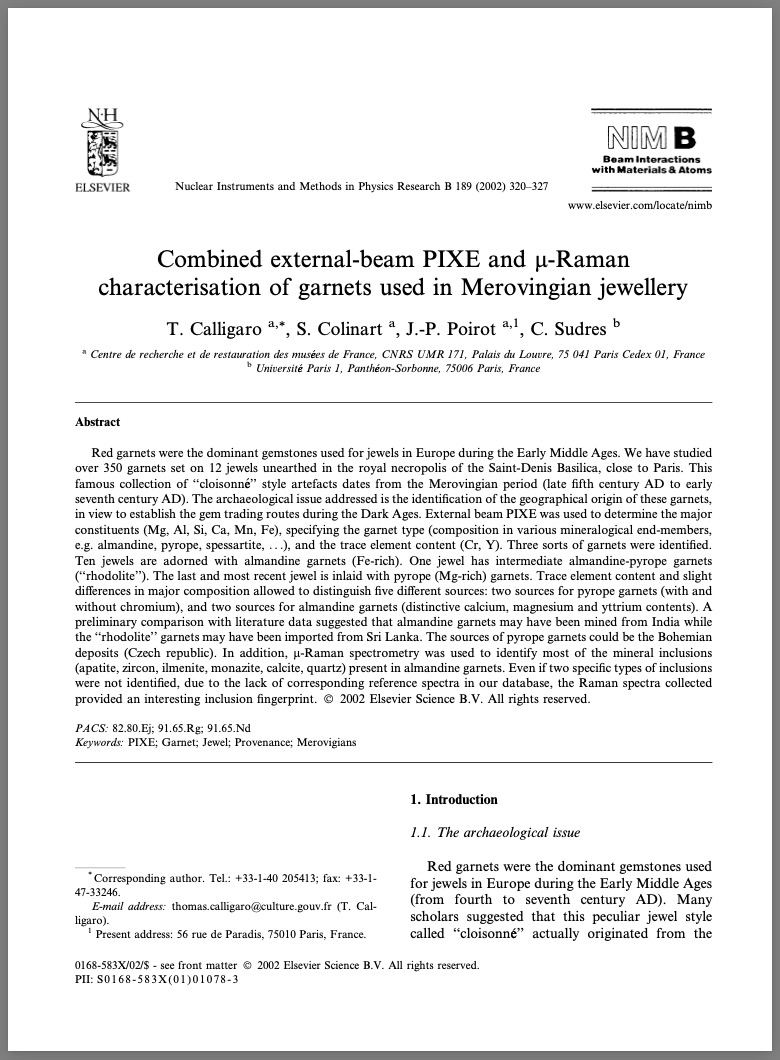
Combined external-beam PIXE and µ-Raman characterisation of garnets used in Merovingian jewellery
Journal Article
Calligaro, T., Colinart, A.S., Poirot, J.-P. and Sudres, C. (2002) Combined external-beam PIXE and µ-Raman characterisation of garnets used in Merovingian jewellery. Nuclear Instruments and Methods in Physics Research B, Vol. B189, Nos. 1–4, April, pp. 320–327.
Record No. 27078  |  DOI: https://doi.org/10.1016/S0168-583X(01)01078-3  |  Sinkankas/Born No.: NIS/NIB  |  RWHL
Red garnets were the dominant gemstones used for jewels in Europe during the Early Middle Ages. Over 350 garnets set on 12 jewels unearthed in the royal necropolis of the Saint-Denis Basilica near Paris were studied; this renowned collection of cloisonné-style artefacts dates from the Merovingian period (late fifth to early seventh century AD). The goal was to identify the geographical origin of the garnets in order to reconstruct gem trade routes during the Dark Ages. External beam PIXE was used to determine the major elements (Mg, Al, Si, Ca, Mn, Fe) to classify garnet types (e.g., almandine, pyrope, spessartite) and assess trace elements (Cr, Y). Three garnet types were identified: ten jewels contained Fe-rich almandine garnets, one featured intermediate almandine-pyrope (“rhodolite”) garnets, and the most recent jewel had Mg-rich pyrope garnets. Trace elements and subtle compositional differences indicated five distinct sources—two for pyrope (with and without chromium) and two for almandine (differing in Ca, Mg, and Y levels). Literature comparison suggests the almandine garnets likely originated in India, the rhodolite garnets from Sri Lanka, and the pyrope garnets from Bohemian deposits (Czech Republic). μ-Raman spectrometry identified most mineral inclusions (apatite, zircon, ilmenite, monazite, calcite, quartz) within the almandine garnets; although two types remained unidentified due to missing reference spectra, the Raman data provided a valuable inclusion fingerprint.

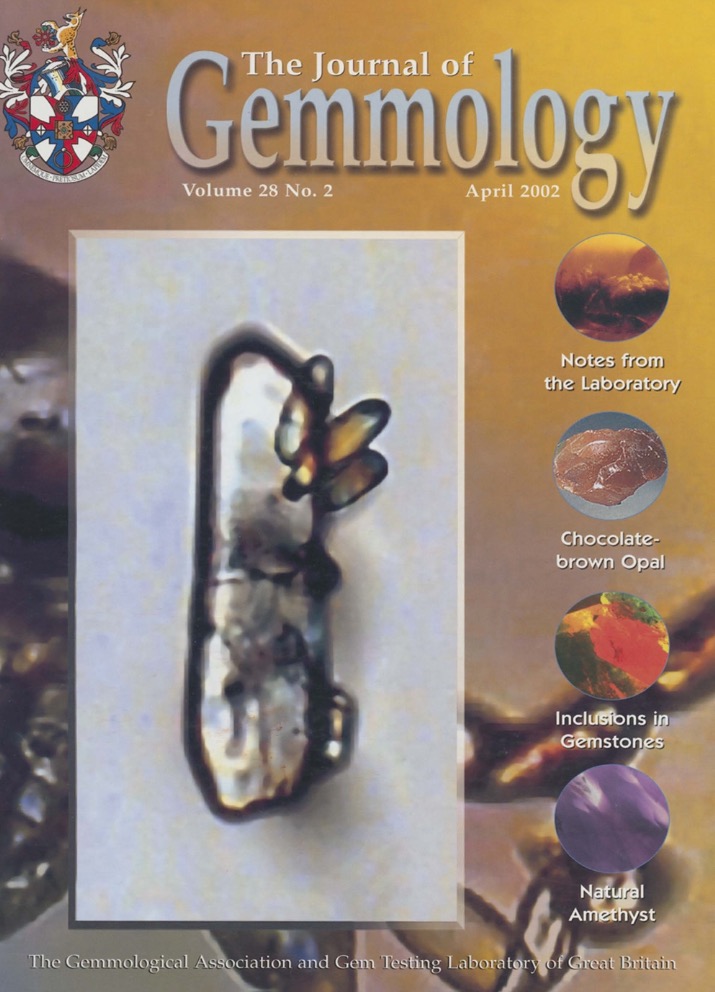
Inclusions in gemstones:their cathodoluminescence (CL) and CL spectra
Journal Article
Ponahlo, J. (2002) Inclusions in gemstones:their cathodoluminescence (CL) and CL spectra. Journal of Gemmology, Vol. 28, No. 2, pp. 85–100.
Record No. 26744  |  ISBN/ISSN: 221252  |  Sinkankas/Born No.: NIS/NIB  |  RWHL
From a study of inclusions in gemstones using cold-cathode cathodoluminescence (CL) microscopy and microspectrophotometry, ten examples containing various inclusions are described. Visual microscopic examinations of the luminescing inclusions, supported by photomicrographs and spectral curves, provide valuable information about the inclusion types. Strongly luminescing, even small colourless inclusions such as apatite, fluorite, or diopside can be easily detected, though they might otherwise go unnoticed. Additional details on both inclusions and host material can be obtained through CL spectra recorded in the 380–950 nm range. Because of the limited electron penetration depth into solids, all CL investigations must be conducted where inclusions intersect the surface of a host gemstone facet. Distinct colour differences between the CL emission of host and inclusion aid in their differentiation. This method also helps distinguish between inclusions that are otherwise difficult to separate by standard optical microscopy. Cold-cathode CL is a non-destructive and rapid technique that employs commercially available instruments and requires no coating or special treatment of samples.

Mineralogical and chemical study of the Regal Ridge emerald
Journal Article
Groat, L., Marshall, D.D., Giuliani, G., Murphy, D.C., Piercey, S.J., Jambor, J.L., Mortensen, J.K., Ercit, T.S., Gault, R.A., Mattey, D.P., Schwarz, D., Maluski, H., Wise, M.A., Wengzynowski, W. and Eaton, D.W. (2002) Mineralogical and chemical study of the Regal Ridge emerald. Canadian Mineralogist, Vol. 40, No. 5, pp. 1313–1338.
Record No. 6105  |  DOI: https://dx.doi.org/10.2113/gscanmin.40.5.1313  |  Sinkankas/Born No.: NIS/NIB  |  RWHL
In September 1998, a significant emerald occurrence was discovered at Regal Ridge in the Finlayson Lake district of southeastern Yukon, within the Yukon–Tanana Terrane. The emeralds are hosted in quartz veins that intersect mica-rich layers of a shallowly dipping mica schist from the Upper Devonian Fire Lake mafic metavolcanic unit, near a mid-Cretaceous granitic pluton. Emeralds, including gem-quality green beryl crystals up to 4 cm, are found in tourmaline-rich alteration zones surrounding the veins. These zones also feature scheelite, minor sulfides, and ochreous surface oxidation. The emeralds contain an average of 3208 ppm Cr, indicating chromium as the main chromophore. Fluid inclusions show formation from a low-salinity (max 3 wt.% NaCl equivalent), isotopically homogeneous fluid that exchanged oxygen isotopes with host rocks (δ¹⁸O of emerald = 12.3–14.8‰; δD ≈ −58‰). Coexisting quartz and tourmaline indicate formation temperatures of ~365–498 °C, corresponding to depths of 3–7.7 km and pressures of 1.0–2.5 kbar. Be is interpreted to have originated from the adjacent granite (with low Be: 12–13.2 ppm), and Cr from the host schist (520 ppm). An ⁴⁰Ar/³⁹Ar age of 109 Ma from mica likely reflects the timing of emerald formation or cooling post-granite intrusion.

Diffusion ruby" proves to be synthetic ruby overgrowth on natural corundum"
Journal Article
Smith, C.P. (2002) Diffusion ruby" proves to be synthetic ruby overgrowth on natural corundum". Gems & Gemology, Vol. 38, No. 3, Fall, pp. 240–248.
Record No. 5502  |  ISBN/ISSN: 0016626X  |  Sinkankas/Born No.: NIS/NIB  |  RWHL
A relatively new production of red corundum, reportedly from Bangkok, has been offered for sale in recent years. Although the producers claimed that these stones were red diffusion-treat-ed corundum (i.e., a shallow coloration induced by the lattice diffusion of chromium), the surface layer is actually a synthetic ruby overgrowth on natural colorless to near-colorless corundum. The overgrowth layer, after recutting, typically ranged from < 0.1 to 0.3 mm thick. This material can be distinguished from red lattice diffusion–treated corundum by the presence of a boundary plane and two different types of inclusion features: those that occur in the natural corundum core and those present only in the synthetic overgrowth. This product demonstrates that as treatment techniques continue to evolve, the distinction between natural, treated, and synthetic corundum may become increasingly difficult to define.

Mineral chemistry, oxygen isotopes and fluid/melt inclusions studies bearing on the genesis of the Denchai sapphires, northern Thailand
Conference Paper
Khin Zaw, Limtrakun, P., Yui, T., Ryan, C.G. and Mernagh, T.P. (2002) Mineral chemistry, oxygen isotopes and fluid/melt inclusions studies bearing on the genesis of the Denchai sapphires, northern Thailand. The Symposium on the Geology of Thailand, 26–31 August, Bangkok pp. 309–314.
Record No. 5455  |  Sinkankas/Born No.: NIS/NIB  |  RWHL
The Denchai gem fields are located in Phrae Province, Northern Thailand, in close spatial association with Tertiary alkaline basaltic rocks. The sapphires occur as alluvial placer deposits in palaeochannels at shallow depths. Quantitative electron microprobe analyses of minor and trace element contents (Fe, Ti, Cr, Ga, and V) in Denchai sapphires reveal concentrations as follows: Fe₂O₃ (0.32–1.98 wt%), TiO₂ (0.01–0.23 wt%), Cr₂O₃ (<0.01 wt%), Ga₂O₃ (0.01–0.03 wt%), and V₂O₃ (<0.03 wt%). These results show low Cr₂O₃/Ga₂O₃ and high Fe₂O₃/Cr₂O₃ ratios, plotting within the magmatic field, and allow broad discrimination between magmatic and metamorphic corundum subtypes based on trace element variation diagrams. Optical studies of sapphires identified three compositional types of primary fluid/melt inclusions: CO₂-rich inclusions (Type I), polyphase (V+L+S) inclusions (Type II), and silicate-melt inclusions (Type III). Type I inclusions are CO₂-bearing with a vapor phase comprising less than 10–15 vol.%, confirmed by microthermometry and laser Raman spectroscopy. Type II inclusions contain a fluid bubble (~20–30 vol.%), an aqueous phase (10–15 vol.%), and solid phases. Type III inclusions consist of a vapor bubble, silicate glass, and solid phases; PIXE analysis revealed significant K, Ca, and Cl concentrations within the melt. The presence of CO₂-rich fluids and elevated K concentrations in the silicate melt inclusions links the origin of Denchai sapphires to CO₂-rich alkaline magmatism. Oxygen isotope compositions for the sapphires range from δ¹⁸O = +4.7 to +8.4‰, while olivine from the host basalts ranges from +4.9 to +5.1‰. These values suggest that most Denchai sapphires reflect mixed mantle and crustal oxygen isotope signatures, indicating origin from melts interacting with lower crustal material. Thus, a hybrid model is proposed for the genesis of Denchai sapphires, involving interactions between a fractionated partial melt from metasomatized mantle and an Al-rich lower crustal rock.

Pink sapphire from southern Kerala, S. India: Implications on India-Madagascar correlation within Gondwana assembly
Journal Article
Santosh, M., Katori, R., Yoshikura, S., Higashi, S. and Salim, A.K. (2002) Pink sapphire from southern Kerala, S. India: Implications on India-Madagascar correlation within Gondwana assembly. Gondwana Research, Vol. 5, No. 4, pp. 894–901.
Record No. 5333  |  Sinkankas/Born No.: NIS/NIB  |  RWHL
Southern Kerala and the adjacent state of Tamil Nadu are historically important regions for gem production in southern India. A wide variety of gems—including beryl, chrysoberyl, corundum, garnet, quartz, spinel, topaz, and zircon—are found in primary deposits (mainly in pegmatites emplaced in granulite facies metamorphic rocks), or in associated alluvial deposits. Pink sapphire is found at Melankode near Balaramapuram, and at Rose Mala near Tenmala. Electron-microprobe data indicate that the pink sapphire is nearly pure Al₂O₃ (98.43–99.48 wt.%). Cr₂O₃ and FeO are each present in amounts up to 0.12 wt.%. Abundant CO₂-rich fluid inclusions occur in the sapphires. The estimated temperatures of formation of the Melankode pegmatite are in the 650–750 °C range. The crystallization age of the pegmatite (based on U–Pb and Pb–Pb dating of gem zircons) has been calculated by others to be about 513 million years (My), whereas granulite-facies metamorphism in the same region is dated at about 540 My. Thus, pegmatite emplacement postdated the main period of granulite metamorphism. Both the pegmatite formation and regional metamorphism occurred during the Pan-African Orogeny (a geologic event beginning about 600 My that led to the assembly of the Gondwana supercontinent). Pink sapphires from these two Indian deposits are similar to material from a number of localities in southern Madagascar (Betroka, Ilakaka, Andranondambo), as well as from the Ratnapura district in Sri Lanka. These occurrences are cited by the authors as additional evidence for the juxtaposition of southern Madagascar, Sri Lanka, and southern India when these areas were brought together as part of Gondwana. Gem deposits in all three areas are within or closely proximal to a regional shear zone that extended at the time across Madagascar, southern India, and Sri Lanka, and terminated in Antarctica.

Trace-element contents and cathodoluminescence of “trapiche” rubies from Mong Hsu, Myanmar (Burma): Geological significance
Journal Article
Garnier, V., Ohnenstetter, D., Giuliani, G., Blanc, P. and Schwarz, D. (2002) Trace-element contents and cathodoluminescence of “trapiche” rubies from Mong Hsu, Myanmar (Burma): Geological significance. Mineralogy and Petrology, Vol. 76, No. 3–4, pp. 179–193.
Record No. 5331  |  Sinkankas/Born No.: NIS/NIB  |  RWHL
Mong Hsu rubies with the characteristic trapiche growth sectors and skeletal arms are occasionally sold in Burmese and Thai gem markets. However, they have never been observed in situ in primary deposits. To determine if any relationship exists with the more common type of Mong Hsu rubies, six small (4–6 mm in diameter) trapiche rubies were studied by scanning electron microscopy, electron microprobe, and cathodoluminescence techniques. The results were then compared with those obtained from the common type of Mong Hsu rubies that are marble hosted. The results showed that: (1) Cr and V are the main chromophores in both types of rubies; (2) both ruby types contain the same solid inclusions (e.g., calcite, dolomite, rutile, mica, and diaspore); (3) the presence of bastnäsite in the trapiche rubies and fluorite in the “normal” rubies indicates they both crystallized from F-bearing solutions; and (4) the trace-element contents are similar in both types of rubies. Thus, these chemical and mineralogical similarities indicate that both Mong Hsu ruby types are genetically related and that they crystallized in the same geologic (marble-type) environment, which is distinct from that of the rubies and sapphires hosted in the basalts of Southeast Asia.

Sapphire crystallization, age and origin, Ban Huai Sai, Laos: age based on zircon inclusions

Journal Article
Sutherland, F.L., Bosshart, G., Fanning, C.M., Hoskin, P.W.O. and Coenraads, R.R. (2002) Sapphire crystallization, age and origin, Ban Huai Sai, Laos: age based on zircon inclusions. Journal of Asian Earth Sciences, Vol. 20, No. 7, pp. 841–849.
Record No. 5329  |  ISBN/ISSN: 13679120  |  Sinkankas/Born No.: NIS/NIB  |  RWHL
Sapphire from the Ban Huai Sai alluvial gemfield, Laos, derives from local Cenozoic basalts. Syngenetic mineral inclusions in the sapphire include zircon, cheralite, albite, and possibly euxenite-(Y). Sensitive high resolution ion microprobe (SHRIMP) analysis of zircon inclusions shows enrichment in Hf, Y, and rare earth elements (REE), with REE reaching some of the highest abundances recorded in such zircons (up to 5785 ppm). This, along with Eu depletion and the associated inclusion mineralogy, suggests that the sapphire crystallized from highly evolved alkaline melts prior to corrosive transport in basalt magma. U–Pb isotope (SHRIMP) determinations on zircon inclusions yield measured zircon ages of 1.2–1.3±0.3 Ma, interpreted as the time of host sapphire crystallization, and falling within the error range of a K–Ar age on basalt from the same province. The proposed crystallization age for Ban Huai Sai zircon/sapphire aligns with that determined for a zircon–sapphire–magnetite xenolith from Khao Wau, Thailand (1–2 Ma). These findings support a model of sapphire genesis linked to processes associated with young alkali basaltic magmatism in Southeast Asia.

Exploring the Literature of Gemstone Inclusions

The literature of gemstone inclusions covers identification, origin determination, treatments, synthesis, mineral inclusions, fluid inclusions and other internal features of natural and synthetic gems.

For a curated selection of important sources, read Inclusions in Gemstones — Hyperion Literature Sources.

About Four Treasures

Four Treasures is Lotus Gemology's freely accessible gemological reference database. Use the full database to search by author, title or keyword and explore literature on gemology, mineralogy, jewelry and related fields. Where available, hyperlinks on titles may lead directly to the full publication.

Search the Complete Four Treasures Database