Gemstone Inclusions Bibliography

Gemstone Inclusions Bibliography

Explore books, articles and historical sources on inclusions in gemstones in Four Treasures, the Lotus Gemology reference database. This bibliography brings together matching records from the collection, with publication details, abstracts and cover images where available.

Gemstone Inclusion References

The list below matches the terms inclusion or inclusions in the database's searchable fields. Some references discuss inclusions as part of a broader subject.
761–780 of 1,165 matching references

Inclusions in synthetic rubies and synthetic sapphires produced by hydrothermal methods (TAIRUS, Novosibirsk, Russia)
Journal Article
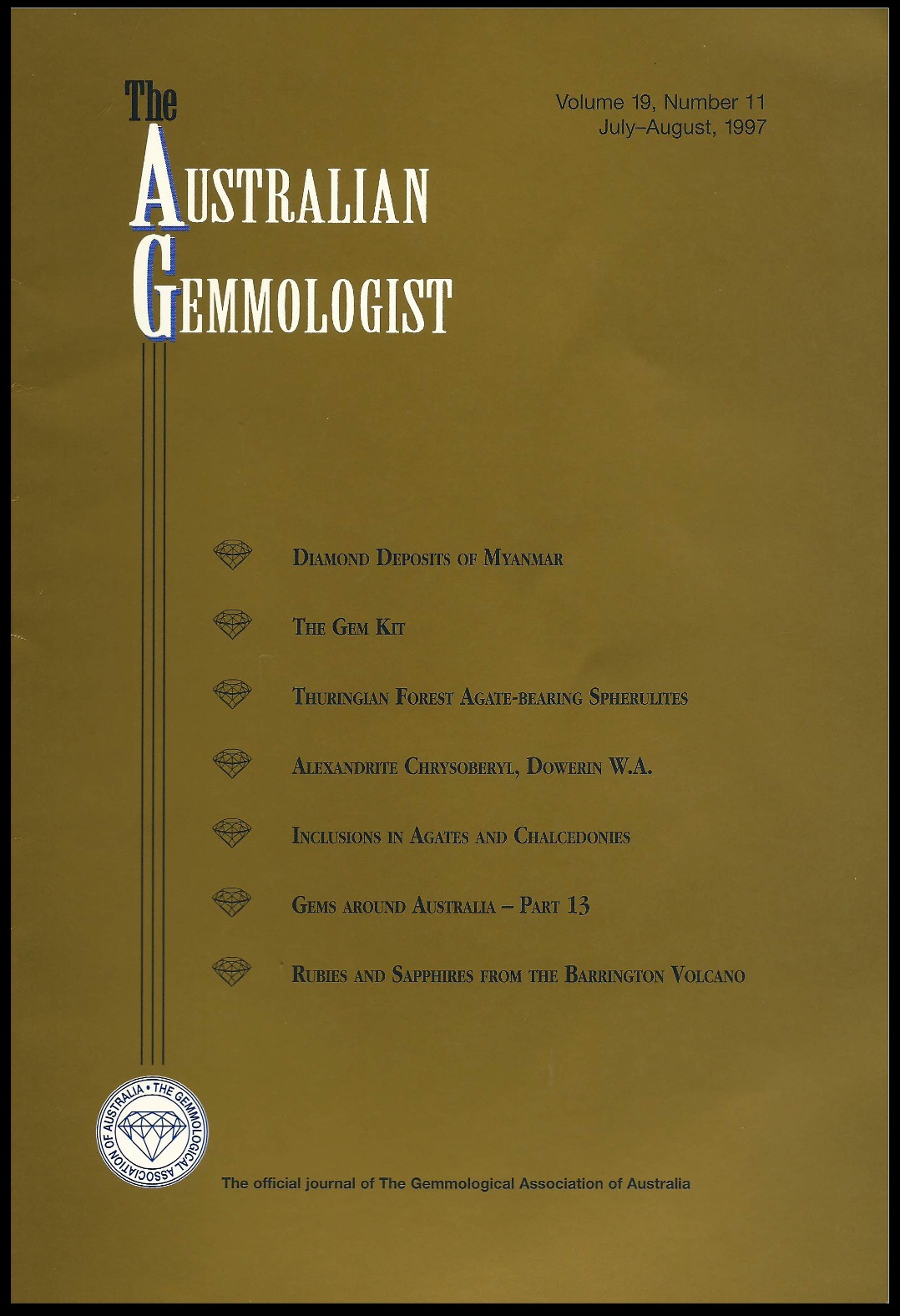
Peretti, A., Mullis, J., Mouawad, F. and Guggenheim, R. (1997) Inclusions in synthetic rubies and synthetic sapphires produced by hydrothermal methods (TAIRUS, Novosibirsk, Russia). Journal of Gemmology, Vol. 25, No. 8, October, pp. 540–561.
Record No. 5367  |  ISBN/ISSN: 221252  |  Sinkankas/Born No.: NIS/NIB  |  RWHL
This well-illustrated article examines (by SEM-EDX analysis) the inclusions in Russian hydrothermal ruby and sapphire manufactured by Tairus. Coatings on rough samples were found to be either boehmite or an unknown noncrystalline gel-like material. The following inclusions were observed in both rough and cut samples: solid inclusions of corroded copper (probably remnants of wire), isometric crystals and hexagonal platelets of copper, clouds and linear series of pinpoints of whitish reflective particles, tiny needles, and whitish particles (possibly alkali or calcium carbonates from the mineralizers). In pinkish red to red samples, the authors found fluid inclusion “fingerprints” or feathers, among which occur large three-phase (liquid-gas-mineral) inclusions associated with large tube-like negative crystals. The daughter minerals in the inclusions were identified (by crossed polarizers and heating/freezing [H/F] experiments) as carbonates. H/F experiments also revealed that the liquid phase is predominantly H₂O. By contrast, three-phase inclusions in natural rubies are often CO₂-rich with daughter minerals of diaspore, graphite, or mica. Of perhaps greatest interest to the practicing gemologist, the authors describe a simple gemological H/F test to distinguish between natural and synthetic hydrothermal rubies on the basis of three-phase inclusions. The copper inclusions also are indicative of synthetic origin.

Gemmological features of rubies and sapphires from the Barrington volcano, Eastern Australia
Journal Article
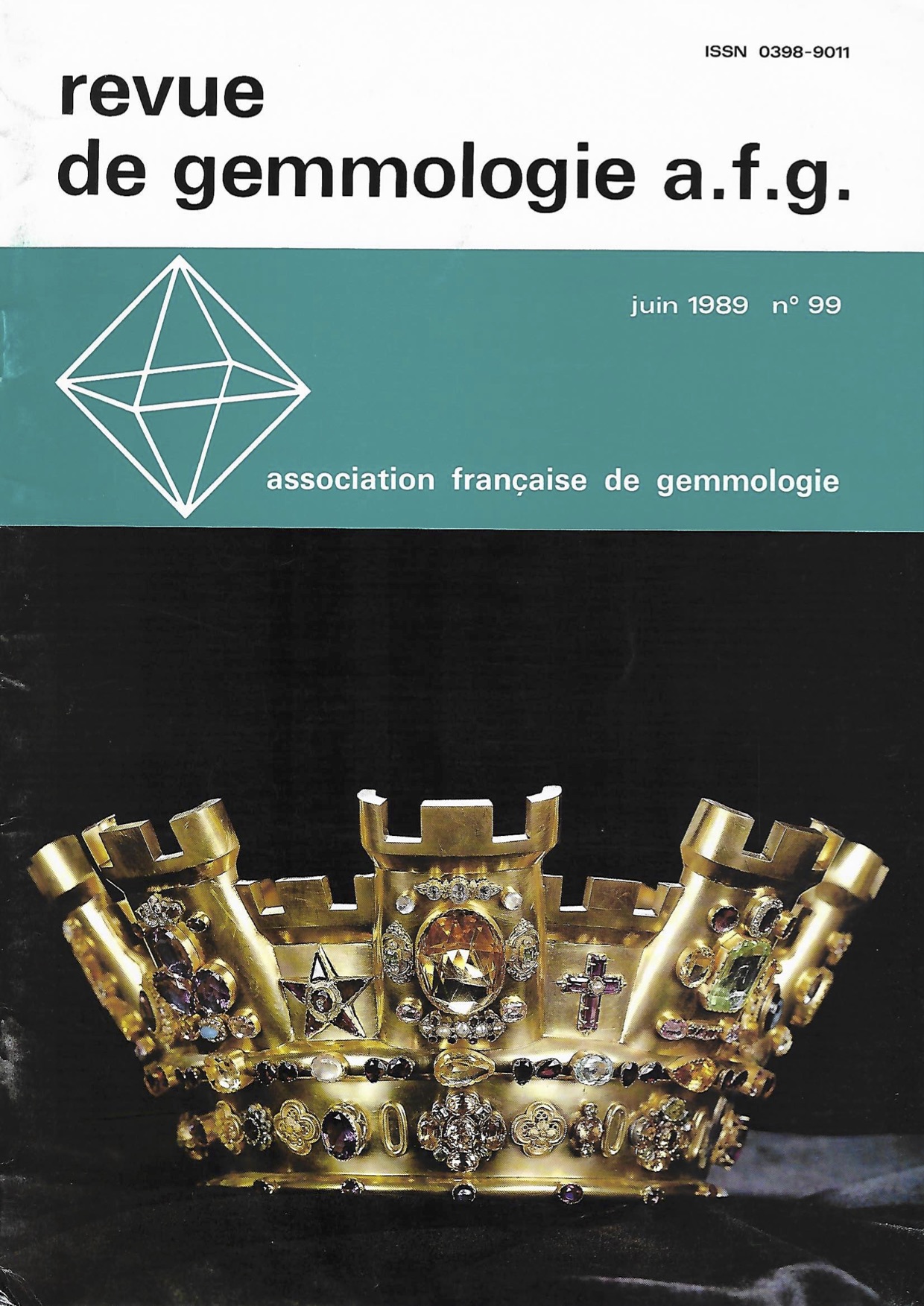
Webb, G. (1997) Gemmological features of rubies and sapphires from the Barrington volcano, Eastern Australia. Australian Gemmologist, Vol. 19, No. 11, pp. 471–475.
Record No. 2955  |  Sinkankas/Born No.: NIS/NIB  |  RWHL
Ruby is rare in Australia, but in the Barrington area of New South Wales, ruby and pink sapphire form up to 50% by weight of the gem corundum concentrate. These stones have Cr₂O₃ contents of 0.60–1.42 wt.% and FeO contents of 0.44–0.75 wt.%. They typically range from 2 to 6 mm in size and contain inclusions of spinel and liquid-filled fractures. Polysynthetic twinning is common and is often associated with inclusions of boehmite needles. On the basis of trace-element content, the Barrington corundum is divided into two distinct suites: one related to ruby and the other typical of eastern Australian sapphires. The ruby-containing corundum suite originated in a metamorphic environment, whereas the non-ruby suite has a magmatic origin. Both suites were brought to the surface by basaltic volcanism.

Le saphir padparadscha

The padparadscha sapphire
Journal Article
Notari, F. (1997) Le saphir padparadscha. [The padparadscha sapphire] Revue de Gemmologie A.F.G., No. 132, pp. 24–27.
Record No. 2538  |  Sinkankas/Born No.: NIS/NIB  |  Language: in French  |  RWHL
Notari investigates the physical and chemical characteristics of padparadscha sapphire to clarify inconsistent definitions of its colour and identity. Drawing on historical research, observations in Sri Lanka, professional opinions, and laboratory analyses, he defines its characteristic colour as orangey pink of pastel to medium saturation. Four appearances are distinguished: “original,” “antique,” “induced,” and “deceptive,” with only the first two accepted as genuine padparadscha. The others owe their appearance to treatment or yellowish iron oxides in fractures. Chemical and spectroscopic investigations examine the contributions of chromium, iron, and incompletely understood colour centres, together with blue growth zoning and sunlight-induced colour changes. Raman analysis identifies native sulphur within a multiphase inclusion containing diaspore, graphite, rutile, and carbon dioxide. The article discusses heating and irradiation treatments, their detection, and diagnostic features of melt-grown, flux-grown, and hydrothermal synthetics. Notari concludes that padparadscha is a colour variety rather than a geographical designation, while noting that only Sri Lankan production then regularly supplied stones matching the complete suite of characteristics described.

Charakterisierung von Saphiren mit Hilfe von Flüssigkeitseinschlüssen
Characterization of sapphires using fluid inclusions
Journal Article
Bruder, B. (1996) Charakterisierung von Saphiren mit Hilfe von Flüssigkeitseinschlüssen. [Characterization of sapphires using fluid inclusions] Zeitschrift der Deutschen Gemmologischen Gesellschaft, Vol. 45, No. 2, pp. 47–54.
Record No. 29933  |  Sinkankas/Born No.: NIS/NIB  |  Language: in German  |  RWHL
Examines fluid inclusions in sapphires from Myanmar, Kashmir, Sri Lanka, Madagascar, and Rwanda using microthermometry and Raman spectroscopy. The fluids consist of carbon dioxide, while diaspore daughter crystals indicate that water was formerly present. Four inclusion types are distinguished by their morphology, occurrence, and fluid density. Primary inclusions form well-developed, approximately equidimensional negative crystals containing high-density fluid. Secondary inclusions include short prismatic cavities within well-preserved healed fractures, together with two further types associated with incompletely healed fractures. Differences in the densities of primary fluid inclusions allow sapphires from Sri Lanka and Kashmir to be distinguished from those of the other localities examined, demonstrating the potential of fluid-inclusion analysis as an aid to sapphire characterization.

Gem News: “Golden” tourmaline from Kenya
Journal Article
Johnson, M.L. and Koivula, J.I. (1996) Gem News: “Golden” tourmaline from Kenya. Gems & Gemology, Vol. 32, No. 2, Summer, pp. 135–136.
Record No. 26763  |  Sinkankas/Born No.: NIS/NIB  |  RWHL
Tourmaline from a recent find in Kenya, referred to as “savannah” or “golden” tourmaline, has attracted attention for its distinctive coloration. Gemologist Yianni Melas submitted two rough samples for examination: a 4.50 ct transparent brownish orangy yellow piece with green areas, and a 3.06 ct crystal section showing a brownish orangy yellow core with a green rim. The broken crystal section displayed only prism faces, lacking striations parallel to the c-axis. Gemological properties recorded include pleochroism from brownish orange to yellow in the yellow regions and dark green to light yellowish green in the green areas, uniaxial optic character, refractive index of 1.630–1.650 with a birefringence of 0.020 (on the green rim), and specific gravity of 3.05. Under long-wave UV, the stones were inert, but showed moderately chalky yellow fluorescence under short-wave UV, stronger in the green rim. Spectroscopic analysis showed general absorption to ~480 nm, with additional bands between 590–630 nm and lines at 650 and 680 nm in the green rim. Inclusions observed included anhedral crystals, needles or tubes, two-phase inclusions, and hollow tubes. EDXRF spectroscopy revealed Mg, Al, Si, K, Ca, Ti, Fe, Zn, Ga, and Sr in both samples, with one showing a small Mn peak. Chromium was detected in the green rim, consistent with the observed color-filter and absorption data, indicating Cr as the chromophore for the green. Reported sources for this material include the Kasigau Mine in Tsavo West National Park, the Mangari area in the same park, and M’gama Ridge south of the Taita Hills in southeastern Kenya.

Gem News: International conference on Raman spectroscopy and geology
Journal Article
Fritsch, E. (1996) Gem News: International conference on Raman spectroscopy and geology. Gems & Gemology, Vol. 32, No. 4, Winter, pp. 290–291.
Record No. 26761  |  Sinkankas/Born No.: NIS/NIB  |  RWHL
Prof. Emmanuel Fritsch of the Institut des Matériaux, University of Nantes, France, reported on the Georaman 96 conference held in Nantes in June, which focused on the applications of Raman spectroscopy to geological materials. One session was dedicated to gemology, with many presentations centered on the use of Raman spectroscopy for identifying inclusions within gemstones.

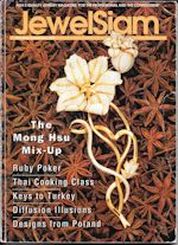
The genesis of emeralds and their host rocks from Swat, northwestern Pakistan: A stable isotope investigation
Journal Article
Arif, M., Fallick, A.E. and Moon, C.J. (1996) The genesis of emeralds and their host rocks from Swat, northwestern Pakistan: A stable isotope investigation. Mineralium Deposita, Vol. 31, No. 4, pp. 255–268.
Record No. 17125  |  Sinkankas/Born No.: NIS/NIB  |  RWHL
Emerald deposits in Swat, northwestern Pakistan, occurring in talc-magnesite and quartz-magnesite assemblages, have been investigated through stable isotope studies. Isotopic analyses were performed on a total of seven emeralds, associated quartz (seven samples), fuchsite (three samples) and tourmaline (two samples) from the Mingora emerald mines. The oxygen isotopic composition (δ 18O SMOW) of emeralds shows a strong enrichment in18O and is remarkably uniform at + 15.6 ± 0.4‰ (1σ,n = 7). Each of the two components of water in emerald (channel and inclusion) has a different range of hydrogen isotopic composition: the channel waters being distinctly isotopically heavier (δD = −51 to −32‰ SMOW) than the other inclusion waters (δD = −96 to −70‰ SMOW). Similarly the oxygen isotopic compositions of tourmaline and fuchsite are relatively constant (δ 18O = + 13 to + 14‰ SMOW) and show enrichment in18O. Theδ 18O values of quartz, ranging from + 15.1 to + 19.1‰ SMOW, are also high (+ 16.9 ± 1.4‰ 1σ, n = 7). The meanδD of channel waters measured from emerald (−42 ± 6.6‰ SMOW) and that of fluid calculated from hydrous mineralsδDcalculated (−47 ± 7.1‰ SMOW) are consistent with both metamorphic and magmatic origin. However, the close similarity between the measuredδD values of the hydroxyl hydrogen in fuchsite (−74 to −6‰ SMOW) and tourmaline (−84 and −69‰ SMOW) with pegmatitic muscovite and tourmaline suggests that the mineralization was probably caused by modified (18O-enriched) hydrothermal solutions derived from an S-type granitic magma. The variation in the carbon and oxygen isotopic composition of magnesite, locally associated with emerald mineralization, is also very restricted (δ 13 ∼ −3.2 ± 0.7%, PDB;δ 18O ∼ + 17.9 ± 1.27‰ SMOW). On the basis of the isotopic composition of fluid (δ 13C ≈ −1.8 ± 0.7‰ PDB;δ 18O ≈ + 13.6 ± 1.2‰ SMOW calculated for the 250-550°C temperature), it is proposed that the Swat magnesites formed due to the carbonation of previously serpentinized ultramafic rocks by a CO2-bearing fluid of metamorphic origin.

New inclusions in Pakistani peridot: Vonsenite-luwigite needles
Journal Article
Peretti, A. and Gübelin, E.J. (1996) New inclusions in Pakistani peridot: Vonsenite-luwigite needles. JewelSiam, January/February, pp. 68–69.
Record No. 5483  |  Sinkankas/Born No.: NIS/NIB  |  RWHL

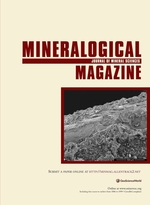
Alkali basalts and associated volcaniclastic rocks as a source of sapphire in eastern Australia
Journal Article
Oakes, G.M., Barron, L.M. and Lishmund, S.R. (1996) Alkali basalts and associated volcaniclastic rocks as a source of sapphire in eastern Australia. Australian Journal of Earth Sciences, Vol. 43, pp. 289–298.
Record No. 4930  |  Sinkankas/Born No.: NIS/NIB  |  RWHL
Corundum occurs widely in eastern Australia, especially in New England which hosts the world's largest producing sapphire mine at Kings Plains. The alluvial deposits of New England show strong local tribal variations in the nature of the sapphire, suggesting that they are derived by reworking of a source rock that is locally rich in corundum. Studies of corundum textures and mineral inclusions suggest a variety of origins, but the commercial sapphire deposits occur in regions where Tertiary alkali basalts are prominent and governed by episodic revival of volcanism over a prolonged period of time. Corundum is brought to the surface in basaltic eruptions as xenocrysts, but it is found only rarely in basalt lava. Throughout the New South Wales Tertiary volcanic province there are basalt capped remnants of thin units of clay-altered basaltic volcaniclastic rocks. These rocks display many features found in basaltic diatremes and are interpreted as thin distal aprons produced by base surge flows during an early violent stage of eruption. They carry elevated grades of sapphire, erode quickly and would have been laterally extensive. They are considered to be the major source of alluvial sapphire in New England and in similar provinces elsewhere. Their whole-rock geochemistry, using residual element ratios, indicates a regional link between the more fractionated volcaniclastic compositions and significant sapphire deposits.

An unusual ruby-sapphire-sapphirine-spinel assemblage from the Tertiary Barrington volcanic province, New South Wales, Australia
Journal Article
Sutherland, F.L. and Coenraads, R.R. (1996) An unusual ruby-sapphire-sapphirine-spinel assemblage from the Tertiary Barrington volcanic province, New South Wales, Australia. Mineralogical Magazine, Vol. 60, pp. 623–638.
Record No. 4904  |  Sinkankas/Born No.: NIS/NIB  |  RWHL
Ruby–sapphire–sapphirine–spinel forms small, corroded, crystalline aggregates in corundum-bearing alluvials shed from the Tertiary Barrington basalt shield volcano. Sapphirine is near a 7:9:3 (MgO–Al₂O₃–SiO₂) composition and, together with the corundum, shows reaction rims of pleonaste spinel. Spinel in the aggregates has a compositional range Sp 68–73 Hc 27–29 Cm 0–3. The aggregates give new insights into the ruby–sapphire source rocks. Potential origins include metamorphic recrystallization of aluminous material (below 1460 °C) or high temperature–high pressure crystallization reactions related to lamprophyric or basaltic magmas (up to 1300 °C and 20 kbar). Sapphirine–spinel thermometry suggests final crystallization temperatures for the aggregates around 780 to 940 °C and reaction with host magmas at over 1000 °C. The Barrington gemfield includes two distinct corundum suites. One, typical in eastern Australia, is dominated by blue–green, well-crystallized, growth-zoned sapphire, commonly containing rutile silk and Fe-rich spinel inclusions (Hc 51–73, Mt 18–35, Mf 6–8, Usp 2–6). The other, an unusual suite, is dominated by ruby and pastel-coloured sapphires, with little crystal shape or growth zonation and restricted mineral inclusions, mostly chromian pleonaste and pleonaste. The ruby–sapphire–sapphirine–spinel aggregates provoke new thoughts on the origin of rubies and sapphires and their indicator minerals in eastern Australian and southeastern Asian volcanic gemfields.

Zircon inclusions in corundum megacrysts: I. Trace element geochemistry and clues to the origin of corundum megacrysts in alkali basalts
Journal Article
Guo, J., O’Reilly, S.Y. and Griffin, W.L. (1996) Zircon inclusions in corundum megacrysts: I. Trace element geochemistry and clues to the origin of corundum megacrysts in alkali basalts. Geochemica et Cosmochimica Acta, Vol. 60, No. 13, pp. 2347–2363.
Record No. 4819  |  Sinkankas/Born No.: NIS/NIB  |  RWHL
Zircons enclosed in corundum megacrysts from basalts exhibit a short prismatic habit dominated by the {110} prism over {100}, consistent with crystallization from alkaline–peralkaline environments. Occasional zircon decomposition textures hint at the presence of a primary SiO₂ phase in the source paragenesis. These zircons are geochemically distinctive, with elevated contents of Y (up to 1.2%), U (UO₂ to 1.7 wt%), Th (ThO₂ exceeding 2 wt%), Hf (up to 3.4 wt%), and total REEs (up to 5000 ppm), and they show extreme REE fractionation, particularly enriched in HREEs (30–100× chondritic Sm and 5000–20000× chondritic Lu). Evaluated zircon/silicate melt partition coefficients indicate that the parental melts of these zircon inclusions had concave-down REE patterns peaking near 100× chondritic Sm, reflective of highly evolved melts formed after extensive low-Ca feldspar fractionation. These findings support that corundum megacrysts crystallized from highly evolved, alkaline melts under very reducing conditions, and were not high-pressure phenocrysts crystallized directly from mafic host magmas.

Nuclear microscopy of rubies: Trace-elements and inclusions
Journal Article
Osipowicz, T., Tay, T.S., Orlic, I., Tang, S.M. and Watt, F. (1995) Nuclear microscopy of rubies: Trace-elements and inclusions. Nuclear Instruments and Methods in Physics Research B, Vol. B104, pp. 590–594.
Record No. 27061  |  DOI: https://doi.org/10.1016/0168-583X(95)00433-5  |  Sinkankas/Born No.: NIS/NIB  |  RWHL
The concentrations of trace elements (e.g. Ti, V, Cr, Fe, and Cu) in ornamental rubies have been linked to the country of origin for natural stones [1,2]. These broad-beam PIXE results show relatively large variations between stones from one country, which might indicate that they stem from different geological environments in a country, or that there are inclusions or surface contaminations present in individual stones. PIXE elemental maps were used to find contamination- and inclusion-free regions on rubies from Mong Hsu, Burma, and from Thailand. Trace element concentrations were determined in these surface areas. The results indicate that the Fe concentrations in Mong Hsu rubies have previously been overestimated due to the presence of surface contaminations. Cu is consistently present at a few hundred ppm level in these stones and not observed in any of the four Thai rubies, while it was observed sporadically in broad-beam measurements. The depth profiling capabilities of the proton microprobe were employed for the analysis of liquid and mineral inclusions in rubies, and some preliminary results are reported.

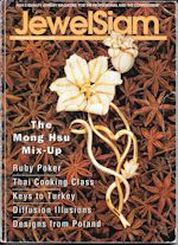
A Roman signet-ring set with an emerald from Brackley, Northamptonshire
Journal Article
Babb, L. and Henig, M. (1995) A Roman signet-ring set with an emerald from Brackley, Northamptonshire. Journal of the British Archaeological Association, Vol. 148, No. 1, pp. 171–172.
Record No. 26471  |  DOI: https://doi.org/10.1179/jba.1995.148.1.171  |  Sinkankas/Born No.: NIS/NIB  |  RWHL
A Roman gold signet-ring (Pl. XXb) was discovered in 1974 in a garden at Brackley, Northamptonshire, and was later submitted by the finder for examination at the Buckinghamshire County Museum, Aylesbury. The find-spot, located in Watery Lane, lies just north of a building that has yielded pot-sherds, tile, brick, slate, tesserae, and flint—suggesting a possible villa, though Roman activity appears widespread in the area, indicating the building may have been part of a larger settlement. The ring is made of high-purity ancient gold and features a hoop with a rounded section that expands from 3 mm at its narrowest point to 6.5 mm at the bezel; its external width is 18 mm (internal width 12 mm) and its height, including the stone, is 16 mm (internal height 11 mm). Set into the bezel is a green translucent stone with dark inclusions, initially believed to be a chrome-rich chalcedony (plasma), as is common in Britain, but identified through X-ray fluorescence analysis by the British Museum Research Laboratory as an emerald. Known in antiquity as smaragdus, emeralds were highly prized though rarely engraved due to their hardness—making this the first known emerald intaglio from Roman Britain. The gem, which has a convex profile and measures 8 mm by 5 mm, is engraved with the image of the corn-goddess Ceres (Greek, Demeter), sometimes conflated with the Roman Fides Publica on coins. She is depicted standing frontally, dressed in a belted chiton, holding two heads of corn in her left hand and a dish of fruit in her right—an image that would appear in reverse in impression (Pl. XXc).

Lab Report: Cat’s eye blue sapphire; synthetic ruby crystal; irradiated orange star sapphire
Journal Article
Du Toit, G., Charoensrithanakul, S., Dunaigre, C., Gawenuntavong, S., Phattayakul, J. and Virunhapol, V. (1995) Lab Report: Cat’s eye blue sapphire; synthetic ruby crystal; irradiated orange star sapphire. JewelSiam, Vol. 6, No. 5, Oct–Nov, pp. 62–63.
Record No. 4760  |  ISBN/ISSN: 8581843  |  Sinkankas/Born No.: NIS/NIB  |  RWHL

Lab Report: Synthetic flux rubies; color change sapphires; irradiated yellow star sapphire; synthetic hydrothermal ruby
Journal Article
Du Toit, G., Charoensrithanakul, S., Dunaigre, C., Gawenuntavong, S., Phattayakul, J. and Virunhapol, V. (1995) Lab Report: Synthetic flux rubies; color change sapphires; irradiated yellow star sapphire; synthetic hydrothermal ruby. JewelSiam, Vol. 6, No. 4, Aug–Sept, pp. 106–110.
Record No. 4758  |  ISBN/ISSN: 8581843  |  Sinkankas/Born No.: NIS/NIB  |  RWHL

Lab News: Spinel, natural with a dendritic inclusion
Journal Article
Johnson, M.L. (1995) Lab News: Spinel, natural with a dendritic inclusion. Gems & Gemology, Vol. 31, No. 1, Spring, p. 58.
Record No. 4137  |  ISBN/ISSN: 0016626X  |  Sinkankas/Born No.: NIS/NIB  |  RWHL

GIA Gem Trade Lab Notes: Spinel, with högbomite(?) inclusions
Journal Article
Johnson, M.L. (1995) GIA Gem Trade Lab Notes: Spinel, with högbomite(?) inclusions. Gems & Gemology, Vol. 31, No. 4, Winter, p. 272.
Record No. 4134  |  ISBN/ISSN: 0016626X  |  Sinkankas/Born No.: NIS/NIB  |  RWHL

Mineralogy, Geochemistry, and Geochronology of the Yogo Dike Sapphire Deposit, Montana
Thesis
Gauthier, G. (1995) Mineralogy, Geochemistry, and Geochronology of the Yogo Dike Sapphire Deposit, Montana. University of British Columbia, 303 pp.
Record No. 2771  |  Sinkankas/Born No.: NIS/NIB  |  RWHL
The Yogo dike in Montana, part of the ultramafic lamprophyre group, hosts gem-quality blue sapphires and has a complex mineralogy, including phlogopite, clinopyroxene, calcite, analcime, magnetite, and apatite. The sapphires are believed to be xenocrysts—foreign crystals incorporated during magma ascent—due to their resorbed appearance, disequilibrium rims of pleonaste spinel, and supporting mineral inclusions and xenoliths. The dike’s geochemistry aligns most closely with ouachitite but shares traits with damkjernite and aillikite. Sapphires owe their blue color to Fe²⁺–Ti⁴⁺ charge transfer and purple hues to minor Cr. A K-Ar date indicates emplacement around 48 Ma. High-temperature reactions between the magma and Al-rich contaminants likely produced pleonaste. Sapphire grades range from 1–20 ppm, with sizes from 0.33 to 8 carats.

GIA Gem Trade Lab Notes: Large synthetic ruby
Journal Article
Reintiz, I. (1995) GIA Gem Trade Lab Notes: Large synthetic ruby. Gems & Gemology, Vol. 31, No. 3, Fall, p. 203.
Record No. 1474  |  ISBN/ISSN: 0016626X  |  Sinkankas/Born No.: NIS/NIB  |  RWHL
This past summer, a manufacturer of synthetic corundum shared the Czochralski-pulled synthetic ruby shown in figure 20 with staff mem-bers of the East Coast lab. The modi-fied triangular mixed cut weighed 115.56 ct and was completely trans-parent, with a strong red color that had no purple or brown components. Although natural ruby may be found in large sizes, it usually contains so many inclusions that the diaphaneity is translucent rather than transparent, One area of the pavilion of this large synthetic showed fine curved striae, but otherwise it was free of inclusions or variations in color. Because of the large size and trans-parency, a slight doubling of the pavilion facet junctions-a rare sight in corundum, which has low birefrin-gence-was visible through the table. The manufacturer of this synthetic ruby reports that he is using a new process in which growth is controlled on a scale of several inches, with the goal of producing material that is entirely free of inclusions or disrup-tions of the crystal structure (such as twinning or graining) up to sizes as large as 500+ ct.

Inclusion of the Month: In the Star of Bombay

Journal Article
Feather, R.C. (1995) Inclusion of the Month: In the Star of Bombay. Lapidary Journal, Vol. 48, No. 12, March, p. 14.
Record No. 739  |  Sinkankas/Born No.: NIS/NIB  |  RWHL

Exploring the Literature of Gemstone Inclusions

The literature of gemstone inclusions covers identification, origin determination, treatments, synthesis, mineral inclusions, fluid inclusions and other internal features of natural and synthetic gems.

For a curated selection of important sources, read Inclusions in Gemstones — Hyperion Literature Sources.

About Four Treasures

Four Treasures is Lotus Gemology's freely accessible gemological reference database. Use the full database to search by author, title or keyword and explore literature on gemology, mineralogy, jewelry and related fields. Where available, hyperlinks on titles may lead directly to the full publication.

Search the Complete Four Treasures Database