Jade Bibliography

Jade Bibliography

Explore books, articles and historical sources on jade in Four Treasures, the Lotus Gemology reference database. This bibliography brings together matching records from the collection, with publication details, abstracts and cover images where available.

Jade References

The list below matches the terms jade, jadeite, nephrite or Fei Cui in the database's searchable fields. Some references discuss these materials as part of a broader subject.
3,001–3,020 of 3,819 matching references

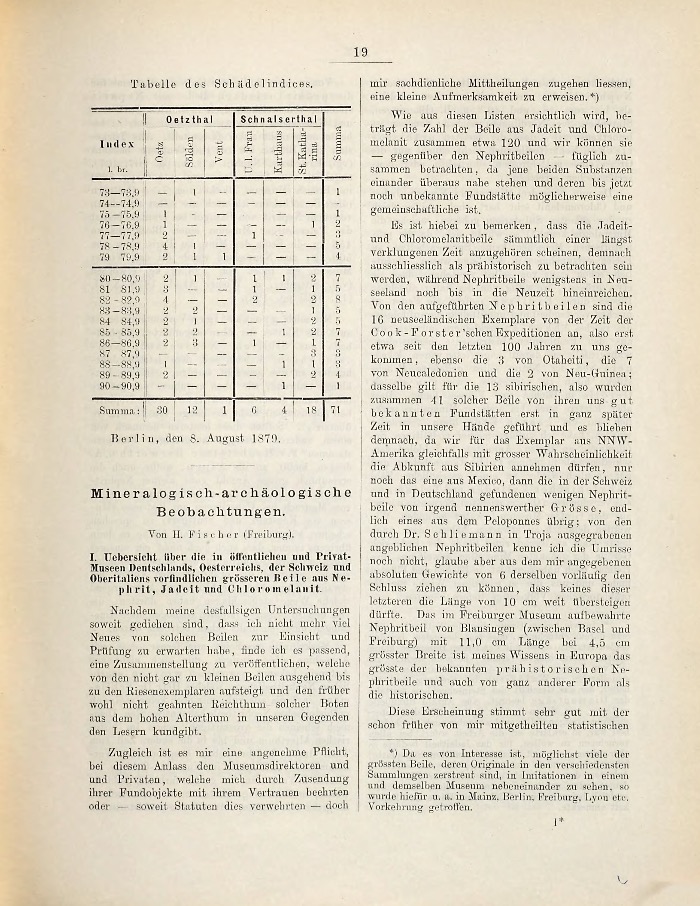
Über die in öffentlichen und Privat-Museen Deutschlands, Österreichs, der Schweiz und Oberitaliens vorfindlichen grösseren Beile aus Nephrit, Jadeit und Chloromelanit
On the distribution of stone idols and axes among various peoples of the Earth
Journal Article
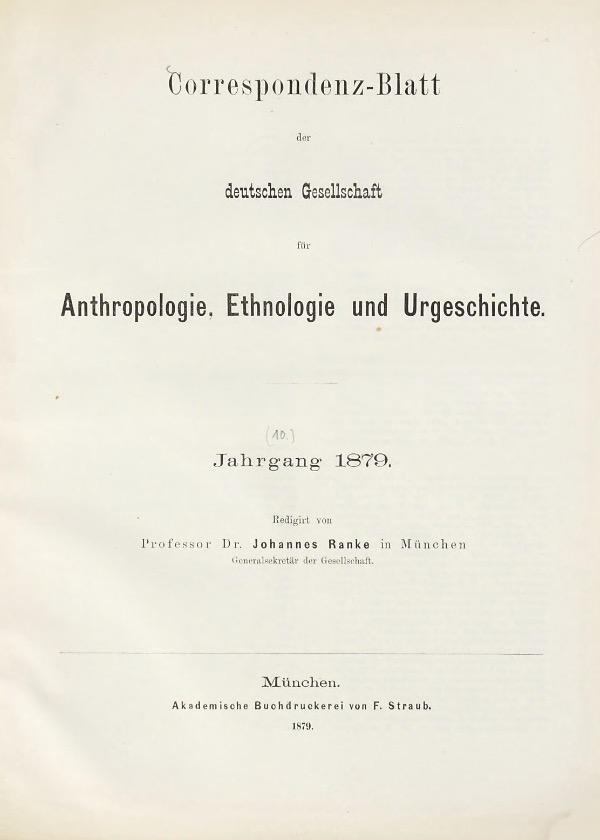
Fischer, H. (1880) Über die in öffentlichen und Privat-Museen Deutschlands, Österreichs, der Schweiz und Oberitaliens vorfindlichen grösseren Beile aus Nephrit, Jadeit und Chloromelanit. [On the distribution of stone idols and axes among various peoples of the Earth] Correspondenz-Blatt der deutschen Gesellschaft für Anthropologie, Ethnologie und Urgeschichte, Vol. 11, No. 3, March, pp. 19–28.
Record No. 16670  |  Sinkankas/Born No.: NIS/NIB  |  Language: in German  |  RWHL
After my investigations on this subject have progressed to the point that I can no longer expect much that is new from such axes for inspection and examination, I find it appropriate to publish a compilation which, starting from the not-too-small axes, proceeds up to the giant specimens and acquaints readers with the previously scarcely suspected abundance of such messengers from antiquity in our regions.

Über Nephrit und Bowenit aus Neu Seeland
On Nephrite and Bowenite from New Zealand
Journal Article
Berwerth, F.M. (1880) Über Nephrit und Bowenit aus Neu Seeland. [On Nephrite and Bowenite from New Zealand] Sitzungsberichte der Kaiserlichen Akademie der Wissenschaften in Wien, Vol. 80, No. 1, Year 1879, pp. 102–118.
Record No. 6871  |  Sinkankas/Born No.: 604; NIB  |  Language: in German  |  RWHL
Sinkankas: Examined samples from a 123-kg mass found ca. 1860 in Greenstone Creek, a tributary of the Teremakau River near Hokitika, west coast, South Island, and sent to the Vienna Mineralogical Museum. Deep green, largely uniform in texture, but broken surfaces show fibrosity; chemical analysis and specific gravity tests identify it as actinolite. Pages 115–116 discuss the bowenite serpentine called tangiwai by the Māori and used like nephrite; its properties and an analysis are supplied. Poggendorff 3, 122.

The Industrial Arts of India

Book
Birdwood, G.C.M. (1880) The Industrial Arts of India. London, Chapman and Hall, 2 Vols. in 1, 168, 176 pp.
Record No. 5224  |  Sinkankas/Born No.: 653; NIB  |  RWHL
THE only notice of gold plate in the Rig-Veda is an allusion to golden cups; but the references to jewelry are so numerous, that it is evident the precious metals must have been known and used in India for drinking vessels, and other domestic utensils from the first settlement of the Aryas in the Panjab. Gold is indeed a favorite simile in the Rig-Veda for the rising sun; and the wheels and yokes of carriages are described as made of gold. The Ramayana and Mahabharata offer abundant evidence that at the period when they were compiled in their present form the Hindus were perfectly familiar with works executed in gold on the grandest scale. Unfortunately no objects in the precious metals that can be claimed as authentic examplesof ancient Indian art have survived the wreck of time in India;unless any may still be hidden within the shrines of some of the more sequestered of the great idol temples. The oldest examples of really ancient gold and silver work found on Indian soil are the gold casket [Plate i] and silver patera [Plate 2] belonging to the India Office library, which have been lent to the Science and Art Department for exhibition in the India Museum at South Kensington. This gold casket is an object of the highest interest in connexion with the history of Indian art. It was found by Mr. Masson about forty years ago in one of the Buddhist topes, built on the sandstone. Sinkankas: Justly praised work: first part describes the Hindu pantheon in detail, followed by plates giving stylized representations of the deities, plus several plates of sectarian marks and sacrificial utensils. Second part provides details on handicrafts, and is “a reprint, with added text, of a portion of Handbook to the Indian Court at the Paris International Exhibition of 1878” (p. vi). Considerable information on jewelry, pp. 183–198, with substantial remarks on curious lore associated with certain gemstones used in classical Indian jewelry. Elsewhere are found brief comments on stone inlay work, especially that of Agra, including work in nacre, ivory, horn, and various stones, including jeweled jades. Goodland, pp. 59–60.

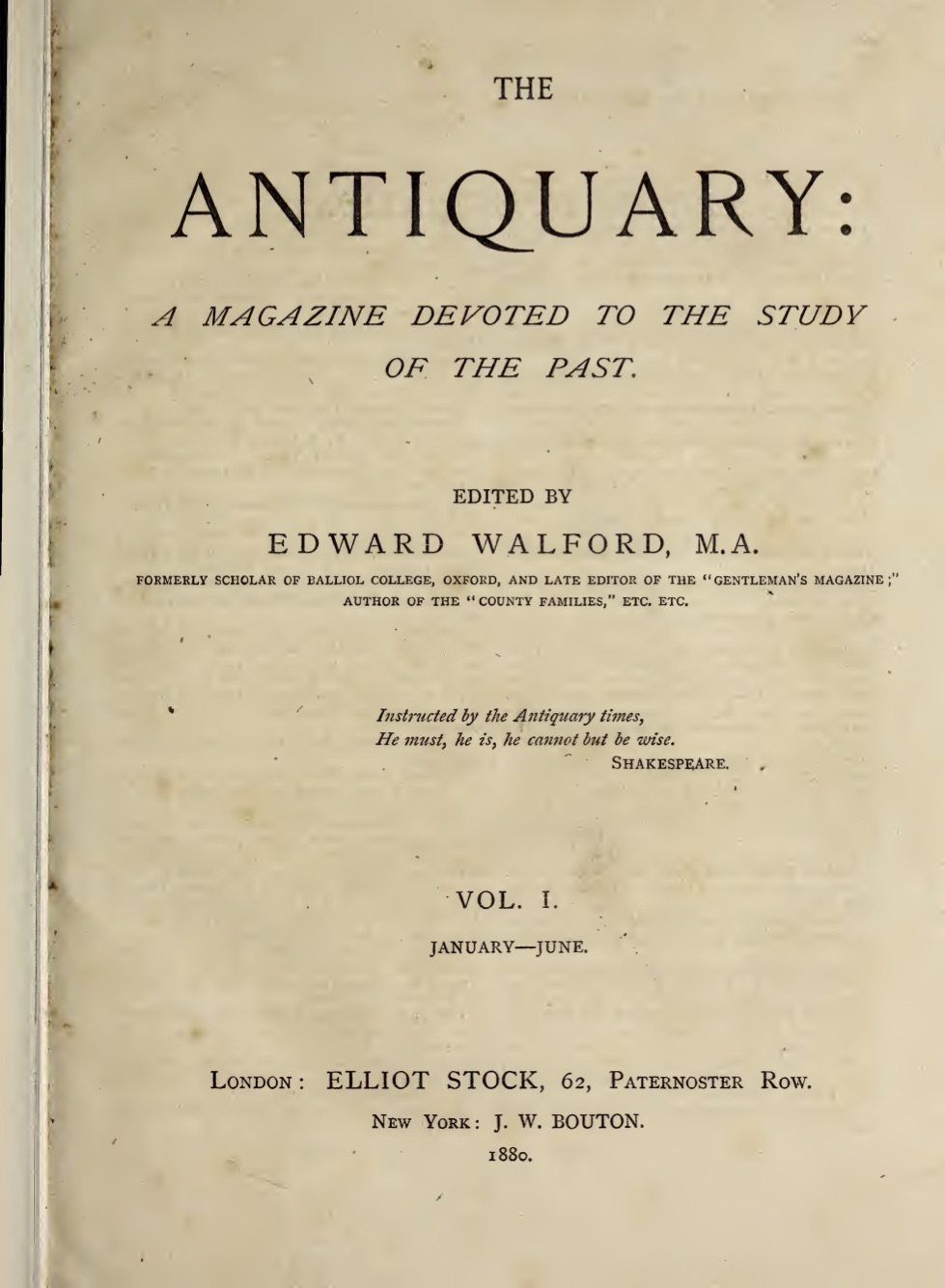
Jade

Journal Article
Dyer, T.F.T. (1880) Jade. Antiquary, Vol. 1, May, pp. 193–194.
Record No. 3460  |  Sinkankas/Born No.: NIS/NIB  |  RWHL
A short popular account by T.F. Thiselton Dyer on the history, distribution and antiquarian significance of jade. Dyer reviews its long use in China, its occurrence in Central Asia and New Zealand, its medicinal reputation reflected in the name piedra de ijada, and its use for ornaments and implements in Asia, the Americas and prehistoric Europe. Particular attention is given to jade objects from the Swiss lake dwellings and to a recently discovered jade scraper or “strigil” dredged from the Rhône. Dyer discusses Max Müller’s suggestion that such European jade objects might have been carried westward from Central Asia by prehistoric Aryan migrants, but treats this explanation cautiously, noting the lack of firm archaeological evidence and the absence of a surviving Aryan name for jade. He considers the simpler possibility that the object reached Europe in much later times through travelers or missionaries. The article is a useful example of late nineteenth-century debate over the provenance of European jade artifacts and the use of linguistic and archaeological evidence to explain prehistoric cultural contacts.

Über die Herkunft der sogenannten Amazonensteine, sowie über das fabelhafte Amazonenvolk selbst
On the origin of the so-called Amazon stones, as well as the fabulous Amazon people themselves
Journal Article
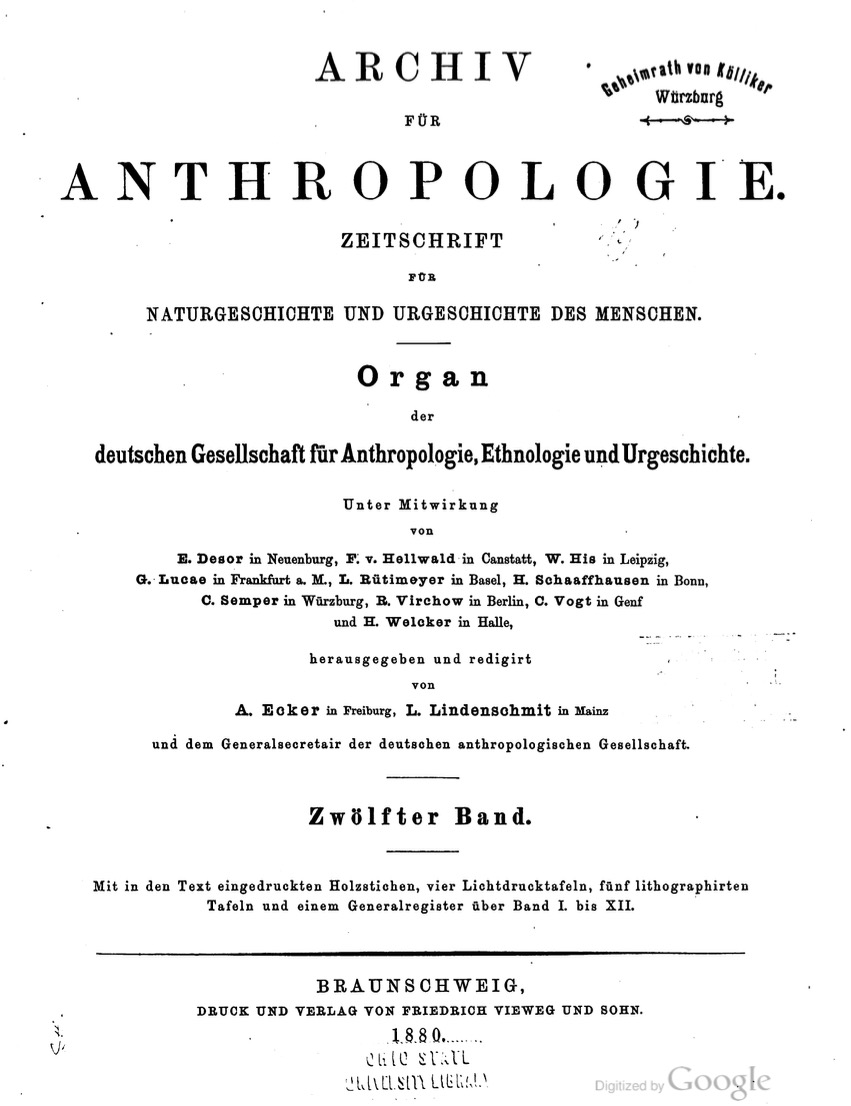
Fischer, H. (1879) Über die Herkunft der sogenannten Amazonensteine, sowie über das fabelhafte Amazonenvolk selbst. [On the origin of the so-called Amazon stones, as well as the fabulous Amazon people themselves] Archiv für Anthropologie, Vol. 12, No. 2, pp. 7–27, 1 plate.
Record No. 16676  |  Sinkankas/Born No.: NIS/NIB  |  Language: in German  |  RWHL
After my earlier publications demonstrated how abundant Mexico is in skillfully carved figures made from hard stones, it has always been my goal to trace the occurrence of such remnants of a lost American culture further south and east, to the Antilles, Central, and South America. From Central America originate, among others, the figures already presented in my work on nephrite (1875): Fig. 34, 35, p. 31; Fig. 42, p. 34; Fig. 115, p. 281; Fig. 121, 122, 123, p. 344; Fig. 124, p. 345 (where ‘Mexico’ is erroneously mentioned). From South America, one finds in the same work Fig. 9, p. 26; Fig. 18, 19, p. 27; Fig. 50, p. 38; Fig. 60, p. 45. At that time, the origins of Fig. 38 (frog or toad?), p. 33, and Fig. 41, p. 34, remained uncertain. For Fig. 38 (from the Geneva Museum, which I reproduce here as Fig. 1), I later became acquainted with further interesting counterparts. However, most of these pieces in the respective museums were also not attributed to a precise origin. These include Fig. 46, Plate VII (from Guadeloupe), as well as Fig. 73 and Fig. 74 on Plate VIII, in the same publication in the Archiv, made of nephrite, serpentine, and clay slate, the latter two now belonging to the Freiburg Museum (in this treatise […]).

Ueber prähistorische Kieselwerkzeuge

On prehistoric stone tools
Journal Article
Fischer, H. (1879) Ueber prähistorische Kieselwerkzeuge. [On prehistoric stone tools] Archiv für Anthropologie, Vol. 12, Part 9, pp. 273–292.
Record No. 16674  |  Sinkankas/Born No.: NIS/NIB  |  Language: in German  |  RWHL
In Volume VIII of this archive (1876), pages 239 to 243, I expressed my well-founded reservations against the strict division into a period of flaked tools and a period of polished tools, as established by most archaeologists until the present day.* Today, referencing those earlier arguments in all their details, I would like to discuss from a geognostic standpoint the locations where the earliest inhabitants of Europe and other parts of the world first had the opportunity to produce stone tools. So far, I have only rarely encountered finely crafted spearheads or similar tools made from crystalline quartz varieties, such as rock crystal, and producing such tools would undoubtedly have required an exceptionally skilled hand. Similarly, tools made from granular quartzite are relatively rare.* By far, the most commonly used materials for tool-making—owing to their abundance in nature and ease of shaping—are the dense (cryptocrystalline) varieties of quartz, particularly jasper, flint, and chert (rarely chalcedony).

Über Verbreitung der Steinbeile aus Nephrit, Jadeit und Chloromelanit, besonders in Europa
On the distribution of stone axes made of nephrite, jadeite, and chloromelanite, especially in Europe
Journal Article
Fischer, H. (1879) Über Verbreitung der Steinbeile aus Nephrit, Jadeit und Chloromelanit, besonders in Europa. [On the distribution of stone axes made of nephrite, jadeite, and chloromelanite, especially in Europe] Correspondenz-Blatt der deutschen Gesellschaft für Anthropologie, Ethnologie und Urgeschichte, Vol. 1879, No. 3, March, pp. 17–23.
Record No. 16672  |  Sinkankas/Born No.: NIS/NIB  |  Language: in German  |  RWHL
A survey by Heinrich Fischer of the geographical distribution of prehistoric stone axes made of nephrite, jadeite and chloromelanite, with particular emphasis on specimens preserved in European public and private collections. Building on his earlier mineralogical studies of jade, Fischer compares reported finds and museum holdings in an effort to distinguish the three materials and to trace their distribution across Europe. The paper forms part of the nineteenth-century debate over the provenance of European jade implements and the extent to which their raw materials were locally available or introduced through long-distance exchange. It is important for the history of archaeological mineralogy because Fischer applies mineral identification to questions of prehistoric technology, trade and cultural contact.

Atlantis not a myth

Journal Article
Thompson, E.H. (1879) Atlantis not a myth. Popular Science Monthly, Vol. 15, October, pp. 759–764.
Record No. 4532  |  Sinkankas/Born No.: NIS/NIB  |  RWHL
An early speculative essay by Edward Herbert Thompson arguing that Plato’s Atlantis may have represented a real landmass or civilization in the Atlantic rather than a purely mythical invention. Thompson combines Plato’s account with geological speculation, traditions from Mesoamerica and reports of ancient mining and monumental remains in the Americas, suggesting possible connections between Old World and New World civilizations. He cites Brasseur de Bourbourg and other nineteenth-century writers who proposed trans-Atlantic cultural relationships and treats the destruction of Atlantis by earthquake and inundation as geologically plausible. The paper is important mainly as an example of late nineteenth-century diffusionist thought and as an early expression of ideas that later influenced Thompson’s interest in Maya archaeology; its Atlantis hypothesis is not accepted by modern archaeology or geology.

Sur un cachet chinois de jade vert

On a Chinese seal of green jade
Journal Article
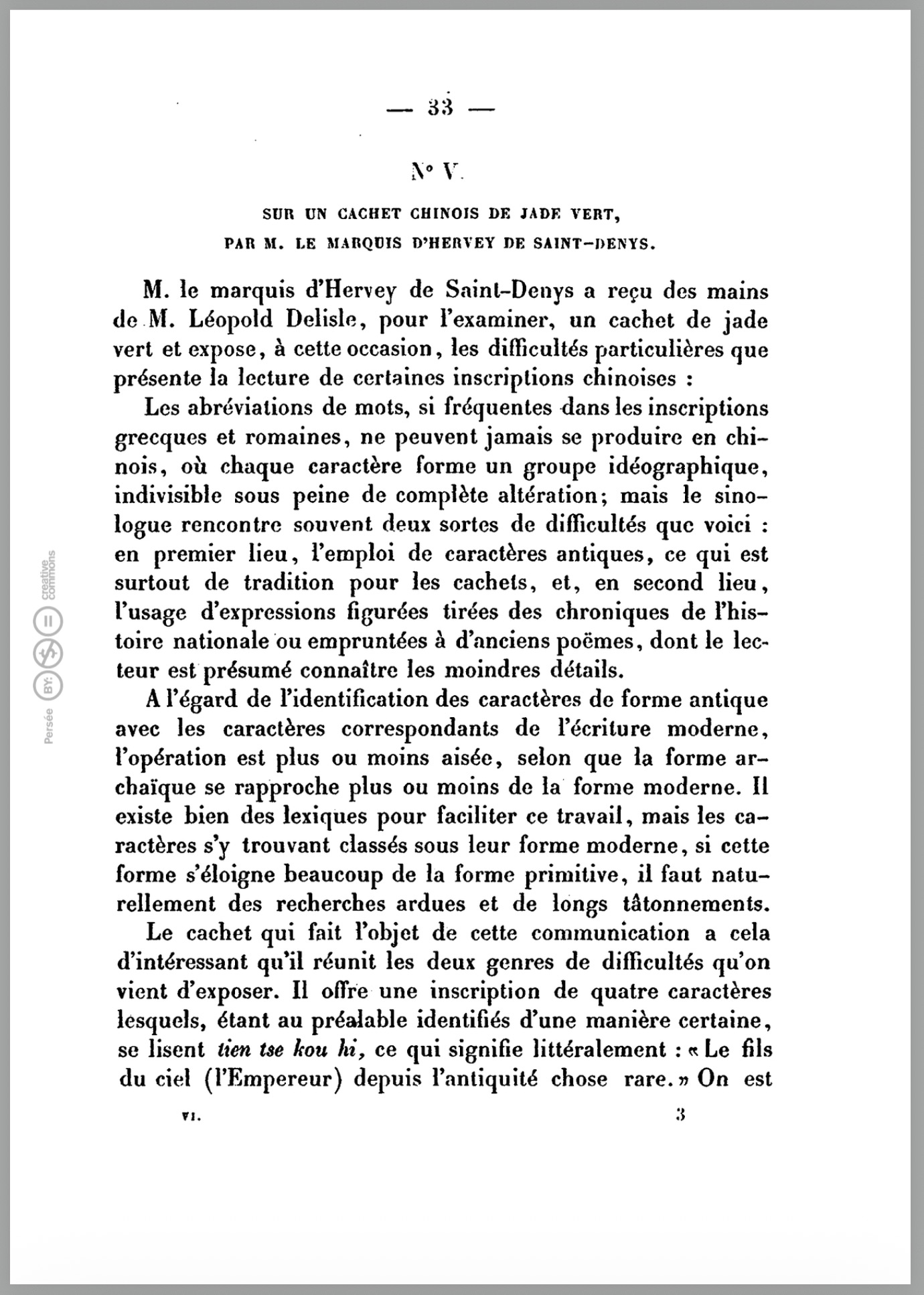
Hervey de Saint-Denys, L.d. (1878) Sur un cachet chinois de jade vert. [On a Chinese seal of green jade] Comptes rendus des séances de l'Académie des Inscriptions et Belles-Lettres, pp. 33–35.
Record No. 29990  |  ISBN/ISSN: 0065-0536  |  Sinkankas/Born No.: NIS/NIB  |  Language: in French  |  RWHL
Hervey de Saint-Denys examines a green jade Chinese seal submitted by Léopold Delisle, using its inscription to illustrate two difficulties in interpreting Chinese seals: archaic character forms and literary allusions whose meaning cannot be recovered through literal translation alone. He reads the four characters as referring to the “Son of Heaven” and something “rare since antiquity.” Consulting the Pei-wen yun-fu, he explains that the latter expression conventionally denotes a person aged seventy or more, deriving from a celebrated verse by the eighth-century poet Du Fu. The inscription thus celebrates an emperor’s longevity. After considering four emperors whom he identifies as possible owners, he favours Qianlong on the grounds of the seal’s comparatively modern workmanship, the emperor’s literary accomplishments and his particular admiration for Du Fu. He further proposes that the seal belonged to the three years following Qianlong’s abdication in 1796, distinguishing the retired emperor’s personal seal from that of his reigning son, Jiaqing. A possible origin in the Summer Palace is suggested but not established. The note is principally an exercise in epigraphic interpretation and historical attribution, rather than a mineralogical examination of the jade.

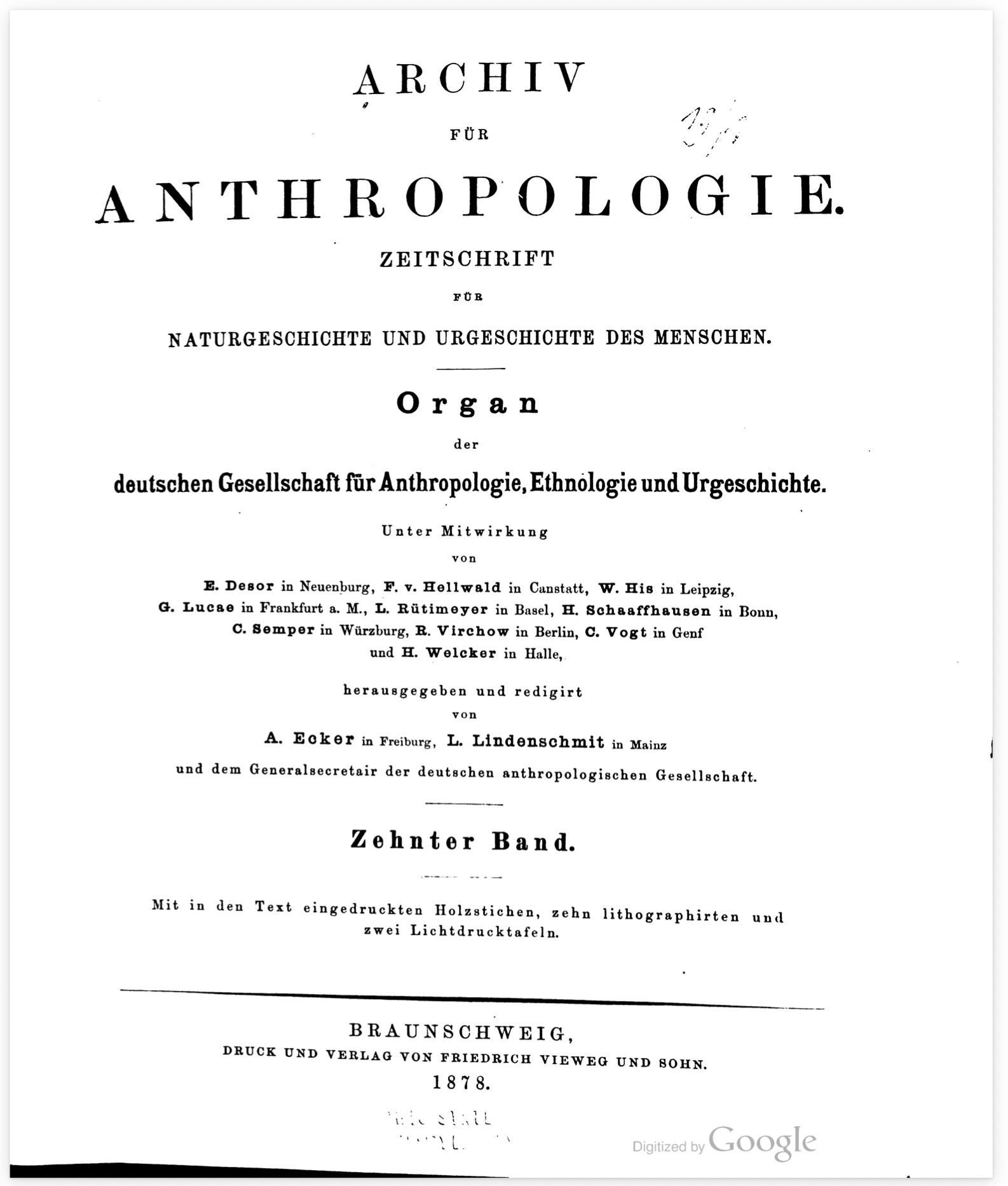
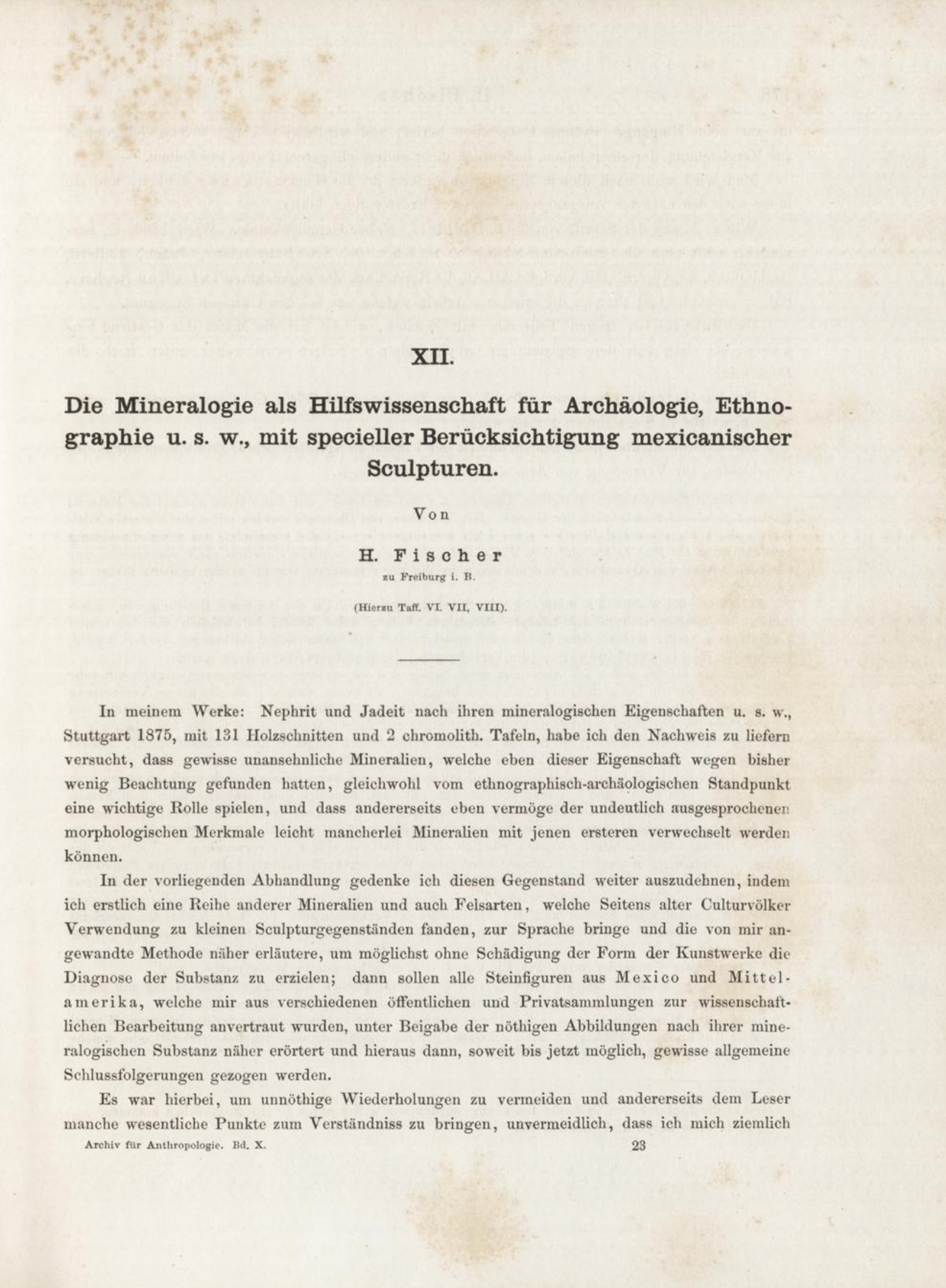
Die Mineralogie als Hilfswissenschaft für Archaologie und Ethnographie u. s. w ., mit specieller Berücksichtigung mexicanischer Sculpturen
Mineralogy as an Auxiliary Science for Archaeology and Ethnography, etc., with Special Reference to Mexican Sculptures
Journal Article
Fischer, H.L. (1878) Die Mineralogie als Hilfswissenschaft für Archaologie und Ethnographie u. s. w ., mit specieller Berücksichtigung mexicanischer Sculpturen. [Mineralogy as an Auxiliary Science for Archaeology and Ethnography, etc., with Special Reference to Mexican Sculptures] Archiv für Archaologie, Vol. 10, Nos. 3–4, pp. 177–214, 345–357.
Record No. 29065  |  Sinkankas/Born No.: NIS/NIB  |  Language: in German  |  RWHL
A substantial study by Heinrich Fischer advocating the use of mineralogy as an auxiliary science to archaeology and ethnography, with special attention to Mexican stone sculptures and artifacts. Fischer argues that accurate mineralogical identification can clarify the provenance, manufacture and cultural relationships of archaeological objects that had often been described only by color or traditional names. Using Mexican examples, he examines a range of worked stones and discusses methods for distinguishing their constituent minerals, including microscopic examination. Of particular gemological interest is his treatment of turquoise and its microscopic structure, together with discussion of jade and other ornamental stones used in ancient Mexico. The paper is an important early contribution to the application of mineralogical and petrographic methods to archaeological materials and to the scientific study of pre-Columbian stone objects.

Notes on “jadeite” and “jade”

Journal Article
Davies, T. (1878) Notes on “jadeite” and “jade”. Geological Magazine, Vol. 5, No. 4, April, p. 192.
Record No. 6713  |  Sinkankas/Born No.: NIS/NIB  |  RWHL
A brief note summarizing the work of Damour in separating jade into different mineral catagories.

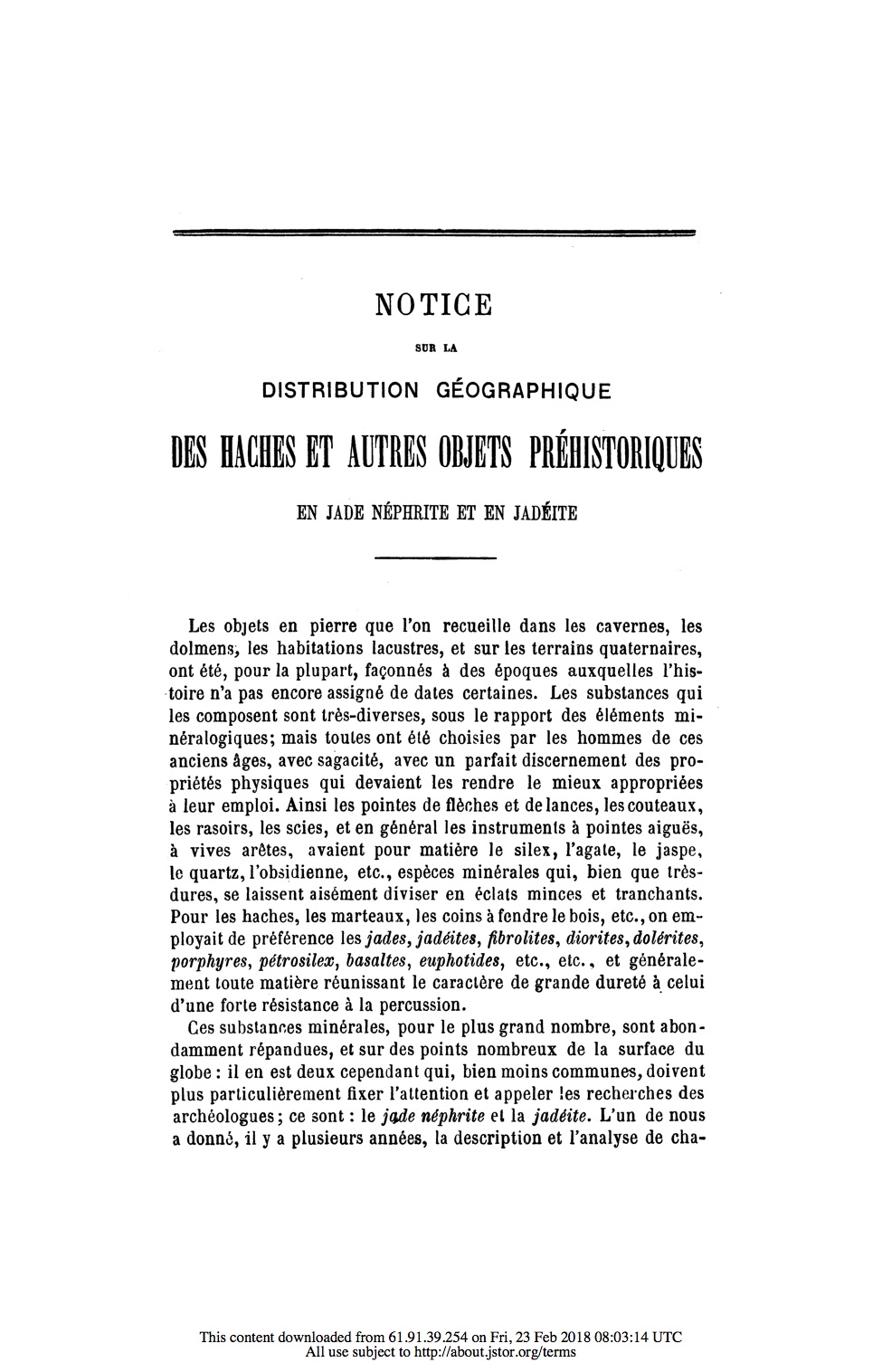
Notice sur la distribution géographique des haches et autres objets préhistoriques en jade néphrite et en jadéite
Notice on the geographic distribution of axes and other prehistoric objects in nephrite jade and jadeite
Journal Article
Damour, A. and Fischer, H. (1878) Notice sur la distribution géographique des haches et autres objets préhistoriques en jade néphrite et en jadéite. [Notice on the geographic distribution of axes and other prehistoric objects in nephrite jade and jadeite] Revue Archéologique, Vol. 36, pp. 12–32.
Record No. 5752  |  ISBN/ISSN: 00350737, 21043868  |  Sinkankas/Born No.: 1568; NIB  |  Language: in French  |  RWHL
In this paper Damour and Fischer follow up on Damour’s 1865 paper, cataloging all the locations around the world that jade axes have been found.

Reception of Hernandez Cortes by the Emperor Montezuma in Mexico
Journal Article
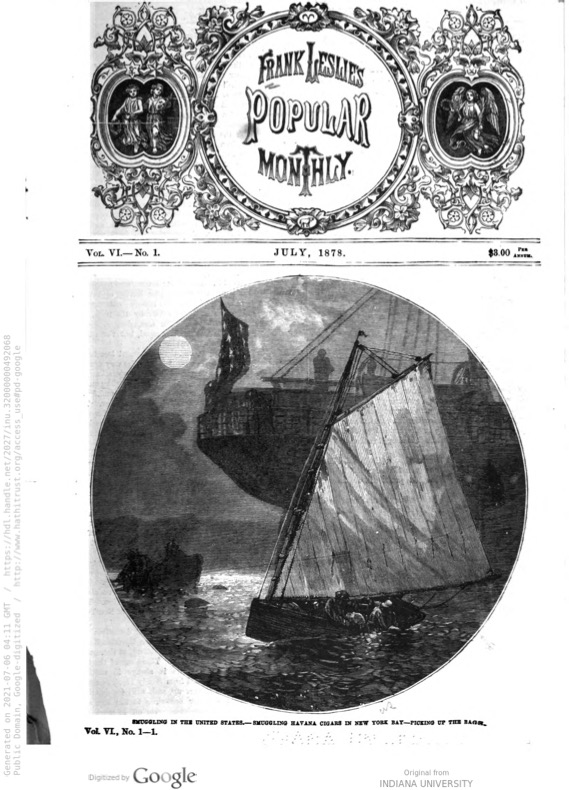
Frank Leslie’s Popular Monthly (1878) Reception of Hernandez Cortes by the Emperor Montezuma in Mexico. Frank Leslie’s Popular Monthly, Vol. 6, No. 1, July, pp. 8, 15.
Record No. 4533  |  Sinkankas/Born No.: NIS/NIB  |  RWHL
Brief article on the meeting between Hernan Cortes and Montezuma, featuring a colored plate.

Ídolo azteca de tipo chino

Aztec Idol of Chinese Type
Journal Article
Mendoza, G. (1877) Ídolo azteca de tipo chino. [Aztec Idol of Chinese Type] Anales del Museo Nacional, Vol. 1, No. , pp. 39–42.
Record No. 16464  |  Sinkankas/Born No.: NIS/NIB  |  Language: in Spanish  |  RWHL
A short archaeological note by Gumesindo Mendoza on a small Aztec figure discovered in a tetel or burial mound at Ixcaquixtla, Puebla. Mendoza was struck by features of the figure that he considered reminiscent of Chinese or Buddhist representations, particularly its posture and facial appearance, and used it to support then-current speculation about possible ancient contacts between Asia and the peoples of the Americas. He also compares certain Mexican funerary practices with those of Asia. The paper is significant less for its conclusions—which reflect speculative nineteenth-century diffusionist ideas—than as an early example of comparative interpretation in Mexican archaeology and the search for trans-Pacific connections in pre-Columbian material culture.

Die Mineralogie als Hilfswissenschaft für Archäeologie, Ethnographie u. s. w., mit specieller Berücksichtigung mexicanischer Sculpturen
Mineralogy as an auxiliary science for archaeology, ethnography, etc., with special consideration of Mexican sculptures
Journal Article
Fischer, H. (1877) Die Mineralogie als Hilfswissenschaft für Archäeologie, Ethnographie u. s. w., mit specieller Berücksichtigung mexicanischer Sculpturen. [Mineralogy as an auxiliary science for archaeology, ethnography, etc., with special consideration of Mexican sculptures] Archiv für Anthropologie, Vol. 10, p. 177–214, 3 plates.
Record No. 16458  |  Sinkankas/Born No.: 2129; NIB  |  Language: in German  |  RWHL
Sinkankas: Urges the study of mineralogy and identification techniques to assist in archaeological research, and highlights their relevance for related studies.

Note quelques restes de l’age de la pierre en Anatolie
Note on some Stone Age remnants in Anatolia
Journal Article
Martin, A. (1877) Note quelques restes de l’age de la pierre en Anatolie. [Note on some Stone Age remnants in Anatolia] Revue Archéologique, Vol. 34, pp. 163–171; with comment by A. Damour on pp. 172–175.
Record No. 8007  |  Sinkankas/Born No.: NIS/NIB  |  Language: in French  |  RWHL
An archaeological study by Arthur Martin of Stone Age objects collected in Anatolia, including polished stone axes, projectile points and other implements. Martin discusses their forms, workmanship, probable uses and findspots, and emphasizes the importance of the stone itself for understanding the provenance and manufacture of the objects. He also records the Turkish belief that prehistoric stone axes were “thunderstones” (yıldırım taşı), credited with protective and medicinal powers, and notes the traditional association of such virtues with nephrite. The paper is accompanied by natural-size drawings of selected artifacts. A following note by Augustin-Alexis Damour (pp. 172–175) examines the mineralogical composition of several of Martin’s Anatolian stone axes. Together the papers are an important early contribution to the archaeological and mineralogical study of prehistoric stone implements from Asia Minor.

Lieutenant Wheeler’s Expedition durch das südliche Californien im Jahre 1875
Lieutenant Wheeler's expedition through southern California in 1875
Journal Article
Loew, O. (1877) Lieutenant Wheeler’s Expedition durch das südliche Californien im Jahre 1875. [Lieutenant Wheeler's expedition through southern California in 1875] Mittheilungen aus Justus Perthes' geographischer Anstalt über wichtige neue Erforschungen auf dem Gesammtgebiete der Geographie von Dr. A. Petermann, Vol. 23, pp. 134–140.
Record No. 8002  |  Sinkankas/Born No.: NIS/NIB  |  Language: in German  |  RWHL
An account by Oscar Loew of Lieutenant George M. Wheeler’s 1875 expedition through southern California, undertaken as part of the United States geographical surveys west of the 100th meridian. Loew describes the route and physical geography of the region, with observations on the deserts, mountain ranges, geology, mineral resources, springs, climate and vegetation encountered during the survey. Particular attention is given to the arid landscapes of southeastern California and the Mojave region, reflecting Loew’s work as mineralogist and chemist with the expedition. The paper provides a useful contemporary synthesis of the geographical and natural-history results of one of the major nineteenth-century surveys of the American West.

Ägypten, handbuch für reisende

Egypt. Manual for Travelers
Book
Baedeker, K., von (1877) Ägypten, handbuch für reisende. [Egypt. Manual for Travelers] Leipzig, Karl Baedeker, Vol. 1: Unter-Aegypten bis zum Fayûm und die Sinai-Halbinsel , 562 pp.
Record No. 7967  |  Sinkankas/Born No.: NIS/NIB  |  Language: in German  |  RWHL
A practical and scholarly travel handbook to Egypt published by Karl Baedeker, combining route information with historical, archaeological, geographical and natural-historical descriptions. Volume 1, Unter-Aegypten bis zum Fayûm und die Sinai-Halbinsel, covers Lower Egypt, Cairo, the Nile Delta, the Fayum, Suez and the Sinai Peninsula, with detailed accounts of monuments, ancient sites, roads, accommodations and local conditions. Of particular gemological interest is the section on Sinai, which discusses the region’s ancient Egyptian mining districts and turquoise localities. The work is useful as a late nineteenth-century synthesis of contemporary European knowledge of Egypt and Sinai and as a record of the archaeological and mineral-producing sites accessible to travelers at the time.

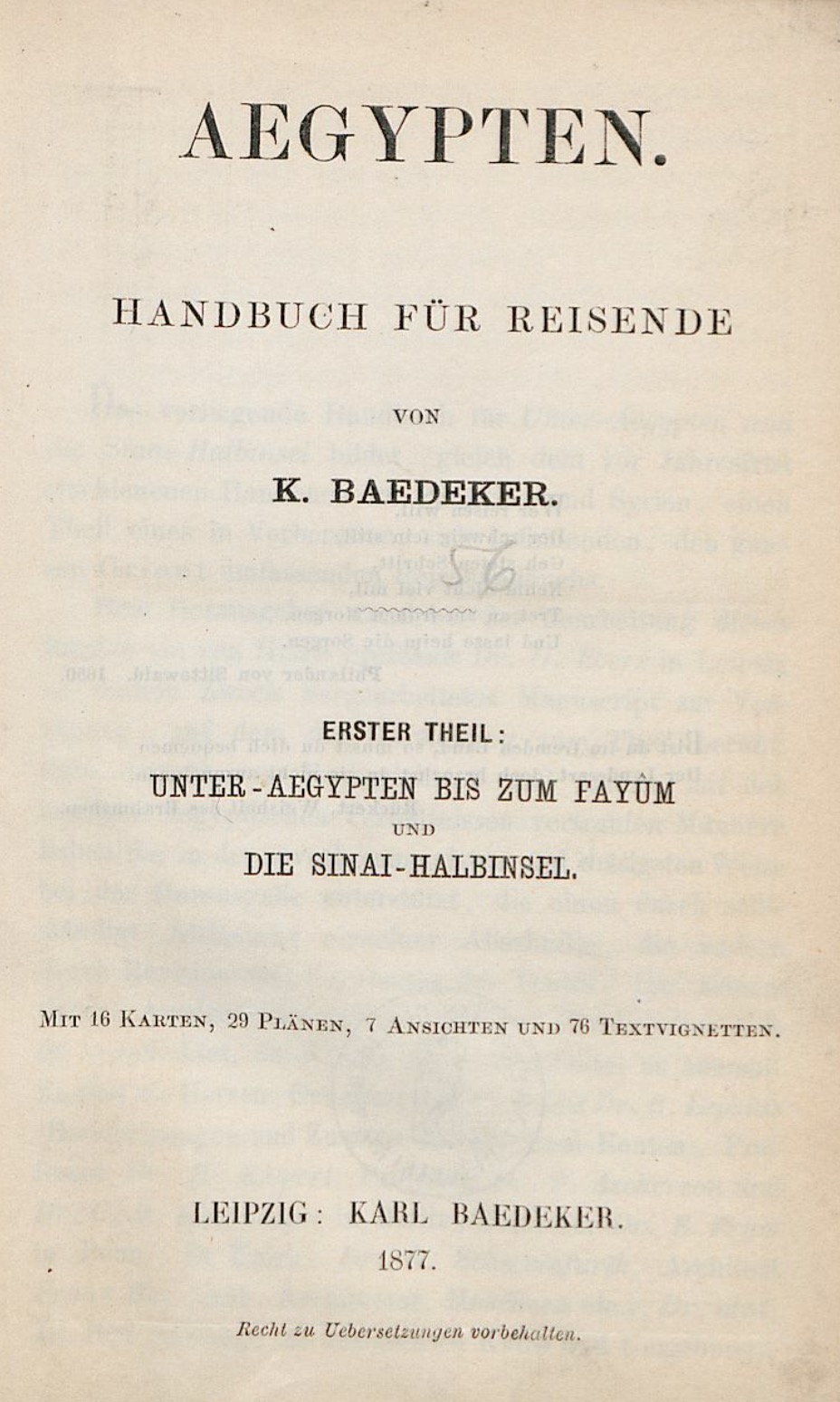
Unter-Aegypten bis zum Fayûm und die Sinai-Halbinsel

Lower Egypt to the Fayum and the Sinai Peninsula
Book
Baedeker, K., von (1877) Unter-Aegypten bis zum Fayûm und die Sinai-Halbinsel. [Lower Egypt to the Fayum and the Sinai Peninsula] Leipzig, Karl Baedeker, 562 pp.
Record No. 7943  |  Sinkankas/Born No.: NIS/NIB  |  Language: in German  |  RWHL
A detailed Baedeker guide to Lower Egypt, the Fayum and the Sinai Peninsula, combining practical travel information with historical, geographical, archaeological and natural-historical description. The volume covers Alexandria, Cairo, Suez, the Nile Delta, the Fayum and, in a substantial final section, the Sinai Peninsula, with routes, monuments, maps and discussions of Egyptian history, religion, art and geography. Of particular gemological interest is the treatment of Sinai, a region historically associated with ancient Egyptian mining and with turquoise deposits and workings. The book is useful as a late nineteenth-century synthesis of contemporary European knowledge of Egypt and Sinai and as a guide to the archaeological and mineral-producing localities then accessible to travelers. The 1877 volume runs to 562 pages, with the Sinai section occupying pp. 492–548.

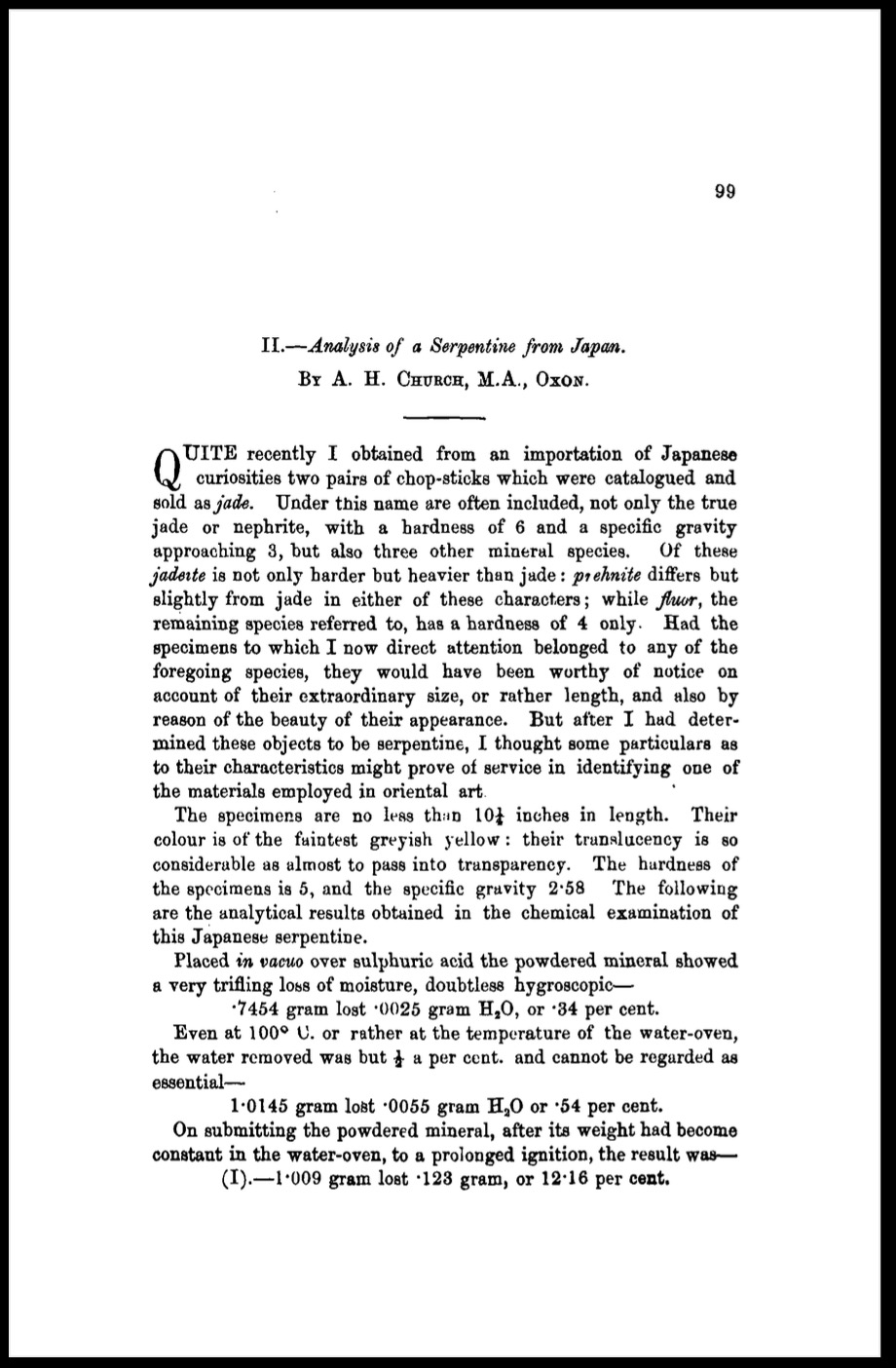
Analysis of a serpentine from Japan

Journal Article
Church, A.H. (1877) Analysis of a serpentine from Japan. Mineralogical Magazine, Vol. 1, No. 4, pp. 99–100.
Record No. 7859  |  Sinkankas/Born No.: NIS/NIB  |  RWHL
A brief analytical study by Arthur Herbert Church of a carved Japanese stone that had been worked and sold as jade. Church chemically analyzed the material and showed that it was not true jade, but serpentine. The note is significant to the history of gemology because it documents an early scientific identification of a jade imitation or substitute from Japan and demonstrates the usefulness of chemical analysis in distinguishing serpentine from genuine jade materials.

Exploring the Literature of Jade

Jade literature spans gemology, mineralogy, archaeology, art history, mining, carving and connoisseurship, and includes works on both jadeite and nephrite from around the world.

For an introduction to collecting books on this subject, read Hidden Treasure — Collecting the Literature of Jade.

About Four Treasures

Four Treasures is Lotus Gemology's freely accessible gemological reference database. Use the full database to search by author, title or keyword and explore literature on gemology, mineralogy, jewelry and related fields. Where available, hyperlinks on titles may lead directly to the full publication.

Search the Complete Four Treasures Database