Jade Bibliography

Jade Bibliography

Explore books, articles and historical sources on jade in Four Treasures, the Lotus Gemology reference database. This bibliography brings together matching records from the collection, with publication details, abstracts and cover images where available.

Jade References

The list below matches the terms jade, jadeite, nephrite or Fei Cui in the database's searchable fields. Some references discuss these materials as part of a broader subject.
3,081–3,100 of 3,817 matching references

Observations on Prehistoric Archaeology in Switzerland and Greece
Παρατηρήσεις ἐπἰ τῆς ἐν Ἑλβετίᾳ και Ἑλλάδι Προϊστορικῆς Ἀρχαιολογίας
Book
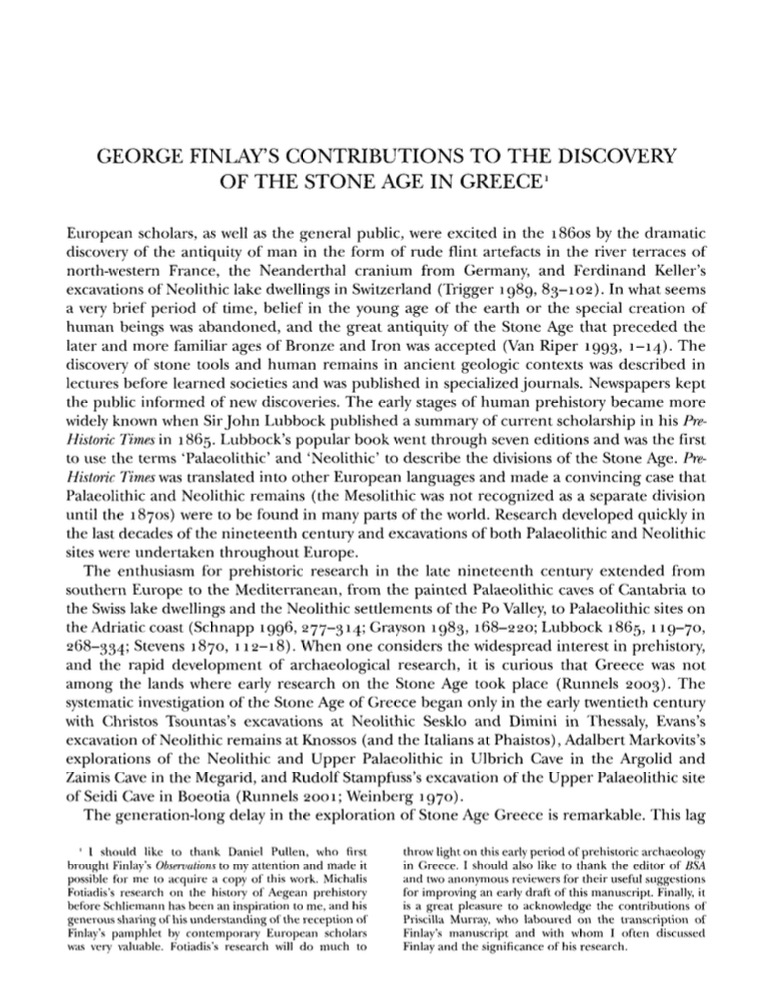
Finlay, G. (1869) Observations on Prehistoric Archaeology in Switzerland and Greece. [Παρατηρήσεις ἐπἰ τῆς ἐν Ἑλβετίᾳ και Ἑλλάδι Προϊστορικῆς Ἀρχαιολογίας] Athens, 22 pp.
Record No. 7516  |  Sinkankas/Born No.: NIS/NIB  |  Language: in Greek  |  RWHL
In 1869, the historian George Finlay published a small pamphlet in Greek, entitled Παρατηρήσεις ἐπἰ τῆς ἐν Ἑλβετίᾳ και Ἑλλάδι Προϊστορικῆς Ἀρχαιολογίας (Observations on Prehistoric Archaeology in Switzerland and Greece), describing the discovery of Neolithic artefacts from Greece. This pamphlet is largely forgotten today, and the discovery of the Greek Stone Age is usually accorded to twentieth-century prehistorians (see e.g. Tsountas's excavations at Sesklo and Dimini). This article discusses Finlay's publication, and presents for the first time the transcription of the original English manuscript, upon which Παρατηρήσεις (Observations) was based. This material sheds light on the early stages of Aegean prehistory, and especially of Finlay's pioneering role. To 1869, ο ιστορικός George Finlay δημοσίευσε στην ελληνική γλώσσα ένα ευσύνοπτο φυλλάδιο, με τον τίτλο «Παρατηρήσεις ἐπἰ τῆς ἐν Ἑλβετίᾳ καί Ἑλλάδι Προϊστορικῆς Ἀρχαιολογίας», όπου περιέγραφε την ανακάλυψη στον ελλαδικό χώρο ευρημάτων του Νεολιθικού πολιτισμού. Το φυλλάδιο αυτό έχει γενικώς σήμερα ξεχαστεί, ενώ η ανακάλυψη της εποχής του λίθου στον ελλαδικό χώρο, κατά κανόνα ταυτίζεται με του μελετητές της ελληνικής προϊστορίας, οι οποίοι έδρασαν τον 20ο αιώνα (βλέπε ανασκαφές Τσούντα στο Σέσκλο και το Διμήνι). Το εν λόγω άρθρο πραγματεύεται τη δημοσίευση του Finlay και παρουσιάζεται για πρώτη φορά η μεταγραφή του πρωτοτύπου αγγλικού κειμένου, επάνω στο οποίο βασίστηκαν οι παρατηρήσεις. Το υλικό αυτό διαφωτίζει τα πρώιμα στάδια της Αιγιακής προϊστορίας, αναδεικνύοντας συγχρόνως τον πρωτοποριακό ρόλο, που διαδραμάτισε ο Finlay.

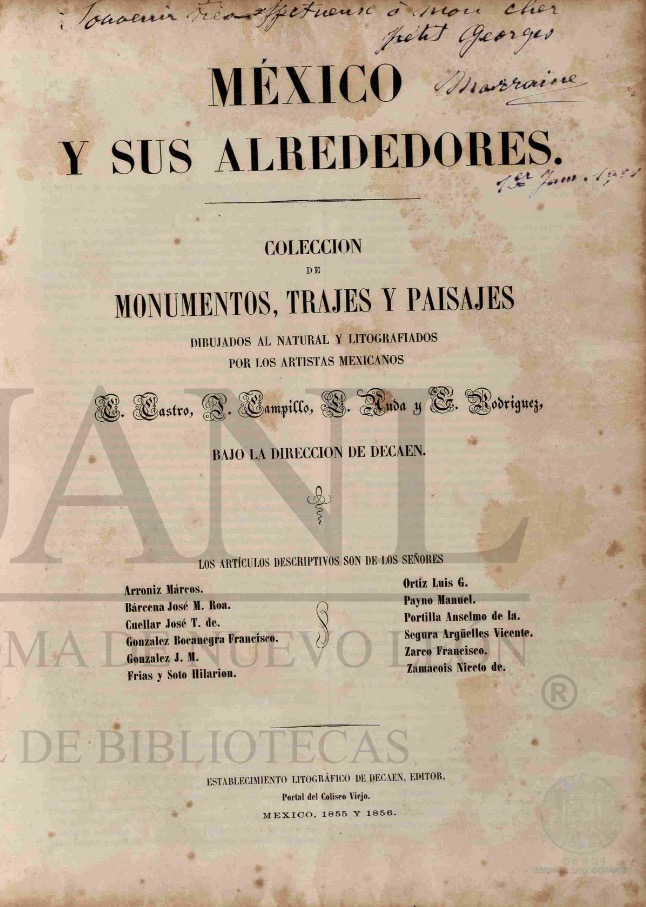
México y sus alrededores. Colección de vistas monumentales, paisajes y trajes del país.
Mexico and its surroundings. Collection of monumental views, landscapes and costumes of the country.
Book
Castro, C., Rodriguez, G. and Campillo, J. (1869) México y sus alrededores. Colección de vistas monumentales, paisajes y trajes del país. [Mexico and its surroundings. Collection of monumental views, landscapes and costumes of the country.] Mexico, V. Debray, many plates (see p. 51).
Record No. 7508  |  Sinkankas/Born No.: NIS/NIB  |  Language: in Spanish  |  RWHL
Castro, Rodríguez, and Campillo present an extensively illustrated survey of Mexico City and its surroundings, combining lithographic views with descriptive texts on monuments, streets, landscapes, public buildings, archaeological remains, customs, and characteristic inhabitants of mid-nineteenth-century Mexico. The plates document both the rapidly changing urban environment and important historical and archaeological sites, while the accompanying commentary provides historical, geographical, and cultural context. The work is particularly valuable as a visual record of Mexico during the period of political and social transformation following independence, preserving detailed images of buildings, places, dress, and everyday life that have subsequently changed or disappeared.

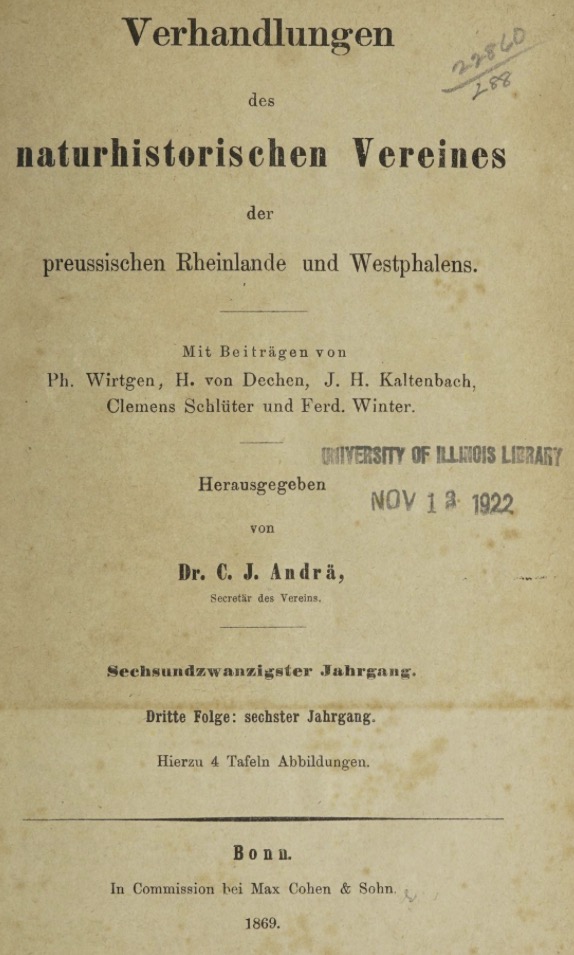
Die Eröffnung der Sitzung erfolgte um 10 1/2 Uhr durch den Herrn Vereins-Präsidenten mit der nachstehenden Rede
The opening of the meeting took place at 10 1/2 o'clock by the President of the Association with the following speech
Journal Article
Dechen, H., von (1869) Die Eröffnung der Sitzung erfolgte um 10 1/2 Uhr durch den Herrn Vereins-Präsidenten mit der nachstehenden Rede. [The opening of the meeting took place at 10 1/2 o'clock by the President of the Association with the following speech] Verhandlungen des naturhistorischen Vereins der preussischen Rheinlande und Westphalens, Vol. 26, No. 1, January, pp. 92–117 (see p. 109).
Record No. 7488  |  Sinkankas/Born No.: NIS/NIB  |  Language: in German  |  RWHL
Dechen reports the proceedings of a meeting of the Naturhistorischer Verein der preussischen Rheinlande und Westphalens, opening with the president’s address and reviewing scientific work, discoveries, and matters of interest to the society. The address ranges across contemporary geology, mineralogy, paleontology, and natural history, noting publications, investigations, and specimens brought to the society’s attention. Of particular mineralogical interest is the material discussed on p. 109, where nephrite and the contemporary problem of identifying jade and jade-like stones are considered in connection with archaeological finds. The notice belongs to the developing nineteenth-century debate over the occurrence and provenance of nephrite in Europe and the interpretation of nephrite artifacts recovered from prehistoric sites.

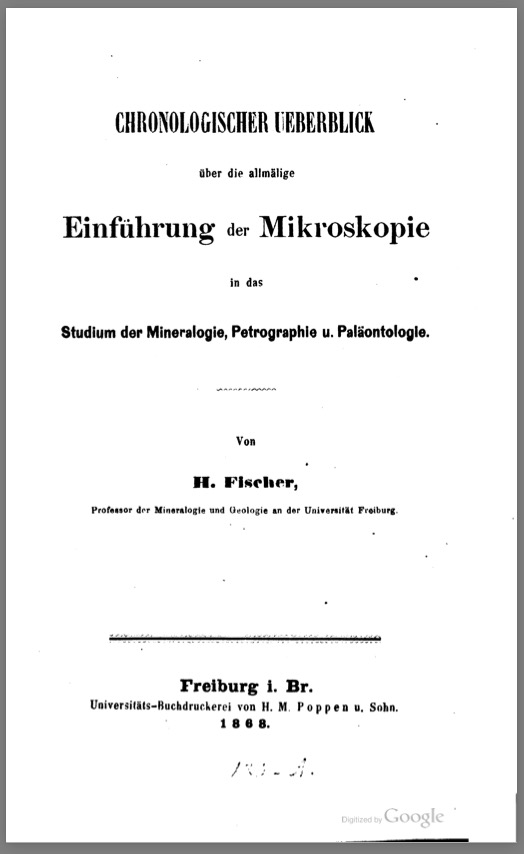
Chronologischer Ueberblick über die allmälige Einführung der Mikroskopie in das Studium der Mineralogie, Petrographie und Paläontologie
Chronological overview of the gradual introduction of microscopy into the study of mineralogy, petrography, and paleontology
Book
Fischer, H. (1868) Chronologischer Ueberblick über die allmälige Einführung der Mikroskopie in das Studium der Mineralogie, Petrographie und Paläontologie. [Chronological overview of the gradual introduction of microscopy into the study of mineralogy, petrography, and paleontology] Freiburg, Universitäts - Buchdruckerei, 80 pp.
Record No. 16666  |  Sinkankas/Born No.: 2124; NIB  |  Language: in German  |  RWHL
Fischer presents a chronological history of the introduction and development of microscopic methods in mineralogy, petrography, and paleontology. He traces early observations with magnifying instruments and microscopes and the gradual application of these techniques to minerals, rocks, fossils, and thin sections, discussing the contributions of numerous investigators and improvements in instruments and observational methods. Particular attention is given to the increasing recognition that microscopic examination could reveal structures, inclusions, textures, and mineral constituents that could not be distinguished macroscopically. The work documents an important methodological transition in nineteenth-century mineralogy and petrography, when microscopy was becoming an established analytical technique for identifying minerals and investigating the composition and structure of rocks.

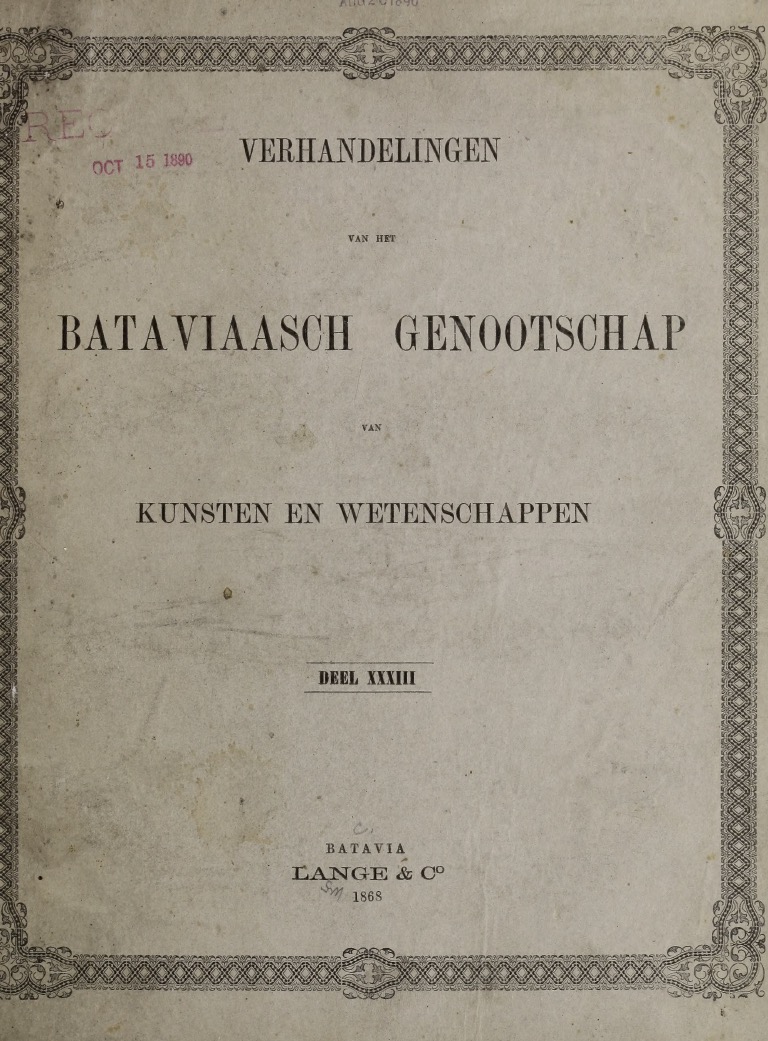
Bijdragen tot de Kennis van het Hindoeïsme op Java
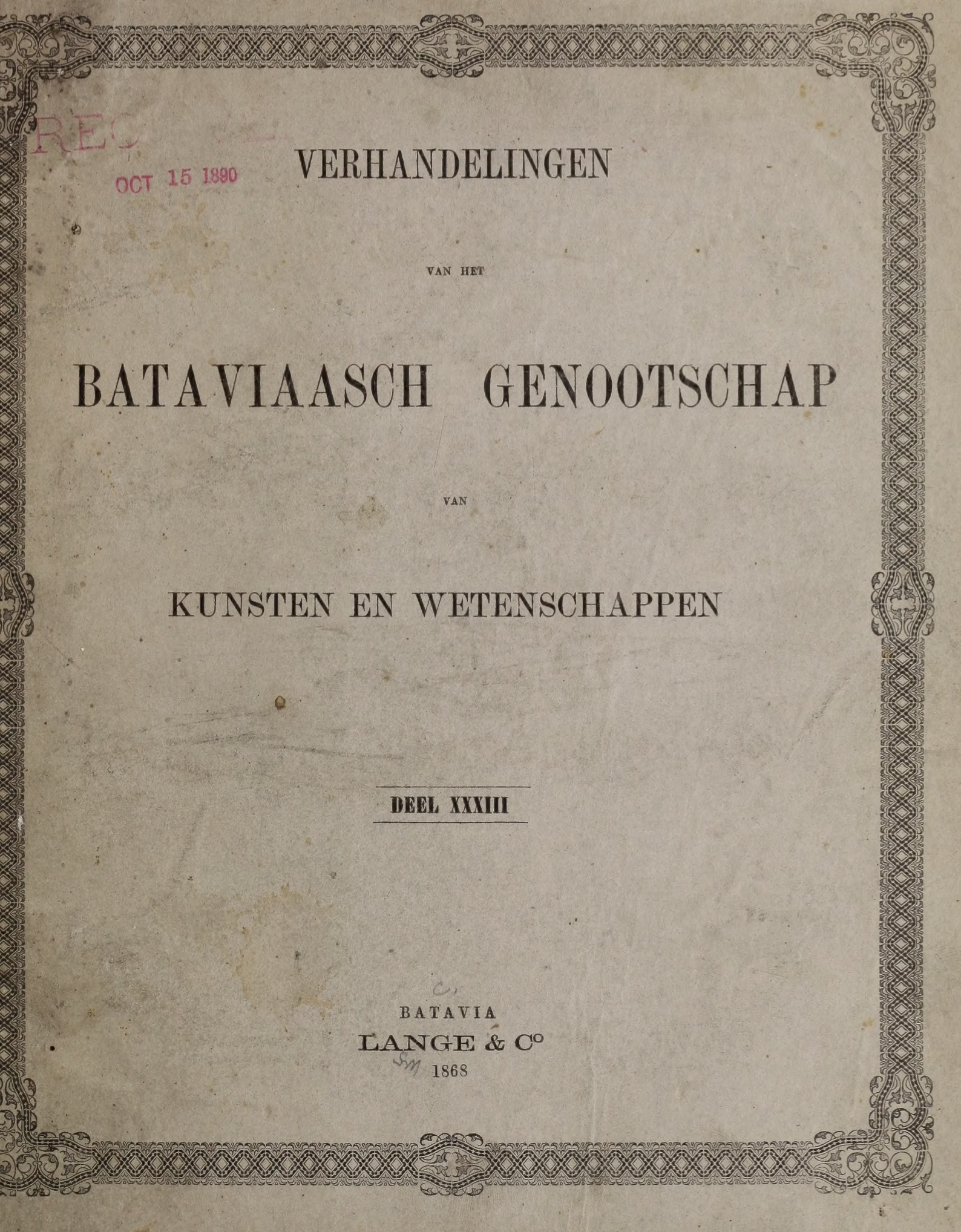
Contributions to the Knowledge of Hinduism in Java
Journal Article
Brumund, J.F.G. (1868) Bijdragen tot de Kennis van het Hindoeïsme op Java. [Contributions to the Knowledge of Hinduism in Java] Verhandelingen van het Bataviaasch Genootscha van Kunsten en Wetenschappen, Vol. 33, see p. 58.
Record No. 7997  |  Sinkankas/Born No.: NIS/NIB  |  Language: in Dutch  |  RWHL
Brumund examines the remains and traditions of Hinduism in Java, drawing on archaeological monuments, inscriptions, sculpture, religious practices, and earlier Javanese and European accounts. He discusses temples, deities, ritual objects, beliefs, and customs as evidence for the character and development of Hindu religious culture on the island and its adaptation within a Javanese setting. The work forms part of the nineteenth-century effort to document Java’s pre-Islamic religious and archaeological heritage and preserves observations made before many monuments had been systematically investigated. Of particular interest is the discussion on p. 58, which contributes evidence concerning stones and objects associated with Javanese Hindu religious practice and material culture.

Catalogus der ethnologische Afdeling van het Museum van het Bataviaasch Genootschap van Kunsten en Wetenschappen
Catalogue of the Ethnological Department of the Museum of the Batavian Society of Arts and Sciences
Book
Levyssohn Norman, H.D. and Chijs, J.A., van der (1868) Catalogus der ethnologische Afdeling van het Museum van het Bataviaasch Genootschap van Kunsten en Wetenschappen. [Catalogue of the Ethnological Department of the Museum of the Batavian Society of Arts and Sciences] Batavia, Lange & Co., Vol. 33 , 81 pp. (see p. 58).
Record No. 7994  |  Sinkankas/Born No.: NIS/NIB  |  Language: in Dutch  |  RWHL
Levyssohn Norman and van der Chijs catalogue the ethnological collections of the Museum of the Bataviaasch Genootschap van Kunsten en Wetenschappen in Batavia, documenting objects representing the material cultures of peoples of the Indonesian archipelago and neighboring regions. The entries describe weapons, tools, ornaments, clothing, ritual objects, household implements, and other artifacts, generally recording their names, materials, geographical or cultural origins, and uses. The catalogue provides an important nineteenth-century record of collections that later formed part of the holdings of Indonesia’s National Museum and preserves contemporary terminology and provenance information for objects acquired during the colonial period. Of particular relevance is the material listed on p. 58, which contributes evidence for the identification, distribution, and use of stone objects within the ethnographic collections.

Wanderung nach den Türkisminen und der Sinai-Halbinsel
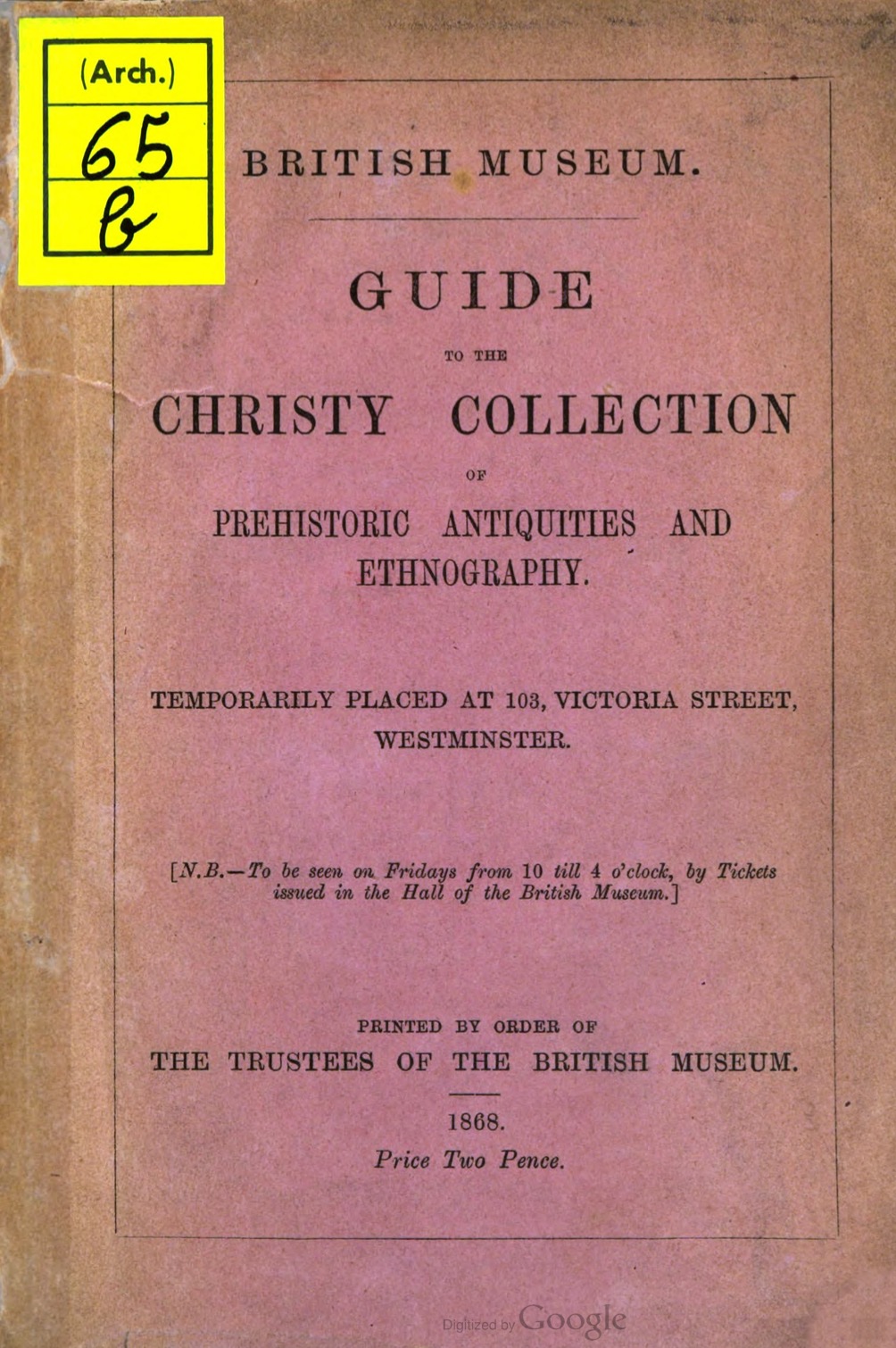
Journey to the Turquoise Mines and the Sinai Peninsula
Book
Brugsch, H. (1868) Wanderung nach den Türkisminen und der Sinai-Halbinsel. [Journey to the Turquoise Mines and the Sinai Peninsula] Leipzig, J.C. Hinrichs, 96 pp.
Record No. 7991  |  Sinkankas/Born No.: NIS/NIB  |  Language: in German  |  RWHL
Brugsch recounts his journey through the Sinai Peninsula to the ancient turquoise-mining district of Wadi Maghara and Serabit el-Khadim, combining travel observations with descriptions of the archaeological remains and inscriptions encountered there. Of particular gemological importance is his account of the Sinai turquoise mines, including the geological setting, ancient workings, extraction of turquoise, and evidence for Egyptian mining expeditions. He discusses the hieroglyphic inscriptions and reliefs left by pharaonic expeditions and their value for establishing the antiquity and organization of turquoise exploitation in Sinai. The work provides an important nineteenth-century eyewitness account of one of the world’s oldest documented gemstone-mining regions and links the physical remains of turquoise extraction with contemporary understanding of ancient Egyptian history and epigraphy.

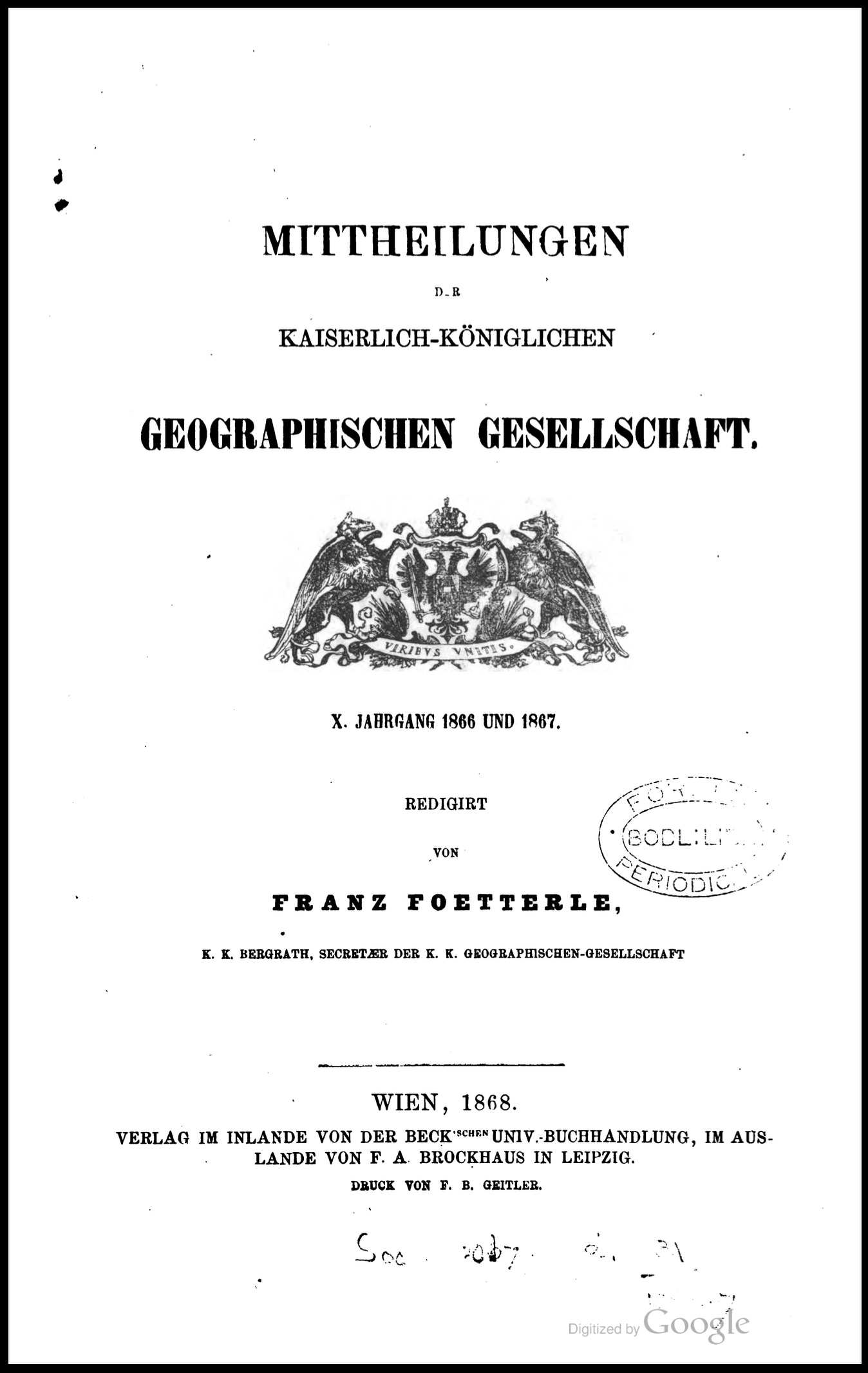
Guide to the Christy Collection of Prehistoric Antiquities and Ethnography
Catalog
Franks, A.W. (1868) Guide to the Christy Collection of Prehistoric Antiquities and Ethnography. London: British Museum, 24 pp..
Record No. 7937  |  Sinkankas/Born No.: NIS/NIB  |  RWHL
Franks provides a concise guide to the Christy Collection of prehistoric and ethnographic objects in the British Museum, assembled principally by Henry Christy and representing cultures from Europe and many other parts of the world. The collection includes prehistoric stone implements and comparative ethnographic material such as weapons, tools, ornaments, carvings, and objects illustrating techniques of manufacture and use. Franks arranges the material to facilitate comparison between archaeological artifacts and implements employed by contemporary Indigenous peoples, reflecting the comparative approach characteristic of nineteenth-century archaeology and ethnography. Of particular relevance to jade studies are polished stone implements and ornaments of nephrite and other tough green stones, which provided comparative material for contemporary debates concerning prehistoric stone-working, the geographical distribution of jade, and the origins of European jade artifacts.

Der Franz Joseph-Gletscher in den südlichen Alpen von Neu-Seeland
The Franz Joseph Glacier in the Southern Alps of New Zealand
Journal Article
Hochstetter, F., von and Petermann, A. (1868) Der Franz Joseph-Gletscher in den südlichen Alpen von Neu-Seeland. [The Franz Joseph Glacier in the Southern Alps of New Zealand] Mittheilungen der Kaiserlich-Königlichen Geographischen Gesellschaft, Vol. 10, Years 1866–1867, see p. 59.
Record No. 7851  |  Sinkankas/Born No.: NIS/NIB  |  Language: in German  |  RWHL
Hochstetter and Petermann discuss the Franz Joseph Glacier and the geography of the Southern Alps of New Zealand, describing the glacier, surrounding mountains, drainage, and the exploration and mapping of the region. The account places the glacier within the broader physical geography of the South Island and incorporates contemporary geographical information concerning the rugged and still imperfectly explored western districts. Of particular relevance to jade studies is the reference on p. 59 to New Zealand greenstone or pounamu (nephrite), a material closely associated with the western South Island and highly valued by Māori for tools, weapons, and ornaments. The paper provides contemporary geographical context for nineteenth-century attempts to understand the occurrence and source areas of New Zealand nephrite.

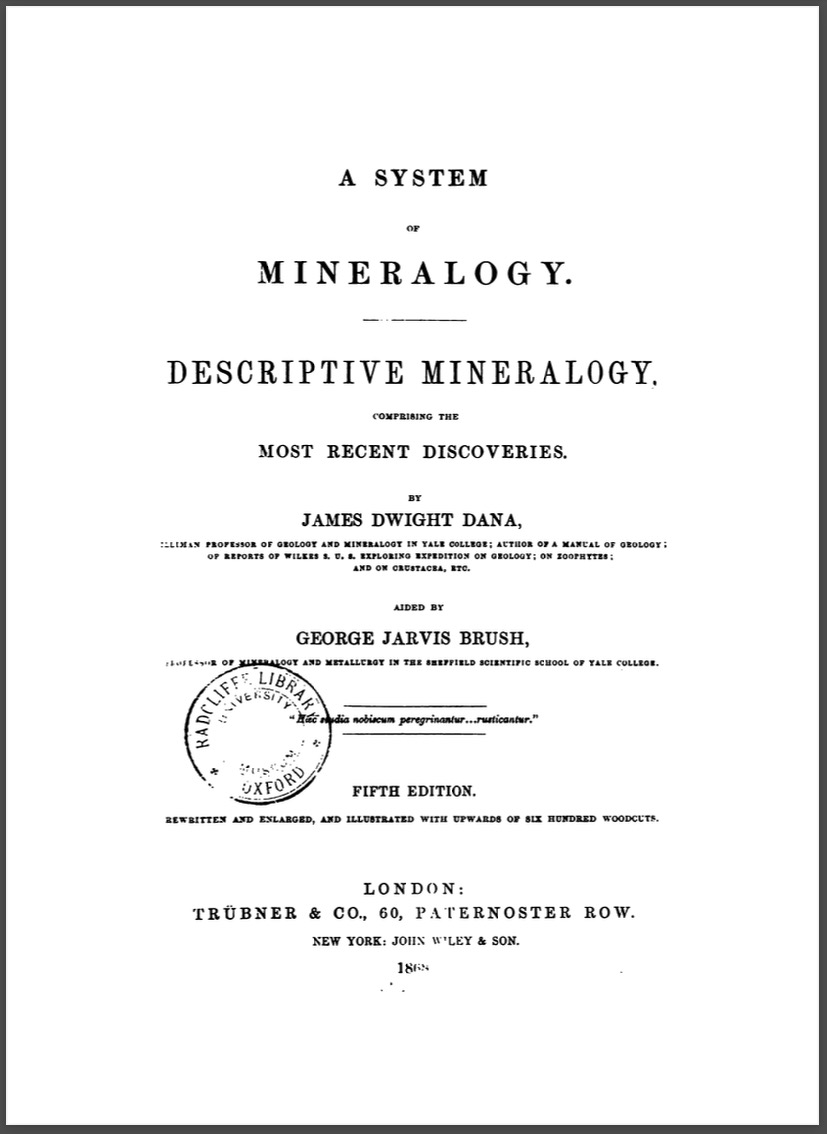
A System of Mineralogy

Book
Dana, J.D. and Brush, G.J. (1868) A System of Mineralogy. London, Trübner & Co., 827 pp. (see pp. 232–233 for amphibole).
Record No. 7510  |  Sinkankas/Born No.: NIS/NIB  |  RWHL
Dana and Brush present the fifth edition of Dana’s comprehensive systematic treatment of minerals, classifying species principally according to chemical composition and crystallographic and physical properties. The work provides descriptions of mineral species and varieties, including their crystallography, hardness, specific gravity, luster, color, composition, alteration, associations, and geographical occurrence, and became one of the major nineteenth-century reference works for mineral identification and classification. Of particular relevance to jade is the treatment of amphibole on pp. 232–233, including tremolite and related varieties associated with nephrite. The work provides an important contemporary mineralogical framework for understanding the amphibole group at a time when the mineralogical identity and nomenclature of jade materials were being actively investigated.

Der Steincultus in der Ethnographie

The stone cultus in ethnography
Journal Article
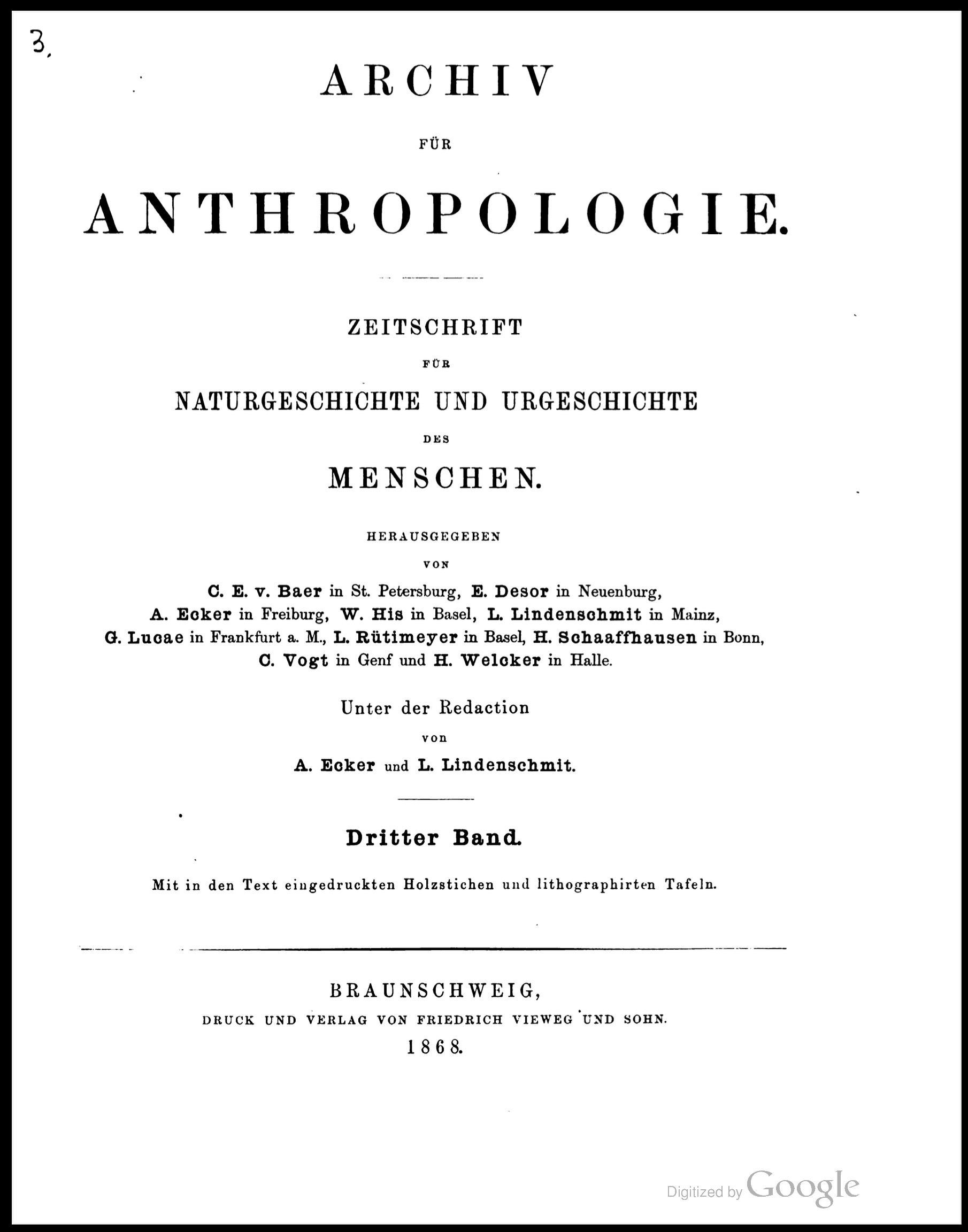
Bastian, A. (1868) Der Steincultus in der Ethnographie. [The stone cultus in ethnography] Archiv für Anthropologie, Vol. 3, No. 1, pp. 1–18.
Record No. 7372  |  Sinkankas/Born No.: NIS/NIB  |  Language: in German  |  RWHL
Bastian examines the religious, magical, and symbolic significance attributed to stones among different peoples, treating stone worship as a comparative ethnographic phenomenon. Drawing on historical, archaeological, and ethnographic accounts from numerous regions, he discusses sacred stones, stone idols, amulets, talismans, and naturally unusual stones believed to possess supernatural or protective powers. He considers traditions concerning stones associated with deities, ancestors, fertility, healing, divination, and other ritual practices and compares recurring beliefs across otherwise unrelated cultures. The paper reflects Bastian’s broader attempt to identify common patterns in human thought through comparative ethnography and provides an early anthropological survey of the ritual and symbolic uses of stones.

Report on his journey to Ilchí, the capital of Khotan, in Chinese Tartary
Journal Article
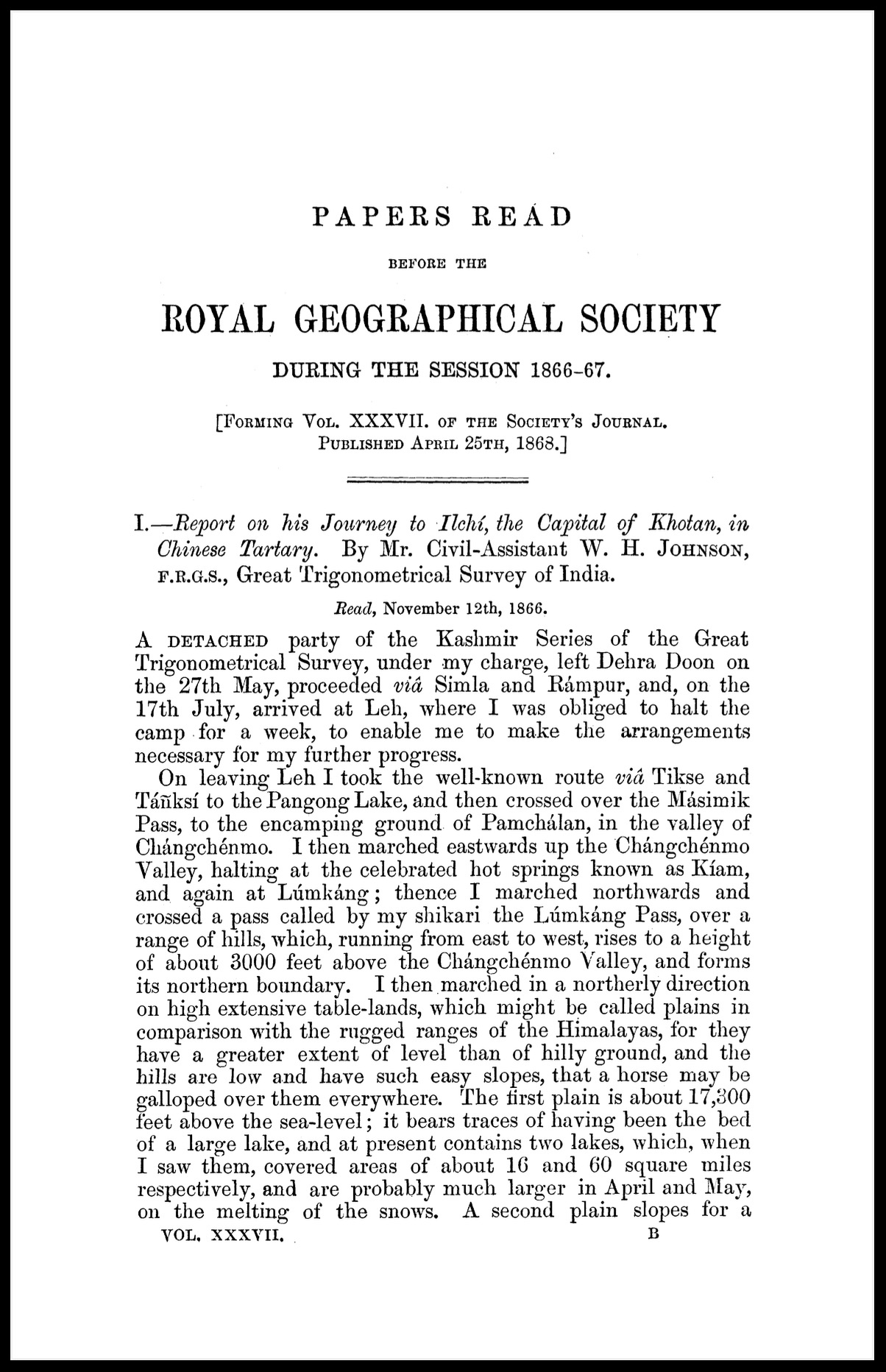
Johnson, W.H. (1868) Report on his journey to Ilchí, the capital of Khotan, in Chinese Tartary. Journal of the Royal Geographical Society, Vol. 37, 25-Apr, pp. 1– 47.
Record No. 7366  |  Sinkankas/Born No.: NIS/NIB  |  RWHL
Johnson gives a detailed account of his 1865 journey from Ladakh across the Karakoram and Kunlun ranges to Ilchí (modern Hotan/Khotan), the capital of Khotan in Chinese Turkestan. He describes the route, mountain passes, rivers, settlements, climate, agriculture, population, government, commerce, and political conditions of a region then little known to European geographers. Of particular gemological importance are his observations on the celebrated Khotan jade industry, including the occurrence and recovery of jade from river deposits and mountain sources and its importance as an article of commerce with China. Johnson’s firsthand observations provide valuable evidence concerning the geography of one of the principal historic source regions for Chinese nephrite and the routes by which jade was obtained and transported.

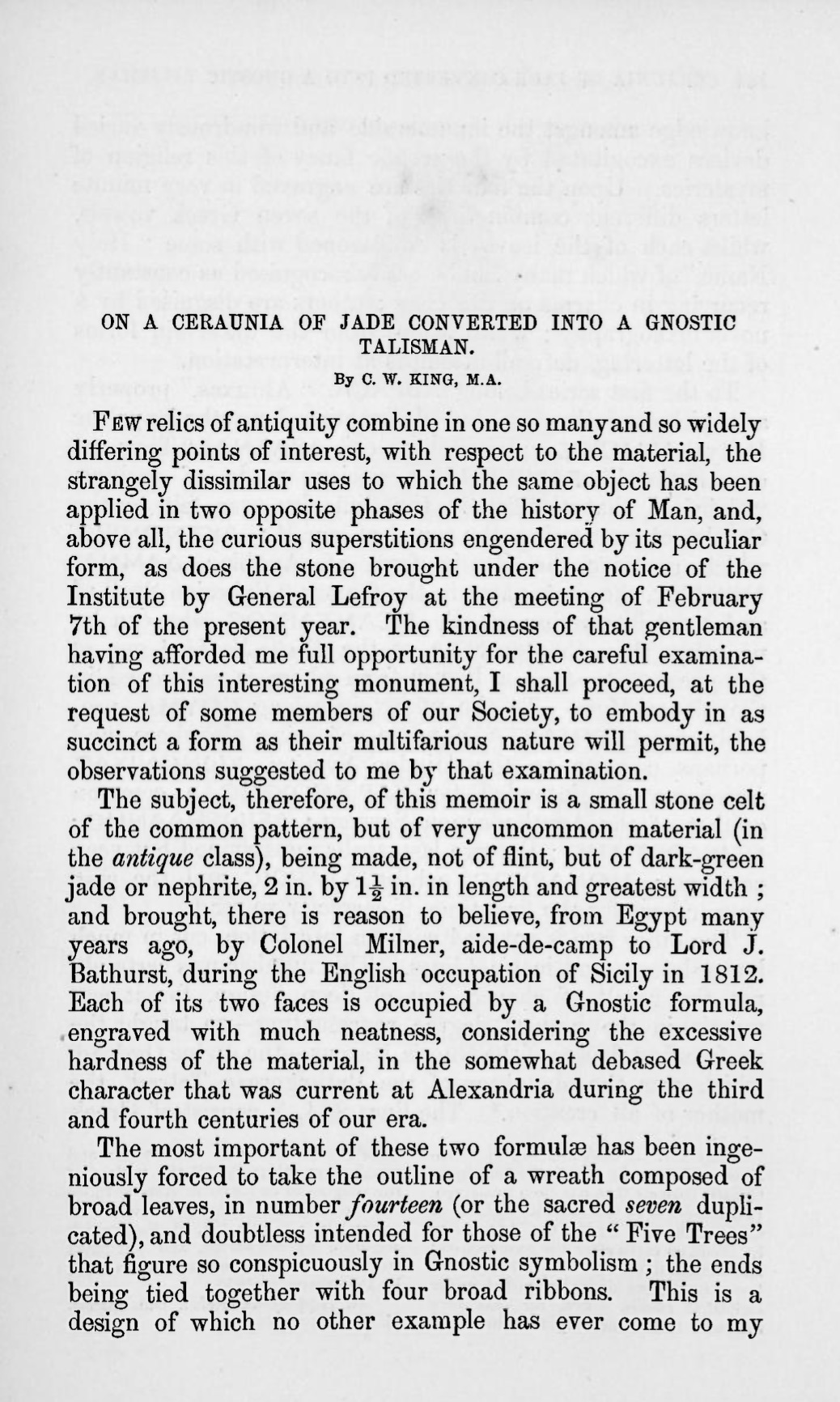
On a ceraunia of jade converted into a Gnostic talisman
Journal Article
King, C.W. (1868) On a ceraunia of jade converted into a Gnostic talisman. Archaeological Journal, Vol. 25, pp. 103–118.
Record No. 6916  |  Sinkankas/Born No.: 3409: NIB  |  RWHL
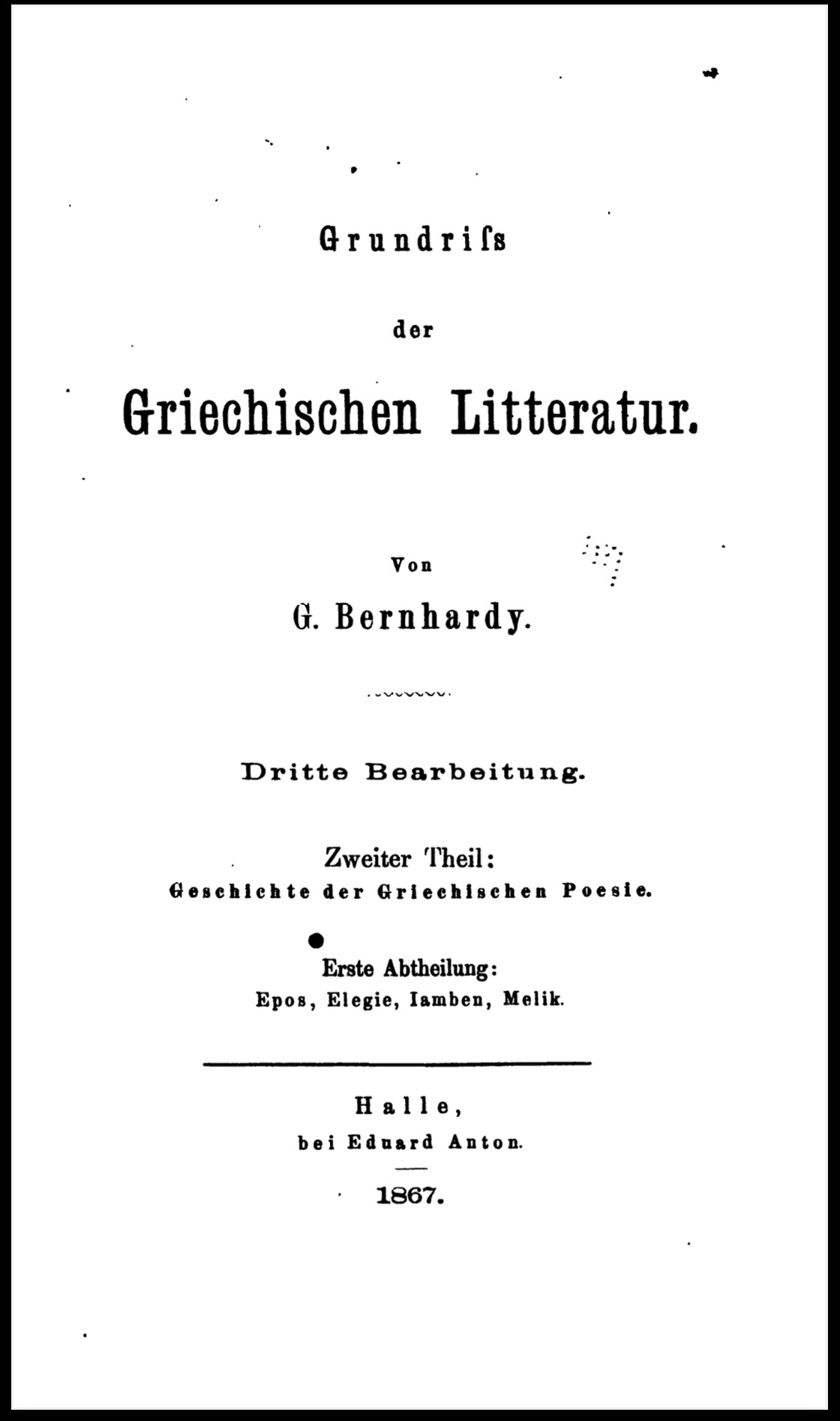
Few relics of antiquity combine in one so many and so widely differing points of interest, with respect to the material, the strangely dissimilar uses to which the same object has been applied in two opposite phases of the history of Man, and, above all, the curious superstitions engendered by its peculiar form, as does the stone brought under the notice of the Institute by General Lefroy at the meeting of February 7th of the present year. The kindness of that gentleman having afforded me full opportunity for the careful examination of this interesting monument, I shall proceed, at the request of some members of our Society, to embody in as succinct a form as their multifarious nature will permit, the observations suggested to me by that examination.

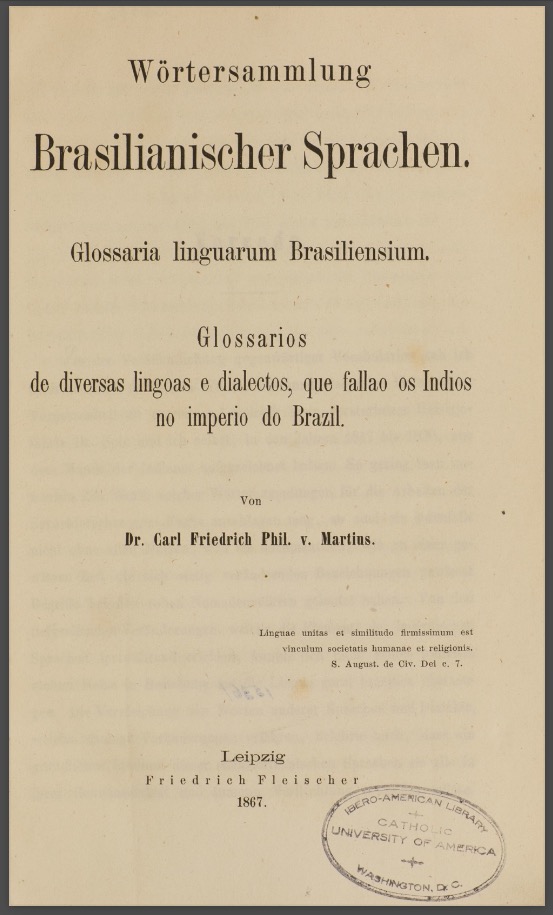
Grundriss der griechischen Litteratur
Outline of Greek Literature
Book
Bernhardy, G. (1867) Grundriss der griechischen Litteratur. [Outline of Greek Literature] Halle, E. Anton, Part 2, Section 1: Geschichte der griechischen Poesie: Epos, Elegie, Iamben, Melik , 758 pp.
Record No. 8117  |  Sinkankas/Born No.: NIS/NIB  |  Language: in German  |  RWHL
Bernhardy surveys the history of Greek poetry, organizing this portion of his literary history around epic, elegy, iambic verse and lyric poetry. The volume examines poetic traditions and authors through ancient testimony, surviving works and fragments, together with the scholarship devoted to their interpretation. Its scope includes the literature attributed to Orpheus, placing such writings within the broader history of Greek religious and poetic traditions. For gemological bibliography, this provides literary context for investigating ancient lapidary writings, although Bernhardy’s specific treatment of poems concerning stones remains to be checked against the text.

Beiträge zur Ethnographie und Sprachenkunde Amerika's zumal Brasiliens. I. Zur Ethnographie: Zur Ethnographie Amerika's zumal Brasiliens; II. Zur Sprachenkunde
Contributions to the Ethnography and Linguistics of America, Especially Brazil. I. On Ethnography: On the Ethnography of America, Especially Brazil; II. On Linguistics
Book
Martius, C.F.P., von (1867) Beiträge zur Ethnographie und Sprachenkunde Amerika's zumal Brasiliens. I. Zur Ethnographie: Zur Ethnographie Amerika's zumal Brasiliens; II. Zur Sprachenkunde. [Contributions to the Ethnography and Linguistics of America, Especially Brazil. I. On Ethnography: On the Ethnography of America, Especially Brazil; II. On Linguistics] Leipzig, F. Fleischer, 2 Vols., Vol. 2 , 802, 548 pp.
Record No. 6858  |  Sinkankas/Born No.: NIS/NIB  |  Language: in German  |  RWHL
Martius presents an extensive study of the Indigenous peoples and languages of the Americas, with particular emphasis on Brazil, drawing upon his travels, earlier historical sources, missionary accounts, and linguistic materials. The first part surveys the geographical distribution, physical and cultural characteristics, customs, social organization, material culture, and historical relationships of numerous Indigenous peoples, while the second is devoted to their languages, vocabularies, classification, and affinities. Martius attempts to reconstruct relationships and migrations among Brazilian peoples through combined ethnographic and linguistic evidence and records substantial information on Indigenous tools, weapons, ornaments, and use of natural materials. The work is an important nineteenth-century compilation of Brazilian ethnographic and linguistic information, although many of its broader anthropological interpretations reflect theories of its period that are now obsolete.

Über den Pseudonephrit

About the pseudonephrite
Journal Article
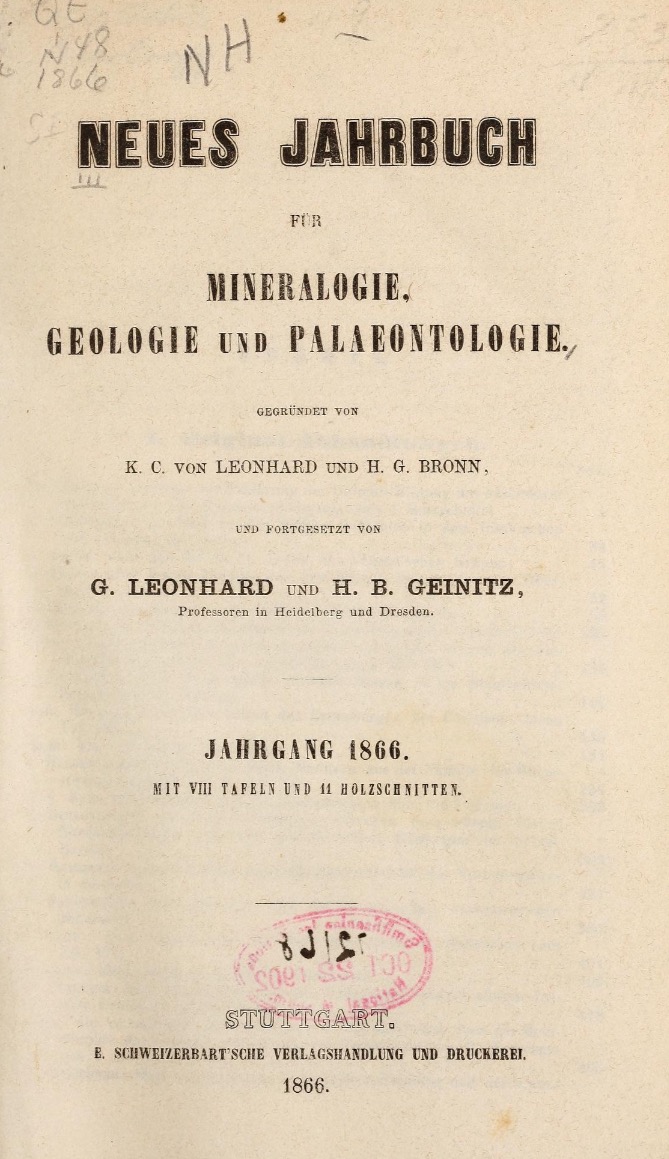
Emmerling, A. (1866) Über den Pseudonephrit. [About the pseudonephrite] Neues Jahrbuch für Mineralogie, Geologie und Paläontologie, pp. 559–563.
Record No. 16487  |  Sinkankas/Born No.: NIS/NIB  |  Language: in German  |  RWHL
Emmerling investigates “pseudonephrite,” a tough green stone resembling nephrite that had been discussed by Heinrich Fischer in connection with the identification of prehistoric jade implements. Using chemical analysis, Emmerling demonstrates that the material differs substantially in composition from true nephrite and therefore should not be regarded as the same mineral substance despite its similar external appearance and physical character. The study emphasizes the limitations of identifying jade-like materials solely by color, texture, and toughness and supports the growing use of chemical and mineralogical analysis to distinguish nephrite from superficially similar rocks and minerals. Emmerling’s paper contributed to the nineteenth-century effort to clarify the mineralogical identity of archaeological “jade” objects and the nature of Fischer’s proposed pseudonephrite.

Polynesia; A Popular Description of the Physical Features, Inhabitants, Natural History and Productions of the Islands of the Pacific
Book
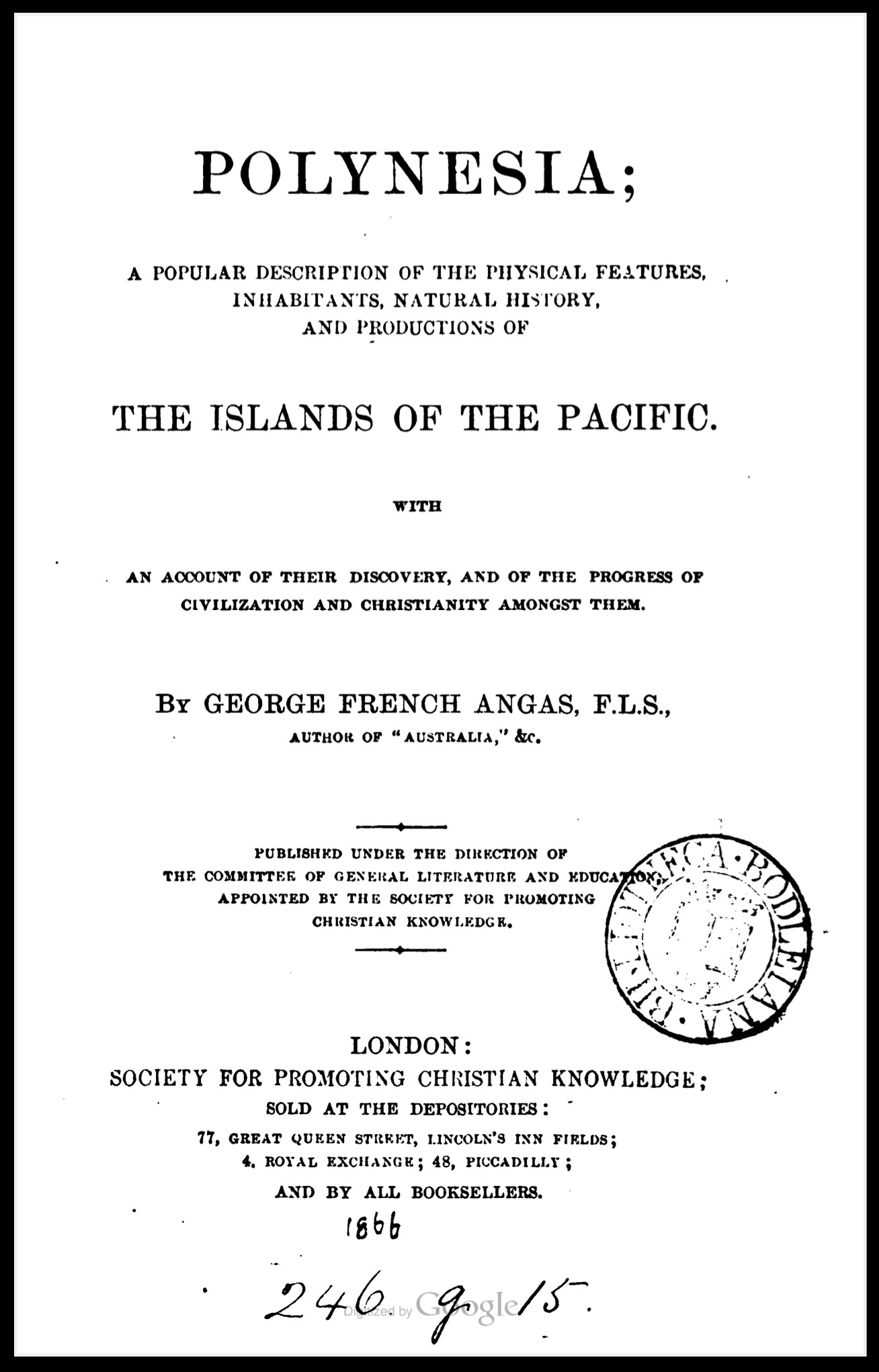
Angas, G.F. (1866) Polynesia; A Popular Description of the Physical Features, Inhabitants, Natural History and Productions of the Islands of the Pacific. London, Society for Promoting Christian Knowledge, 436 pp. (see p. 157–158).
Record No. 15509  |  Sinkankas/Born No.: NIS/NIB  |  RWHL
Angas presents a popular survey of the geography, inhabitants, natural history, customs, and products of the Pacific islands, drawing upon contemporary travel accounts and his own experience in the region. Of particular gemological and ethnographic interest is his discussion of New Zealand pounamu or greenstone, which he describes as a highly valued material employed by Māori for weapons and ornaments. He notes its use for mere and hei-tiki, the laborious methods required to shape and polish the exceptionally tough stone, and the importance attached to individual objects, which could be preserved and handed down as valued possessions. The account provides a useful nineteenth-century description of Māori nephrite working and the cultural value of pounamu at a time when traditional practices were undergoing rapid change.

Ueber die in den Pfahbauten gefundenen Nephrite un nephritähnlichen Mineralien
About the nephrites and nephrite-like minerals found in the Pfahbauten
Journal Article
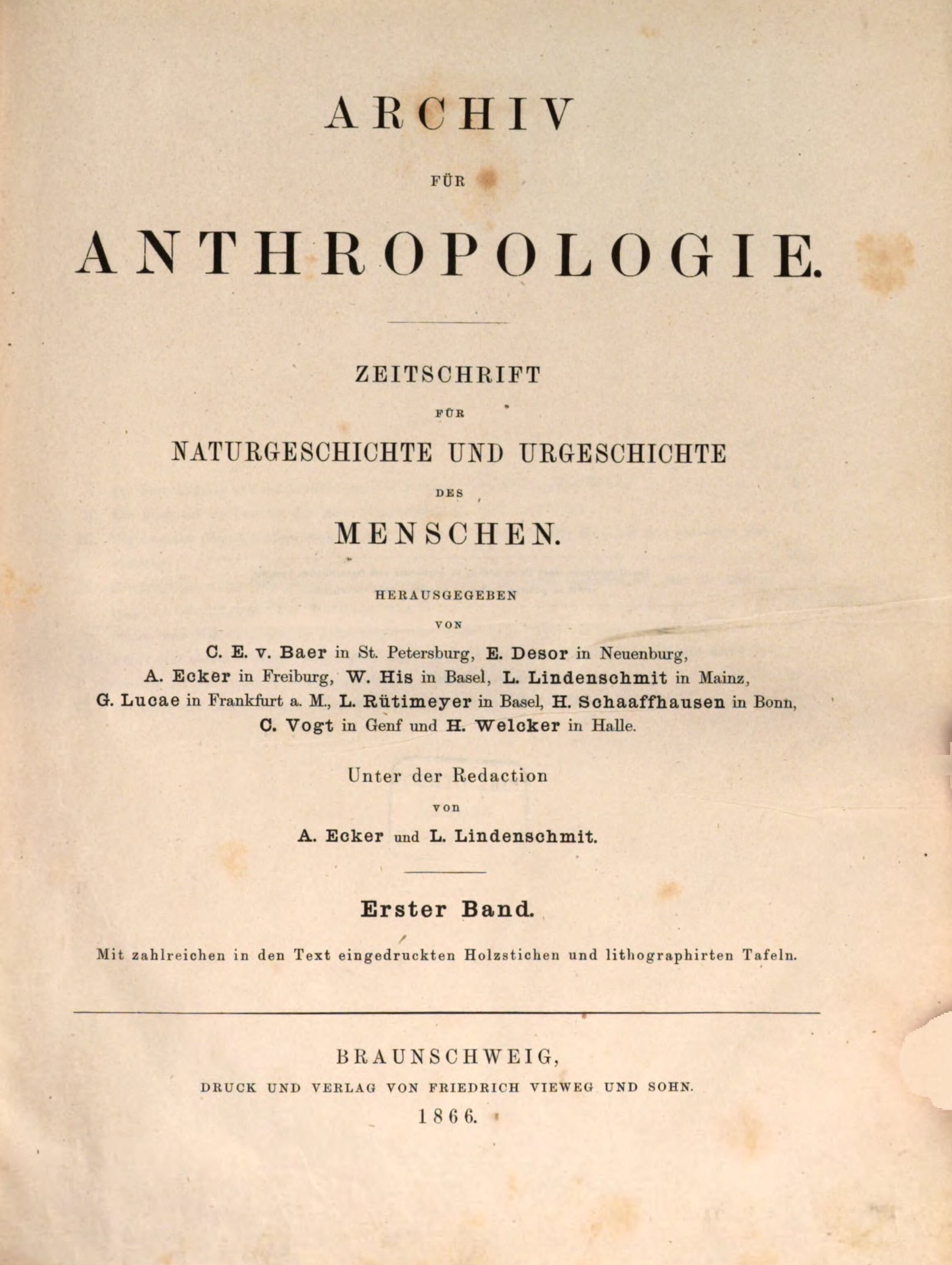
Fischer, H. (1866) Ueber die in den Pfahbauten gefundenen Nephrite un nephritähnlichen Mineralien. [About the nephrites and nephrite-like minerals found in the Pfahbauten] Archiv für Anthropologie, Vol. 1, pp. 337–344.
Record No. 7490  |  Sinkankas/Born No.: NIS/NIB  |  Language: in German  |  RWHL
Fischer examines nephrite and nephrite-like stone implements recovered from the prehistoric pile dwellings of Switzerland, addressing their mineralogical identification and the problem of the origin of their raw materials. He distinguishes true nephrite from superficially similar substances by comparing physical and mineralogical characteristics and discusses specimens that had previously been grouped together as jade largely because of their green color, compact texture, and toughness. The paper considers the geographical distribution of nephrite and the absence, as then understood, of convincing primary European deposits, leading Fischer to examine the possibility that the material used for Swiss prehistoric implements had originated outside Europe. The study forms an important contribution to the nineteenth-century “nephrite question,” in which mineralogical analysis of European archaeological jade became closely connected with debates over prehistoric trade, migration, and contacts with Asia.

Monuments anciens du Mexique et du Yucatan. Palenqué et autres ruines de l'ancienne civilisation du Mexique. Collection de vues, bas-reliefs, morceaux d'architecture, coupes, vases, terres cuites, cartes et plans / dessinés d'après nature et relevés par M. de Waldeck ; texte rédigé par M. Brasseur de Bourbourg
Ancient monuments of Mexico and Yucatan. Palenqué and other ruins of the ancient civilization of Mexico. Collection of views, bas-reliefs, pieces of architecture, cups, vases, terracottas, maps and plans / drawn from nature and surveyed by Mr. de Waldeck; text written by Mr. Brasseur de Bourbourg
Book
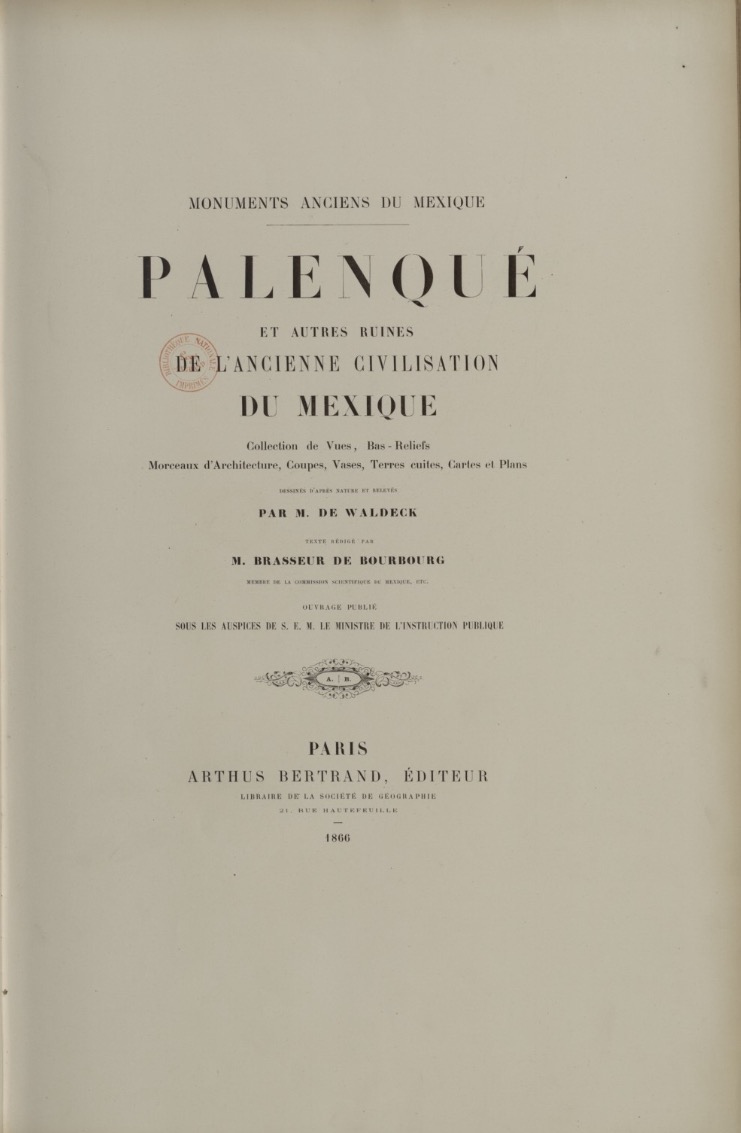
Waldeck, M., de and Bourbourg, É.-C. (1866) Monuments anciens du Mexique et du Yucatan. Palenqué et autres ruines de l'ancienne civilisation du Mexique. Collection de vues, bas-reliefs, morceaux d'architecture, coupes, vases, terres cuites, cartes et plans / dessinés d'après nature et relevés par M. de Waldeck ; texte rédigé par M. Brasseur de Bourbourg. [Ancient monuments of Mexico and Yucatan. Palenqué and other ruins of the ancient civilization of Mexico. Collection of views, bas-reliefs, pieces of architecture, cups, vases, terracottas, maps and plans / drawn from nature and surveyed by Mr. de Waldeck; text written by Mr. Brasseur de Bourbourg] Paris, Arthur Bertrand, 258 pp.
Record No. 7369  |  Sinkankas/Born No.: NIS/NIB  |  Language: in French  |  RWHL
Waldeck and Brasseur de Bourbourg present an illustrated study of the ancient monuments of Mexico and Yucatán, with particular emphasis on the Maya ruins of Palenque. Based on drawings and surveys made by Waldeck during his travels, the work reproduces views of archaeological sites, architecture, bas-reliefs, sculpture, ceramics, maps, and plans, accompanied by Brasseur de Bourbourg’s historical and interpretive text. The authors discuss the architecture, iconography, inscriptions, religious imagery, and material culture of the ancient inhabitants and attempt to place the monuments within the broader history of pre-Columbian Mexico and Central America. Although some of Waldeck’s reconstructions and Brasseur de Bourbourg’s interpretations are now regarded as inaccurate or speculative, the volume is an important nineteenth-century record of Maya monuments and artifacts, documenting Palenque and other sites before subsequent deterioration and archaeological investigation.

Die Pfahlbauten des Überlinger Sees

The pile dwellings of Lake Überlinger
Book
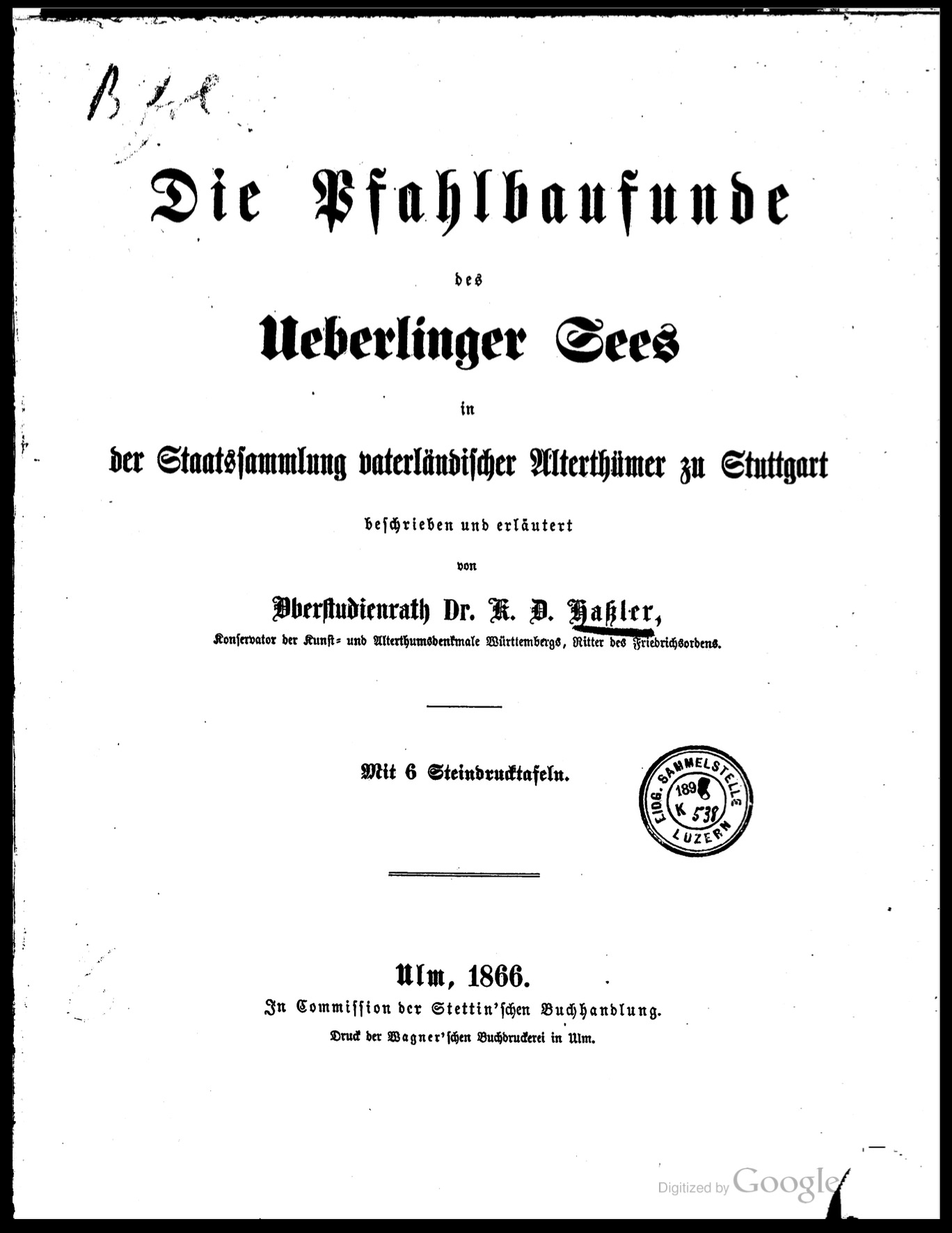
Hassler, K.D. (1866) Die Pfahlbauten des Überlinger Sees. [The pile dwellings of Lake Überlinger] Ulm, Wagner'schen Buchdruđerei, 20 pp., 6 plates
Record No. 7365  |  Sinkankas/Born No.: NIS/NIB  |  Language: in German  |  RWHL
Hassler describes the prehistoric pile-dwelling sites of the Überlinger See, the northwestern arm of Lake Constance, presenting observations on their location, construction, excavation, and archaeological contents. He discusses wooden structural remains and the stone, bone, pottery, and other artifacts recovered from the settlements, using these finds to characterize the material culture and daily life of their prehistoric inhabitants. Particular attention is given to polished stone implements, including axes and related objects whose raw materials were of interest in contemporary investigations of the Swiss and south German lake dwellings. The accompanying plates illustrate representative finds and structural evidence. The work forms part of the intensive mid-nineteenth-century investigation of Alpine pile dwellings and provides an early archaeological record of the Lake Überlingen sites.

Exploring the Literature of Jade

Jade literature spans gemology, mineralogy, archaeology, art history, mining, carving and connoisseurship, and includes works on both jadeite and nephrite from around the world.

For an introduction to collecting books on this subject, read Hidden Treasure — Collecting the Literature of Jade.

About Four Treasures

Four Treasures is Lotus Gemology's freely accessible gemological reference database. Use the full database to search by author, title or keyword and explore literature on gemology, mineralogy, jewelry and related fields. Where available, hyperlinks on titles may lead directly to the full publication.

Search the Complete Four Treasures Database