Jade Bibliography

Jade Bibliography

Explore books, articles and historical sources on jade in Four Treasures, the Lotus Gemology reference database. This bibliography brings together matching records from the collection, with publication details, abstracts and cover images where available.

Jade References

The list below matches the terms jade, jadeite, nephrite or Fei Cui in the database's searchable fields. Some references discuss these materials as part of a broader subject.
3,481–3,500 of 3,783 matching references

Amazonita en la máscara de Malinaltepec, Guerrero

Journal Article
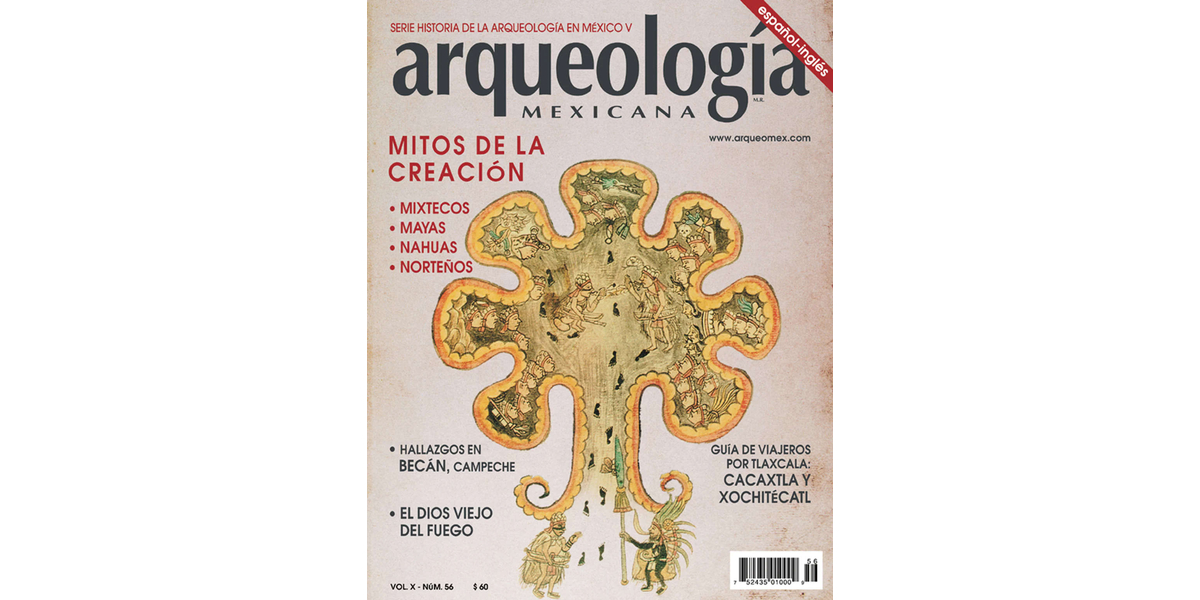
Sánchez-Hernández, R. and Robles-Camacho, J. (2002) Amazonita en la máscara de Malinaltepec, Guerrero. Arqueología mexicana, Vol. 10, No. 56, p. 4.
Record No. 28622  |  Sinkankas/Born No.: NIS/NIB  |  not seen
A new jadeite re-creation product

A new jadeite re-creation product

Journal Article
Zhang, X. (2002) A new jadeite re-creation product. Journal of Gems & Gemmology, Vol. 5, No. 3,
Record No. 28117  |  Sinkankas/Born No.: NIS/NIB  |  not seen

[Entire issue devoted to jade]

Entire issue devoted to jade
Journal Article
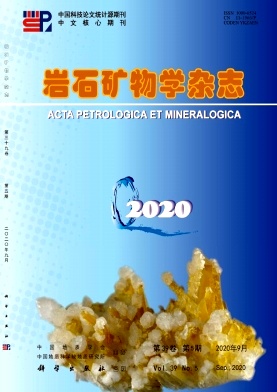
Various Authors (2002) [Entire issue devoted to jade]. Acta Petrologica et Mineralogica [岩石矿物学杂志], No. z1, 156 pp..
Record No. 16369  |  Sinkankas/Born No.: NIS/NIB  |  Language: in Chinese  |  not seen
A thematic collection of papers on the mineralogy, geological origins, physical properties, and cultural significance of yu, with substantial coverage of nephrite from Hetian, Manasi, and Xiuyan. Contributions examine mineral composition, colour, microscopic textures, and X-ray diffraction characteristics, alongside comparisons among producing regions. Other papers discuss the formation of nephrite and jadeitite through fluid–rock interaction and the historical importance of Hetian material in Chinese carving traditions.

Guatemalan jade; jade hunters uncover ancient deposits
Journal Article
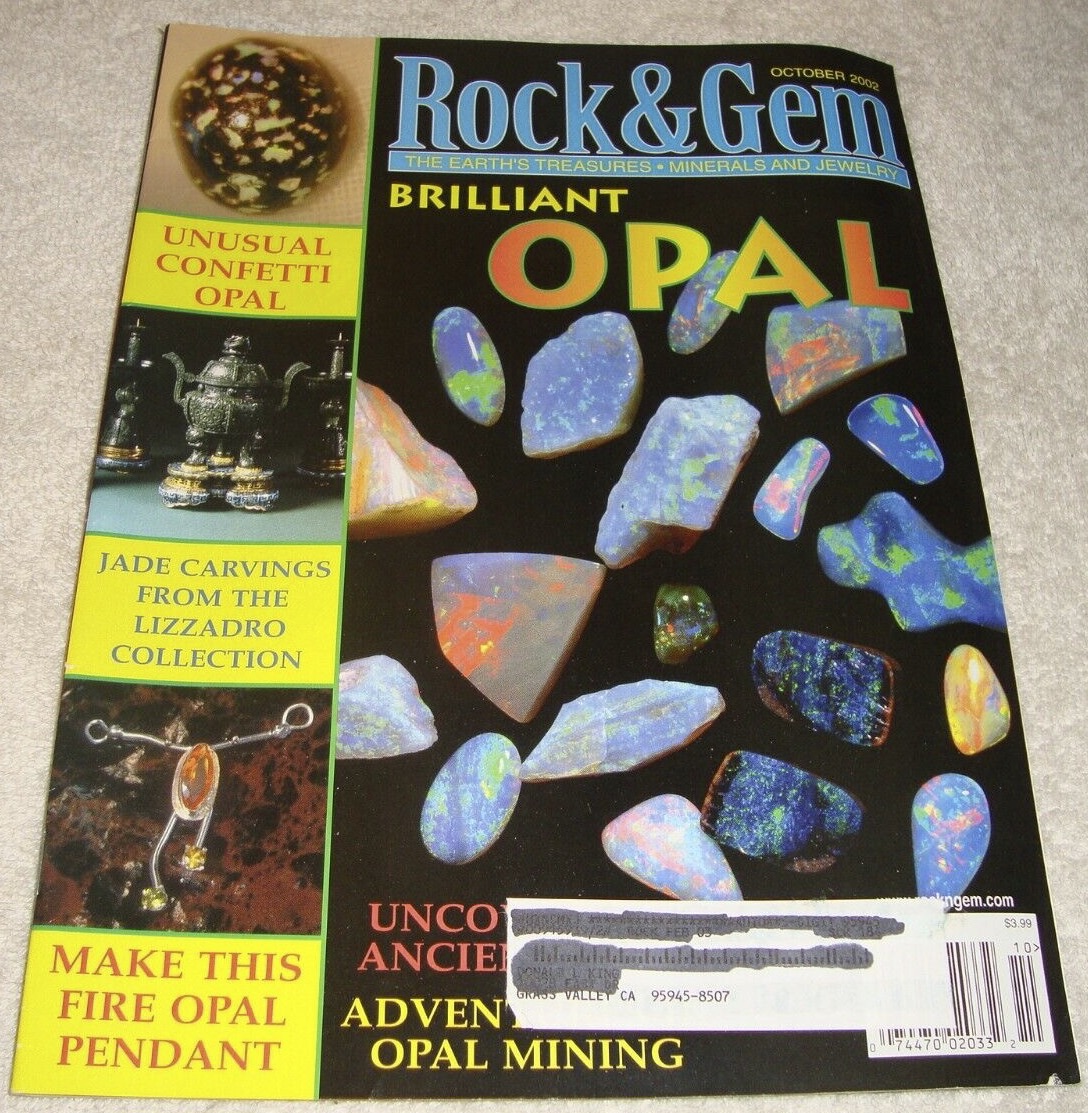
Voynick, S.M. (2002) Guatemalan jade; jade hunters uncover ancient deposits. Rock & Gem, Vol. 32, No. 10, pp. 64–69.
Record No. 7893  |  ISBN/ISSN: 488453  |  Sinkankas/Born No.: NIS/NIB  |  not seen

Scholar’s Rocks in Ancient China | The Suyuan Stone Catalogue
Book
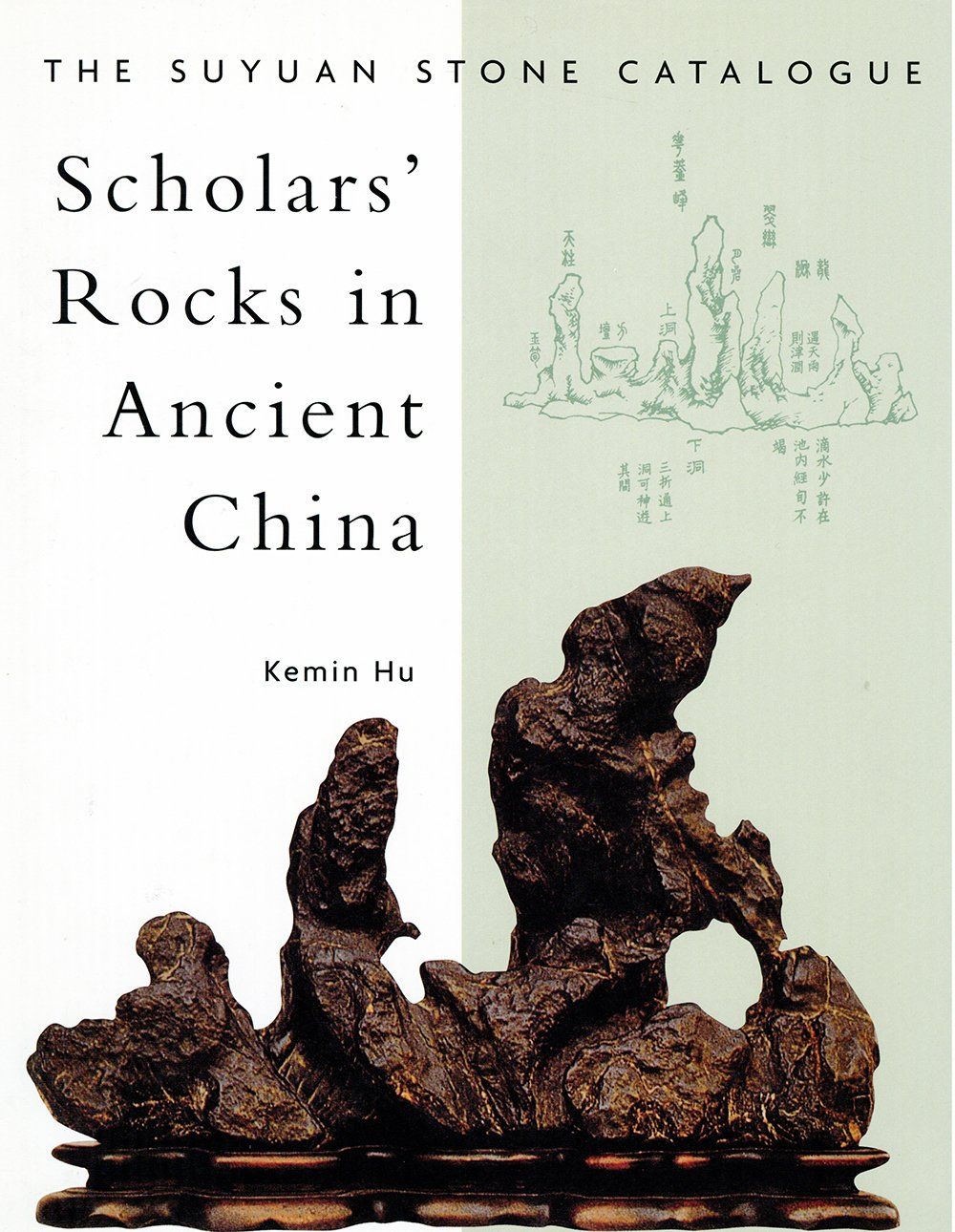
Hu, K. (2002) Scholar’s Rocks in Ancient China | The Suyuan Stone Catalogue. Turnbull, CT, Weatherhill, 163 pp.
Record No. 7586  |  ISBN/ISSN: 9745240168  |  Sinkankas/Born No.: NIS/NIB  |  not seen
VSANA: This is a wonderful book for anyone wishing to learn about stone appreciation in China during the dynasties. This beautifully illustrated work introduces readers to this fascinating aspect of Chinese culture by focusing on the first and most comprehensive illustrated book, the Suyuan Stone Catalog, published in 1613 in China about appreciating stones for their natural beauty. Hu takes twenty of the nearly 100 stones or stone types featured in the early stone catalog and presents information about each in a informative and interesting manner. This is not a book just about stones, because it also includes other stone art forms such as ancient brush rests and Yanshan mountain ink stones. Readers are introduced to important early books, poems, and paintings of stones. This book demonstrates the role that stones played in the lives of the artists, writers, calligraphers, and government officials. Reading Hu’s book helps immensely in understanding the value and importance of the Suyuan Stone Catalog published nearly 500 years ago. The book is attractively designed and the 188-illustrations included in this work are excellent. It has a quality binding and overall production resulting in a long-lasting publication.

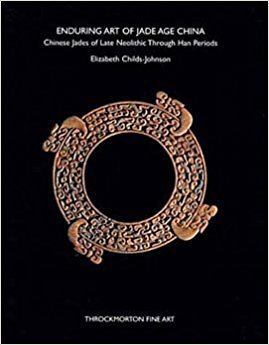
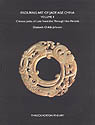
Enduring Art of Jade Age China: Chinese Jades of Late Neolithic Through Han Periods, Volume II
Book
Childs-Johnson, E. (2002) Enduring Art of Jade Age China: Chinese Jades of Late Neolithic Through Han Periods, Volume II. New York, Throckmorton Fine Art, 178 pp.
Record No. 6630  |  ISBN/ISSN: 9788480000000  |  Sinkankas/Born No.: NIS/NIB  |  not seen
This exhibition features fifty works of nephrite selected to represent the 'Jade Age' of China (ca. 4000-2000 BCE) and its historic successors (Xia to Han periods, ca. 2000 BCE-200 CE). All of the jades in the exhibition have been vetted by either the archaeologist at the Nanjing Museum, Lu Jianfang or by the jade specialist at the Palace Museum in Beijing, Zhou Nanquan. With an introduction by Elizabeth Childs-Johnson and articles by Chinese archaeologists Shao Wangping, Lu Jianfang, Hang Tao, and Jiang Song, and scientists Dr. Frank Preusser and Frank Aon.

A literature review on the circulation of jadeite in China
从文献记载考翡翠在中国的流传
Journal Article
Yang, B. (2002) A literature review on the circulation of jadeite in China. [从文献记载考翡翠在中国的流传] Palace Museum Journal, No. 2, pp. 12–24.
Record No. 6312  |  Sinkankas/Born No.: NIS/NIB  |  Language: in Chinese  |  not seen
This paper points out that the spread of jadeite began in the Western Han Dynasty, and was introduced to Yunnan again at the end of the Ming Dynasty, which is called Cuishengshi". In the eleventh year of Emperor Yongzheng's reign in the Qing Dynasty, Yongchang Jasper entered the inner court and was later called Yunnan Jade and Dian Jade, all of which were produced in Burma. In the late Qianlong period, it was hailed as a "rare treasure" in the capital, and its price was far higher than that of "true jade". In the late Qing Dynasty, its price soared, and it was called sky-high. The views on jadeite in Ming and Qing documents are not unbiased, but it is fair to evaluate jadeite in "Yu Shuo". Jadeite is the third-generation emerging jade resource in China's jade altar."

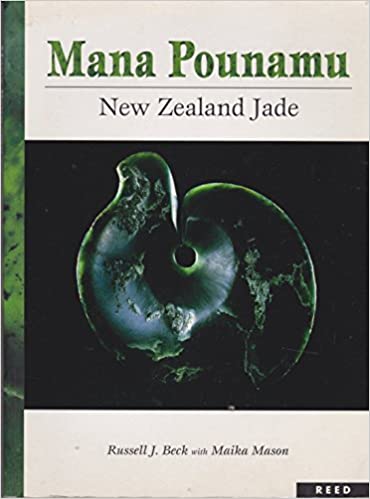
Mana Pounamu: New Zealand Jade

Book
Beck, R.J. and Mason, M. (2002) Mana Pounamu: New Zealand Jade. Auckland, Reed, 184 pp.
Record No. 6145  |  ISBN/ISSN: 9780790000000  |  Sinkankas/Born No.: NIS/NIB  |  not seen
This book is a must for anyone interested in New Zealand history. It tells the story of jade, its origins, varieties, its physical properties, and its role in Maori myths and legends. It also deals with methods of carving the beautiful stone. Russell Beck has studied all aspects of nephrite jade, especially research into Maori usage and involvement with the discovery of new sources and their preservation. He began a career with the Southland Museum and Art Gallery in 1965 and was later appointed Director, a position he held for 23 years until retirement in 1999. He has travelled widely from the Arctic to the Sub Antarctic and has inspected most of the world's nephrite deposits occurring in China, North America, Siberia, East Asia and the South Pacific. Russell is a qualified gemmologist (FGA) and the author of New Zealand Jade, the precursor to this revised book. In addition, he has co-authored international publications, written articles and papers and delivered lectures about New Zealand jade here and overseas. He is also a sculptor, as well as a carver of jade, with several recent public commissions to his credit. His work has attracted several awards and is represented in public and private collections. In 2000 he was made an Officer of the New Zealand Order of Merit (ONZM).

Middle Preclassic jade spoon from Belize

Journal Article
Healy, P.F. and Awe, J.J. (2001) Middle Preclassic jade spoon from Belize. Mexicon, Vol. 23, No. 3, June, pp. 61–64.
Record No. 28717  |  Sinkankas/Born No.: NIS/NIB  |  not seen
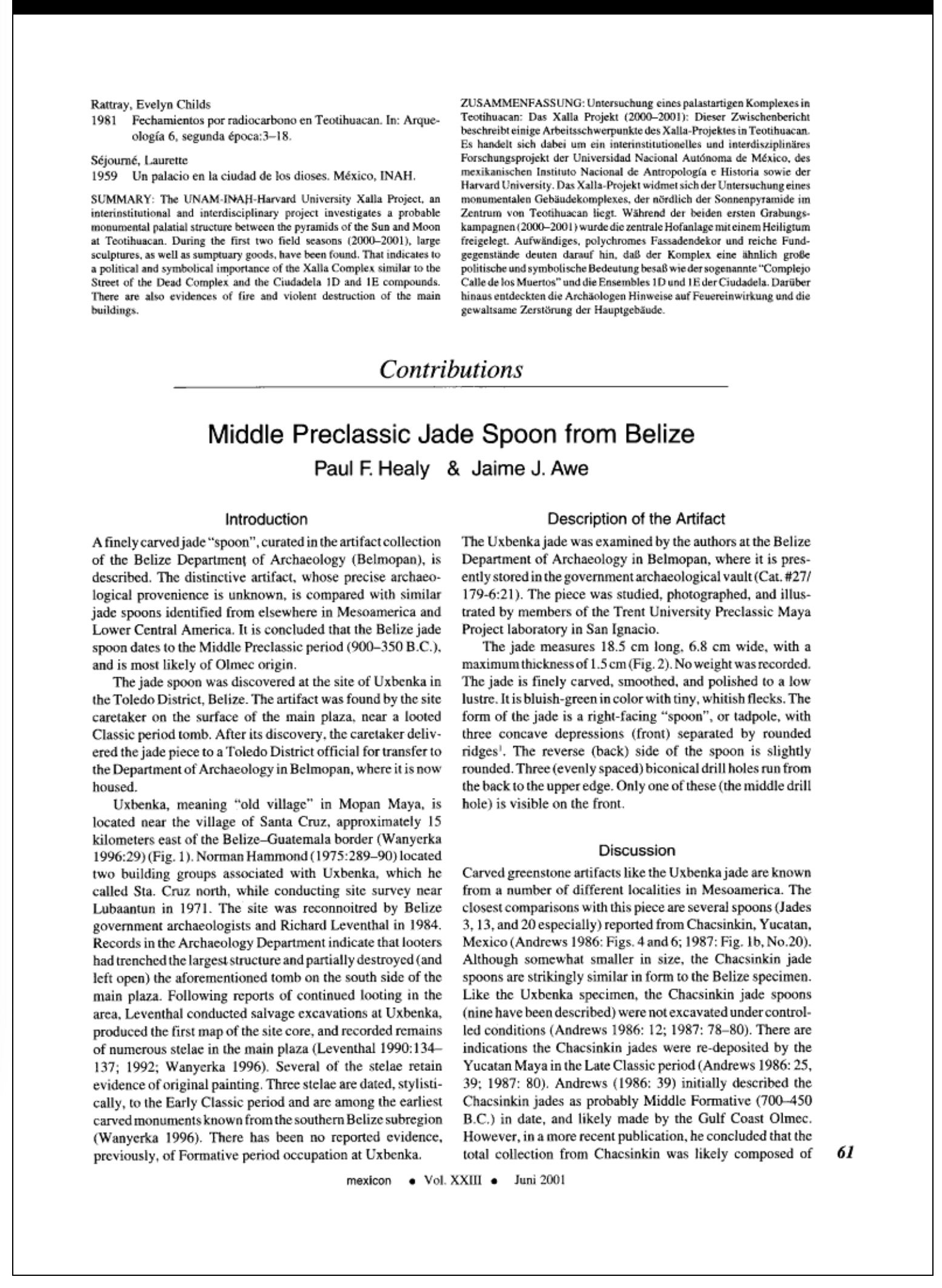
A finely carved jade “spoon,” curated in the artifact collection of the Belize Department of Archaeology in Belmopan, is described. The distinctive artifact, whose precise archaeological provenience is unknown, is compared with similar jade spoons identified elsewhere in Mesoamerica and Lower Central America. It is concluded that the Belize jade spoon dates to the Middle Preclassic period (900–350 BC) and is most likely of Olmec origin. The jade spoon was discovered at the site of Uxbenka in the Toledo District of Belize. The artifact was found by the site caretaker on the surface of the main plaza, near a looted Classic-period tomb. After its discovery, the caretaker delivered the jade piece to a Toledo District official for transfer to the Belize Department of Archaeology in Belmopan, where it is now housed. Uxbenka, meaning “old village” in Mopan Maya, is located near the village of Santa Cruz, approximately 15 kilometres east of the Belize–Guatemala border. Norman Hammond located two building groups associated with Uxbenka, which he called Sta. Cruz North, while conducting a site survey near Lubaantun in 1971. The site was reconnoitred by Belize government archaeologists and Richard Leventhal in 1984. Records in the Archaeology Department indicate that looters had trenched the largest structure and partially destroyed, while leaving open, the aforementioned tomb on the south side of the main plaza. Following reports of continued looting in the area, Leventhal conducted salvage excavations at Uxbenka, produced the first map of the site core, and recorded the remains of numerous stelae in the main plaza. Several of the stelae retain evidence of original painting. Three stelae are dated stylistically to the Early Classic period and are among the earliest carved monuments known from the southern Belize subregion. Prior to the discovery of the jade spoon, there had been no reported evidence of Formative-period occupation at Uxbenka. The Uxbenka jade was examined by the authors at the Belize Department of Archaeology in Belmopan, where it is presently stored in the government archaeological vault (Cat. No. 27/179-6:21). The piece was studied, photographed, and illustrated by members of the Trent University Preclassic Maya Project laboratory in San Ignacio. The jade measures 18.5 cm in length, 6.8 cm in width, and has a maximum thickness of 1.5 cm. No weight was recorded. The artifact is finely carved, smoothed, and polished to a low lustre. It is bluish-green in colour with tiny whitish flecks. The form is that of a right-facing “spoon,” or tadpole, with three concave depressions on the front separated by rounded ridges. The reverse side is slightly rounded. Three evenly spaced biconical drill holes run from the back to the upper edge, although only the central drill hole is visible on the front.
Beads from ancient Sri Lanka – First results of a systematic material analysis
Beads from ancient Sri Lanka – First results of a systematic material analysis

Book Section
Schüssler, U., Rösch, C. and Hock, R. (2001) Beads from ancient Sri Lanka – First results of a systematic material analysis. In: Ancient Ruhana: Sri Lankan-German Archaeological Project in the Southern Province, Materialen zur Allgemeinen und Vergleichenden Archäologie 58, Mainz: Philipp Von Zabern, Vol. 1 , pp. 227–242, 470–494.
Record No. 27398  |  Sinkankas/Born No.: NIS/NIB  |  not seen
Garnet analyses – relates to beads found in context in Samad Culture (3rd c. BC – 8th c. AD) in Oman, SA. 3 raw specimens and ? finished beads. Grossular, also. See esp. n 24 on p. 241. Analyses compared against 6 raw garnets (pyr-alm) from Ratnapura. Tissamaharama / Akurugoda. Anuradhapura Citadel. Also glass analyses, including opaque red glass. Also Ni-rich chlorite, omphacite (jade), lapis lazuli and a blue-colored stone of unusual composition resembling lapis lazuli.

The infrared spectra of Type-B jadeite jades and significance in their identification
B货翡翠的红外光谱特征及鉴定意义
Journal Article
Chen, B., Qui, Z., Wang, M. and Gong, S. (2001) The infrared spectra of Type-B jadeite jades and significance in their identification. [B货翡翠的红外光谱特征及鉴定意义] Acta Mineralogica Sinica, Vol. 21, No. 3, pp. 525–527.
Record No. 26429  |  Sinkankas/Born No.: NIS/NIB  |  Language: in Chinese  |  not seen
Based on the conventional gemmological characterization of nine B-type jadeite samples, infrared spectroscopy was conducted. The results show that the primary absorption peaks of B-type jadeite are a group at 2,959 (or 2,966), 2,931 (or 2,924), and 2,895 cm⁻¹. Additionally, two other spectral bands—at 1,510, 1,581, and 1,609 cm⁻¹, and at 3,040 and 3,060 cm⁻¹—can serve as auxiliary indicators for identifying B-type jadeite, though they are not essential. These findings provide further data for the accurate identification of B-type jadeite.

A study of blue nephrite

Journal Article
Liu, S. and Jing, P. (2001) A study of blue nephrite. Journal of the Gemmological Association of Hong Kong, Vol. 22, pp. 22–30.
Record No. 7838  |  Sinkankas/Born No.: NIS/NIB  |  not seen

Jade Ware

Book
Xianyang Museum (2001) Jade Ware. Beijing, Xianyang Museum, 13 pp.
Record No. 7394  |  ISBN/ISSN: 7501012970  |  Sinkankas/Born No.: NIS/NIB  |  not seen

Enduring Art of Jade Age China: Chinese Jades of Late Neolithic Through Han Periods
Book
Childs-Johnson, E. (2001) Enduring Art of Jade Age China: Chinese Jades of Late Neolithic Through Han Periods. New York, Throckmorton Fine Art, 146 pp.
Record No. 5819  |  Sinkankas/Born No.: NIS/NIB  |  not seen
Catalogue of the exhibition of fine early Chinese jades at the Throckmorton Fine Art, New York. It features archaic jades from the Neolithic period to the Han dynasty. Extensive catalogue entries are written by Dr. Elizabeth Childs-Johnson and questions of authenticity is addressed by Frank Aon, together with two essays by Sun Shoudao and Wen Guang on the Chinese Jage Age.

An Illustrated Handbook of Ancient Chinese Jadewares
中国古玉器图鉴
Edited Book
Yu, J., editor (2001–2003) An Illustrated Handbook of Ancient Chinese Jadewares. [中国古玉器图鉴]. Hangzhou, Zhejiang University Publishing House, 6 Vols., Vol. 1: Liangzhu Wenhua Yuqi. (Jadewares of Liangzhu Culture.); n.p., (6) + 166 color plates + (2) pp.; Vol. 2: Xia Shang Zhou Chunqiu Zhanguo. (Jadewares of Xia, Shang, Zhou, Spring and Autumn, Warring States Periods); (6) + 153 color plates + (2) pp.; Vol. 3: (Handai Yuqi. (Jadewares of Han Dynasty); (6) + 155 color plates + (1) pp.; Vol. X: [Chinese Title] (Jadewares of Tang and Song Dynasty); (6) + 88 pp. + num color plates; Vol. Y: [Chinese Title] (Jadewares of Yuan and Ming Dynasty); (6) + 127 + (1) pp. + 260 color plates; Vol. Z: [Chinese Title] (Jadewares of Qing Dynasty); ((6) + 135 color plates + (1) pp.
Record No. 3883  |  Sinkankas/Born No.: NIS/NIB  |  Language: in Chinese  |  not seen
An illustrated reference to Chinese yu objects, organized in six chronological volumes covering the Liangzhu culture through the Qing dynasty. Photographs and accompanying entries describe object types, materials, decoration, and identifying characteristics, with reference values for collectors. The series emphasizes practical identification and appreciation, providing visual comparisons across successive periods of Chinese carving.

Visible Traces: Rare Book and Special Collections from the National Library ofChina
Book
Hu, P.K. (2000) Visible Traces: Rare Book and Special Collections from the National Library ofChina. New York, Queens Borough Public Library, 370 pp.
Record No. 26461  |  ISBN/ISSN: 9780960000000  |  Sinkankas/Born No.: NIS/NIB  |  ordered 20 May 2025
Visible Traces: Rare Books and Special Collections from the National Library of China showcases an integral part of Chinese history as documentation and as works of art. The collection of inscribed oracle bones, rubbings, manuscripts, maps, printed books, and artifacts from minority cultures traces, in broad strokes, the evolution of the written and printed word in China, against the vivid backdrop of Chinese society and history. The exhibition is divided into 4 main sections: Rare Books and Manuscripts," "Epigraphical and Pictorial Rubbings," "Maps and Atlases," and "Texts and Illustrations from China's Ethnic Minorities." Among the highlights of the exhibition are a Tang-dynasty Dunhuang manuscript of the Lotus Sutra dated 695; examples of color printing, including the "Ink Garden of the Cheng Family" from 1606, "The Ten Bamboo Studio Manual of Calligraphy and Painting" from 1644, and the second series of the "The Mustard Seed Garden Manual of Painting" from 1701. The section on rubbings features many important pieces, including the "Inscription for a Buddhist Image Constructed to Commemorate the Duke of Shiping," well known as one of the "Four Exemplars from Longmen"; a rubbing taken from the monumental "Map of the Prefectural City of Pingjiang", among others. The final section features Buddhist sutras, texts, historical writings, and illustrations in various non-Chinese scripts such as Mongolian, Tibetan, Sanskrit, Tangut, Manchu, Yi, Dai, and Naxi (pictographic and Geba). The catalogue includes about 180 color plates, full descriptive essays for every object in the exhibition, notes and references pertaining to each work, and an extensive bibliography listing more than a century of monographs, articles, exhibition catalogues, and reference works related to the exhibits."

Jade and associated rocks from jade mines area, northern Myanmar as record of a poly-phased high-pressure metamorphism
Journal Article
Goffé, B., Rangin, C. and Maluski, H. (2000) Jade and associated rocks from jade mines area, northern Myanmar as record of a poly-phased high-pressure metamorphism. EOS Transactions American Geophysical Union, Vol. 81, No. 48, pp. F1365.
Record No. 7833  |  Sinkankas/Born No.: NIS/NIB  |  not seen

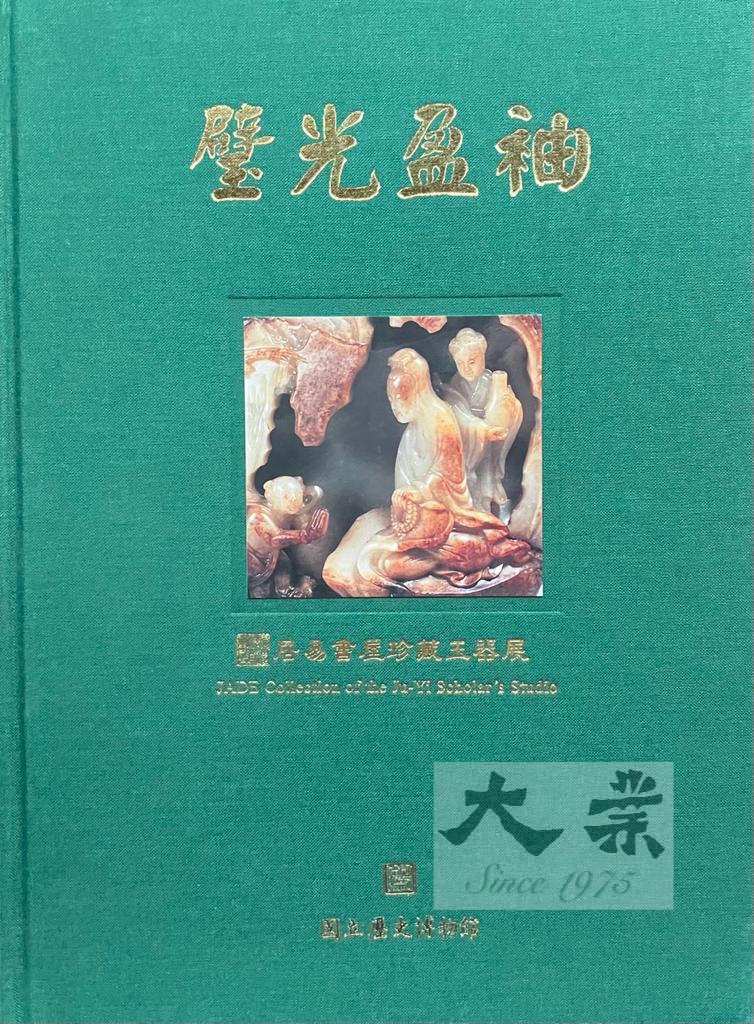
Jade Collection of the Ju-Yi Scholar’s Studio
璧光盈袖 居易書屋珍藏玉器展
Edited Book
Lin, B., editor (2000) Jade Collection of the Ju-Yi Scholar’s Studio. [璧光盈袖 居易書屋珍藏玉器展]. Taipei, National Museum of History, 223 pp..
Record No. 6568  |  ISBN/ISSN: 9570260653  |  Sinkankas/Born No.: NIS/NIB  |  Language: in Chinese  |  seen
Mrs. Guo Shuhui is a remarkable figure in the field of cultural relic collection. Her collection is extensive and diverse, encompassing a wide range of items that are not only complete in variety but also rich in content. Among the most distinctive series are over three hundred pieces of ancient jades dating back to the late Neolithic period and spanning through the Qing Dynasty. In addition to jade bi disks, cong tubes, and other ritual objects, the collection also includes various adornments and curiosities for wearing and display. These items are exquisitely crafted, translucent, and radiate a captivating luster. Exploring this treasure trove not only allows people to understand the diverse development of ancient Chinese jades but also provides a glimpse into the elegant and refined temperament of a female collector, a quality that deserves our careful appreciation. The National Museum of History is dedicated to presenting the beauty of historical artifacts in a diverse manner, timely reflecting the cultural and societal pulse of different eras. The museum has previously organized exhibitions showcasing private collections, and we believe that through Mrs. Guo Shuhui's collection, not only can the public appreciate the aesthetic and intellectual aspects of these cultural relics, but it can also offer insights into the tender and nurturing essence brought forth by the unique perspective of a female collector.

Cathodoluminescence in Geosciences

Edited Book
Pagel, M., Barbin, V., Blanc, P. and Ohnenstetter, D., editor (2000) Cathodoluminescence in Geosciences.. Heidelberg, Springer-Verlag, 514 pp..
Record No. 6507  |  ISBN/ISSN: 9783540000000  |  Sinkankas/Born No.: NIS/NIB  |  not seen
An up-to-date overview of cathodoluminescence microscopy and spectroscopy in the field of geosciences, including new important data on cathodoluminescence spectroscopy, physical parameters and systematic spectral analysis of doped minerals. Each chapter, written by a well-known specialist, covers classic and new fields of application such as carbonate diagenesis, silicates, brittle deformation in sandstones, gemstone recognition, biomineralization, economic geology or geochronology. Useful to all scientists, graduates and professional engineers throughout the geosciences community.

A brief introduction to the Qing Dynasty fei cui

清宫旧藏翡翠器简述
Journal Article
Yang, B. (2000) A brief introduction to the Qing Dynasty fei cui. [清宫旧藏翡翠器简述] Palace Museum Journal, No. 6, pp. 40–44, 93–100.
Record No. 6311  |  Sinkankas/Born No.: NIS/NIB  |  Language: in Chinese  |  not seen
In recent years, the value of cultural relics of jadeite works in Qing Dynasty has been increasing day by day, which has attracted the attention of collectors, connoisseurs and cultural relic workers. In this paper, the naming, origin, time, process and quality identification of jadeite are demonstrated according to relevant historical materials, and some typical jadeite products collected by Qing officials are introduced in order to help deepen people's understanding of jadeite.

Exploring the Literature of Jade

Jade literature spans gemology, mineralogy, archaeology, art history, mining, carving and connoisseurship, and includes works on both jadeite and nephrite from around the world.

For an introduction to collecting books on this subject, read Hidden Treasure — Collecting the Literature of Jade.

About Four Treasures

Four Treasures is Lotus Gemology's freely accessible gemological reference database. Use the full database to search by author, title or keyword and explore literature on gemology, mineralogy, jewelry and related fields. Where available, hyperlinks on titles may lead directly to the full publication.

Search the Complete Four Treasures Database