Explore books, articles and historical sources on jade in Four Treasures, the Lotus Gemology reference database. This bibliography brings together matching records from the collection, with publication details, abstracts and cover images where available.
Jade References
The list below matches the terms jade, jadeite, nephrite or Fei Cui in the database's searchable fields. Some references discuss these materials as part of a broader subject.
3,561–3,580 of 3,779 matching references
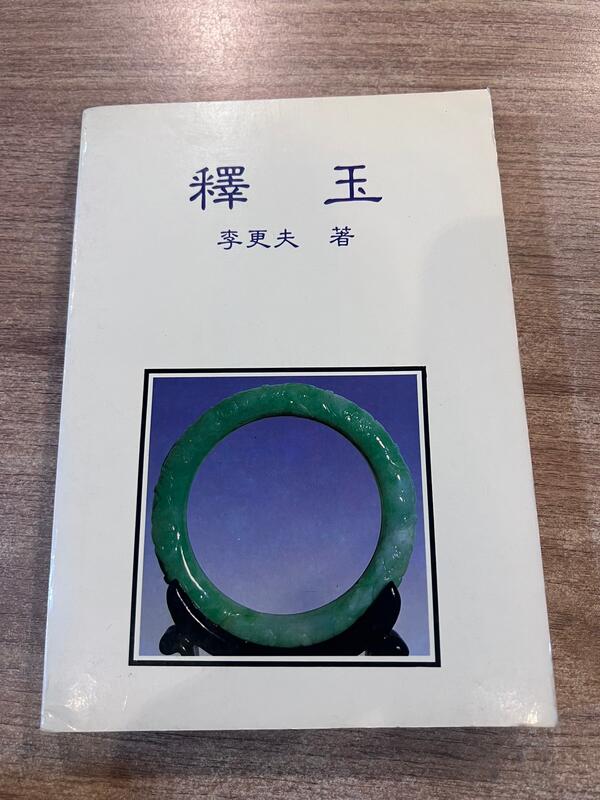
Explaining Yu
釋玉 Shi Yu
Book
Li, G. (1988)Explaining Yu. [釋玉 Shi Yu] Taipei, 増益堂玉器有限公司, 297 pp.
Record No. 7165 | Sinkankas/Born No.: NIS/NIB | Language: in Chinese | not seen
A collection of articles and essays on Chinese jade, covering both ancient and modern jades, jade production, carving, decoration and design. Li discusses the characteristics used in examining and identifying ancient jade, including material, form, ornament, workmanship, surface alteration and other evidence of age. The book combines discussion of jade history and craftsmanship with the author’s practical approach to connoisseurship and authentication. Later commentary characterizes Li’s approach as strongly experience-based, relying on judgments concerning such features as weathering, color, form, decoration and the apparent freshness or antiquity of the jade.
Brief report from the cultural relics expedition to the Lop Nur region
罗布泊地区文物普查简报
Journal Article
Loulan Cultural Relics Expedition Team, Zhang, Y. and Yidilisi/Idris (1988) Brief report from the cultural relics expedition to the Lop Nur region. [罗布泊地区文物普查简报]Cultural Relics of Xinjiang 新疆文物, Vol. 3, No. 3, pp. 85–94.
Record No. 4456 | Sinkankas/Born No.: NIS/NIB | Language: in Chinese | not seen
Reference copied to clipboard!
gems, jade, nephrite, Hetian jade, Khotan, Hotan
Reports the results of a 1988 archaeological survey of the Lop Nur region of Xinjiang, undertaken by the Loulan Cultural Relics Survey Team. The expedition investigated archaeological remains along routes through the Lop Nur desert, recording ancient settlements, communication routes and other cultural remains associated with the Loulan region. A major objective was to clarify the route between Miran and Loulan and to locate the ancient city of Haitou. On 27 April 1988 the team identified the Haitou site, designated LK, and subsequently relocated the nearby LL site previously recorded by Aurel Stein. The survey produced maps, photographs and collected archaeological specimens and established a southwestern route into the Loulan area from Miran. The report provides an important record of the distribution of archaeological sites around Lop Nur and of renewed Chinese field investigation of sites first documented by early twentieth-century explorers.
The dating and identification of jades
Journal Article
Kwan, S.Y. (1988–1992) The dating and identification of jades.Bulletin of the Oriental Ceramic Society of Hong Kong, No. 9,
Record No. 3721 | Sinkankas/Born No.: NIS/NIB | not seen
Some notes on the pig in early Chinese myths and art
Journal Article
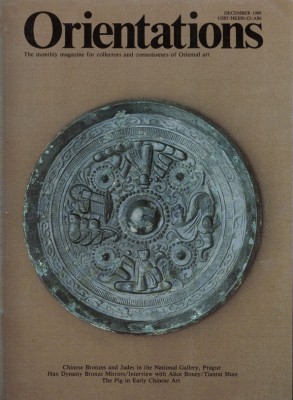
Jao, T. (1988) Some notes on the pig in early Chinese myths and art.Orientations, December, pp. 38–41.
Record No. 3720 | Sinkankas/Born No.: NIS/NIB | not seen
Reference copied to clipboard!
jade, nephrite, Chinese mythology, gems
Chinese Bronzes and Jades in the National Gallery, Prague Han Dynasty Bronze Mirrors Interview with Alice Boney Tiantai Shan The Pig in Early Chinese Art
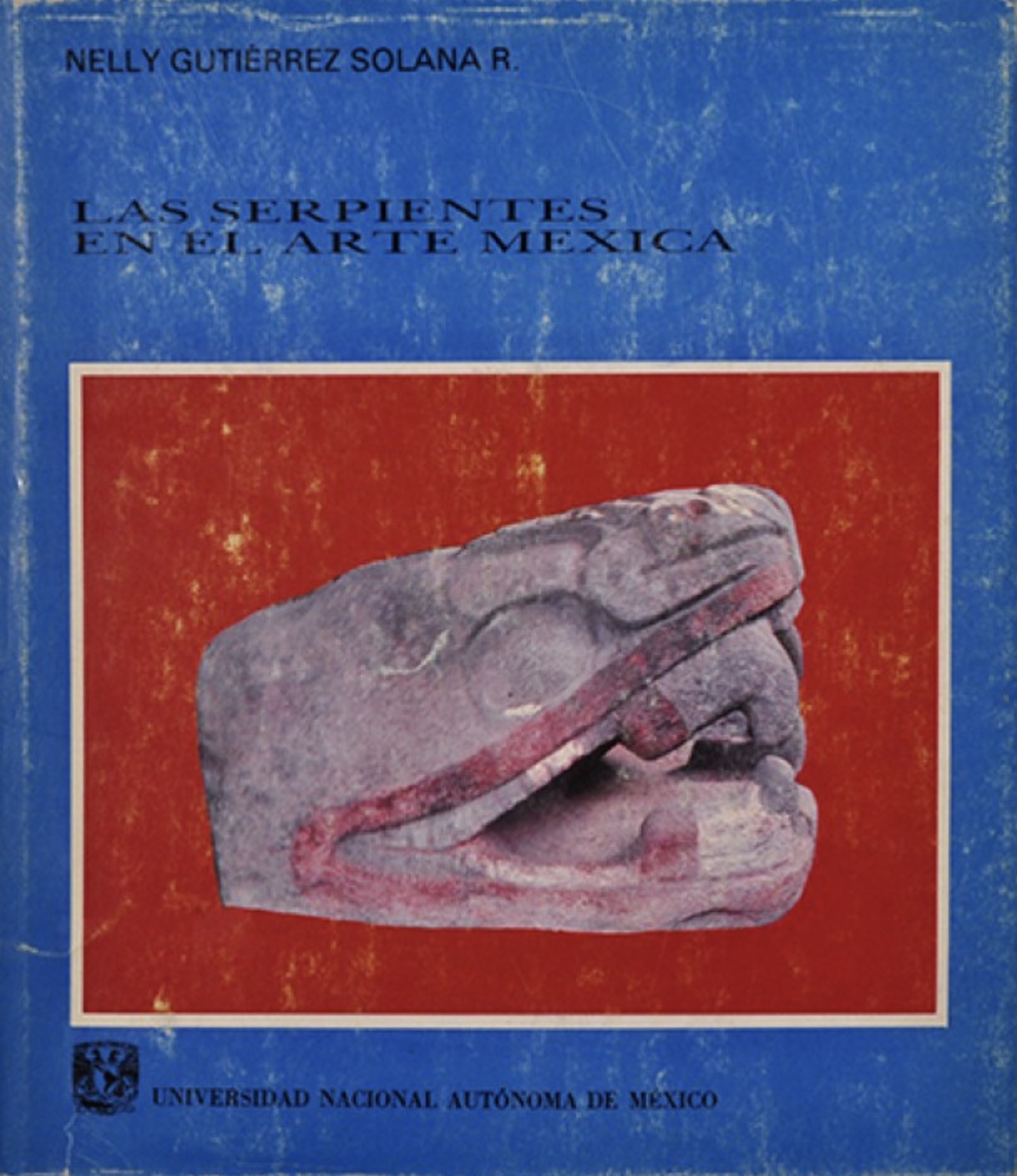
Las serpientes en el arte mexica
Serpents in Mexican Art
Book
Gutiérrez Solana, N. (1987)Las serpientes en el arte mexica. [Serpents in Mexican Art] Mexico City, Universidad Nacional Autónoma de México, 163 pp.
Record No. 28861 | ISBN/ISSN: 9688377465 | Sinkankas/Born No.: NIS/NIB | Language: in Spanish | not seen
Gutiérrez Solana examines the representation and symbolism of serpents in Mexica (Aztec) art, drawing principally on surviving sculpture and related iconographic evidence. She analyzes the physical characteristics used by Mexica artists to distinguish different serpent forms, including the rattlesnake, and develops a classification based on posture, attributes and associated imagery. Particular attention is given to the serpent’s relationships with water, fertility, sexuality and the earth, including its associations with deities such as Tláloc and Chalchiuhtlicue, as well as to feathered and supernatural serpent imagery. By comparing individual representations and their archaeological and religious contexts, the study demonstrates that serpent imagery did not possess a single fixed meaning but acquired different symbolic values according to its attributes and associations. Later iconographic studies continue to use Gutiérrez Solana’s classification of Mexica serpent representations.
Hänni, H.A. and Meyer, J. (1987)Maw-sit-sit (kosmochlore jade): A metamorphic rock with a complex composition from Myanmar (Burma). (Abstract). Proceedings, 26th International Gemmological Conference, Idar-Oberstein pp. 22–24.
Record No. 7713 | Sinkankas/Born No.: NIS/NIB | not seen
Reference copied to clipboard!
jade, jadeite, fei cui, Burma, maw-sit-sit, gems
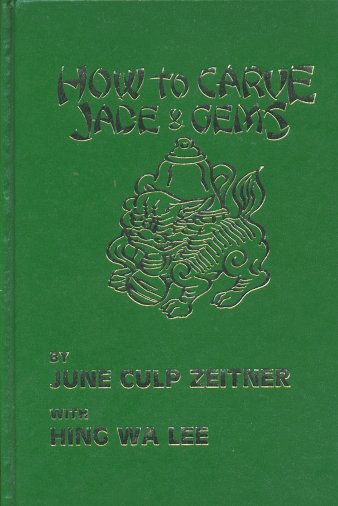
How to Carve Jade & Gems
Book
Zeitner, J.C. and Lee, H.W. (1987)How to Carve Jade & Gems. no city, Northern Gem Press, 130 pp.
Record No. 5850 | Sinkankas/Born No.: 7426 | not seen
Reference copied to clipboard!
gems, jade, nephrite, jadeite, fei cui, lapidary arts
Sinkankas: A book that blends information and advice from the skilled professional carver in the Chinese manner, Hing Wa Lee, and that culled from numerous articles in Lapidary Journal while ignoring others published in other magazines. Topics: appreciation of carvings, gem materials, making small tools & points, step-by-step instructions for making several sample pieces of increasing difficulty, and a potpourri of many tidbits of information. The appendixes give sources of supply, polishes & buffs, Mohs hardness scale, glossary, and carving ideas. The illustrations are largely of Chinese-style pieces made by Hing Wa Lee, and many of them very fine pieces of work. There is much to be learned in this book but it fails to stress the actual manipulations and other moment-by-moment actions that the carver must take during his carving. Rev. John Sinkankas, G & G, 24, 1, Spring 1988, 60–61.
Vonsen’s blue jade
Personal Communication
Gillingham, L. (1987)Vonsen’s blue jade. Oceansiide, CA:
Record No. 4475 | Sinkankas/Born No.: NIS/NIB | not seen
Reference copied to clipboard!
gems, jade, nephrite, California, USA
Jades, jewels
Journal Article
Markel, S. (1987) Jades, jewels.Arts of Asia, Vol. 17, No. 6, Nov.–Dec., pp. 145–147.
Record No. 154 | Sinkankas/Born No.: NIS/NIB | not seen
Reference copied to clipboard!
jade, jadeite, fei cui, nephrite, India, gems, Indian lapidary
El contexto del jade en Costa Rica
The context of jade in Costa Rica
Journal Article
Guerrero, J., Vincente (1986) El contexto del jade en Costa Rica. [The context of jade in Costa Rica]Vínculos, Vol. 12, pp. 69–81.
Record No. 28474 | Sinkankas/Born No.: NIS/NIB | Language: in Spanish | not seen
This article presents the principal data currently known about jade in our country. It discusses the types of sites with which jade is associated, indicating that jade objects are linked to the period from 300 B.C. to A.D. 600. The article also offers several recommendations for future research on jade in Costa Rica.
Technical Analysis of Pre-Columbian Costa Rican Jadeite and Greenstone Artifacts
Thesis
Chenault, M.L. (1986) Technical Analysis of Pre-Columbian Costa Rican Jadeite and Greenstone Artifacts., Boulder: University of Colorado
Record No. 28421 | Sinkankas/Born No.: NIS/NIB | not seen
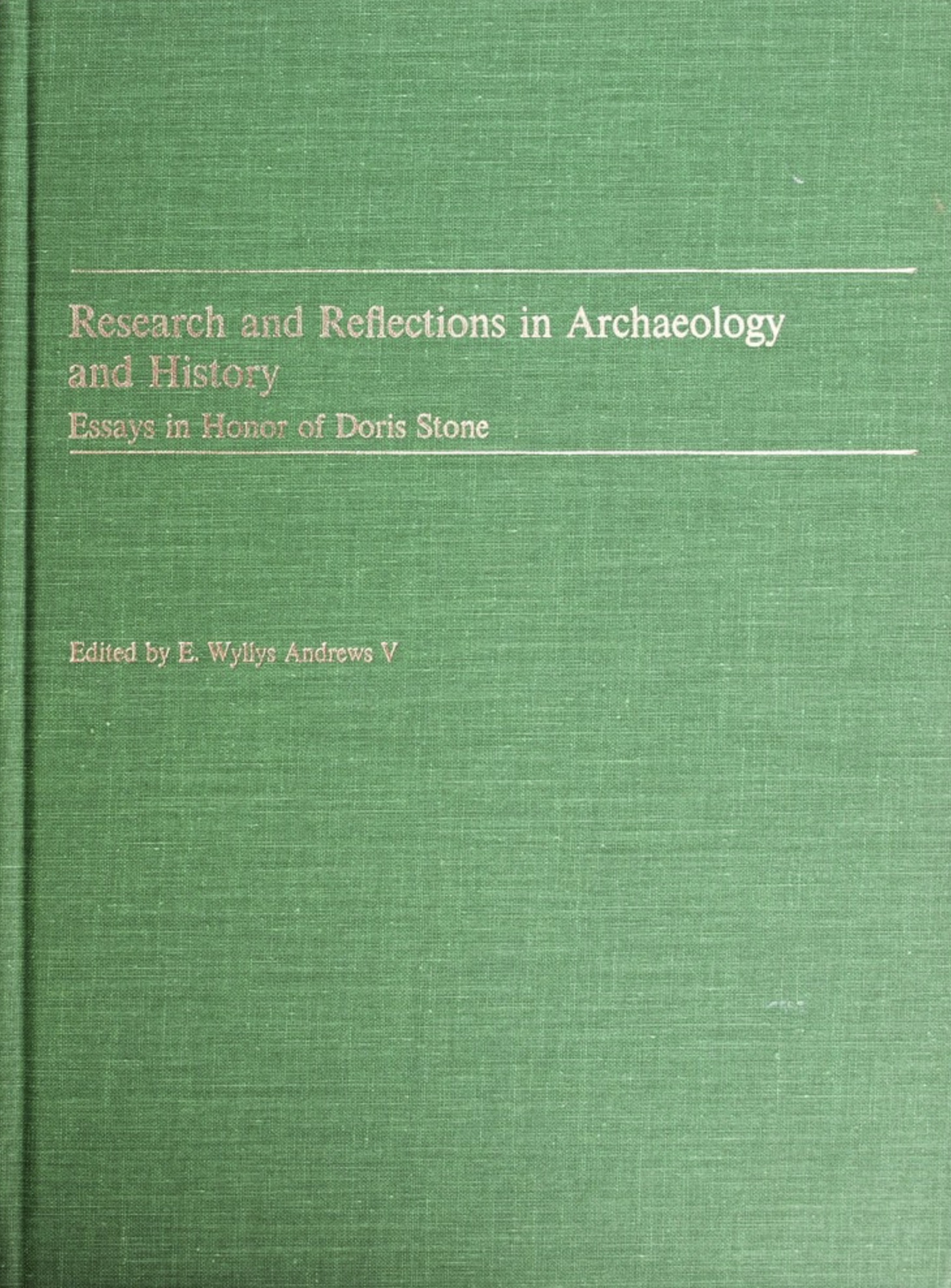
Olmec jades from Chacsinkin, Yucatan, and Maya ceramics from La Venta, Tabasco
Book Section
Andrews, E.W. (1986) Olmec jades from Chacsinkin, Yucatan, and Maya ceramics from La Venta, Tabasco. In: Research and Reflections in Archaeology and History: Essays in Honor of Doris Stone, New Orleans: Middle American Research Institute, Tulane University, Publication 57, pp. 11–47.
Record No. 28293 | ISBN/ISSN: 9780940000000 | Sinkankas/Born No.: NIS/NIB | not seen
Reference copied to clipboard!
gems, jade, jadeite, fei cui, Mesoamerica, Mexico, Guatemala, Costa Rica, Mayans, Olmecs, Aztecs, archaeology, history
Review of Cowell Nephrite Deposits
Journal Article
Flint, D.J. and Dubowski, E.A. (1986) Review of Cowell Nephrite Deposits.Geological Survey, June,
Record No. 7843 | Sinkankas/Born No.: NIS/NIB | not seen
Reference copied to clipboard!
gems, jade, amphibole jade, nephrite, Australia
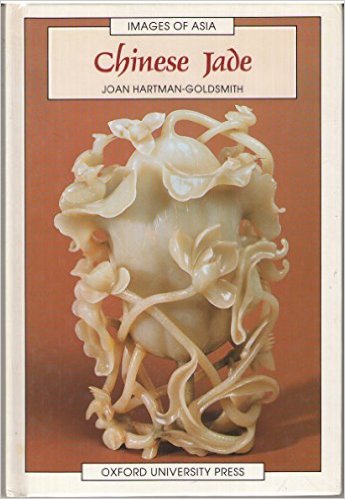
Chinese Jade
Book
Hartman-Goldsmith, J.M. (1986)Chinese Jade. Hong Kong, Oxford University Press, xvi + 81 pp.
Record No. 3591 | Sinkankas/Born No.: NIS/NIB | not seen
Reference copied to clipboard!
jade, jadite, nephrite, China, Chinese jade, gems
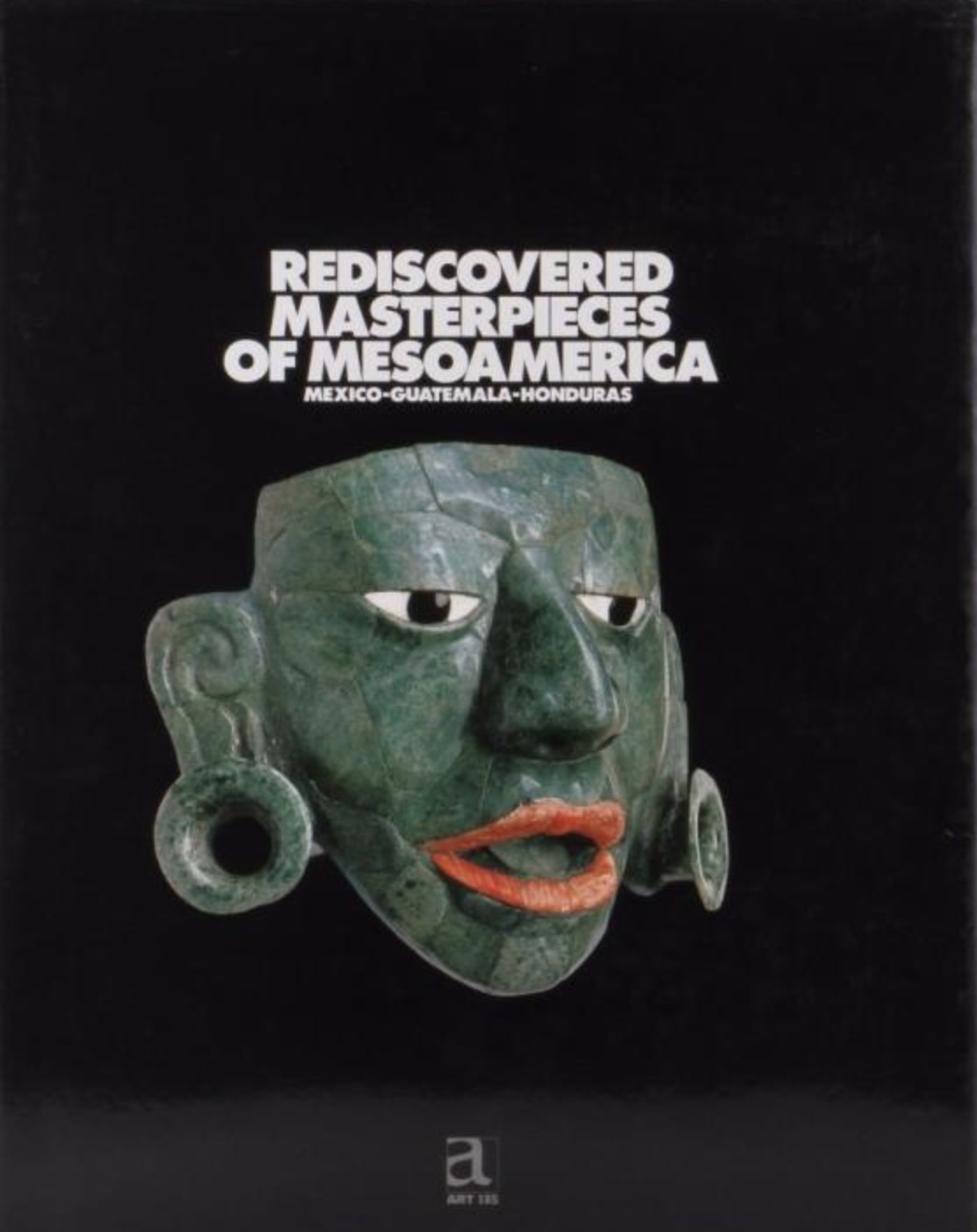
Rediscovered Masterpieces of Mesoamerica: Mexico-Guatemala-Honduras
Book
Bergonneau, G., Deletaille, E. and Sonnery, J.-L. (1985)Rediscovered Masterpieces of Mesoamerica: Mexico-Guatemala-Honduras. Boulonge, France, Editions Arts, 287 pp.
Record No. 28854 | ISBN/ISSN: 9782910000000 | Sinkankas/Born No.: NIS/NIB | not seen
Library Journal: The first in a proposed series on pre- Columbian, Oceanic, and African art, this book is a well designed and lavishly illustrated survey focusing on the sculpture traditions of pre-Columbian Mesoamerica. The very readable text provides an iconographic, social, and stylistic survey of Mesoamerican art in general. Unfortunately, the text does not directly relate to the illustrations and suffers from uneven explanatory documentation of the illustrated art ob jects. Still, the illustrations alone would make this a worthy purchase.
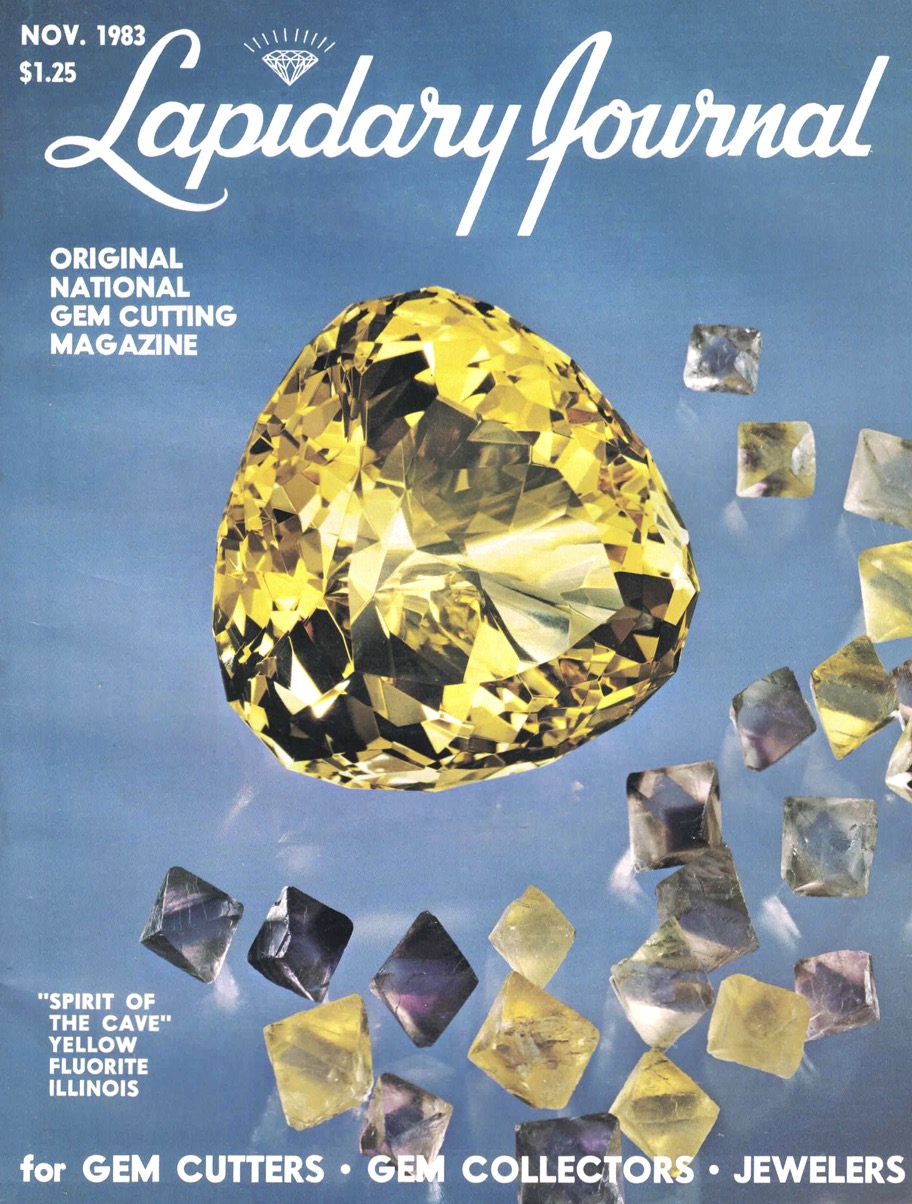
General Electric's synthetic jadeite
Journal Article
Pough, F.H. (1985) General Electric's synthetic jadeite.Lapidary Journal, Vol. 39, No. 7, pp. 42–44.
Record No. 28114 | Sinkankas/Born No.: NIS/NIB | not seen
Fu, L. (1985) On the tools and methods of traditional and modern Chinese jade carving. [論中國傳統與現代之琢玉工具及方法]National Palace Museum Quarterly, No. 2–3, pp. 53–62.
Record No. 8090 | Sinkankas/Born No.: NIS/NIB | Language: in Chinese | not seen
Reference copied to clipboard!
gems, jade, China, Chinese jade carving, Chinese lapidary arts
On the tools and methods of traditional and modern Chinese jade carving Fu Lezhi's foreword Chinese people have been fond of jade since ancient times, which has not changed. In people's minds, it symbolizes auspiciousness and good wishes. Some exquisitely made jade utensils are more favored by people and then treasured. However, when talking about jade in ancient books, most of them specialize in the shape, color and long-standing examination of the era, and rarely mention the process of jade making. Until the 17th year of Yuguang, in the Jade Drawing" written by Li Chengyuan, the process of jade production was drawn, and the text description was added, which became an indispensable material for the production of jade. Although the shape of jade has changed more or less in successive dynasties..."
Xueqin, L.I. and Chang, K.C. (1985) Gold and silver objects and jades. In: Eastern Zhou and Qin Civilizations: Yale University Press, pp. 330–341.
Record No. 5785 | ISBN/ISSN: 9780300000000 | Sinkankas/Born No.: NIS/NIB | not seen
Reference copied to clipboard!
jade, nephrite, China, Xinjiang, Khotan, gems
This landmark study is essential source material for historians of ancient China, archaeologists, art historians, and antiquarians.
Characterization of Mesoamerican jade
Conference Paper
Bishop, R., Sayre, E.V. and Van Zelst, L. (1985)Characterization of Mesoamerican jade. Application of Science to the Examination of Works of Art: Proceedings of the Seminar 7–9 September 1983, Boston: Museum of Fine Arts, pp. 151–156.
Record No. 5071 | Sinkankas/Born No.: NIS/NIB | not seen
Record No. 2420 | Sinkankas/Born No.: NIS/NIB | not seen
Reference copied to clipboard!
Burma, jade, jadeite, fei cui, gems
Exploring the Literature of Jade
Jade literature spans gemology, mineralogy, archaeology, art history, mining, carving and connoisseurship, and includes works on both jadeite and nephrite from around the world.
Four Treasures is Lotus Gemology's freely accessible gemological reference database. Use the full database to search by author, title or keyword and explore literature on gemology, mineralogy, jewelry and related fields. Where available, hyperlinks on titles may lead directly to the full publication.