Jade Bibliography

Jade Bibliography

Explore books, articles and historical sources on jade in Four Treasures, the Lotus Gemology reference database. This bibliography brings together matching records from the collection, with publication details, abstracts and cover images where available.

Jade References

The list below matches the terms jade, jadeite, nephrite or Fei Cui in the database's searchable fields. Some references discuss these materials as part of a broader subject.
161–180 of 3,779 matching references

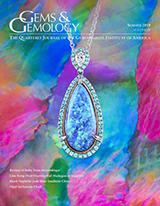
Black nephrite jade from Guangxi, southern China
Journal Article
Zhong, Q., Liao, Z., Qi, L. and Zhou, Z. (2019) Black nephrite jade from Guangxi, southern China. Gems & Gemology, Vol. 55, No. 2, Summer, pp. 198–215.
Record No. 6011  |  ISBN/ISSN: 0016626X  |  DOI: https://dx.doi.org/10.5741/GemS.55.2.198  |  Sinkankas/Born No.: NIS/NIB  |  RWHL*
Twelve black nephrite samples collected from the Guangxi region of southern China were investigated by standard gemological testing, polarized microscopy, scanning electron microscopy, and electron microprobe analysis, as well as infrared, Raman, and ultraviolet/visible/near-infrared spectroscopy. Originating from Ca-skarn contact metasomatism between limestone bearing siliceous rock and diabase intrusions, black nephrite from Guangxi consists mainly of actinolite or ferro-actinolite and minor stilpnomelane, andradite, apatite, epidote, quartz, diopside, pyrrhotite, and pyrite. Its high refractive index (1.625–1.650) and specific gravity (3.015–3.405), as well as its black color in natural light for plate samples and greenish yellow/brownish yellow or pale green/yellowish green/green color in transmitted light for thin-section samples, are primarily attributable to a high iron content: 11.67–25.75 wt.% Fe oxides and a Mg / (Mg + Fe²⁺) ratio of 0.765–0.343. Mid- and near-infrared spectra and Raman spectra are characterized by four vibration bands corresponding to hydroxyl groups coordinated to three cations in M1 and M3 positions for (M M M)OH combinations: (Mg)OH, (MgFe²⁺)OH, (MgFe²⁺)OH, and (Fe²⁺)OH. Their relative intensities further indicate different iron contents and isomorphous substitution of Fe²⁺ for Mg²⁺ ions.

Jade Life

Book
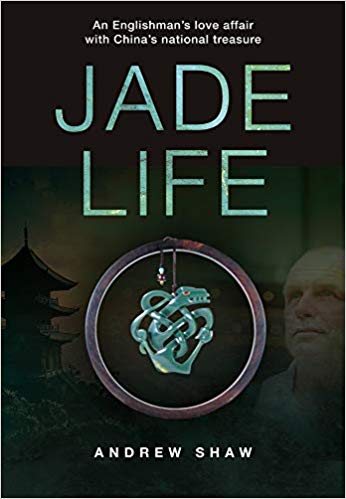
Shaw, A. (2019) Jade Life. Hong Kong, Earnshaw Books, 160 pp.
Record No. 5955  |  ISBN/ISSN: 9789890000000  |  Sinkankas/Born No.: NIS/NIB  |  RWHL*
Jade is often thought of as something ancient and gathering dust in museums, but in China it is a vibrant part of modern life. More jade has been carved this century than in the rest of human history combined. For Chinese people, jade represents everything that is pure and noble, and Andrew Shaw gave up his life in England to embrace it, and became the only foreign master jade carver in China. Jade Life tells his story and also the story of jade itself. His description of the jade industry today provides insights into the hearts of Chinese people and also into how they have managed to turn a backwater state into a world superpower in less than three decades. Andrew Shaw is former BBC reporter who gave it all up to travel to China to study the craft of jade carving. He has become a gold medal winning master carver and now lives with his wife in the city of Suzhou where they run a tea house and jade gallery. Andrew has a a unique style which mixes traditional Chinese ideas with modern Western designs. He is the only foreigner living and working as a jade carver in the middle kingdom and has gained a certain amount of fame as a result. Documentaries and TV programs are often made about him. He has collected a wealth of information about the modern jade industry unmatched in the Western world. There are a lot of people who know about ancient jades collecting dust in museums but no-one in the West knows more about the huge modern jade industry in China than he does.

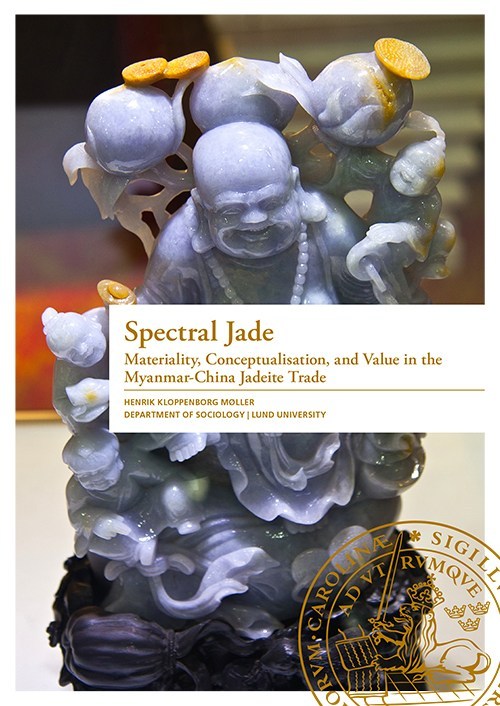
Spectral Jade • Materiality, Conceptualisation, and Value in the Myanmar-China Jadeite Trade
Thesis
Møller, H.K. (2019) Spectral Jade • Materiality, Conceptualisation, and Value in the Myanmar-China Jadeite Trade. Lund University, 361 pp.
Record No. 5656  |  Sinkankas/Born No.: NIS/NIB  |  RWHL*
The trade in jadeite jade is a multi-billion-dollar industry that spans miners and military groups in northern Myanmar, traders and carvers in the Myanmar- China borderlands, and consumers in eastern Chinese cities like Shanghai. Spectral Jade is a study of how the jadeite trade is practiced and why jadeite is so expensive in China. Based on ethnographic research among jadeite traders, carvers, and users, the study presents a spectrum of voices that points to why jade is called ‘The Philosopher’s Stone’ in China, while jadeite could aptly be called ‘Blood Jade’ in Myanmar. Examining interplays of materiality and conceptuality in trade, carving, and use of jadeite, the study considers how nonhuman materiality matters in human imagining, and outlines contours of a Chinese holistic cosmology. Henrik Kloppenborg Møller has done research in, and on China since 2005. His research interests include materiality, authenticity, knowledge, exchange, value, and identity. Spectral Jade is his doctoral dissertation.

Asia Imagined: In the Baur and Cartier Collections
Edited Book
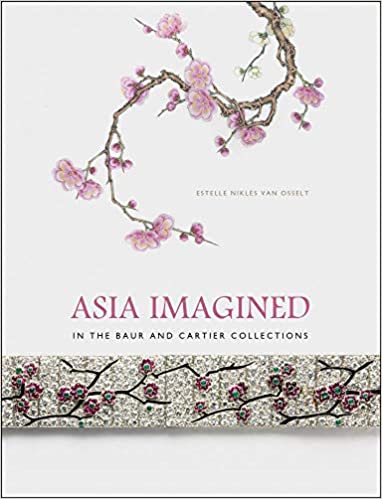
Osselt, E.N., van, editor (2019) Asia Imagined: In the Baur and Cartier Collections.. Milan, 5 Continents Editions, 336 pp..
Record No. 4539  |  ISBN/ISSN: 9788870000000  |  Sinkankas/Born No.: NIS/NIB  |  RWHL*
In the nineteenth and twentieth centuries it was fashionable to collect 'curios', objects so named because they aroused 'curiosity'. Imaginatively decorated and made from different materials, some of which are still underappreciated, these exotic objects from China and Japan fascinated Westerners. They stimulated a fad for Asia, captivated art lovers, and had a profound influence on the graphic arts in Europe. This beguiling period kindled a passion for collecting in Alfred Baur (1865-1951) and for creation in Alfred Cartier (1841-1925) and his three sons, Louis (1875-1942), Pierre (1878-1964), and Jacques (1884-1941). While the pieces fashioned in Asian style by the Maison Cartier are generally known, their historical and cultural context is not, thus the idea arose of bringing these fine creations together with the collections of the Baur Foundation, Museum of Far Eastern Art, based in Geneva. As one leafs through the pages, Asia Imagined slowly becomes apparent, like a treasure hunt. Diamond-studded pagodas and pavilions, busy scholars beneath the starry sky, nacreous moonlight scenes, shimmering phoenixes, jade dragons, and multi-colured cherry blossom-like gems depict an imaginary land. The Cartier magic has its effect. Side-by-side with the creations of the Parisian jeweler, the imperial porcelains, lacquerware embellished with precious metals, embroidered silks, jades, colored enamels, netsuke, sword hilts, and prints belonging to the Baur Foundation give their version of the marvels of China and Japan and install a unique dialogue, offering an exceptional opportunity to view two of the world's most outstanding collections.

Te Hei Tiki • An Enduring Treasure in a Cultural Continuum
Book
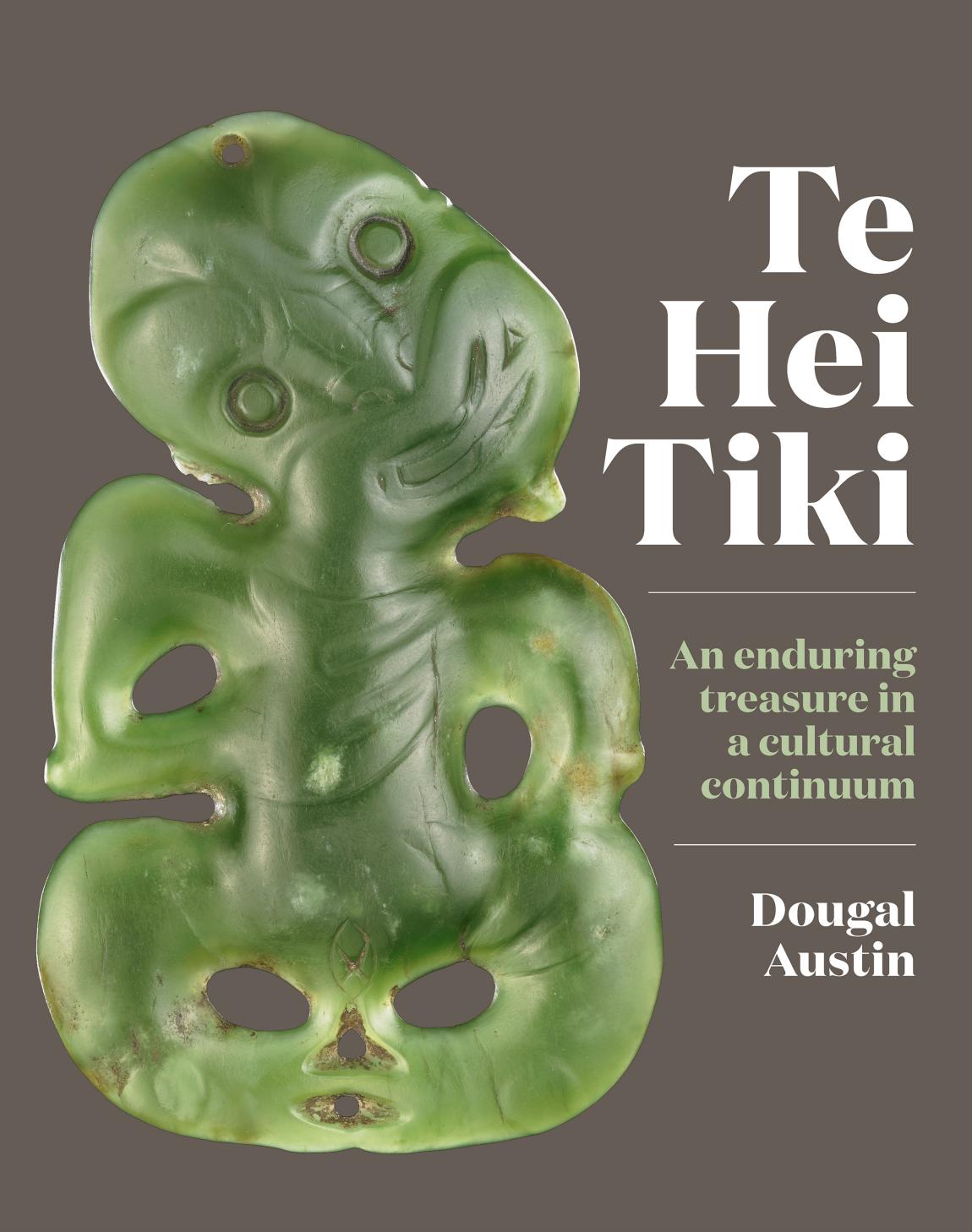
Austin, D. (2019) Te Hei Tiki • An Enduring Treasure in a Cultural Continuum., Te Papa Press, 288 pp.
Record No. 4517  |  ISBN/ISSN: 9781000000000  |  Sinkankas/Born No.: NIS/NIB  |  RWHL*
Of all Māori personal adornments, the human figure pendants known as hei tiki are the most famous, highly prized and culturally iconic. This book celebrates the long history of hei tiki and the enduring cultural potency of these taonga. Te Hei Tiki showcases stunning photographs of a large selection of hei tiki, most from the taonga Māori collections of the Museum of New Zealand Te Papa Tongarewa and provides fascinating details of the history and culture behind them.

Select Jades in the National Palace Museum • Volume 1 • The Spirit of Jade
Edited Book
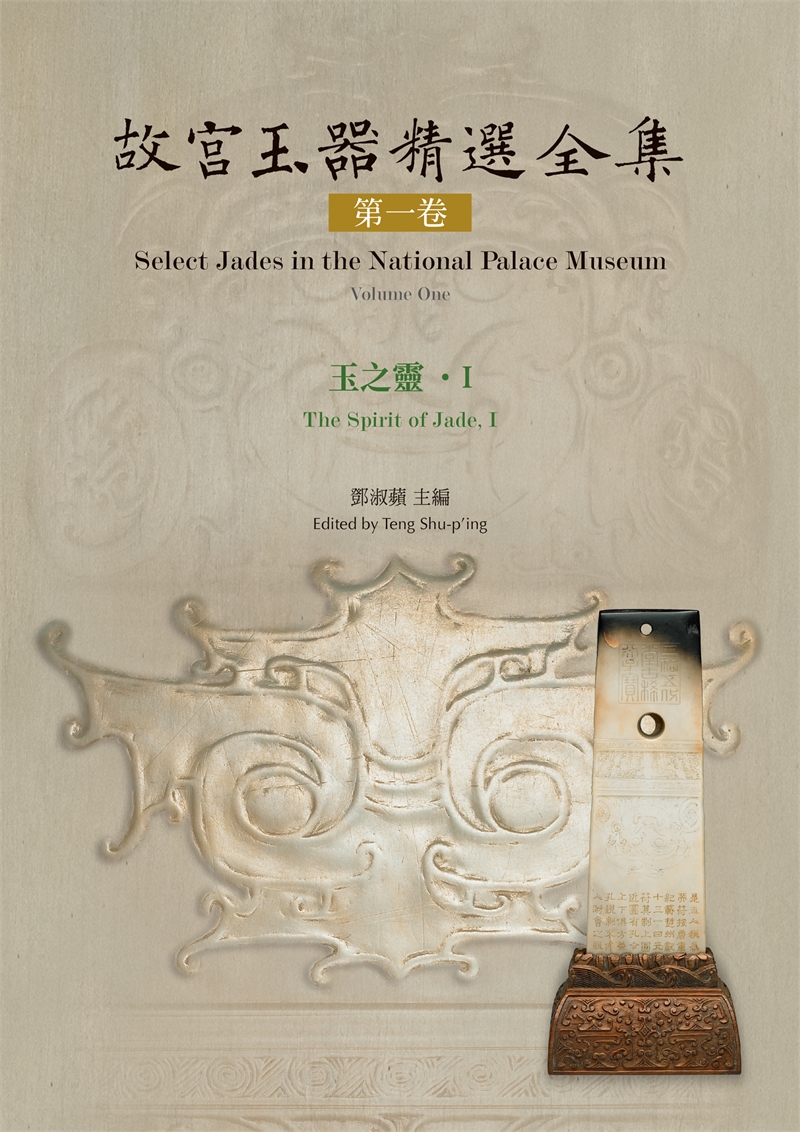
Teng, S.P., editor (2019) Select Jades in the National Palace Museum • Volume 1 • The Spirit of Jade.. Taipei, National Palace Museum, 464 pp..
Record No. 4490  |  ISBN/ISSN: 9789580000000  |  Sinkankas/Born No.: NIS/NIB  |  RWHL*
The National Palace Museum has more than 10,000 pieces of Chinese jade from various historical eras, but most had been collected by the Qing court – only a small portion has come through recent purchases and donations. The old Qing collection records usually mark these with the labels ancient jade" (guyu), "old jade" (jiuyu), and "Han jade" (hanyu), all of which are vague about era and meaning. In recent years, the Museum's staff have reorganized the Qing palace jades and the recently purchased and donated jades in the light of various archaeological materials and in-depth research. On this basis, the Museum is producing a number of exhibitions, publishing research findings, and publishing an entire series of books on these jades. The latter series, entitled Select Jades in the National Palace Museum, covers Chinese jade objects beginning from 8,000 or 9,000 years ago, and it divides this historical legacy into four periods: (1) the Neolithic and Xia eras; (2) the Shang, Zhou, Han, and Jin eras; (3) the Northern and Southern dynasties era to the Yuan dynasty; and (4) the Ming and Qing dynasties. The corresponding parts will be titled "The Spirit of Jade" (which includes the General Introduction), "The Virtue of Jade," "The Blossoms of Jade," and "The Ingenuity of Jade" – titles that highlight the characteristics of jade from their respective eras. Each of these will be subdivided into several volumes, the specific number depending on the quantity of content. The main content of each will also be presented in both Chinese and English."

Classic Collections of 2018 China Jade Carving & Stone Carving Works Awarded with Tian Gong Prize
2018中国玉雕·石雕作品天工奖"典藏集"
Edited Book
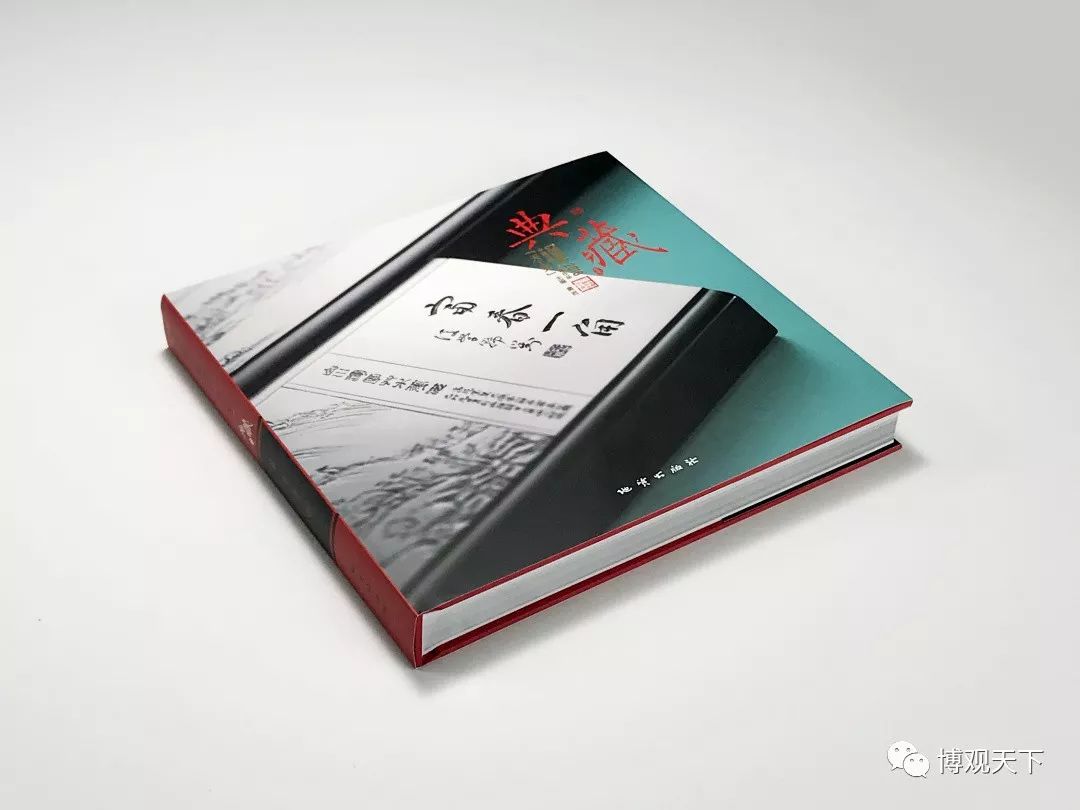
Ao, Y., editor (2019) Classic Collections of 2018 China Jade Carving & Stone Carving Works Awarded with Tian Gong Prize. [2018中国玉雕·石雕作品天工奖"典藏集"]. Beijing, 中国地质大学出版社 [China University of Geosciences Press], ??? pp..
Record No. 4187  |  ISBN/ISSN: 9787120000000  |  Sinkankas/Born No.: NIS/NIB  |  Language: in Chinese  |  not seen*
This catalogue documents the works selected for the 2018 China Jade Carving and Stone Carving “Tian Gong Award,” the annual national competition established in 2002 to recognize contemporary Chinese jade and stone carving. It presents the prize-winning and selected works through extensive color photography, recording their materials, subjects, artists, and craftsmanship. The works encompass traditional and contemporary carving in materials including nephrite, Fei Cui, crystal, and a wide range of other ornamental stones, and demonstrate the diversity of styles, techniques, and subject matter practiced by Chinese lapidary artists. As part of the continuing Tian Gong Award catalogue series, the volume provides an important visual record of contemporary Chinese jade carving and documents changing artistic styles, favored materials, technical achievements, and leading practitioners.

What is jade? Musings of a jade enthusiast
Journal Article
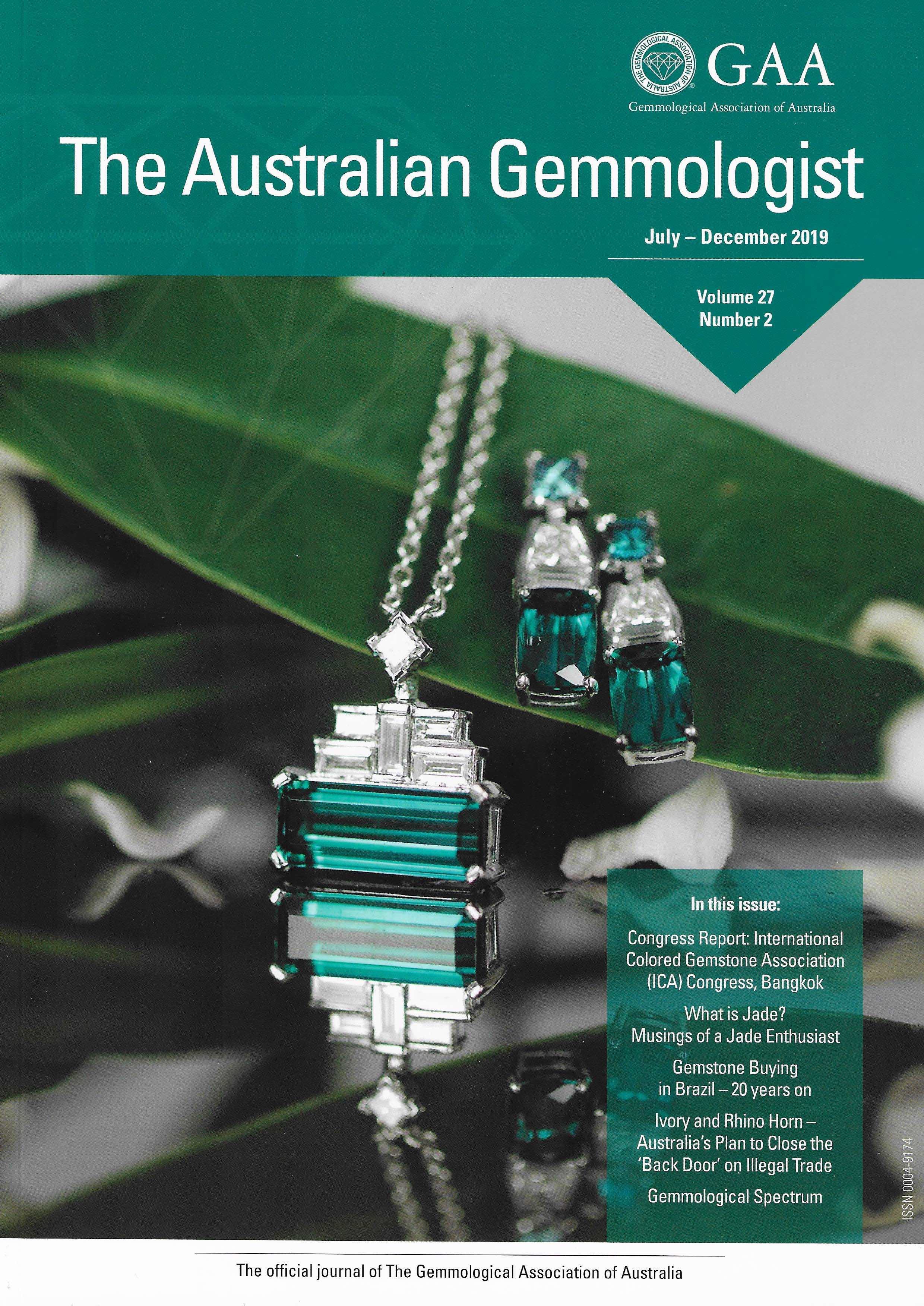
Mercer, I. (2019) What is jade? Musings of a jade enthusiast. Australian Gemmologist, Vol. 27, No. 2, July–December, pp. 56–64.
Record No. 4183  |  Sinkankas/Born No.: NIS/NIB  |  RWHL*
Nice overview of the gem material we call jade.

The importance of jade in the Mughal court
Journal Article
Schneider, T. (2019) The importance of jade in the Mughal court. Gems&Jewellery, Vol. 28, No. 3, Autumn, pp. 32–35.
Record No. 4160  |  ISBN/ISSN: 17468043  |  Sinkankas/Born No.: NIS/NIB  |  RWHL*
Gem-A graduate Taffeta Schneider (FGA DGA) shares an abridged version of her fascinating Gemmology Diploma project on the cultural and symbolic significance of jade to Mughal emperors.

Maharajas & Mughal Magnificence

Catalog
Christie’s (2019) Maharajas & Mughal Magnificence. New York: Christie’s, 19 June, Sale 17464, 2 Vols.; 571, 69 pp..
Record No. 4154  |  Sinkankas/Born No.: NIS/NIB  |  RWHL*
Feast your eyes on an unparalleled collection of Mughal jewels, European-Indian hybrid designs and 20th-Century creations by leading Jewellery houses. Spanning over 500 years of history and sovereign power on the subcontinent, Maharajas & Mughal Magnificence tells the story of a continuous tradition of patronage from the Mughal Empire to present day, with provenance including the royal and noble families of India. This comprehensive trove of nearly 400 diamonds, coloured stones and the finest jewelled objects, swords and daggers will be offered in a landmark auction this June in New York. These objects are offered from The Al Thani Collection. From next year, works of art from this encyclopedic collection will be shown at a new museum space in Paris. In addition to new acquisitions, sale proceeds will support ongoing initiatives of The Al Thani Collection Foundation which extend from exhibitions, publications and lectures to sponsorships of projects at museums around the world.

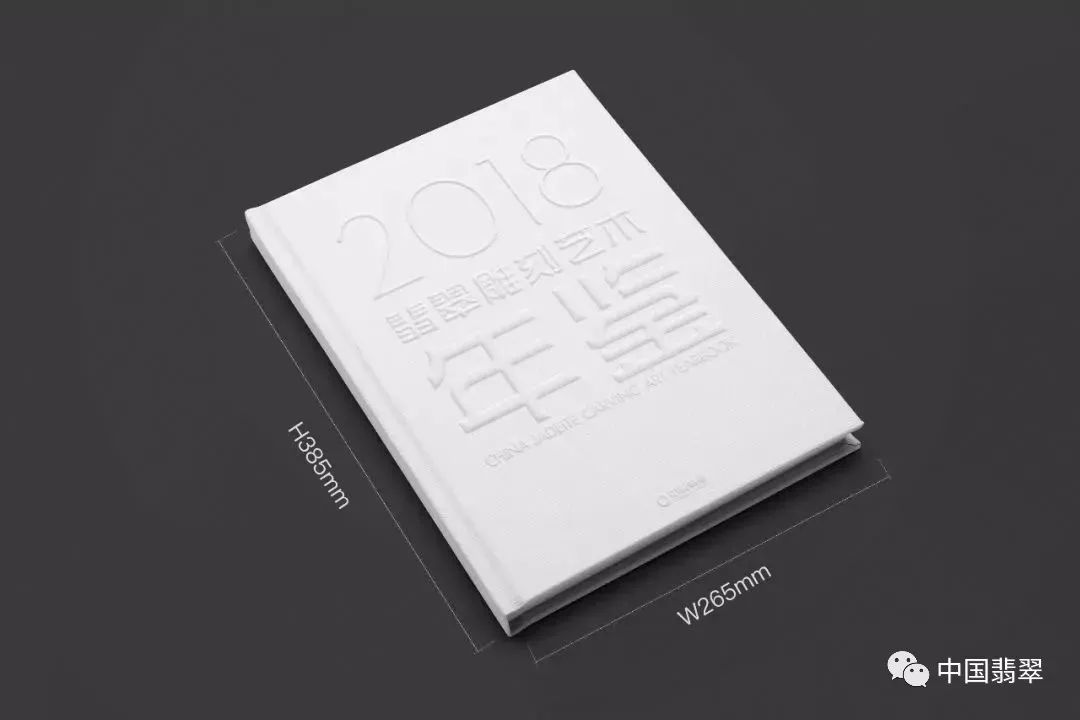
2018 Fei Cui Carving Art Yearbook

2018翡翠雕刻艺术年鉴现
Book
China Jadeite Magazine (2019) 2018 Fei Cui Carving Art Yearbook. [2018翡翠雕刻艺术年鉴现] Wuhan, China, China University of Geosciences Press, 294 pp.
Record No. 4130  |  ISBN/ISSN: 978756254527—9  |  Sinkankas/Born No.: NIS/NIB  |  Language: in Chinese  |  RWHL*
An annual survey of contemporary Chinese fei cui (pyroxene jade) carving, documenting technical advances, artistic exploration, and innovation during 2018. Through selected works, the volume records developments in craftsmanship and aesthetic expression, placing them within the broader cultural and social currents shaping Chinese jade carving. It provides a visual reference for the study and appreciation of contemporary fei cui sculpture.

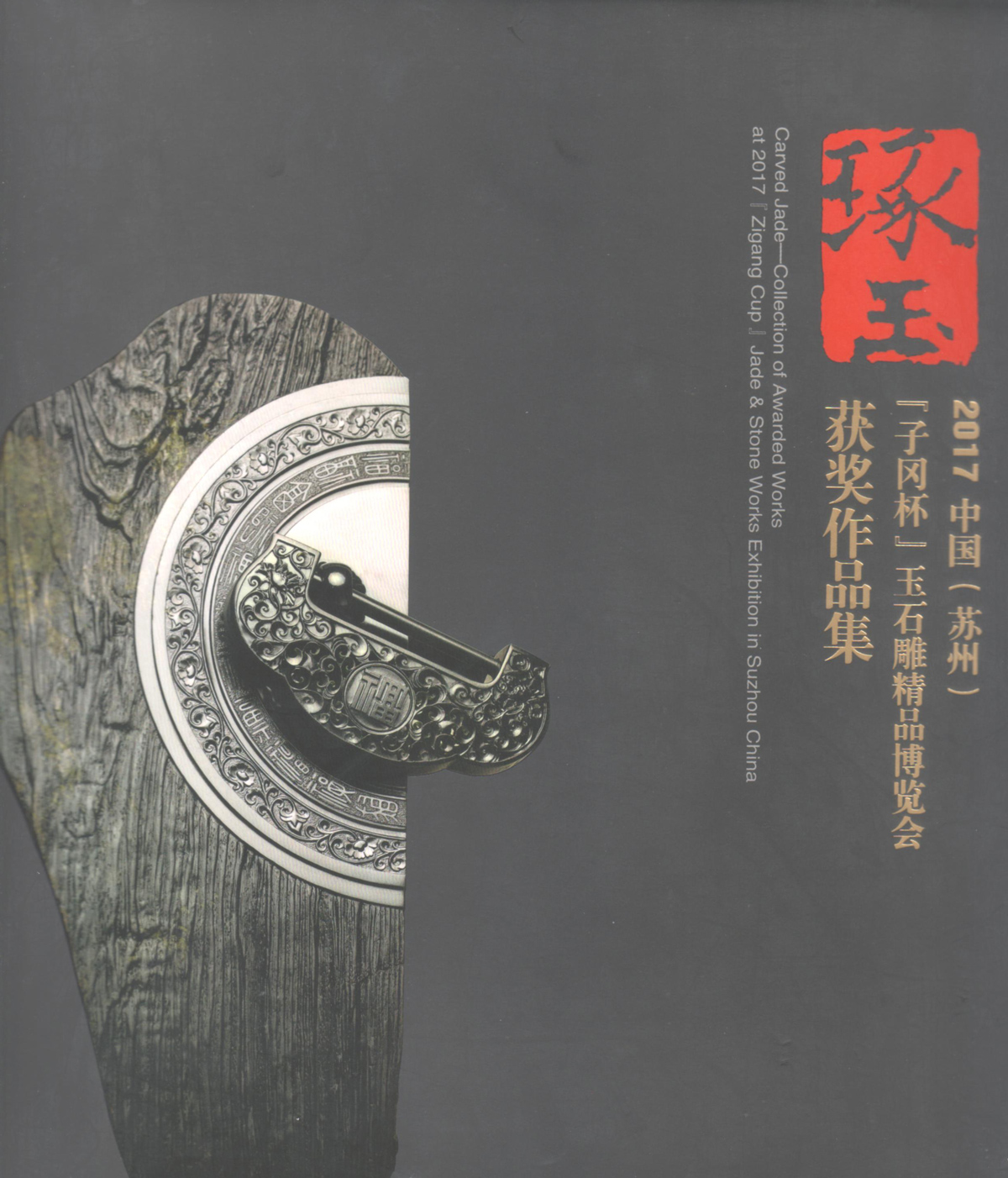
Carved Jade—Collection of Awarded Works at 2017 | Zigang Cup | Jade & Stone Works Exhibition in Suzhou China
琢玉:2017中国(苏州)子冈杯玉石雕精品博览会获奖作品集
Book
Ma, J. (2019) Carved Jade—Collection of Awarded Works at 2017 | Zigang Cup | Jade & Stone Works Exhibition in Suzhou China. [琢玉:2017中国(苏州)子冈杯玉石雕精品博览会获奖作品集] Suzhou, Suzhou Ancient Wuxuan Publishing House Co., Ltd., 194 pp.
Record No. 4123  |  ISBN/ISSN: 9787550000000  |  Sinkankas/Born No.: NIS/NIB  |  Language: in Chinese  |  RWHL*
Collection of the carvings submitted to China’s annual international carving contest in 2017. These represent the cutting edge of gem and jade carving, with entries from around the world. The varieties include ornaments, antiques, mountain carvings, etc.; the materials are white jade, jade, jasper, etc. , High creativity, which reflects the creator's eclectic creative ideas and essence. This book records the new development and new prosperity of China's jade carving business within a year, and has a certain collection value. It is a book for those who love jade and appreciate jade.

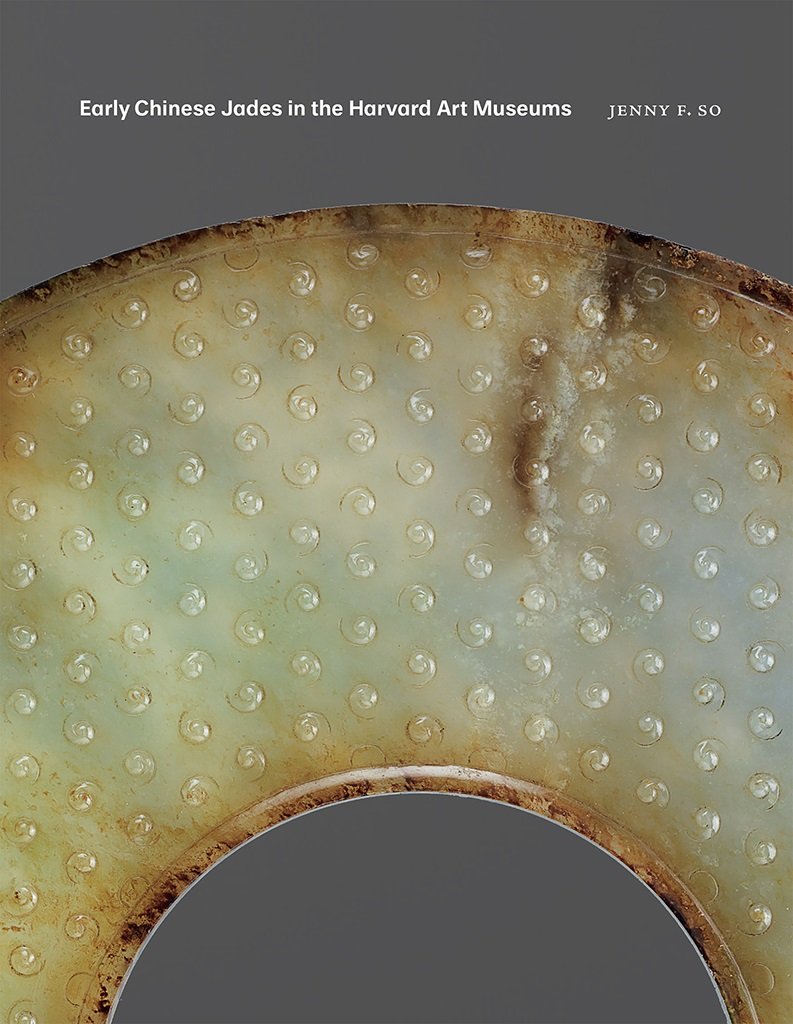
Early Chinese Jades in the Harvard Museum
Book
So, J.F. (2019) Early Chinese Jades in the Harvard Museum. Cambridge, MA, Harvard Art Museums, 360 pp.
Record No. 4116  |  ISBN/ISSN: 9780300000000  |  Sinkankas/Born No.: NIS/NIB  |  RWHL*
Jade has long played a major role in Chinese social, cultural, and political life. From personal ornamentation to funerary practice, from palace decoration to private devotion, this exquisite material has been revered by commoners and rulers alike. This book charts that vast story, beginning with an in-depth exploration of the stone itself—its unique material qualities and the challenges they raise for workmanship—and then moving chronologically to reveal exactly how jade developed its special moral, ritual, and political significance over millennia in China. The book draws particular attention to the peoples and the communities who quarried and worked the material, passing on their knowledge in a tradition that now spans Neolithic times to the present day. This sweeping narrative is told in part through high-quality examples selected from Harvard’s Grenville L. Winthrop Collection, which includes some of the finest examples of ancient or archaizing jades outside China. The volume highlights around one hundred of these jades, carefully chosen for the ways in which they help advance the broader historical narrative the book provides. Interwoven through the book’s main chapters, the Winthrop objects are further explored through engaging catalogue entries that detail the latest available information based on conservation analysis and archaeological finds. Jenny F. So is professor emerita in the Department of Fine Arts at The Chinese University of Hong Kong; she previously served as senior curator of ancient Chinese art at the Freer Gallery of Art and Arthur M. Sackler Gallery, Smithsonian Institution.

Studies in Ancient Mesoamerican Art and Architecture
Edited Book
Taube, K.A., editor (2018, 2022) Studies in Ancient Mesoamerican Art and Architecture.. San Francisco, Precolumbia Mesoweb Press, 2 Volumes, Volume 1 , 363, 444 pp..
Record No. 28719  |  ISBN/ISSN: 9780990000000  |  Sinkankas/Born No.: NIS/NIB  |  RWHL*
Anthology of the various writings of Karl Andreas Taube, the noted expert in Mayan culture and art. As his friend and colleague said: These are examples of Karl’s craft, even his cognitive wiring, a gift for detecting coherent stories. Then there is what can only be understood as an affinity for worldly beauty, the layered metaphors that enrich Mesoamerican imagery and still deliver that powerful punch that makes us whirl for the love of it. Karl is earthy, enjoys a good laugh, an exuberant dance, or a frolic. He admires and delights in stunning objects; he understands emotion and experience. These capacities equipped him to identify, for the first time, ancient Maya clowns, recognizing that certain scenes were intended to be riotously funny, and, more ethereally, that rushing clouds, ripe with rain, could be understood as feathered serpents showering us all with their westbound blessings. Karl discovered that objects pleasing to touch and rub, like jade, carried spirits within. He discerned a paradise filled with floral scents, buzzing bees, and fluttering birds—in the here and now, everywhere, in the impossibly distant past, and in the future as well. It is at this level that Karl’s work acquires a majestic sweep. Curiously, it is also where it becomes most human. His writing has gone beyond academic debate, beyond the dry armature of citations and the conventional introduction-middle-conclusion structure. It has taken us to a world where people laughed, loved, lived, died, and lived again. That is the place he visits, and to which he has invited us to travel in the wonder-filled essays that follow.""

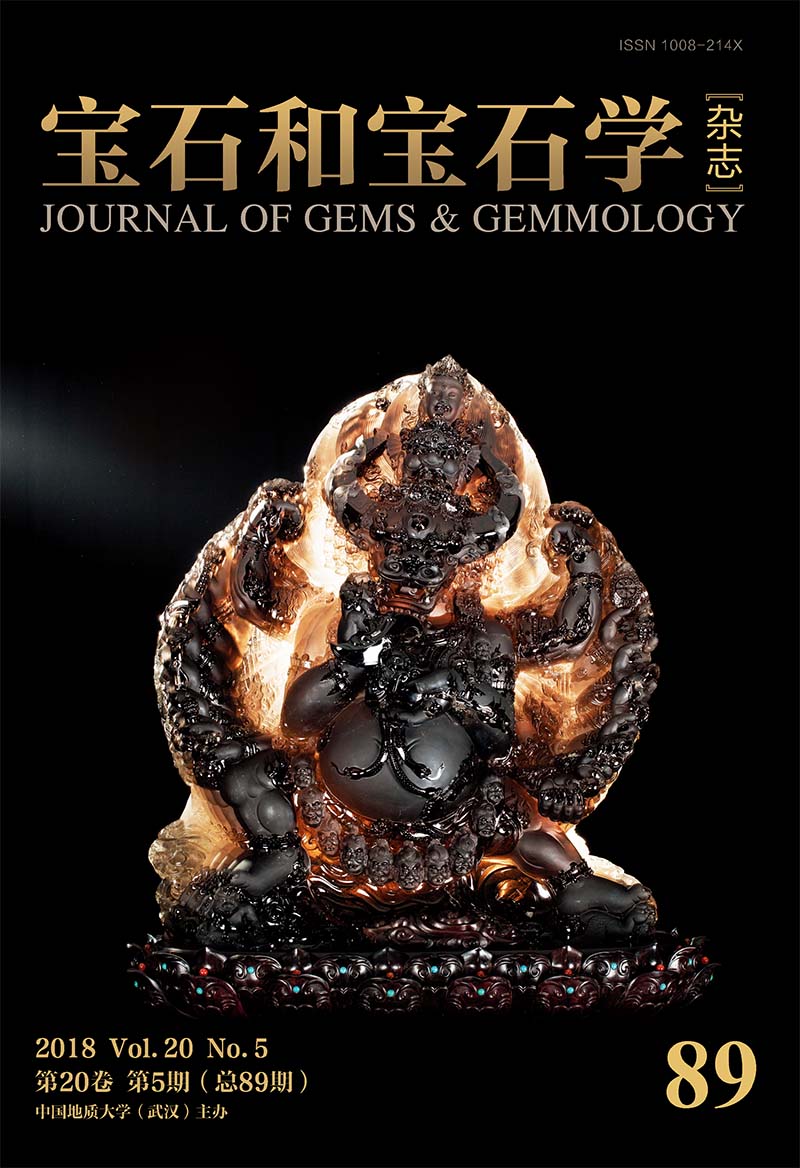
Characteristic and cause of formation of gobi nephrite from southern Xinjiang
Journal Article
Fang, T. (2018) Characteristic and cause of formation of gobi nephrite from southern Xinjiang. Journal of Gems & Gemmology, Vol. 20, No. 5, pp. 27–38.
Record No. 26439  |  DOI: https://dx.doi.org/10.15964/j.cnki.027jgg.2018.05.003  |  Sinkankas/Born No.: NIS/NIB  |  Language: in Chinese with English abstract  |  RWHL*
Gobi nephrite as a large variety of the nephrite was few valued. According to the market and trade of Gobi nephrite in recent years, the Gobi nephrite is more and more popular. Therefore,to explore origins and characteristics of the Gobi nephrite, the author researched the Gobi nephrite from Southern Xinjing. Through visit and field investigation, the distribution characteristics of Gobi nephrite origins were summarized in the papers. The origin characteristics of Gobi nephrite were distinguished according to the Gobi nephrite sample collection. Through the observation of natural Gobi nephrite and its imitation, the identification characteristics of natural and imitatied ones were identified. The papers mainly summarized the distribution of Gobi nephrite in the southern Xinjiang, providing guiding technology for future scientific research and prospecting. The origin characteristics of Gobi nephrite and the identification of natural and imitatied Gobi nephrite are proposed to provide practical help for the naked eye identification.

The evolution of curved beads (magatama 勾玉/曲玉) in Jōmon Period Japan and the development of individual ownership
Journal Article
Nishimura, Y. (2018) The evolution of curved beads (magatama 勾玉/曲玉) in Jōmon Period Japan and the development of individual ownership. Asian Perspectives, Vol. 57, No. 1, pp. 105–158.
Record No. 16978  |  Sinkankas/Born No.: NIS/NIB  |  RWHL*
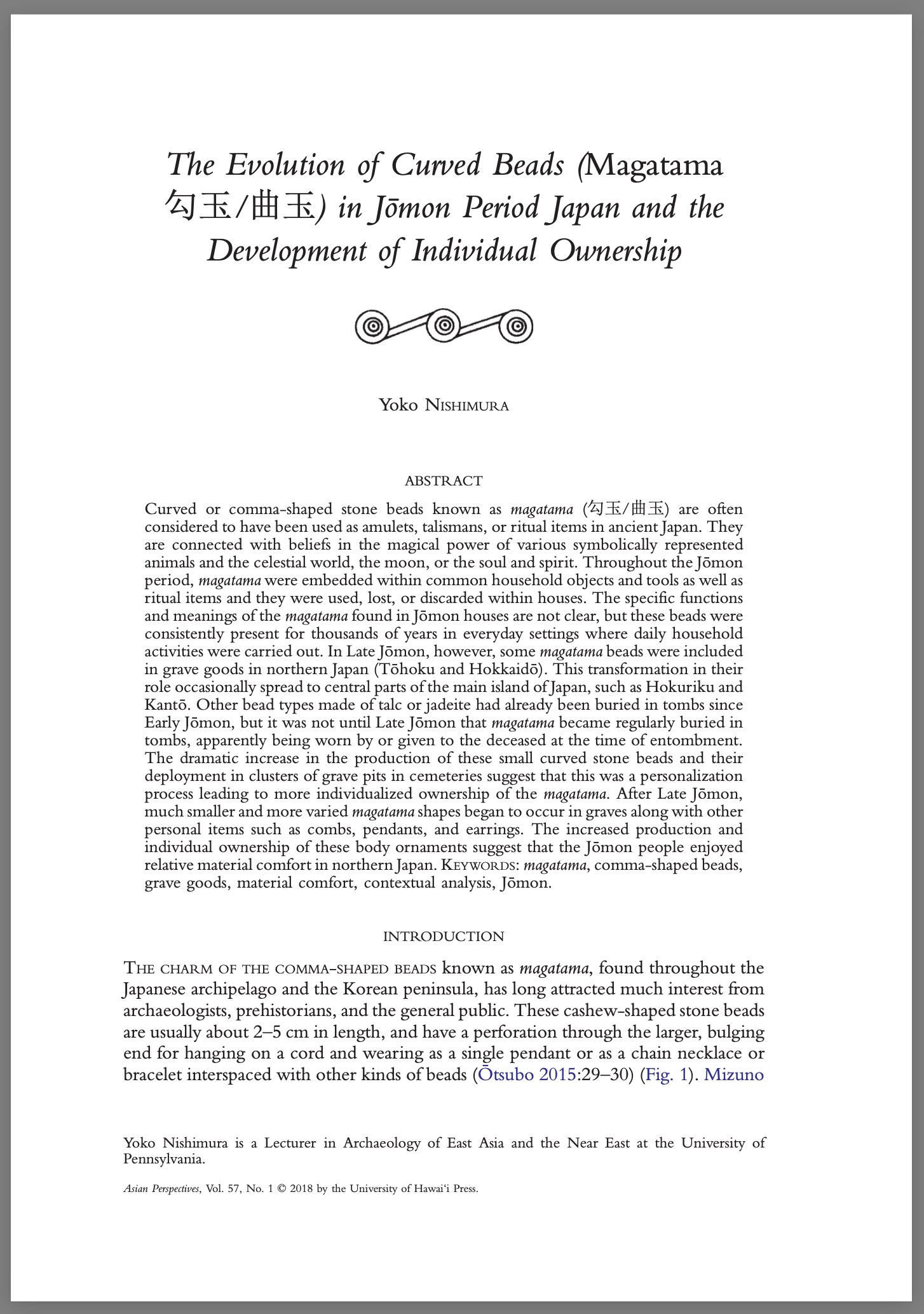
Curved or comma-shaped stone beads known as magatama (勾玉/曲玉) are often considered to have been used as amulets, talismans, or ritual items in ancient Japan. They are connected with beliefs in the magical power of various symbolically represented animals and the celestial world, the moon, or the soul and spirit. Throughout the Jōmon period, magatama were embedded within common household objects and tools as well as ritual items and they were used, lost, or discarded within houses. The specific functions and meanings of the magatama found in Jōmon houses are not clear, but these beads were consistently present for thousands of years in everyday settings where daily household activities were carried out. In Late Jōmon, however, some magatama beads were included in grave goods in northern Japan (Tōhoku and Hokkaidō). This transformation in their role occasionally spread to central parts of the main island of Japan, such as Hokuriku and Kantō. Other bead types made of talc or jadeite had already been buried in tombs since Early Jōmon, but it was not until Late Jōmon that magatama became regularly buried in tombs, apparently being worn by or given to the deceased at the time of entombment. The dramatic increase in the production of these small curved stone beads and their deployment in clusters of grave pits in cemeteries suggest that this was a personalization process leading to more individualized ownership of the magatama. After Late Jōmon, much smaller and more varied magatama shapes began to occur in graves along with other personal items such as combs, pendants, and earrings. The increased production and individual ownership of these body ornaments suggest that the Jōmon people enjoyed relative material comfort in northern Japan.

In Pursuit of Fine Jades | Pictorial Jades | Collection of Michael S.L. Liu
揅琳玉集:玉圖畫:劉瑞隆先生珍藏
Book
Xu, X. and Chen, I.-C. (2018) In Pursuit of Fine Jades | Pictorial Jades | Collection of Michael S.L. Liu. [揅琳玉集:玉圖畫:劉瑞隆先生珍藏] Hong Kong, CA Design, 348 pp.
Record No. 16807  |  ISBN/ISSN: 9789890000000  |  Sinkankas/Born No.: NIS/NIB  |  Language: in Chinese and English  |  RWHL*
In Pursuit of Fine Jades" is a series of books dedicated to the study of beautiful objects made of jade in ancient China from the Michael S. Liu collection. This bilingual catalogue presents the jade collection of Michael S. L. Liu, concentrating on “pictorial jades”—objects whose natural colors, markings, textures, and mineral patterns evoke recognizable images or scenes. Xu and Chen examine the aesthetic appreciation of such material and the ways in which Chinese collectors and craftsmen have responded to naturally occurring features in jade, treating the stone itself as a form of pictorial art. The illustrated objects demonstrate how variations of color and texture can suggest landscapes, figures, animals, plants, clouds, and other imagery, sometimes requiring little or no intervention by the lapidary. Detailed photographs emphasize the relationship between the intrinsic qualities of the material and the visual associations perceived by the viewer. The volume combines connoisseurship, collecting, and close observation of jade, documenting an unusual aspect of Chinese jade appreciation in which naturally formed imagery is valued alongside workmanship and conventional criteria of material quality."

The shield-shaped jade pendant

Journal Article
Erickson, S.N. (2018) The shield-shaped jade pendant. Archives of Asian Art, Vol. 68, No. 2, October, pp. 157–190.
Record No. 16760  |  DOI: https://dx.doi.org/10.1215/00666637-7162237  |  Sinkankas/Born No.: NIS/NIB  |  RWHL*
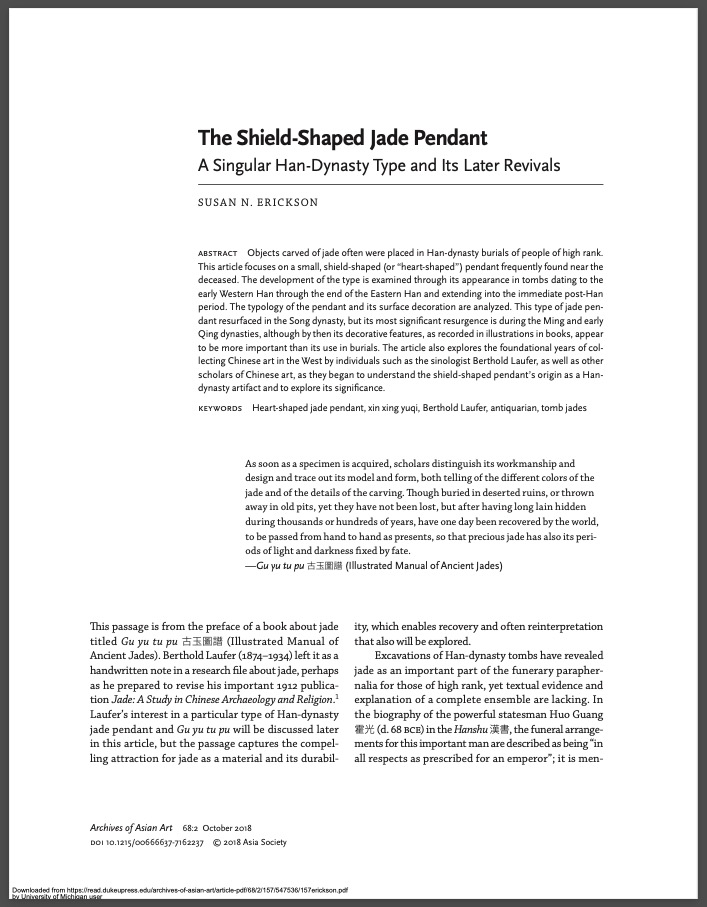
Objects carved of jade often were placed in Han-dynasty burials of people of high rank. This article focuses on a small, shield-shaped (or “heart-shaped”) pendant frequently found near the deceased. The development of the type is examined through its appearance in tombs dating to the early Western Han through the end of the Eastern Han and extending into the immediate post-Han period. The typology of the pendant and its surface decoration are analyzed. This type of jade pendant resurfaced in the Song dynasty, but its most significant resurgence is during the Ming and early Qing dynasties, although by then its decorative features, as recorded in illustrations in books, appear to be more important than its use in burials. The article also explores the foundational years of collecting Chinese art in the West by individuals such as the sinologist Berthold Laufer, as well as other scholars of Chinese art, as they began to understand the shield-shaped pendant’s origin as a Han-dynasty artifact and to explore its signifcance. Quotes extensively from Laufter’s unpublished notes and the Chinese jade classic: Gu yu tu pu 古玉圖譜 (Illustrated Manual of Ancient Jades); also Fang, Fangshi mopu; Shizhuzhai jianpu, “Wen pei.”; Luoxuan biangu jianpu, juan 1, “Diao yu.”

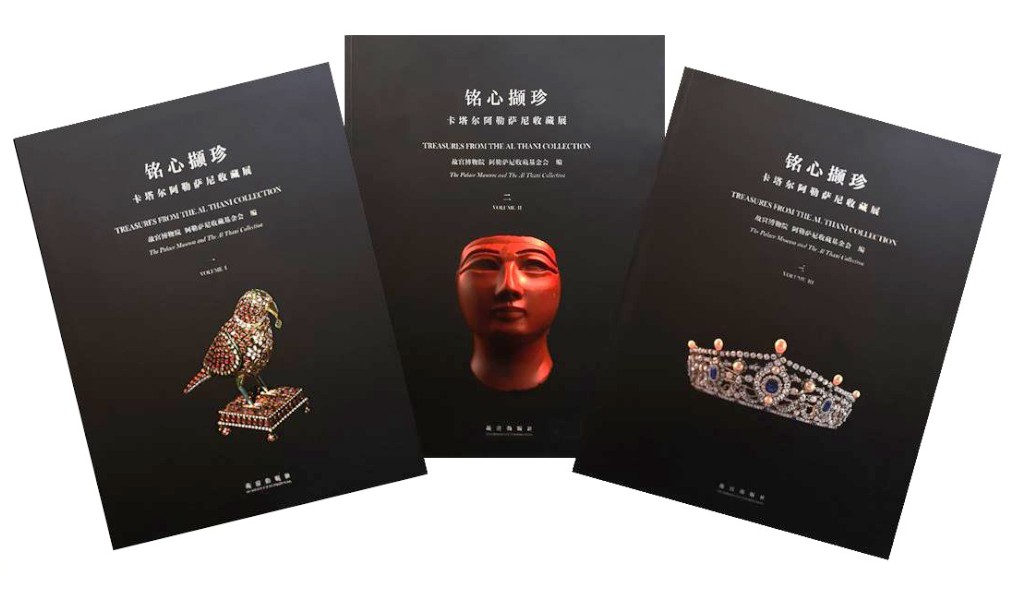
Treasures from the Al Thani Collection
Book
Al Thani Collection (2018) Treasures from the Al Thani Collection. Beijing, Forbidden City Publishing House, 3 Vols., 319, 756 pp.
Record No. 16705  |  ISBN/ISSN: 9787510000000  |  Sinkankas/Born No.: NIS/NIB  |  Language: in Chinese and English  |  RWHL*
Treasures from the Al Thani Collection was an exhibition of artworks from the Al Thani Collection that was held at the Palace Museum in Beijing in 2018. The exhibition featured a diverse selection of artworks from different cultures and time periods. The exhibition featured artworks from antiquity to the early modern period. The exhibition included manuscripts, miniatures, metalwork, textiles, and jewelry. The exhibition included works from different civilizations, such as Egypt, China, Maya, and Cycladic. Sheikh Hamad bin Abdullah Al Thani is a member of the Qatari royal family and a distinguished collector. The first volume of the set documents the exhibition “The Gems and Jewels of India”. It is split into different sections including: The Mughal Treasury; Dynastic Gem and Jewels; Objects of Jade and Rock Crystal; Objects in Gold and Enamel; Regalia and Jewelled Ornaments; Cartier and the Great European Jewellers, and, finally, Contemporary Creations. The second and third volumes both document a second exhibition, held in 2018, entitled “Masterpieces from a Royal Collection”. Volume II focuses on ‘The Ancient World’ and ‘The Wider World’. The former includes Egyptian, Greek and Roman, Mesopotamian and Iranian works as well as Central Asian treasures, whilst the latter has objects from China, Pre- Columbian Central and South America, Africa and the Pacific. Volume III is split more specifically into ‘The Islamic World’ and ‘The European World’. Each theme is further devided into sub sections which cover all aspects of art including Manuscripts, Miniatures, Metalwork and Textiles, or Medieval Reliquaries, Limoges Enamels, Renaissance Jewellery, Rock Crystal and Wunderkammer objects, Silver, Jewellery (Cartier, Melerio, Chaumet, Bolin) and 54 pieces by Fabergé.

Analysis and appraisal of the diverse Islamic jades in the Qing palace collection

Journal Article
Teng, S.P. (2018) Analysis and appraisal of the diverse Islamic jades in the Qing palace collection. Transactions of the Oriental Ceramic Society, Vol. 81 • 2016–17, pp. 77–86.
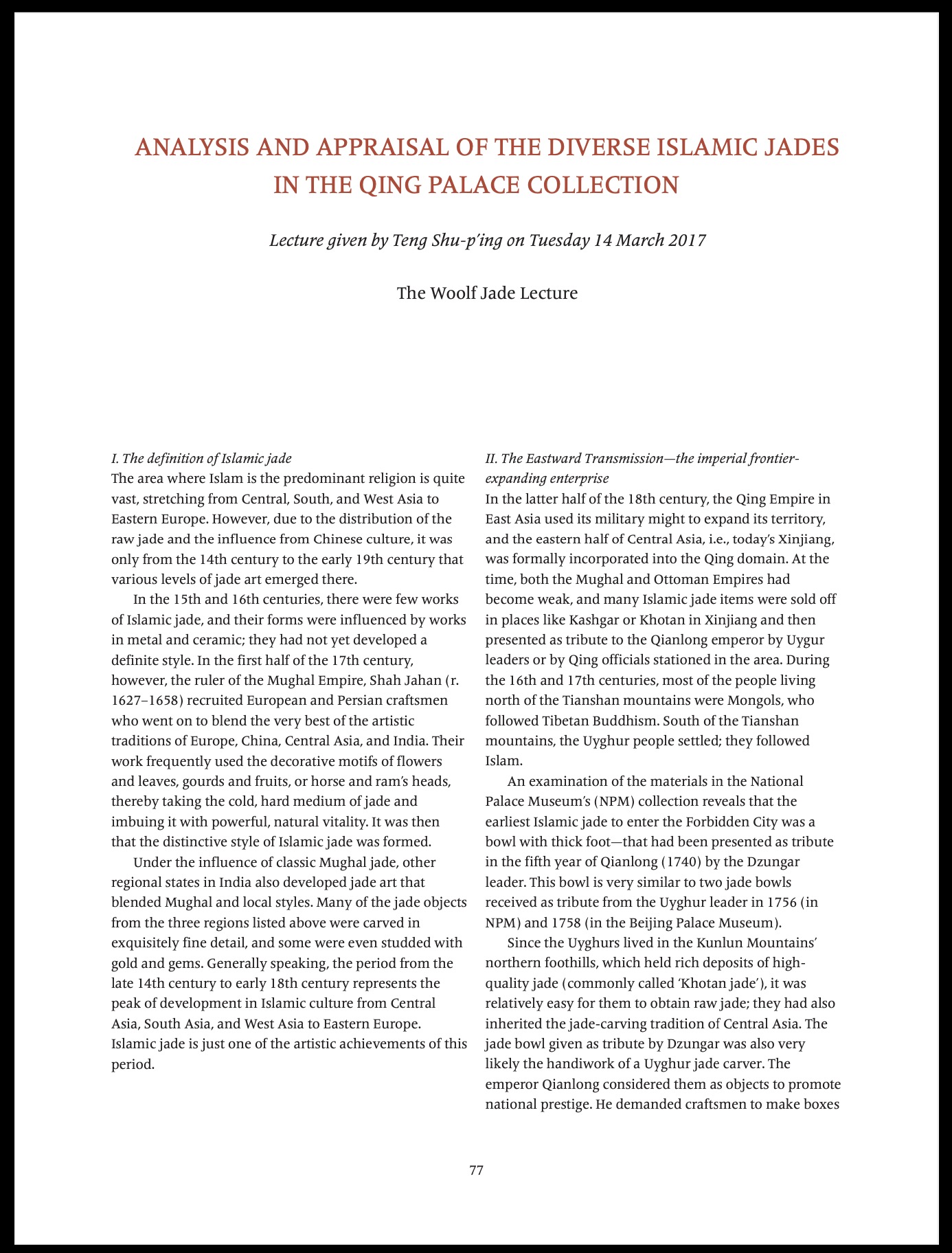
Record No. 6635  |  Sinkankas/Born No.: NIS/NIB  |  RWHL*

Exploring the Literature of Jade

Jade literature spans gemology, mineralogy, archaeology, art history, mining, carving and connoisseurship, and includes works on both jadeite and nephrite from around the world.

For an introduction to collecting books on this subject, read Hidden Treasure — Collecting the Literature of Jade.

About Four Treasures

Four Treasures is Lotus Gemology's freely accessible gemological reference database. Use the full database to search by author, title or keyword and explore literature on gemology, mineralogy, jewelry and related fields. Where available, hyperlinks on titles may lead directly to the full publication.

Search the Complete Four Treasures Database