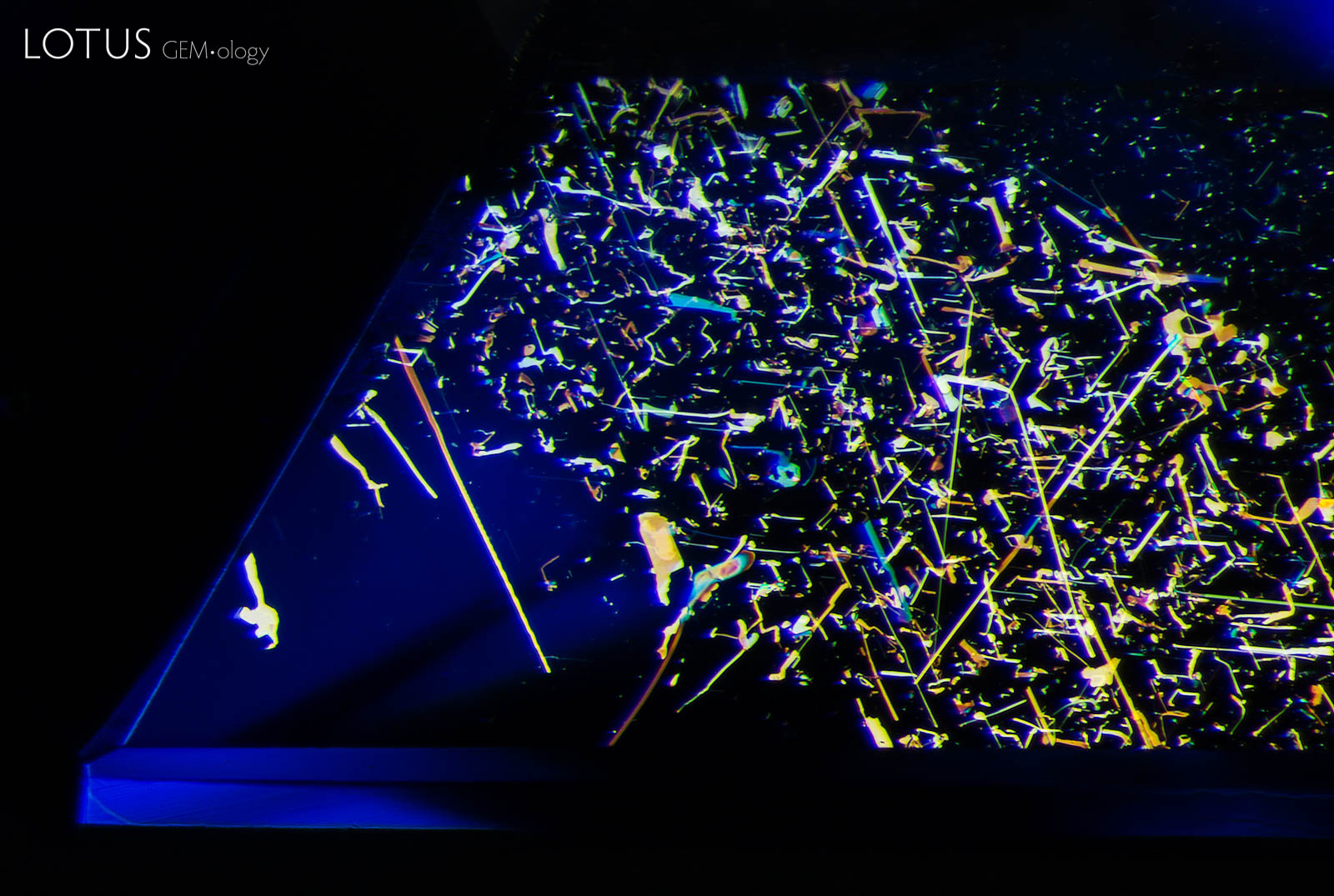
Sapphire Inclusions
Explore sapphire inclusions in Hyperion, the Lotus Gemology inclusion database. Hyperion contains photomicrographs of inclusions and internal features in natural sapphire, documented with information on geographic origin, treatment, lighting conditions, field of view, photographer and published references.
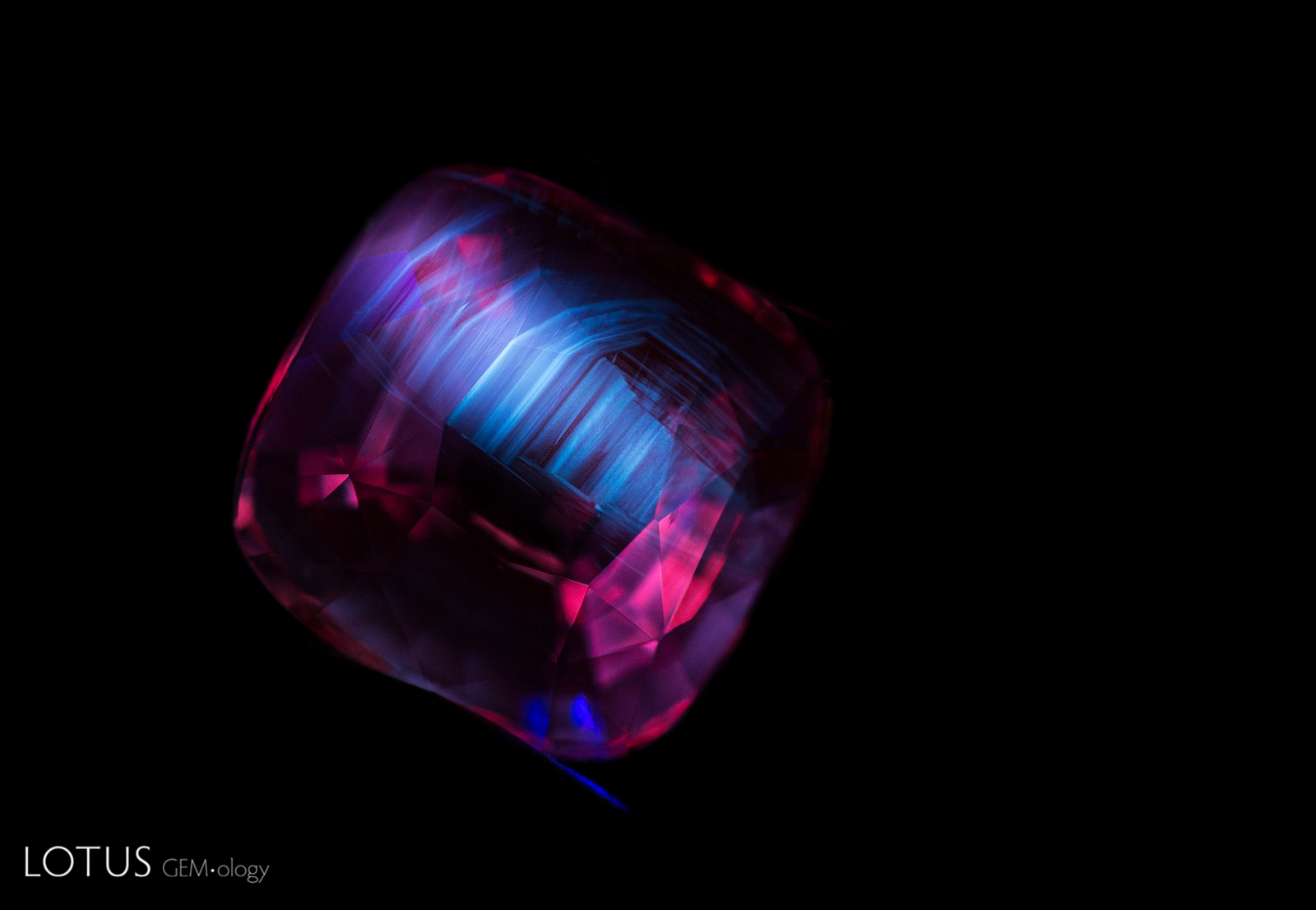
Angular zoned chalky fluorescence like this is a tell-tale sign of heat treatment.
Natural Sapphire •
Sri Lanka (Ceylon) •
Enhancements:
Heat (H) •
Lighting Conditions:
Ultraviolet: Short Wave
Photographer:
E. Billie Hughes •
Image Number:
A-003-4376-1
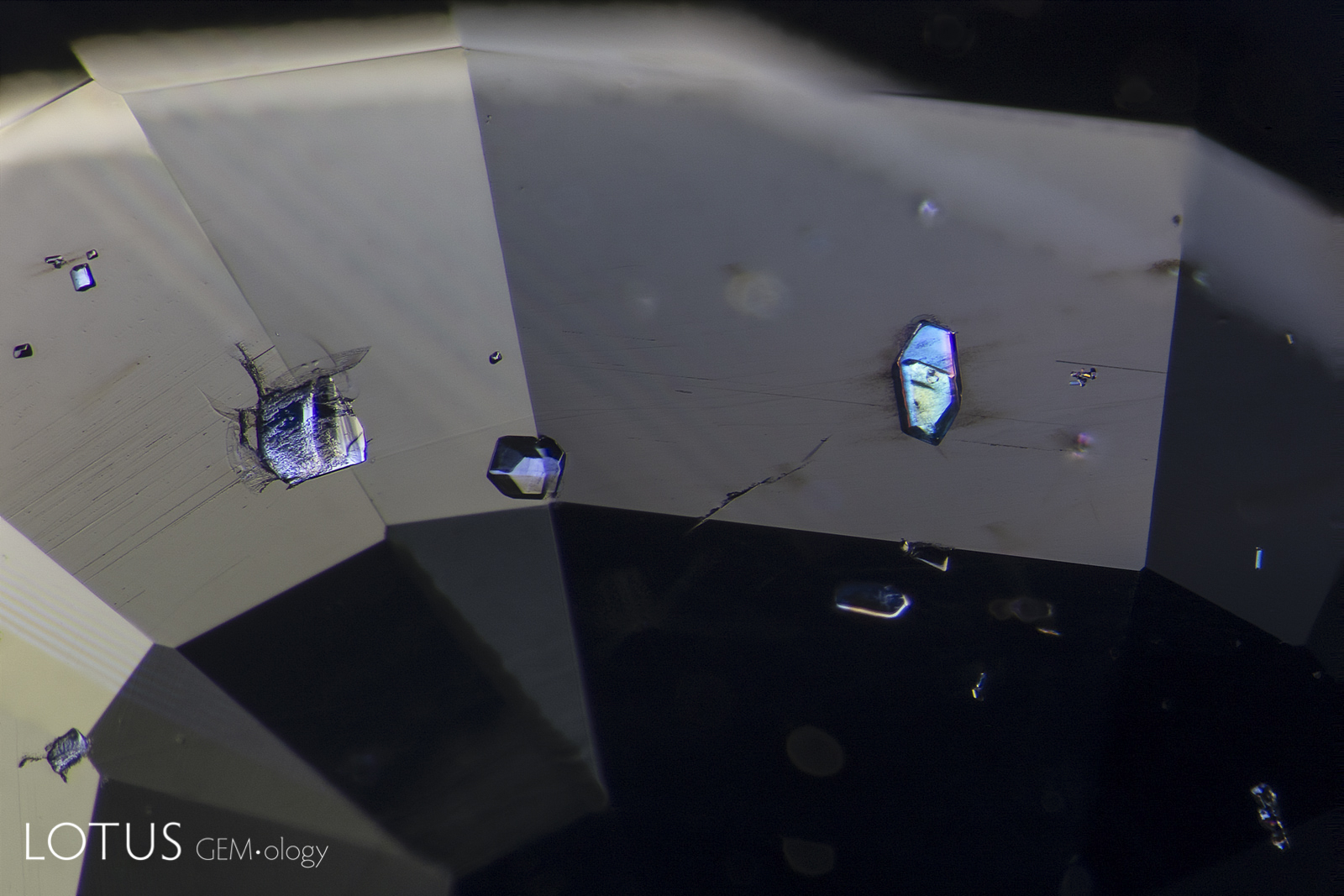
Feldspar crystals are a frequent guest of sapphires derived from basalt deposits. Thus it was no surprise when the three larger crystals show here turned out to be feldspar. The identification was made with Lotus Gemology’s micro Raman unit. Examination with crossed polars reveals the doubly refractive nature of the feldspar guest inclusions.
Natural Sapphire •
Basalt Related •
Enhancements:
None Detected (None) •
Lighting Conditions:
Light Field + Crossed Polars
Photographer:
Richard W. Hughes •
Image Number:
A-003-4383-1
• Field of View = 4.5mm
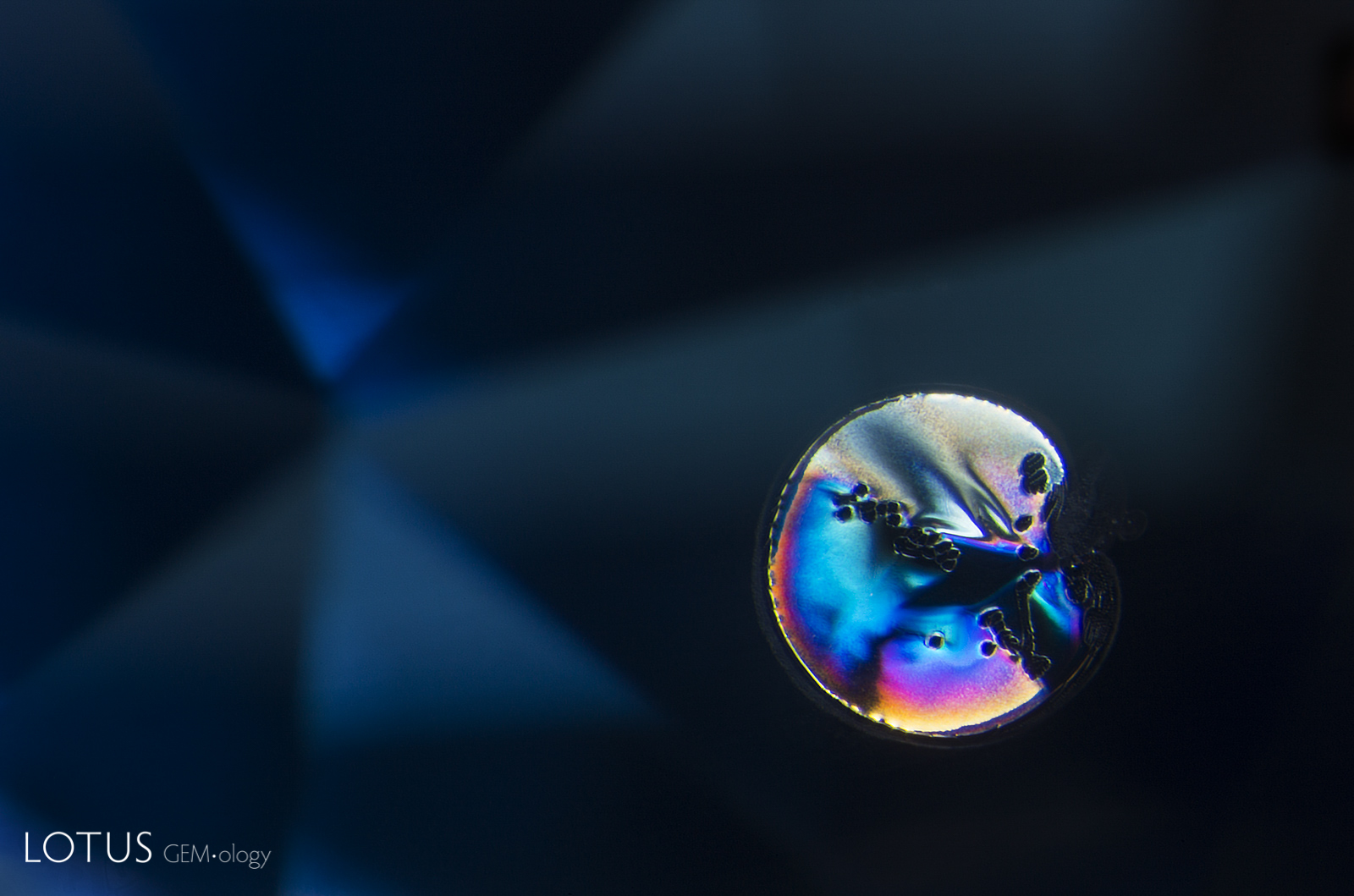
A glassy discoid around a tiny melted crystal provides evidence that this inclusion’s sapphire host has been heated. Specimen courtesy Tristan Knowles.
Natural Sapphire •
Sri Lanka (Ceylon) •
Enhancements:
Heat (H) •
Lighting Conditions:
Dark Field + Diffuse Fiber Optic + Blue & White Filters
Photographer:
E. Billie Hughes •
Image Number:
A-003-4183-2
• Field of View = 4mm
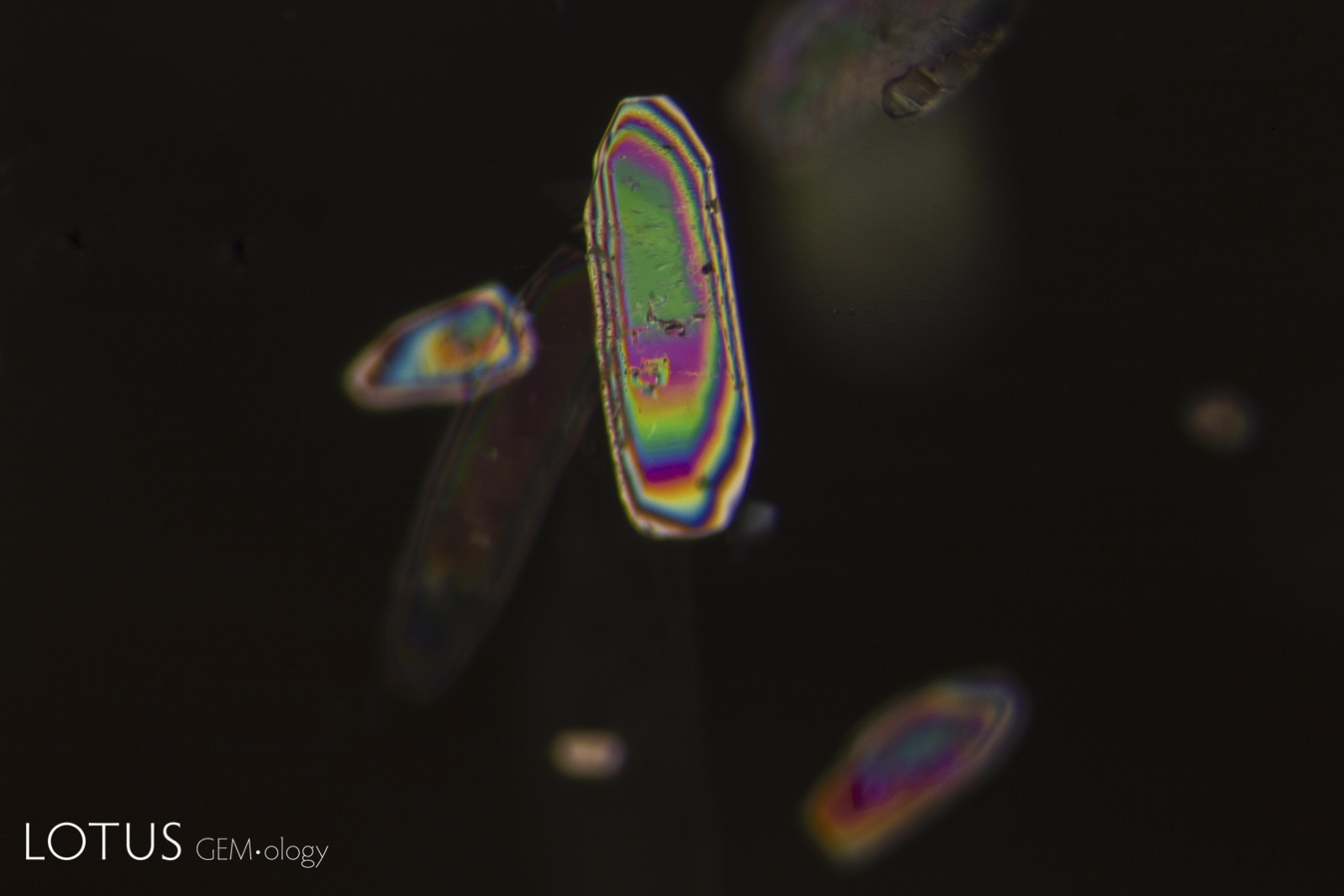
An elongated crystal in this sapphire was identified as grandidierite with micro Raman. Here in crossed polars we can see it display rainbow interference colors.
Natural Sapphire •
Madagascar •
Enhancements:
None Detected (None) •
Lighting Conditions:
Light Field + Crossed Polars
Photographer:
E. Billie Hughes •
Image Number:
A-003-4256-2
• Field of View = 2mm
An elongated crystal in this sapphire was identified as grandidierite with micro Raman.
Natural Sapphire •
Madagascar •
Enhancements:
None Detected (None) •
Lighting Conditions:
Darkfield + Blue Filter
Photographer:
E. Billie Hughes •
Image Number:
A-003-4256-1
• Field of View = 2mm
This padparadscha sapphire from Sri Lanka displayed unusual ghost crystals, several of which were cut through on the surface. In reflected light at the surface, they were detectable only by the inclusions in the crystals themselves, showing no difference in luster from the surrounding sapphire, but stood out brilliantly between crossed polars. This identified them as corundum in corundum. Edward Gübelin first identified corundum in corundum in 1940.
Natural Padparadscha Sapphire •
Sri Lanka (Ceylon) •
Enhancements:
None Detected (None) •
Lighting Conditions:
Diffuse Light Field + Crossed Polars
Photographer:
Richard W. Hughes •
Image Number:
A-003-4093-1
Gübelin, E.J. (1948) Gemstone inclusions. Journal of Gemmology, Vol. 1, No. 7, July, pp. 7–39; RWHL*.
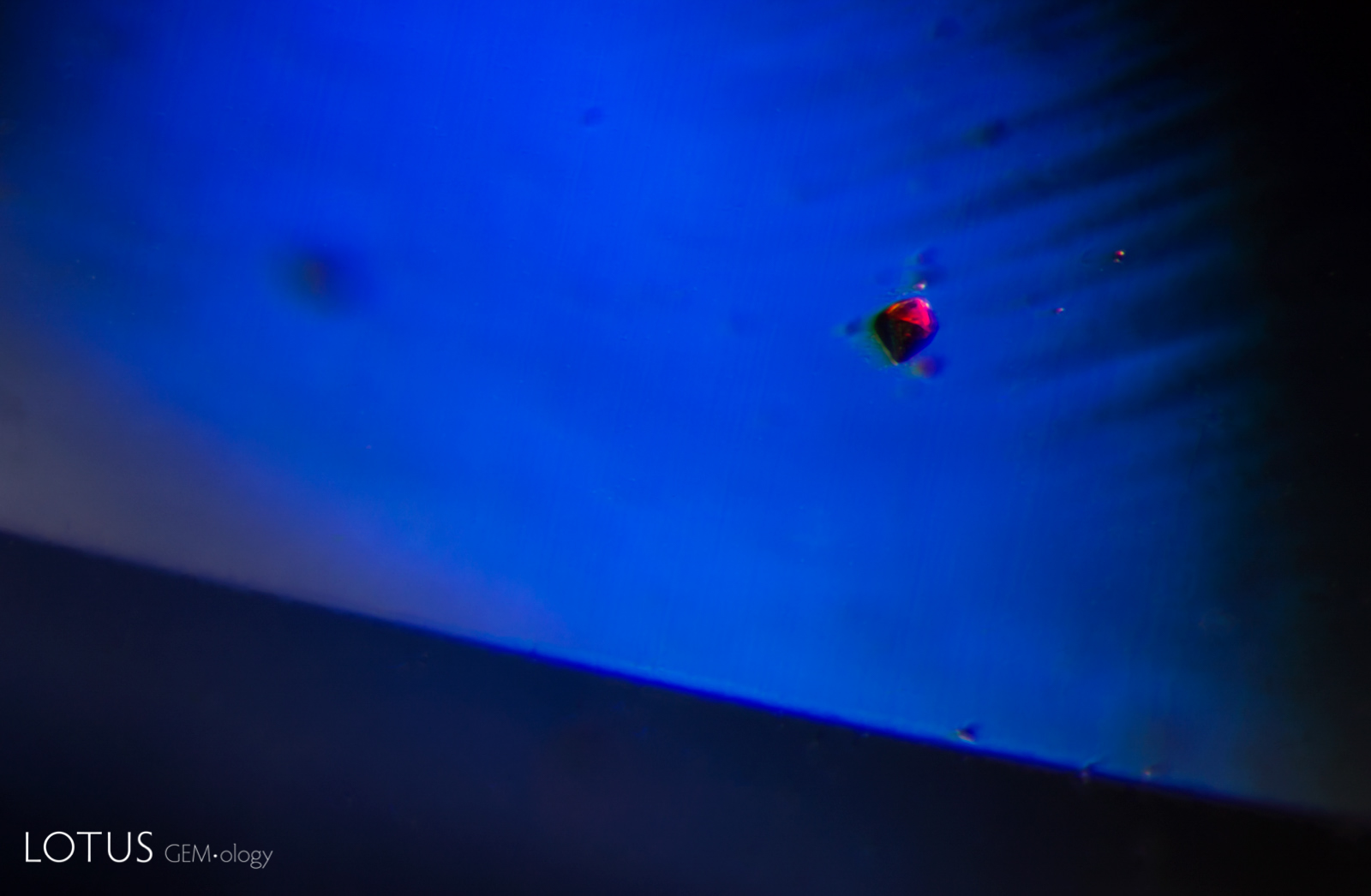
Red pyrochlore crystals like this one, which was identified with microraman spectroscopy, are a common inclusion in basalt-related sapphire.
Natural Sapphire •
Basalt Related •
Enhancements:
Heat (H) •
Lighting Conditions:
Dark Field + Oblique Fiber Optic
Photographer:
E. Billie Hughes •
Image Number:
A-003-3933-1
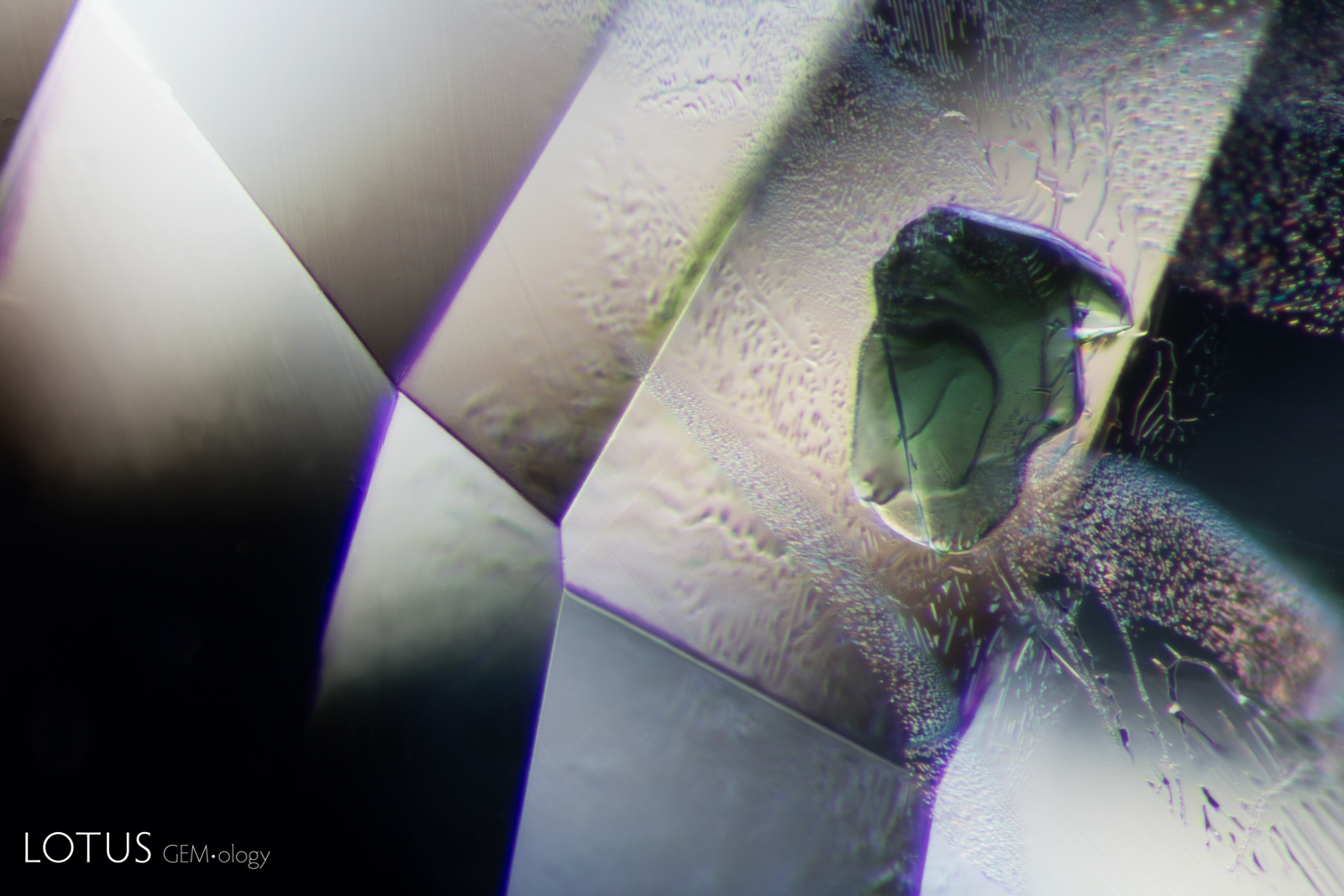
Gems in gems. When we saw this green crystal inside a blue sapphire from Sri Lanka, we were curious what material it could be. Micro raman analysis confirmed that it is a green spinel.
Natural Sapphire •
Sri Lanka (Ceylon) •
Enhancements:
None Detected (None) •
Lighting Conditions:
Darkfield + Blue Filter
Photographer:
E. Billie Hughes •
Image Number:
A-003-3929-1
• Field of View = 2mm
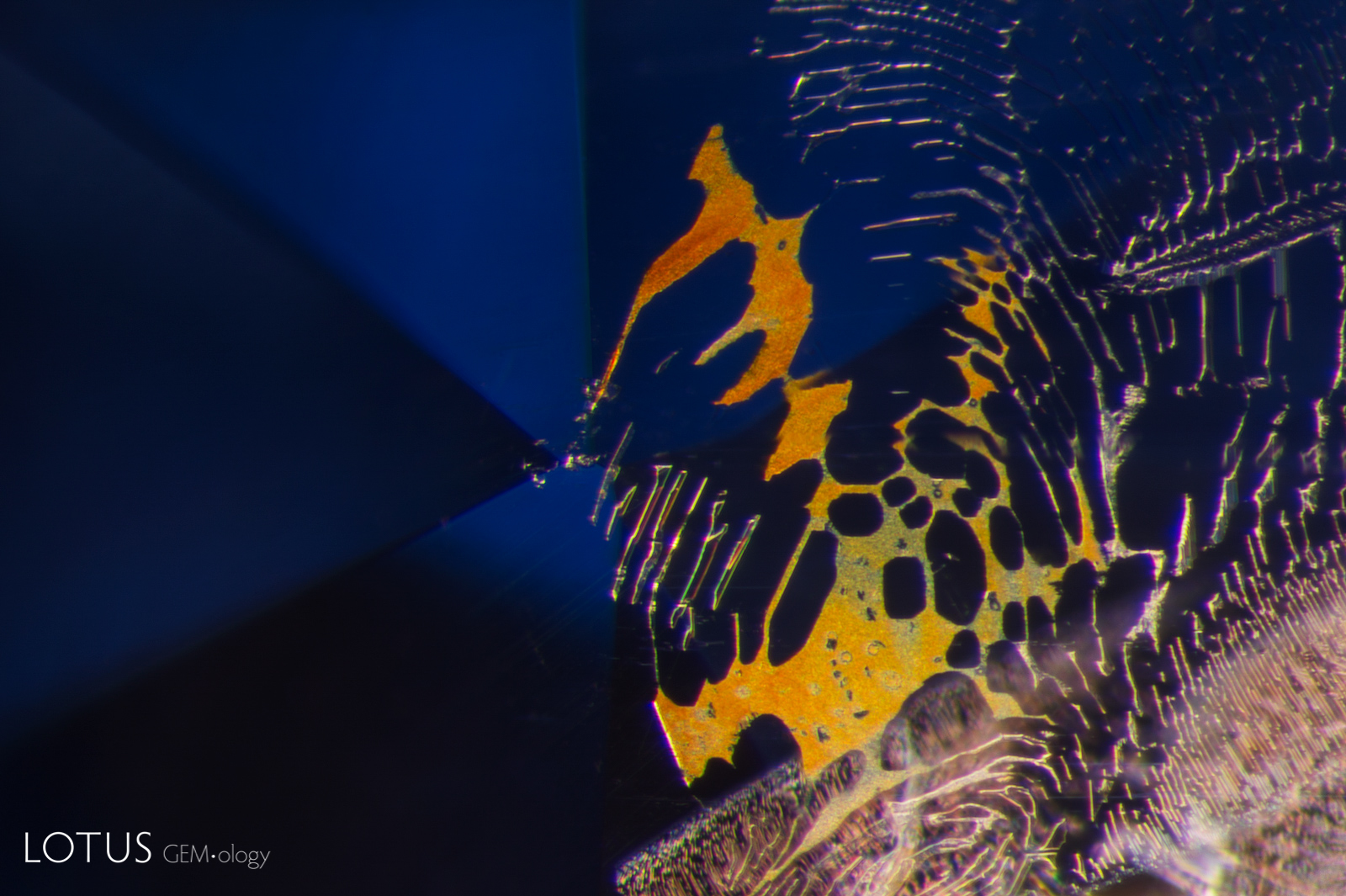
Orange staining stands out against the body color of this blue sapphire. If a stone like this is heated, the staining is likely to turn a darker reddish color.
Natural Sapphire •
Sri Lanka (Ceylon) •
Enhancements:
None Detected (None) •
Lighting Conditions:
Dark Field + Diffuse Fiber Optic
Photographer:
E. Billie Hughes •
Image Number:
A-003-3930-1
• Field of View = 2mm
Iron-rich silk with a “hairy” appearance lights up the interior of this sapphire.
Natural Sapphire •
Madagascar •
Enhancements:
None Detected (None) •
Lighting Conditions:
Fiber Optic: Diffuse Oblique
Photographer:
E. Billie Hughes •
Image Number:
A-003-3624-1
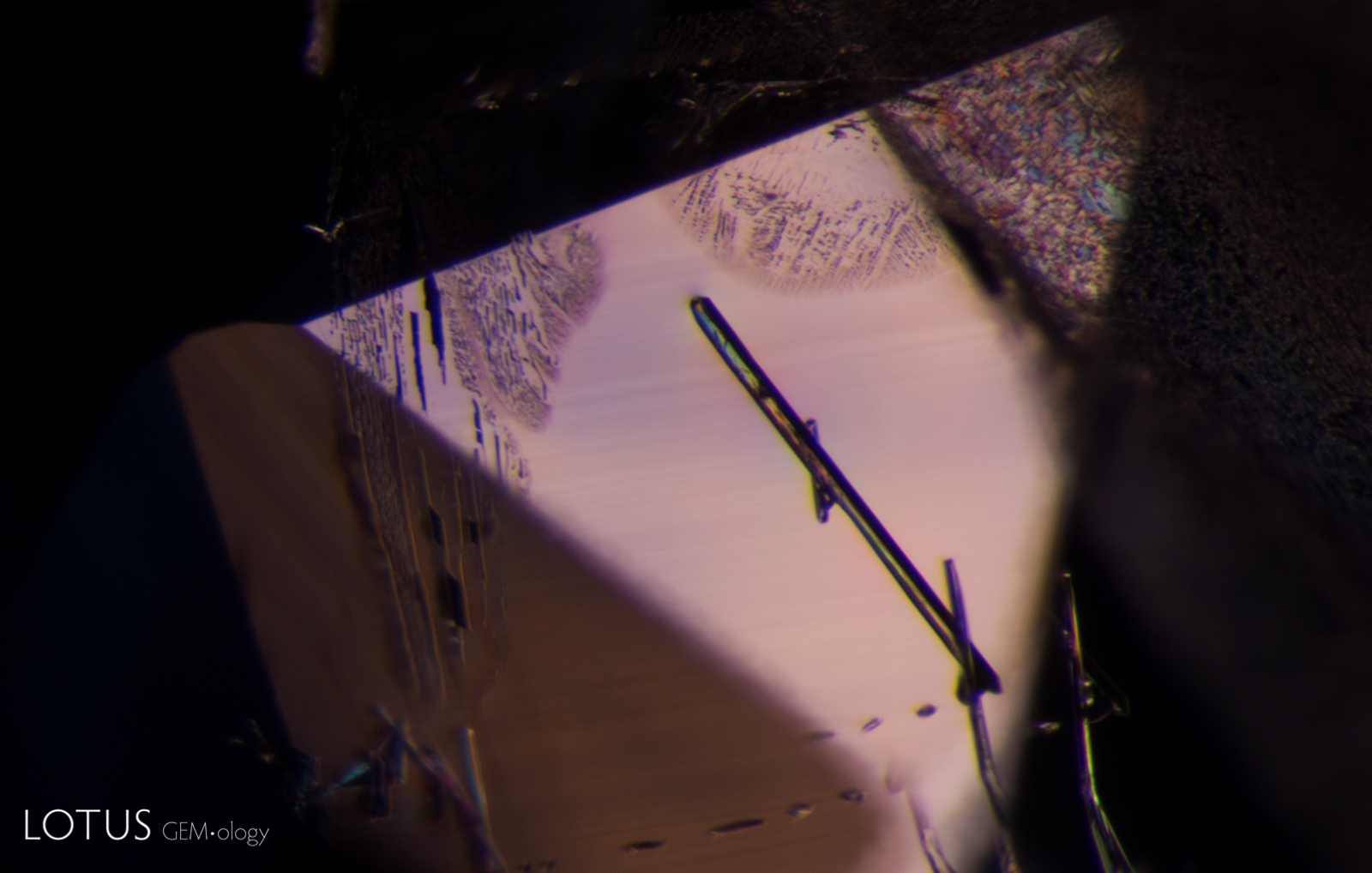
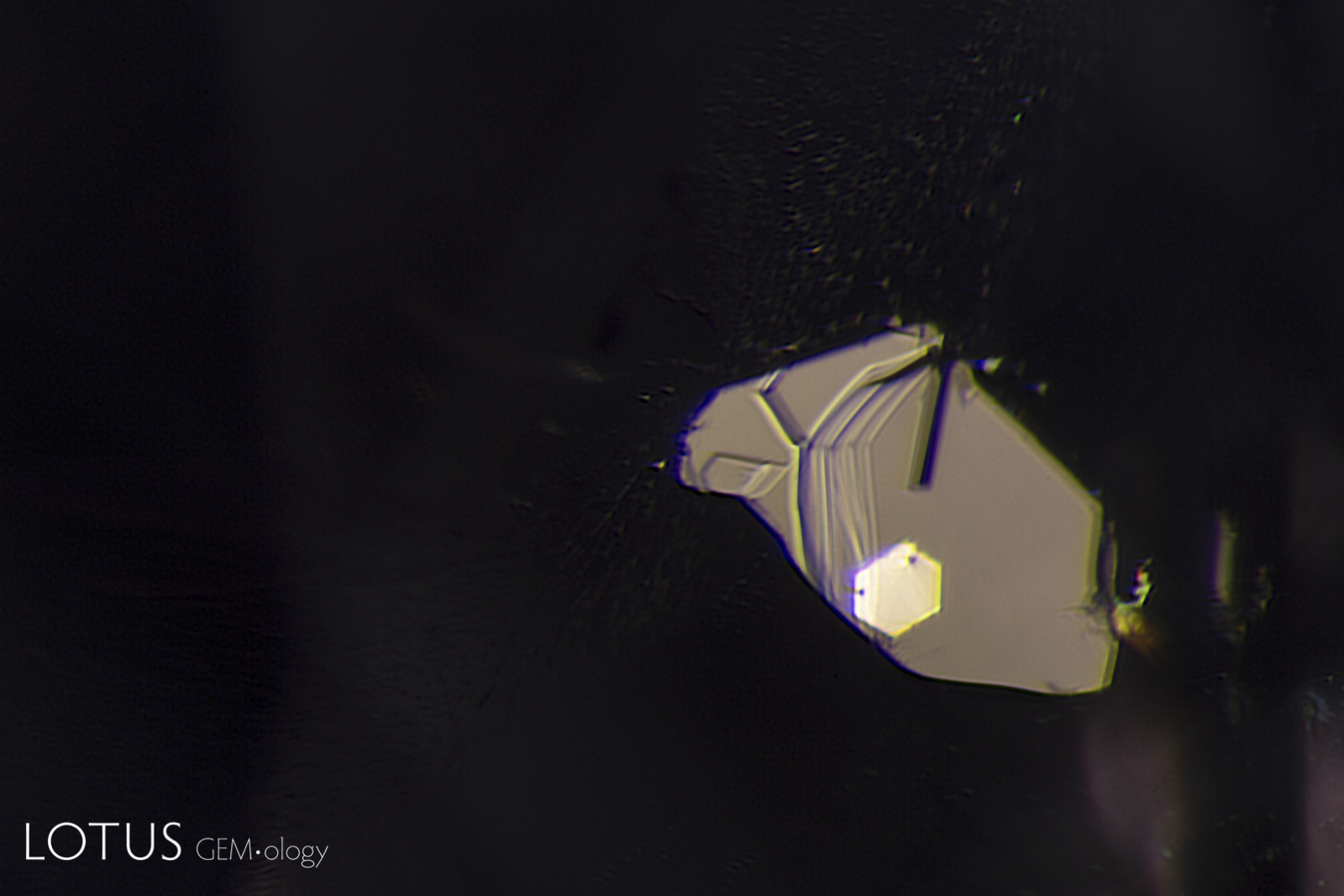
In this negative crystal within an untreated Sri Lanka padparadscha, one can see a high-relief hexagonal plate of graphite, along with a needle of diaspore. The undamaged nature of the negative crystal and diaspore needle confirms that the gem has not been heat treated.
Natural Padparadscha Sapphire •
Sri Lanka (Ceylon) •
Enhancements:
None Detected (None) •
Lighting Conditions:
Fiber Optic: Overhead
Photographer:
Richard W. Hughes •
Image Number:
A-003-3562-2
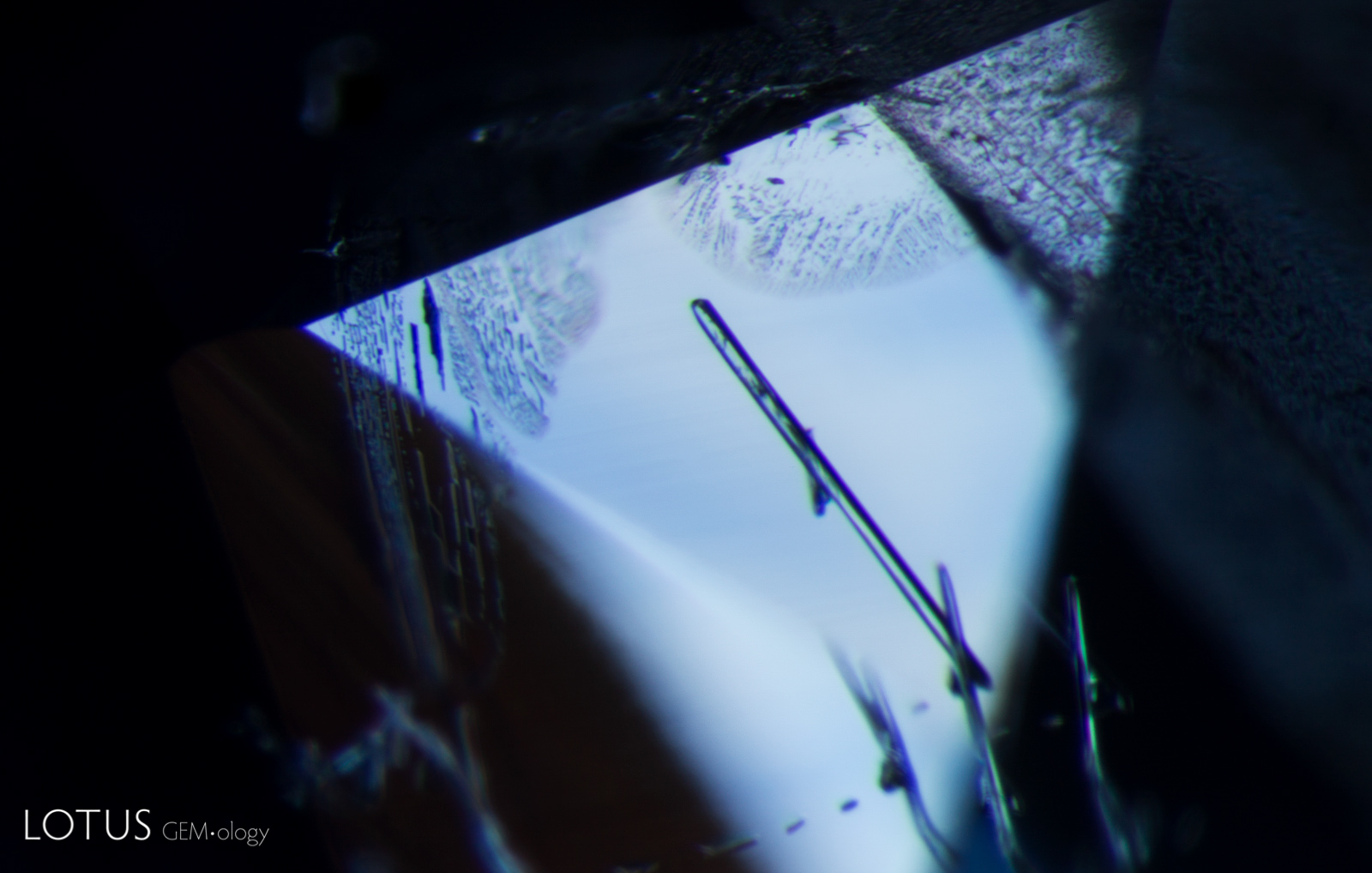
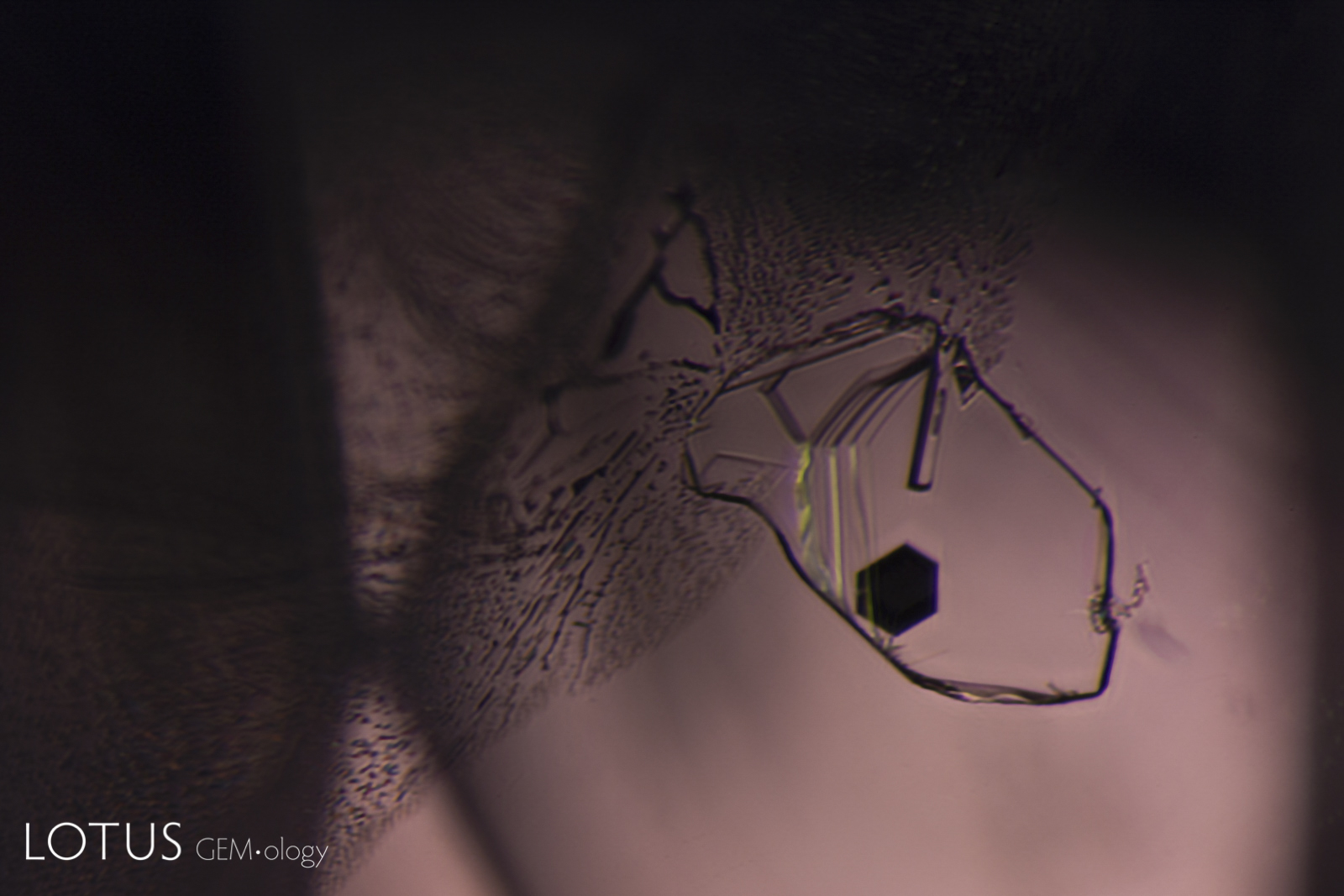
In this negative crystal within an untreated Sri Lanka padparadscha, one can see a hexagonal plate of graphite, along with a needle of diaspore. The undamaged nature of the negative crystal and diaspore needle confirms that the gem has not been heat treated.
Natural Padparadscha Sapphire •
Sri Lanka (Ceylon) •
Enhancements:
None Detected (None) •
Lighting Conditions:
Fiber Optic: Transmitted
Photographer:
Richard W. Hughes •
Image Number:
A-003-3562-1
Search the Complete Hyperion Database
Sapphire inclusions may include mineral crystals, rutile silk, healed fissures, fluid inclusions, negative crystals, color zoning and other features formed during or after crystal growth. Such features are important to gemologists because they can provide evidence useful in identifying sapphire, understanding its geological history, recognizing treatment and, in some cases, determining geographic origin.
Sapphire Inclusion Photomicrographs
The Hyperion sapphire gallery includes microscopic features found in sapphires from major deposits around the world. Each entry is accompanied by descriptive information and, where available, references to the gemological literature.
What Inclusions Can Reveal About Sapphire
Inclusions are an important part of sapphire identification. Their form, composition, orientation and alteration can help gemologists distinguish natural sapphire from synthetic material, recognize evidence of heat treatment, and study the geological environment in which the sapphire formed.
Hyperion combines inclusion photomicrography with supporting gemological information so that individual features can be compared with documented examples from known sapphire deposits.
About Hyperion
Hyperion is the Lotus Gemology searchable inclusion database. It allows users to browse gemstone inclusions by gem type, geographic origin, treatment and keyword.