Sapphire Inclusions
Explore sapphire inclusions in Hyperion, the Lotus Gemology inclusion database. Hyperion contains photomicrographs of inclusions and internal features in natural sapphire, documented with information on geographic origin, treatment, lighting conditions, field of view, photographer and published references.
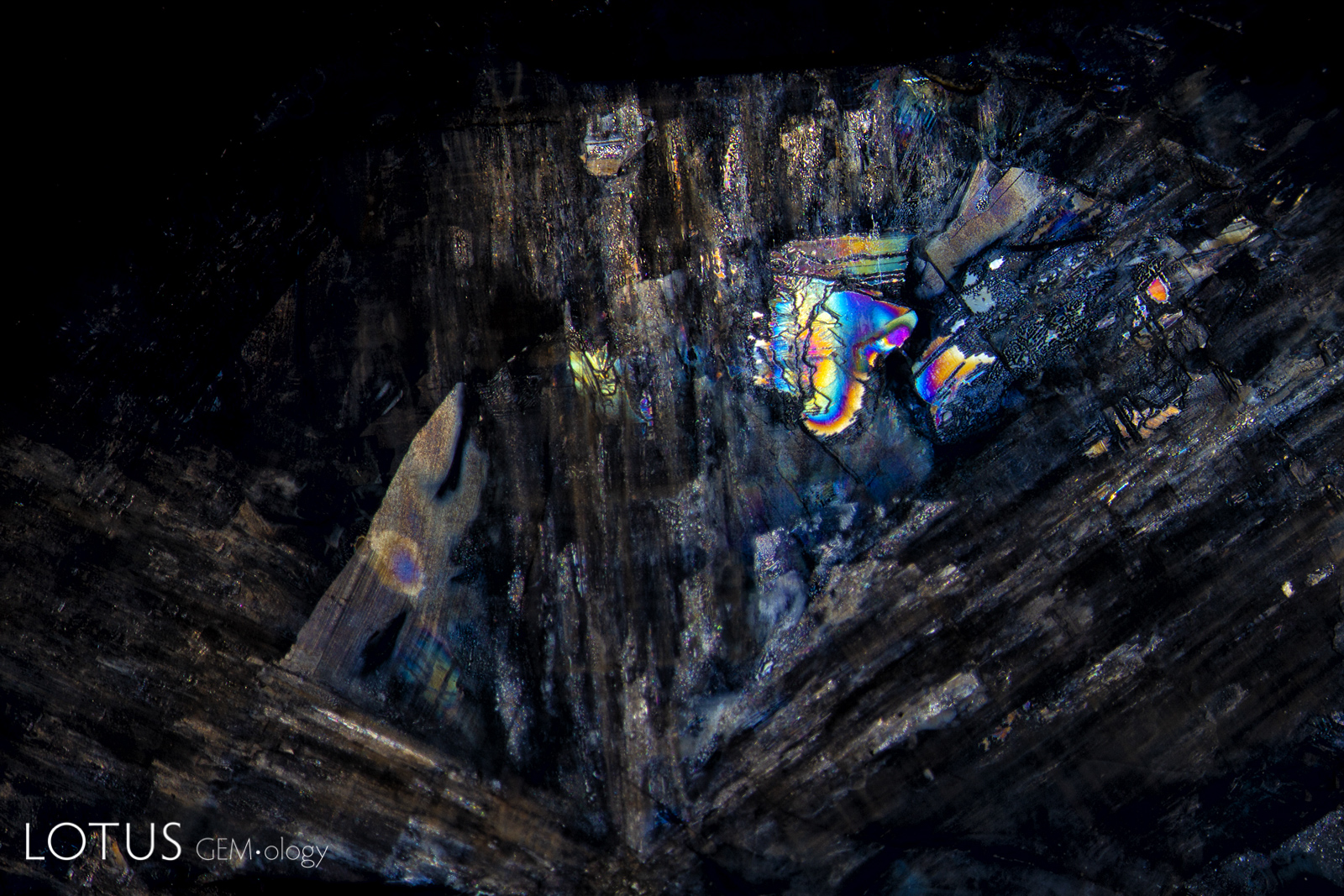
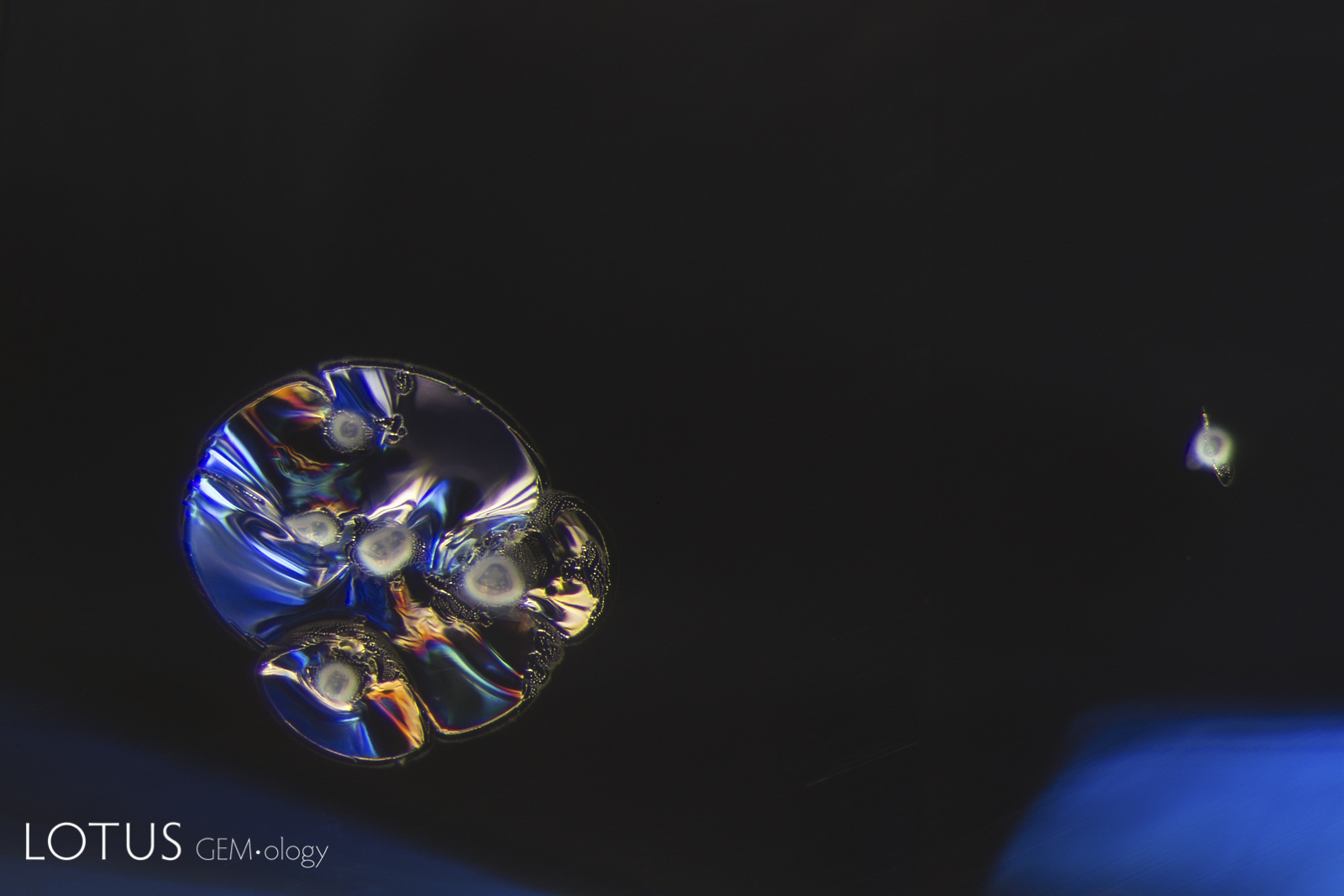
Thin films of liquid light up the interior of a trapiche sapphire.
Natural Trapiche Sapphire •
Not Determinable •
Enhancements:
None Detected (None) •
Lighting Conditions:
Fiber Optic: Diffuse Overhead
Photographer:
Richard W. Hughes •
Image Number:
A-003-0756-3
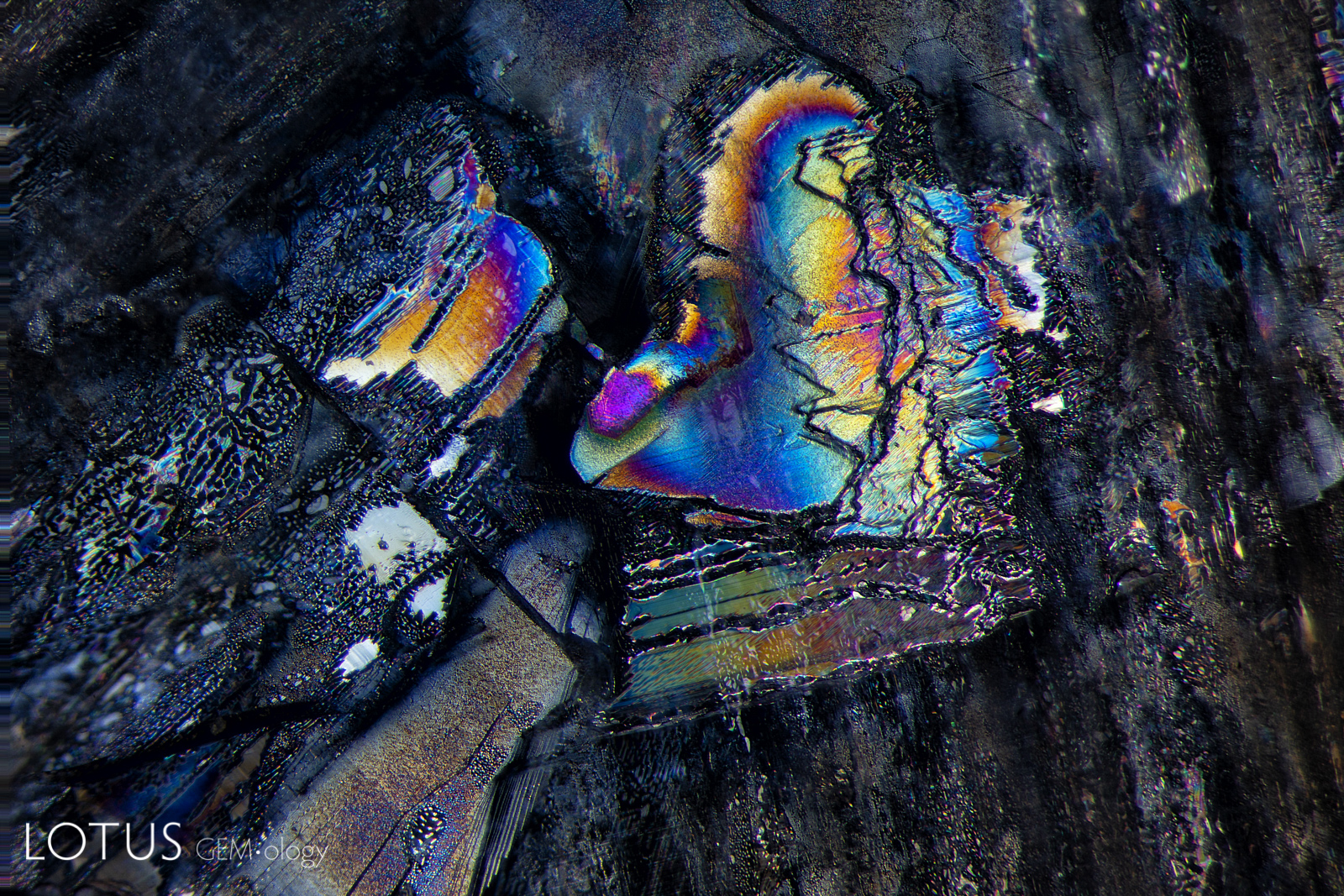
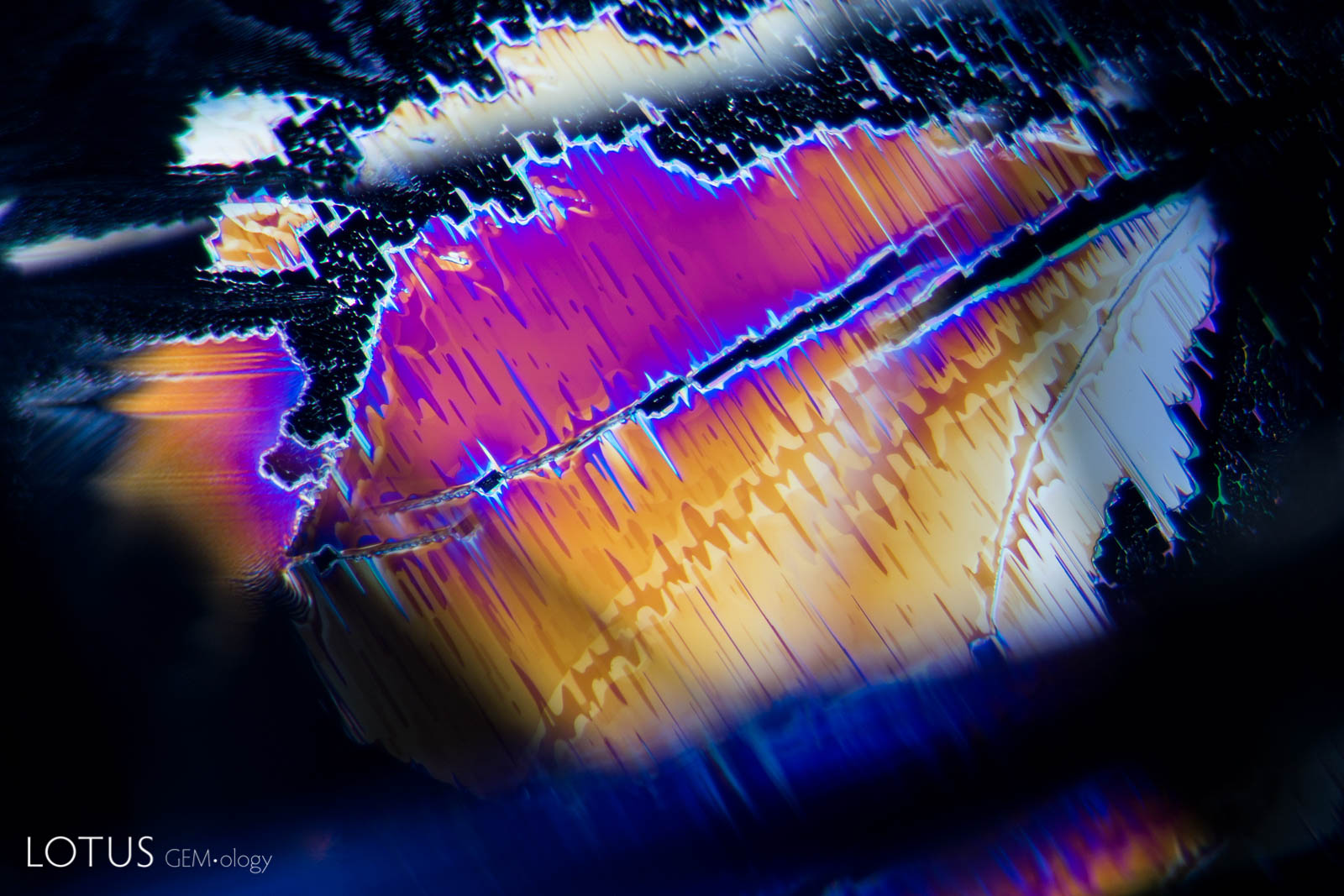
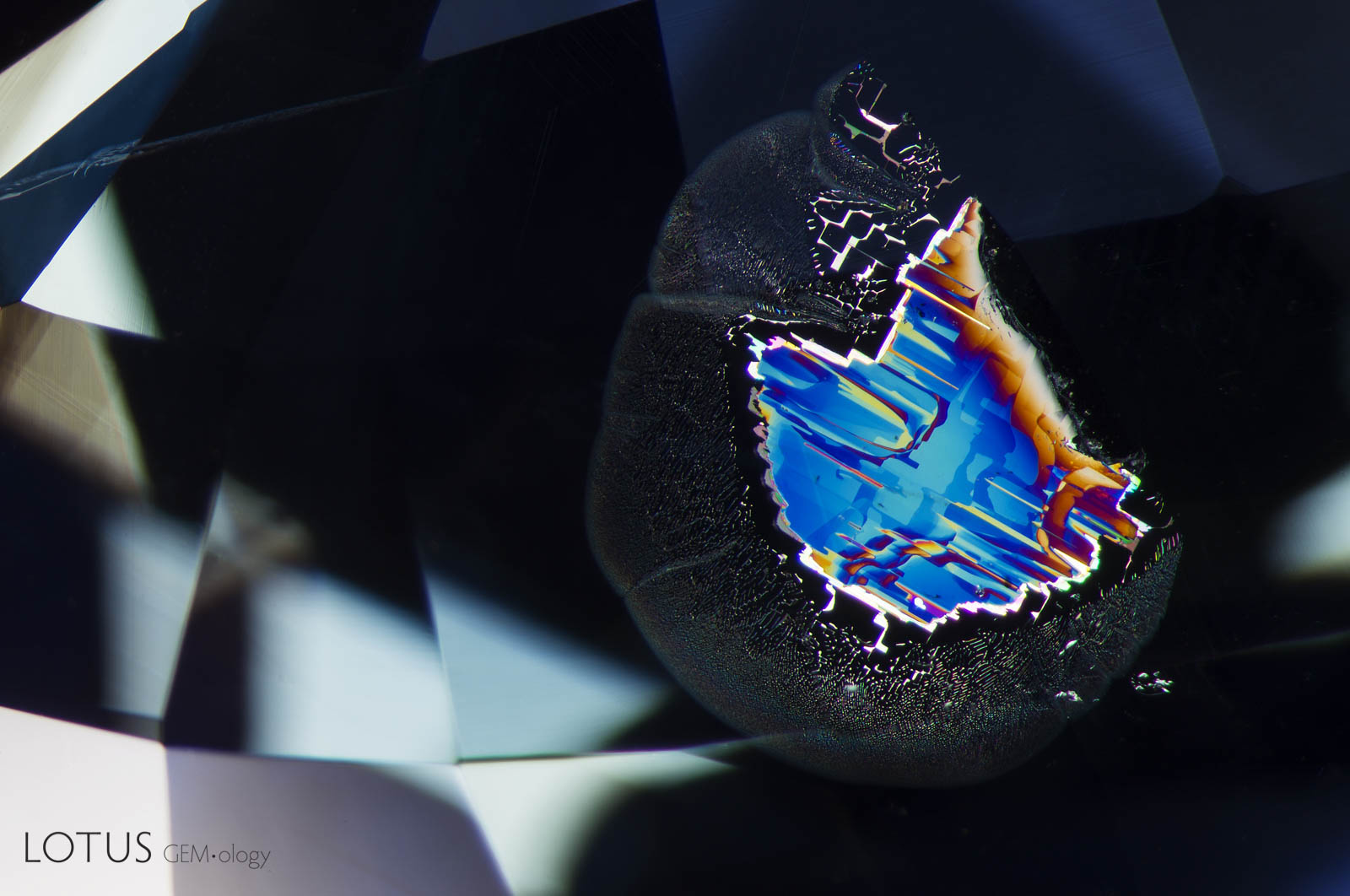
Like butterfly wings, thin liquid inclusions display brilliant iridescence in this trapiche sapphire.
Natural Trapiche Sapphire •
Not Determinable •
Enhancements:
None Detected (None) •
Lighting Conditions:
Fiber Optic: Diffuse Overhead
Photographer:
Richard W. Hughes •
Image Number:
A-003-0756-2
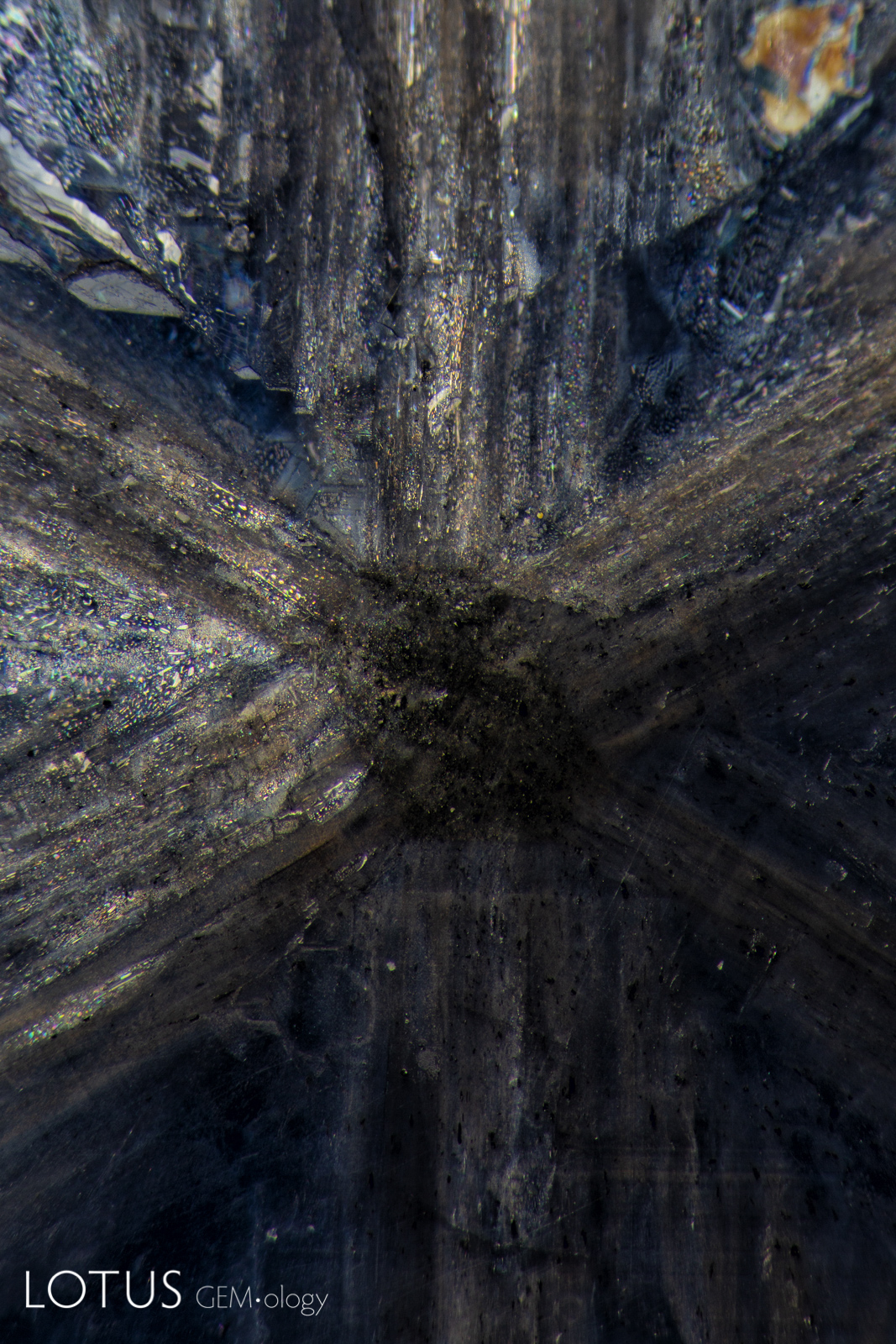
Like butterfly wings, thin liquid inclusions display brilliant iridescence in this trapiche sapphire.
Natural Trapiche Sapphire •
Not Determinable •
Enhancements:
None Detected (None) •
Lighting Conditions:
Fiber Optic: Diffuse Overhead
Photographer:
Richard W. Hughes •
Image Number:
A-003-0756-1
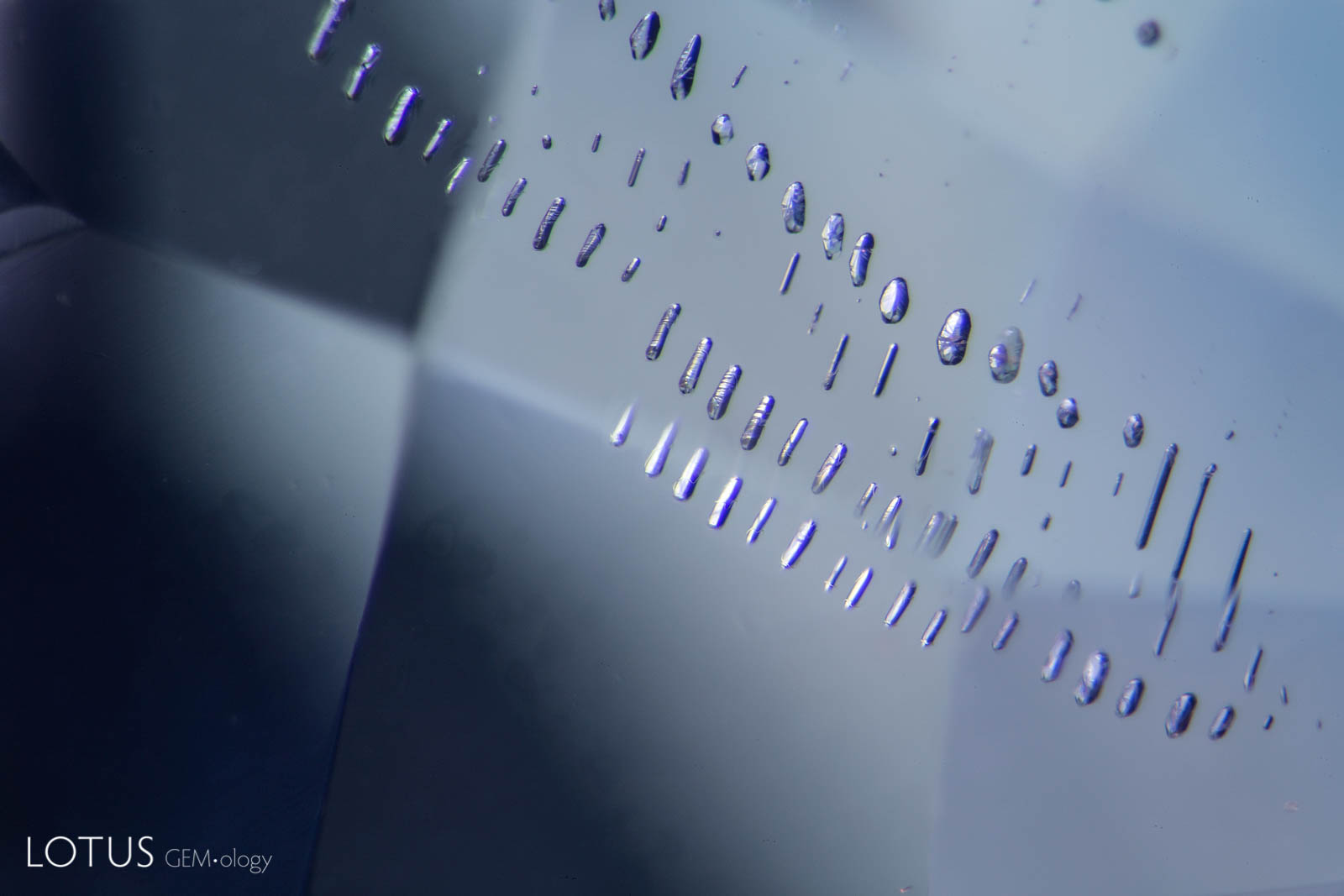
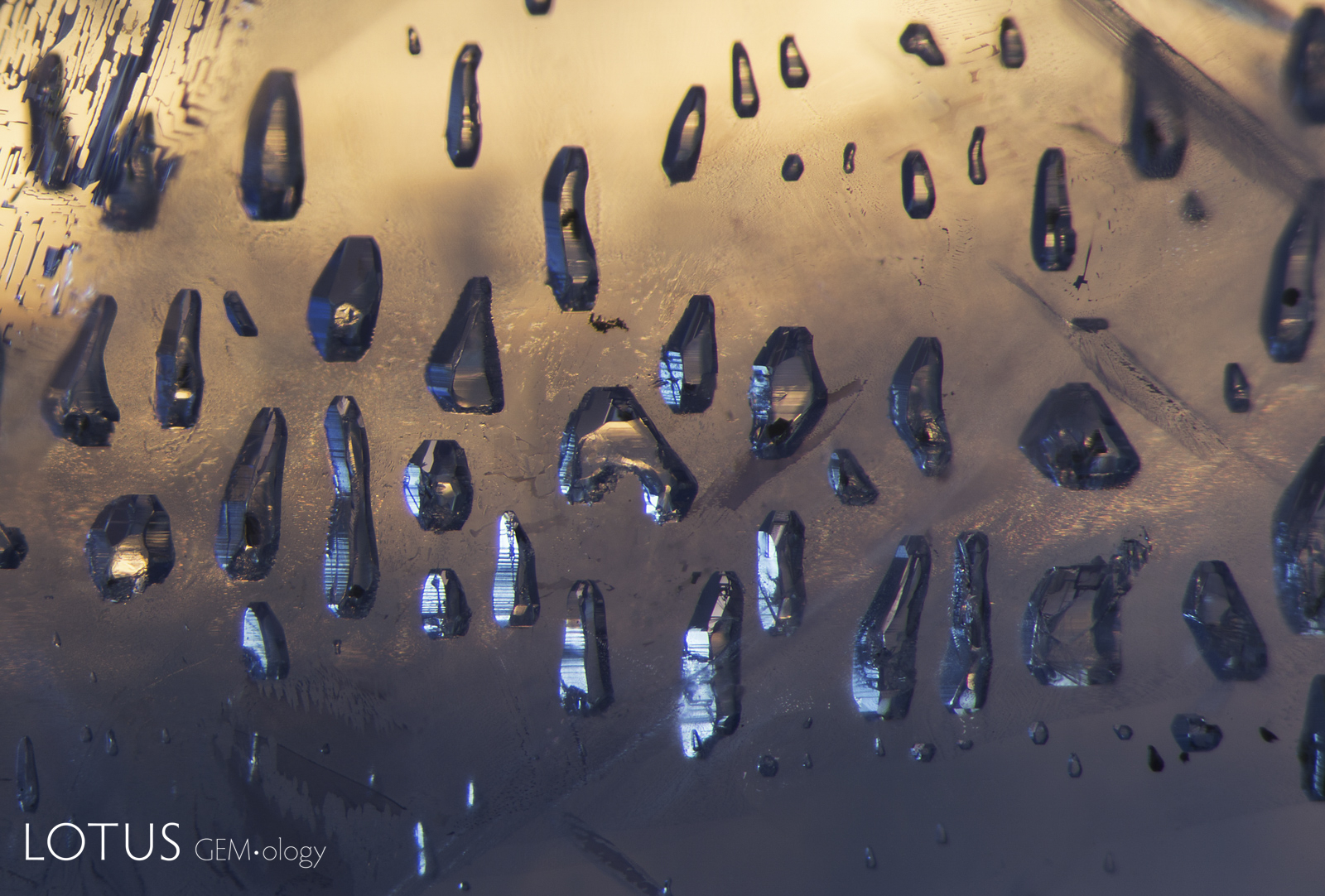
Rows of negative crystals in a Madagascar sapphire. The fact that these show no damage are strong evidence that the gem has not been heat treated.
Natural Sapphire •
Madagascar •
Enhancements:
None Detected (None) •
Lighting Conditions:
Dark Field + Oblique Fiber Optic
Photographer:
Wimon Manorotkul •
Image Number:
A-003-0673-1
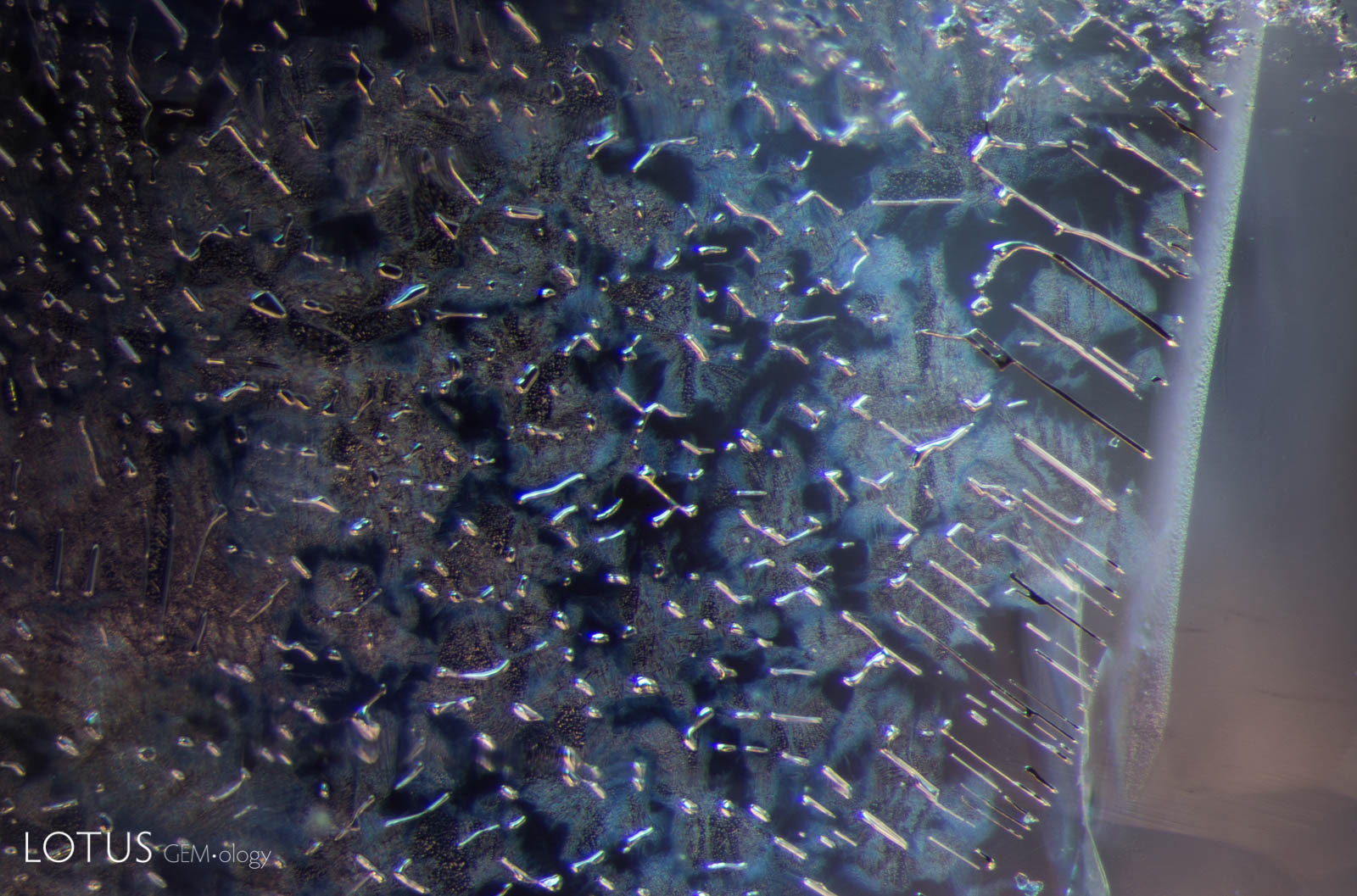
A secondary liquid inclusion in an untreated Ceylon sapphire. The healing pattern suggests that this fingerprint formed oblique to the c-axis.
Natural Sapphire •
Sri Lanka (Ceylon) •
Enhancements:
None Detected (None) •
Lighting Conditions:
Fiber Optic: Oblique
Photographer:
Wimon Manorotkul •
Image Number:
A-003-0635-3
A secondary liquid inclusion explodes with color when lit from above. The healing pattern suggests that this fingerprint formed oblique to the c-axis.
Natural Sapphire •
Sri Lanka (Ceylon) •
Enhancements:
None Detected (None) •
Lighting Conditions:
Fiber Optic: Oblique
Photographer:
Wimon Manorotkul •
Image Number:
A-003-0635-1
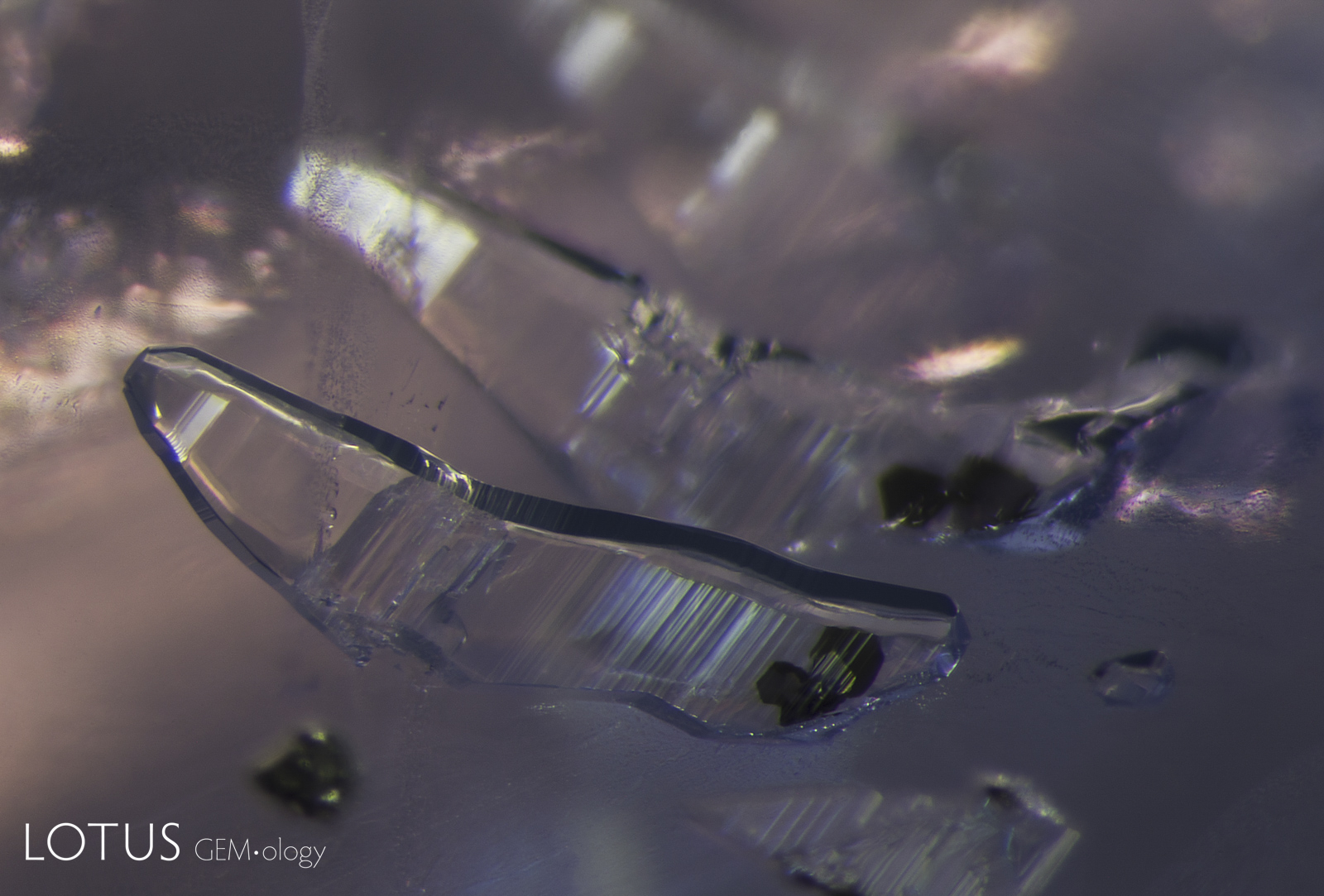
Negative crystals like these can trap other materials inside, forming a natural time capsule. In this case, we can see small black flakes of graphite suspended within the negative crystals in this unheated sapphire from Sri Lanka. Pristine negative crystals such as this offer evidence that the gem has not been subjected to heat treatment.
Natural Sapphire •
Sri Lanka (Ceylon) •
Enhancements:
None Detected (None) •
Lighting Conditions:
Dark Field + Diffuse Fiber Optic
Photographer:
E. Billie Hughes •
Image Number:
A-003-0580-2
Clustered negative crystals like these grew syngenetically, meaning at the same time as their sapphire host. Note their angular “euhedral” shapes. Many contain black flakes of graphite.
Natural Sapphire •
Sri Lanka (Ceylon) •
Enhancements:
None Detected (None) •
Lighting Conditions:
Dark Field + Diffuse Fiber Optic + Blue Filter
Photographer:
E. Billie Hughes •
Image Number:
A-003-0580-1
The fingerprint in this sapphire shows clear signs of heat alteration. Note the frosty, hazy appearance between the negative crystals, which results from micro-fractures to release the pressure caused by heating; also note that each negative crystal tube has begun to neck down and become more rounded.
Natural Sapphire •
Sri Lanka (Ceylon) •
Enhancements:
Heat (H) •
Lighting Conditions:
Dark Field + Diffuse Fiber Optic
Photographer:
E. Billie Hughes •
Image Number:
A-003-0523-1
This cluster of melted crystals with a frosty “snowball” appearance and glassy discoid around them is a clear sign that their sapphire host has been heat treated.
Natural Sapphire •
Sri Lanka (Ceylon) •
Enhancements:
Heat (H) •
Lighting Conditions:
Dark Field + Diffuse Fiber Optic
Photographer:
E. Billie Hughes •
Image Number:
A-003-0140-1
A rectilinear fingerprint shines brightly inside this untreated sapphire from Sri Lanka.
Natural Sapphire •
Sri Lanka (Ceylon) •
Enhancements:
None Detected (None) •
Lighting Conditions:
Dark Field + Diffuse Fiber Optic + Blue Filter
Photographer:
E. Billie Hughes •
Image Number:
A-003-0137-1
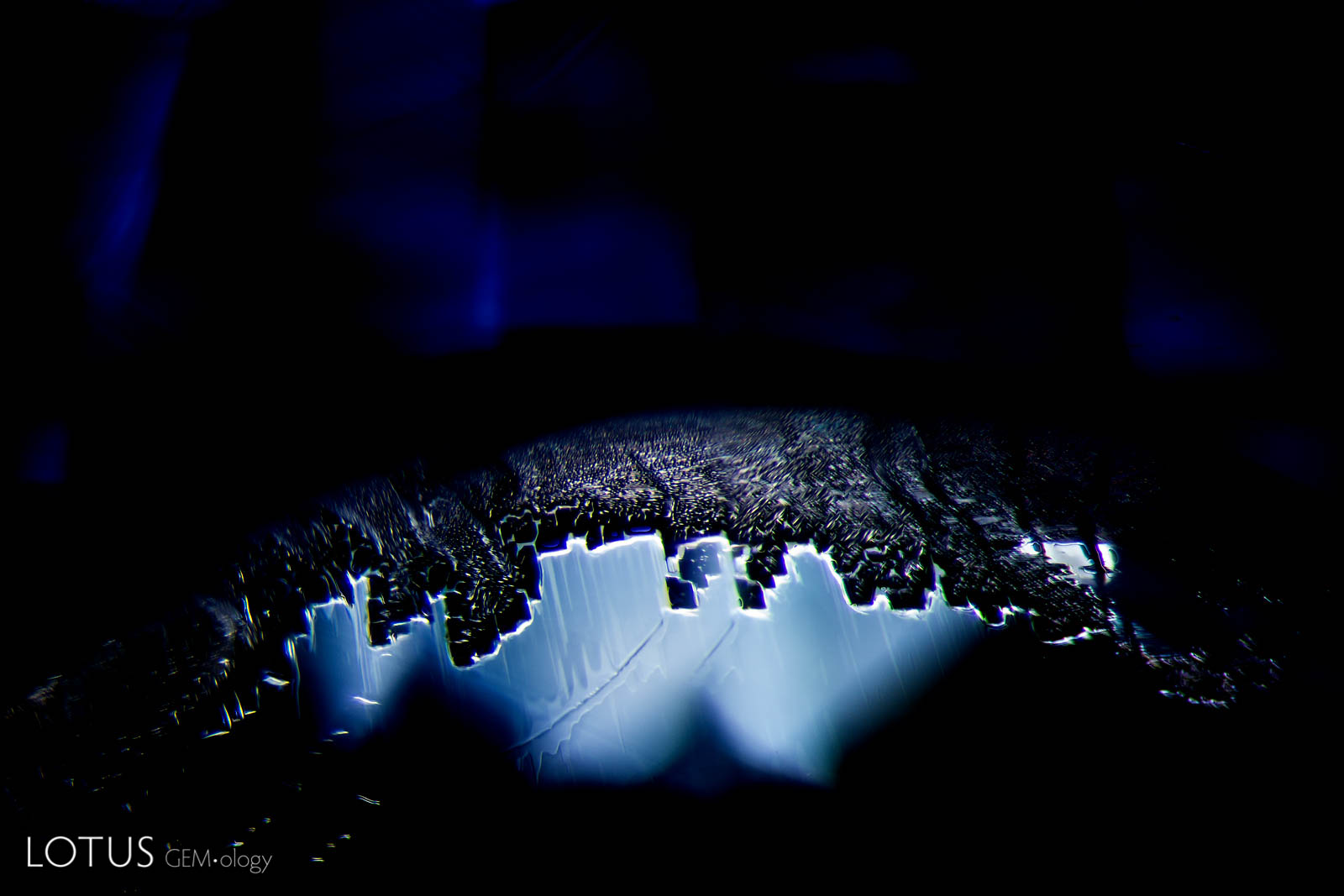
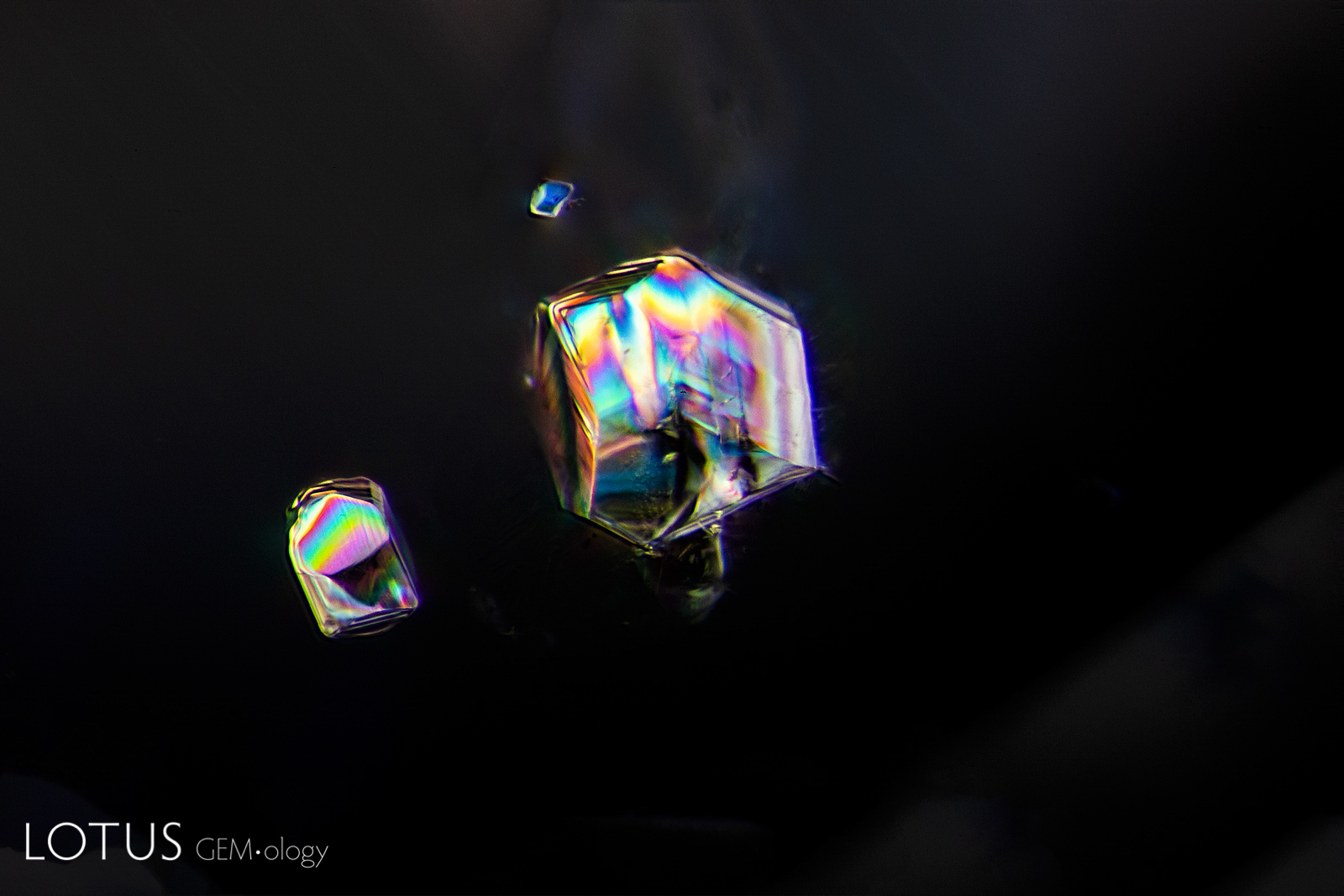
Crossed polars reveals in spectacular fashion the birefringent nature of these included crystal grains in this sapphire derived from a basaltic deposit.
Natural Sapphire •
Basaltic •
Enhancements:
None Detected (None) •
Lighting Conditions:
Diffuse Light Field + Crossed Polars
Photographer:
Richard W. Hughes •
Image Number:
A-002-9697-1
Koivula, J.I. (2007) Photographing gems. In Focus, No. 7, September, pp. 24–59; RWHL**.
Search the Complete Hyperion Database
Sapphire inclusions may include mineral crystals, rutile silk, healed fissures, fluid inclusions, negative crystals, color zoning and other features formed during or after crystal growth. Such features are important to gemologists because they can provide evidence useful in identifying sapphire, understanding its geological history, recognizing treatment and, in some cases, determining geographic origin.
Sapphire Inclusion Photomicrographs
The Hyperion sapphire gallery includes microscopic features found in sapphires from major deposits around the world. Each entry is accompanied by descriptive information and, where available, references to the gemological literature.
What Inclusions Can Reveal About Sapphire
Inclusions are an important part of sapphire identification. Their form, composition, orientation and alteration can help gemologists distinguish natural sapphire from synthetic material, recognize evidence of heat treatment, and study the geological environment in which the sapphire formed.
Hyperion combines inclusion photomicrography with supporting gemological information so that individual features can be compared with documented examples from known sapphire deposits.
About Hyperion
Hyperion is the Lotus Gemology searchable inclusion database. It allows users to browse gemstone inclusions by gem type, geographic origin, treatment and keyword.