Emerald Inclusions
Explore emerald inclusions in Hyperion, the Lotus Gemology inclusion database. Hyperion contains photomicrographs of inclusions and internal features in natural emerald, documented with information on geographic origin, treatment, lighting conditions, field of view, photographer and published references.
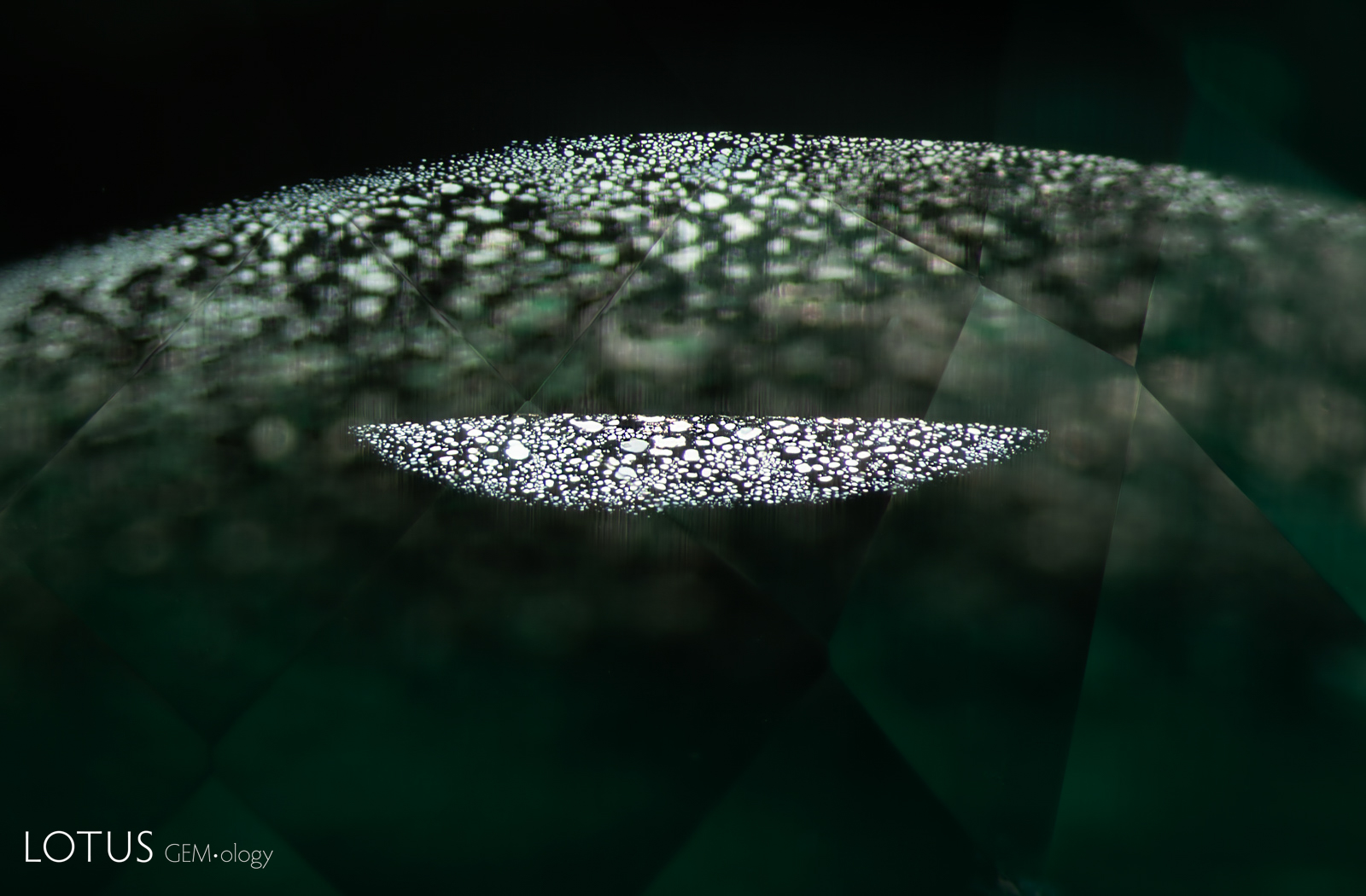
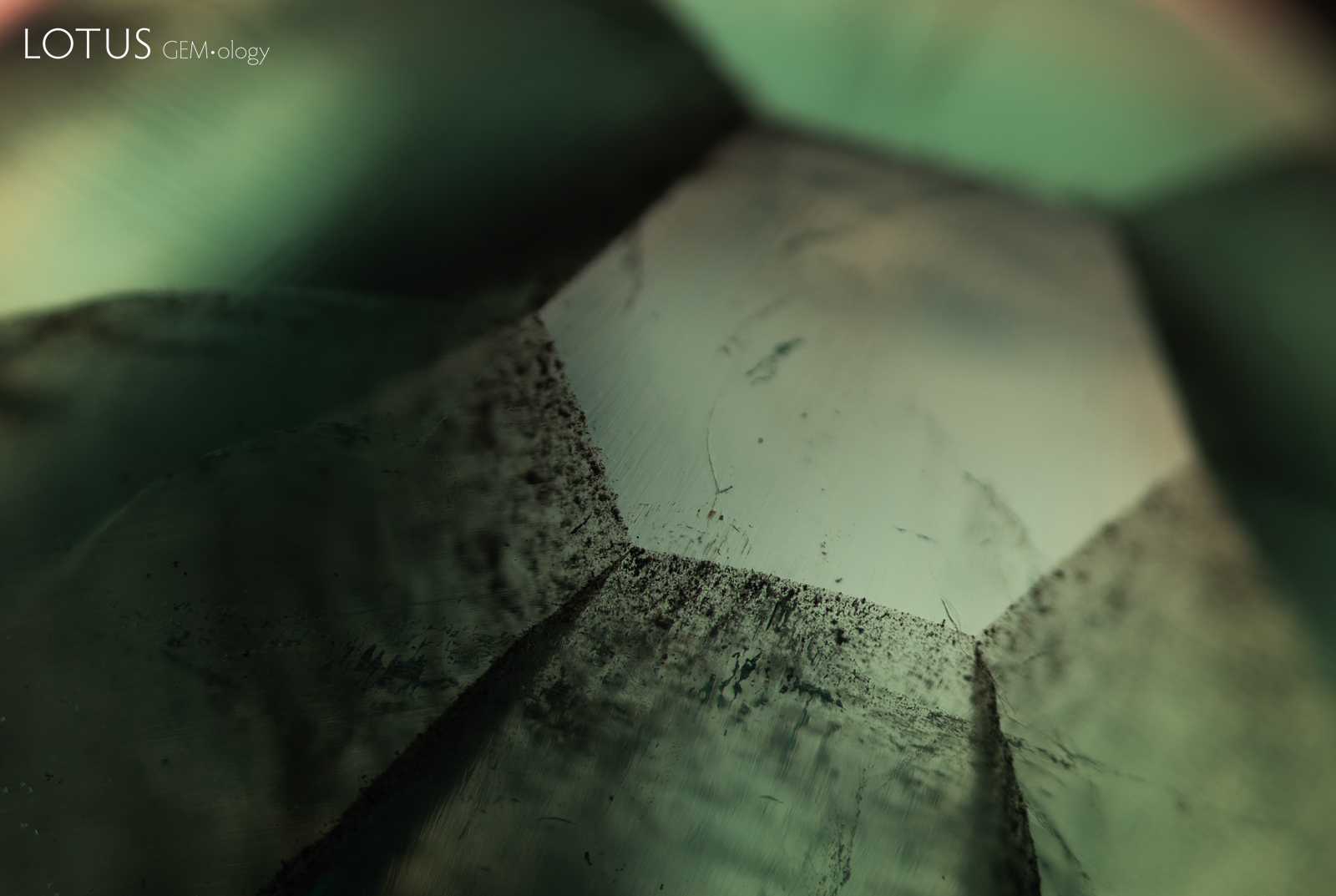
When illuminated with fiber optic light, the thin films in this Russian emerald stand out sharply against their verdant background.
Natural • Beryl • Beryl • Emerald •
Russia; Malysheva •
Enhancements:
None Detected (None) •
Lighting Conditions:
Fiber Optic: Diffuse Oblique
Photographer:
E. Billie Hughes •
Image Number:
A-005-9185-4
• Field of View = 6mm
Gübelin, E.J. and Koivula, J.I. (2008) Photoatlas of Inclusions in Gemstones, Volume 3. Basel, Switzerland, Opinio Publishers, 672 pp.; RWHL*
Gubelin, E.J. (1940) Differentiation between Russian and Colombian emerald. Gems & Gemology, Vol. 3, No. 6, Summer, pp. 89–92; RWHL
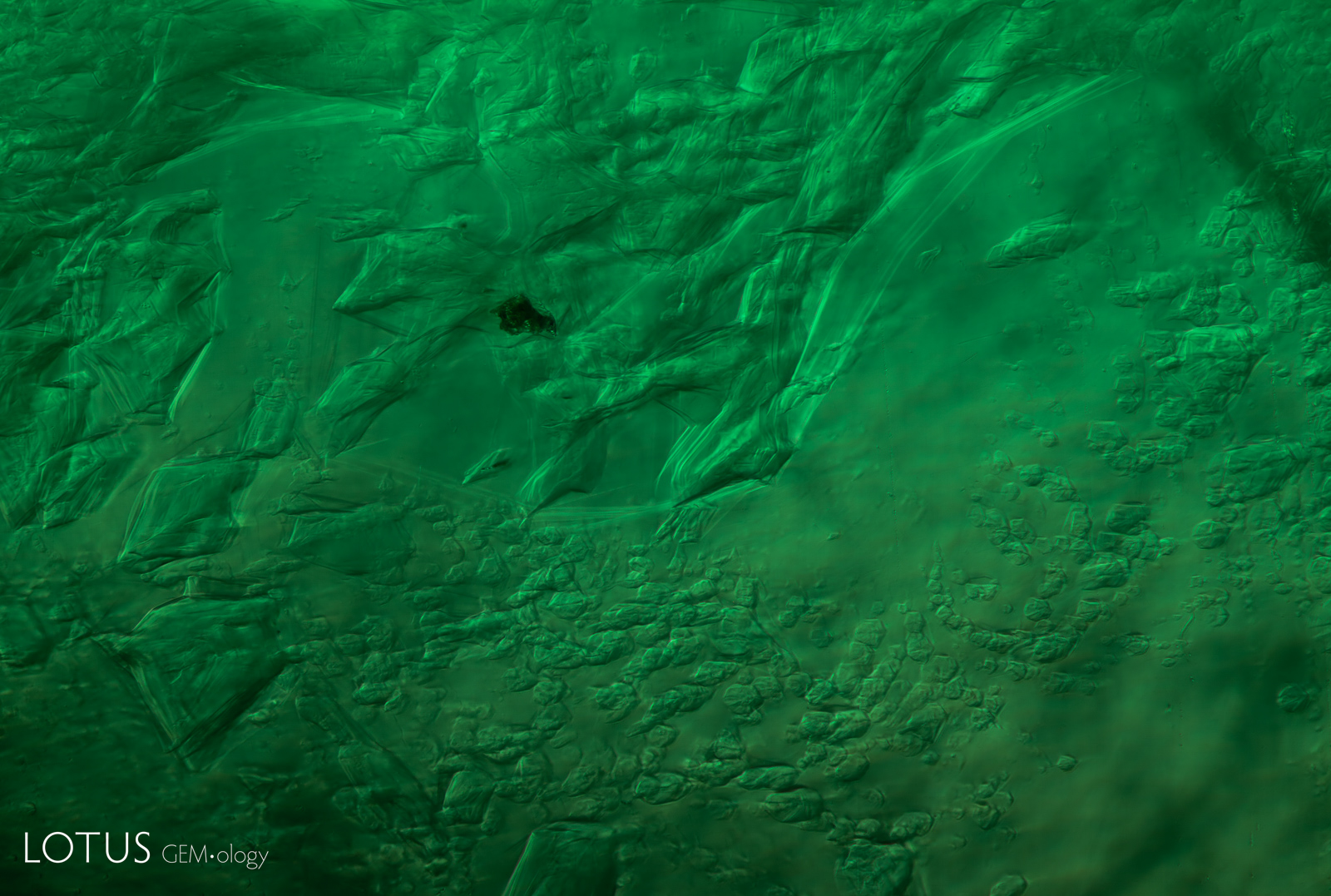
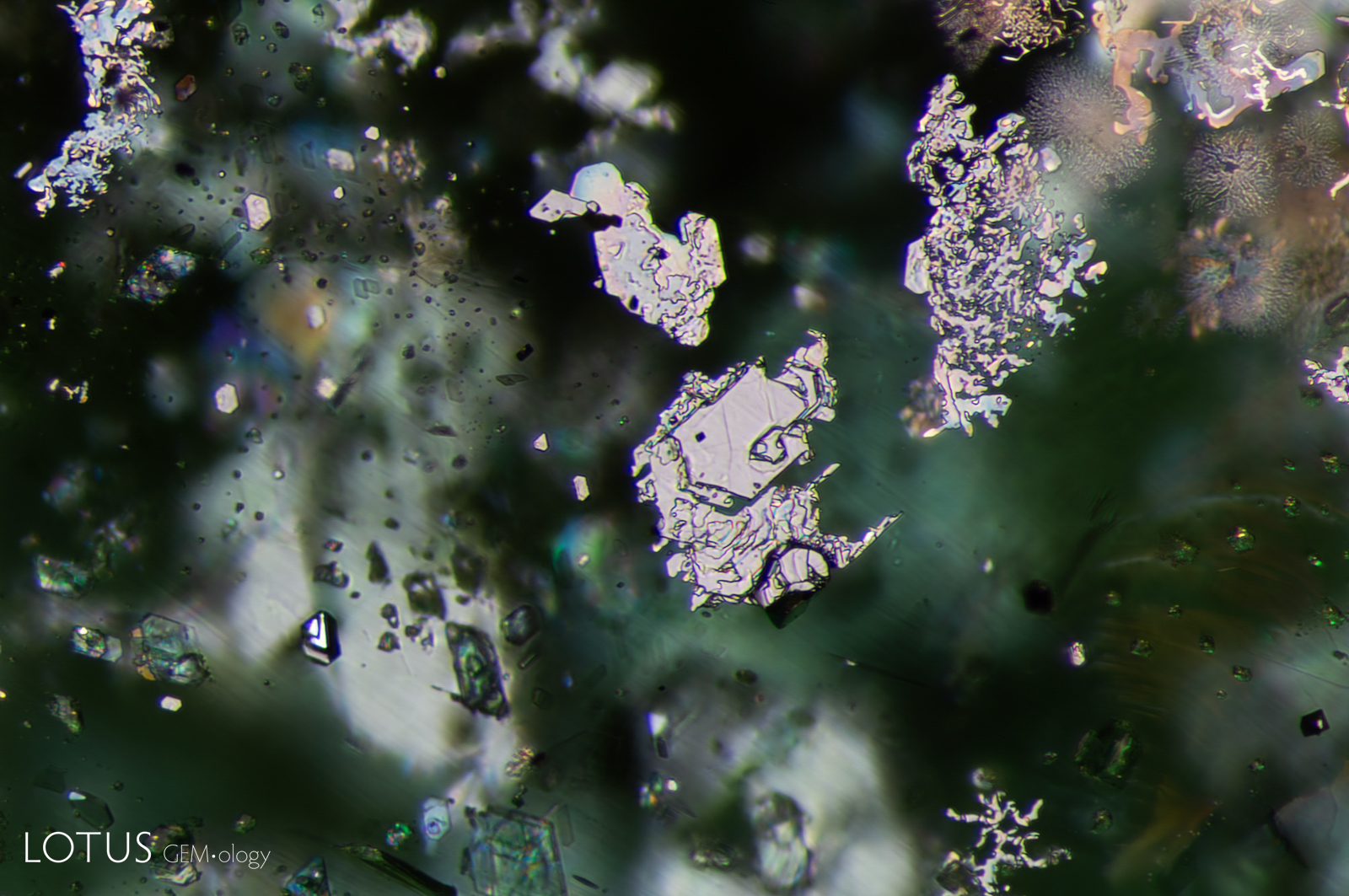
Under magnification, thin films in this emerald produce a palette of interference colors, a classic inclusion scene in emeralds from Russia.
Natural • Beryl • Beryl • Emerald •
Russia; Malysheva •
Enhancements:
None Detected (None) •
Lighting Conditions:
Fiber Optic: Diffuse Oblique
Photographer:
E. Billie Hughes •
Image Number:
A-005-9185-2
• Field of View = 1.9mm
Gübelin, E.J. and Koivula, J.I. (2008) Photoatlas of Inclusions in Gemstones, Volume 3. Basel, Switzerland, Opinio Publishers, 672 pp.; RWHL*
Gubelin, E.J. (1940) Differentiation between Russian and Colombian emerald. Gems & Gemology, Vol. 3, No. 6, Summer, pp. 89–92; RWHL
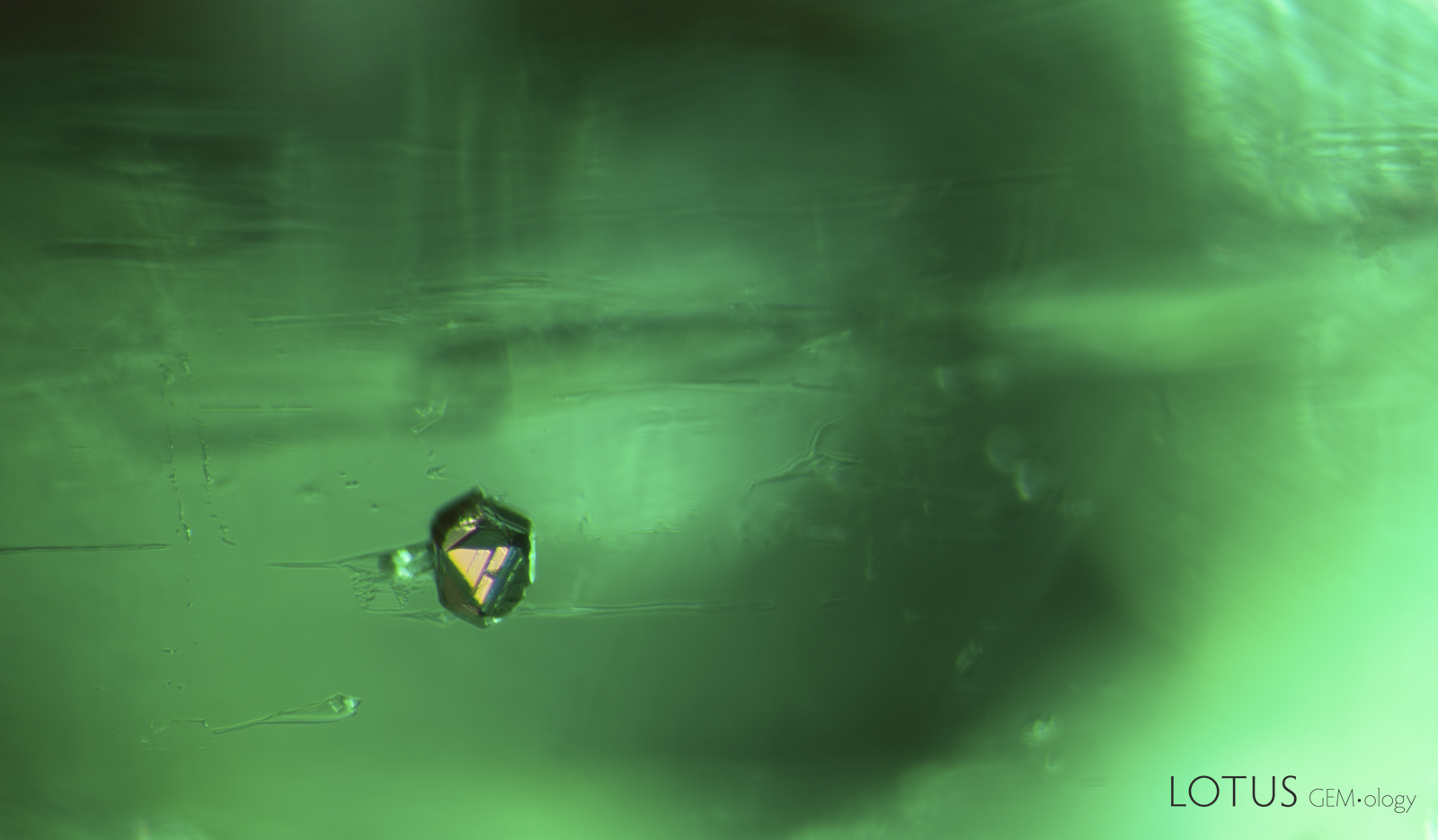
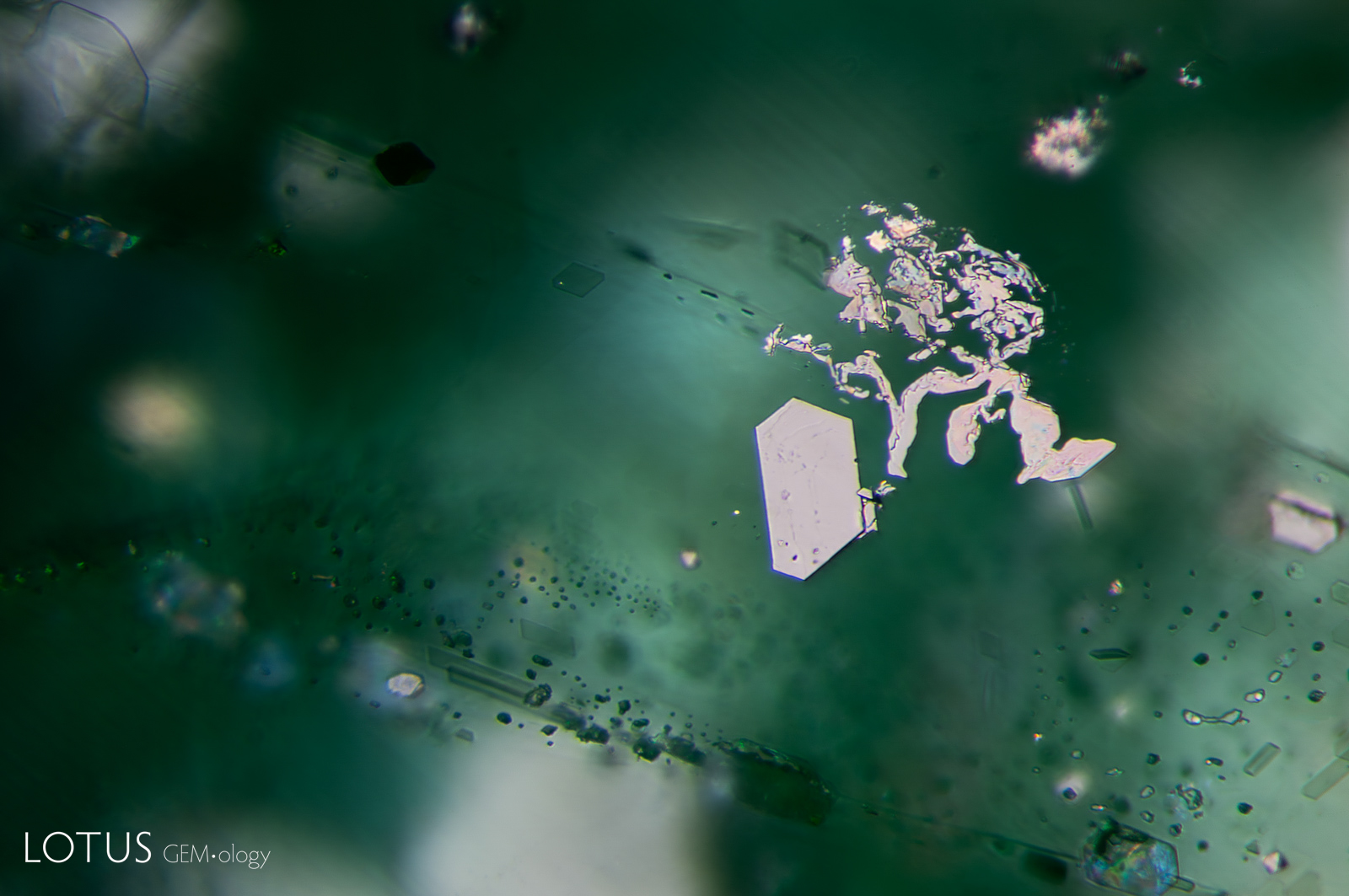
Pyrite (an iron sulfide) is a common mineral inclusion found in emeralds from Colombia and some other sources. The defined crystal faces of this crystal indicate a syngenetic origin. However, pyrite is known to form slightly earlier than emerald in most conditions. Its formation reduces the iron content that is available in the emerald-mineralizing fluid; hence the low iron content of most Colombian emeralds.
Natural • Beryl • Beryl • Emerald •
Colombia •
Enhancements:
Fissure Filling with colorless Oil/resin (FF-O2–3) •
Lighting Conditions:
Dark Field
Photographer:
Kaylan Khourie •
Image Number:
A-005-6992-2
• Field of View = 2.2mm
• Magnification = 8x
Gübelin, E.J. and Koivula, J.I. (2008) Photoatlas of Inclusions in Gemstones, Volume 3. Basel, Switzerland, Opinio Publishers, 672 pp.; RWHL*
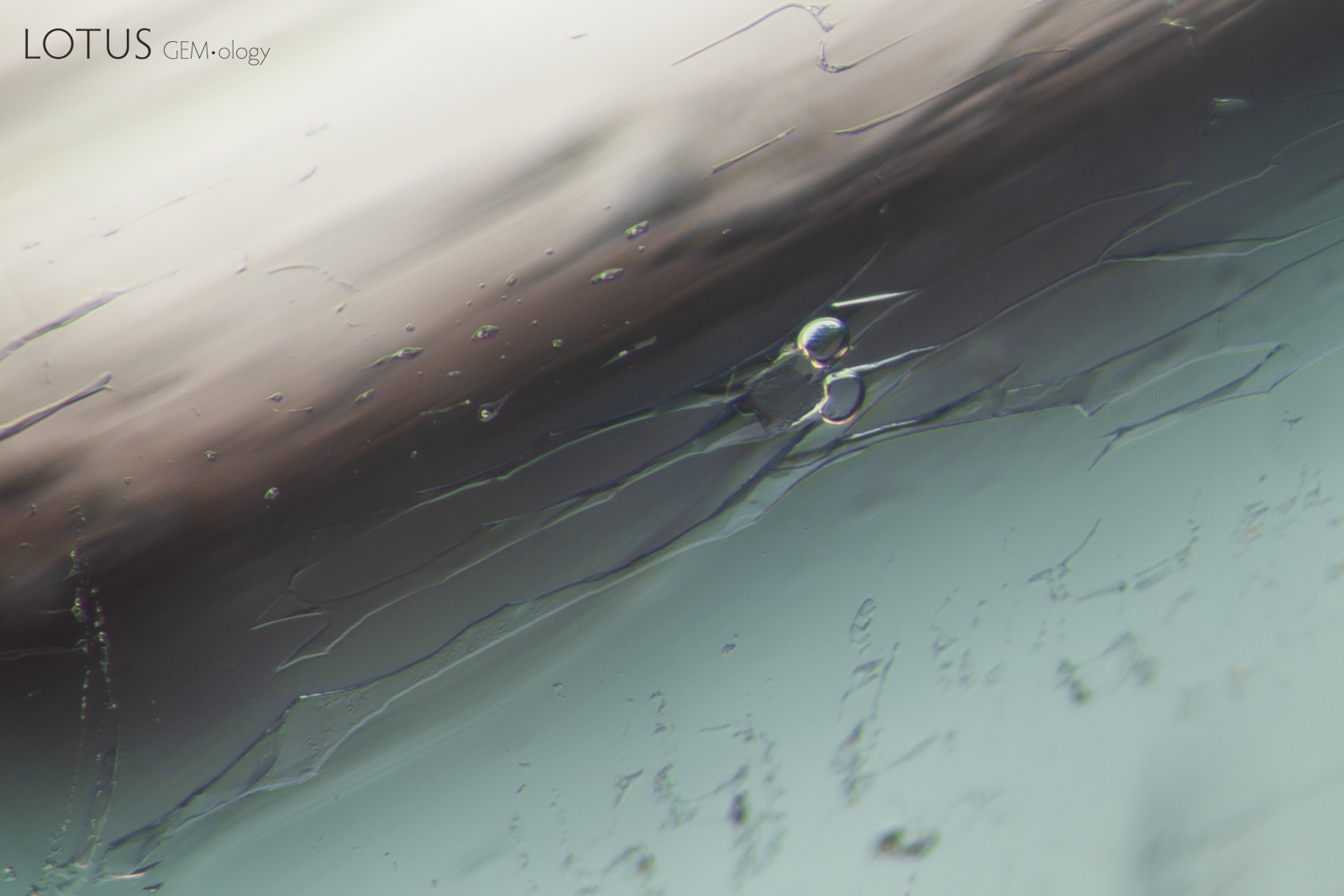
Although previously thought to be exclusive to Colombian emeralds, three-phase fluid inclusions can be found in emeralds from many different deposits. In this example, two fluid inclusions appear to be sharing one solid phase (probably halite).
Natural • Beryl • Beryl • Emerald •
Colombia •
Enhancements:
Fissure Filling with colorless Oil/resin (FF-O2–3) •
Lighting Conditions:
Diffuse Dark Field
Photographer:
Kaylan Khourie •
Image Number:
A-005-6992-1
• Field of View = 1.6mm
• Magnification = 11x
Saeseaw, S., Pardieu, V. and Sangsawong, S. (2014) Three-phase inclusions in emerald and their impact on origin determination. Gems & Gemology, Vol. 50, No. 2, Summer, pp. 114–132; RWHL*.
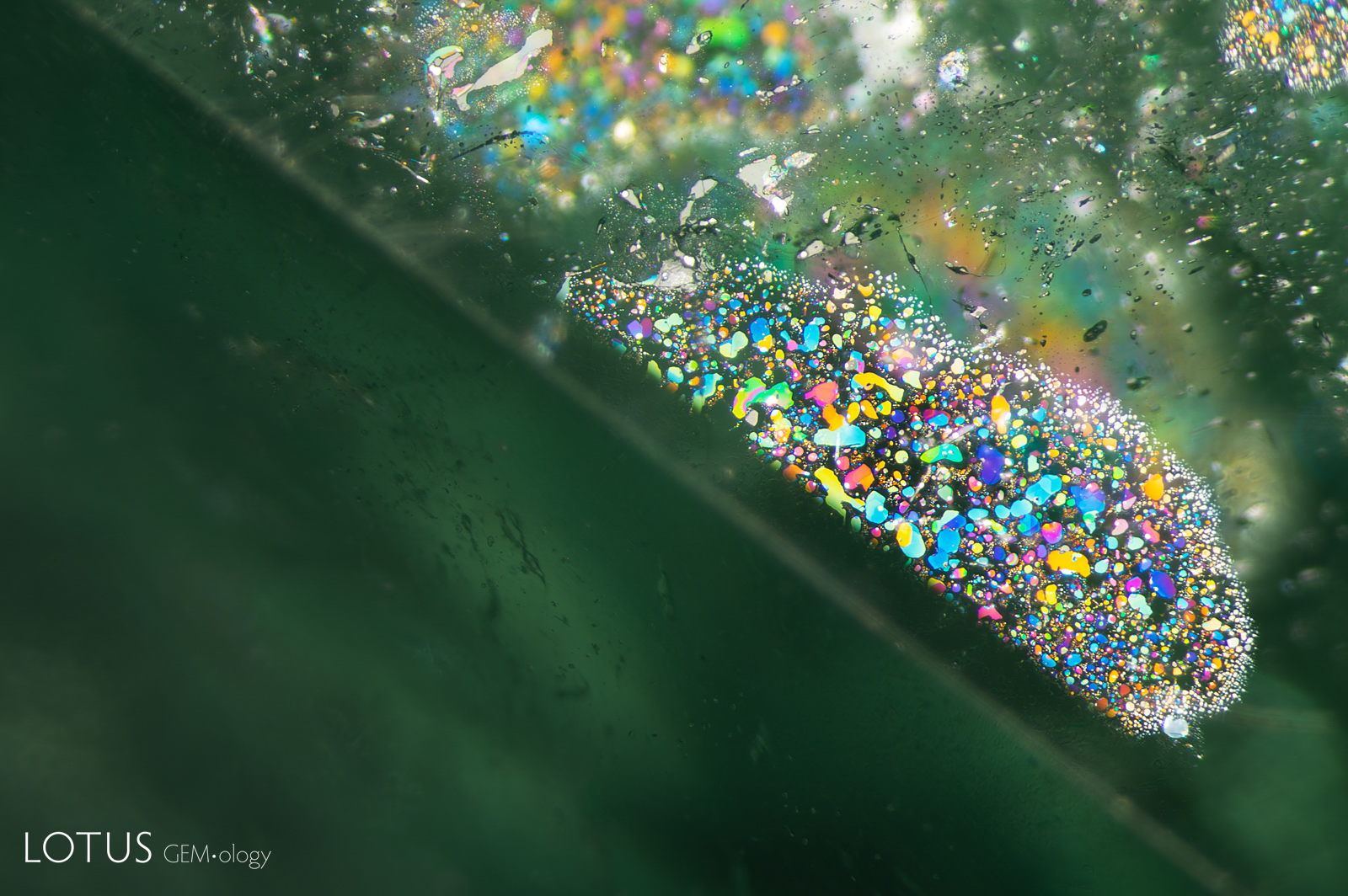
Iridescent two-phase thin films, as seen here, are common feature in emeralds from Russia.
Natural • Beryl • Beryl • Emerald •
Russia; Malysheva •
Enhancements:
None Detected (None) •
Lighting Conditions:
Fiber Optic: Diffuse Oblique
Photographer:
E. Billie Hughes •
Image Number:
A-005-6697-4
Gübelin, E.J. and Koivula, J.I. (2008) Photoatlas of Inclusions in Gemstones, Volume 3. Basel, Switzerland, Opinio Publishers, 672 pp.; RWHL*
Gubelin, E.J. (1940) Differentiation between Russian and Colombian emerald. Gems & Gemology, Vol. 3, No. 6, Summer, pp. 89–92; RWHL
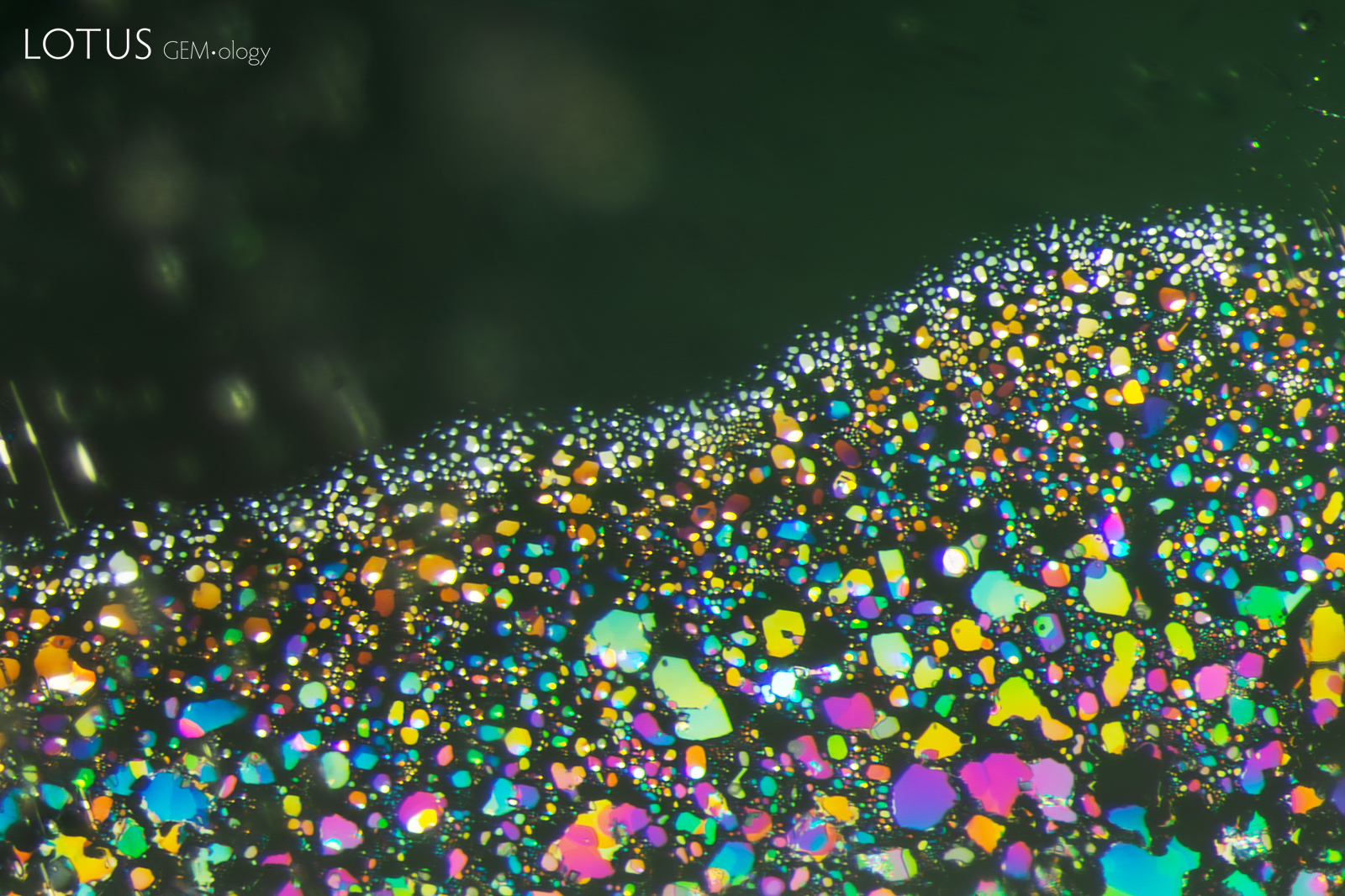
Iridescent two-phase thin films, as seen here, are common feature in emeralds from Russia.
Natural • Beryl • Beryl • Emerald •
Russia; Malysheva •
Enhancements:
None Detected (None) •
Lighting Conditions:
Fiber Optic: Diffuse Oblique
Photographer:
E. Billie Hughes •
Image Number:
A-005-6697-3
• Field of View = 2mm
Gübelin, E.J. and Koivula, J.I. (2008) Photoatlas of Inclusions in Gemstones, Volume 3. Basel, Switzerland, Opinio Publishers, 672 pp.; RWHL*
Gubelin, E.J. (1940) Differentiation between Russian and Colombian emerald. Gems & Gemology, Vol. 3, No. 6, Summer, pp. 89–92; RWHL
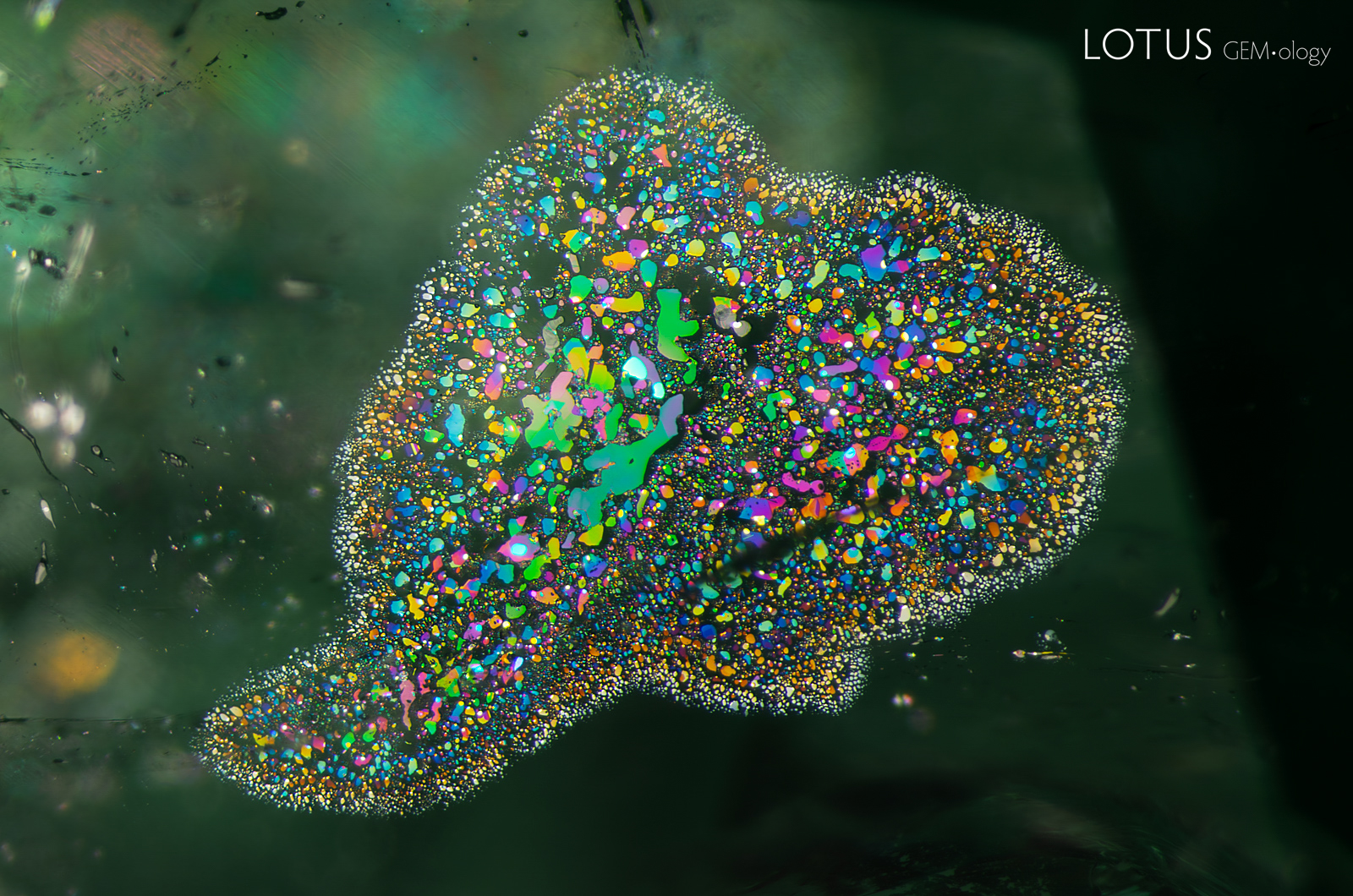
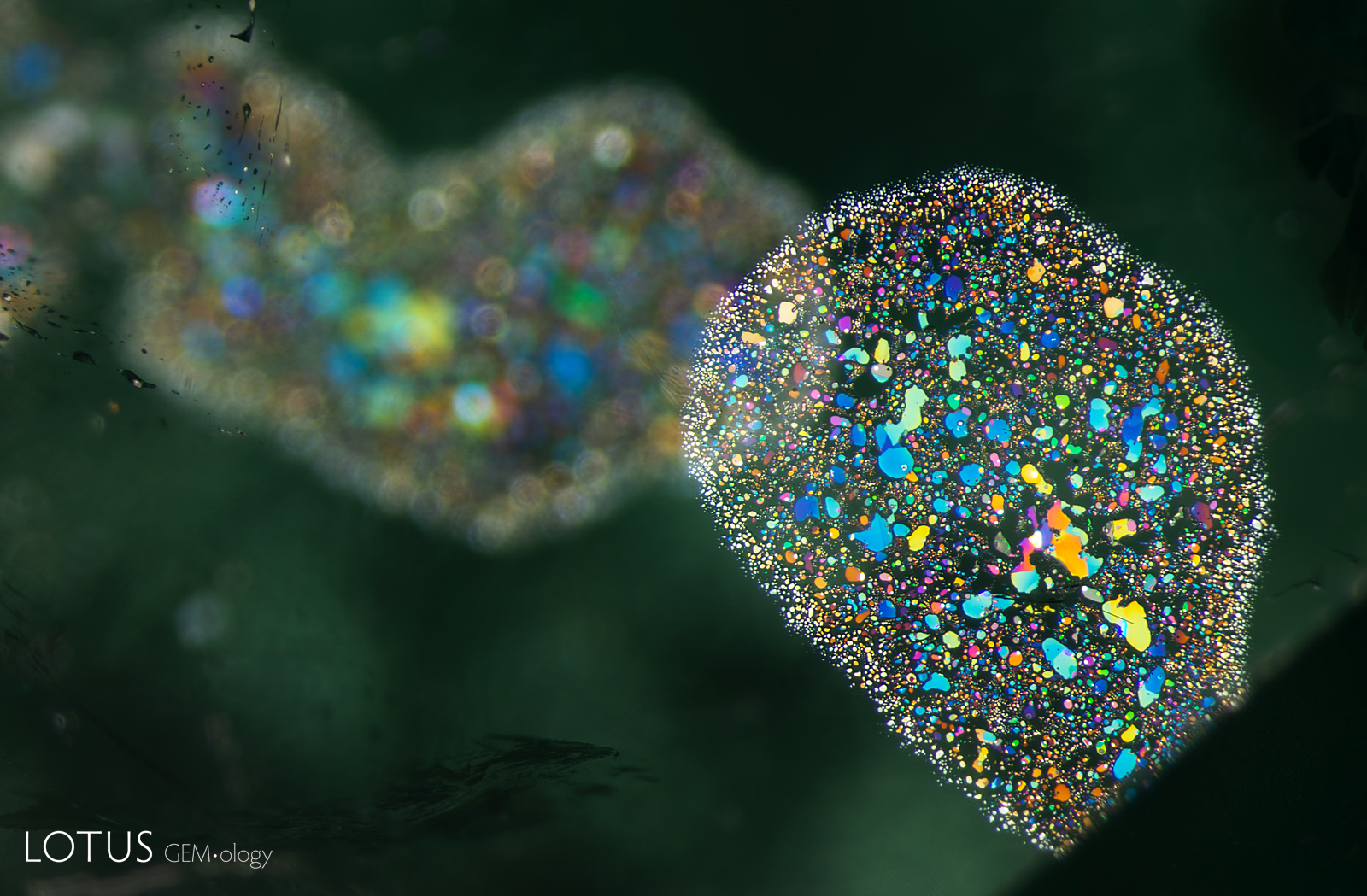
Iridescent two-phase thin films, as seen here, are common feature in emeralds from Russia. Some observers noted that this cluster resembles and elephant’s head.
Natural • Beryl • Beryl • Emerald •
Russia; Malysheva •
Enhancements:
None Detected (None) •
Lighting Conditions:
Fiber Optic: Diffuse Oblique
Photographer:
E. Billie Hughes •
Image Number:
A-005-6697-2
• Field of View = 5.4mm
Gübelin, E.J. and Koivula, J.I. (2008) Photoatlas of Inclusions in Gemstones, Volume 3. Basel, Switzerland, Opinio Publishers, 672 pp.; RWHL*
Gubelin, E.J. (1940) Differentiation between Russian and Colombian emerald. Gems & Gemology, Vol. 3, No. 6, Summer, pp. 89–92; RWHL
Iridescent two-phase thin films, as seen here, are common feature in emeralds from Russia.
Natural • Beryl • Beryl • Emerald •
Russia; Malysheva •
Enhancements:
None Detected (None) •
Lighting Conditions:
Fiber Optic: Diffuse Oblique
Photographer:
E. Billie Hughes •
Image Number:
A-005-6697-1
• Field of View = 5.4mm
Gübelin, E.J. and Koivula, J.I. (2008) Photoatlas of Inclusions in Gemstones, Volume 3. Basel, Switzerland, Opinio Publishers, 672 pp.; RWHL*
Gubelin, E.J. (1940) Differentiation between Russian and Colombian emerald. Gems & Gemology, Vol. 3, No. 6, Summer, pp. 89–92; RWHL
81 Total Images
Results: 1 – 12 | Page 1 of 7 Pages
Search the Complete Hyperion Database
Emerald inclusions may include mineral crystals, fluid inclusions, multiphase inclusions, healed fissures, growth features and other internal features formed during or after crystal growth. Such features are important to gemologists because they can provide evidence useful in identifying emerald, understanding its geological history, recognizing treatment and, in some cases, determining geographic origin.
Emerald Inclusion Photomicrographs
The Hyperion emerald gallery includes microscopic features found in emeralds from major deposits around the world. Each entry is accompanied by descriptive information and, where available, references to the gemological literature.
What Inclusions Can Reveal About Emerald
Inclusions are an important part of emerald identification. Their form, composition and associations can help gemologists distinguish natural emerald from synthetic material, recognize evidence of treatment, and study the geological environment in which the emerald formed.
Hyperion combines inclusion photomicrography with supporting gemological information so that individual features can be compared with documented examples from known emerald deposits.
About Hyperion
Hyperion is the Lotus Gemology searchable inclusion database. It allows users to browse gemstone inclusions by gem type, geographic origin, treatment and keyword.