Emerald Inclusions
Explore emerald inclusions in Hyperion, the Lotus Gemology inclusion database. Hyperion contains photomicrographs of inclusions and internal features in natural emerald, documented with information on geographic origin, treatment, lighting conditions, field of view, photographer and published references.
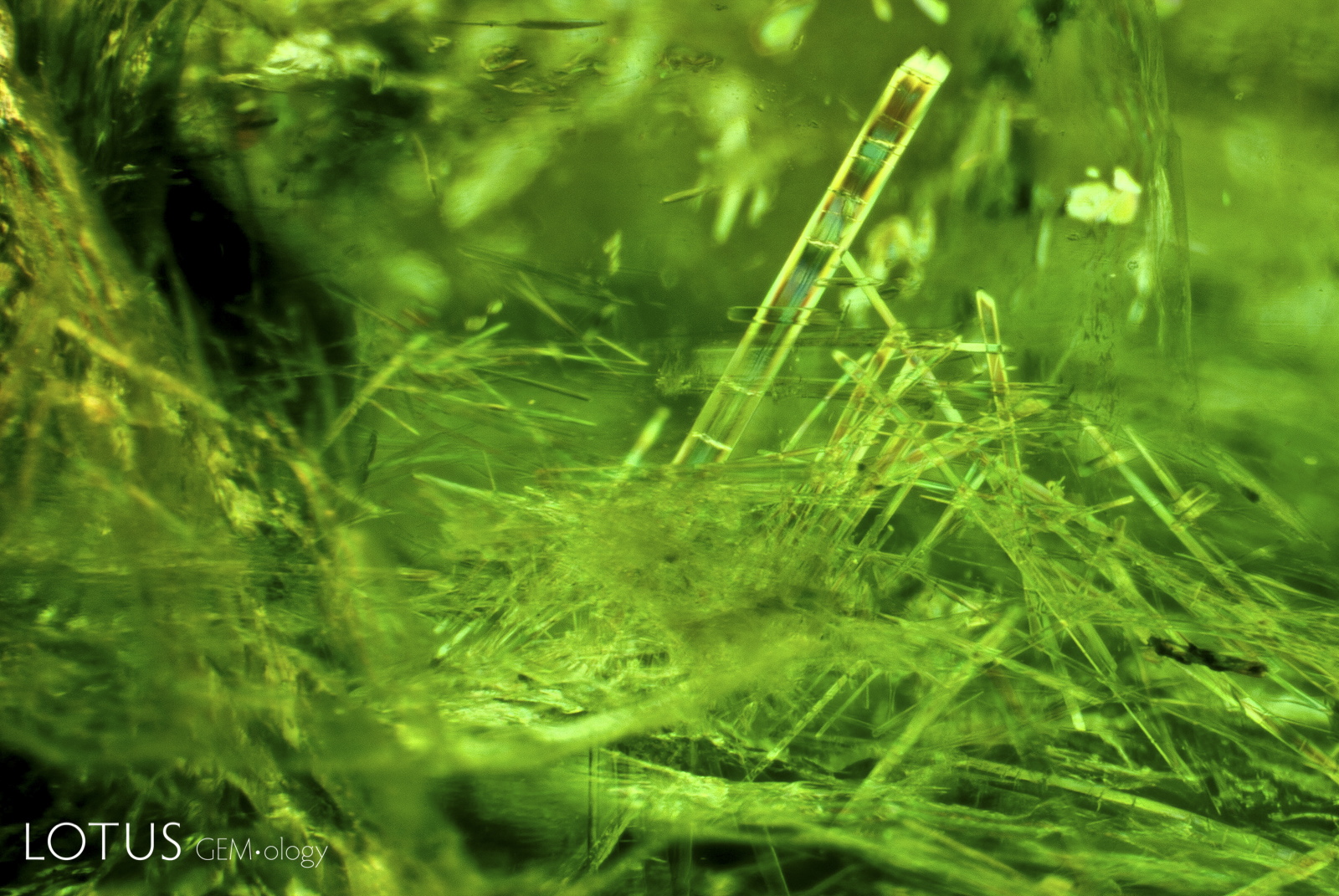
While comparatively rare, amphibole needles are a feature of some emeralds from Malysheva, Russia, as shown in this photomicrograph produced in polarized light. Specimen courtesy of Tsar Emeralds Corp.
Natural • Beryl • Emerald •
Russia •
Enhancements:
None Detected (None) •
Lighting Conditions:
Diffuse Light Field + Crossed Polars
Photographer:
John I. Koivula •
Image Number:
R-003-6202-1
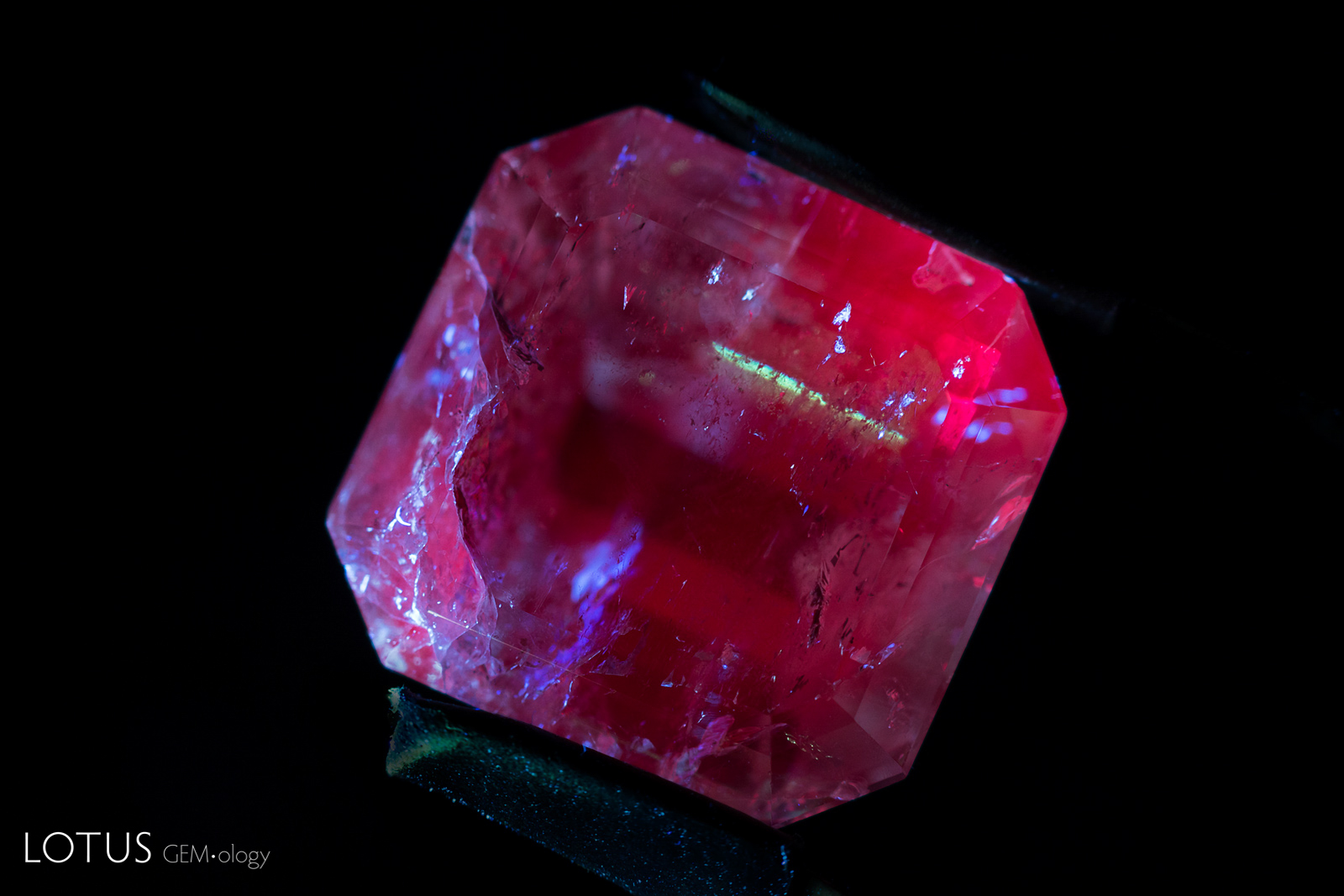
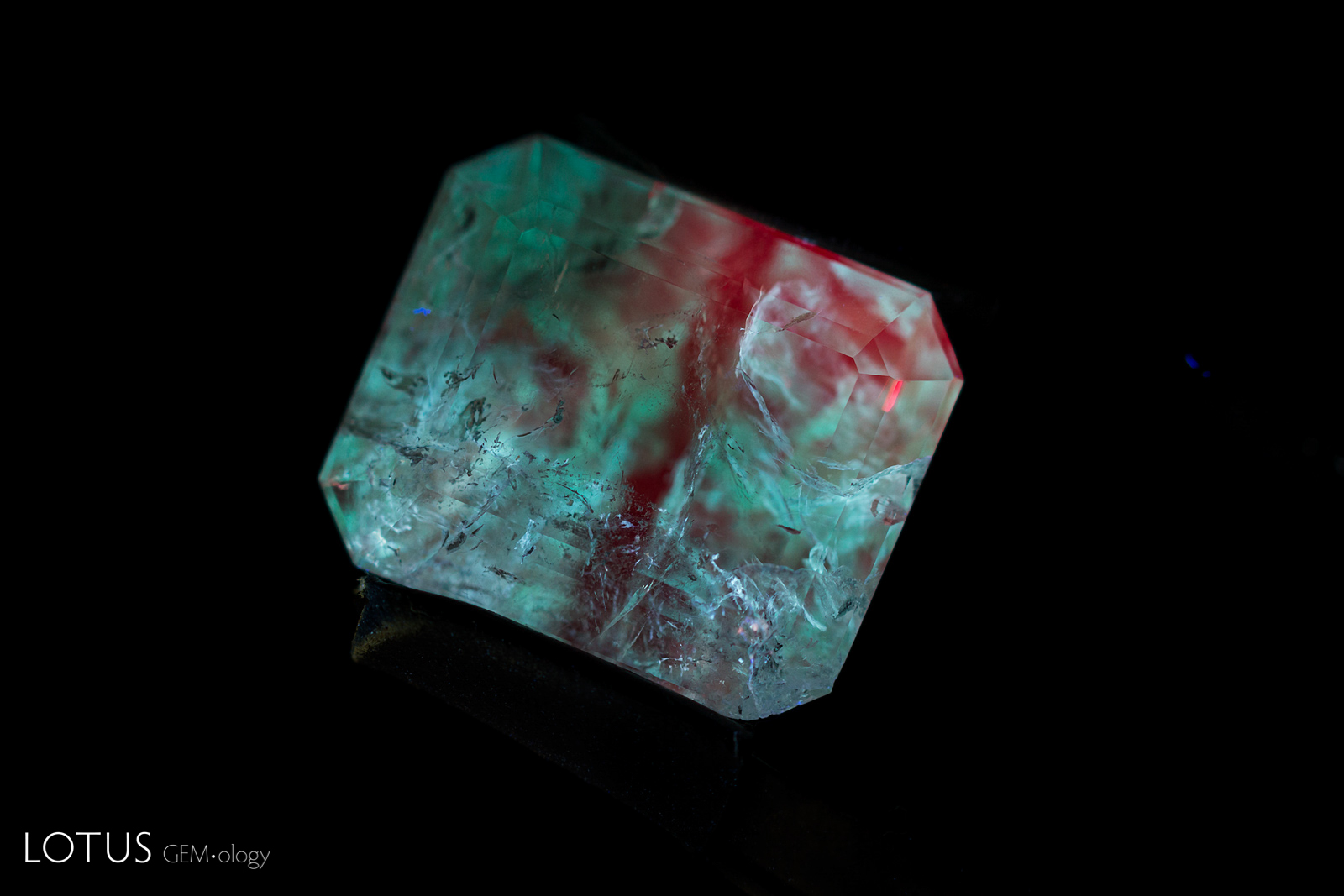
When this emerald is illuminated with a longwave UV torch, chalky areas can be observed in the fissures. This is a sign that the fissures contain filler.
Natural • Beryl • Emerald •
Colombia •
Enhancements:
Fissure Filling with colorless Oil/resin (FF-O2) •
Lighting Conditions:
Ultraviolet: Longwave
Photographer:
E. Billie Hughes •
Image Number:
A-003-5979-3
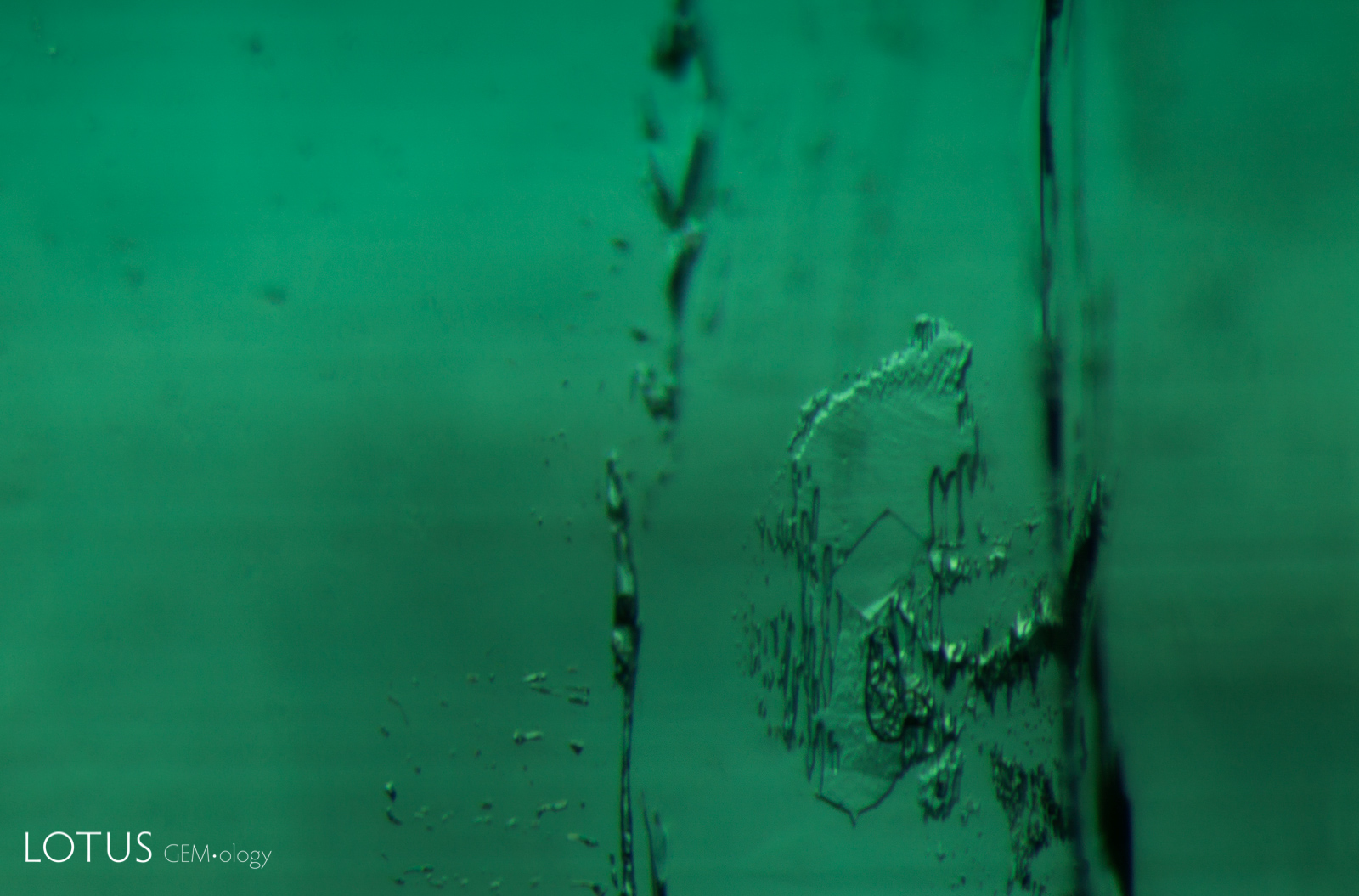
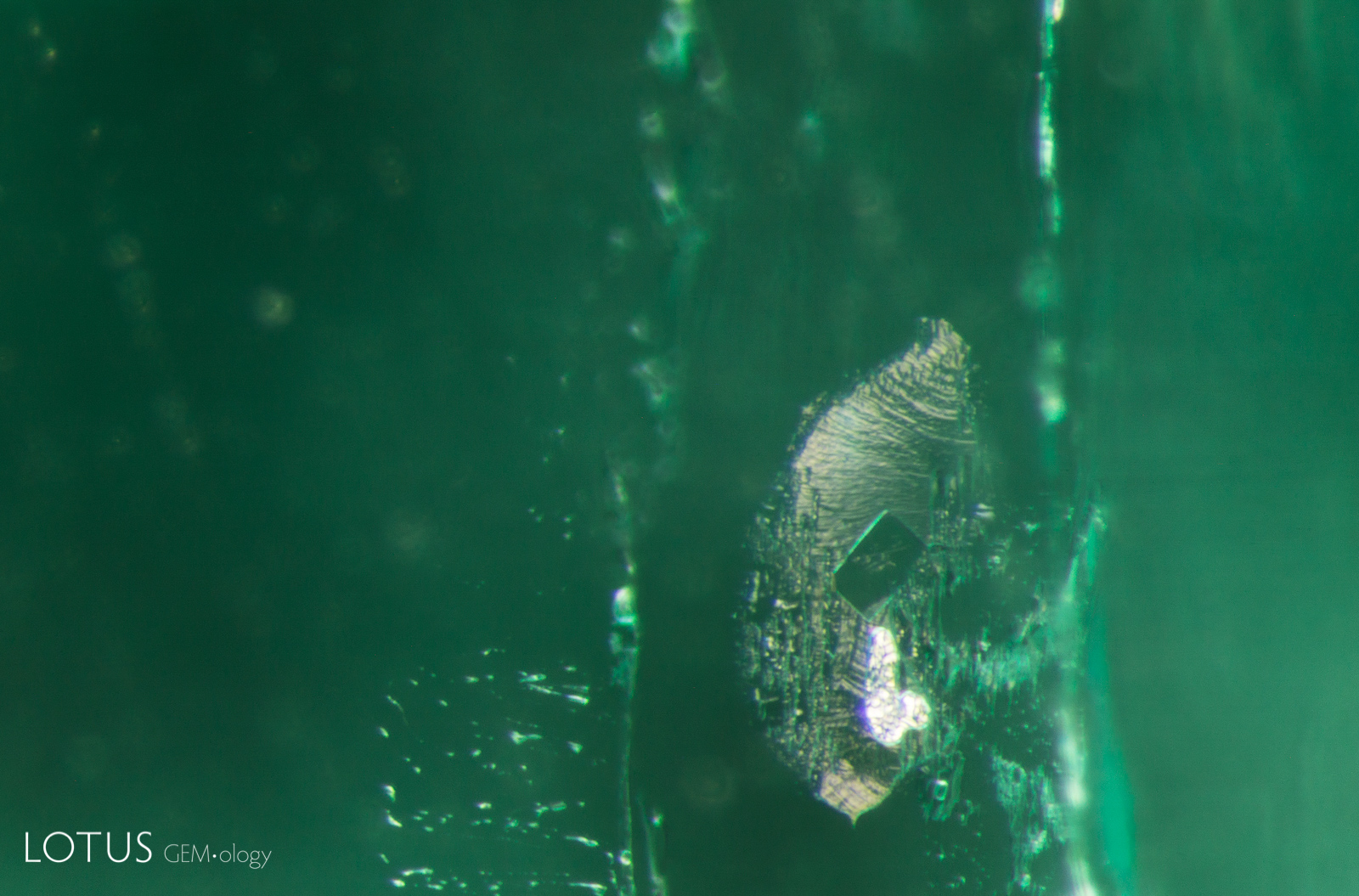
Colombian emeralds crystallize from a saline-based brine, remnants of which can be found as three-phase inclusions featuring jagged-edged liquid-filled pockets containing blocky crystals of halite (sodium chloride—rock salt).
Natural • Beryl • Emerald •
Colombia •
Enhancements:
Fissure Filling with colorless Oil/resin (FF-O2) •
Lighting Conditions:
Fiber Optic: Transmitted
Photographer:
E. Billie Hughes •
Image Number:
A-003-5979-2
• Field of View = 2mm
Colombian emeralds crystallize from a saline-based brine, remnants of which can be found as three-phase inclusions featuring jagged-edged liquid-filled pockets containing blocky crystals of halite (sodium chloride—rock salt).
Natural • Beryl • Emerald •
Colombia •
Enhancements:
Fissure Filling with colorless Oil/resin (FF-O2) •
Lighting Conditions:
Dark Field + Diffuse Fiber Optic
Photographer:
E. Billie Hughes •
Image Number:
A-003-5979-1
• Field of View = 2mm
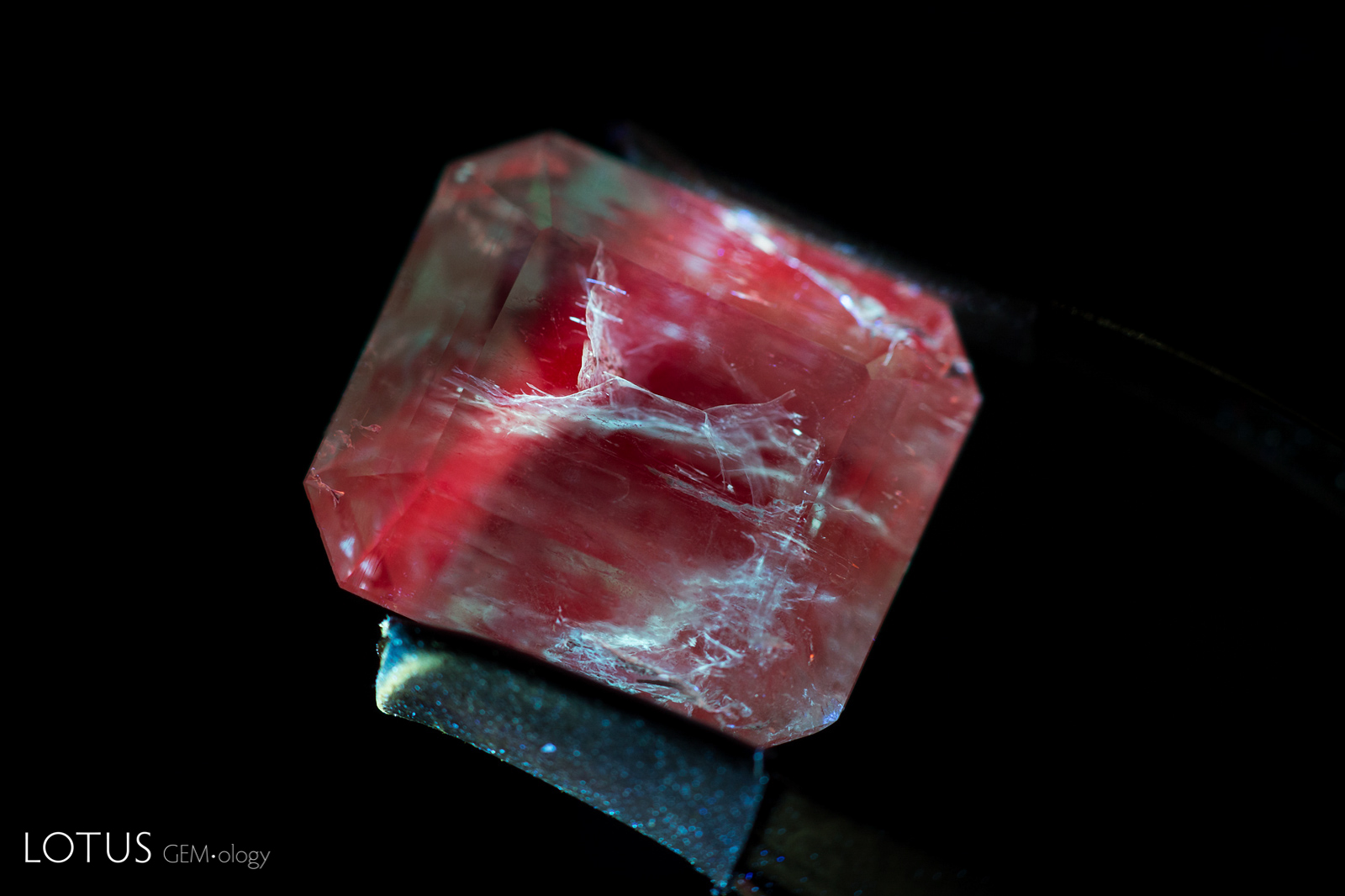
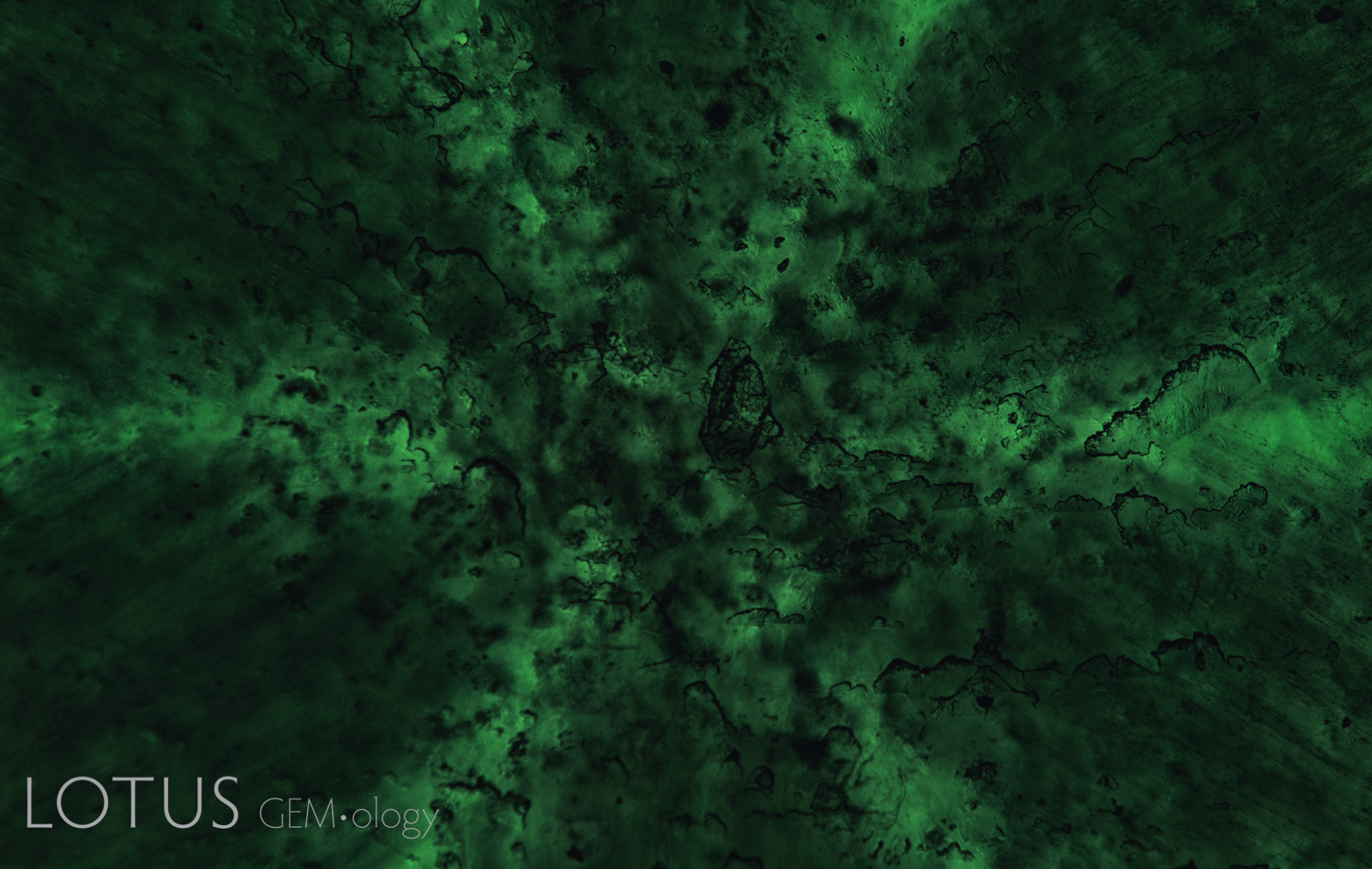
Chalky fluorescence, visible in longwave ultraviolet illumination, unmasks filler in the fissures of this emerald.
Natural • Beryl • Beryl • Emerald •
Colombia •
Enhancements:
Fissure Filling with colorless Oil/resin (FF-O2) •
Lighting Conditions:
Ultraviolet: Longwave
Photographer:
E. Billie Hughes •
Image Number:
A-003-5923-1
Chalky fluorescence, visible in longwave ultraviolet illumination, unmasks filler in the fissures of this emerald.
Natural • Beryl • Beryl • Emerald •
Colombia •
Enhancements:
Fissure Filling with colorless Oil/resin (FF-O2) •
Lighting Conditions:
Ultraviolet: Longwave
Photographer:
E. Billie Hughes •
Image Number:
A-003-5922-1
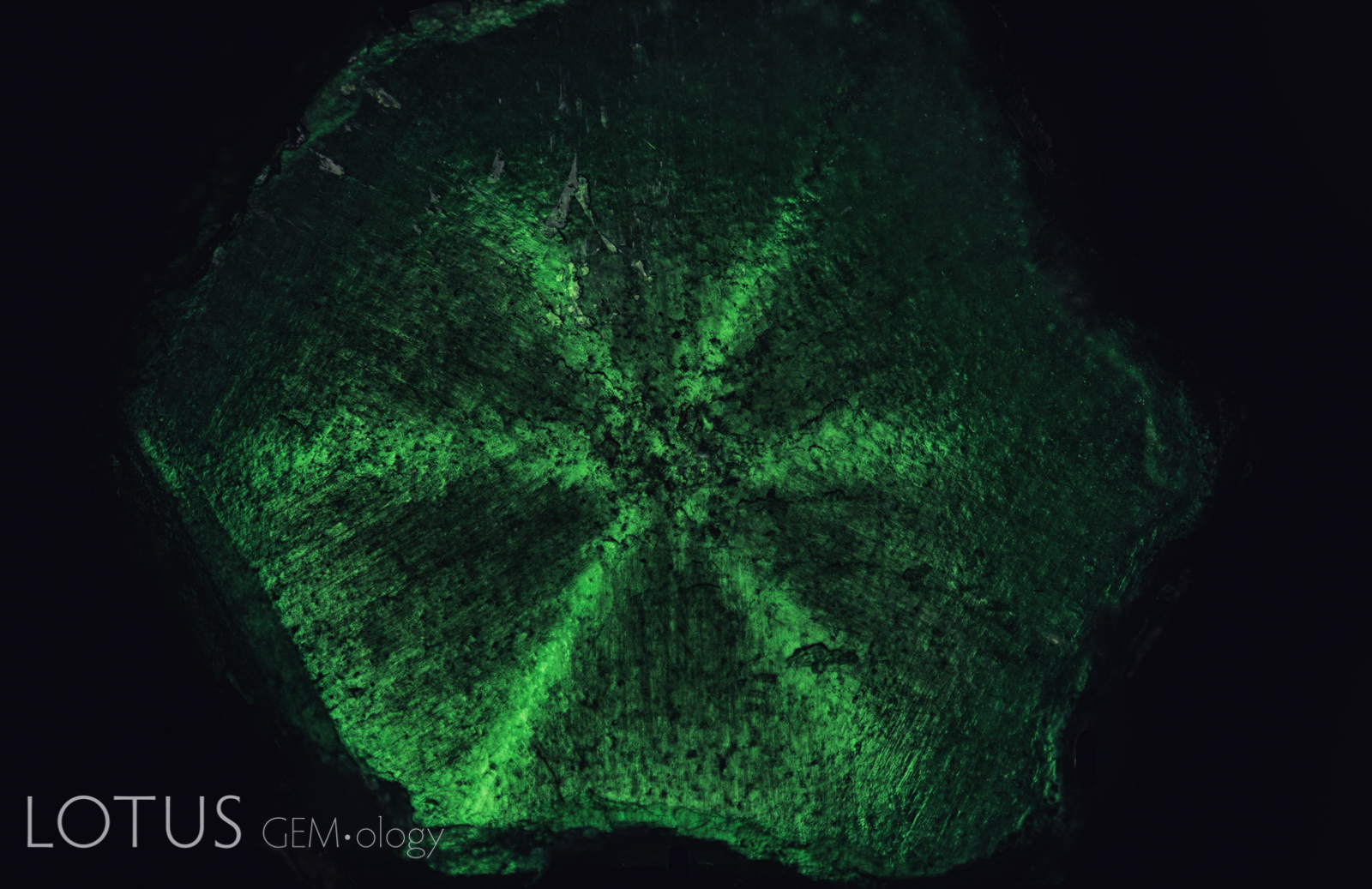
Gorgeous trapiche pattern seen in this emerald from Pakistan’s Swat Valley.
Natural • Beryl • Trapiche • Emerald •
Pakistan •
Enhancements:
Fissure Filling with colorless Oil/resin (FF-O1) •
Lighting Conditions:
Light Field (Transmitted Light)
Photographer:
Richard W. Hughes •
Image Number:
A-003-5566-1
• Field of View = 6mm
Gorgeous trapiche pattern seen in this emerald from Pakistan’s Swat Valley.
Natural • Beryl • Trapiche • Emerald •
Pakistan •
Enhancements:
Fissure Filling with colorless Oil/resin (FF-O1) •
Lighting Conditions:
Light Field (Transmitted Light)
Photographer:
Richard W. Hughes •
Image Number:
A-003-5566-2
• Field of View = 12mm
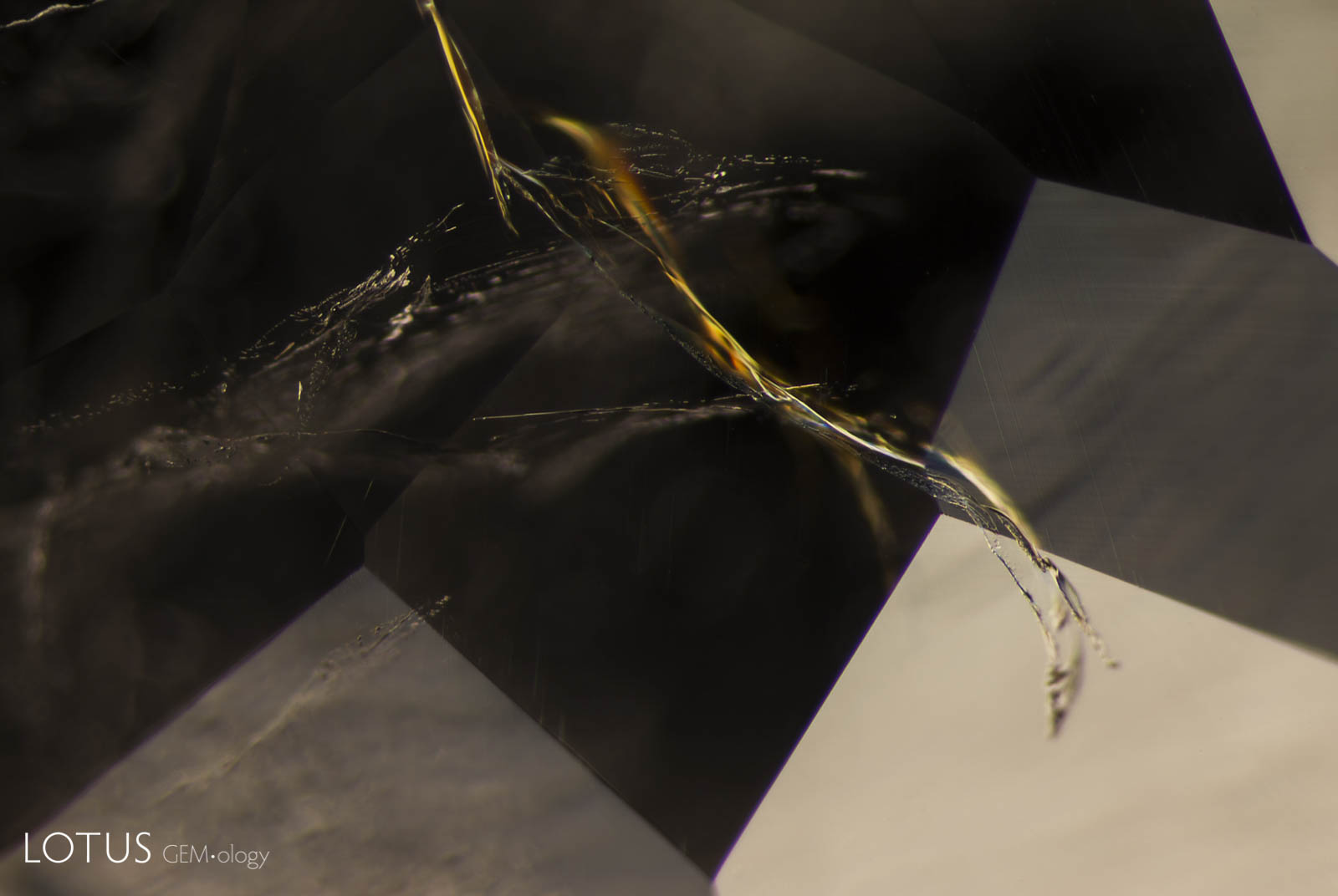
In this resin-filled emerald, an yellow-orange flash can be seen in the filled fracture. This treatment helps to minimize the appearance of fissures.
Natural • Beryl • Emerald •
Colombia •
Enhancements:
Fissure Filling with colorless Oil/resin (FF-O1) •
Lighting Conditions:
Dark Field
Photographer:
E. Billie Hughes •
Image Number:
A-003-3855-1
Search the Complete Hyperion Database
Emerald inclusions may include mineral crystals, fluid inclusions, multiphase inclusions, healed fissures, growth features and other internal features formed during or after crystal growth. Such features are important to gemologists because they can provide evidence useful in identifying emerald, understanding its geological history, recognizing treatment and, in some cases, determining geographic origin.
Emerald Inclusion Photomicrographs
The Hyperion emerald gallery includes microscopic features found in emeralds from major deposits around the world. Each entry is accompanied by descriptive information and, where available, references to the gemological literature.
What Inclusions Can Reveal About Emerald
Inclusions are an important part of emerald identification. Their form, composition and associations can help gemologists distinguish natural emerald from synthetic material, recognize evidence of treatment, and study the geological environment in which the emerald formed.
Hyperion combines inclusion photomicrography with supporting gemological information so that individual features can be compared with documented examples from known emerald deposits.
About Hyperion
Hyperion is the Lotus Gemology searchable inclusion database. It allows users to browse gemstone inclusions by gem type, geographic origin, treatment and keyword.