Emerald Inclusions
Explore emerald inclusions in Hyperion, the Lotus Gemology inclusion database. Hyperion contains photomicrographs of inclusions and internal features in natural emerald, documented with information on geographic origin, treatment, lighting conditions, field of view, photographer and published references.
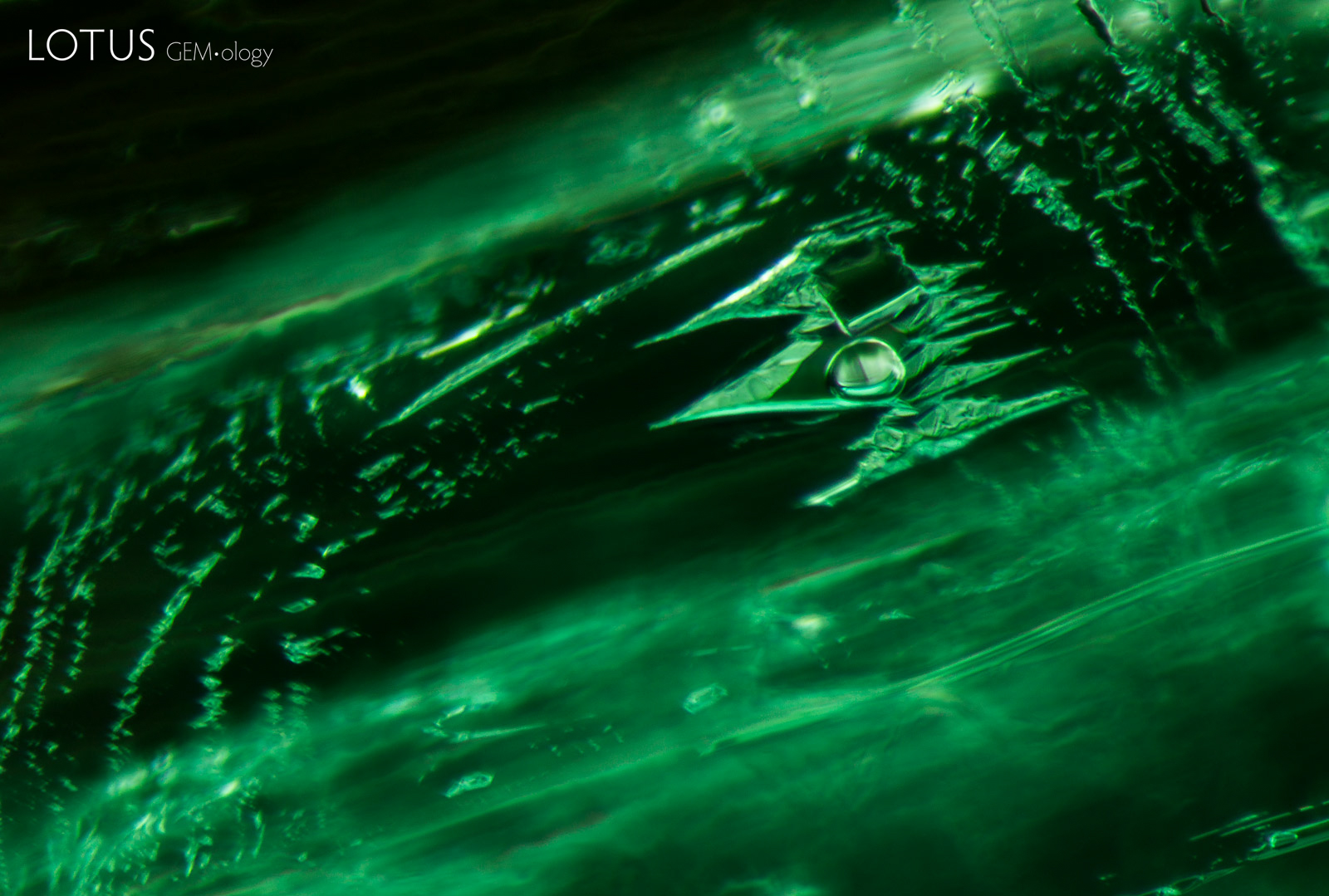
3-phase inclusion in Colombian emerald.
Natural • Beryl • Beryl • Emerald •
Colombia •
Enhancements:
Fissure Filling with colorless Oil/resin (FF-O1) •
Lighting Conditions:
Dark Field
Photographer:
Wimon Manorotkul •
Image Number:
A-003-8198-1
• Field of View = 1.8mm
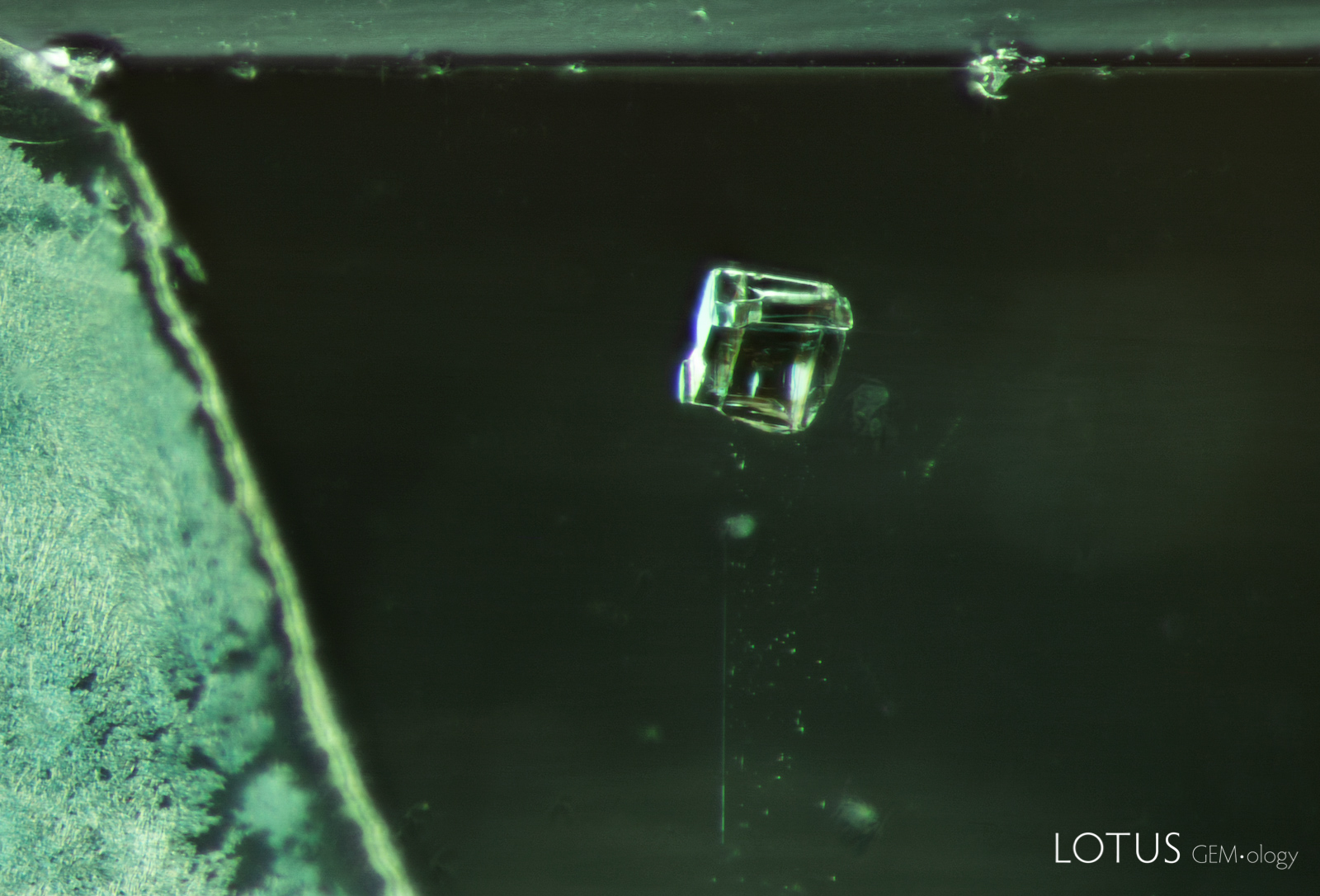
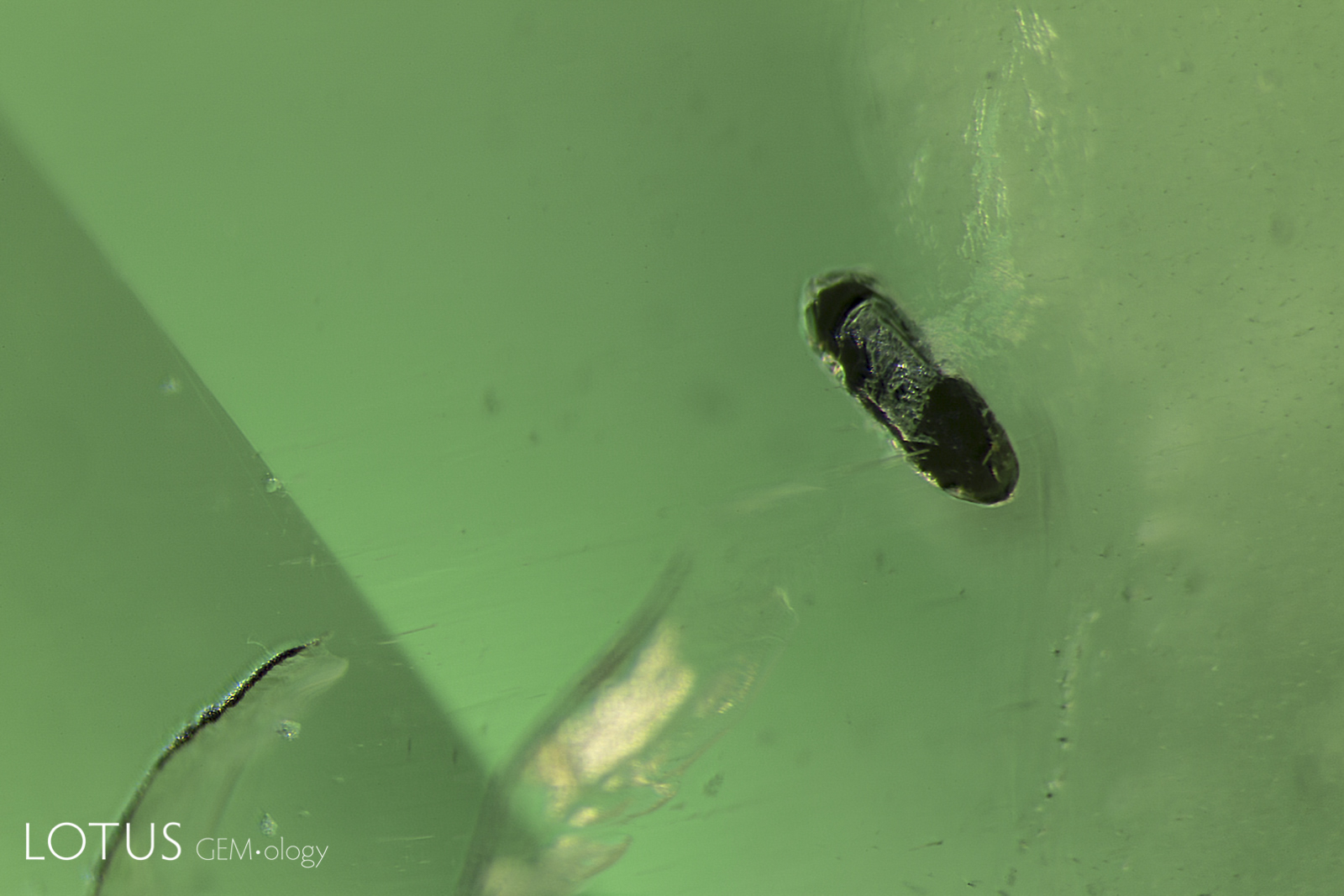
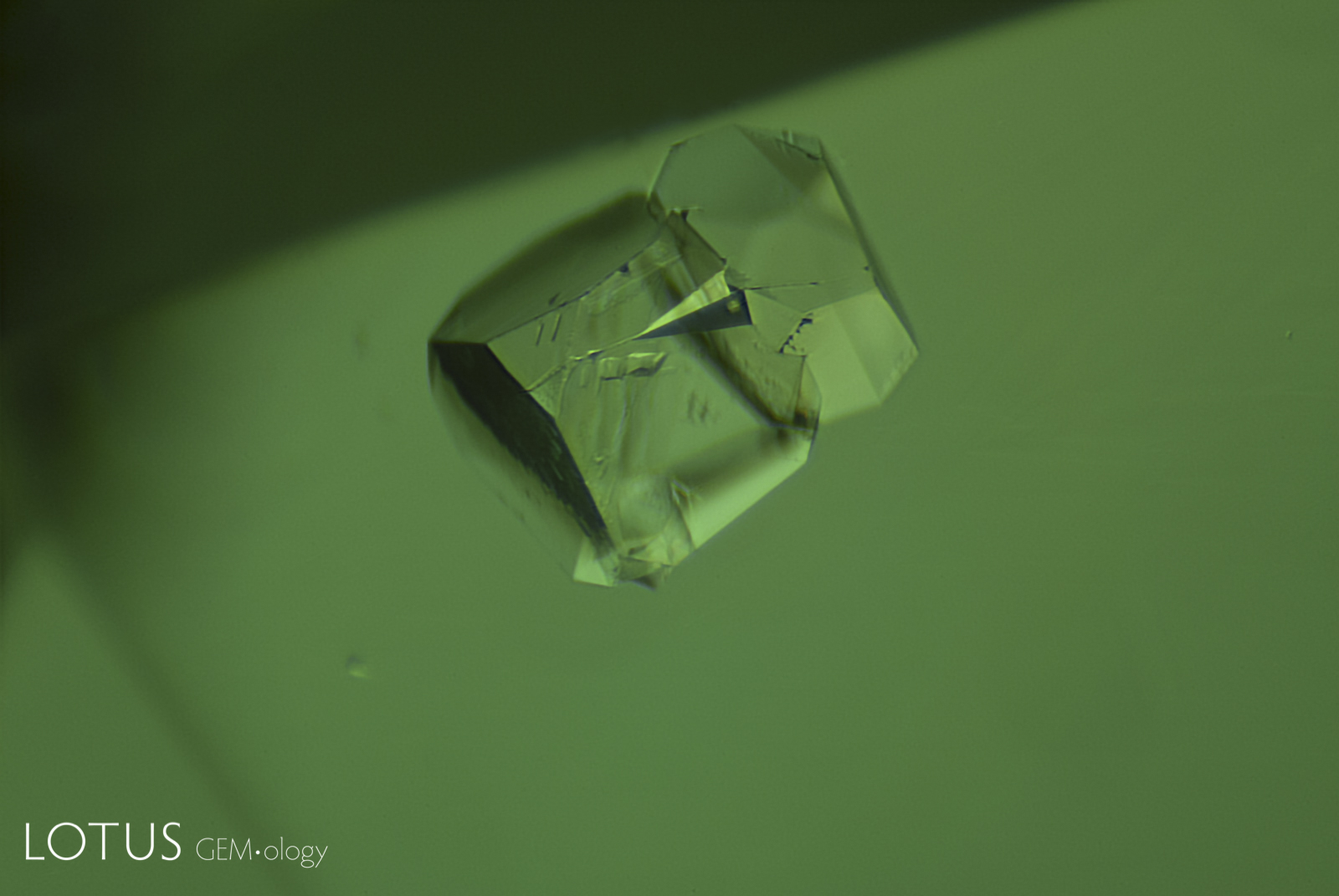
This blocky, transparent crystal stood out in its Zambian emerald host. Analysis with micro Raman revealed that it is fluorophlogopite.
Natural • Beryl • Emerald •
Zambia •
Enhancements:
Fissure Filling with colorless Oil/resin (FF-O1) •
Lighting Conditions:
Dark Field
Photographer:
E. Billie Hughes •
Image Number:
A-003-7759-1
• Field of View = 2mm
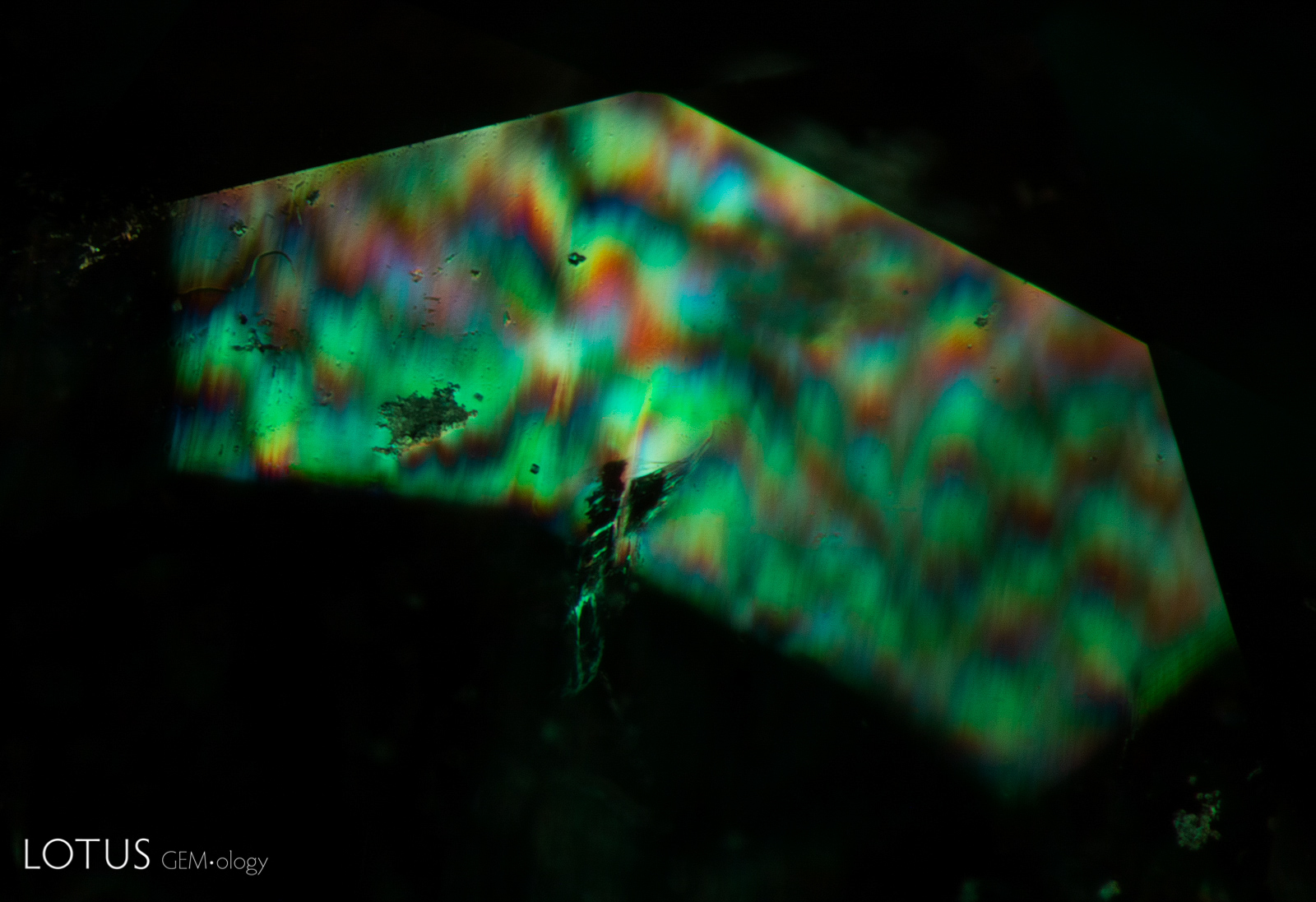
When viewed between crossed polars this emerald displayed a colorful strain pattern.
Natural • Beryl • Emerald •
Afghanistan •
Enhancements:
None Detected (None) •
Lighting Conditions:
Dark Field + Crossed Polars
Photographer:
E. Billie Hughes •
Image Number:
A-003-7749-1
• Field of View = 3mm
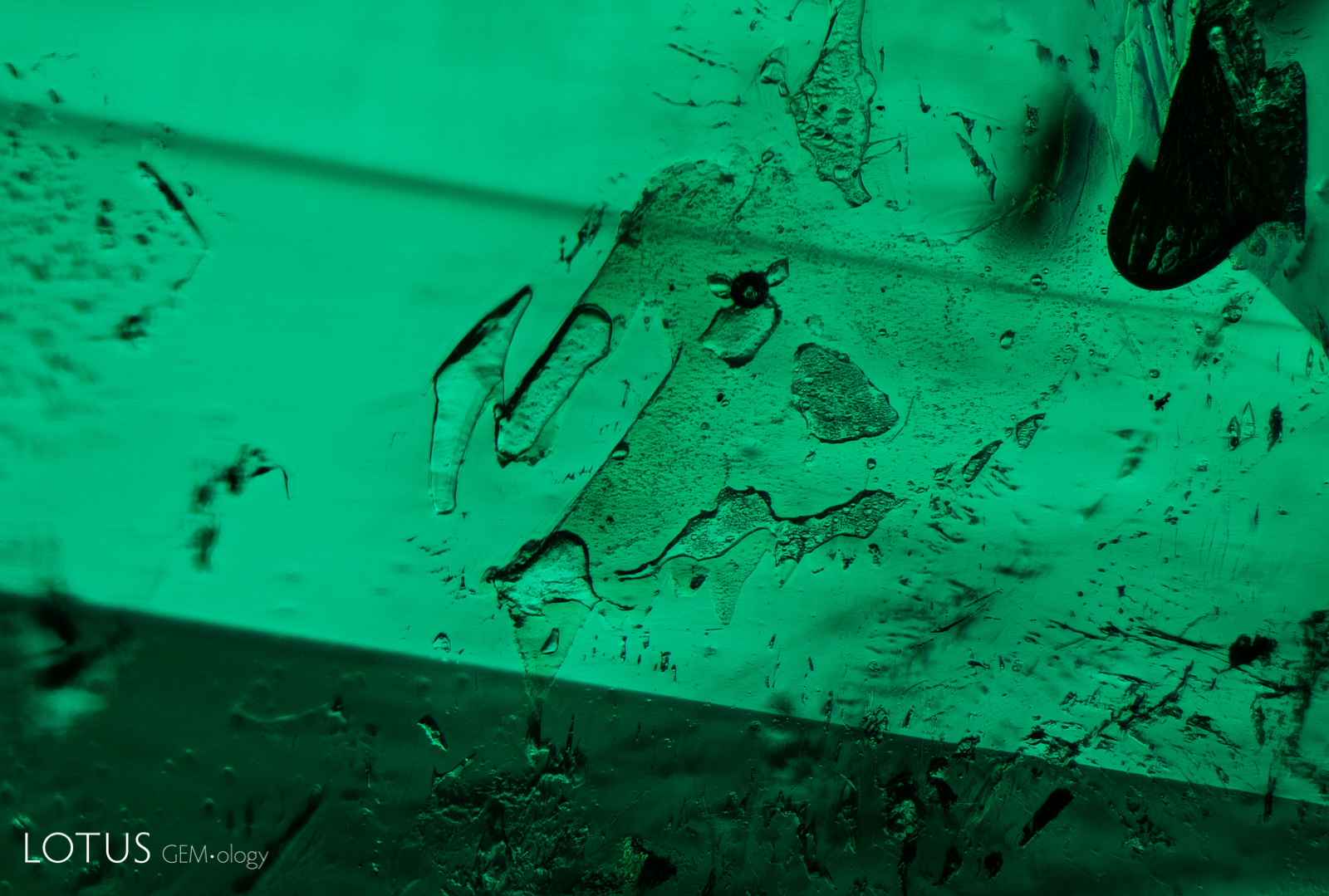
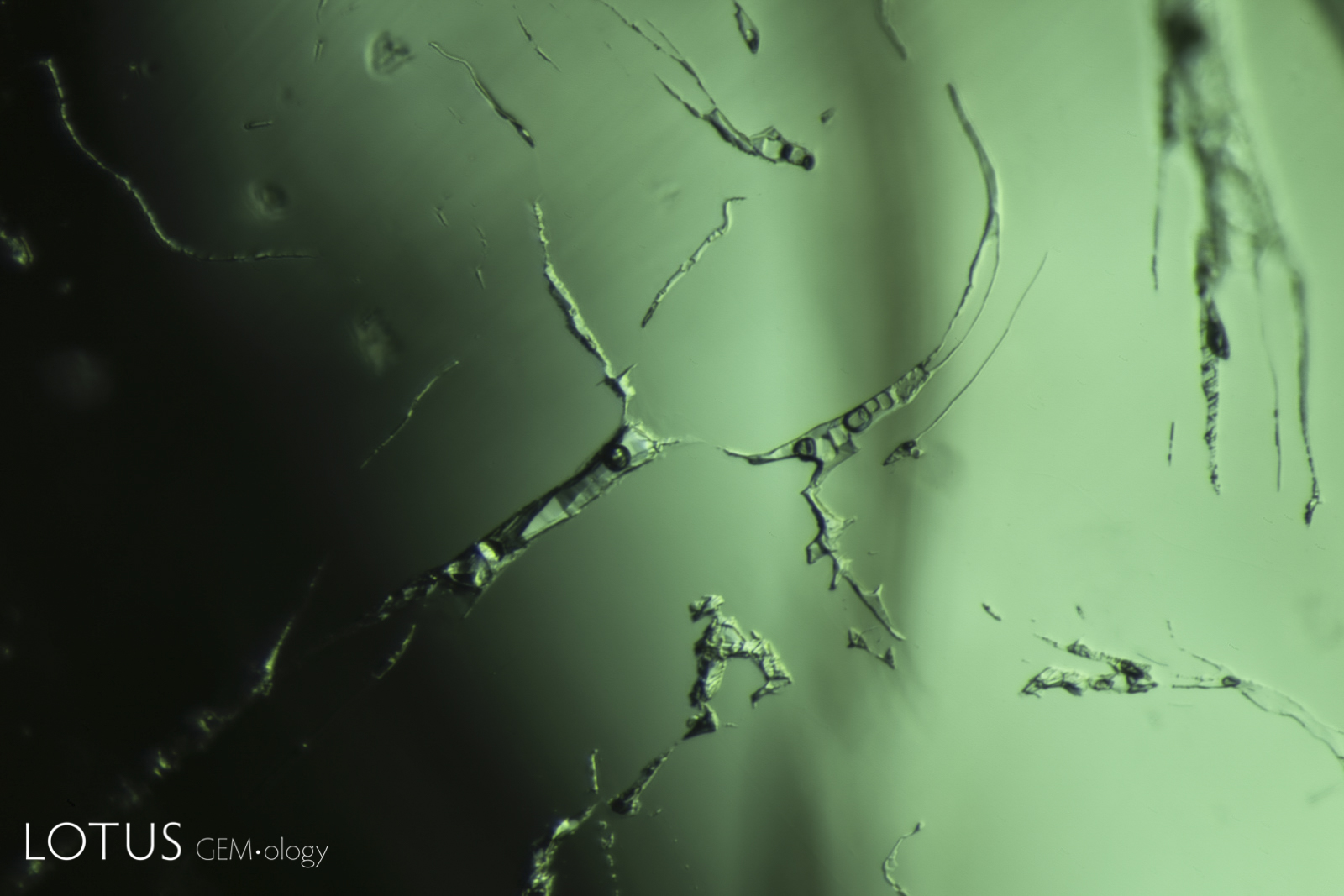
Upon close examination of this emerald, we can see tiny bubbles in areas that contain filler.
Natural • Beryl • Beryl • Emerald •
Colombia •
Enhancements:
Fissure Filling with colorless Oil/resin (FF-O2) •
Lighting Conditions:
Dark Field
Photographer:
E. Billie Hughes •
Image Number:
A-003-7644-2
• Field of View = 4mm
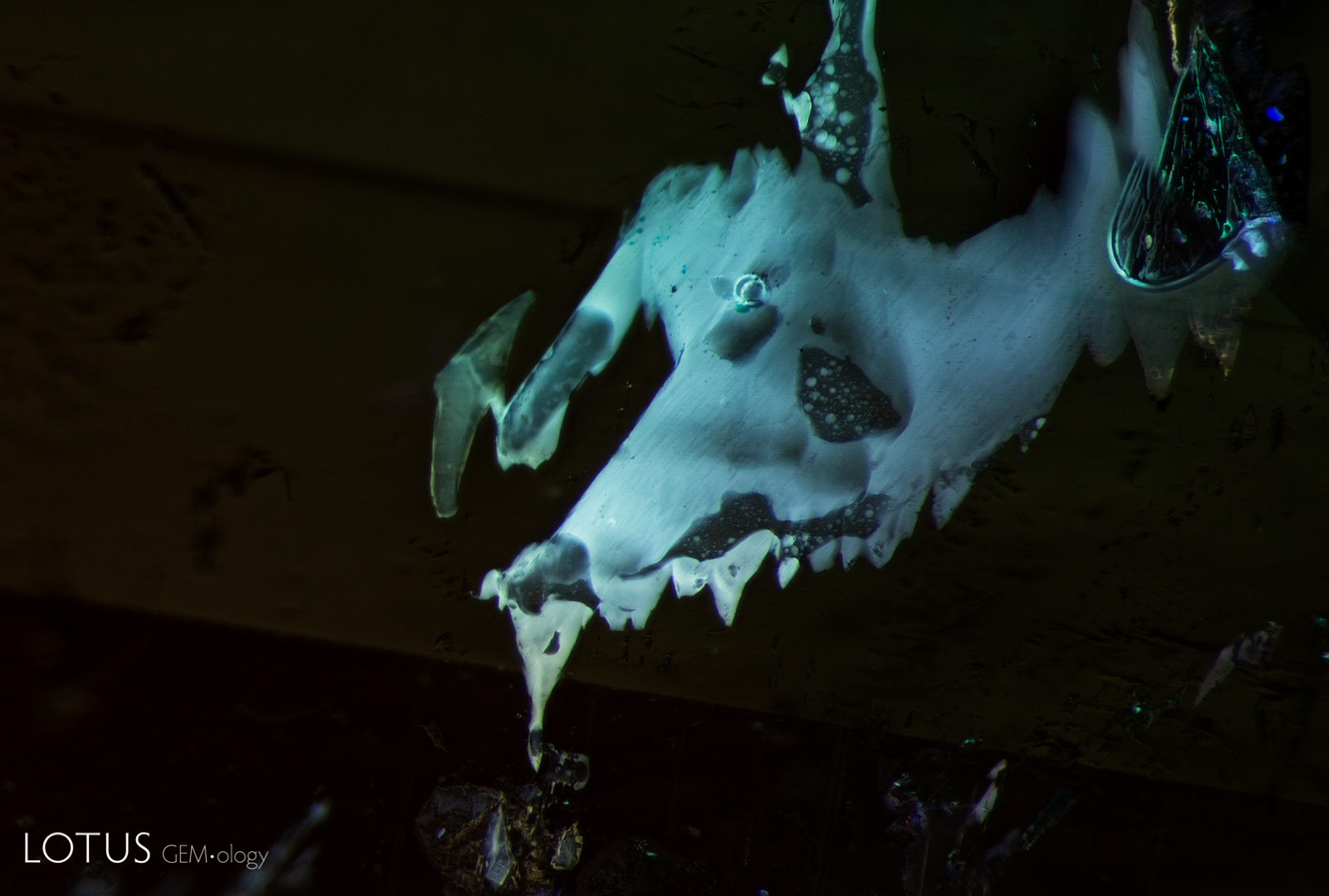
This emerald contained filler to help improve the appearance of fissures in the stone. It can be hard to see this with just dark field illumination, but by shining a longwave UV torch on the stone, the filled areas become immediately apparent with a chalky appearance. We can also see many small bubbles in the area with filler.
Natural • Beryl • Beryl • Emerald •
Colombia •
Enhancements:
Fissure Filling with colorless Oil/resin (FF-O2) •
Lighting Conditions:
Ultraviolet: Longwave
Photographer:
E. Billie Hughes •
Image Number:
A-003-7644-1
• Field of View = 4mm
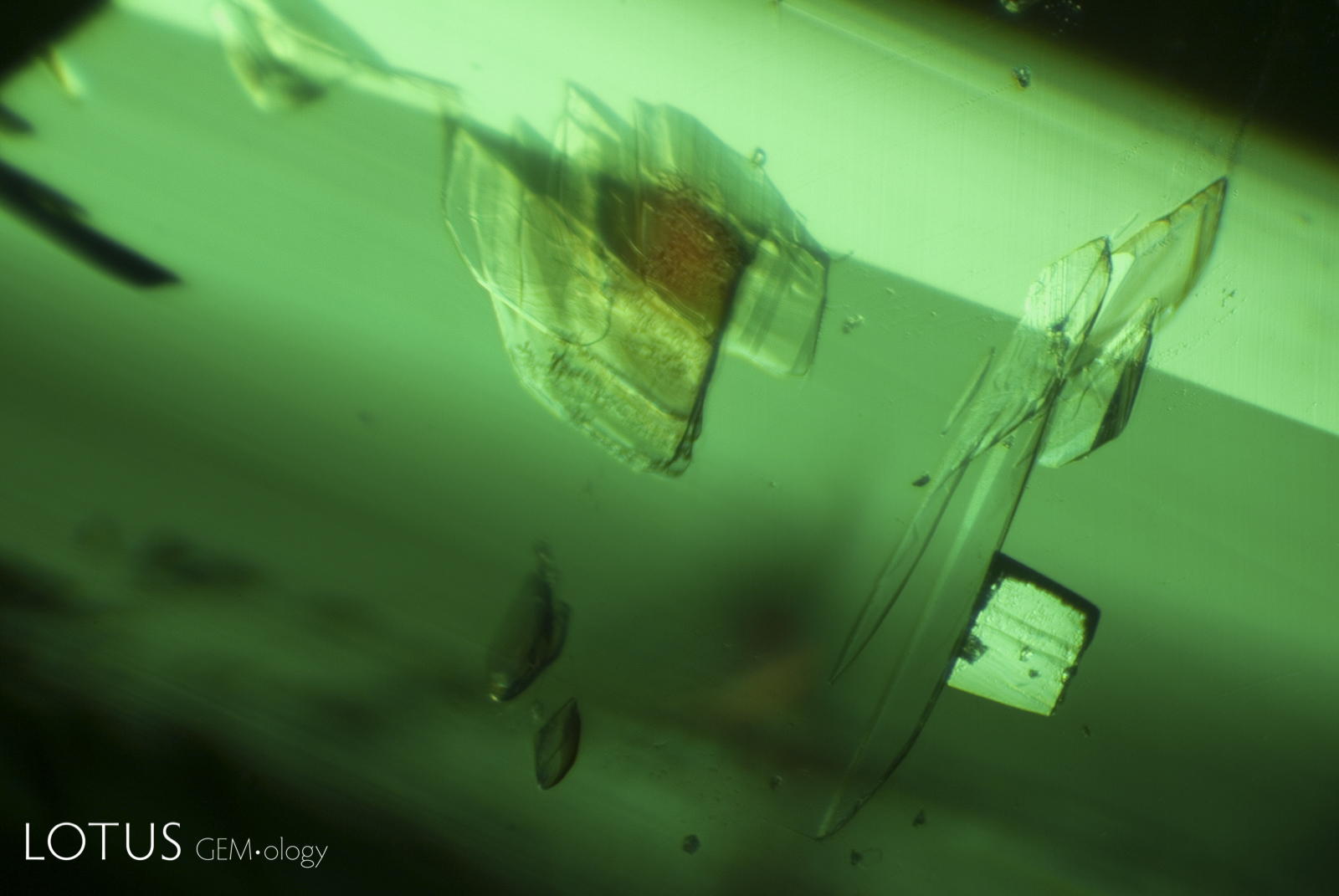
This emerald from Zambia contained a small crystal of phlogopite mica, as confirmed by micro Raman. Phlogopite is a common guest in Zambian emeralds, which originate from a mica schist.
Natural • Beryl • Emerald •
Zambia •
Enhancements:
None Detected (None) •
Lighting Conditions:
Dark Field + Oblique Fiber Optic
Photographer:
Richard W. Hughes •
Image Number:
A-003-7446-1
• Field of View = 2mm
Zwaan, J.C., Seifert, A.V., Vrána, S., Laurs, B.M., Anckar, B., Simmons, W.B., Falster, A.F., Lustenhouwer, W.J., Muhlmeister, S., Koivua, J.I. and Garcia-Guilerminet, H. (2005) Emeralds from the Kafubu area, Zambia. Gems & Gemology, Vol. 41, No. 2, Summer, pp. 116–148; RWHL*
Afghan emeralds often contain cavities with multiple phases, such as this example in the center that shows four different crystals and two different gas bubbles.
Natural • Beryl • Emerald •
Afghanistan •
Enhancements:
Fissure Filling with colorless Oil/resin (FF-O1) •
Lighting Conditions:
Diffuse Light Field (Transmitted Light)
Photographer:
Richard W. Hughes •
Image Number:
A-003-7327-1
• Field of View = 1.9mm
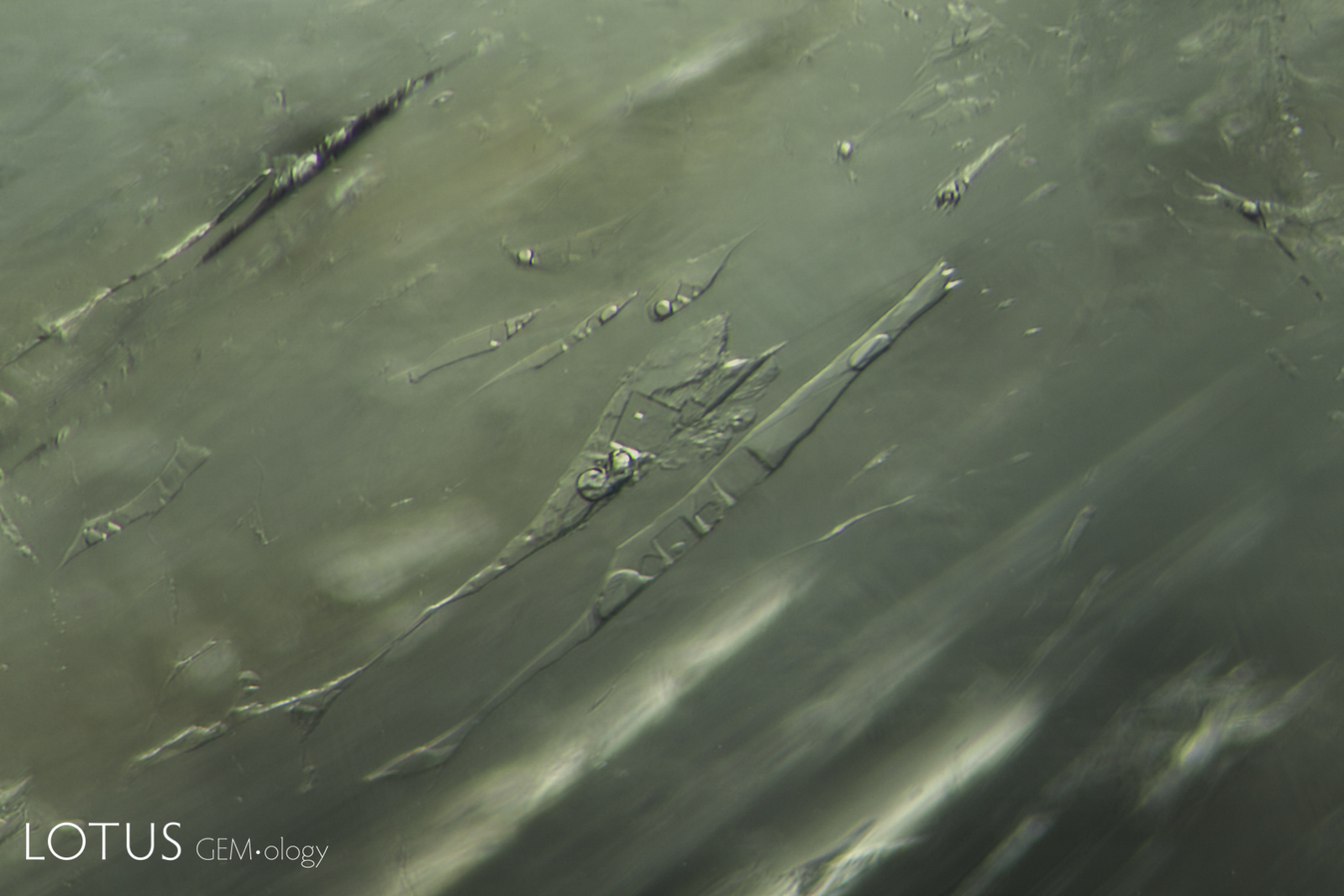
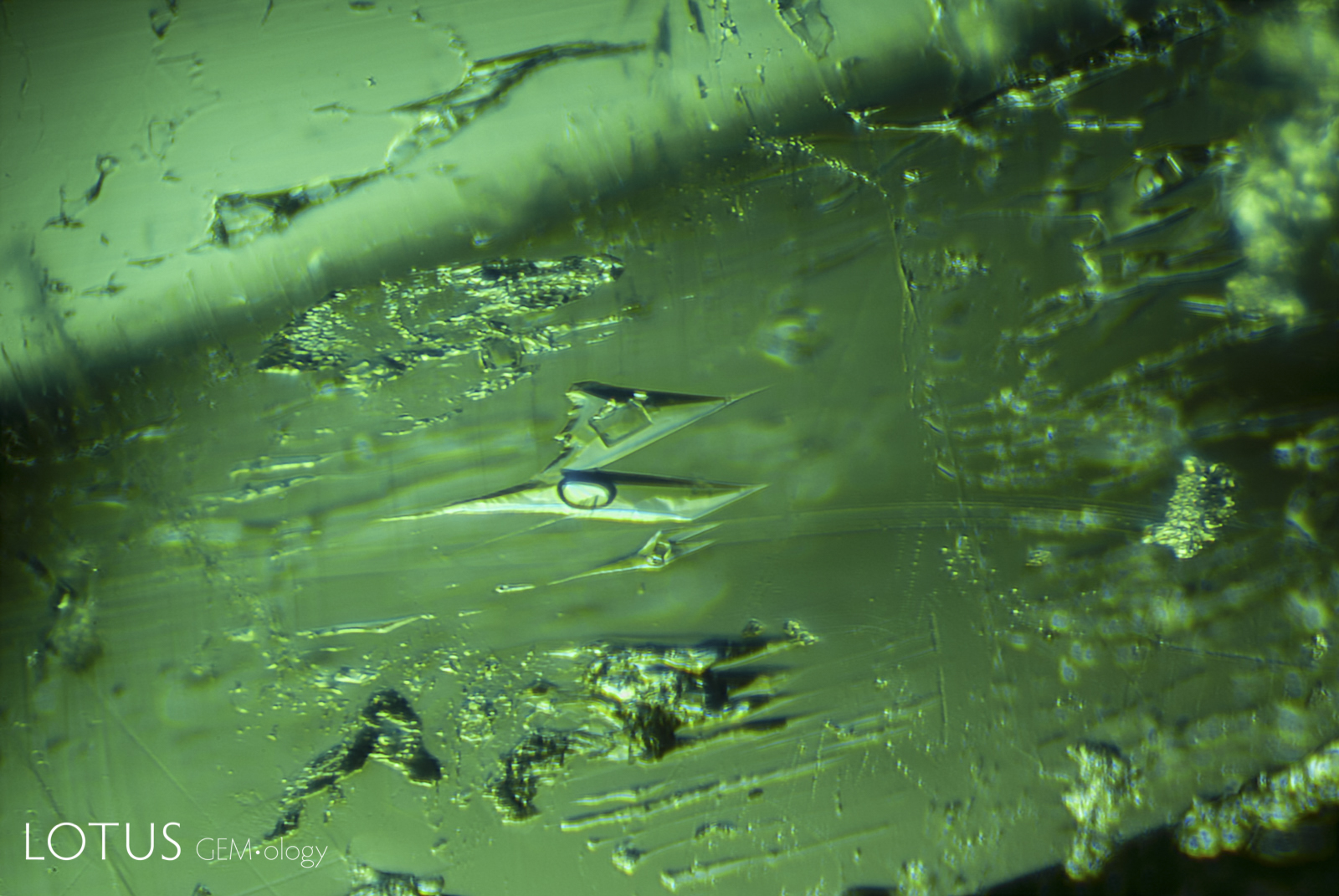
Within this emerald, numerous cavities contain liquid, gas and as many as four different solid phases.
Natural • Beryl • Beryl • Emerald •
Afghanistan •
Enhancements:
Fissure Filling with colorless Oil/resin (FF-O2) •
Lighting Conditions:
Dark Field
Photographer:
Richard W. Hughes •
Image Number:
A-003-6636-2
• Field of View = 7mm
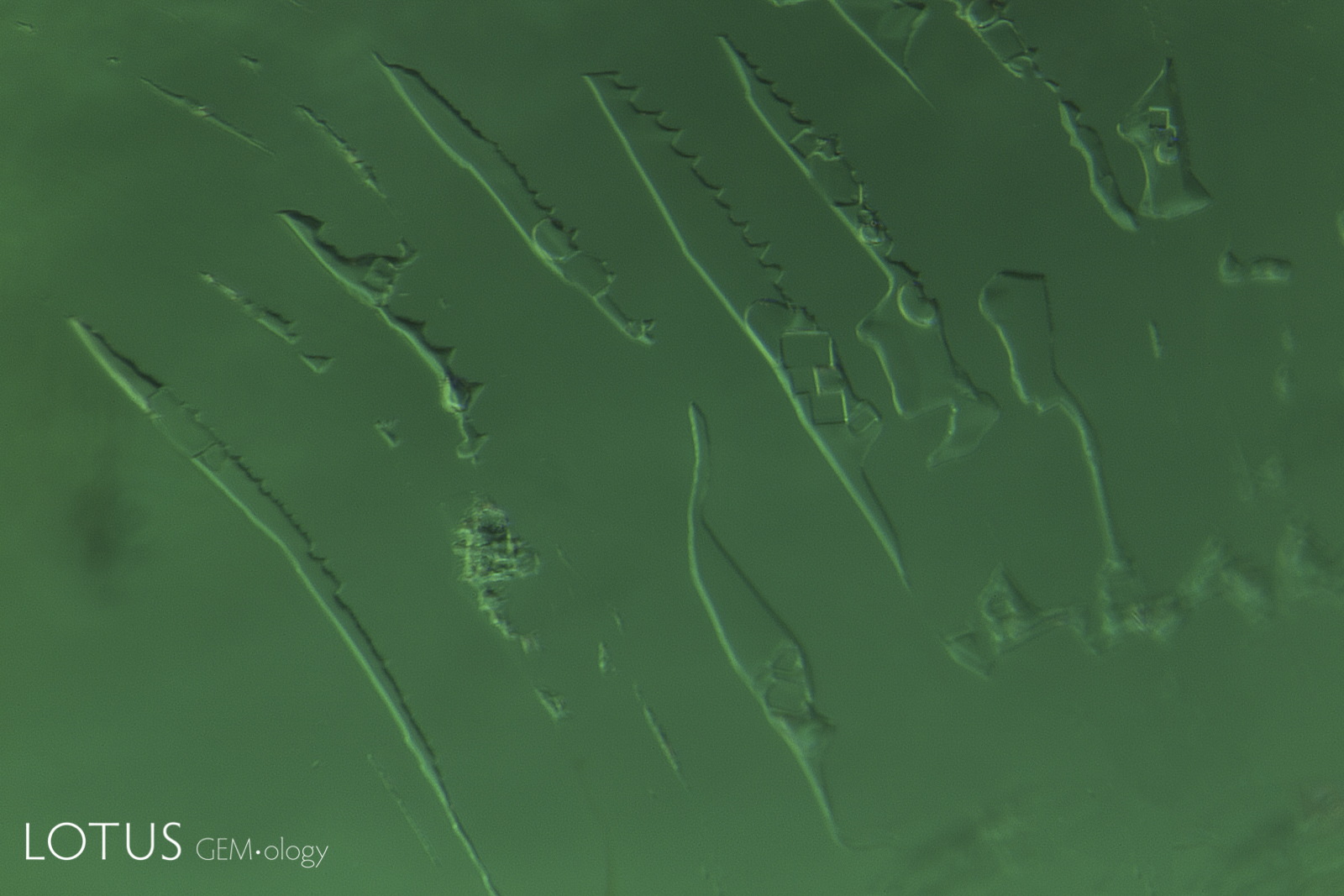
This fascinating multiphase inclusion shows an unusual sawtooth pattern on the long edges. Many of the cavities contain liquid, gas and as many as four different solid phases.
Natural • Beryl • Beryl • Emerald •
Afghanistan •
Enhancements:
Fissure Filling with colorless Oil/resin (FF-O2) •
Lighting Conditions:
Fiber Optic: Oblique
Photographer:
Richard W. Hughes •
Image Number:
A-003-6636-1
• Field of View = 1mm
The three-phase inclusion featuring a jagged-edged cavity enclosing a saline solution with a gas bubble and halite (rock salt) crystal is the hallmark of the Colombian emerald. While three-phase inclusions have been found in emeralds from other countries, they are extremely common in Colombian stones.
Natural • Beryl • Emerald •
Colombia •
Enhancements:
None Detected (None) •
Lighting Conditions:
Light Field + Shadowing
Photographer:
Richard W. Hughes •
Image Number:
R-003-6201-2
Twinned pyrite crystal in an emerald from Colombia. The formation of pyrite before emerald sucked iron from the hydrothermal fluid, allowing Colombian emeralds to crystallize in an iron-poor environment. This is one factor that contributed to the fine green color of the Colombian stone, when compared with emeralds from other sources.
Natural • Beryl • Emerald •
Colombia •
Enhancements:
None Detected (None) •
Lighting Conditions:
Fiber Optic: Oblique
Photographer:
Richard W. Hughes •
Image Number:
R-003-6201-1
Lathe-shaped flakes of phlogopite mica spin through the green depths of an emerald from Malysheva, Russia. Specimen courtesy of Tsar Emeralds Corp.
Natural • Beryl • Emerald •
Russia •
Enhancements:
None Detected (None) •
Lighting Conditions:
Fiber Optic: Oblique + Shadowing
Photographer:
John I. Koivula •
Image Number:
R-003-6202-2
Search the Complete Hyperion Database
Emerald inclusions may include mineral crystals, fluid inclusions, multiphase inclusions, healed fissures, growth features and other internal features formed during or after crystal growth. Such features are important to gemologists because they can provide evidence useful in identifying emerald, understanding its geological history, recognizing treatment and, in some cases, determining geographic origin.
Emerald Inclusion Photomicrographs
The Hyperion emerald gallery includes microscopic features found in emeralds from major deposits around the world. Each entry is accompanied by descriptive information and, where available, references to the gemological literature.
What Inclusions Can Reveal About Emerald
Inclusions are an important part of emerald identification. Their form, composition and associations can help gemologists distinguish natural emerald from synthetic material, recognize evidence of treatment, and study the geological environment in which the emerald formed.
Hyperion combines inclusion photomicrography with supporting gemological information so that individual features can be compared with documented examples from known emerald deposits.
About Hyperion
Hyperion is the Lotus Gemology searchable inclusion database. It allows users to browse gemstone inclusions by gem type, geographic origin, treatment and keyword.