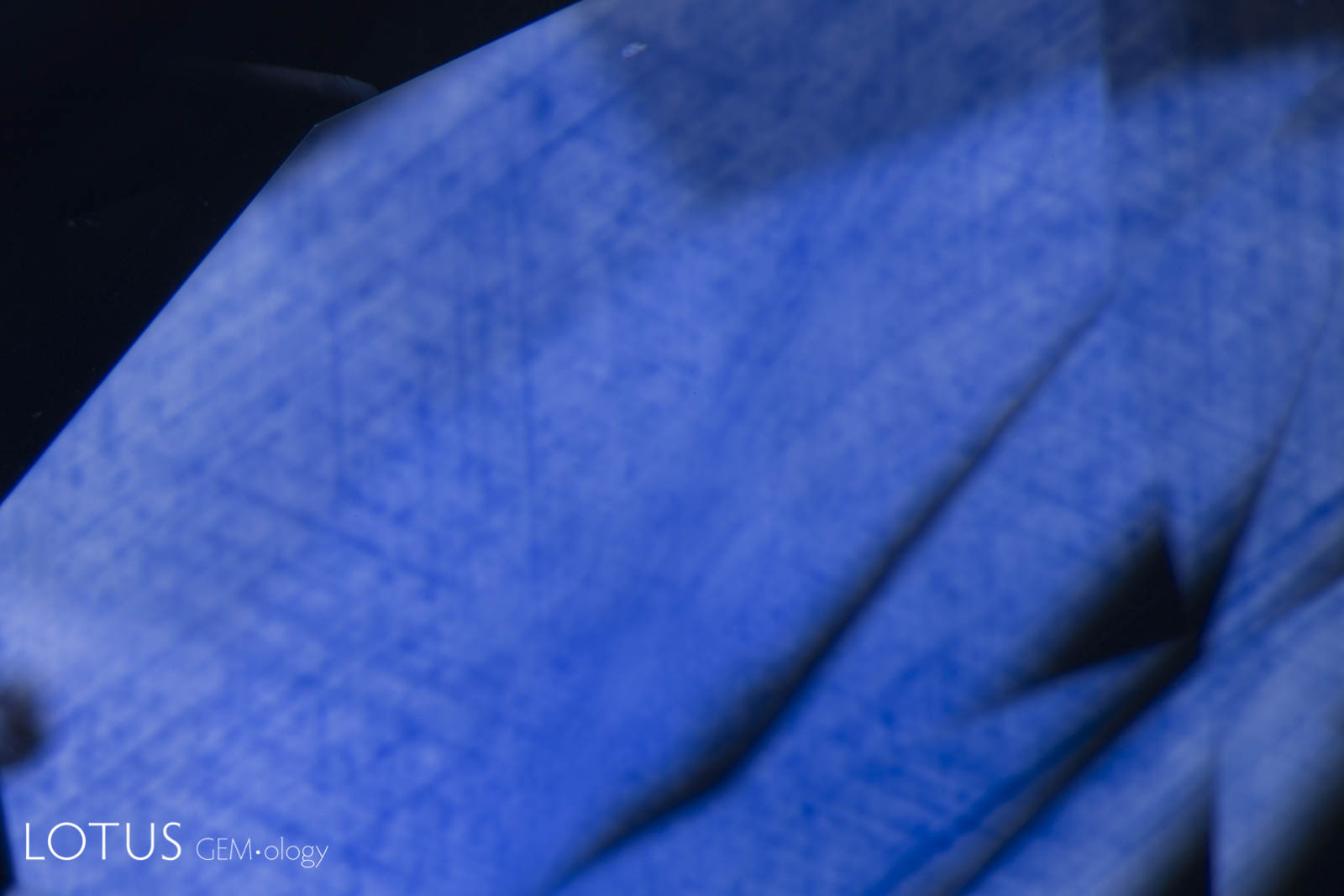
Ceylon Sapphire Inclusions
Explore Ceylon sapphire inclusions in Hyperion, the Lotus Gemology inclusion database. Hyperion contains photomicrographs of inclusions and internal features in natural sapphires from Sri Lanka (Ceylon), documented with information on treatment, lighting conditions, field of view, photographer and published references.
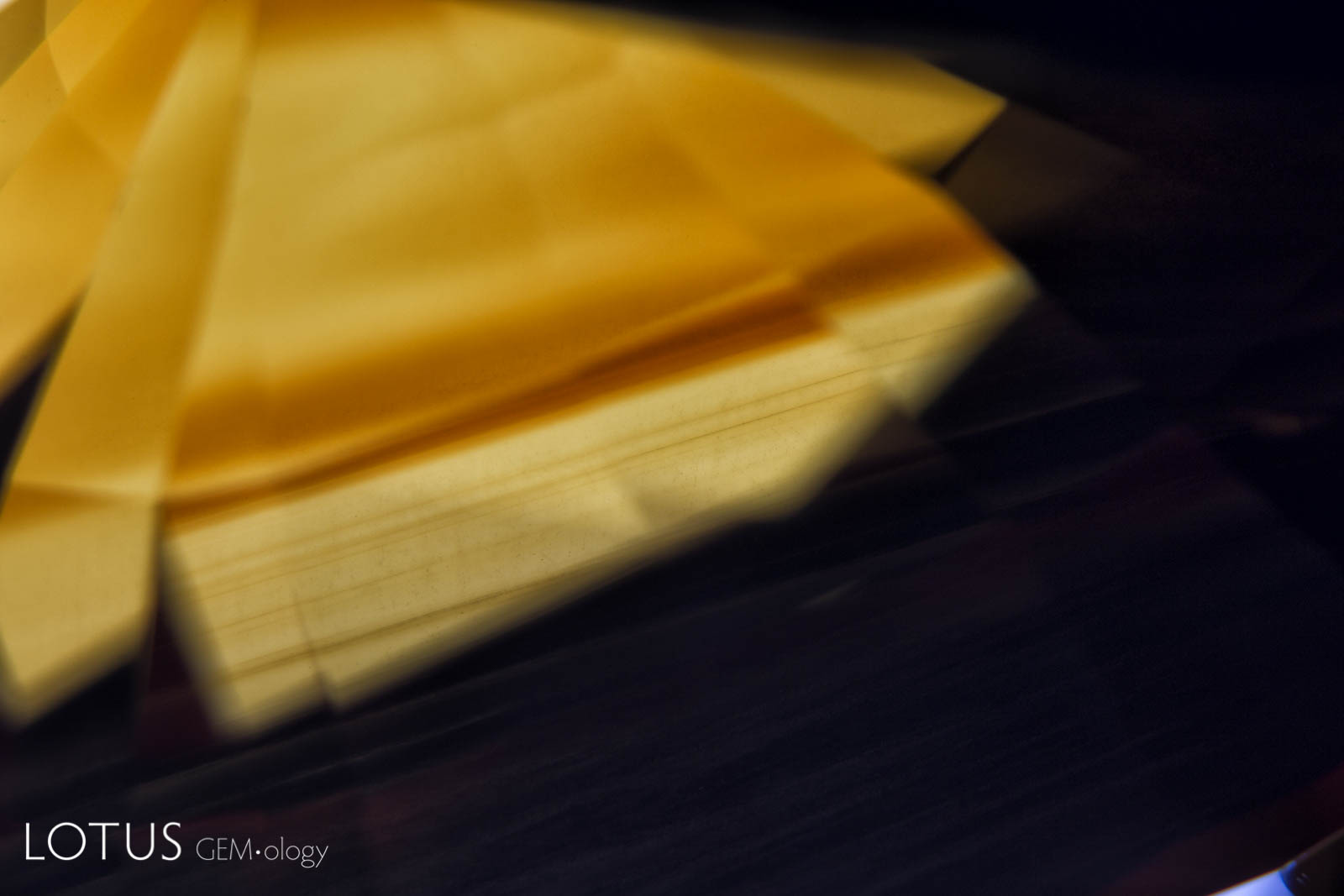
When Sri Lankan yellow sapphires with exsolved particles are heat treated, magnesium exits the particles and creates yellow-producing trapped-hole color centers. The result is color concentration around the particles, a process termed “internal diffusion” by gemologist, John Koivula.
Natural Sapphire •
Sri Lanka (Ceylon) •
Enhancements:
Heat (H) •
Lighting Conditions:
Diffuse Light Field (Transmitted Light)
Photographer:
Richard W. Hughes •
Image Number:
A-001-1406-1
Koivula, J.I. (1987) Internal diffusion. Journal of Gemmology, Vol. 20, No. 7/8, pp. 474–477; RWHL*.
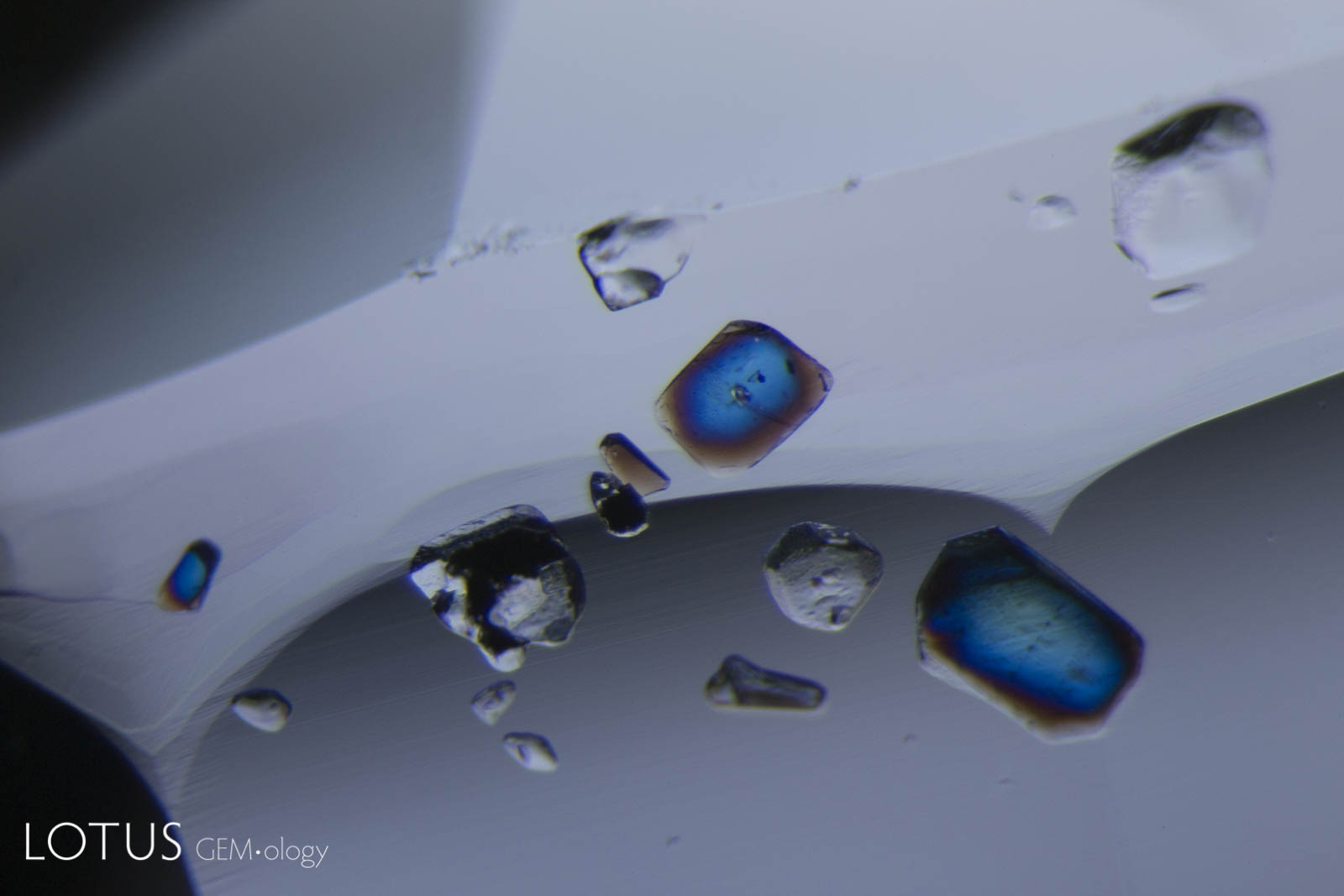
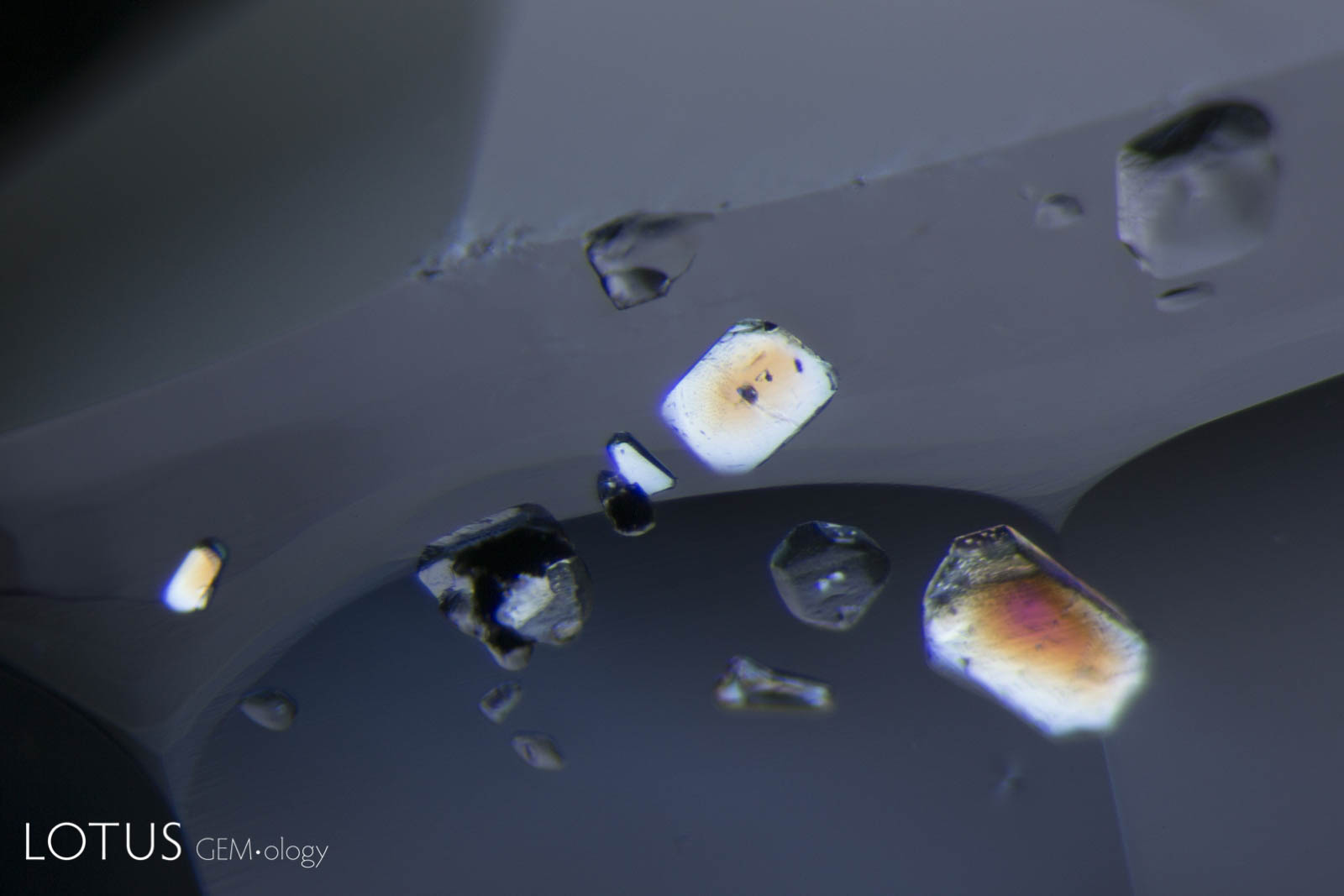
Birefringent crystals light up between crossed polars in this Ceylon sapphire.
Natural Sapphire •
Sri Lanka (Ceylon) •
Enhancements:
None Detected (None) •
Lighting Conditions:
Diffuse Light Field + Crossed Polars
Photographer:
E. Billie Hughes •
Image Number:
A-001-1164-2
Birefringent crystals light up between crossed polars in this Ceylon sapphire.
Natural Sapphire •
Sri Lanka (Ceylon) •
Enhancements:
None Detected (None) •
Lighting Conditions:
Diffuse Light Field + Crossed Polars
Photographer:
E. Billie Hughes •
Image Number:
A-001-1164-1
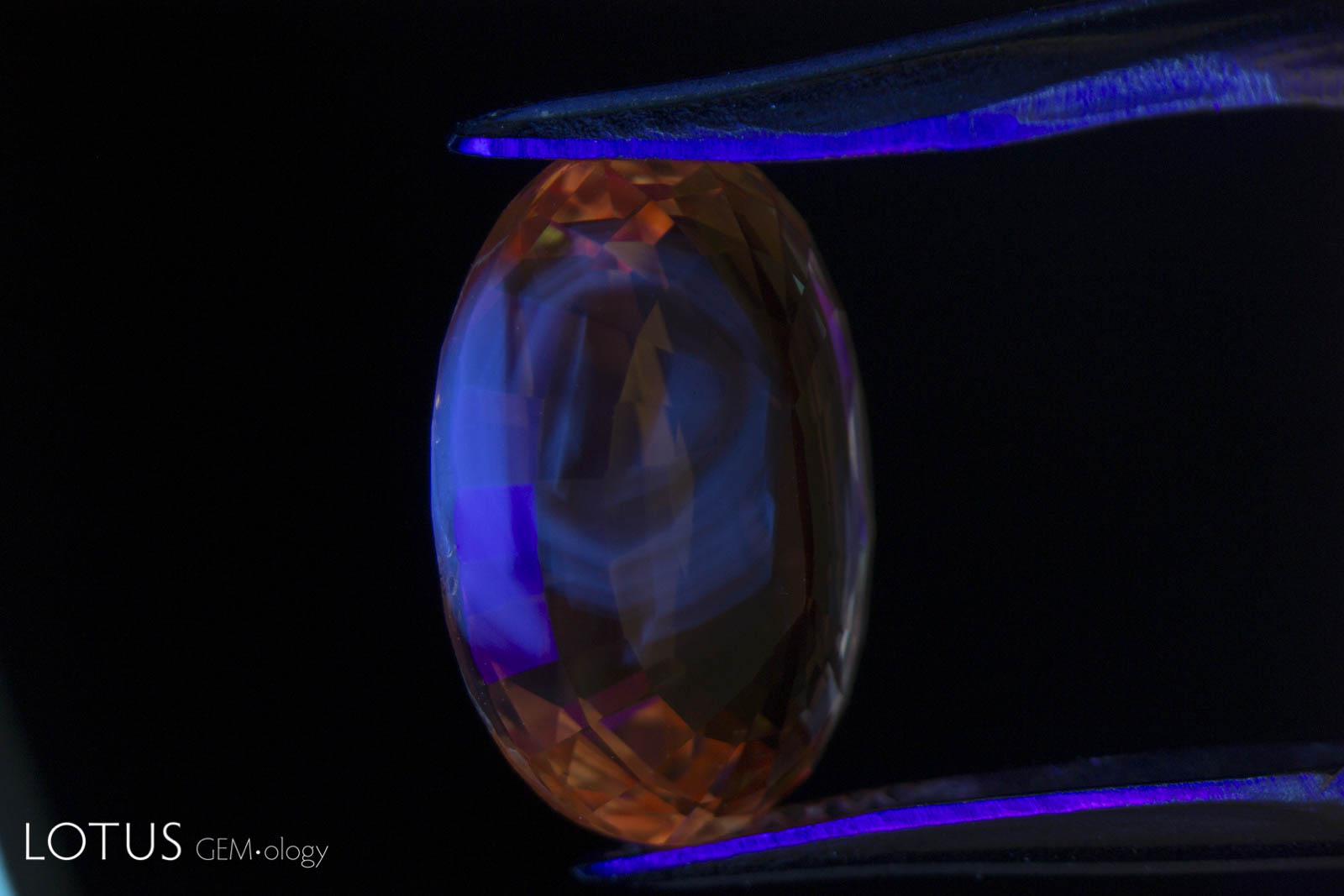
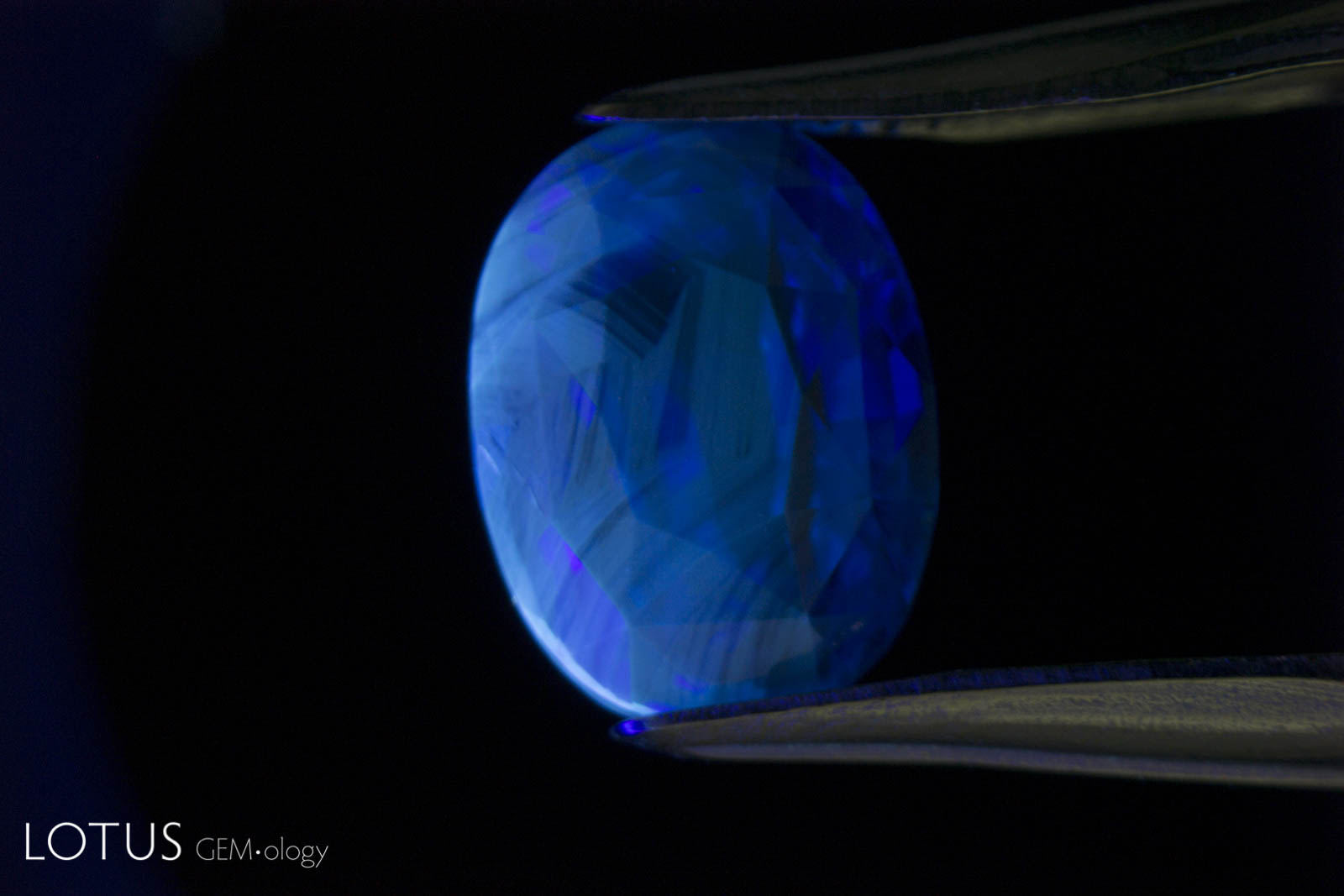
Low iron rubies (and pink and padparadscha sapphires) from localities like Mogok, Mong Hsu (Myanmar) and Sri Lanka will often display chalky zones in short wave ultraviolet after heat treatment. Here we see an excellent example in a heat-treated padparadscha sapphire from Sri Lanka. This fluorescence is positive proof of heat treatment.
Natural Padparadscha Sapphire •
Sri Lanka (Ceylon) •
Enhancements:
Heat (H) •
Lighting Conditions:
Ultraviolet: Shortwave
Photographer:
E. Billie Hughes •
Image Number:
A-001-1161-1
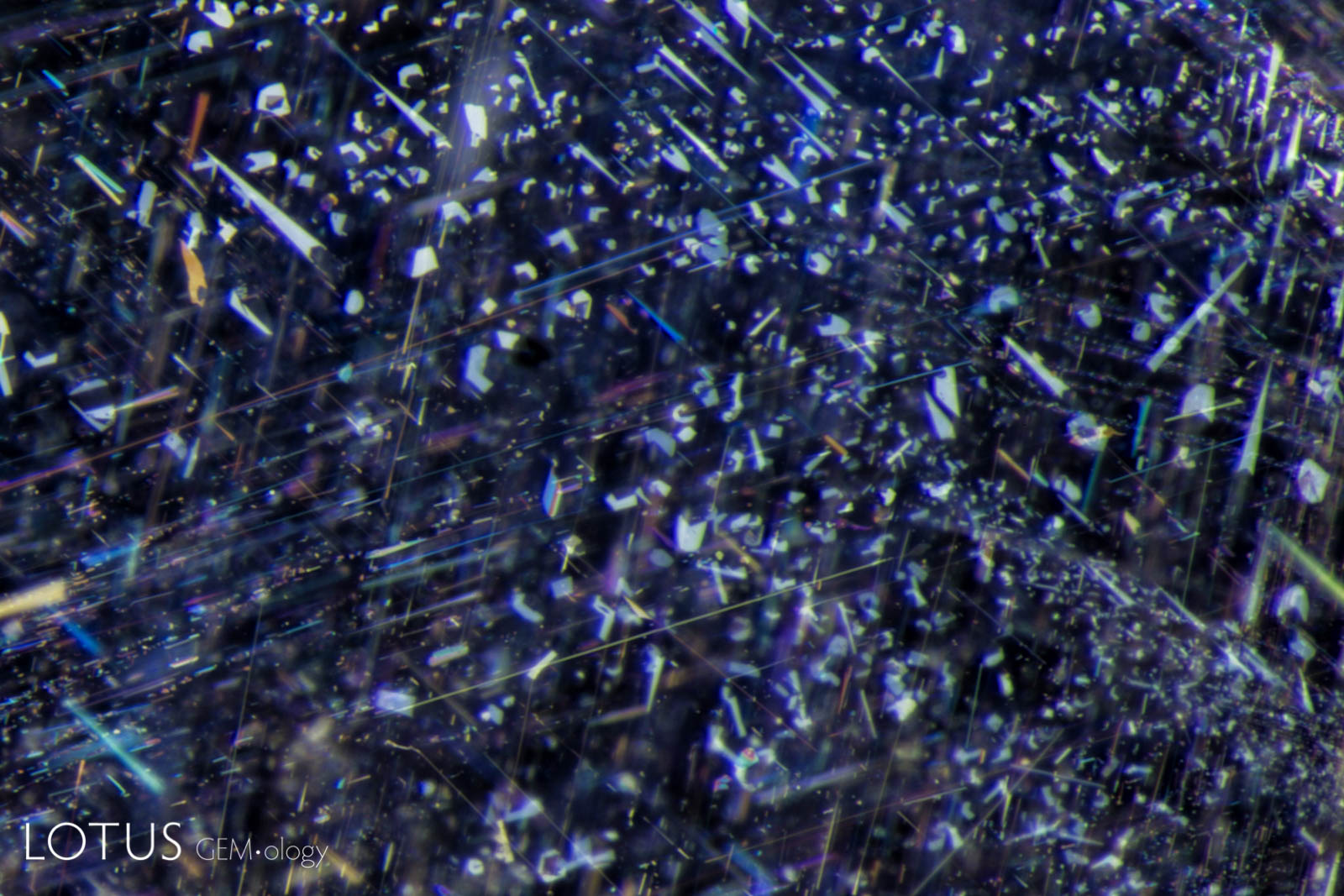
An explosion of rutile silk and attached daughter crystals enliven the interior of this sapphire from Serendib.
Natural Sapphire •
Sri Lanka (Ceylon) •
Enhancements:
None Detected (None) •
Lighting Conditions:
Fiber Optic: Diffuse Overhead
Photographer:
Richard W. Hughes •
Image Number:
A-001-1119-1
Hughes, R.W. (1997) Ruby & Sapphire. Boulder, CO, RWH Publishing, 512 pp.; RWHL*.
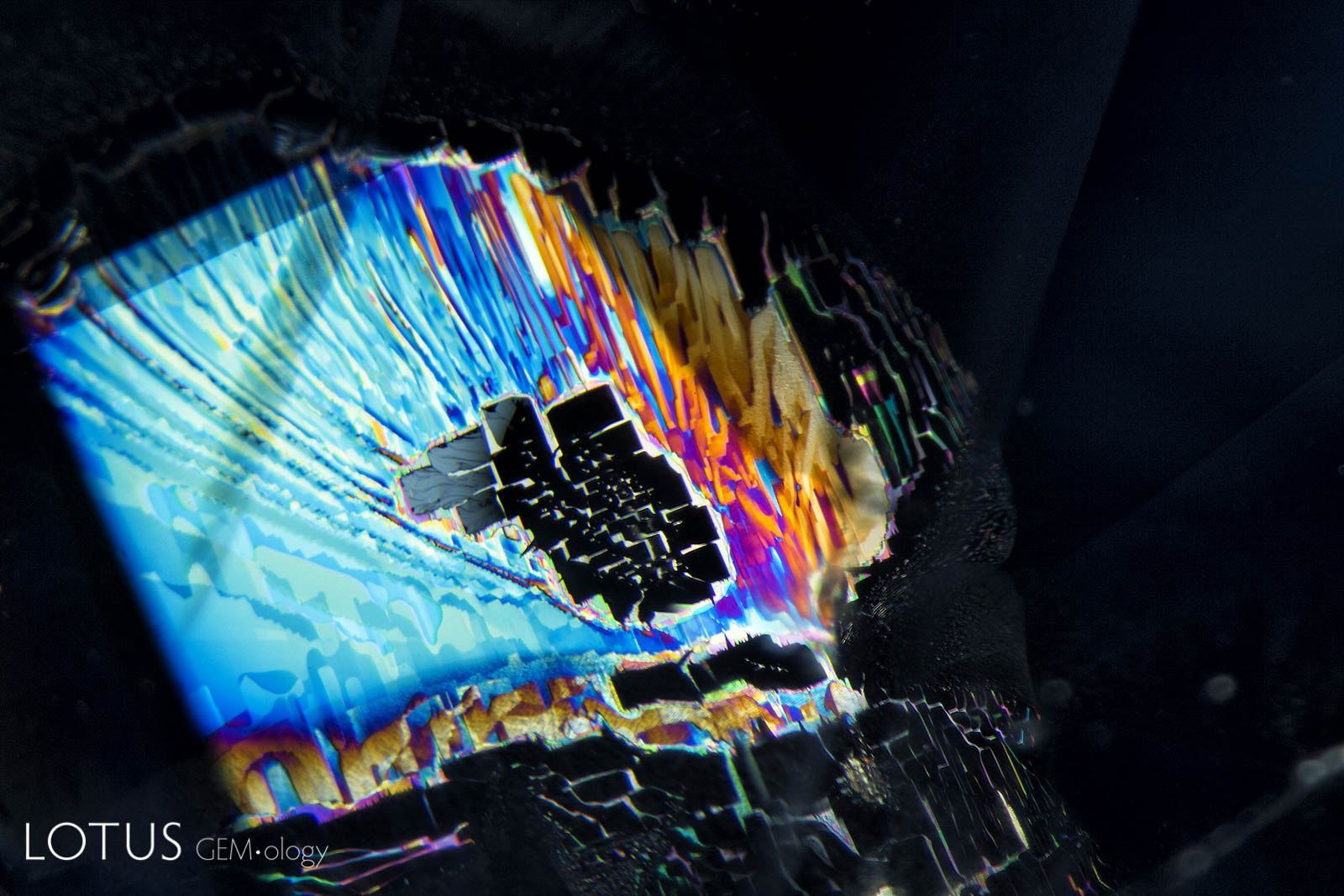
Primary rutile crystals caught amidst secondary rutile silk in this sapphire from Sri Lanka.
Natural Sapphire •
Sri Lanka (Ceylon) •
Enhancements:
None Detected (None) •
Lighting Conditions:
Fiber Optic: Oblique
Photographer:
Richard W. Hughes •
Image Number:
A-001-1114-2
Looking like a pistol, a group of three primary rutile crystals sits against a background of secondary rutile silk in this sapphire from Sri Lanka.
Natural Sapphire •
Sri Lanka (Ceylon) •
Enhancements:
None Detected (None) •
Lighting Conditions:
Fiber Optic: Oblique
Photographer:
Richard W. Hughes •
Image Number:
A-001-1114-1
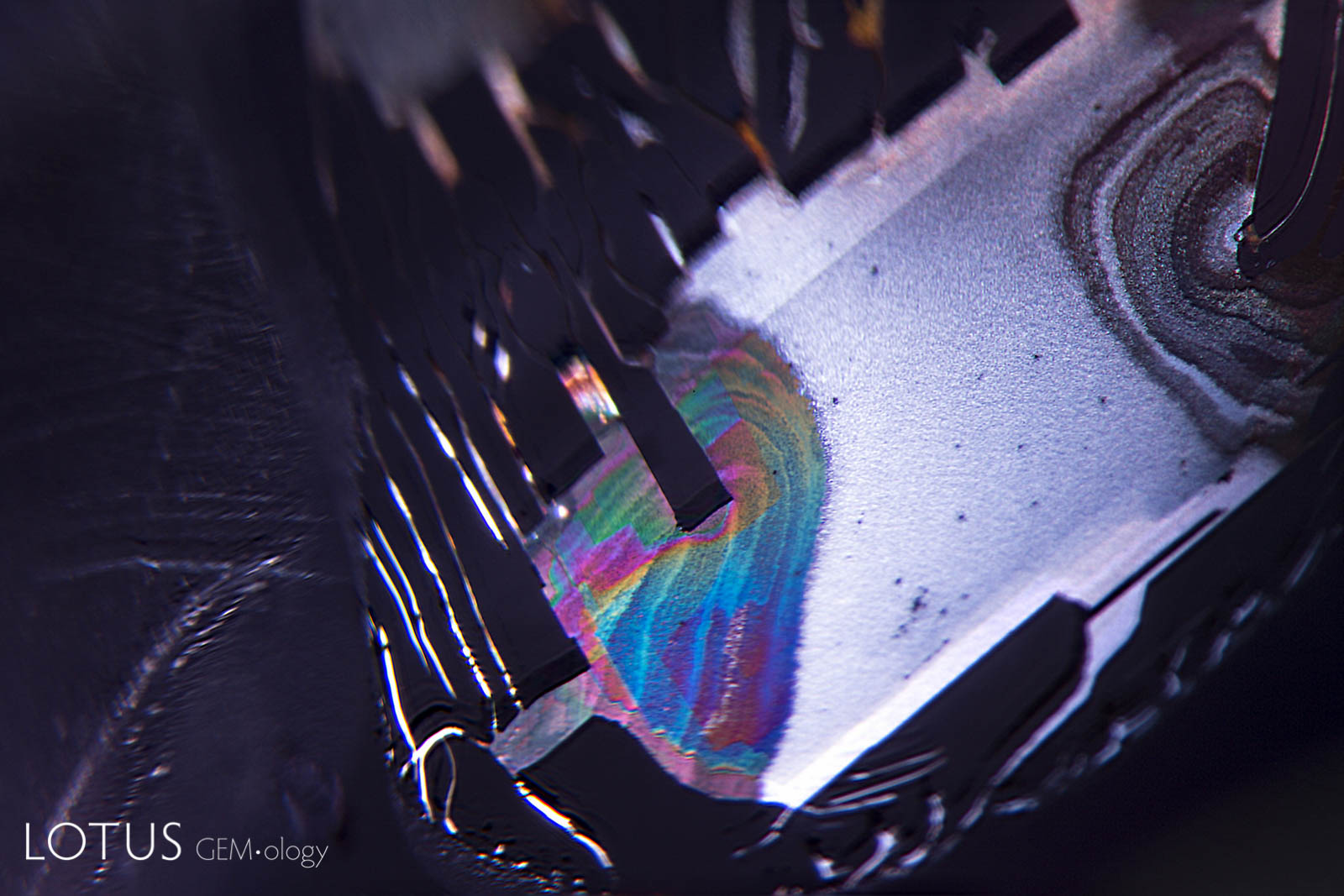
A brilliantly iridescent fingerprint in a sapphire from Sri Lanka. Such healing patterns reveal the underlying atomic symmetry. In this case, the rectangular healing pattern shows that this fingerprint lies parallel to a prism face.
Natural Sapphire •
Sri Lanka (Ceylon) •
Enhancements:
Fissure Filling with colorless Oil/resin (FF-O1) •
Lighting Conditions:
Fiber Optic: Oblique
Photographer:
Richard W. Hughes •
Image Number:
A-001-1061-1
Roedder, E. (1962) Ancient fluids in crystals. Scientific American, Vol. 207, pp. 38–47; RWHL*.
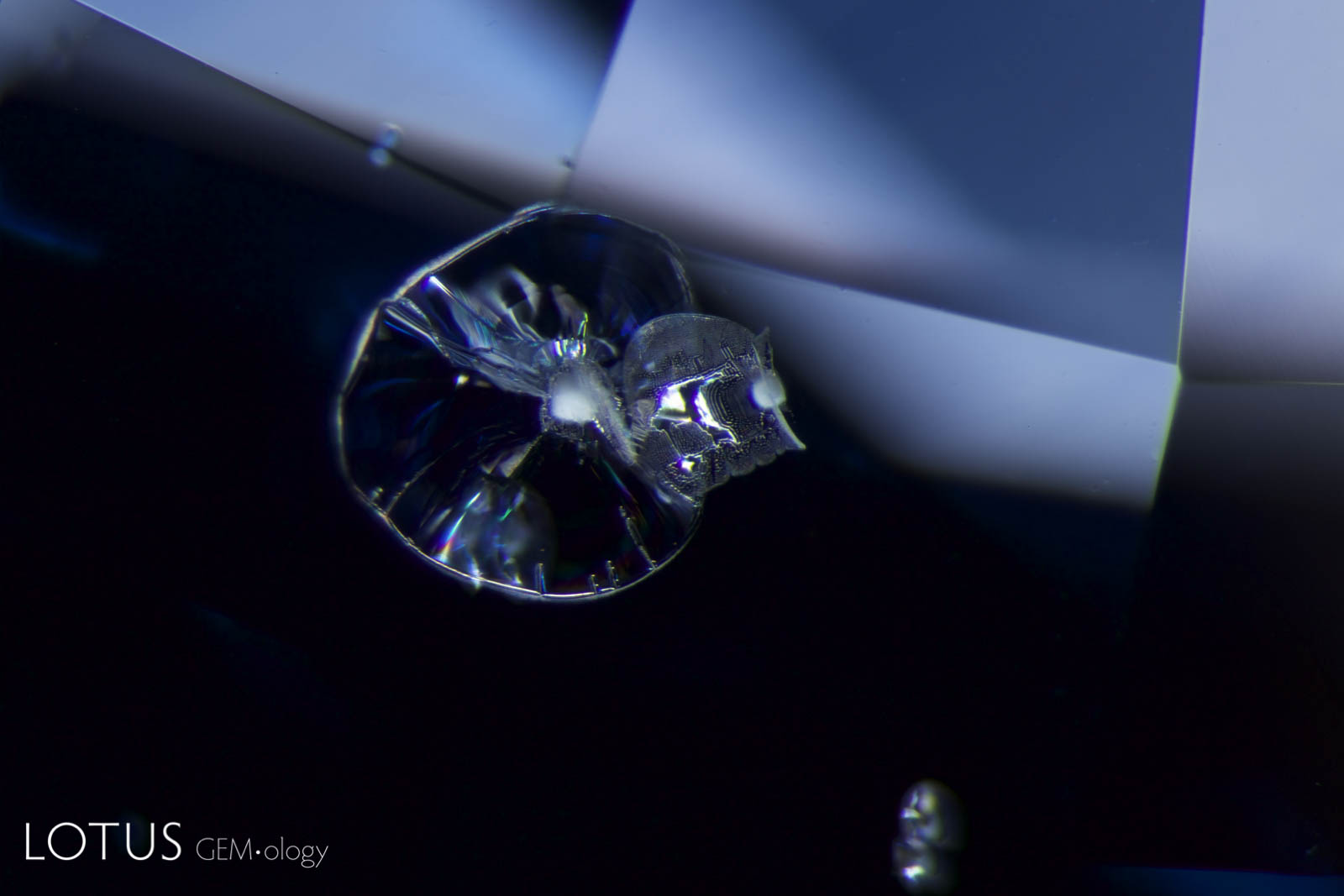
Certain type of solid inclusions are heat sensitive and may alter when the gem is heat treated. Here we see crystals that have altered into “snowball” like forms. In addition, the coefficient of thermal expansion of the included crystals was greater than corundum. Thus when heated, they expanded more than the surrounding sapphire, producing glassy discoid fissures.
Natural Sapphire •
Sri Lanka (Ceylon) •
Enhancements:
Heat (H) •
Lighting Conditions:
Fiber Optic: Oblique
Photographer:
Richard W. Hughes •
Image Number:
A-001-1052-1
An iridescent secondary fingerprint inclusion in a pink sapphire from Sri Lanka. The healing pattern reveals the underlying atomic symmetry. In this case, the rectangular healing structure show that the fingerprint lies in the plane of the hexagonal prism (parallel to the c axis).
Natural Sapphire •
Sri Lanka (Ceylon) •
Enhancements:
None Detected (None) •
Lighting Conditions:
Fiber Optic: Oblique
Photographer:
Richard W. Hughes •
Image Number:
A-001-1018-1
Roedder, E. (1962) Ancient fluids in crystals. Scientific American, Vol. 207, pp. 38–47; RWHL*.
When low-iron sapphires are heat treated, a chalky shortwave fluorescence often develops. This generally is related to colorless or lightly colored regions of the gem, and so follows the crystallographic structure, as is seen here. This is strong evidence of heat treatment.
Natural Sapphire •
Sri Lanka (Ceylon) •
Enhancements:
Heat (H) •
Lighting Conditions:
Ultraviolet: Shortwave
Photographer:
E. Billie Hughes •
Image Number:
A-001-1014-1
When a rutile-silk containing sapphire (such as this stone from Sri Lanka) is heated, the titanium from the rutile moves into solid solution in the sapphire, coloring the area around the rutile blue, creating a distinctive “ink spot” internal diffusion pattern.
Natural Sapphire •
Sri Lanka (Ceylon) •
Enhancements:
Heat (H) •
Lighting Conditions:
Light Field + Oblique Fiber Optic
Photographer:
Richard W. Hughes •
Image Number:
A-001-0988-2
Koivula, J.I. (1987) Internal diffusion. Journal of Gemmology, Vol. 20, No. 7/8, pp. 474–477; RWHL*.
Search the Complete Hyperion Database
Ceylon sapphire inclusions may include mineral crystals, rutile silk, healed fissures, fluid inclusions, negative crystals, growth features and other internal features formed during or after crystal growth. Such features are important to gemologists because they can provide evidence useful in identifying sapphire and evaluating a possible Sri Lankan origin.
Ceylon Sapphire Inclusion Photomicrographs
The Hyperion Ceylon sapphire gallery includes microscopic features documented in sapphires from Sri Lanka (Ceylon). Each entry is accompanied by descriptive information and, where available, references to the gemological literature.
What Inclusions Can Reveal About Ceylon Sapphire
Inclusions are an important part of geographic origin determination in sapphire. Their form, composition, orientation and associations can provide evidence that, when considered together with other gemological properties, may support or contradict a Sri Lankan origin.
Hyperion combines inclusion photomicrography with supporting gemological information so that individual features can be compared with documented examples from Ceylon sapphires.
About Hyperion
Hyperion is the Lotus Gemology searchable inclusion database. It allows users to browse gemstone inclusions by gem type, geographic origin, treatment and keyword.