Ceylon Sapphire Inclusions
Explore Ceylon sapphire inclusions in Hyperion, the Lotus Gemology inclusion database. Hyperion contains photomicrographs of inclusions and internal features in natural sapphires from Sri Lanka (Ceylon), documented with information on treatment, lighting conditions, field of view, photographer and published references.
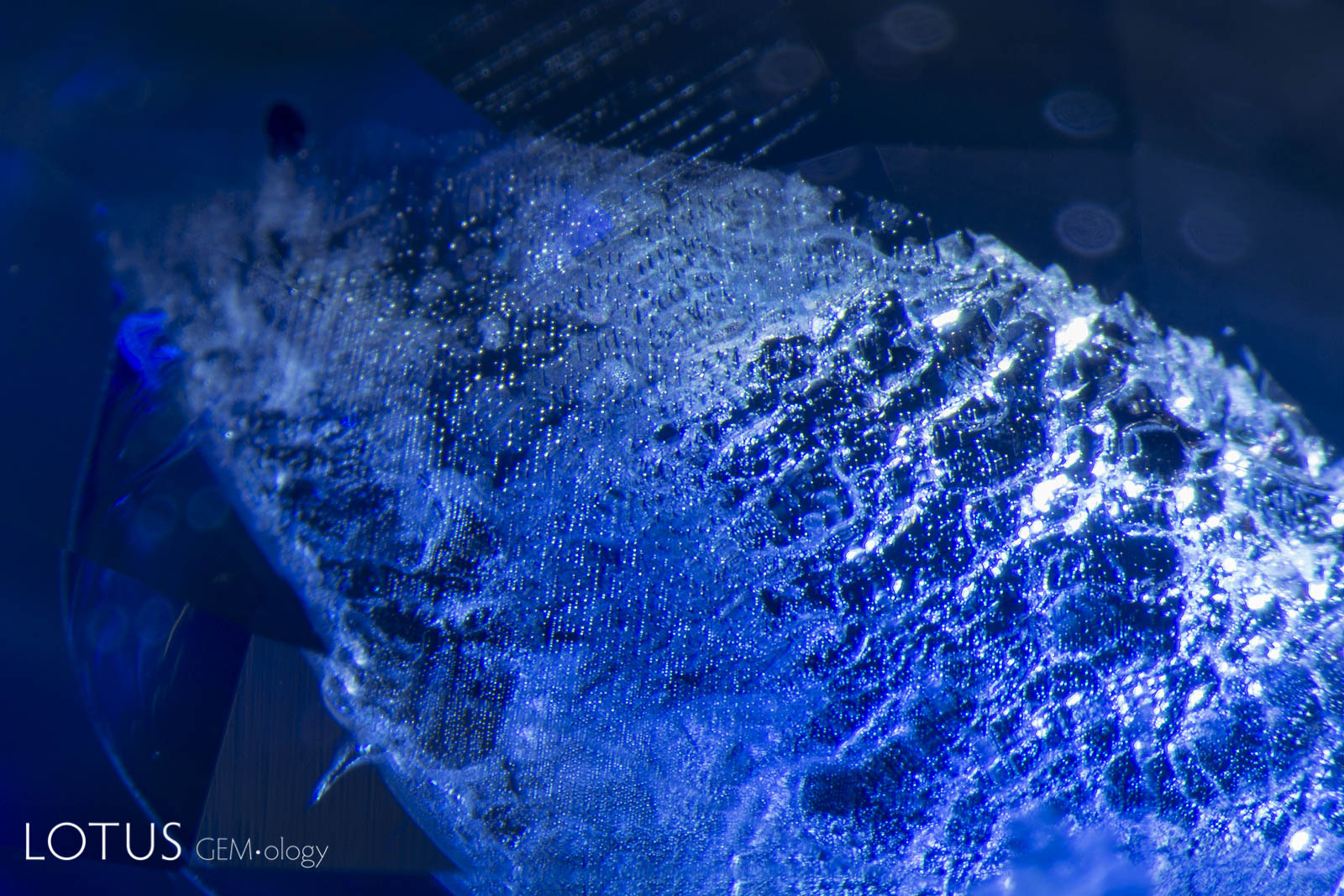
When a rutile-silk containing sapphire (such as this stone from Sri Lanka) is heated, the titanium from the rutile moves into solid solution in the sapphire, coloring the area around the rutile blue, creating a distinctive “ink spot” internal diffusion pattern.
Natural Sapphire •
Sri Lanka (Ceylon) •
Enhancements:
Heat (H) •
Lighting Conditions:
Light Field + Oblique Fiber Optic
Photographer:
Richard W. Hughes •
Image Number:
A-001-0988-1
Koivula, J.I. (1987) Internal diffusion. Journal of Gemmology, Vol. 20, No. 7/8, pp. 474–477; RWHL*.
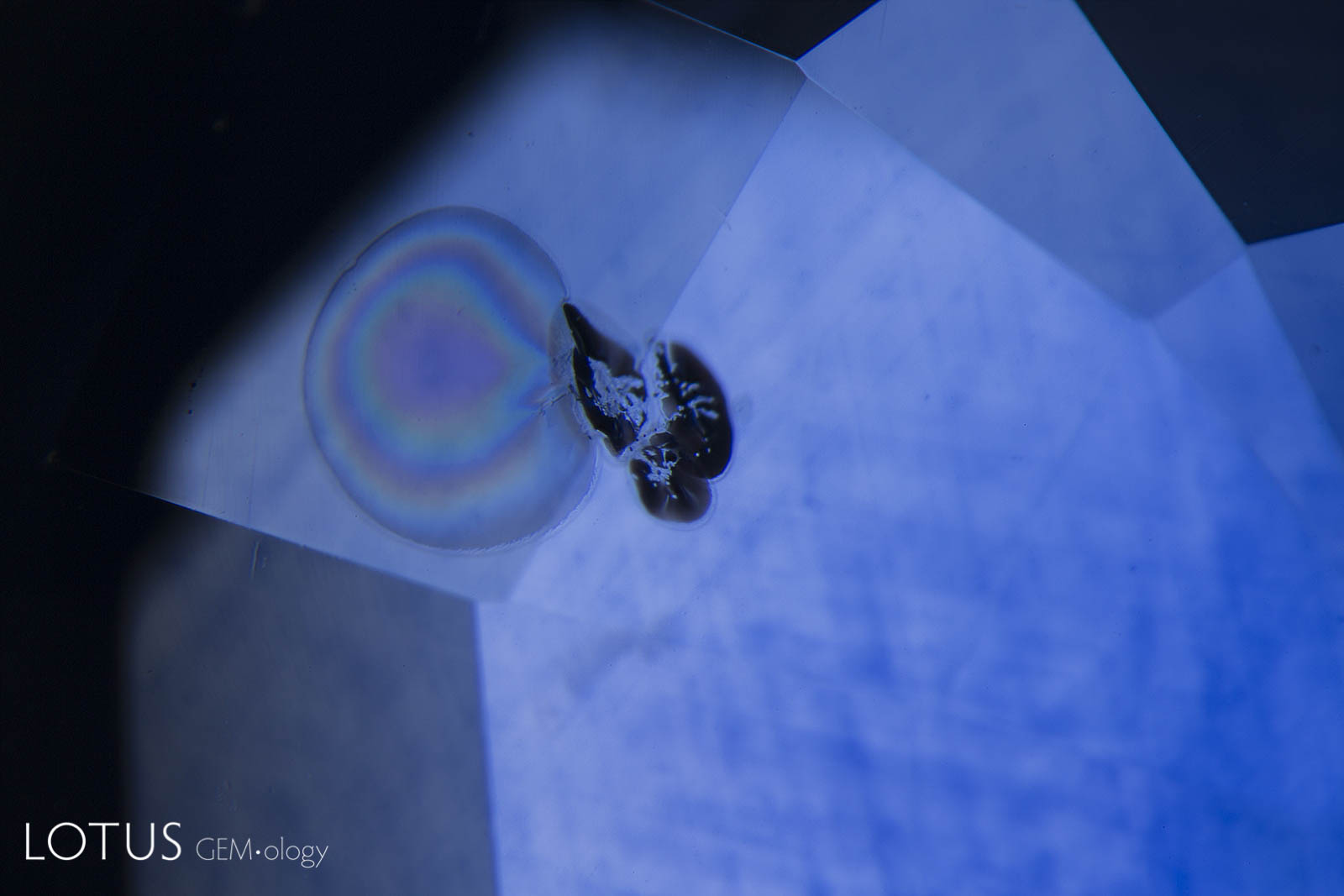
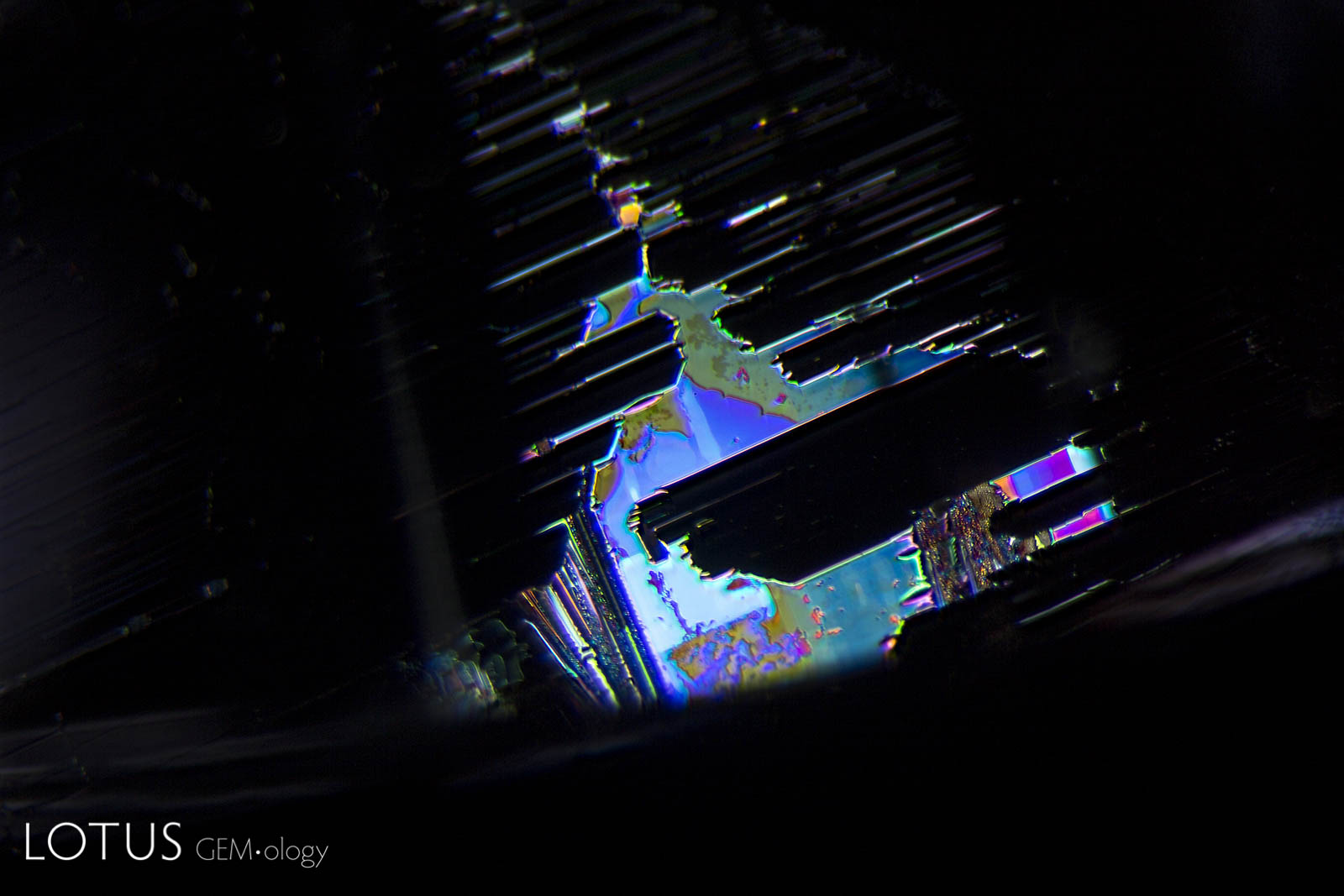
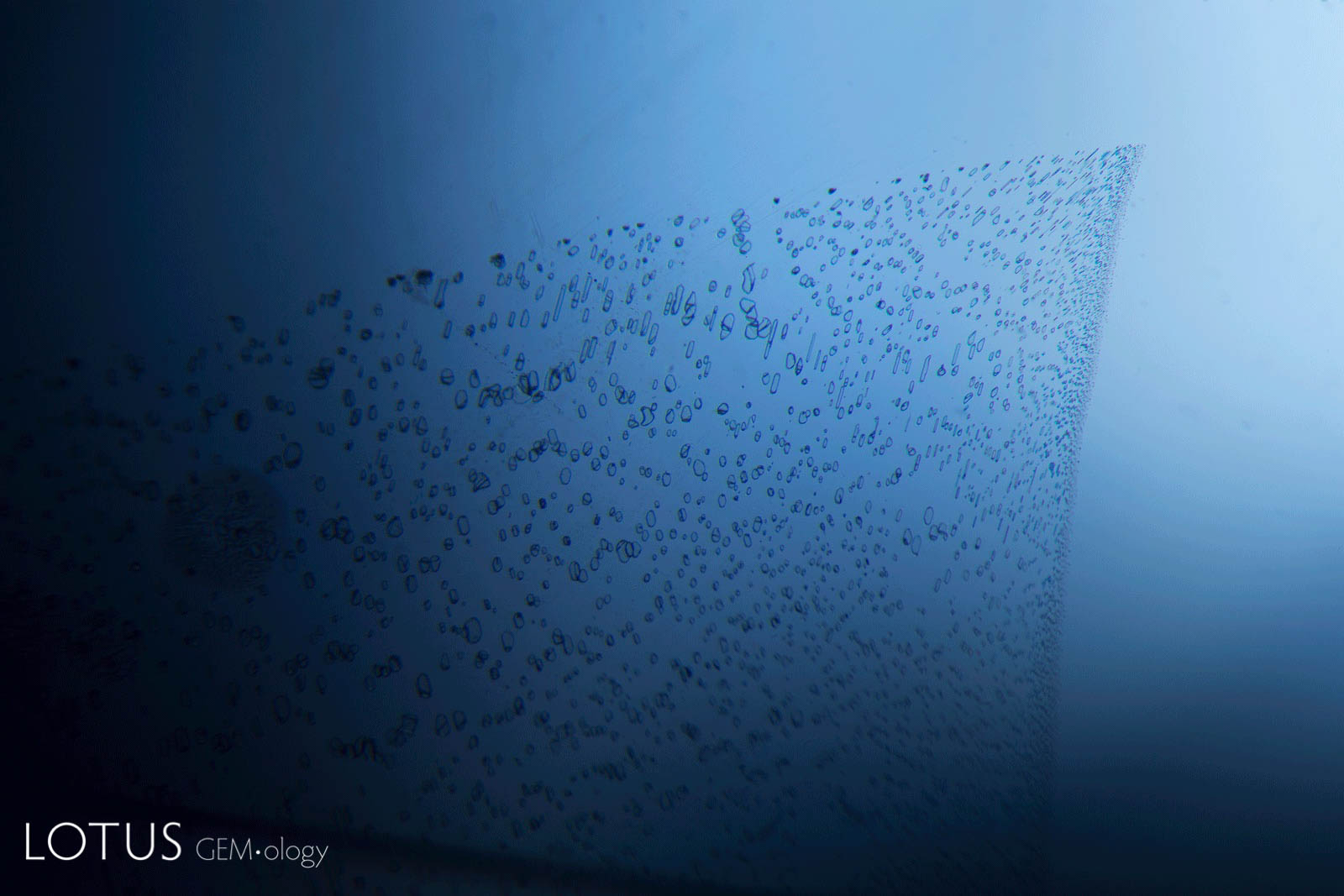
Fingerprints are made up of tiny negative crystals. This often contain carbon dioxide and were formed at depth under high pressure. When the gem reaches the surface, the pressure pushing out can be quite large. Thus they are particularly heat sensitive and often burst if the gem is heat treated. Here we can see what happens when such a fingerprint is subjected to heat treatment. Each tiny negative crystal bursts, creating a series of microfractures.
Natural Sapphire •
Sri Lanka (Ceylon) •
Enhancements:
Heat (H) •
Lighting Conditions:
Fiber Optic: Oblique
Photographer:
Richard W. Hughes •
Image Number:
A-001-0974-1
Koivula, J.I. (1986) Carbon dioxide fluid inclusions as proof of natural-colored corundum. Gems & Gemology, Vol. 22, No. 3, pp. 152–155; RWHL*.
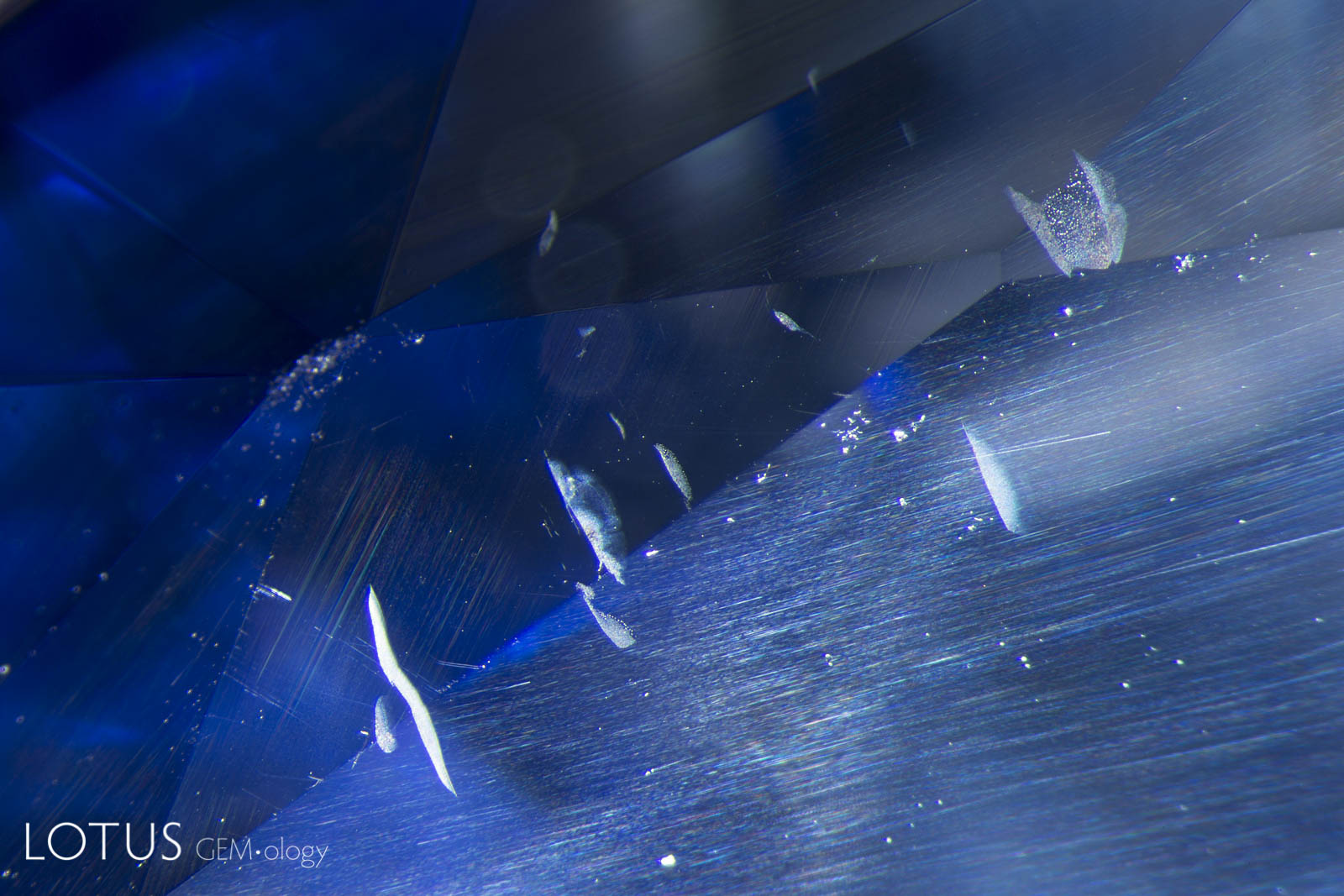
Many crystals contain shallow fissures on their surfaces. In sapphires from Sri Lanka, Myanmar and Madagascar, these fissures often contain yellow stains. High-temperature heating not only destroys the yellow stains, but begins a process of healing, where the fissures turn white and start forming fingerprints, as we can see here.
Natural Sapphire •
Sri Lanka (Ceylon) •
Enhancements:
Heat (H) •
Lighting Conditions:
Fiber Optic: Oblique
Photographer:
Richard W. Hughes •
Image Number:
A-001-0977-1
Hughes, R.W., Manorotkul, W. et al. (2017) Ruby & Sapphire: A Gemologist's Guide. Bangkok, Lotus Publishing, 816 pp.; RWHL*.
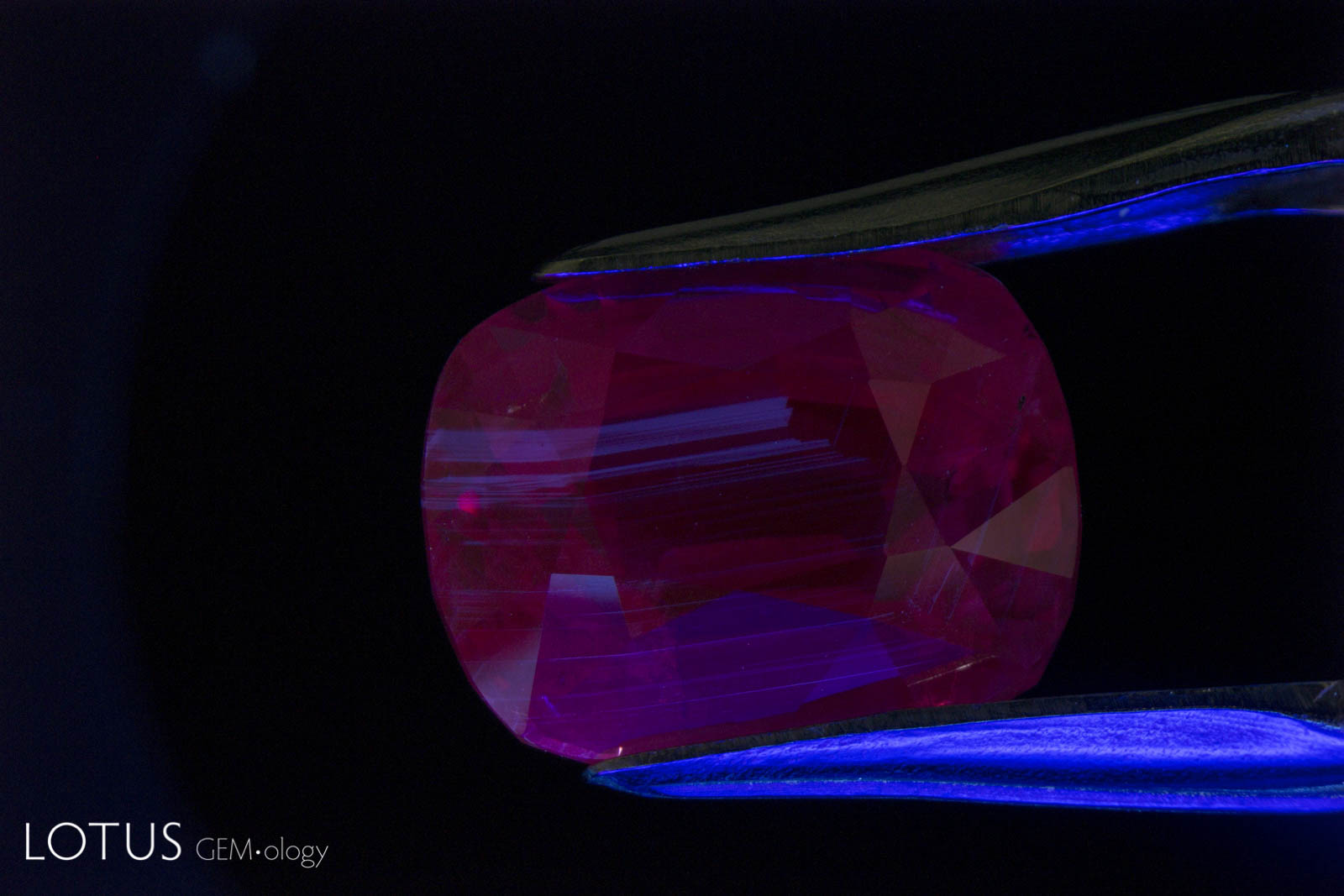
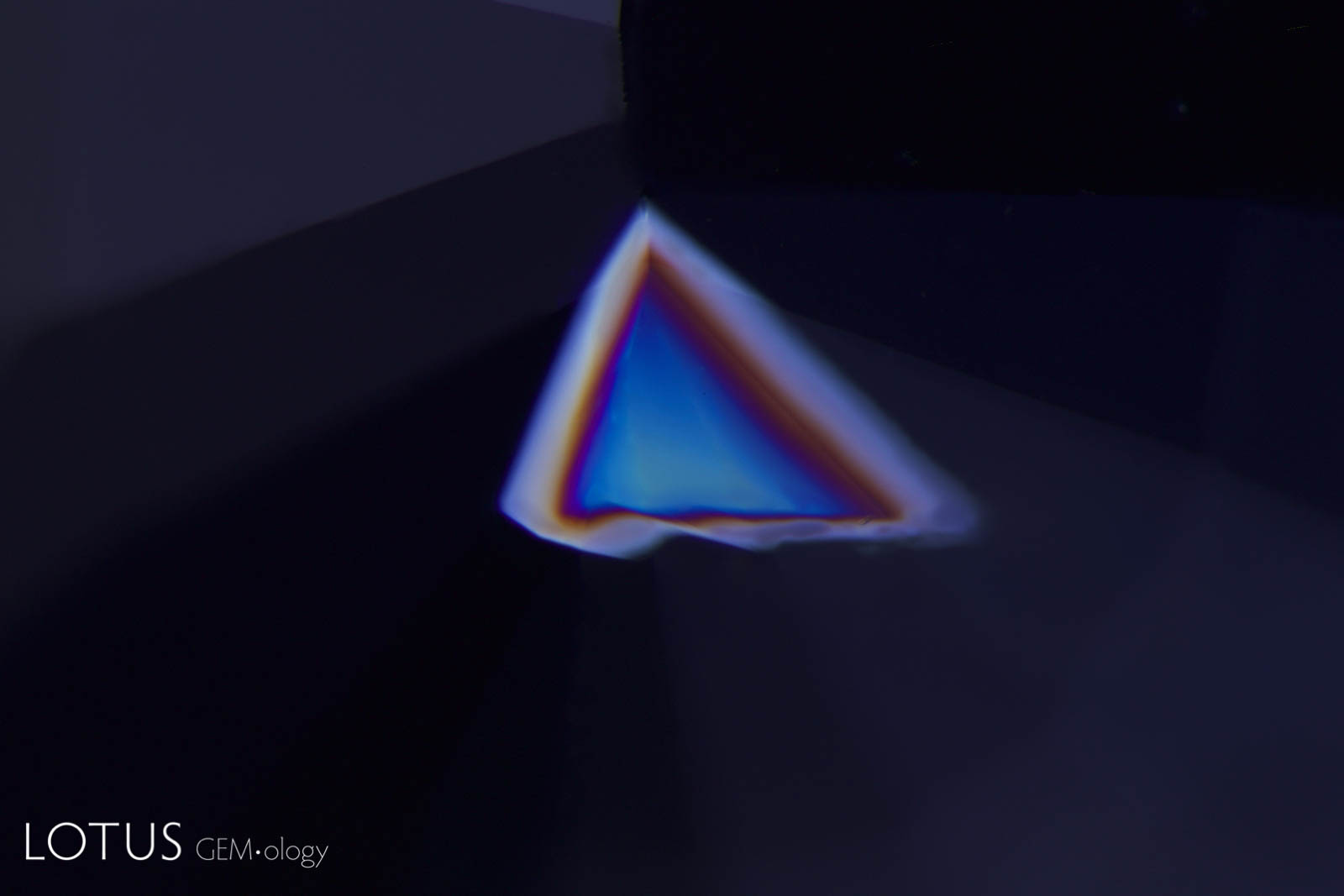
Pink sapphires from Sri Lanka are routinely heated at relatively low temperatures (>1200°C) to drive off the blue tint. While this rarely changes the inclusions, it can be unmasked by reference to the shortwave ultraviolet fluorescence, which often develops chalky zones, as shown in this stone.
Natural Sapphire •
Sri Lanka (Ceylon) •
Enhancements:
Heat (H) •
Lighting Conditions:
Ultraviolet: Shortwave
Photographer:
Richard W. Hughes •
Image Number:
A-001-0957-1
Hughes, R.W. and Emmett, J.L. (2005) Heat Seeker: UV fluorescence as a gemological tool. The Guide, Vol. 24, No. 5, Part 1, Sept.–Oct., pp. 1, 4–7; RWHL*.
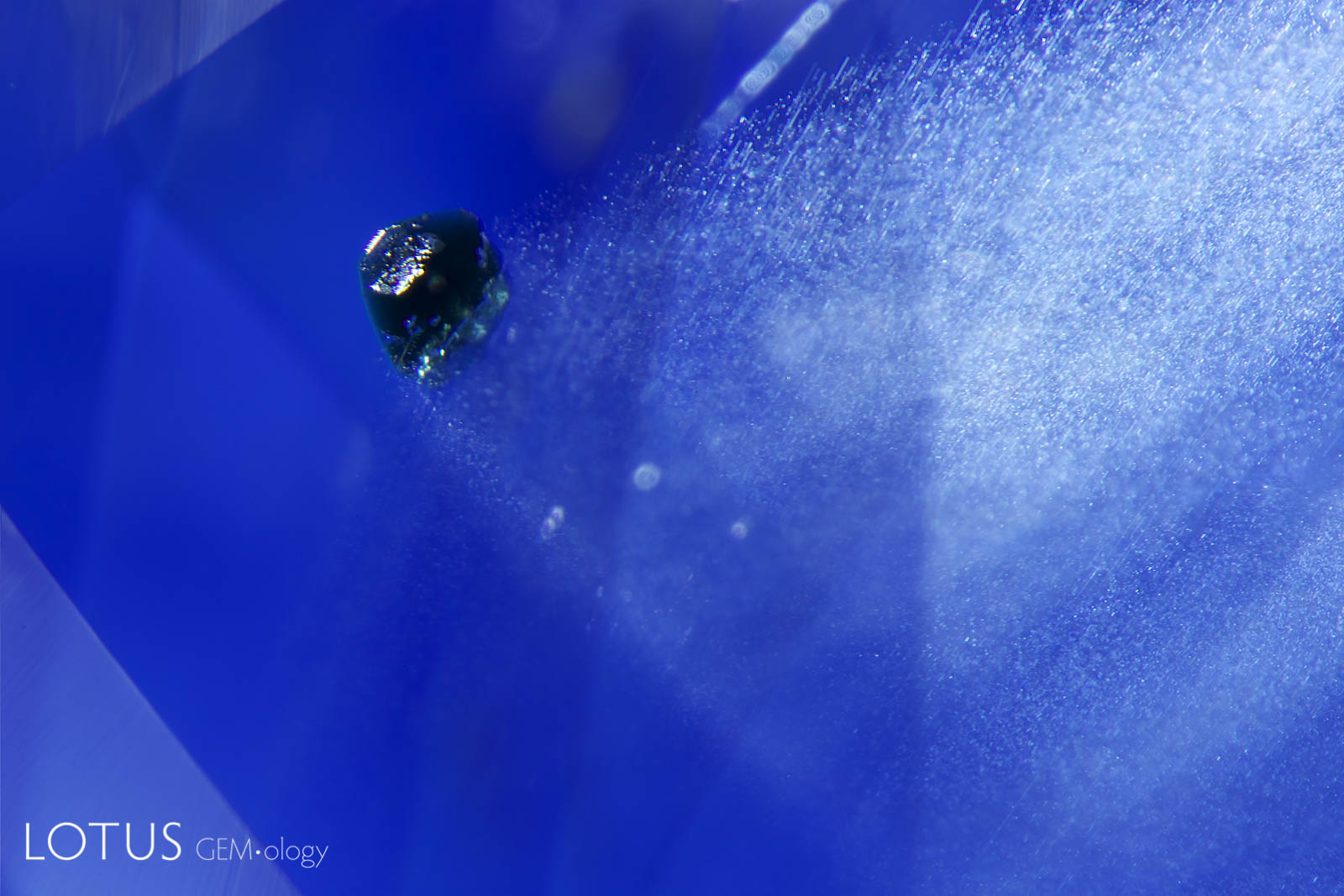
An unusual green crystal was found trapped in this unheated blue sapphire from Serendib, with a cloud of rutile silk trailing in its wake.
Natural Sapphire •
Sri Lanka (Ceylon) •
Enhancements:
None Detected (None) •
Lighting Conditions:
Fiber Optic: Oblique
Photographer:
Richard W. Hughes •
Image Number:
A-001-0946-2
Gübelin, E.J. and Koivula, J.I. (2005) Photoatlas of Inclusions in Gemstones, Volume 3. Basel, Switzerland, Opinio Publishers, 672 pp.; RWHL*.
Hughes, R.W. (1997) Ruby & Sapphire. Boulder, CO, RWH Publishing, 512 pp.; RWHL*.
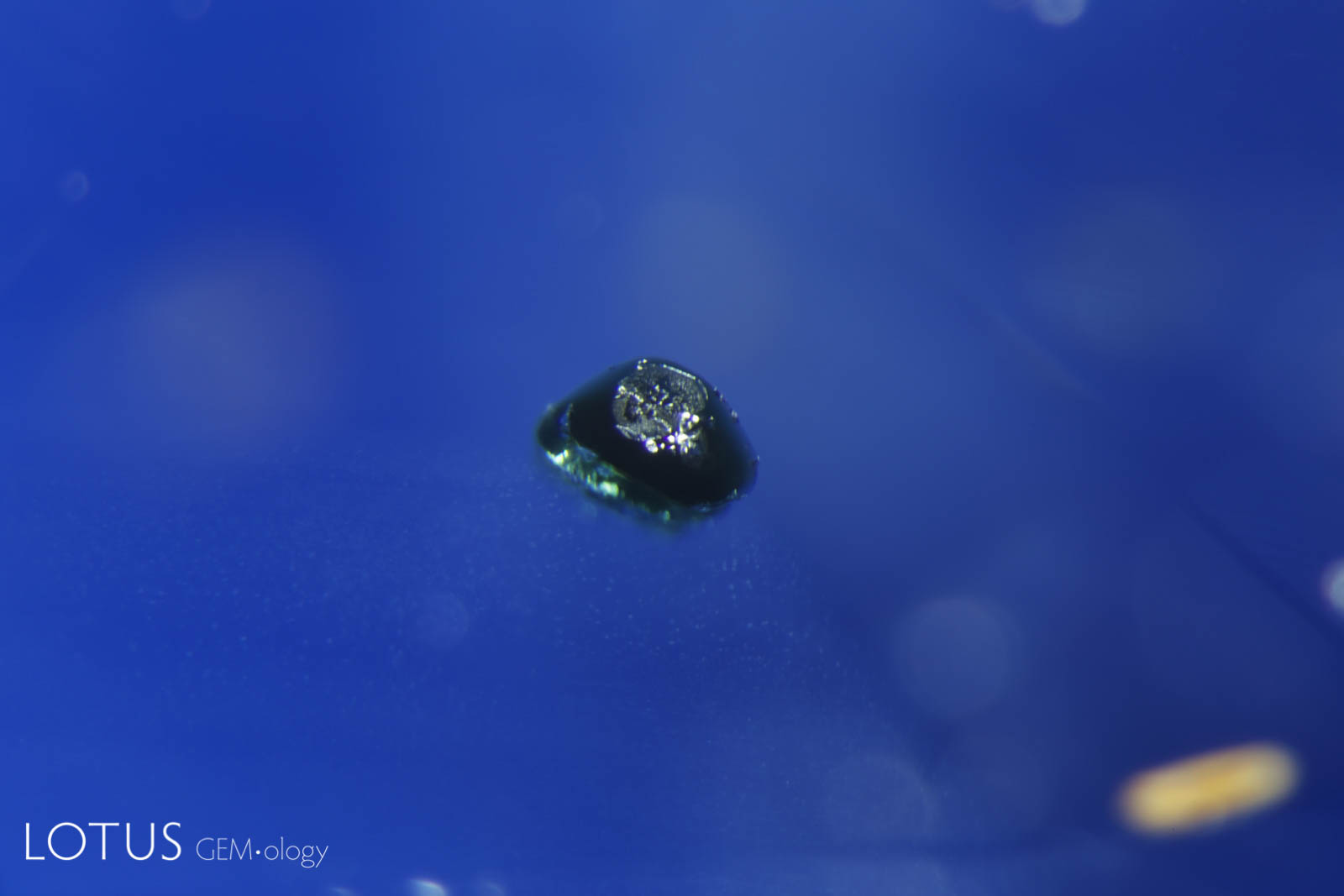
An unusual green crystal was found trapped in this unheated blue sapphire from Serendib.
Natural Sapphire •
Sri Lanka (Ceylon) •
Enhancements:
None Detected (None) •
Lighting Conditions:
Fiber Optic: Oblique
Photographer:
E. Billie Hughes •
Image Number:
A-001-0946-1
Gübelin, E.J. and Koivula, J.I. (2005) Photoatlas of Inclusions in Gemstones, Volume 3. Basel, Switzerland, Opinio Publishers, 672 pp.; RWHL*.
Hughes, R.W. (1997) Ruby & Sapphire. Boulder, CO, RWH Publishing, 512 pp.; RWHL*.
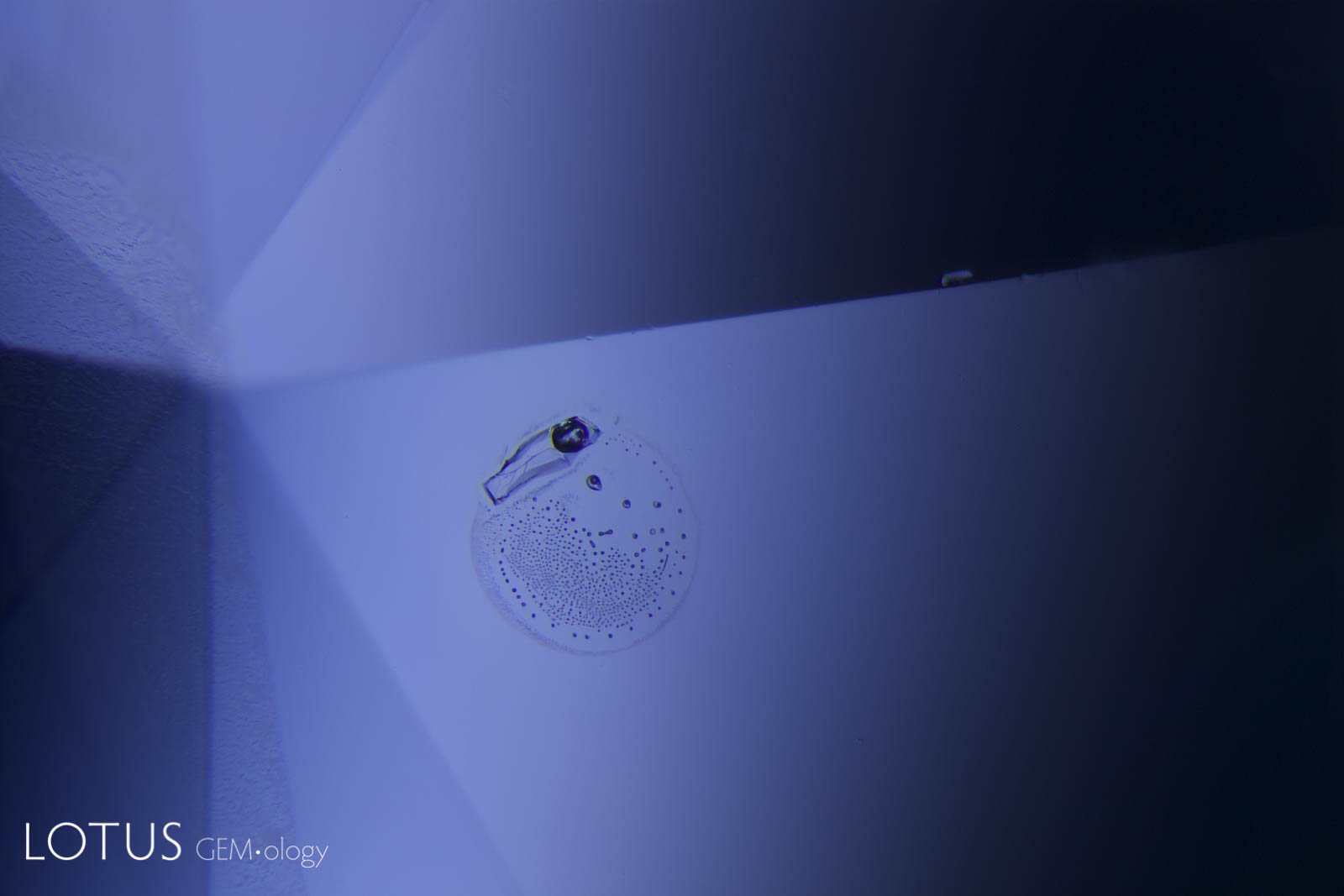
Fingerprints are similar to scars, representing the healing of earlier wounds. This example shows how a formerly open fissure has healed shut, with tiny flattened negative crystals being all that is left of the open space of the previous fissure.
Natural Sapphire •
Sri Lanka (Ceylon) •
Enhancements:
None Detected (None) •
Lighting Conditions:
Fiber Optic: Transmitted
Photographer:
Richard W. Hughes •
Image Number:
A-001-0841-1
Roedder, E. (1962) Ancient fluids in crystals. Scientific American, Vol. 207, pp. 38–47; RWHL*.
Eppler, W.F. (1959) The origin of healing fissures in gemstones. Journal of Gemmology, Vol. 7, No. 2, April, pp. 40–66; RWHL*.
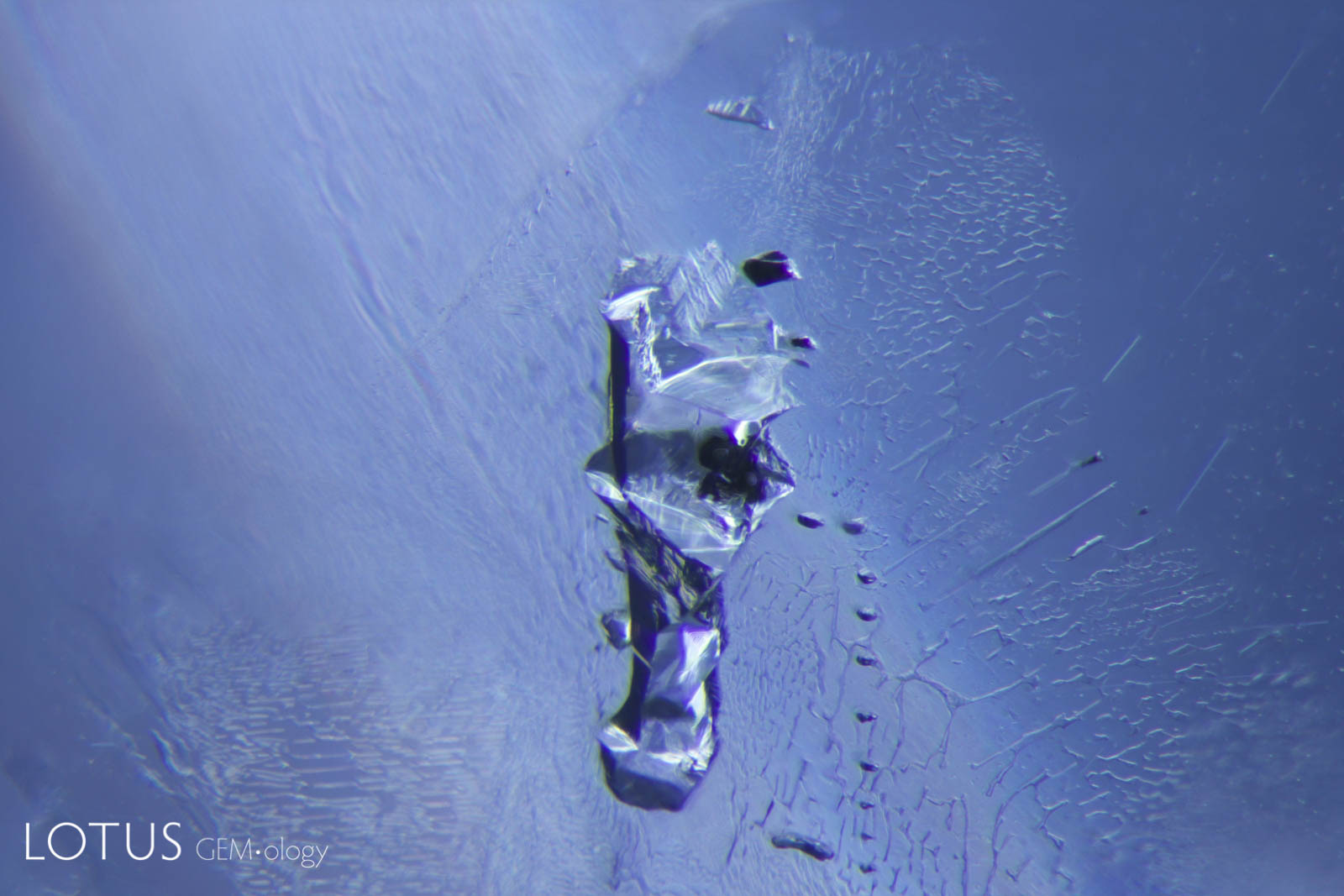
One of the classic inclusions found in Sri Lankan sapphires are negative crystals. These are generally filled with liquid carbon dioxide and sometimes contain a gas phase, too. In addition, hexagonal black graphite plates and slender diaspore needles are frequent guests in these tiny primary cavities.
Natural Sapphire •
Sri Lanka (Ceylon) •
Enhancements:
None Detected (None) •
Lighting Conditions:
Fiber Optic: Transmitted
Photographer:
E. Billie Hughes •
Image Number:
A-001-0742-5
Koivula, J.I. (1986) Carbon dioxide fluid inclusions as proof of natural-colored corundum. Gems & Gemology, Vol. 22, No. 3, pp. 152–155; RWHL*.
Koivula, J.I. (1980) Carbon dioxide as a fluid inclusion. Gems & Gemology, Vol. 16, No. 12, pp. 386–390; RWHL*.
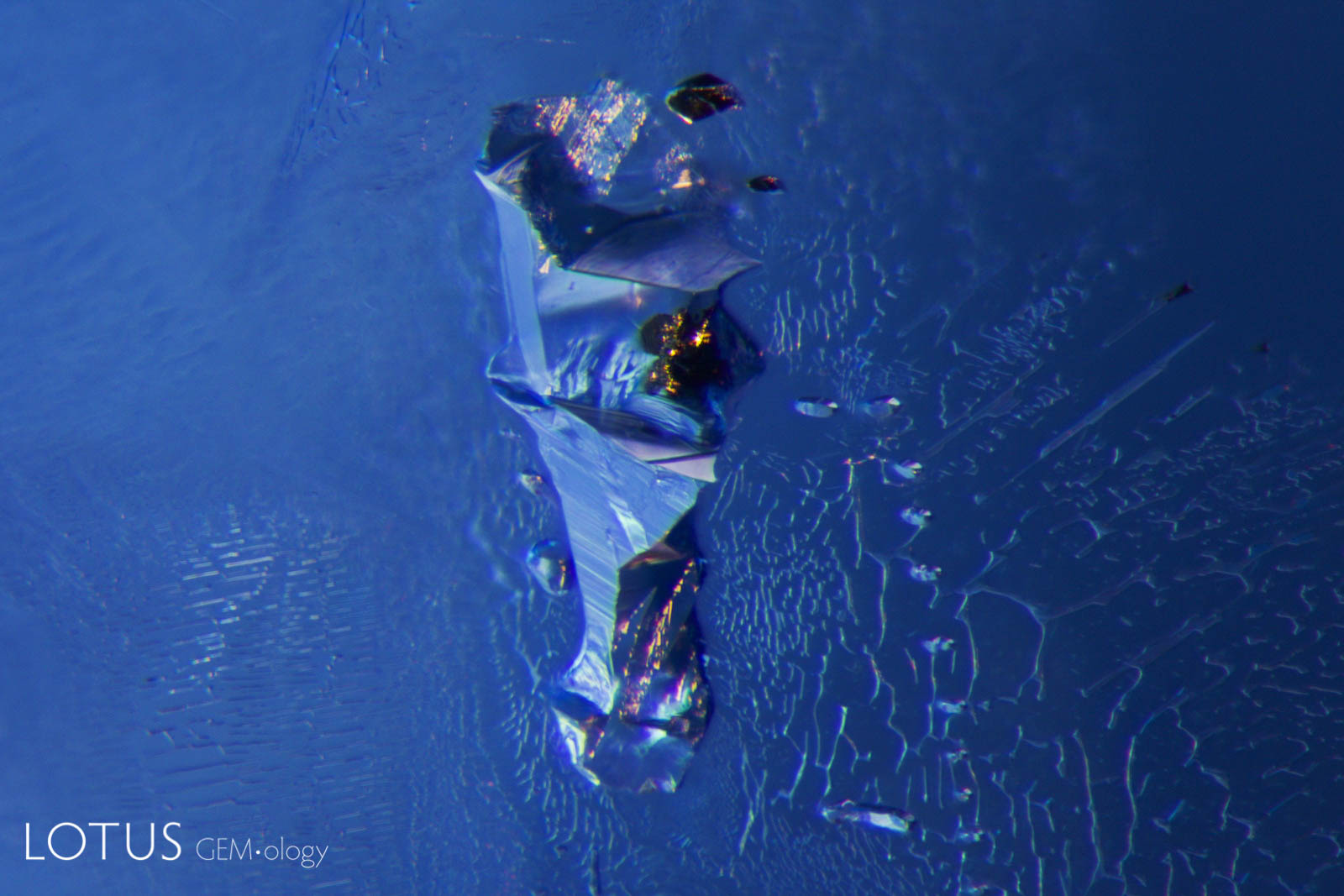
One of the classic inclusions found in Sri Lankan sapphires are negative crystals. These are generally filled with liquid carbon dioxide and sometimes contain a gas phase, too. In addition, hexagonal black graphite plates and slender diaspore needles are frequent guests in these tiny primary cavities.
Natural Sapphire •
Sri Lanka (Ceylon) •
Enhancements:
None Detected (None) •
Lighting Conditions:
Fiber Optic: Oblique
Photographer:
E. Billie Hughes •
Image Number:
A-001-0742-4
Koivula, J.I. (1986) Carbon dioxide fluid inclusions as proof of natural-colored corundum. Gems & Gemology, Vol. 22, No. 3, pp. 152–155; RWHL*.
Koivula, J.I. (1980) Carbon dioxide as a fluid inclusion. Gems & Gemology, Vol. 16, No. 12, pp. 386–390; RWHL*.
299 Total Images
Results: 241 – 252 | Page 21 of 25 Pages
Search the Complete Hyperion Database
Ceylon sapphire inclusions may include mineral crystals, rutile silk, healed fissures, fluid inclusions, negative crystals, growth features and other internal features formed during or after crystal growth. Such features are important to gemologists because they can provide evidence useful in identifying sapphire and evaluating a possible Sri Lankan origin.
Ceylon Sapphire Inclusion Photomicrographs
The Hyperion Ceylon sapphire gallery includes microscopic features documented in sapphires from Sri Lanka (Ceylon). Each entry is accompanied by descriptive information and, where available, references to the gemological literature.
What Inclusions Can Reveal About Ceylon Sapphire
Inclusions are an important part of geographic origin determination in sapphire. Their form, composition, orientation and associations can provide evidence that, when considered together with other gemological properties, may support or contradict a Sri Lankan origin.
Hyperion combines inclusion photomicrography with supporting gemological information so that individual features can be compared with documented examples from Ceylon sapphires.
About Hyperion
Hyperion is the Lotus Gemology searchable inclusion database. It allows users to browse gemstone inclusions by gem type, geographic origin, treatment and keyword.