Ceylon Sapphire Inclusions
Explore Ceylon sapphire inclusions in Hyperion, the Lotus Gemology inclusion database. Hyperion contains photomicrographs of inclusions and internal features in natural sapphires from Sri Lanka (Ceylon), documented with information on treatment, lighting conditions, field of view, photographer and published references.
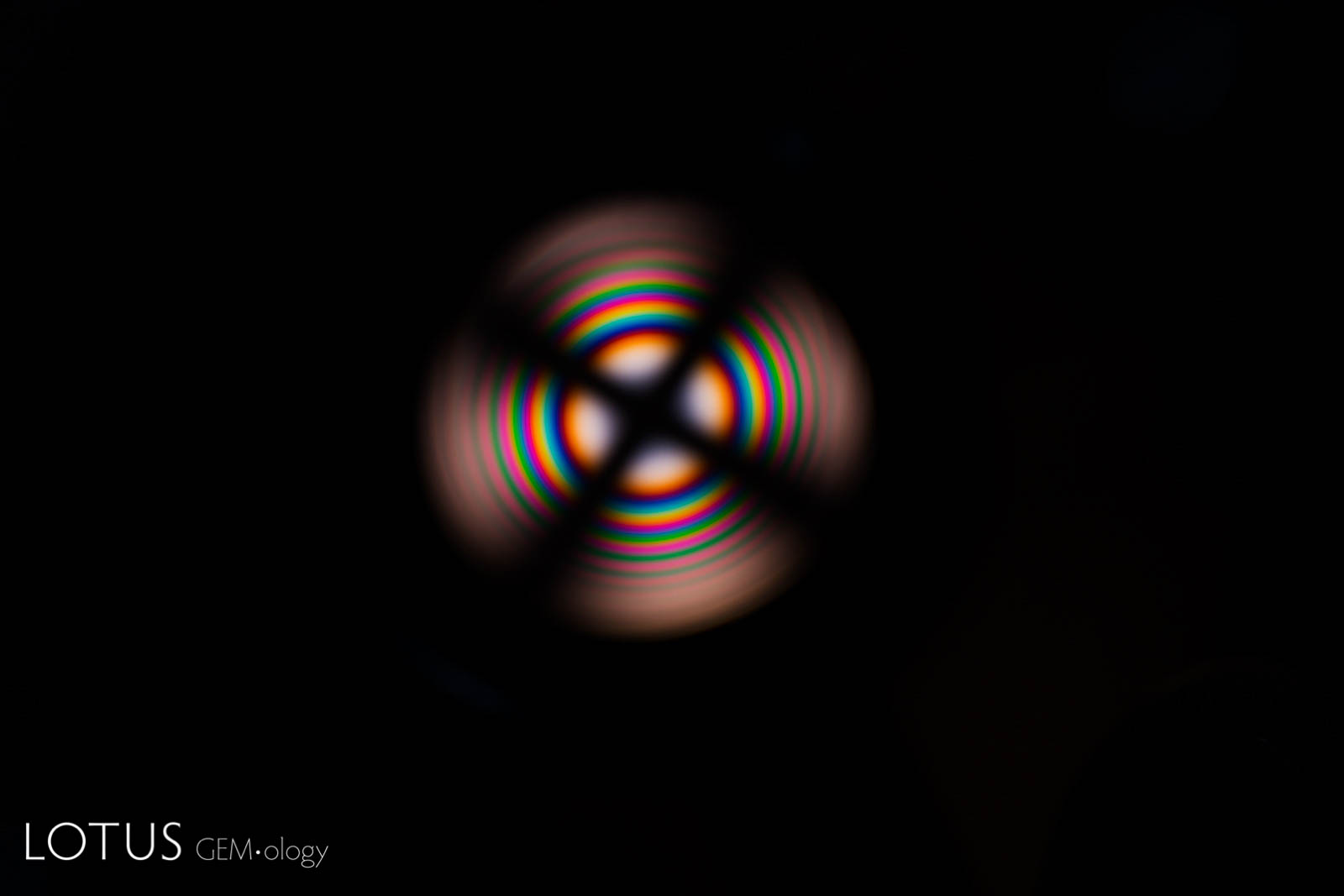
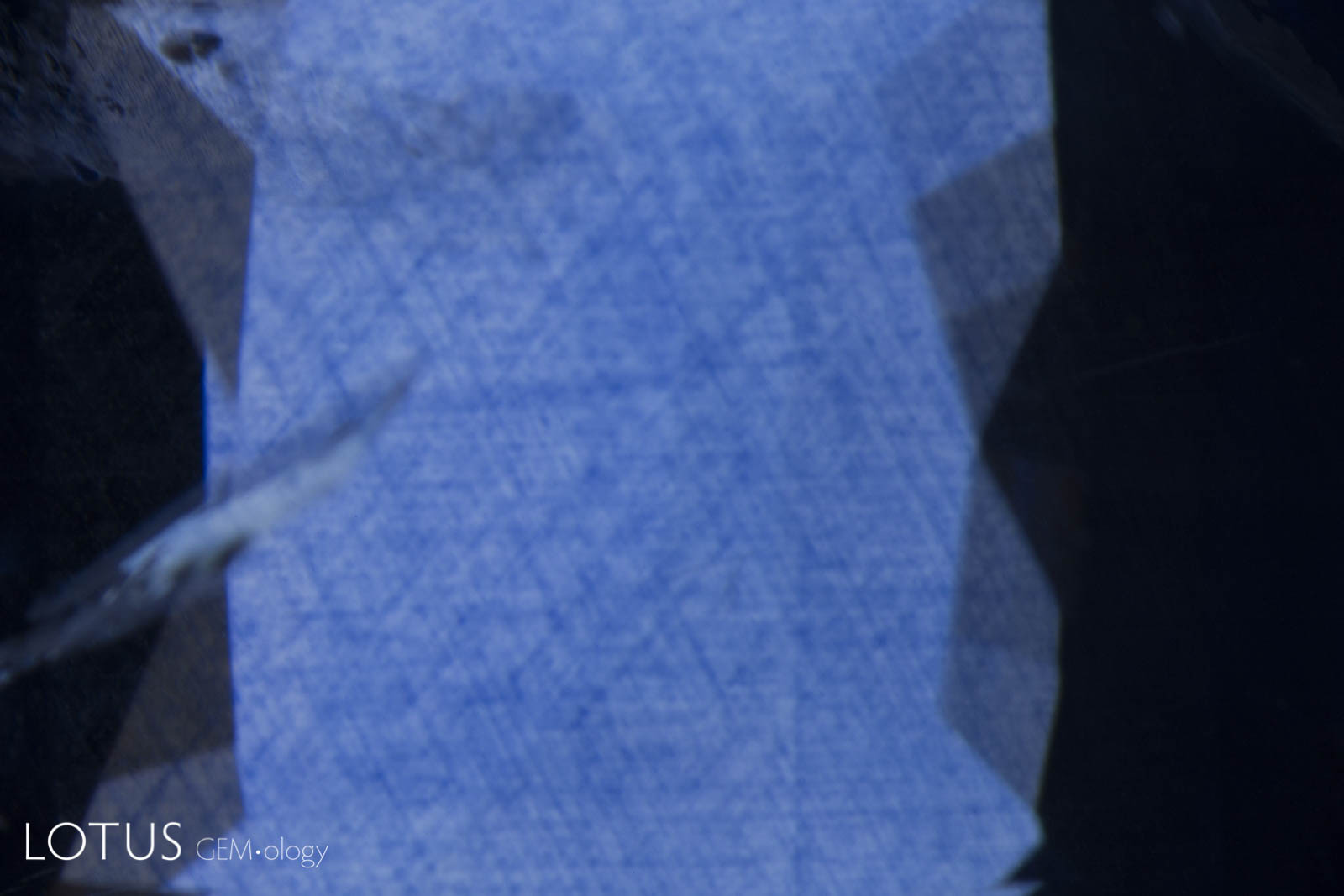
Uniaxial interference figure in blue sapphire.
Natural Sapphire •
Sri Lanka (Ceylon) •
Enhancements:
Heat (H) •
Lighting Conditions:
Diffuse Light Field + Crossed Polars
Photographer:
E. Billie Hughes •
Image Number:
A-001-0643-1
When a silky sapphire is heated to a high enough temperature, titanium from the rutile silk is forced into solid solution, coloring the stone blue. But the silk may also contain other elements that cannot dissolve into sapphire so readily, leaving behind silk “skeletons,” as shown here.
Natural Sapphire •
Sri Lanka (Ceylon) •
Enhancements:
Heat (H) •
Lighting Conditions:
Fiber Optic: Oblique
Photographer:
Richard W. Hughes •
Image Number:
A-001-0616-1
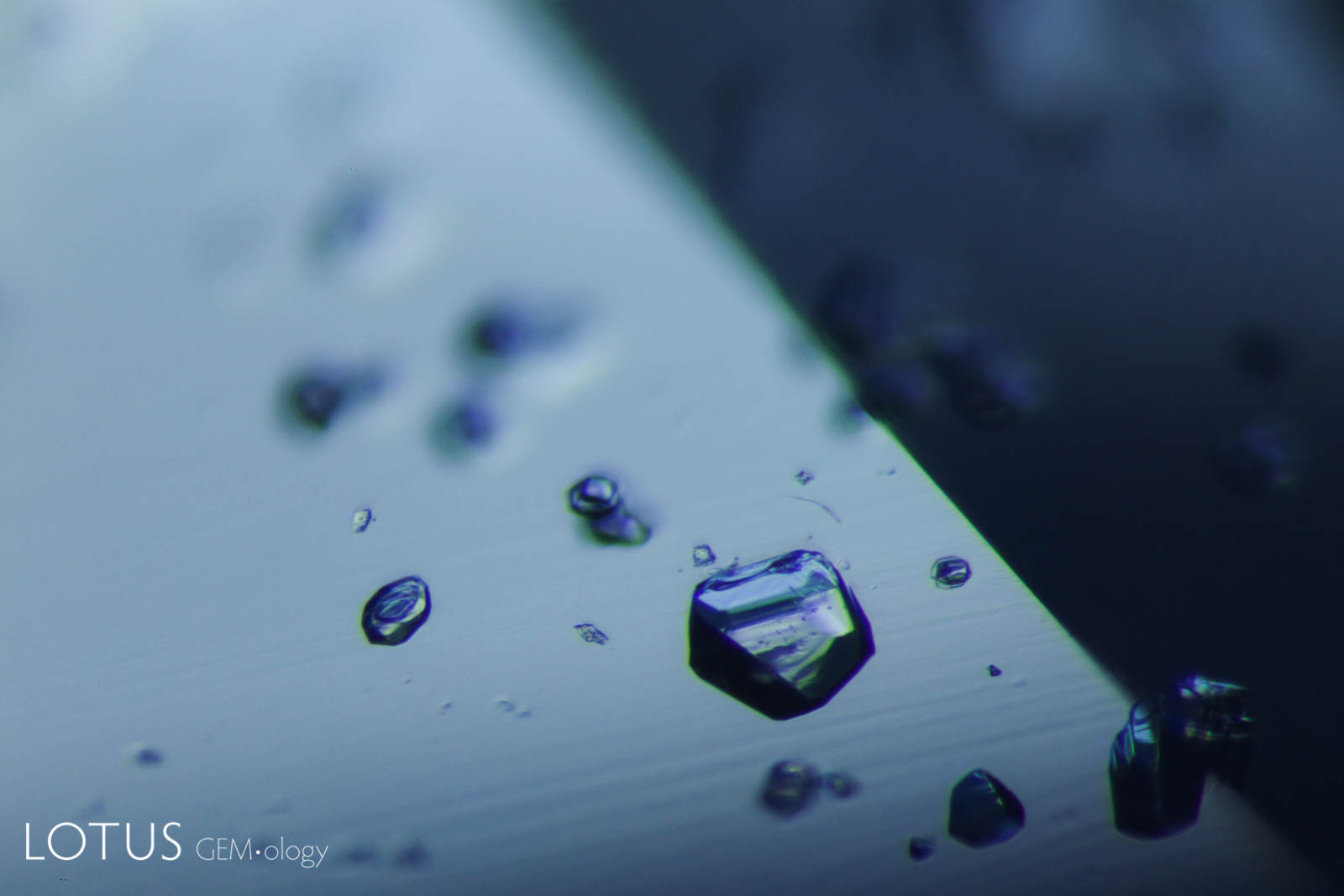
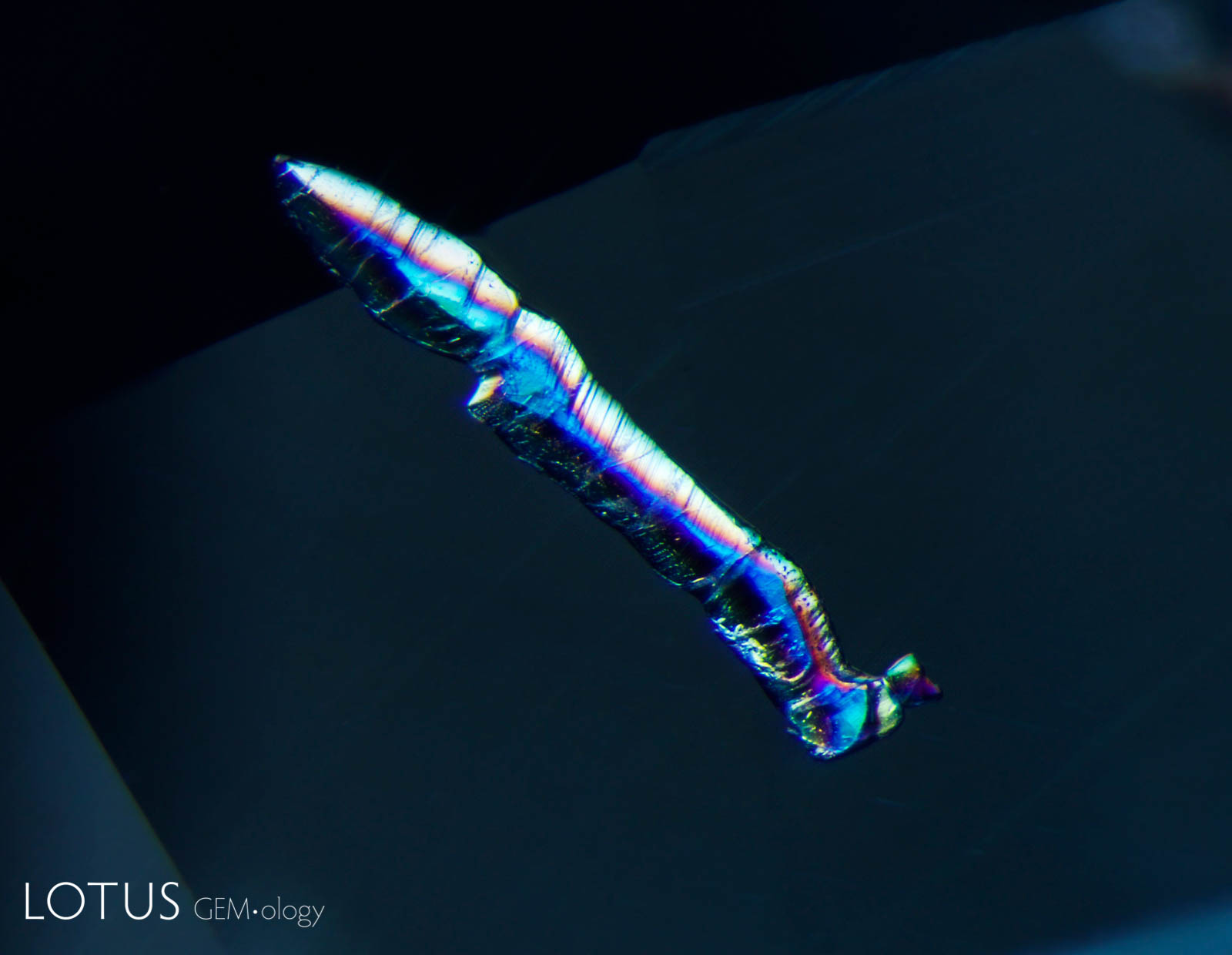
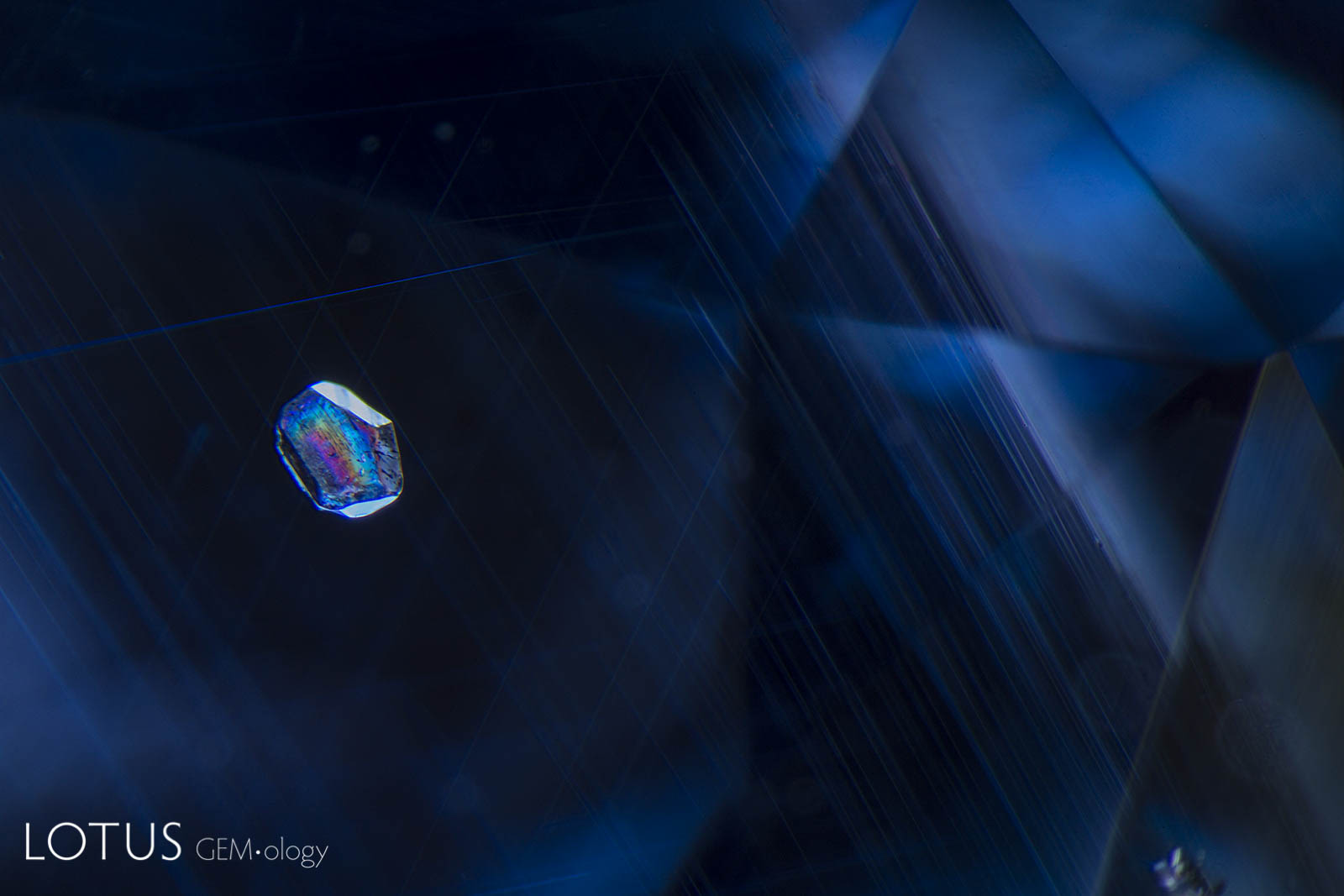
Birefringent crystal in transmitted light. If examined between crossed polars, it will reveal its doubly refractive nature.
Natural Sapphire •
Sri Lanka (Ceylon) •
Enhancements:
None Detected (None) •
Lighting Conditions:
Diffuse Light Field (Transmitted Light)
Photographer:
E. Billie Hughes •
Image Number:
A-001-0600-2
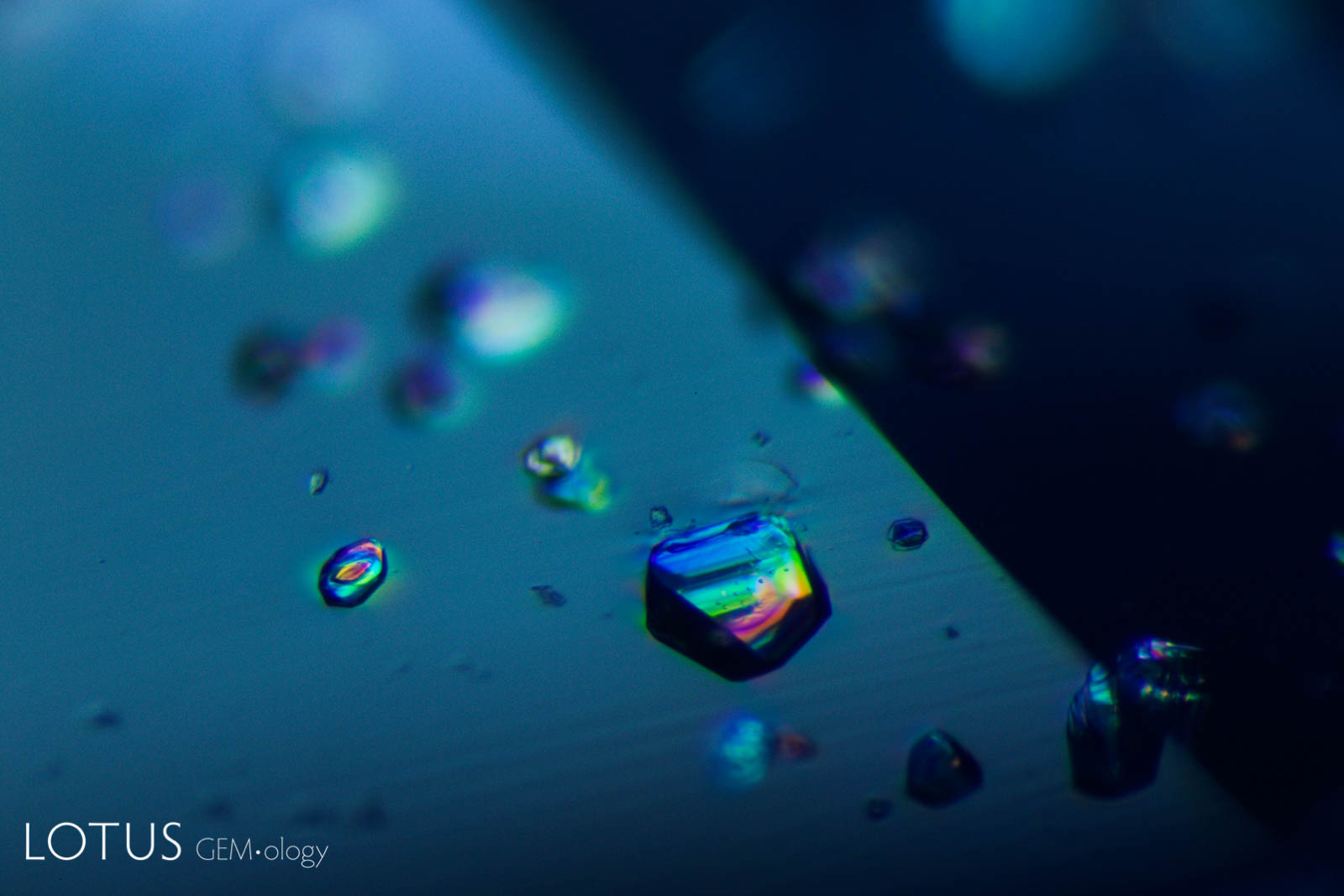
A transparent birefringent crystal reveals its doubly refractive nature when examined between crossed polars in this untreated sapphire from Sri Lanka.
Natural Sapphire •
Sri Lanka (Ceylon) •
Enhancements:
None Detected (None) •
Lighting Conditions:
Diffuse Light Field + Crossed Polars
Photographer:
E. Billie Hughes •
Image Number:
A-001-0600-1
A lovely example of a fingerprint in an unheated sapphire from Sri Lanka.
Natural Sapphire •
Sri Lanka (Ceylon) •
Enhancements:
None Detected (None) •
Lighting Conditions:
Fiber Optic: Transmitted
Photographer:
E. Billie Hughes •
Image Number:
A-001-0596-1
Roedder, E. (1962) Ancient fluids in crystals. Scientific American, Vol. 207, pp. 38–47; RWHL*.
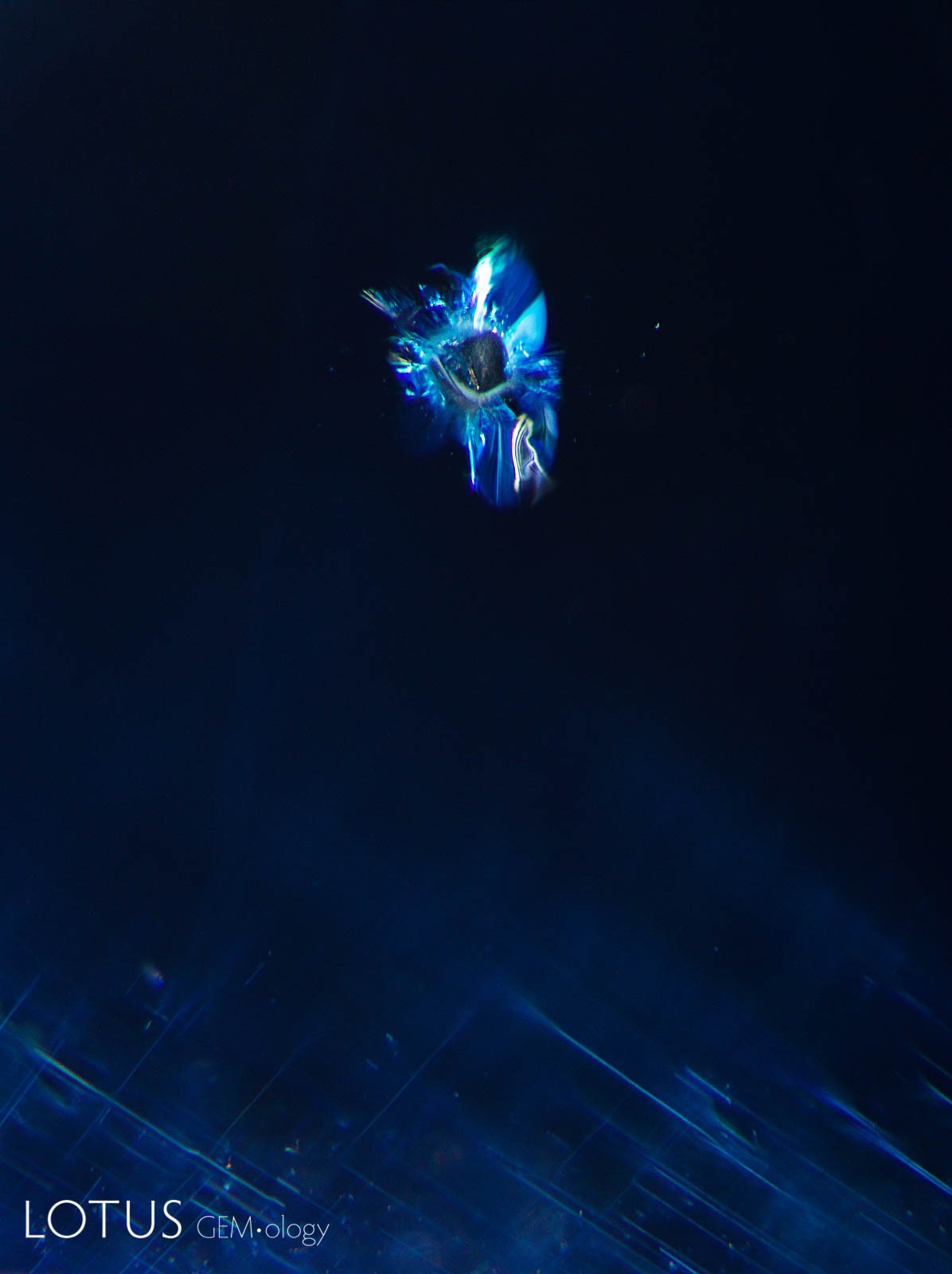
Negative crystal with a carbon dioxide bubble and graphite crystal in an unheated Sri Lanka sapphire. Such inclusions cannot tolerate heat treatment and thus are proof of natural, unheated origin.
Natural Sapphire •
Sri Lanka (Ceylon) •
Enhancements:
None Detected (None) •
Lighting Conditions:
Fiber Optic: Oblique
Photographer:
E. Billie Hughes •
Image Number:
A-001-0595-1
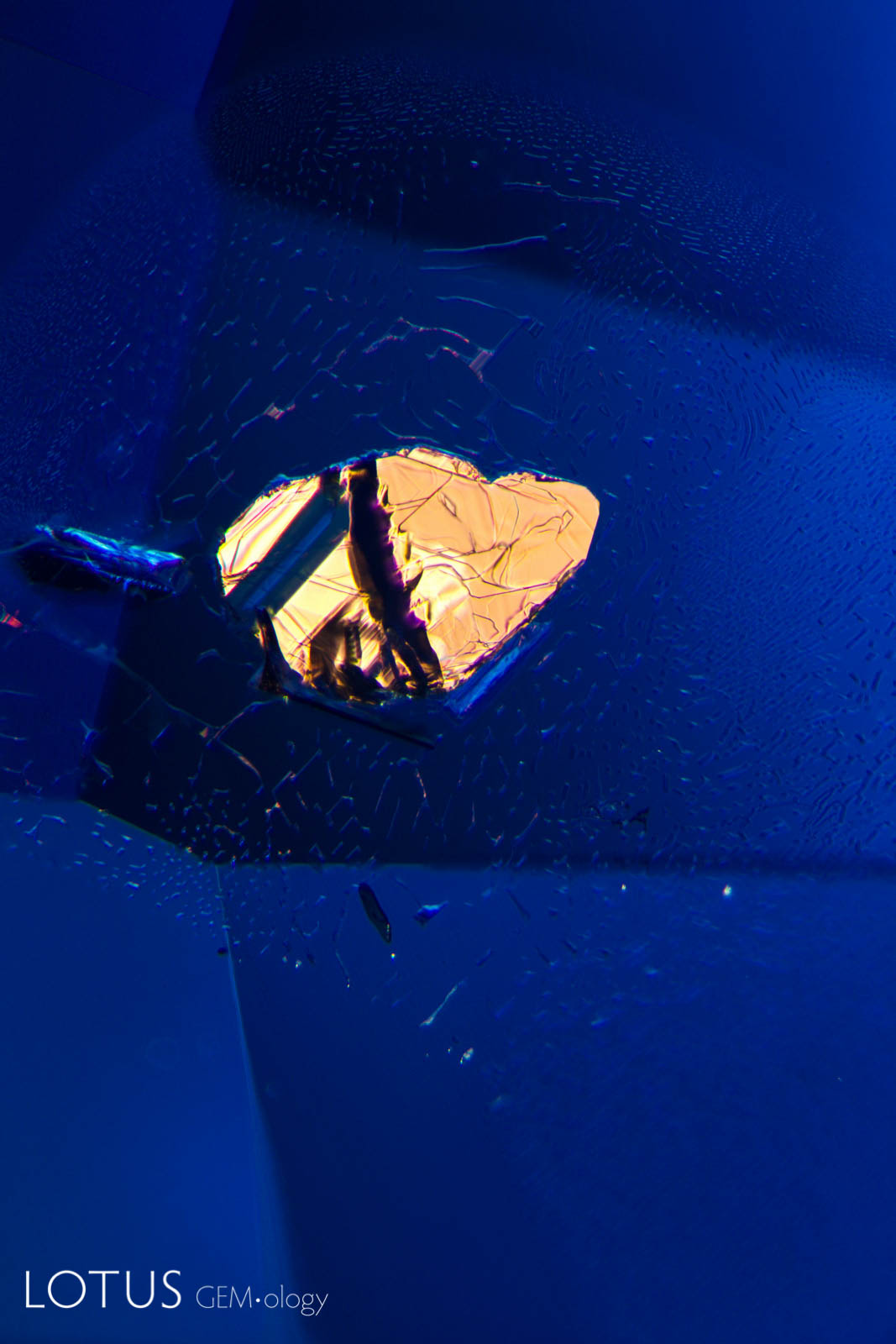
A crystal cut through on surface is strikingly iridescent when examined between crossed polars in this untreated sapphire from Sri Lanka.
Natural Sapphire •
Sri Lanka (Ceylon) •
Enhancements:
None Detected (None) •
Lighting Conditions:
Diffuse Light Field + Crossed Polars
Photographer:
E. Billie Hughes •
Image Number:
A-001-0597-1
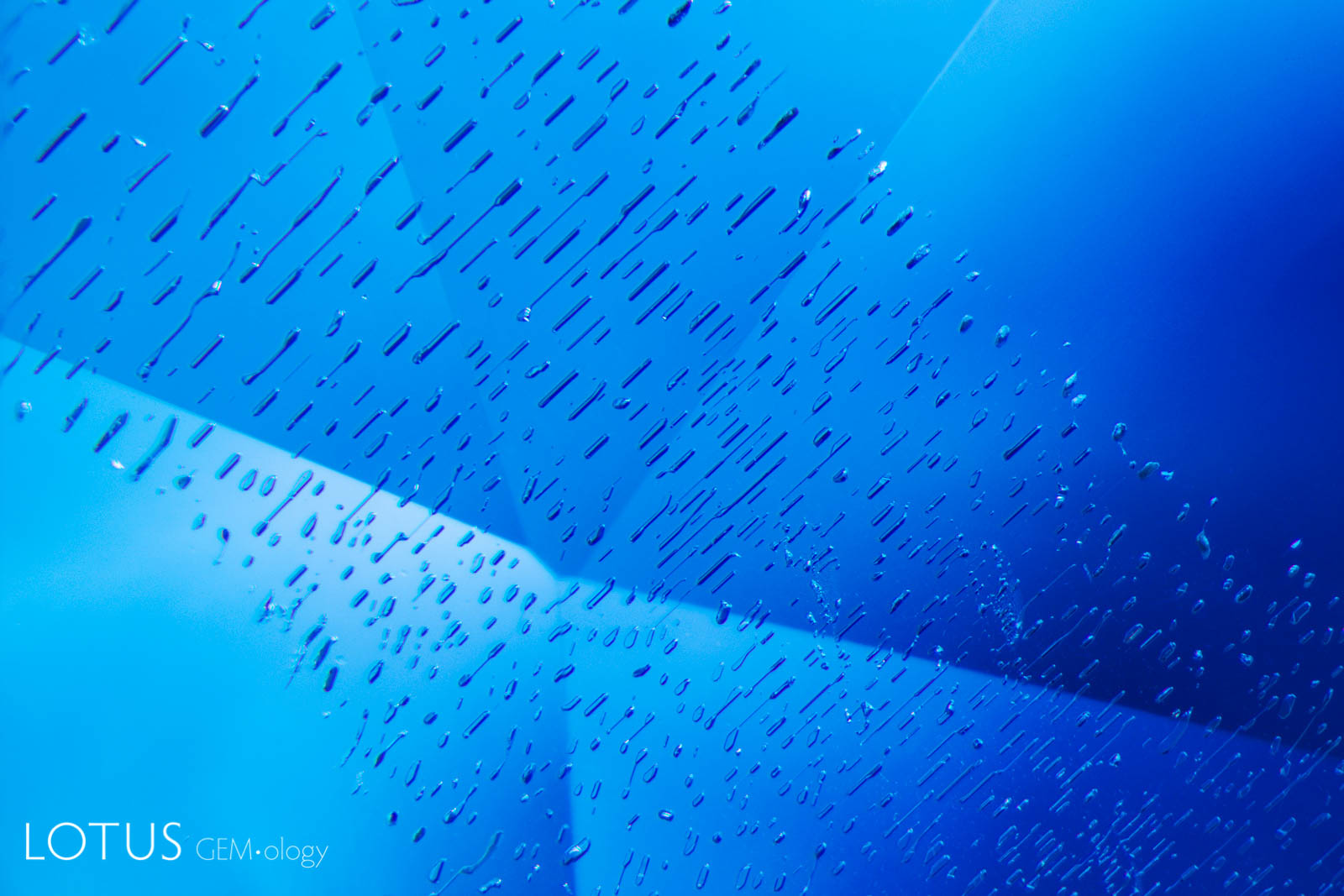
Rutile consists of titanium dioxide. When a sapphire containing exsolved rutile silk is heated, the rutile melts, sending the titanium back into solution, coloring the stone blue around the now partially dissolved silk. This creates a classic “inkspot” internal diffusion pattern, and is proof of high-temperature heat treatment.
Natural Sapphire •
Sri Lanka (Ceylon) •
Enhancements:
Heat (H) •
Lighting Conditions:
Fiber Optic: Transmitted
Photographer:
Richard W. Hughes •
Image Number:
A-001-0575-1
Koivula, J.I. (1987) Internal diffusion. Journal of Gemmology, Vol. 20, No. 7/8, pp. 474–477; RWHL*.
A crystal embedded in a fingerprint produces a brilliant reflection in this unheated sapphire from Sri Lanka.
Natural Sapphire •
Sri Lanka (Ceylon) •
Enhancements:
None Detected (None) •
Lighting Conditions:
Fiber Optic: Oblique
Photographer:
E. Billie Hughes •
Image Number:
A-001-0570-1
Hughes, R.W. (1997) Ruby & Sapphire. Boulder, CO, RWH Publishing, 512 pp.; RWHL*.
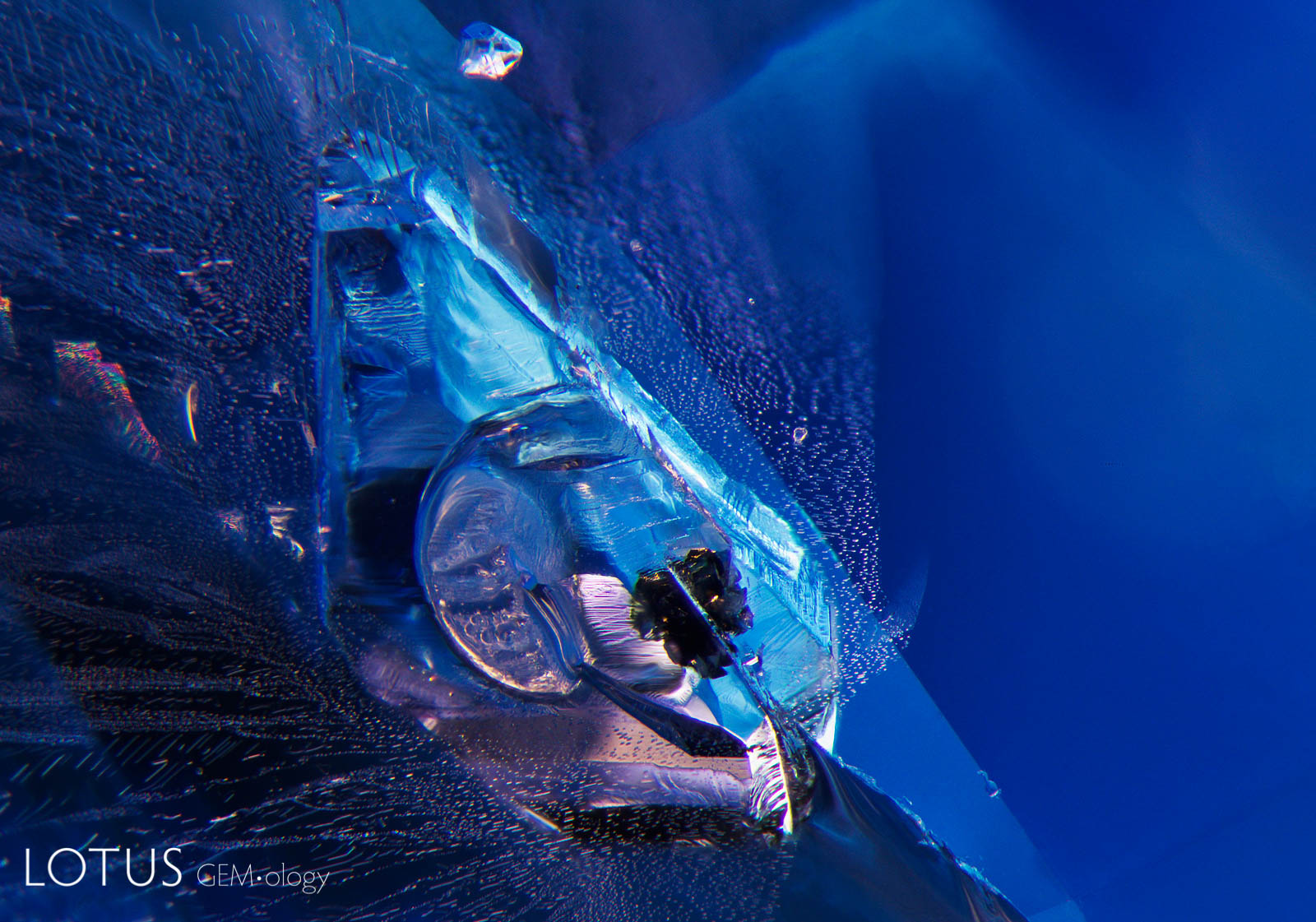
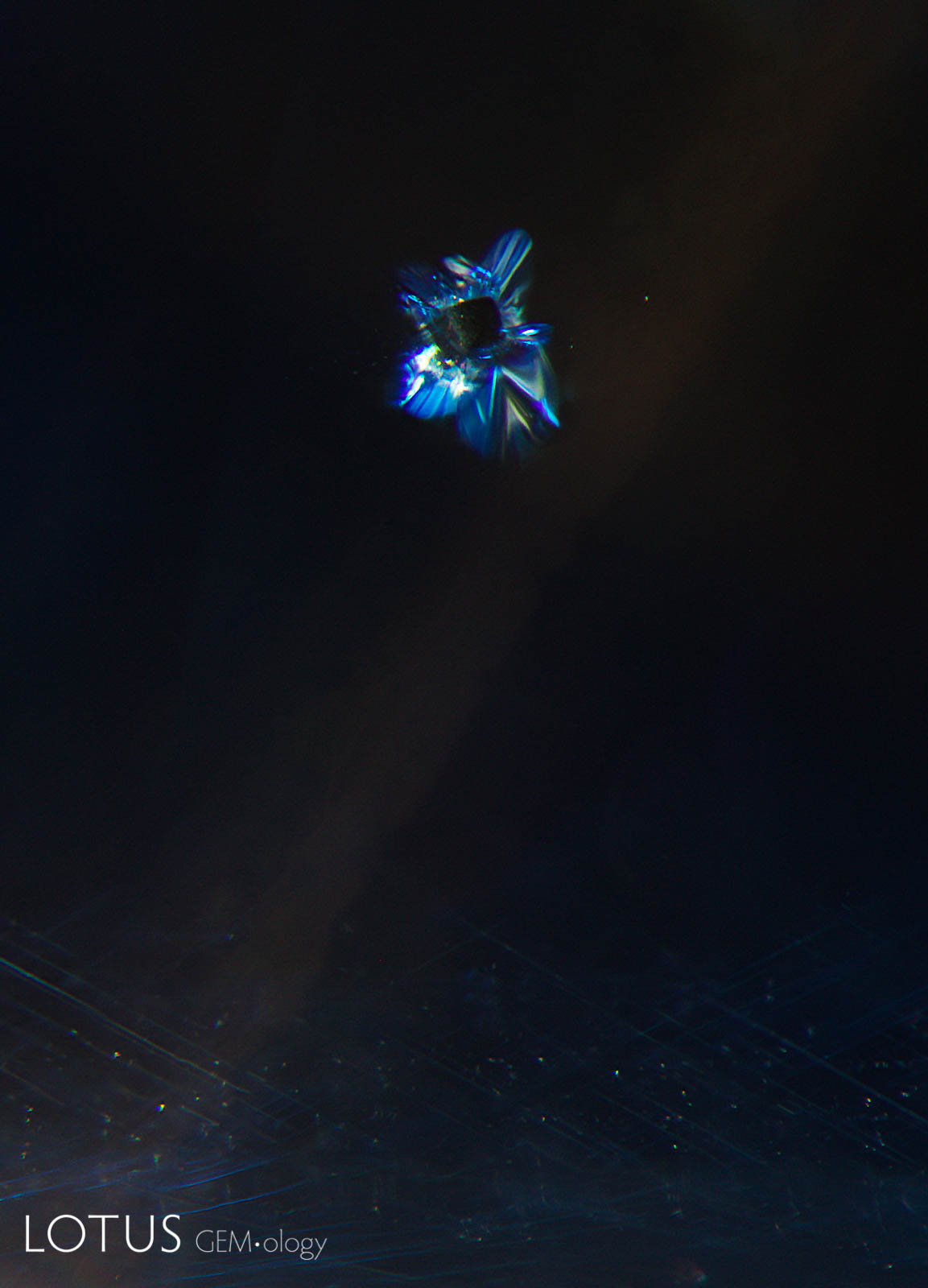
A black uraninite crystal with stress halo due to radiation is a common inclusion in Sri Lanka sapphire. Rutile silk is also visible below.
Natural Sapphire •
Sri Lanka (Ceylon) •
Enhancements:
None Detected (None) •
Lighting Conditions:
Fiber Optic: Oblique
Photographer:
E. Billie Hughes •
Image Number:
A-001-0506-2
Gübelin, E.J. (1973) Internal World of Gemstones. Zürich, ABC Verlag, reprinted 1983, 234 pp.; RWHL*.
A black uraninite crystal with stress halo due to radiation is a common inclusion in Sri Lanka sapphire.
Natural Sapphire •
Sri Lanka (Ceylon) •
Enhancements:
None Detected (None) •
Lighting Conditions:
Fiber Optic: Oblique
Photographer:
E. Billie Hughes •
Image Number:
A-001-0506-1
Gübelin, E.J. (1973) Internal World of Gemstones. Zürich, ABC Verlag, reprinted 1983, 234 pp.; RWHL*.
A euhedral birefringent crystal floats against a canvas of rutile silk in this untreated sapphire from Sri Lanka.
Natural Sapphire •
Sri Lanka (Ceylon) •
Enhancements:
None Detected (None) •
Lighting Conditions:
Diffuse Light Field + Crossed Polars
Photographer:
Richard W. Hughes •
Image Number:
A-001-0499-1
Search the Complete Hyperion Database
Ceylon sapphire inclusions may include mineral crystals, rutile silk, healed fissures, fluid inclusions, negative crystals, growth features and other internal features formed during or after crystal growth. Such features are important to gemologists because they can provide evidence useful in identifying sapphire and evaluating a possible Sri Lankan origin.
Ceylon Sapphire Inclusion Photomicrographs
The Hyperion Ceylon sapphire gallery includes microscopic features documented in sapphires from Sri Lanka (Ceylon). Each entry is accompanied by descriptive information and, where available, references to the gemological literature.
What Inclusions Can Reveal About Ceylon Sapphire
Inclusions are an important part of geographic origin determination in sapphire. Their form, composition, orientation and associations can provide evidence that, when considered together with other gemological properties, may support or contradict a Sri Lankan origin.
Hyperion combines inclusion photomicrography with supporting gemological information so that individual features can be compared with documented examples from Ceylon sapphires.
About Hyperion
Hyperion is the Lotus Gemology searchable inclusion database. It allows users to browse gemstone inclusions by gem type, geographic origin, treatment and keyword.