Gemology Books Bibliography

Gemology Books Bibliography

Explore books on gems, gemology, jewelry and mineralogy in Four Treasures, the Lotus Gemology reference database. This bibliography brings together matching book records from the collection, with publication details, abstracts and cover images where available.

Gemology Book References

The list below matches books concerning gemology and related subjects in the database's searchable fields. Some works cover several branches of gems, jewelry or mineralogy.

201–220 of 3,436 matching references
Color mechanism and spectroscopic thermal variation of pink spinel reportedly from Kuh-i-Lal, Tajikistan

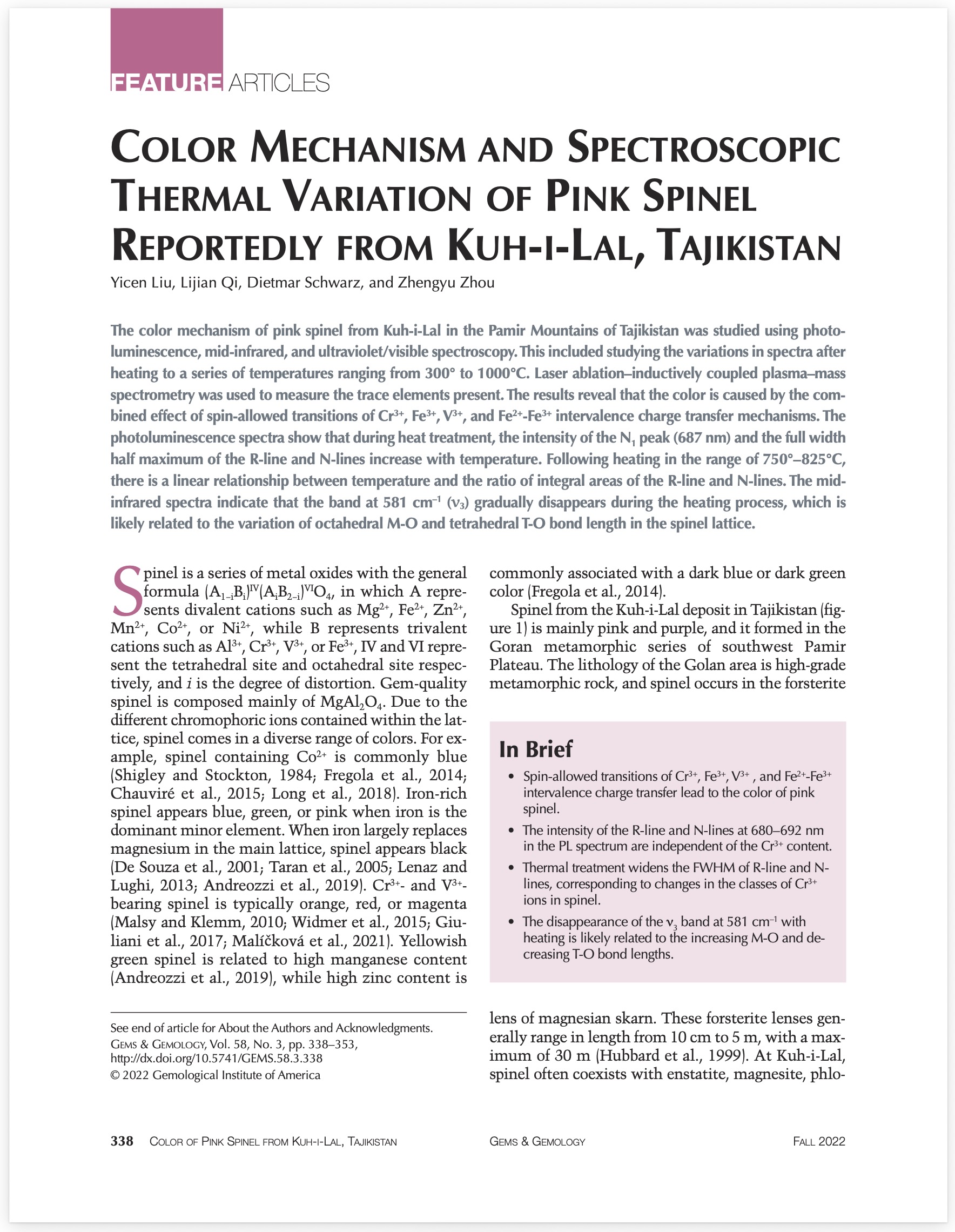
Color mechanism and spectroscopic thermal variation of pink spinel reportedly from Kuh-i-Lal, Tajikistan

Liu, Y., Qi, L., Schwarz, D. and Zhou, Z. (2022)

Journal Article · Source: Gems & Gemology · Volume: Vol. 58 · Issue: No. 3, Fall · Pages: pp. 338–353

Abstract
The color mechanism of pink spinel from Kuh-i-Lal in the Pamir Mountains of Tajikistan was studied using photoluminescence, mid-infrared, and ultraviolet/visible spectroscopy. This included studying the variations in spectra after heating to a series of temperatures ranging from 300° to 1000°C. Laser ablation–inductively coupled plasma–mass spectrometry was used to measure the trace elements present. The results reveal that the color is caused by the combined effect of spin-allowed transitions of Cr³⁺, Fe³⁺, V³⁺, and Fe²⁺–Fe³⁺ intervalence charge transfer mechanisms. The photoluminescence spectra show that during heat treatment, the intensity of the N1 peak (687 nm) and the full width at half maximum of the R-line and N-lines increase with temperature. Following heating in the range of 750°–825°C, there is a linear relationship between temperature and the ratio of integral areas of the R-line and N-lines. The mid-infrared spectra indicate that the band at 581 cm⁻¹ (ν₃) gradually disappears during the heating process, which is likely related to the variation of octahedral M–O and tetrahedral T–O bond length in the spinel lattice.
Keywords
gems, spinel, Afghanistan, Tajikistan, balas ruby, Kuh-i-Lal, Pamir, geology, causes of color
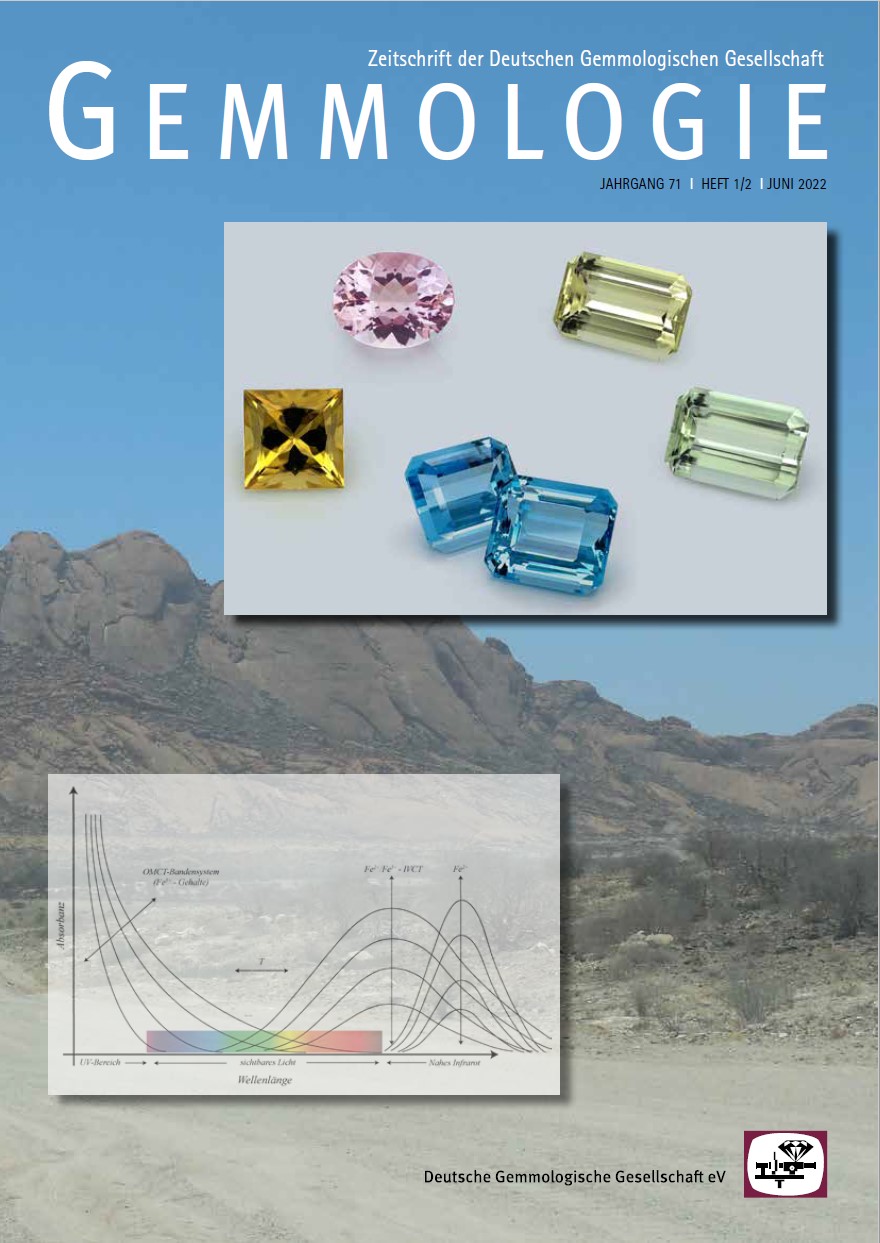
Die Beryll-Gruppe — eine Übersicht zu den Varietäten Aquamarin, Morganit, Heliodore und Goldberyl

Die Beryll-Gruppe — eine Übersicht zu den Varietäten Aquamarin, Morganit, Heliodore und Goldberyl

The beryl group: An overview of the varieties aquamarine, morganite, heliodor, and golden beryl

Henn, U. (2022)

Journal Article · Source: Gemmologie: Zeitschrift der Deutschen Gemmologischen Gesellschaft · Volume: Vol. 71 · Issue: No. 1/2 · Pages: pp. 3–26 · Language: in German

Abstract
The first part of this special issue deals with the origin of the term beryl as well as the denomination of the as gemstones significant varieties, except emerald. Following is a survey of the relevant physical properties that determine crystal structure, crystal chemistry and crystal morphology, as well as gemmological characterization. After a short description of the most important inclusion features the formation conditions and the occurrences are presented, specified for beryl in gem quality. Subsequently the application of the mineral beryl as well as exceptional and famous beryls are described.
Keywords
gems, beryl, aquamarine, morganite, heliodore, goshenite
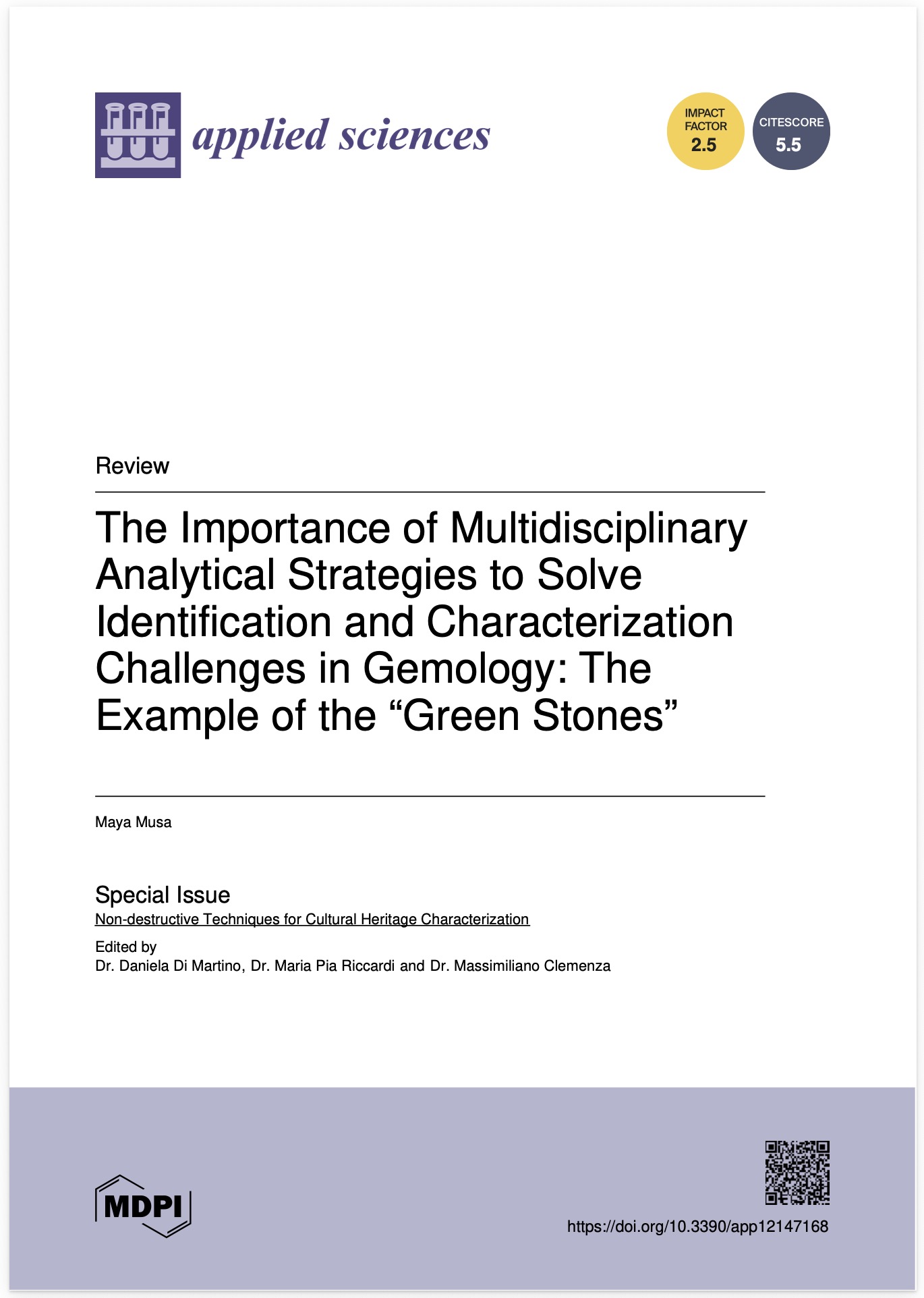
The importance of multidisciplinary analytical strategies to solve identification and characterization challenges in gemology: The example of the “green stones”

The importance of multidisciplinary analytical strategies to solve identification and characterization challenges in gemology: The example of the “green stones”

Musa, M. (2022)

Electronic Article · Source: Applied Sciences · Volume: Vol. 12 · Issue: No. 14 · Pages: 7168, 30 pp.

Abstract
The present review aims to discuss the importance of a multidisciplinary approach in cultural heritage and archaeometry investigations. The analytical methods used to identify and characterize “Green Stones” are discussed as an example. In the present paper, the term Green Stones is applied but not limited to jade materials, which have considerable importance in cultural heritage studies. In fact, archaeological samples made in Green Stones have been discovered worldwide, with many dating back to the Neolithic Age. Moreover, these materials represent an interesting analytical challenge, starting with their nomenclature and, in most cases, the nature of their polycrystalline samples and their heterogeneity. Indeed, after a brief introduction about the advantages of the non-destructive analytical techniques commonly used for gemstones and cultural heritage samples analyses, the limits of the same have been discussed on the basis of Green Stones applicability. Finally, a multidisciplinary methodology for Green Stones identification and full characterization, which considers materials’ heterogeneity and information, has been proposed and based on different references.
Keywords
gems, jade, amphibole jade, nephrite, pyroxene jade, fei cui, jadeite, maw-sit-sit, multidisciplinary approach, identification, characterization, green stones
Les gisemente d’émeraude du Pakistan

Les gisemente d’émeraude du Pakistan

The emerald deposits of Pakistan

Michelou, J.C., Conruz, L., Michelou, Z., Pardieu, V. and Giuliani, G. (2022)

Book Section · Source: Émeraudes, tout un monde! · Publisher: Les Editions du Piat · Pages: pp. 247–258 · Language: in French

Abstract
Superb book on emeralds around the world, covering the history, geology and gemology of emerald in all the major localities. Beautifully illustrated and printed.
Keywords
gems, beryl, emerald, Pakistan, Swat, Chitral
La route des émeraudes de l’Asie centrale

La route des émeraudes de l’Asie centrale

The emerald route of Central Asia

Giuliani, G. and Pardieu, V. (2022)

Book Section · Source: Émeraudes, tout un monde! · Publisher: Les Editions du Piat · Pages: pp. 237–238 · Language: in French

Abstract
Superb book on emeralds around the world, covering the history, geology and gemology of emerald in all the major localities. Beautifully illustrated and printed.
Keywords
gems, beryl, emerald, Afghanistan, Central Asia, Pakistan, China
Typologie des gisements d’émeraude

Typologie des gisements d’émeraude

Typology of emerald deposits

Giuliani, G., Branquet, Y., Groat, L.A., Marshall, D.D. and Fallick, A. (2022)

Book Section · Source: Émeraudes, tout un monde! · Publisher: Les Editions du Piat · Pages: pp. 37–44 · Language: in French

Abstract
Superb book on emeralds around the world, covering the history, geology and gemology of emerald in all the major localities. Beautifully illustrated and printed.
Keywords
gems, beryl, emerald, geology
Géologie et genèse des émeraudes du Panjshir

Géologie et genèse des émeraudes du Panjshir

Geology and genesis of the emeralds of Panjshir

Giuliani, G. (2022)

Book Section · Source: Émeraudes, tout un monde! · Publisher: Les Editions du Piat · Pages: pp. 265–270 · Language: in French

Abstract
Superb book on emeralds around the world, covering the history, geology and gemology of emerald in all the major localities. Beautifully illustrated and printed.
Keywords
gems, beryl, emerald, Afghanistan, Panjshir
Histoire des anciennes mines d’émeraude d’Égypte

Histoire des anciennes mines d’émeraude d’Égypte

History of the ancient emerald mines of Egypt

Gilg, H.A. and Grundmann, G. (2022)

Book Section · Source: Émeraudes, tout un monde! · Publisher: Les Editions du Piat · Pages: pp. 161–168 · Language: in French

Abstract
Superb book on emeralds around the world, covering the history, geology and gemology of emerald in all the major localities. Beautifully illustrated and printed.
Keywords
gems, beryl, emerald, Egypt, Cleopatra, history of gemology, archaeology, archaeologemology
Émeraudes de la vallée du Panjshir, Afghanistan

Émeraudes de la vallée du Panjshir, Afghanistan

Emeralds from the Panjshir Valley, Afghanistan

Bowersox, G.W. (2022)

Book Section · Source: Émeraudes, tout un monde! · Publisher: Les Editions du Piat · Pages: pp. 259–264 · Language: in French

Abstract
Superb book on emeralds around the world, covering the history, geology and gemology of emerald in all the major localities. Beautifully illustrated and printed.
Keywords
gems, beryl, emerald, Afghanistan, Central Asia, Pakistan, China
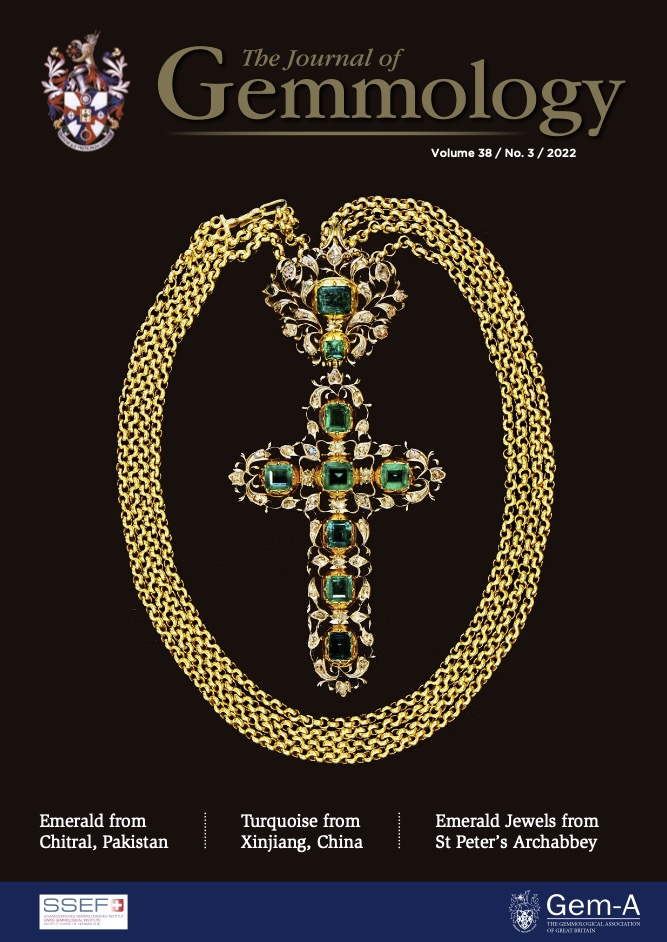
Emerald from the Chitral region, Pakistan: A new deposit

Emerald from the Chitral region, Pakistan: A new deposit

Hanser, C.S., Häger, T., Botcharnikov, R.E. and Gul, B. (2022)

Journal Article · Source: Journal of Gemmology · Volume: Vol. 38 · Issue: No. 3 · Pages: pp. 234–252

Abstract
Emeralds from a new deposit in the Chitral District of Pakistan were investigated with polarised UV-Vis-NIR, FTIR and Raman spectroscopy, and their chemical compositions were studied using EPMA and LA-ICP-MS analyses. The results are compared to data from the literature for classical emerald deposits such as those in Colombia and Zambia, as well as the nearby Panjshir region of Afghanistan and others. It was found that the macroscopic appearance and habit of the Chitral specimens are similar to those from Khaltaro (Pakistan), and their spectroscopic characteristics resemble those of schist-hosted deposits (e.g. Zambia). The chemical analyses show high Cs and Li contents (consistent with a pegmatite-related origin), which are greater than the ranges of these elements reported in the literature for emeralds from most other important localities. In 2021, the Chitral deposit produced approximately 130 kg of loose emerald, and greater amounts are expected to be mined in the 2022 season.
Keywords
gems, beryl, emerald, Pakistan, Chitral
History of emerald mining in the Habachtal deposit of Austria, Part 2

History of emerald mining in the Habachtal deposit of Austria, Part 2

Schmetzer, K. (2022)

Journal Article · Source: Gems & Gemology · Volume: Vol. 58 · Issue: No. 1, Spring · Pages: pp. 18–46

Abstract
The Habachtal emerald deposit in Austria, one of Europe’s oldest known sources of emeralds, has a rich history dating back to at least 1797, when it was first described in scientific literature. While there are speculative links to Roman or Celtic exploitation, no definitive archaeological evidence confirms such early mining activities. Regular mining began in the early 1860s under Samuel Goldschmidt, a Viennese jeweler, who initiated operations that were later taken over by the English company Emerald Mines Limited in 1895. However, the venture faced legal and financial challenges, leading to its decline by 1903. By 1914, the property returned to Austrian ownership, acquired by local farmers and municipal leaders from Bramberg. This historical account, detailed in the Winter 2021 issue of Gems & Gemology, provides insights into the complex legal, geological, and economic factors that influenced the development of this unique alpine emerald source.
Keywords
gems, beryl, emerald, Austria, Habachtal
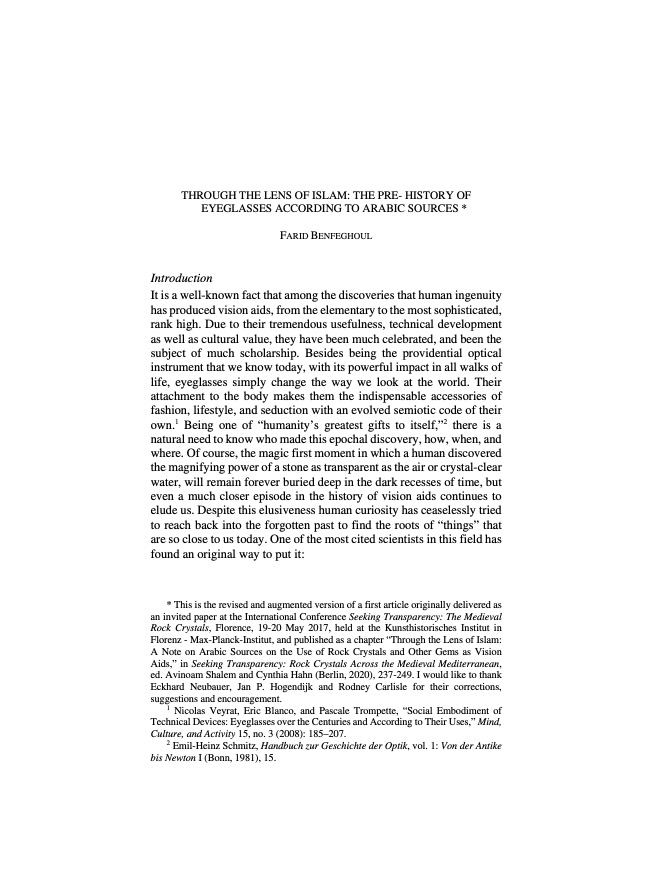
Through the lens of Islam: The pre-history of eye-glasses according to Arabic sources

Through the lens of Islam: The pre-history of eye-glasses according to Arabic sources

Benfeghoul, F. (2022)

Journal Article · Source: Zeitschrift für Geschichte der Arabisch-Islamischen Wissenschaften · Volume: Vol. 23 · Pages: pp. 259–315

Abstract
The history of vision aids was hitherto written almost entirely with material gathered only from the West, where there is an unmatched wealth of information. Dealing with the Islamic world, one is struck by how little is known about the origins and early uses of vision aids in the cultures of Islamic lands. This article is an attempt to close this gap by presenting and analysing a few texts produced between the 11th and 14th centuries, in the Eastern and Western parts of the Islamic world, with regard to the knowledge about the use of vision aids. The aim of this paper is (1) to show that, according to reliable Arabic sources that are gradually emerging, vision aids are indeed inscribed in a larger Arabic-Islamic tradition of knowledge and know-how; (2) to provide clear evidence for the use of such tools and present texts that help understand their cultural background; (3) to move the chronology of vision aids a little backward in time; (4) to help write the first chapters in a general history of visions aids in the cultures of Islamic lands; (5) to create an awareness for this subject and spark a critical debate in what looks like a new field of investigation.
Keywords
gems, Arabic mineralogy, al-Biruni, ruby, corundum, history.1
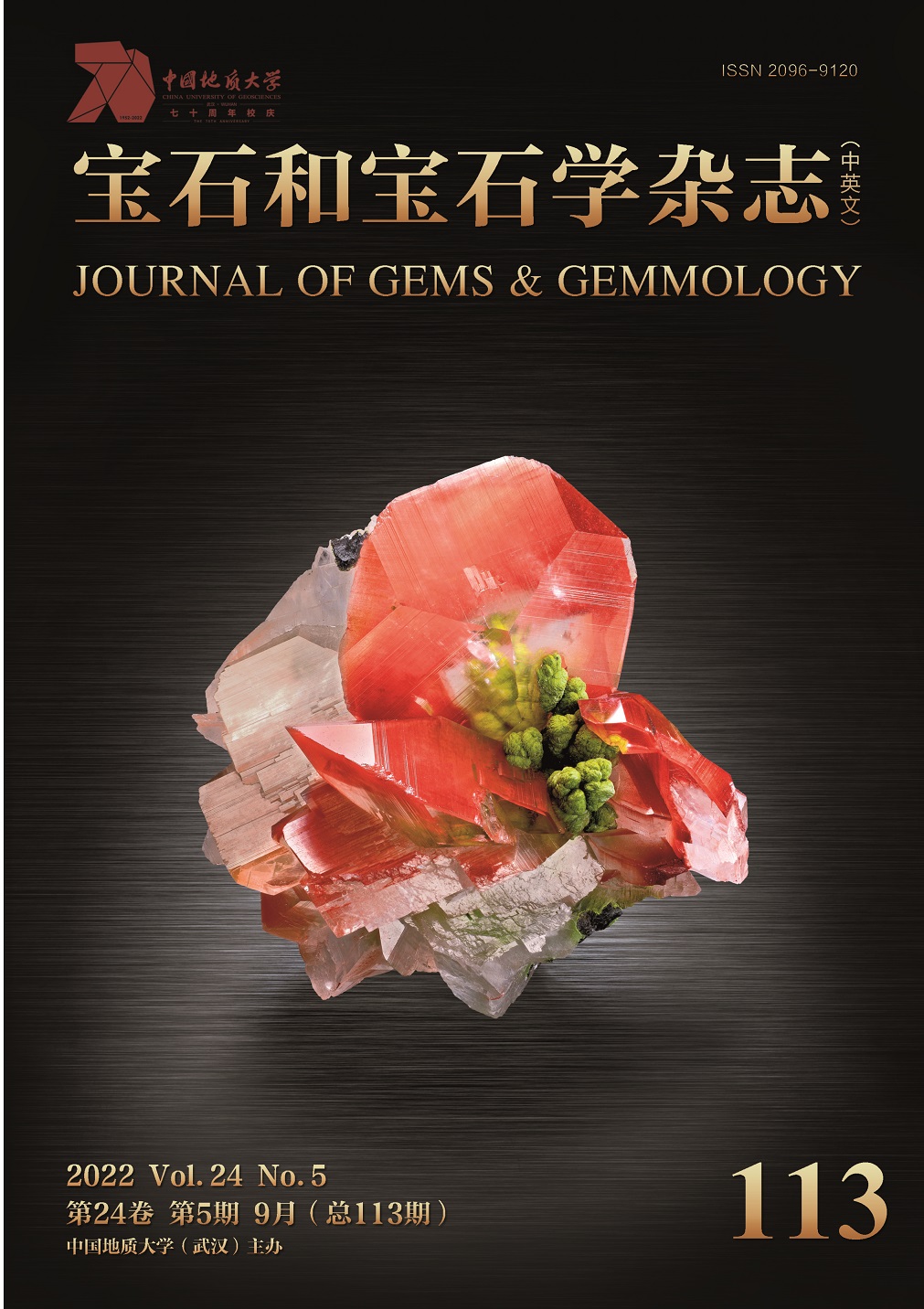
Mineral component and genesis of high-grade green jadeite jade from Guatemala

Mineral component and genesis of high-grade green jadeite jade from Guatemala

Wang, L., Zhang, H., Liu, J., Wang, L., Ouyang, Q., Liu, D. and Liu, W. (2022)

Journal Article · Source: Journal of Gems & Gemmology · Volume: Vol. 24 · Issue: No. 5 · Pages: pp. 11–30 · Language: in Chinese with English abstract

Abstract
High-grade green jadeite jade samples from Guatemala were selected as the research objects. Gem microscope, polarizing microscope, microscopic laser Raman spectrometer, and electron probe microanalyser were used to analyze the appearance characteristics, magnification features, constituent minerals, microstructures, Raman spectra, and mineral chemical compositions of the samples. Based on constituent minerals and their evolution, three periods of mineralization were observed. The product of the early mineralization period is jadeite with coarse-grained, hypautomorphic–automorphic granular-columnar texture and very pure chemical composition. The main mineralization period is characterized by metasomatism, with earlier-stage products being fine-grained jadeite containing relatively higher FeO, Cr₂O₃, MgO, and CaO contents compared to jadeite from the early period, and later-stage products being fine-grained omphacite with high MgO and CaO contents, whose green color shades correspond to Cr₂O₃ variation. The late mineralization period products consist of jadeite (or albite) + titanite in a filling texture, with titanite mainly distributed in reticulated veins between jadeite/omphacite particles or in microfractures. The combination of jadeite (or albite) + titanite + fluid inclusions formed during this late stage appears as white cotton-like zones in jadeite jade, representing fluid-melt inclusions. The fluid phase in these inclusions contains CO₂ and CO, with a strong characteristic Raman shift peak at 2,145 cm⁻¹, indicating a highly reductive formation environment with high CO content, corroborated by the presence of amorphous carbon in the samples. Jadeite is the main or one of the main minerals in most of the high-grade Guatemalan green jadeite jade samples studied. In such samples, the late-stage assemblage of jadeite + reticulated titanite + CO-dominated fluid inclusions commonly found in white “cotton” areas serves as an important reference feature for distinguishing Guatemalan high-grade green jadeite jades from Burmese green jadeite jades.
Keywords
gems, jade, jadeite, fei cui, Guatemala jadeite, fei cui, imperial jade
True jades, false friends

True jades, false friends

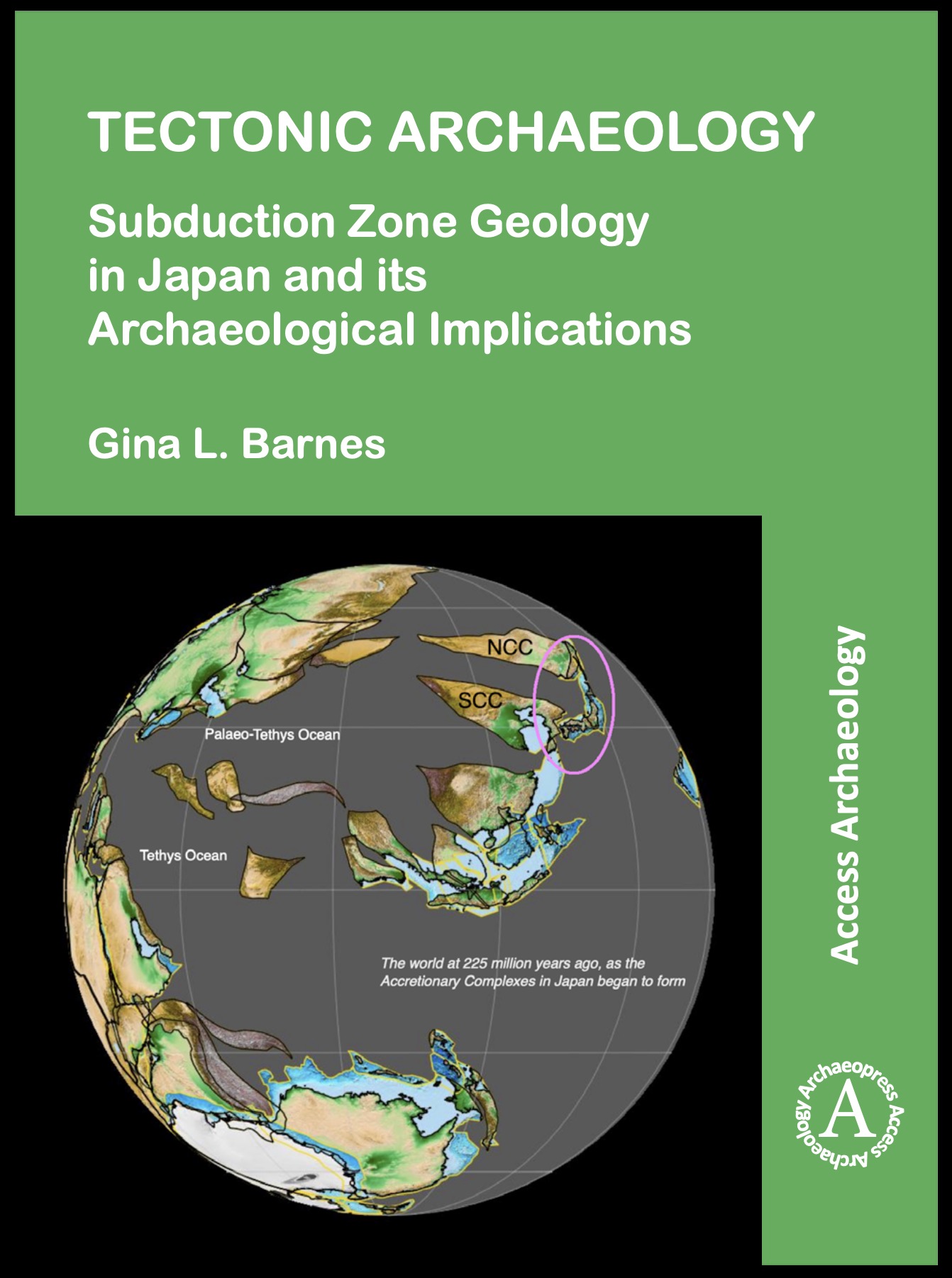
Barnes, G.L. (2022)

Book Section · Source: Tectonic Archaeology: Subduction Zone Geology in Japan and its Archaeological Implications · Publisher: Archaeopress · Pages: pp. 338–372

Abstract
This chapter represents a foray into a very different aspect of Tectonic Archaeology. Previous descriptions dealt with sanukite and obsidian sources produced during volcanic eruptions in the Japanese Islands (BOX 4 and Chapter 6). These stones were mainly used by prehistoric peoples for utilitarian objects. Here, we will look at the more ornamental stones that are referred to under the catch-all term ‘jade’. For millennia, jades have been valued in many cultures in both China and Japan. The favoured types and sources of jades have changed over time, as has our knowledge of the stones themselves. One of the greatest problems in dealing with archaeological jades is the correct identification of the stones in order to trace their source and thereby understand the social relations underlying their patterns of procurement, production, and consumption. In the last 15 years, the field has been upset by increasingly detailed chemical analyses of so-called jadeites. This impacts the gemological world more than geological, but what ramifications does it hold for archaeology? Plate Tectonics is crucial for understanding the formation and distribution of the true jades: nephrite and jadeitite. Their tectonic contexts determine the minerals available for their composition. True jade mineralogy will be detailed below in relation to their host rocks, dolomitic limestone (dolostone) and serpentenite. Metamorphic processes (Chapter 2.5) are integral to the formation of both host rocks and jade products, while the processes of exhumation and obduction (Chapter 2.5.3, 2.7) determine where the true jades are found in the world today.
Keywords
gems, jade, jadeite, fei cui, Japan, geology
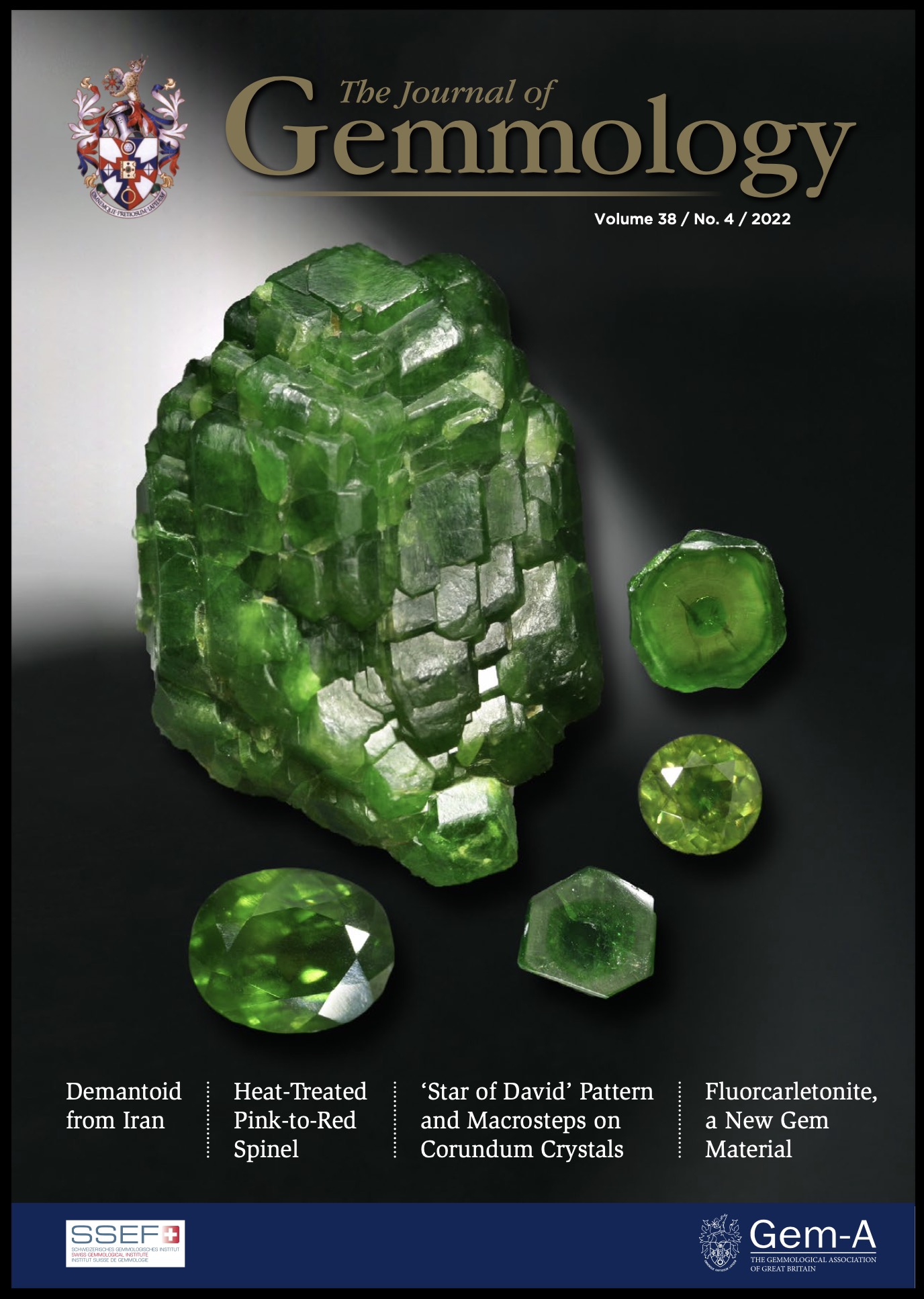
Spectroscopic characteristics and causes of colour modification in heat-treated pink-to-red spinel from Luc Yen, Vietnam

Spectroscopic characteristics and causes of colour modification in heat-treated pink-to-red spinel from Luc Yen, Vietnam

Chankhanatha, C., Amphon, R., Rehman, H.U., Kidkhunthod, P. and Shen, A.H. (2022)

Journal Article · Source: Journal of Gemmology · Volume: Vol. 38 · Issue: No. 4 · Pages: pp. 348–362

Abstract
In this study, 15 pink-to-red spinel samples from Luc Yen, Vietnam, were subjected to heat treatment at 850°C and 1000°C under oxidising conditions to investigate the causes of their colour modification. Heating to 850°C slightly reduced the yellow and blue colour modifiers, yielding a more desirable pink-to-red hue. Treatment at 1000°C further decreased these modifiers but also resulted in a darker, greyer appearance. UV-Vis and FTIR analyses showed that partial structural disordering occurred in the heated spinels, potentially enabling the reduction of yellow and blue hues. A shift to higher wavelengths of the ~538 nm Cr³⁺±V³⁺ absorption band in the UV-Vis spectrum, along with the absence of a 575 cm⁻¹ FTIR band, were identified as indicators of heat treatment. XANES spectroscopy revealed that some Fe²⁺ oxidised to Fe³⁺, likely causing the reduced blue colouration, while the valence state of vanadium remained unchanged.
Keywords
gems, spinel, Vietnam, Luc Yen, enhancements
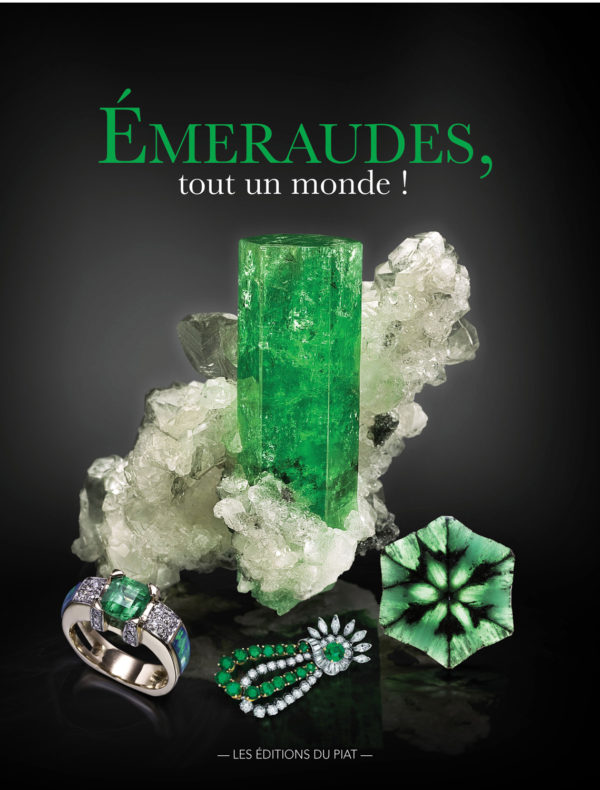
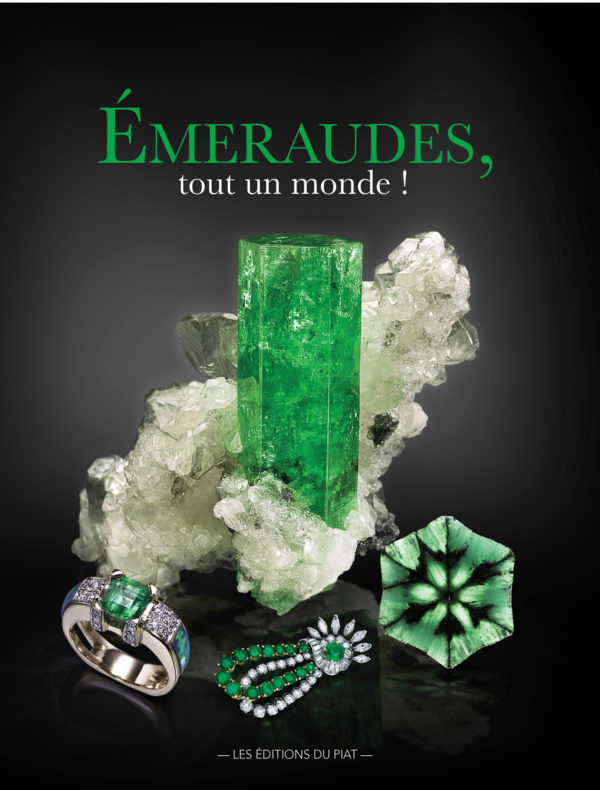
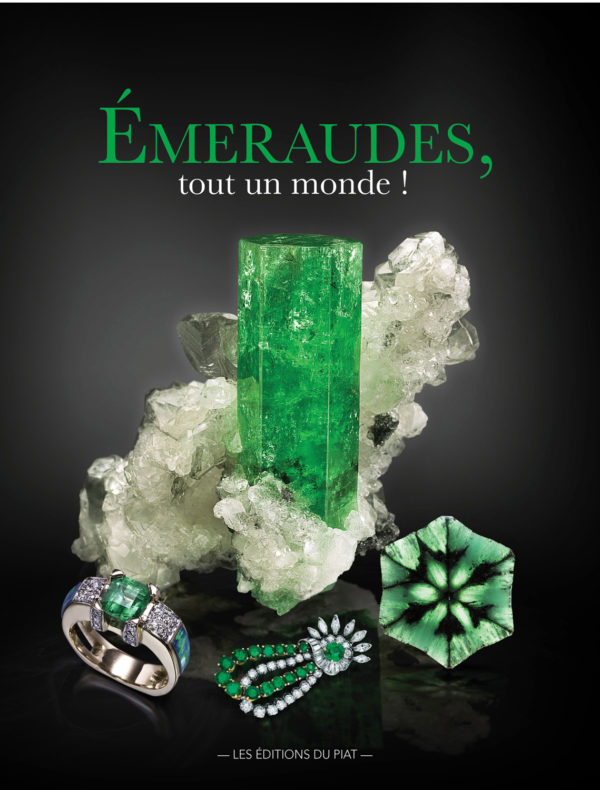
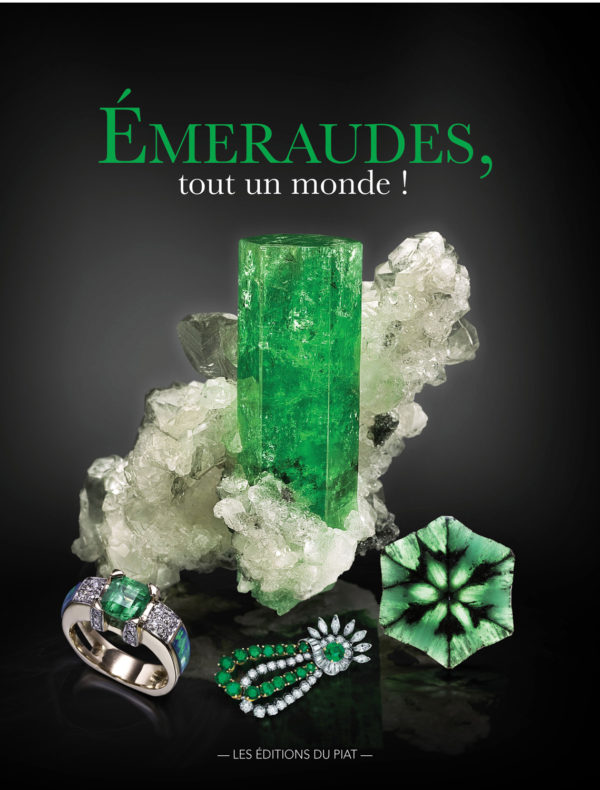
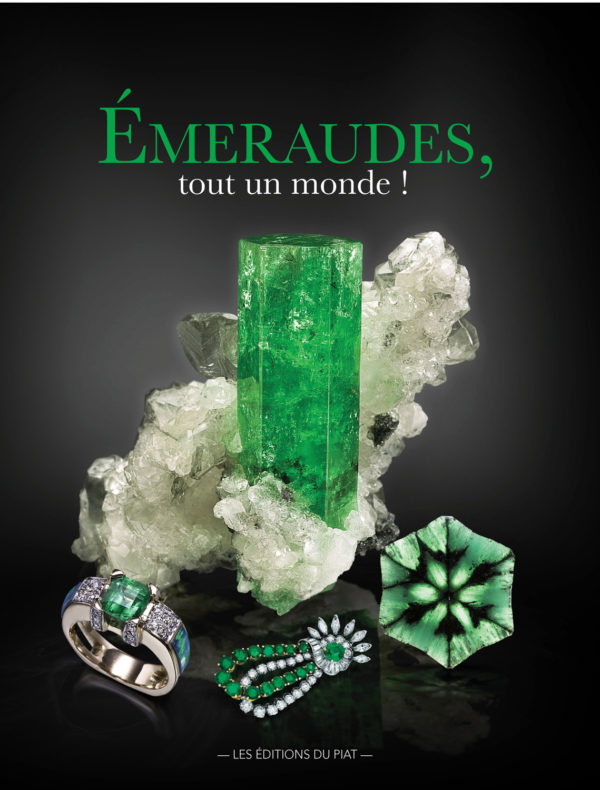
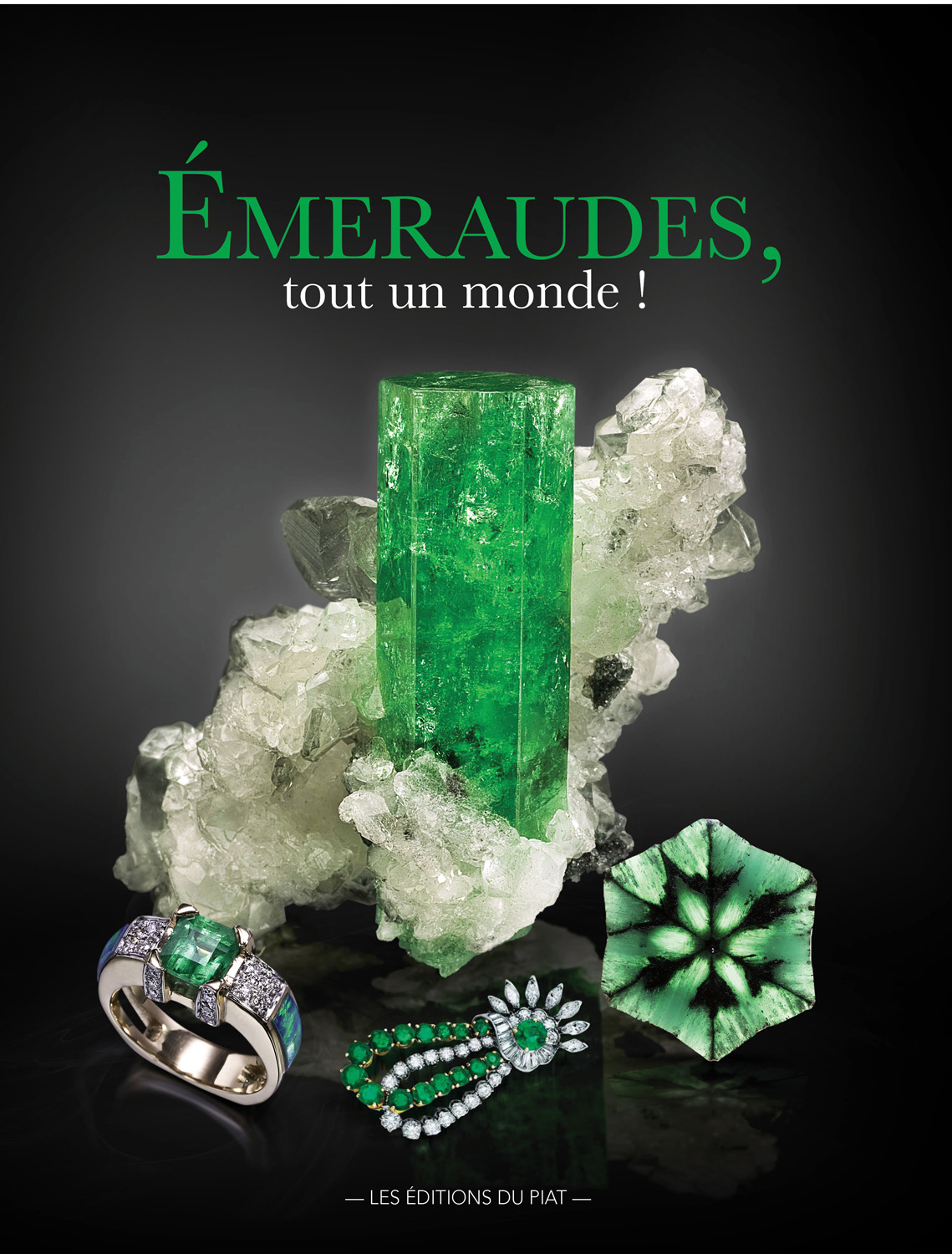
Émeraudes, tout un monde!

Émeraudes, tout un monde!

Emeralds, A Whole World

Giuliani, G. (2022)

Edited Book · Publisher: Les Editions du Piat · Pages: 448 pp. · Language: in French

Abstract
Superb book on emeralds around the world, covering the history, geology and gemology of emerald in all the major localities. Beautifully illustrated and printed.
Keywords
gems, beryl, emerald, Afghanistan, Brazil, Colombia, China, Zimbabwe, Pakistan, Zambia, Madagascar, Mozambique, inclusions, history
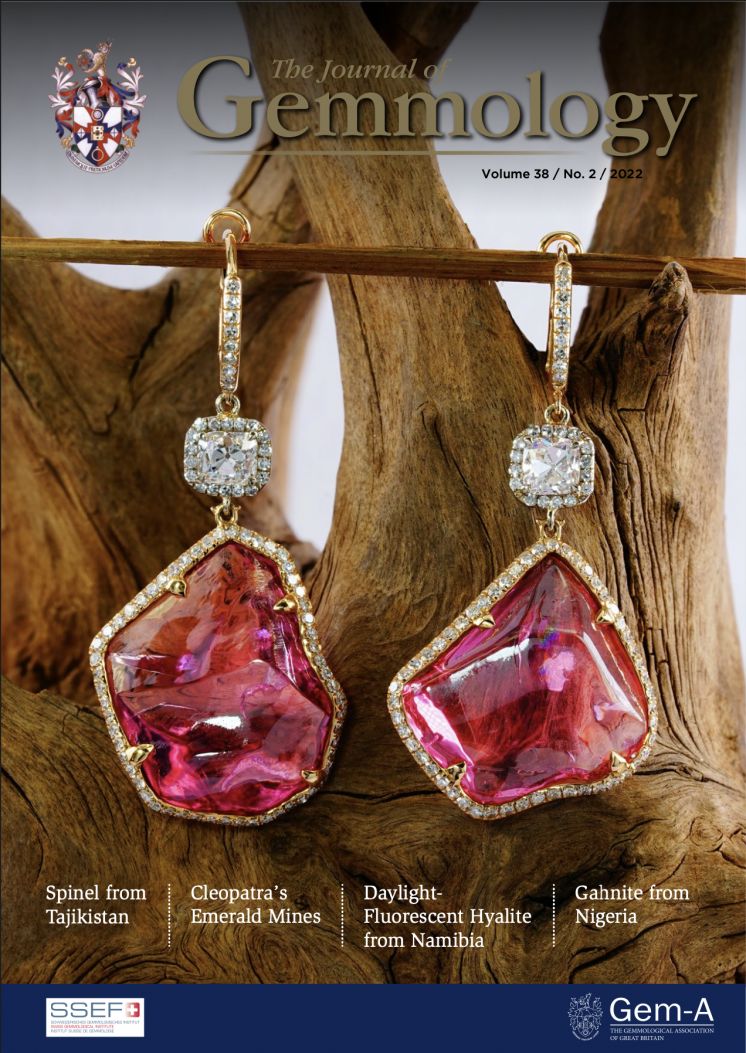
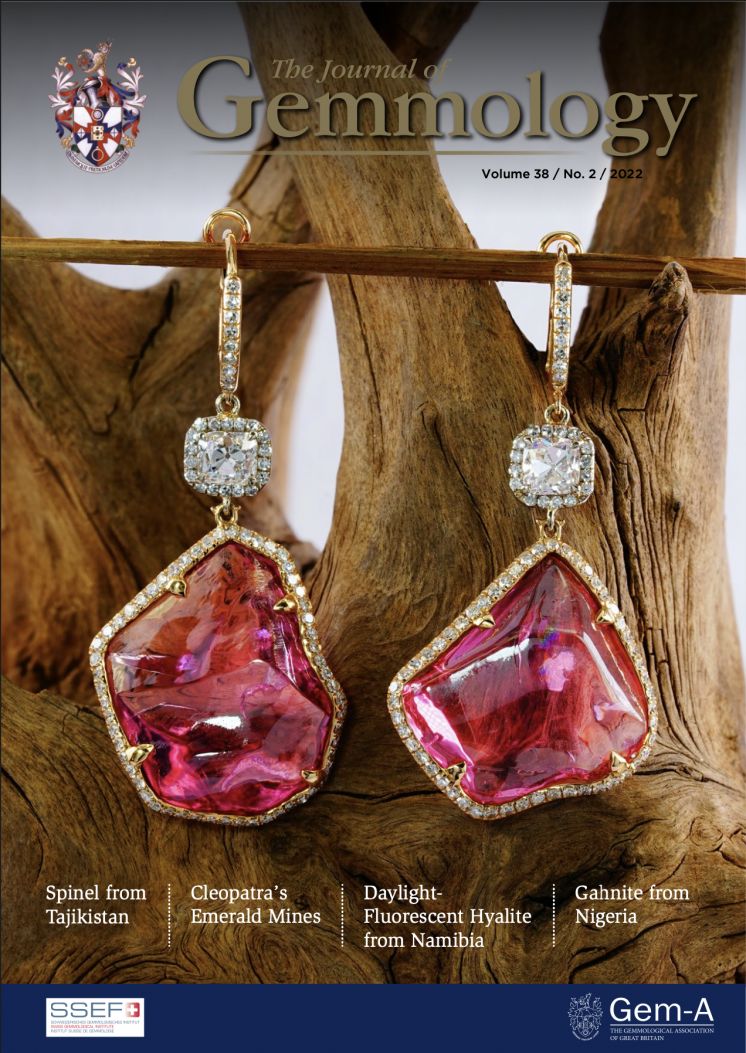
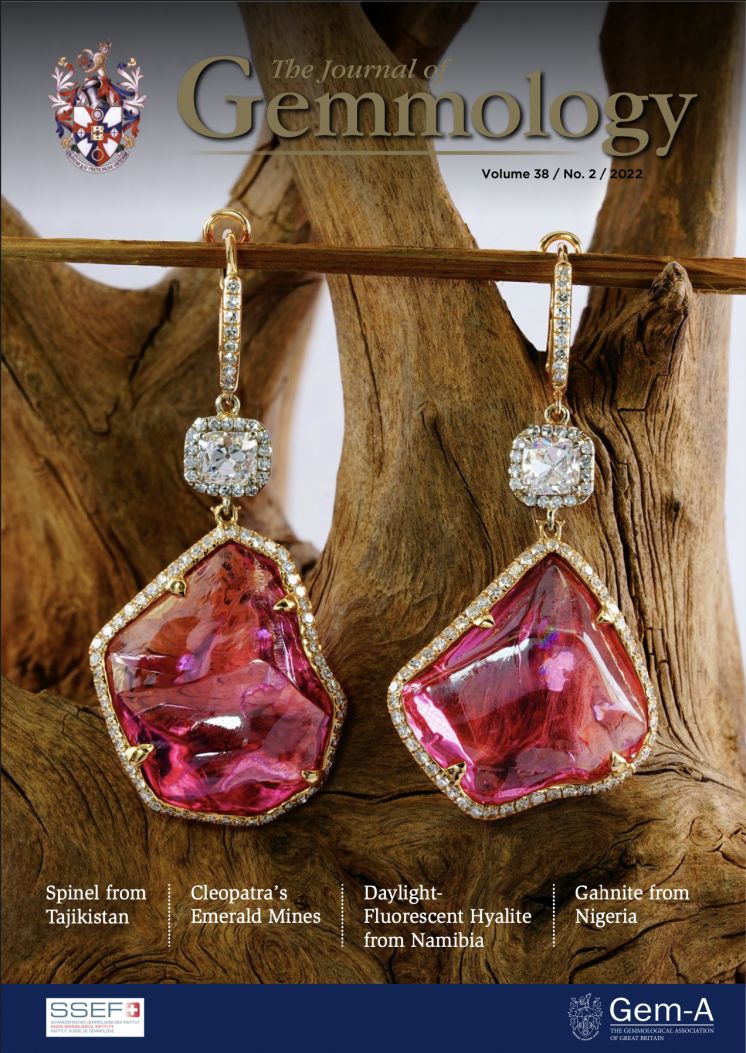
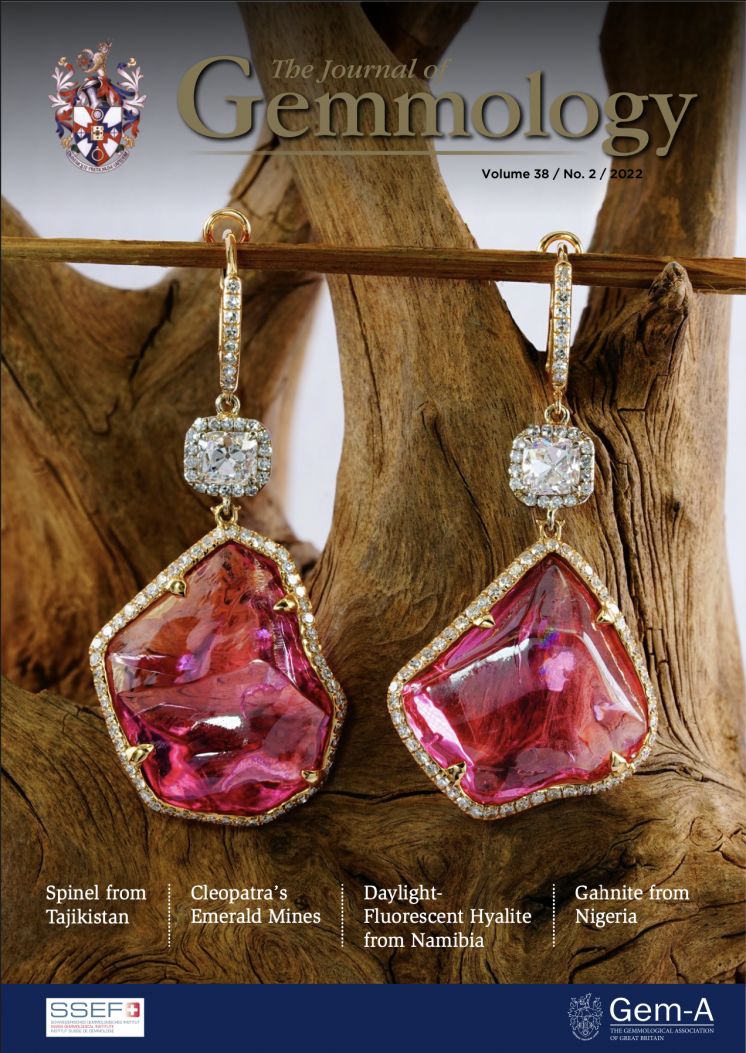
Cleopatra’s emerald mines: The marketing of a myth

Cleopatra’s emerald mines: The marketing of a myth

Ogden, J.M. (2022)

Journal Article · Source: Journal of Gemmology · Volume: Vol. 38 · Issue: No. 2 · Pages: pp. 156–170

Abstract
References to emeralds and their history frequently mention “Cleopatra’s emerald mines,” a phrase that appears widely across the internet, in gemological literature, educational materials, and even promotional dossiers issued by gem laboratories. The romantic association of emeralds with the iconic Egyptian queen—lover of Julius Caesar, wife of Mark Antony, and immortalized by Shakespeare and Elizabeth Taylor—is undoubtedly compelling. However, investigation reveals little evidence to substantiate this link; Cleopatra appears to have had no particular connection to emeralds or the mines from which they came. Her supposed association with the gem likely stems from the clever marketing of Edwin Streeter, a resourceful nineteenth-century London jeweller.
Keywords
gems, beryl, emerald, Egypt

Building a Gemological Library

Gemological books range from general identification manuals and textbooks to specialized works on individual gems, mineralogy, jewelry, treatments, synthesis, history and gem-producing regions.

For a curated selection of particularly useful books, read The Gemologist's Core Library — Classic Books on Gemology, Jewelry and Mineralogy.

About Four Treasures

Four Treasures is Lotus Gemology's freely accessible gemological reference database. Use the full database to search by author, title or keyword and explore literature on gemology, mineralogy, jewelry and related fields. Where available, hyperlinks on titles may lead directly to the full publication.

Search the Complete Four Treasures Database